
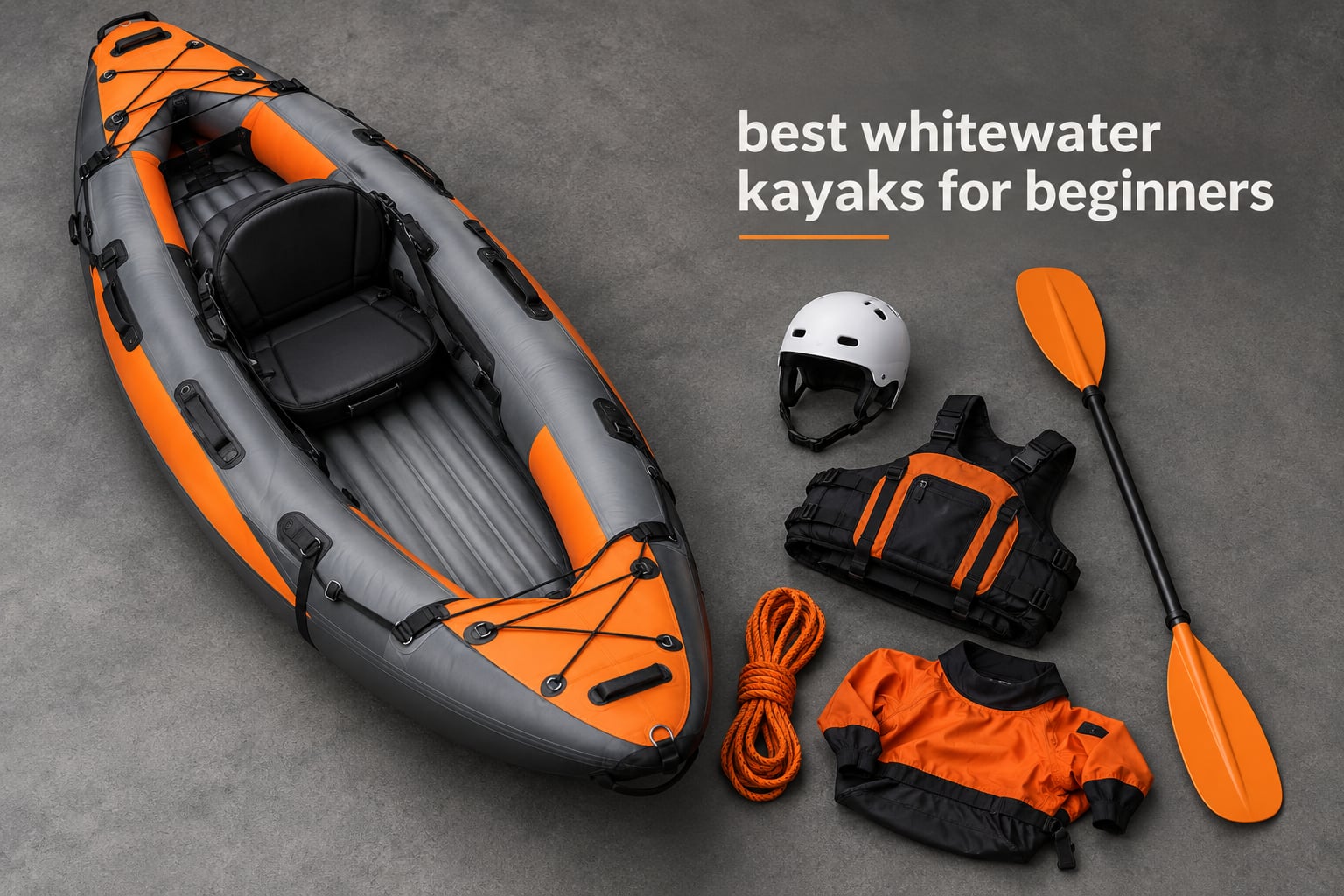
The best whitewater kayaks for beginners are the Sea Eagle 420X Explorer for families and gear, the Sea Eagle 300X Explorer for solo paddlers learning on moving water, and the Sea Eagle 380X Explorer for two people who want the widest owner feedback in this group. All three are inflatables, and that is not a compromise here.
Most first-time whitewater paddlers arrive with the same problem. They read forum threads from a decade ago, see boats quoted in the hundreds of dollars, then discover that new retail for anything whitewater-capable now runs well into four figures. They also hit a wall of vocabulary: displacement hull, hard chine, bow rocker, secondary stability, ferry glide. Nobody explains what any of it means before they are asked to spend money.
So this guide does two things. It names ten specific boats with the specifications that actually matter to a new paddler, and it explains the design terms before you need them. Every boat here is an inflatable crossover, because that hull shape is the most forgiving entry point into moving water that exists today. If you are still building basic confidence, our guide to the best kayaks for beginners is a useful first stop, and our inflatable kayak picks for camping covers the lakeside use these boats handle well.
Table of Contents
Top 3 Picks: Best Whitewater Kayaks for Beginners (October 2026)
The three boats below cover the most common beginner situations: a family boat that carries everyone, a solo boat built for real river mileage, and a tandem boat with the largest owner base.

Sea Eagle 420X Explorer
- Class IV rated hull
- 855 lb capacity for 2-3 adults
- Removable 10 PSI drop-stitch floor
- 16 self-bailing drain valves

Sea Eagle 380X Explorer
- Class IV rated tandem
- 16 self-bailing drain valves
- 10 PSI drop-stitch floor
- 750 lb capacity

Sea Eagle 300X Explorer
- Solo Class IV inflatable
- Adjustable Flexbrace footrest
- 1000 denier polyester hull
- Packs to 24 x 16 x 6 inches
Best Whitewater Kayaks for Beginners (October 2026)
Every boat listed below self-bails, carries a rated hull for moving water, and includes or supports the gear a first-time paddler needs. Ratings and review counts come directly from owner feedback on the product listings.
| Product | Specifications | Action |
|---|---|---|
| Sea Eagle 420X Explorer |
|
Check Latest Price |
| Sea Eagle 300X Explorer |
|
Check Latest Price |
| Sea Eagle 380X Explorer |
|
Check Latest Price |
 AIRE Tributary Tomcat Solo AIRE Tributary Tomcat Solo |
|
Check Latest Price |
 AIRE Tributary Tater AIRE Tributary Tater |
|
Check Latest Price |
 NRS Star Outlaw I NRS Star Outlaw I |
|
Check Latest Price |
 Star Viper XL Star Viper XL |
|
Check Latest Price |
 Advanced Elements Packlite+ Advanced Elements Packlite+ |
|
Check Latest Price |
 Star Raven I Star Raven I |
|
Check Latest Price |
 AIRE Sawtooth AIRE Sawtooth |
|
Check Latest Price |
1. Sea Eagle 420X Explorer: The Family Boat That Carries Everyone
Sea Eagle 420x Inflatable Kayak with Pro Package
Class IV rated hull
855 lb capacity
44 lb packed
10 PSI drop-stitch floor
Pros
- NMMA-certified hull rated to Class IV whitewater
- Rigid 10 PSI drop-stitch floor adds hard-shell-like stability
- 16 self-bailing valves toggle open for rapids and shut for flat water
- 855 lb capacity fits 2-3 adults plus gear
- Pro package includes seats
- paddles
- skeg
- pump and backpack
Cons
- 14 ft tandem format is heavy and awkward for solo transport
- 36 reviews is a thin sample for long-term durability claims
The 420X Explorer is the boat I keep coming back to for a specific reason: it removes almost every decision a new paddler would otherwise get wrong. It is rated to Class IV whitewater by an NMMA-certified hull test, it seats up to three adults at 855 lb total capacity, and the pro package arrives with seats, paddles, a skeg, a foot pump and a backpack already in the bag.
That drop-stitch floor is the part that matters most. Most inflatable kayaks feel like pool toys because you are sitting on air. This one inflates to 10 PSI and behaves like a rigid platform, which means it tracks predictably and holds a line on a ferry angle without the whole boat deforming around you.
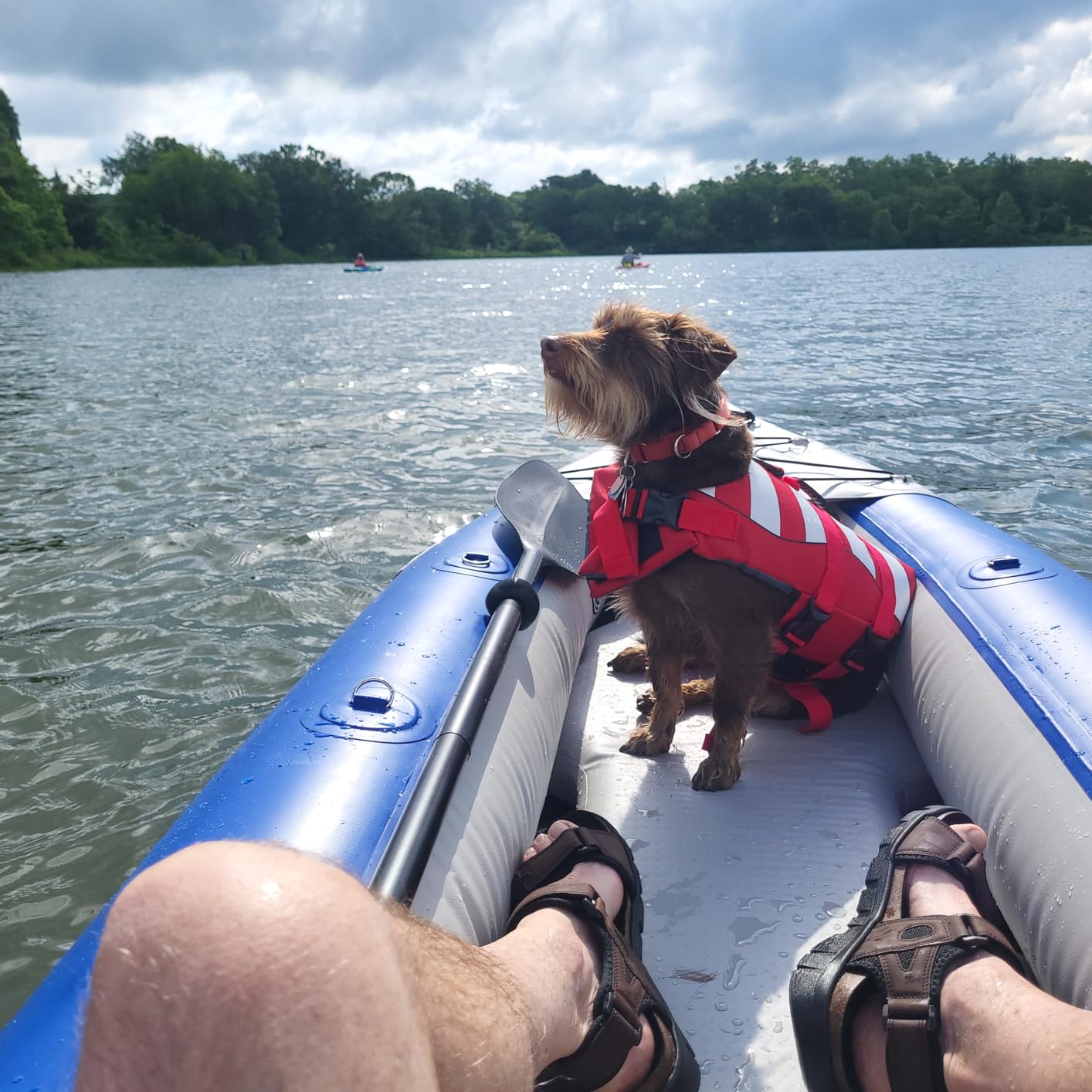
Owners report consistently across the listing that the boat feels stable in current and drains fast when the valves are opened. The 16 drain valves are individually open-close, so you can run a rocky creek section with them open and then shut them for flat water and dry storage. Roughly 88% of the ratings on this listing are five stars.
The honest limit here is size. At 168 inches long and 44 lb packed, this is a tandem-plus boat. Carrying it solo from a remote put-in is a two-trip job, and solo paddlers will find the 300X or the Tributary Tater far easier to manage.
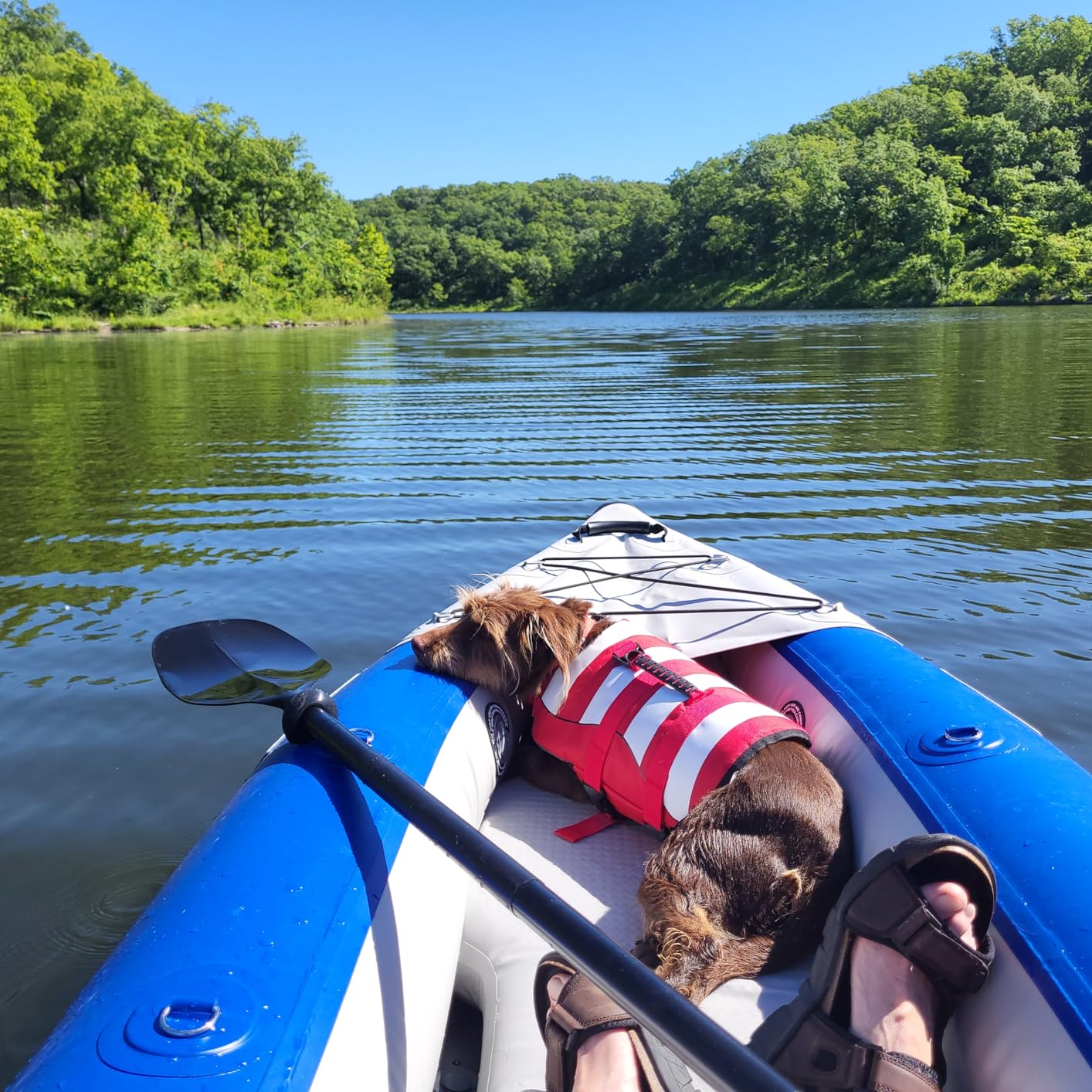
How stable is it for a nervous first-time paddler
Very. The wide 39 inch beam combined with a rigid floor gives you a wide, flat platform that resists tipping in the direction a beginner usually falls. You also sit high out of the water rather than down inside a cockpit, which changes how a wave feels when it hits.
Because there is no enclosed cockpit, a capsize means you push away from the boat and swim free. There is no skirt rim to trap your head. For paddlers who are not ready to trust an ejection system in moving water, that alone is worth a lot.
Where it falls short for a first boat
Three things. The packed weight of 44 lb is real when you are carrying it up a riverbank alone, and the tandem-plus footprint makes it awkward in a solo packraft situation.
And with 36 reviews on the listing, the owner feedback is thinner than the headline rating suggests. Most of what you read here comes from newer owners rather than people reporting a decade of use.
2. Sea Eagle 300X Explorer: The Solo Boat for Learning in Moving Water
Sea Eagle SE300X Explorer Inflatable Kayak, Pro Package by Sea Eagle
Solo Class IV inflatable
4 inch drop-stitch floor
45 lb packed
Deflates to 24 x 16 x 6 inches
Pros
- Rigid 10 PSI drop-stitch floor stays stable on Class II-III rapids
- Threaded self-bailing drain caps cannot close accidentally
- Adjustable Flexbrace footrests improve power transfer and fit
- Backpack-strapped carry bag and 24 x 16 x 6 inch pack size
- 1000 denier polyester with quadruple glued overlapped seams
Cons
- High-pressure floor and large tubes slow inflation down
- Included pump gauge lacks clear PSI markings
- Included paddle head pins do not fully lock into the handle
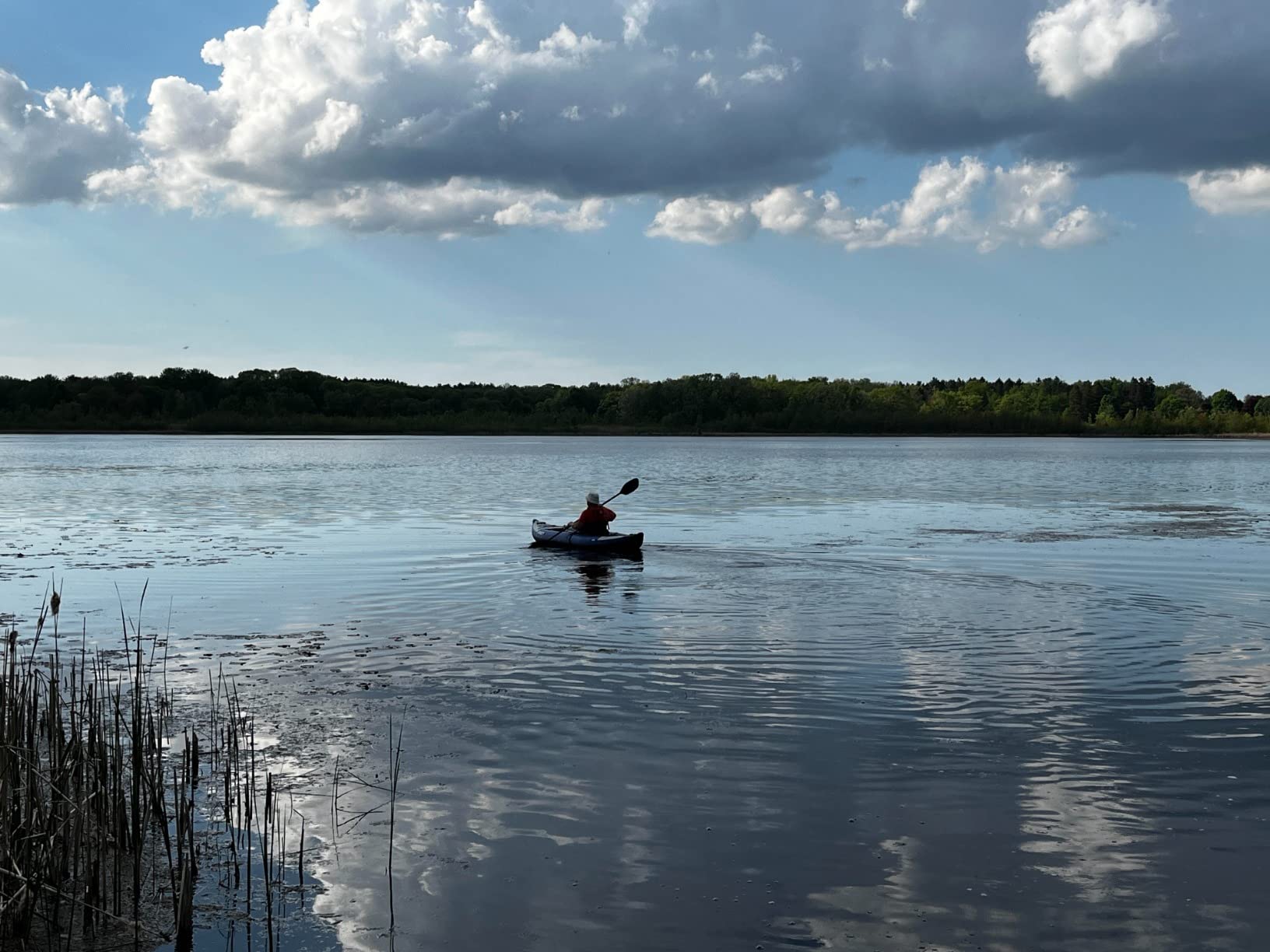
If you paddle alone, the 300X Explorer is the boat in this roundup built for your situation. At 108 inches long and rated to Class IV, it is a genuine river boat rather than a flatwater inflatable with aspirations, and long-term whitewater paddlers comparing it to cheaper packrafts consistently credit it with the best blend of stability, self-bailing and portability.
The Flexbrace footrest is the detail that separates it from cheaper solo inflatables. Adjustable foot braces transfer your strokes into the hull properly, so you get real power instead of the mushy, half-powered stroke you get sliding around on a loose floor. Threaded drain caps are a small thing that matters: they will not swing shut on their own mid-run.
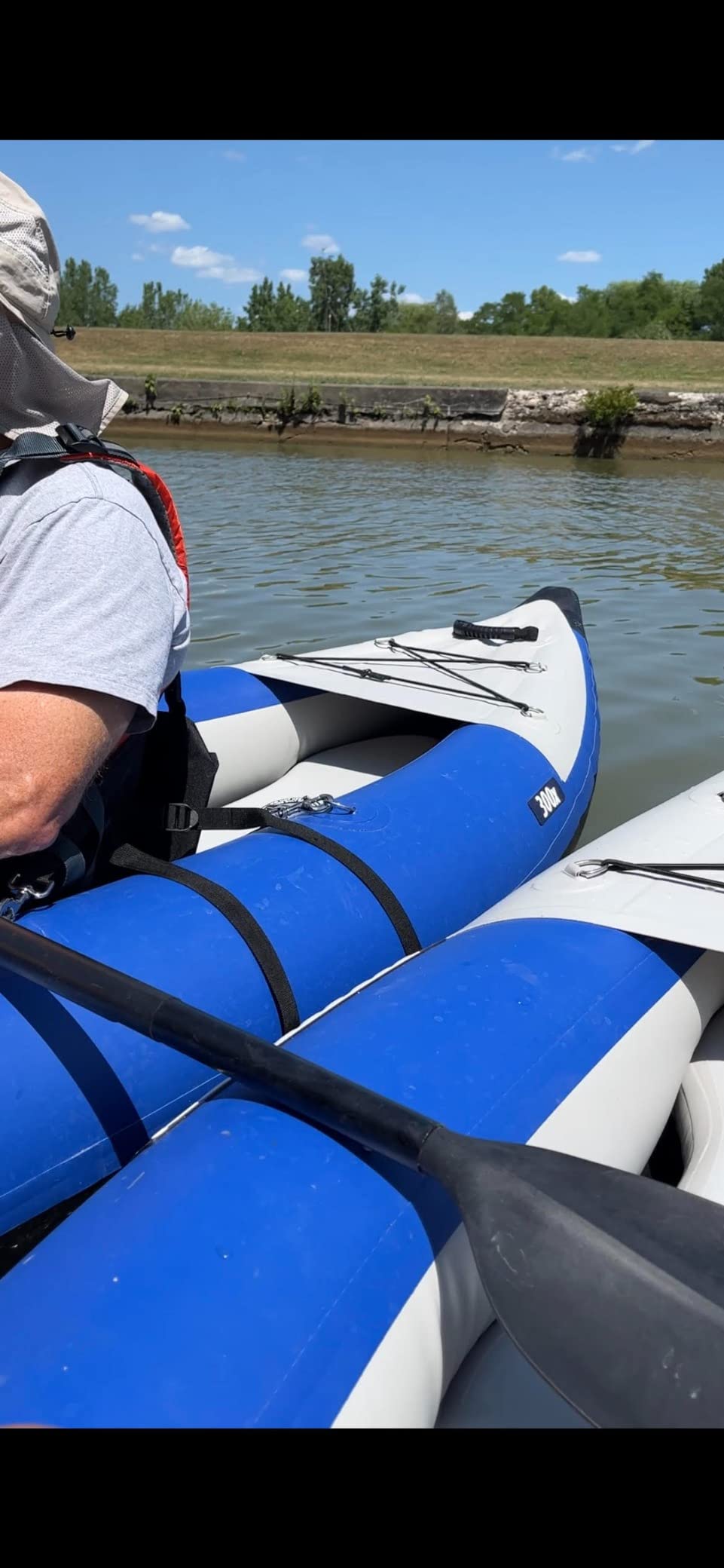
It deflates to 24 x 16 x 6 inches and rides in a backpack-strapped bag, which means a solo paddler can carry a genuine whitewater-capable boat to a remote put-in without a roof rack. Three air chambers and standard-nozzle valves make inflation and overnight drying simple.
Every recurring complaint on this listing concerns the included accessories rather than the boat. One of the four seat clips binds, the pump gauge lacks clear sidewall PSI markings, and the paddle head pins do not fully lock into the handle. Budget for a paddle you trust.
Is it stable enough for Class II and III
Yes, and owners on this listing specifically name Class II-III rapids as where the rigid floor makes the difference. The wide beam resists the small corrections a beginner makes constantly, and the open cockpit removes the trapped-underwater risk entirely.
The trade is that a wide, stable, self-bailing boat moves slower than a narrow river runner. For a first season on mellow water, speed is rarely the thing you miss.
Where it falls short for a first boat
Inflation takes longer than a typical packraft because you are raising the floor to 10 PSI as well as the tubes. Plan for a few extra minutes at the put-in rather than assuming you can be on the water in ninety seconds.
Also note that a deflated boat this size still needs a dedicated bag and a real carry, so it does not solve solo portage for paddlers who walk long approaches. For that, the Packlite+ is the lighter answer.
3. Sea Eagle 380X Explorer: The Tandem Boat With the Most Owner Feedback
Sea Eagle 380x Inflatable Kayak with Pro Package
Tandem Class IV inflatable
750 lb capacity
40 lb packed
Approx 8-minute inflation
Pros
- Largest review base in this group with 58 reviews
- Class IV rating with 16 self-bailing valves that toggle between river and lake use
- Rigid 10 PSI drop-stitch floor rivals a hard-shell on stability
- 750 lb capacity suits two or three paddlers plus gear
- Removable swept-back skeg gives straight tracking on open water
Cons
- 12 ft 5 in tandem format is cumbersome for solo transport
- Best suited to pairs rather than a single paddler
The 380X Explorer is the most thoroughly owner-verified boat on this list. Fifty-eight reviews, 4.8 average, with about 85% of ratings at five stars, and the reviews themselves describe years of repeat ownership rather than a single season of impressions.
At 150 inches long with a 750 lb capacity, it seats two adults with real room for a dry bag, cooler and camping gear. That is why it earns the value badge here: if two people are paddling, this is the boat that stops being a compromise and starts being the sensible choice.
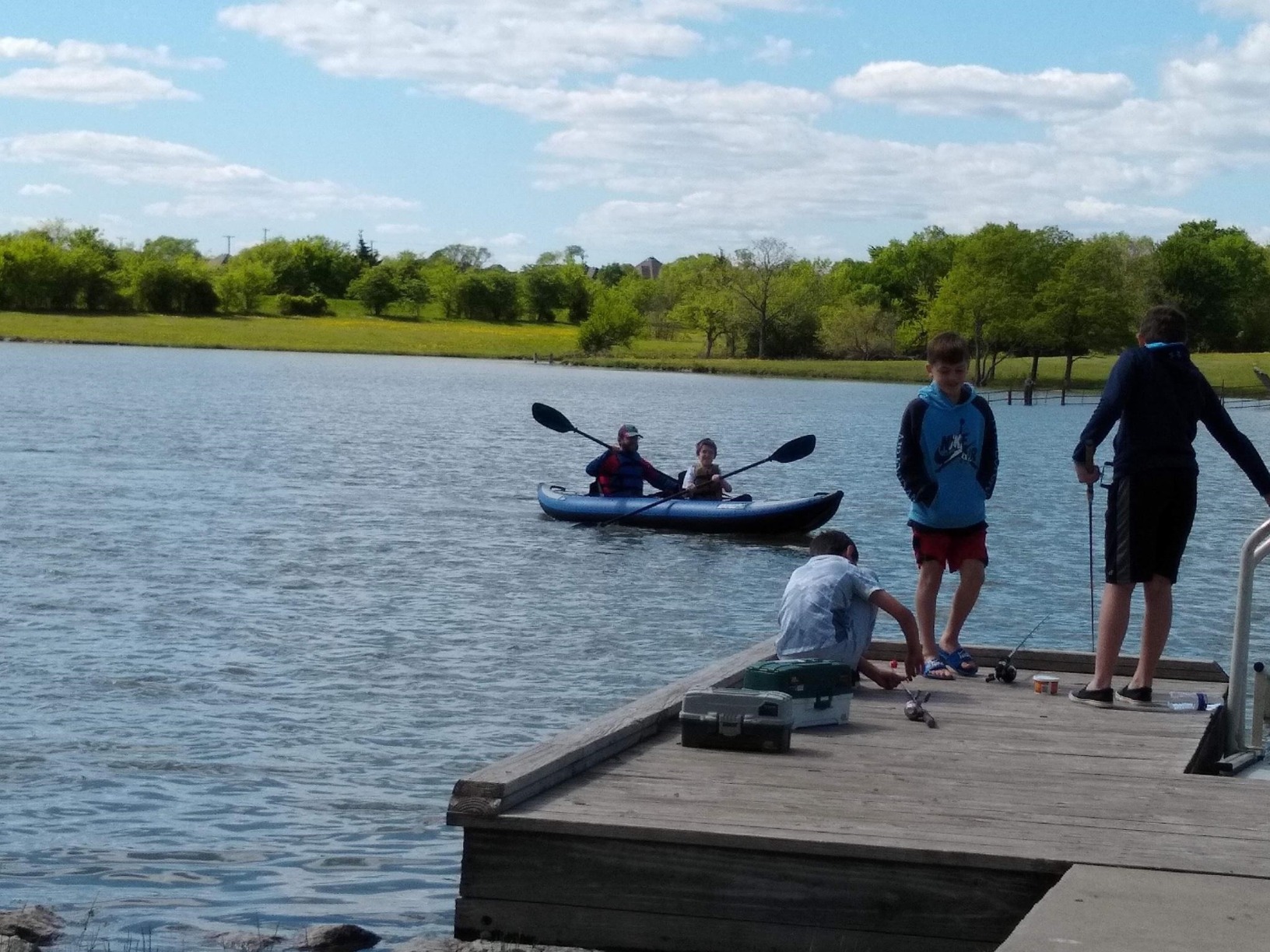
The 1000 denier PVC shell uses quadruple-overlapped glued seams, which is the construction detail that keeps inflatable boats alive on rock. The swept-back rear skeg is removable, so you can pull it for shallow rocky water and lock it back on for flat tracking.
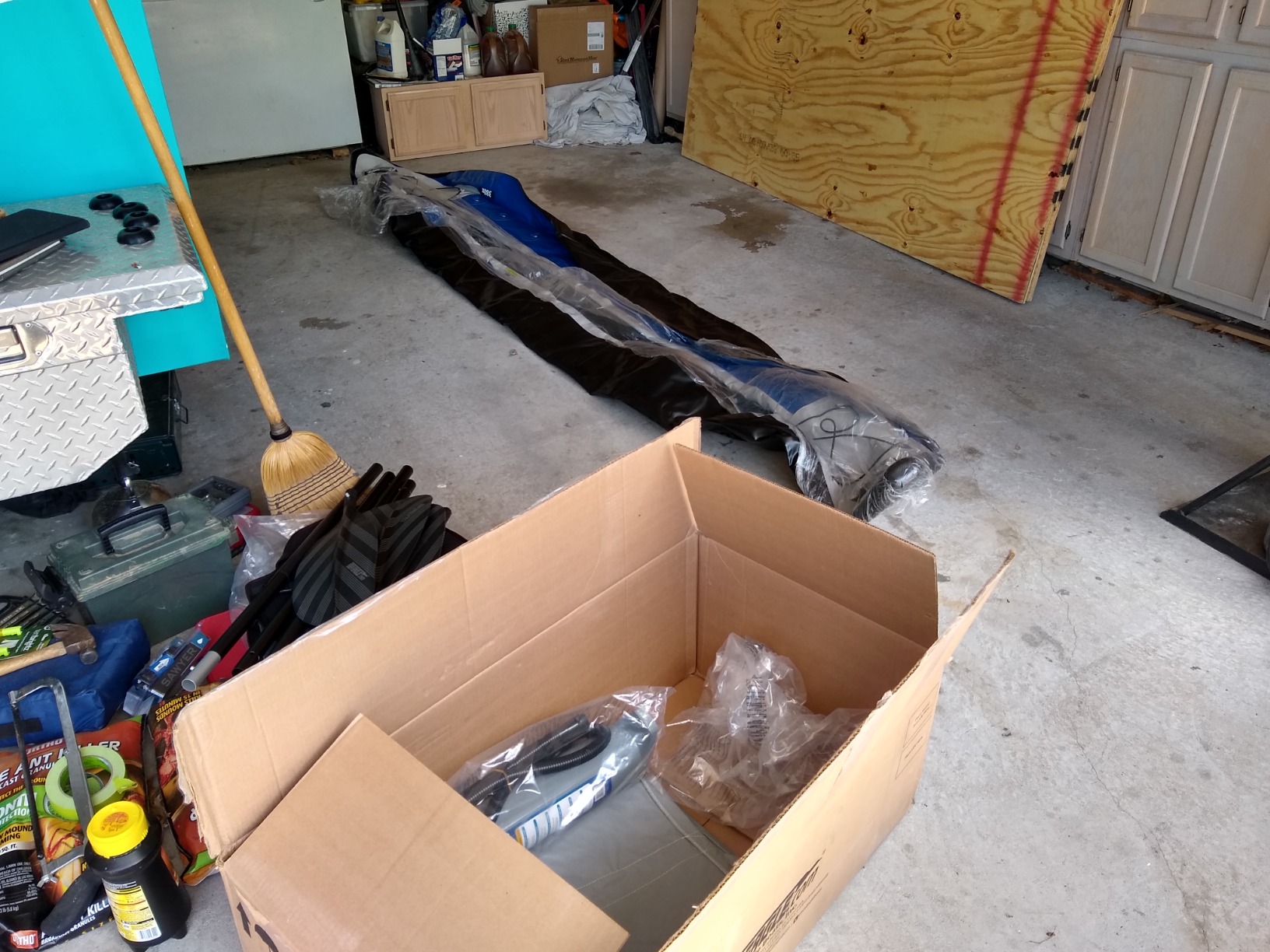
Owners frequently mention owning multiple Sea Eagles, which is the clearest sign you have in a review set that a brand is standing behind its product over time. Inflation takes roughly eight minutes.
How it handles a two-person load on moving water
Well. The wide beam and rigid floor spread a 500 lb total load across the whole hull rather than concentrating it at the center, and tandem inflatables in this class are notably calmer in current than narrow hardshell tandems of similar length.
The tandem format does mean each paddler has more hull between them and the current, which makes initial balance adjustments feel slower than solo. New paddlers should practice getting in and out at a calm put-in before a river run.
Where it falls short for a first boat
If you are paddling alone, this is the wrong shape. A 12 ft 5 in tandem is cumbersome to carry, store in a car boot, or launch from a solo shoreline, and the extra length is dead weight for one person.
Pairs shopping for a boat together should also read our tandem kayak picks for couples to see how a tandem differs from a solo boat beyond just length.
4. AIRE Tributary Tomcat Solo: Aircell Construction for Rocky Water
AIRE Tomcat Solo Inflatable Kayak, Limited Lime, 87120.03.102
AIRE aircell construction
500 denier tubes
1000 denier floor
37 lb weight
Pros
- AIRE aircell build with 30 oz 500 denier tubes and a 32 oz 1000 denier floor
- Airtight 20-gauge inner bladders with double-zipper access for field repair
- Three air chambers with Summit II valves inflate and drain quickly
- Mesh drainage system suited to moving water
- 12 sets of cargo loops plus bow and stern carry handles
Cons
- Included seat offers limited back support
- Only five reviews means very little long-term owner feedback
The Tomcat Solo is the only boat in this roundup built with true aircell construction, and that difference is physical rather than marketing. AIRE lays outer PVC tubes over sealed 20-gauge inner vinyl bladders, so a puncture in the outer skin does not mean a swamped boat. You can strip the outer bag and patch the bladder in the field.
For a beginner who will be learning on rocky creek lines, that redundancy is genuinely reassuring. The mesh drainage system moves water out of the boat continuously in moving water, and twelve cargo loop sets plus bow and stern handles make portaging across a road or trail straightforward.
What you give up for that construction is weight. At 37 lb this is not a backpack boat, and the adjustable inflatable seat is basic. One owner on this listing bought an aftermarket seat specifically because back support was lacking.
A word of caution on the feedback here: five reviews, all five stars. The 5.0 rating is accurate, but a sample that small tells you very little about how the boat holds up after three seasons. Treat the specifications as the reason to buy and the reviews as barely a mention.
Why aircell construction matters on a creek
Because rock happens. On a single-layer boat, a hidden cut in the outer fabric means the whole tube loses pressure and the boat softens under you mid-run. A dual-layer aircell boat keeps its shape because only the outer skin is compromised.
The Summit II valves across three air chambers also mean you can isolate a section rather than losing the whole boat to one leak, and they drain fast for overnight storage.
Where it falls short for a first boat
Weight and seat support, both covered above. At 37 lb packed it is a two-person carry or a cart job, which is a real constraint for creek put-ins with long approaches.
Also expect to buy a better seat before a long day out. The included one is functional rather than comfortable.
5. AIRE Tributary Tater: A Wide, Light Solo Boat Built Around Stability
Aire Tributary Tater Kayak
Wide 38 inch beam
1000 denier PVC
24.5 lb listed weight
275 lb capacity
Pros
- Wide 38 inch beam gives genuine beginner primary stability
- Listed weight of roughly 24.5 lb makes it easy to carry solo
- 1000 denier PVC with double top-stitched seams
- Flat hull for predictable maneuverability in rapids
- Deflates flat for storage and travel
Cons
- 275 lb maximum capacity excludes heavier paddlers and loaded trips
- 8 ft 4 in length limits cargo room for multi-day trips
The Tributary Tater is the boat I would hand to someone who wants the simplest possible first river boat. At 8 ft 4 inches with a 38 inch beam and a listed weight around 24.5 lb, it is short, wide and light, which is the combination beginners need before they need anything else.
That wide beam is the whole design. Primary stability is the resistance to tipping when you lean, and a wide beam gives you a lot of it. The flat hull underneath means that when the current pushes the boat, it moves predictably sideways instead of slewing.
The 1000 denier PVC shell with double top-stitched seams is serious fabric for an inflatable, and it deflates completely flat for storage in a closet between seasons. That matters more than people expect when a boat is living in a garage rather than on a roof rack.
Capacity is the constraint to check first. The 275 lb maximum is fine for a solo paddler under load, but it rules out a 200 lb paddler with a full camping kit, and it excludes heavier paddlers entirely. Measure your loaded weight before you commit.
Is the wide beam actually easier to learn in
Yes. Every stability mistake a new paddler makes is a tipping error, and a wider hull simply has more resistance to it. You spend less of your first season correcting balance and more of it learning to read current and set up ferry angles.
The tradeoff is that a wide boat will not carve or spin the way a narrow one does, so if your goal is river park playboating this is the wrong tool entirely.
Where it falls short for a first boat
The capacity ceiling and the short hull. Eight feet four inches is compact, which makes portaging easy and multi-day cargo space tight.
With eight reviews at 5.0 and no written commentary returned on the listing, buy this one on its beam width and weight, not on its rating.
6. NRS Star Outlaw I: A Wide Solo Inflatable With a High-Back Seat
NRS Star Outlaw I Inflatable Kayak
Solo whitewater inflatable
30 lb weight
275 lb capacity
3-year warranty
Pros
- Forgiving barge-like stability that beginners find easy in current
- High tube volume and roomy seat give good back support
- Inflatable floor design drains water quickly on moving water
- Light enough at 30 lb to carry solo like other inflatables
- Backed by NRS
- a long-established raft and inflatable maker
Cons
- Barge-like hull feels sluggish and slow to accelerate
- Carry bag is not included
- 275 lb capacity is modest for larger paddlers or loaded trips
The Star Outlaw I is built around a simple premise: make a boat so stable that a new paddler stops worrying about balance. Owners on this listing describe it as barge-like, and that is not an insult in this context. It is the most forgiving hull in the roundup.
High tube volume plus a roomy, high-backed seat means you sit supported and low-risk rather than perched. The inflatable floor drains quickly in moving water, which is what you want on a boat where you will be sitting in spray for an hour.
NRS has been building rafts and inflatables for decades, and that manufacturing history shows up in the details: Leafield-C7 valves for fast inflation and deflation, durable PVC throughout, and a three-year manufacturer warranty behind it.
The honest drawback is speed. A boat this stable trades acceleration for that stability, so it will feel slow on a long flat reach. And at 30 lb with no carry bag included, budget for a bag before your first trip.
Is it the easiest boat here to feel confident in
Probably, yes. Owners consistently describe the combination of wide tubes and back support as the thing that made them relax in current. For a paddler whose main hesitation is not tipping over, that is the correct priority.
The trade is honest and simple: you will paddle it slower than the drop-stitch boats in this roundup, and you will pay that back in confidence rather than speed.
Where it falls short for a first boat
The 275 lb capacity is the number to check. It is adequate for a solo paddler with light gear and inadequate for a larger paddler or a loaded multi-day trip.
Add to that the missing carry bag and the sluggish acceleration, and this is a boat for someone who wants stability above all else.
7. Star Viper XL: A Drop-Stitch Floor and Thigh Straps for a Locked-In Fit
Star Viper XL Inflatable Kayak-Blue
Bow and stern displacement chambers
High-pressure drop-stitch floor
Included thigh straps
Pros
- Bow and stern displacement chambers add flotation and lift in rough water
- High-pressure drop-stitch floor gives hard-shell-like rigidity
- Included thigh straps let paddlers lock in for committed whitewater
- Rugged PVC hull that slides over rocks rather than catching
- Bow and stern D-rings for rigging gear on multi-day trips
Cons
- Only a single review exists for this boat
- Thigh straps can be restrictive for relaxed flatwater paddling
The Star Viper XL is the most performance-oriented inflatable in this group, and I would not put it at the front of a beginner roundup. What it does have is a specific feature worth knowing about: bow and stern displacement chambers that add lift in rough water when a wave tries to lift the ends.
The drop-stitch floor gives it hard-shell rigidity, and the included thigh straps let you brace your legs inside the boat. In a serious rapid, that brace is the difference between holding your position and getting spat sideways.
The PVC hull is specified to slide across rock rather than catch on it, which is the right property for a boat with no hard keel or skeg protecting it.
I want to be straight with you about the evidence here. There is exactly one review on this listing, and a single five-star review is not a sample. The five-star figure is real but it tells you nothing about reliability over time, and you should treat the manufacturer specifications as the only basis for a decision.
Why thigh straps appear on a beginner boat
Because an open-cockpit inflatable has no spray skirt or cockpit rim to brace against. Thigh straps are the substitute. On serious whitewater they give you a connection to the hull so your body moves with the boat instead of sliding around inside it.
On flatwater and slow water, that same connection is restrictive and tiring. Boaters frequently unbuckle them for casual paddling, which tells you this boat is built for moving water rather than for relaxing.
Where it falls short for a first boat
The single-review evidence problem is the headline issue. With one owner report, you have no basis to judge seam integrity, valve longevity or how the boat handles after heavy use.
Thigh straps also add a step between you and simply getting in and out of the boat, and they are the first thing a nervous paddler will fumble with in current.
8. Advanced Elements Packlite+: The Packraft for Paddlers Who Carry Their Boat
Advanced Elements Packlite+ Packraft Two Person Inflatable Kayak, Blue
Packs to 17 x 15 x 7 inches
9.7 lb in UltraLite mode
Wide 39 inch beam
3-year warranty
Pros
- Exceptionally light at 9.7 lb in UltraLite mode
- fits in a standard daypack
- Packs to 17 x 15 x 7 inches and rides in the included backpack
- Wide 39 inch beam makes the boat stable and confidence-inspiring
- 210D nylon with a TPU hull holds up to abrasion and punctures
- Two-person capacity with adjustable seats in two seating modes
Cons
- No side grab handles make launch and recovery in moving water harder
- Paddles are not included
- Listed weight of 29.1 lb conflicts with the 9.7 lb UltraLite figure
The Packlite+ answers a question most boat roundups ignore: what if the hardest part of your day is the carry? In UltraLite mode this boat weighs 9.7 lb and packs to 17 x 15 x 7 inches, which means it fits inside the standard daypack you already own.
It still has a wide 39 inch beam, which is the widest in this roundup and the reason it feels stable, and a drop-stitch floor with a 210 denier nylon and TPU hull. The seating system switches between Touring and Comfy Backcountry modes, so the same boat works for a day trip or a night out.
Owners like the easy setup, secure feel and how much tandem room there is. The most common complaints are the absence of side grab handles for launch and recovery in moving water, and the fact that paddles are not included.
That listed weight conflict is worth understanding rather than ignoring. The 29.1 lb figure is the as-shipped weight including floor, seats and pump; the 9.7 lb figure assumes you strip the boat to bare minimum. Which mode you run depends on what kind of river you are heading to.
Is a packraft a real whitewater boat for beginners
For Class I-II and mellow Class III runs, yes. The wide beam and drop-stitch floor give you genuine stability, and this is the right tool for a beginner who wants to walk in from a trailhead or travel with the boat on a plane.
For steeper creek lines with drops and tight slots, a packraft is the wrong first commitment. You will be heavier than you want, slower to respond, and without the boat length to punch through anything.
Where it falls short for a first boat
Missing side handles are the practical one. Launching and climbing back in without them in moving water is harder and less safe than it should be, and owners flag it directly.
Add in the fact that paddles are not included and the seat-mode weight ambiguity, and this is a specialised tool rather than a default first river boat.
9. Star Raven I: A Rigid Drop-Stitch Solo Boat That Stays Dry
NRS Star Raven I Inflatable Kayak – Blue
4 inch drop-stitch floor at 8-10 psi
44/1000 denier PVC
45 lb weight
Padded folding seat
Pros
- Rigid 8-10 psi drop-stitch floor keeps the paddler high and dry
- Padded folding seat gives a strong
- comfortable paddling position
- 44/1000 denier PVC for abrasion resistance and air retention
- Rolls up small with room for pump and accessories in the pack
- Bow and stern handles make carrying to the water manageable
Cons
- One buyer received a broken pump and paid shipping for a replacement
- Floor drain holes let water in on choppy flatwater by design
- Only four reviews with little detail on durability
The Star Raven I is the boat in this group that most owners describe as keeping them dry. One detailed owner report on this listing confirms a 147 lb paddler stayed dry on flat water, accommodated a 52 lb dog, and still packed down small.
That dryness comes from the 4 inch drop-stitch floor insert inflating to 8-10 PSI. You sit on a rigid platform well above the water line rather than in a tub of your own making, and the padded folding seat attaches quickly to D-rings for a genuinely comfortable paddling position.
The 44/1000 denier tube and floor material is specified for abrasion resistance and good air retention, so the boat holds pressure between trips instead of needing a top-up every morning.
One design choice needs explaining rather than defending. The floor has drain holes that let water in on choppy flat water. That is deliberate: the same holes that fill your boat on a lake are what drain it in a rapid. Buy this one for river use, not for sitting on a windy reservoir.
Is it comfortable for long days on the water
More so than most. The padded folding seat and the rigid floor spread your weight properly, and owners mention it as the most comfortable solo inflatable in their experience.
It is also the only boat here with a documented owner report of carrying a dog, which matters for people who want one boat for the whole household.
Where it falls short for a first boat
At 45 lb, this is one of the heavier boats here, and it is solo. Plan on a cart or a second person for anything but a short carry.
There is also a fulfilment issue worth mentioning: one buyer received the wrong pump, arrived broken, and had to pay shipping for a replacement. Check the pump before you leave the house.
10. AIRE Sawtooth: A Tandem Inflatable for Two Paddlers
Inflatable Sawtooth Kayak by AIRE
32.5 inch beam
500 lb capacity
1000 denier PVC shell
2-person seating
Pros
- AIRE 1000 denier PVC shell resists punctures and abrasion
- 500 lb capacity seats two adults plus gear
- Inflatable seats offer adjustable support for long days
- Packs down for storage and remote launches
Cons
- Narrowest beam in this group at 32.5 inches reduces beginner stability
- Heaviest packed weight here at roughly 41-48 lb
- Only two reviews exist for this boat
The Sawtooth is the tandem option for paddlers who want AIRE’s 1000 denier PVC shell and a two-person layout without the bulk of a 12 foot boat. At 500 lb of capacity it fits two adults and gear, and the inflatable seats let each paddler set their own support level.
AIRE’s outer shell is specified to resist punctures and abrasion, which is the reason this brand shows up repeatedly in rocky-creek recommendations. It deflates for storage, which solves the garage problem for a lot of beginners.
Now the part that matters most for this roundup: at 32.5 inches, this is the narrowest beam of the ten boats here. Every other boat in this group runs 38 to 39 inches wide. That difference is exactly the beginner stability margin you do not want to give up in your first season.
With two reviews, both five stars and no written commentary returned, there is almost no owner evidence behind the rating. Judge this boat on its beam width and its shell material, because those are the only facts with real information in them.
When this tandem makes sense
When both paddlers are already comfortable in a wide boat, or when you want AIRE’s shell construction specifically and the narrower beam is a deliberate trade. It packs down well and carries easily enough for two people.
For two complete beginners, I would steer you toward a wider tandem in this roundup instead. Both paddlers will be correcting balance simultaneously in current, and beam width is the margin that makes that survivable.
Where it falls short for a first boat
The beam is the honest weakness. It is the least forgiving hull we included, which is worth thinking about before buying for a first season of lessons and mellow Class I-II water.
The packed weight conflict also matters: marketing copy says 41 lb while the listed figure is 48 lb, and that is a heavy solo carry either way.
How to Size Your First Whitewater Kayak
Sizing for inflatables works differently from hardshell plastic kayaks, because the capacity figure is a real load rating rather than a guideline. Two numbers decide your purchase: your body weight and your total paddled weight including gear.
The rule of thumb most paddlers use is that your total paddled weight should sit at or below the boat’s rated capacity, and comfortably below it if you intend to run gear-heavy trips. Every boat in this roundup lists its maximum: 275 lb for the Tributary Tater and Star Outlaw I, 395 lb for the 300X, 500 lb for the Sawtooth, 750 lb for the 380X, and 855 lb for the 420X.
For a 200 lb paddler, that range narrows immediately. The 275 lb boats work for day trips but leave no margin for a loaded camping kit, which is why the Sawtooth, 380X and 420X exist. If you are larger than that, the wide-beam tandems are the only realistic options in this group.
Beam width is the second sizing variable and the one beginners underweight. Across these ten boats, beam ranges from 32.5 inches to 39 inches. Wider is more stable and less nimble; narrower tracks better and feels twitchier. For a first season, err wide.
Height matters less than weight but still has a role. A very tall paddler needs enough cockpit length to brace their legs properly, which in practice means checking seat height and leg room before buying rather than assuming your height transfers between models.
Hardshell or Inflatable: Where First-Time Buyers Should Start
Almost every paddler who regrets a first boat bought a hardshell too early, and almost every experienced paddler will tell you to buy the hardshell eventually. Both statements are true, which is why the order matters more than the debate.
A hardshell creek boat is faster, more efficient, more durable against rocks and far more precise on eddy lines. That precision is what you need once you are running Class III and above with real technique. None of that matters in your first season.
An inflatable gives you two things a hardshell cannot offer a beginner. There is no enclosed cockpit, so a capsize cannot trap you. And the whole boat fits in a bag, so a mistake at the put-in is recoverable instead of terminal.
The inflation in performance comes from the drop-stitch floor. At 8-10 PSI the floor is a rigid platform, which is why the 300X and the Raven I feel different from a cheap air-only packraft. Compare boats on floor pressure, not on the word inflatable.
A reasonable progression looks like this: one or two seasons on an inflatable to learn wet exits, ferrying and reading current, then a used or new creek boat once you are running Class III with an instructor. Forums consistently recommend demos before buying either type, and that advice holds whether the boat deflates or not.
New or Used: A Five-Point Used Kayak Inspection
Used is where most first boats actually come from, and the forum consensus in this niche is blunt: a used hard boat is the value entry point. For inflatables the used market is thinner, but the same inspection discipline applies.
First, check the fabric. Run your hands along the seams and look for any place the outer skin is scuffed, gouged or delaminated. On an aircell boat like the Tributary models, also confirm the inner bladder still holds air on its own.
Second, test every valve under pressure and watch for slow leaks over a few hours, not thirty seconds. Valves are the failure point that gets replaced most often.
Third, inspect the drop-stitch floor seams and look for separation between the floor and the side tubes. This is where water gets in on choppy flat water and it is hard to repair.
Fourth, count the hardware. Thigh straps, foot braces, D-rings, handles, repair kit and pump all add up, and missing pieces on a used boat are where most of the real cost hides.
Fifth, verify the capacity rating against your paddled weight. A heavier paddler in an older, lower-capacity boat is the single most common mistake in the used market, and the fix is usually just choosing a different boat.
Safety First: The 120-Degree Rule and Taking a Lesson Before You Buy
Before any of the boat recommendations matter, the safety basics matter more. Paddle a whitewater-appropriate PFD with a proper fit, wear a helmet, and dress for the water temperature rather than the air temperature. Cold water kills paddlers who were not expecting to be wet.
The 120 degree rule is the single most useful safety habit a new paddler can adopt. It means: if you are in a position where you could not step out of your boat and swim to safety within 120 degrees of any direction you want to go, you are in the wrong place.
Applied in practice, it means you do not park below a rapid you cannot climb back up, you do not sit below a strainer, and you scout your line before you run it. It is a simple geometric test that prevents the most common fatal errors.
The fatality rate in whitewater kayaking is dominated by a small number of predictable causes: entrapment, failure to swim, cold shock and head injury. That is good news, because all four are addressable with gear and instruction.
Take a lesson before you buy, not after. One session with a qualified instructor on mellow water teaches you wet exit, wet re-entry, ferry glide, braces and how to read current, and it is worth more than any boat choice on this page. Every reputable dealer and outfitter will tell you the same thing.
Demo the boat if you possibly can. Paddlers repeatedly recommend demoing before purchase across every forum we read, and a ten-minute session in the cockpit tells you about seat height, foot brace position and knee clearance in a way no spec sheet can.
Which River Class Should a Beginner Paddle?
Class I is fast-moving water with few obstacles and Class II has continuous waves and a few small obstructions. Both are the correct starting ground for a first season, and any of the boats in this roundup handles them comfortably.
Class III introduces obstacles, drops and holes that require active reading and real technique. It is reachable in your second season with instruction, and it is where the wider creek boats and the higher-rated inflatables start to earn their place.
Class IV and above should not be a beginner’s goal on any boat in this roundup, including the ones rated to Class IV. A hull rating is a statement about the boat, not about your readiness. Your skills, not your equipment, set the ceiling.
If you are unsure where you stand, paddle with an instructor or an outfitter who knows the river. They will put you on water you can handle, which is more valuable advice than any river class chart.
Frequently Asked Questions
What is the best entry-level whitewater kayak for beginners?
For most first-time paddlers the Sea Eagle 420X Explorer is the best entry-level option for families or groups, the Sea Eagle 300X Explorer for solo paddlers, and the Sea Eagle 380X Explorer for pairs. All three are rated to Class IV whitewater with self-bailing floors and open cockpits, so you cannot be trapped upside down. An inflatable crossover is the most forgiving way into moving water, and you can progress to a hardshell creek boat later once you have real technique.
Can a beginner do class 2 rapids?
Yes. Class II water is continuous waves with a few small obstructions, and it is the correct starting ground for a first season. Every inflatable in this roundup self-bails and has a wide, rigid drop-stitch floor that resists tipping. Paddle it with a PFD, helmet and spray skirt if the boat uses one, and take a lesson first so you know wet exit and wet re-entry before you need them.
What size kayak is best for a beginner kayaker?
Choose by total paddled weight rather than by height. Stay at or under the boat’s rated capacity, and well under it if you carry camping gear. In this roundup capacity runs from 275 lb on the Tributary Tater and Star Outlaw I up to 855 lb on the Sea Eagle 420X. Beam width matters just as much: the boats here run from 32.5 to 39 inches, and beginners should err wide for primary stability.
What is the 120 rule for kayaking?
The 120 degree rule says that if you are in a position where you could not step out of your boat and swim to safety within 120 degrees in any direction you want to go, you are in the wrong place. Practically, it means never parking below a rapid you cannot climb, never sitting below a strainer, and scouting your line before you run it. It is a simple geometric check that prevents most common whitewater errors.
Which kayak is the easiest for a beginner to get into?
The NRS Star Outlaw I has the most forgiving hull in this group, with owners describing it as barge-like in its stability plus a roomy high-back seat. The AIRE Tributary Tater is the easiest to carry, with a listed weight around 24.5 lb and a 38 inch beam. The easiest boat to get into physically is any of the inflatables here, because an open cockpit means a capsize cannot trap you underwater.
What are the best kayak brands for beginners?
Three brands dominate this roundup. Sea Eagle builds the 420X, 380X and 300X Explorer inflatables and has the largest review base, with 16 self-bailing valves and drop-stitch floors across the line. AIRE builds the Tributary Tomcat Solo, Tributary Tater and Sawtooth, and is the strongest choice if you want aircell construction with sealed inner bladders. NRS, with the Star Outlaw I and Star Raven I, is the pick for stability and comfort.
Conclusion: Picking Your First Whitewater Kayak
The best whitewater kayaks for beginners in 2026 share three traits: a self-bailing floor, a wide beam and an open cockpit that cannot trap you. Every boat in this roundup has all three, so your choice comes down to capacity, weight and how many people are going.
Our pick is the Sea Eagle 420X Explorer for families and gear. Solo paddlers should take the Sea Eagle 300X Explorer, and pairs get the Sea Eagle 380X Explorer, which has the largest owner feedback base here. If carrying the boat is your biggest problem, the AIRE Tributary Tater at roughly 24.5 lb or the Packlite+ in UltraLite mode solve it.
Then take a lesson before you buy anything. Ten minutes in an instructor’s boat will teach you more than any spec sheet, and it is the single best investment in your first season.