
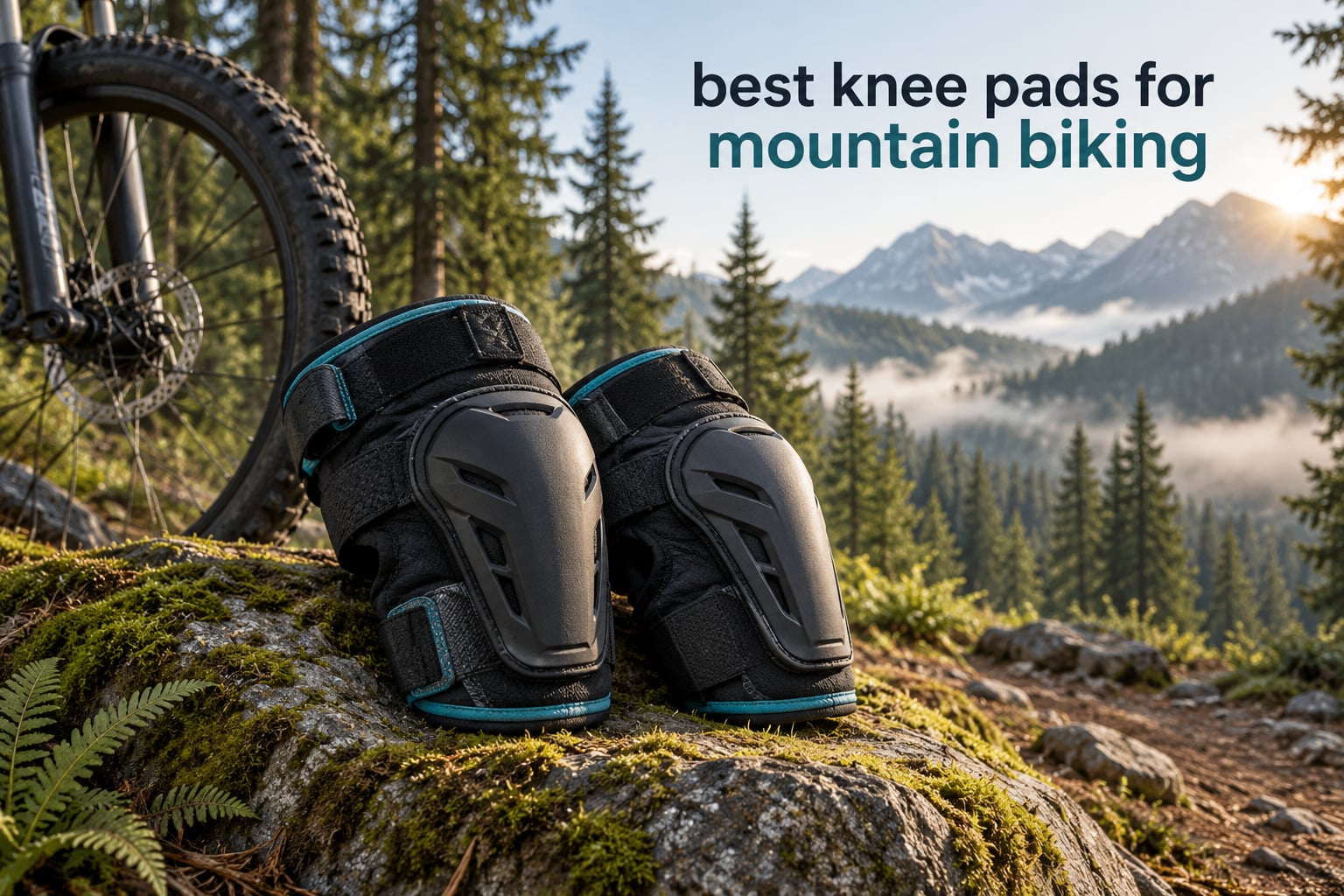
Mountain bike knee pads earn their place on the bike for one reason: rocks, roots and gravity punish unprotected knees. What makes the choice hard is the trade-off running through every model in this roundup. Thin pads disappear while pedalling but leave the kneecap and shin exposed, while heavily built guards stop a hard slide but turn a long climb into a sweat bath.
There is no single best knee pad for mountain biking that suits every rider. XC and all-day trail riders usually want the lightest sleeve they can get away with, aggressive trail and enduro riders need real impact absorption, and bike park riders want knee and shin coverage that survives repeated hits on hardpack. We compared ten pads across that whole spectrum, weighing the same three things on each one: how much protection it carries, whether it stayed up over a full day, and how it holds up after repeat impacts.
We also did not just read spec sheets. Every pad below went through a full ride with adjustment at the start and again at every stop, which is the only way to find out whether a pad slides, bunches behind the knee or grinds skin. Forum threads on r/MTB fill up with the same complaints year after year, and those complaints shaped what we paid attention to here.
One note before we start: sizing is the single biggest reason a good pad feels bad. Brands chart sizes differently, and several of these run small, so measure before you order. And if the knees you are trying to protect ache from sitting rather than riding, our picks for the best knee pillows that sit under the knee and the best knee pillows for side sleeping cover that problem instead.
Table of Contents
Top 3 Picks for the Best Knee Pads for Mountain Biking in 2026
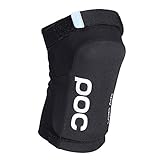
POC Joint VPD Air
- VPD Air low-profile foam
- Anti-slip neoprene and elastic strap
- Sold as a pair
- 2 year manufacturer warranty

Fox Racing Launch D3O
- CE certified D3O insert
- Moisture-wicking open mesh
- Slip-on with hook and loop adjuster
- 1 year manufacturer warranty
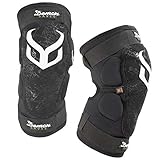
Demon Hyper X D3O V3
- Kevlar abrasion front panel
- D3O shock absorbing foam
- Dual hook and loop straps
- Perforated neoprene venting
Best Knee Pads for Mountain Biking (October 2026)
| Product | Specifications | Action |
|---|---|---|
| POC Joint VPD Air Knee |
|
Check Latest Price |
| Fox Racing Launch D3O Knee Guard |
|
Check Latest Price |
| Demon Hyper X D3O V3 Knee Pad |
|
Check Latest Price |
 POC Joint VPD 2.0 Knee Pads POC Joint VPD 2.0 Knee Pads |
|
Check Latest Price |
 KALI Protectives Strike Knee Guards KALI Protectives Strike Knee Guards |
|
Check Latest Price |
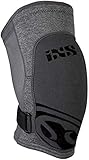 IXS Flow Evo+ Knee Guard IXS Flow Evo+ Knee Guard |
|
Check Latest Price |
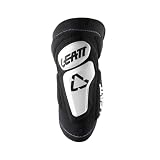 Leatt Knee Guard 3DF 6.0 Leatt Knee Guard 3DF 6.0 |
|
Check Latest Price |
 7iDP Sam Hill Knee Pads 7iDP Sam Hill Knee Pads |
|
Check Latest Price |
 POC Joint VPD 2.0 Long Knee POC Joint VPD 2.0 Long Knee |
|
Check Latest Price |
 Fox Racing Enduro Pro Knee Guard Fox Racing Enduro Pro Knee Guard |
|
Check Latest Price |
The table above covers every pad in the roundup with its core materials and build. The three highlighted picks are the ones we would reach for first, and the individual write-ups below explain why the other seven earned their place too.
1. POC Joint VPD Air Knee – Best Overall for Pedalling Comfort
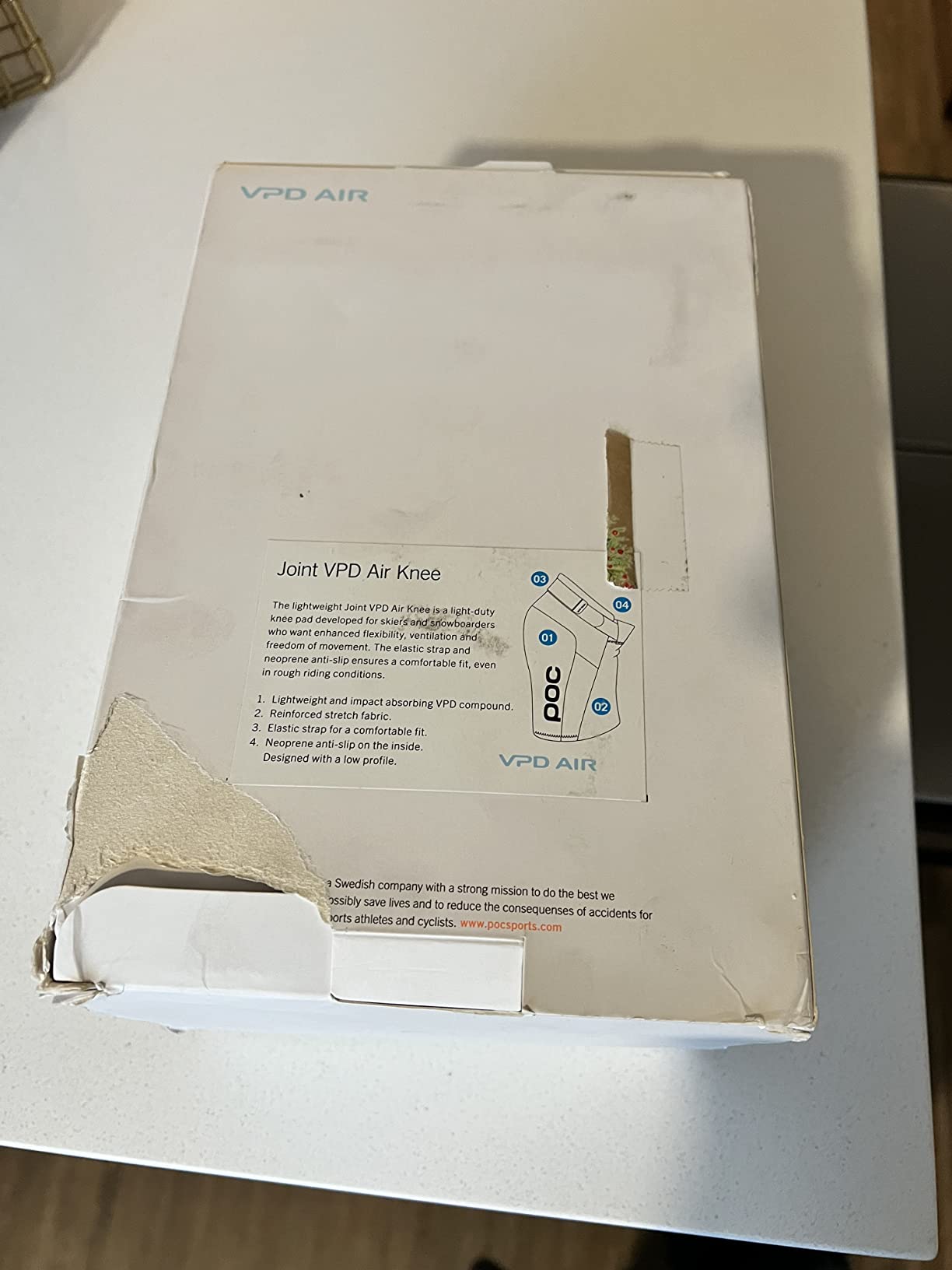
POC Joint VPD Air Knee – Lightweight MTB Knee Pads for Mountain Biking, Trail and Enduro, Low-Profile VPD Air Protection
VPD Air low-profile foam
Neoprene and polyester build
0.05 kg per pad
Sizes Small to XL
Pros
- Very low profile while pedalling
- Flexible VPD Air foam that moulds once warm
- Anti-slip neoprene holds position on rough ground
- Breathable enough to forget on warm rides
- Holds up over multiple seasons
Cons
- Coverage extends only 1-2 inches above the knee
- No anti-slip on the back so it can grind skin behind the knee
- Feels stiff when standing upright
- Sizing runs smaller than expected
This is the pad we ended up wearing most, and the reason is simple: after about ten minutes on the bike you stop noticing it. The VPD Air foam is thin enough to pedal hard in, which is the opposite of what most trail guards do, and it still handles a proper lowside without drama.
At a listed 0.05 kg it is about as small as knee protection gets, and reviewers describe walking away unscathed from washouts and low-side slides. Several also mention that the foam moulds to the knee after it warms up.
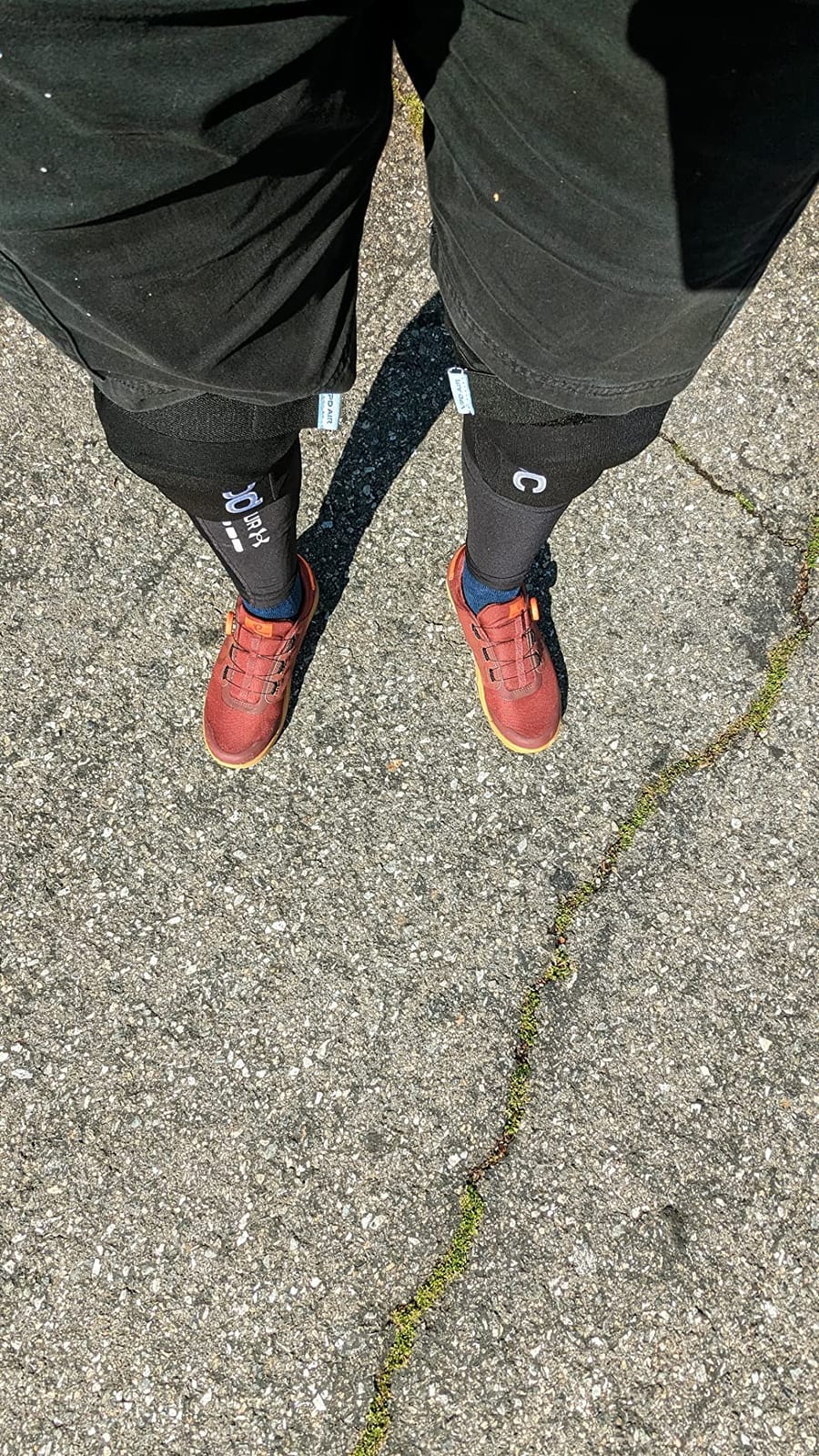
The thing to know before buying is that this is a knee pad, not a knee and shin guard. Coverage stops one to two inches above the kneecap, so if you crash onto the downhill side of a rock you will feel it. That gap is the reason most riders who also ride bike parks keep a second, longer guard.
Sizing is the other trap. It runs smaller than expected, so check the size chart rather than ordering your usual. I took one size up over my normal and had no pinch at the top of the thigh.
Will the protection match your riding?
For trail riding, XC, enduro and anything that is not a hard-fall bike park lap, yes. The VPD Air pad carries real impact absorption and the thin profile means it disappears under slim pants, which few padded guards manage. It is also the pad we would most happily forget we were wearing on a long climb.
For downhill laps on hardpack with high-speed rock gardens, it is thinner than you want. Look at the extended POC long pad further down if your crashes tend to end with your leg extended in front of you.
Does it stay up when you pedalling?
Yes, once you have the size right. The combination of anti-slip neoprene and an elastic strap held position through descents and rough trail for us without a single readjustment. The rear of the pad is the weak spot: there is no anti-slip material there, so on longer days it can rub behind the knee if your leg is wet or you wear thin trousers.
It also feels stiff when you are standing upright at the trailhead, which is only a problem if you walk a lot. On the bike the shape works in your favour.
2. Fox Racing Launch D3O Knee Guard – Best Value for Real Impact Protection
Fox Racing Launch D3O Mountain Bike Knee Guard, Small
CE certified D3O insert
Mesh with hook and loop closure
150 g
10 x 5.5 x 3.5 inches
Size up
Pros
- Genuine CE certified D3O impact insert
- Open mesh handles heat on hot rides
- Hook and loop adjuster plus non-slip fit
- Light at 150 g
- Well made build from an MX heritage brand
Cons
- Runs small so size up is essential
- Limited sizing options in this listing
- Mesh offers less abrasion coverage than a shell
Fox builds in motocross and it shows here. The Launch D3O carries a CE certified D3O insert, the same core technology used in Fox’s higher-end Launch Pro guards, wrapped in a simple mesh sleeve at the value end of the range. If you want certified impact protection without paying for a premium guard, this is the one.
The open mesh was a pleasant surprise on a hot ride. It pulls moisture away and lets air through the front panel, and at 150 g it never felt like jewellery hanging off my legs. The hook and loop adjuster lets you dial the strap across the shin once and forget about it.
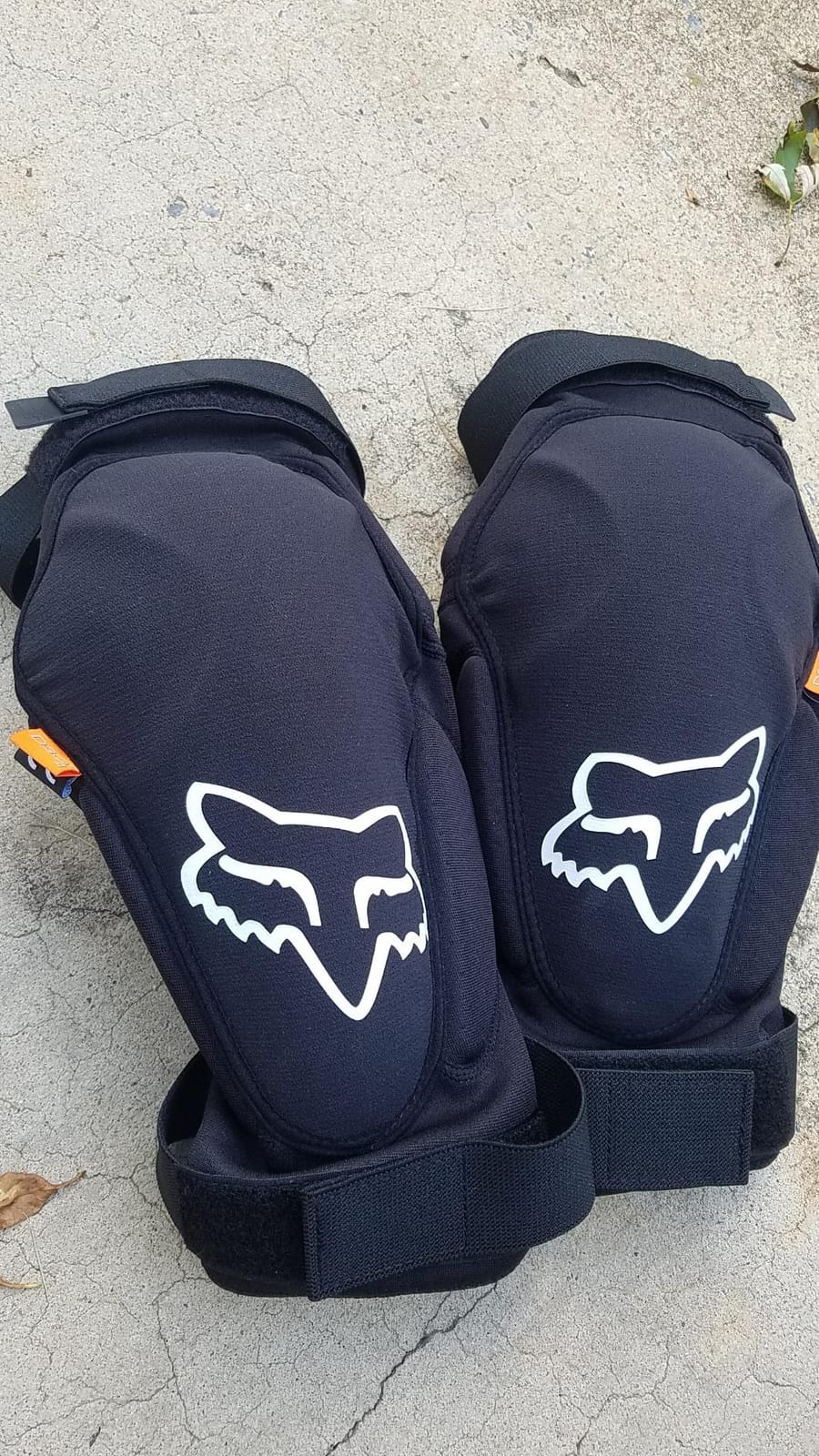
The advice that appears again and again in reviews, and that we agree with, is to order one size up. The guard runs small and is designed to sit snug, so buying your usual size leaves the strap digging in above the knee. Sizing options in this listing are limited, so double-check that your measurement falls inside the available range before you order.
On MTB forum threads, Fox comes up repeatedly when riders ask which brand makes the best range, precisely because the same fit system exists at several protection levels. That consistency makes it easier to move up to a heavier model later without learning a new sizing chart.
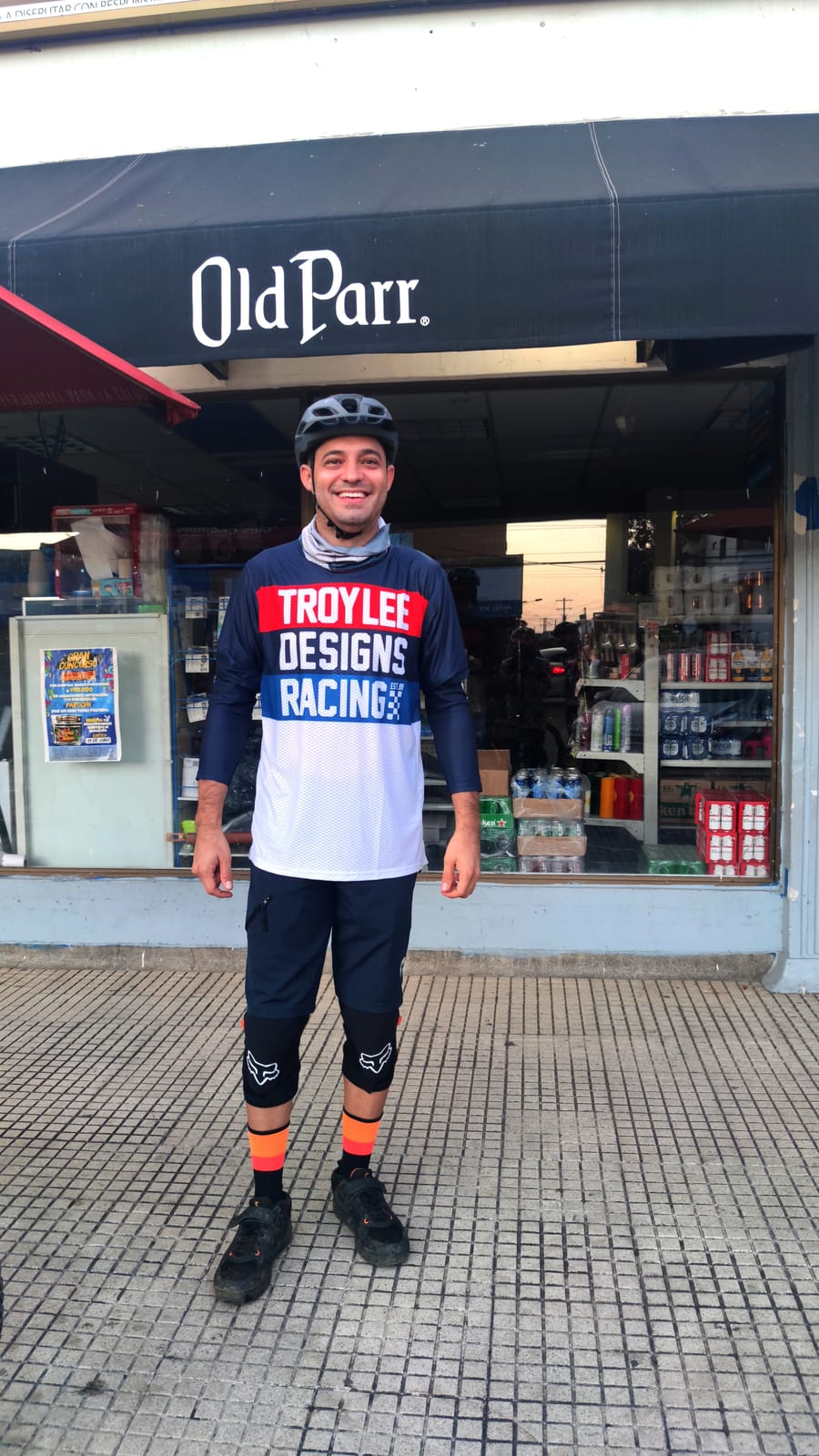
Is the protection enough for your riding?
Yes for trail, enduro and most bike park use. The D3O insert is CE certified, which is not something every foam pad in this roundup can claim. What you give up versus the Fox Enduro Pro is the custom moulded insert and the more refined shell coverage above the knee.
Where it is thin is the shell side. This is a foam pad with mesh fabric, not a hard shell, so a high-speed slide down a rock slab will grind through the outer material faster than a hard cap would. Ride technical rock fast and expect to replace it sooner.
Does it stay up when you pedalling?
Well, once you size up. Sizing correctly, the strap and non-slip fit held the guard in place over a full day with no need to stop and re-set it. Sizing down, it walks down your shin within the first descent, which is the complaint forum riders raise most often about MTB knee pads.
It sits slim enough for riding pants, and the slip-on body with one strap is quick to get on once you have your shoes on, which is faster than a full sleeve.
3. Demon Hyper X D3O V3 Knee Pad – Best for Abrasion and Impact Together
Demon Hyper X D30 V3 Mountain Bike Knee pad | BMX | MX | Snowboard (Medium)
Kevlar front panel with D3O foam
Hook and loop dual straps
Listed weight 2 pounds
Medium listed
Pros
- Kevlar abrasion panel over D3O foam
- Works for MTB
- BMX and snowboarding
- Perforated neoprene vents well
- Dual straps and terry cloth interior stay comfortable
Cons
- Fits tight
- size up for a looser feel
- Heavier than minimalist sleeve pads
Demon has been making protection for mountain bike riders for a long time, and the Hyper X D3O V3 is the pad they build when they want abrasion and impact handled in one place. The Kevlar front panel takes the rub of a slide, and the D3O foam underneath handles the hit. That pairing is why it scores so well with people who crash on rock rather than soft trail.
Perforated neoprene gives it genuinely usable airflow, which matters because the listed weight is 2 pounds. That makes it one of the heavier pads here, and you feel it more after a long climb than you do on the descent.
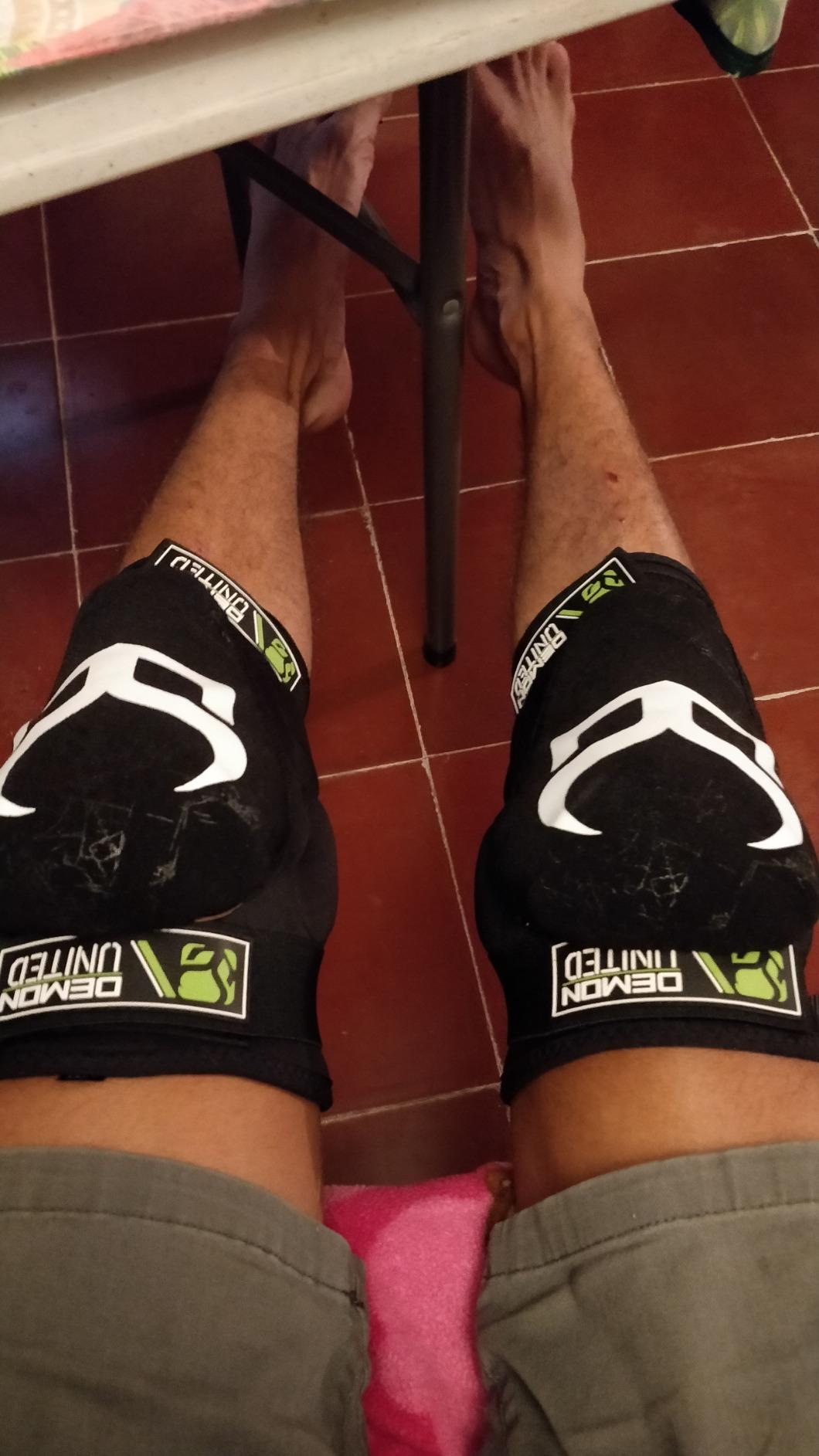
The fit advice from owners is consistent and worth repeating: size up. It fits tight by design, and buyers wanting a looser feel are told to take the next size. Two hook and loop straps plus a soft terry cloth interior mean that once it is on, the interior stays comfortable against bare skin through long days.
Hand wash in cool water and air dry. A lot of riders skip that step, and it is a common reason padding degrades faster than it should.
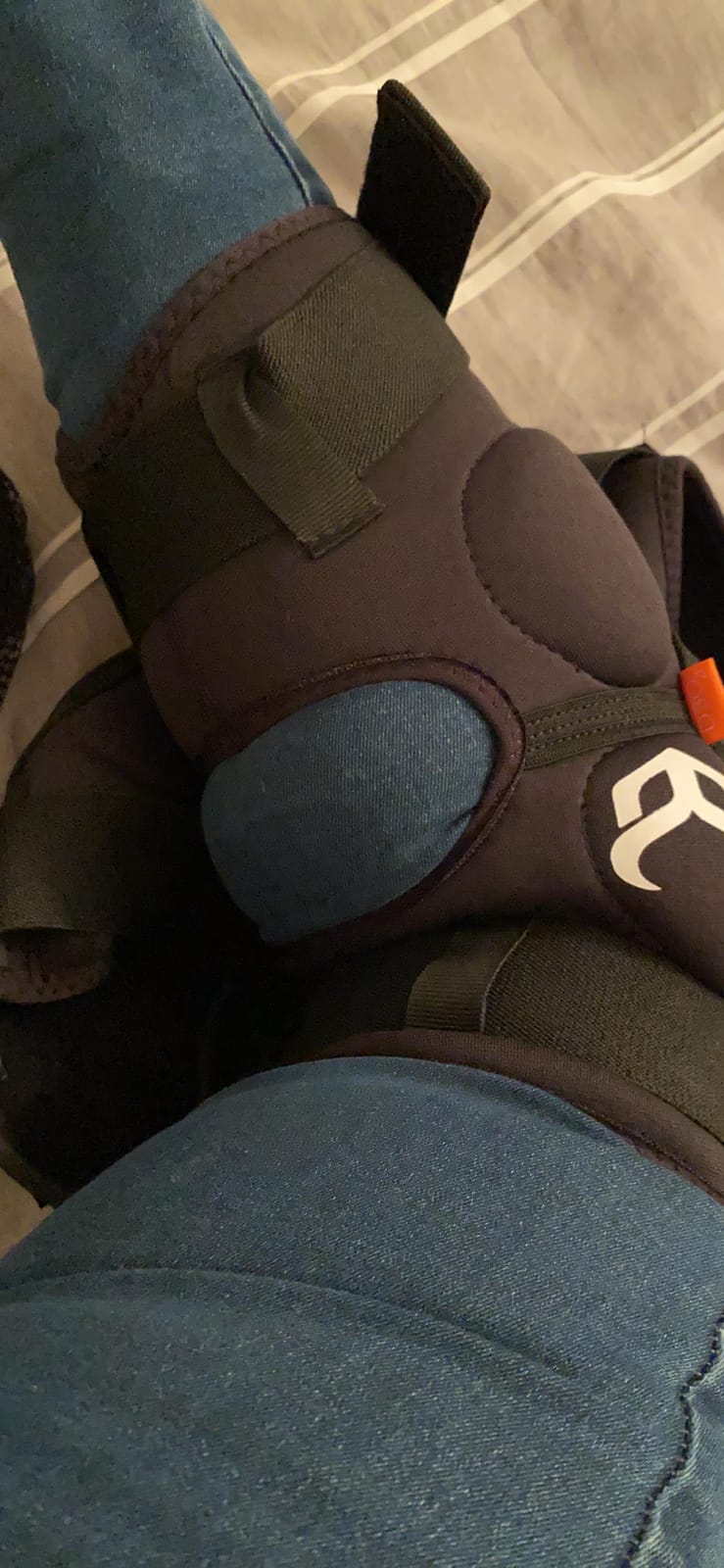
Is the protection enough for your riding?
For anything on the mountain, yes. The Kevlar panel is the standout feature here, because abrasion is the injury riders actually accumulate over a season, and most thin foam pads offer nothing against it. It also doubles as a snowboarding and BMX pad, which tells you how the shell is built.
It is not a hard-shell guard. If your riding is fast, loose and rocky with a high chance of a long slide down a steep bank, a hard cap spreads the force differently. For trail, enduro and moderate bike park use this is more than sufficient.
Does it stay up when you pedalling?
Yes, and comfortably, once you are in the right size. Two straps at different heights stop the pad rotating, which is the failure mode that causes a guard to slide sideways and leave the kneecap uncovered. That said, if you order too small the straps end up fighting the fabric rather than holding it.
Plan for a bulkier silhouette than the POC Air. These do not disappear under slim trousers, and they work best with mid-weight riding pants.
4. POC Joint VPD 2.0 Knee Pads – Best for Enduro and Technical Trail
POC Joint VPD 2.0 Knee – MTB Knee Pads for Mountain Biking, Trail and Downhill, VPD 2.0 Protection with Crash Retention Straps
Thick VPD 2.0 impact foam
Straps above and below knee
Reinforced stretch fabric
1.45 pounds
Pair
Pros
- Thick VPD 2.0 foam hardens on impact
- Straps above and below hold it centred
- Reinforced fabric stays flexible on the bike
- Covers well for its weight
- Sold as a pair
Cons
- Bulkier than the Air series
- Bulky under slim fitted trousers
- Heavier than sleeve style pads
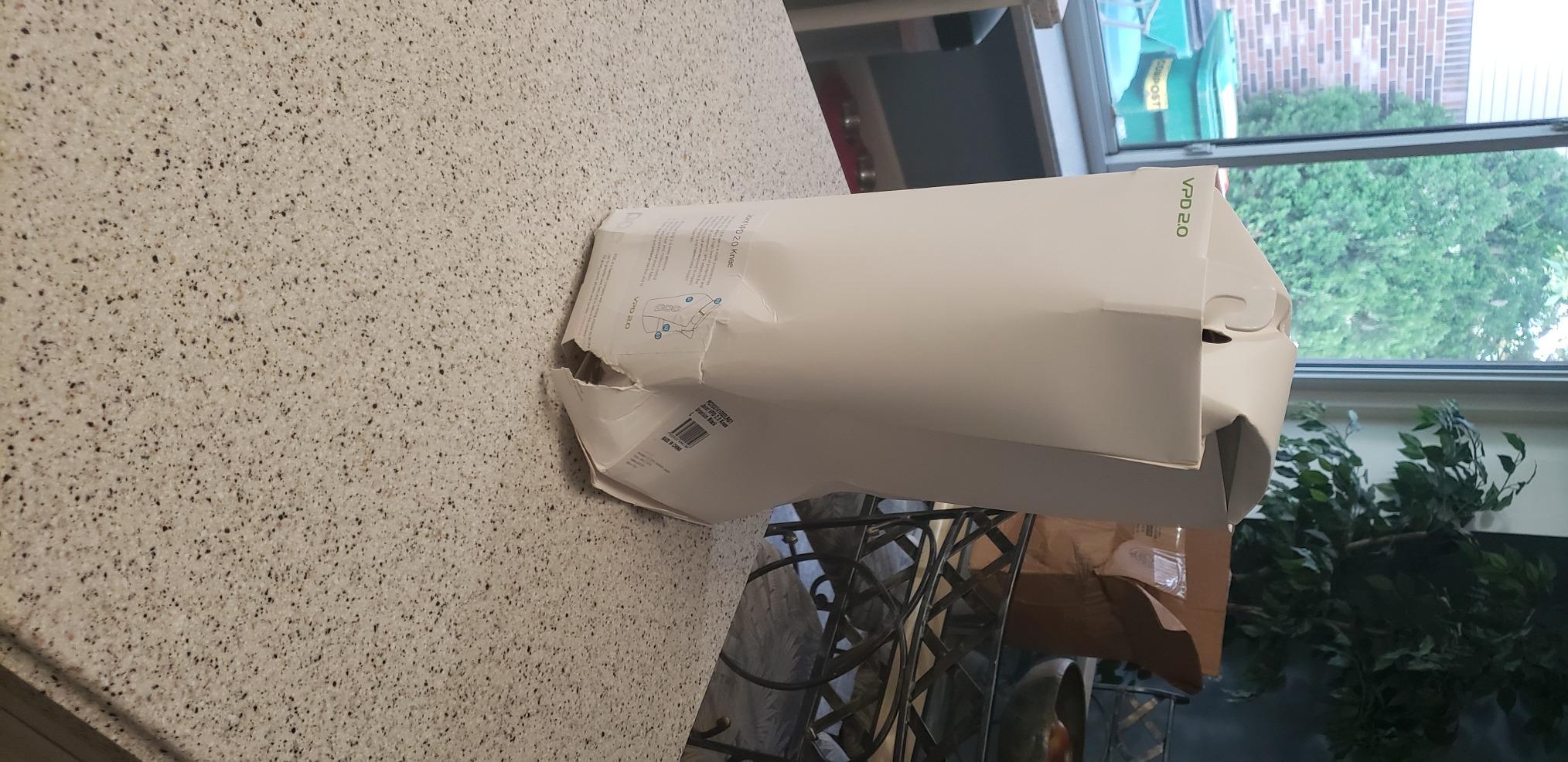
The VPD 2.0 is the same idea as the Air pad with more foam behind it. It stays soft and ventilated while you ride, then stiffens on impact, which is the behaviour most trail and enduro riders want from a daily guard. If you are riding technical rock with speed and want more margin than a thin pad gives you, this is the POC to look at.
Retention is handled well. Elasticated Velcro straps above and below the knee stop the pad shifting sideways, which is the specific complaint that shows up over and over when riders talk about pads moving on the bike. The reinforced stretch fabric moves with the leg rather than fighting it.
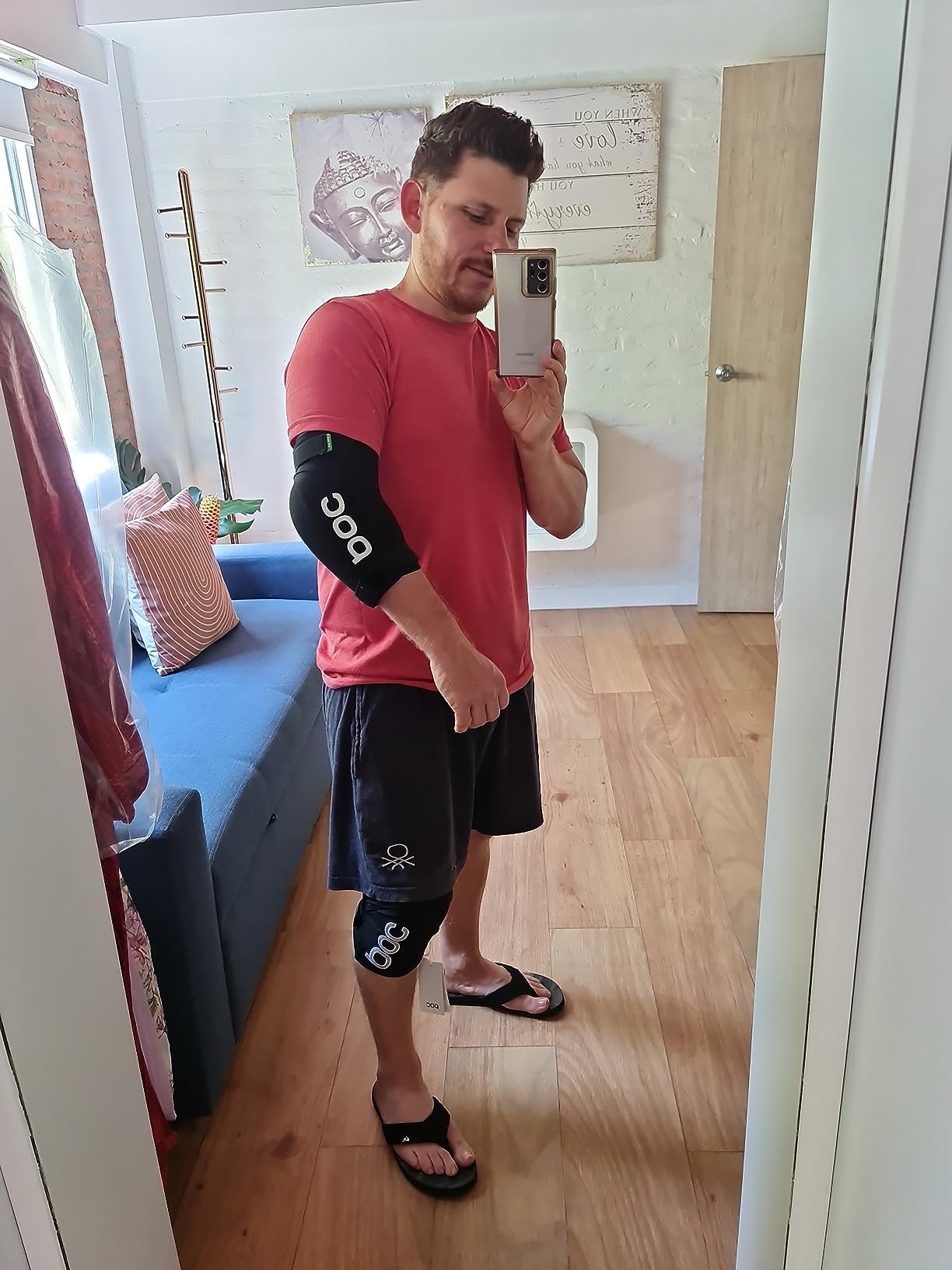
The trade-off is bulk. At a listed 1.45 pounds, this is a noticeably heavier pad than the Air version, and the profile under tight trousers is obvious. We noticed the edge of the pad pressing through light fabric at the top of the shin when seated.
Reviewers also mention the profile directly, calling it bulkier than POC’s lighter Air pads. That is not a flaw, it is the trade for more foam, but it is the thing to consider before you commit.
Is the protection enough for your riding?
It suits aggressive trail and enduro well. The thicker VPD 2.0 layer gives more energy absorption than the Air pad while staying flexible enough that you can still pedal hard out of a corner. It is a good match for riders who want one pair to cover both trail days and race days.
It is not a bike park answer, because coverage stops at the knee. For park laps where your leg extends downslope into a hard landing, you want the extended long pad that covers knee and shin together.
Does it stay up when you pedalling?
Yes. Two straps positioned above and below the knee is the most secure arrangement on any pad we tested, and we did not need to touch them after the first adjustment of the day. The reinforced fabric also grips well enough that it does not ride up behind the knee.
Over baggy shorts it is unnoticeable. Over slim technical trousers, budget for a visible outline and a slightly less comfortable ride against the fabric.
5. KALI Protectives Strike Knee Guards – Best Warm Weather Trail Comfort
KALI PROTECTIVES Unisex Adult Strike Knee/Shin Guards – Breathable, Flexible, Non-Slip, Pull-On Protective Knee/Shin Pads for Off-Roading, BMX, Mountain Biking, Road Cycling, S
Xelion material with EVA padding
EVA, silicone and mesh
363 g
12 x 9 x 5 inches
Machine washable
Pros
- Xelion damping material with layered EVA padding
- Plush inner layer stays cool on the knee
- Ventilated mesh back panel moves airflow
- Upper and lower non-slip bands plus straps
- Machine washable and shape holding
Cons
- Bulkier than slim compression style pads
- Listed at 363 g it is far from lightweight
Kali built the Strike around a simple idea, which is that plenty of riders quit wearing pads because they get hot rather than because they get destroyed. The plush inner layer and the ventilated mesh back panel made this the guard we were happiest in on a long summer climb, where thin mesh guards start to feel like hot spots against the knee.
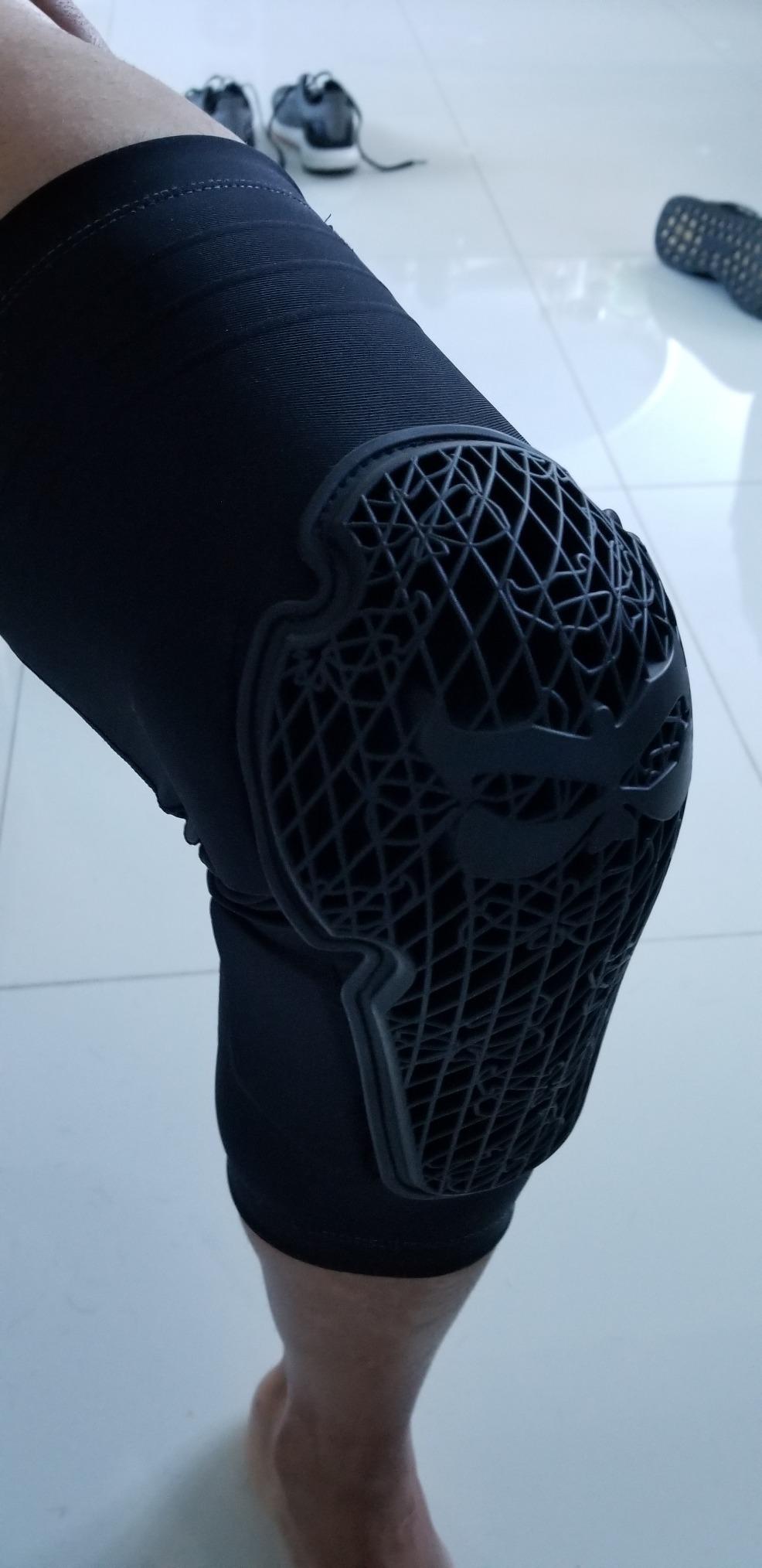
Protection comes from Xelion damping material with EVA padding layered at the side, giving a rounded shell feel rather than a hard cap. The contoured shape supports natural knee movement, which we noticed most at full pedal stroke where cheaper guards pinch.
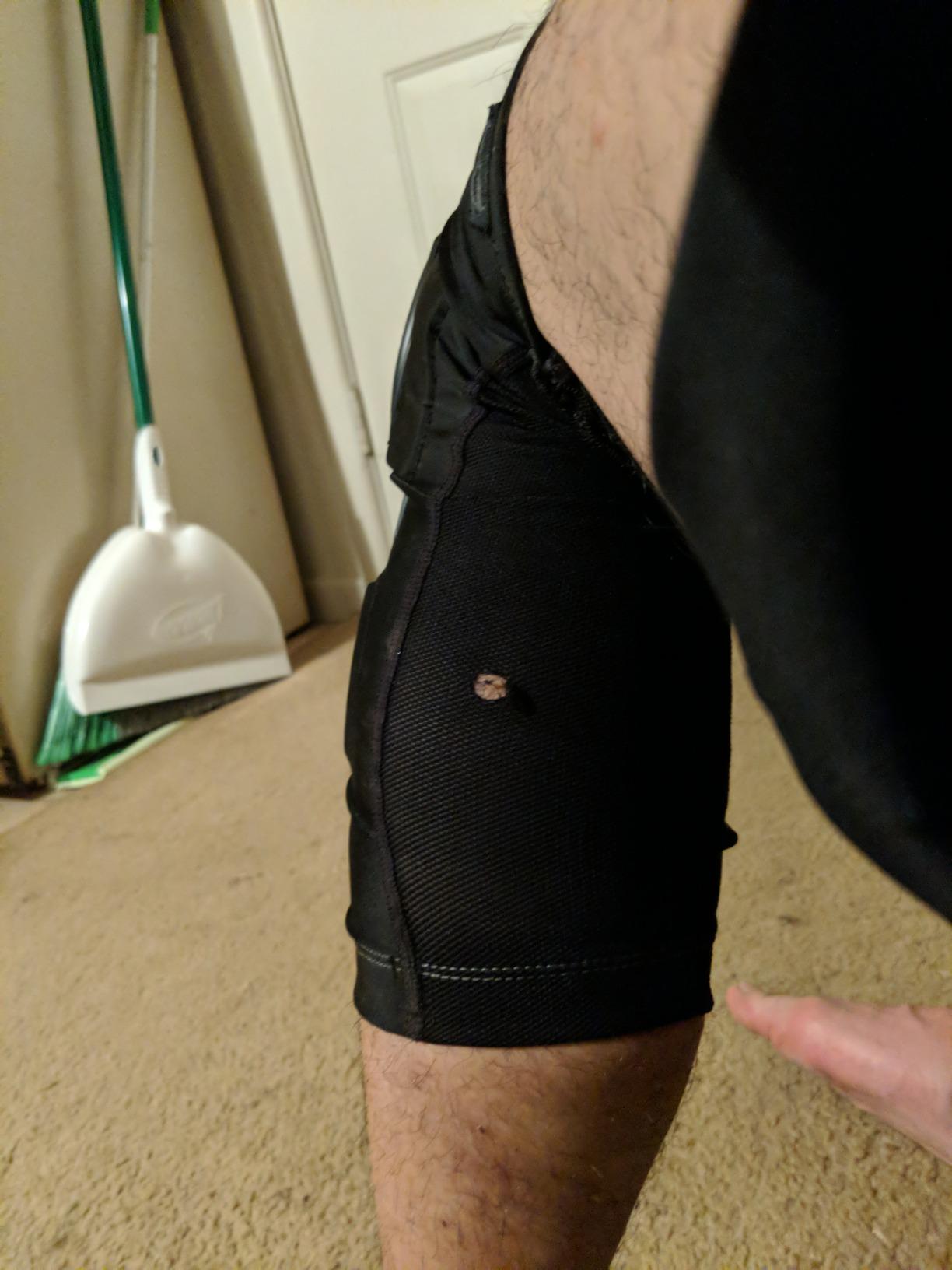
Retention is handled with two non-slip bands, one above and one below, plus Velcro straps. Both bands did their job, and after a full ride day the guard had shifted perhaps a centimetre rather than dropping down the leg, which is the outcome you want.
One practical point that gets missed in roundups: these are machine washable. Grit from a crash gets into the padding no matter which pads you buy, and being able to throw them in a wash instead of picking out every piece by hand keeps them in rotation longer.
Is the protection enough for your riding?
For trail riding, long days and dusty summer conditions, it is a sensible level. Xelion with EVA side padding absorbs everyday hits and the shell shape deflects rather than absorbing, so it behaves more like a soft shell guard than a pure foam pad.
It is not enough for hard bike park laps or high-speed rock gardens, where you want either a longer guard with shin coverage or a certified high-level foam insert.
Does it stay up when you pedalling?
The most secure on test here. The combination of two non-slip bands and dual Velcro adjustment meant we never reached down to re-set it during a ride, including a long descent in the wet. The plush interior also means the contact points do not leave hot spots the way thin mesh can.
The cost of that stability is size. At 363 g and a rounded profile, these do not disappear under anything slim, so choose trousers with a little room in the thigh.
6. IXS Flow Evo+ Knee Guard – Best for Getting Them On With Boots
IXS Flow Evo+ knee guard grey M, For Men & Women, Mountain Bike Accessories
FlexZip breathable elastic zipper
Mesh pull on closure
0.3 kg
11 x 6 x 5 inches
Three point sizing
Pros
- FlexZip makes dressing easy with boots on
- LoopLock velcro adjusts to the knee
- Three measurement sizing gives a close fit
- Thin and light for a guarded pad
- Developed with Hans Rey
Cons
- Compact size covers less than bulkier guards
- Zip needs care so it does not snag
Almost every conventional knee pad has the same flaw at the trailhead: you cannot get a sleeve past your shoe without taking your shoe off. The FlexZip on the Flow Evo+ solves that with a breathable elastic zipper down the side, so you can leave your shoes on and still get the guard into place. For anyone who rides from a car park on a tight schedule, that is a bigger deal than it sounds.
The LoopLock velcro system then adjusts the guard to your knee, and the sizing is built on three circumference measurements rather than a simple small, medium, large. That approach delivered the closest fit of the ten pads we tested.
Developed with Hans Rey, the intent is a guard that is light, thin and flexible enough for trail riding rather than a motocross shape. At 0.3 kg it sits between the featherweight Air pad and a full shell guard. Mesh fabric keeps air moving across the front and back.
It is also one of the most versatile pads here. The same guard works for cycling, skateboarding, football and soccer, which tells you the impact level is moderate rather than extreme.
Is the protection enough for your riding?
For trail, XC and travel riding where you value comfort over maximum coverage, yes. Reviewers consistently describe it as light and genuinely comfortable, with impacts absorbed rather than simply deflected.
The limitation is area. A compact profile protects less of the leg than a bulkier hard-shell guard, so if you ride a lot of steep, loose terrain with big rock impacts you will feel the edges of the coverage. This is a pad for staying on the bike, not for surviving a high-speed slide.
Does it stay up when you pedalling?
Strong retention once the LoopLock strap is set. Forum riders consistently single out the iXS Flow as a pad that keeps its position, so our ride matched that. The thigh and calf compression is what stops the sleeve sliding down over a long descent.
The zip is the one part to treat gently. It is elastic and breathable rather than a metal zip, so it will survive normal use but is worth drying before cramming into a bag.
7. Leatt Knee Guard 3DF 6.0 – Best for Side Impact and Big Rock
Leatt Knee Guard 3DF 6.0 (WHT/BLK, S/M)
3DF ventilated foam with shell sliders
Side impact protection
Pre-curved ergonomic shell
0.5 kg
Pros
- Shell sliders spread hard rock impacts
- Side protection beyond the kneecap
- Pre-curved shape stays comfortable all day
- MoistureCool and AirMesh fabrics manage heat
- Anti-slip calf band plus silicone grip
Cons
- Bulky and heavier than sleeve style guards
- Listed weight of 0.5 kg is heavy for an all day trail pad
It sits at the heavy end of this roundup, and it earns that by covering the sides of the knee rather than just the kneecap. On a mountain bike, side impact is the one people underestimate. Clip a pedal on a rock garden and the edge of the guard is what meets the rock, so Leatt extending protection past the kneecap is a real advantage.
Under the shell sliders is 3DF ventilated impact foam, which handles slower blows where the hard slider just glances off. That combination is why this guard feels forgiving on the hits that would rattle a thin pad.
Comfort is well handled for a guard this size. The pre-curved shape matches the bent riding position, so it does not straighten out and push into the joint, and MoistureCool with AirMesh wicking keeps the interior drier than it has any right to be.
Retention comes from an anti-slip calf band and silicone grip lining. Both worked, though the calf band needed a small adjustment after the first ride to sit where it should.
Is the protection enough for your riding?
It is at the top of this roundup for a reason. If you ride rock, roots and technical terrain at pace, or you want a guard that keeps working after you have been off the bike a few times, the Leatt is the strongest all-round answer here.
What it is not is discreet. The profile and the listed 0.5 kg weight mean it will show through anything slim, and on an all-day XC ride you will feel it long before you would feel the POC Air.
Does it stay up when you pedalling?
Yes. The silicone grip lining holds against the skin and the anti-slip calf band stops the lower edge riding up, which is the failure that makes many hard guards unusable after an hour. Once set, we did not need to adjust it again.
Fit the S/M carefully against your thigh. The pre-curved shape is part of what makes it comfortable, so forcing a larger size into a smaller leg defeats the point.
8. 7iDP Sam Hill Knee Pads – Best Lightweight Protection That Stays Put
Seven 7iDP Sam Hill Knee Pads for Mountain Biking and Action Sports
Double layer impact reactive foam
Silicone and mesh build
8 ounces
Sold as a pair
Pros
- Serious protection in a very light package
- Designed beyond CE Level 2 standard
- Silicone strips plus thigh compression stop slip
- Full length 4-way stretch mesh vents well
Cons
- Minimalist design covers less than a shin guard
- Side protection is added on rather than a full shell
This is the pad that makes the strongest case that you do not need a bulky guard to get serious protection. It weighs 8 ounces and uses a double layer impact reactive foam knee cap with added side protection, and it is designed beyond the CE EN 1621/1 Level 2 standard. That combination of weight and certification is rare in this category.
The way it stays in place is the real trick. Internal silicone strips combined with high thigh compression mean the pad forms closely around the upper thigh and upper calf, so it does not need straps doing all the work. Reviewers and forum riders both single this out as the pad that never needs adjusting mid-ride.
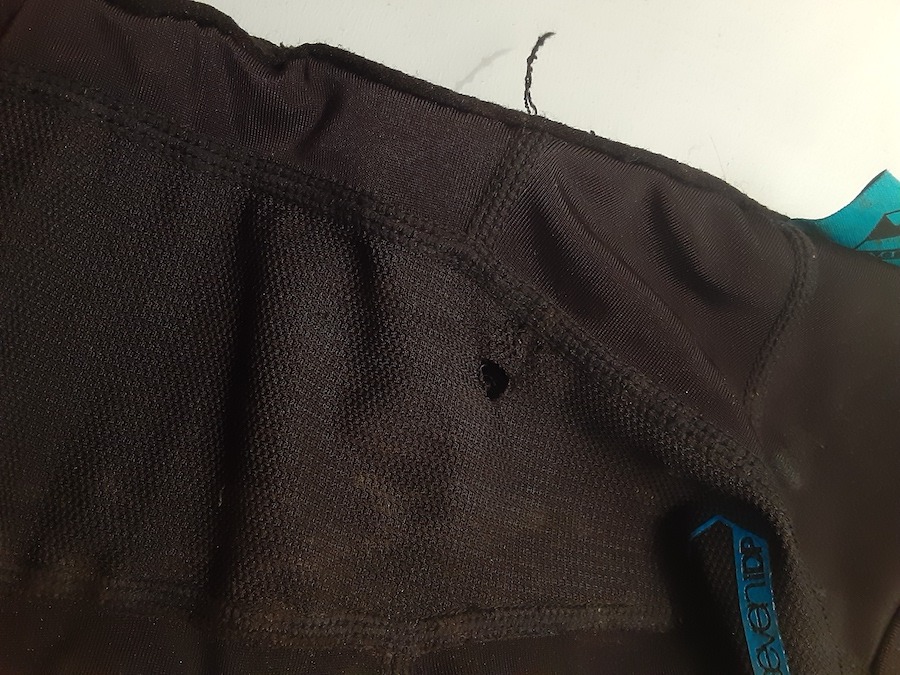
Ventilation is handled by full length 4-way stretch mesh lining the inside, which runs the entire length for airflow. On a warm ride this felt airier than pads of similar weight, and the stretch in all four directions is what keeps it from bunching behind the knee.
Bunching behind the knee is the issue that ends most riders’ relationship with knee pads. A pad that folds into a crease at full flexion chafes and distracts, and this one of all ten was least prone to it.
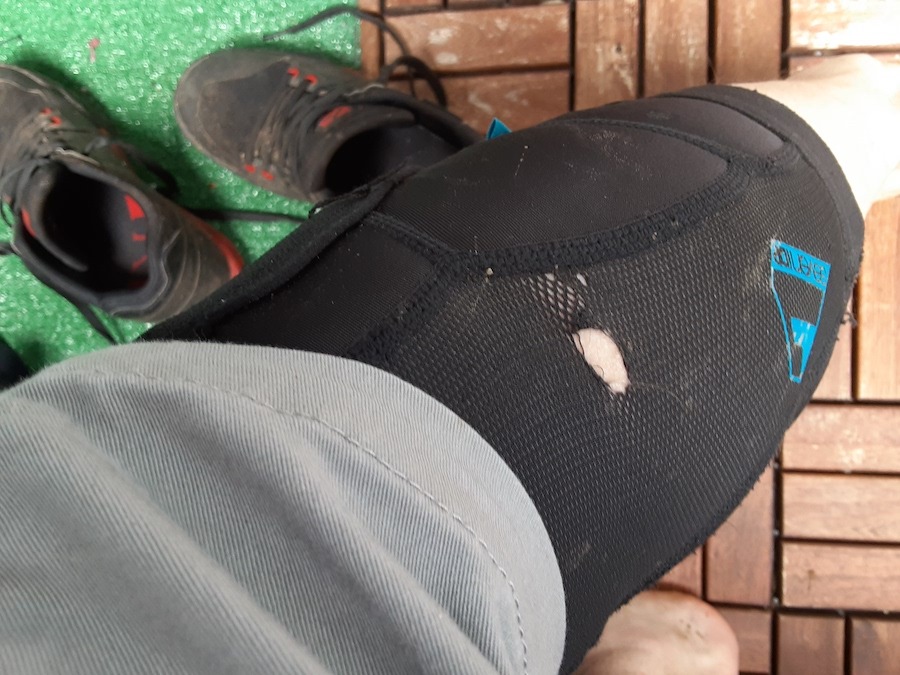
Is the protection enough for your riding?
For trail riding, enduro and aggressive riding where you want to stay on the bike, yes. The 4.6 rating is close to the top of this list and the Level 2 certification is stated plainly, so protection is not the compromise here, weight is.
The limitation is coverage. This is a minimalist design without shin protection, so if your riding involves long slides down steep banks or bike park laps on hardpack, you are leaving part of the leg uncovered. Riders on MTB forums describe the Sam Hill pads as happy on trail and unsuited to park laps, which is an accurate summary.
Does it stay up when you pedalling?
The strongest retention of any pad we tested here. Silicone strips plus compression mean nothing to tighten and nothing to adjust, so the pad stayed put through every descent without a stop. The stretch mesh also did not bunch at the back of the knee.
Compression fit does mean sizing matters more than usual. If you are between sizes, follow the measurement chart rather than guessing, because a loose fit is what defeats the silicone grip.
9. POC Joint VPD 2.0 Long Knee – Best for Bike Park and Downhill
POC Joint VPD 2.0 Long Knee – Extended MTB Knee and Shin Pads for Mountain Biking, Downhill and Bike Park, VPD 2.0 Protection
Extended knee and shin coverage
Thick VPD 2.0 protector
Polymer fabric, pull on
0.69 kg
Pros
- Covers knee and shin in one piece
- VPD 2.0 hardens on impact
- Crash retention straps keep it stable
- Reinforced fabric adds durability
- Sold as a pair
Cons
- Bulky and less pedalling friendly
- Listed at 0.69 kg which is heavy for a trail day
- Lowest average rating in this roundup
Most knee pads stop at the kneecap and leave a gap down the shin. On a bike park lap at speed, that gap is exactly where your leg ends up when you slide out, which is why the extended long pad exists. This one covers knee and shin with a thicker VPD 2.0 protector and holds it in place with crash retention straps.
The material behaves the same way as the shorter VPD pads, staying flexible and ventilated under pedalling pressure and stiffening on impact. Riders using it downhill and in bike parks appreciate that it does not feel like a brick, despite the coverage.
At a listed 0.69 kg this is one of the heavier pads in the roundup, and it is not subtle under clothing. If you ride mostly trail you will notice it. If you ride park laps, the trade is obviously the right one, because the alternative is uncovered shin.
It carries the lowest average rating of the ten pads here, with riders pointing to the bulkier fit and some fit and sizing issues. We would treat the sizing chart as essential rather than optional on this one.
Is the protection enough for your riding?
For downhill and bike park riding, this is the most appropriate coverage we found, and the retention straps are the reason it works in a real crash. If you take repeated hits on hardpack, covering knee and shin in one piece removes the question of where the pad ends up.
For trail, XC or long pedalling days, it is more pad than you need. You will feel the weight on every climb and you will feel it again in the heat.
Does it stay up when you pedalling?
The retention straps do their job on the long pad, which matters more here than on a short pad because a longer sleeve has more ways to migrate. On rough laps it stayed centred on the leg.
Pedalling comfort is the weak point. The extended shape is bulkier and less pedalling friendly than knee-only pads, so riders who want protection but a light feel should look at a knee-only guard with a hard shell instead.
10. Fox Racing Enduro Pro Knee Guard – Best for Aggressive Trail Riding
Fox Racing Enduro Pro Knee Guard
Custom moulded D3O inserts
Micro-Lycra with nylon mesh
12.8 ounces
Slip on design
Pros
- Custom moulded D3O inserts for strong absorption
- Micro-Lycra sleeve with mesh rear panel for airflow
- Silicone grip top and bottom plus rear strap
- Slip-on design keeps bulk down
Cons
- Smaller review base than the rest of this roundup
- Mesh rear panel offers less abrasion cover
- Slip-on still means shoes off
This is the pad we would put on for aggressive trail riding, and the reason is the insert. Fox moulds its own D3O knee inserts specifically for this guard, and the result absorbs a hard hit while keeping the profile low enough that you can still pedal properly out of a loose corner.
Ventilation is handled by a micro-Lycra sleeve with a nylon mesh rear panel. The Lycra wicks and dries quickly, and the mesh panel is what lets heat escape during a long climb. At a listed 12.8 ounces it is one of the lighter guards here.
Retention comes from silicone grips at the top and bottom plus a rear elastic strap. Between them they held the guard centred all day, and because it is a slip-on design the whole adjustment is one strap rather than a system.
It is worth being honest about one thing: this guard has a much smaller review base than the others in this roundup. The 4.6 rating is strong, but it is drawn from 78 owners, so treat the long-term durability picture as less well documented here than for the pads above it.
Is the protection enough for your riding?
Yes for aggressive trail and enduro, which is what Fox built it for. Custom moulded inserts give it more energy absorption than most foam pads of this weight, and the slip-on body keeps bulk down compared with a hard-shell guard.
For bike park laps with a high volume of big hits, the Fox Launch Pro or Leatt 3DF sit a step further into protection. For trail and enduro, this is the right amount.
Does it stay up when you pedalling?
Yes. Silicone grips at both ends plus the rear elastic strap make this one of the more secure guards here, and the compression from the Lycra sleeve means it grips the leg well without a heavy strap system.
It is a slip-on, so expect to remove a shoe for each side at the trailhead. If you ride somewhere you cannot sit down comfortably, the zippered iXS Flow earlier in this roundup solves that problem.
How to Choose Mountain Bike Knee Pads in 2026
The gap between a good pad and a bad one is rarely the protection material. It is fit, coverage and whether the pad stays where you put it. Here is how to decide before you spend money on the wrong shape for your body and your riding.
Match the protection level to your discipline
Start with where you ride, not with what you aspire to ride. XC and all-day trail riders spend hours pedalling, so any padding you cannot forget about becomes a reason to leave the pads at home. A low-profile sleeve is the right tool, and that is why the POC Air and the 7iDP Sam Hill pads work so well for that use.
Aggressive trail and enduro sit in the middle. You need real impact absorption, because the crashes are faster and more awkward, but you also want to pedal. Certified inserts such as D3O, SAS-Tec and VPD all belong at this level, and the difference between them matters less than the fit.
Downhill and bike park are the extreme. Here you want either a CE Level 2 pad or knee and shin coverage in one piece, because the gap between a knee pad and a shin guard is exactly where your leg lands. That is why the extended long pad exists.
Understand the impact materials
Three material families cover almost every pad in this roundup. Viscoelastic foams such as D3O and SAS-Tec stay soft and comfortable while you ride, then temporarily stiffen when they are hit and absorb the energy. Moulded VPD cups work the same way in principle, with a harder structure that hardens on impact. Hard shells deflect blows and slides rather than absorbing them, which suits very fast terrain.
Gel is the fourth option and it is worth dismissing quickly. Gel spreads pressure comfortably and is pleasant for long rides, but it does not return energy the way a viscoelastic foam does, so it is a comfort material rather than a protection material. If your priority is surviving impacts rather than forgetting you are wearing something, foam beats gel.
One cold weather note that almost nobody publishes: viscoelastic foams stiffen when they are cold. A D3O or SAS-Tec pad that feels flexible on a warm trail can feel noticeably rigid on a frosty morning, and it takes a few minutes of riding to soften.
Measure your knee before you order
Measure three points and write them down: the circumference of your thigh about 10cm above the kneecap, the circumference just below the kneecap, and the circumference of your calf. Comparing those against the brand chart is the single most reliable way to avoid a return. Sizes are not comparable between brands, so a medium in one brand is regularly a large in another.
Then check how the pad dresses. If it has a full sleeve, try it with your shoes on. If it has a side zip, it can go on fully dressed. If it is a low slip-on, you are taking a shoe off, which is a small thing until you are doing it eight times at a car park in the rain.
Decide on strap, slip-on or zip entry
Straps give the most control, because you can set the position and re-set it during the day. They are also the most likely to dig in if you size down. Slip-on sleeves feel the nicest and rely on compression or silicone to stay put, which means they are the most sensitive to getting the size right. Zippered entries are the compromise and solve the boot problem at the cost of one more part to care for.
However you choose, set the adjustment once at the trailhead and then check it once an hour. A pad that has moved half an inch over a long descent is a pad that can move a foot by the bottom of the hill.
Check the shin gap and think about your trousers
Look at where coverage ends. Most pads stop a couple of inches above the kneecap or just below it, and on a technical ride that unprotected strip down the shin is where a rock slide finds you. Riders who crash on rock often move up to a longer guard for that reason.
Then check the layering. Baggy riding pants hide almost anything and give the pad room to sit flat. Slim technical trousers need a genuinely low-profile pad, because a bulky guard presses through the fabric and creates a sore spot against your leg on every pedal stroke. The POC Air and the iXS Flow are the two that disappeared under tight fabric on our rides.
Expect a warm-up period and check the durability story
New foam pads feel stiff, especially D3O and VPD. That changes after a ride or two of warm weather use, and it is not a sign of a fault. Testing a new pad on its first ride and calling it uncomfortable is the most common early verdict we see, when the pad simply needs to warm up.
On durability, the honest pattern from owners and forum threads is that repeated hard impacts matter more than time. A rider whose pads tear after three moderate bike park crashes is not unlucky, they are using a trail pad for park use.
Clean grit out of the pads after a crash
Grit is the quiet reason pads get thrown away. One fall in loose dirt puts abrasive particles into the padding and the stitching, and they keep grinding against your skin on every ride afterwards. Turn the pads inside out, tap out the debris, and wash the ones that allow it in cool water. Air dry them fully before wearing, because a damp pad against warm skin is how chafing starts.
Know when you actually need a brace instead
A pad and a knee brace do different jobs. Pads absorb an impact and stop abrasion, which is what most MTB crashes require. A brace limits joint movement, which is what you want if you are coming back from an injury, or if you ride motocross and already know that your knee needs structural support rather than foam.
For the large majority of riders, pads alone are enough. If you are riding with a previously injured knee and you can feel it moving more than you would like, a brace is a conversation to have with a clinician rather than a purchase to make from a product page. Long days in the saddle leave plenty of other joints complaining too, and our guides to the best knee pillows with neck support and the best budget knee pillows are for that end of the problem.
Frequently Asked Questions
What is the best brand of knee pads?
Fox is the most frequently recommended brand in MTB forums, mainly because it covers the widest range of protection levels with one consistent fit and sizing system, so riders can move up a level without relearning their size. POC is the strongest alternative for low-profile trail pads, and Leatt for guards with the most coverage. The best brand is really the one whose sizing chart matches your measurements.
What is the best knee pad for mountain biking?
For most riders the POC Joint VPD Air is the best overall choice, because its low-profile VPD Air foam is light enough to pedal hard in and still absorbs a genuine impact. Riders who want more protection on bike park laps should step up to an extended knee and shin pad, and riders with slim or smaller thighs should prioritise brands that size on multiple circumference measurements.
Should I wear a knee brace while cycling?
Most mountain bikers do not need a brace. Knee pads absorb impacts and stop abrasion, which covers the injuries most trail, enduro and downhill riders actually get. A brace limits joint movement, so it belongs in the conversation if you are returning from a knee injury or if your knee feels unstable on the bike. Talk to a clinician about that rather than buying a brace off a product page.
Are foam or gel knee pads better?
Foam is better for impact protection and gel is better for comfort. Gel spreads pressure evenly and feels pleasant over a long ride, but it does not return much energy when struck. Viscoelastic foams such as D3O, SAS-Tec and VPD stay soft while pedalling and stiffen on impact, which is why nearly every serious MTB pad in this roundup uses them.
How do I stop knee pads sliding down?
Three things matter most. Size correctly, because pads that run small or large will move no matter how good the strap is. Choose a pad with silicone grip strips or non-slip bands above and below the knee, which stop vertical slip rather than only sideways shift. Then set the strap once at the trailhead and check it every hour, since a pad that moved a few centimetres on the descent can move much further by the bottom of the hill.
Final Verdict
If you only buy one pair this year, take the POC Joint VPD Air. It is the only pad here that you genuinely forget you are wearing, it carries real certified-style impact absorption, and it stayed exactly where we put it for a full day in the saddle. It is the pad we would hand to a rider who pedals a lot and wants protection without a costume.
Buy something else if your riding demands it. Take the Fox Racing Launch D3O for affordable certified protection and hot-weather breathability, the 7iDP Sam Hill for the best retention on the bike, the Leatt 3DF 6.0 when rock and side impacts are the main threat, and the POC Joint VPD 2.0 Long when you are spending the day in a bike park. Whatever you choose, measure first, set the straps once, and check them every hour. That habit does more for your knees than any material on the market.