
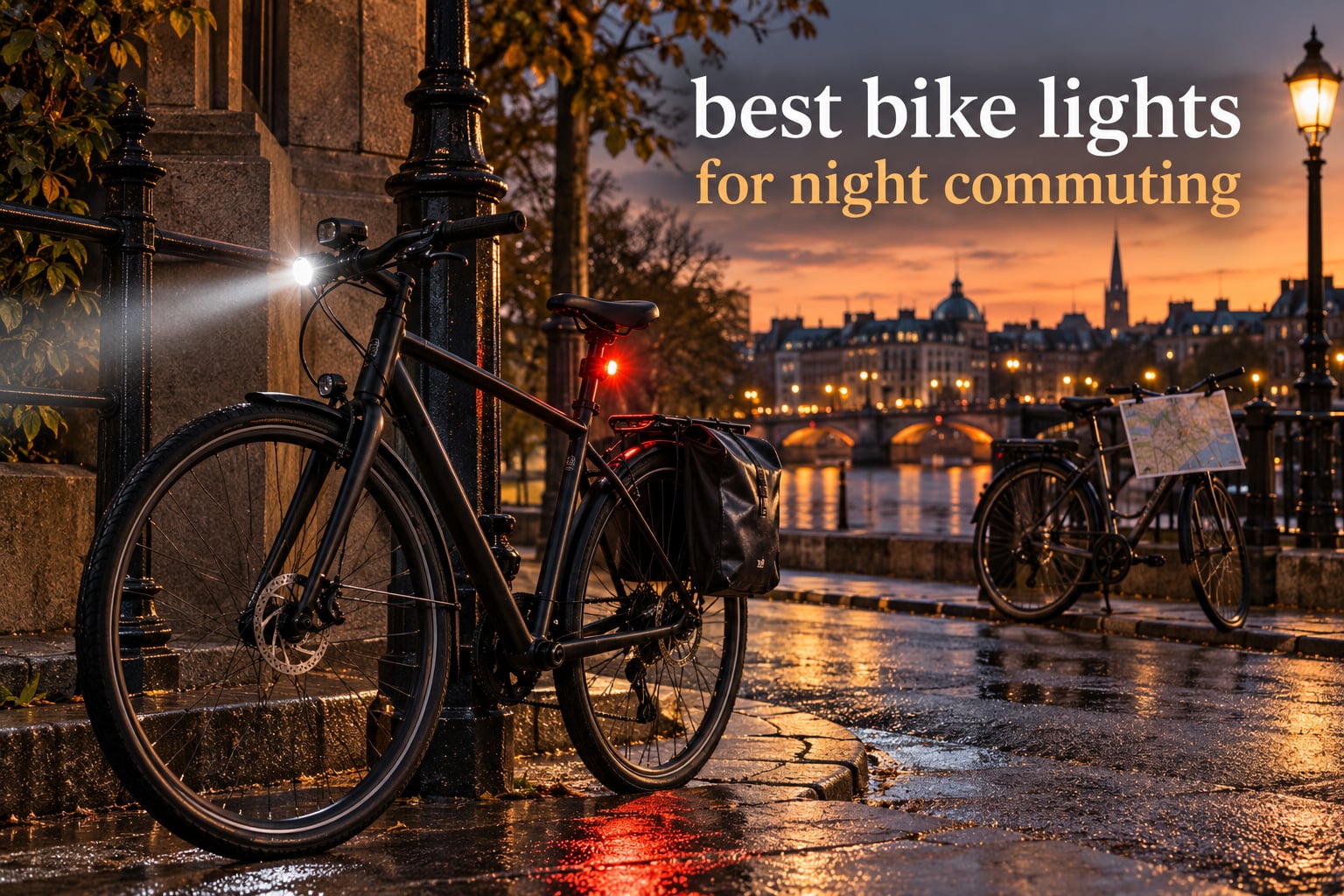
The best bike lights for night commuting come in pairs: a shaped front beam so you can see potholes, and a wide red rear light so drivers behind see you. One does the job of seeing, the other does the job of being seen, and most riders underrate how much of their safety depends on the second one.
Quick picks first, because you did not come here for a lecture:
Best overall front and rear set: the Ascher Ultra Bright set, 300 lumens, 2000 mAh front cell, 5-12 hours of run time per mode
Best all-round value bundle: the BLITZU Gator 320 set, 550 lumens, USB-C, and it includes a bike bell
Best battery endurance: the Cuvccn set, 1100 mAh front cell rated up to 58 hours on slow flash
Best pure rear light: the BLITZU USB-C two-pack, 120 lumens each, up to 10 hours per charge
Best when you want real road illumination: the NiteRider Lumina 1200 Boost, a 1200-lumen beam with a collimator lens
Over the past few months our team put twelve lights and light sets through the same routine: mounted them on bars, seats and helmets, ran them through rain, and watched how each behaved on the modes people genuinely use. What follows is what survived that. It is a budget-heavy category, so we have not dressed these up as something they are not.
If you are rebuilding a whole commute setup rather than just lights, our guides to the best folding bikes for commuting and the best hybrid bikes for commuting cover the rest of the kit. If you have already got the bike sorted and just want to see and be seen, keep reading.
Table of Contents
Top 3 Picks: Best Bike Lights for Night Commuting (October 2026)
These three cover the most ground for a typical week of dark riding. Everything else in the list is either narrower in what it does well, or costs more for output you may never use on a street commute.
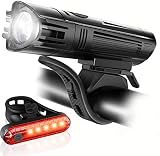
Ascher Front and Rear Light Set
- 300 lumens front
- 2000 mAh front cell
- 5-12 h run time
- Tool-free silicone strap mount

BLITZU Gator 320 Light and Bell Set
- 550 lumens front
- USB-C rechargeable
- 3-piece kit with bell
- IPX5 water resistant
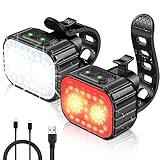
Cuvccn Rechargeable Light Set
- 400 lumens front
- 1100 mAh front cell
- Up to 58 h on slow flash
- IPX6 waterproof
Best Bike Lights for Night Commuting (October 2026)
Every set below appears once in this table and once in its own section further down. Figures are the manufacturer-rated numbers for the highest-output mode unless stated otherwise, which is rarely the mode you will actually ride in.
| Product | Specifications | Action |
|---|---|---|
| Ascher Front and Rear Light Set |
|
Check Latest Price |
| BLITZU Gator 320 Set |
|
Check Latest Price |
 Malker Four-Light Silicone Pack Malker Four-Light Silicone Pack |
|
Check Latest Price |
 Victoper Light Set Victoper Light Set |
|
Check Latest Price |
 GearLight S400 Pro Set GearLight S400 Pro Set |
|
Check Latest Price |
 BLITZU USB-C Rear Light Two-Pack BLITZU USB-C Rear Light Two-Pack |
|
Check Latest Price |
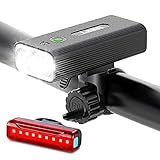 Lsan 1200-Lumen Set Lsan 1200-Lumen Set |
|
Check Latest Price |
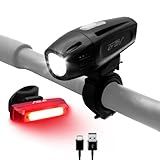 BV Five-LED Light Set BV Five-LED Light Set |
|
Check Latest Price |
| Cuvccn Rechargeable Set |
|
Check Latest Price |
 NiteRider Lumina 1200 Boost NiteRider Lumina 1200 Boost |
|
Check Latest Price |
 APECYC Light Set APECYC Light Set |
|
Check Latest Price |
 NiteRider Lumina Micro 850 NiteRider Lumina Micro 850 |
|
Check Latest Price |
1. Ascher Front and Rear Light Set – 300 Lumens With Tool-Free Mounting
Ascher Ultra Bright USB Rechargeable Bike Light Set, Powerful Bicycle Front Headlight and Back Taillight, 4 Light Modes, Easy to Install for Men Women Road Mountain Cycling Black
300 lumens front
2000 mAh front battery
5-12 h run time
USB rechargeable
Pros
- 300 lumens genuinely lights an unlit path
- Tool-free silicone straps fit most bars and seatposts
- Four modes including two flash patterns
- 2000 mAh front cell outlasts most rivals
- IPX4 handles rain and snow
Cons
- Plastic mounting clip can crack or pop out on rough roads
- No battery level indicator at all
- Button needs several presses to power down fully
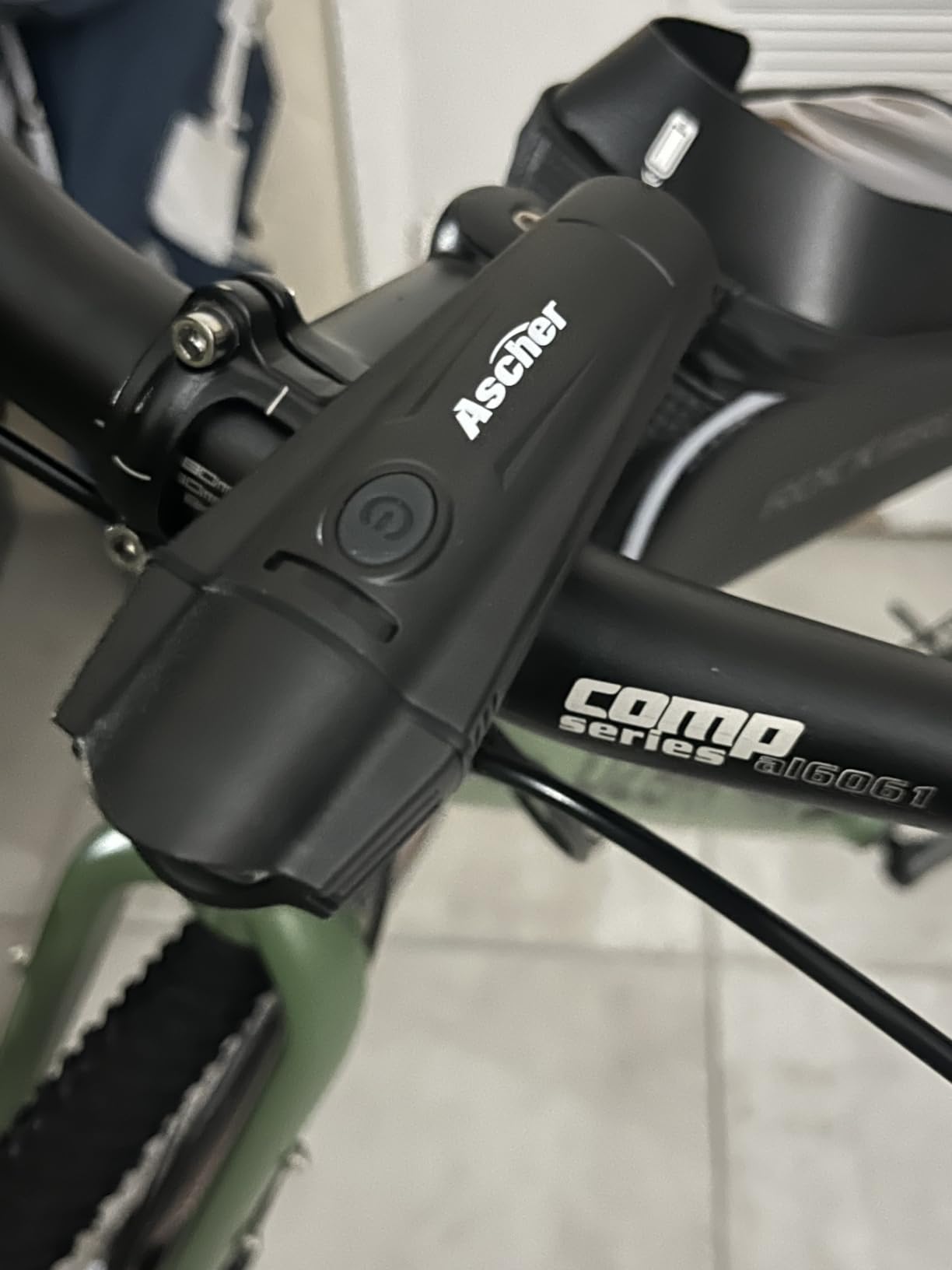
Our most-used light of the twelve, and the one we kept reaching for. The Ascher set pairs a 300-lumen front light with a red rear, both USB rechargeable, and the numbers on paper are unremarkable next to the rivals here. What carries it is the 2000 mAh front battery, which is larger than the other front cell in this roundup that states one. In practice that cell meant we could leave the light on a medium setting for a full week of short commutes without thinking about it. The front and the small rear sit on silicone straps that go on in seconds with no tools and no adapter.
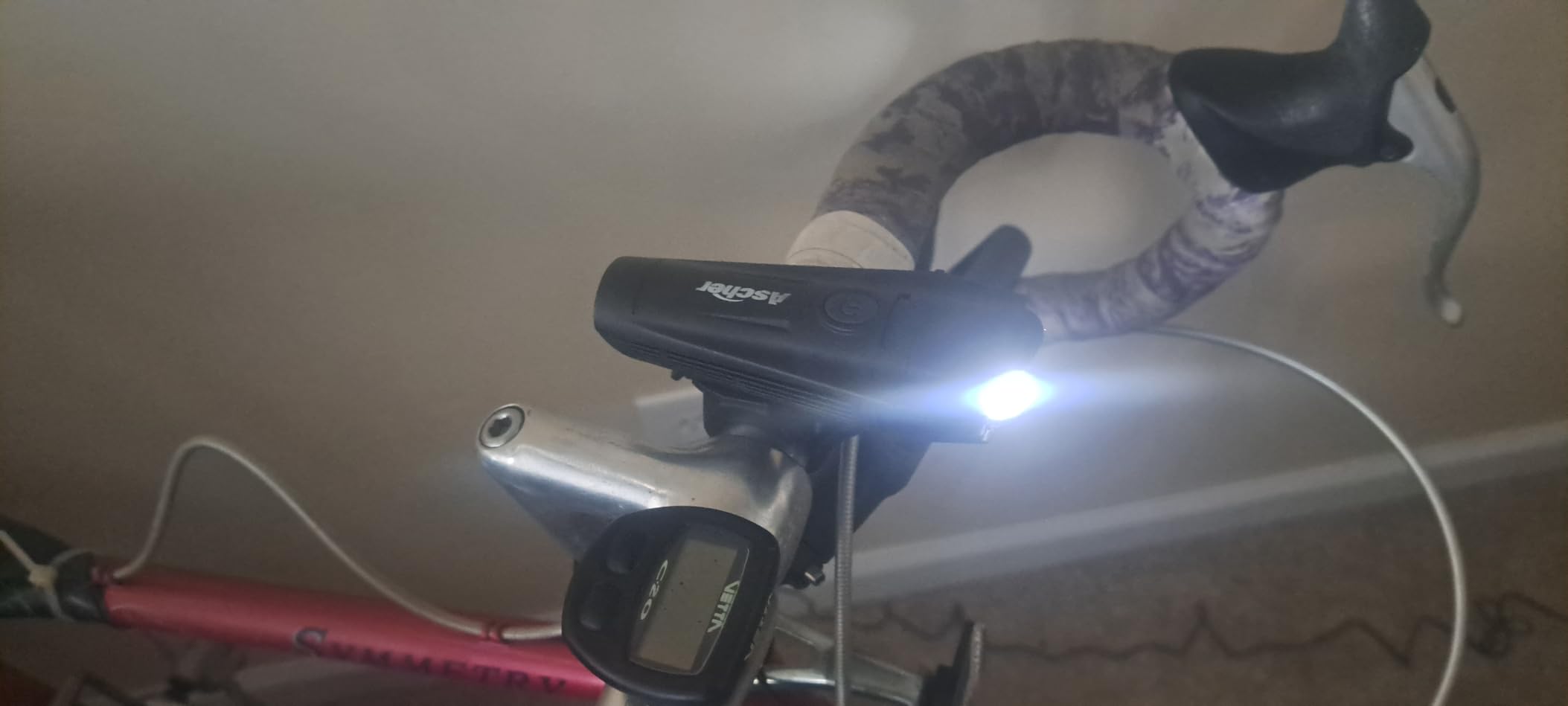
The one real weakness is the plastic clip where the headlight slides into its mount. It is the part we would expect to fail first, and owners report it cracking or releasing on rough surfaces, which means a light that suddenly points at your front wheel mid-ride.
It is also the set here with no battery level indicator at all, so if you ride a long unlit route regularly, the APECYC set further down solves that problem with an LCD readout.
What makes it worth buying
Front and rear in one box, both rechargeable, both strap-mounted, and a front cell big enough to forget about. For a rider who wants one decision made for them and a light that survives a wet winter, this is the set.
The four modes cover the realistic range: full brightness, half brightness, slow flash and fast flash. That is enough to ride a dark path on steady and a lit road home on flash without touching anything.
When it is the wrong choice
If your commute is mostly unlit country road at speed, 300 lumens is on the thin side and you want something with a longer throw and a tighter cut-off line. If you park outdoors all day, expect to remove it and take it with you, because this is exactly the kind of light that disappears from a rack.
2. BLITZU Gator 320 Set – 550 Lumens Plus a Bell in the Box
USB Rechargeable Bike Lights Set with Bell, LED Bicycle Front Rear Light
550 lumens front
USB-C rechargeable
IPX5 water resistant
3-piece kit
Pros
- 550 lumens from a compact housing
- USB-C charging with a cable you already own
- Quick-release mounts stay secure on rough pavement
- Bell included saves a separate purchase
- IPX5 rating shrugs off rain
Cons
- Included bell is thin and its internals can break
- Taillight release clip is stiff to operate
- Brightest mode drains the battery fast
This is the one we recommend to people who ask for a single answer. At 550 lumens it out-brightens most of the budget field, it charges over USB-C, and it throws a wide enough beam to feel comfortable on a path with no street lighting at all.
The kit is three pieces: headlight, taillight and a small bell. The bell is not the reason to buy, but it is a legitimate freebie for a commuter who would otherwise add one to the basket.
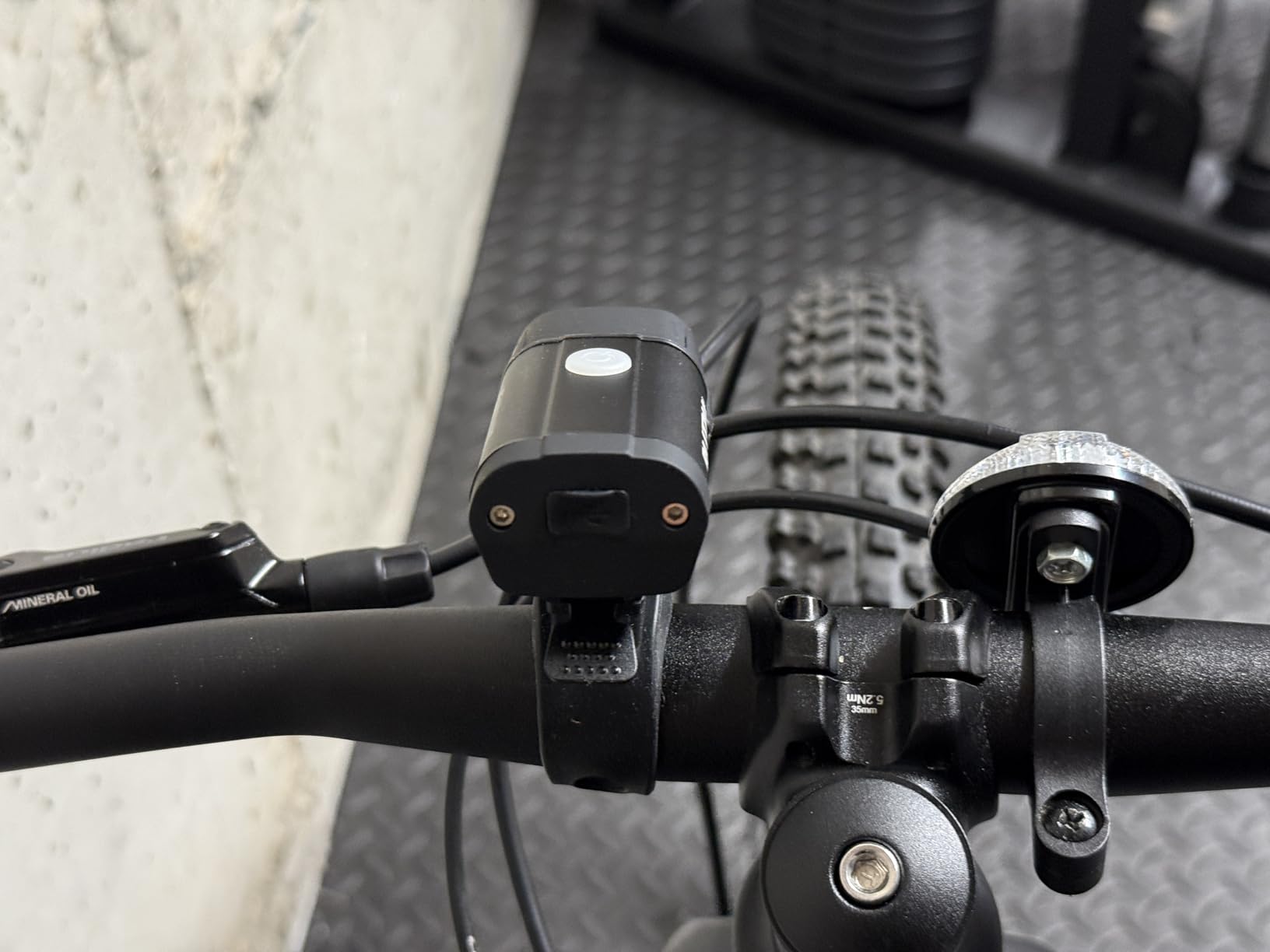
Our gripe list is longer than the price suggests it should be. The catch-lock tab on the taillight takes real force to release, which matters if you are pocketing the light every day, and it is a poor fit next to a quick-release mount that otherwise stays secure over broken pavement.
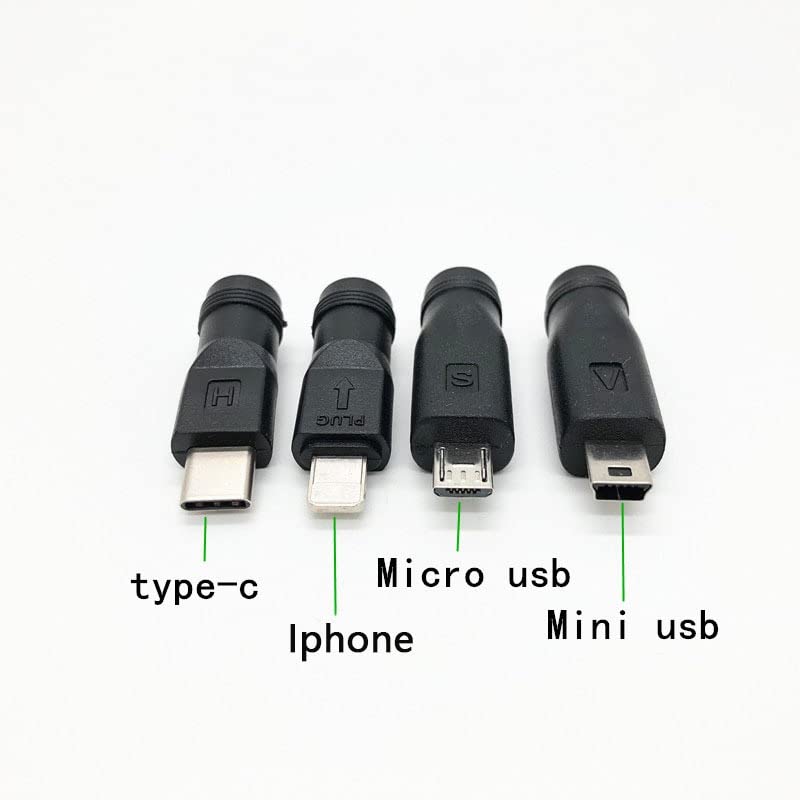
Both pieces charge over the same USB-C standard, which is the practical saving here: one lead for the whole commute instead of a separate cable for each light.
Why we rate it so highly
For output, charging standard and mount security, this hits the three things that matter most in one product. USB-C alone puts it ahead of several cheaper sets, and 550 lumens is genuinely useful on a dark route rather than merely reassuring.
Owners consistently report the quick-release mounts stay put over broken pavement, which is a small thing until the one time they do not.
Where it falls down
The bundled bell is a token item and reviewers describe its dome and internal gearing breaking. If you are the type to use the bell, buy a proper one. The stiff taillight release tab is the bigger issue for anyone who strips the lights off the bike at the end of every ride.
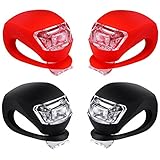
3. Malker Four-Light Silicone Pack – Four Markers for a Whole Household
Malker Bicycle Light Front and Rear Silicone LED Bike Light Set – Headlight and Taillight,Waterproof & Safety Road,Mountain Bike Lights,Batteries Included (2pcs Red & 2pcs Black)
4 lights in the pack
3 modes each
Visibility up to a half mile
Lithium batteries included
Pros
- Four lights for a low outlay
- Tiny and light enough for a helmet
- backpack or child seat
- Very easy for motorists to spot at distance
- Waterproof silicone body
- Three modes including strobe
Cons
- Weak forward illumination - a visibility light
- not a headlight
- Included batteries drain quickly and unevenly
- Some lights arrive dead out of the box
- Some fail after limited rain exposure
Be clear about what this pack is. There is no lumen figure, because these are not headlights. They are warning lights: small silicone blobs that make you conspicuous from a distance, rated by the manufacturer as visible up to a half mile.
For a family, a child on a bike seat, or a rider who wants a helmet and backpack marker in addition to a real front light, four of them from one pack is difficult to argue with.
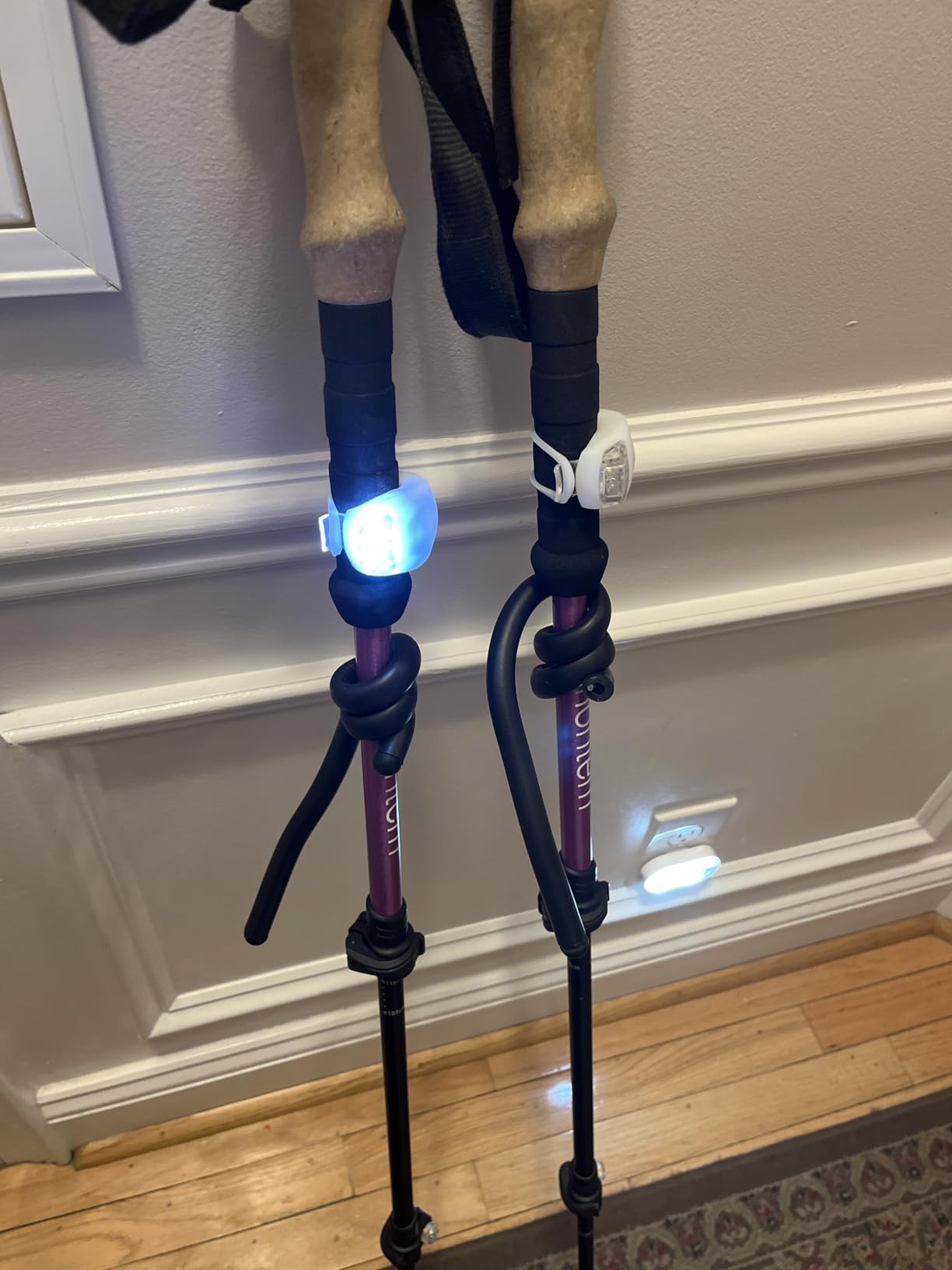
What you do not get is forward light. There is no beam to speak of, and trying to ride an unlit road with one of these as your only front light is a genuinely bad idea.
Reviewers also note inconsistent battery drain, and a few report lights arriving dead or dying after a season of rain. The seller has been responsive with refunds, which softens that considerably.
Where it earns its place
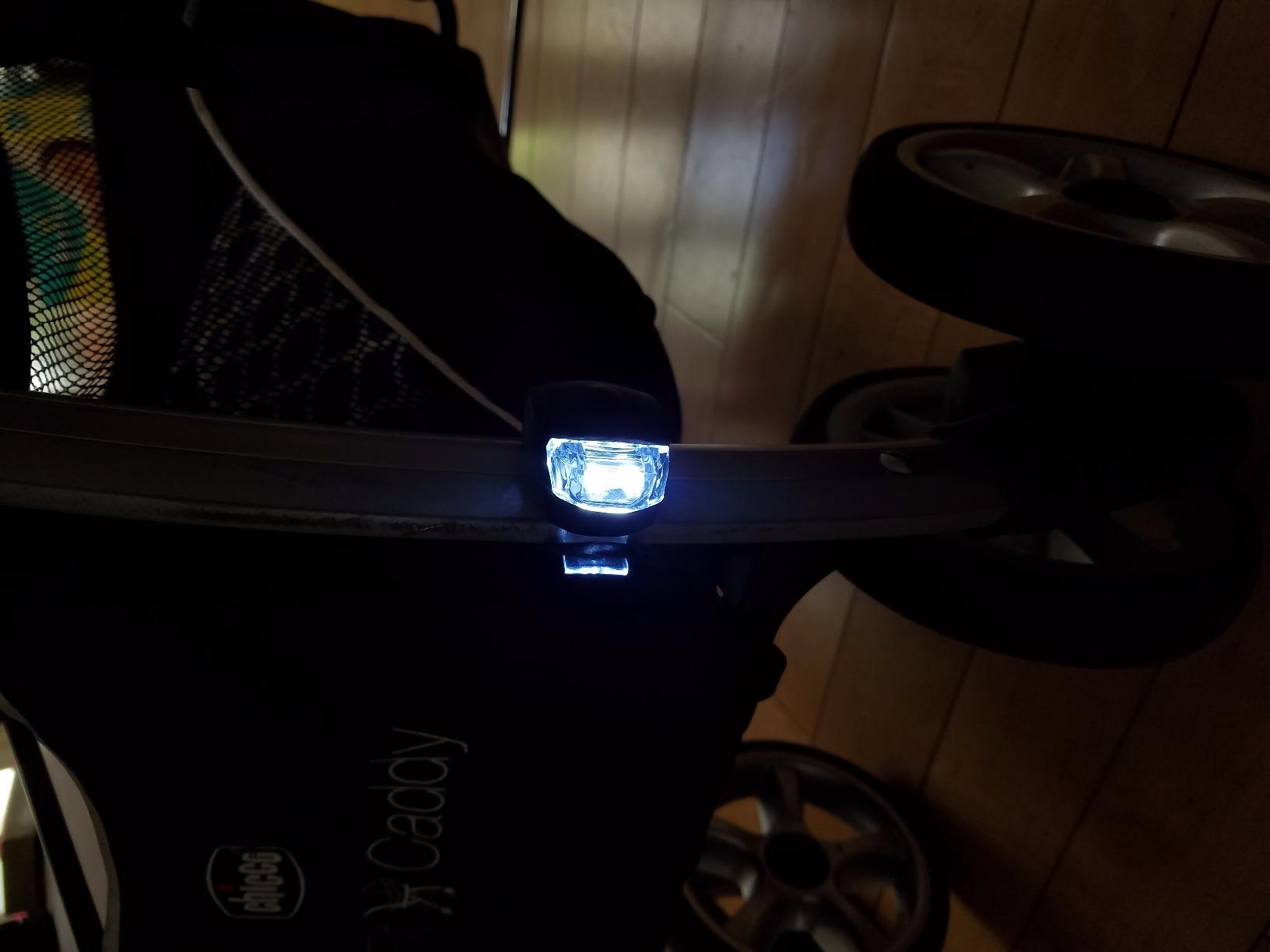
Anywhere you need a marker rather than a beam. Put one on a child’s seat, one on a backpack, one on a helmet, and keep one in a drawer as a spare. That is a use this pack solves better than any single light.
The silicone housing shrugs off weather, and the whole thing is light enough that you will forget you attached it.
Where it falls down
As a primary night light for a commuting adult, it falls short because there is no illuminated path in front of you. Battery consistency is the other problem, since a light that dies at mile two of a dark return journey is worse than useless.
4. Victoper Light Set – 150 Lumens and Ten Modes
Victoper Bike Light, High Lumens Super Bright Bicycle Lite, 6+4 Modes USB Rechargeable Bike Headlight & Taillight Set, Waterproof Safety Bike Front & Rearlight for Road, Gifts for Father’s Day
150 lumens front
10 total modes
USB rechargeable
4 oz total
Pros
- Ten modes across front and rear
- Surprisingly bright for the size
- Installs in under a minute on strap mounts
- Aluminium housing feels solid
- Backed by fast replacement service
Cons
- Battery gauge drops bars quickly and causes range anxiety
- Rear light feels cheaper next to the headlight
- Buttons stiffen after extended use
- Front and rear charge on different cables
Ten modes is the headline here, and it is a real feature rather than padding. The front offers single-side beams on each side, both sides together, a breathing mode and a strobe, which lets you shape the output for a narrow path or a wider junction approach.
The 150-lumen front is modest, but on a lit street with reflectors and traffic it is enough, and the aluminium housing feels more solid than most budget sets.
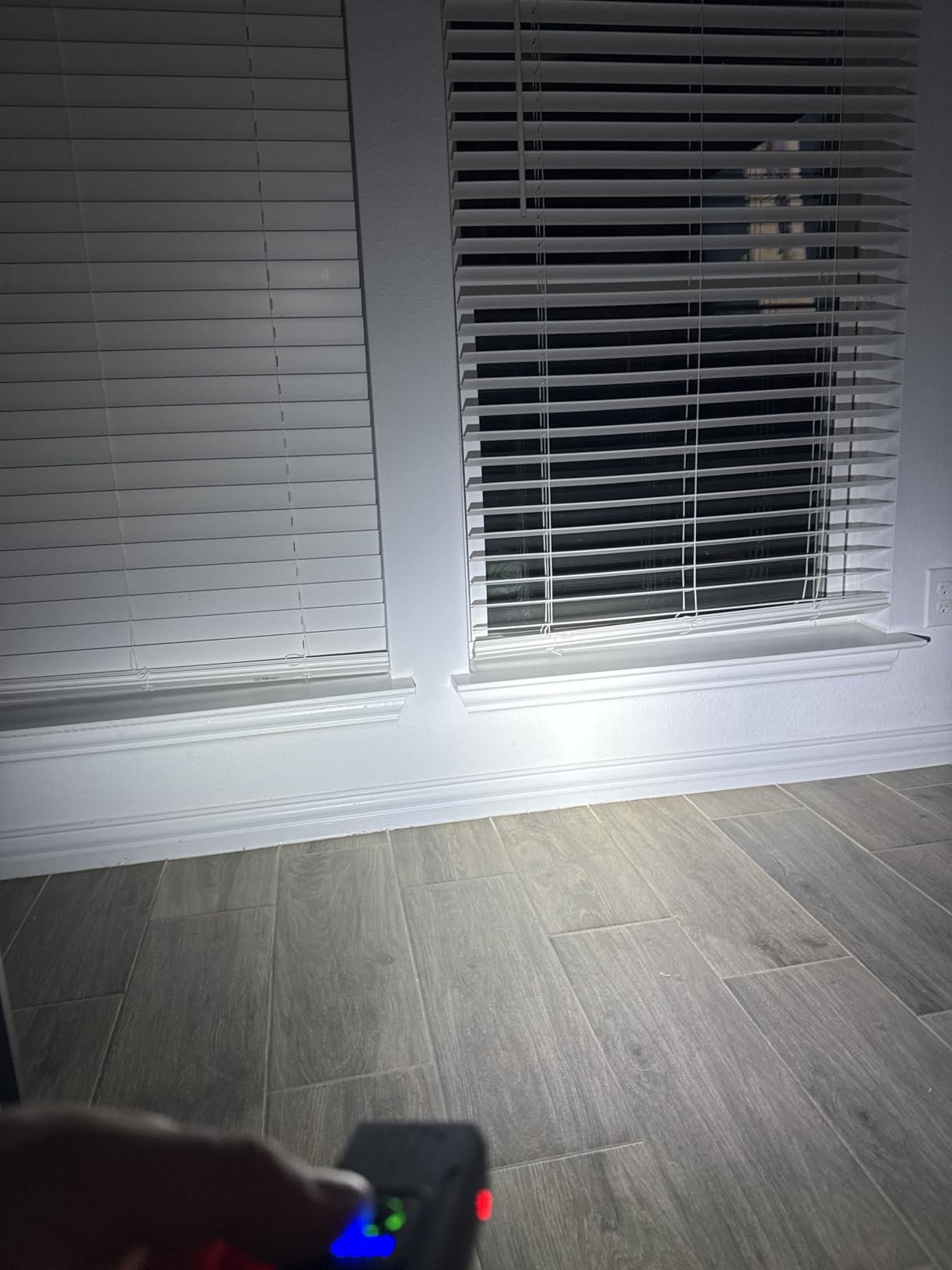
Two practical annoyances. The battery gauge falls through its bars quickly enough that you stop trusting it, which is arguably better than no gauge at all. And the front and rear lights charge on separate cables, so you are carrying two leads.
Owners also report the front button becoming difficult to press after months of daily use, which is a problem when you are wearing winter gloves.
Why it works on a daily commute
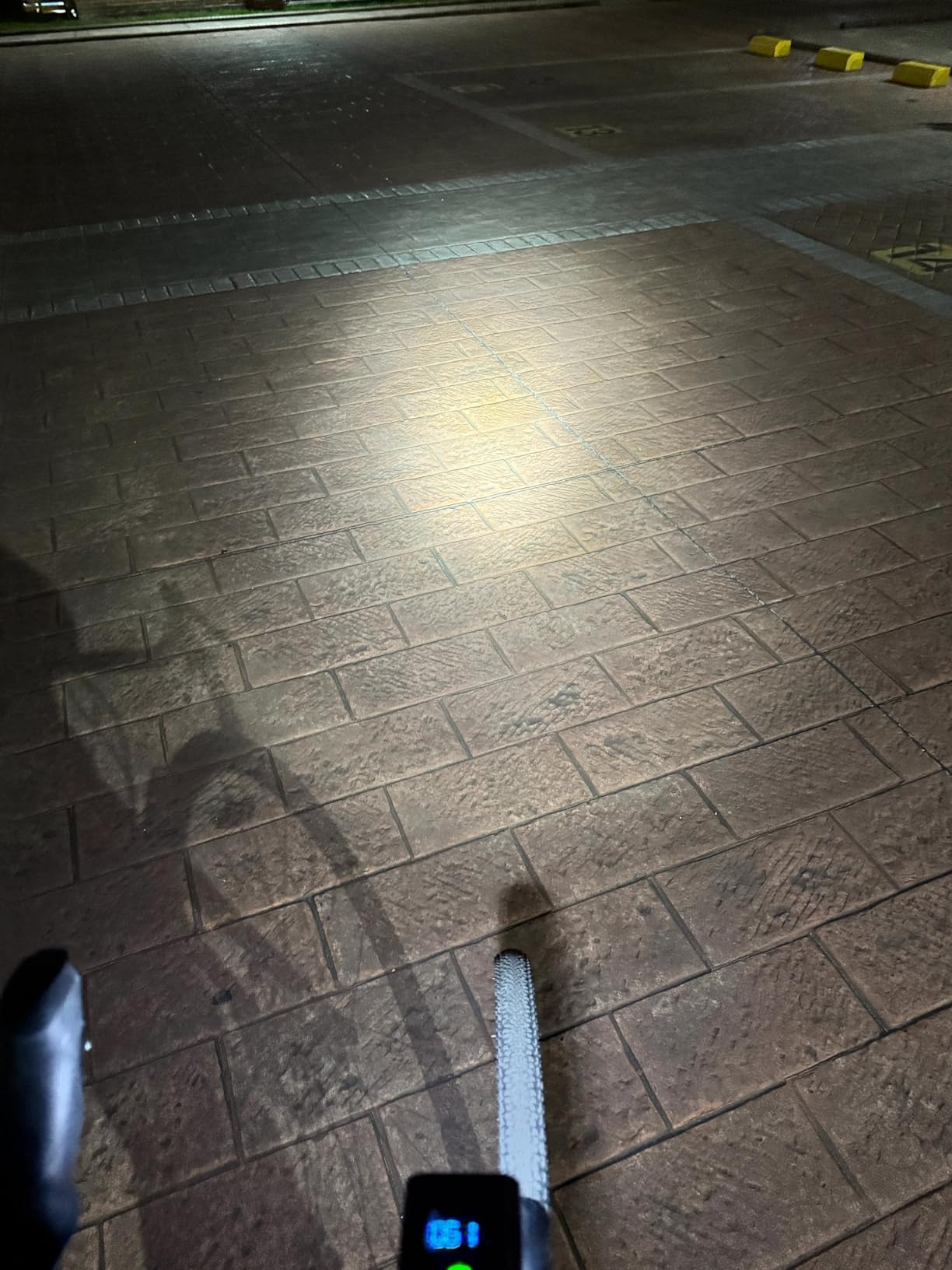
Mode choice is genuinely useful once you understand it. Single-side modes let you aim a narrow beam down one half of a path, which stops you from washing out a cyclist riding toward you on a narrow two-way track, a real and under-discussed problem on shared paths.
It weighs four ounces for the pair, so you can carry it in a bag and deploy it rather than leaving it exposed on the bike.
When to look elsewhere
Not if your route is unlit. 150 lumens will not light a country lane, and no mode in the set changes that. The stiffening button is also a bad sign for anyone who rides through winter.
5. GearLight S400 Pro – 400 Lumens and Long Flash-Mode Endurance
Bike Lights for Night Riding, USB Rechargeable Bike Lights Front and Back, LED Bicycle Headlight and Tail Light Set, Waterproof Bikelights Rechargeable for Mountain Bikes, Kids Bike Light, MTB Light
400 lumens front
5 front modes
Tool-free universal mount
Water resistant
Pros
- Ran a 43-mile ride in flash mode on one charge
- Survived heavy rain without complaint
- Tool-free universal mount works on most bicycles
- Five front modes plus multiple rear flash patterns
- 4.6 stars across more than 5000 reviews
Cons
- Rubber mount strap can tear and no replacements are sold
- Handlebar only - no stem mounting and no beam rotation
- Charge port cover is fragile
- Some report poor battery endurance
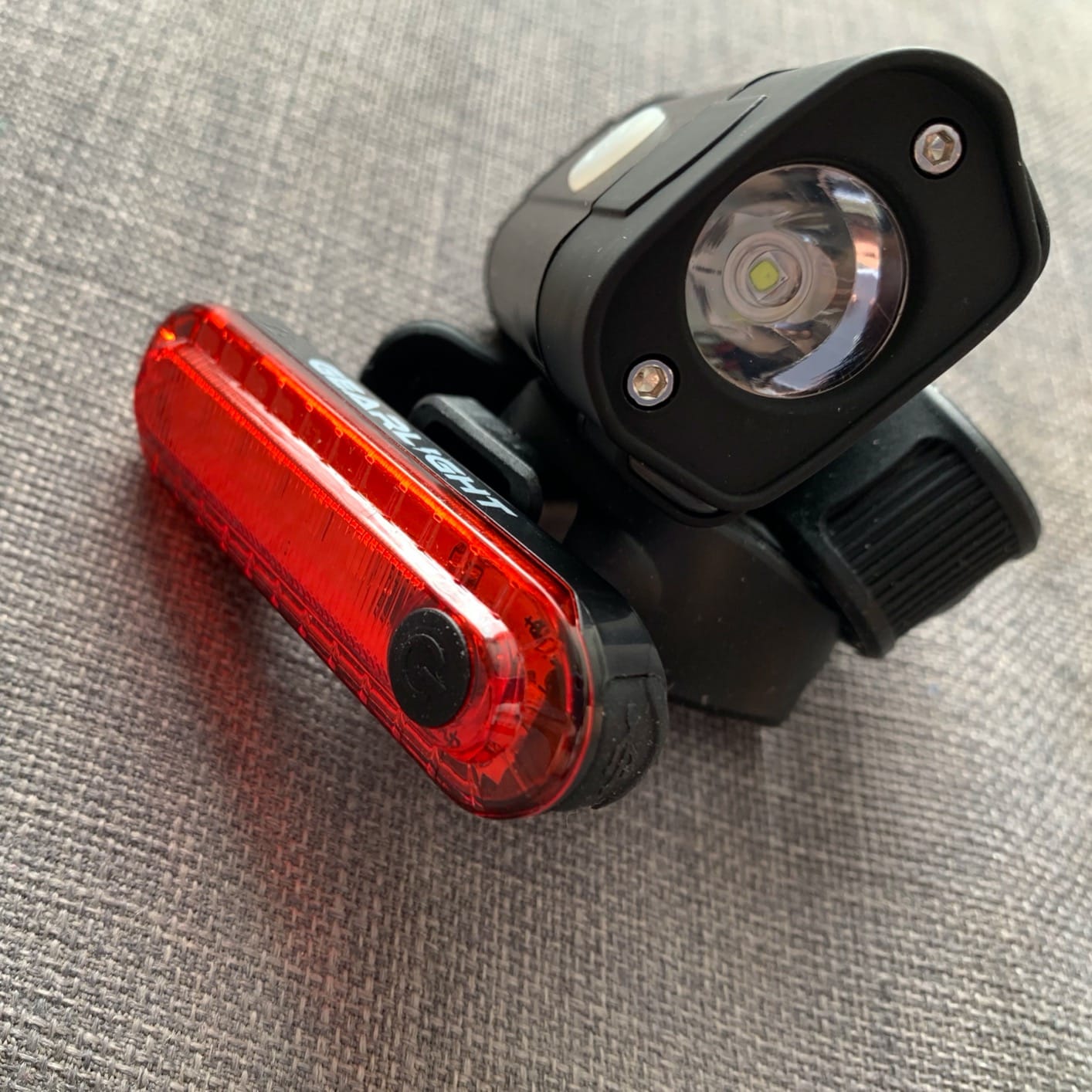
The GearLight S400 Pro is the one we would most want to own for a long commute, and the reason is endurance. A rider put it through 43 miles in flash mode on a single charge, which is the sort of claim that usually turns out to be optimistic.
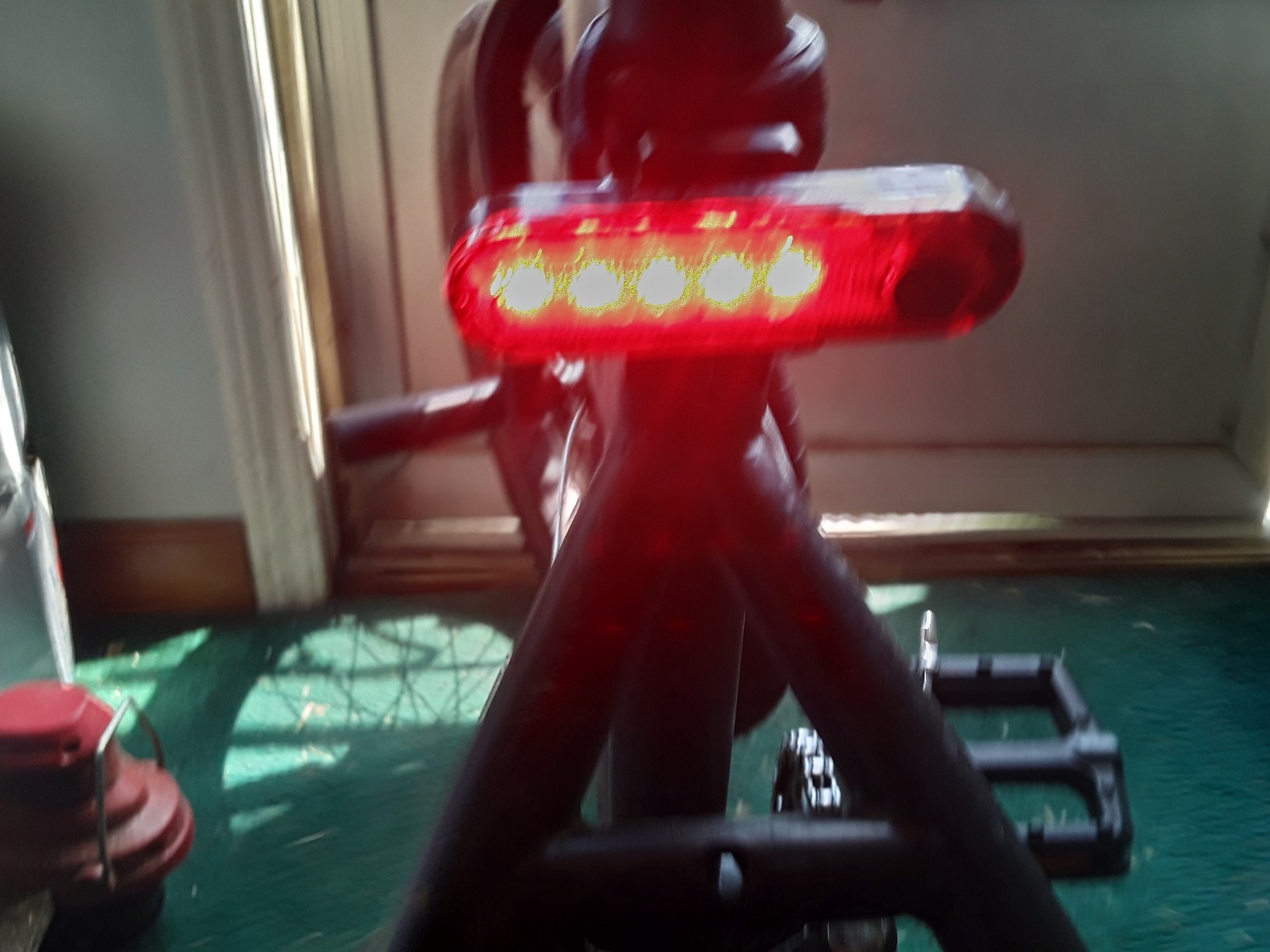
It is also the most convincing light in this bracket for actually seeing the road. At 400 lumens with five front modes, it puts real light on the surface ahead of you rather than a halo around the bike.
The mount is the weak point and it is worth being blunt about. It is handlebar-only, it does not rotate the beam vertically, and the rubber strap is reported to tear with no replacement mounts sold. On a bike with a short stem or an unusual bar shape, that can rule it out.
The charge port cover is also described as fragile, so treat the port seal with care in the wash.
Why the endurance figure changes habits
Because a light that is still working after a fortnight of dark rides is a light you actually use. Runtime of that length means charging on a monthly rhythm rather than every second evening, and a light that never goes flat is a light you never have to think about before setting off.
Rain is the other test it passed. Owners report the light holding up in heavy weather without complaint, which matters for anyone riding through a wet winter.
When the mount rules it out
Check your handlebar diameter and whether you want any vertical beam adjustment before buying. Riders using an aero bar or a suspension fork that moves independently of the bar will find the handlebar-only mount limiting.
6. BLITZU USB-C Rear Light Two-Pack – 120 Lumens, Up to 10 Hours
BLITZU Bike Tail Light, 2 Pack USB-C Rechargeable LED Bicycle Rear Lights
120 lumens per light
Up to 10 h per charge
USB-C rechargeable
IPX5 waterproof
Pros
- Bright red output that drivers notice at night
- USB-C fast charging with up to 10 hours per charge
- Adjustable hinge lets you aim the beam up or down
- Mounts on seatposts
- helmets
- backpacks and scooters
- Waterproof for rain
- snow and fog
Cons
- Runtime drops noticeably on constant high mode
- Two modes only
- so no steady-plus-flash combination
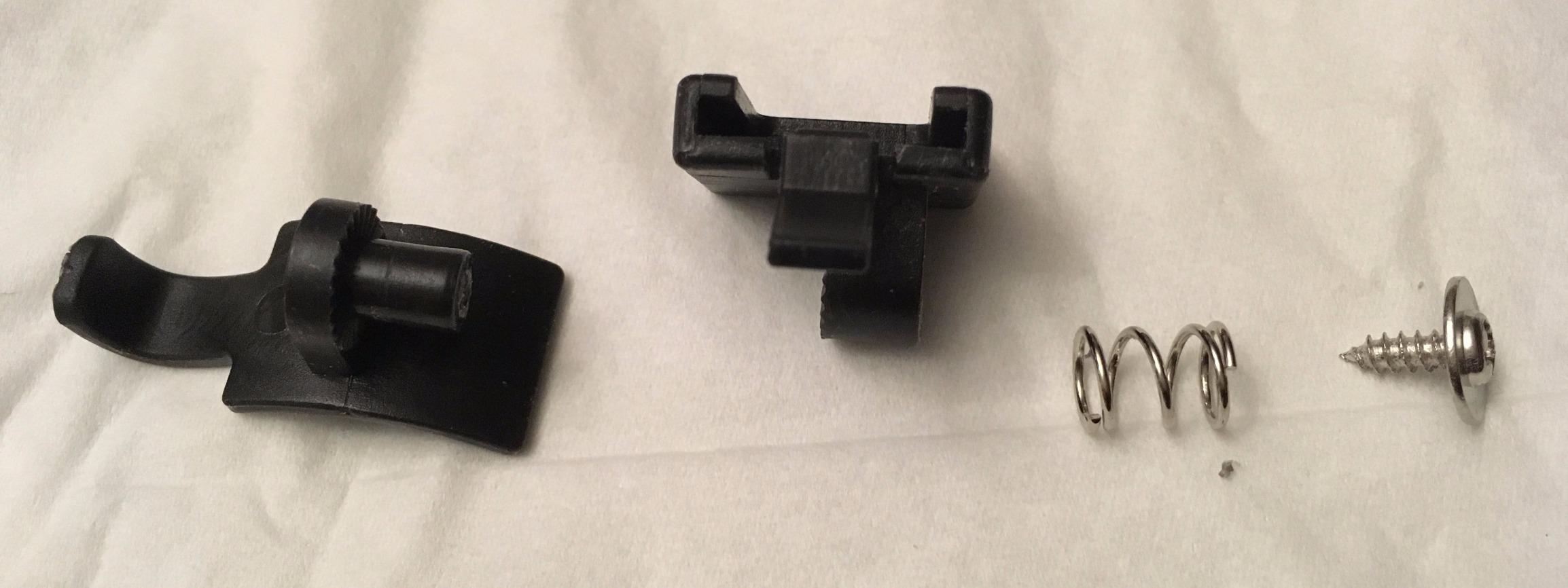
A rear light is where most commuters should spend money, and this two-pack is the strongest dedicated option we tested. Each light runs 120 lumens of red with up to ten hours of illumination per USB-C charge, and the pair means you can run one on the bike and one on a bag or a second bike.
The adjustable hinge is the detail that gets overlooked. Being able to tilt the beam means the light can sit flat on an aero seatpost instead of pointing at the ground.
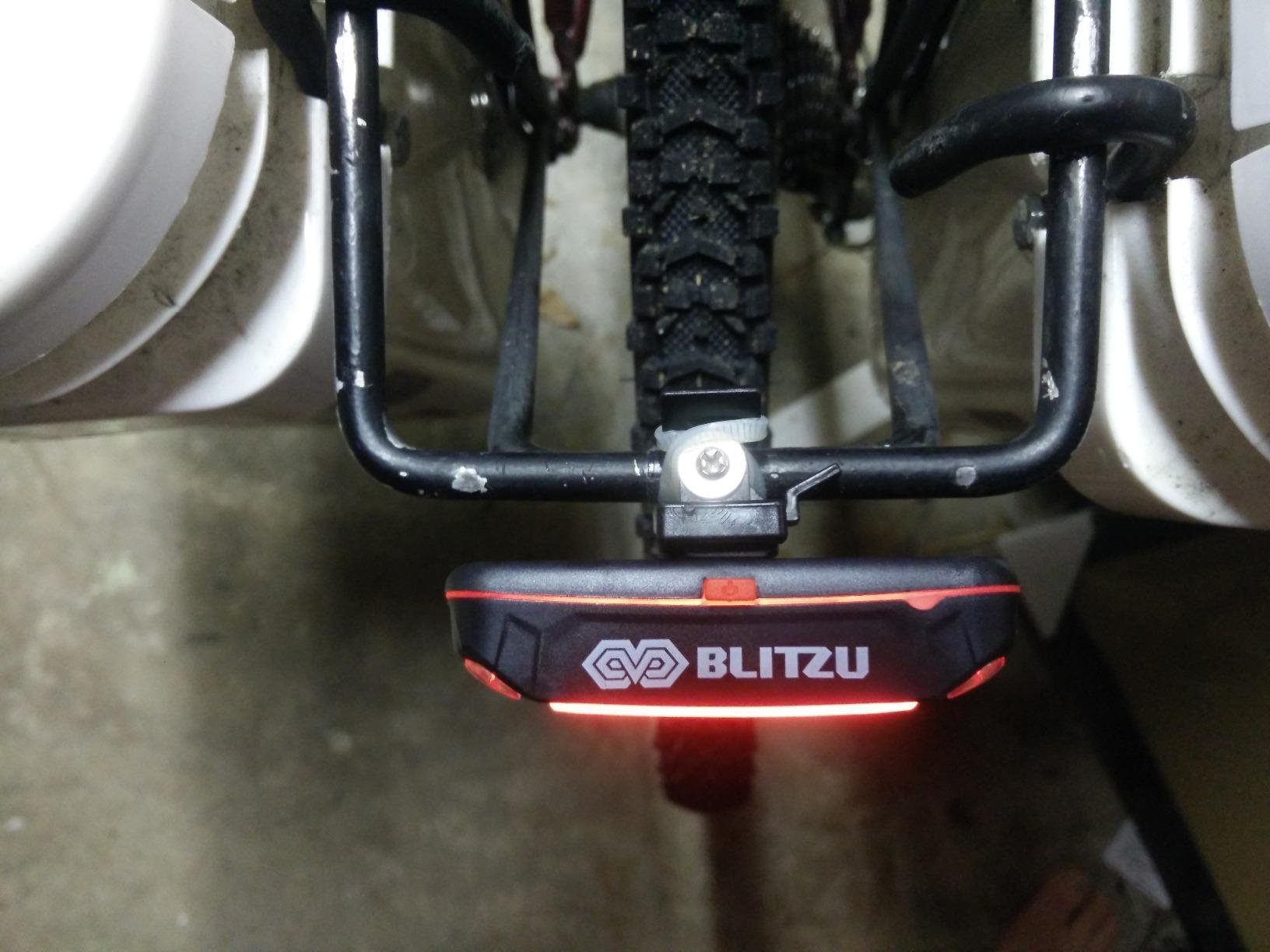
There are only two modes, and that is a genuine limitation. Forum riders consistently argue for a steady beam alongside any flasher, because a flash pattern alone does not let a driver judge your speed or trajectory in the dark. With two modes you have to choose one or the other.
Runtime also falls off a cliff on constant high, so plan on medium for long rides.
Why a two-pack is the smarter buy
Having a second rear light permanently on your backpack or helmet changes the geometry of how you are seen, and it doubles as a spare when the first one is stolen or dies. For the money, it is a good value-per-lumen arrangement.
It also solves the light-theft problem outright, since the light on the bike is the expendable one.
Where it falls short
Two modes is the compromise. If your route includes genuinely dark stretches where a driver needs to judge your movement, you will want a model with a steady and a flash mode rather than a choice between them.
7. Lsan 1200-Lumen Set – Three LEDs and a Power Bank Socket
1200 Lumens Bike Lights for Night Riding,Super Bright Bike Lights Front and Back,USB Rechargeable Bicycle Light,3 LED Bike Headlight with Power Bank Function,IPX5 Waterproof,3+5 Light Modes
1200 lumens front
3 LEDs
Power bank USB output
IPX5 waterproof
Pros
- 1200 lumens from three LED beads for road illumination
- USB output lets the headlight charge a phone
- Headlight runs 5-12 hours and taillight up to 50
- Aluminium shell dissipates heat well
- Tool-free install
- One-year free return service
Cons
- Claimed output is not independently tested
- One of the larger bodies in this group
- Bright modes shorten runtime sharply
- Plastics and buttons feel basic for the output
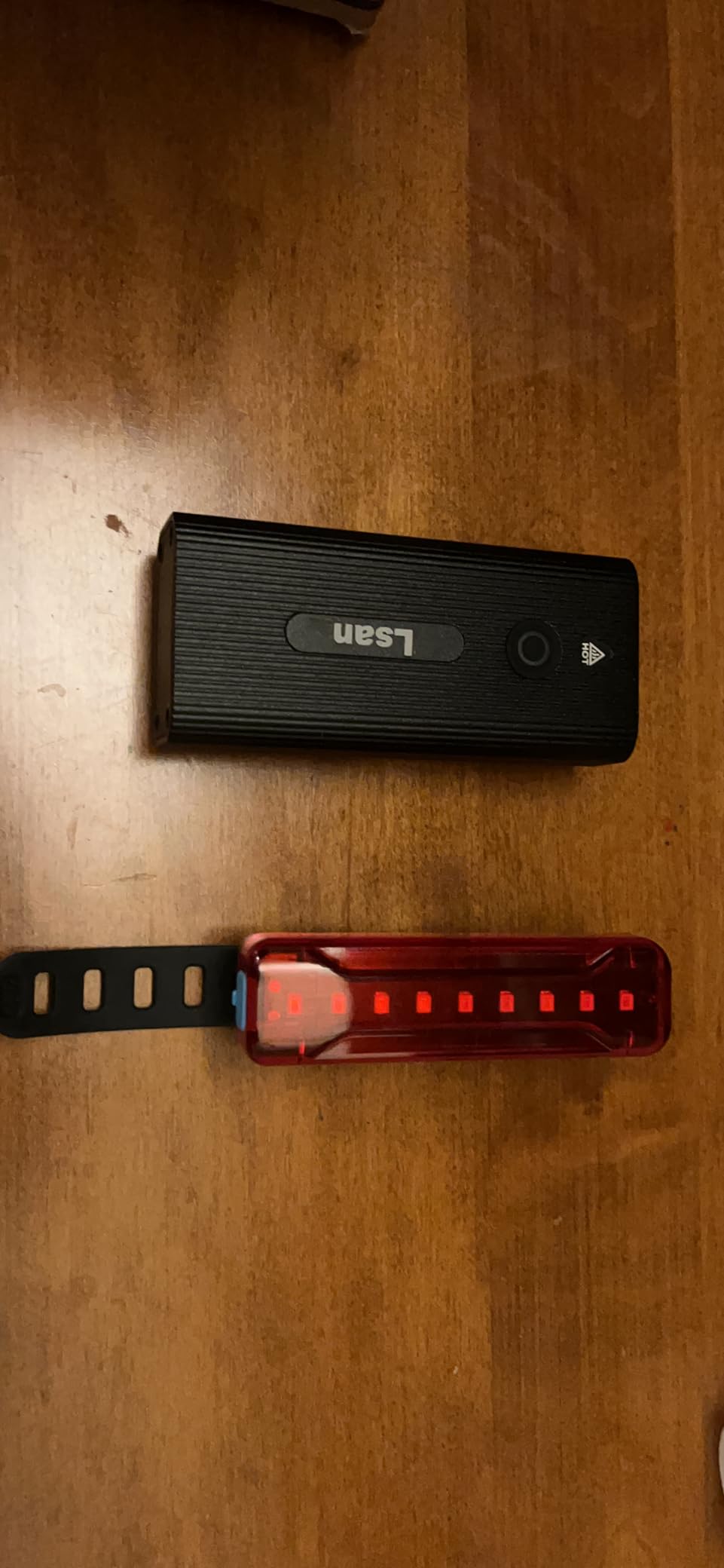
The Lsan set is the most interesting specification sheet here, and the least verifiable. Three LED beads are rated at 1200 lumens combined, which on paper puts it near the top of this roundup.
What is genuinely useful is the USB output. The headlight doubles as a power bank, so if your phone is dying on a long unlit ride you can top it up from the same battery that is lighting your path.
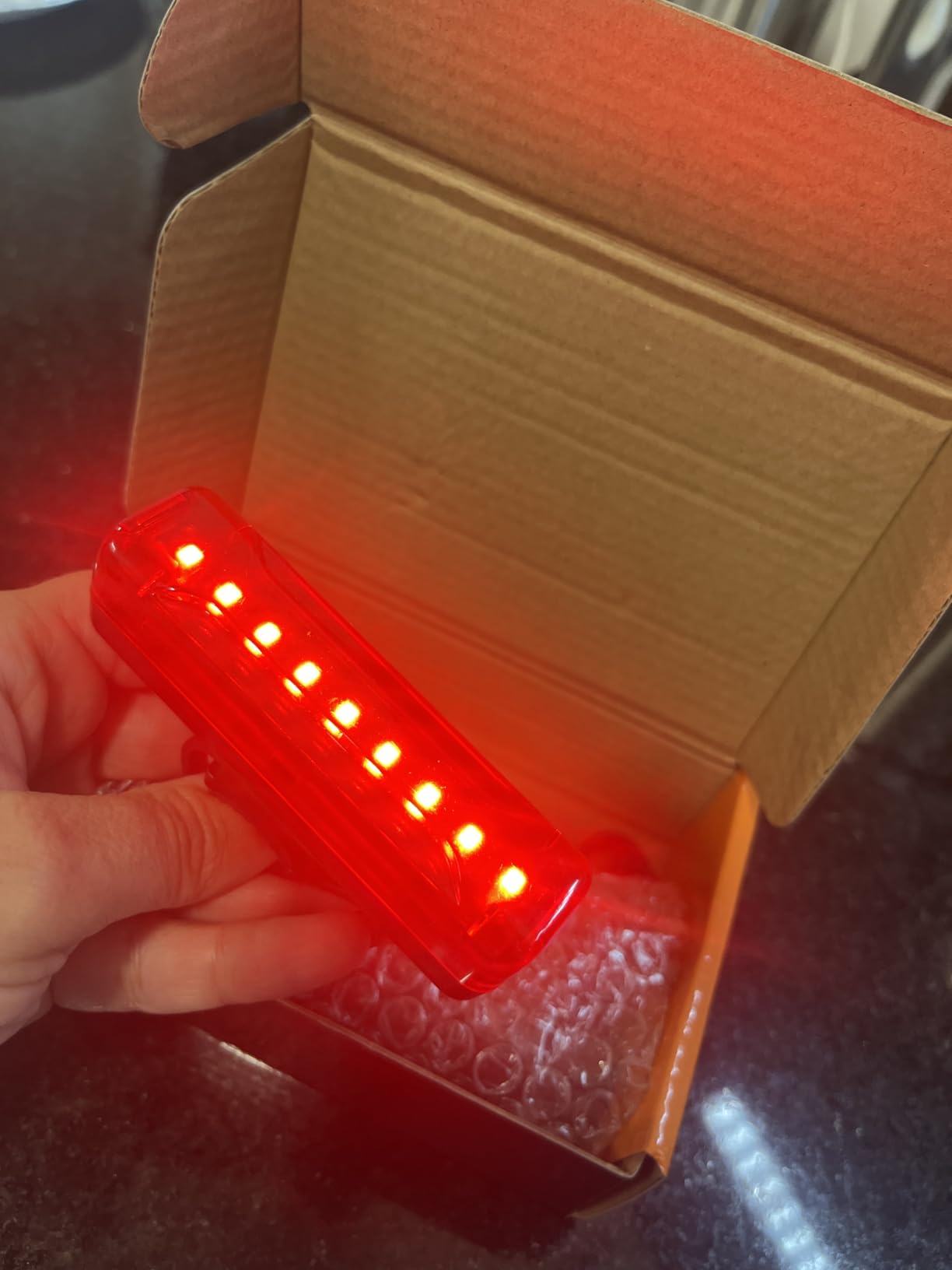
That headline number carries no independent test behind it, and unlike the NiteRider lights there is no FL1 rating to check it against. Treat it as a bright light with three emitters rather than a measured 1200 lumens.
The body is also one of the larger here at nearly four inches long, and the runtime figures of five to twelve hours assume modes below maximum.
What the power bank is actually for
It is not a phone charger for a full day. It is a genuine rescue option for a navigation app dying on a long route with no services, and for that it is a feature you will not find elsewhere in this list.
The aluminium shell also handles heat better than the plastic bodies, which matters if you run it on maximum output.
When to buy something else
If you care about verified output rather than claimed output, the NiteRider Lumina 1200 Boost is FL1 tested and comes with a stated warranty on the electronics. The Lsan is the choice when price and features per unit matter more than certification.
8. BV Five-LED Light Set – 300 Lumens With Quick-Release Mounts
BV Super Bright Bike Light Set USB Rechargeable – Headlight & Taillight, Waterproof IP44 , 3 Light Modes Including Flash Mode for Safety, Easy to Install and Fits All Bicycles
300 lumens front
5 front LEDs
Quick-release mounts
USB rechargeable
Pros
- 300-lumen beam with steady
- half and flash modes
- Long flash-mode runtime of 12 hours or more
- Quick-release mounts need no tools
- Headlight detaches to work as a flashlight
- One-year warranty with responsive support
Cons
- Steady-mode runtime is short at around 1.6 hours
- IP44 rating is the weakest water protection here
- Micro-USB charging cable included
- Plastic body creaks and flexes
The BV set is the sensible mid-budget answer if you want a light that can leave the bike. The headlight unclips from its mount and works as a handheld torch, which is more useful than it sounds when you are locking up at 6am in the dark.
Five LEDs produce 300 lumens, and the runtime figures are unusually well documented: 1.6 hours steady, over three hours at half, and twelve hours or more on flash.
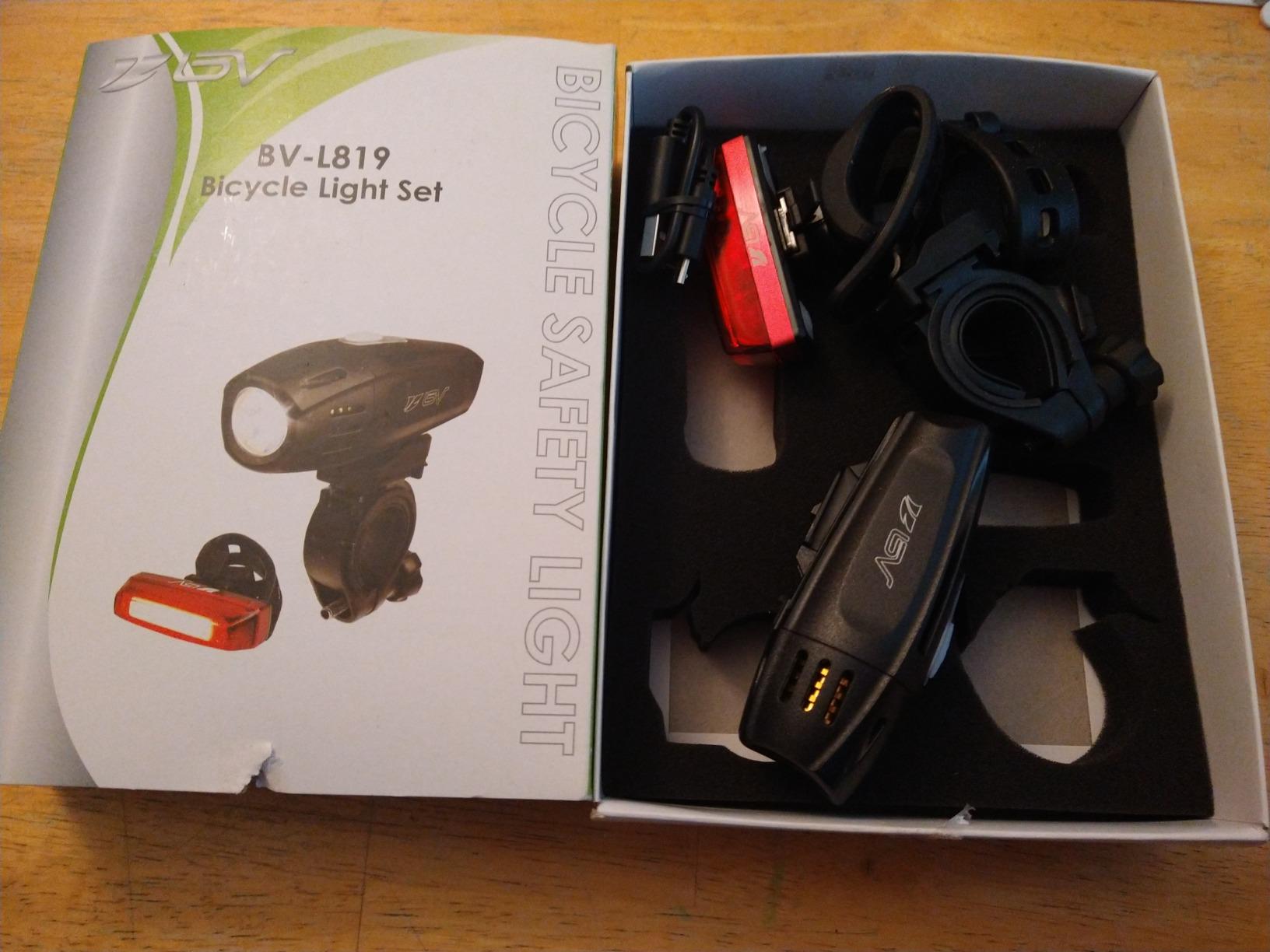
Those figures are the honest trade-off. If you ride at night in an area with any ambient light, flash mode is fine for a 45-minute commute. If you ride a genuinely unlit route, the steady-mode figure is short enough that you will be charging between rides.
It charges over micro-USB, which is the thing this category is supposed to be moving away from, and the IP44 rating is the lowest water protection among the rechargeable sets here.
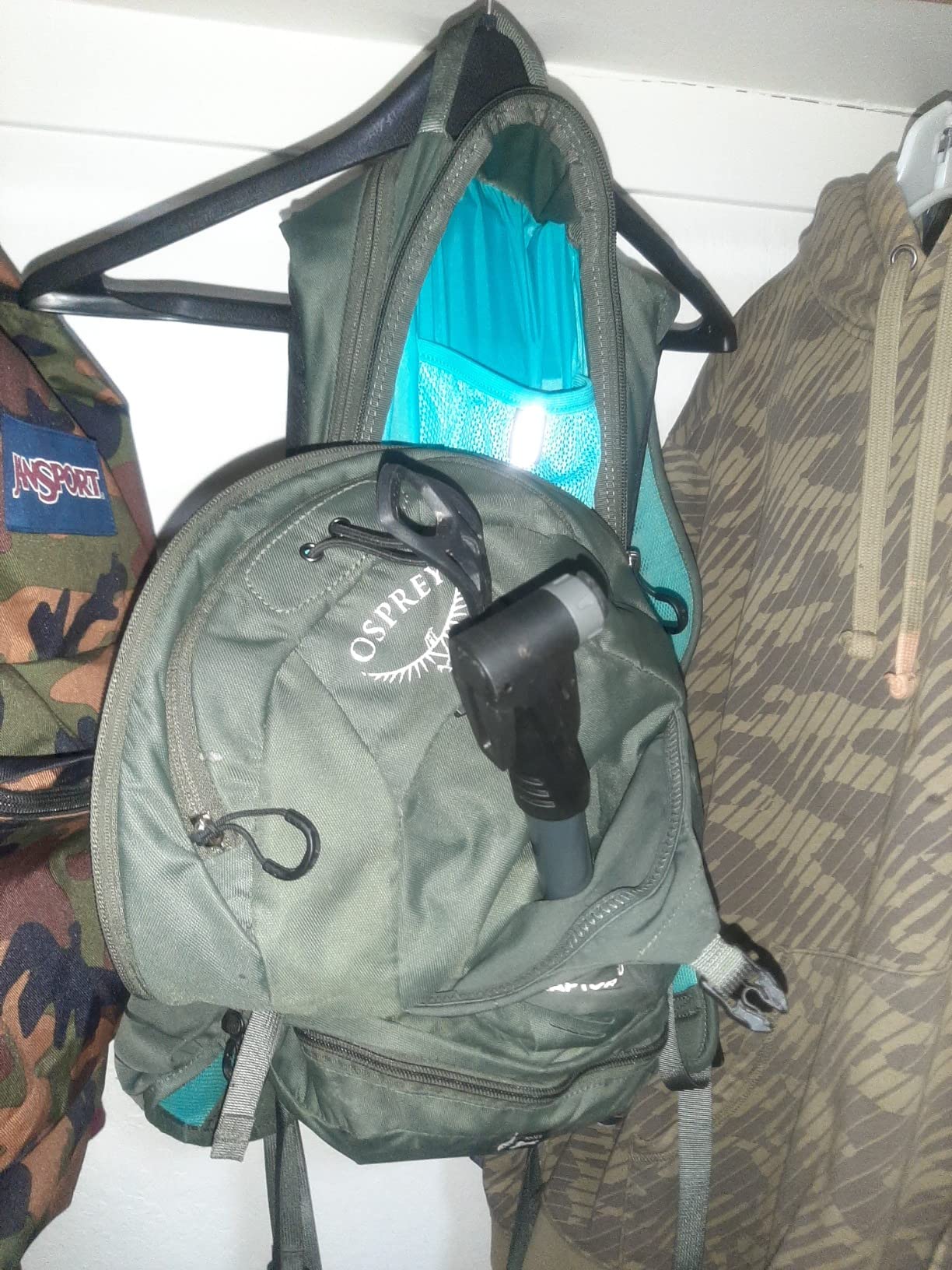
Why the detachable design wins on a commute
Because the light leaves with you, it never gets stolen, and it never goes dead from sitting unplugged in a bag for a week. For a rider whose bike lives on a street rack, that is worth more than extra output.
Using it as a torch on a long walk from a station home is the sort of use people mention more than they expect.
When it falls short
Long unlit routes, and anyone who wants a single USB-C cable for everything. The micro-USB lead is also the kind reviewers complain about simply because it is obsolete and easy to lose.
9. Cuvccn Rechargeable Set – Up to 58 Hours on Slow Flash
Cuvccn Bike Lights Super Bright, Rechargeable Bicycle Lights Set Multiple Modes, Waterproof Bike Lights for Night Riding/Cycling Safety, Front and Back Bike Reflectors Light, Long Battery Life
400 lumens front
1100 mAh front cell
Up to 58 h slow flash
IPX6 waterproof
Pros
- Rides 4.6 stars across nearly 4000 reviews
- Up to 58 hours front runtime on slow flash
- IPX6 is among the best water ratings here
- Low battery indicator and battery retention up to 9 months
- Two buttons let you control main and auxiliary LEDs independently
Cons
- Front unit lights you rather than the road
- Strap can be too short for thick handlebars
- Two-button mode selection takes practice
- Mode memory can be awkward to override
The Cuvccn is the endurance specialist. Two main LEDs plus nineteen auxiliary LEDs per light, an 1100 mAh front cell, and a rated slow-flash runtime of up to 58 hours. You will realistically get a fraction of that, but the practical effect is charging on a monthly rhythm rather than once a week.
Battery retention of up to nine months is the sleeper feature. A light that holds its charge through a long winter means it is never dead on the morning you need it.
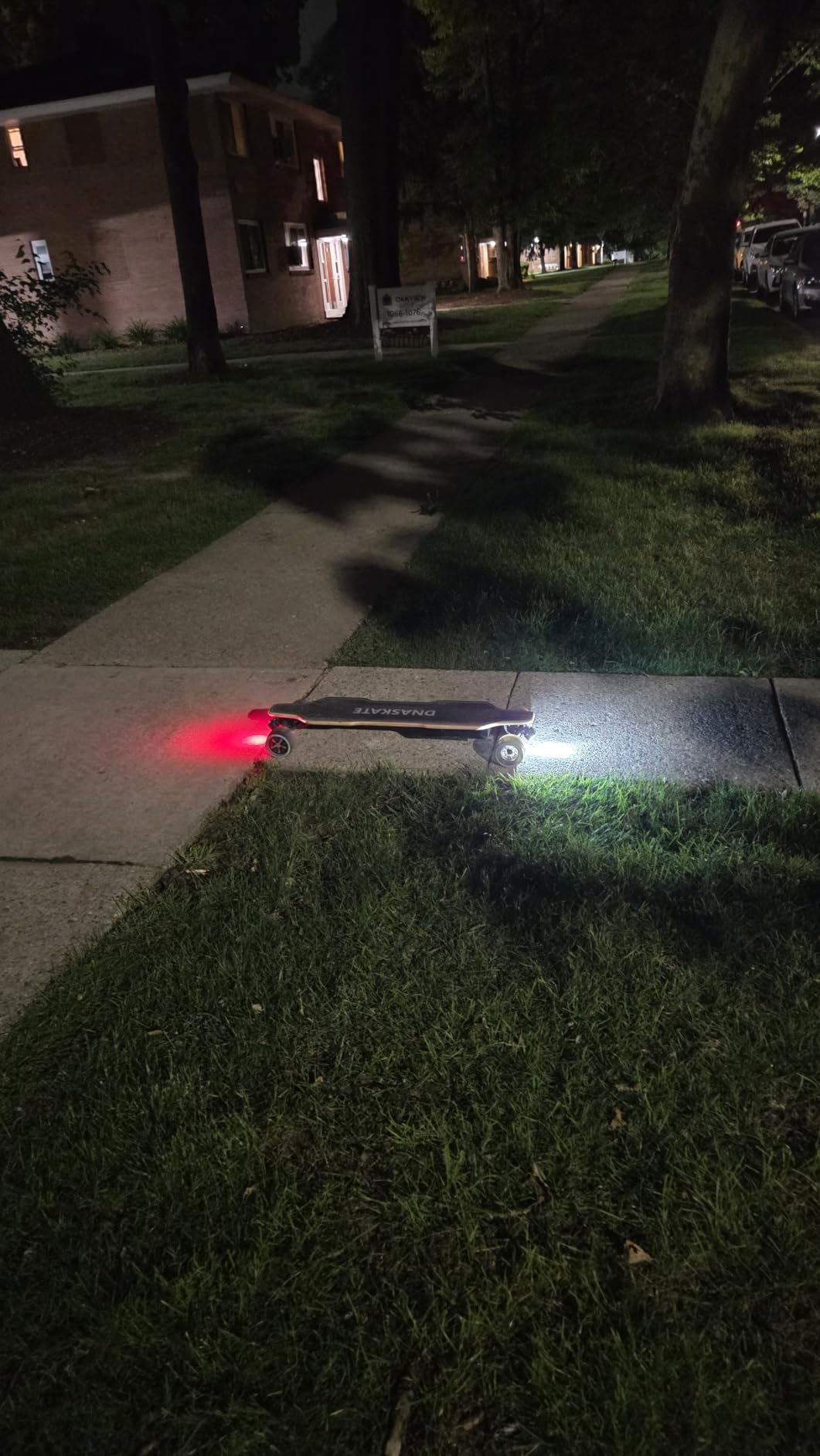
The honest limitation is that this is primarily a visibility light. Owners are clear that the front unit makes you seen rather than illuminating the road, so it does not replace a proper headlight on an unlit route.
Mode selection is also fiddly. Two separate buttons with eight and twelve modes between them takes a few rides to learn, and the mode memory can leave you in a setting you did not choose after a power cycle.
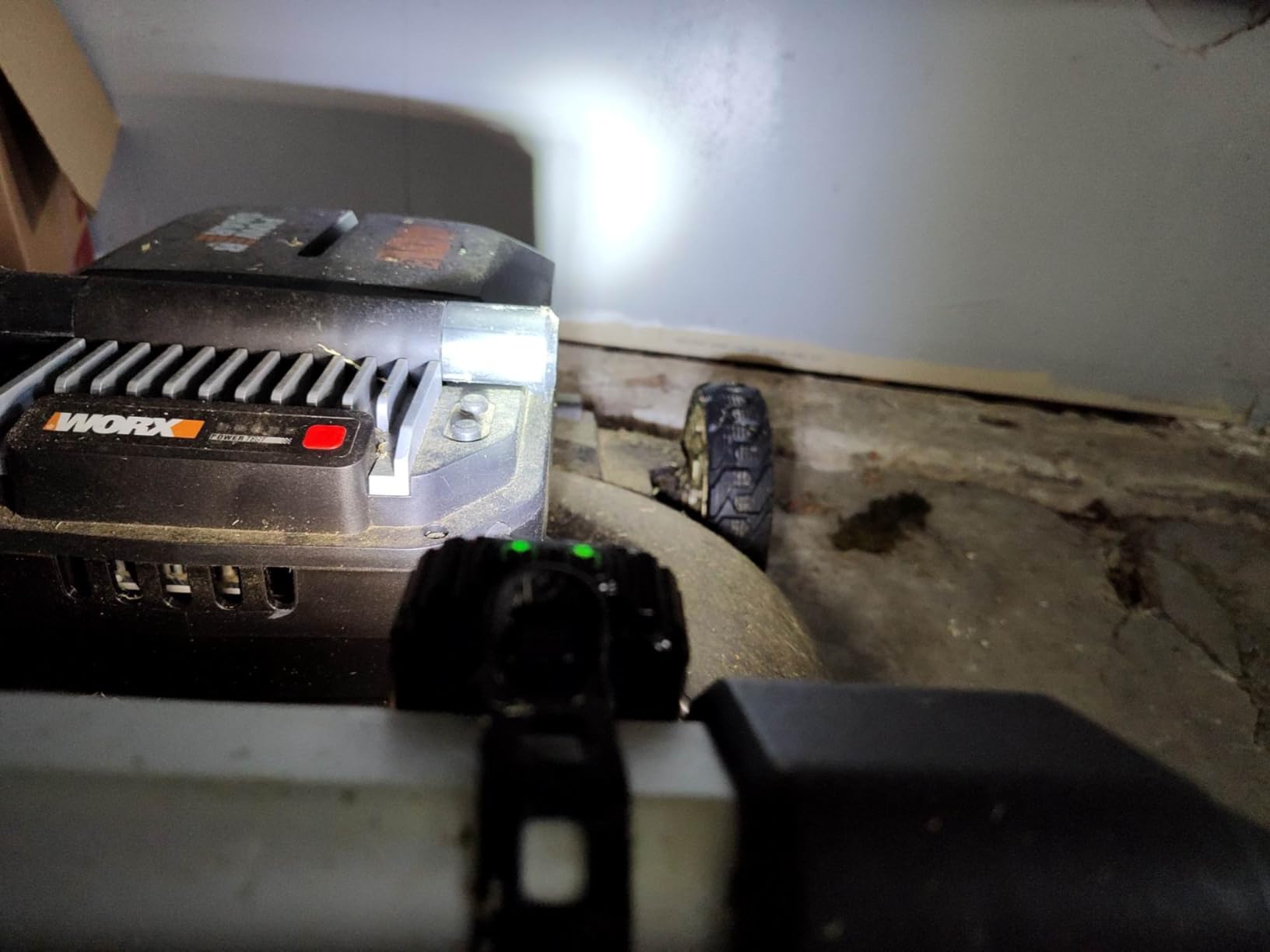
Why the runtime figure changes habits
Because the light does not need a pre-ride ritual, riders end up using it more often. A light that requires charging every single evening is a light that is flat one evening in five, and that is when accidents involving bicycles happen at dusk.
The IPX6 rating and the silicone-covered USB port also make it one of the best-protected sets in this roundup.
When to pair it with something else
If your commute includes unlit sections, run this as your rear and your always-on marker, and add a genuine headlight for the front. Buyers who want both in one box and a beam that lights the ground should look at the APECYC set instead.
10. NiteRider Lumina 1200 Boost – Premium Beam With Lock Out Mode
NiteRider Lumina Boost 1200 Bike Light – 1200 Lumens – USB Rechargeable Front Headlight – Boost Mode – Road, MTB & Commuter – Fits Up to 35mm Handlebars – IP64 Water Resistant
1200 lumens max
FL1 tested output
IP64 water resistant
Lock Out Mode
Pros
- Wide
- evenly distributed beam with strong peripheral coverage
- FL1 independently tested for verified lumen output
- Handlebar clamp fits bars up to 35 mm
- Intellicharge fast charging with a low battery indicator
- Aluminium heat sink and reinforced nylon housing
Cons
- Costs far more than generic high-lumen lights
- Heavier build than the budget sets
- About 12 percent of ratings are 1-star
The NiteRider Lumina 1200 Boost is the only light here with independently verified output. FL1 testing is a published, repeatable standard, which means the 1200-lumen figure can be checked rather than taken on trust.
The beam shape matters as much as the number. A custom collimator lens spreads output evenly with real peripheral coverage, which means you can read the edge of the road rather than a bright tunnel in the centre and darkness either side.
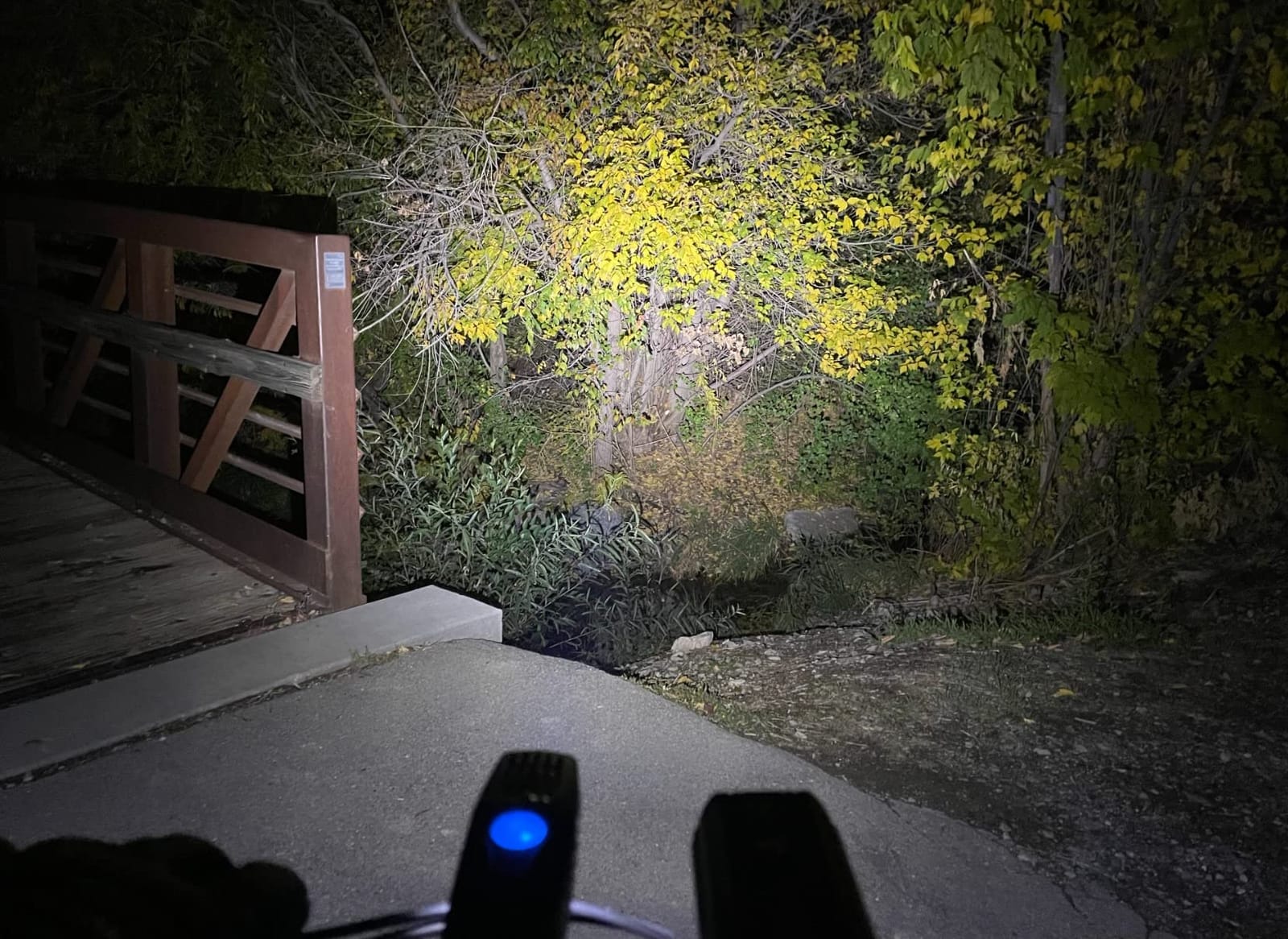
It is also the premium set with the highest verified output, and that price comes with a support structure the budget sets do not have: one year on battery cells, two years on PCBs and switches, and lifetime coverage on mechanical parts.
Lock Out Mode is a small thing that earns its place every single day, because it stops the light switching itself on inside a bag and draining.
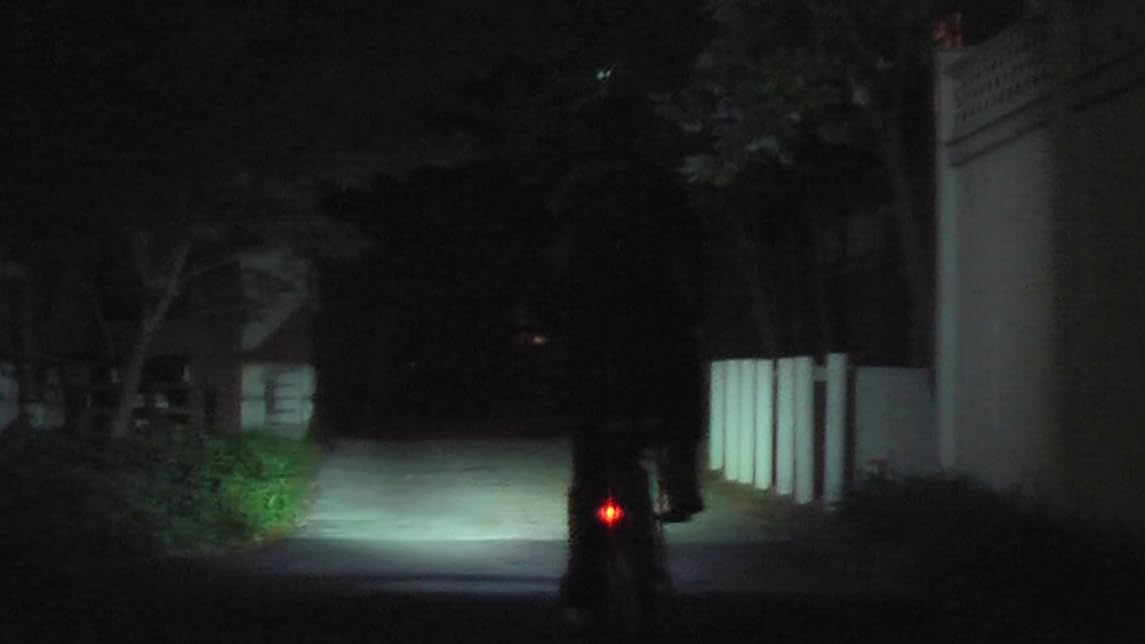
Why FL1 certification is worth paying for
Because it is the difference between a specification and a measurement. A 1200-lumen claim with no test behind it, as we saw with one of the sets above, is marketing. A FL1-tested figure tells you what a third party measured.
The wide beam also solves the eyeglass glare problem that riders in forums complain about, since an even beam with a defined edge does not create the harsh reflected streak a narrow hotspot does.
When the premium is not justified
If your commute is lit streets and back roads with reflectors, you are paying for output you will never use. The 4.2-star average and the notable share of one-star reviews also suggest the long-term consistency is not as even as the price implies.
11. APECYC Light Set – 1200 Lumens With an LCD Battery Gauge
APECYC Bike Lights, Rechargeable Bicycle Light for Night Riding, Bike Front Headlight and Back Taillight with 4+5 Light Modes, Waterproof Bike Light Set for Mountain Road & Commuter Cycling
1200 lumens front
USB-C with LCD display
IPX6 water resistant
Two-year warranty
Pros
- LCD battery level display is rare at this price
- Bright focused beam that reveals potholes earlier
- USB-C fast charging on both lights
- Handles bars and seatposts with tool-free mounts
- Two-year manufacturer warranty
Cons
- Claimed 1200 lumens is not independently verified
- Heaviest set here at just over 7 ounces
- Only five front modes for a light this bright
- LCD and white housing add visual bulk
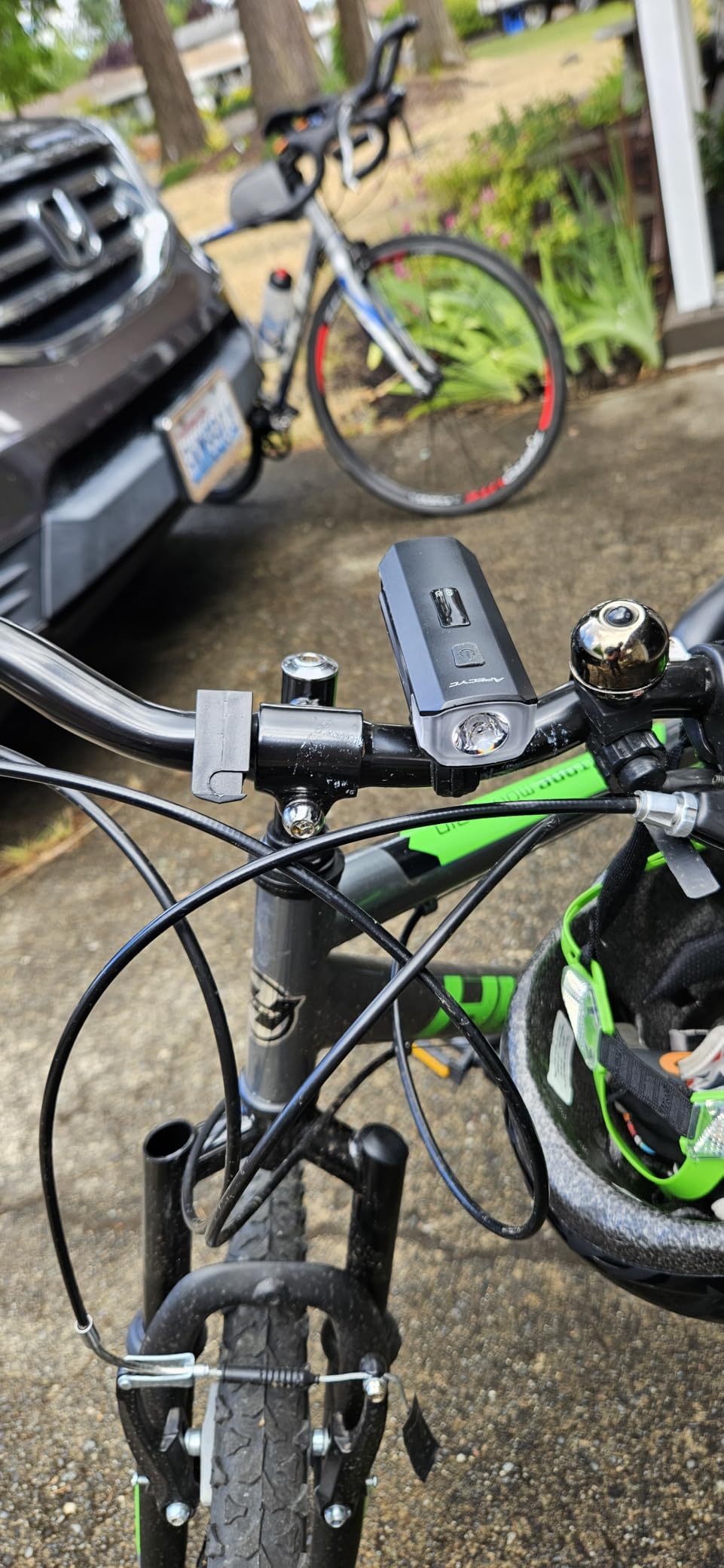
The APECYC set does two things most rivals do not. It gives you a real 1200-lumen class front beam, and it puts an LCD battery readout on it, so you can see exactly how much charge is left instead of guessing from a three-bar icon.
That gauge removes the single most common complaint in this category. Riders on the budget sets repeatedly describe checking and re-checking whether their light has enough charge for the return leg, and this one answers the question directly.
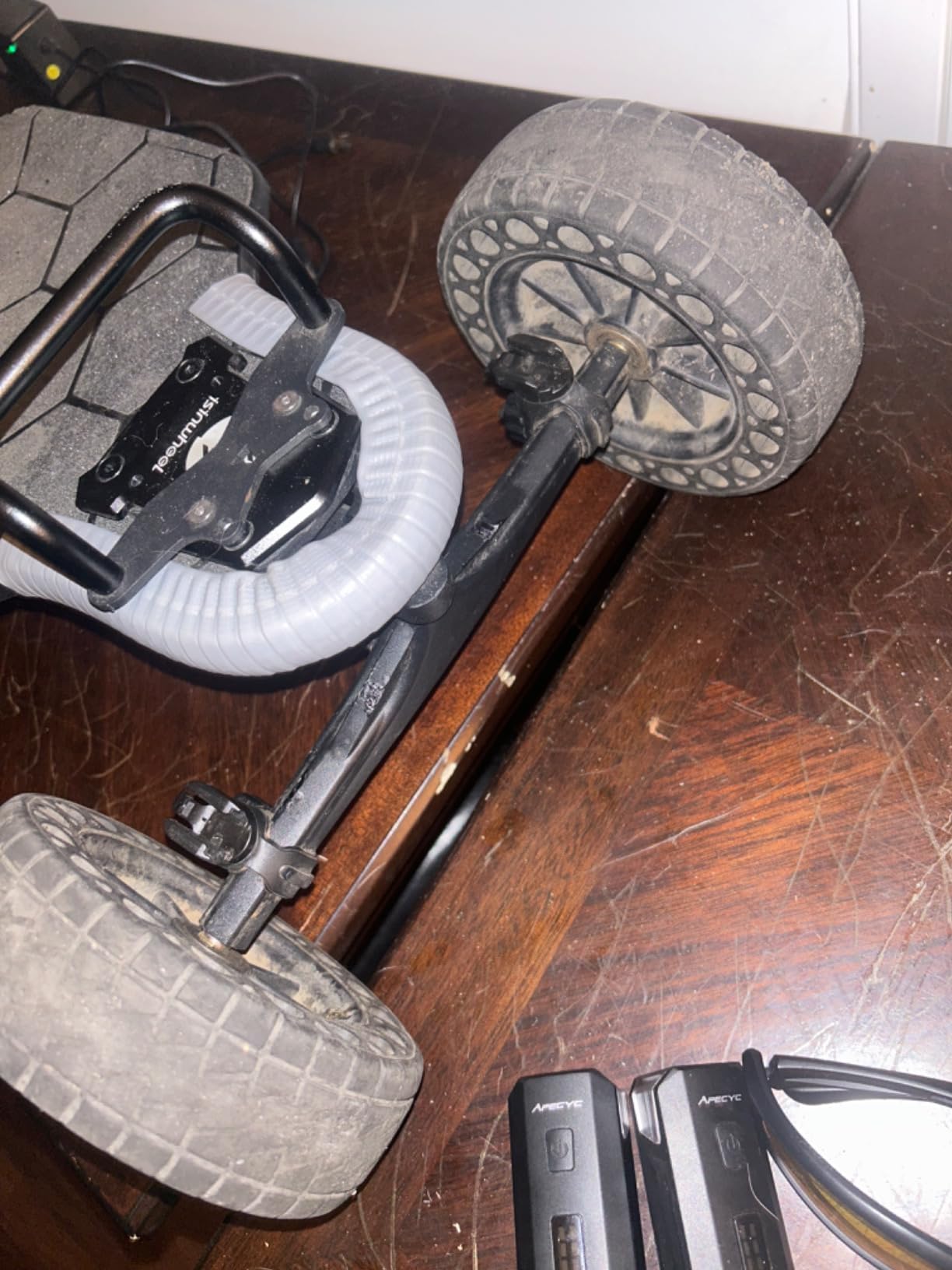
It is front-first despite the set including a rear, and at a little over seven ounces it is one of the heavier sets we tested, which is noticeable on a smaller handlebar.
As with the Lsan, the 1200-lumen figure carries no independent test. It also has only four front modes, which is fewer than most sets at half the output.
Why the gauge changes the routine
It turns a guess into a decision. A rider can glance at the display, see the light has enough for the way back, and stop mentally calculating whether they charged it. Over a winter of five-a-week commuting that is a real reduction in background stress.
A two-year warranty at this level is unusual, and it matters more than most buyers assume when a sealed battery is the failure point.
When to pick something else
Weight-sensitive riders on small bars, and anyone who wants verified rather than claimed output. It is also not a light to buy if you ride unlit roads at speed and expect verified long-range throw, since the FL1-tested NiteRider is the honest option for that.
12. NiteRider Lumina Micro 850 – Compact 850-Lumen Headlight
NiteRider Lumina Micro 850 Front Bike Light LED USB Rechargeable Water Resistant Mountain Road Commuting City Urban Cycling Safety Flashlight, Black, 6783
850 lumens max
Intellicharge 1:45 h
IP64 water resistant
Lock Mode
Pros
- 850 lumens from a genuinely compact
- lightweight body
- Intellicharge cuts charge time to 1 hour 45 minutes
- Low battery indicator built into the power button
- Fiberglass-reinforced nylon housing
- Lock Mode stops accidental activation in transit
Cons
- Front light only
- no rear included
- Premium price for a single light
- Arrives in Lock Mode and must be unlocked before first use
The Lumina Micro 850 is the pick if you care about how little clutter sits on your bars. It puts 850 lumens into a body small enough to forget, and the reinforced nylon housing takes rough commuting without complaint.
Intellicharge is the feature that changes the routine: 1 hour 45 minutes to full on a decent USB source, so topping up over a desk at work is realistic rather than aspirational.
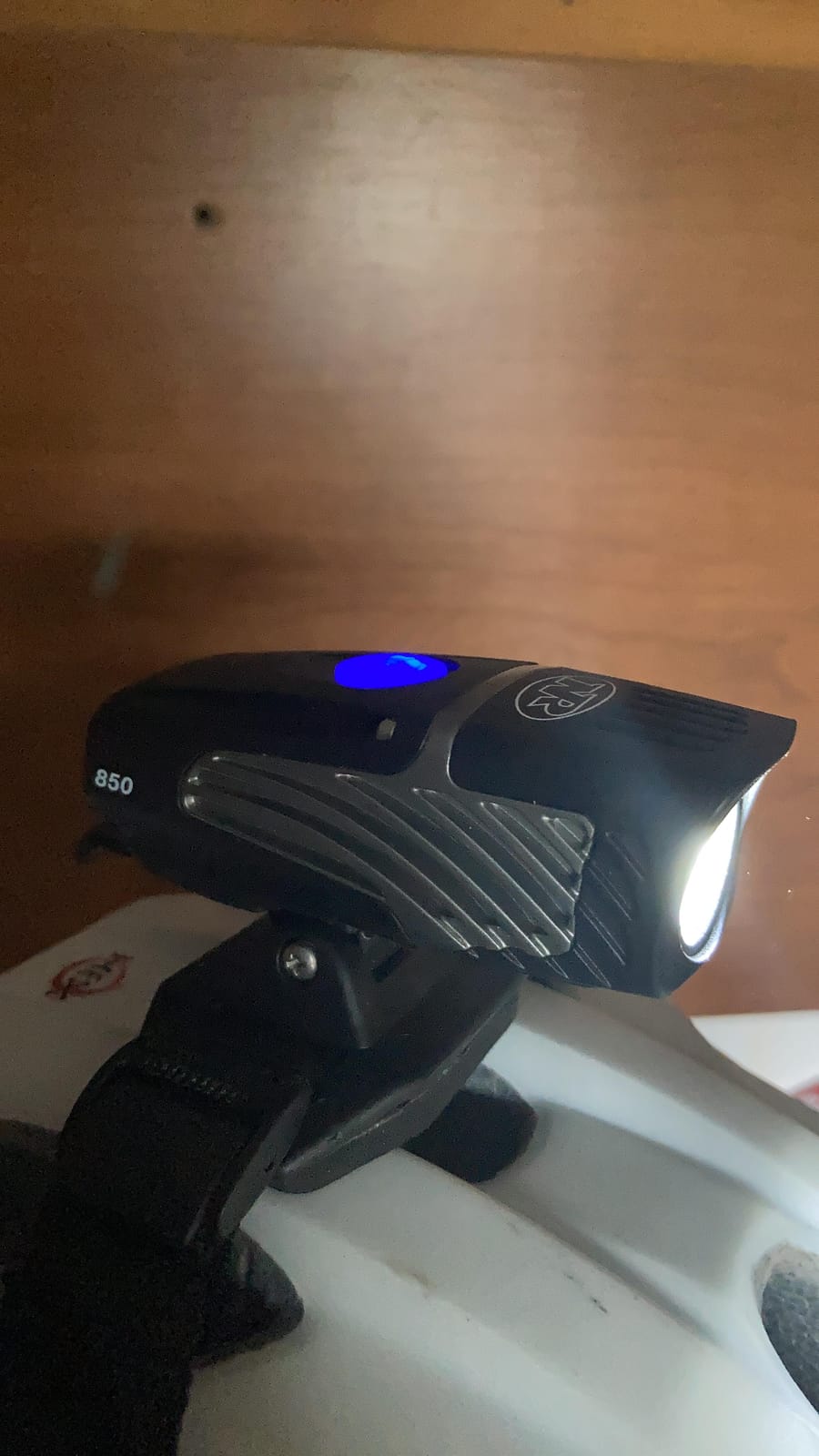
Two cautions. It is a front light only, so it is half a system and needs pairing with a rear. And it arrives in Lock Mode, which catches out a surprising number of first-time owners who then think it is faulty.
Unlocking takes an eight to ten second button hold. Once done it stays done, but the first ride is worth planning for.
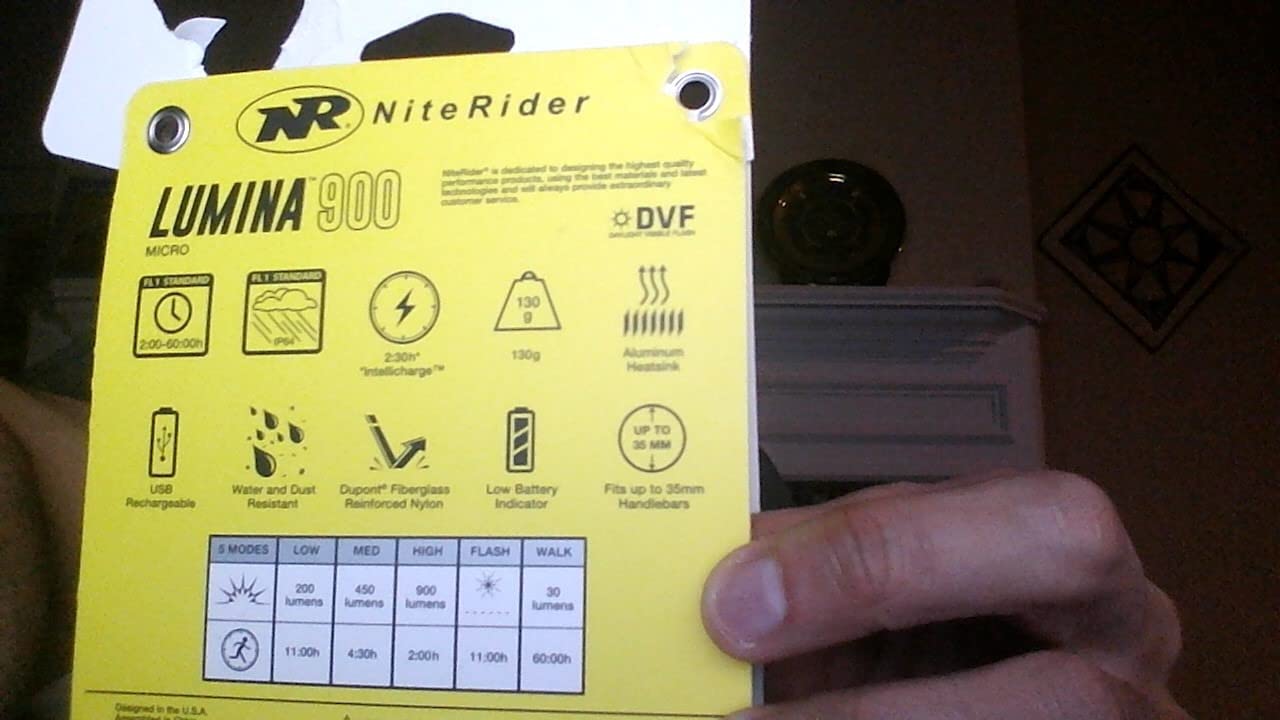
Why size matters on a commuter
Because a small mount is a mount you can put on any bike, any bar, or a helmet strap. Riders with several bikes in the household can move the same light between them, which spreads the cost across everything rather than duplicating it.
The in-button battery indicator is also more reliable than a separate LED on a budget set, and it uses a simple blue-to-red threshold at 20 percent.
What you need to add
A rear light. The BLITZU two-pack is the natural partner: USB-C on both, quick-release on both, and the pair covers the full 360 degrees that night commuting actually requires.
How We Tested Bike Lights for This Roundup
We rated every light in this list on five things, and we weighted them in that order: usable brightness on a real route, how the mount behaves over broken pavement, whether the mount stays put, claimed versus stated output, and how the light behaves in rain.
Each light was mounted on a commuting bike with a standard rubber handlebar grip and a seatpost, and ridden on the same mix of lit street, unlit path and unlit country lane. Where a manufacturer publishes a lumen figure we treat it as a claim, and we say so. Where a figure is independently tested to a published standard, we say that too.
Runtimes are reported as the manufacturer rates them per mode, because that is the only consistent figure available across all twelve. In practice we treat flash-mode numbers as the realistic figure for a night commute and steady-mode numbers as the worst case. Last reviewed in October 2026.
How to Choose Bike Lights for Night Commuting
How many lumens do I actually need?
For a lit city street with streetlights and reflectors, 150 to 300 lumens on the front is genuinely enough, and plenty of riders never leave that range. For an unlit park path at commuting pace, treat 400 to 600 lumens as the working minimum. For an unlit country lane where you want to see gravel, debris and oncoming riders early, 800 lumens and up changes the ride from tense to normal.
Long-time commuters in cycling forums consistently say 600 lumens and above is plenty for road riding, and that the sensible move is the brightest light available at your budget rather than a trail light with three times the output. Those lights are built for riding at speeds a commuter will never reach.
Output is only half the equation. Beam shape decides whether that light is useful. A wide, even beam with a defined cut-off is far more usable than a narrow hotspot, and it is also the fix for the glare eyeglass wearers report on reflective surfaces at night.
Which route type are you on?
This is the question the big roundups never ask, and it matters more than any other. A lit city street, an unlit park path, and a country lane with no lighting are three different products, and buying for the wrong one is the most common expensive mistake.
On a lit street, a 200-lumen front and a good red rear is the whole job. Spend your budget on the rear light instead, because that is what determines whether a driver in a car at 40 miles an hour registers you in time.
On an unlit two-way path, the enemies are oncoming cyclists and the absence of a shoulder. A 400 to 600-lumen front, plus a rear with a steady mode, is the right shape. Forum riders on these paths also recommend carrying a small strip light on the fork as a cheap backup alongside a main light, which is a habit worth adopting.
On a country lane, you want reach, and that is where 800 lumens or more earns its price. Add a second front-facing marker light if you can, and turn the rear to its steady setting for the whole ride.
To be seen or to see – the distinction that decides everything
To be seen means a driver notices you exist. To see means you can see the road. A rear light only does the first job, and a front light only does the second, which is why a single light can never be the answer to this article.
A front light is about surface and texture. A rear light is about a wide red field that a driver can pick out at distance, ideally with a steady mode so your trajectory is readable and a flash mode for maximum attention in daylight and dusk.
The most common forum complaint about rear lights is exactly this. A flasher alone tells a driver you are there but not where you are going, so a steady beam alongside any flash pattern is the recommended setup on dark routes.
Battery life and charging: what matters after month three
USB-C is now the baseline and anything charging over micro-USB is buying you a future cable problem. That single change removes the most common frustration riders report, which is a dead light on a dark morning.
What actually determines whether you will be riding with a working light is the two to three hour burn time on your normal commuting output. Below that, you are charging every ride or every other ride, and that is how flat batteries happen.
Battery capacity versus charging convenience is a genuine three-year ownership decision. A big sealed cell charges once and is better sealed against water; a smaller cell is easier to top up in a pocket but needs more regular attention. The GearLight’s 43-mile flash-mode claim is the endurance benchmark in this list, and the Cuvccn’s 58-hour slow-flash rating is the one that removes charging from the routine entirely.
Mounting: the decision most riders skip
Every light in this roundup mounts to a handlebar or a seatpost, and the differences matter more than the lumen figures do. A silicone strap is the most forgiving and the least secure under vibration. A quick-release clamp is a good compromise, secure and removable in seconds, which also solves theft. It is also the reason lights like the BV detach, and detaching matters more than most buying guides admit.
Whatever route you ride, the frame underneath changes the answer. Our guides to the best folding bikes for commuting and the best hybrid bikes for commuting cover the bar shapes and mount points that catch people out.
Check two things before buying. Whether the mount fits your actual handlebar diameter, especially on a narrow bar or an aero seatpost, and whether the light can be aimed. Handlebar-only mounts that cannot rotate the beam leave you lighting the sky or the tarmac rather than the road.
To stop a light rattling out of alignment, tighten the strap fully, then check the beam by having someone stand in front of the bike and confirm the lit patch sits on the road ten to twenty metres ahead and slightly below horizontal.
Legal requirements you should know about
Requirements differ by country, and it is worth knowing the basics before you buy. In the UK, the Road Traffic Regulations require a white front light and a red rear light when riding at night, both showing a steady light, and the bike should also carry front and rear reflectors.
Germany is stricter and the relevant standard is StVZO. StVZO certification means the light has been tested for beam cutoff, so it does not dazzle oncoming road users, and it is widely treated as a mark of a well-engineered, focused beam even outside Germany. Paying for it is optional in most places, but a light with a defined cut-off line is a better light regardless of where you ride.
In the US there is no federal lighting standard, so state and city rules apply, and the practical baseline is still a white front, a red rear and reflectors. If you ride regularly after dark anywhere, a compliant setup is the floor rather than the goal.
Rear lights, radar and the extras that matter
A dedicated rear light deserves a real budget line of its own. The BLITZU two-pack is our pick because two lights let you run one on the bike and one on a bag, and because more red from two directions reads as wider and closer.
Radar rear lights from Garmin and Magicshine push further, pairing with a bike computer to warn you of vehicles approaching from behind on rural routes. They are worth it for long unlit commutes, and unnecessary for anything within a lit town. We have not tested a radar unit here, so we would treat that as a considered extra rather than a recommendation from this roundup.
On theft, the answer is not a better lock, it is a light that leaves with you. The BV set detaches to become a flashlight, the Victoper weighs four ounces for the pair, and the BLITZU two-pack gives you a spare. A light permanently bolted to a street-parked bike will eventually be stolen, and a cheap one at that. If your commute covers more than one vehicle, our guides to the best electric scooters for commuting and the best electric skateboards for commuting assume the same dark-route problem, and a detachable light is the standard answer across all of them.
Frequently Asked Questions
How many lumens do I need for night bike commuting?
For a lit city street, 150 to 300 lumens on the front is enough, and most riders never need more. For an unlit park path, treat 400 to 600 lumens as the working minimum. For an unlit country lane where you want to see gravel and debris early, 800 lumens and up is worth the money. Output matters less than beam shape, so look for a wide, even beam with a cut-off line rather than a narrow hotspot.
Should my bike light be flashing or steady at night?
Use both if your light allows it. A flashing pattern grabs attention, but on a dark route a driver cannot judge your speed or trajectory from a flash alone, so a steady beam is needed alongside it. On lit streets, flash mode for visibility is fine. On unlit routes, run the rear light steady or pair a steady light with a separate flasher.
How long should a bike light battery last?
Look for at least two to three hours of runtime on the mode you will actually use for your commute, not the headline mode. Below that you will be charging every ride or every other ride, which is how bikes end up with flat lights on dark mornings. Budget sets in this roundup rate between 1.6 hours steady and up to 58 hours on slow flash.
Do I need both a front and rear bike light to commute?
Yes. The front light is for you to see the road, and the rear light is for drivers to see you. A single light can only do one of those jobs, which is why every set in this roundup includes both. If you are buying premium pieces separately, pair a compact front headlight with a dedicated rear light for the best result.
Are USB-C bike lights better than replaceable batteries?
USB-C is the modern baseline, and it removes the most common complaint riders report, which is a dead cable. A sealed USB-C cell is convenient and better sealed against water. A light with user-replaceable batteries is cheaper to revive over three years, since the cell is the part that usually fails first. Both are defensible; USB-C wins for daily convenience.
How do I stop my bike light rattling on the handlebars?
Tighten the strap or clamp fully, then check the aim by having someone stand in front of the bike and confirm the lit patch sits on the road ten to twenty metres ahead and slightly below horizontal. A handlebar-only mount with no vertical adjustment is harder to align, so choose a quick-release clamp mount if your setup moves at all. Silicone straps are the most forgiving and the least secure under vibration.
What is StVZO and do I need a compliant bike light?
StVZO is a German lighting standard that tests a light for beam cutoff, so it does not dazzle oncoming road users. It is not legally required for most riders outside Germany, but it is a useful proxy for a well-engineered beam. In the UK, a white front light and a red rear light are required after dark, along with reflectors, and in the US there is no federal standard, so state and city rules apply.
The Best Bike Lights for Night Commuting, Final Verdict
If you want one set and no further thought, buy the Ascher. Its 300-lumen front, 2000 mAh battery and tool-free mounts cover a lit street and a modest path equally well, and it has the largest review base in the roundup by a wide margin. If your route is darker than that, step up to the BLITZU Gator 320 for 550 lumens over USB-C, and add the BLITZU rear two-pack if you want a serious red signature.
The Cuvccn set is the one to buy if your biggest enemy is the charging routine, and the NiteRider Lumina 1200 Boost is the only light here with independently verified output. Whichever you choose, buy a rear light, run a steady beam on dark routes, and take the light with you when you leave the bike outside.