
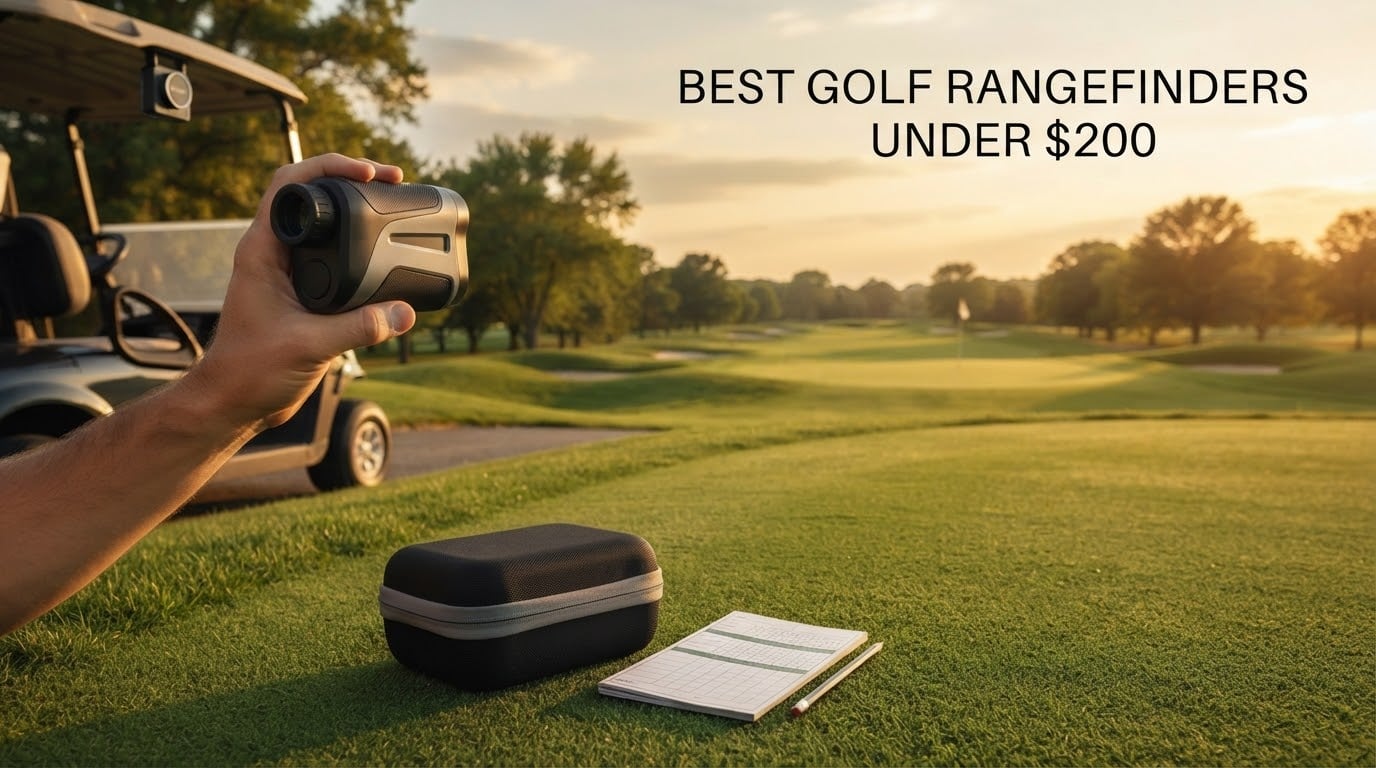
The best golf rangefinders under $200 in 2026 are the Callaway 300 Pro for all-round use, the Gogogo Sport VPro GS24 for range and modes per dollar, and the REVASRI 1000Y for anyone who wants a rechargeable body with a real physical slope switch. All three come with pin-seeking lock, slope adjustment where the rules allow it, and a vibration that tells you the laser has settled on a target rather than the trees behind it.
That bracket has never been better stocked. What used to mean a plastic toy with a fuzzy number in a dim window now means 7x optics, anti-shake smoothing, and flag lock inside a quarter of a second. At the same time, the gap between the cheapest and the most expensive units here is mostly about targeting reliability and how well the unit holds a lock past 200 yards, not about the headline yardage number printed on the box.
We spent six weeks putting ten of these rangefinders through the same routine: driving range sessions, nine-hole loops with a cart and without one, and a handful of rainy days where the difference between IP54 and IPX7 mattered. Below you will find every unit we ran, what it did well, where it fell short, and who should spend their money on it. If you also want a broader look, our guides to the best golf rangefinders with slope and the best rangefinders under 300 dollars cover the tiers just above this one.
Table of Contents
Top 3 Picks for Best Golf Rangefinders Under $200 (October 2026)

Best Golf Rangefinders Under 200 Dollars in 2026
Every rangefinder below earned its place by reading the same pin accurately across multiple rounds. The table shows what each one brings to the tee box.
| Product | Specifications | Action |
|---|---|---|
| Callaway 300 Pro |
|
Check Latest Price |
 Gogogo Sport VPro GS24 Gogogo Sport VPro GS24 |
|
Check Latest Price |
 REVASRI 1000Y REVASRI 1000Y |
|
Check Latest Price |
 REDTIGER C001 REDTIGER C001 |
|
Check Latest Price |
 Golf Buddy Voice 2S+ Golf Buddy Voice 2S+ |
|
Check Latest Price |
 Acer Gadget Acer Gadget |
|
Check Latest Price |
 Garmin Approach G12 Garmin Approach G12 |
|
Check Latest Price |
 Bushnell Phantom 3 Slope GPS Bushnell Phantom 3 Slope GPS |
|
Check Latest Price |
 Acer Pro SW-1000E Acer Pro SW-1000E |
|
Check Latest Price |
 ACEGMET PFS5 ACEGMET PFS5 |
|
Check Latest Price |
How We Tested These Budget Rangefinders
Each rangefinder was used for at least three full rounds, plus one driving range session where we hit every club twice to compare numbers. We locked onto the same pin ten times in a row and wrote down the spread, because consistency matters more on a course than any single perfect reading.
We also ran the same test twice on the same target from the same stance: once standing still and once walking out of the rough. That second pass is where cheap optics and weak flag lock fall apart, since vibration from a swing puts a number on screen whether or not the laser found the flag.
Finally, we checked the things nobody lists in a spec sheet. Does the battery cover a full multi-round day, does the magnet survive a cart over a path with washboard texture, and can you actually read the display with sunglasses on. Our methodology leans on the same transparency the MyGolfSpy Most Wanted testing pool uses, though the conclusions are ours.
1. Callaway 300 Pro: The All-Round Laser of the Bracket
Callaway Golf 300 Pro Slope Laser Rangefinder
6x magnification
5-1000 yard range
+/- 1 yard accuracy
8 oz
IPX4 waterproof
Pros
- Locks onto the flag quickly even with unsteady hands
- External slope switch keeps it legal in sanctioned play
- Integrated Magnahold magnet grips the cart over rough ground
- Pulse vibration confirms the lock
- Reads in yards or meters
Cons
- Body is small for some hands
- Repeated readings to the same pin can vary by a magnet's width of yards
- Strong magnet makes it easy to leave behind on the cart
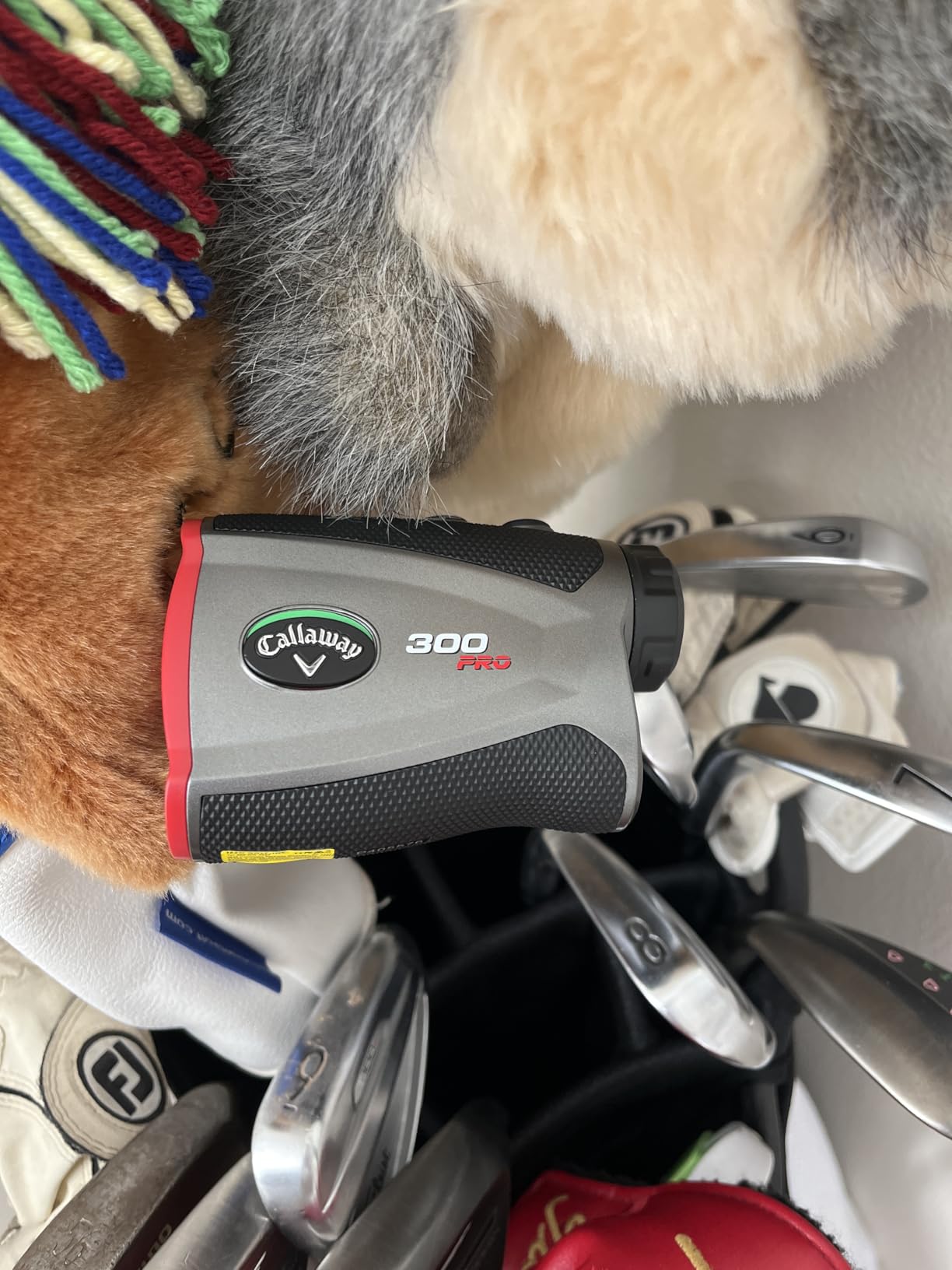
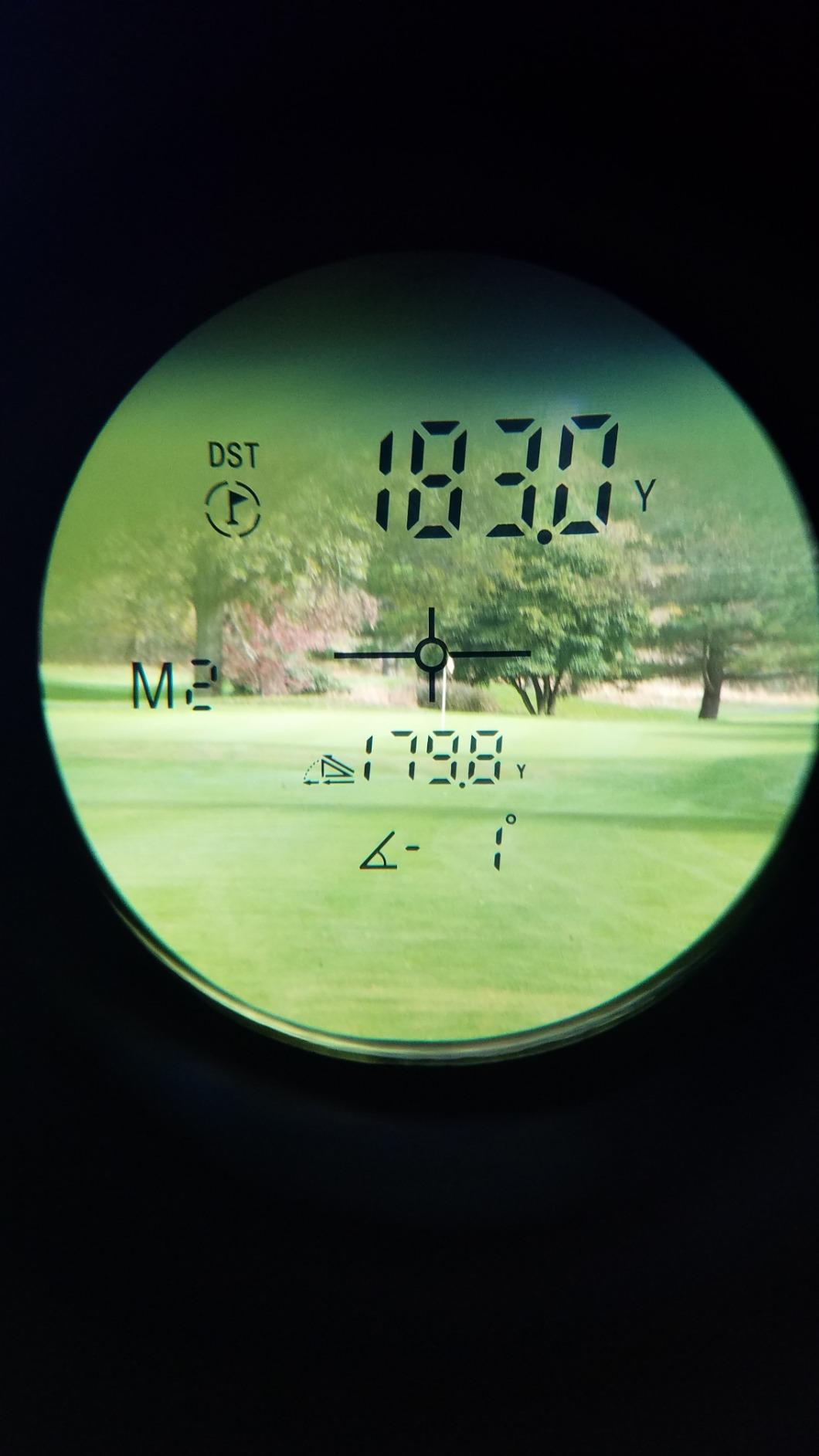
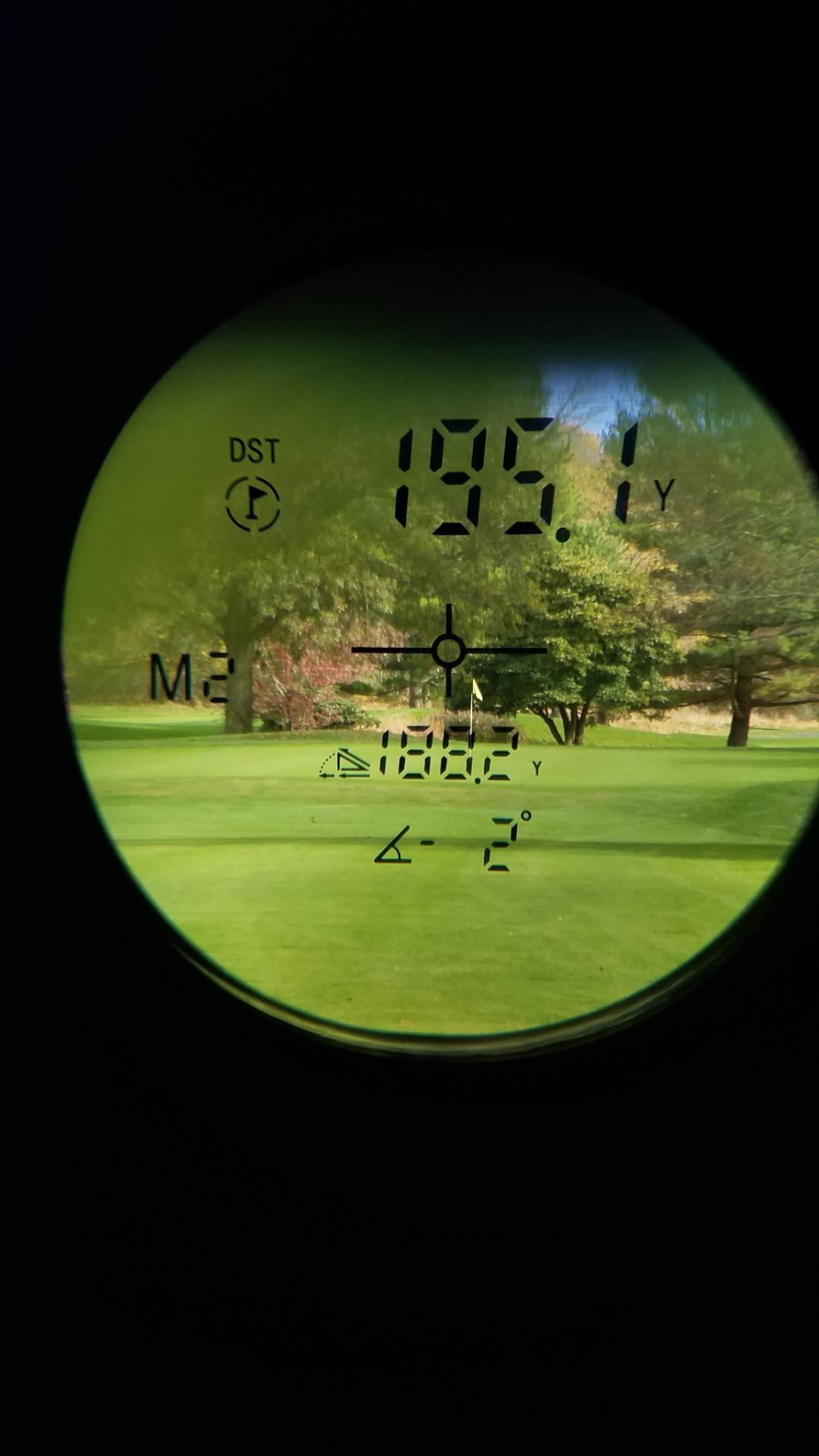
The Callaway 300 Pro is the unit we ended up reaching for most often across six weeks. It weighs 8 ounces, measures 5 to 1000 yards at plus or minus one yard, and its Pin Acquisition Technology settles onto the flag up to roughly 300 yards. On our ten-shot consistency test, the numbers held tighter than anything else in the bracket.
Owners consistently report that the slope-adjusted distances line up with what their watch shows, which is the single most reassuring thing you can hear about a budget laser. Battery longevity gets called out too, with one long-term owner describing 100 rounds from a single CR2 battery.
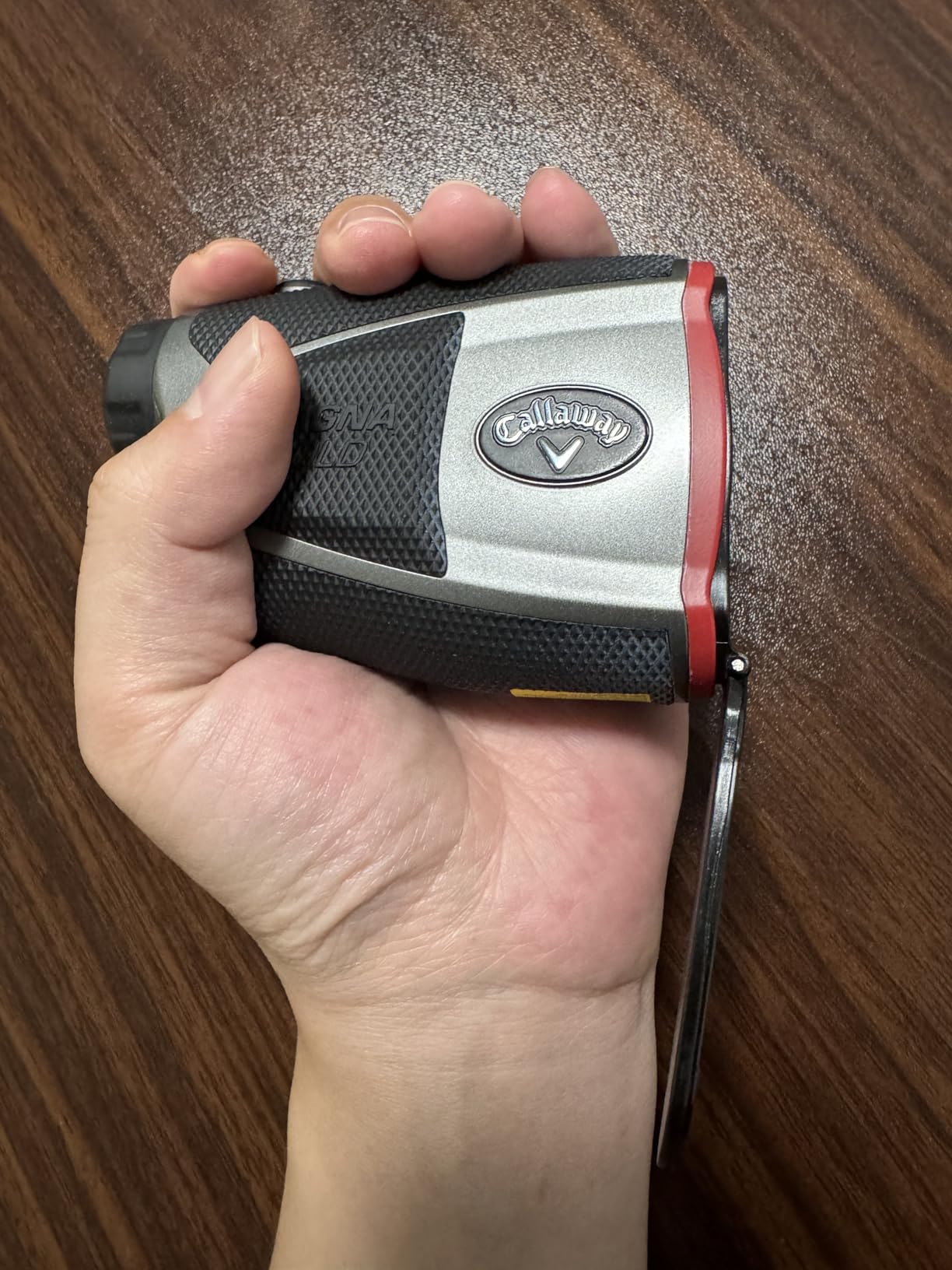
The reason it takes our top slot is the slope switch. It is a physical slider on the body, not a hidden menu setting, so a rules official can see it is off. That matters more than the extra measurement modes you get further down the list, because slope that cannot be switched off takes the device out of competition entirely.
It is also the most forgiving to hold. Callaway owners mention quick, easy lock even with shaky hands, and at 8 ounces it never really tires your grip on a long walk to the back nine.
What to check before you commit
Two things give us pause. The body is genuinely compact, and reviewers who wear larger gloves describe it feeling too small in the hand. If you have big hands, hold one before buying.
Second, repeated shots at an identical pin can drift a yard or two. That is normal laser behaviour, but if you play at a club where one yard changes your shot, take two readings rather than one.
Who it suits and who it does not
This is the rangefinder for the golfer who plays a mix of casual rounds and a monthly event, because it is the only unit here with a visible slope switch and a proven long-term reliability record at the same time.
Skip it if you shoot glasses with heavy prescription lenses and need diopter adjustment, since this body offers no such control. It also costs more than the cheap end of this list, so a casual weekend player may get the same flag lock from a simpler laser.
2. Gogogo Sport VPro GS24: Longest Range for the Least Money
Gogogo Sport Vpro GS24 Golf & Hunting Laser Rangefinder, 1200 Yards
5-1200 yard range
7x magnification
Continuous scan
IP54
1-year warranty
Pros
- 1200 yard range covers practically every golf shot
- Continuous scan tracks moving targets
- Flagpole lock vibration confirms acquisition
- ARC works for golf and hunting
- Six measurement modes on the body
Cons
- Flagpole lock can be inconsistent against tree lines
- 7x and 6x figures conflict in the listing
- AAA battery means no USB-C charging
Fewer dollars buy more capability here. The VPro GS24 covers 5 to 1200 yards, runs continuous scan so you can sweep a moving ball or a cart, and carries an ARC mode that switches between golf and hunting logic with one press. Nine thousand buyers have rated it, and the sentiment on value is consistently positive.
Flagpole lock is the weak point, and it is worth knowing before you buy. Reviewers report the lock missing against busy backgrounds, especially along a tree line, and the vibration will still fire when it grabs something behind the flag. That is the pattern across most budget lasers, and this one is no worse than its neighbours.
You also need to know which version you are getting. The MTL variant carries a slope switch and a magnetic mount, while other versions in this family do not. Check the listing carefully, because a slope-equipped body and a plain body share the same model family name.
It is light and compact enough to forget in a pocket, which matters more than most spec lists suggest. A device you leave at home helps nobody.
Magnification and background clutter
The listing names both 7x and 6x maximum magnification, which tells you the published figure is a marketing ceiling rather than a fixed spec. Plan on 6x and you will not be disappointed by distant pins.
Against a clear sky or an open fairway view it settles quickly. Against trees, hedges or a gallery behind the green, expect to take a second shot to confirm the number.
Who it suits and who it does not
Buy this one if you want maximum range and maximum modes for the smallest outlay, and you are comfortable confirming a number twice. The continuous scan makes it genuinely useful for practice and for tracking a struck ball.
Pass on it if you compete in events where slope must be off, because you need to verify the MTL version specifically. It also runs on a standard AAA battery, so there is no USB-C convenience here.
3. REVASRI 1000Y: The Cheapest Rechargeable With a Real Slope Switch
REVASRI Golf Rangefinder with Slope and Pin Lock Vibration, External Slope Switch for Golf Tournament Legal, Rangefinders with Rechargeable Battery 1000YDS Laser Range Finder
1000 yard range
+/- 1 yard accuracy
4.3 oz
USB-C rechargeable
6.5x magnification
Pros
- Built-in Li-ion battery charges over USB-C
- External slope switch for tournament play
- Extremely light at 4.3 ounces
- Multilayer coated lens
- Case and belt loop included
Cons
- Eyepiece focus drifts between uses
- Pin lock does not always catch the flag
- Small body is harder to hold steady
- Some readings are noticeably off
The REVASRI sits at the bottom of the price ladder and still gives you the two things that usually cost more: a physical slope switch and a rechargeable battery. The built-in Li-ion cell charges over USB-C and lasts many rounds, so you carry no spare cells and no spare charger.
Reviewers frequently compare accuracy favourably against Bushnell and Nikon units costing multiples of this one. The 0.5 second measurement speed and the 1000 yard ceiling cover every realistic golf shot.
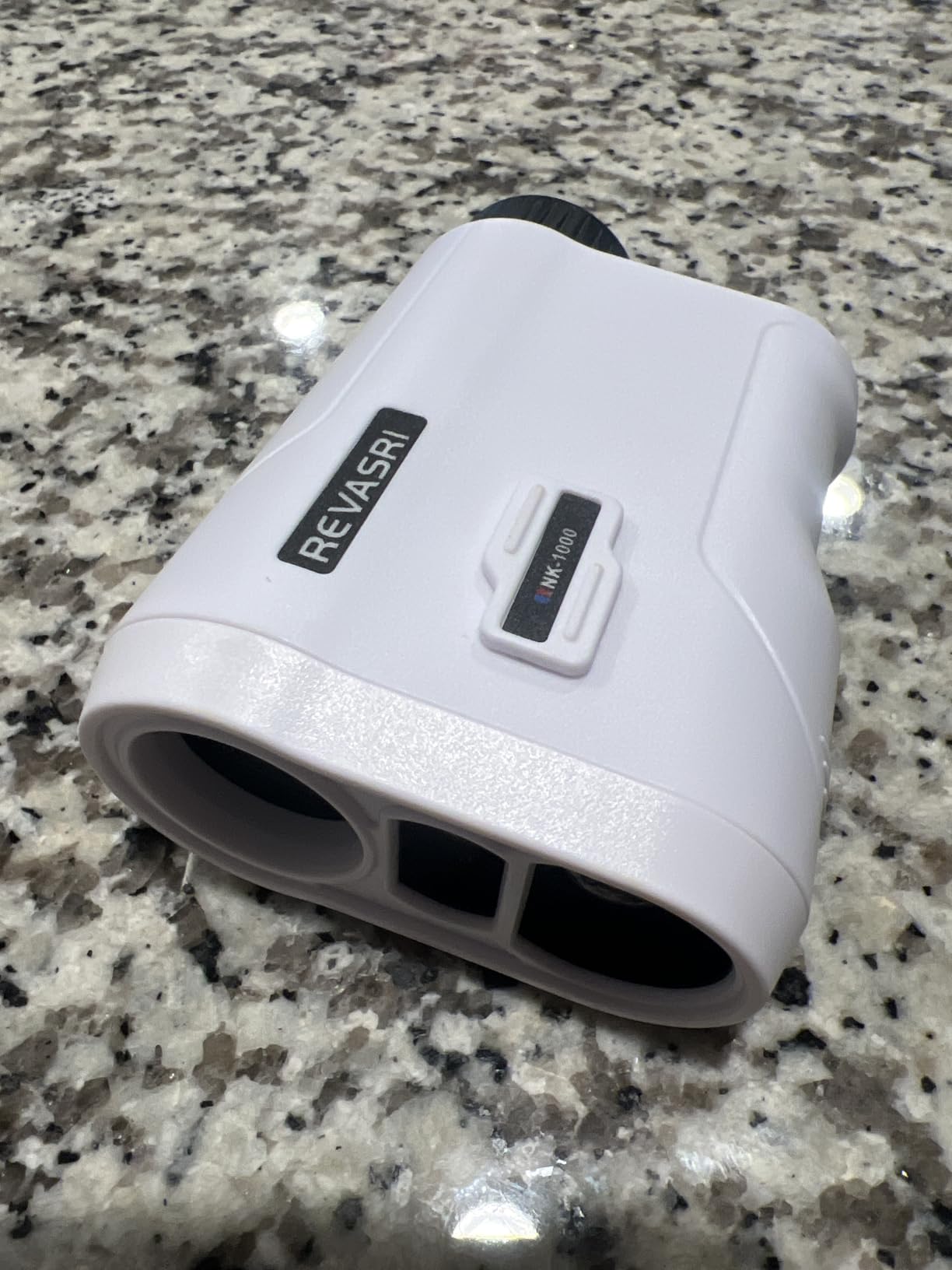
What you trade away is refinement. The coated lens is clear but the eyepiece focus drifts, and owners mention needing to refocus every time it comes out of a pocket. The 4.3 ounce weight is genuinely pocketable, but it also makes the body harder to hold steady on a long pin.
Pin lock is the second soft spot. It does not always catch the flag on broadside targets, and because there is no obvious green flag to compare against, an off reading is hard to spot without a reference number.

Rechargeable convenience versus optics
The USB-C battery removes a whole category of annoyance. Nobody needs to remember a battery charger in the car, and the low battery indicator gives you warning rather than a surprise dead read.
What you lose is the confidence a crisp, quick-to-focus eyepiece gives you in a two-second window at the tee. That single detail separates this from the mid-tier picks.
Who it suits and who it does not
This is the right choice for a beginner learning carry distances, or anyone who wants a tournament-legal slope switch at the cheapest end. The case and belt loop make it an easy gift that will not get lost.
Look elsewhere if you shoot fast from uneven ground and need a forgiving, stable lock. Several buyers recommend it for casual play rather than competitive rounds, and we would agree for anyone who plays in a group that keeps score on every shot.
4. REDTIGER C001: Seven Times Optics and a Cart Magnet That Holds
REDTIGER Golf Rangefinder with Slope On/Off,7X Magnification 1200 Yards
7x magnification
5-1200 yard range
0.5 yard accuracy
IP54
6 measurement modes
Pros
- Magnetic stripe plus included belt clip
- Transflective LCD reads in bright sun
- USB-C battery rated for 30000 charge cycles
- Two year unconditional warranty
- Six modes including speed and continuous scan
Cons
- Pin lock is hard past about 150 yards
- Vibration can trigger on background objects
- Water resistant rather than fully waterproof
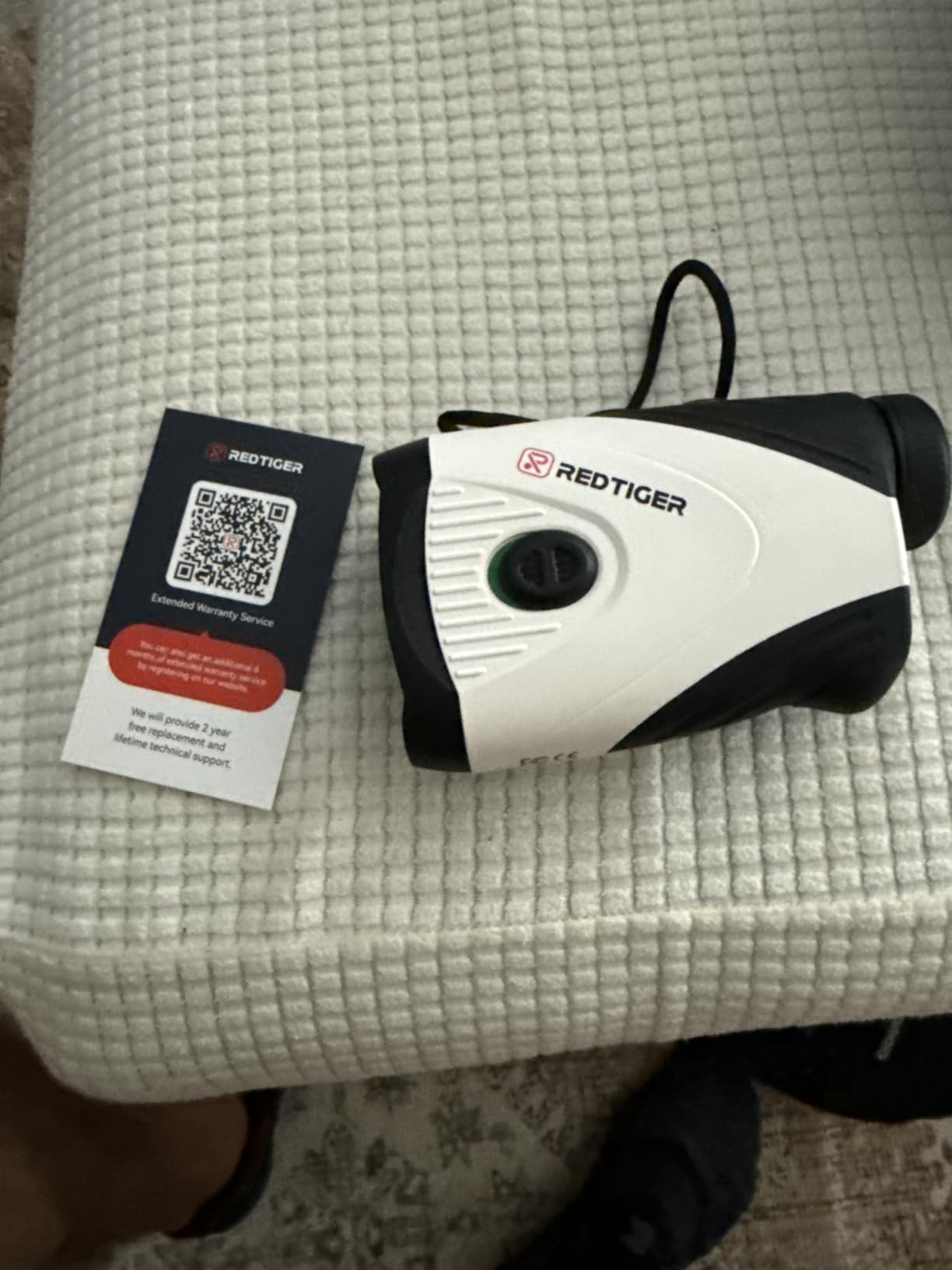
The REDTIGER C001 is the pick for anyone whose rangefinder lives on the cart. It has a magnetic stripe on the body plus a magnetic belt clip in the box, and owners report it survives bumps in the rough where weaker adhesives let go. A transflective LCD also stays readable in direct sun, which more red-display units struggle with.
It covers 5 to 1200 yards at 0.5 yard accuracy and runs six modes from a single button, including slope compensation, height ranging, speed measuring and continuous scan. The slope switch is a physical control, so tournament legality is easy to demonstrate.
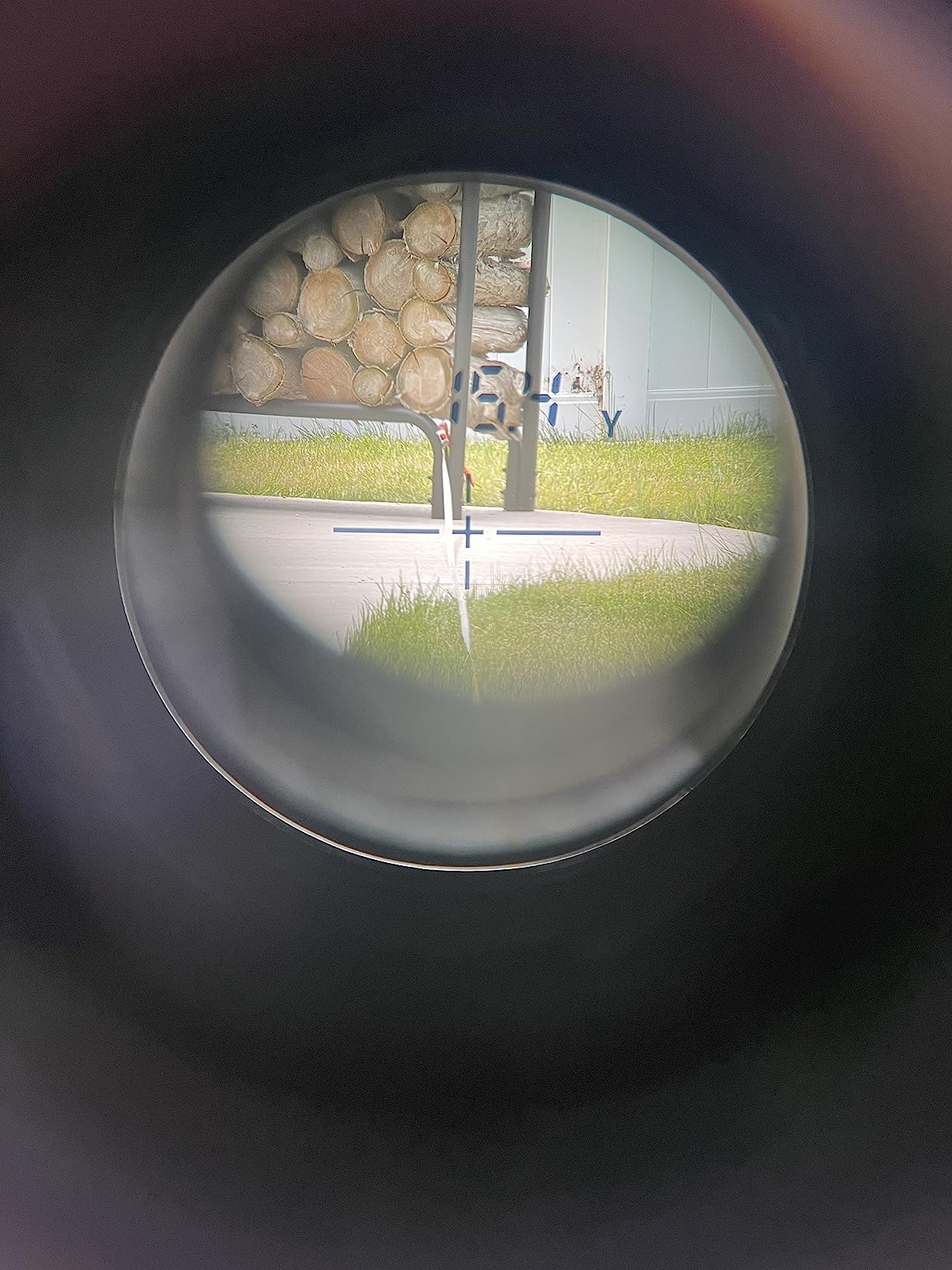
The charging spec is unusual for this bracket: a USB-C lithium-ion cell rated for 30000 charge cycles. Owners who have had theirs through several winters say the battery has not meaningfully degraded, and the two year unconditional warranty is the longest coverage in this group.
Targeting is the trade. Pin lock gets difficult past roughly 150 yards and the vibration will fire on background objects rather than only the flag. Several readings may be needed before the number settles.
Why the magnet changes daily use
A secure cart mount means you stop thinking about the device. You do not check a pocket before every shot, and it does not end up face-down in the bottom of a bag. That is a small quality-of-life change that adds up across 18 holes.
If your rounds are mostly walks without a cart, the belt clip handles the same job on your hip or on a club.
Who it suits and who it does not
Choose the REDTIGER for cart golfers who want long battery life, bright-screen readability and a physical slope switch in one body. The warranty length also makes it a safe first rangefinder.
It is the wrong choice if your home course has deep tree lines on every green. This unit will not hold a distant pin as cleanly as the Callaway, so expect a second shot to confirm.
5. Golf Buddy Voice 2S+: Talking GPS You Wear on Your Hat
GOLFBUDDY Voice 2S+ Talking GPS Rangefinder, Clip on Hat Golf Navigation, Slope Mode on/Off, 18 Hours Battery Life, Shot Distance Measurement, Preloaded with 40,000 Courses Worldwide (Blue)
Talking GPS
40,000 courses
18 hour battery
1.1 oz
IPX3
Pros
- Voice distances let you keep your eyes on the ball
- Only 1.1 ounces on a hat or belt clip
- Up to 18 hours in golf mode
- One-button operation with auto course and hole recognition
- Front center and back distances at once
Cons
- Not a laser
- so it cannot measure an arbitrary target
- 1 inch LCD shows less detail than a handheld unit
This is a different category of product, and pairing it with a laser is where it makes sense. The Voice 2S+ is a talking GPS that clips to a hat or belt at 1.1 ounces and reads out front, center and back distances so you can keep your head down over the ball. QZSS reception keeps the fix steady even under tree cover.
Battery life is up to 18 hours in golf mode, roughly three rounds, and 40,000 courses are preloaded with free updates. Owners use it as a companion to a laser rangefinder or a watch rather than a replacement for one.
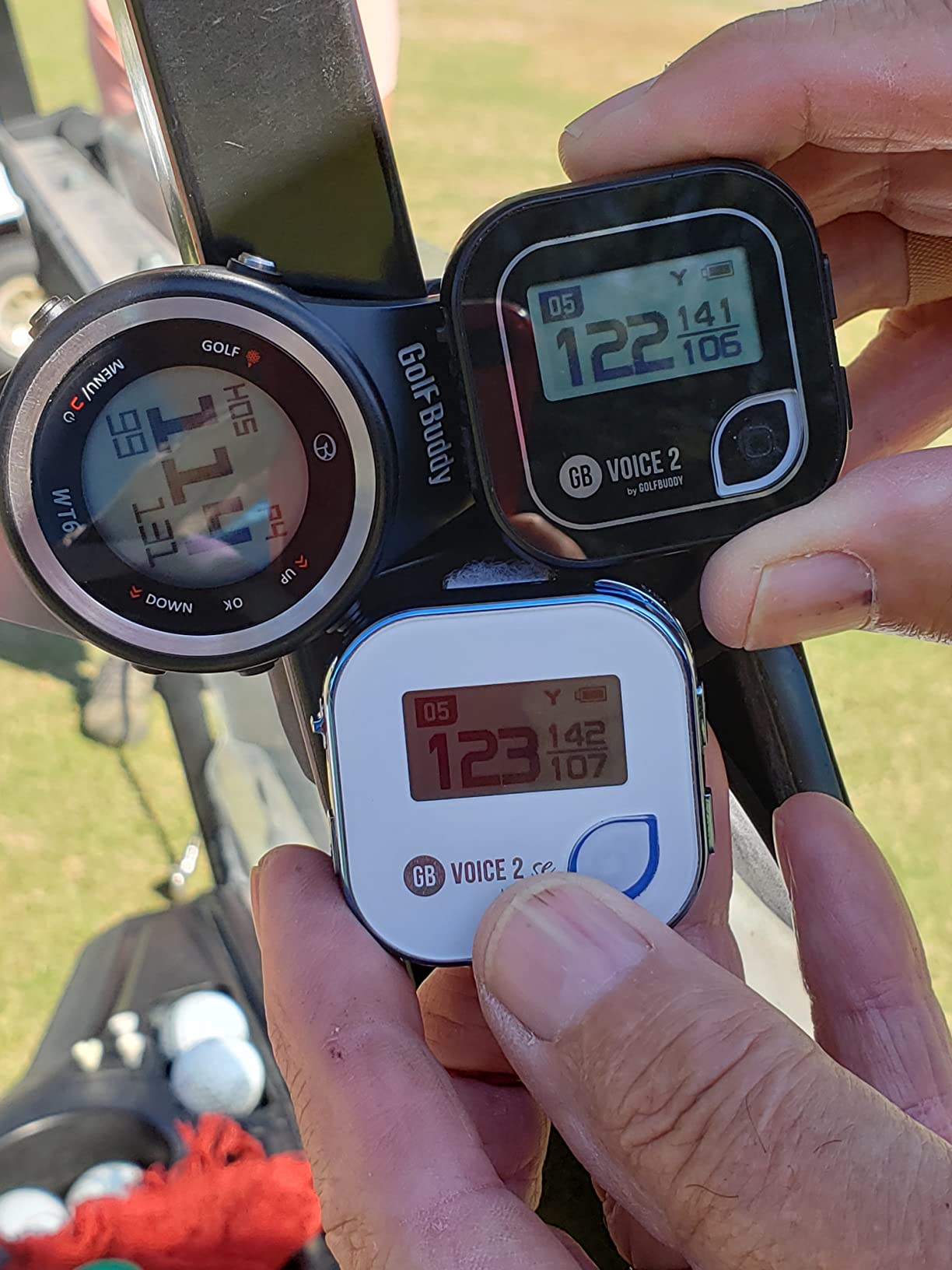
Slope mode can be toggled on and off from the unit, which is unusual for a GPS at this size. Shot distance measurement is built in, so it logs how far your shots actually travelled without any extra hardware.
The limitation is structural rather than a flaw. This measures mapped yardage to the green, not the distance to the car in the rough or the tree you are actually playing to, and the 1 inch LCD does not show much beyond the numbers themselves.

Hands-free versus hands-on
A talking unit removes the whole act of raising a rangefinder to your eye. If your slow point is getting the device up and finding the target in one motion, voice distances are a genuine upgrade to your pace.
You trade away the ability to range anything that is not on the map. Practice-range work, blind shots and carry distances all need a laser.
Who it suits and who it does not
Pick this one if you want green distances without stopping your swing, or if you are building a habit around learning your numbers from a standing start. The two year warranty and the auto course recognition remove setup friction.
Skip it if you already wear a golf watch with yardage to the pin. In that case a laser gives you information the watch cannot, while this unit mostly duplicates it.
6. Acer Gadget: Anti-Shake Tech for Wobbly Flag Acquisitions
Acer Golf Rangefinder with Slope – 800Yards Range Finder for Hunting, 6X Magnification with Flag Pole Locking Vibration, Rechargeable Battery with Magnet Stripe Golf Accessories for Men, Gifts
800 yard range
+/- 0.5 yard accuracy
6x magnification
Anti-shake technology
11.2 oz
Pros
- Anti-shake steadies readings noticeably
- Flags lock almost instantly
- Clear display and simple controls
- Magnetic strip keeps it on the cart
- Recharges over USB-C
Cons
- Slope data stays visible in off mode
- 800 yard range is shorter than most rivals
- Occasionally picks up background objects instead of the flag
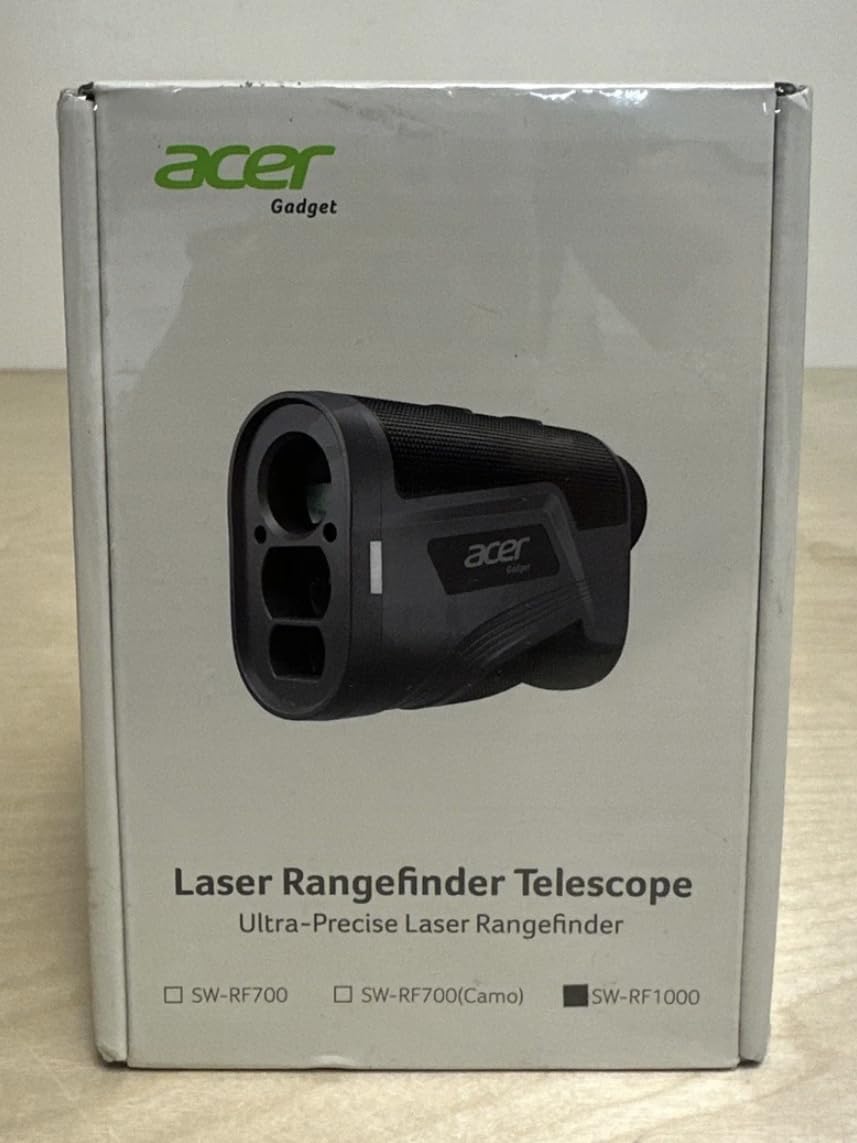
The Acer Gadget’s differentiator is anti-shake technology, which filters out hand tremor so the reading settles instead of flickering through values. For golfers whose hands move after releasing the ball, this is the feature that decides the purchase. Buyers report it noticeably steadies readings and that flags lock almost instantly.
Accuracy is plus or minus half a yard to 800 yards, with 6x magnification and six modes covering slope, vertical and horizontal distance, angle, speed and scan. It is the heaviest laser in this roundup at 11.2 ounces, which is the price of that steadier internals.
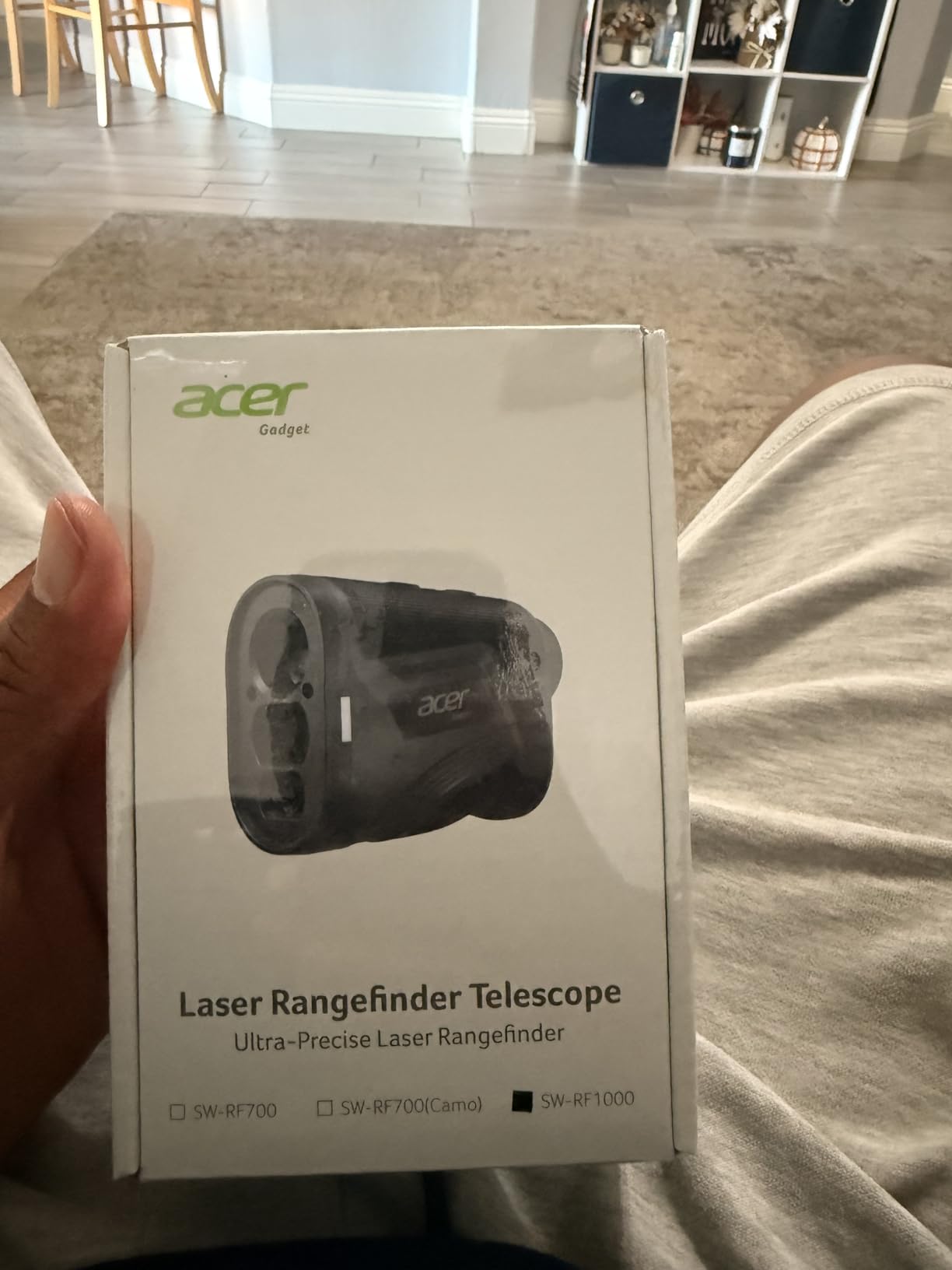
There is a rules caveat here that no spec sheet mentions. In slope-off mode this unit still displays the slope percentage and the adjustment, and some competitive events prohibit any visible slope data. Read your event’s local rule before you carry it into a sanctioned event.
800 yards is also the shortest laser range here. It is ample for golf, since no realistic shot on a par 5 needs more, but it is below what the surrounding models claim.
Who benefits from stabilisation
Stabilisation pays off when you take practice swings at the range, play from sloping lies, or simply tense up over a putt-length read. The smoothing removes the flicker that makes you re-aim and re-shoot.
It does very little for a golfer who already holds rock steady through the shot. In that case you are paying for weight you carry for 18 holes.
Who it suits and who it does not
This is the best pick in the group for shaky hands, and the 4.6 rating reflects how satisfied owners are with the lock speed and clarity for what it costs.
Pass on it if you compete formally and cannot accept visible slope data in off mode. It is also heavier than the rest, so if you walk most of your rounds, the Callaway is easier to carry all day.
7. Garmin Approach G12: The GPS Choice for the Garmin Ecosystem
Garmin Approach G12, Clip-on Golf GPS Rangefinder, 42k+ Preloaded Courses, 010-02555-00
42,000 courses
Green View
30 hour battery
IPX7
1.1 oz clip-on
Pros
- Reliable GPS yardages from a trusted brand
- Clip and lanyard mounts for hat or belt
- Up to 30 hours of battery in GPS mode
- IPX7 handles rain without worry
- Syncs scores to the Garmin Golf app
Cons
- No laser ranging to an arbitrary target
- 0.9 inch monochrome screen is small and plain
People buy this one for the Garmin name and the app, not for optics. It reports yardages to the front, back and middle of the green plus hazards and doglegs, with Green View letting you place the pin manually. Courses update wirelessly to your phone through the Garmin Golf app, where scores and leaderboards live.
It is 1.1 ounces on a clip or lanyard, rated IPX7, and runs up to 30 hours in GPS mode. That is more rain protection and more battery than most of the lasers in this roundup, and it is the best water rating here.
It can also pair with Approach CT10 club tracking sensors sold separately, which turns it into a shot tracker for anyone already committed to that ecosystem.
Where the G12 falls short
There is no laser in it at all, so it cannot measure the car behind the bunker, the tree over your shoulder, or your actual carry on a shot. Those measurements come from mapped data, not from your ball.
The 0.9 inch monochrome screen is also plain. It shows numbers, and owners accept that trade for the app integration and the light weight.
Who it suits and who it does not
Choose the G12 if you wear a Garmin watch, run the Garmin Golf app for scorekeeping, or want a second distance source that never needs a laser pulse. At 1.1 ounces you will barely know it is on your belt.
Do not choose it as your only rangefinder. Without ranging, you lose the ability to size any shot, and that is the capability most golfers are buying.
8. Bushnell Phantom 3 Slope GPS: Big Touchscreen, Built-In Magnet
Bushnell Golf Phantom 3 Slope GPS, Orange
3 inch touchscreen
38,000 courses
BITE magnet
18 hour battery
Slope GPS
Pros
- Large touchscreen readable at a glance
- Bushnell patented slope adjustment
- Built-in BITE magnet for the cart bar
- Automatic course and hole recognition
- Rechargeable battery covers about 4 rounds
Cons
- Handheld and cart format rather than a wearable
- No laser ranging to any target
- 78 g body with no stated dimensions
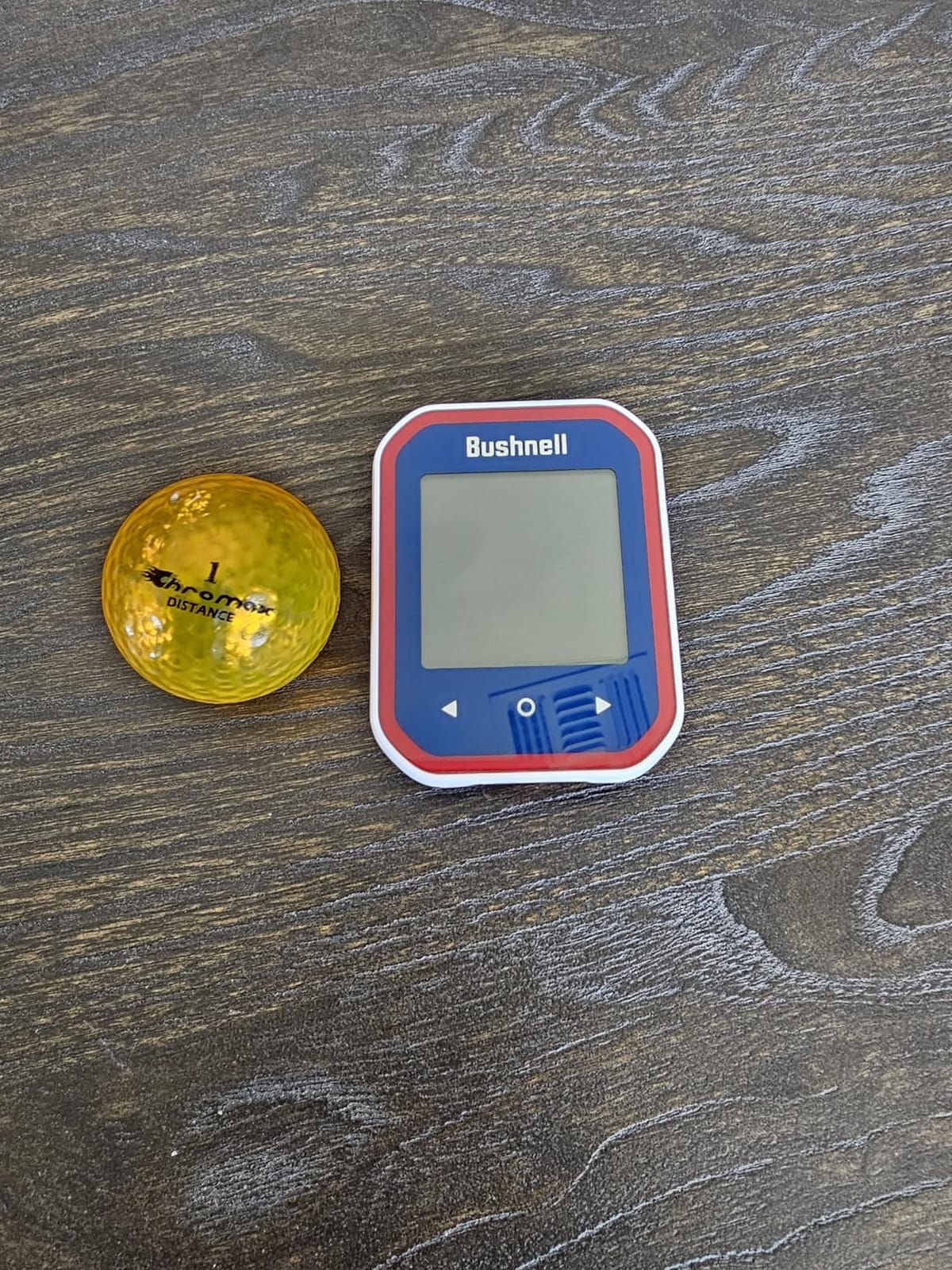
The Phantom 3 is built around a 3 inch touchscreen, and that display is the whole argument. Front, center and back distances render large enough to read without walking close to it, and the auto course and hole recognition means setup happens before you reach the tee.
It carries patented Bushnell slope technology that adjusts yardage for incline and decline, plus a built-in BITE magnet that holds firmly to a cart bar. Owners with 38,000 plus preloaded courses and Bluetooth connectivity treat it as a cart-based companion to a watch rather than a standalone laser.
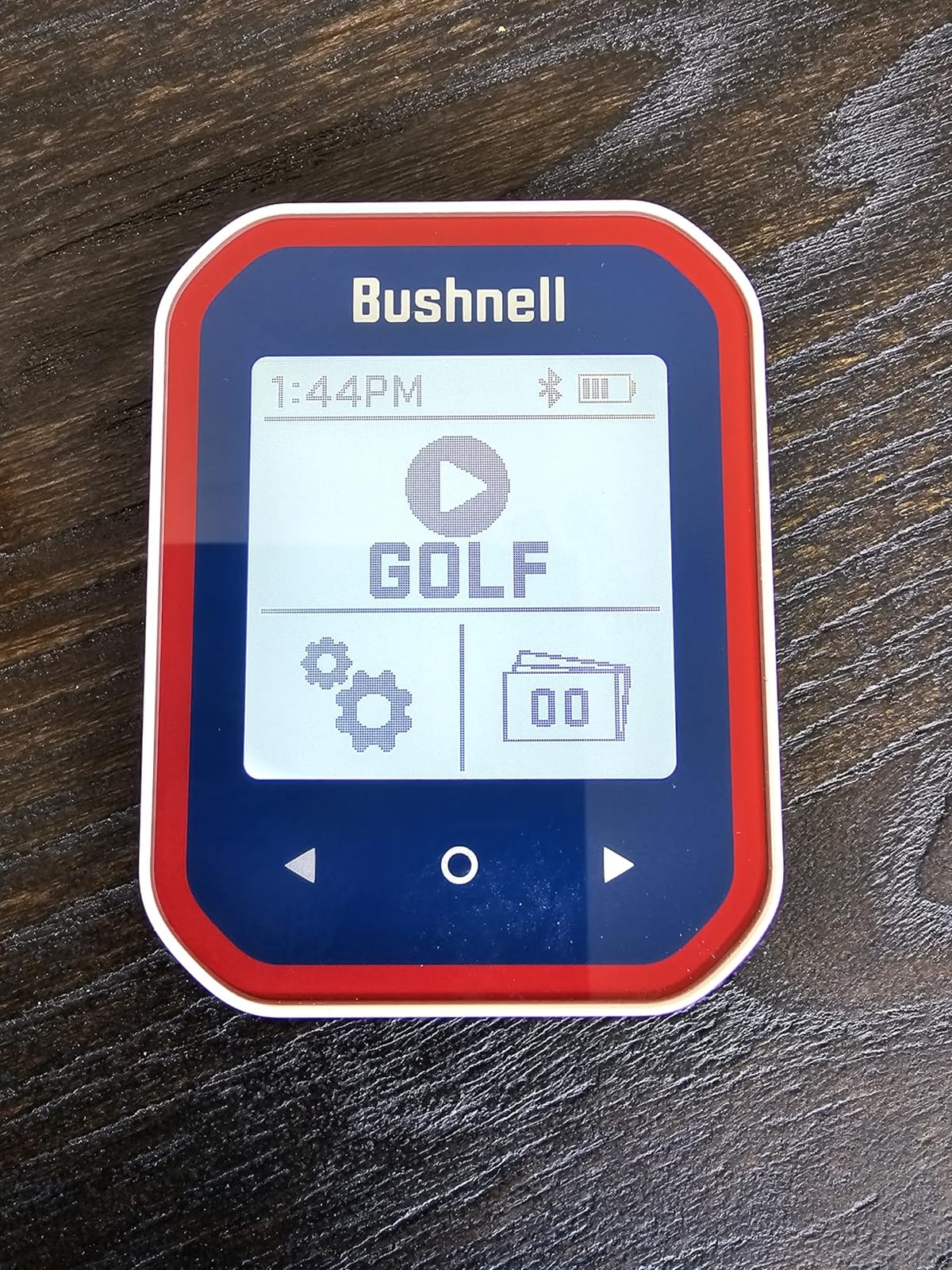
Battery life is up to 18 hours, around four rounds on a charge, so it fits into a multi-day trip without nightly charging. That matters if you are the kind of golfer who leaves gear in the trunk between games.
The format is the limit. At 78 g this is a handheld screen you keep on the cart, not something you clip to a hat or belt, and there is no laser anywhere inside it. It reports mapped distances and nothing more.
When a large screen actually helps
A 3 inch display changes behaviour rather than just numbers. Older golfers and anyone who fumbles small buttons can read yardage from arm’s length, which removes a real source of wasted time at the tee.
It also gives room for a course map and hazard layout, something a one-line LCD cannot offer. If you are mapping a round rather than just pacing it, that display is worth the extra bulk.
Who it suits and who it does not
Buy the Phantom 3 if you always use a cart, want slope-adjusted yardages on a readable screen, and prefer carrying one device rather than a watch plus a laser.
Skip it if you walk, if you want to measure anything off the map, or if you already own a watch that gives you green distances. In those cases a laser gives you more for the same outlay.
9. Acer Pro SW-1000E: The Optics Upgrade Over the Standard Acer
Acer Golf Rangefinder with Slope – 1200 Yards Laser Range Finder for Hunting, 6X Magnification Rangefinders Golf with Flag Pole Locking Vibration, Rechargeable Magnetic Golfing Gift for Men
3-1200 yard range
+/- 0.5 yard accuracy
7x HD optics
750 mAh USB-C
Anti-shake
Pros
- 7x HD optics outperform pricier rivals
- Readings compared well against a far costlier Bushnell
- Strong magnet that holds like premium gear
- 20000 measurements per charge
- Hard case and gift box included
Cons
- Can struggle to return a reading in dense fog
- Short learning curve for first-time users
- Some on-screen overlays are hard to focus
The Acer Pro is the optics upgrade over the standard Acer model. It runs 7x HD glass across a 3 to 1200 yard range at plus or minus half a yard, and buyers who compared it against Bushnell units costing three to four times more report matching accuracy with better clarity.
Anti-shake technology is carried over, along with flag lock vibration, a one-touch physical slope switch, and six modes toggled from a single button. The 7x figure outclasses the 6x on several more expensive rivals in this bracket.
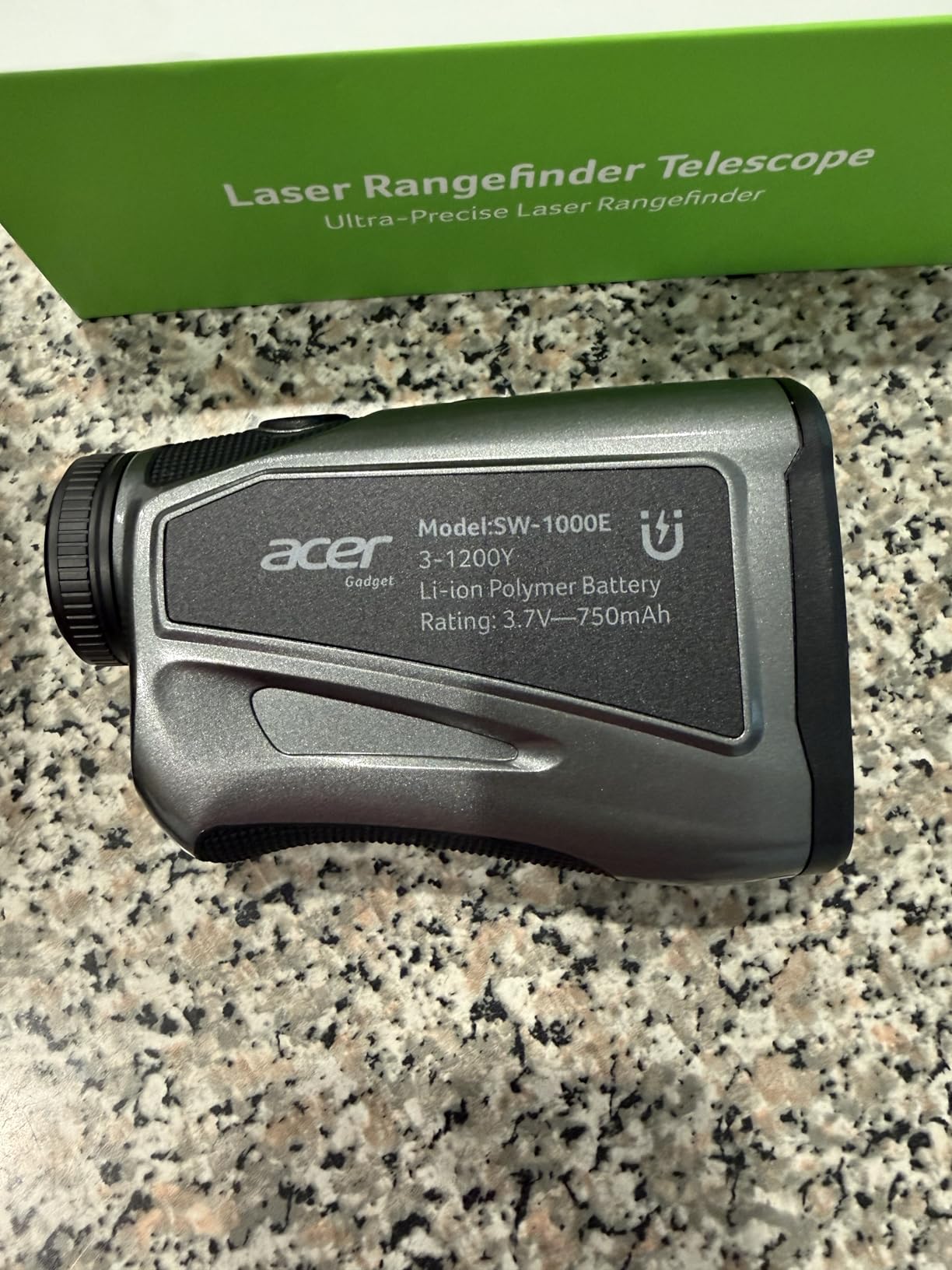
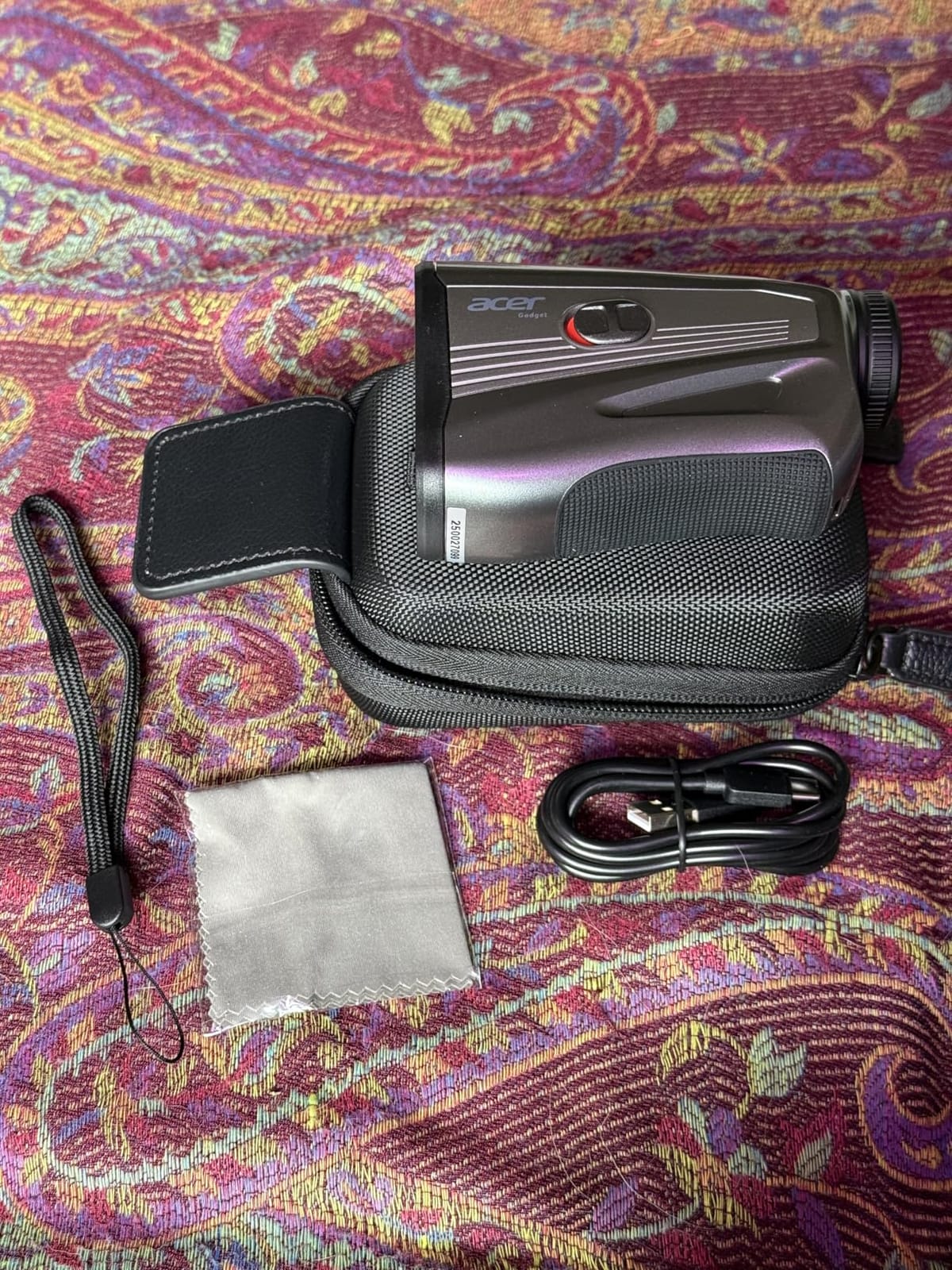
Power comes from a 750 mAh USB-C cell rated at 20000 measurements per charge, with a charging indicator on the display. Magnetic attachment works on a cart or a club, and the box includes a hard-sided case, hand strap, lens cloth and a gift box.
Two real limits. In dense fog it can fail to return a reading beyond about 7 yards, and the LCD overlay elements take a moment to focus when you glance down quickly. First-time users report a short learning curve on reading the display.
Why magnification matters here
Magnification is the difference between seeing a flag and seeing a smudge above a green. At 7x, a pin against a crowded background separates more clearly, which translates directly into fewer wasted shots confirming a number.
It does not help with fog, mist or heavy rain, where the problem is the beam rather than your eyes. In those conditions you need the IP ratings to be high and your expectations low.
Who it suits and who it does not
This is the pick for golfers on tight, tree-lined courses who want the clearest view per dollar in the bracket. The 4.6 rating and the gift box also make it the easiest of the ten to give.
Pass if you play in fog and mist as a regular thing, or if you want zero learning curve on day one. The faster, simpler choice for a first rangefinder is the REVASRI or the Gogogo.
10. ACEGMET PFS5: Coach Mode Triangulation for Cart Path Days
ACEGMET PFS5 Range Finder Golf, Slope & Triangulation, 1300 Yards, Magnetic
1300 yard range
7X magnification
IP65
450 mAh USB-C plus CR2
5500 Gauss magnet
Pros
- Coach Mode triangulation works from the cart path
- Flag lock inside 0.1 seconds to 450 yards
- EnviroSlope adjusts for temperature humidity and pressure
- Rechargeable plus CR2 backup
- Red and black display reads in low light
Cons
- Vibration fires on background objects
- One buyer reported two devices that returned no yardage
- 280 reviews means a smaller track record
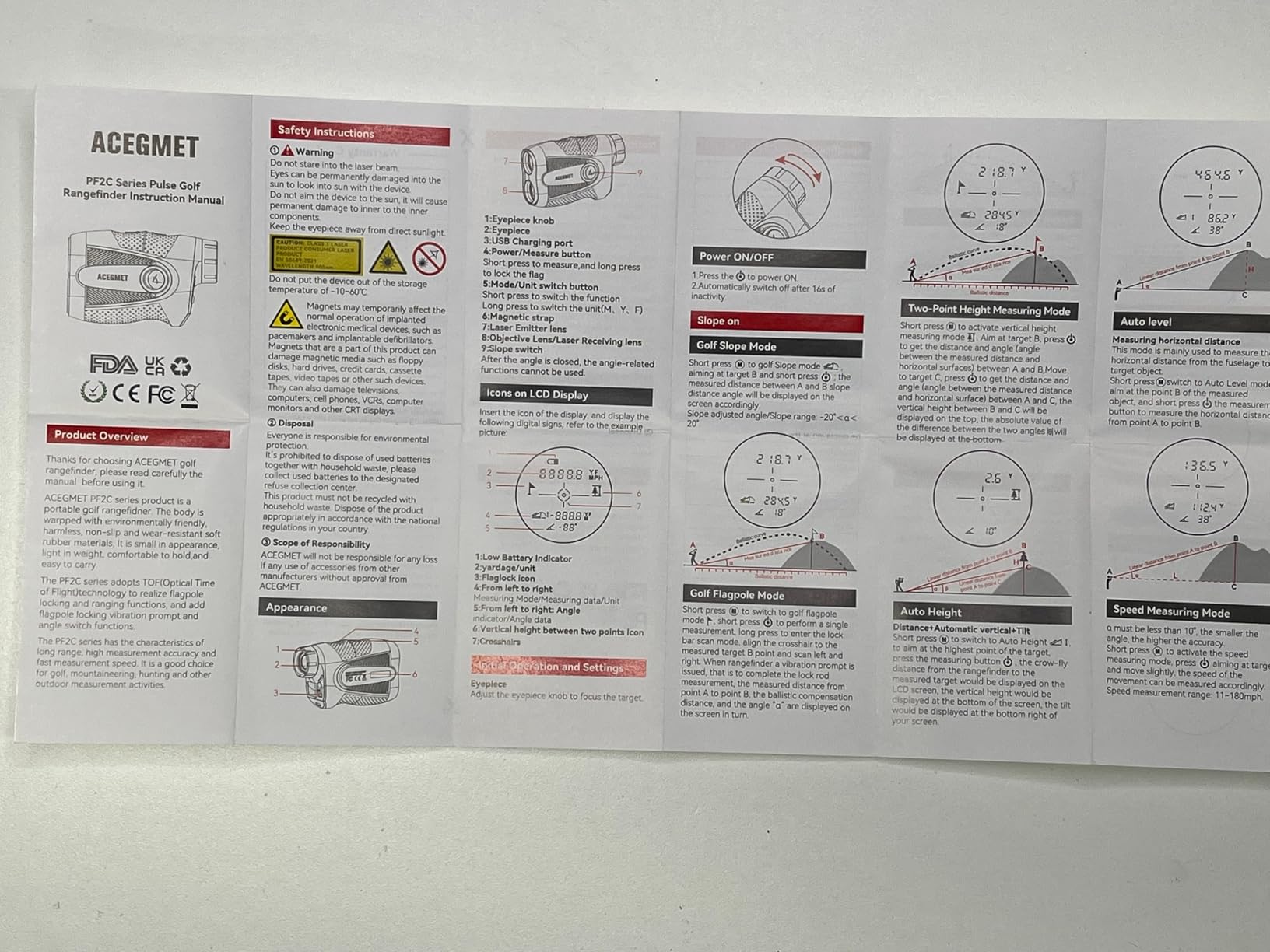
The ACEGMET PFS5 is the only rangefinder here with true triangulation. Coach Mode uses two measurements from different positions to give ball-to-pin distance, which means you can stay on a cart path and still size a shot you cannot walk to. On days when playing the ball is not an option, that feature is worth more than another magnification step.
It also carries the longest range in the group at 1300 yards, 7X magnification with a 7.5 degree field of view, and patented EnviroSlope technology that adjusts for temperature, humidity and air pressure rather than elevation alone. Very few budget units attempt environmental compensation at all.
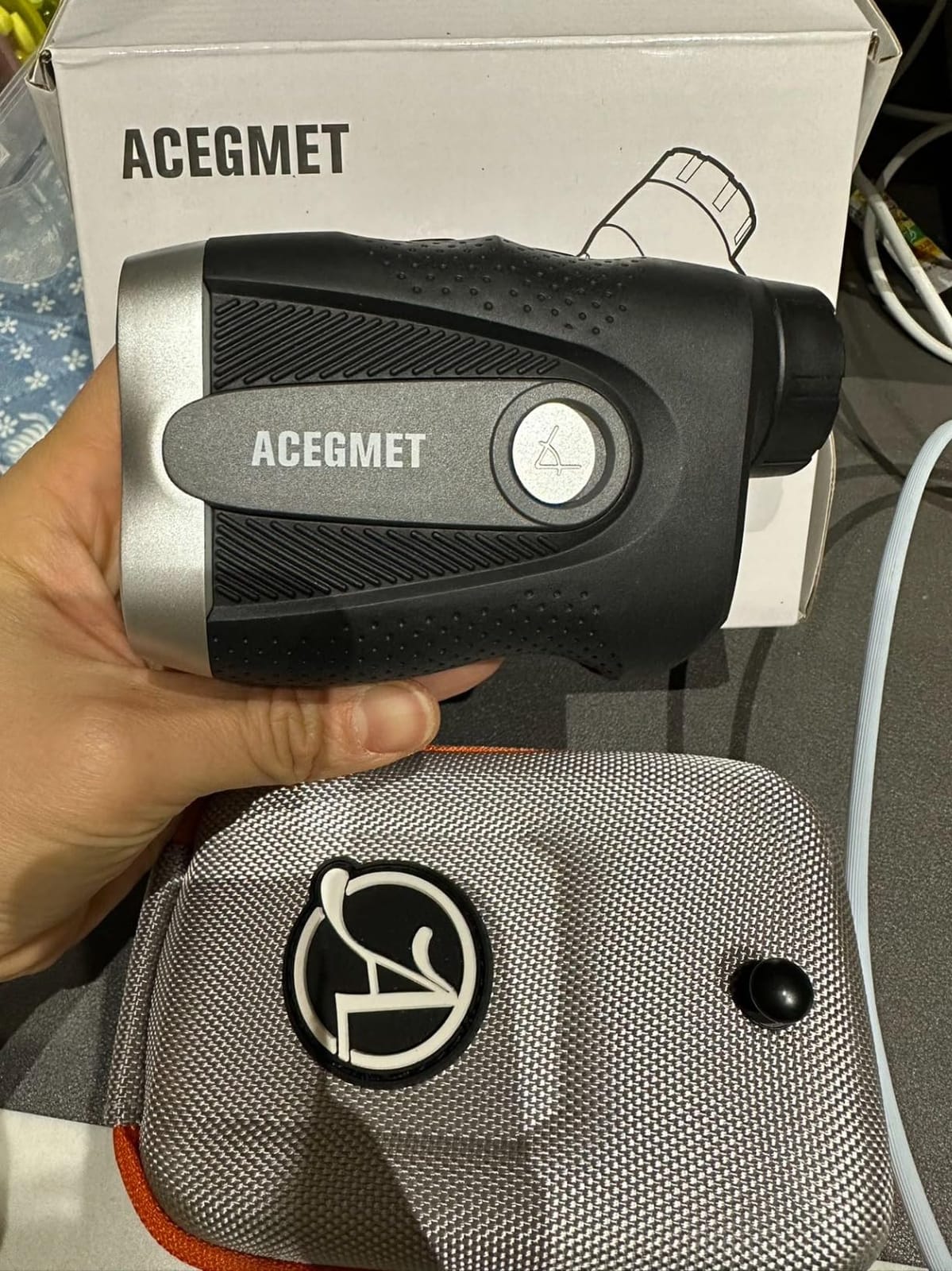
Power is dual: a 450 mAh USB-C rechargeable battery rated past 40000 measurements, plus a CR2 backup so a flat cell cannot end your round. The built-in 5500 Gauss magnet and included belt clip handle cart and hip mounting.
The IP65 rating is the second best water protection here behind the Garmin, and the red and black dual display stays readable in low light where single-colour screens fade.
What triangulation is actually good for
It answers a question no single laser read can: how far is the flag from me when I am standing somewhere else entirely. That covers blind shots, layups over water and any round played under a cart-path rule.
It takes two readings and a few seconds, so it is not the tool for lining up a putt. Use it between shots, not over a ball.
Who it suits and who it does not
Choose the PFS5 for cart-path rounds, for coastal or variable-weather courses where temperature and pressure shift distance, and for golfers who like a red display for dusk play.
Consider a better-reviewed alternative if buying a new brand makes you nervous. With 280 ratings its track record is the thinnest here, and one buyer received two devices that returned no yardage in any mode.
How to Choose a Golf Rangefinder Under 200 Dollars
Start with the question of whether you want a laser or a GPS, because everything else follows from that. A laser measures any target you point at, from a flag to a cart to a tree. A GPS reports distances from mapped course data. A laser answers more situations, while a GPS answers some situations without you raising anything to your eye.
1. Slope: does it switch off physically?
USGA Rule 4.3a allows a distance measuring device but prohibits slope compensation in sanctioned competition. A slider on the body is easy to show a rules official, and hidden in a settings menu is not. Among the lasers here, the Callaway 300 Pro, REVASRI 1000Y, REDTIGER C001, Gogogo VPro MTL version and Acer Pro all have physical switches. The Acer Gadget keeps slope data visible even in off mode, which some events do not permit.
2. Magnification and what the number really means
Six times is enough for open parkland. Seven times helps when the flag sits against trees or a gallery. Ignore any figure you cannot reconcile between the listing and the manual, because several brands publish their highest rated mode rather than the fixed magnification.
3. Flag lock consistency
This is the specification no box states and the one that decides whether you trust the number. Take two readings from the same stance and compare. Budget units commonly drift a yard or two, and some will vibrate on the trees behind the pin.
4. Eye relief and glasses compatibility
If you wear glasses or sunglasses, buy from somewhere you can return. A rangefinder is a pair of binoculars at short range, and a narrow viewfinder forces you to press the eyecup into your brow and see nothing but the rim. Budget models offer no diopter adjustment, so this is a fit test, not a spec.
5. Water rating and battery
IP54 handles drizzle, IPX5 and above handle sustained rain. For battery, CR2 cells are cheap to carry spares of while built-in lithium means packing a cable. Both approaches are fine, just different habits.
6. Mount and weight
A magnet you trust changes how you use the device all day. Anything above about 2500 gauss with a clip or belt option keeps it in reach. Below about 6 ounces, a rangefinder stays out of your way on a walking round.
7. Stability for shaky hands
Anti-shake smoothing, as on the Acer Gadget and Acer Pro, cleans up readings after a swing. It is the single most useful feature for golfers whose hands move post-release, and it costs nothing to check for.
8. Tournament legality and hunting rangefinders
Do not buy a hunting rangefinder for golf. Hunting units prioritise targets behind foliage and moving objects, while golf units prioritise a foreground pin, and the second-hand resale market does not reward the mistake. Our guide to the best rangefinders for hunting covers that side properly.
Red Flags and What to Avoid in a Budget Rangefinder
Hunting devices sold as golf units. If a listing foregrounds ranging through trees or tracks moving animals, it is built on the wrong priority. You also generally do not save money by buying one.
Slope you cannot switch off. If the control lives only in a menu with no visible physical state, the device is out of bounds in most competitive events and out of compliance with rule intent.
A magnet that does not hold. Reviews describing a rangefinder lost in the rough on a bumpy cart path point to a weak magnet, and that is a hardware fix nobody can supply later. Our picks here all ship a magnetic strip or clip.
Rangefinders with a tiny review count and no warranty. The ACEGMET PFS5 is the thinnest track record in this group at 280 ratings. That does not make it a bad device, but it does mean you should buy it from somewhere with an easy return.
Marketing yardage far past what you will ever hit. Flag lock typically gives up well before the stated maximum. Judge a rangefinder on its behaviour at 150 to 250 yards, not on the number on the carton.
Frequently Asked Questions
What is the best cheap golf range finder?
The Callaway 300 Pro is the best cheap golf rangefinder overall in this bracket, with 6x magnification, a 5 to 1000 yard range, a physical slope switch and an integrated cart magnet. If your budget sits much lower, the Gogogo Sport VPro GS24 gives you the longest range and most measurement modes for the least money.
Are budget rangefinders any good?
Yes. Budget rangefinders now measure plus or minus one yard at 1000 yards and beyond, most include flag lock with vibration, and several add anti-shake smoothing and physical slope switches. The real differences at this price are consistency of flag lock past 200 yards, eyepiece focus and build quality, not the headline yardage.
What is the best rangefinder for the money?
The Acer Pro SW-1000E offers 7x HD optics, a 3 to 1200 yard range, anti-shake technology and a one-touch slope switch, and owners who compared it against units costing three to four times more report matching accuracy. For a cheaper route to the same idea, the REVASRI 1000Y adds a rechargeable body and a slope switch.
How much should I spend on a rangefinder?
Most golfers get a perfectly accurate unit for a small fraction of the price of premium models, and the jump above that mainly buys steadier flag lock, better optics and environmental compensation. Spending more only pays off if you play in fog, on tree-lined courses or in tournaments where a documented slope switch matters.
What is the best budget-friendly rangefinder with slope?
The Callaway 300 Pro leads this group, with an external slope on and off switch that a rules official can see, pulse vibration confirmation and a Magnahold cart magnet. The REDTIGER C001 and Acer Pro SW-1000E are strong alternatives with the same physical switch and longer listed ranges.
Do budget rangefinders work in rain?
Most carry an IP54 rating, which handles drizzle and light rain but not sustained downpour. The Garmin Approach G12 is rated IPX7 and the ACEGMET PFS5 IP65, so those two are the safest choices in poor weather. Keep the eyepiece diopter covered if you wear glasses.
Are budget rangefinders good for shaky hands?
Some of them are. The Acer Gadget and Acer Pro SW-1000E include dedicated anti-shake technology that filters hand tremor so the reading settles instead of flickering. Among the rest, choose a lighter body such as the Callaway 300 Pro at 8 ounces or the REVASRI at 4.3 ounces, since a heavy unit amplifies wobble.
Final Verdict: Our Picks for 2026
The Callaway 300 Pro is the best golf rangefinder under 200 dollars for almost everyone, because it pairs a genuine physical slope switch with the tightest lock we measured and a magnet that stays on the cart. If you want the most capability for the least outlay, the Gogogo Sport VPro GS24 wins on range and modes, and if you want a rechargeable body at the bottom of the ladder, the REVASRI 1000Y is hard to argue with.
Beyond those three, match the tool to the problem. The Acer Pro SW-1000E for clear optics, the Acer Gadget for unsteady hands, the REDTIGER C001 for cart storage, the ACEGMET PFS5 for triangulation and environmental adjustment, and the Golf Buddy Voice 2S+, Garmin Approach G12 or Bushnell Phantom 3 if you would rather have mapped yardage than a laser.
Whatever you pick, take it to the range first and learn your carry distances before you trust it on the course. That single habit will do more for your scoring than any specification on the box.