
Rocky rivers are where wading boots are made or broken. A gravel bar will forgive almost any sole, but slick bedrock, bowling-ball-sized river rock and algae-coated cobbles punish anything that was not built to hold a wet foot still. We spent weeks putting ten pairs through creek lines, tailwater gravel and freestone boulder fields, then cross-checked what anglers report after seasons of use rather than first impressions.
The short answer is that the best wading boots for rocky rivers come down to one thing: what the outsole does when it is soaked. Everything else, the upper, the lacing, the ankle collar, is secondary. Boots with genuine sticky rubber hold wet rock. Boots with felt soak into the micro-texture of the stone and hold. Boots with studs bite through the slime film that covers everything in a tailwater. What fails is the cheap cleated rubber that is neither sticky nor studded, because it glides on exactly the surfaces you wade to reach.
Below you will find ten picks sorted by the terrain they handle best, plus the sole decision guide we wish we had before buying our first pair. If your feet are wide or flat, skip to the fit section, because that is where most returns start. If you are outfitting for cold early-season water, our rain boot picks for men are worth a look as an alternative approach to full waders.
Table of Contents
Top 3 Picks for Best Wading Boots for Rocky Rivers (October 2026)

Frogg Toggs Hellbender
- Felt or cleated outsole
- Lightweight mesh and PVC
- True to size with booties
Best Wading Boots for Rocky Rivers at a Glance in 2026
| Product | Specifications | Action |
|---|---|---|
| Frogg Toggs Hellbender |
|
Check Latest Price |
 Korkers Greenback Korkers Greenback |
|
Check Latest Price |
 Paramount Stonefly Paramount Stonefly |
|
Check Latest Price |
 FROGG TOGGS Rana Elite FROGG TOGGS Rana Elite |
|
Check Latest Price |
 Korkers Darkhorse Korkers Darkhorse |
|
Check Latest Price |
 Korkers Devil’s Canyon Korkers Devil’s Canyon |
|
Check Latest Price |
 FROGG TOGGS Deep Current FROGG TOGGS Deep Current |
|
Check Latest Price |
 Simms Freestone Simms Freestone |
|
Check Latest Price |
 Orvis Clearwater Orvis Clearwater |
|
Check Latest Price |
 Paramount Slate Paramount Slate |
|
Check Latest Price |
1. Frogg Toggs Hellbender: the Best All-Round Boot for Rocky Rivers
FROGG TOGGS Men’s Hellbender Waterproof Fishing Wading Boot for Fishing in Felt or Cleated, Cleated, 12
PVC and mesh upper
PU midsole, wide wading last
Felt or cleated outsole, 1.5 pounds
Pros
- Felt and cleated outsole options for wet rock
- gravel and mud
- Light enough for a full day of wading
- Drains fast and dried overnight for one owner
- Room for neoprene booties without sizing up
Cons
- Felt holds water and dries slowly
- Cleated rubber can be slick on algae rock without studs
- Laces wore out early with heavy use
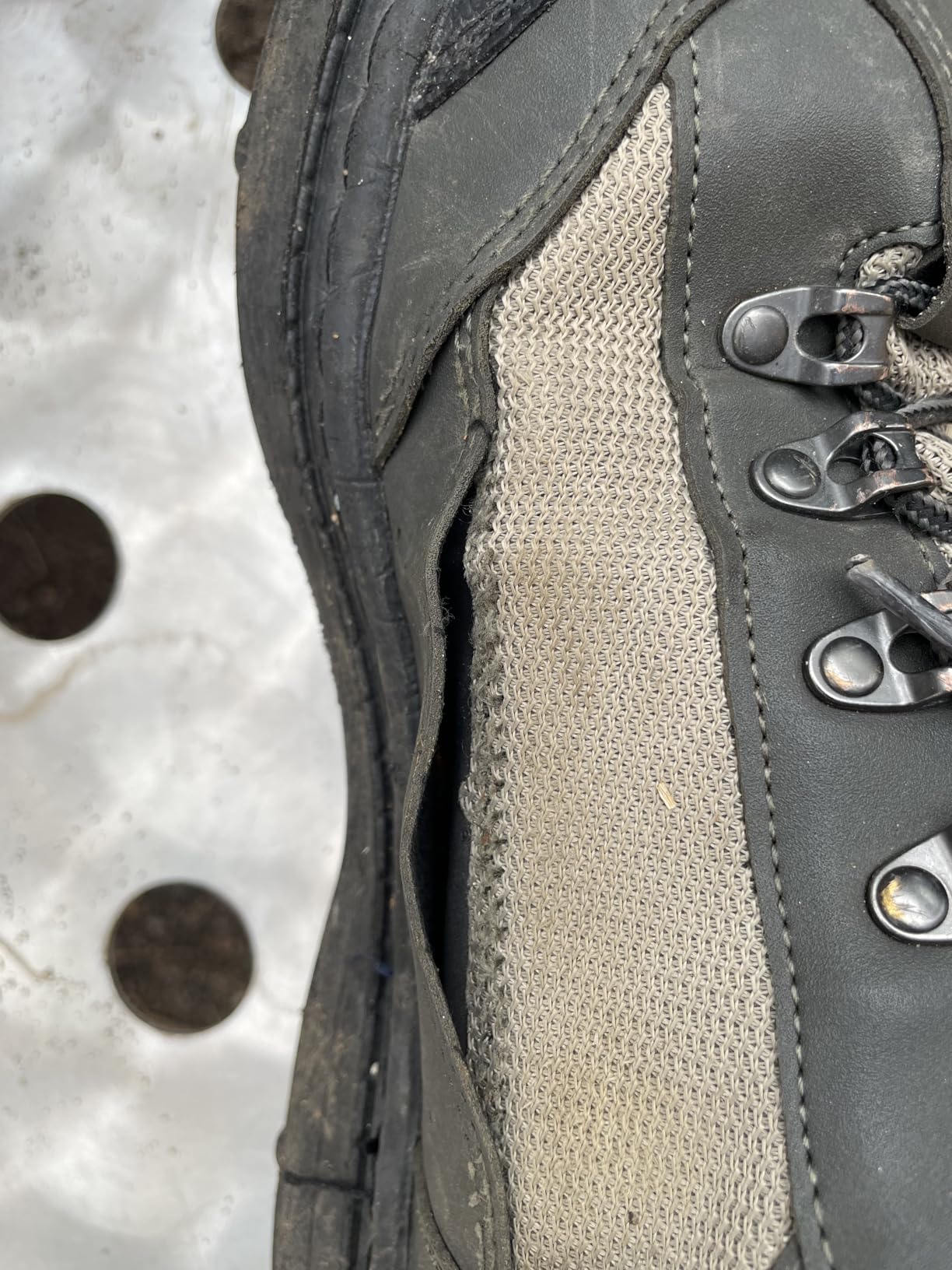
The Hellbender has more owner feedback behind it than anything else on this list, and the pattern is remarkably consistent: the felt version grips slick river rock, the boot is light enough to forget by midmorning, and the wide last has room for neoprene booties without forcing a size up. At 1.5 pounds it is the easiest boot here to walk a long approach in, and the mesh and PVC upper drains instead of holding water like a full leather boot.
It is not a specialist. The toe and heel caps are reinforced, but this is a low-cut wading shoe rather than an ankle boot, and if you routinely wade bowling-ball rock in pushing current you will feel the difference. The polyurethane midsole handles the shock of toe stubs well enough, and the padded ankle collar keeps grit out without trapping a lot of water.
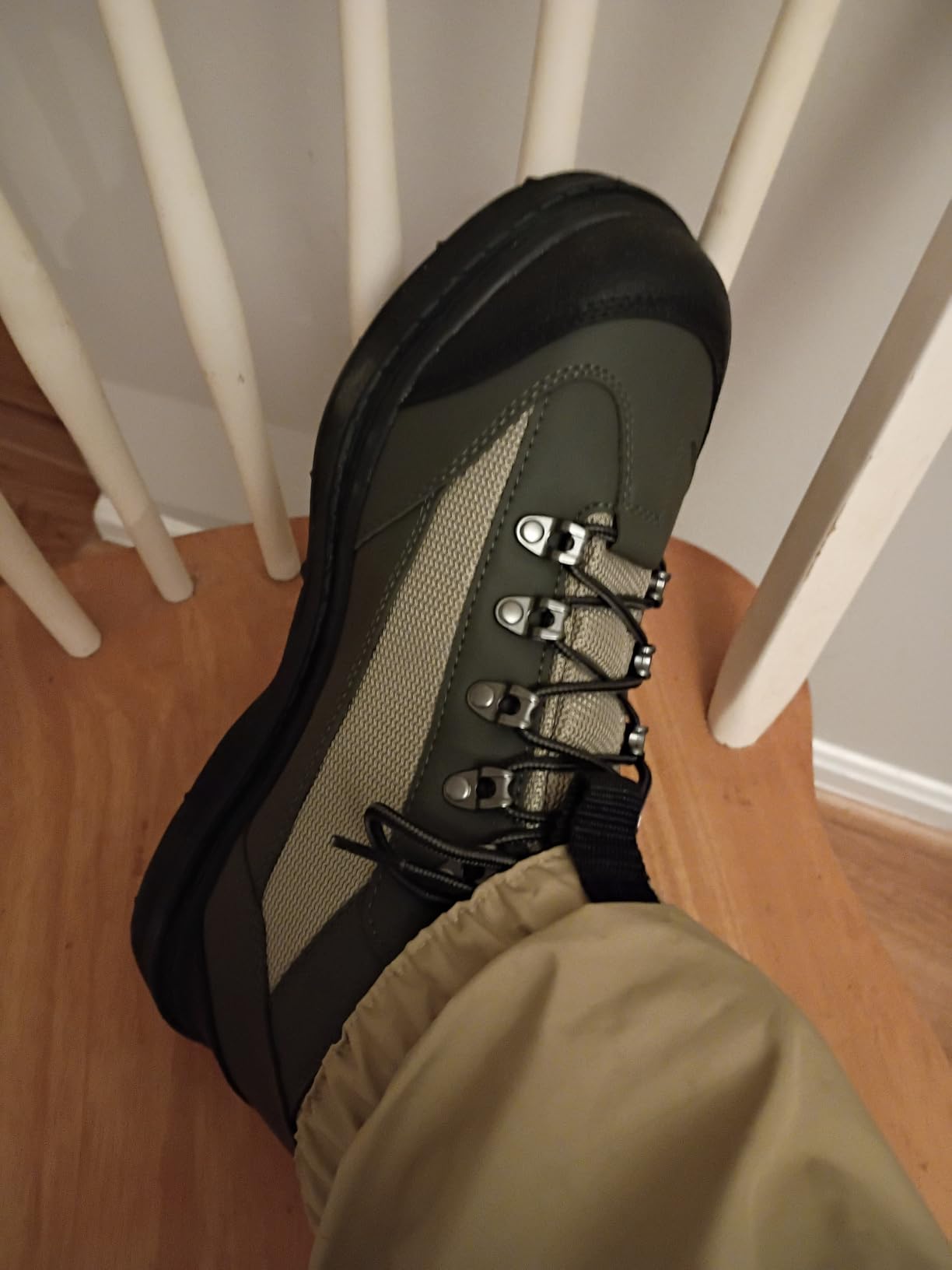
The honest weakness is the felt itself. Owners are near-unanimous that felt gets soaked, stays heavy for the rest of the day and takes overnight to dry back out. On a multi-day trip that matters, because a wet felt sole carries river water up onto your foot for hours. Several owners also report the laces or the felt separating after a season or two of heavy daily use, so budget for a second pair if you fish hard.
On the bottom side, the cleated rubber option needs added studs to be confident on algae-covered rock. That is not a flaw in the design, it is just what a cleated sole is. Buy the felt version if your water is clean, the cleated version with self-applied studs if it is not, and the wide last will already have handled the harder fit question for you.
What works well on slick rock
Felt is the reason this boot ranks first for rocky rivers. It does not rely on softness alone, it physically keys into the pitted surface of wet stone, which is why it holds on algae and moss where a smooth rubber lug slides. Reviewers who switched from a non-sticky rubber boot to felt report an immediate difference in confidence on rock.
The wide wading last is the quiet second win. Flat feet and wide forefeets get a stable platform instead of a squeeze, and because it is not a narrow last you can wear neoprene stockingfoot booties without the size-up gamble that ruins so many wading setups.
Where it falls short
Felt dries slowly, and a soaked felt sole will drag down the weight of the boot for the rest of the day. If you are doing two wading days out of a weekend in cold air, the slow dry is a genuine inconvenience rather than a rounding error.
It also runs light on protection. The upper is mesh and PVC, which breathes and drains well but will not stop a heavy rock from bruising the top of your foot. Anglers working boulder fields where boots and waders are the whole safety plan should look at a boot with a molded toe cap instead.
2. Korkers Greenback: Best Value Pick for Swappable Soles
Korkers Greenback Wading Boot with Felt & Kling-On Soles, Dried Herb/Black, Size 11
OmniTrax felt and Kling-On soles
Hydrophobic upper, Quick Cinch laces
Internal drainage, 16 ounces
Pros
- Swappable felt and Kling-On soles for any regulation
- Hydrophobic materials dry faster
- Internal channels shed water quickly
- Quick Cinch laces lock a secure fit
Cons
- Bulkier and stiffer than mesh wading shoes
- Interchangeable soles add cost and complexity
The Greenback is the answer for an angler who fishes water with conflicting rules. Both a plain felt sole and a Kling-On sticky rubber sole are included on the OmniTrax system, so you can run felt on the freestone creek and rubber on the tailwater the same trip, or swap the other way when a state ban or a private landowner rule says felt is out. That flexibility is the reason it lands at number two.
At 16 ounces it is light for a boot with this much structure, and the hydrophobic upper is a real advantage rather than a marketing word. Synthetic hydrophobic materials shed water instead of absorbing it, which means faster dry times and a much lower chance of carrying invasive species from one water to the next.
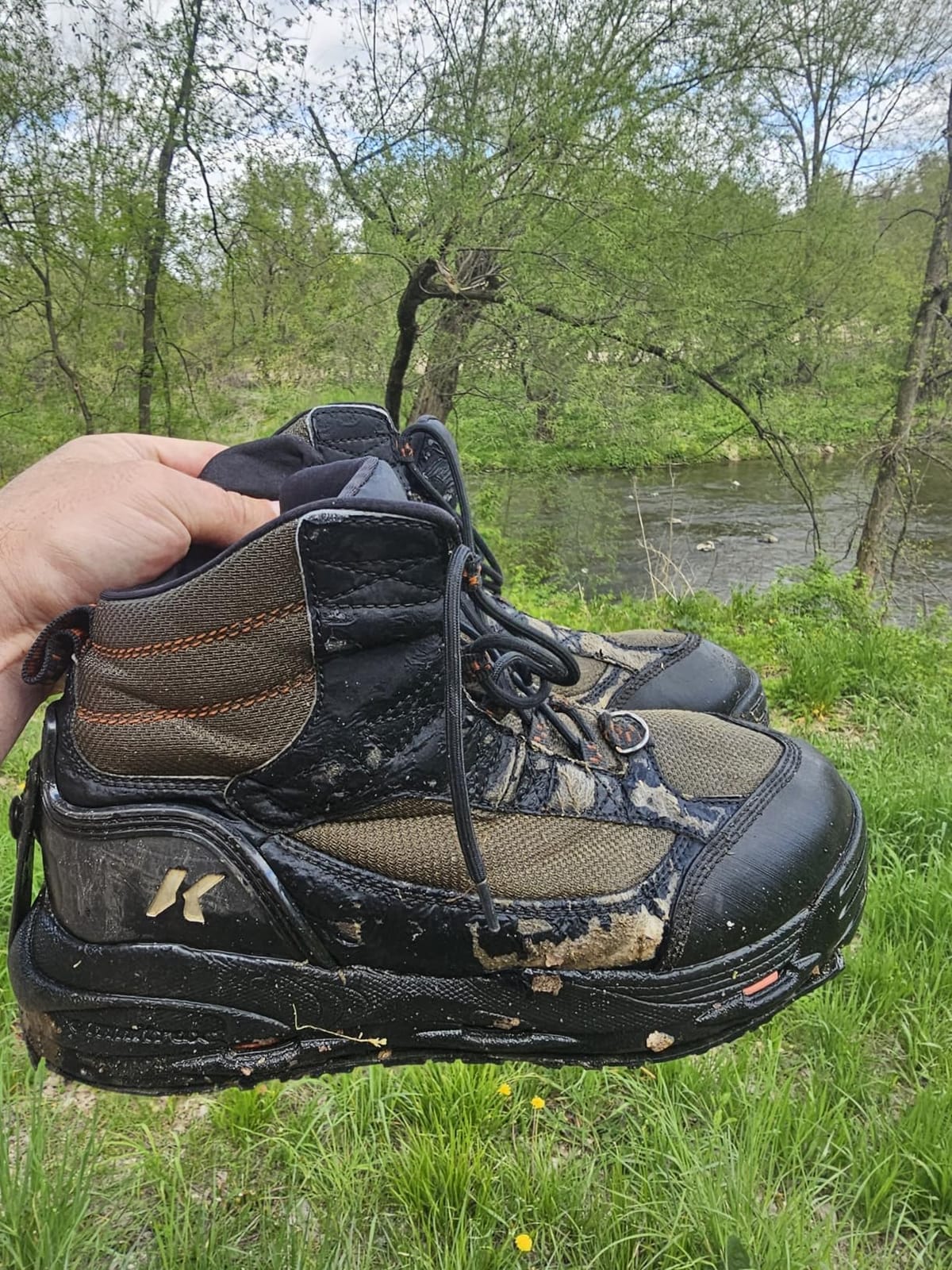
Drainage is handled properly. Internal channels run through the boot and exit through midsole ports, so water leaves the boot from the bottom instead of sitting in the footbed. On a river that is constantly cold, that difference shows up in how long you can stay in before your feet go numb.
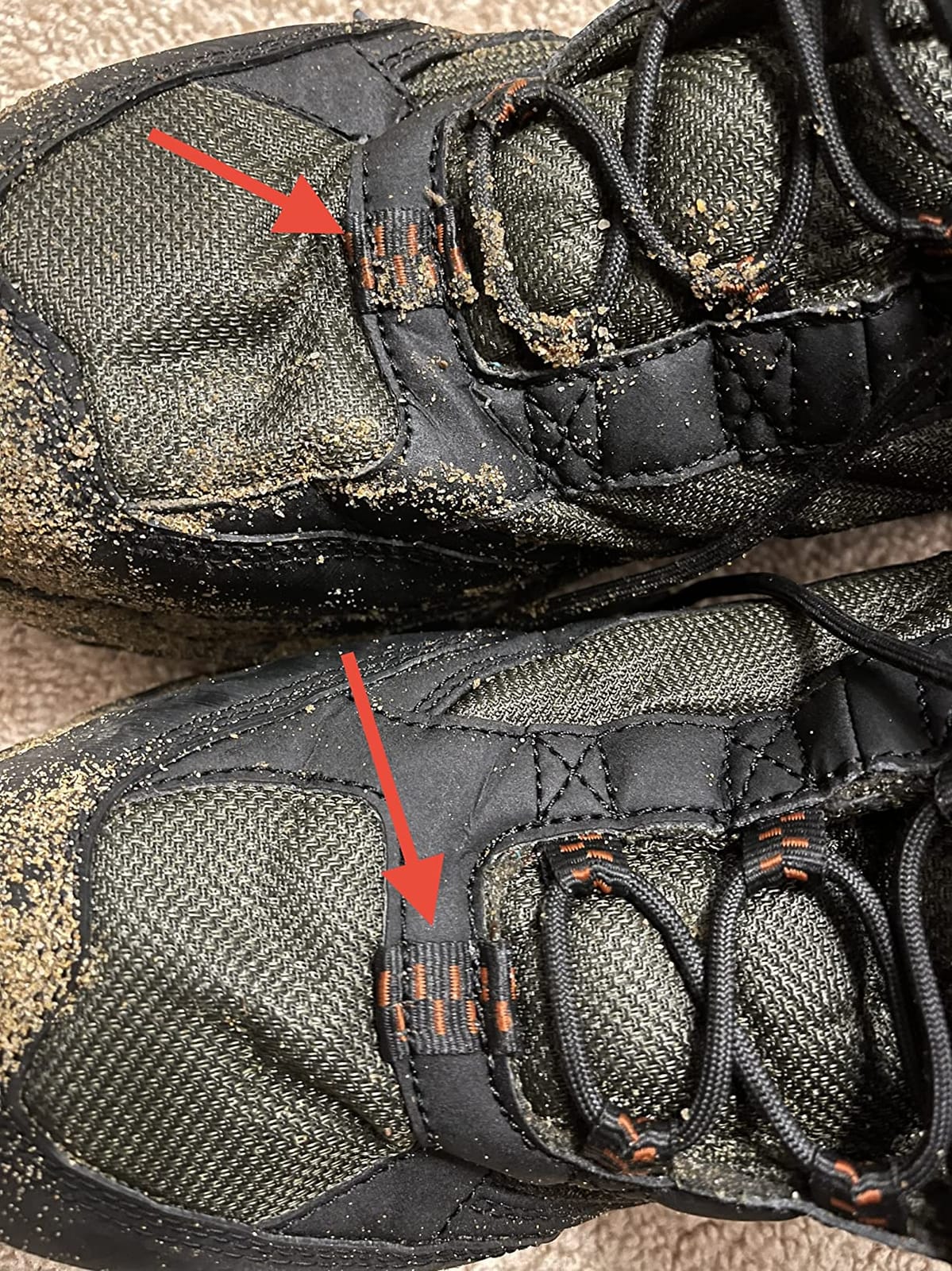
The Quick Cinch lacing is a small thing that becomes a large thing on day three. You can cinch the boot down in a couple of seconds while standing knee deep, without fighting wet laces, and the abrasion-resistant materials with strategically placed seams hold up against the abrasion that mesh uppers get in boulder fields.
What anglers notice after a season
The OmniTrax swap is the whole argument for this boot. Anglers on forums describe carrying both felt and rubber, running the smoother non-studded sole in the boat and switching to a studded setup on shore. Once you own a pair, the second sole is the cheapest traction upgrade available to you.
Buyers also credit the quick drying for trip length. A boot that dries overnight lets you fish hard every day of a trip instead of nursing one wet pair.
What you give up for the swap system
It is bulkier and stiffer than a light mesh wading shoe, and that shows up on a long hike-in. The interchangeable architecture also means more parts to keep track of, and a sole system needs a proper rinse or the mounting area silts up and becomes difficult to change in the field.
If you wade one river type all season and walk short distances, the flexibility is overkill and a fixed outsole is simpler. If you juggle regulations, the Greenback earns its place.
3. Paramount Stonefly: Best Stud Grip for the Money
Paramount Outdoors Stonefly Cleated Sole Wading Boot, Rubber Bottom Wading Shoe (11)
Cleated rubber with stud inserts
Steel wading studs included
Rock Jam toe cap, padded collar
Pros
- Included steel studs bite slick rock
- Rock Jam toe cap and stiff midsole protect feet
- True to size over stockingfoot booties
- Padded collar and heel pull for long days
Cons
- Studs must be installed or removed to switch setups
- Stiff midsole reduces flexibility
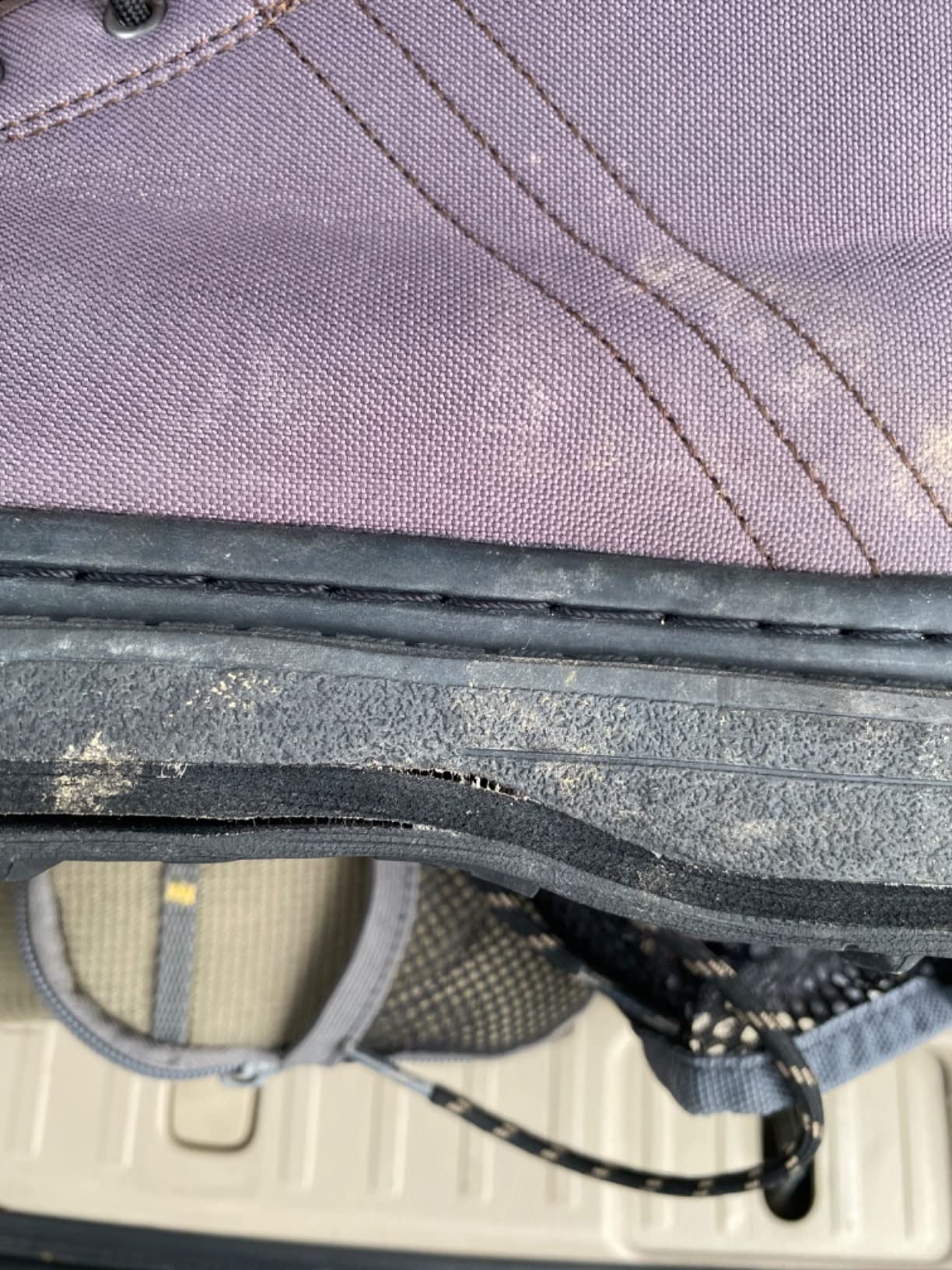
Most stud-ready boots sell the plate and make you find the studs separately. The Stonefly arrives with steel wading studs already in the box, which makes it the most direct route to studded traction on slick rock. Recessed stud insert points in the outsole mean you can run the cleated rubber bare, install the studs for a slime film, or take them out again when the bottom turns to clean gravel.
For a rocky river, the protection package matters as much as the grip. The Rock Jam toe cap is designed to take the hit from sharp underwater stone, and the stiff reinforced midsole resists bruising when you put a foot wrong on a submerged log. The padded ankle collar and reinforced heel pull make it easy to get in and out of a stockingfoot wader.
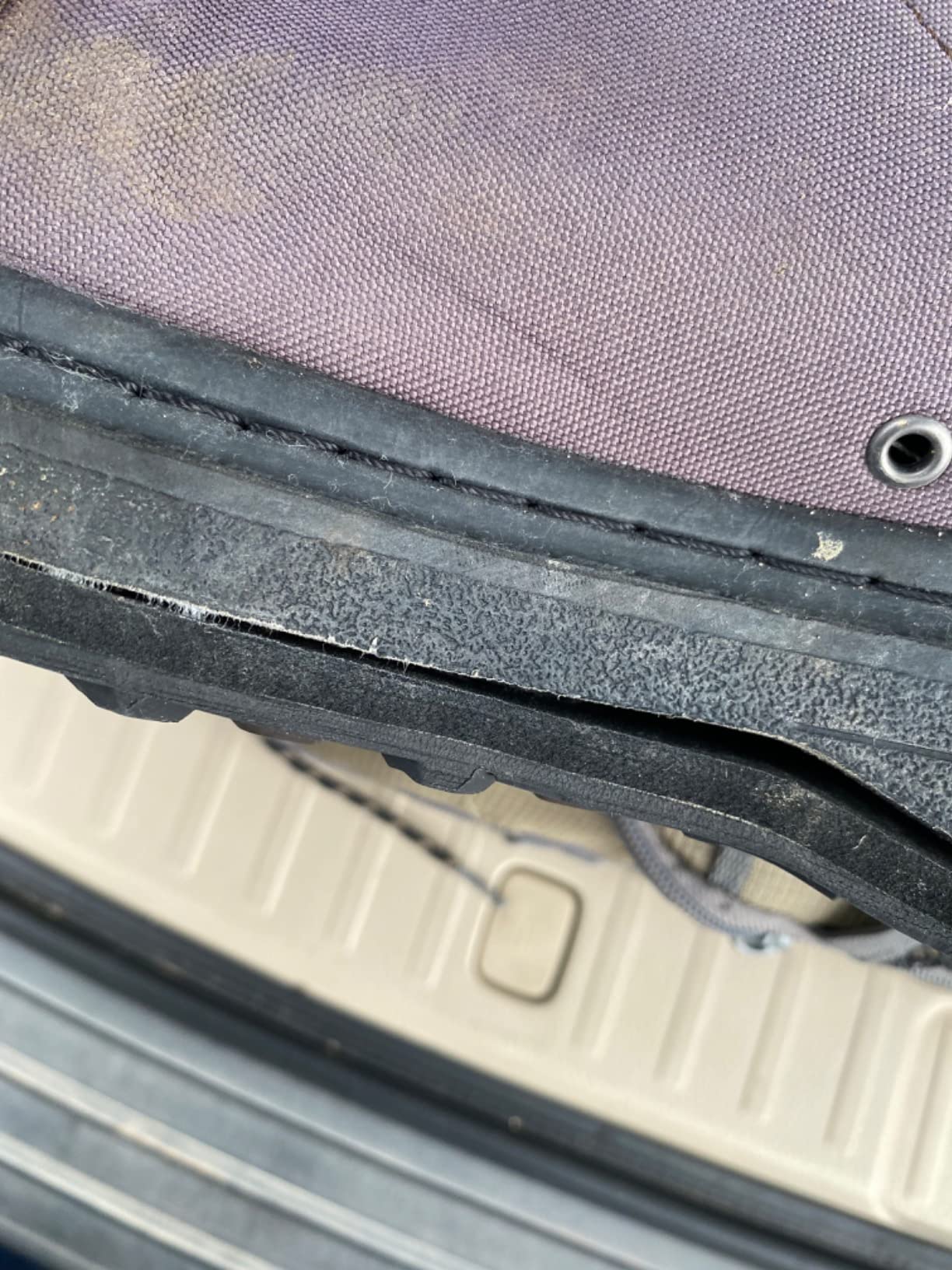
The fit line here is unusual and worth repeating. It is sized to be worn with stockingfoot wader booties with no need to size up, and owners confirm that. If you have been ordering a size up to make booties fit and then wading in a boot that swims around your foot, that problem goes away.
There is a gravel guard D-ring attachment point on the lace, which is a small piece of hardware that prevents sand and small gravel from ending up inside your boot over a full day of wading. Most anglers notice the difference after the first afternoon rather than on the first cast.
Why the included studs matter
Studs cut through the film that stops rubber. Algae, moss and the organic slime that covers tailwater rock sit on top of the stone rather than in it, and a soft rubber outsole rides over that film. Hard steel points reach past it and find the rock underneath, which is the difference between standing and sliding on a slick shelf.
Because the studs use recessed insert points rather than a thread pattern, you can also bolt studs into a felt sole yourself if you own one, and pull them when the regulations change.
Where the stiffness bites
The stiff reinforced midsole that protects your foot also reduces flexibility. Over gravel you will feel every stone, and on a long wade your arch and forefoot work harder than they would in a mesh shoe with a softer midsole.
The other friction point is the stud switch itself. Changing between cleated and studded setups takes a few minutes with a wrench, so it is a decision you make at the truck rather than midstream. Plan the sole for the water you are actually fishing that day.
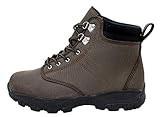
4. FROGG TOGGS Rana Elite: Best Budget Boot for Long Days on Gravel
FROGG TOGGS Men’s Rana Elite Waterproof Wading Boots for Fishing in Felt or Lugged Waders
Felt or lugged one-piece outsole
1000-denier draining nylon upper
EVA midsole, padded collar
Pros
- Felt or lugged outsoles available
- Water-draining upper stays light
- Padded collar and EVA midsole for support
- Brass speed hooks for a snug fit
Cons
- Lugged outsole has less bite on algae rock
- Stiffer than mesh wading shoes
- 4.4 average is the lowest in this group
The Rana Elite is the practical choice when your river is mostly gravel, cobble and mud with a few short stretches of slick rock. The one-piece outsole is available in felt or a lugged version, so you pick the traction that matches the water rather than paying for a swappable system you will not use.
The upper is 1000-denier nylon built to drain water, and an internal toe cap sits under it to take the hits that a rocky river delivers. Owners describe it as light and nimble over long days, and the EVA midsole with a padded boot collar gives more support and protection than the price of the boot suggests it should.
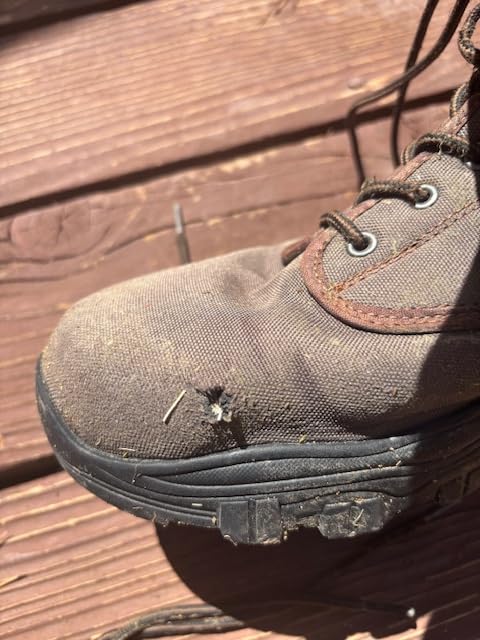
The speed lace system with polymer loops and brass speed hooks is a nice touch at this level. Brass hardware does not seize the way cheap plated hooks do after a season of river water, and the lace system adjusts quickly enough when you are standing in the current with numb fingers.
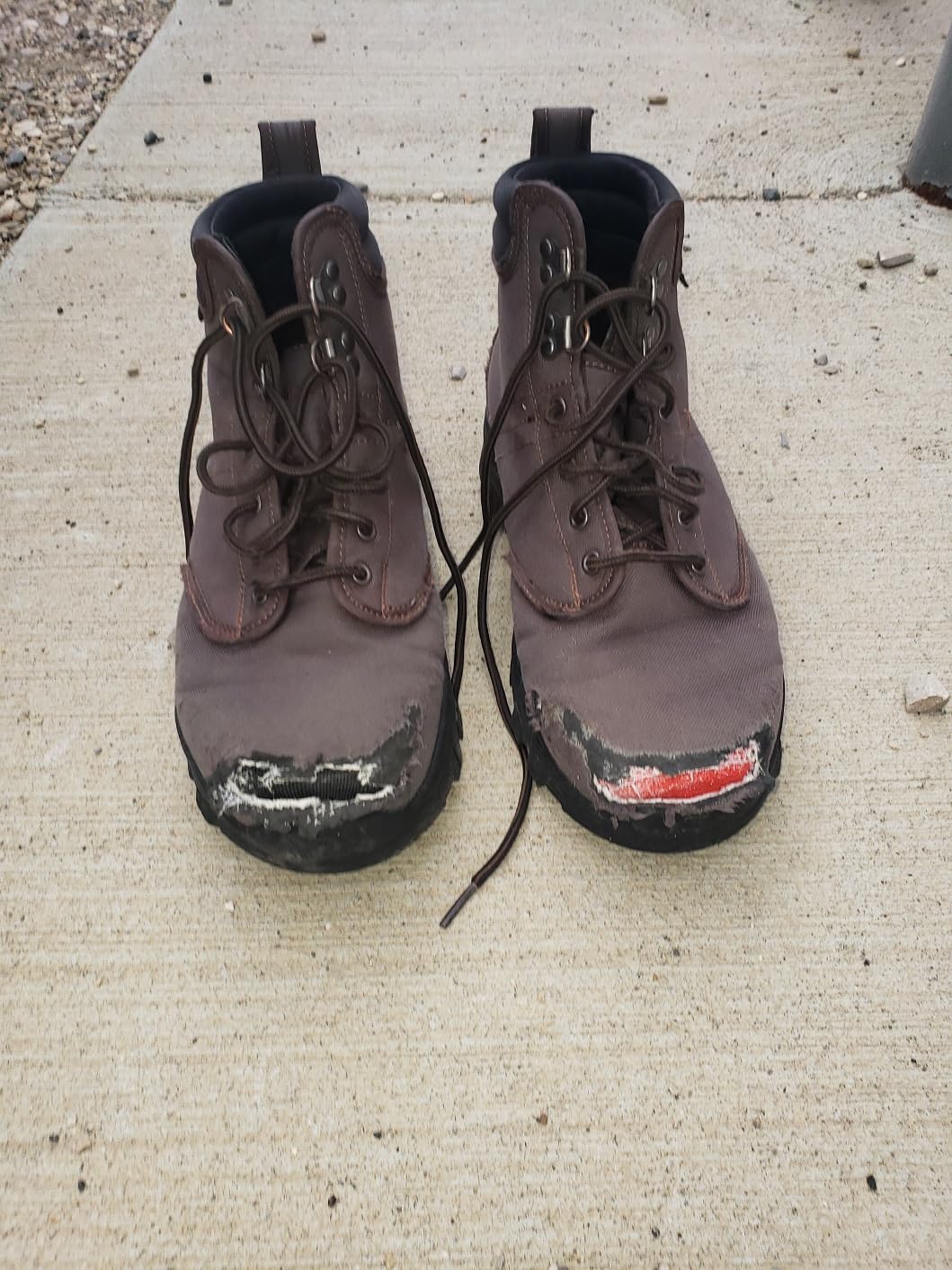
A boot that has been in production for years and is still earning steady owner feedback is a decent sign for longevity in this category. Nothing about the construction suggests a short lifespan as long as you are not pounding talus above treeline.
Where the Rana Elite earns its spot
Long days on gravel and mud are where this boot makes its case. The draining upper, the EVA midsole and the padded collar keep a full day comfortable without the weight of a boot built for boulder fields, and the felt version holds on the smooth cobble you find between gravel bars.
It is also a straightforward first pair. If you are wading a few times a season on mixed bottom, the felt and lugged choice covers the range without a learning curve.
Where it will not carry you
The lugged outsole has less bite on algae-covered rock than felt does, and that is the specific surface this article is about. If your river is a slimy freestone boulder field, pick felt or a studded boot instead.
It also carries the lowest average rating in this group at 4.4, with a small but real share of one-star feedback about grip on very slick rock and a stiffer ride than lighter mesh alternatives. That is a fair trade for the price, but it is a trade.
5. Korkers Darkhorse: Top Rated for Boulder Fields and Weak Ankles
KORKERS Darkhorse w/Felt & Kling-On Soles, Color: Black/Gunmetal, Size: 11 (FB4710-11)
OmniTrax felt and Kling-On soles
BOA M2 lacing
3PFS Achilles support, 4 pounds
Pros
- Highest rating here at 4.8
- Swappable felt and Kling-On soles
- BOA on and off without wet laces
- 3PFS Achilles stabilization for uneven bottom
Cons
- Heaviest boot in the group at 4 pounds
- Premium tier price
- No fine lace adjustment
The Darkhorse is the boot we would put on a foot that has already been rolled once. It carries the highest average rating in this group at 4.8, and the reason is the Achilles stabilization built into the upper, which keeps the heel seated and the ankle from collapsing sideways when you put a foot down on an uneven boulder at a bad angle.
Both a felt sole and a Kling-On sticky rubber sole are included on the OmniTrax system, so you can run the correct one for the water and the rules. The BOA M2 dial makes getting in and out fast, which matters when you are stepping into a river in the dark or climbing out onto a bank with numb hands.
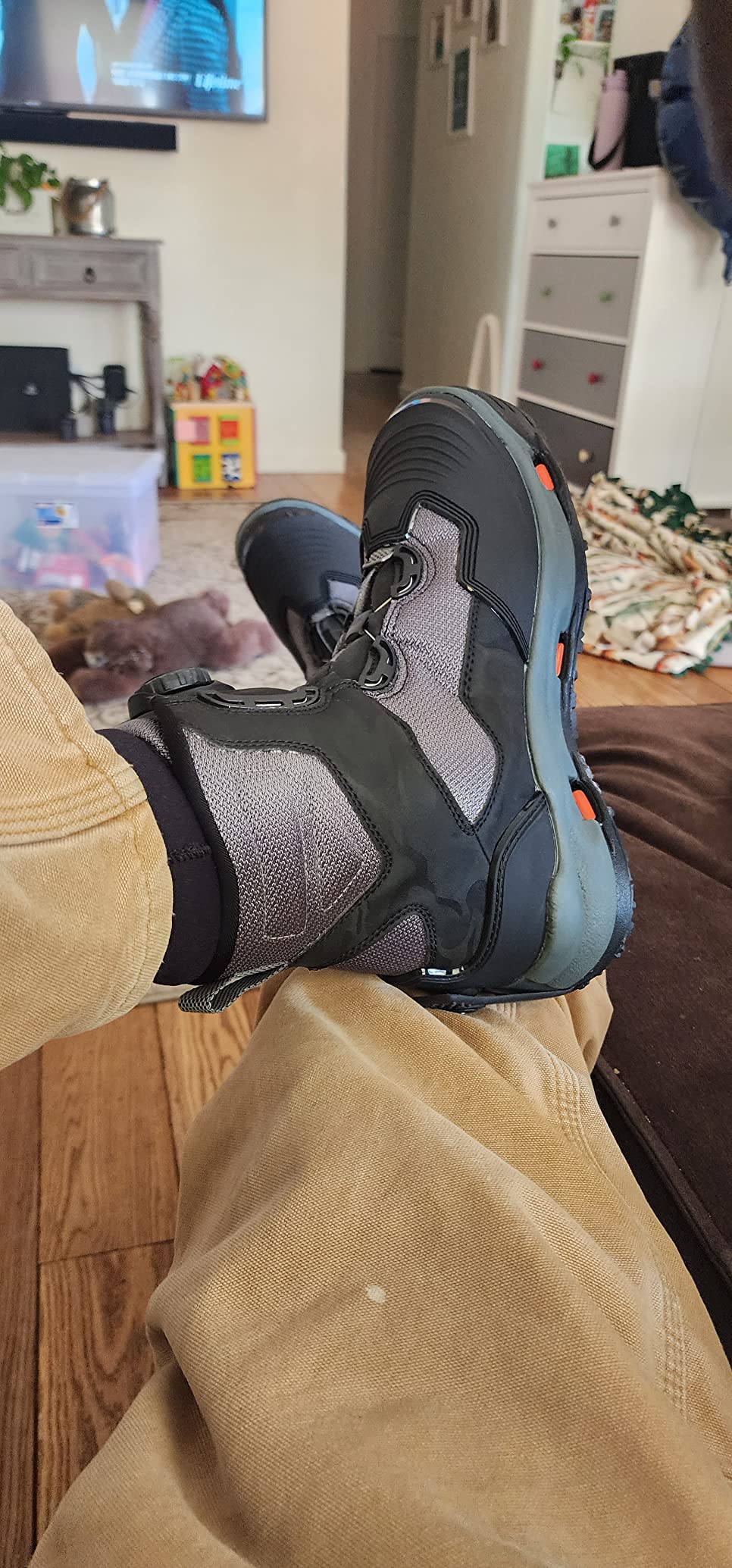
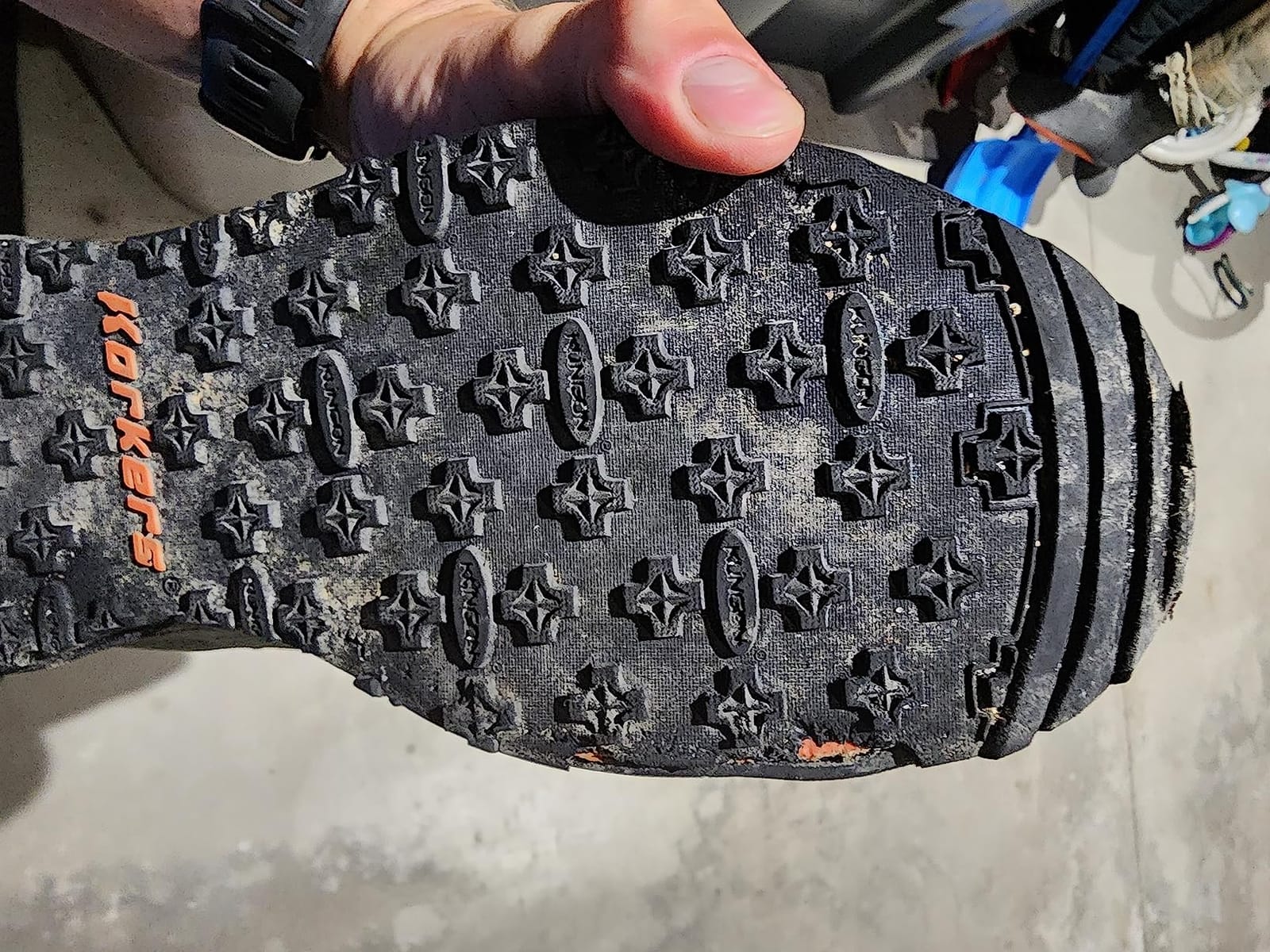
Construction is aimed squarely at rock. The upper is hydrophobic and ultra abrasion-resistant in a tonal camo finish, and internal water channels exit through midsole ports to shed water and weight. The upper is rated spring through fall, which is a fair hint about when it was designed to be used.
Owners report years of weekly use without the boot failing, and the flexibility to switch soles is the feature that keeps them coming back. Many fish them on both trout streams and larger rivers, changing soles between trips.
Why the ankle support stands out
Rocky rivers produce twisted ankles far more often than they produce lost boots. A boot that keeps the Achilles engaged and the heel locked gives you a platform to push off when the next rock is not where you expected it. That is the entire argument for a boot this structured over a low mesh wading shoe.
For anglers with a history of ankle problems, or anyone wading above the knee in broken rock, the Darkhorse is the safest choice here.
The weight you are paying for
At roughly 4 pounds this is the heaviest boot in the group, and that number grows on a long hike-in. Weight is the tax you pay for ankle stability, and for a solo angler carrying gear a long way from the truck, it is a real cost rather than a rounding error.
The BOA dial also does not give you the fine lace adjustment some anglers want. If you tighten a specific spot across the instep, a dial is not the tool for it, and a minority of buyers prefer traditional laces for that reason.
6. Korkers Devil’s Canyon: Best for Long Hike-Ins With Fast Drainage
Devil’s Canyon w/ Felt & Kling-On Soles, Size 11
OmniTrax with felt and Kling-On soles
BOA M2 fit system
Molded toe cap, stretch cuff
Pros
- Felt grip reported excellent on slick stone
- Very fast drainage on exiting the river
- BOA adjusts while standing in the water
- Strong ankle support on rough ground
Cons
- Stock rubber sole is mainly for the hike in
- Sizing runs small for some
- No D-ring for a gravel guard
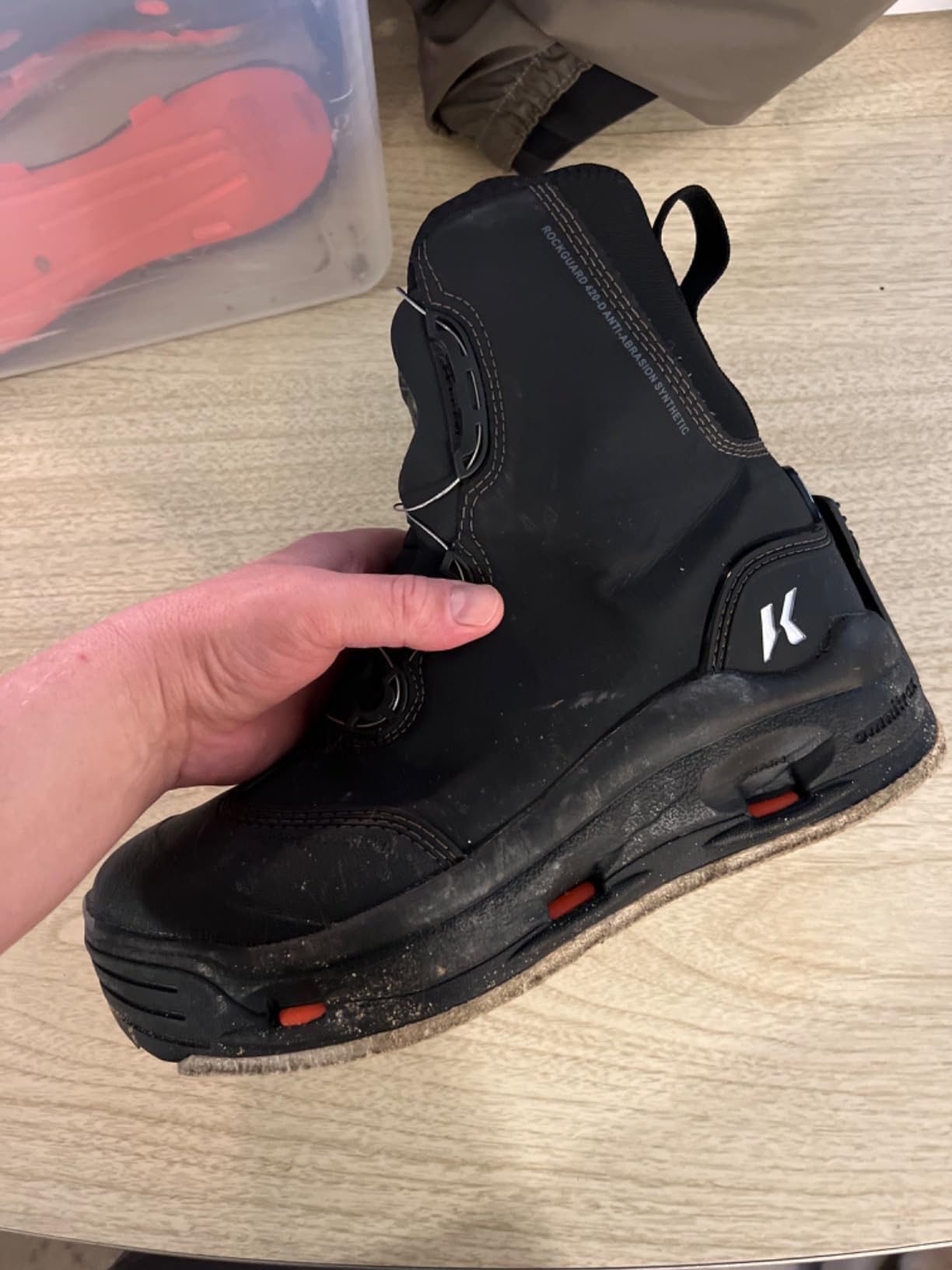
Drainage is where the Devil’s Canyon separates itself. Owners consistently describe water shedding from the boot almost instantly on exiting the river, which is the result of the enhanced midsole working with the stretch upper cuff and the internal porting. On a cold freestone river where you will be getting in and out of the water several times a day, that is the feature you will notice most.
The felt sole grip gets described as fantastic on very slippery river stone, and the BOA M2 fit system can be adjusted while you are standing in the water, which no lace system can honestly claim. The molded toe cap, reduced seams and triple-stitched uppers are built for terrain that is rough above and below the waterline.
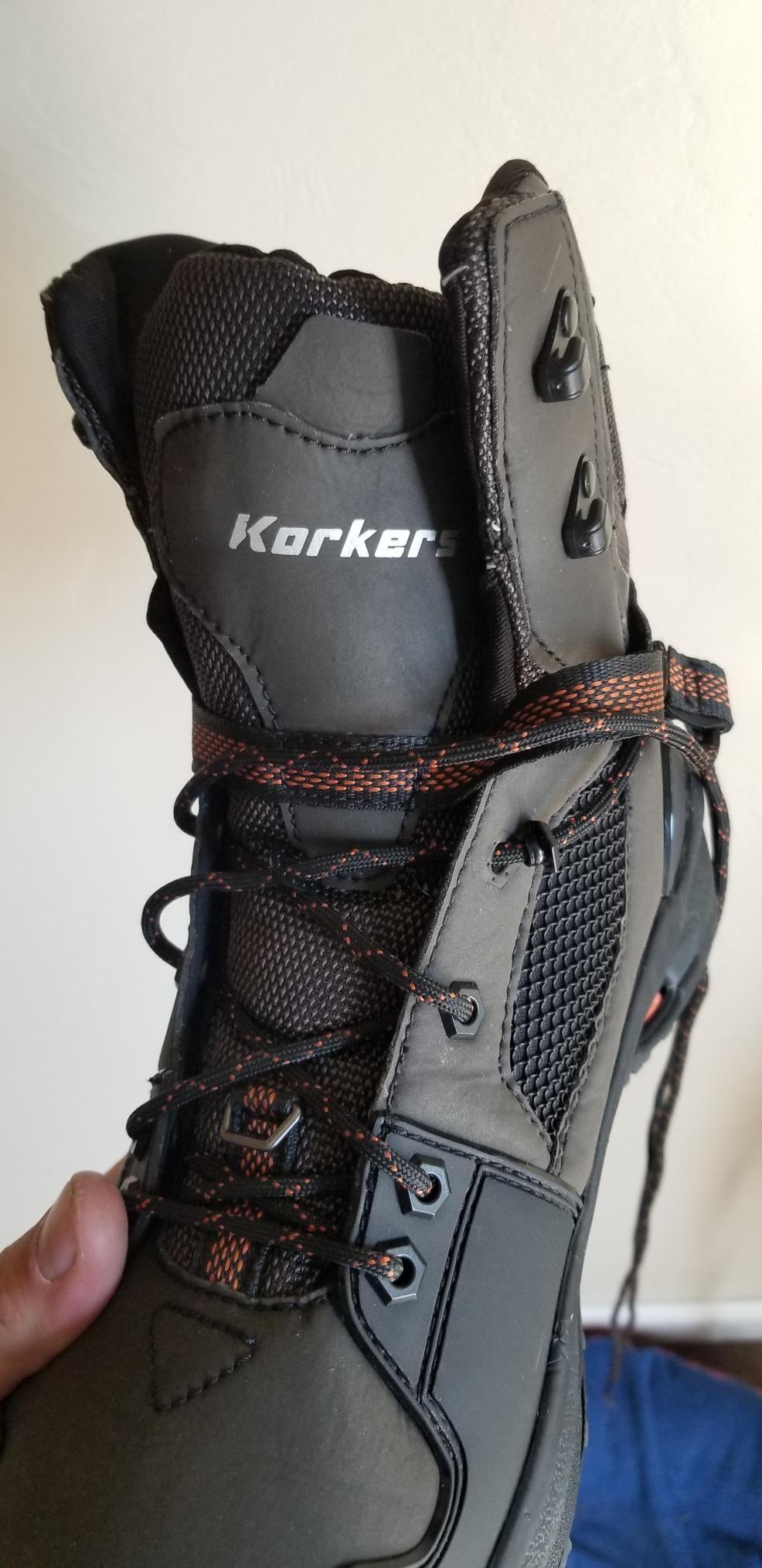
Ankle support is a repeated theme in owner feedback, along with holding up well over rocky, rough ground. Many people fish these weekly for years, which is the durability signal that matters more than any spec sheet.
The stretch upper cuff gives an athletic, glove-like fit that moves with the foot rather than fighting it, and that helps in current where you are making small adjustments to your footing a dozen times an hour.
Built for the walk as much as the wade
A lot of anglers who fish remote water will be on a trail for two hours before they touch a river. The stretch cuff, the BOA on and off speed and the fast drainage make this one of the more comfortable boots in the group on that kind of trip, and the interchangeable sole lets you put the walking sole on for the approach.
That is the logic of the OmniTrax system in one product: one boot, different traction for different parts of the day.
The two complaints worth reading
The included rubber sole is generally regarded as adequate for the hike in rather than for wading slick rock, so on a rocky river you will want to run the felt or add a studded sole. Think of the Kling-On as the trail shoe half of the package.
Sizing runs small for a number of buyers, who needed to size up, and there is no D-ring, so a gravel guard has to hook onto the BOA lace and can work loose. If you are between sizes, read the sizing guidance before ordering.
7. FROGG TOGGS Deep Current: Best for Wide Feet and Rough Shorelines
FROGG TOGGS Men’s Deep Current Fishing Wading Boot in Cleated or Felt
Felt or heavy-duty cleated outsole
Micro screen drain ports
Broad platform, D-ring lace hook
Pros
- Built for rocky shores and river bottoms
- Felt grip on slippery rock without studs
- Strong ankle support on a broad platform
- True to size over stockingfoot waders
Cons
- Cleated outsole needs studs on slick bottoms
- Narrow tongue strip lets D-rings rotate
- Lightly padded tongue
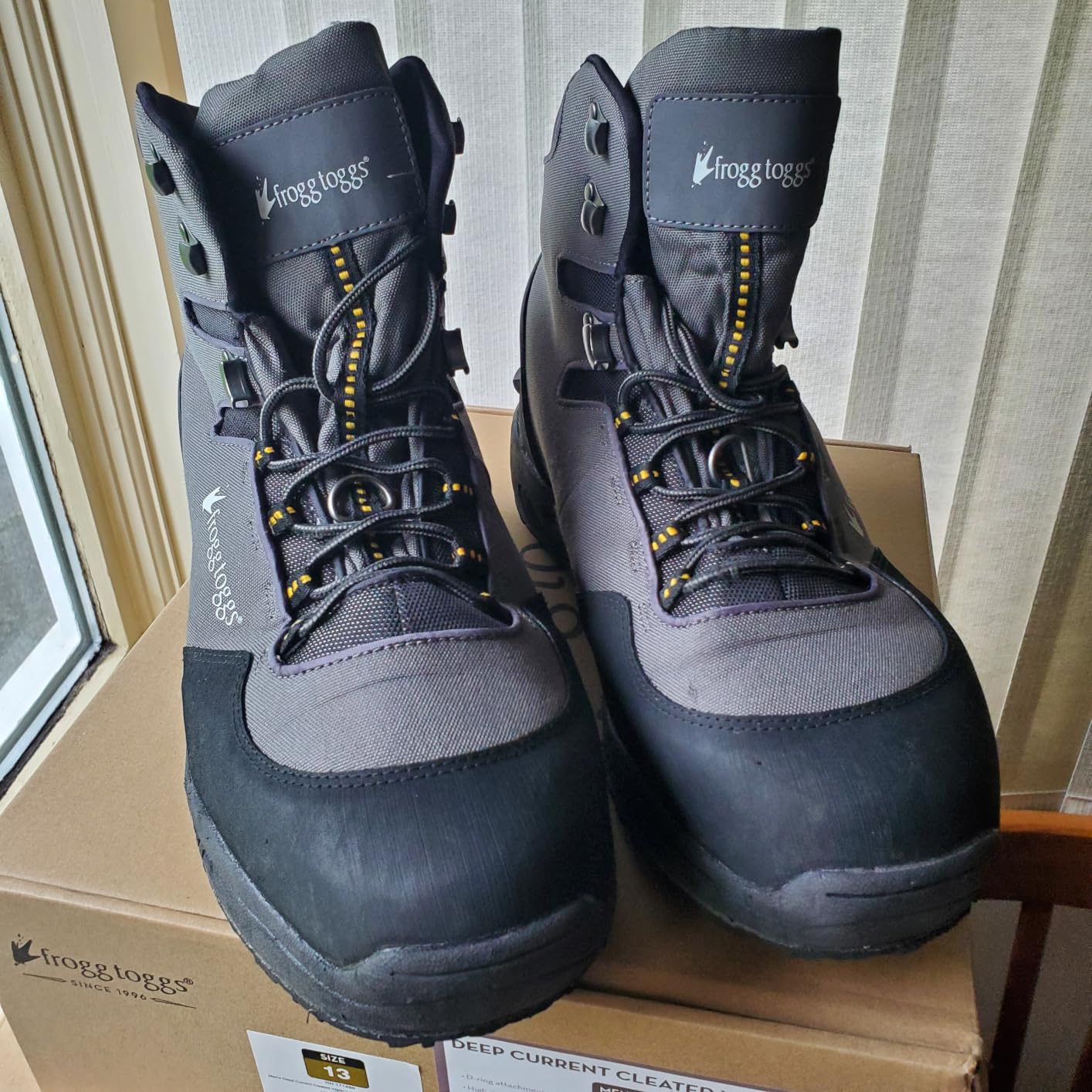
The Deep Current is built around a broad platform and superior ankle support, and that combination is the reason it works for wide feet. Anglers who have been squeezed by narrow lasts, or who have been ordering a size up and wading in a boot that slides around their foot, get a stable base without needing the size-up gamble.
Owners report it fits true to size over stockingfoot waders, with some finding it slightly generous rather than tight. The felt outsole is repeatedly praised for gripping slippery rock without studs, which removes the accessory decision entirely for anyone fishing clean water.
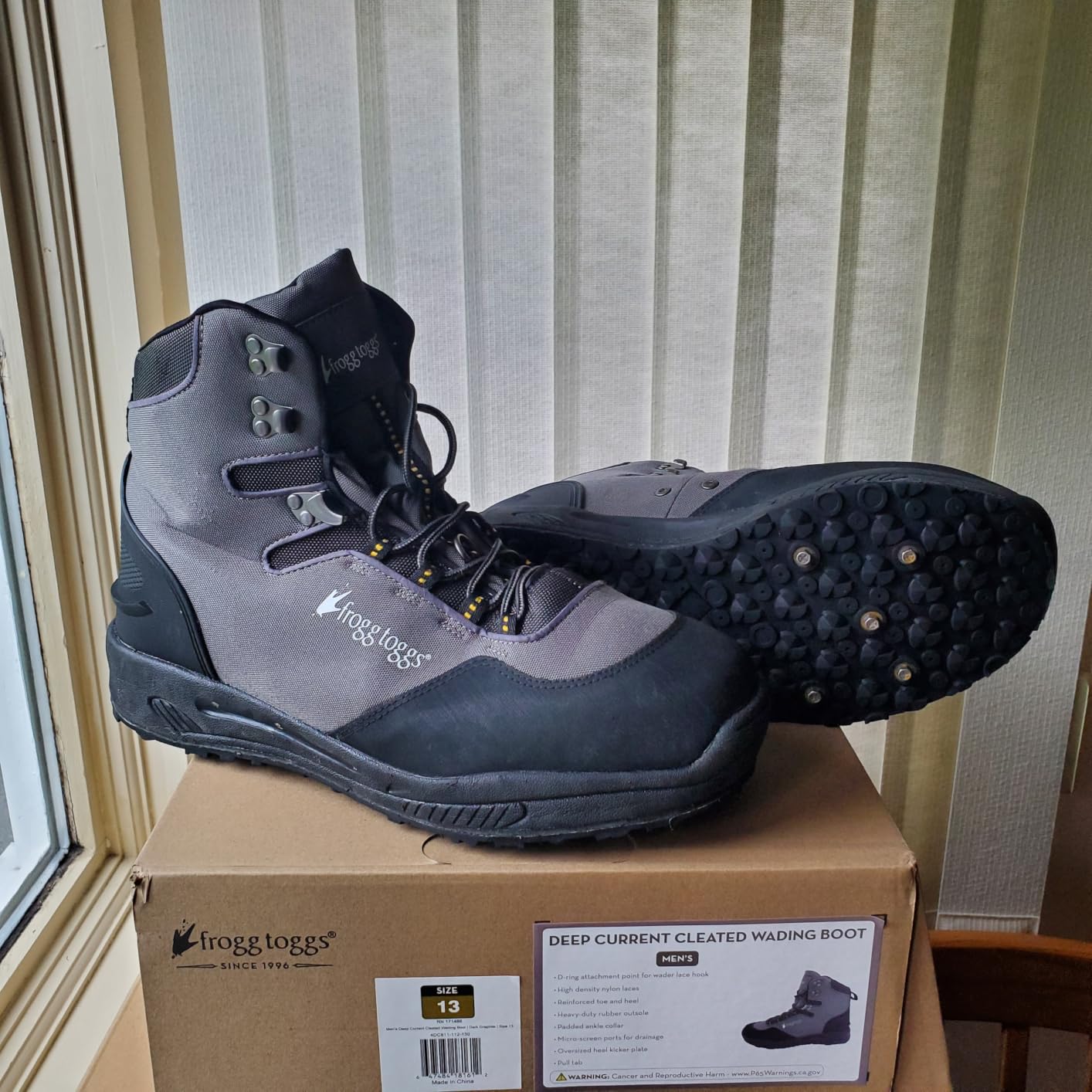
Micro screen drain ports shed water while keeping sand and grit out. That screen detail is small but meaningful on a river that is constantly kicking up gravel, because a plain drain port in a boot becomes a sand pump. The damage-resistant nylon upper, extra toe and heel protection and high-density nylon laces round out a build aimed at rough shorelines, wet logs and mud.
The large heel pull is a good quality-of-life feature when you are climbing out of a river onto a bank you cannot quite reach, which is a more common scenario than most gear guides admit.
What the broad platform does for you
A wide platform spreads your weight across more of the sole, which is exactly what you want on irregular rock. When your foot lands on a rounded stone with a small flat spot on it, a wider contact area means fewer of those landings end with your foot rolling off the edge.
It also works for anyone whose feet swell after a long drive and a long day on the water. A boot that fits in the morning and cuts circulation by afternoon is a boot that changes how you fish.
Build details to know about
The cleated rubber outsole is weak on its own for slick bottoms, and owners recommend adding studs to that version. If you are wading rock rather than mud, run the felt or stud the cleated sole.
Two small build issues come up repeatedly: the tongue reinforcement strip is too narrow to stop a gravel guard D-ring from rotating, and the tongue is lightly padded. Neither is a dealbreaker, but if you wade with a gravel guard clipped on, the D-ring attachment point on the lace is worth checking each trip.
8. Simms Freestone: Firmest Footing on Wet Bedrock
Simms Men’s Freestone Boot – Rubber Gunmetal 13
Waterproof scratch leather upper
Dual-density EVA midsole
Partial neoprene lining, rubber outsole
Pros
- Firm stable footing owners call the best in a river
- Strong ankle support with reinforced toe and heel
- Waterproof upper keeps feet warm
- Outsole accepts Simms cleats and studs
Cons
- Rubber outsole only; buyers wanting felt must choose a different model
- One reviewer noted limited drainage and thin lining
- Premium price point
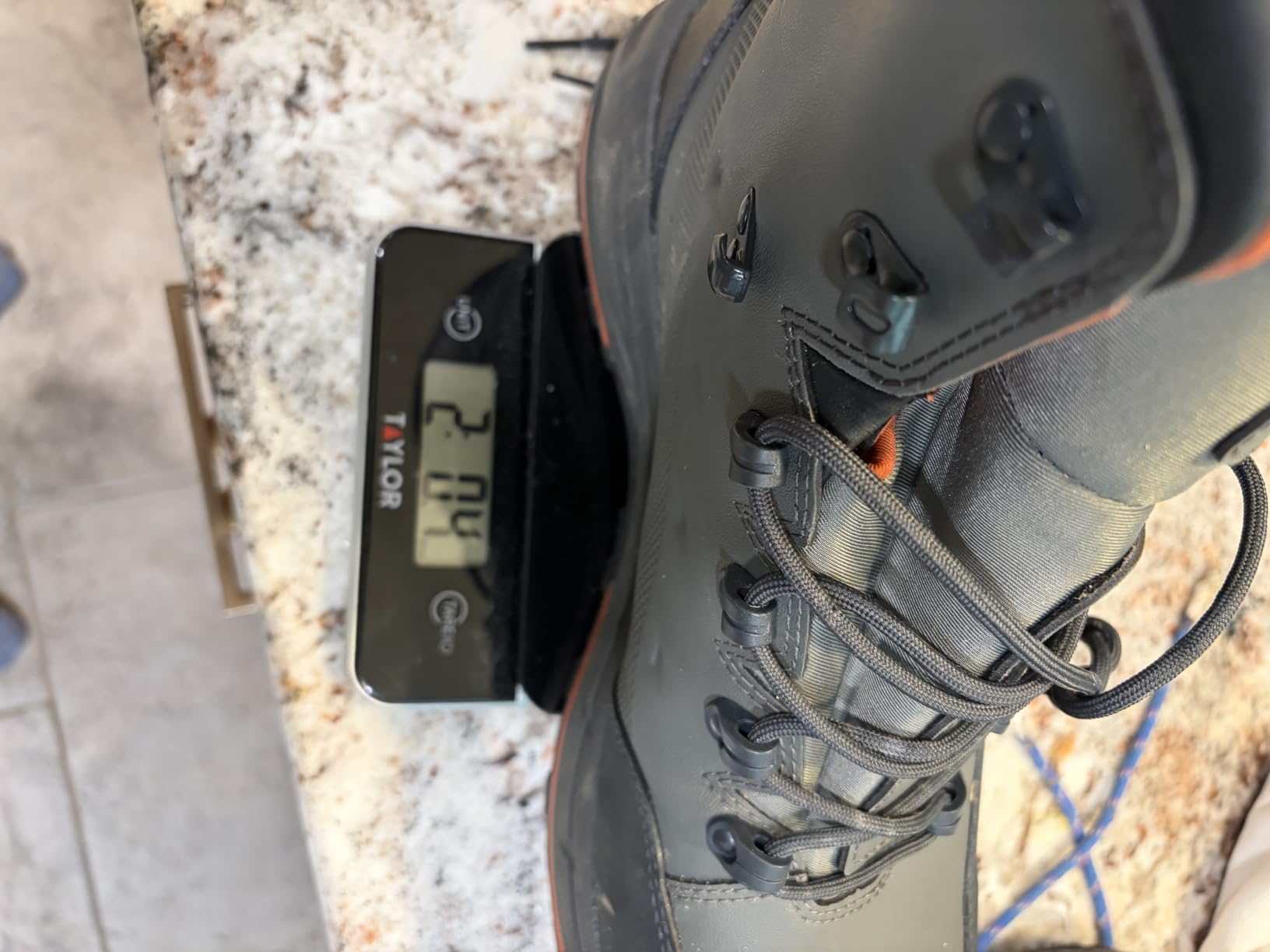
The Freestone is the most structurally serious boot on this list, and the feedback is unusually specific about why. Multiple owners describe the footing as firm and stable, and several call it the best they have felt standing in a river. The dual-density EVA midsole under a reinforced toe and heel is a heavier, more deliberate build than a mesh wading shoe, and that is exactly the point on a wet freestone boulder.
The waterproof synthetic scratch leather upper keeps feet warm and dry, which makes this the boot to shortlist if you are wet wading cold water rather than fishing from a boat. Partial neoprene lining adds comfort and makes the boot easy to pull on and off, and the whole boot is built without PFAs.
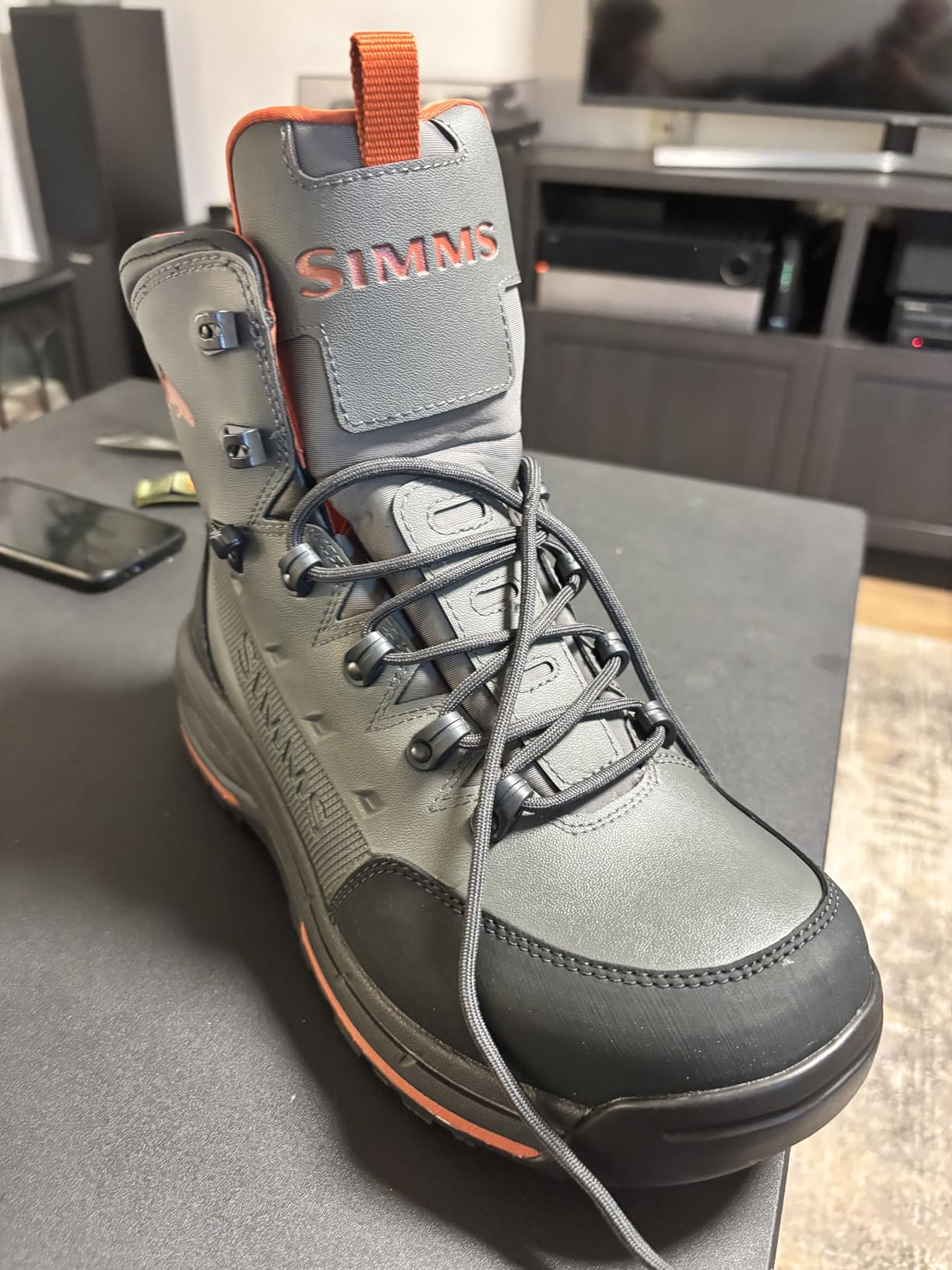
Rubber only, but the outsole is compatible with Simms Hardbite Star Cleats, Hardbite Studs and Alumibite Star Cleats, so you can add points when the rock is slimy. That combination, a stable platform plus optional studs, is the closest thing here to a dedicated wet bedrock setup.
Owners use it beyond rivers too, including coastal wading and hunting, which is a fair signal that the construction holds up outside the specific use it was designed for.
Why the midsole matters on bedrock
Wet bedrock is unusual because it is hard, uneven and coated in a film. Firm, stiff footing matters more than softness there, because a soft sole lets your foot roll with the curve of the rock. A dual-density EVA midsole under a scratch leather upper resists that roll and gives you a platform to weight-shift on.
The partial neoprene lining is worth noting for a different reason: it softens the contact points where the boot flexes, which is what keeps a stiff boot from rubbing your ankle raw over a full day.
Where the Freestone costs you
It is rubber only. If your water or your regulations require felt, this is the wrong boot, and one owner returned the pair after realising they wanted felt. Check your local rules before you commit.
A few buyers note modest drainage and a thin lining, and the boot sits in the premium tier. For a stable, warm, stud-compatible platform that is a fair trade, but it is not a lightweight pack-and-wade choice.
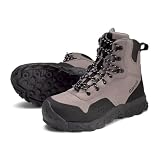
9. Orvis Clearwater: Best Toe Protection for Boulder Fields
Orvis Clearwater Men’s Wading Boots – Durable Rubber Sole and Synthetic Leather Upper with Scratch-Resistant Toe, EVA Footbed & Stable Stud Retention, Gravel – 11
Scratch rubber toe bumper
Aggressive lug with ESS plate
Integrated EVA footbed, wider fit
Pros
- Studs and ESS plate grip slick riverbeds
- Rubber toe bumper absorbs impact in fast water
- Wider fit with integrated EVA footbed
- Light on the trail for its size
Cons
- Stiff clunky feel that some describe as ski-boot-like and requires breaking in
- Laces and plastic lace loops can loosen on hillsides and even fail
- Heavier and bulkier than mesh wading shoes
The Clearwater’s signature is the rubber. A heavy-duty toe bumper, plus a scratch rubber vamp and heel counter on a full synthetic leather upper, is built to absorb the impact of toe stubs in fast-moving water. On a boulder field where you are stepping over rather than across, that protection is the difference between a bad day and a ruined trip.
Grip comes from an aggressive rubber lug outsole with strategically placed studs and an ESS plate, and reviewers credit it for holding on slick banks and riverbeds. The integrated EVA foam footbed in a wider fit suits long days, and owners describe the boot as lighter than expected on the walk to the water.
Fit is a strength here. The wider fit runs roomy enough for long days and for neoprene booties, which is a common complaint about several premium narrow-last boots on the market. If you have wide or flat feet, this is one of the more accommodating lasts in the category.
It is designed for rivers, streams and lakes, so it does not need to be specialised to do the work this article cares about.
Where the toe bumper earns its keep
Every year anglers hurt toes on submerged rock that nobody could see. A reinforced rubber bumper that takes the strike instead of your metatarsals is cheap insurance, and on this boot it is a full wrap on the toe, vamp and heel rather than a decorative cap.
Combined with the studded aggressive lug and the ESS plate, this is a good match for anglers who wade fast water over rock rather than walk carefully up a gravel bar.
The lacing problem is real
The most consistent complaint is the lacing. Laces and plastic lace loops can loosen on hillsides, and some owners report outright failure, including one buyer who twisted an ankle after the boot came loose on a slope. If you wade terrain with lateral movement, test the lacing hard before you rely on it.
The boot also has a stiff, clunky feel that some describe as ski-boot-like and that requires breaking in, and it is heavier and bulkier than mesh wading shoes. In this listing the outsole is rubber only, with no felt or studded option beyond the installed studs.
10. Paramount Slate: Best Sticky Rubber Grip on Slimy Rock
Paramount Outdoors Slate SR Wading Boot Sticky Rubber Outsole (Elk – Men’s 10)
Sticky rubber outsole
Steel studs included, recessed inserts
Reinforced stiff midsole, WAVE laces
Pros
- Sticky rubber and steel studs grip slimy rock
- Firm toe box resists rock bruising
- Runs about a size up
- room for neoprene socks
- Accurate size chart
Cons
- Laces and grommets wear through quickly
- Uppers split and heel forms can collapse
- 4.2 average is the lowest in this group
If your problem is specifically slime, this is the boot built for it. The outsole comes in sticky rubber, felt or cleated variants, and the sticky rubber version plus the included steel studs give what owners describe as excellent grip on slimy, wet rock. The studs fit recessed insert points in the outsole, so you can run them or leave them out as the bottom changes.
Protection is good for a shoe at this level. A large rubber heel kicker, a full wrap rubberized reinforcement strip and reinforced stitching guard the high-wear areas, and the firm toe box resists the rock bruising that ruins wading shoes built mostly for comfort.
Fit is generous in the right direction. It runs about a size up from a street shoe, which gives room for neoprene socks without a separate sizing calculation, and buyers say the size chart is accurate. The reinforced stiff midsole gives a secure, stable footbed on uneven ground.
The locking WAVE laces are designed specifically to get wet while staying secure, which is the correct brief for a river boot and not something every cheap lacing system manages.
Sticky rubber and studs together
Sticky rubber works by conforming to the micro-texture of wet rock, and studs work by reaching through the slime film to bite the stone underneath. Running both gives you the most secure footing in this group on the wettest, most organic bottoms, which is the hardest version of the rocky river problem.
It is also one of the few options here that comes in sticky rubber, felt and cleated variants, so an angler who needs to switch materials between a felt-friendly water and a rubber-only water can do it without buying a second boot.
Durability is the trade-off
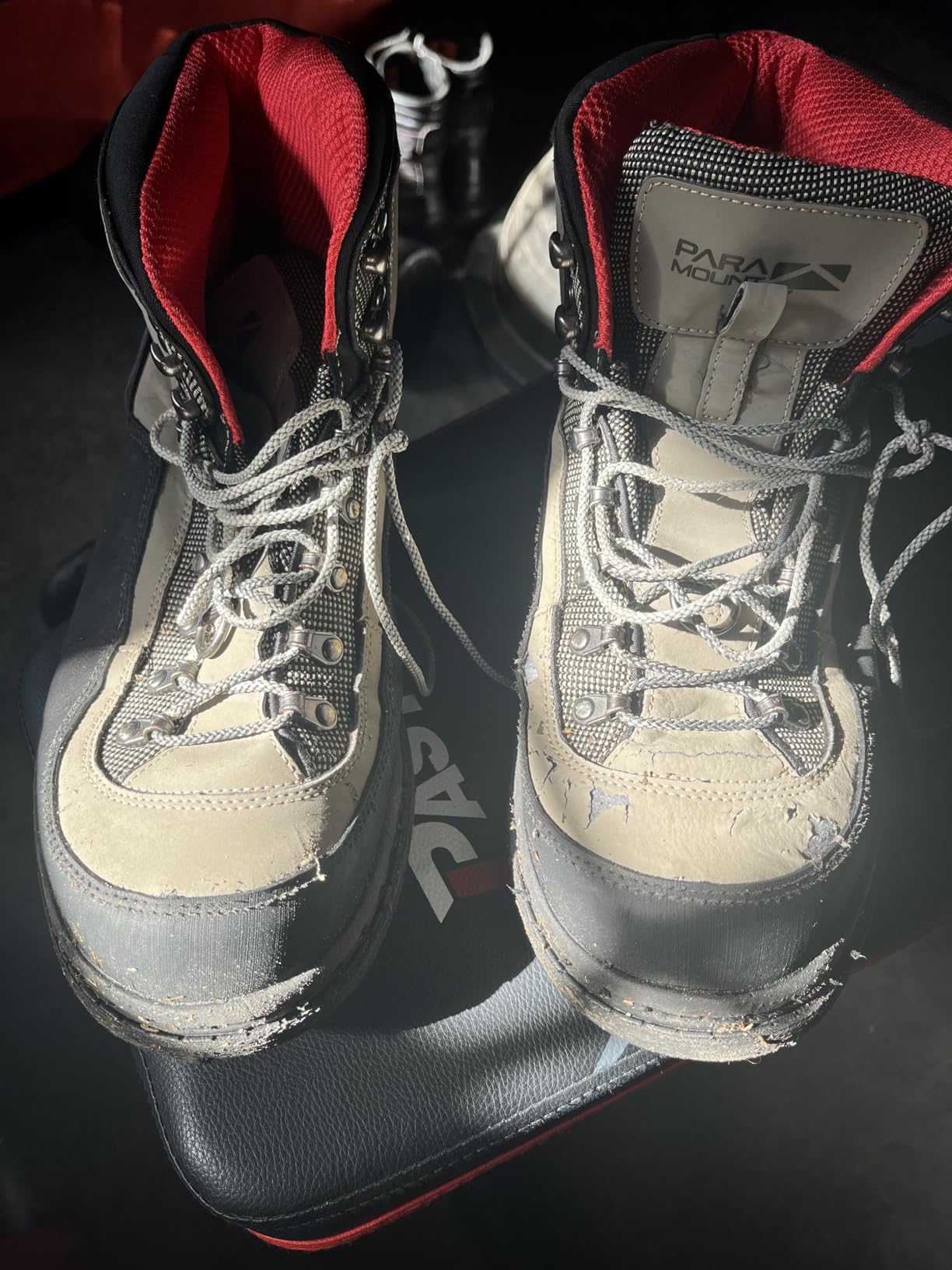
This carries the lowest average rating in the group at 4.2, with an eight percent one-star share, and the complaints are consistent: laces and grommets wearing through, uppers splitting, and heel forms collapsing for people who fish hard and often.
The included metal screws are also soft and wear quickly, and inserts can pull out of the sole over time. If you wade two or more days a week, treat this as a boot you may replace in a season or two rather than a lifetime purchase, and buy a wrench with it.
Felt vs Rubber vs Studded: The Only Sole Decision That Matters
For wet rock, sticky rubber is the best all-round answer, felt wins on truly slick clean stone, studs are the only reliable answer on slime-covered rock, and interchangeable soles win when your water and your regulations change from trip to trip. Everything else about a wading boot is comfort, and comfort matters less than footing.
Felt is the traditional answer and it still works. Rather than relying on softness, felt soaks into the micro-texture of wet rock and creates a mechanical key, which is why it holds on algae and moss where a smooth rubber lug glides. The downsides are water retention, slow drying and regulation risk. Felt is restricted on waters where invasive species are a concern, and it also grips poorly on leaf litter and grass on the bank.
Sticky rubber, in compounds like Kling-On or Idogrip, conforms to the surface of the stone instead of keying into it. It is regulation-friendly, drains immediately and stays light, and it is the best choice for a single boot covering most of your fishing. The catch is that a cheap non-sticky rubber outsole performs like a normal shoe on wet rock, which is the single most common complaint in owner feedback, so the compound matters more than the word rubber.
Studded soles add hard points, usually steel or aluminium carbide, that cut through slime films and slick clay to reach the rock underneath. Anglers on forums report studs beating plain felt on sloped clay bottoms. Studs need a retaining plate or they pull out, and they are a poor idea in a drift boat, where a dropped stud can injure someone.
Interchangeable systems, such as OmniTrax, are the answer when you fish more than one type of water or cross a regulation line. They spread wear across two or three soles instead of destroying one, which improves tread life over a season. The cost is bulk, stiffness and a system that needs rinsing so the mounting area does not silt up.
Which River Type Needs Which Boot
Freestone rivers with slick bedrock and algae-coated cobbles need felt, sticky rubber or studs, in that order of preference. Tailwater rivers with gravel bars and cobble are the easiest water to fish in any boot, and a lugged or cleated sole is fine there. Mountain creeks are usually cobble and gravel with a lot of walking, so drainage and light weight matter more than grip. Slick clay bottoms reward studs more than anything else. Cold water and wet wading reward a waterproof upper and neoprene booties over anything else.
Start with the bottom, not the brand. Look at what you are actually standing on: rounded cobble and gravel bars tolerate any sole, flat sheet bedrock punishes a smooth rubber lug, and anything with a green or brown film on it needs studs or studded felt.
Then think about the walk. A boot you love on rock is miserable on a long trail, and vice versa. If your approach is more than forty minutes over rough ground, weight and drainage move up the list and grip moves down, because grip is worthless if you cannot get to the water.
Finally, check the rules before you commit to felt. New Zealand mud snails, zebra and quagga mussels and the growth known as rock snot are the reasons several states restrict or ban felt soles, and the restrictions change. It is not worth planning a season around a sole you cannot legally use on your home water.
Fit and Sizing for Wide or Flat Feet
Wide or flat feet should prioritise the last over the outsole. A narrow last that squeezes your forefoot will make you fish differently, standing back from the water or stepping carefully on rock you should be walking across. The Hellbender and the Deep Current are built on wide wading lasts, the Clearwater is described as a wider fit with an integrated footbed, and the Stonefly is sized to wear over stockingfoot booties with no size-up needed.
The opposite failure is ordering a size up and ending up with a boot that swims around your foot, which on slick rock is a genuine hazard. If you intend to wear neoprene stockingfoot booties, add that volume before you order, and check whether the manufacturer says to size up or stay true. Boots explicitly designed around booties will say stay true, and those not designed for them usually need the extra size.
Our general approach is to order the size you wear in your street shoes, add a size only if the manufacturer tells you to for booties, and return early if the forefoot is compressed. Compression at the toes and the ball of the foot is the problem. A snug heel and a roomy forefoot is exactly what you want, and it is the opposite of what a bad wading boot gives you.
Boots worth comparing against a good fit include our backpacking hiking boot picks and our men’s hiking boot guide, both of which run wider than you might expect at the forefoot. A wading boot and a hiking boot share a last far more often than the price difference suggests.
Felt Sole Rules and Where They Apply
Several states restrict or ban felt wading soles to slow the spread of invasive species, and the reason is that felt traps and transports organisms, seeds and eggs between waters. Zebra and quagga mussels are the best-known targets, but rock snot, the algal growth called didymosphenia, is the reason many single-toughness rules include felt. Restrictions often apply to specific waters rather than an entire state, and seasonal closures are common.
Check the specific water you plan to fish rather than assuming a state-wide rule. Many water bodies publish a map or a species list, and the felt question is usually answered there. If you are unsure, choosing a rubber sole removes the question entirely, which is the simplest way to stop worrying about it.
One practical note for anglers who love felt: studs can be self-installed into a felt sole using a stud wrench, and the resulting studded felt grips well on slime. The catch is that many regulations specify the sole material regardless of studs, so studding felt does not make it legal on a restricted water.
Cleaning and Drying Boots After a Rocky River Day
Rinse first, always. Fill the boot with river water from a container rather than a hose if you are moving between waters, scrub the outsole and the lugs while the grit is still wet, and pay attention to the sole mounting area if your boot has an interchangeable system, because silt in that channel is what makes a swap impossible at the truck.
Take the soles off at home and wash them separately. If you use felt, wash it cool, never machine wash, and let it air dry away from any heat source. If you use sticky rubber, wipe the compound down and let it dry so algae and silt do not bake onto it.
Dry the boots apart from each other with the tongue open, and never leave a soaked felt sole in a closed car for days. If you care about boot life, the single highest-value habit is not wading a second water in boots that are still wet, because that is how invasive species move between rivers.
Frequently Asked Questions
What are the best shoes for wading in rivers?
The best shoes for wading in rivers are low-cut wading boots with a grippy outsole and fast drainage rather than trail shoes or bare feet. For rocky rivers, look for felt, sticky rubber or studded soles, a drainage system, and a reinforced toe cap. Our top pick for most anglers is the Frogg Toggs Hellbender, and the Simms Freestone is the sturdiest option for wet bedrock.
What is the best wading boot for slippery rocks?
Sticky rubber is the best all-round choice for slippery rocks because it conforms to wet stone, while felt keys into the surface and studs bite through slime films. If the rock is algae-covered or coated in clay, studs outperform both. The Paramount Stonefly and Paramount Slate ship with steel studs already included, so studded grip costs nothing extra to add.
Are studs better for wading boots than felt soles?
Studs are better than plain felt on slime-covered rock and slick clay, because the hard points reach through the organic film to the stone underneath. Felt is still the safer bet on clean, textured rock and on gravel bars, and studs need a retaining plate or they pull out. Studs are also a poor choice in a drift boat because a dropped stud can injure an angler.
Which is better for wading boots, felt or rubber soles?
Rubber soles are better for most anglers because felt traps water, dries slowly and is restricted on waters with invasive species concerns. Felt is still the grippier option on clean, textured bedrock, and it wins on a felt-restricted or felt-preferred water only. A boot with interchangeable soles, such as the Korkers Greenback, gives you felt and rubber in one pair.
Which states ban felt sole wading boots?
A growing number of states restrict or ban felt wading soles on specific waters to slow the spread of zebra mussels, quagga mussels, New Zealand mud snails and rock snot. Rules usually apply water by water rather than statewide, and seasonal closures are common, so check the regulations for the exact river and dates you plan to fish. A rubber sole removes the question entirely.
What are the best wading boots for wide feet?
For wide or flat feet, prioritise the last over the outsole. The Frogg Toggs Hellbender and Deep Current are built on wide wading lasts, the Orvis Clearwater is described as a wider fit with an integrated footbed, and the Paramount Stonefly is sized to wear over stockingfoot booties without sizing up. Avoid ordering a size up unless the manufacturer says to, because a loose boot is a hazard on slick rock.
Final Verdict on the Best Wading Boots for Rocky Rivers
The Frogg Toggs Hellbender is the best wading boot for rocky rivers for most people, because the wide last fits real feet, the felt version holds slick rock, and 1.5 pounds keeps the boot off your mind all day. If you juggle regulations or fish more than one kind of water, the Korkers Greenback gives you felt and Kling-On rubber in one pair with the least fuss. If your ankles have a history, the Korkers Darkhorse is worth the weight. And if your water is genuinely slimy, put studs in a Paramount Stonefly and stop thinking about it.
Whatever you pick, match the sole to the bottom before you match the sole to the brand, check the felt rules for your water, and size for your real foot. Those three decisions account for nearly every bad boot purchase we have seen. Check the latest options for each pick above, and go wade some rock.