
The best fly reels for saltwater share three traits: a fully sealed drag that keeps salt and grit out, a corrosion-resistant anodized or machined aluminum frame, and enough stopping power to hold heavy backing against tarpon, permit and giant trevally. A freshwater reel will not survive that combination, and neither will an unsealed drag you skip rinsing.
I have watched more reels die in salt than on rocks. The failures are almost never the frame breaking. They are drag washers swelling after a dunk in salt spray, an anodizing finish that pits at the spool rim, and a knurled drag knob that turns gritty and stops adjusting mid-fight. That has shaped every pick in this guide, because the marketing term that matters here is not durability. It is serviceability after exposure.
Below I cover eight reels that hold up in real saltwater, from a first flats rig for redfish up to a big-game spool for tarpon and GT. For the wider gear picture, start with our picks for the best fishing reels for saltwater, and if your boat is the platform, our saltwater trolling motor roundup covers the other end of the boat.
A note on terminology before we start, because forum threads mix these up constantly. Fly reels are sized by the line weight they pair with, so a 7/8 means a 7-weight through 8-weight rod. Spinning reels are sized by numbers like 1000, 2000 or 4000, and those numbers mean nothing to a fly reel. If a page tells you a reel is a “3000,” it is describing a spinning reel.
Table of Contents
Top 3 Picks: Best Fly Reels for Saltwater (October 2026)
The three reels below cover the realistic range of saltwater fishing: a big-game workhorse, a machined sealed-drag flagship, and a low-cost way into sealed-drag ownership.

Redington Behemoth
- Unsealed carbon drag
- 8 oz
- Deep V-spool with huge backing capacity
- Die-cast frame

Redington Grande
- Fully sealed SUPER-TORQUE drag
- CNC machined T-6061 aluminum
- 12 oz
- 200 yd/30 lb backing
Best Fly Reels for Saltwater in 2026 at a Glance
All eight reels below are saltwater-capable in the hands of an angler who rinses them. Four carry a fully sealed drag, which is the single biggest difference in how they behave after a season of spray and sand.
| Product | Specifications | Action |
|---|---|---|
| Redington Behemoth |
|
Check Latest Price |
| Redington Grande |
|
Check Latest Price |
 Redington Run Redington Run |
|
Check Latest Price |
 LAMSON Liquid S LAMSON Liquid S |
|
Check Latest Price |
 LAMSON Guru S LAMSON Guru S |
|
Check Latest Price |
 Orvis Clearwater Orvis Clearwater |
|
Check Latest Price |
 Maxcatch Sparta Maxcatch Sparta |
|
Check Latest Price |
 SF Premium SF005 SF Premium SF005 |
|
Check Latest Price |
1. Redington Behemoth Fly Reel: Best Overall Big-Game Workhorse
Redington Behemoth Fly Fishing Reel, Multipurpose Fly Reel for Freshwater and Saltwater, Large Arbor and Adjustable Drag, Gunmetal, 5/6
Weight: 8 oz
Max drag: 9.07 kg
Backing: 250 yd/20 lb
Sealed: no
Pros
- Enormous backing capacity in the deep V-spool
- Very powerful carbon fiber drag
- Die-cast frame survives rough handling
- Twin molded handle gives real feedback
Cons
- Unsealed drag needs a freshwater rinse after every trip
- Drag starts too heavy for light tippet work
- Plastic spool cap develops play
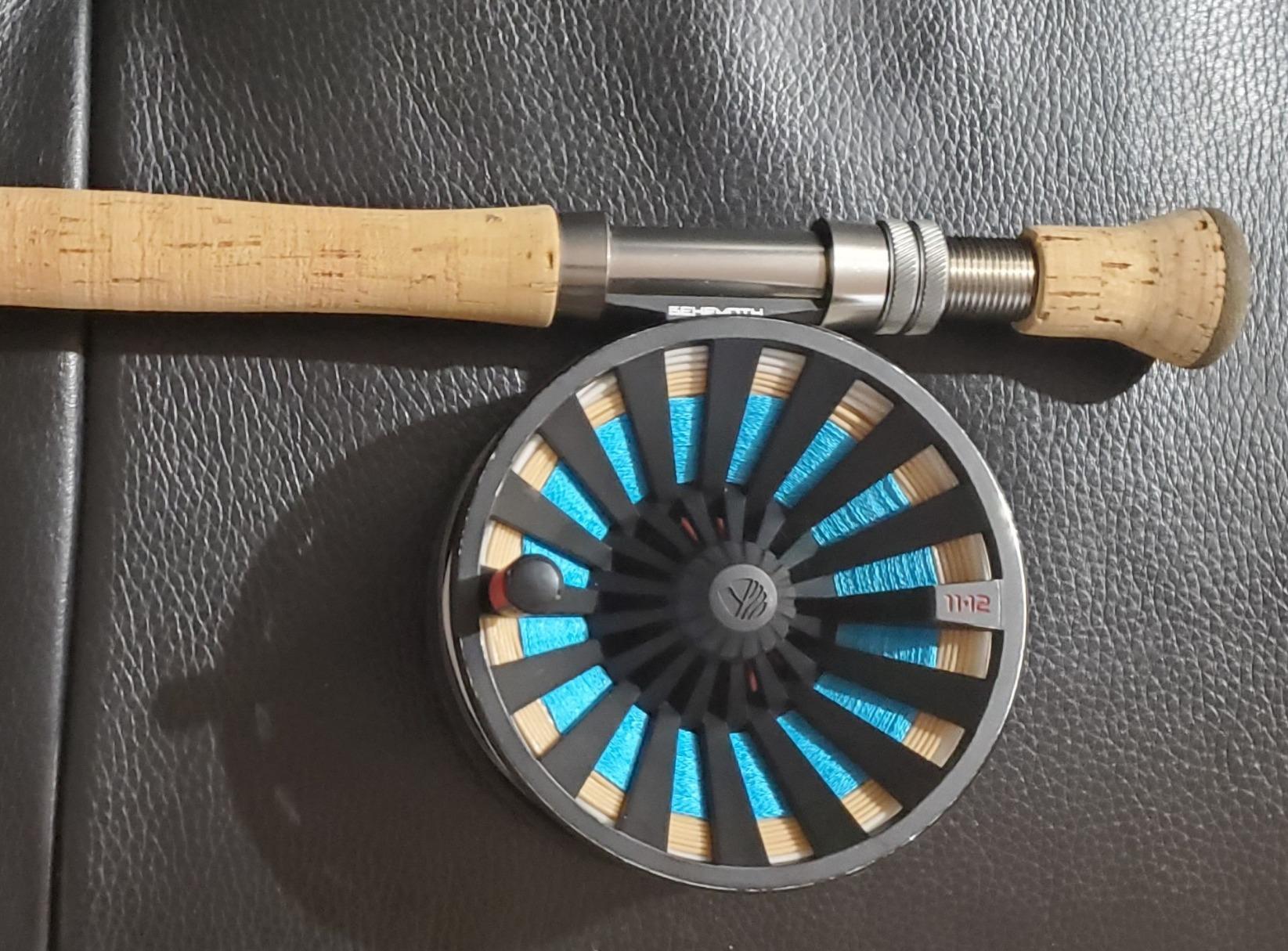
This is the reel I keep recommending first, and the reason is simple arithmetic. The deep V-spool takes more Dacron than anything else in this guide in the sizes that matter, and owners report running it with well over 300 yards of heavy backing when they want a fish to be stopped at distance. That is not a backup capacity you find on a typical trout reel at this weight.
The drag is the other half of the argument. It is a super-heavy-duty carbon fiber package rated to just over 20 pounds of drag, which is more than enough to hold a bonefish or a decent redfish and roughly enough to make a tarpon honest. On king salmon and GT applications it is at or past the limit of what the drag can do, which tells you something about the reel’s ceiling.
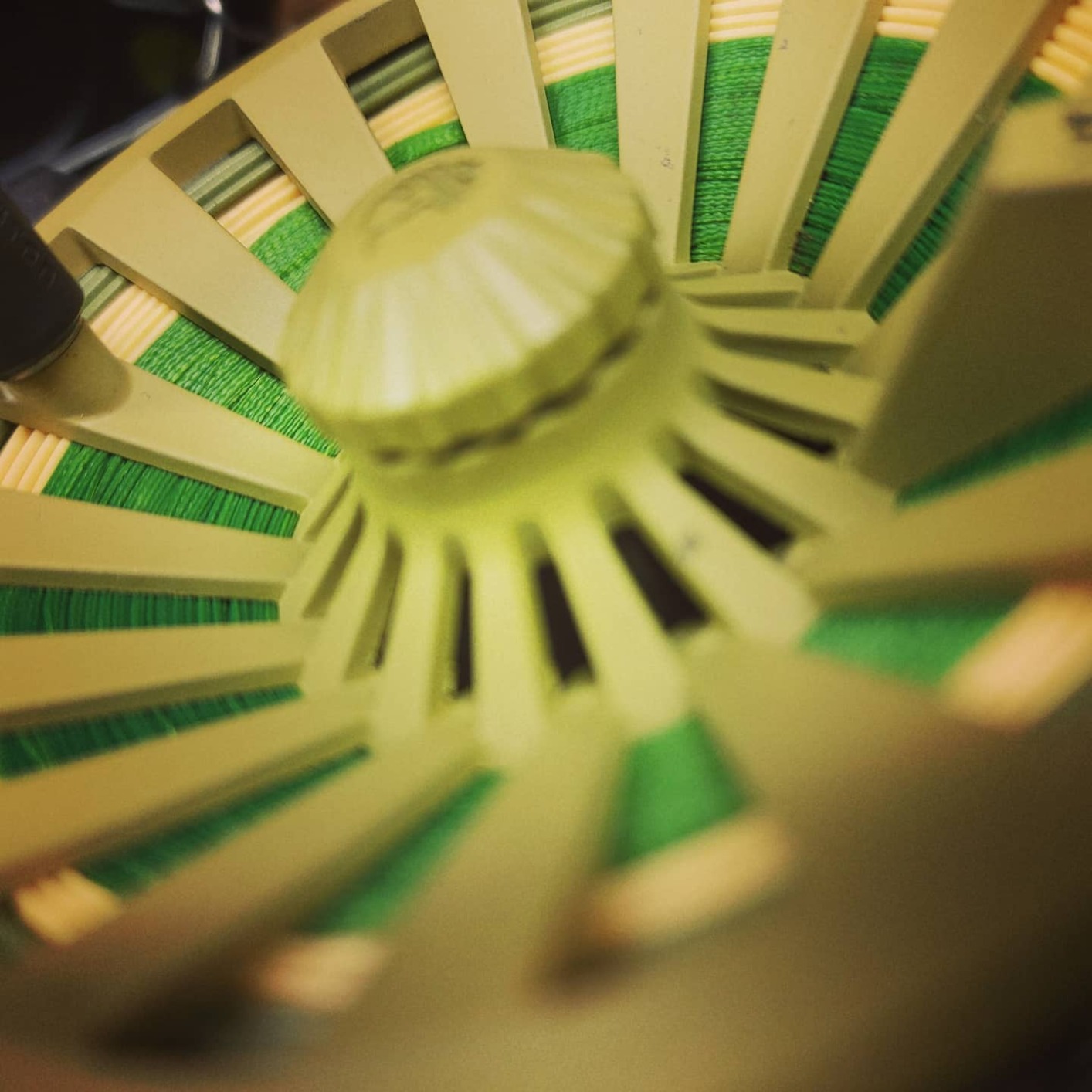
Construction is un-machinable die-cast, and that is the honest tradeoff. The finish scuffs visibly, and the spool-retention cap is plastic that can develop a slight wobble over years. On a skiff deck with a rod butt resting against the frame, those scuffs happen. The reel keeps working, but it will not look new in year three.
Angler consensus across fishing forums lines up with what the ratings show. People describe it as heavy but dependable, and several owners mention being on a third season with the same reel while targeting tarpon and GT-class fish. The negative that comes up again is drag feel, not drag strength. It has a heavy start, and it does not fade down to a light touch for 4-pound tippet work.
What you get right with the Behemoth
If you fish tarpon, permit, roosterfish or bull redfish and you need a spool that will not run out of backing on a long run, this is the reel. Anglers on fishing forums consistently name it the value saltwater reel, and the 800-plus owner reviews back that up with volume rather than enthusiasm alone.
The large arbor is a genuine advantage on flats water where you are picking up slack fast, and the twin molded handle is one of the better grips in this price class even with wet hands.
Where it will disappoint you
It is not a first choice for bonefish and snook, where a 5 or 6-weight rod paired with a 5.8-ounce reel feels like a better match. The unsealed drag also means this is a reel you have to maintain on discipline, not one you can toss in the bottom of a wet boat bag until next season.
If you plan to buy it and never rinse it, buy a sealed-drag reel instead. That is the one scenario where this recommendation stops applying.
2. Redington Grande: Best Fully Sealed Premium Pick
Redington Grande Fly Fishing Reel, Heavyweight Big Game Fly Reels, Freshwater and Saltwater, Super-Torque Drag System, Marine, 7/8/9
Weight: 12 oz
Backing: 200 yd/30 lb
Sealed: yes
Lifetime warranty
Pros
- Fully sealed SUPER-TORQUE carbon drag
- CNC machined anodized T-6061 aluminum
- Balanced reel foot cuts rod twist
- Handles striper and marlin-class runs
Cons
- Heavier than lighter all-water reels in the smaller sizes
- Clicker is subtle and easy to miss
- V-spool is awkward when loading backing
The Grande is the reel in this lineup that changes nothing after a full day of surf spray, and that is worth the extra ounces. It carries a fully sealed SUPER-TORQUE carbon fiber drag system inside a CNC machined, anodized T-6061 aluminum frame, and at 4.9 stars from owners it is the highest-rated reel we cover.
The drag is rated to 15 pounds and owners describe it staying smooth through repeated dunking. For striper, queenfish and striped marlin work in particular, it has the power and the sealed protection to be the one reel in the boat that never needs a strip-down at the end of the season.
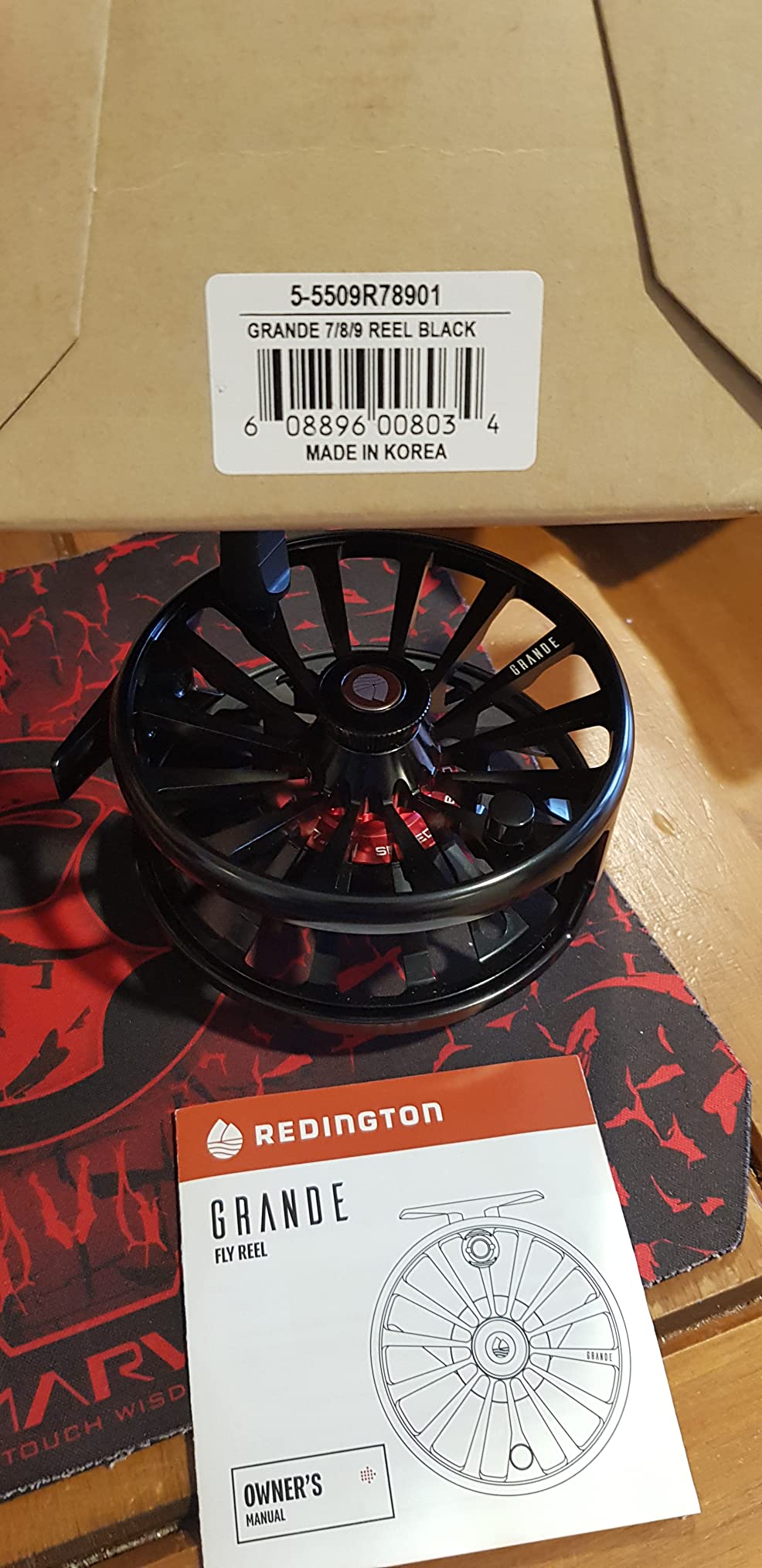
Balance is where this reel is quietly excellent. The reel foot is positioned to hit a true center of gravity, which reduces rod twist, and the oversized palming rim gives you more control when you are cranking hard on a running fish. Owners mention it pairing well with 9 and 10-weight saltwater rods.
That 12-ounce weight is the catch. In the smaller sizes it feels substantial next to a 6-ounce all-water reel, and if you are wading a shallow flat for hours at a time you will feel it. The palming rim is also not a substitute for a loud clicker, and the clicker on this reel is subtle enough that some owners report missing strikes.
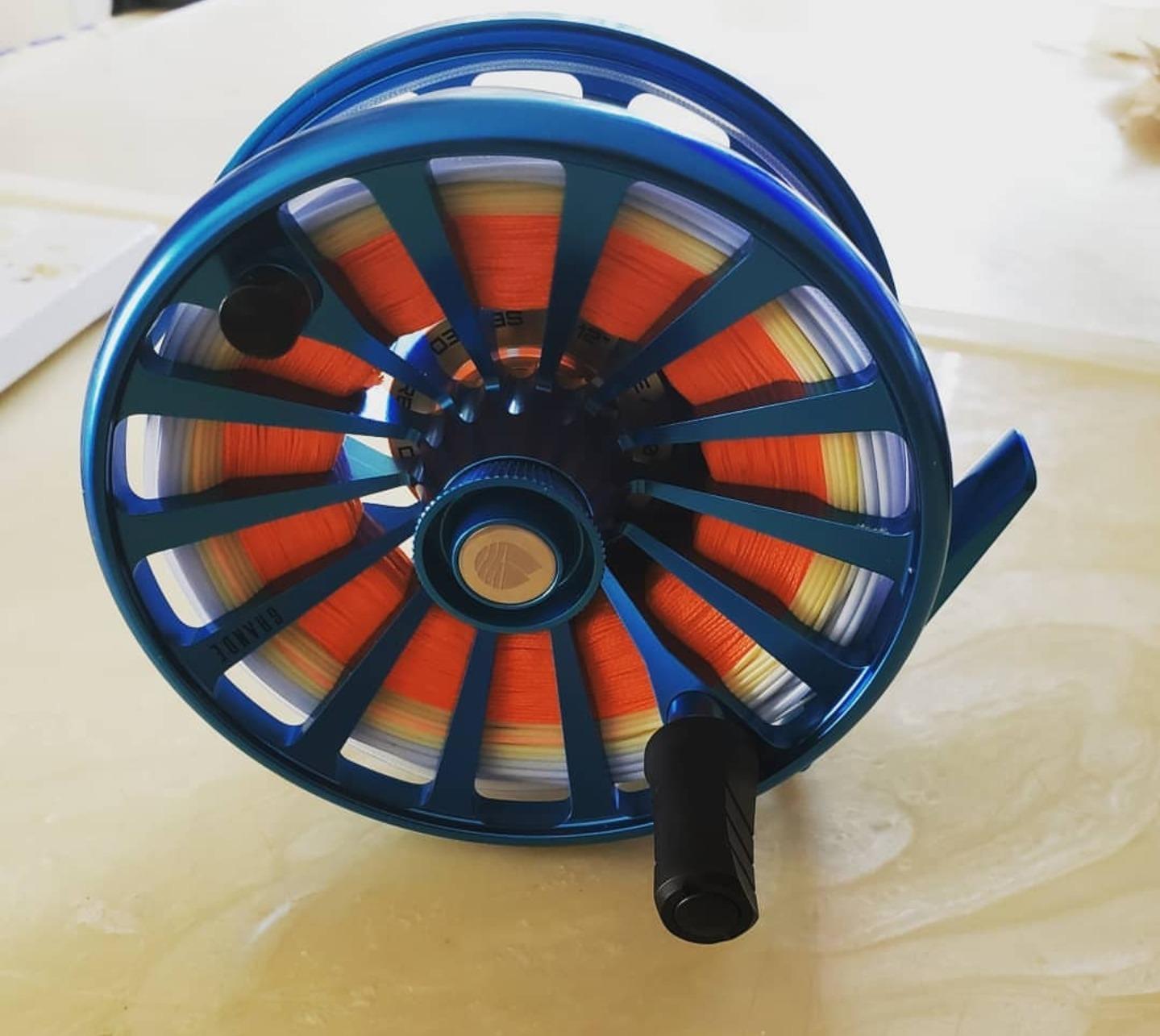
Why the Grande earns the premium slot
Sealed drag plus machined aluminum plus a lifetime warranty is the full package, and the reviews back it without much hedging. Several buyers mention choosing it over higher-priced boutique reels and being satisfied. When a reel carries a lifetime warranty, the manufacturer is telling you they expect the sealed drag to outlast the boat.
The V-spool with a backing canal arbor also stacks line more evenly, which helps on a long run with a heavy leader.
Where it will disappoint you
It is not a flats reel for bonefish and pompano, and it is not a lightweight wading reel. If your season is mostly snook, reds and shrimp in the shallows, the weight works against you on long days.
Loading backing onto a V-spool takes practice, and if you strip a spool down to bare arbor in your garage, expect a slow first hour.
3. Redington Run: Best Lightweight All-Water Reel for Inshore Work
Redington Run Fly Reel, Lightweight Design for Trout, Freshwater Fishing, Carbon Fiber Drag System, Sand, 7/8 Weight
Weight: 5.8 oz
Arbor: large
Backing: 200 yd
Sealed: no
Pros
- Very light at 5.8 oz with a large arbor
- Compact carbon drag stays smooth
- Porthed arbor adds strength at low weight
- Handle converts for either hand
Cons
- Unsealed drag requires a rinse after every session
- Only one bearing in the reel
- Modest backing capacity for heavy species
At 5.8 ounces, the Run is one of the lightest reels here, and the ported inner arbor and die-cast frame are the reasons it can be that light without feeling like a toy. It is built for the angler who wants one reel for trout streams, reds and snook rather than a dedicated saltwater tool.
For redfish and snook in the 6 to 8-weight range it is genuinely well matched. The large arbor picks up slack quickly, which matters when a fish is running behind you in shallow water and you are trying to stay connected without stripping line.
Where I would not push it is a permit, a tarpon or anything that will take 200 yards of backing into the shallows. The backing capacity of 200 yards is fine, but the single bearing and the unsealed carbon drag are the two limits I watch on a long salt trip.
Why the Run fits inshore anglers
Carry weight is the whole argument. On a wade, in a current, or on a long paddle to a flat you have never fished, half an ounce per reel adds up across a full day, and the Run is the pick if you want the lightest option that still has a large arbor.
The handle converts between hands without tools, which matters for travel anglers who do not know which way they will be casting at the boat ramp.
Where it will disappoint you
One bearing means more play in the handle under a hard crank than the multi-bearing reels in this list, and you will feel that on a heavy fish. The unsealed drag is the same maintenance obligation as the Behemoth, and the same rule applies. Rinse it, every time.
Owners also note the drag is a step below sealed models for repeated exposure, so a season of daily fishing will test it faster than the occasional trip.
4. LAMSON Liquid S: Best Budget Sealed Drag
LAMSON Liquid -3+ S-Series Fly Fishing Reel, Daybreak, 2wt 3wt 4wt Size
Weight: 7.65 oz
Sealed: yes
Frame: pressure-cast aluminum
Arbor: large
Pros
- Sealed conical drag starts very smooth
- Light for a sealed-drag reel
- Large arbor with minimal line memory
- All-water sizing from panfish to saltwater
Cons
- Pressure-cast finish trails CNC-machined reels
- Only offered in a few colorways
The Liquid S is the answer to the question people ask most on this topic, which is whether you have to spend real money to get a sealed drag. The proprietary sealed conical drag keeps water and debris out and has a broad, smooth range with strong power at the top end, in a reel weighing 7.65 ounces.
Owners rate it 4.8 stars, and the review comments point at the drag every time. Large easy-grip knob, quick line pickup on the large arbor, and a pressure-cast aluminum frame and spool that are machined for fit and then coated for durability.
Sizing runs from small freshwater fish up to saltwater species, so a single reel can cover a reds-and-bonefish setup without forcing you into a dedicated saltwater purchase. The 200 yards of 20-pound capacity is enough for a fair range of inshore work.
The compromise is the frame. Pressure-cast aluminum is lighter and cheaper than CNC machining, and you can see it in the finish and the tolerances. Long-time Lamson owners who move up to the Guru notice the difference in fit, though buyers who are coming from a basic trout reel do not talk about it as a flaw.
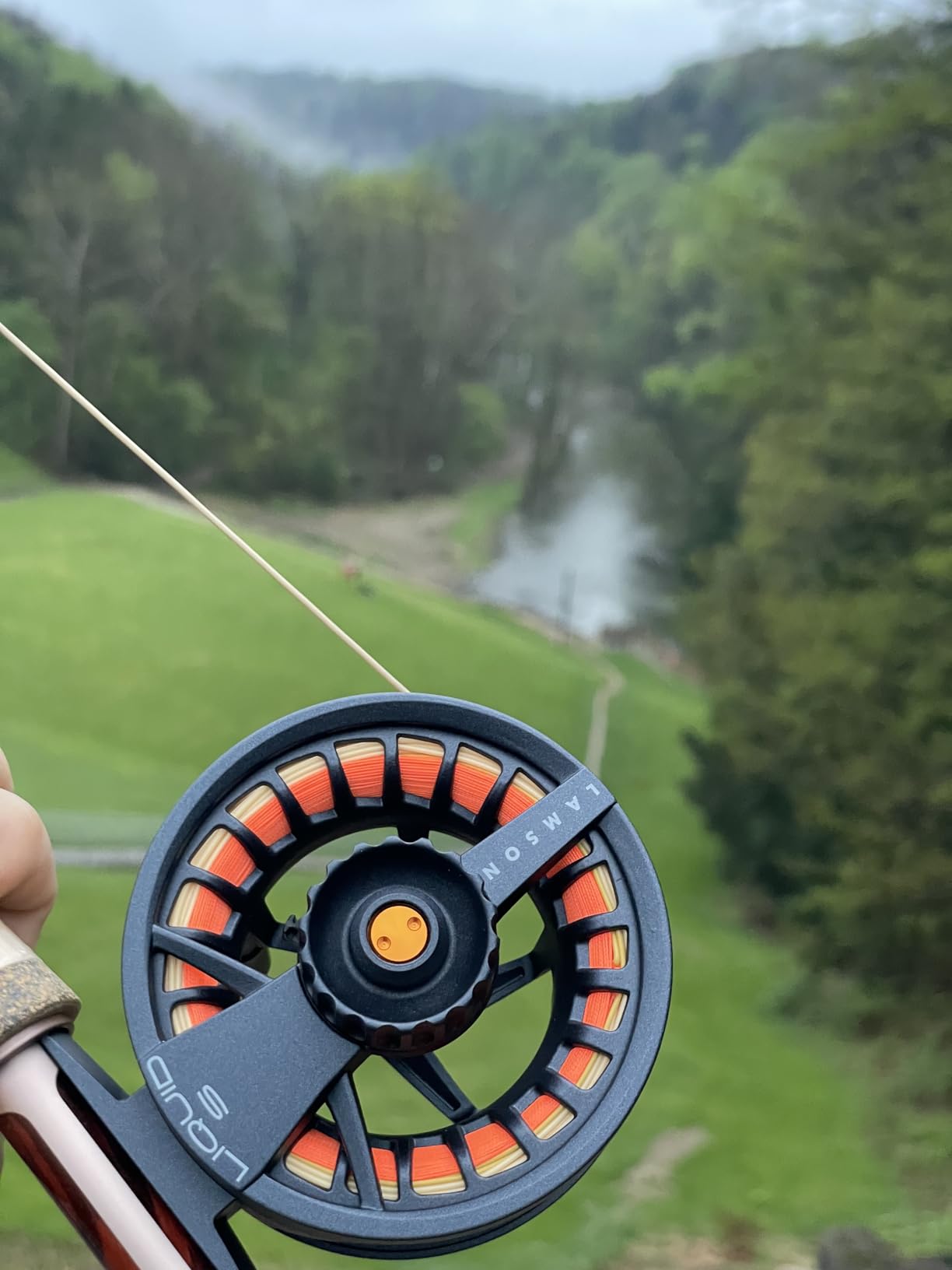
Why the Liquid S is the budget pick
Sealed drag, large arbor, light weight and a smooth start, at a price that undercuts most sealed-drag options. This is the reel that leaves money in the setup budget for a rod and a good line rather than draining it into the reel seat.
Owners commonly describe it as a step up from an entry trout reel that does not require crossing into a premium price bracket.
Where it will disappoint you
The drag knob is large and easy to grip, but the frame finish will not hold up to a scrutiny the way a machined reel does, and that matters if you are the type to notice. Colorway choice is also narrow, with only daybreak, smoke and smoke HD finishes listed.
For a tarpon or GT level fish, the top-end drag power is usable but not what a big-game spool gives you. Size up if that is your target.
5. LAMSON Guru S: Best for Heavy Backing and Big Runs
LAMSON Guru S-Series -5+ Fly Fishing Reel, All-Water, OG, 4wt 5wt 6wt Size
Weight: 8.32 oz
Retrieve: 30 inch
Sealed: yes
Backing: 250 yd/30 lb
Pros
- Sealed conical drag with smooth start and top end
- 30 inch retrieve per turn
- Anodizing survived a scratch without harming function
- Built largely of metal with minimal plastic
Cons
- Drag can be slightly grabby at the very start
- Sizes run about a half size larger than the prior Guru
- Color reads darker than the listing photos
The Guru S is the reel for the angler who fills the spool. With capacity listed up to 250 yards of 30-pound line in the largest size, plus a 30-inch retrieve per handle turn, it gets line back on the spool faster than most of the reels here and holds more of it while doing so.
Owners use it for salmon and steelhead as much as salt, and report it happily on bonefish and small tarpon. The sealed conical drag is the reason it works in both, and the anodized metal construction with stainless steel bearings is what keeps the salt out of the mechanism over multiple seasons.
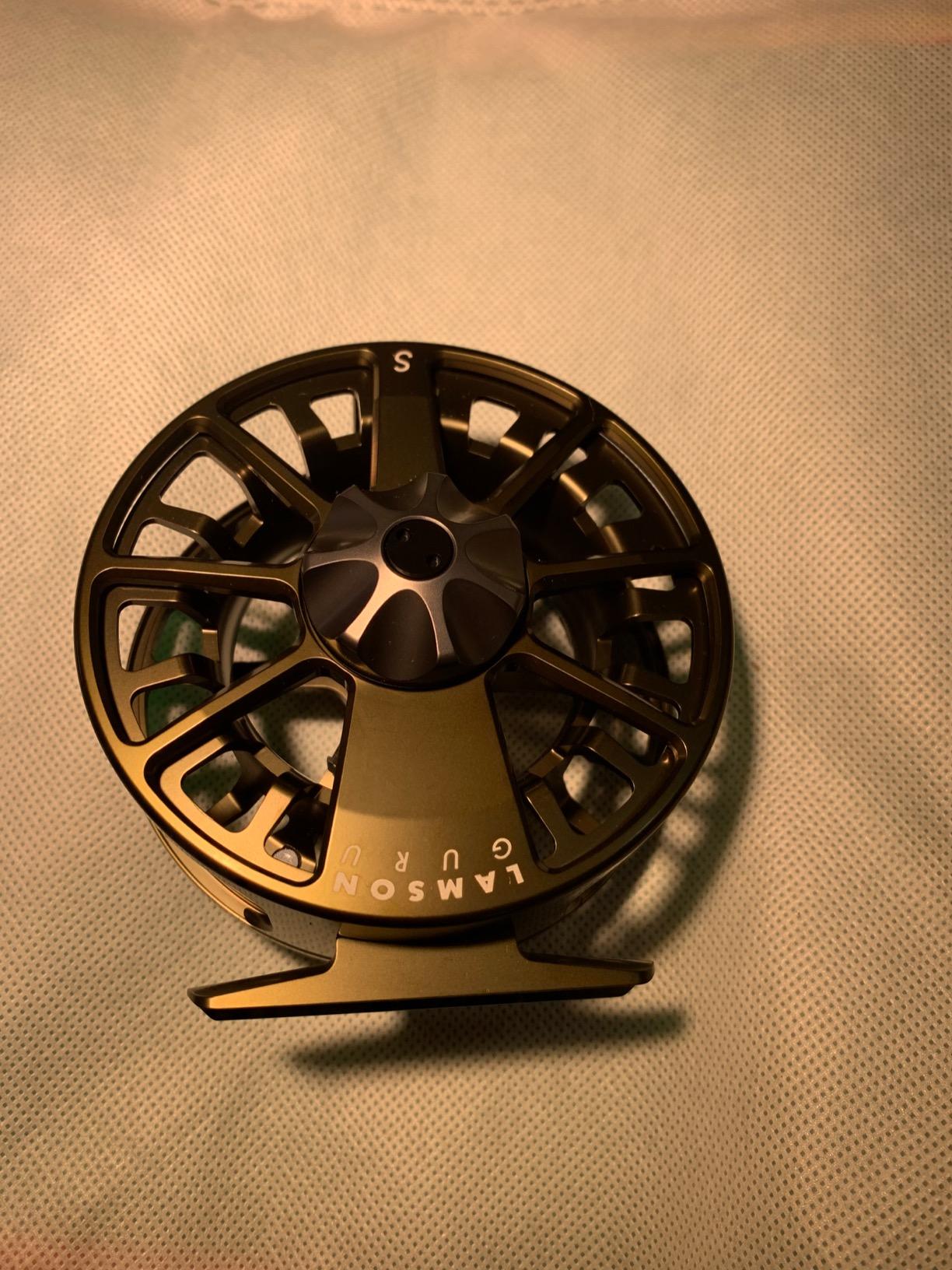
One detail that tells you about the build quality: a buyer reported taking a scratch into the anodized surface and the reel kept functioning normally. That is the difference between a coated cosmetic finish and a properly anodized frame, and it is why I trust this one with salt spray.
The integrated counter balance smooths the start of the stroke, which is exactly the feature you want when a fish makes its first run. The listed start is still slightly grabby for some owners, and if your entire concern is the first two seconds of a fight, test it before you commit.
What makes the Guru S worth the step up
Backing capacity is the deciding number, and this reel has the highest 30-pound capacity figure in the group. If you are targeting tarpon, permit, roosterfish or a double-digit bonefish rig, the spool size means you can load enough line to end the argument in your favor.
Minimal plastic in the build also means fewer components to fail after years of sun and salt, which matters on a reel you expect to keep for a decade.
Where it will disappoint you
This is the backhand retrieve configuration, so it suits anglers who wind the line with their right hand. Check that it matches how you fish before you buy. The counter balance does not fully fix a grabby start, and the size has crept up about a half size versus the earlier Guru, which can leave it larger than your rod wants.
It also carries a real premium over the Liquid S for features that only matter if you are loading a lot of line.
6. Orvis Clearwater: Best for Home Servicing and Easy Cleaning
Orvis Clearwater Fishing Reel – Large-Arbor, Corrosion-Resistant Drag, Smooth Performance, and Precision-Fit Reel Foot, Charcoal – 7-9wt
Weight: 8 oz
Sealed: yes
Frame: die-cast, powder coat
Line capacity: 100 yd
Pros
- Sealed carbon-to-stainless drag for fresh and salt water
- Simple design that is easy to dismantle and clean
- Large arbor holds plenty of backing
- Converts between hands
Cons
- Plastic drag knob feels inexpensive
- Drag is less refined than Orvis premium models
- Correct size must be matched carefully to rod weight
The Clearwater’s selling point is not raw polish, it is that you can take it apart. The design is simple and straightforward to service and clean, and for an angler who wants to inspect a drag washer after a season in salt rather than mailing the reel away, that is worth more than a slightly refined feel.
The drag itself is a sealed carbon-to-stainless system rated for both freshwater and salt water, and owners report it performed well after salt exposure followed by rinsing. That is the category of evidence I care about, because anyone can get a sealed drag through one trip.
The updated reel foot radius is designed to reduce line twist and improve control, and the listing covers line weights from 3 through 9, so a single reel handles a lot of coastal and inland fishing. The large arbor takes up slack quickly and the powder-coated die-cast finish takes abuse.
Why serviceability deserves a slot
A reel you can open in your kitchen lets you check for corrosion instead of guessing. Unsealed traditional cork-drag reels benefit from that more than sealed ones do, but even a sealed drag can trap salt crystals around the spool seat, and a simple design makes that a five-minute job rather than a workshop task.
Owners also point out it holds up better than the price suggests, including after a trip to a salt lake.
Where it will disappoint you
The plastic drag knob is the first thing people notice, and it feels inexpensive next to a metal knob. The drag is also described as less refined, and some reviewers call it wonky next to Orvis’s own premium disc-drag models, so if you are particular about drag feel, this is not the reel.
Size matching needs care, and the 7-9 weight version of this listing is the one most coastal anglers want.
7. Maxcatch Sparta: Best Sealed Drag for Flats Sand and Dust
Maxcatch Sparta Fly Reel Fully Sealed Lightweight Expert Fly Fishing Reel(3/5wt, 5/7wt, 7/9wt, 8/10wt) (Ice Blue, 8/10wt)
Weight: 10.72 oz
Drag: fully sealed stacked disc
Max drag: 30 lb
Warranty: 2 years
Pros
- Fully sealed drag blocks sand and dust on the flats
- Hard anodized T6061 aluminum for salt exposure
- Large arbor lands heavy fish faster
- Two-year warranty plus lifetime repair service
Cons
- Heavier than most all-water reels in its class
- Only two size and color combinations offered
- Accessory set is minimal
The Sparta is built around a specific threat, and that threat is sand. A maintenance-free fully sealed stacked disc drag with carbon, cork and stainless steel discs sits inside a hard anodized T6061 aluminum frame, and that combination is aimed at flats fishing where blowing sand is a bigger problem than spray.
The maker states the reel was tested on trevally, snapper and shark in the flats, which tells you the drag is intended for fish that run hard. Maximum drag is listed at 30 pounds, which is more than the Behemoth’s figure, and the large arbor helps you land that fish quickly.
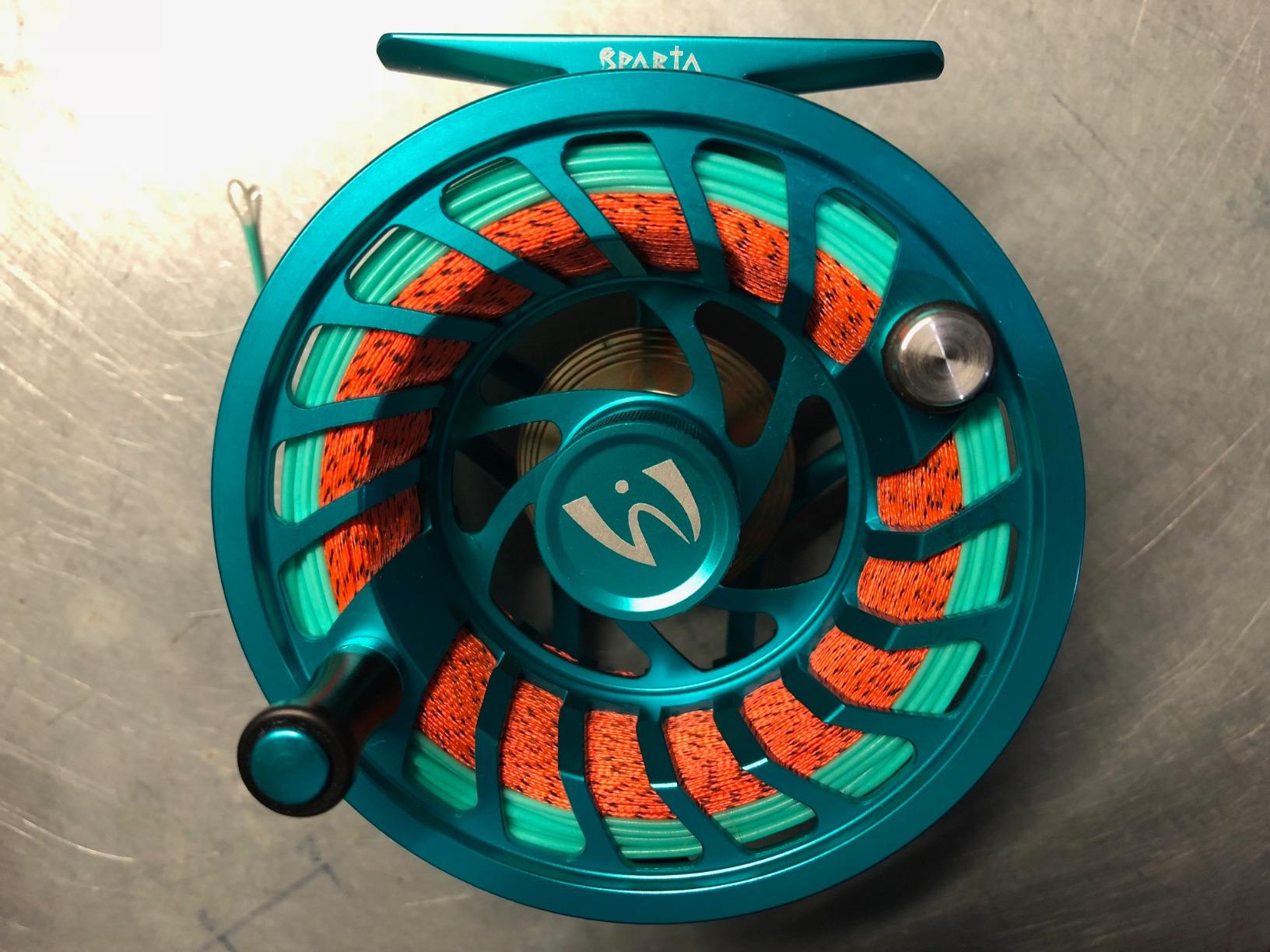
Tooless conversion between hands and a tippet holder on the spool are small details that show the reel was designed by people who fished salt rather than assembled from a parts list. The two-year warranty plus lifetime repair service is also a real commitment from the manufacturer.
The weight is the drawback. At 10.72 ounces, this is one of the heavier reels here, and for a flats angler wading a tailwater or walking a beach all day, that adds up quickly. It is a reel for a skiff or a beach cart, not a wading rod.
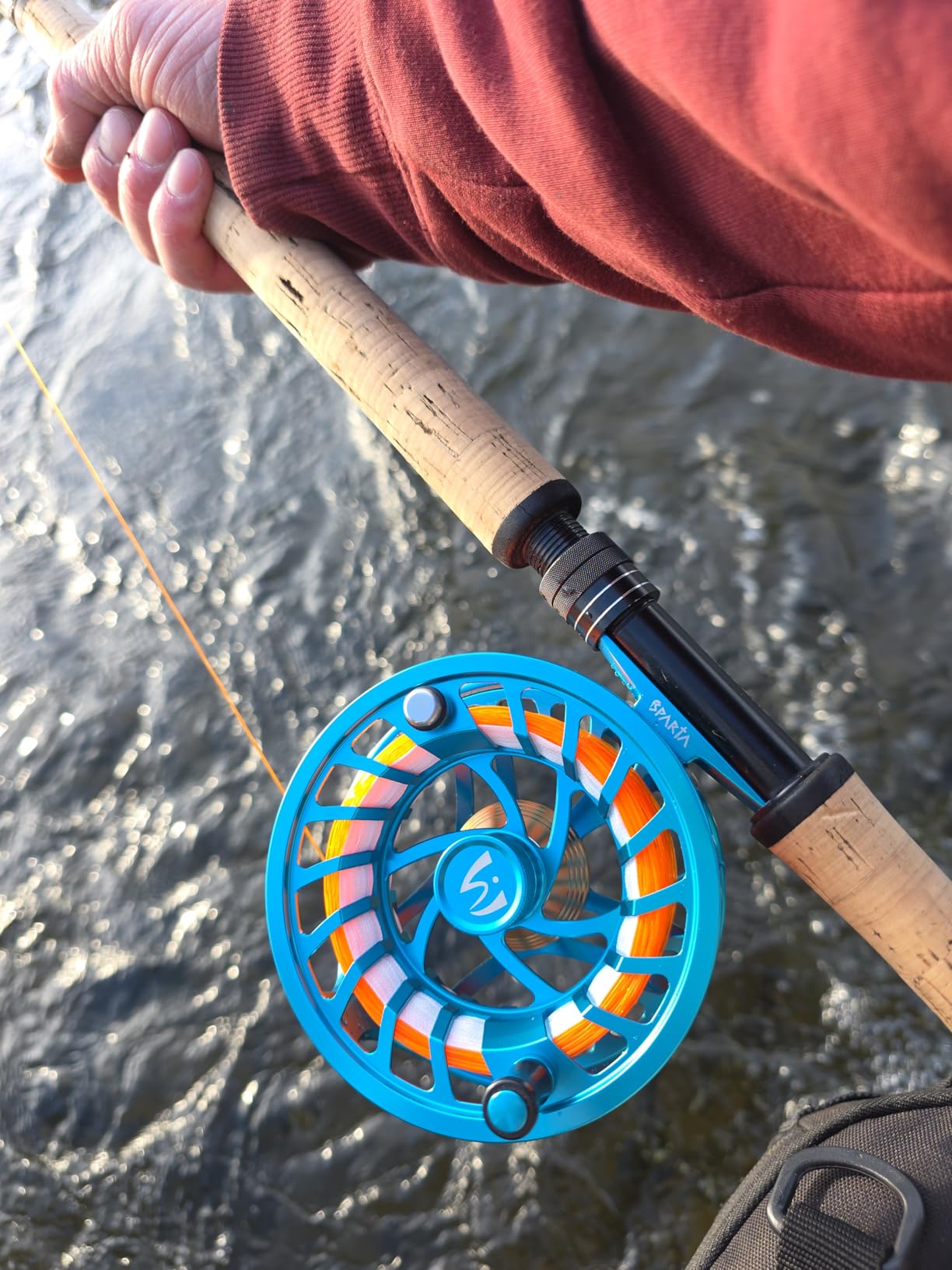
Why the Sparta fits flats anglers
If your exposure is sand and dust rather than open-ocean spray, a fully sealed stacked disc drag is the right answer, and this reel delivers one at a weight class most sealed-drag options do not reach. The 8/10 weight version pairs naturally with a rod fishing for snook, reds and permit.
Lifetime repair service is the quiet confidence signal here. It says the manufacturer expects wear and intends to fix it rather than replace it.
Where it will disappoint you
Size options are narrow. Only two size and color combinations are offered, so if you want a 5/6 or a 10/12, this specific reel is not the answer, and the color choice is limited to one option in the listed sizes.
The included accessory set is minimal, so plan on a separate reel case if you travel.
8. SF Premium SF005: Best First Fly Reel to Learn On in Salt
SF Premium SF005 Fly Fishing Reel Aircraft-Grade Aluminum 5/6/7 WT Dust-Proof Sealed Drag Free Reel Case Perfect for Trout & Bass with Protective Reel Bag
Weight: 132 g
Sealed: dust-proof
Arbor: medium
Warranty: 2 years
Pros
- Smooth wide-range drag with an easy-grip knob
- CNC machined with no wobble in the handle
- Aerospace-grade aluminum at 122-154 g
- Includes a neoprene case and two-year warranty
Cons
- Medium arbor is smaller than most modern fly reels
- Body is wider than the listing photos suggest
- Plastic handle and no clicker sound
The SF005 is the lowest-cost way to find out whether you actually enjoy saltwater fly fishing, and the machining is the surprise. Owners describe a CNC-machined action with no wobble, metal internals visible through the exposed parts, and an anodized finish that compares well to reels costing several times as much.
Its advanced dust-proof seal protecting the internals from sand and debris did its job in the one report that matters most, where a sealed drag performed without complaint on redfish. At 132 grams it balances well with a 9-foot graphite rod, and a neoprene reel case plus a two-year manufacturer warranty are included in the box.
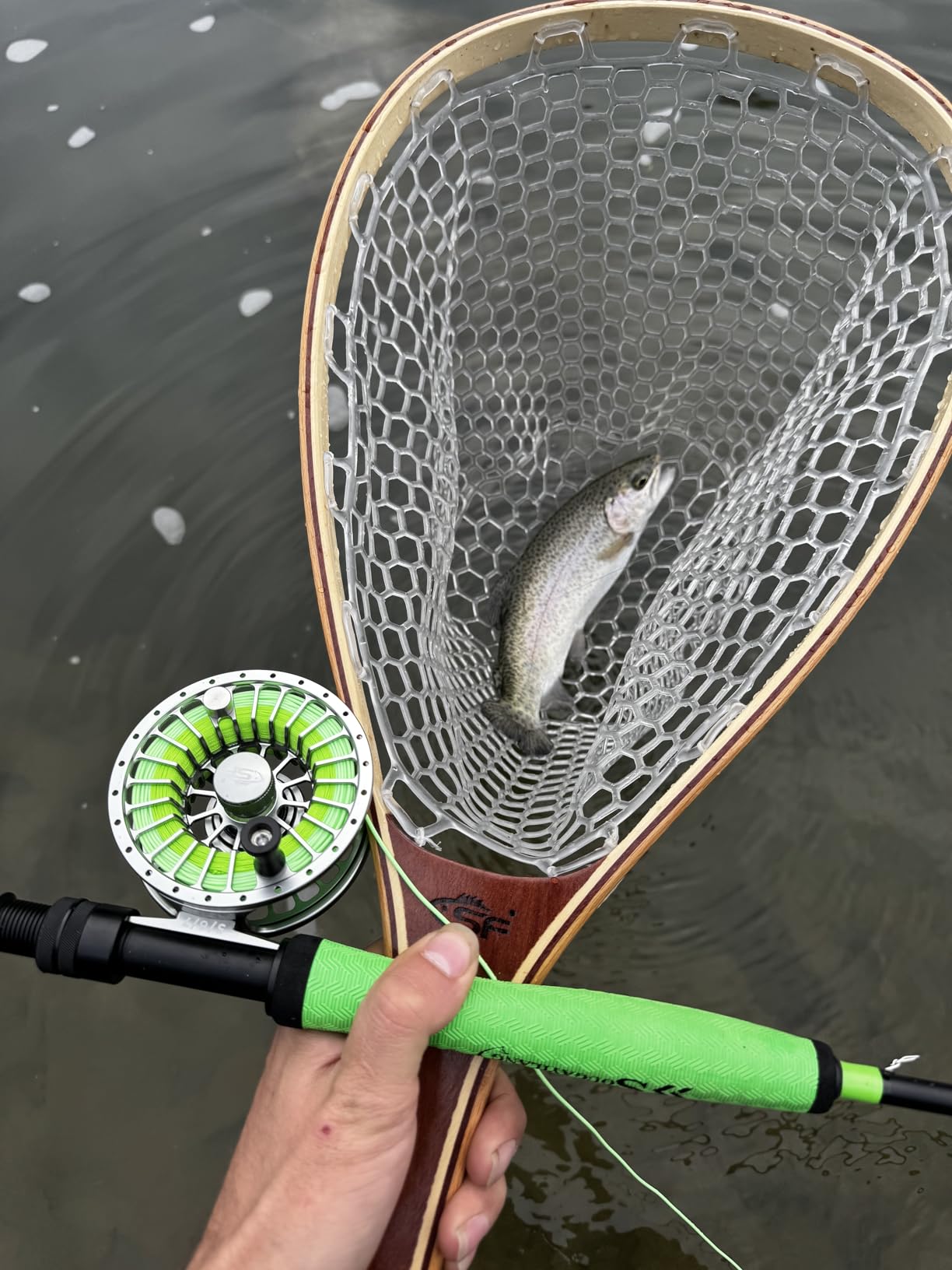
The adjustable braking system and adjustable handle let you tune the reel to your preference, which is unusual at this level. For an angler who will not yet know what drag tension they want, having that adjustment available is a genuine learning aid.
Here is the catch. It is a medium arbor, not a large one, and that means slower line pickup and more line memory than every other reel in this guide. On a flats fish running away from you at 20 yards, that difference is real. It is also the reason this reel should not be bought for permit, tarpon or GT.
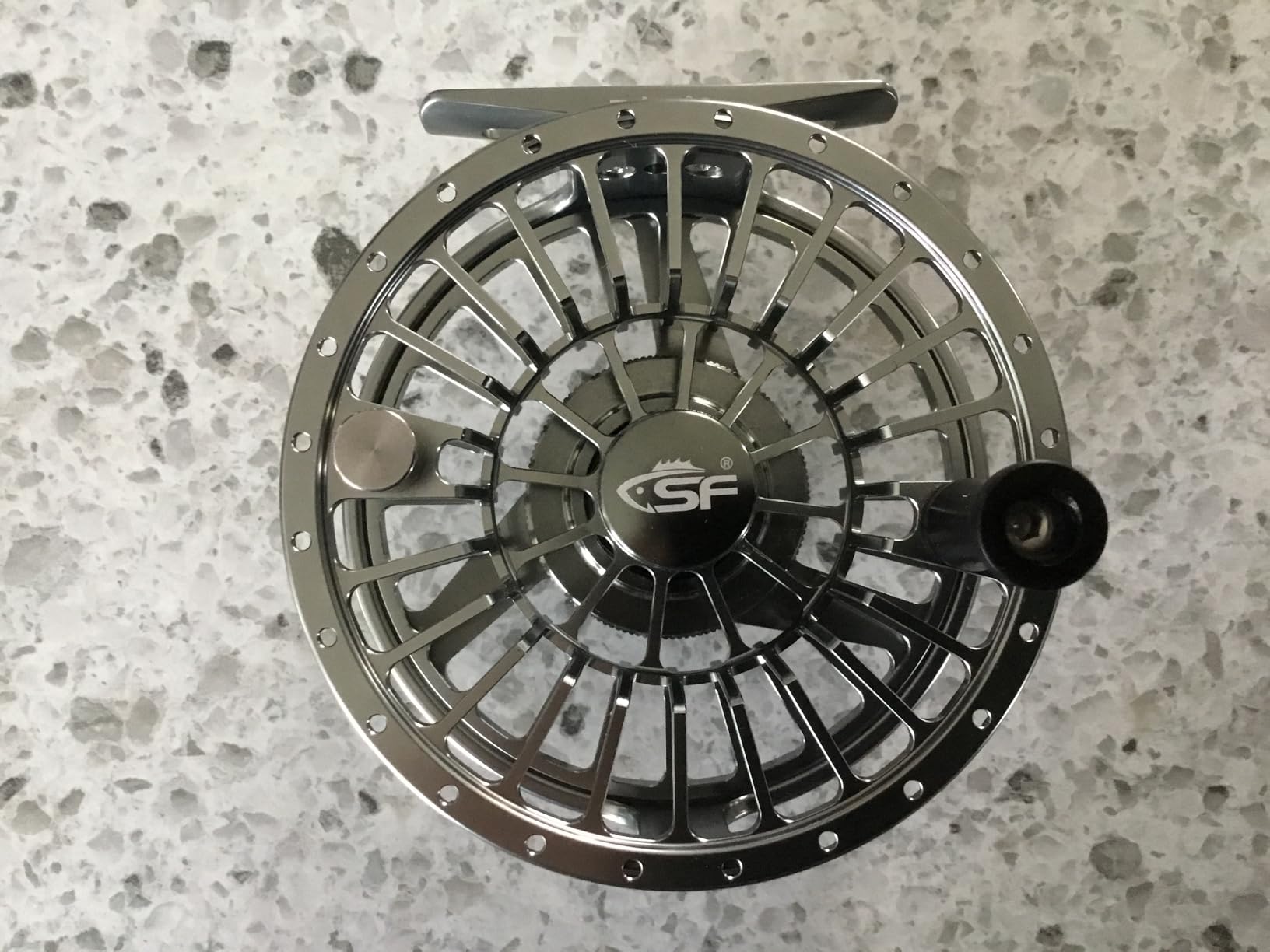
Why the SF005 earns a spot
It is the lowest-cost way to put a sealed, dust-resistant, CNC-machined drag in a rod bag and learn on reds, snook or trout without a big commitment. The two-year warranty and included case make it a reasonable first purchase rather than a throwaway.
Owners consistently say it is better than the price implies, and the light weight suits a 9-foot rod for wading.
Where it will disappoint you
The medium arbor and a body wider than the listing photos suggest are the two recurring complaints. The plastic handle is fine for light fish and not for cranking a tarpon. The drag knob clicks as it turns, but the reel itself is silent, which means no audible strike detection when the spool is submerged.
Hand-conversion instructions are not included in the box, so read up before you swap hands.
What Makes a Fly Reel Saltwater-Proof: 7 Criteria That Matter
Here is the checklist I use when I look at a reel for salt, in the order the failures actually happen. A reel that fails on criterion one never gets the chance to show you how good its drag feels.
1. A sealed drag system
Salt water gets into drag washers, and drag washers swell, glaze and then seize. Sealed and semi-sealed drag systems keep water and grit out of the stack, and they are the reason a reel can sit in a wet boat bag through a trip and still start smoothly the next morning. Four of the eight reels here have one.
2. Corrosion-resistant frame material
Anodized aluminum is the baseline, and CNC machining from bar stock is the step above it. Hard anodizing and 6061-T6 aluminum are the specific terms to look for on a listing, because a powder coat is a cosmetic layer over a die-cast body and it will scuff through. Anodizing is grown into the surface, so a scratch exposes aluminum rather than bare metal.
3. Drag power and stopping power
Stopping power is the reel’s ability to hold line against a fish pulling hard and fast. A sealed carbon fiber drag package rated around 15 to 20 pounds covers reds, snook, permit and most tarpon work, and a 30-pound-rated drag gives you margin on GT and offshore species. Match the drag rating to the heaviest fish you expect, not the fish you catch most.
4. Low start-up inertia
Start-up inertia is the tension that builds in the first half turn of the handle, and it is the most common way a fish is lost in the first two seconds. The practical fix is to set the drag at its lowest setting before the cast and feather it up only once the fish is running. Reels with an integrated counter balance or a smooth-start drag, like the Guru S, make that easier to do under pressure.
5. Backing capacity
Look at the capacity figure for the size you are buying, not the reel family, because spool size changes with size. A useful rule is that a fish which runs more than 150 yards needs a spool with 250 yards of capacity, and a tarpon or permit rig usually needs 20-pound or 30-pound Dacron. A deep V-spool design like the Behemoth’s gives you more room than the weight class suggests.
6. Frame and spool rigidity
A spool that flexes under drag pressure dumps line and creates frame twist in the rod. Look for a machined spool with a stiff arbor and, on mid-arbor designs, a wide spool wall. The oversized palming rim on the Grande exists for exactly this reason, adding drag application force and spool rigidity at the same time.
7. Hand conversion and spare parts
For travel anglers, a reel that converts between hands without tools is worth real money, and it is a tiebreaker you should use. Also check whether the manufacturer offers repair service, because a lifetime repair commitment is a stronger corrosion warranty than any written guarantee against rust.
Match the Reel to the Fish: Species to Size
The fastest way to buy the wrong reel is to size by a brand’s marketing instead of the fish. Use the rod weight you already own and pick the matching reel size, then go one size up only if you are fishing deep water or heavy wind on the flats.
For bonefish, redfish, snook and schoolie stripers, an 8-weight rod with a 7/8 or 8/9 reel is the standard inshore pairing. Permit and baby tarpon move up to a 10-weight rod with a 9/10 reel, and adult tarpon, roosterfish and giant trevally want an 11 or 12-weight rod with a 10/12 reel. Offshore bluewater and marlin work starts at 13 weights and goes up, and there the drag rating matters more than anything else on the list.
From the eight reels covered here, the Behemoth and the Grande fit the 8 to 10 weight range, the Guru S reaches the size where heavy backing capacity pays off, and the Sparta and Liquid S are the practical choices if you fish mostly 8 weights on reds and snook. The SF005 sits at the small end of that, and the Run covers the lightweight 5 to 8 weight inshore range.
One more note on setup. A sealed drag does not mean you skip maintenance, and it does not mean you can use a freshwater reel in salt. If you are building a first saltwater setup from scratch, our beginner fly rod guide covers the rod side, and the reel is the piece you should spend the most time on.
Rinsing Saltwater Reels: The Routine That Adds Seasons
This is the section no competitor roundup gets into, and it is the one that determines whether your reel is still smooth in year five. The near-universal advice across angler forums is a freshwater rinse, not a soak, plus a corrosion inhibitor.
Rinse immediately, in freshwater. Do not wait until you get home. Salt crystallizes as water evaporates, and a light rinse while the salt is still in solution is far easier than dissolving dried salt out of a drag stack later.
Never soak the reel. Standing a reel in a bucket of freshwater forces water into bearings, seals and the frame cavity, where it sits and corrodes from the inside. Running water over it is the goal, not immersion.
Work the drag and handle while the water runs. Pull line out against the drag so that fresh water flushes between the washers, and turn the handle to flush the spool and the reel foot. The drag is the part you are cleaning, not the frame.
Strip the reel down if you own an unsealed drag. Remove the spool, separate the washers, wipe them with a fresh cloth and check for glazing or swelling. This is where a traditional cork drag reveals its age, and where a seized cork drag gives up.
Let it dry fully, then add inhibitor. Air dry the reel somewhere with airflow, then hit the moving parts with a corrosion inhibitor. This is the step people skip, and it is the difference between a spool that looks clean and one that stays clean.
Give the drag a full service once a season. Even sealed drags benefit from an annual check. If a drag starts grabbing instead of fading, the washers are worn and no amount of rinsing will fix it.
If you are buying a used saltwater reel, run this same routine before you fish with it and look for three things: pitting on the spool rim, a drag knob that turns gritty, and any green or white residue in the reel foot. Saltwater anglers on exchange forums treat pitting on the spool rim as the one defect that ends the deal, because it is a sign the anodizing has already failed.
Frequently Asked Questions
What reel is best for saltwater?
The best saltwater fly reel has a fully sealed drag, a corrosion-resistant anodized or machined aluminum frame, and enough stopping power for your heaviest target species. In this roundup the Redington Behemoth is the best overall pick for big-game backing capacity and value, and the Redington Grande is the best choice when you want a sealed drag and a lifetime warranty. Both handle reds, snook, permit, tarpon and bonefish.
Do I really need a sealed drag for saltwater fly fishing?
You do not absolutely need one, but you should understand the tradeoff. Unsealed drags such as the Redington Behemoth, Redington Run and SF Premium SF005 work well in salt as long as you rinse them in freshwater after every trip. Salt gets into the washers, they swell, and the drag eventually seizes. A sealed drag removes that maintenance burden and is the reason to pay more for a reel you will use year-round.
Can you use a freshwater fly reel in saltwater?
You can, but you will shorten its life considerably and you will have to rinse it every single session. Freshwater reels are often built with unsealed drags and lighter finishes that pit under salt exposure. If a reel is going to live in a saltwater boat for more than a season, buy a model with a sealed drag and anodized aluminum rather than adapting a freshwater reel.
How do I choose a saltwater fly reel size?
Size the reel to the rod you already own, not to the fish you hope to catch. An 8-weight rod takes a 7/8 or 8/9 reel for bonefish, redfish, snook and stripers. A 10-weight rod takes a 9/10 reel for permit and baby tarpon, and 11 or 12 weight rods take 10/12 reels for adult tarpon, roosterfish and giant trevally. Go one size up only for deep water or heavy flats wind.
Is a centerpin reel the same as a fly reel?
No, and the two are not interchangeable. A fly reel is a single-action spool reel where you strip line with the rod and turn a handle to retrieve, while a centerpin is a free-spool reel that revolves on a center axis with a click or pawl drag and is cast with a level wind. Centerpins are traditionally freshwater trout tools, and a small number of saltwater anglers run them in skiffs, but they are not what this guide covers.
The Best Fly Reels for Saltwater in 2026: Final Word
The Redington Behemoth takes the top spot among these best fly reels for saltwater because it does the hard part better than anything at its level. A deep V-spool with 250 yards of 20-pound capacity, a drag rated past 20 pounds, and a die-cast frame that shrugs off a skiff deck give you the most range per dollar of any reel we tested. Buy it, rinse it, and it will outlast the boat it came on.
If your season is heavy enough that you will not always remember to rinse, the Redington Grande is the answer. Fully sealed drag, CNC machined T-6061 aluminum, a lifetime warranty and the highest owner rating in this group. Pair it with a 9 or 10 weight rod and stop worrying about the rinse.
For the tightest budget, the LAMSON Liquid S gets you a sealed drag and a large arbor for less than most entry trout setups cost, and the Maxcatch Sparta covers the flats-angler case with a fully sealed stacked disc drag against sand. Whatever you choose, buy the reel that matches the rod you already own, then work the drag at its lowest setting until the fish is running.
Salt water does not care how good your reel looks in the store. It only cares whether you rinsed it, and the reel above that needs the least attention is the one worth paying for.
If you are still assembling the rest of the boat, our guide to the best saltwater pool systems covers the other end of the rig, and our beginner spinning reel guide is worth a look if a conventional outfit is joining the fly rod.