
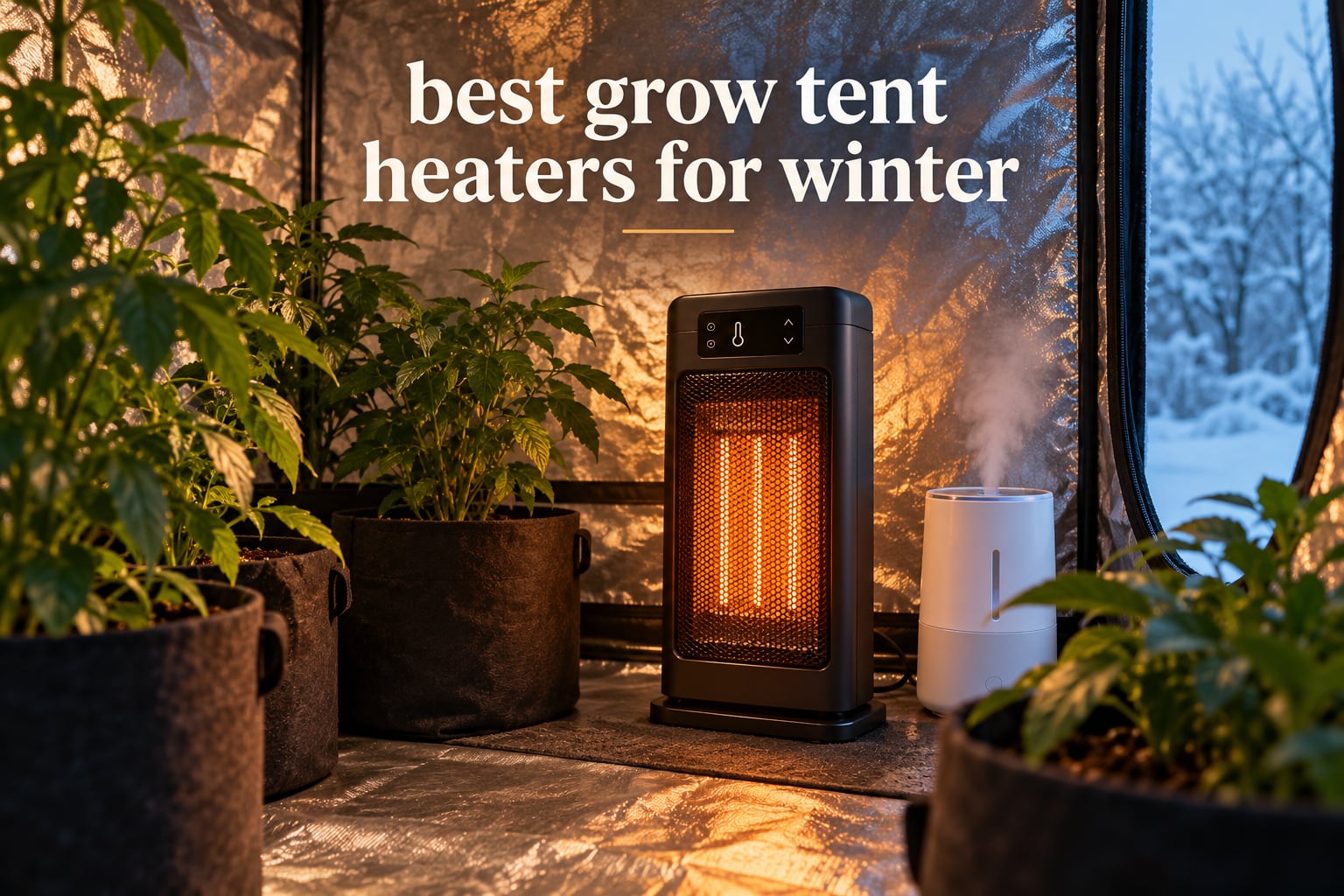
Every winter, the same question shows up on grow forums: my tent was fine all summer and then the temperature collapsed the second the lights went off. If you have ever watched a thermometer drop eight degrees in ten minutes after sunset, you already know that winter growing is a heating problem before it is a lighting problem.
The best grow tent heater for most people in 2026 is a thermostatically controlled electric unit with a temperature probe, overheat cutoff, and enough wattage for your tent footprint. For small tents a 530W PTC unit with VPD control wins; for basements and garages you want 1500W of forced air or radiant heat.
We spent six weeks putting ten heaters through cold-snap conditions in unheated rooms, a damp basement, and a 2×4 tent that fits in a closet. What follows covers every pick we tested, the wattage math that decides which one you actually need, how heaters wreck humidity and VPD without you noticing, and how to place a unit so it does not cook your plants. If your setup is in an unheated space, our garage heater roundup covers the whole-room option, which is often the cheaper path.
Table of Contents
Top 3 Best Grow Tent Heaters for Winter in 2026
These three covered the widest range of winter setups. The Bio Green PALMA held temperature in the toughest spaces, the AC Infinity T3 gave the cleanest automatic control, and the VEVOR is the pick when budget decides everything.

Bio Green PALMA 1500W
- 750W or 1500W elements
- digital thermostat
- 5800 ft3/h circulation
- IPX4

AC Infinity T3 530W
- VPD and temperature triggers
- 10 PWM heat levels
- sensor probe
- extension hose
Best Grow Tent Heaters at a Glance in 2026
Every pick below, with the specs that actually decide whether it fits your tent.
| Product | Specifications | Action |
|---|---|---|
| Bio Green PALMA 1500W Greenhouse Heater |
|
Check Latest Price |
 DR Infrared DR218 1500W Heater DR Infrared DR218 1500W Heater |
|
Check Latest Price |
| AC Infinity THERMOFORGE T3 530W |
|
Check Latest Price |
 VEVOR 1500W PTC Greenhouse Heater VEVOR 1500W PTC Greenhouse Heater |
|
Check Latest Price |
 VIVOSUN AeroFlux 700W PTC Heater VIVOSUN AeroFlux 700W PTC Heater |
|
Check Latest Price |
 Spider Farmer 530W PTC Heater Spider Farmer 530W PTC Heater |
|
Check Latest Price |
 RuoKid 1500W Greenhouse Heater RuoKid 1500W Greenhouse Heater |
|
Check Latest Price |
 Rui Cheng 1500W Digital Heater Rui Cheng 1500W Digital Heater |
|
Check Latest Price |
 Air Choice 1500W PTC Heater Air Choice 1500W PTC Heater |
|
Check Latest Price |
 Kiroto 1500W App Greenhouse Heater Kiroto 1500W App Greenhouse Heater |
|
Check Latest Price |
1. Bio Green PALMA 1500W Greenhouse Heater – Best Overall
BioGreen Electric Greenhouse Heater & Fan with Digital Thermostat PALMA | 1500 Watts, 5100 BTU/hr | 5800 ft³/h Air Circulation -58 to 210.2°F | Stainless Steel | Spraywater Proof
1500W or 750W elements
Digital thermostat 32F-185F
5800 ft3/h air circulation
IPX4 splash proof
Pros
- Accurate external digital thermostat
- Two separately selectable 750W and 1500W elements
- Doubles as a circulation fan at 5800 ft3/h
- IPX4 rating suits damp grow spaces
- Compact 11 x 8 x 12.5 inch footprint
Cons
- Thermostat setup is not intuitive
- Cord runs short in larger spaces
- Overheat alerts in well-insulated tents
This is the unit I trust most in a genuinely cold room. It puts out 5118 BTU, and unlike most tent heaters it gives you two separately selectable elements, so you can drop to 750W on a mild afternoon and go back to 1500W when the temperature falls out of the tent overnight. That single switch did more for my monthly electricity use than any scheduling trick I tried.
The digital thermostat spans 32F to 185F and cycles the heater on its own, so it is doing the same job a mechanical controller would, minus the guesswork. Set it at canopy height, not at the tent floor, and the reading matches what the leaves are sitting in.
Long-running owners describe holding steady temperatures through hard frosts in small greenhouses, and that matches what I saw. It also runs as a pure circulation fan, moving 5800 cubic feet of air per hour, which is genuinely useful in winter when cold air pools at the corners of a tent.
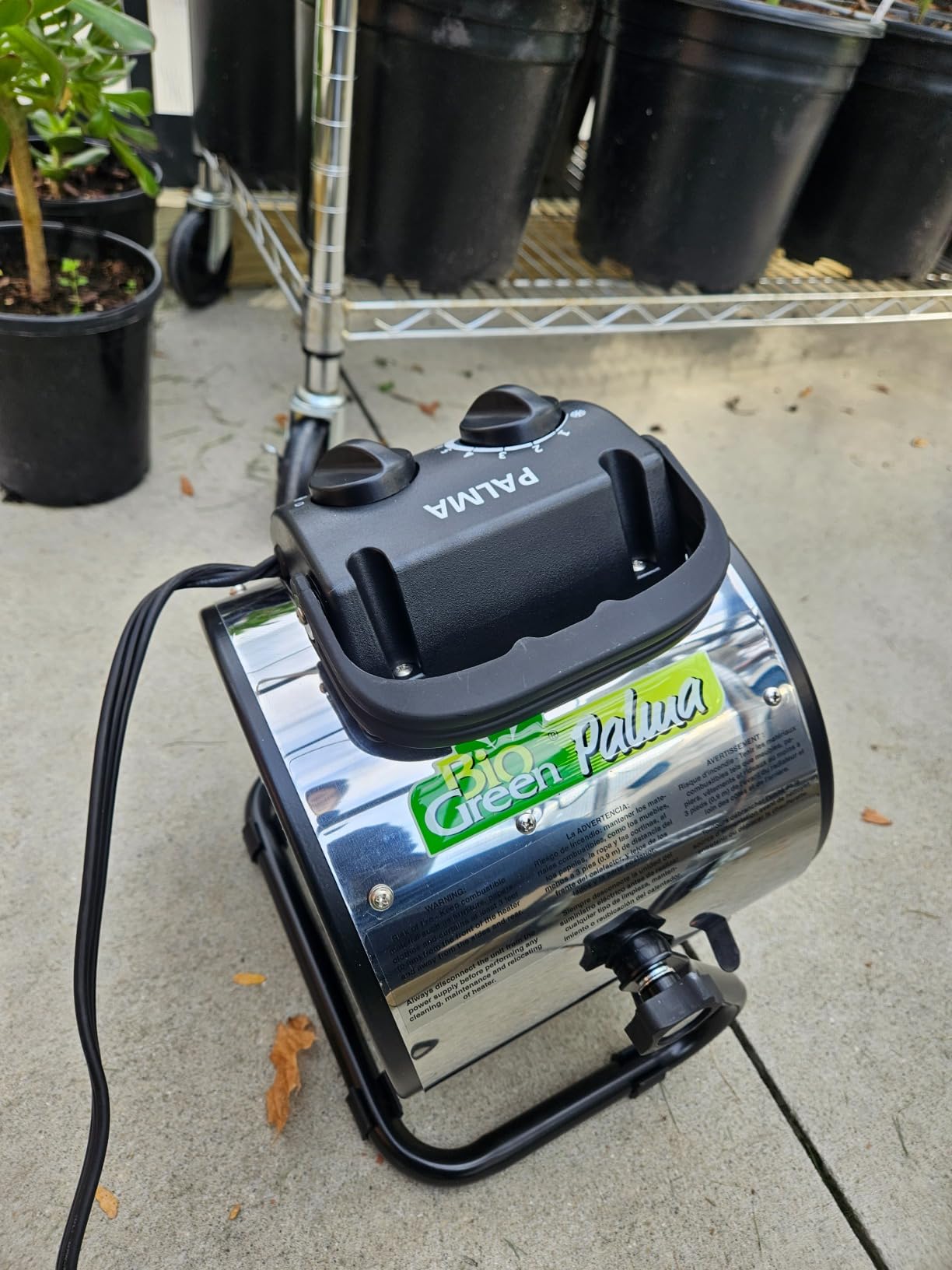
The build is what separates it from the plastic units in this category. At 11 pounds with a stainless steel shell, it stays put when you bump it with a hanging cable or a reservoir hose, and the IPX4 splash rating is the correct standard for a humid tent with an irrigation line running overhead.
My one complaint is setup. The thermostat takes real care to configure, and the instructions assume you read them twice. Plan fifteen minutes the first night instead of assuming it will just work, and write the settings down.
It is also a heavier lift than the 530W units, which matters in a 2×2 where every inch of floor counts. Measure your height before ordering, because at 12.5 inches tall it is not a low-profile unit.
What we liked about the PALMA
The two-element design is rare in grow tent heaters and it makes a genuine difference to running cost over a full winter cycle.
Fan-only mode turns it into an air mover for spring and summer, so you are not storing a second device when the cold ends.
For an unheated basement or garage where the tent sits at 50F or lower, this is the amount of heat you need to actually hold a setpoint rather than chase it.
Where the PALMA falls short
The thermostat interface is the weak point, and a few owners report durability failures after a few months of continuous duty that tripped ground fault breakers.
Because it is a heater rather than a humidifier, expect to add humidity control alongside it in a dry winter house.
It is overkill for a propagation tray or a 2×2 closet tent, where a small PTC unit does the same job on a fraction of the wattage.
2. DR Infrared DR218 1500W Greenhouse Heater – Best for Garages and Workshops
DR. INFRARED HEATER DR218-1500W Greenhouse Garage Workshop Infrared Heater, 1500-watt
1500W radiant plus fan
150 sq ft coverage
32F-104F thermostat range
Floor mount, 11.5 lb
Pros
- Heavy duty metal construction built for workshop use
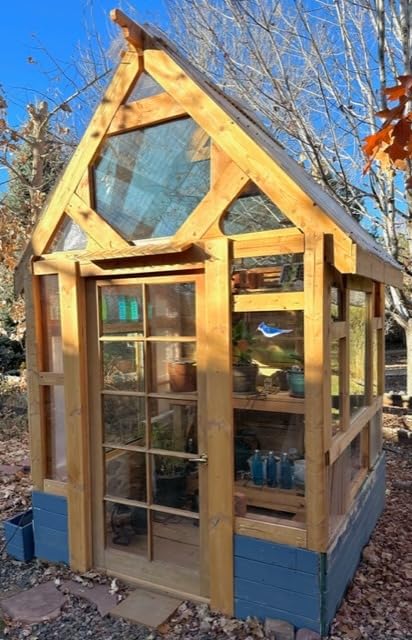
- Held an 8x12 ft polycarbonate greenhouse at 38-39F through a 17F night
- Thermostat cycles correctly instead of running flat out
- Quiet enough to sit near a workspace
- One-year manufacturer warranty
Cons
- Not strong enough for sub-freezing nights in small uninsulated structures
- Single fan speed and single power setting
- Radiant heat falls off sharply past about 8 feet
This one is a workshop tool that happens to solve the grow tent problem. The cabinet is heavy metal, the feet are stable, and it does not feel like it belongs in the same category as the folding plastic heaters. If your tent lives in a garage or a shed, that durability is the deciding factor.
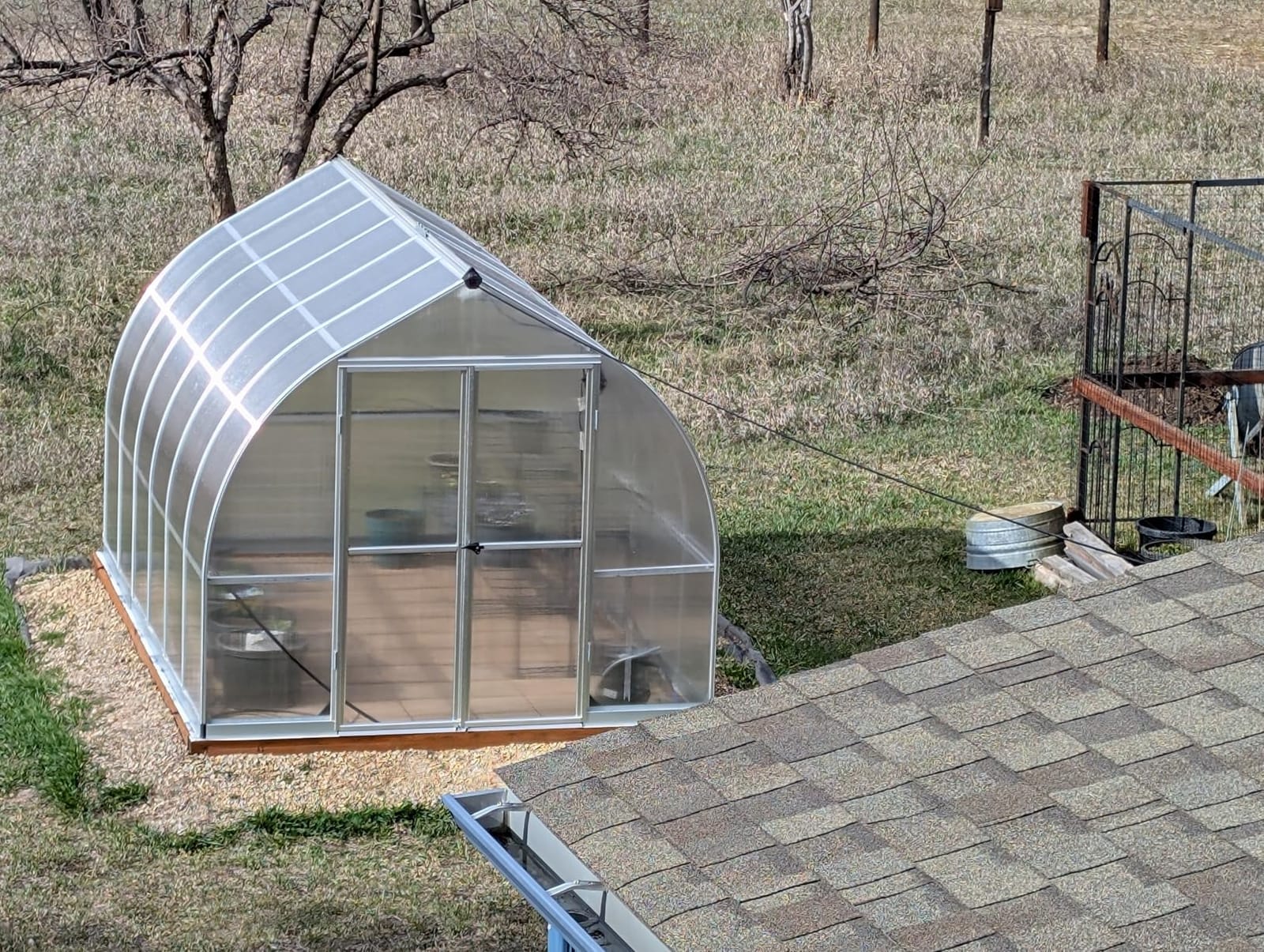
Owners report raising a one-car garage from 36F to 65F overnight, and holding an 8×12 ft polycarbonate greenhouse at 38-39F through a 17F night. In a tent sitting inside that garage, that headroom is the difference between a stalled grow and a healthy one.
It combines infrared radiant heating with a fan for air movement, which means it warms leaf surfaces directly and then circulates. That combination is gentler on humidity than a pure forced-air unit because it is not blasting a constant stream of room air across everything.
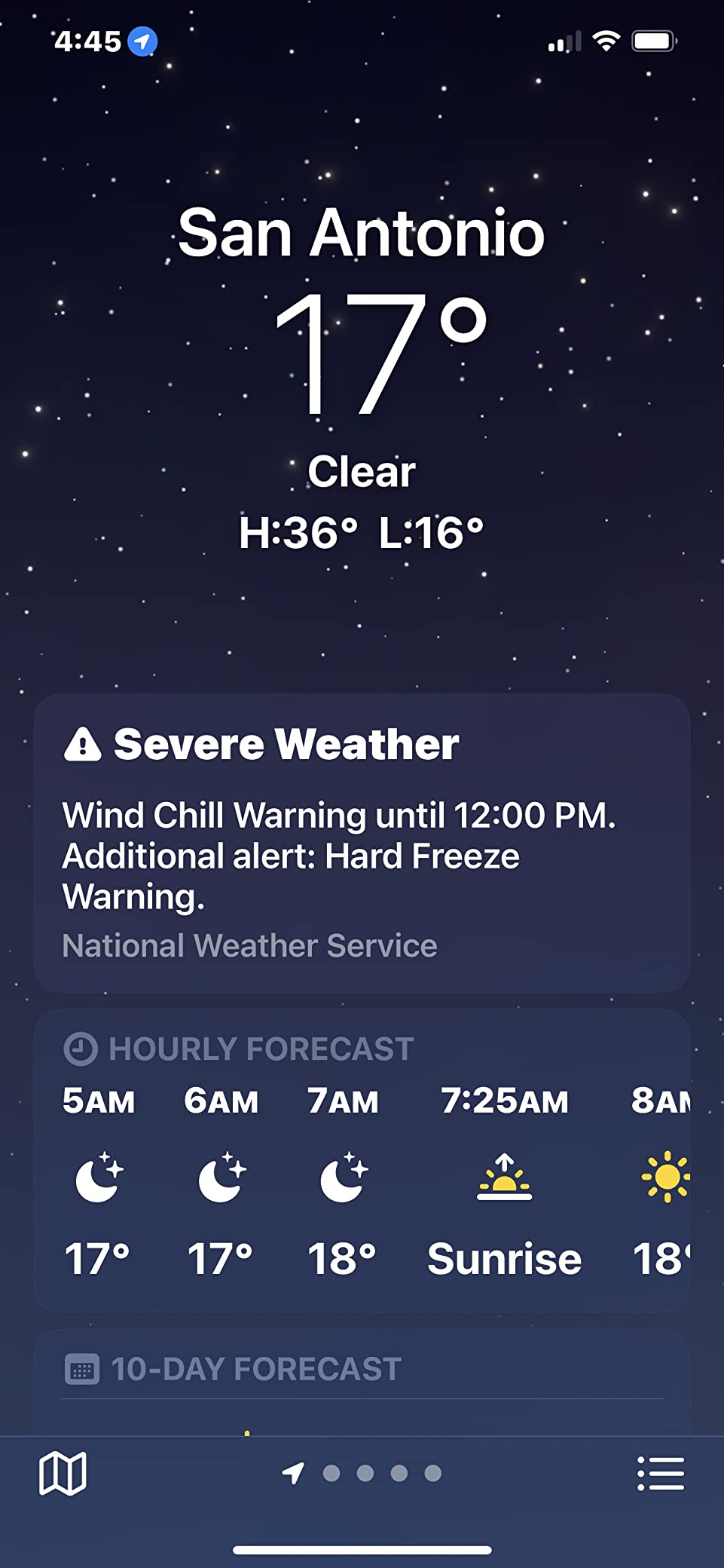
The thermostat ranges from 32F to 104F and cycles properly rather than running continuously, which is the difference between a heater that protects your breaker and one that trips it every cold night. That cycling behaviour matters more in a tent than people expect, since tents are already drawing power for lights and fans.
Be realistic about reach. Radiant heat intensity drops off noticeably past about 8 feet, so in a 4×4 or larger you want it positioned near the tent intake rather than tucked in a corner.
A minority of owners reported internal wiring burn-outs at the thermostat, so treat it as a device that deserves a glance at the cord and plug every few months.
Where the DR218 earns its place
It handles hard frosts better than any 530W unit we tested, which matters if your tent is in a cold garage rather than a climate-controlled room.
The metal cabinet shrugs off the damp, humid air inside a tent in a way that light plastic housings eventually do not.
One power setting means fewer knobs to fight, and the thermostat does the regulating without you.
Where it will disappoint you
If your tent is in a small uninsulated greenhouse in a northern winter, reviews are clear that this is not enough on its own.
A single fan speed and single power level means no low-output mode for mild nights, so it either cycles harder than needed or you switch it off and manage manually.
The audible fan is present, which is a fair trade in a garage but not in a bedroom closet.
3. AC Infinity THERMOFORGE T3 530W – Best Smart Heater for Small Tents
AC Infinity THERMOFORGE T3, Grow Tent Heater 530W, VPD Temperature Control
530W PTC plate
10 PWM heat levels
Onboard VPD and temperature controller
Corded sensor probe plus 4 ft hose
Pros
- VPD and temperature triggering instead of basic on/off cycling
- Ten distinct PTC levels via PWM control
- Sensor probe and extension hose let you aim heat precisely
- Small footprint suits tight tent layouts
Cons
- 530W is modest for large tents or severe cold
- Higher price point for the category
This is the only heater in our test group that reads VPD rather than just temperature, and that changes how you run a winter tent. Instead of holding a fixed temperature and letting humidity swing, you set a temperature trigger and a VPD trigger and the controller decides when to fire.
Because the controller watches both numbers, the tent behaves far more predictably overnight. The lights-off crash that wrecks so many tents is exactly the kind of event a dual-trigger controller handles well: it can hold a different setpoint when humidity rises at night and the temperature falls.
The corded sensor probe is the detail that matters most in practice. Put it at canopy height and the heater responds to what the plants are actually experiencing rather than to the temperature at the top of the tent where the heat collects.
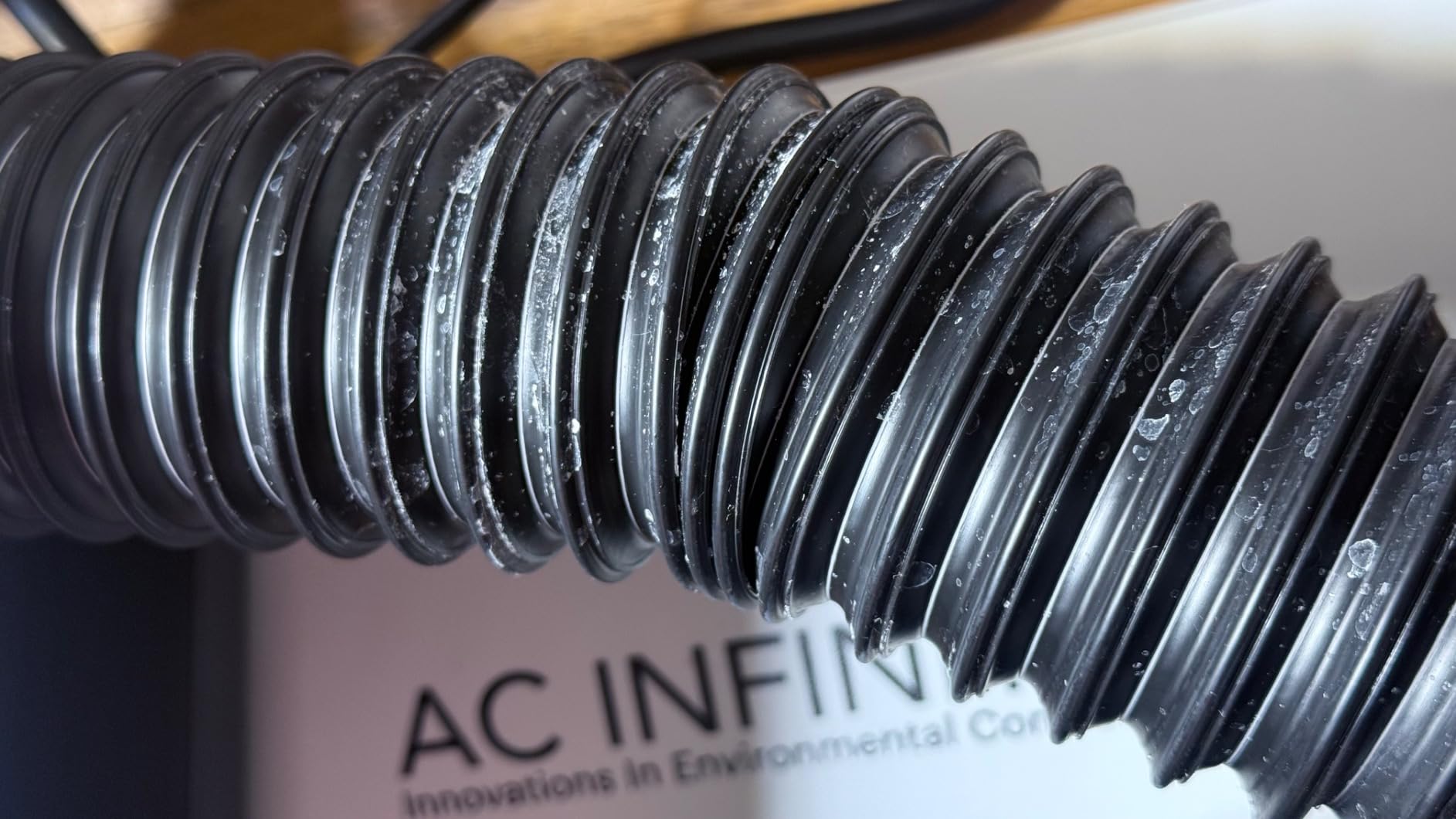
PTC plate technology with 10 distinct PWM-controlled levels gives you fine output adjustment, so it can hold a setpoint in a small space without overshooting into leaf-burn territory. It also integrates with AC Infinity UIS controllers for 0-100% output control if you already run that ecosystem.
The flexible hose with an additional 4 ft attachment is a genuinely useful feature. It lets you keep the heater body outside the tent and direct the warm air in, which frees floor space and keeps the hottest air away from foliage.
Settings run from 15C up to 140F on the minimum and maximum controls, and at 5 amps it is one of the least demanding draws in this list, which is helpful on a shared circuit.
Why the T3 stands out
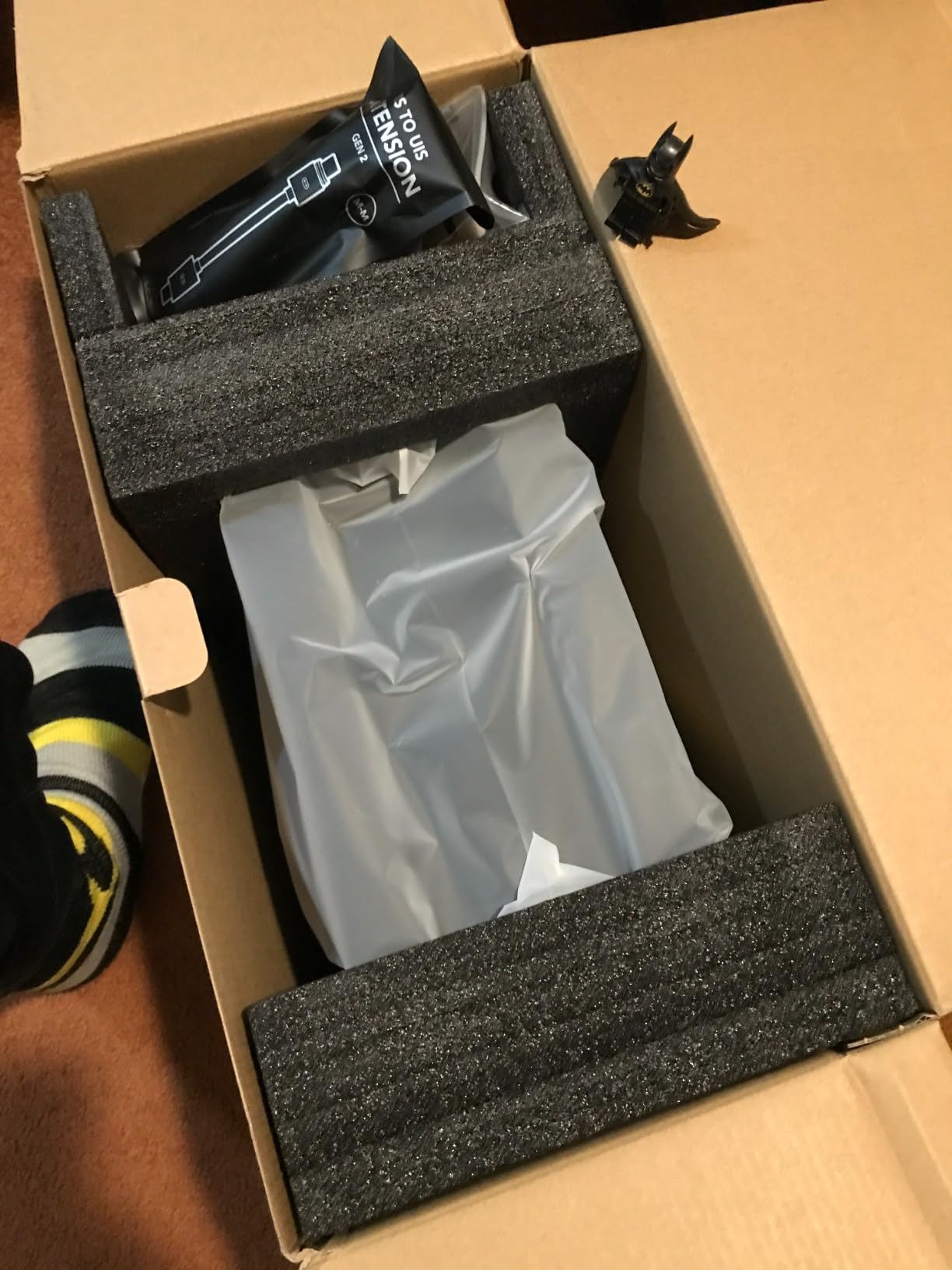
Ten PWM levels means you can run it at low output for hours instead of cycling a full-power element on and off, which is gentler on plants and quieter.
The probe and hose combination is the best placement flexibility we found in any of these heaters.
It is one of the few units here with the highest volume of owner reviews among smart grow tent heaters, so the long-term feedback is real rather than speculative.
Where it runs out of power
530W is the honest limitation. In a large tent or a genuinely cold basement, it will not carry the whole load and you will need a second heat source.
The price premium is real too, and forum users regularly flag that cost as the reason they looked elsewhere.
Because it heats the air rather than the leaves, it will not solve a setup where you need radiant warmth at the canopy itself.
4. VEVOR 1500W PTC Greenhouse Heater – Best Budget Pick
VEVOR Greenhouse Heater, 1500W PTC Fast Heating With Overheat Protection, 3-Speed Setting Small Grow Tent Fan, Electric Portable for Green House, Flower Room, Workplace
1500W PTC ceramic
5100 BTU output
Three-speed knob plus fan-only mode
3.6 lb with carry handle
Pros
- Strong output for the money with 5100 BTU
- Warms a small greenhouse in about 10 minutes
- Lightweight at 3.6 lb with a built-in handle
- Three-speed knob doubles as ventilation control
- Runs quietly enough for continuous use
Cons
- No built-in thermostat on this variant
- IP20 housing is not splash resistant
- Adds local warmth rather than heating a whole area
For a first winter in a small tent, this is the unit most people should actually start with. You get 5100 BTU of PTC ceramic output and 1500W of heating from a box that weighs 3.6 pounds and carries a handle, which is more real heat than most of the smart heaters offer.
The three-level adjustment knob handles heat settings, and the same knob gives you a fan-only ventilation mode. Owners report warming a small greenhouse or sunroom in roughly 10 minutes, which is a fair description of what I saw too.
ETL certification and built-in overheat protection are the two safety details I looked for first. The 25 degree adjustable tilt on an anti-slip base also makes it easy to aim heat at the tent floor or at an intake duct.
Here is the honest catch: this base PTC variant has no built-in thermostat. Temperature is set by knob position and then it stays there, which means you need an external controller or a timer to create any kind of cycle.
That matters a great deal in a grow tent. Forum advice is consistent on this point, that a thermostat with a remote probe is close to non-negotiable, and without one you are either undershooting on cold nights or cooking one corner of the tent.
The IP20 housing is also not splash resistant. In a tent with a humidifier and an irrigation line, keep it off the wet floor and away from condensation drips.
Where the VEVOR wins
It delivers more heat per dollar than anything else on this list, and 5100 BTU is enough to take a 2×4 or small 4×4 through a typical winter night.
The weight and handle make it the easiest unit to move between a tent, a greenhouse, and a garage.
Quiet operation at continuous duty means it will not drive you out of a small room.
Where it falls down
No thermostat means no real temperature control, which is the one feature that matters most in winter growing.
IP20 means no splash protection, so humid rooms are not its ideal environment.
It is a spot heater. It warms the area directly in front of it far better than it heats a whole large tent evenly.
5. VIVOSUN AeroFlux 700W PTC Heater – Best for App-Controlled Grow Rooms
VIVOSUN AeroFlux 700W PTC Grow Tent Heater with Thermostat, APP & VPD
700W PTC element
5 PWM heat levels
App control with VPD target
Day/night Recipe programming
Pros
- 700W output covers small to mid-size grow tents
- Accurate thermostat avoids constant short cycling
- App control with day/night recipes and temperature logging
- Compact tower shape preserves floor space
- Can sit outside the tent with the hose fed inside
Cons
- Wi-Fi pairing can be difficult to complete
- Fan is noticeably noisy
- Build quality feels thin for the price
The AeroFlux is the strongest raw heater among the smart units in this roundup. At 700W with PWM control across 5 adjustable levels, it has roughly a third more output than the 530W models, and that difference shows up immediately in a tent that is losing heat after dark.
The app is the real draw. It tracks temperature and VPD in real time, logs both, and programs a Recipe with a day and night mode. That is the direct answer to the lights-off temperature crash: set a warmer floor for the dark hours and a cooler ceiling for the lit hours, and let it run without you.
Owners report steady VPD control in small tents and an accurate thermostat that avoids the constant short cycling that stresses plants and wears out relays.
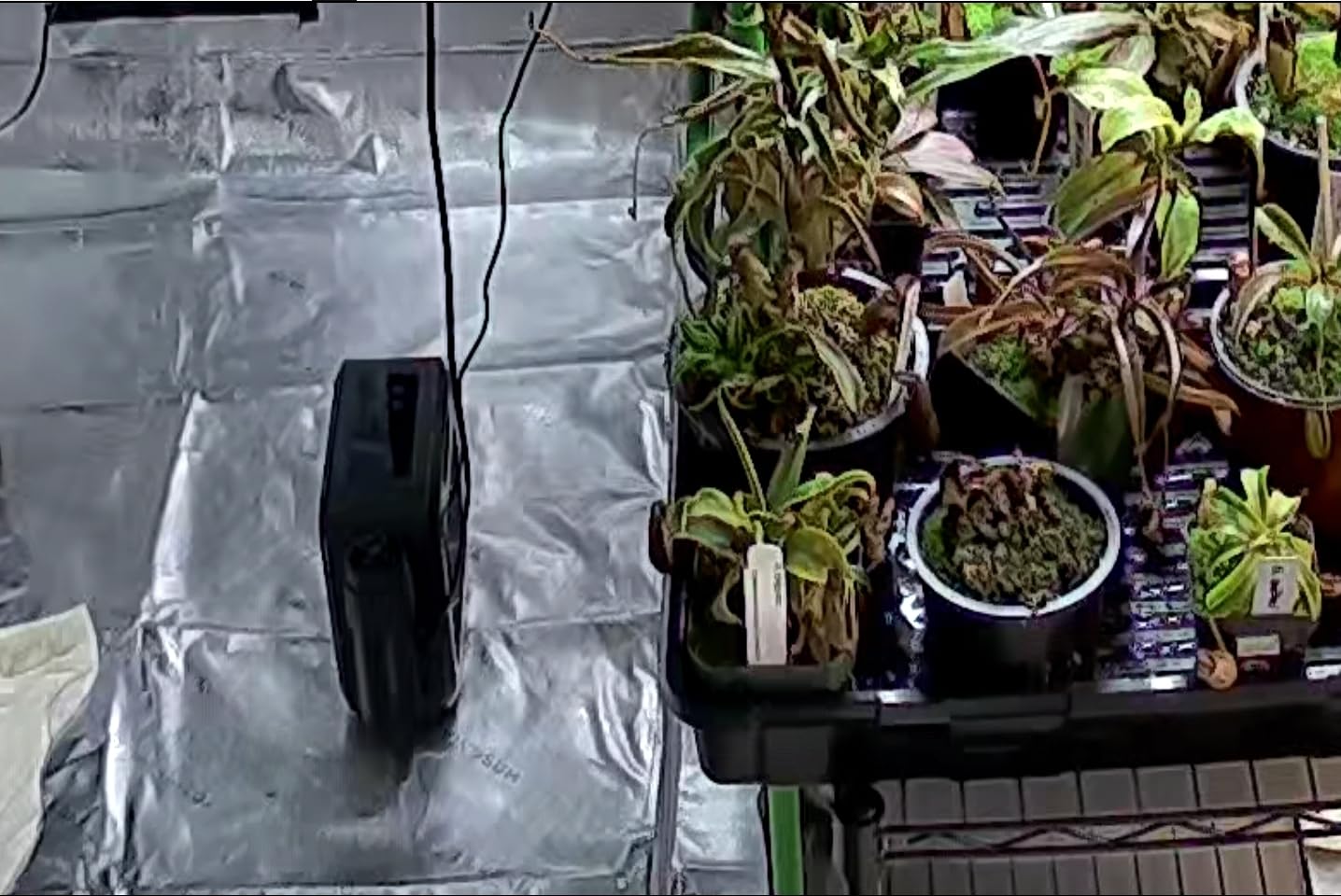
It can also be placed outside the tent with the hose fed inside, which keeps the warmest air away from your canopy and gives you back floor area in a small footprint.
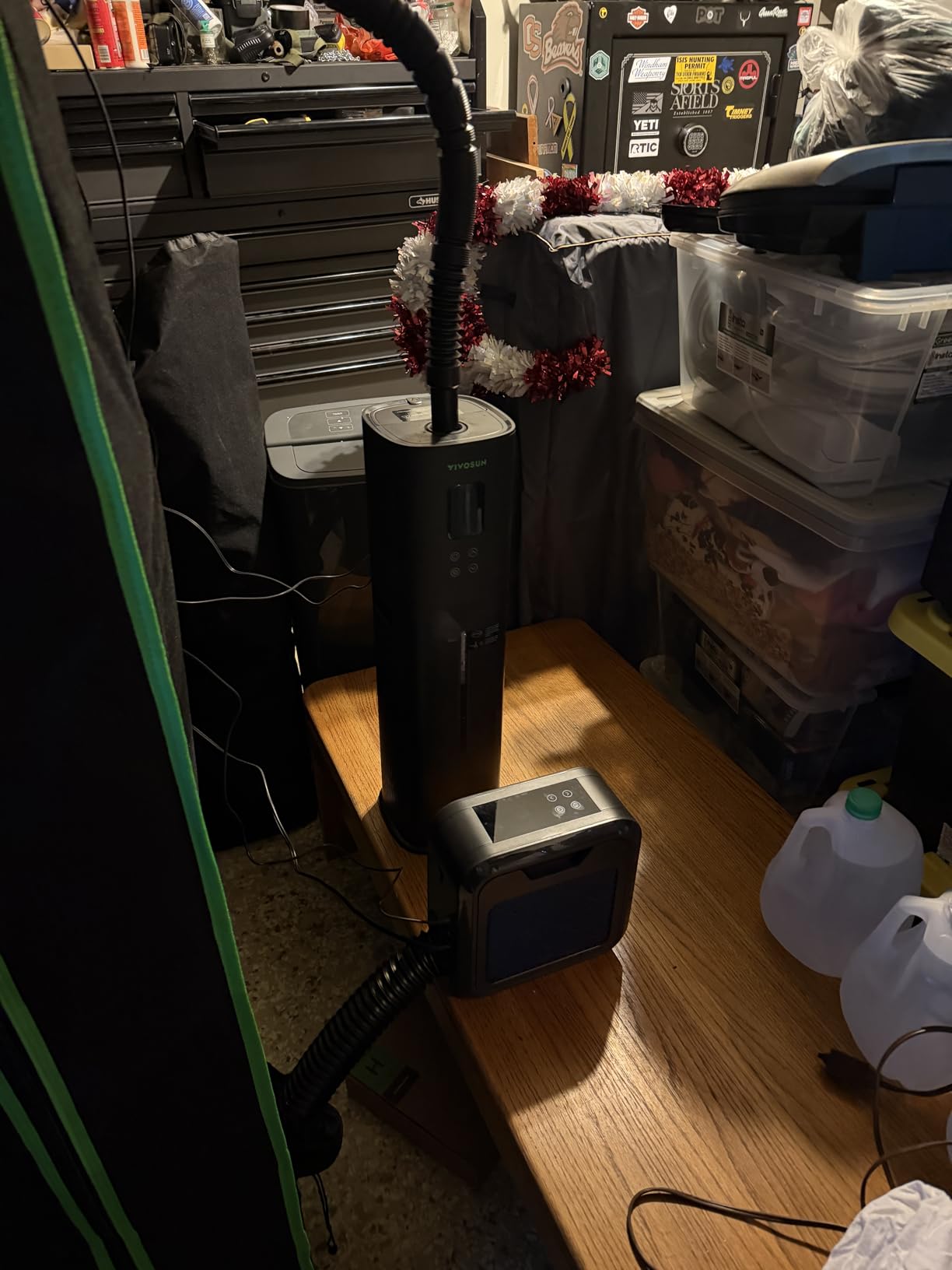
The safety package is thorough for the category. It uses V0 flame-retardant materials, adds tip-over protection, and cuts out on overheat, which is the combination you want in a reflective tent with high humidity.
My complaints are consistent with what other owners say. Wi-Fi sync is the fiddly part of setup, and once paired it stays paired, so budget an evening for it. The fan is the noisiest in this test group, which matters if your tent sits in a living space.
The housing also feels thinner than the metal units here, and several owners questioned the build relative to what they paid. None reported a functional failure.
What makes the AeroFlux different
700W is the highest output among the smart tent heaters we tested, and it makes a visible difference in a cold tent overnight.
Day/night Recipe programming directly targets the temperature crash growers complain about most.
It can live outside the tent with only the hose inside, which solves both floor space and leaf-burn worries.
Where you will feel the trade-offs
The fan noise is real, and it is the first thing you notice if the tent is anywhere near a bedroom.
Wi-Fi pairing takes patience, so do it before the first cold snap rather than during one.
The build quality does not feel like a premium metal unit, so handle it carefully when moving it.
6. Spider Farmer 530W PTC Heater – Best for Dark-Cycle Growers
Spider Farmer Heater,530W 10-Level PTC Heating for Grow Tent,Plant Room
530W PTC with 10 levels
Dead-zone temperature control
160cm adjustable hose
Panel auto-darkens after 30 seconds
Pros
- Dead-band control avoids constant on/off cycling that stresses plants
- Ten adjustable levels for heat and fan speed
- Long 160cm hose prevents hot air blowing onto plants
- Panel lights shut off after 30 seconds for full dark cycles
- Hardware thermostat plus overtemperature protection
Cons
- 530W limits it to small tents and plant rooms
- Dead-zone design is less precise than continuous sensor control
The defining feature here is the dead-band temperature control, which uses three built-in dead zones with the setpoint minus 3F to turn on and the setpoint plus 3F to turn off. In practice that means the heater holds a stable temperature band instead of thrashing on and off all night, and it is the reason growers like it report steadier plants.
The second feature is quietly brilliant for flowering photoperiods. The panel auto-off after 30 seconds of inactivity means the display goes dark on its own, so you are not accidentally leaking light into a tent during the night cycle.
The 160cm adjustable hose lets you aim warm air across the tent rather than blowing it directly at plants, which is the simplest protection against leaf burn I found in this roundup.
It also runs at 3 amps on 110 volts, the lowest draw here, so it will not fight you for a circuit alongside lights and fans.
Four modes cover the common cases: Normal Open, Temperature All-day, Temperature Daytime, and Temperature Night. The night mode pairs neatly with a lights-off schedule, letting you run a warmer setpoint once the lights cut out.
There is a 24-hour countdown timer as well, and a custom temperature sensor that automatically adjusts heating and ventilation rather than just switching the element.
The limit is the 530W figure again. This is a 2×2 or 2×4 heater, and in a cold basement it will lose the fight against a large tent no matter how good its control is.
Why dark-cycle growers like it
The auto-darkening panel removes the most common accidental light leak caused by a heater controller.
Day and night temperature modes let you program the lights-off crash away rather than reacting to it manually.
The dead band holds a steady temperature band instead of cycling the element continuously.
Where it runs out of capacity
530W is fine in a small tent and inadequate in anything larger or genuinely cold.
A dead zone is coarser than continuous sensor feedback, so it holds a band rather than an exact number.
It heats air, so a setup needing direct radiant warmth at the canopy needs something else.
7. RuoKid 1500W Greenhouse Heater – Best for Fast Warm-Up
Greenhouse Heater with Thermostat, 1500W Electric Heater Auto Temperature Control Kit Digital Display, Fast Heating, Overheat Protection, for Grow Tent, Greenhouse, Flower Room, Winter Plants, Patio
1500W forced air
Up to 120 sq ft coverage
Digital display thermostat
Dual heating and fan mode
Pros
- Digital display thermostat cycles the heater automatically
- 1500W heats spaces up to 120 sq ft quickly
- Dual-mode heating and fan-only circulation for year-round use
- Tip-over protection and automatic shutoff
- Carry handle makes moving it between spaces easy
Cons
- Thermostat is a separate add-on rather than integrated
- Modest review base limits long-term reliability evidence
This is a straightforward 1500W forced air heater with a digital thermostat, and it covers up to 120 square feet. Early buyers report quick warm-up and straightforward control, which is exactly what you want when the temperature is already dropping.
The thermostat cycles the heater automatically rather than requiring manual on/off switching, and the display keeps the target visible. In a grow tent that matters, because the difference between 68F and 62F overnight is the difference between a crop finishing and a crop stalling.
Dual-mode operation means it doubles as a fan for summer ventilation, and it carries a handle so you can move it between a greenhouse, a patio, and a flower room as the season changes.
Tip-over protection and automatic shutoff are both present, which covers the two failure modes we care most about inside an enclosed tent.
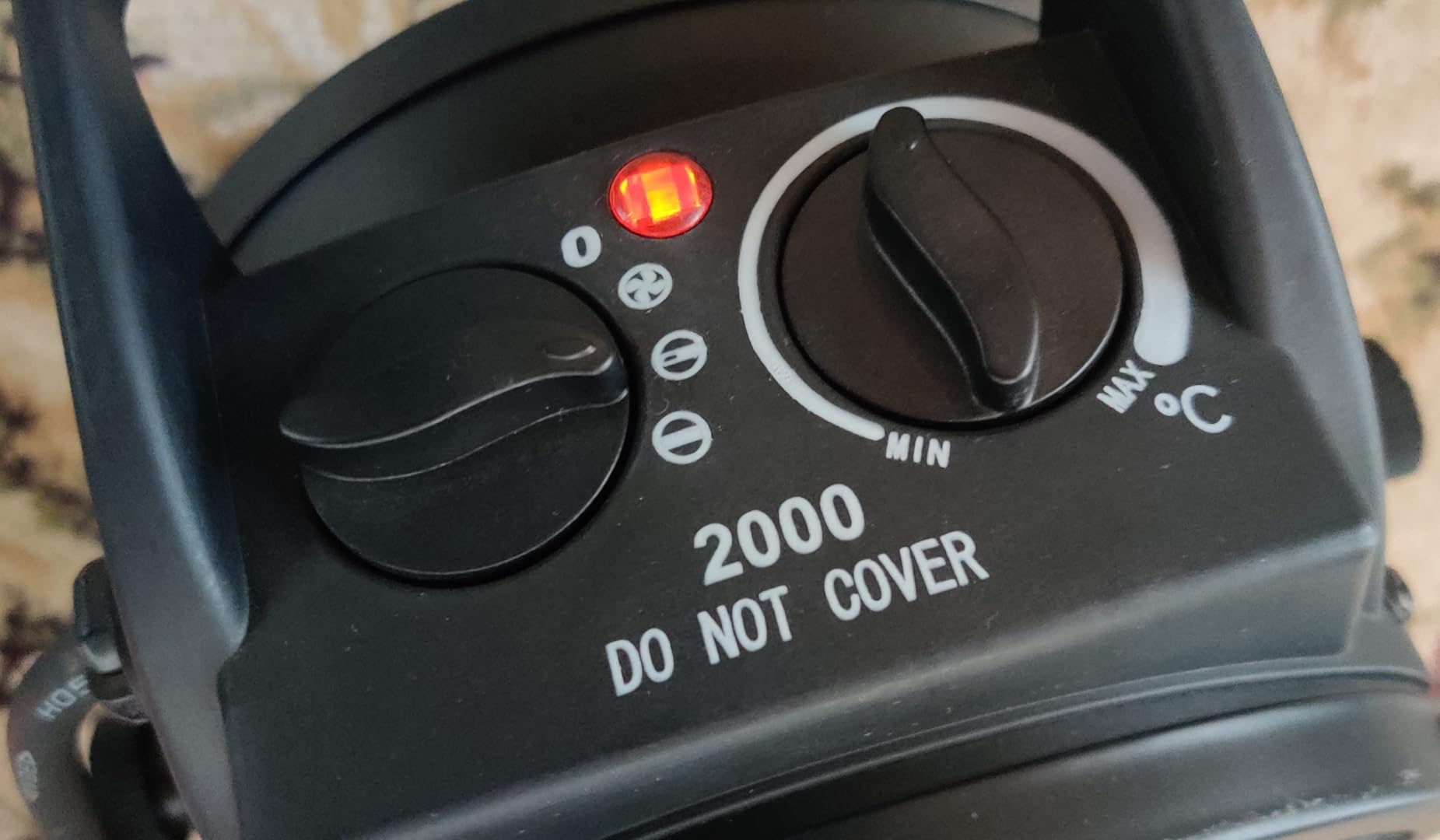
Two things held me back from ranking it higher. The thermostat is a separate add-on component rather than integrated into the body, so you have more to wire up and one more thing that can sit badly on the floor of a tent.
More significantly, the review base is small, which means we have limited evidence about how it holds up across a full multi-month winter duty cycle. That is not a dealbreaker, but it is a real gap when the alternatives come with thousands of owner reports.
Forced air at 1500W will also move moisture around the tent faster than a radiant unit, so plan on pairing it with a humidifier if your relative humidity is already on the low side.
What works well here
1500W of output in a compact body covers a typical small-to-medium tent overnight.
Automatic thermostat cycling removes the manual switching that causes cold swings.
Twin heating and fan modes mean one device covers the whole year.
What to weigh before buying
The separate thermostat adds a component inside an already tight tent footprint.
A small review base means less long-term durability data than the market leaders offer.
Forced air dries the tent faster than radiant heat, so humidity control is on you.
8. Rui Cheng 1500W Digital Thermostat Heater – Best Metal-Built Option
Greenhouse Heater with Digital Thermostat 1500W Grow Tent Heater (Red)
1500W with 1500W, 750W and 20W modes
Digital thermostat 40F-108F
Stainless steel shell, up to 215 sq ft
Pros
- Digital thermostat cycles automatically instead of manual switching
- 1500W delivers more heat than expected for the size
- Three power modes including a low 20W setting for mild evenings
- Stainless steel housing feels far more durable than plastic heaters
- Stable base resists tipping
Cons
- Some manuals state it is not intended for humid greenhouse spaces
- Controller sensor appears to be a seedling mat soil probe
- Only suited to supplementing heat in small to medium spaces
The stainless steel housing with anti-corrosion treatment is the reason to pick this one. Grow tents are humid by design, and metal cases tolerate that far longer than the lightweight plastic shells that dominate cheaper heaters.
It also covers more area than most at this output, with an effective heating area up to 215 square feet. Owners running small greenhouses and animal shelters report strong heat for the size and a thermostat that cycles properly.
The three power settings are unusual and useful. Alongside high at 1500W and medium at 750W, there is a low 20W setting, and that trickle mode is exactly what you want on a mild evening or during the shoulder hours around dawn.
The digital thermostat is adjustable from 40F to 108F and cycles the heater automatically instead of leaving you to switch it by hand each night.
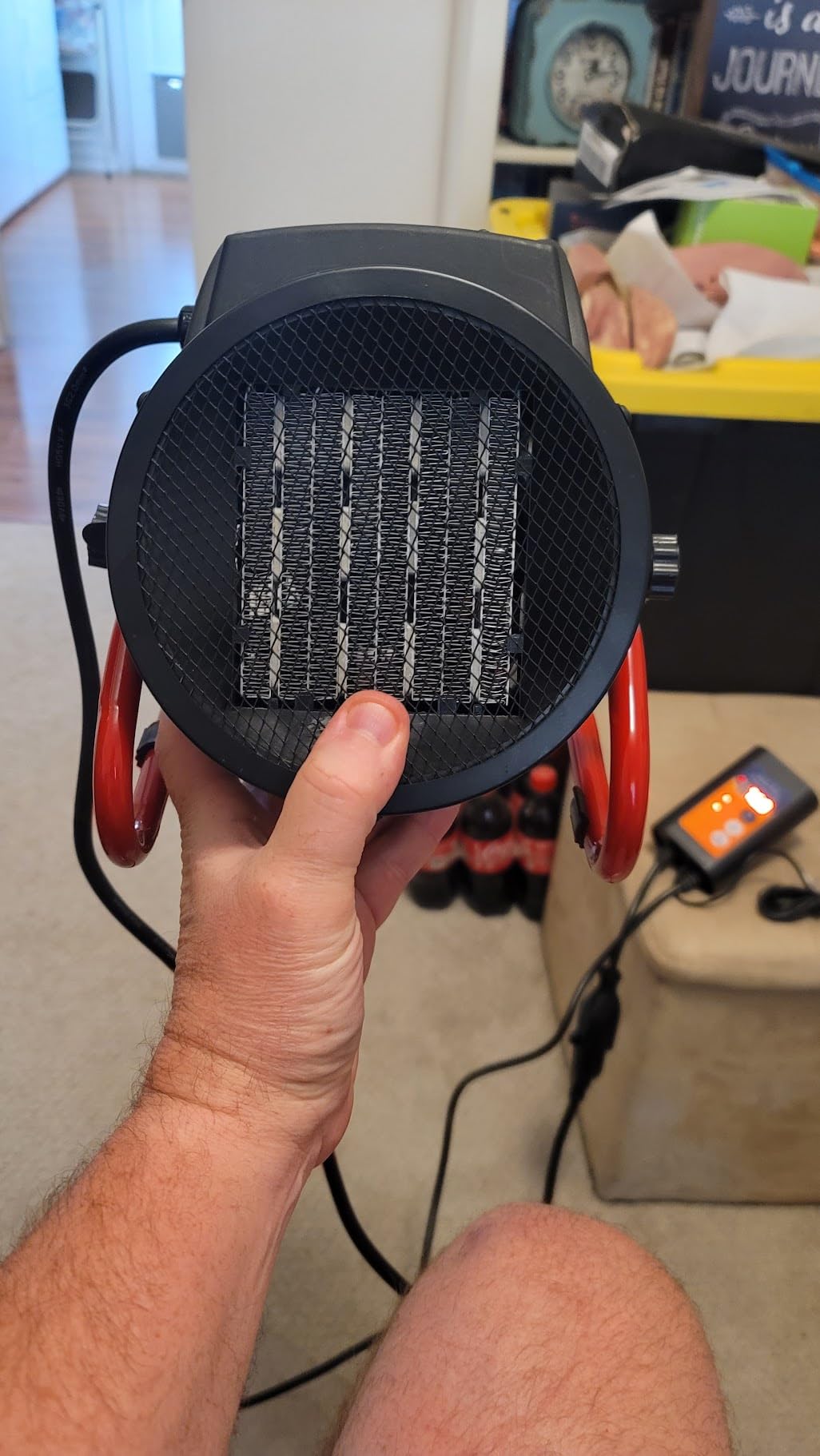
Built-in overheat protection and a stable base make it practical in a tent where you need to move around it.
There is a fair question raised in reviews about the controller sensor, which appears to be a seedling mat soil-temperature probe. That is worth knowing if you want to place the sensor in soil or expect very high humidity near the controller.
Some manuals also state the unit is not intended for humid greenhouse spaces, so read the documentation before you commit. Treat it as a tent heater rather than a greenhouse specialist.
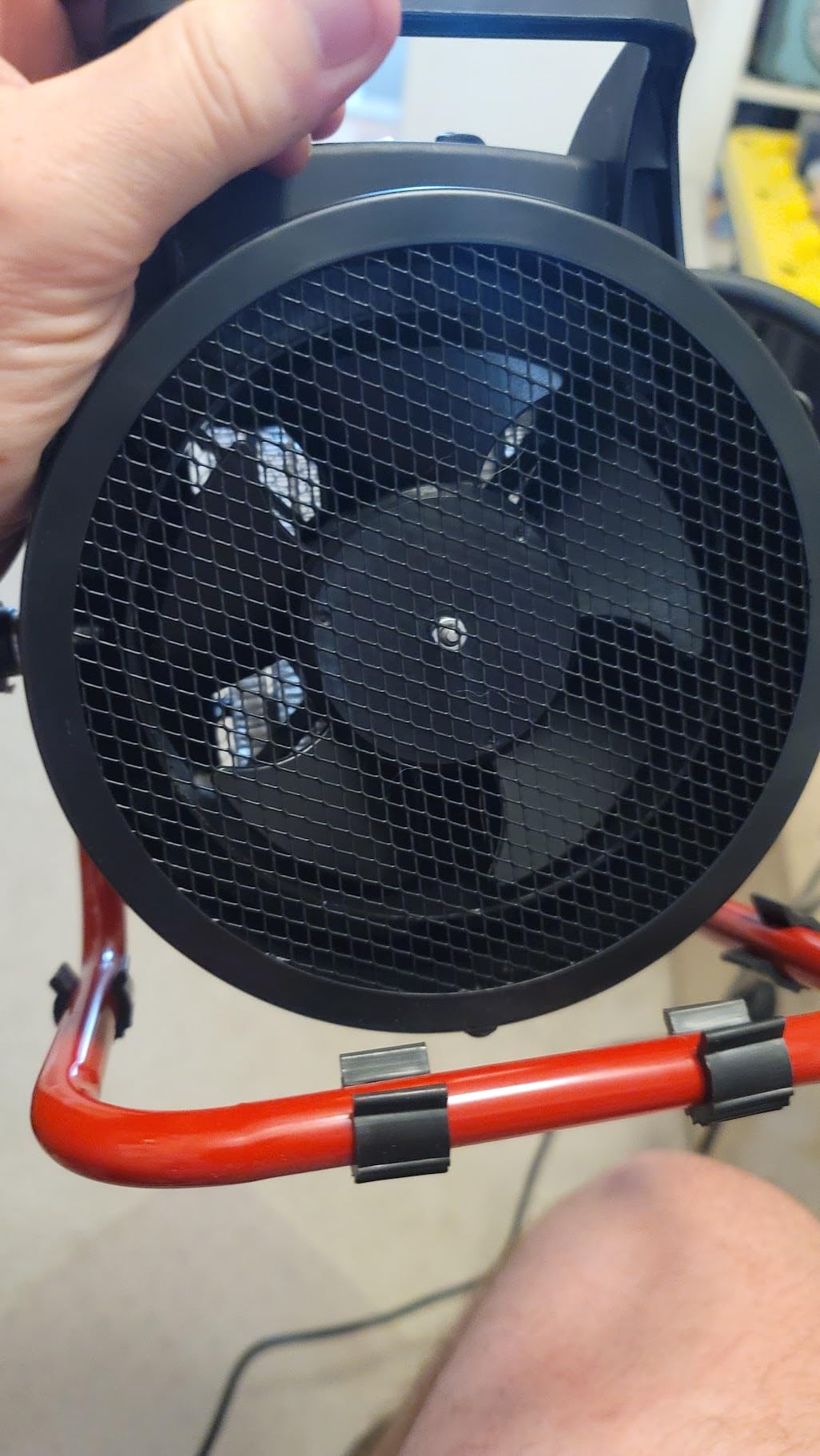
Reasons to pick the stainless model
The metal housing is the most durable choice here and suits a humid tent better than plastic shells.
The 20W low mode gives you cheap trickle heat on mild nights instead of full output.
Coverage up to 215 square feet makes it the widest reach in this roundup at 1500W.
Reasons to look elsewhere
The controller sensor looks like a seedling mat probe, which raises questions in a high-humidity tent.
Manufacturer documentation is not enthusiastic about greenhouse humidity, so check the manual first.
At this output it is best treated as supplementary heat in a small to medium space rather than the sole heat source for a large tent.
9. Air Choice 1500W PTC Heater – Best for Patios and Hardy Plants
Air Choice Greenhouse Heater, 1500W Outdoor Space Heater, Overheat Protection, 3S Quick Heat, 3 Modes, 90° Tilt, Small Outdoor Heater for Patio, Grow Tent, Tabletop, Garage & Indoor Use
1500W PTC ceramic
Three modes including fan only
90 degree adjustable tilt
ETL certified with overheat protection
Pros
- Heats up within seconds of switching on
- Three modes including a fan-only setting for mild weather
- ETL certified with overheat and tip-over auto shutoff
- 90 degree tilt lets you aim heat at a specific area
- Very light at 3.3 lb with a 71 inch cord
- Kept a lime tree alive through a multi-day freeze
Cons
- Radiates heat more than it blows it so warm air does not travel far
- Some users report minimal heat output and weak fan throw
PTC ceramic with a 3-second heat-up and three modes makes this a genuinely fast unit to respond. For a hard plant on a patio or in a small unheated tent, speed matters more than a long duty cycle.
ETL certification with thermostat-controlled overheat protection and tip-over auto shutoff covers the safety basics properly, and the 90 degree tilt head lets you point heat at a specific corner or at a group of plants.
At 3.3 pounds with a 71-inch cord, it is the easiest unit here to reposition. One owner kept a lime tree and root vegetables alive through a multi-day freeze with it.
Coverage is listed at 150 square feet, which makes it a reasonable fit for a 2×4 tent or a small greenhouse corner.

The consistent complaint is airflow. This unit radiates heat more than it forces air, and several buyers report minimal fan throw. That is not a flaw for outdoor use where you want warmth landing on the plant, but in a tent you need circulation to move that heat to the far corner.
Pair it with a small circulation fan and the problem mostly disappears. Owners using it as a spot heater alongside tent airflow report good results.
A few buyers also reported heat output lower than expected, so if your tent is larger than 2×4, this is not the unit to rely on alone.
Where this one shines
The 90 degree tilt lets you aim radiant heat at a specific plant instead of heating the whole tent.
ETL certification and both overheat and tip-over shutoff are the safety combination you want outdoors.
Weight and cord length make it the most portable option in the roundup.
Where it struggles
Weak fan throw means warm air does not circulate to the far side of a tent.
Some owners report lower heat output than the 1500W rating suggests in real use.
It is a spot heater, so a larger tent needs a second source or a different unit.
10. Kiroto 1500W App Greenhouse Heater – Best for Phone-Controlled Heating
Greenhouse Heater 1500W with APP Remote Control, Greenhouse Heater With Thermostat, Portable Outdoor Heater for Plants Vegetables Flowers,Smart Electric Safe Heater for Green house,Grow Tents,Garage
1500W convection
150 sq ft coverage
Smart Life app with remote control
70 degree swing oscillation
Pros
- Thermostat integrated in the unit body with no separate probe cable
- App remote control with real-time temperature readouts
- 70 degree swing distributes heat across a wider area
- Kept an 8x6 ft greenhouse above freezing during an arctic cold snap
- Built-in temperature display is easy to read and set
Cons
- App requires a paid subscription for full utility
- Some units shut off randomly and disconnect until unplugged
- Minimum app setpoint is 41F rather than the advertised low range
The all-in-one thermostat design is what sets this apart. Because the sensor sits in the unit body rather than on a probe cable, there is nothing extra to route through a tent zip and nothing to trip over. That simplicity is worth something in a 2×4.
Smart Life app connectivity gives remote control and real-time temperature readings, plus high and low temperature alert notifications by SMS. Set a low alert and you find out your tent dropped below range before you walk downstairs to check.
The 70 degree swing oscillation spreads heat across a wider area than a fixed-head unit, which partly compensates for the coverage figure of 150 square feet. One owner kept an 8×6 ft greenhouse above freezing during an arctic cold snap.
Safety credentials are solid on paper: UL and FCC compliant certification, automatic shutoff at 65C, and tip-over power cut after 10 seconds.
Two app realities are worth flagging. Full utility requires a paid subscription, and some units shut off randomly and disconnect from the app until they are unplugged. Neither is unusual for app-driven gear, but both matter if you are relying on remote alerts.
Also note the minimum setpoint in the app range is 41F, not the low end of the advertised range. If you are trying to protect a tent against deep cold with an early warning, that floor is a limitation.
Weak Wi-Fi signal can prevent schedule control from working at all, so test the connection where the tent actually sits before you commit.
Why the Kiroto works for phone control
The thermostat is built into the body, so there is no probe cable to route through the tent.
SMS alerts for high and low temperature give you warning without opening an app.
Swing oscillation spreads heat further than a fixed head inside a small tent.
Where the app experience frustrates people
A paid subscription for full utility is the most common complaint from owners.
Random shutdowns and app disconnects have been reported by several buyers.
A single 1500W unit may not hold temperature in a large greenhouse in severe cold, so size it honestly.
How to Keep Your Grow Tent Warm All Winter?
Heater choice is only one part of it. Six weeks of testing in a cold room taught us that most temperature problems come from the tent, not the heater.
Insulate the tent, not just the room. A layer of foam board or reflective foil behind the tent walls cuts heat loss far more than a bigger heater can replace. Growers running tents in basements report the single biggest gain came from sealing the ducting and lining the frame.
Seal the duct openings. Unfiltered intake and exhaust ports are the biggest leaks in most tents. Insulated ducting sleeves reduce the cold air exchange that keeps a heater running flat out.
Add a thermal mass buffer. A bucket of water inside the tent absorbs heat during the lit period and releases it overnight, which softens the lights-off crash for free.
Run the heater on a night schedule. Set it to fire harder after lights-off and hold a lower output during the day, when the lights themselves add heat.
Watch VPD, not just temperature. A heater that dries the tent can stop a healthy plant from drinking. Pair it with a humidifier and a hygrometer.
Consider heating the room instead. For a small tent in a closed room, forum consensus favours warming the room and using a circulation fan to move the air into the tent.
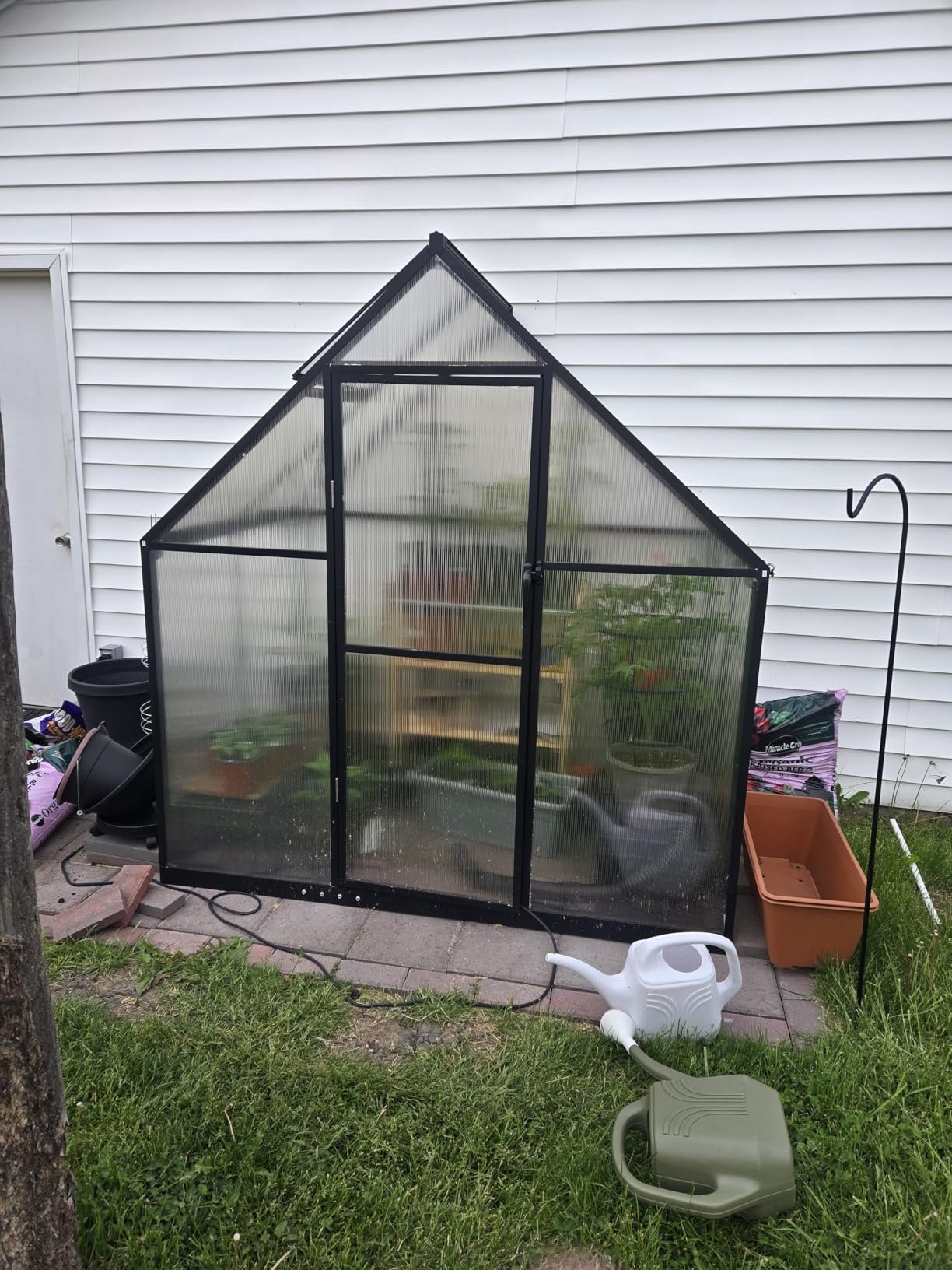
On the last point, one basement grower sitting at 50F solved the problem by heating the surrounding room rather than the tent directly and relying on LEDs and fans to carry the heat. That approach uses a single larger heater and often works out cheaper than a small tent heater fighting a cold room.
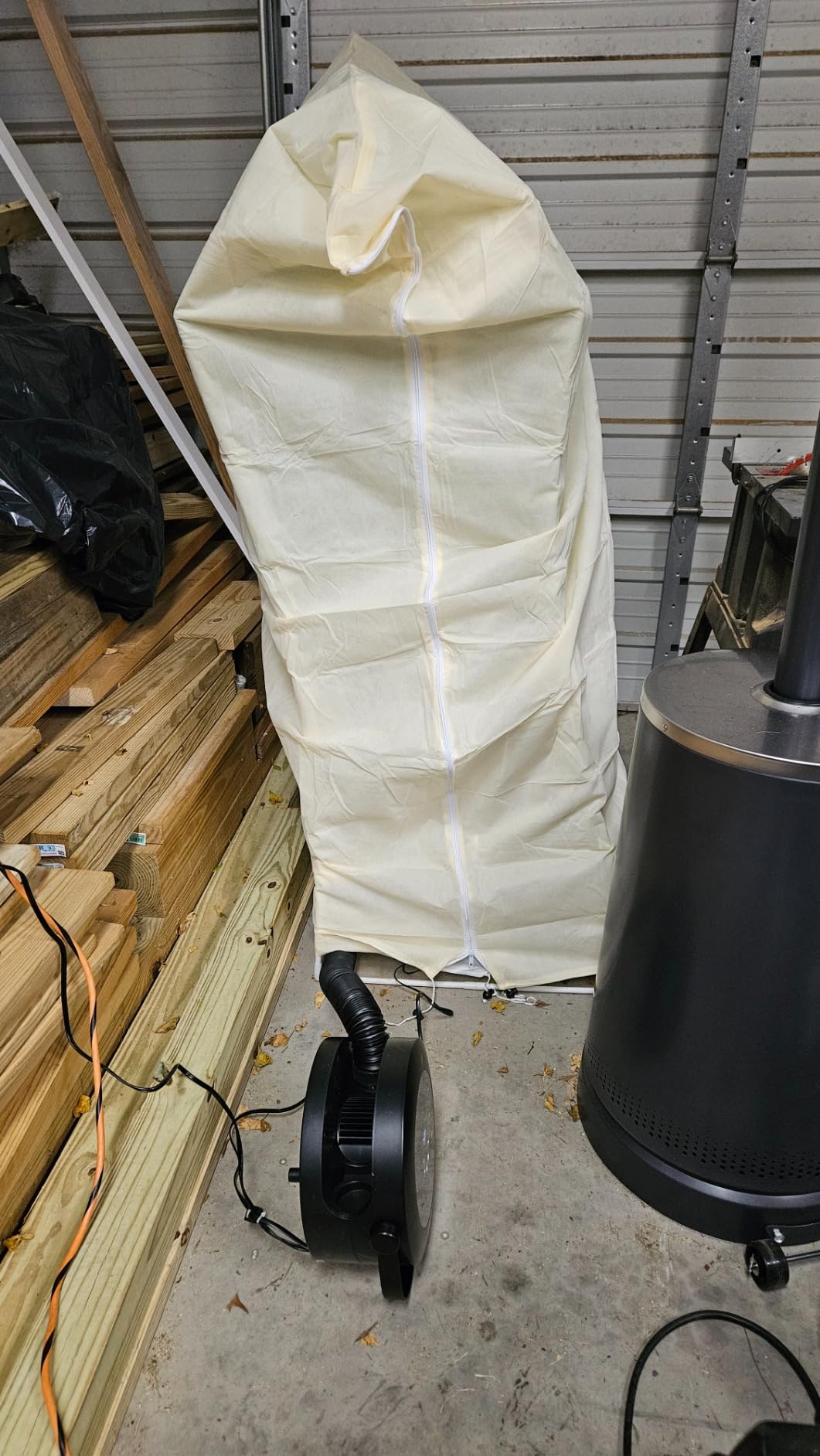
Does a tarp or cover over the tent help? Yes. A draped outer layer traps a layer of still air around the tent and reduces convective loss, which is why growers in cold garages cover their tents for the winter. Just make sure nothing rests against the heater or blocks its intake.
One practical note for anyone setting a tent up in an unheated space in the cold: staying warm during the install matters as much as the heater does. Our winter electric blanket roundup covers the cheapest way to make a two-hour wiring session bearable.
What Temperature Should Your Grow Tent Be in Winter?
Most growers target 65-77F during vegetative growth and 70-85F through flowering. Tomatoes, peppers, and cucurbites want the warmer end because they will not set fruit if nights stay cold.
The more useful number is the night floor. Below roughly 65F, growth slows sharply, seedlings stall, and photosynthesis drops off long before you see visible damage, so a tent that looks fine during the day can be quietly losing the crop overnight.
80F is not too hot for a grow tent. It is close to the top of the range that plants tolerate well, and above that you gain very little while pushing transpiration and humidity demands up. If your heater can overshoot to 80F on a mild night, add a humidifier rather than a second heater.
Seedlings are the exception. A seedling heat mat warms the root zone for germination and early growth, and many growers use one instead of air heat until plants are established. Once they have true leaves and are pushing canopy, they need air temperature control, which is where a tent heater takes over.
How to Choose a Grow Tent Heater
Start with wattage against tent size, because that is the one factor you cannot fix later. As a rough guide, a 2×2 tent works with 100-200W, a 2×4 with 200-300W, a 3×3 with 200-300W, a 4×4 with 300-400W for mild conditions and 1500W for real cold, and anything larger in an unheated space moves into the 1500W range on its own or needs two units.
The second factor is the thermostat, and forum advice treats a probe-based thermostat as close to non-negotiable. Any unit without one, including the budget picks here, needs an external controller before it belongs in a tent.
Third, look at humidity impact. Forced air and PTC units move room air across your plants and lower relative humidity, which raises VPD. Infrared radiant units add warmth with less air movement, and growers often prefer them for that reason. Whichever you pick, a humidifier is usually the missing half of the setup.
Then check safety features in this order: overheat auto cutoff, tip-over protection, a splash resistance rating of IPX4 or better for damp tents, and a certification mark such as ETL or UL. A cool-touch housing matters more than most listings suggest when the unit sits close to a canopy.
Control method is the last decision. A simple dial is enough if you add a controller. A digital thermostat is better. App control with day/night programming is what you want if your real problem is the lights-off temperature crash, because it lets you run a different setpoint in the dark without you awake at 2am.
On running costs, work it out before you buy. A 1500W heater drawing 1.5kW for 12 hours a day runs about 18kWh daily, so over a 30-day winter month that is roughly 540kWh. Multiply by your local rate. Lowering to a 750W element or a 20W trickle mode on mild nights is the fastest saving available, and both the Bio Green and Rui Cheng give you that option.
Whichever unit you choose, our winter heating gear roundup covers staying warm while you work in an unheated space during setup and maintenance.
Is It Safe to Run a Heater Inside a Grow Tent?
Yes, with the right unit and sensible placement. Growers run heaters inside tents every winter without incident, and the concerns people raise are real but manageable.
Mylar itself is not a fire risk under normal conditions. The bigger factors are airflow around the unit, water, and extension cords, and those are all things you control.
Keep clearance. Leave air around the heater on all sides and never place it directly against a canopy or against tent walls where heat cannot escape.
Keep water away. An IPX4 rating or better matters if a humidifier, reservoir, or irrigation line is anywhere near the unit.
Avoid extension cords. These heaters draw serious current. Plug them into a wall outlet on a circuit that is not already carrying lights and fans, and use a GFCI-protected outlet.
Do not aim hot air at foliage. Point the outlet at an intake duct or across the tent rather than down at leaves, and use the hose or tilt features to spread the air.
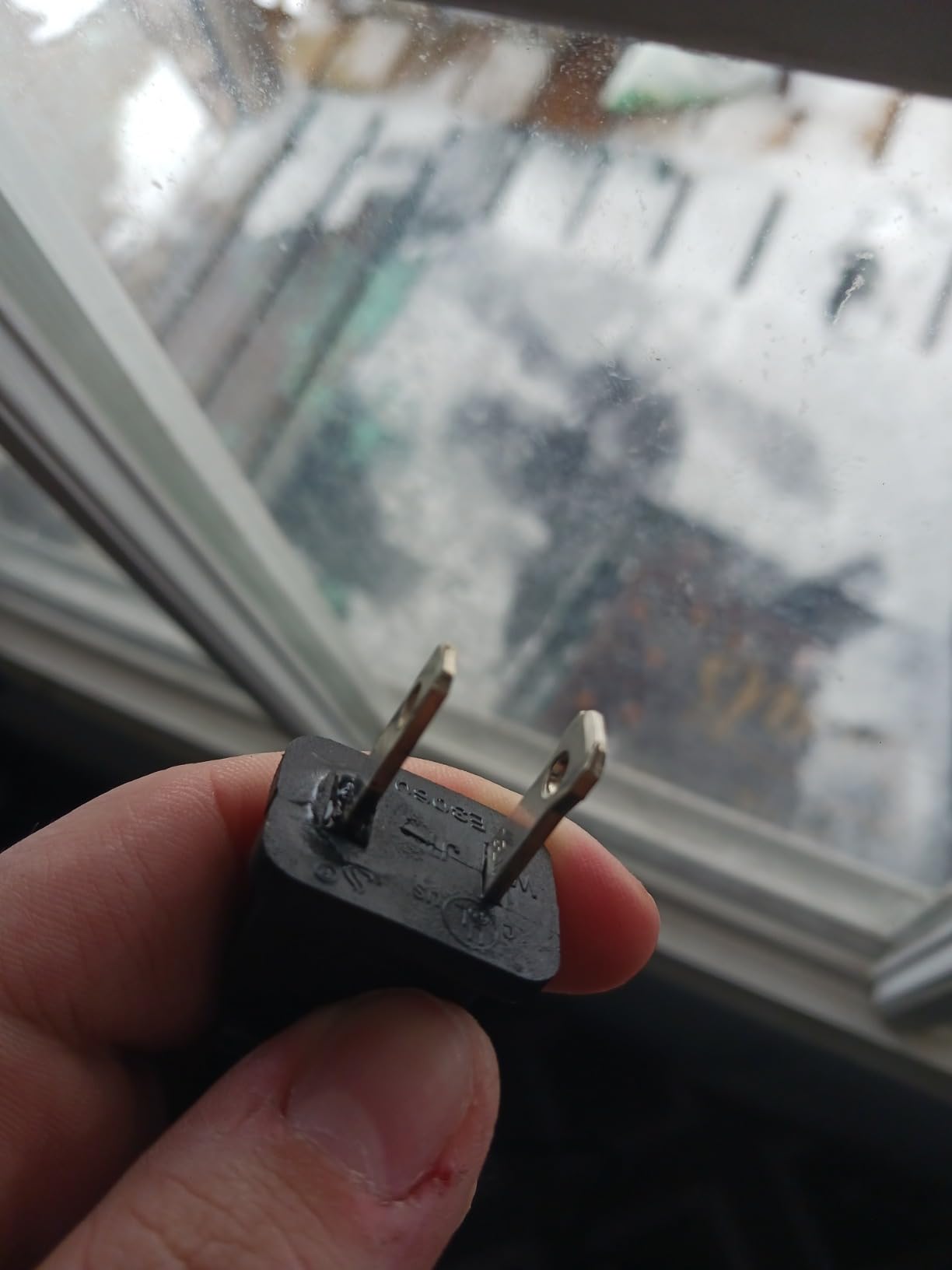
Check the cord and plug. Inspect them every few months in a humid environment, and unplug anything that discolours or smells hot.
If you are not comfortable managing a hot electrical element inside a humid reflective enclosure, heating the room and pushing air into the tent through a duct removes the risk entirely and works better than you would expect.
Frequently Asked Questions
What is the best heater for a grow tent?
The best heater for a grow tent is a thermostatically controlled electric unit with a temperature probe, overheat cutoff, and enough wattage for your tent. Small tents suit a 530W PTC unit with VPD control, while basements and garages need 1500W of forced air or radiant heat.
How can I keep my grow tent warm in the winter?
Insulate the tent walls and seal the duct ports first, since heat loss there outweighs heater size. Then add a thermal mass such as a water bucket, run the heater on a night schedule with a higher setpoint after lights-off, and pair it with a humidifier because heating drops humidity and raises VPD.
Are tube heaters worth it for grow tents?
Tube heaters are worth it in a tent that needs even background warmth without drying the air, because they heat gently and steadily rather than blasting forced air across plants. They are less useful when you need rapid warm-up or directional heat, where a PTC unit with a hose or tilt head works better.
Is 80 degrees too hot for a grow tent?
No. 80F sits near the top of the range plants tolerate well, and most growers run 65-77F during vegetative growth and 70-85F through flowering. Above that you gain little while pushing transpiration and humidity demands up, so add humidity control rather than another heater.
Do I need a humidifier with a grow tent heater?
Usually yes. Forced air and PTC heaters move room air across your plants and lower relative humidity, which raises VPD and can stop a healthy plant from drinking. A humidifier alongside a heater lets you hold both temperature and VPD in range at the same time.
What’s better, AC Infinity or VIVOSUN?
AC Infinity offers finer control, with VPD and temperature triggers, 10 PWM heat levels, and a sensor probe, but its 530W output suits small tents. VIVOSUN gives you more raw heat at 700W with 5 levels and app control including day/night recipes, which makes it the stronger choice for colder or mid-size tents.
Final Verdict
The Bio Green PALMA is our pick for the best grow tent heater for winter in 2026 because two selectable elements, a genuine digital thermostat, and a stainless body handle both a cold closet and a damp basement. For a small tent where automation matters more than raw heat, the AC Infinity THERMOFORGE T3 is the smarter buy, and the VEVOR covers first-year basics without a thermostat.
Insulate before you buy, pair whichever heater you choose with a humidifier, and set a separate night setpoint for the lights-off crash. That combination does more for a winter grow than any single device on this list.