
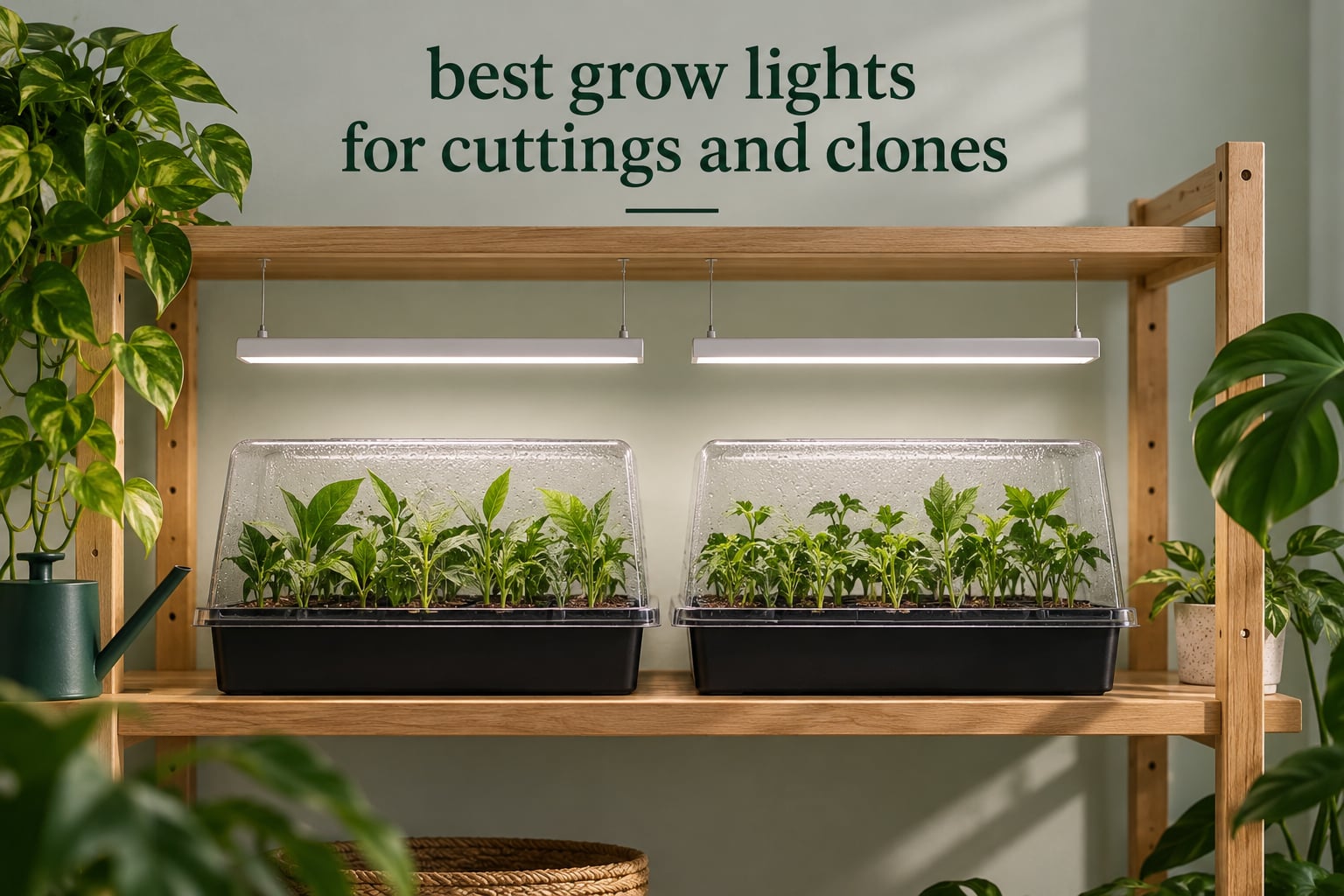
Quick answer: Cuttings and clones need roughly 100 to 300 PPFD (µmol/m²/s) of full-spectrum light, held 6 to 12 inches above the medium, on an 18-hour photoperiod. That is a fraction of what a flowering-stage fixture delivers, so the light you choose should be dimmable, low-heat, and easy to raise as the shoots stretch.
Cutting a plant in half is the cheapest way to make ten plants out of one, and it is also the easiest way to lose all ten in a week. A fresh cutting has no roots, no spare water, and a leaf that is still photosynthesizing. Light is what keeps that leaf producing enough energy to push new roots before the plant runs out of reserves.
We spent weeks setting up propagation shelves with the twelve fixtures below, hanging them over 10×20 trays and domed propagators, and watching what happened as the cuttings callused and rooted. This guide covers the best grow lights for cuttings and clones, the numbers that actually matter, and the mistakes that cook a tray.
One note before we start. Almost everything marketed as a grow light says “full spectrum,” which tells you very little on its own. The only useful figure on a spec sheet is PPFD at the canopy, and most of the lights in this roundup do not publish one. Where a manufacturer states it, we use it. Where they do not, we tell you so.
Table of Contents
Top 3 Picks for Cuttings and Clones (October 2026)

Barrina T5 5000K 4-Pack
- 5000K natural white full spectrum
- Individually switchable fixtures
- Link up to 16 in series

AC Infinity Dome with LED Bars
- Domed kit holds up to 40 seedlings
- Samsung LM301H EVO diodes
- Adjustable height and vents

Litever 36W 4-Strip Kit
- Waterproof sealed strips
- External timer doubles as dimmer
- 4500 lumens total
The Barrina bars won the most votes from our group because they run cool, read as normal white light, and you can wire four of them over a single tray without a second outlet. The AC Infinity kit is the only true all-in-one chamber here, with a dome, trays, and dimmable bars that you do not have to assemble yourself.
The Litever kit takes the value slot because the sealed strips tolerate condensation and the included timer doubles as a dimmer, which is exactly the combination a propagation shelf needs.
Best Grow Lights for Cuttings and Clones in 2026
| Product | Specifications | Action |
|---|---|---|
| Barrina T5 5000K 4-Pack |
|
Check Latest Price |
| AC Infinity Humidity Dome Kit |
|
Check Latest Price |
| Litever 36W 4-Strip Kit |
|
Check Latest Price |
 Garpsen 2-Head Clip Light Garpsen 2-Head Clip Light |
|
Check Latest Price |
 SDOVUERC 16 Inch 6-Bar Set SDOVUERC 16 Inch 6-Bar Set |
|
Check Latest Price |
 Wiaxulay 16 Inch 15W Strip Wiaxulay 16 Inch 15W Strip |
|
Check Latest Price |
 RWNTAO 8.6 Inch Mini Strips RWNTAO 8.6 Inch Mini Strips |
|
Check Latest Price |
 iGrowtek 2ft Light with Stand iGrowtek 2ft Light with Stand |
|
Check Latest Price |
 Bokeedo T5 Two-Tube Fixture Bokeedo T5 Two-Tube Fixture |
|
Check Latest Price |
 Wolezek 2FT T5 with Stand Wolezek 2FT T5 with Stand |
|
Check Latest Price |
 APICDOM 2FT Linkable Light APICDOM 2FT Linkable Light |
|
Check Latest Price |
 DYMOND BoostGro 2FT Fixture DYMOND BoostGro 2FT Fixture |
|
Check Latest Price |
The products below are grouped by what you are actually building: a domed clone box, a wire propagation shelf, or a single tray on a windowsill. Every wattage and lumen figure here comes from the manufacturer’s own listing.
1. Barrina T5 5000K 1-Foot 4-Pack – the natural white default
Barrina T5 Grow Lights for Indoor Plants, 5000K Full Spectrum, 1FT, 4 Packs
5000K white
96 LEDs, 20W
12.6 by 4.14 inch bars
2-year warranty
Pros
- Runs cool enough to sit close to the medium
- 5000K reads as ordinary white light not purple
- Each bar has its own on/off switch
- Linkable up to 16 fixtures
- Includes tape
- clips and cable ties
Cons
- No built-in timer so a wall timer or smart plug is needed
- Short power cords on some setups
These are the bars we kept coming back to. Four 12.6 inch strips, each with 96 LEDs, running 20W total across the set. We hung two over a 10×20 tray at about 8 inches and the cuttings held color without any bleaching through the whole rooting window.
What sold us is the color. At 5000K the light looks like an office fixture, not a grow tent, which matters if the shelf lives in a room people walk through. Houseplant growers on r/houseplants point to Barrina bars again and again as the value option in that category, and the 7068 reviews here back that up.
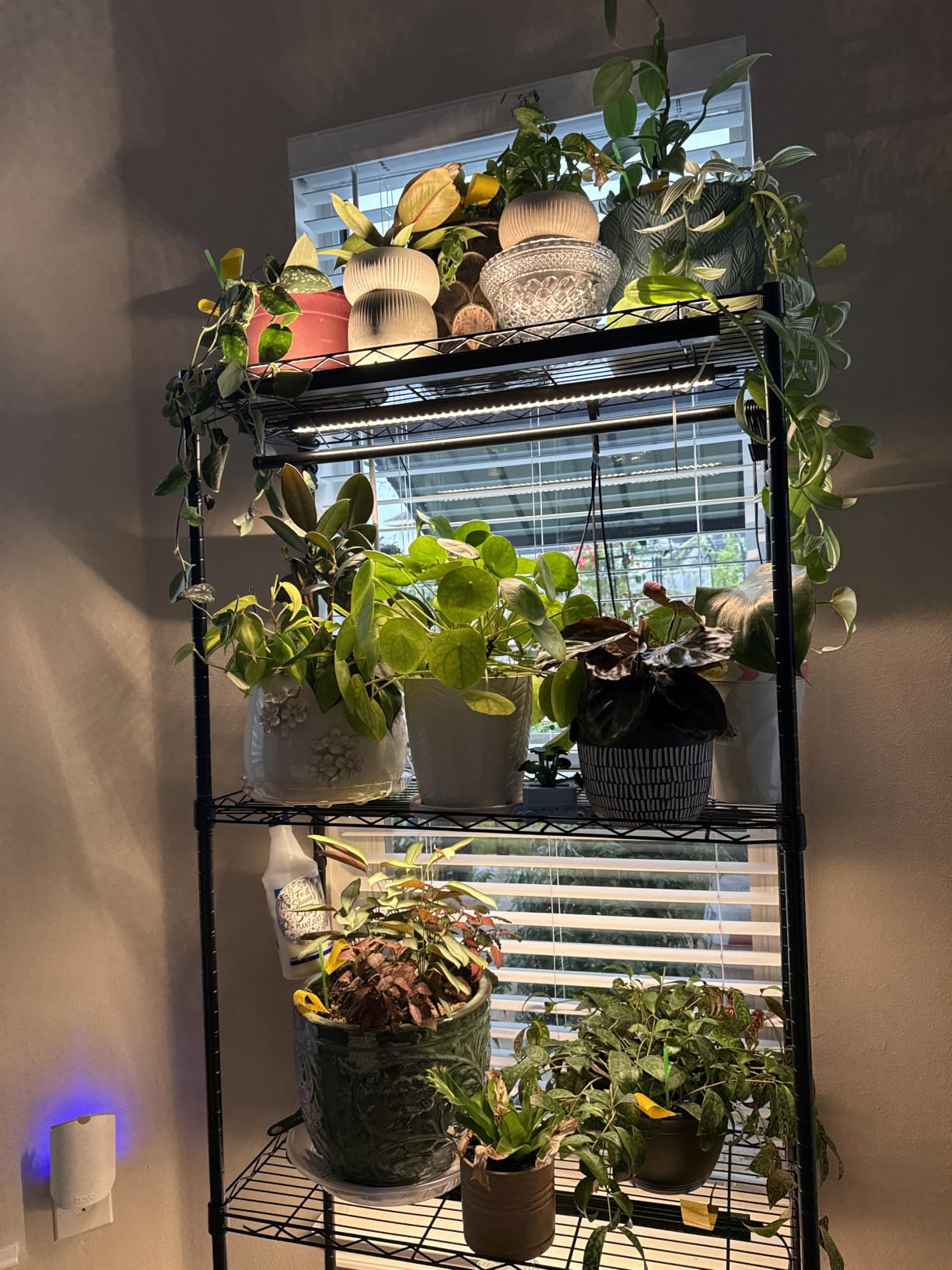
The individual on/off switch on each bar is more useful than it sounds. Once a tray has rooted, you can shut off the two outer bars and keep the center pair running while the new growth hardens off. The linking design also means four bars over one tray and two bars over a second tray can share a single schedule.
Mounting is where budget fixtures usually frustrate people, and this kit ships with double-sided tape, clips, and cable ties. We mounted ours under a wire shelf with the clips, which is the setup most people will actually use. The bars themselves are aluminum and polycarbonate, and they weigh almost nothing to lift when you need to raise them.
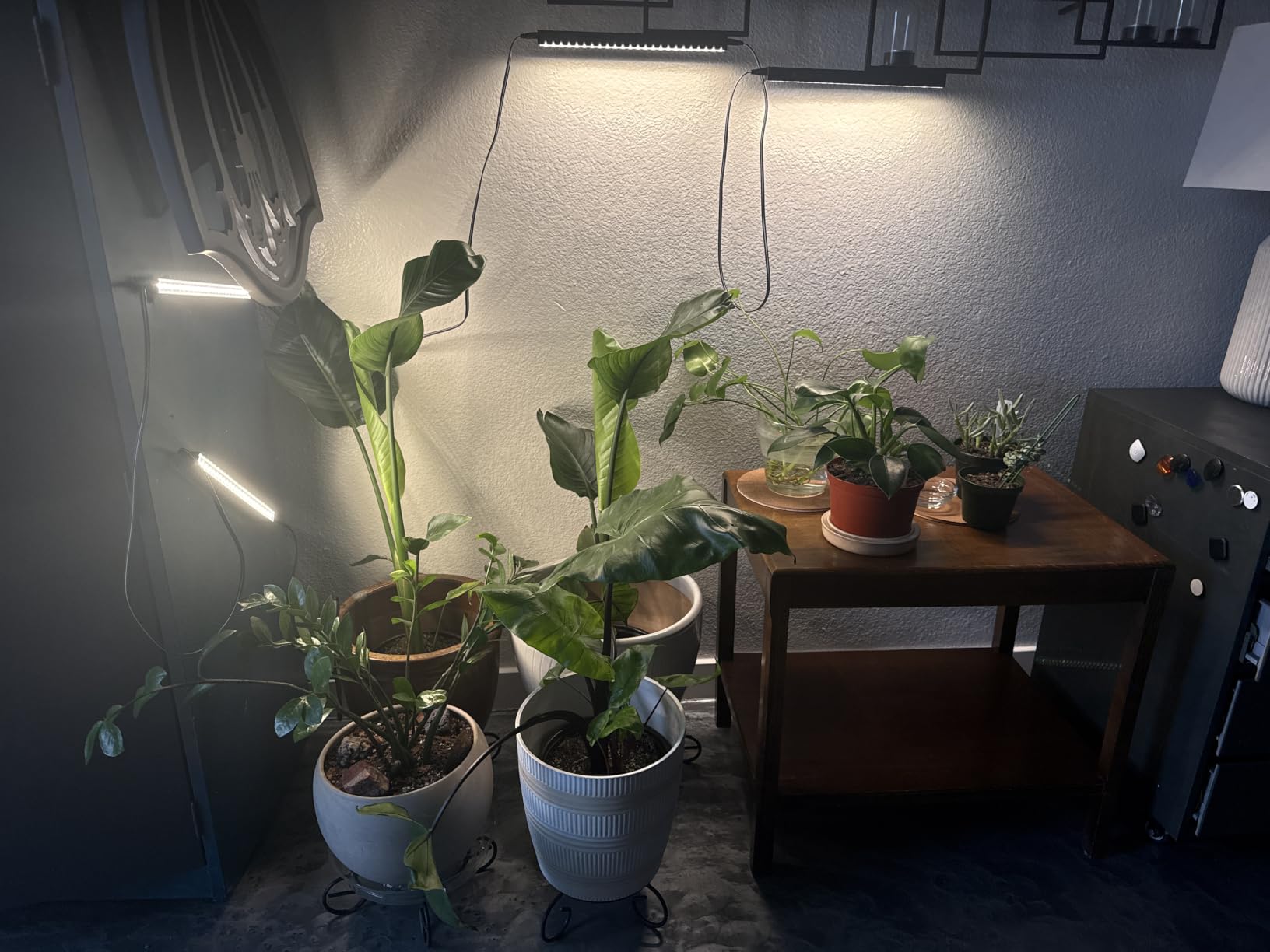
What to check before you buy
There is no timer in the box. If your propagation shelf does not already have a wall timer or a smart plug, buy one before you start, because a missed photoperiod on day three is a setback you cannot fix later.
Coverage is the other thing to check. Each bar is a little over 12 inches long, so two side by side cover a 10×20 tray cleanly. A single 20×20 tray would want all four, and anything bigger means a second set.
Where it falls short
The listed wattage is 5W per fixture in the product details, with the technical section describing 20W consumption across the set. That inconsistency is normal for this category, but it means the output figure is less precise than a published PPFD number would be.
There is also no dimming. You control intensity by raising and lowering the bars, which works fine on an adjustable shelf but is fiddly if you want to run a tray at a specific level next to a seed tray that wants more light.
2. AC Infinity Humidity Dome with LED Bars – the complete clone box
AC Infinity Heavy-Duty Humidity Dome with Full Spectrum LED Grow Light Bars
Holds up to 40 seedlings
3mm clear PET dome
Samsung LM301H EVO bars
Pros
- Dome
- trays
- and light arrive as one kit
- 3mm dome penetrates light well
- Remote control for intensity and timing
- Vents and height extension panels
- Stands tall enough for 8 inch plants
Cons
- LED strip runs warm at maximum brightness
- Controller programming takes practice
- Occasional broken vent clips on arrival
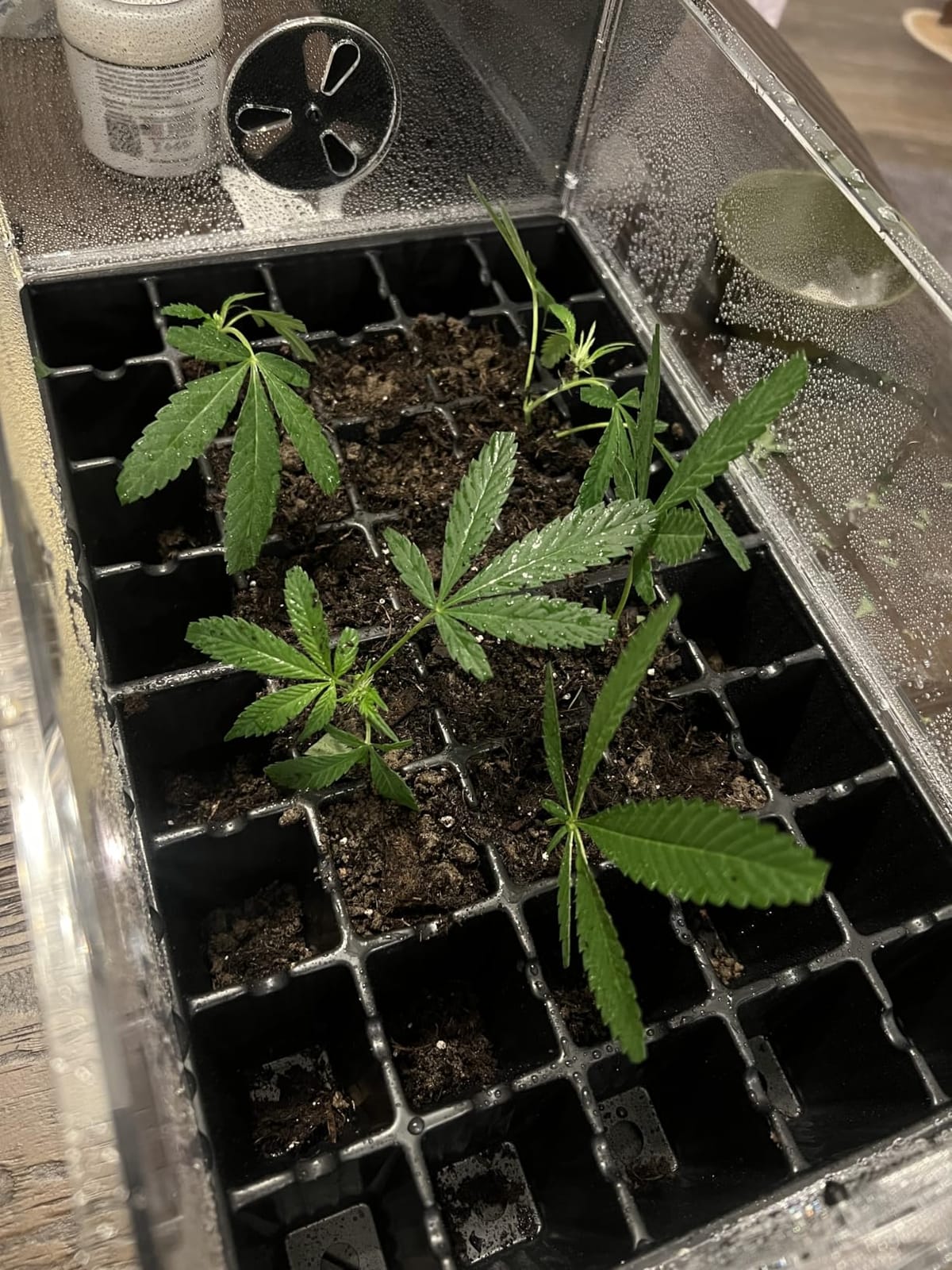
This is the only product in the roundup that includes the chamber. You get a clear 3mm dome, drip and plant trays, and a pair of LED grow light bars built around Samsung LM301H EVO diodes. For anyone starting their first propagation run, that removes about six separate purchases and an afternoon of assembly.
The trays hold up to 40 seedlings, which is a realistic two-tray propagation round. The metal frame and PET dome feel a tier above the plastic kits, and the side and top vents let you back humidity off once you hit day seven without lifting the whole lid.
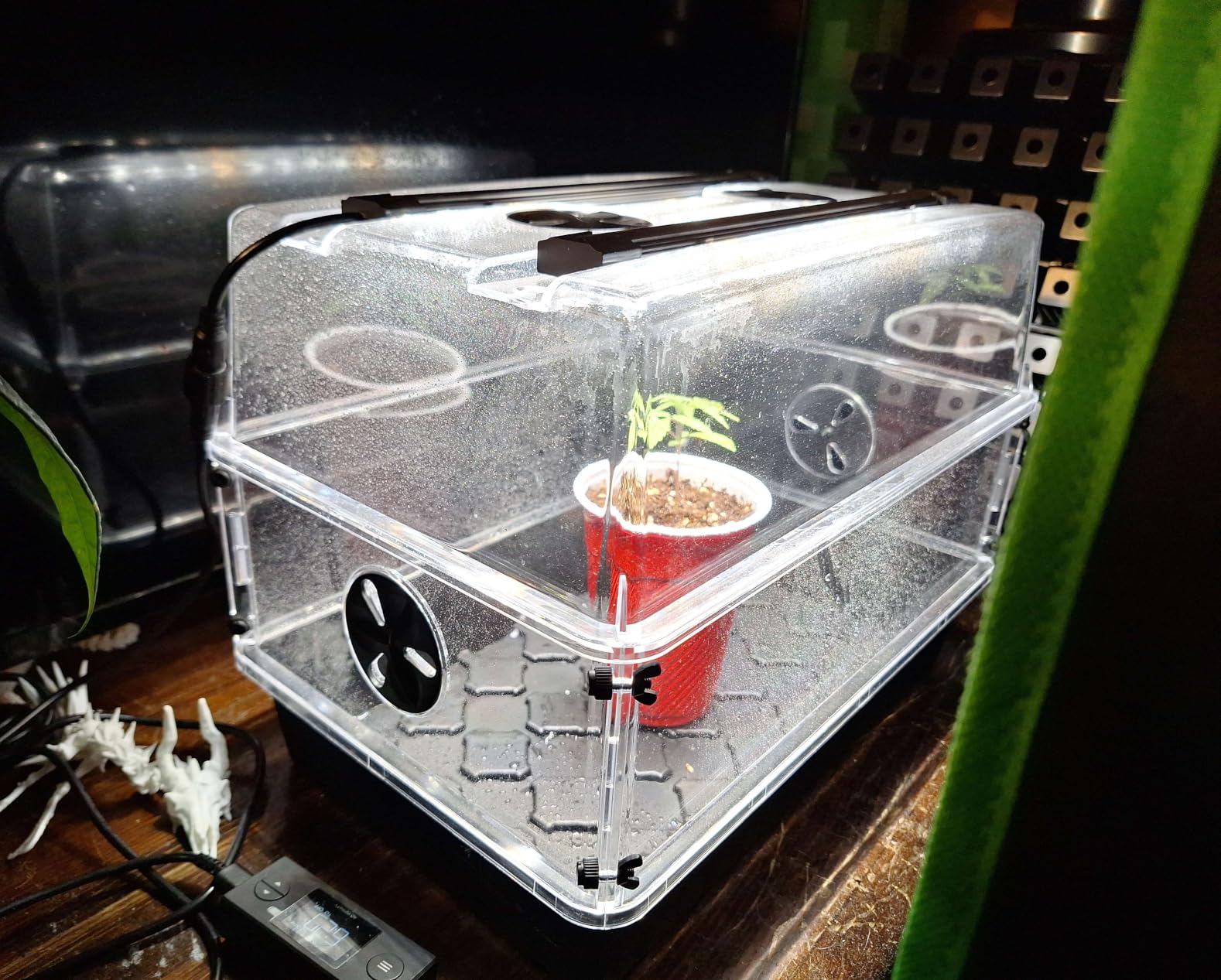
Adjustable light intensity and timing through the remote is the feature that matters most for clones. You can start a fresh cutting at low output and step it up as roots form, which is exactly the adjustment that fixed-output strips force you to make with zip ties and guesswork.
The height extension panels also let you keep the bars at a constant distance from the canopy while the dome grows taller, so a cutting that pushes up under the light does not end up scorched on day twelve.
What to check before you buy
Heat is the thing to watch. Owners of this kit report the LED strip running quite warm at the top brightness setting, and inside a sealed dome that warmth does not escape. Set the controller to a mid level rather than maximum if the dome stays closed all day.
The controller is powerful but not intuitive. Budget a few minutes with the manual before you plug a tray in, and set the schedule once rather than adjusting it daily.
Where it falls short
It is a fixed footprint. The dome sets the tray size, and once cuttings pass about 8 inches you need to move them out to a shelf or another box. That is a real limit if you are trying to harden off a full batch indoors.
At 377 reviews this is the least-proven product in the group, and a few buyers reported arriving with a broken part such as a vent clip. Inspect the kit the day it shows up.
3. Litever 36W 4-Strip Kit – the value pick that handles humidity
Litever Grow Light Strip Kit 36W with Timer, 4 pcs 16 Inches LED Grow Light Strips with Extension Cables, Mounting Accessories for Greenhouse, Grow Shelf. Perfect for Indoor Growing-(4-Strip-Kit)
36W, 4500 lumens total
16.1 inch bars
Sealed waterproof connections
Pros
- Waterproof strips with gasketed connections
- External timer also works as a dimmer
- Three mounting options included
- Only warm to the touch
- Owners report years of continuous use
Cons
- Four strips in one kit means staggering on a wide shelf
- Some kits shipped without the timer or a waterproof cover
This is the kit we recommend when condensation is a given, such as a tray under a dome or a shelf in a garage. The strips are sealed with rubber-gasketed connections, so humidity in the air is not the same risk here as it is with an open fixture.
Total output is 4500 lumens at 36W across four 16 inch bars, and the spectrum is aimed at germination and seedling growth, which is the same 400 to 700nm range a cutting wants. The external timer handles daily on and off, and because it also works as a dimmer you can wind the output back for the first week of callusing.
One of our group runs this kit on a two-shelf propagation rack, running the bars in a line on one shelf and doubled up in parallel on the other. The flexible linking is the reason a single kit can cover a setup that most people would think needs two purchases.
It runs warm rather than hot, which meant we watered less often than with a bare bulb fixture. Reviewers consistently report visible plant response within days of switching it on, and a few describe running the same strips for years.
What to check before you buy
Open the box fully before you hang anything. A few owners reported kits arriving without the threaded waterproof cover or without the timer, and both are parts you need to have a working sealed setup.
The aluminum housing can feel warm during long run times. That is fine over a tray but keep the strips off the plastic lid of a dome, where a hot bar will accelerate drying.
Where it falls short
Four 16 inch bars in one kit does not mean even coverage on a wide shelf. If your shelf is wider than about 20 inches, stagger the strips along the front and back edges or you will get bright centers and dim corners.
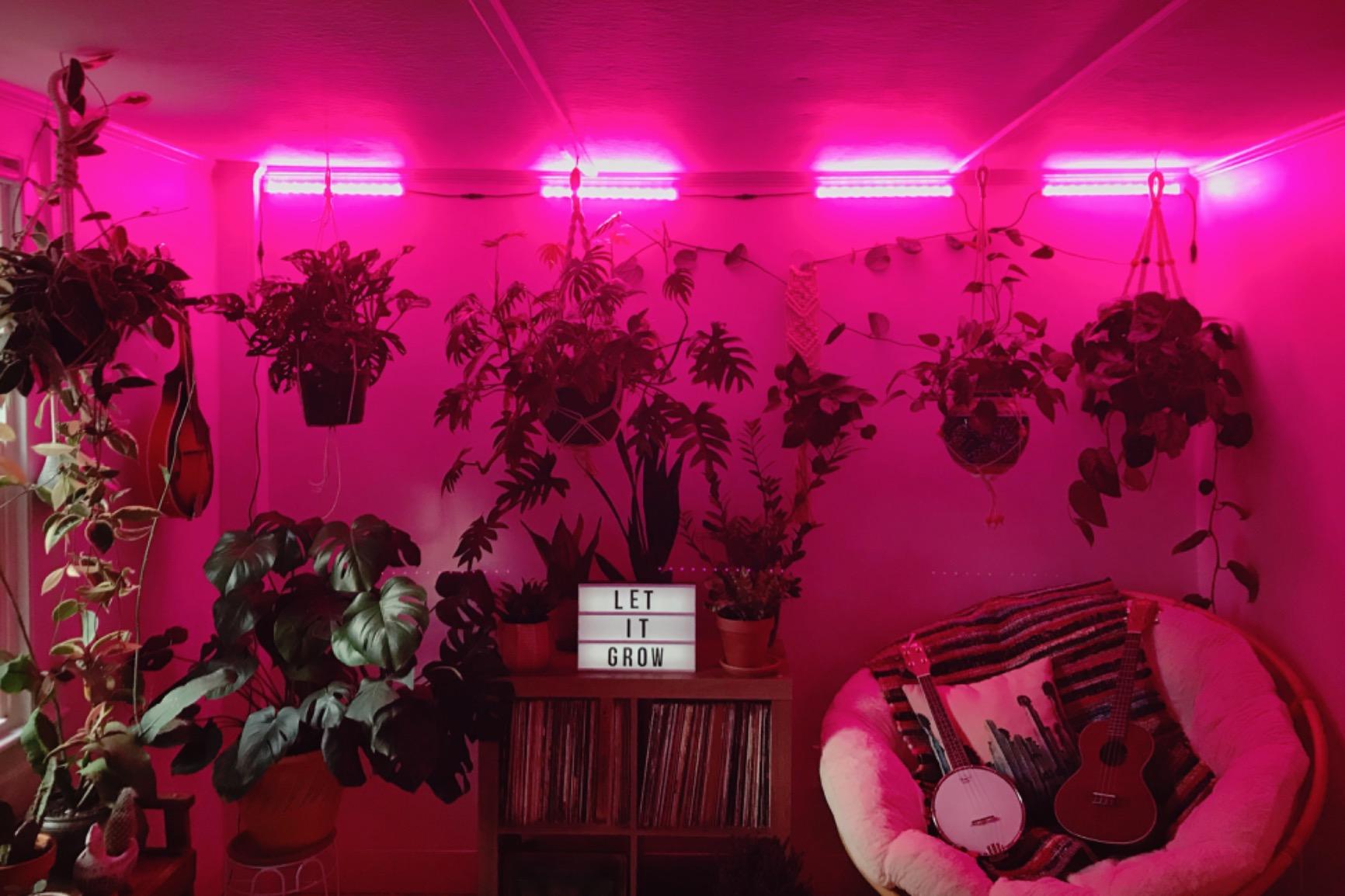
The purple-magenta glow is a real consideration in a living space. It is the look every grower recognizes, and it is the one people tend to complain about when the shelf is not in a basement.
4. Garpsen 2-Head Clip Light – most control over photoperiod
Garpsen Plant Light, 2 Heads Grow Lights for Seed Starting with Clip, 2Pack
50W across 2 heads
9 red, 4 blue, 7 warm white per head
360 degree gooseneck
Pros
- Cycle timer runs past the usual 12 hour ceiling
- 5 brightness levels from 20 to 100 percent
- 3 lighting modes
- Flexible gooseneck aims each head at a pot
- USB powered with an AC adapter included
Cons
- Two heads only cover a small area
- Clip design suits pots and trays not shelving
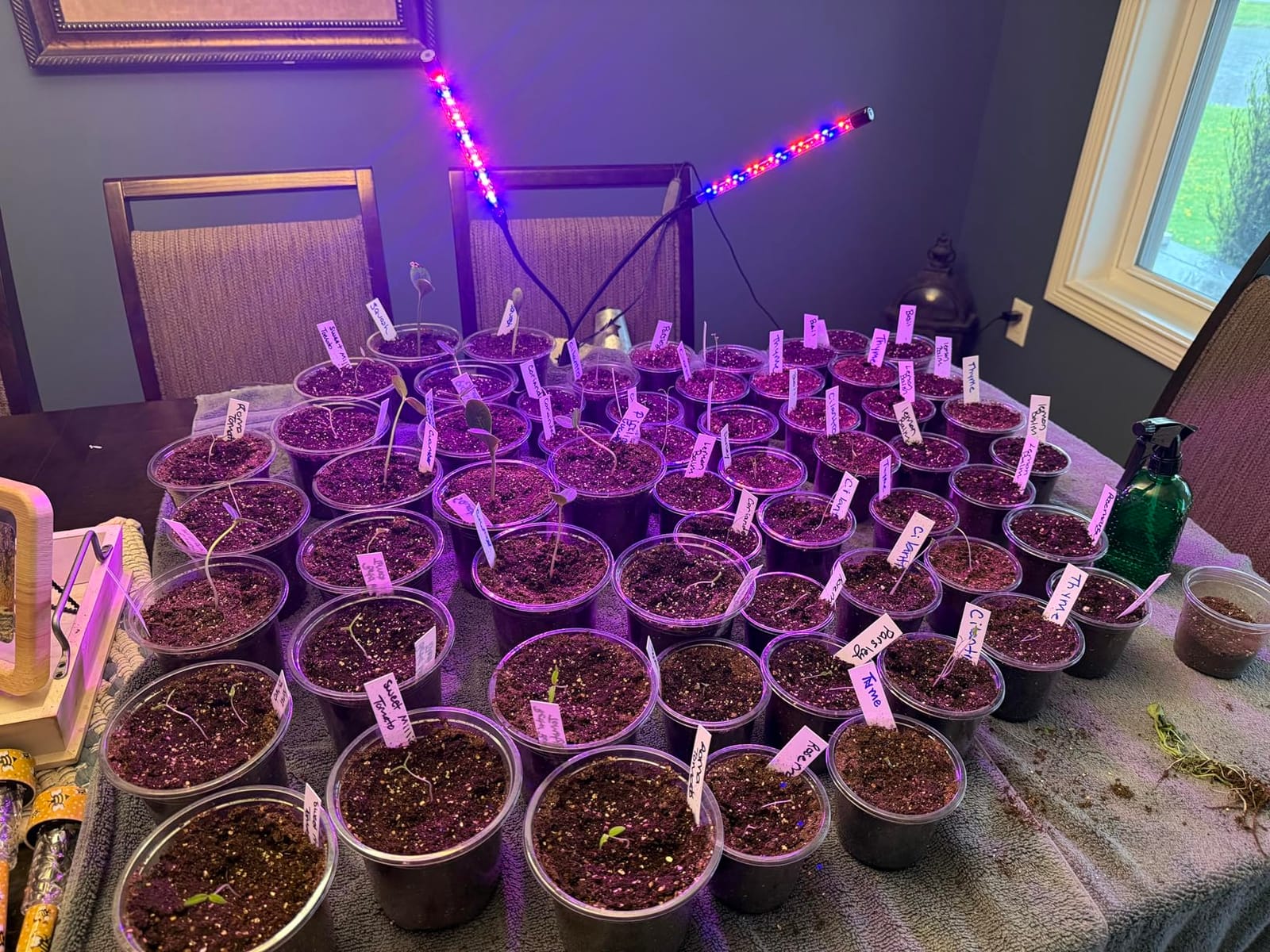
The clip-on format is the reason to buy this one. Two heads on 360 degree stainless goosenecks let you place each one directly over a 4 inch pot or a small rooting jar, which is closer to how most people start their first cuttings than a shelf-wide bar is.
What we did not expect was the 16 hour cycle option. Most clip lights top out at 12 hours, and a 16 hour setting lets you run the 18-on, 6-off pattern some growers use for cuttings by taking the light out early in the morning rather than at the end of the day.
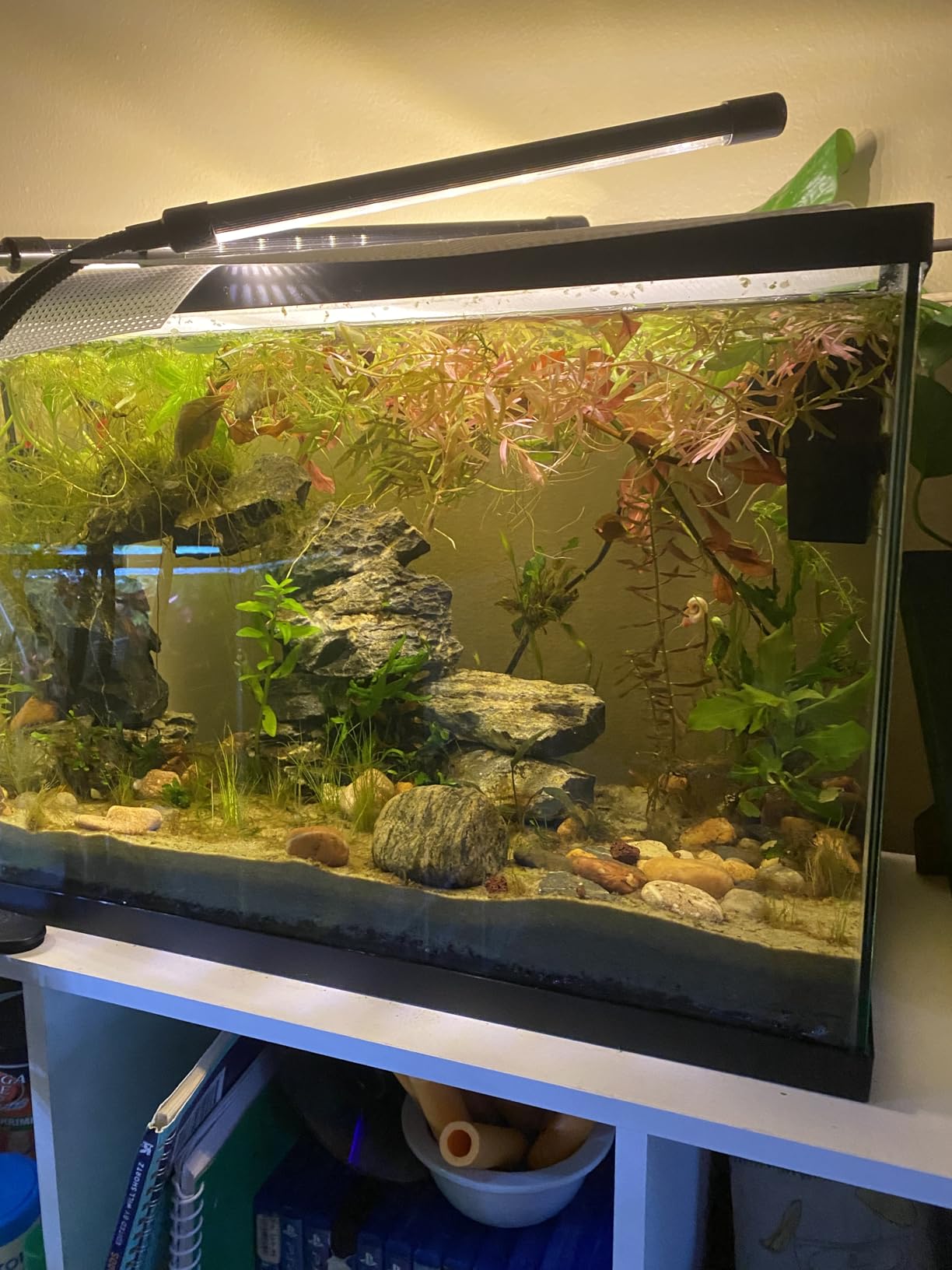
Each head carries 9 red, 4 blue, and 7 warm white diodes, and you can switch between red plus blue, warm white, or the mix. Three modes and five brightness levels between 20 and 100 percent is enough control to walk a cutting through callus, rooting, and pre-transplant without changing fixtures.
USB power with the included AC adapter makes it easy to move the whole setup to a different shelf, and the remote means you are not reaching over a plant tray to press a button.
What to check before you buy
Coverage is genuinely small. Each head lights roughly the pot it points at, so a two-pack suits a windowsill of cuttings and little else. Anyone running a full 10×20 tray will need to add a bar fixture alongside it.
The clip is built for pot rims and small trays. It will not hold a wire shelf or a light rack leg, and a heavy tray will not stay on the clip.
Where it falls short
At 50W listed across two heads, this is not a fixture for a dense propagation tray. It is a precision tool for individual cuttings, and buying it as a shelf light is the most common mistake we see.
It also runs cool, which is a genuine benefit near a dome, but means less light per watt than a reflector-style bar at the same distance.
5. SDOVUERC 16 Inch 6-Bar Strips – best for a wide wire shelf
SDOVUERC 16” 6 Bars Grow Light Strips for Indoor Shelves Plants Growing.
36W, 3600 lumens max
6 bars, 360 LEDs, 380-800nm
95 inch power cord
Pros
- Six bars spread light across a full shelf
- 95 inch cord reaches awkward racks
- 6/12/18 hour circular memory timer
- Dimmable with spectrum selection
- Three mounting methods included
Cons
- Heavily blue cast with no softer white option
- Some find it weaker than expected for strong-light seedlings
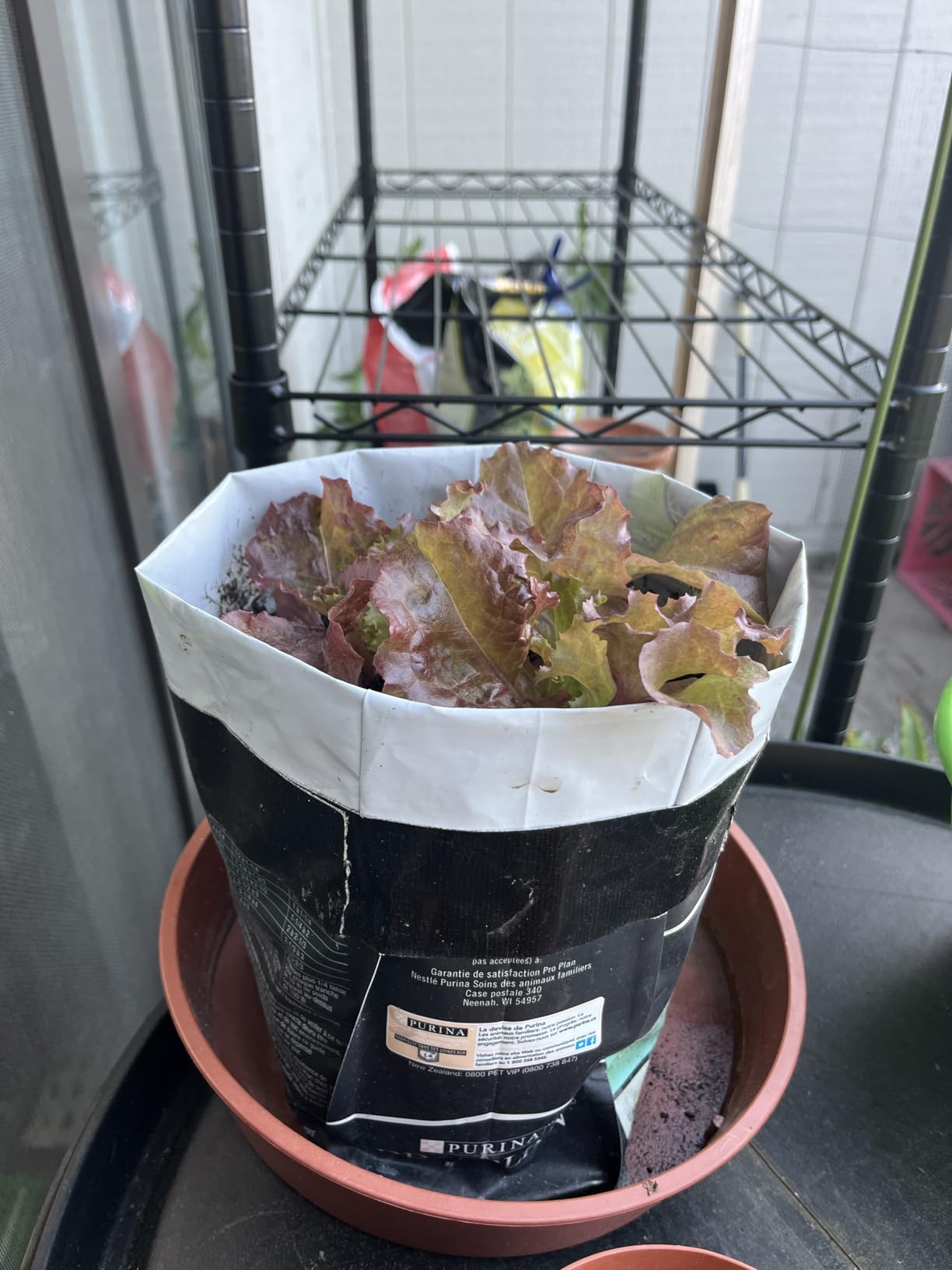
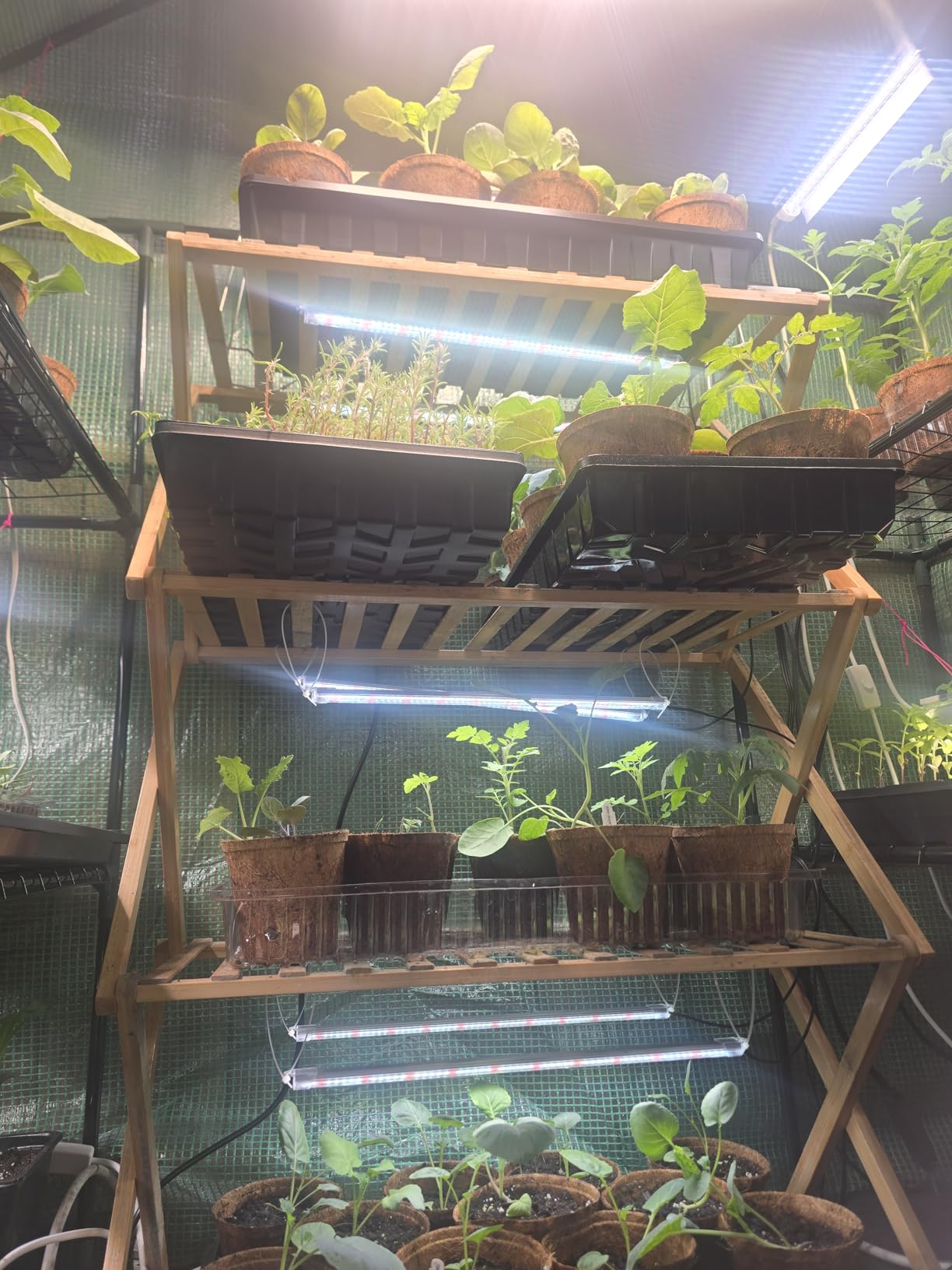
The problem with a two-bar shelf light is gaps. This set runs six 16 inch bars in a row, which is the configuration that finally made a 20 inch wide wire rack look evenly lit for us. No bright middle with two dark corners.
Each bar holds 60 LEDs and the set spans 380 to 800nm, with maximum output of 3600 lumens at 36W. The circular memory timer offers 6, 12, or 18 hour cycles and remembers the setting after a power cut, which matters on shelves in rooms that lose power.
The 95 inch cord is an underrated feature. It lets one set reach a shelf without an extension lead, and it is the difference between a fixture that sits where you want it and one that ends up in the middle of the rack because the cord is too short.
Brightness and spectrum are both adjustable, and the housing is metal and plastic with an aluminum shade, so it stays cool enough to run close to the medium without drying the surface.
What to check before you buy
The output is more blue than most growers like, and there is no white or warm setting to soften it. If the shelf is visible from a living space, this is a poor fit regardless of how well it grows plants.
Measure your shelf width first. Six 16 inch bars suit roughly a 20 inch shelf. A narrower shelf leaves half the set unused and a wider one leaves gaps at the ends.
Where it falls short
A minority of buyers find the light weaker than they expected for high-light seedlings. That is not a problem for cuttings at 8 to 12 inches, but it is if you plan to reuse the same shelf for dense seed trays later.
Mounting is adhesive, zip tie, or screw. The adhesive is fine for a permanent spot, but if you want to raise the light as cuttings stretch you will want the ties or screws instead.
6. Wiaxulay 16 Inch 15W Strip – the one we run under a dome
Wiaxulay 16in Plant Grow Light Strip for Indoor Growing, Full Spectrum 15W
15W, 6000K full spectrum
16 inch bars
5 dimming levels from 10 percent
Pros
- Runs cool to the touch
- Does not heat up a grow dome
- Timer plus dimming at a low cost
- Long cord splits bars across shelves
Cons
- Included zip ties are too short for many racks
- Some bars bent or popped out of holders
- Odd bar counts per pack
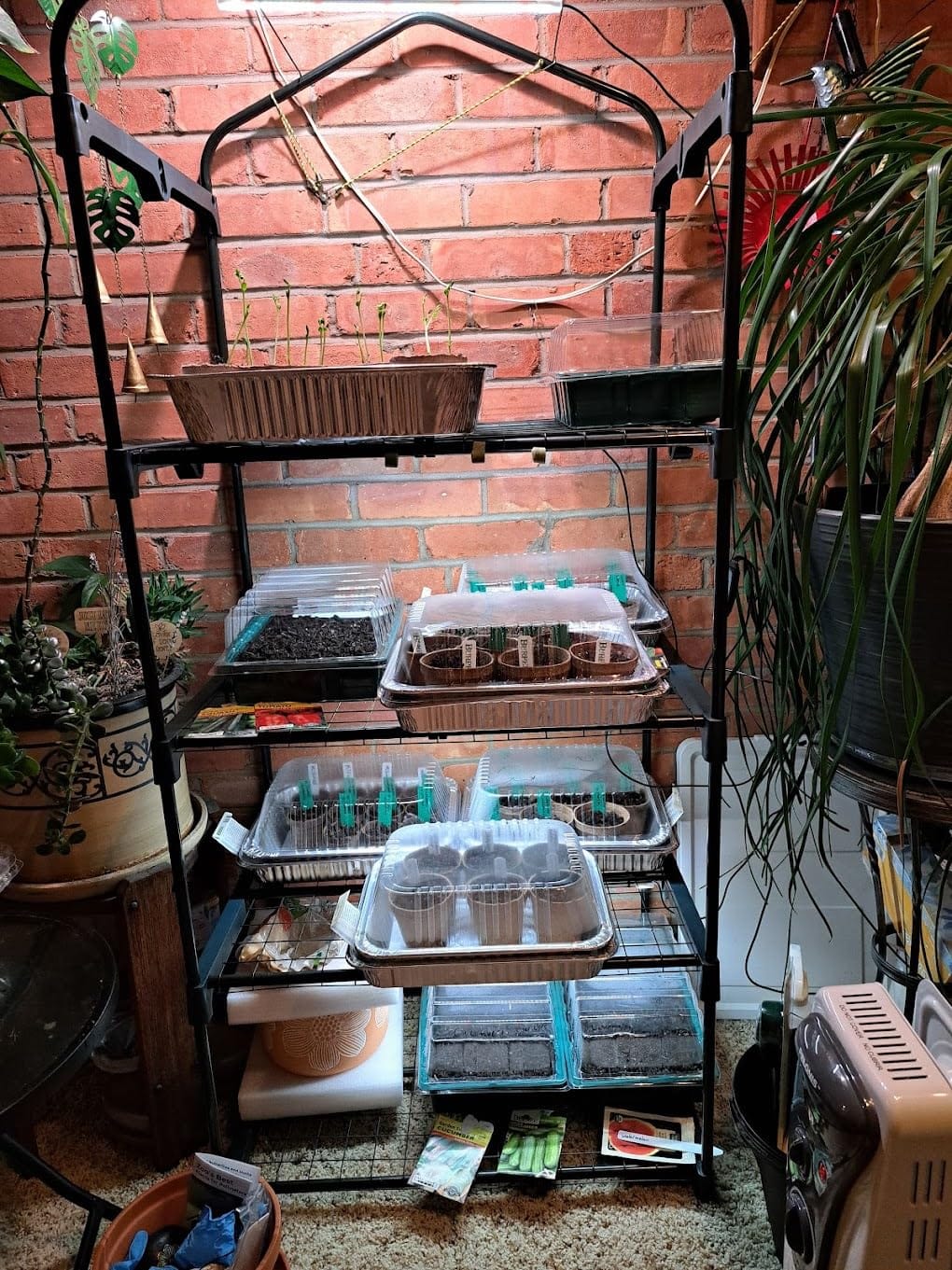
Heat was our only real concern with a bar light mounted over a sealed propagator, and this is the strip that solved it. Owners consistently report it running cool enough to touch and not heating the dome, which matters because a warm dome dries the medium from underneath and kills the humidity you were trying to create.
The timer offers 6, 12, and 16 hour automatic cycles, and there are three switch modes so you can run one bar or all four independently. That is enough control to run a domed tray at 20 percent brightness for the first week and open it up after roots appear.
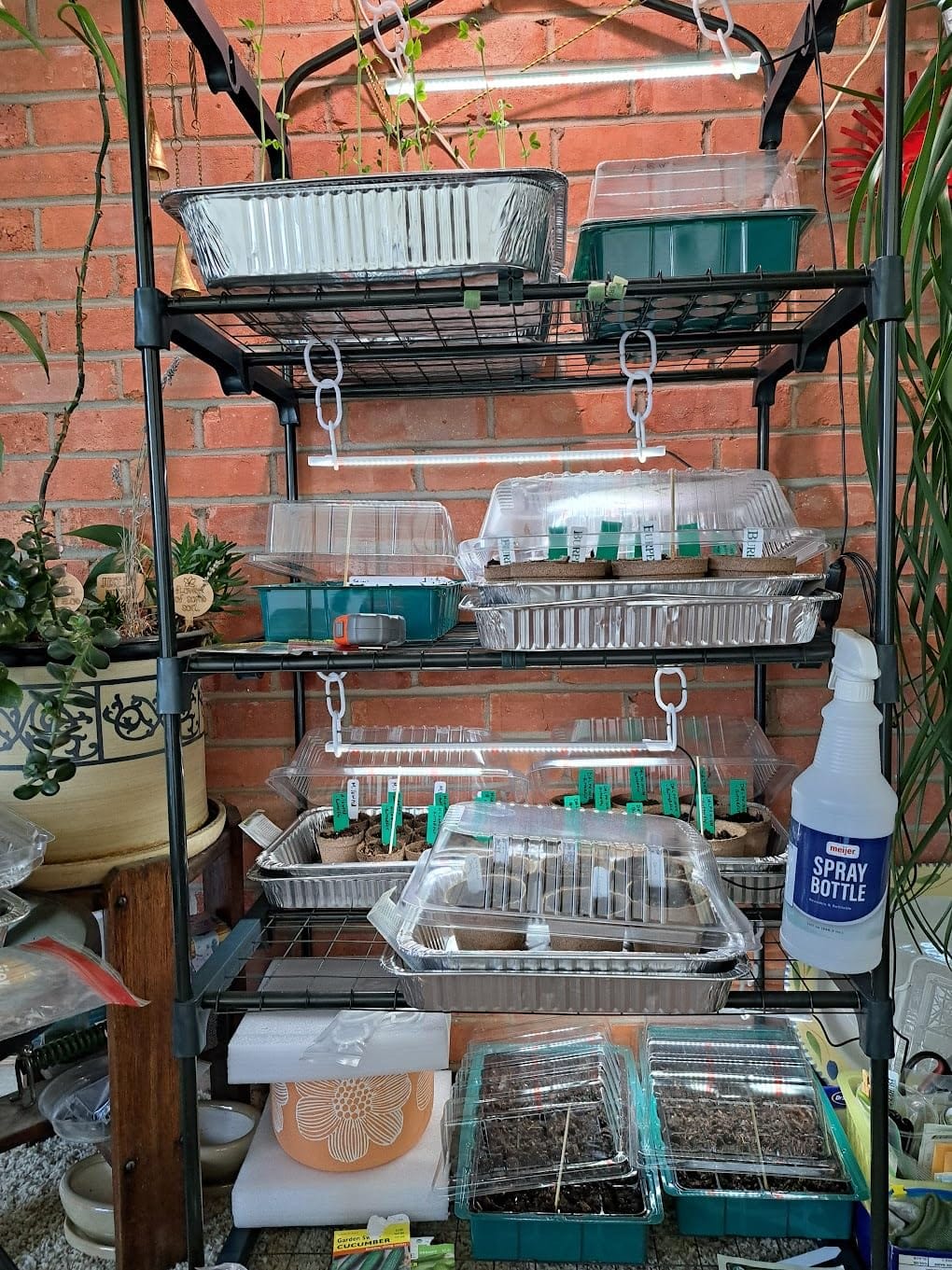
We used the long cord to split bars across two separate shelves from a single plug point, which made it easy to run a two-tier rack without a second outlet. Mounting hardware includes cable ties, screws, double-sided tape, and the adapter, and there is a 12 month warranty.
Seed starters on tiered racks report consistent germination with this one, and the spectrum covers both the blue and red bands across 380 to 800nm at 6000K.
What to check before you buy
Check the bar count in the pack against your shelf. Packs with an uneven number of bars spread poorly across a wide shelf, and the zip ties included are too short for many standard racks, so plan to buy your own ties.
The plastic housing is thin. It is not a fixture you want to bump repeatedly while reaching past it for a watering can.
Where it falls short
Some bars bent or popped out of their holders shortly after unboxing, and a minority of units stopped working after a few months. Check that every bar lights the day you open the box rather than assuming.
It is not rated for wet locations, so keep condensation off the connectors if you are running it under a dome, and use a drip loop on the cord.
7. RWNTAO 8.6 Inch Mini Strips – for shelves with no room
8.6” Mini LED Grow Light Strips, Full Spectrum 3000K, 52 LED Plant Light with 3/9/12H Timer, 10 Dimmable Levels for Seedling, Succulent and Plant Shelf, 2 Head
8.6 inch bars, 52 LEDs at 3500K
3/9/12 hour timer
10 dimming levels
Pros
- Compact bars fit small gaps and awkward spots
- Built-in cycle memory timer
- Ten brightness levels
- Mounts with screws ties tape or magnets
- Runs cool and safe close to foliage
Cons
- Cord is fixed to the bars and cannot be disconnected
Not every propagation spot has 16 inches of clearance. These 8.6 inch bars, 26 LEDs each, are short enough to slide into the gap between a shelf and a wall, or to sit above a small domed propagator without raising the whole shelf.
The built-in cycle memory timer runs 3, 9, or 12 hours and keeps the setting between cycles, so you do not need a wall timer or a smart plug for this one. That alone makes it the simplest fixture here to set up and forget.
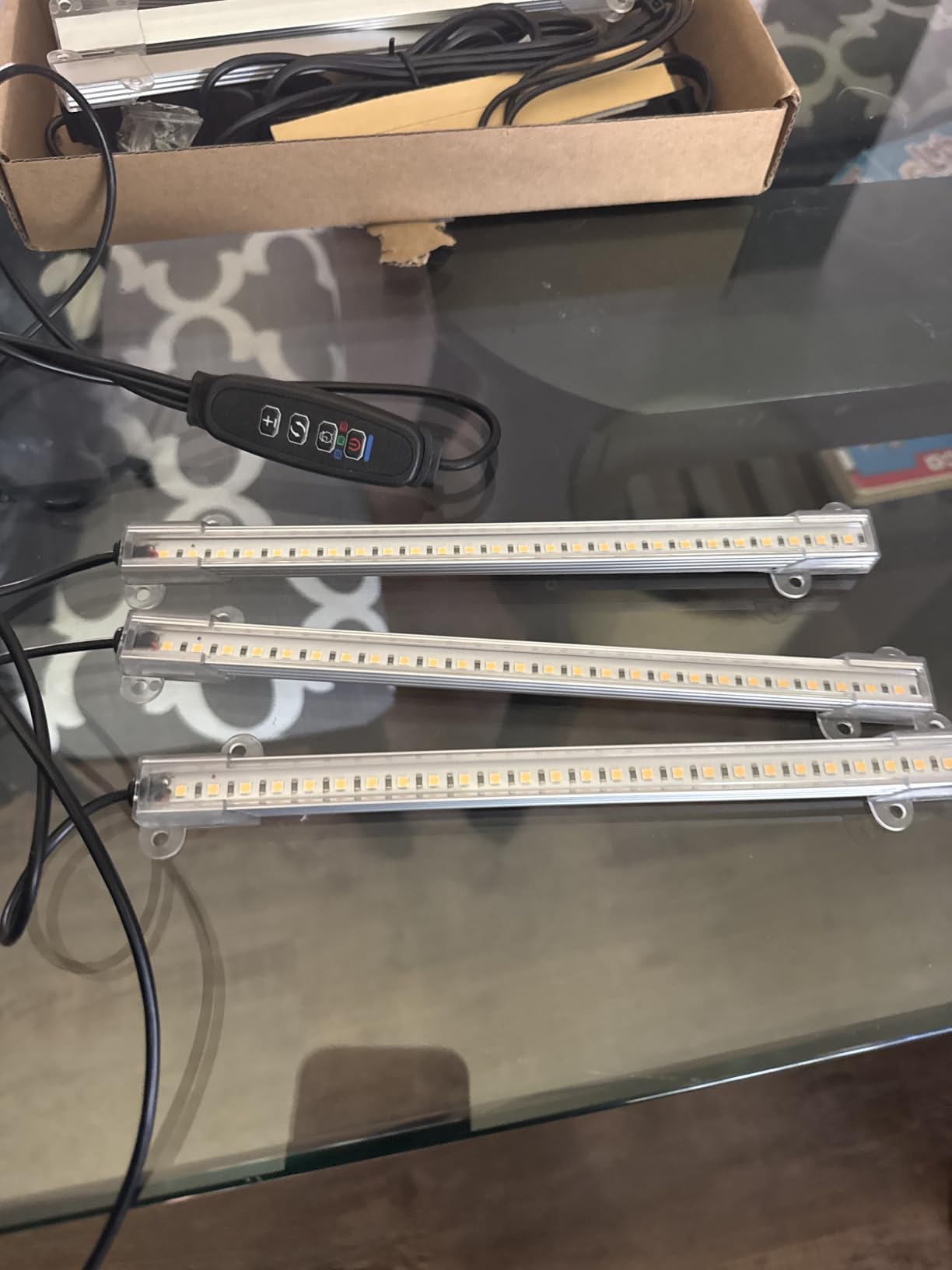
Ten brightness levels and three switch modes give you a wide adjustment range, which matters for cuttings, where the useful range is the low end of the scale rather than the top. At 3500K the light is warmer than most grow bars, which also makes it easier to live with in a shared room.
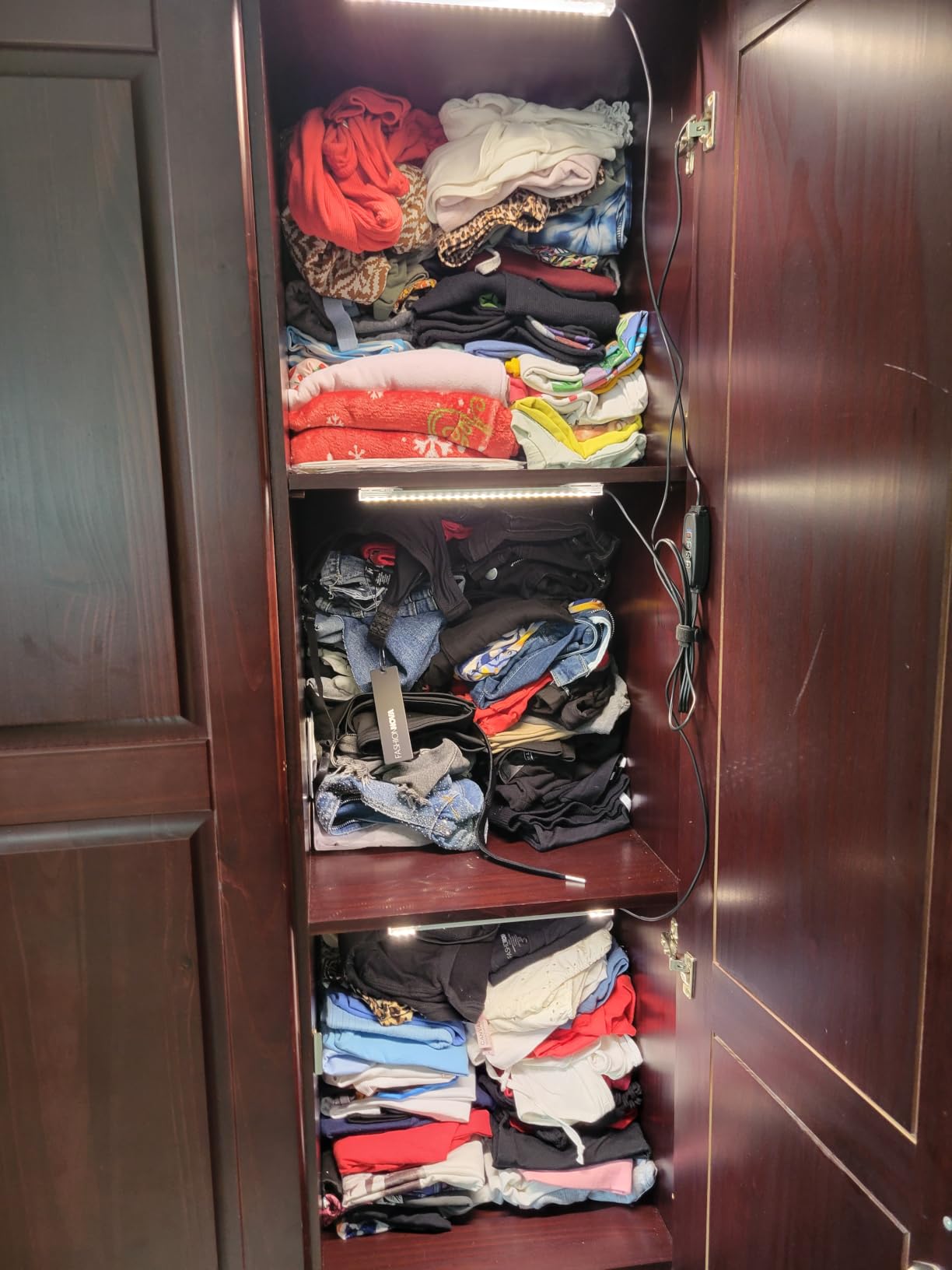
Mounting is genuinely flexible. Screws, ties, double-sided tape, and magnets are all included, and the 71 inch cord reaches a shelf or a stand without a lead. The aluminum housing stays cool enough to sit close to foliage.
What to check before you buy
Bar length is the whole story. At 8.6 inches, two heads cover a small tray or a row of 3 inch pots. A standard 10×20 tray needs at least four, and you will get a better result from one longer bar than from two short ones.
Decide the mounting position before you buy. The magnet option is only useful on a steel shelf, and on a wire rack you will be using the ties or tape.
Where it falls short
The cord cannot be disconnected from the bars, which makes hanging and rewiring awkward. If you want to swap one bar out of a run, you are unplugging the whole set.
At 52 LEDs per bar the output is modest, so these work best 6 to 8 inches above the medium. Held higher, they will not push a cutting through a cloudy spell.
8. iGrowtek 2ft Light with Stand – the windowsill answer
iGrowtek 2ft Grow Light for Seed Starting,LED Grow Lamp for Indoor Plants,Seedling Grow Light with Stand,Seed Starter Light Kit with Natural White Spectrum,Height Adjustable,Iron Frame,Timer Outlet
10W, 900 lumens, 4000K
Height-adjustable iron stand
ETL listed
Pros
- Adjustable height lets you move the light closer as plants grow
- Narrow base fits a windowsill
- Easy to assemble
- Full spectrum white with a high CRI
Cons
- Stand is light and can feel top-heavy
- Only 10W so the light must sit close
- No timer included
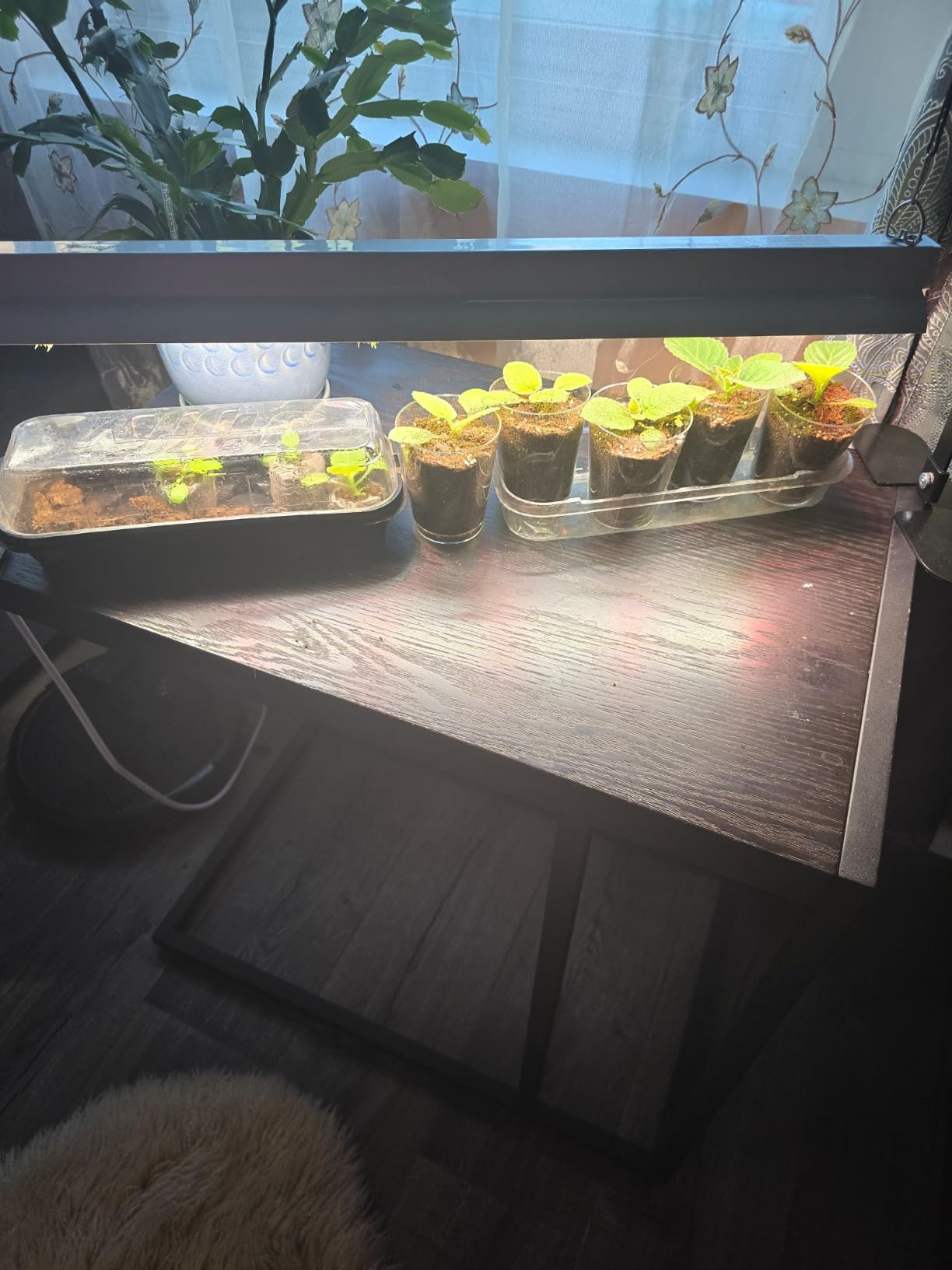
Everything else in this roundup assumes you have a shelf or a rack. This one is a self-contained stand, light and all, and the height-adjustable iron frame is the point of it. As cuttings push up, you slide the bar higher without touching the tray.
Output is 900 lumens at 10W with a 4000K full spectrum white and a color rendering index of 90, which means the light looks natural rather than tinted. It is also ETL listed, which is worth noting given how much water and humidity sit near a propagation setup.
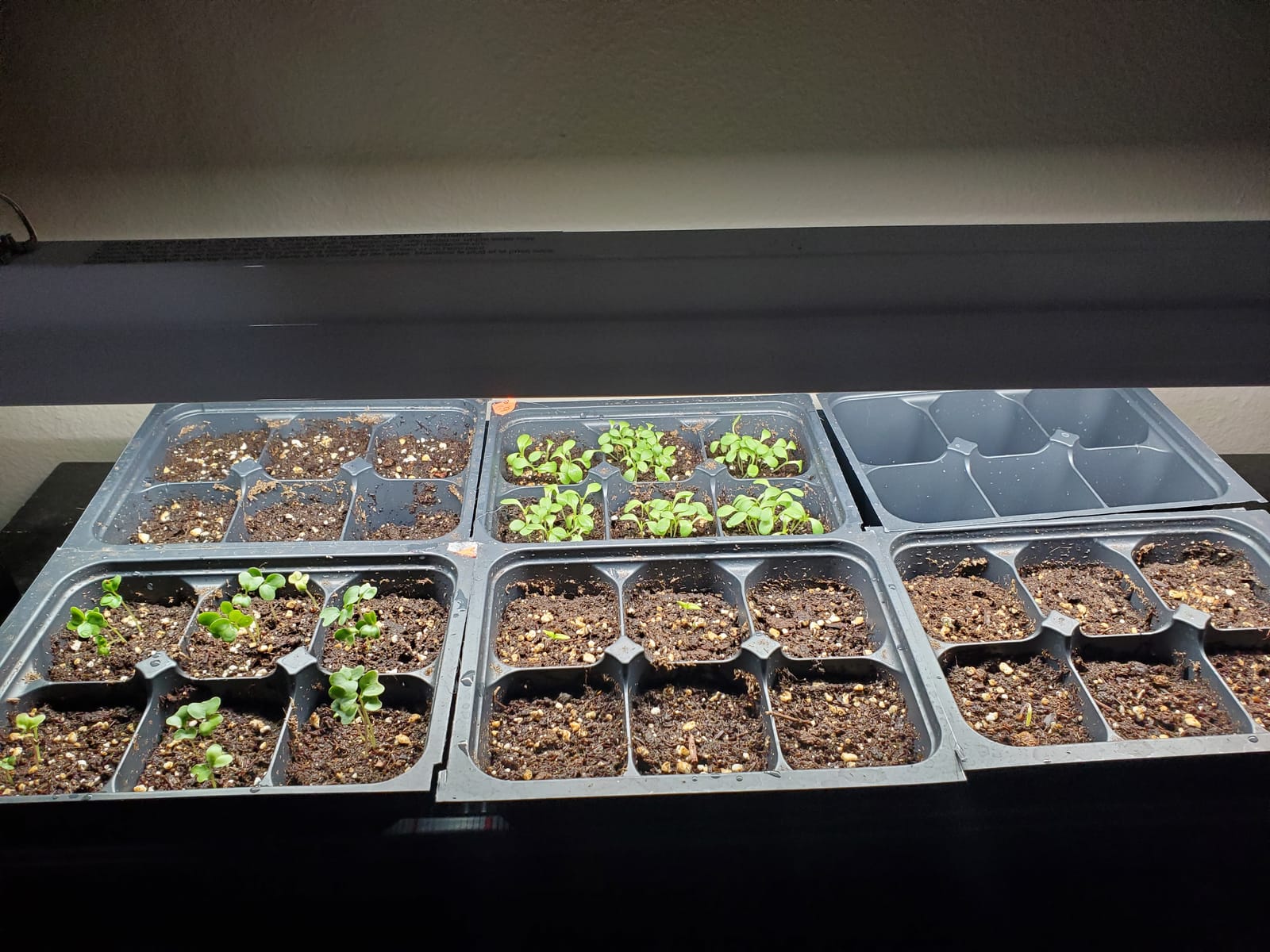
The narrow footprint is what makes it work on a windowsill. The base measures 27.2 by 19.7 inches, and at 10W you are expected to hang the bar fairly close to the canopy, so the vertical clearance in the frame is sufficient for cuttings and small planters rather than tall plants.
Reviewers report it carrying across multiple seed-starting seasons, and the wide reflector throws light down and outward to cover more of a tray than a bare bulb would.
What to check before you buy
There is no timer. The listing mentions a timer outlet in the product name, but the included package does not ship one, so plan on a wall timer or a smart plug to hold the photoperiod steady.
At 10W the light has to sit close, which means you are raising it often. Check that your spot has enough headroom above the tray for that.
Where it falls short
The stand is light and can feel flimsy or top-heavy, especially once you have raised it and are reaching under it to water. Steady it with one hand rather than pulling the bar across.
The footings are wide for a genuinely narrow sill. Measure your ledge before committing, since the stand does not fold.
9. Bokeedo T5 Two-Tube Fixture – reflector light on a budget
T5 Grow Lights for Seed Starting, 10W x2, Grow Lights for Indoor Plants
Two 10W tubes, 1900+ lumens
3-in-1 spectrum with 660nm red
Aluminum housing
Pros
- Brighter than 5V clamp lights at the same wattage
- V reflectors increase effective light about 25%
- Cool-running aluminum housing
- Several mounting options
- 12-month warranty
Cons
- Not dimmable so output is fixed
- Edges stay less lit under a concentrated reflector
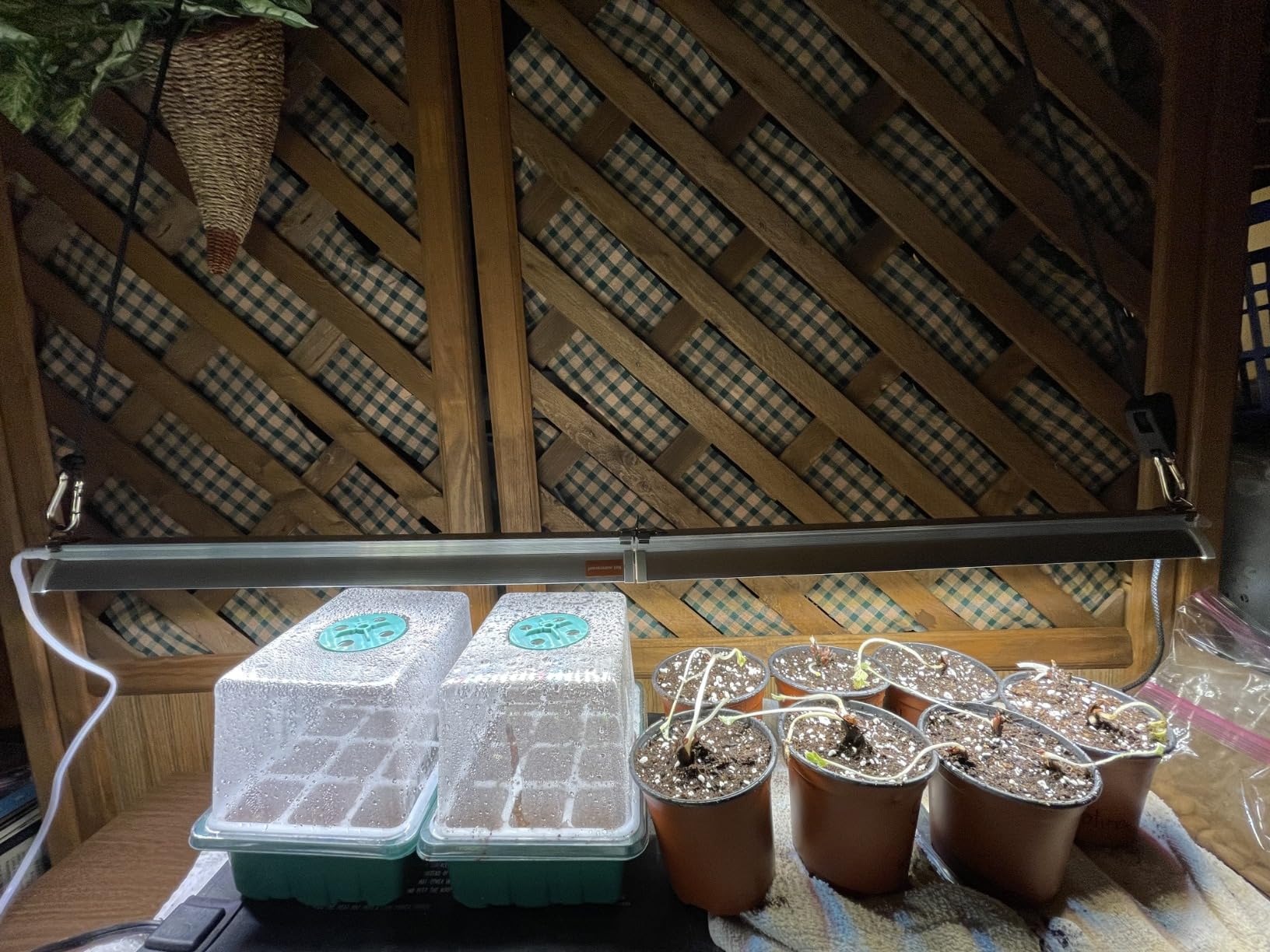
The V-shape reflectors are the idea here. Two 10W tubes sit inside angled reflectors that bounce light down onto the tray instead of out into the room, and the manufacturer claims roughly 25 percent more effective light from the same wattage. Owners comparing it to cheap USB plant lights report the same impression.
The spectrum is a 3-in-1 mix: 3000K full spectrum across 380 to 780nm, a 6000K white channel, and a 660nm red channel. Total output is 1900 lumens or more from 20W, in a full anodized aluminum housing that dissipates heat and extends tube life.
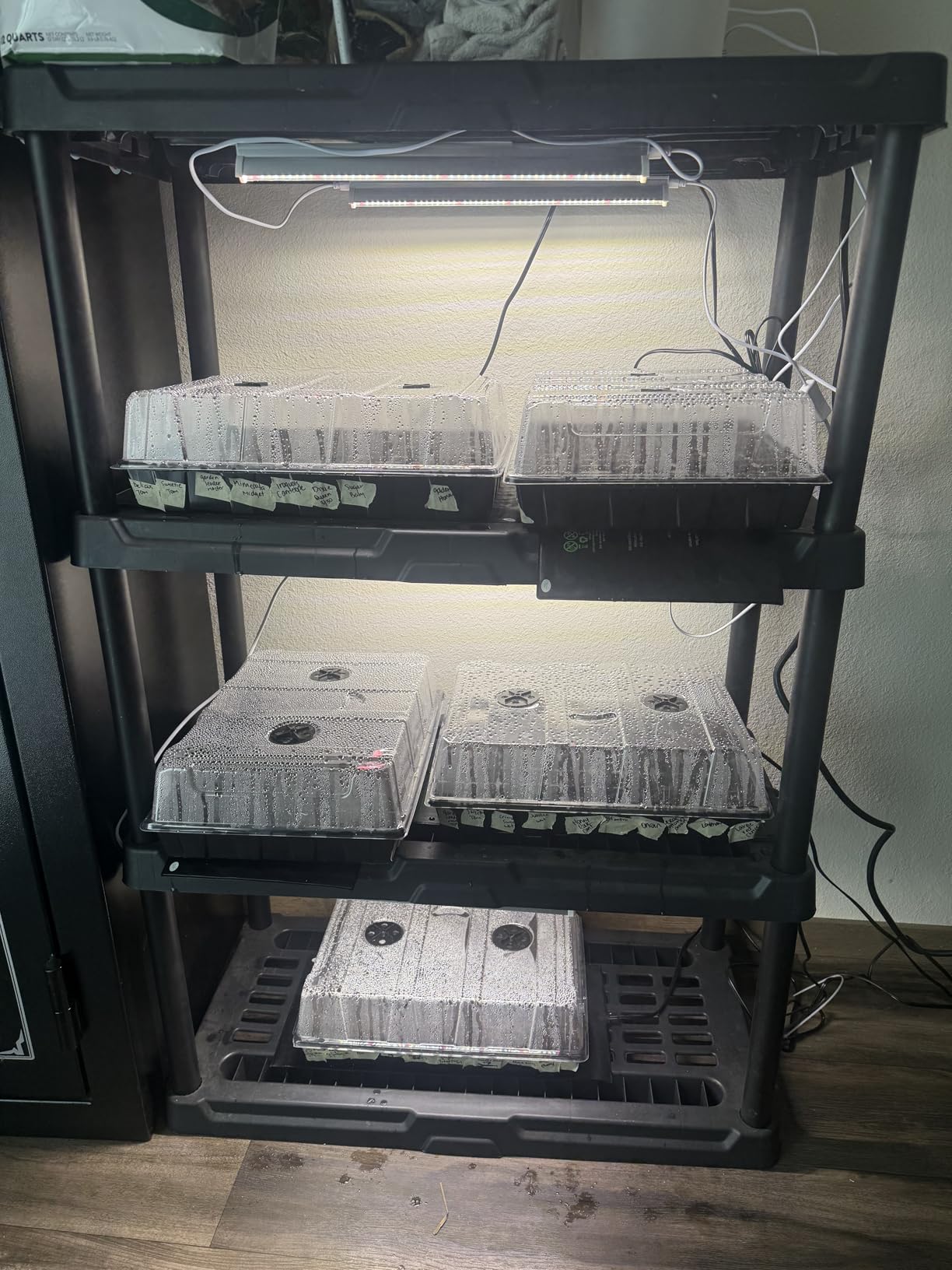
It is the traditional T5 form factor, which is still a legitimate cheap alternative for propagation, and the reflector is what makes it outperform a plain bar at the same price. Four installation options cover shelves, racks, or hanging.
The aluminum housing stays cool enough to run under a shelf without cooking whatever is above it, which is the practical test for a stacked setup.
What to check before you buy
Output is fixed. If your cuttings need less light at the start, you move the fixture rather than turn it down. Plan a mount that lets you slide the whole thing up as the tray fills in.
The reflector concentrates light in the middle, so keep the tray narrower than the span of the two tubes. Anything wider will have dimmer edges.
Where it falls short
No dimming means you cannot run this under a sealed dome at low intensity, so use a cooler-running strip if the propagator stays closed through the day.
There is no timer in the box, so it needs the same external scheduling hardware as the Barrina bars.
10. Wolezek 2FT T5 with Stand – a complete kit that needs no tools
Wolezek 2FT T5 Grow Lights for Seed Starting, 32W Full Spectrum
32W, 144 LED chips
2ft fixture on a PVC stand
Chain height adjustment
Pros
- Light and stand ship as one kit
- Assembles without screws or tools
- Chain lets you raise the light by growth stage
- Reflective cover adds about 30% brightness
- Lightweight and freestanding
Cons
- PVC stand is lighter duty than metal
- Listed at 230V which does not match some US outlets
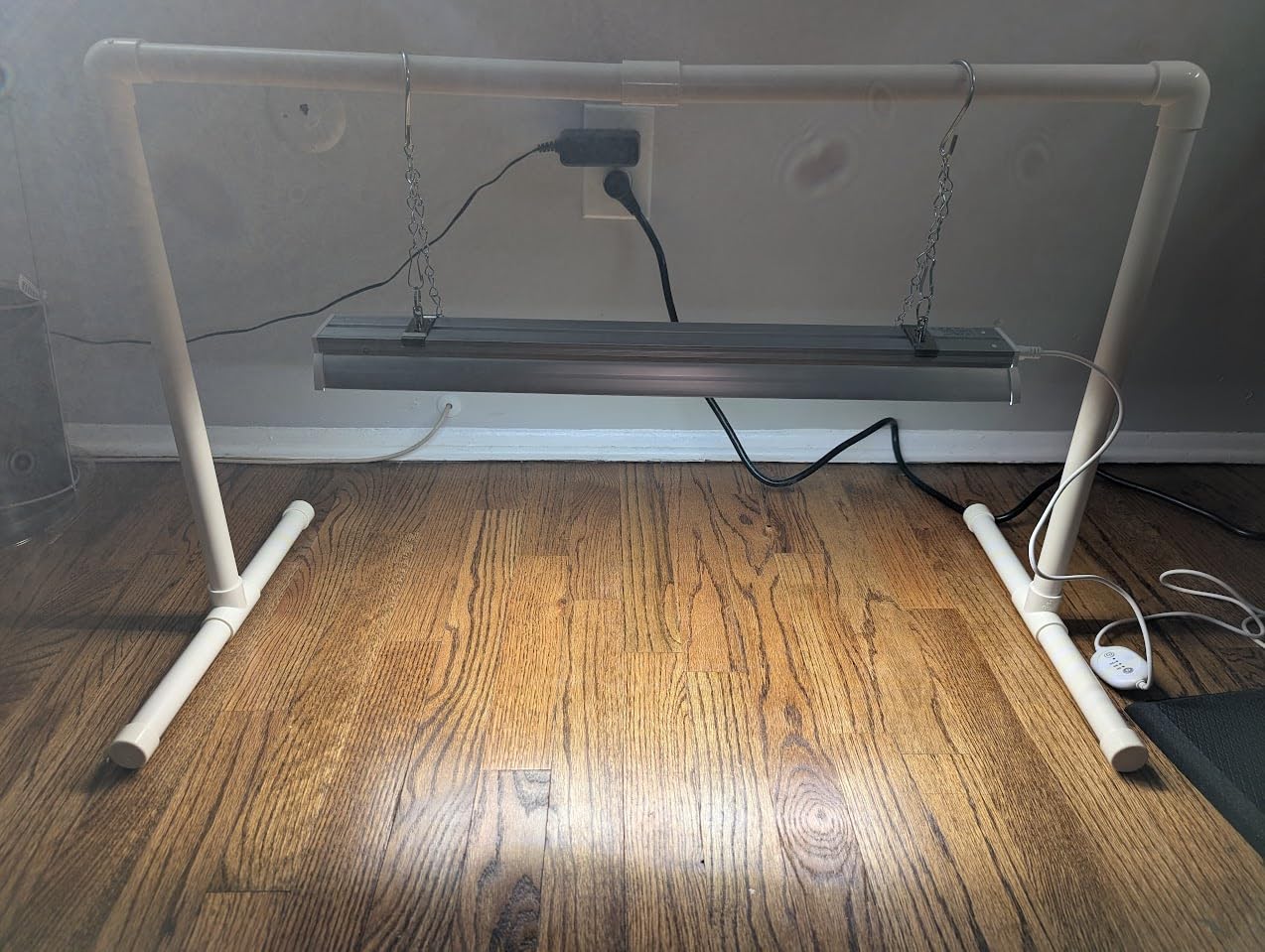
Like the AC Infinity kit, this one removes assembly decisions. The 2ft fixture sits on a freestanding PVC stand that assembles without a screwdriver, so you can move a complete propagation station rather than a loose bar.
The diode count is high for the class: 144 high-lumen chips made up of 6 red at 660nm, 30 white at 3000K, and 108 white at 6000K. A reflective cover adds about 30 percent apparent brightness without drawing more power, and height is adjusted by chain as the plants grow.
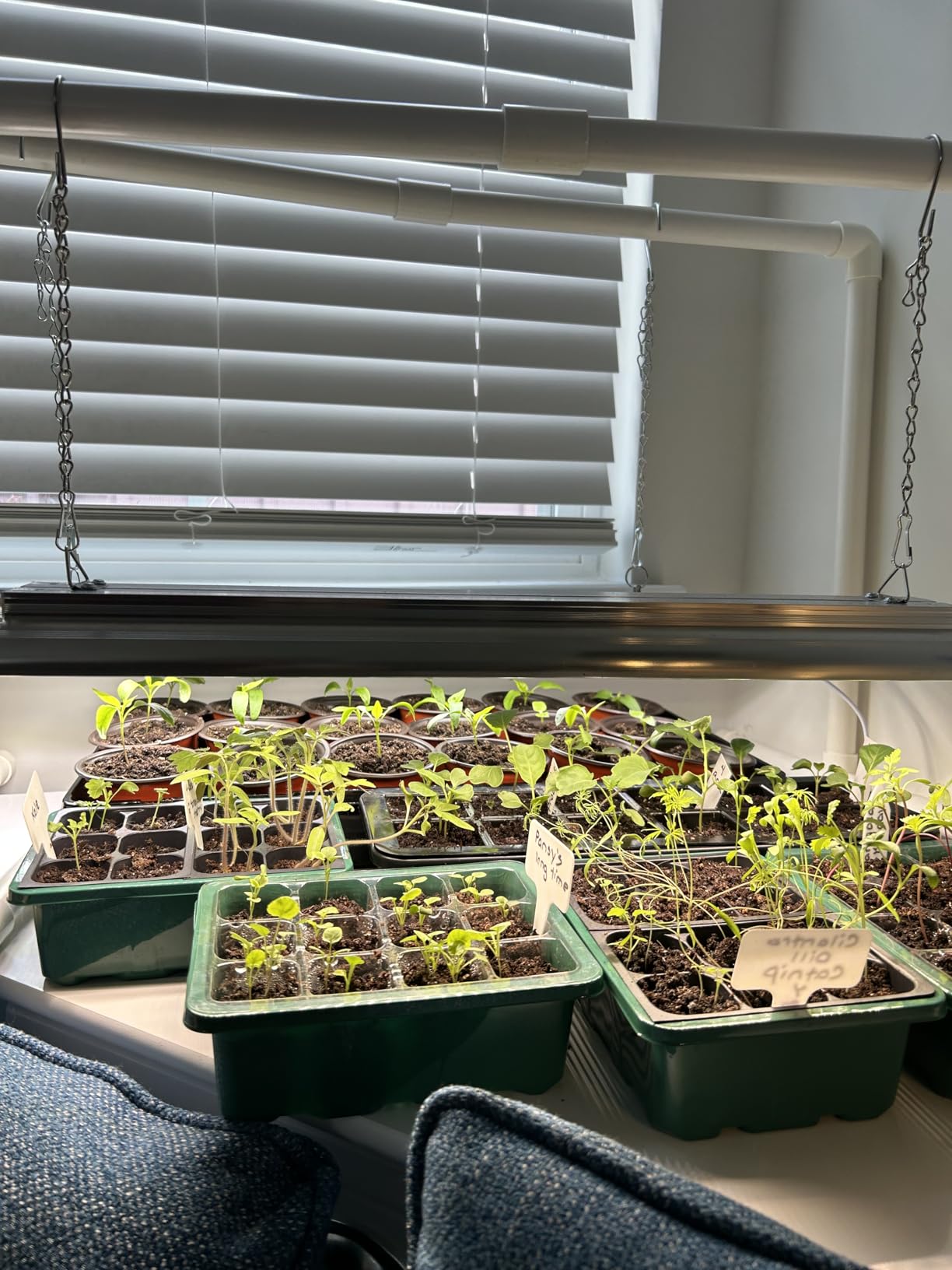
Chain-based height adjustment is the part we liked. On a fixed bar you either buy chains or improvise, and improvised hanging over a humid tray is how fixtures end up in a sink.
Because the whole unit is freestanding and weighs 1.32kg, it works on a tabletop or a floor, and it moves to a windowsill when the season changes.
What to check before you buy
Confirm the voltage. This fixture is listed at 230V, which does not match some US outlets, so verify the plug and check with a qualified electrician if you need an adapter or a converter.
Stand it on a level surface. The stand is freestanding, and a slightly uneven floor will show up as a leaning bar over time.
Where it falls short
The PVC stand is lighter duty than a metal frame and is the first thing to flex if you bump it while reaching for a tray. It is fine for a stationary setup and less fine for a busy one.
At 4.3 stars this is the lowest-rated product we included, and the reviews reflect modest build quality more than any performance problem.
11. APICDOM 2FT 5000K Linkable Light – daylight color for a shared room
APICDOM LED Grow Light Full Spectrum Light Linkable 5000K Daylight + 660nm Red Indoor Plant Lighting Fixture (2 FT)
16W, 1900 lumens, 5000K
Includes 2 foot hanging cable
Linkable to 4 units
Pros
- Reads as natural daylight rather than purple
- Installs in under five minutes
- Linkable so a setup scales cheaply
- 3-year limited warranty
- Inline on/off switch
Cons
- Not dimmable
- Shipping damage has taken out a tube on some fixtures
This is the one to buy if the shelf is visible from somewhere people sit. The 5000K daylight output with a 660nm red enhancement reads as an ordinary white fixture rather than a grow light, and the purple glow that dominates cheaper strips is absent.
Output is 1900 lumens at 16W, and the linkable design lets you daisy chain up to 4 units on a single power circuit. That is the cheapest way we found to scale from one tray to four without running new wiring.
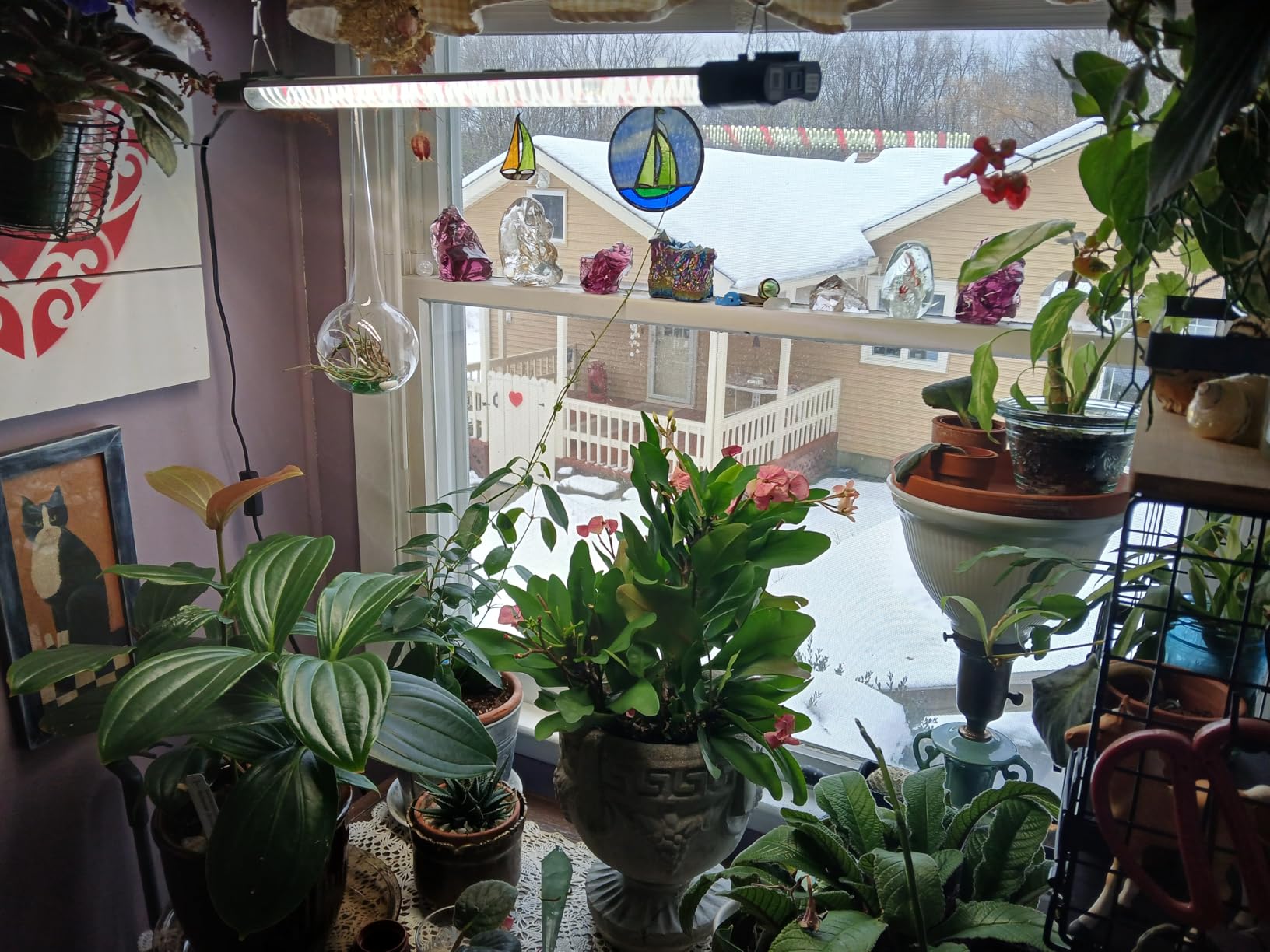
Installation is genuinely a five-minute job. The 2 foot hanging cable is included, there is an inline on/off switch, and FCC certification covers the driver. Owners use it for basement and window seed starting and report quick installs.
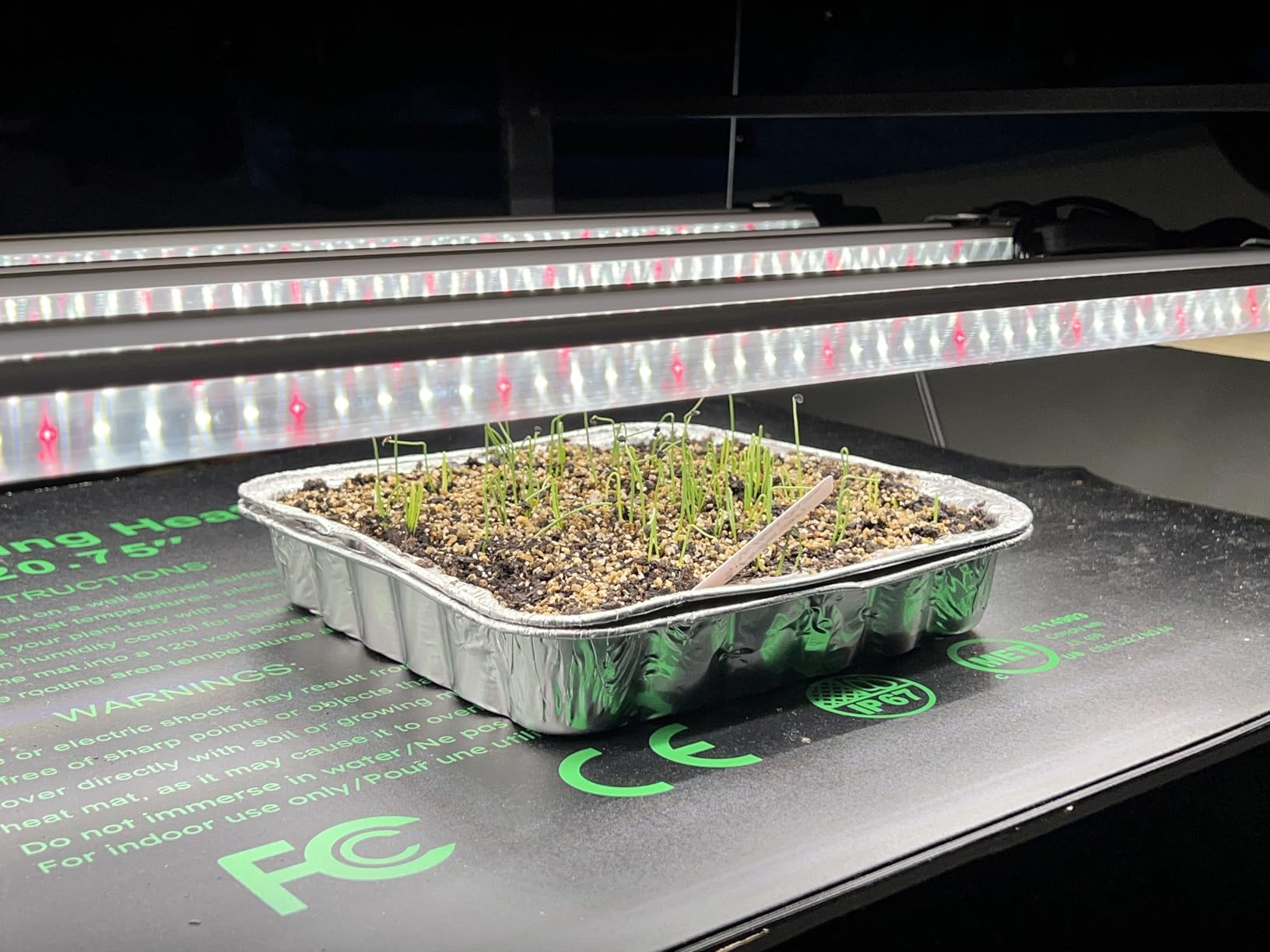
It runs warm but not hot, and at 16W the running cost over a 16 hour photoperiod is small enough that nobody in our group tracked it past the first week.
What to check before you buy
Unpack it fully on arrival. A few owners reported a dent that killed part of a tube, which is a shipping issue rather than a product flaw but still ruins the unit until it is swapped.
There is no timer and no dimming. Budget for a wall timer or smart plug, and control intensity only by height.
Where it falls short
The construction is lightweight and can feel inexpensive until you hang it, and it is not rated for wet locations, so keep it clear of condensation from a dome.
At 243 reviews it has the second-smallest review base here, so there is less long-term evidence on driver reliability than the Barrina or Litever kits have.
12. DYMOND BoostGro 2FT Fixture – the only one publishing a PPF number
DYMOND BoostGro LED Seed Starter Grow Light Full Spectrum Linkable 5000k Daylight + 660nm Red + 450nm Blue Indoor Plant Lighting Fixture (2 FT, Black)
16W, 1900 lumens, 28.8 umol/s PPF
450nm blue and 660nm red
Linkable to 4 units
Pros
- Publishes a real PPF figure at 28.8 umol/s
- 450nm blue tuned for young leaf growth
- Minimal heat keeps it close to cuttings
- Linkable and simple to hang
- 3-year limited warranty
Cons
- Not waterproof indoor use only
- Inline switch only with no built-in timer
Most fixtures in this roundup advertise lumens and leave it there. This one states 28.8 umol/s PPF at 16W, which is the kind of number you can actually use to work out how far to hang it. It is the same linkable platform sold under a different brand, and it is the only product here with a photon figure on the listing.
The spectrum adds 450nm blue tuned for seed starting and young leaf growth alongside 5000K daylight and 660nm red. For cuttings that are still relying on leaf photosynthesis to fuel root production, that blue band is the part doing the work.
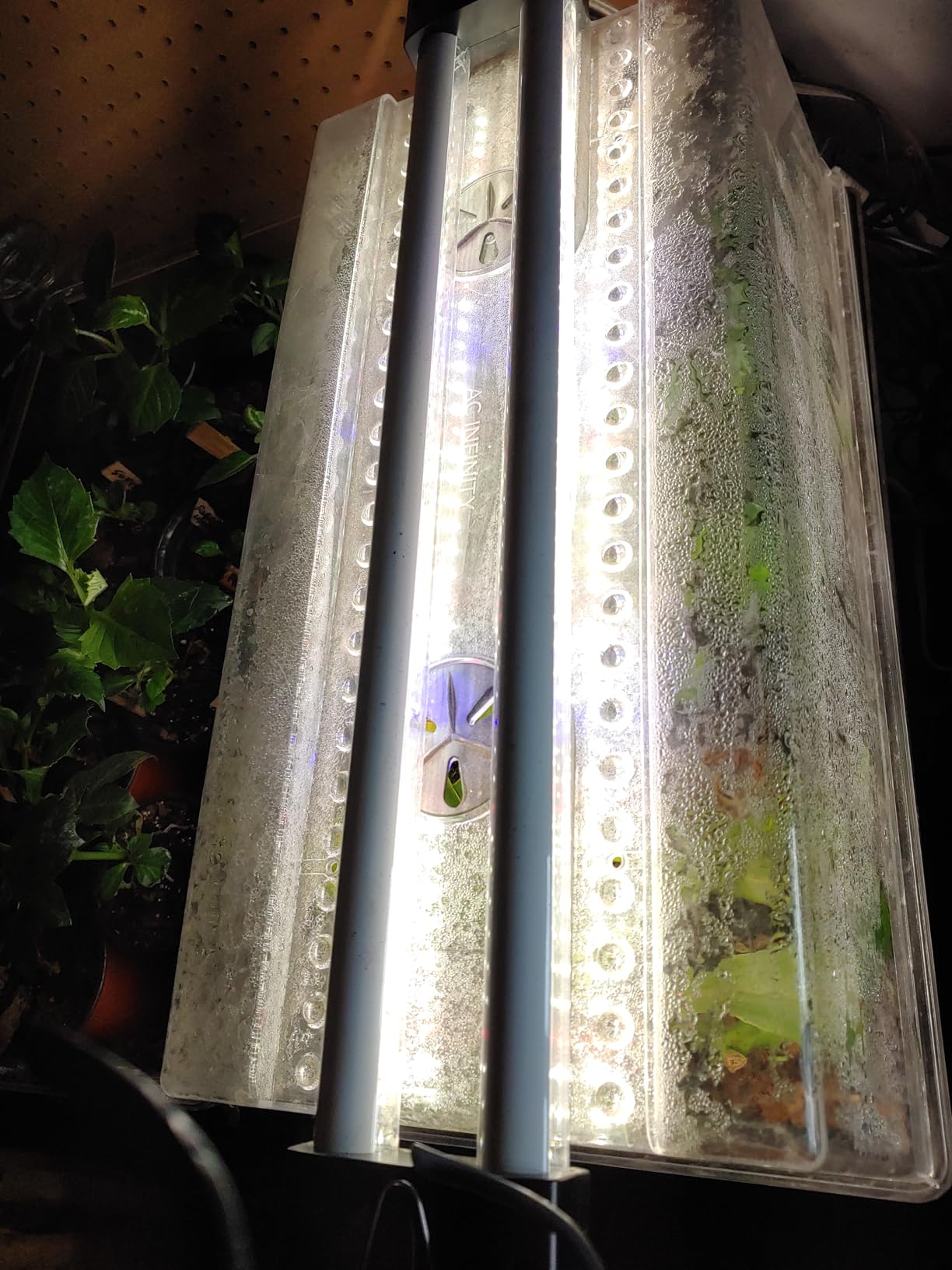
Heat output is minimal, which is why it is a reasonable choice near a domed propagator as long as you keep the unit itself outside the dome. It is not waterproof, so condensation should never reach the ends.
Like the APICDOM unit it shares a platform with, it daisy chains up to 4 units per circuit and includes a hanging cable with an inline on and off switch.
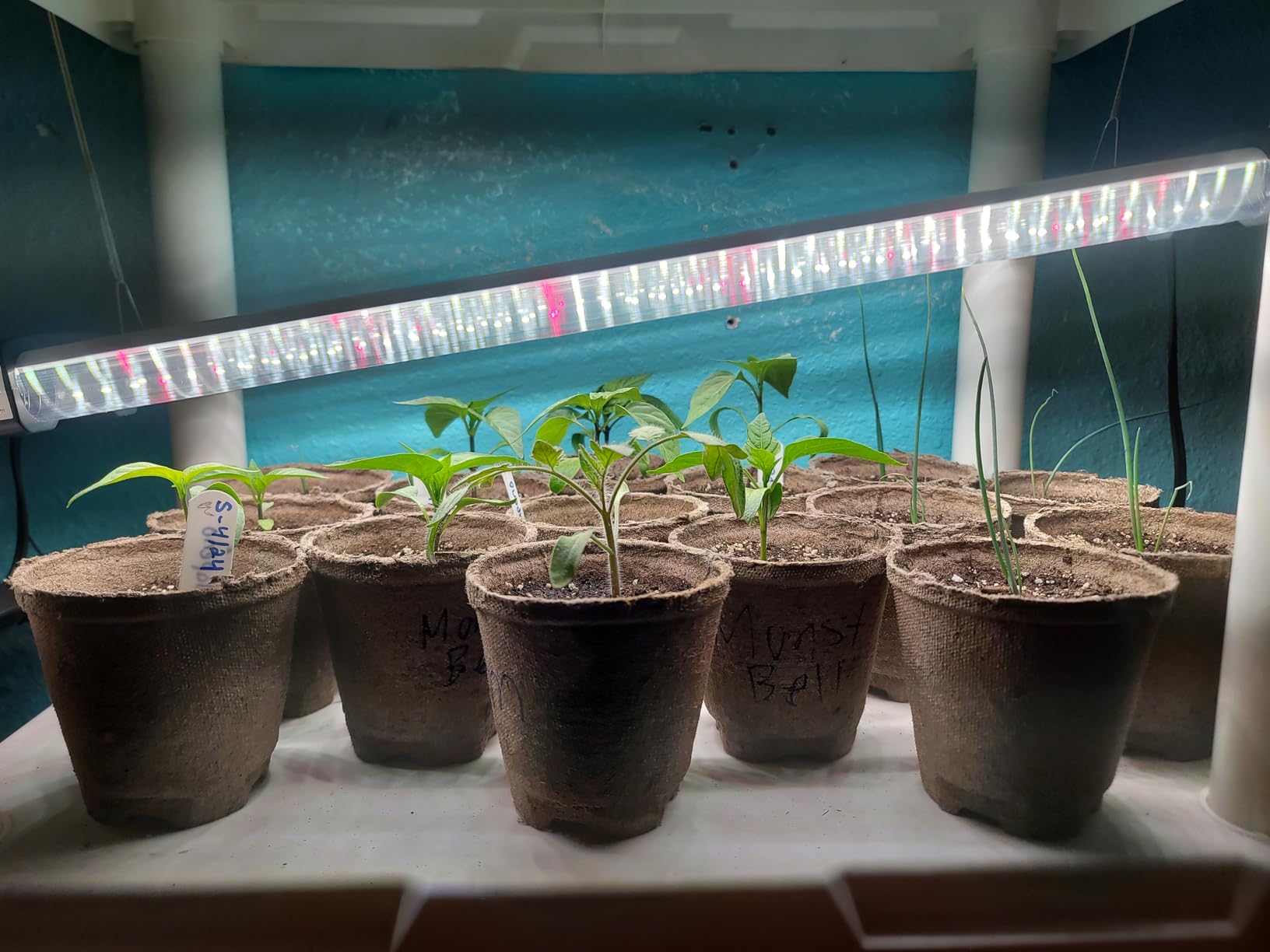
What to check before you buy
Treat the 28.8 umol/s figure as a fixture-level total, not a canopy reading. Real PPFD at the medium will be lower once you account for distance, reflector losses, and the edge of a tray, so plan to hang it closer than the number alone suggests.
There is no timer. Pair it with a wall timer so the 18-hour cycle holds steady through callus and rooting.
Where it falls short
It is for indoor use only, and that rules it out if your propagation shelf is anywhere damp or unheated.
At 131 reviews this is the smallest review base in the roundup, which means a thin track record on long-term driver reliability.
What Light Cuttings and Clones Actually Need?
Cuttings need far less light than a growing plant, and this is where most people overspend. A rooting stem is not photosynthesizing for yield. It is keeping its leaves alive long enough to push new roots, and it manages that with a modest, steady dose.
PPFD (photosynthetic photon flux density) is the number of usable photons landing on a square meter of plant per second, measured in µmol/m²/s. For cuttings, aim for 100 to 300. A mature flowering plant wants five times that.
DLI (daily light integral) is the total usable light delivered across a full day, in mol/m²/day. Running 200 PPFD for 18 hours gives 10.8 mol/m²/day, which is comfortably in range for a rooting stage.
PAR (photosynthetically active radiation) is the band of wavelengths between 400 and 700nm that plants can use. Nearly every grow light emits some of it, which is why “full spectrum” on its own is not a specification.
Photoperiod is how many hours per day the light stays on. Cuttings do well on 18 hours on, 6 hours off.
Light falls off with the square of distance. Doubling the gap from the canopy halves the intensity, and going from 12 inches to 24 inches leaves roughly a quarter of what you had. Hanging height is the single biggest lever you have, and it is free.
On spectrum, the honest answer is that it matters less than the marketing suggests. Forum discussion on r/BudScience points to published research concluding that light spectra have minimal effects on rooting and vegetative growth of clonal cuttings. Intensity, consistency, and distance are what change outcomes. Buy full spectrum for practicality, not because blue light builds roots faster.
How to Set Up a Propagation Light Station
Measure the tray before you buy anything. A 10×20 tray needs either two 16 inch bars or four 8 inch bars to be lit evenly, and a 1020 tray needs a single short bar. Buying a fixture before measuring is the most common reason people end up with a dark corner.
Set the initial height at 6 to 8 inches above the medium, or 10 to 12 inches if the fixture cannot be dimmed. Anything closer with a fixed-output light will bleach the newest growth, which is the softest tissue on the plant.
Program the timer before you plant. An 18 hour cycle is easy to set and easy to forget, and a propagation tray that goes dark for two days at the wrong moment loses roots it already started.
Raise the light as the cuttings stretch. Every time the shoots reach about two thirds of the distance to the fixture, add an inch. This is also the moment to cut intensity if your fixture dims, and to vent or fully remove any dome.
Keep the medium evenly moist but not soaked. Light is only half of it, and a tray that dries out under a warm light will lose cuttings no fixture can save.
Electricity and Safety in a Humid Propagation Room
Propagation lights are cheap to run because they are small. The whole 36W Litever kit, at 16 hours a day for 30 days, costs less than a single bar of fluorescent tubing would have. One forum user described running five shelves plus two heat mats on LEDs for about 165W total, and treated the electricity as a rounding error. That matches our own experience.
The real risk is not the wattage, it is water and electricity in the same box. Keep fixtures and their connections outside any sealed dome, use a drip loop on every cord, and prefer sealed strips such as the Litever kit when condensation is guaranteed.
For a humid room, use a GFCI-protected outlet for any shelf that gets sprayed, and keep total added load on the circuit well under its rating. If a shelf already runs a heat mat and a humidifier, add a light only after checking what the rest of the circuit is drawing.
Frequently Asked Questions
Should clones be under 24 hour light?
No. Cuttings and clones do best on a 16 to 18 hour photoperiod, and an unbroken 24 hours of light is a common early mistake. Continuous light pushes a cutting past the point where it can rest, and many growers see callusing stall and new growth stretch. Run the light for 18 hours and leave a genuine dark window. If your fixture only offers a 12 hour setting, use a separate timer to switch it off early, or pick a clip light with a longer cycle option such as a 16 hour mode.
How far should a grow light be from clones?
Start at 6 to 8 inches above the medium if your fixture dims, and 10 to 12 inches if it does not. Because light intensity falls off with the square of distance, doubling the gap cuts the intensity to a quarter, so height is your main dimming control. If cuttings are stretching, raise the light an inch at a time. If the newest growth looks pale, bleached, or curled, lower it or turn the brightness down.
How much light do clones need per day?
For rooting cuttings, aim for roughly 100 to 300 PPFD at the canopy over 16 to 18 hours, which works out to about 6 to 14 mol per square meter per day. You do not need a grow tent fixture to get there. A shelf bar delivering a few hundred PPFD is more than enough, and the expensive part of a high-wattage fixture is the output you do not want yet.
Is 10,000 lumens too bright for seedlings and cuttings?
Lumens alone will not tell you, because a lot of that light falls outside the 400 to 700nm range plants use. What matters is PPFD at the canopy. Ten thousand lumens from a wide bar hung 24 inches above a small tray can be perfectly reasonable, while the same figure concentrated at 6 inches can scorch new growth. Check the distance and look for a PPFD or PPF figure rather than comparing lumen totals across fixtures.
What color light is best for cuttings and clones to grow optimally?
Full spectrum white with a strong blue component, roughly 4000K to 5000K, is the practical answer. Blue drives compact growth in the leaves while the cutting is still relying on photosynthesis to fuel rooting. That said, published research cited in grower discussion has found minimal effects of light spectra on rooting of clonal cuttings, so treat a purple-only fixture as a cost and appearance decision rather than a results decision.
Are cheap LED shop lights good enough for propagation?
Yes, and the evidence from growers is consistent. Cheap LED tube shop lights are routinely used for clones and work out of the box, and growers on r/proplifting report that inexpensive lights work provided they sit no more than about 5 to 6 inches above the propagations. The trade-off is control: most shop lights have no dimmer, no timer, and no height adjustment, so a bar light with a built-in timer is worth a little more for a setup you plan to keep running.
What are the downsides of using grow lights for cuttings?
The main ones are heat inside a closed humidity dome, which dries the medium from underneath, and the risk of bleaching soft new growth when a fixed-output fixture sits too close. Adhesive-mounted strips that cannot be raised are another common problem, since they produce leggy propagations you cannot fix. Multi-tier stands also tend to fail at the joints. None of these are fatal, and all of them are avoidable by choosing a fixture with height adjustment and dimming.
Do cuttings need light to root at all?
Light is not strictly required for root initiation, and cuttings will spend stored energy forming roots in the dark. What light does is keep the leaves green and photoactive so there is enough energy to complete that work, and it prevents weak etiolated stems that collapse at transplant. Cuttings kept fully dark for weeks often root but produce spindly growth that struggles once potted up, which is the outcome growers are trying to avoid.
Final Verdict for Grow Lights in 2026
After working through all twelve, the Barrina T5 5000K 4-Pack is our pick for the best grow lights for cuttings and clones because it solves the three things that actually decide success: cool running, natural white light, and a bar you can raise as the shoots stretch. Add a wall timer and you have a propagation shelf that works.
If you want one box instead of four purchases, the AC Infinity dome kit is the shortcut, and if condensation is your main worry, the Litever sealed strips are the ones we would choose. Measure your tray before you buy, hang the light 6 to 12 inches up, and run it 18 hours a day. Those three numbers do more for your cuttings than any wattage on a box.