
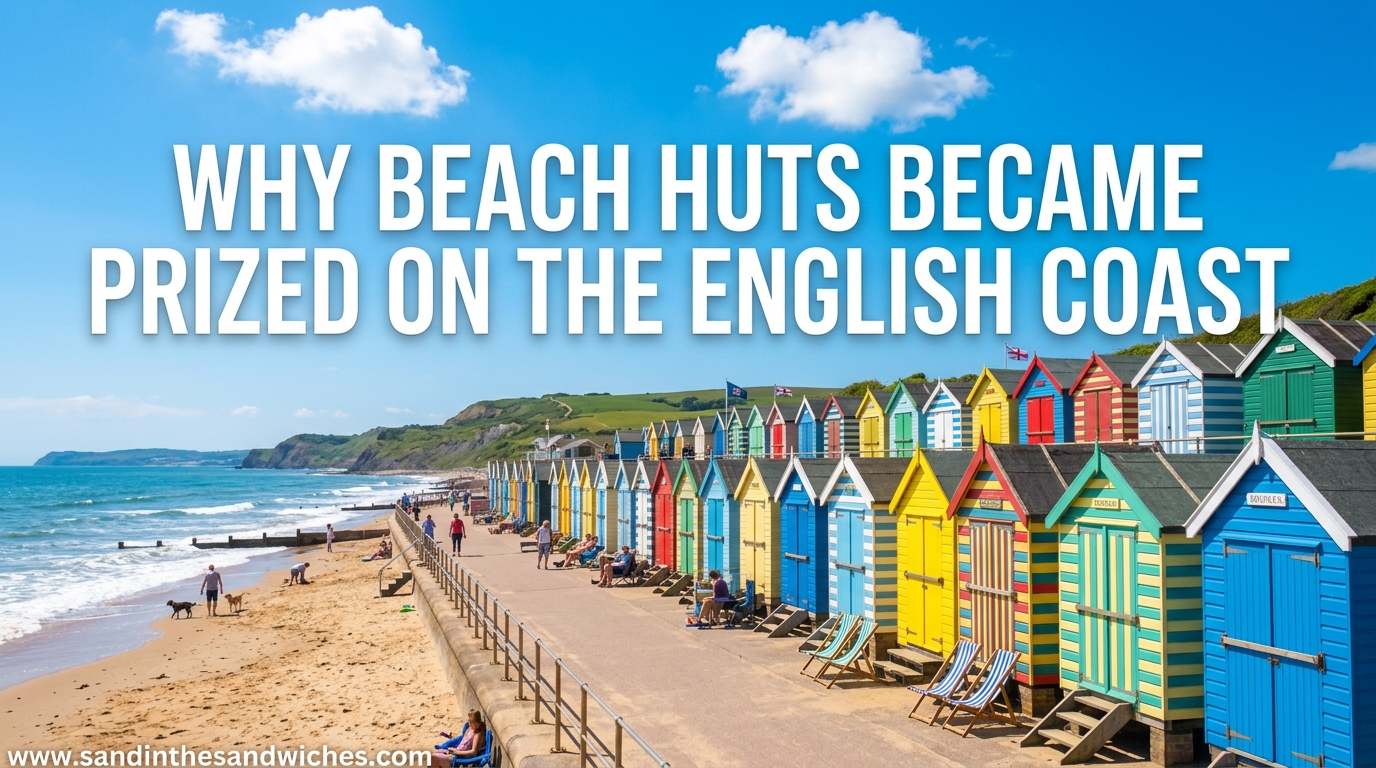
Walk along almost any stretch of the English coast and you will eventually spot them. Rows of brightly coloured wooden sheds lining the promenade, their double doors flung open to reveal deck chairs, bunting, kettles and the occasional dozing dog. Beach huts are small, simple and offer no toilet, no electricity and no running water. Yet some of these humble structures now sell for more than a detached house in many parts of Britain.
It is a genuinely British curiosity. Beach huts are, almost entirely, a British thing, and they have become prized possessions on the English coast for reasons that blend history, scarcity, nostalgia and a very particular national love of the seaside. In this article we trace how beach huts English coast residents covet evolved from wheeled Victorian bathing machines into half-million-pound status symbols, and why the obsession shows no sign of fading in 2026.
Table of Contents
From Bathing Machines to Beach Huts: A Victorian Beginning
The story of the beach hut begins not on the sand but in the sea. In the 1730s, coastal towns began introducing a remarkable contraption known as the bathing machine, a wheeled wooden cabin pulled by horse into the shallows so that bathers could change in private and step directly into the water.
Bathing machines were a direct product of Victorian morality. Mixed bathing was considered deeply improper, and the sight of anyone, particularly women, in anything resembling swimwear was treated as a scandal. Beaches were often segregated by gender, with separate sections cordoned off for men and women, and the bathing machine allowed people to enter the sea without ever being seen in their bathing costume.
The machines were remarkably elaborate. Some had a hood or tent that extended from the back, creating a fully enclosed private space in the water. A “dipper”, typically a sturdy woman for female bathers and a strong man for male bathers, would physically guide the swimmer into the sea and back. It sounds absurd today, but this was serious business in Victorian Britain.
The turning point came in 1901, when segregated bathing officially ended on many British beaches. Mixed bathing was finally permitted, and the rigid Victorian morality that had sustained the bathing machine began to loosen. By the 1920s, the bathing machine was in steep decline. People no longer needed to hide while entering the sea. They wanted to sunbathe, socialise and enjoy the beach openly.
But those wheeled wooden cabins did not simply vanish. Many were pulled up onto the promenade, stripped of their wheels and repurposed as stationary changing rooms and shelters. The modern beach hut, the colourful sentinel of the British coast, was effectively born from the bones of the bathing machine. Historian Kathryn Ferry of the Seaside Heritage Network has documented this transformation extensively, noting that the very layout of many hut rows still reflects where the bathing machines once stood.
Why Beach Huts Became Prized Possessions on the English Coast
So how did a repurposed Victorian changing room become one of the most desirable property purchases in Britain? The answer lies in a combination of factors that have steadily tightened their grip on the British imagination.
1. Scarcity. There are roughly 20,000 beach huts in the entire United Kingdom, a surprisingly small number when you consider the length of the British coastline. Local councils, who own most of the land the huts sit on, have not built new hut sites in decades. The supply is essentially fixed. You cannot simply build more beach huts, because there is no more promenade frontage to put them on, and planning permission for new coastal structures is notoriously difficult to obtain.
2. Nostalgia. Beach huts tap directly into the British obsession with seaside heritage. For generations of families, a beach hut meant bucket-and-spade holidays, tea brewed on a small gas ring, shelter from the inevitable rain, and grandparents dozing in deck chairs while children played on the shingle. That emotional memory is powerful, and people will pay extraordinary sums to recreate it.
3. Sentimental value. Unlike most property, beach huts are often bought for deeply personal reasons rather than pure investment. People buy them to continue family traditions, to honour memories of childhood holidays, or to create a permanent anchor for annual trips to a beloved stretch of coast. This emotional premium inflates prices well beyond what the structure itself is worth.
4. The status symbol effect. Owning a beach hut, particularly at a famous location like Mudeford Spit or Southwold, has become a marker of a certain kind of British success. It signals that you have the means and the taste to invest in something charming, heritage-rich and entirely non-essential. The beach hut has quietly joined the ranks of the classic car and the country cottage.
5. The Covid effect. The pandemic supercharged demand. With foreign travel restricted and Britons rediscovering their own coastline, interest in beach huts surged. People who had never considered buying one suddenly wanted a permanent base on the English coast. Estate agents reported record enquiries, waiting lists swelled, and prices climbed sharply between 2020 and 2023. That momentum has not fully reversed.
The Price Reality: What Beach Huts Actually Cost
The numbers are genuinely startling. The average price of a beach hut in Britain is around £39,000, which sounds almost reasonable until you learn what that actually buys you: a wooden shed, typically around 4 metres by 2 metres, with no utilities, on leased land you do not own.
At the top end of the market, the figures become extraordinary. At Mudeford Spit in Dorset, famously reachable only on foot, by bicycle or by a short ferry ride, beach huts have sold for over £500,000. That is half a million pounds for a timber cabin you cannot legally sleep in overnight. Southwold in Suffolk regularly sees huts change hands for £120,000 or more. Brighton and Hove huts, despite being on a council waiting list decades long, still command six-figure sums on the rare occasions they come up for resale.
Renting is the more accessible route into beach hut life. Daily hire typically costs between £30 and £100 depending on location and season, with premium spots like Mudeford reaching significantly more during peak summer weeks. For many people, a rented day in a beach hut provides all the joy of ownership without the eye-watering purchase price or the year-round maintenance headaches.
Famous Beach Hut Hotspots on the English Coast
Not all beach huts are created equal, and certain locations have become legendary in the beach hut world.
Mudeford Spit, Dorset. The undisputed crown jewel of the beach hut market. This sandspit near Christchurch is reachable only by foot, bike or ferry, giving it an isolated, almost exclusive feel. The huts here are the most expensive in Britain, with the record sale reported at £500,000. The combination of sheltered water, golden sand and dramatic views across Christchurch Harbour makes it the most coveted address in beach hut culture.
Southwold, Suffolk. The pastel-painted huts of Southwold are among the most photographed in England. They line the promenade above a Blue Flag beach, and their cheerful facades have become emblematic of the genteel Suffolk coast. Prices here routinely exceed £100,000.
Brighton and Hove. The Brighton beach huts are perhaps the most urban on this list, sitting directly beneath the city’s famous promenade. They are council-owned and managed through a waiting list that has been closed for years. Securing one is a genuine achievement.
Wells-next-the-Sea, Norfolk. The beach huts at Wells sit behind a wide sandy beach backed by pine woods, and many are mounted on stilts to protect them from high tides. They are among the most visually striking in the country.
Whitstable, Kent. Famous for oysters and sunsets, Whitstable’s beach huts have a more bohemian, weathered charm. They line the shingle beach and have become increasingly sought after as the Kent coast has grown in popularity with Londoners seeking a weekend escape.
The Community Behind the Coloured Doors
Talk to beach hut owners and one theme comes up again and again: it is not really about the shed. It is about the people. Beach hut rows function as informal communities, places where neighbours chat over the low fences, share kettles of tea, lend deck chairs and watch each other’s children dash between the hut and the waves.
Many owners describe a rhythm to beach hut life that feels almost suspended in time. The doors are opened first thing in the morning. Bunting goes up. Kettles are filled from a nearby tap. Someone always brings biscuits. The afternoon is spent reading, people-watching, or simply staring at the sea with a cup of tea in hand, waiting for the British weather to do whatever it plans to do next.
This social fabric is something no competitor article has properly captured, yet it is central to understanding why beach huts became prized possessions on the English coast. You are not buying a building. You are buying entry into a small, unhurried community of people who have all chosen to spend their free time sitting in a wooden box looking at the water. That shared impulse creates instant kinship.
The council management structure reinforces this. Because most huts sit on leased council land, hut owners are technically leaseholders rather than freeholders. This creates a shared stake in the upkeep of the site, the waiting list, the rules, and the long-term future of the row. It builds a sense of collective responsibility that few other forms of property ownership inspire.
The Realities: No Toilet, No Electricity, No Overnight Stays
It is worth pausing on the obvious question that baffles non-British observers and quite a few Brits too. Why would anyone pay hundreds of thousands of pounds for a wooden shed with no toilet, no electricity, no water and no right to sleep in it overnight?
The answer, addressed directly because forums like Reddit’s r/AskUK are full of this exact question, is that beach huts are not mini-houses. They were never meant to be. They are shelters, changing rooms, tea-making stations and observation posts. Their value lies not in what they lack but in what they provide: a permanent, personal patch of the British coast.
There are genuine downsides. Owners pay annual business rates or council ground rent. Insurance can be costly, particularly given the fire risk inherent in timber structures packed close together. Storm damage is a perennial worry. Maintenance never really stops. But for those who love them, these costs are simply the price of belonging to a stretch of coast they adore.
FAQs
Are beach huts a British thing?
Yes, beach huts are almost entirely a British phenomenon. While similar structures exist in a few other countries, the dense rows of brightly coloured wooden huts lining the English coast are a distinctly British tradition rooted in Victorian seaside culture. They evolved from British bathing machines and remain a beloved feature of UK coastal towns.
How much are beach huts worth in the UK?
The average UK beach hut costs around £39,000, but prices vary dramatically by location. At Mudeford Spit in Dorset, huts have sold for over £500,000. In Southwold, Suffolk, they regularly exceed £120,000. Brighton and Hove huts also command six-figure sums despite being on long council waiting lists.
Why are beach huts so expensive when they have no utilities?
Beach huts are expensive because of scarcity, nostalgia and sentimental value. There are only around 20,000 in the UK, supply is fixed because councils do not build new sites, and demand is driven by deep emotional attachment to British seaside heritage. Buyers are paying for a permanent patch of coastline, not for utilities.
Can you stay overnight in a beach hut?
In almost all cases, no. The vast majority of beach huts on the English coast are governed by council regulations that prohibit overnight sleeping. They are classified as day-use shelters for changing, making tea, storing beach equipment and enjoying the sea view, not as residential accommodation.
What is the most expensive beach hut ever sold?
The most expensive beach huts ever sold have been at Mudeford Spit in Dorset, where individual huts have reportedly changed hands for around £500,000. These huts are reachable only on foot, by bicycle or by ferry, and their combination of isolation, sandy beach and harbour views makes them the most coveted in Britain.
A British Obsession That Shows No Sign of Fading
Beach huts became prized possessions on the English coast through a remarkable transformation. What began as a wheeled box for preserving Victorian modesty has become a beloved national institution, a half-million-pound status symbol and the emotional anchor of countless British families. Scarcity, nostalgia and the timeless pull of the sea have combined to make these simple wooden structures some of the most coveted property in the country.
The next time you walk past a row of brightly painted beach huts on the English coast, remember that you are looking at more than painted timber and double doors. You are looking at two centuries of British seaside history, compressed into a few square metres of shingle-fronted paradise. And in 2026, that history is worth more than ever.