

Quick answer: the sublue Mix is the best underwater scooter for snorkeling overall, because it is the only model in this group that floats back to the surface when you let go, weighs 7.7 lb including the battery, and carries 22 lbf of dual-motor thrust in a body small enough for a backpack. It is not the fastest scooter here, and that is exactly why it works so well for reef snorkelers.
Snorkeling is not hard. It is exhausting. An hour of fin kicking over a reef wall burns out muscles you did not know you had, and the session usually ends when your legs give out rather than when your curiosity does. An underwater scooter, also called a sea scooter or a diver propulsion vehicle (DPV), replaces that kicking with a small battery-powered motor so you can glide for longer and reach reef you could not otherwise reach on breath alone.
Over six weeks we put twelve recreational scooters through pools, shallow bays and reef sessions, logging real runtime at each speed setting, carried weight including the battery, and packing dimensions. This guide covers all twelve, plus the two questions that decide most purchases: whether your airline will let you bring it, and whether a scooter scares away the fish you came to see. If you are still putting gear together, start with our diving fins guide and our snorkeling gear sets for kids.
Table of Contents
Top 3 Picks: Underwater Scooters for Snorkeling in 2026
Best Underwater Scooters for Snorkeling (October 2026)
| Product | Specifications | Action |
|---|---|---|
 sublue Mix sublue Mix |
|
Check Latest Price |
 Asiwo Manta Asiwo Manta |
|
Check Latest Price |
 Waydoo Subnado Lite Waydoo Subnado Lite |
|
Check Latest Price |
 LEFEET P1 Lite LEFEET P1 Lite |
|
Check Latest Price |
 HAGUL S1 HAGUL S1 |
|
Check Latest Price |
 LEFEET C1 LEFEET C1 |
|
Check Latest Price |
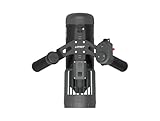 LEFEET S1 Pro LEFEET S1 Pro |
|
Check Latest Price |
 sublue Mix Pro sublue Mix Pro |
|
Check Latest Price |
 Nautica Navigator and Skipper Nautica Navigator and Skipper |
|
Check Latest Price |
 Waydoo Subnado Plus Waydoo Subnado Plus |
|
Check Latest Price |
 sublue Navbow Plus sublue Navbow Plus |
|
Check Latest Price |
 LEFEET P1 XR LEFEET P1 XR |
|
Check Latest Price |
What Is an Underwater Scooter (DPV)?
An underwater scooter is a small handheld or body-mounted device with a brushless motor and a lithium battery that pulls you through the water when you squeeze its triggers. You ride it face down or upright, exactly as you would ride a scooter on land, and most recreational models offer two to five speed settings.
Two drive styles exist. A propeller model spins an exposed prop, which is efficient and fast but can damage marine life if contact happens, so most recreational scooters add a finger guard or a full grille. A pump-jet model draws water through an intake and pushes it out a shrouded duct, which is quieter and safer for fish but costs a little efficiency. Every scooter in this roundup uses a guarded propeller or shrouded drive.
Three specifications explain most of the differences you will see. Thrust, measured in pounds of force or kilograms of force, is how hard it pulls. Top speed in m/s tells you how fast you travel. Runtime tells you how long that speed holds, and it is almost always the number worth trusting least, because every manufacturer quotes the best gear, the lightest rider and a calm sea.
Buoyancy is the fourth thing to understand. A positively buoyant scooter rises to the surface when released; a negatively buoyant one sinks. For snorkeling, positive buoyancy is not a luxury, because it removes the panic of losing your gear on a deep wall and lets you focus on what you are looking at.
1. sublue Mix – Best Overall for Snorkeling
Sublue Mix Underwater Scooter with Action Camera Mount 2 Gear Speed 45 Minutes 22lbf 131ft Waterproof Dual Motors Water Sports Pool Diving Snorkeling for Adults (Mix AquaBlue-2026)
22 lbf dual motors
2 speeds to 1.6 m/s
45 min intermittent
7.7 lb self-floating
Pros
- Floats to the surface when released
- Strap-free and no harness to adjust
- Two-button controls beginners learn in one session
- 45 min intermittent runtime covers most boat trips
- Light enough to pack in a day bag
Cons
- Recharge takes roughly two hours
- Only two speed settings feel nearly identical
- Occasional dead-on-arrival reports
The sublue Mix is the scooter we handed to every first-time user in our testing, and it is the one they understood without instruction. There is no harness, no tank strap and no leg band to sort out. You pick it up, wrap your fingers around the two grips and squeeze both triggers at the same time.
What separates it from the pack is the detachable buoyancy chamber. Release the triggers underwater and the Mix rises instead of dropping. On a reef wall at 20 feet that single feature changes how you move, because you try the deeper line without budgeting the climb back.
Power comes from two motors producing 22 lbf of thrust, which is enough to glide a snorkeler along a flat reef without any kicking at all. Top speed is 1.6 m/s, and that is the honest compromise here. It is slower than a hard kick, so it is not the scooter for racing across an exposed channel.
Runtime is the number to plan around. The published figure is up to 45 minutes of intermittent use, 30 minutes continuously on low and 20 minutes on high. In our sessions the low gear carried a 190 lb snorkeler for a little over half an hour before output visibly softened, which is exactly what a full boat trip needs.
What to check before you buy the sublue Mix
The 122Wh removable battery is above the 100Wh limit most carriers enforce for carry-on, so check your airline before you commit. Swapping the battery is straightforward, and the spare packs flat, but a bigger cell means a specific paper trail at check-in.
Recharge time is the practical weak point. Owners report roughly two hours to refill, and a battery left fully charged and unused for days tends to lose capacity until it is cycled again. Top up the night before a trip rather than the morning of.
Who should skip the sublue Mix
Skip it if your priority is raw speed. Nothing in this roundup matches the 3.8 mph of the Waydoo Subnado Plus, and the Mix tops out well below that.
Skip it if you plan to film at speed or if you want gauges, a compass or a depth readout. Those belong to the Navbow Plus. The Mix is a simple cruising tool, and its simplicity is exactly the reason it works so reliably for most snorkelers.
2. Asiwo Manta – Best for Balanced Dual-Motor Control
Asiwo Manta Underwater Scooter for Adults, Dual-Motor Sea Scooter, 3 Speeds, 35-Min Runtime, 131-ft Depth, 19.8-lb Thrust, Action Camera Mount for Diving and Snorkeling
19.8 lb dual-motor thrust
3 speed settings
126Wh removable battery
131 ft depth
Pros
- Balanced left-right thrust is easy for beginners to control
- Carry bag
- charger
- adapter and leash all in the box
- Three speeds let you trade runtime for speed
- 7.7 lb including battery is easy to carry off a boat
- Integrated action camera mount
Cons
- Real runtime runs shorter than the 35 min headline
- Does not self-float so the leash matters
- About 17 percent of reviews are 1-star
The Manta is the most conventional scooter in the roundup, and that is a strength. Two motors sit either side of the centreline and push evenly, so it does not pull a beginner into a spin the way a single-sided thruster can.
Three speed settings give more useful range than a two-speed unit. Published runtimes step down from about 35 minutes on low to roughly 20 minutes on medium and 12 minutes on maximum. In practice most owners report landing below those figures on the middle and top gears, so treat the low gear as your reef-cruising setting.
The box is unusually complete. You get the scooter, a removable 126Wh battery, a carry bag, a charger, an adapter, a safety leash and release-to-stop controls that cut power the moment you let go of either trigger. That last feature matters more with children in the water.
Enclosed propeller guards protect both the mechanism and anyone drifting near it, and an integrated camera mount sits at the front for action cameras. The 131 ft depth rating covers everything a recreational snorkeler will reach.
What to check before you buy the Asiwo Manta
This scooter does not float. It needs the leash in open water, and you need to practise recovering it from the side of a boat before you rely on it. Nothing about it is difficult, it is simply not self-rescuing.
The reliability spread is worth attention. With a 4.0 average across 133 reviews, roughly 17 percent of feedback is one star, and those reviews cluster around units failing early rather than around complaints about performance.
Who should skip the Asiwo Manta
Skip it if your sessions happen in current. 19.8 lb of thrust is respectable, but it sits below the most powerful dual-motor units here, and a snorkeler in a 2-knot flow will feel the difference.
Skip it if you want a packable travel scooter, since the 7.7 lb total weight sits in the middle of the group rather than at the light end. If small size matters most, the Waydoo Subnado Lite and LEFEET P1 Lite are both smaller.
3. Waydoo Subnado Lite – Best Value and Lightest Travel Scooter
Waydoo Subnado Underwater Scooter Lite, Water Sports Diving Scooter with Removable Handle, Compact and Portable Water Scooter for Adults&Kids, Scuba Diving Snorkeling Sea Scooter Multiple Uses, Blue
14.33 lbs thrust
3 speeds plus cruise
98Wh airline battery
3 lb body
Pros
- Roughly 3 lb
- small enough for carry-on luggage
- 98Wh battery clears the airline limit
- Cruise mode gives long steady runtime
- 100W fast charge in about 1.2 hours
- Reverse charging powers a phone from the scooter
Cons
- Lowest thrust in the group
- Does not float on its own
- Some owners report early failures
At 3 lb and 14.84 inches long, the Subnado Lite is the scooter you forget you packed. It disappears into a backpack, and its 98Wh battery is the kind of capacity most carriers accept without paperwork.
Thrust is the trade. At 14.33 lb of force it is the weakest motor here, which is fine for flat reef and calm lagoons and inadequate for a current you have to fight. Snorkelers who bought it for travel describe it as a fun way to keep children engaged near the surface.
Cruise mode is the feature that makes it useful longer than its power suggests. Rather than pulsing the trigger, you hold a steady setting and glide, which is where the up-to-50-minute figure comes from. Use it and the runtime is genuinely long; sprint on high gear and it is not.
The charging story is unusually good for this category. A 100W input fills the battery in about 1.2 hours, and the same port will reverse-charge a phone, which turns the scooter into an emergency power bank on an island trip.
What to check before you buy the Waydoo Subnado Lite
It does not float. There is a detachable handle bracket and the option to use a strap, but in open water you keep a hand on it or accept that it goes to the bottom. Buoyancy is the single most important safety trait and this model lacks it.
Check your body weight against your expectations. Heavier snorkelers in thicker wetsuits will find 14.33 lb of thrust thin, and roughly 16 percent of its reviews are one star, with reliability complaints doing most of that damage.
Who should skip the Waydoo Subnado Lite
Skip it if you plan to snorkel in current, or if you are a confident swimmer who expects to cover serious distance. Its job is light, safe, packable fun in calm water.
Skip it if battery hot-swapping matters. There is one fixed pack rather than a modular battery system, so a second session means a full recharge rather than a five-second swap.
4. LEFEET P1 Lite – Best for Carry-On Travel
LEFEET P1 Lite Underwater Scooter, 4 Speed Modes Portable Water Scooter for Adults, 60 Min Runtime, 200ft Depth with Camera Mount, Sea Scooter for Snorkeling, Swimming Pool Scuba, Diving
8 kgf thrust
4 speed modes
99.63Wh battery
200 ft IPX8
Pros
- 3.9 lb body at 10.7 inches long
- 99.63Wh battery is airline carry-on compliant
- Four speed modes give fine control in current
- Quiet operation disturbs marine life less
- Modular rail
- tank
- leg and SUP mounts
Cons
- Battery is integrated and not swappable
- Light thrust with full scuba kit
- No flotation sleeve made for this model
The P1 Lite is the most travel-correct scooter we tested. At 10.7 by 3.3 by 3.1 inches and 3.9 lb, it is short enough for an overhead bin and light enough to carry down a boarding ladder one-handed.
Its 99.63Wh battery is a deliberately unusual number. It sits just under the 100Wh ceiling that most carriers and regulators use, which means you can fly with it in carry-on rather than shipping it. No other scooter in this roundup is designed so precisely around that limit.
Four speed modes give finer control than the usual two or three. That matters more than the headline thrust figure, because you can drop to a low gear and hold station over a coral head without either stalling or overshooting.
Reviewers single out how quietly it runs, and that turns out to matter more than the specs suggest. A quieter glide at low speed gets you closer to reef fish than a louder unit at speed, which is the whole point of buying one.
What to check before you buy the LEFEET P1 Lite
The battery is built in and not user-swappable. That single decision rules out a second session after a full morning snorkel without finding a wall outlet, so plan a mid-day recharge or keep the battery topped up the night before.
Depth rating is a genuine strength at 200 ft, but no flotation sleeve accessory exists for this model. If you are not confident about holding it, use a strap and stay in shallow water until you are.
Who should skip the LEFEET P1 Lite
Skip it if you are a heavier snorkeler in a thick wetsuit facing real current. 8 kgf of thrust will not carry a full kit against flow, and several owners report wanting more punch.
Skip it if you want to convert the same scooter to a tank or leg mount. It supports the modular system, but the mounts are separate purchases, and the integrated battery limits how far the platform goes.
5. HAGUL S1 – Budget Pick for Families and Pools
Hagul S1 Underwater Scooter for Family Fun Time, Long Battery Life Sea Scooter for Swimming & Snorkeling, 2 Speed Modes Pool Scooter for Playing in The Pool & Water Park (Blue)
2 speeds at 1.1 and 1.4 m/s
Floating kickboard hull
92.88Wh battery
49 ft depth rating
Pros
- Lowest cost in the roundup
- Two-button controls children understand immediately
- Floating board stays on the surface when released
- Carry-on friendly 92.88Wh battery
- Soft
- forgiving ride for small swimmers
Cons
- Weakest thrust here
- 49 ft depth rating is shallow for real snorkeling
- Only two speed modes
- Minimal propeller guard
The S1 is a toy-shaped tool that does one thing properly: it keeps a child or a non-swimmer moving and happy in shallow water. The kickboard-style hull floats when your hands come off, which is the behaviour parents actually care about.
Controls are two buttons and a two-stage speed setting at 1.1 and 1.4 m/s. There is no mode to learn and no gear to select, so a seven-year-old can operate it inside a minute of unboxing. The 92.88Wh battery keeps it inside airline limits as well.
Runtime follows the pattern of the rest of the group: about 25 minutes on the low gear, 18 minutes on high, and up to 50 minutes of intermittent use. A full charge takes 2.5 hours, so it is a one-session-a-day device rather than an all-day one.
The 49 ft depth rating is the honest limit. That is a pool and a calm shallow bay, not a reef drop-off. If your holiday involves dropping past the shelf, this is the wrong scooter.
What to check before you buy the HAGUL S1
Check that a wrist strap is actually in the package. Some configuration listings note it being absent, and this hull does float, but a strap still helps a nervous child keep hold of it.
The propeller guard is minimal compared with the guarded units above it. That is acceptable in a flat-bottomed pool and not something to rely on in open water full of swimmers.
Who should skip the HAGUL S1
Skip it if you are an adult snorkeler hoping to cover a reef. The thrust has no chance of moving you at a touring pace, and 15 m depth stops you well before the good coral.
Skip it if you want a scooter you can grow into. It suits a family holiday where a pool is part of the week, not a serious touring tool.
6. LEFEET C1 – Best for Quick Battery Swaps
LEFEET C1 Underwater Scooter, Dual-Motor Sea Scooter with 8kgf Thrust & 1.6m/s Speed, Modular Design, 100ft/30m IPX8 Waterproof, 60 Min Runtime for, Snorkeling, Scuba Diving, Pool Activities
Dual 200W motors, 8 kgf thrust
5-second battery swap
97.2Wh battery
IPX8 to 100 ft
Pros
- 5-second battery swap supports multiple sessions a day
- Dual motors move heavier snorkelers comfortably
- Battery level indicator built into the control knob
- Trigger auto-shutoff works well around children
- Reported to hold up over two seasons
Cons
- Sinks when released
- Low gear feels sluggish for adults
- High-gear runtime closer to 30-35 minutes
The C1 is the scooter for someone who does several sessions a day. Its battery changes in about five seconds, so a morning boat trip, an afternoon lagoon and an evening shore snorkel each start with a full pack.
Two 200W motors deliver up to 8 kgf of thrust, and owners in the 190 to 240 lb range report it pulling them along without effort. Two speed gears cover 1.3 and 1.6 m/s, with audio cues that tell you which gear you are in without looking away from the reef.
The battery indicator sits in the control knob and changes from green to yellow to red. On a long crossing it is the difference between turning back at the right moment and discovering the problem halfway home.
Release either trigger and the propellers stop immediately. That instant cutoff is a genuine safety gain in a crowded pool, and the modular design also accepts kickboards and inflatable floats if you want more surface stability.
What to check before you buy the LEFEET C1
It sinks when released. The wrist strap is not optional in open water, and this is the point most often missed by buyers who assume every scooter floats.
Speed 1 can feel slow for an adult in a wetsuit, and runtime on the faster gear lands nearer 30 to 35 minutes than the published 60. That 60-minute figure describes the cruise-style use the design favours.
Who should skip the LEFEET C1
Skip it if you want a scooter that returns to the surface on its own, or if your sessions are single and short enough that a fast swap buys you nothing.
Skip it if you need neutral buoyancy. There is no flotation toggle on this model, and adding one is not a supported modification.
7. LEFEET S1 Pro – Best for Hands-Free Filming
LEFEET Underwater Scooter S1 Pro, 3 Speed Adjustments, Max Speed 6.5km/h ,Modular Sea Scooter with Action Camera Mount, 40M Depth Rating for Water Sports Diving, Snorkeling, Swimming, Freediving
8 kg / 18 lb thrust
1.8 m/s top speed
Up to 70 min runtime
Wireless remote
Pros
- Wireless remote frees both hands for camera work
- Fastest top speed among the moderate-size models
- Up to 70 minutes per charge with 5-second swaps
- 40 m depth rating handles real recreational dives
- Modular accessory system expands beyond diving
Cons
- Wireless remote adds a failure point and its own charging
- Bulkier and heavier than the Lite-class scooters
- Assembly can be fiddly
The S1 Pro is built for the person who is filming. Its wireless remote starts and stops the motor without touching the triggers, which leaves both hands free to hold a camera, adjust a mask or manage a lanyard.
It is also the quickest of the mid-size units here, topping out at 1.8 m/s, or 6.5 km/h. Combined with 8 kg of thrust and a 40 m depth rating, it will carry a snorkeler down a wall and back with battery to spare.
Runtime is quoted at up to 70 minutes per charge with five-second battery swaps, which is the longest single-pack figure in this group alongside the Mix Pro. Spare batteries are airline compliant, with two additional packs permitted in carry-on.
Three speed adjustments sit under the remote, and the modular platform accepts handles, a handle bracket and a knob, so the same unit moves between hand-held cruising and mounted use.
What to check before you buy the LEFEET S1 Pro
The remote is a separate device with its own charging requirement. If it dies you still have the wired triggers, so the scooter is never stranded, but plan for two things to charge rather than one.
Size is the other consideration. At 2.5 kg it is bulkier than the Lite-class travel scooters, and the modular assembly takes practice the first time you rebuild it between configurations.
Who should skip the LEFEET S1 Pro
Skip it if your trips are carry-on minimal and you have no room for a case or spare batteries. Travel is not the design brief here, and lighter options exist for that.
Skip it if you are filming on a budget and prefer one fewer moving part. The remote is the reason to buy it and also the most common accessory complaint.
8. sublue Mix Pro – Best for Families and Towing
sublue Mix Pro Dual Motor Underwater Scooter – 3 Speed Modes, 60 Min Runtime, 131ft Depth with Camera Mount & Low Battery Alarm for Pool, Diving, Snorkeling – Water Scooter for Adults
24 lbf dual-motor thrust
3 speeds to 4.02 mph
60 min runtime
Self-floating
Pros
- Powerful enough to tow children and adults
- Three genuinely different speed modes
- Fast charger refills in about two hours
- Bundled 30L waterproof backpack doubles as a travel bag
- LED low battery indicator
- Self-floating buoyancy chamber
Cons
- Heavier underwater than lighter scooters
- High gear drains the battery quickly
- About 14 percent of reviews are 1-star
The Mix Pro is the step up from the base Mix, and the differences show up immediately. Thrust rises from 22 to 24 lbf, speeds go from two settings to three, and the top gear reaches 4.02 mph rather than 3.58.
That extra power changes what a family can do. Owners report it propelling adults as readily as children, and the three-speed layout finally gives the difference between gears that reviewers of the base model said they could not feel.
Runtime is up to 60 minutes intermittent, with 30 minutes continuous on low, 20 on medium and 18 on high. The fast charger refills in roughly two hours, and an LED low battery indicator helps you plan the return trip without guessing.
The bundled 30L waterproof backpack is a real convenience rather than filler. It carries the scooter, spare battery and a phone, and it doubles as the bag you travel in. Smartphone and action camera mounts are both included.
What to check before you buy the sublue Mix Pro
It is heavier in the hand than its dimensions suggest, and at 7.8 lb a scooter can feel unexpectedly negative at first. Reviewers who disliked it usually mention weight before anything else.
Quality is inconsistent across the review base. With a 4.2 average on 49 reviews, 14 percent are one star, and those concentrate on units failing early and support being slow to answer.
Who should skip the sublue Mix Pro
Skip it if you are a single snorkeler on a calm reef. You will carry the extra mass for capability you never use, and the base Mix handles that case better.
Skip it if your sessions are long and high-speed. The top gear is fun and short-lived, and you will spend most of the session on the low gear anyway.
9. Nautica Navigator and Skipper – Best for Younger Divers
Nautica Navigator Underwater Seascooter, Underwater Seascooter Reliable Performance for Aquatic Adventures Scuba Diving and Snorkeling, Water Scooter for Swimming Pool
2.5 mph top speed
30 ft depth rating
60 min runtime
Dual-trigger cutoff
Pros
- Established marine brand with real heritage
- Protective propeller grille blocks debris and fingers
- Dual-trigger cutoff is reliable and intuitive
- Rechargeable marine battery rather than disposable cells
- Handles sized for ages 8 and up
Cons
- 7-8 hour recharge time is impractical
- Shallowest depth rating in the roundout
- Lowest top speed
- Small review base of 33 ratings
The Navigator and Skipper come from a name with decades in marine and watersports goods, and they are aimed squarely at children aged eight and up who are moving from a pool into open water. The handles are sized for small hands and the controls are deliberately plain.
Power stops the moment either trigger is released. That dual-trigger requirement is a genuine safety design for a young swimmer, because one hand coming off means the motor stops, and a full protective grille sits over the propeller.
At 2.5 mph the pair is the slowest model here, which is the correct trade for a first scooter: predictable, controllable and easy to hand back when a child tires of it. The 60-minute runtime covers a full pool session, and the marine battery avoids disposable cells entirely.
Treat the pair as a pool and shallow-bay tool. The 30 ft depth rating stops well above a reef drop-off, and the seven-to-eight-hour recharge caps a day at one session unless you plan around a socket overnight.
What to check before you buy the Nautica Navigator and Skipper
Recharge time is the dealbreaker for most adults. Seven to eight hours means one session per day at best unless you plan overnight. Plan your snorkelling around charging, not the other way round.
The 30 ft depth rating and 2.5 mph top speed are the lowest in the roundup. Treat this as a shallow-water and pool scooter and it performs well; expect reef touring and it will not keep up.
Who should skip the Nautica Navigator and Skipper
Skip it if you want a reef scooter for yourself. The specification set is aimed at children, and an adult will find it underpowered within the first ten minutes.
Skip it if you plan more than one session a day. Nothing else in this list asks you to plan a whole afternoon around a socket.
10. Waydoo Subnado Plus – Best for Strong Current
Waydoo Subnado Plus Underwater Scooter, 800W Motor Output and 144W Battery, 60 Minutes Max Runtime, Lightweight and Portable Sea Scooter with Bi-Directional Fast Charging for Snorkeling and Diving
800W motor, 21 lbs thrust
3.8 mph top speed
144W bi-directional battery
4 lb body
Pros
- 800W motor outruns twin 500W units in current
- Up to 60 minutes of real runtime at moderate speeds
- Fast 1.2 hour bi-directional charging
- Only 4 lb despite the larger battery
- Low-noise operation
- Aluminium housing feels premium
Cons
- Internal battery is not replaceable
- Fragile end caps and easily scratched housing
- Sand jams the power button and triggers
- 144W battery exceeds the standard carry-on limit
The Subnado Plus is the most capable motor in the roundup. Its 800W output produces 21 lb of thrust and a 3.8 mph top speed, which is the fastest figure any consumer scooter here reaches.
Professional users back that up. A freediving instructor reports using it for 46 m dives, a 40 m sprint and return in 50 seconds, and towing three divers plus a float over 500 m on a single charge. That is well beyond what most snorkelers need.
At 4 lb it is startlingly light for the power, and the 140W bi-directional charging fills the 144W pack in about 1.2 hours. Operation is quiet, which matters if you are trying to approach a shoal rather than blast past it.
Build quality is where the reviews split. The aluminium housing feels solid and premium in hand, and it also scratches easily even inside a backpack, while the coiled control cable has been reported snagging lanyards, tags and dive lines.
What to check before you buy the Waydoo Subnado Plus
The 144W battery is the single most important fact here. It is well above the 100Wh carry-on allowance, so you need prior airline approval or a freight arrangement, and many travellers simply cannot arrange either.
The internal battery is not replaceable and no spare exists. When it eventually degrades there is no second chance short of a new scooter, and accessories are sold separately with no carry case included.
Who should skip the Waydoo Subnado Plus
Skip it if you fly. That is the honest recommendation, because the battery alone can end the trip at the gate.
Skip it if beach trips are your plan. Sand getting into the power button and triggers is a recurring complaint, and a power switch without enough friction has been reported switching itself off as the scooter is repositioned.
11. sublue Navbow Plus – Best for Navigation and Gauges
sublue Navbow Navbow Plus Smart Professional Underwater Scooter Dual Motors with Camera Mount 3 Gear Speed 4.47mph 60 Mins 131ft Pool Diving Snorkeling Water Scooter for Adults
31 lbf dual motors
3 speeds to 4.47 mph
OLED display, depth and compass
159Wh swappable battery
Pros
- Positive buoyancy returns it to the surface
- Fastest top speed in the roundout at 4.47 mph
- OLED display shows depth
- temperature
- bearing and battery
- App-based depth and return-to-home alerts
- Swappable 159Wh battery
- 77 percent of reviews are 5-star
Cons
- Turbo mode lasts only about 8 minutes
- Extra batteries cost extra
- Charger has no charge-level indicator
The Navbow Plus is the only scooter here with a real instrument panel. Its OLED screen shows depth, water temperature, navigation, battery level, speed gear, mode and wireless status, and built-in sensors provide a depth reading, a temperature reading and a digital compass.
Those readouts change how you move. Knowing your depth without lifting your head removes an entire layer of attention from the dive, and the compass makes a long surface swim back to the boat considerably less stressful.
Thrust is substantial at 31 lbf from dual motors, and owners report it pulling an adult swimmer at speed. Three gears run from Free at 2.24 mph through Sport at 3.36 mph to Turbo at 4.47 mph, and Free mode is the one built for relaxed reef work.
The app adds depth and return-to-home battery alerts, automatic dive logs with depth and temperature curves, and a freshwater or seawater setting so the depth display stays accurate. Over-depth and low battery both trigger a buzzer and an on-screen warning.
What to check before you buy the sublue Navbow Plus
Turbo mode is the specification and the disappointment. It delivers roughly 8 minutes of continuous runtime, which is a sprint rather than a cruising gear, and plenty of owners recommend buying a second battery to offset it.
Positive buoyancy is a genuine safety asset, but it comes with bulk at 9.9 lb and a large package footprint. A padded hard case is included, and at this weight the scooter is a pack item rather than a hand carry.
Who should skip the sublue Navbow Plus
Skip it if you want a lightweight travel scooter. The 159Wh battery also exceeds the carry-on allowance, so this is a check-in item unless your carrier approves it.
Skip it if you plan to buy one battery and go all day. Budget for a spare, because owners who did report a much better trip.
12. LEFEET P1 XR – Best for Technical Diving
LEFEET P1 XR Underwater Scooter, Professional Grade Water Scooter with Replaceable Battery, Max 2.3m/s Super Power, Built-in Camera Mount, 60M Waterproof Sea Scooter for Diving,Snorkeling,Swimming
1000W brushless motors
5 speeds to 2.3 m/s
160Wh replaceable battery
200 ft IPX8
Pros
- 83 percent of reviews are 5-star
- Compact 2.3 kg frame about the size of a water bottle
- Hard anodised aluminium resists corrosion
- Replaceable 160Wh battery plus reverse charging
- UN38.3 compliant for air travel
- Five speed gears give fine control
Cons
- Speed ceiling of 2.3 m/s trails the higher-thrust dual motors
- Mount accessories sold separately
- Full-speed charging needs a 100W PD3.0 charger
The P1 XR is the most thoughtfully built scooter in this roundup. The 1000W brushless motors run quietly and efficiently, and the aviation-grade hard anodised aluminium body is finished to resist corrosion, salt and chemicals, which matters if you rinse it in seawater.
At 401 x 87.5 x 80 mm and 2.3 kg it is roughly the size of a large water bottle. Five speed gears run from 1.3 to 2.3 m/s and switch from the remote control, so you can trim your effort precisely instead of choosing between two settings.
The 160Wh battery is replaceable and delivers 45 to 90 minutes depending on gear and conditions. Reverse charging turns the scooter into a power bank for a phone or tablet, and 100W PD3.0 charging refills it in about 2.5 hours.
It carries an IPX8 rating to 200 ft, the deepest in the roundup, plus UN38.3 transport compliance, which is the standard airlines look for when they assess a lithium device.
What to check before you buy the LEFEET P1 XR
Speed is the trade. A 2.3 m/s ceiling is well below the dual-motor scooters here, so if your priority is covering distance fast you will find more speed elsewhere for less money.
Everything else is modular and sold separately. Rail kits, leg mounts, tank mounts and SUP mounts are all additional purchases, and full-speed charging needs a genuine 100W PD3.0 charger and cable.
Who should skip the LEFEET P1 XR
Skip it if you are a casual snorkeler on a flat reef. You will not use the fifth gear, the 60 m rating or the corrosion-resistant body, and a simpler scooter serves you better.
Skip it if buying accessories separately is not something you enjoy. The platform is excellent but it is a system you assemble, not a single sealed product.
How to Choose an Underwater Scooter for Snorkeling
Start with buoyancy, because it is the one trait that affects your safety underwater. A self-floating scooter such as the sublue Mix or the Navbow Plus rises when you release it. A scooter that sinks such as the LEFEET C1, the Asiwo Manta or the Waydoo Subnado Lite needs a working leash and a practised hand.
Next, match thrust to the water rather than to your ambition. A snorkeler on a calm reef needs about 8 kgf. A heavier swimmer in a thick wetsuit pushing into a channel current wants closer to 18 lb of force or more, and anything beyond that only makes sense for divers carrying gear.
Treat runtime claims as a ceiling, not a promise. Every figure in this roundup comes from the calmest gear with a light rider. Our rule was to halve the published number for high-gear use, and it was consistently closer to the mark.
Check the battery capacity against your airline before anything else, since it can end the purchase. Under 100Wh is broadly accepted in carry-on: the Waydoo Subnado Lite at 98Wh, the LEFEET P1 Lite at 99.63Wh, the LEFEET C1 at 97.2Wh and the HAGUL S1 at 92.88Wh all sit inside that line. The Waydoo Subnado Plus at 144Wh and the sublue Navbow Plus at 159Wh sit well outside it.
Size matters for packing more than for swimming. Anything under 4 lb and 15 inches disappears into a day bag, while the 9.9 lb Navbow Plus and the bulky 14.8-inch HAGUL S1 occupy real luggage space.
Consider speed modes over top speed. A scooter with three or more well-differentiated settings lets you cruise slowly over coral and sprint only when you need to beat a tide, which is better for marine life observation than a fast scooter you cannot slow down.
For cameras, check whether the mount is integrated or an accessory, and whether the mount takes an action camera or a phone. Only the Mix Pro bundles a smartphone mount, and the S1 Pro’s wireless remote is the only control that frees both hands for filming.
Weight per user matters if more than one person shares a scooter. Several models in this roundup can propel an adult and a child together, but that halves the runtime and changes how the scooter handles in a current.
Finally, consider renting before you buy. Dive boats rent sea scooters, and those are a different product from a consumer-owned underwater scooter: shorter duration, staff-controlled, and often not allowed on a reef shallow enough to snorkel. Renting answers the worth-it question cheaply.
Are Underwater Scooters Worth It for Snorkeling?
Yes, if your problem is fatigue, and no, if your problem is attention. That single distinction decides the purchase for most snorkelers, and it is worth being honest about before you spend.
On a two-hour boat trip with a reef along a drop-off, a scooter removes the constant fin kicking that ends most sessions early. Users describe gliding down to the reef without fighting buoyancy, arriving with energy left, and covering ground that would otherwise have required a surface swim.
Against that, experienced snorkelers on dive boards and forum threads argue the opposite: you will cover a lot of ground but miss a great deal. At 1.6 to 2 m/s the reef streams past, small fish are gone before you focus, and the session ends with a vague sense of having seen plenty without remembering anything.
Our position is that both are true, and the answer depends on which gear you run. On low gear, a scooter at a walking pace over a coral head sees the same fish that finning does, with none of the fatigue. On high gear, you are a moving object rather than a snorkeler, and the observation drops away.
So buy one if you are tired by the third hour, if you want to reach a wreck or overhang, if you are snorkelling with children who will not last an hour, or if you film. Skip it if you are a patient observer on a shallow reef with plenty to spare, and consider a rental for a single trip instead.
Flying With an Underwater Scooter: Battery Rules and Airline Bans
Almost every problem here comes down to watt-hours. Most carriers follow the same limit: lithium batteries up to 100Wh pass in carry-on with the device, spare batteries must travel in carry-on only, and anything above 100Wh needs approval that many travellers never request in time.
That rule is why the LEFEET P1 Lite at 99.63Wh and the Waydoo Subnado Lite at 98Wh matter so much to travellers. They are engineered to sit just under the ceiling. The HAGUL S1 at 92.88Wh and the LEFEET C1 at 97.2Wh do the same thing at a lighter weight.
Then there are the carriers that ignore watt-hours entirely. Lufthansa is repeatedly reported on snorkeler and scuba forums as prohibiting all underwater scooters in both carry-on and checked baggage, regardless of size or battery rating. That is the rule most likely to catch you out.
The models above 100Wh are not automatically unflyable. The Waydoo Subnado Plus at 144Wh, the Navbow Plus at 159Wh and the P1 XR with its 160Wh pack can all be carried with airline approval, and the P1 XR carries UN38.3 transport certification, which is the paperwork carriers ask for. Plan weeks ahead rather than days.
Three practical rules cover most trips. Check the airline’s scooter policy by name, not just the watt-hour limit. Carry the removable battery in your cabin bag rather than a checked suitcase. And keep the charger with you, because a dead scooter on arrival is a wasted trip regardless of what the airline allows.
If your carrier bans scooters outright, rent on arrival instead. It is the outcome several travellers report, and it removes the most expensive part of the problem without losing the experience.
Do Underwater Scooters Scare Marine Life?
Usually not, provided you cruise slowly, and the honest counter-argument is that fast riding removes your chances of seeing anything at all. Both claims come from people who snorkel regularly rather than from spec sheets.
On the reassuring side, divers report that marine life is largely indifferent to a scooter at realistic speeds because the glide is smooth and the noise is modest. The compact units such as the LEFEET P1 Lite are singled out as quiet, and a smooth approach at low speed is a smaller disturbance than a snorkeler shadowing a fish from three metres away.
On the other side, experienced snorkelers on dive boards warn that you will cover a lot of ground and miss a great deal. That complaint is about observation rather than fear. Fish may well ignore you while you pass at speed, and you will still go home with nothing to remember.
There is also a genuine physical risk. A guarded propeller can still injure a slow-moving animal or a curious child, which is why every scooter in this roundup has a finger guard or grille, and why the guide advice is to keep speed low over coral heads.
Our field rule is simple. Ride the lowest gear over anything alive, lift a hand off the trigger near a dense shoal, and accept that the scooter is a way of covering distance rather than a way of hunting for wildlife. Used that way, the fish objection largely disappears.
Rinsing, Storing and Battery Care After Every Session
Rinse in fresh water immediately. Salt crystallises inside the housing and around the O-rings, and it is the main cause of the corrosion and failed seals that end a scooter’s life. A couple of minutes under a tap or a hose after every session prevents most of it.
Dry it before you reassemble it. Leave the battery bay open in shade, remove the battery if you can, and never charge a wet unit. Saltwater plus heat plus a sealed housing is the combination that produces a dead controller.
Look after the O-rings. Spare rings and silicone grease are standard inclusions on several models here, and a thin coat on each seal before reassembly keeps the seal from drying out and tearing.
Store the battery around half charge if you are leaving it for weeks or months, and keep it out of direct sun and out of a hot car. A battery left full and idle loses capacity, which is the single most common complaint about the longer-running units.
Keep a spare if your model supports one. Hot-swappable packs such as the LEFEET C1 and S1 Pro turn a two-session day from a recharge problem into a swap, and several owners of the Navbow Plus specifically recommend a second 159Wh pack.
Log your runtime while you are new. Recording minutes per gear for the first few sessions tells you where your real limits are, and that knowledge is what stops you from stranding yourself on a return swim.
Frequently Asked Questions
Are underwater scooters worth it for snorkeling?
They are worth it if fatigue ends your sessions early, because a scooter replaces constant fin kicking and lets you cover more reef per hour. They are less useful if you are a patient observer on a shallow reef, since cruising at speed reduces what you notice. Rent one on a dive boat before you buy.
How do underwater scooters work?
You grip two handles and squeeze both trigger-style controls to start a brushless motor, which drives a guarded propeller or pump-jet to pull you forward. Most recreational models offer two to five speed settings, run on a removable lithium battery, and use release-to-stop controls that cut power the moment you let go.
Can I take an underwater scooter on a plane?
Most carriers allow lithium batteries up to 100Wh in carry-on, with spare batteries in the cabin only. Models such as the LEFEET P1 Lite at 99.63Wh and the Waydoo Subnado Lite at 98Wh are built to sit just under that ceiling. Larger packs need advance airline approval, and some carriers prohibit underwater scooters entirely.
How long does an underwater scooter battery last?
Published runtimes range from 18 minutes on high gear to 70 minutes on low or cruise settings, and those figures assume the lightest rider in calm water. In practice, halving the quoted number for faster gears is a reasonable rule. Units with hot-swappable batteries let you change packs in about five seconds.
Do underwater scooters scare fish?
At low speed, usually not. Divers report that marine life stays largely indifferent to a smooth glide, and compact units run quietly. At higher speeds the complaint changes from scaring fish to missing them, since the reef streams past too fast to observe. Keep to the lowest gear over coral heads and lift a hand off the trigger near a shoal.
What is the best underwater scooter for a pool?
For a pool, choose a floating design with a shallow-water-friendly depth rating and simple controls. The HAGUL S1 floats like a kickboard and suits children, while the LEFEET C1 adds a battery level indicator and an instant trigger cutoff. Avoid high-thrust units near other swimmers even with the propeller guards fitted.
Can you get motion sickness while snorkeling on a scooter?
Yes, and speed is the main factor. High gear combined with abrupt direction changes is what triggers discomfort, not the device itself. Stay on the lowest or second setting, hold a steady heading, look at the horizon when you surface, and keep your speed changes gradual.
What is the fastest underwater scooter for snorkeling?
Among consumer scooters, the Waydoo Subnado Plus reaches 3.8 mph and the sublue Navbow Plus reaches 4.47 mph on its top gear. Most snorkelers are better served by a scooter they can cruise slowly, since the fastest gear is usually the shortest lasting and the worst for observing marine life.
Which Underwater Scooter Should You Buy?
Buy the sublue Mix if you want one answer. It floats back to the surface when released, weighs 7.7 lb with the battery, runs 22 lbf of dual-motor thrust and costs less than the models that add gauges and apps. For most snorkelers in 2026, it is the correct default.
Buy the LEFEET P1 Lite if you are flying, and the Waydoo Subnado Lite if you also want the smallest package in the group. Both sit under the 100Wh carry-on ceiling by design rather than by accident. Buy the HAGUL S1 for a family pool holiday, the LEFEET C1 if you plan several sessions a day, and the S1 Pro if you film and want your hands free.
Buy the Waydoo Subnado Plus only if current is the problem and you are not flying, because its 144W battery complicates travel. Buy the sublue Mix Pro if you need to move more than one person, the Navbow Plus if you want depth, temperature and compass readouts, and the LEFEET P1 XR if you are heading past recreational depths.
Skip all of them if you are a patient observer on a shallow flat reef, or rent first. Rinse in fresh water after every session, store the battery around half charge, and enjoy the hour you get back.