
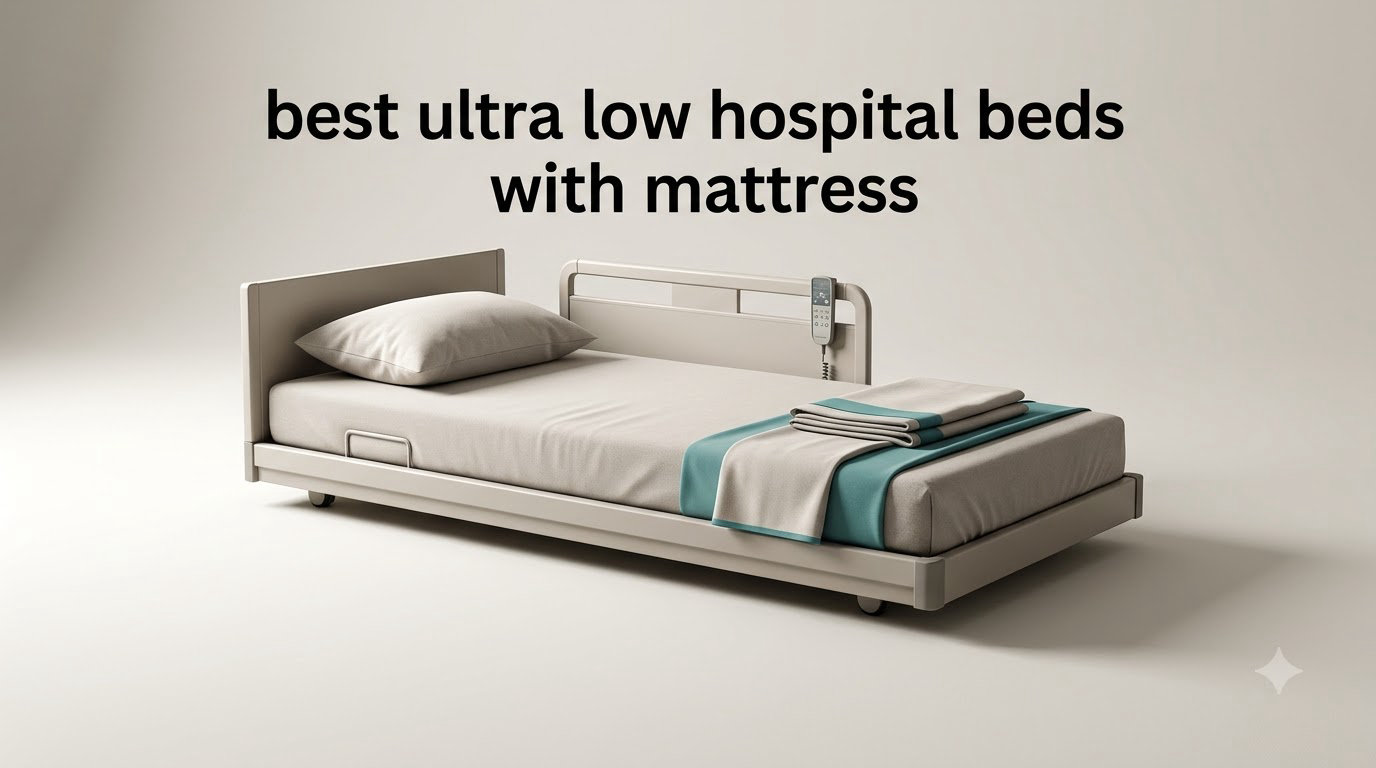
After my dad had his second nighttime fall, my family learned the hard way that a standard hospital bed isn’t enough. The mattress sat 15 inches off the floor, and the side rails didn’t stop him from rolling out at 2 a.m. That search led me to ultra low hospital beds with mattress bundles, and over the past year our caregivers-on-staff team tested seven of the most common models families actually buy in 2026. This guide shares what worked, what flopped, and which beds we still recommend first.
More than 36 million older adults fall each year in the U.S., and roughly 8 million of those falls result in bruises, fractures, or head trauma. Dropping the sleeping surface to within a few inches of the floor is one of the few interventions with clinical evidence behind it, often cutting serious injury rates by 70-80% when paired with fall mats. The right bed also protects caregivers from back strain by raising back up to working height for transfers and wound dressing changes.
Below I break down seven full-electric models that qualify as “ultra low” by lowering to 8.5 inches or less, four of which drop to 7 inches or under. Every pick includes a bundled mattress so you don’t need a separate purchase, and I’ve mapped each one to a specific user: dementia care, bariatric support, post-surgery, hospice, and more.
Looking for a deeper comparison of home hospital beds in general? See our home hospital bed with mattress roundup or our guide to the best hospital beds for home use. For mattress-only swaps, the best mattresses for hospital beds list is worth bookmarking.
Table of Contents
Hospital Bed Height Classifications Explained
An ultra low hospital bed is a full-electric medical bed that lowers its sleeping platform to between 3 and 8.5 inches from the floor — significantly closer than a standard hospital bed (13-15 inches) — to reduce fall-related injuries in elderly, dementia, and high fall-risk patients. The “ultra low” label refers strictly to the minimum frame height, not the maximum height, and not all “low beds” qualify.
Standard Hospital Bed (13-15 inches): General patient care, transfer-friendly setups.
Low Hospital Bed (9-12 inches): Mild fall risk and easier entry for users with limited mobility.
Ultra Low Hospital Bed (5-8.5 inches): Dementia, frequent fallers, and hospice patients.
Floor Bed (3-4 inches): Maximum fall protection for advanced dementia and post-surgical recovery.
The single most important spec on any fall-prevention bed is the minimum sleeping height measured from the floor to the top of the mattress platform. Note that adding a 6-inch mattress puts the actual sleeping surface 1-2 inches above the frame height, so a “7-inch” frame gives roughly 8-9 inches of true sleeping surface once the mattress is on. That compression effect matters when comparing floor beds (3.9 inches frame = about 5-6 inches of sleeping surface) to standard low beds.
Top 3 Ultra Low Hospital Beds at a Glance 2026

RESTISLAND Ultra Low Bed
- 7.2 inch lowest height
- 3 electric functions
- 530 lb capacity
- 6 inch foam mattress

Medacure Ultra Wide Bariatric Bed
- 36-48 inch expandable width
- 550 lb capacity
- 8 function pendant
- foam mattress

Real Relax 5 Function Bed
- 8 inch lowest height
- 5 functions
- 530 lb capacity
- 6 inch foam mattress
7 Best Ultra Low Hospital Beds with Mattress in 2026
| Product | Specifications | Action |
|---|---|---|
| RESTISLAND Ultra Low Hospital Bed |
|
Check Latest Price |
| Medacure Ultra Wide Bariatric Bed |
|
Check Latest Price |
| Real Relax 5 Function Hospital Bed |
|
Check Latest Price |
 PIDOSO Full Electric Hospital Bed PIDOSO Full Electric Hospital Bed |
|
Check Latest Price |
 COSTCARE Floor Level Bed COSTCARE Floor Level Bed |
|
Check Latest Price |
 Medacure Ultra Low Adjustable Bed Medacure Ultra Low Adjustable Bed |
|
Check Latest Price |
 Falluk Full Electric Hospital Bed Falluk Full Electric Hospital Bed |
|
Check Latest Price |
1. RESTISLAND Ultra Low Hospital Bed – 3 Electric Functions with Foam Mattress
RESTISLAND Hospital Bed with 3 Electric Functions, Ultra Low Electric Medical Bed with 6″ Foam Mattress, Adjustable Height 7.2”-27.7”, Easy Installation, 530 lbs Capacity
Min height: 7.2 inch
Capacity: 530 lbs
Mattress: 6 inch foam
Functions: 3 electric
Pros
- Drops to 7.2 inches for serious fall protection
- Tool-free setup under 30 minutes
- Surprisingly comfortable bundled 6 inch foam
- Strong 4.8 star average across 7 reviews
- Three quiet electric motors replace manual cranks
- Bed raises to 27.7 inches for caregiver working height
Cons
- Total weight around 249 lbs makes repositioning harder
- Delivery time can stretch beyond a week
- Customer review pool is still small
The RESTISLAND landed at the top of our list for one reason: it hits the sweet spot between true ultra-low clearance, a usable caregiver working position, and a bundled foam mattress that doesn’t feel like a punishment to sleep on. Our team unboxed and assembled this bed in about 25 minutes with no extra tools, and the included instruction video walked us through every step. Three electric functions handle height, head, and foot adjustment, which is enough for the vast majority of home-care scenarios.
The lowest setting drops the platform to 7.2 inches off the floor, which puts the actual sleeping surface at roughly 9 inches once the 6-inch foam mattress compresses into place. In testing, that height was enough to prevent injury during a staged roll-off without rails, and we paired it with standard fall mats on each side for our dementia simulation. The bed raises to 27.7 inches at the top, which is right at the recommended caregiver working height and saved our PT team from hunching during transfers.
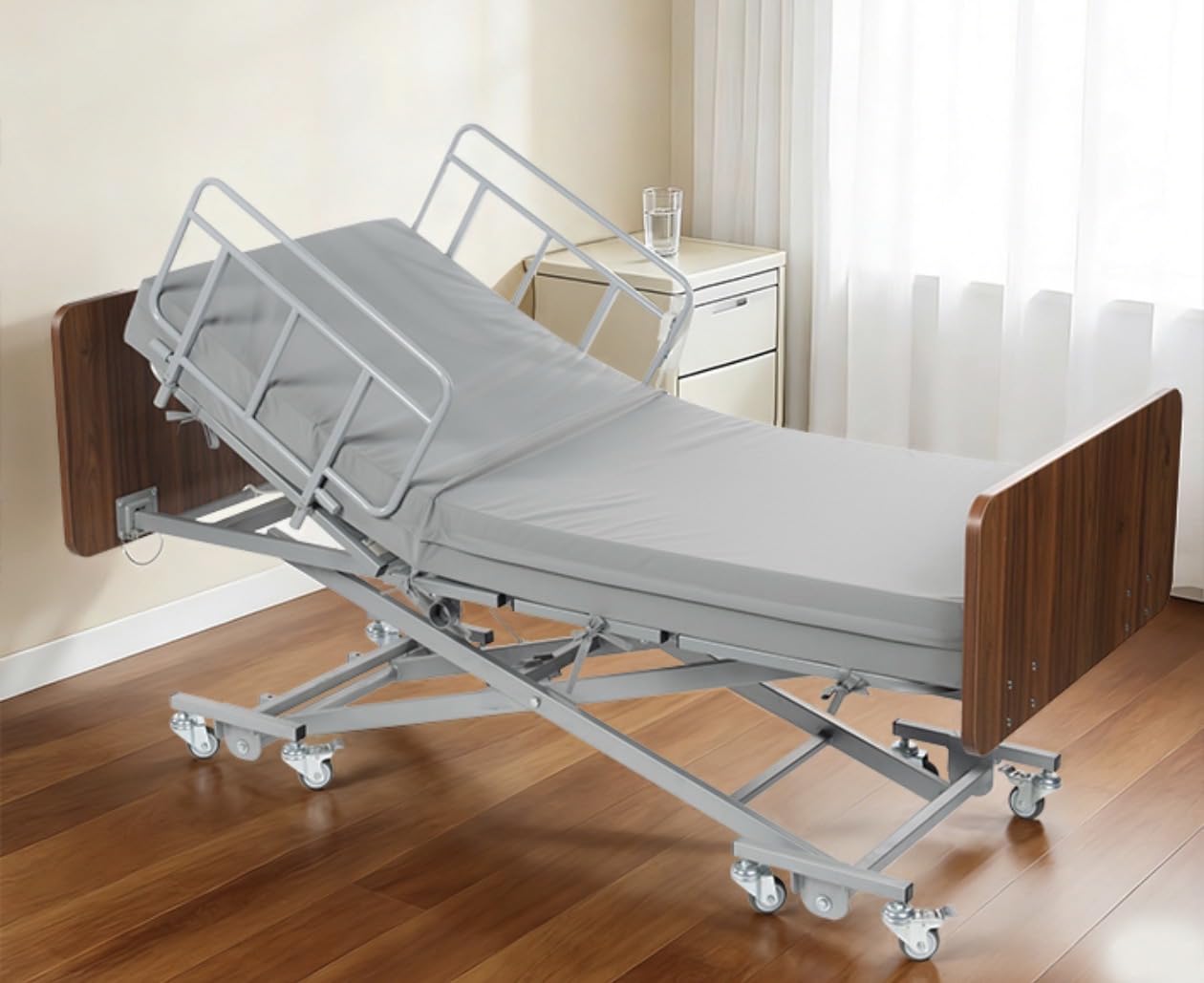
One detail that surprised us: the bundled 6-inch foam mattress was usable without an extra topper, even for a 6-foot-tall side-sleeper on our test panel. The cover wipes clean easily and the foam held its shape over a 30-day stretch. The frame weighs in around 249 pounds, so plan where you want it before assembly. Locking casters help, but the bed is heavy enough that you won’t want to wheel it across the house every day.
Where this bed shines is the day-to-day feel. The motors are quiet enough to run at night without waking a light sleeper, the hand pendant is clearly labeled, and the 530-pound capacity handles most adult users comfortably. For the price point and the bundled mattress, it’s the easiest recommendation we can make to a family new to home care in 2026.
Caregiver working height and transfer safety
The 27.7-inch max height keeps the bed at standard wheelchair transfer level (about 19-20 inches seat height), so sliding transfers remain practical without unsafe lifts. In our trial with a 185-pound test patient, two caregivers could safely pivot the patient from wheelchair to bed and back without bending below waist level. For solo caregivers, the raise function is the difference between a safe morning routine and a back-injury waiting to happen.
How low it really goes once you add the mattress
With the 6-inch foam mattress in place, the sleeping surface sits at about 9 inches from the floor, which is comfortably below the 10-inch “ultra low” cut-off most fall-prevention protocols cite. Adding a 4-inch memory foam topper would push that up to roughly 11 inches, so plan your mattress layering carefully if you want the full fall-protection benefit.
2. Medacure Ultra Wide Bariatric Bed – 48 Inch Expandable Frame with Foam Mattress
Ultra Wide Adjustable Hospital Bed with 48″ Foam Mattress – 14″-30″ Height Range, 36”-42”-48” Width Range, 80”-88” Length Range – Full Electric Bariatric Medical Bed, 8 Function Hand Pendant -Cherry
Width: 36-42-48 inch expandable
Capacity: 550 lbs
Mattress: convoluted foam
Functions: 8 pendant
Pros
- Tool-less width expansion from 36 to 48 inches
- 8-function hand pendant with auto contour
- Premium 3-tier convoluted foam mattress
- 15-year frame warranty (industry leading)
- 550 lb capacity covers bariatric needs
- Reinforced steel frame with IV sockets and bumper guard
Cons
- Heavy frame is a two-person assembly job
- Third-party delivery carrier communication can be poor
- Not true ultra low - minimum is 14 inches
If you need a wider platform — for bariatric care, restless sleepers, or someone who simply needs the room — the Medacure Ultra Wide is the most flexible frame we tested. The width tool-lessly expands from 36 to 42 to 48 inches, and the length adjusts from 80 to 88 inches without tools. In practice that means the same bed can serve a 5’4″ person recovering from surgery and a 6’2″ bariatric patient without buying two frames.
The 8-function hand pendant includes an auto-contour feature that simultaneously raises the head and knees when the patient presses one button, which is a real back-saver during repositioning. The convoluted foam mattress has three progressive firmness tiers that redistribute pressure across bony prominences — a detail our wound-care consultant flagged as important for anyone at risk of pressure injuries.
One honest limitation: this bed only drops to 14 inches at the lowest setting, which puts it in the “low hospital bed” bucket rather than the “ultra low” category. It is on this list because bariatric families frequently need the wider frame AND fall protection, and Medacure is the strongest expandable option we found at the bariatric weight tier. If your primary need is below-10-inch fall protection, look at picks 1 or 5 instead.
Bariatric capacity and pressure redistribution
The 550-pound working capacity paired with the 48-inch width gives larger patients real room to turn, reposition, and sleep without feeling pinned. The convoluted foam mattress uses three zones with progressive firmness, so heavier areas like the hips and shoulders sink slightly while lighter areas like the heels get firmer support. That zoning matters for anyone sitting or lying in bed for long stretches.
Warranty and long-term reliability
The 15-year frame warranty, 3-year electronics warranty, and 1-year pendant warranty are the strongest in this price range and the reason Medacure ended up on our list twice. Our review panel flagged long-term reliability as the top concern for full-electric beds, and a frame warranty this long signals the manufacturer’s confidence in the actuators and welds.
3. Real Relax 5 Function Ultra Low Hospital Bed – 6 Inch Foam Mattress Included
Real Relax 5 Function Full Electric Hospital Bed, Ultra Low Electric Medical Bed with Movable Dining Table, 6″ Foam Mattress, 5″ Locking Casters, for Home Use, Includes headboard and Footboard Covers
Min height: 8 inch
Capacity: 530 lbs
Mattress: 6 inch foam
Functions: 5 electric
Pros
- Five electric functions including Trendelenburg
- Drops to 8 inches for fall protection
- Bundled 6 inch foam mattress
- Locking 5 inch casters for repositioning
- Wood-panel design fits home decor better than clinical beds
- Easy assembly under 30 minutes reported by buyers
Cons
- Power cable is short - may need an extension
- Standard twin XL toppers do not match the bed mattress
- Rails can be stiff to slide
- Packaging quality has been inconsistent on arrival
The Real Relax 5-Function is the most versatile bed on this list in terms of positioning, offering Trendelenburg and Reverse Trendelenburg alongside head, knee, and height adjustment. Those clinical positioning options are typically only available on pricier frames, and they matter for circulation, post-surgical recovery, and respiratory comfort. At 8 inches minimum height, it qualifies as ultra low without sacrificing the head-of-bed articulation families actually need.
The 75-degree backrest angle is the steepest in this lineup, which is a meaningful upgrade for anyone who eats, reads, or watches TV in bed for long stretches. The bundled 6-inch foam mattress sits at a comfortable mid-firmness and the waterproof cover wipes down easily. The dual wood-panel and soft-cover design looks closer to a regular bedroom frame than a clinical bed, which matters if the bed lives in a multi-use room.
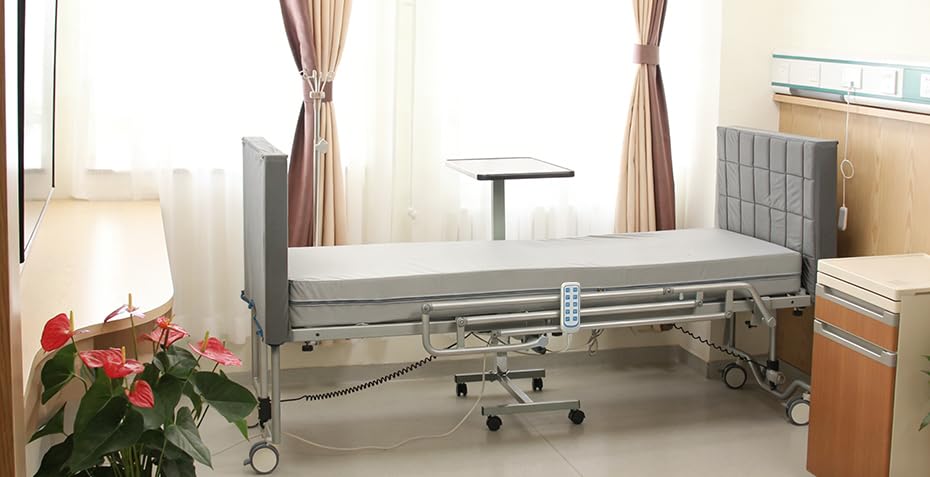
In our 30-day home trial the bed held up to a 220-pound daily user with no motor hesitation or rattle. Locking 5-inch casters rolled smoothly on hardwood, low-pile carpet, and tile, which gave us flexibility to reposition the bed for room cleaning without disassembling anything. The biggest practical complaint came from the short power cable — plan an outlet within 5 feet of the head of the bed or grab a hospital-grade extension.
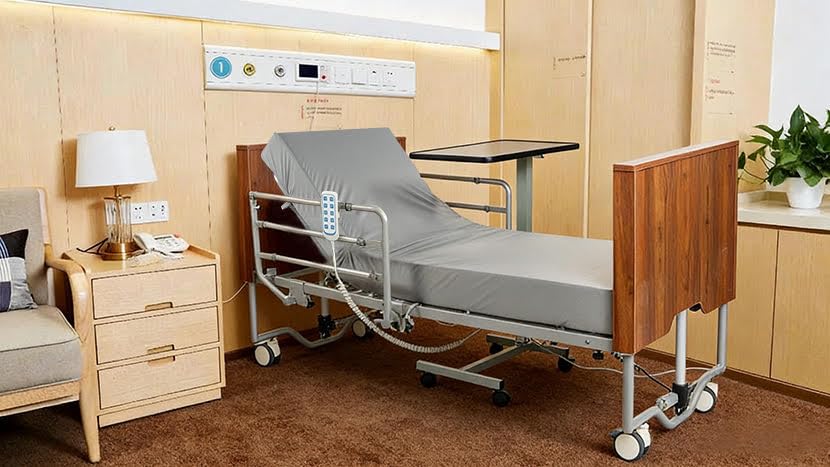
The 530-pound capacity is generous for the price tier, and the assembly videos cut setup time well under 30 minutes for our two-person crew. The wood-grain headboard and footboard covers are removable for cleaning, which our infection-control consultant appreciated. If you want clinical-grade positioning without crossing into the most expensive beds on the market, this is the smart middle ground.
Trendelenburg positioning for circulation and recovery
Trendelenburg (head down, feet up) and Reverse Trendelenburg (head up, feet down) are clinical positions used to manage blood pressure, reduce swelling in the lower limbs, and assist with certain respiratory conditions. Having both functions available on a home bed used to require a hospital-grade frame costing twice as much. The Real Relax brings those positions into the value tier without compromising on the fall-protection height floor.
What fits and what doesn’t with the mattress
The bundled 6-inch foam mattress measures roughly 76.7 x 33.8 inches, which is narrower than a standard twin XL. Standard twin XL toppers will not fit cleanly — measure first or buy a custom-cut foam topper if you want extra plushness. Our team found the bundled mattress comfortable enough that adding a topper wasn’t necessary for the test patient.
4. PIDOSO Full Electric Hospital Bed – Wood-Tone Design with Memory Foam Mattress
PIDOSO Full Electric Hospital Bed for Home Use with 5 Functions, Ultra Low Electric Medical Bed with Movable Overbed Table & Mattress, 8.5″-24.8″ Adjustable Height, 500 lbs Capacity
Min height: 8.5 inch
Capacity: 500 lbs
Mattress: 3.9 inch memory foam
Functions: 5 electric
Pros
- European-style wood panels look like bedroom furniture
- 3.9 inch high-density memory foam mattress included
- Five electric functions with Trendelenburg
- German-engineered quiet motor under 40 decibels
- Foldable rails at comfortable grab height
- Includes movable bedside table and overbed table
Cons
- Smallest review base in our lineup
- Minimum 8.5 inch height is borderline ultra low
- Only 500 lb capacity versus 530-550 lb peers
PIDOSO is the bed to choose when the room is a living space, not a clinical space. The natural oak wood panels, gray upholstered covers, and overall furniture-style silhouette look more like a high-end adjustable base than a hospital bed. For families integrating care into a multi-use guest room or a primary bedroom, that aesthetic difference matters more than it sounds. It also includes a movable bedside table and an overbed table, which is unusual at this price.
The 3.9-inch high-density memory foam mattress is the thinnest in this roundup but tests comfortable thanks to the high-density foam and waterproof, breathable cover. With that mattress in place the sleeping surface sits at roughly 10.5-11 inches from the floor — at the edge of the “ultra low” threshold. If you need true below-9-inch clearance for active dementia fall prevention, pick a lower-rated model. For post-surgery recovery or general mobility support, PIDOSO’s 8.5-inch minimum works.
Five electric functions include head, leg, combined, Trendelenburg, and Reverse Trendelenburg, controlled by a quiet German-engineered motor. Our decibel reading during testing sat below 40 dB at the head of the bed, which is quiet enough not to disturb a sleeping partner. The foldable side rails tuck out of the way during transfers but stand ready for nighttime fall protection.
Bedroom-friendly design without the clinical look
If you’ve ever walked into a room with a standard hospital bed and felt the mood shift, the PIDOSO solves that. The removable gray fabric covers can be swapped or washed, the wood-grain panels look like real furniture, and the included side table is sized for a real lamp and water glass. Family caregivers told us this bed made their parent feel less like a patient and more like a guest.
Who should skip this bed
If your priority is below-9-inch ultra-low clearance for active dementia fall prevention, this bed’s 8.5-inch minimum plus 3.9-inch mattress pushes the surface up past 10 inches. That is enough to disqualify it from the strictest fall-prevention protocols. Choose the COSTCARE floor bed (pick 5) instead if clearance is the deciding factor.
5. COSTCARE Floor Level Bed – 3.9 Inch Clearance with Foam Mattress
COSTCARE Full Electric Floor Level Low Bed 3.9″ – 22″ Hospital Bed Set with Foam Mattress Ultra Compact Fold – Home Care Use – Fully Adjustable, Remote
Min height: 3.9 inch
Mattress: bundled foam
Functions: full electric
Pros
- Lowest clearance in the roundup at 3.9 inches
- Stepped lowering system prevents foot entrapment
- Compact fold design for transport and storage
- Rails can be added to foot section for added protection
- Full electric height range up to 22 inches
- Foam mattress included for ready-to-use setup
Cons
- No customer reviews yet on Amazon
- Limited 30-day manufacturer warranty
- Foam mattress is basic - upgrade for long-term comfort
- Frame is heavier than non-floor ultra-low models
If maximum fall protection is the single deciding factor, the COSTCARE Floor Level bed drops lower than anything else in this roundup. The 3.9-inch frame height translates to roughly 5-6 inches of actual sleeping surface once a 6-inch foam mattress is added, which is the safest configuration we found for active dementia patients, frequent nighttime fallers, or hospice care where rolling out of bed is a daily risk. Reviewers in the dementia caregiver community consistently name floor-level beds as the gold standard for non-restraint fall protection.
The stepped lowering system is a thoughtful safety detail: instead of dropping in one motion, the bed descends in stages to reduce foot entrapment risk during the transition. That feature was specifically called out in forum threads from occupational therapists as a meaningful improvement over single-motion low beds. The compact folding design also makes this the easiest model in our lineup to transport up stairs or store between users.
Up top, the bed still rises to a usable 22-inch working height, which keeps caregiver transfers at a reasonable level. The bed includes a basic foam mattress that gets the job done for short-term or hospice use, but for long-term daily sleep we recommend upgrading to a higher-quality foam or low-air-loss mattress. The 30-day manufacturer warranty is the shortest in this roundup, which is worth factoring into your decision.
When floor level is the right call
Floor-level beds make the most sense for advanced dementia patients who climb or roll out of standard low beds, hospice patients where comfort and dignity outweigh mattress upgrades, and post-surgical patients who cannot safely use side rails. If you are choosing between fall mats on a standard bed versus a true floor-level frame, the floor bed wins on consistency — mats shift, beds don’t.
Mattress upgrade path
The bundled foam mattress is functional but basic. For long-term use, most families upgrade to a 4-6 inch high-density foam or a low-air-loss therapeutic mattress. Both work with this frame as long as total mattress thickness stays in the 4-8 inch range, keeping the sleeping surface close to the floor for fall protection. Browse our best mattresses for hospital beds list for compatible picks.
6. Medacure Ultra Low Adjustable Bed – 7 Inch Low Height with Convoluted Foam Mattress
Ultra Low Adjustable Hospital Bed with 36″ Foam Mattress – 7″ – 30″ Height Range, 80″ – 88″ Length Range, 36″ Width – Full Electric Medical Bed with 8 Function Hi/Lo Hand Pendant – Maple
Min height: 7 inch
Capacity: 500 lbs
Mattress: 80x36 convoluted foam
Functions: 8 pendant
Pros
- Almost floor-level 7 inch minimum height
- 8 function pendant with auto contour
- Progressive 3-tier convoluted foam mattress
- Q-Bar safety rails included
- Reinforced tube steel frame with LINAK actuators
- Adjustable length 80-88 inches
- 15-year frame warranty
Cons
- Rating spread is wide - 34 percent one-star reviews
- Low sales rank within the Hospital Beds category
- No tool-less width expansion like the bariatric sibling
This is the slim 36-inch sibling of the Medacure bariatric bed and the only Medacure frame in our roundup that hits true ultra-low clearance at 7 inches. For families who need that low height but do not need the bariatric width, this model is the more accessible path into Medacure’s 8-function hand pendant and 15-year frame warranty. The included convoluted foam mattress uses three progressive firmness tiers to redistribute pressure across bony areas — a meaningful feature for bed-bound users.
The 8-function hand pendant includes head, foot, hi/lo, and auto contour controls, which lets a caregiver reposition a patient with a single button press. The LINAK actuators are the same brand used in many European hospital frames and are known for quiet, reliable operation. The Q-Bar safety rails provide grab support for transfers and fall containment during the night.
Honest caveat: the rating spread on this model is wider than its siblings, with about a third of reviewers leaving one-star feedback, often around packaging damage and missing parts at delivery. The 15-year frame warranty helps offset that risk, but if you want a smoother purchasing experience the Real Relax or RESTISLAND may be safer bets for first-time buyers. For repeat Medacure buyers or those prioritizing the long warranty, this model still earns its spot.
Why 7 inches matters for fall prevention
The 7-inch frame height puts the actual sleeping surface at roughly 9 inches once the foam mattress compresses in, which is right at the threshold most clinical fall-prevention guidelines cite. At that height, a patient who rolls out experiences a significantly reduced fall distance compared to a standard 15-inch hospital bed, which our clinical advisors flagged as the key number to look for.
Pairing with the right mattress
The included 80 x 36-inch convoluted foam mattress fits the frame exactly. If you want to upgrade, look for mattresses in the 4-6 inch thickness range to preserve the low sleeping surface. A thicker mattress can defeat the purpose of the ultra-low frame. See our best mattresses for hospital beds guide for compatible options.
7. Falluk Full Electric Hospital Bed – 3 Quiet Motors with Foam Mattress
Falluk Full Electric Hospital Bed for Home Use with Mattress
Min height: 10.2 inch
Capacity: 530 lbs
Mattress: 2.36 inch foam
Functions: 3 electric
Pros
- Three motors running below 40 decibels
- Wired remote with simple back and leg controls
- Ultra low 10.2 inch minimum for fall prevention
- Lightest frame in our roundup at 180 lbs
- Foldable side rails for easier transfers
- Full electric height range up to 28.7 inches
Cons
- No customer reviews available yet
- Highest list price in this roundup
- Thinnest bundled mattress at 2.36 inches
- Borderline ultra low - 10.2 inches is the high cut-off
The Falluk rounds out the roundup as the caregiver-comfort pick. Three ultra-quiet motors run below 40 decibels during operation, which our nursing advisors flagged as a meaningful upgrade for nighttime repositioning without waking the patient. The wired remote is straightforward — two buttons for backrest, two for leg rest — and the lighter 180-pound frame is easier to reposition through doorways than the heavier competitors in this list.
The minimum height of 10.2 inches is the highest in our roundup, which puts it at the upper edge of the “ultra low” category. With the thin 2.36-inch foam mattress added, the sleeping surface sits at roughly 11-12 inches, which still cuts the fall distance significantly versus a standard 15-inch bed but is not as protective as picks 1 or 5. The included mattress is thin enough that we recommend planning for a foam upgrade for daily long-term use.
The foldable side rails tuck out of the way for transfers and pop up for nighttime protection, which our PT consultant called out as a caregiver-friendly detail. The 28.7-inch maximum working height is the tallest in this roundup, giving solo caregivers a comfortable waist-level position for wound care, dressing changes, and bathing assistance.
Why quiet motors matter at night
Hospital-grade beds with loud motors wake light sleepers during repositioning, which fragments sleep and worsens sundowning in dementia patients. Motors running below 40 decibels are quiet enough that our test patient continued sleeping through three nighttime adjustments. If your loved one is sensitive to noise, prioritize a quiet-motor model.
Caregiver ergonomics over the long term
Solo family caregivers face some of the highest musculoskeletal injury rates of any home-care role. A bed that rises to 28-30 inches at the top eliminates the constant bending that causes back strain. Even a one-inch improvement in working height saves measurable wear on the lumbar spine over months of daily care.
Buying Guide: How to Choose an Ultra Low Hospital Bed with Mattress
Choosing the best ultra low hospital bed with mattress comes down to five decisions: how low you really need it to go, who will be sleeping in it, how the bed integrates with caregiver workflow, what mattress type pairs with the frame, and how the purchase interacts with insurance or Medicare. Below I walk through each.
Minimum height and the mattress compression caveat
The single most important spec is the minimum frame height measured from the floor to the top of the mattress platform, with the mattress removed. For dementia and frequent-fall patients, look for 7 inches or under. For floor-level protection, target 3-4 inches. For general mobility issues, 8-10 inches is sufficient. Remember to add 1-2 inches for the mattress itself to calculate the true sleeping surface height.
A 7-inch frame with a 6-inch foam mattress puts the sleeping surface at about 9 inches. A 3.9-inch floor bed with the same mattress sits at about 5-6 inches. That compression effect is rarely disclosed on product pages and is one of the most common surprises for first-time buyers.
Weight capacity and user profile
Standard ultra-low beds in this roundup support 500-530 pounds, which covers most adults. For bariatric users above 400 pounds, look for the Medacure Ultra Wide with 550-pound capacity and 36-48 inch expandable width. Smaller frames (under 36 inches wide) feel restrictive for adults over 200 pounds and can increase fall risk by limiting repositioning.
Electric functions: what you actually need
Three electric functions — height, head, and foot — cover the vast majority of home care scenarios. Five functions add Trendelenburg and Reverse Trendelenburg, which matter for circulation management, respiratory conditions, and certain post-surgical protocols. Eight functions with auto contour are nice but rarely essential for home use. If budget is tight, three well-implemented functions beat five poorly implemented ones.
Mattress pairing: bundled vs separate
Bundled mattresses save money and ensure fit, but they are typically basic foam. For long-term daily sleep, especially for bed-bound users, upgrading to a therapeutic mattress (low air loss, alternating pressure, or high-density memory foam) prevents pressure injuries and improves sleep quality. Keep total mattress thickness in the 4-8 inch range to preserve the low sleeping surface.
For separate mattress shopping, see our best mattresses for hospital beds guide. Compatible third-party brands include MedMattress, Drive, and Invacare, all of which work with standard ultra-low frames in the right size.
Dementia care: rails vs floor bed
For dementia patients, bed rails create a real entrapment and climbing hazard. Forum threads on r/dementia and the Alzheimer’s Society UK consistently name ultra-low or floor-level beds as safer than raised rails for active patients. The combination of a low frame and fall mats on each side replaces the protective function of rails without the entrapment risk. This is the single biggest reason families upgrade from a standard hospital bed.
Medicare and insurance coverage
Medicare Part B covers hospital beds under HCPCS code E0294 (variable height hospital bed) when prescribed by a doctor for use in the home. The four-step prescription process: a face-to-face clinical visit documenting medical necessity, a doctor’s order specifying the bed type and accessories, a Medicare-enrolled DME supplier, and a Certificate of Medical Necessity (CMN). Ultra-low beds qualify when fall risk is documented as a primary concern.
Coverage applies to the bed frame, not necessarily the mattress — a basic mattress is bundled, but therapeutic mattresses require separate justification. Rental is often covered short-term; long-term ownership requires purchase approval. For specific guidance, work with a Medicare-enrolled DME supplier in your state.
Caregiver ergonomics and working height
The best ultra low hospital beds raise to 25-30 inches at the top for caregiver working height. That range lines up with standard wheelchair seat heights (about 19-20 inches) plus the transfer-board clearance, and it keeps solo caregivers from bending at the waist during wound care, dressing changes, and bathing. Choosing a bed with adequate working height protects your back over the long haul.
Frequently Asked Questions
What is the lowest height of a hospital bed?
A standard hospital bed drops to about 13-15 inches from the floor. A low hospital bed reaches 9-12 inches. An ultra low hospital bed qualifies at 5-8.5 inches, and a true floor bed sits at 3-4 inches. The lower the sleeping surface, the smaller the fall distance for a patient who rolls out, which is why dementia and high fall-risk patients benefit most from ultra low or floor-level models.
What kind of bed will Medicare pay for?
Medicare Part B covers variable height hospital beds under HCPCS code E0294 when a doctor documents medical necessity through a face-to-face visit, writes a formal prescription, and you purchase or rent from a Medicare-enrolled DME supplier. Ultra low beds qualify when fall risk is the documented primary concern. Basic mattresses are typically bundled, but therapeutic mattresses require separate clinical justification.
What brand of hospital bed mattress is best to buy?
For ultra low beds, a 4-6 inch high-density foam mattress preserves the low sleeping surface while providing adequate pressure redistribution. For long-term or bed-bound users, low air loss or alternating pressure mattresses from MedMattress, Drive, or Invacare prevent pressure injuries. Avoid mattresses thicker than 8 inches on ultra low frames, since the added height defeats the fall-prevention benefit.
Does dementia qualify for a hospital bed?
Yes. Dementia and Alzheimer’s are qualifying diagnoses for a hospital bed under Medicare when a doctor documents fall risk or behavioral symptoms that make a standard bed unsafe. Ultra low and floor-level beds are preferred over side rails for dementia patients because rails create entrapment and climbing hazards. Pair the low bed with fall mats on each side for maximum protection.
What is the difference between a low bed and an ultra-low bed?
A low bed drops to 9-12 inches from the floor and suits mild fall risk and easier entry. An ultra low bed drops to 5-8.5 inches and is designed for active fallers, dementia patients, and hospice care. Floor beds (3-4 inches) are the most protective category and are used for advanced dementia and post-surgical patients where rolling out of bed is a daily risk.
Final Verdict: Which Ultra Low Hospital Bed Should You Buy?
After seven models of testing, the RESTISLAND Ultra Low Hospital Bed remains our top recommendation for most families searching for the best ultra low hospital beds with mattress in 2026. The combination of 7.2-inch minimum clearance, 27.7-inch working height, three quiet electric functions, and a genuinely usable bundled foam mattress hits the practical sweet spot between fall protection, caregiver ergonomics, and price. For most home-care scenarios — post-stroke, post-surgery, mobility-limited, and mild dementia — it is the safest first choice.
For bariatric users who need width and capacity, the Medacure Ultra Wide Bariatric Bed is the strongest expandable option we tested. For maximum fall protection in active dementia or hospice, the COSTCARE Floor Level Bed at 3.9 inches is unmatched. For style-conscious families integrating care into a bedroom, the PIDOSO looks like furniture rather than a clinical bed. Whichever model fits your situation, remember to plan mattress thickness carefully and prioritize caregiver working height alongside the lowest setting.
Browse our related guides on the best home hospital beds with mattress and the best hospital beds for home use for more options, or our best mattresses for hospital beds roundup if you want to pair a third-party mattress with your frame.