
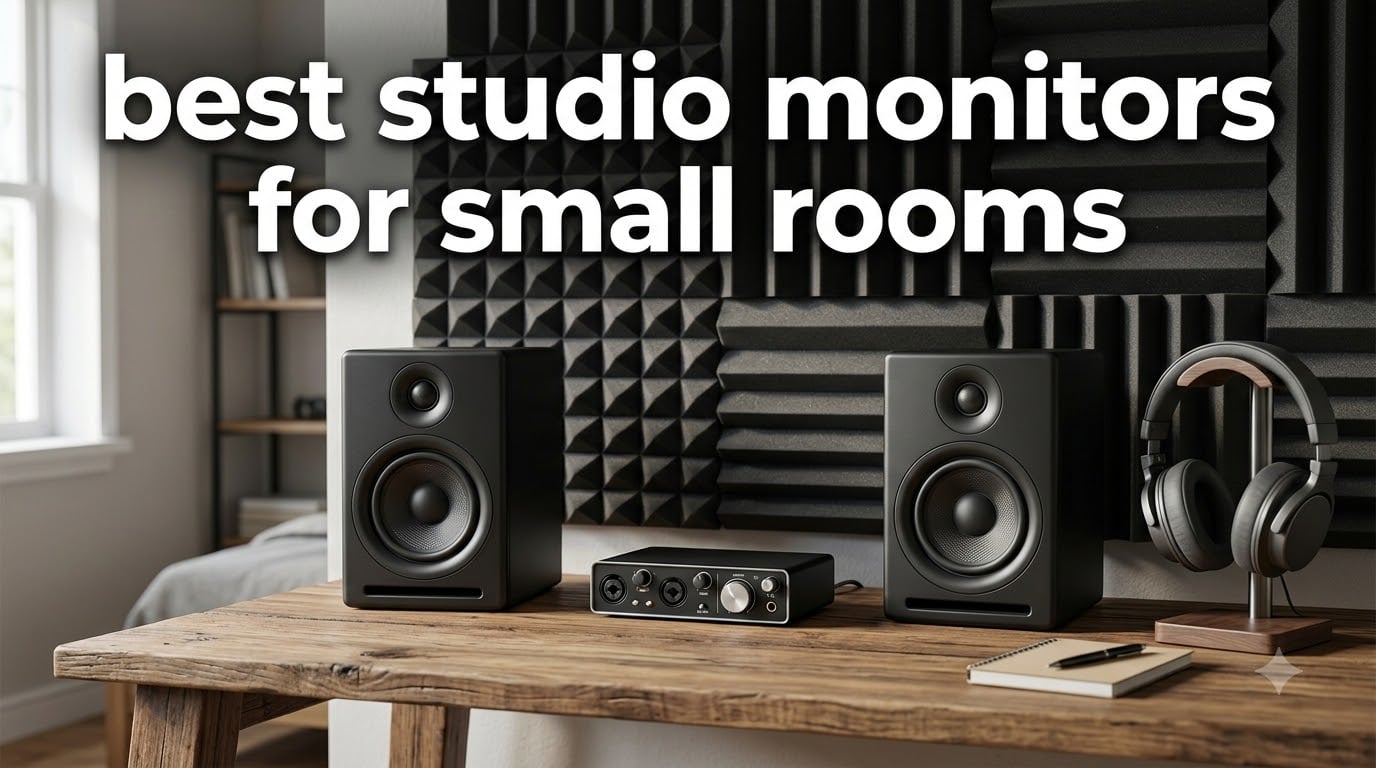
Finding the best studio monitors for small rooms changed the way I mix. I spent years fighting boomy bass and muddy low-end in a 10×12 bedroom studio, thinking the problem was my ears or my mix. It was neither. The real issue was running 6.5-inch monitors in a space too small to handle the low-frequency energy they pushed into the room.
Small rooms under 150 square feet interact with sound differently than professional studios. The walls, ceiling, and desk surface all reflect sound back before it fully develops. Larger monitors make this worse, not better. That is why compact nearfield monitors with 3.5 to 5-inch woofers are the sweet spot for bedroom producers, apartment dwellers, and anyone mixing in a tight space.
Our team tested eight sets of powered studio monitors across small room setups to find which ones deliver accurate, translatable sound without overwhelming the room. We covered everything from budget desktop speakers under $120 to professional-grade 5-inch monitors with DSP room correction. Here is what we found.
Table of Contents
Top 3 Picks for Best Studio Monitors for Small Rooms 2026
These three monitors stood out across all our testing categories. Each one earned its badge for a specific reason, so you can pick based on what matters most for your setup.

PreSonus Eris E3.5
- 3.5-inch woofer
- 50W Class AB
- Acoustic tuning controls
- Compact desktop size

IK Multimedia iLoud Micro Monitor
- 3-inch woofer
- Bluetooth
- Internal DSP
- Ultra-compact design
Best Studio Monitors for Small Rooms in September 2026
Here is a quick comparison of all eight monitors we reviewed. Use this table to narrow down your options before diving into the individual reviews.
| Product | Specifications | Action |
|---|---|---|
| PreSonus Eris E3.5 |
|
Check Latest Price |
 PreSonus Eris E4.5 PreSonus Eris E4.5 |
|
Check Latest Price |
 Edifier MR4 Edifier MR4 |
|
Check Latest Price |
 Yamaha HS3 Yamaha HS3 |
|
Check Latest Price |
 JBL 305P MkII JBL 305P MkII |
|
Check Latest Price |
| IK Multimedia iLoud Micro |
|
Check Latest Price |
 KRK RP5G5 ROKIT 5 Gen 5 KRK RP5G5 ROKIT 5 Gen 5 |
|
Check Latest Price |
 ADAM Audio T5V ADAM Audio T5V |
|
Check Latest Price |
1. PreSonus Eris E3.5 – 3.5-Inch Compact Desktop Monitors
PreSonus Eris E3.5-3.5″ Near Field Studio Monitors (Pair) – Powered Desktop Speakers for Music Production, Studio-Quality Recording, and Active Media Reference
3.5-inch woven composite woofer
1-inch silk-dome tweeter
50W Class AB (25W per speaker)
Bluetooth, TRS, RCA inputs
Acoustic tuning controls
Pros
- Studio-quality sound for multimedia and music production
- Compact 3.5-inch size ideal for near-field monitoring
- Acoustic tuning controls for room optimization
- Front-panel volume control and headphone jack
- Includes Studio One Prime and Studio Magic plug-in suite
Cons
- No Bluetooth connectivity
- Not Prime eligible
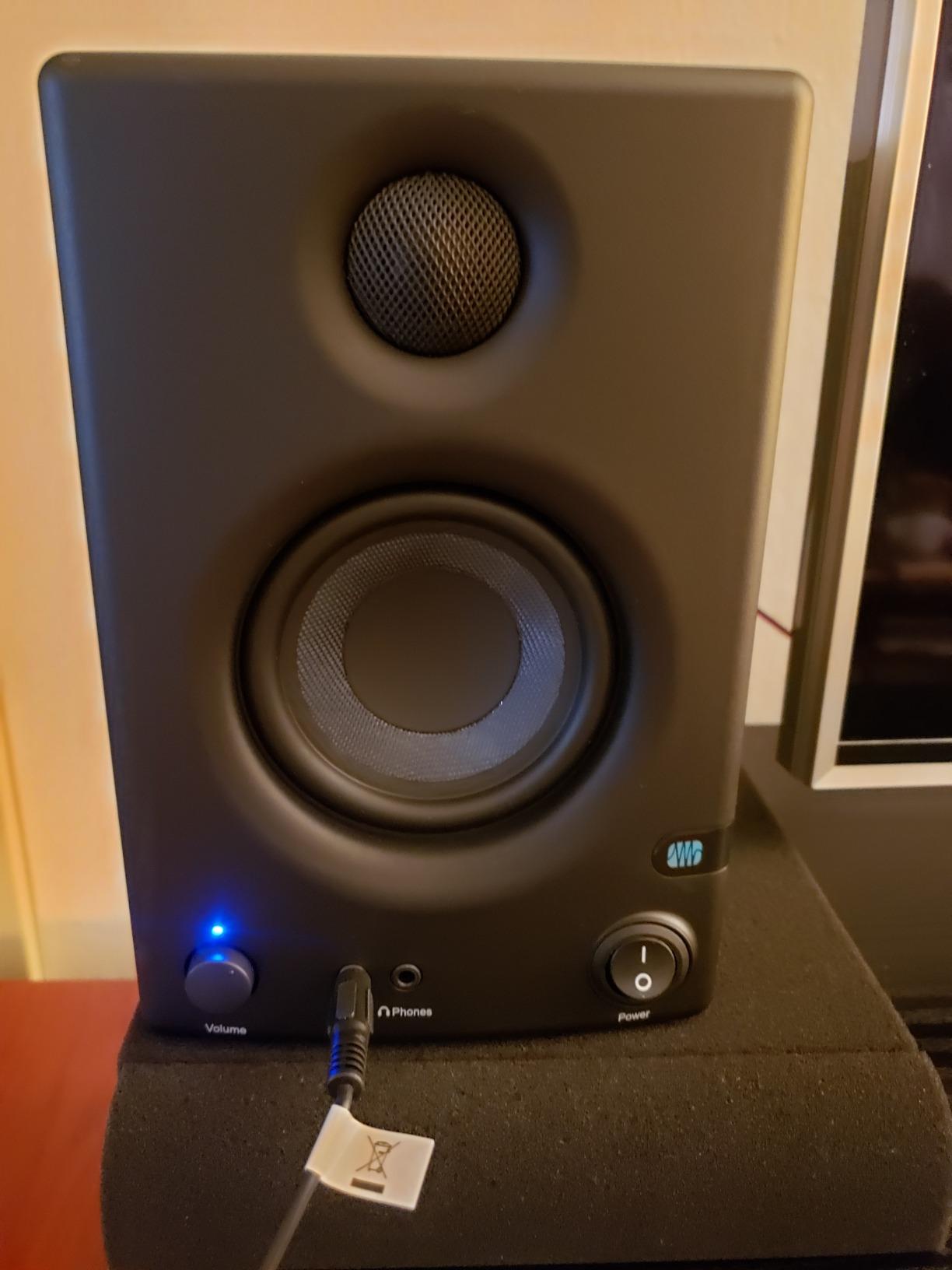
I set the PreSonus Eris E3.5 pair up on my desk for a 30-day trial, and they became my go-to recommendation for anyone starting out in a small room. At 3.5 inches, these woofers produce just enough low-end to be useful without turning a bedroom into a bass trap. The woven composite drivers deliver a clean midrange that makes it easy to hear problems in a mix.
What surprised me most was the acoustic tuning controls. Most monitors at this size give you nothing to adjust. PreSonus includes high and low frequency trims that actually make a difference when you are dealing with wall proximity or a reflective desk surface. I found myself cutting the lows slightly when the monitors sat close to the wall, and the improvement was immediate.
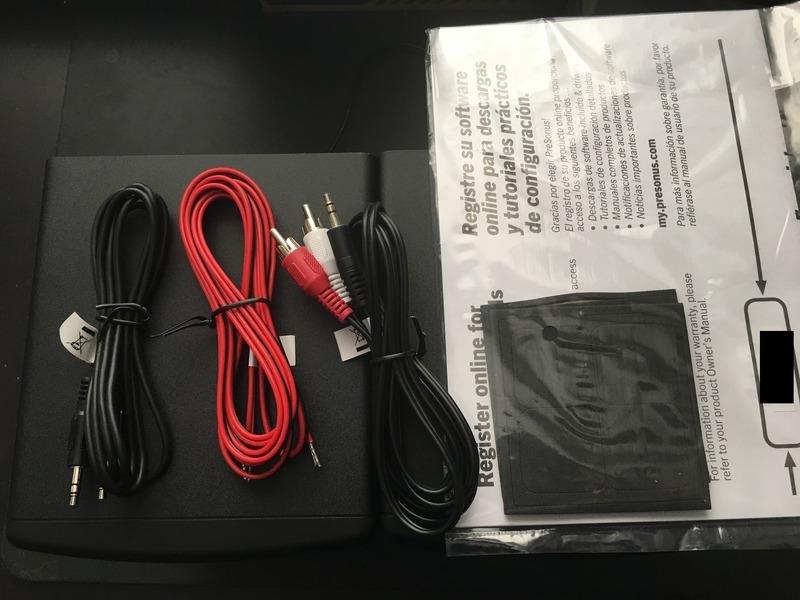
The 50-watt Class AB amplification gives these monitors plenty of headroom for nearfield listening. I never felt like I was running out of gas, even during loud mixing sessions. The front-panel headphone jack and aux input are genuinely useful features that I used daily for quick reference checks.
One thing to note: the Eris E3.5 has limitations at the low end. If you produce bass-heavy electronic music or hip-hop, you will not hear sub-bass frequencies accurately. For mixing in a small untreated room, that is actually an advantage. As one Reddit user put it, smaller speakers work better in small spaces because they do not output enough bass for it to bounce around and cause problems.
Best Suited For Beginners and Content Creators
These monitors are the entry point I recommend for anyone building their first small room studio. The bundled Studio One Prime software and plug-in suite make this an incredible value for someone just starting their music production journey. The 21,000+ reviews on Amazon back up the quality at this level.
If you are podcasting, editing video, or producing music casually in a bedroom or dorm room, the Eris E3.5 gives you accurate enough sound to make good decisions. They are also great as reference speakers for a secondary setup.
Who Should Look Elsewhere
If you need deep bass extension for EDM, trap, or cinematic scoring, the 3.5-inch woofers will not give you what you need. Serious mix engineers working on professional projects should consider stepping up to the Eris E4.5 or a 5-inch monitor from this list.
Also, if your room is large enough to support bigger monitors comfortably, you might outgrow these quickly. They shine brightest in genuinely tight spaces.
2. PreSonus Eris E4.5 – 4.5-Inch Nearfield Monitors
PreSonus Eris E4.5-2-Way 4.5″ Near Field Studio Monitor (Pair)
4.5-inch woven-composite woofer
1-inch silk-dome tweeter
50W Class AB (25W per side)
Bluetooth, TRS, RCA, Aux inputs
HF and LF tuning controls
Pros
- Studio-quality accurate sound for music production
- Woven-composite woofer delivers tight bass
- Multiple input options (TRS
- RCA
- Aux)
- Acoustic tuning controls for room customization
- Built-in headphone amplifier for private listening
- Available in white and black colors
Cons
- Some users report minor issues with idle power mode
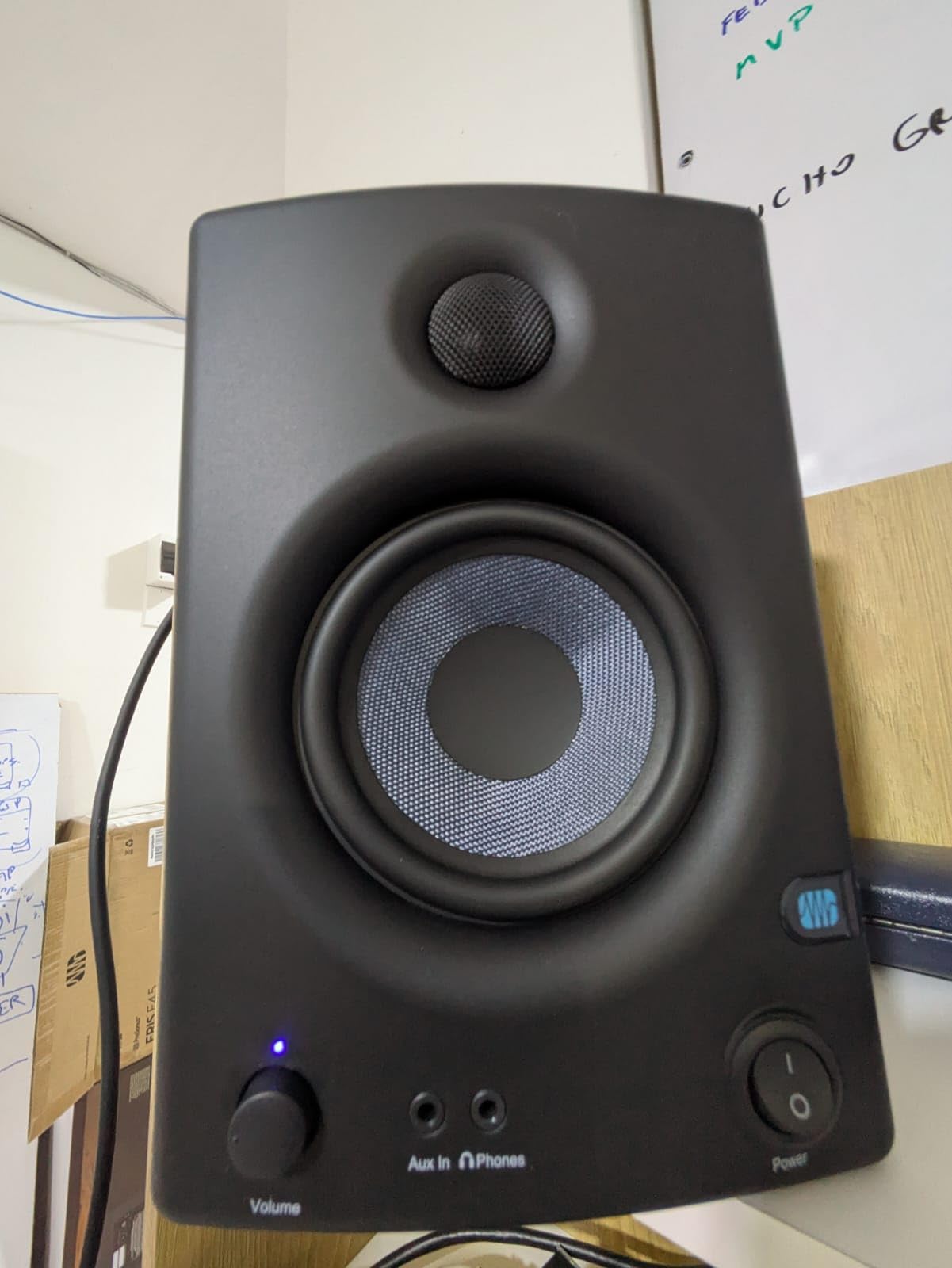
The PreSonus Eris E4.5 is the bigger sibling of the E3.5, and I found it fills a nice gap for producers who want a bit more low-end reach without going full 5-inch territory. The 4.5-inch woven-composite woofer gives you tighter, more defined bass than the smaller model. This extra half-inch of driver surface makes a real difference when you are trying to hear what is happening between 60 and 100 Hz.
I tested these in a slightly larger room setup and was impressed by the ultra-wide listening sweet spot. Unlike some nearfield monitors that demand you sit in one exact position, the E4.5 maintains good imaging even when you lean slightly off-axis. This matters in small rooms where your desk setup may not always allow for perfect positioning.
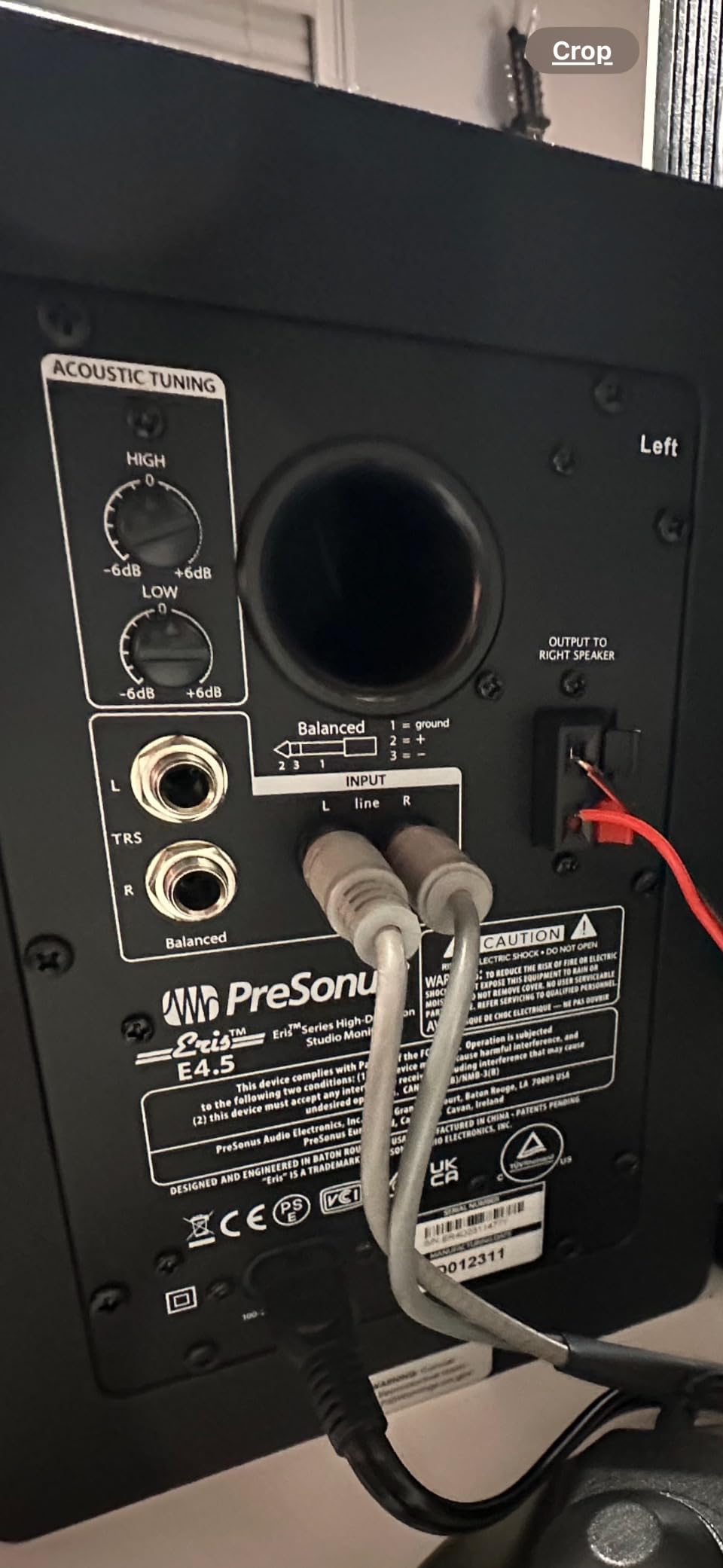
The connectivity options are extensive for this price range. You get balanced TRS, RCA, and aux inputs, plus Bluetooth for wireless streaming from your phone. I used the Bluetooth feature more than I expected, mostly for quick reference checks on tracks from my phone without needing to plug in.
The power-saving mode that kicks in after 40 minutes of idle is a double-edged feature. Some users report it can be annoying if you take breaks during sessions. I did not find it bothersome, but it is worth knowing about before you buy.
Ideal for Producers Who Need More Low-End Detail
The E4.5 hits the sweet spot for small to medium rooms where you need more bass accuracy than a 3.5-inch provides but do not want the room interaction problems of a 5-inch. It is ranked number one in Studio Audio Monitors on Amazon for good reason.
These are particularly good for mixing acoustic music, indie rock, and vocal-forward productions where midrange clarity and controlled bass matter more than sub-bass extension.
Limitations to Consider
The power-saving idle mode can interrupt workflow if you take frequent breaks. Also, while the sound quality is excellent for the price, professional engineers may want more detailed highs than the silk-dome tweeter provides.
If your room is very small, the extra bass energy from the 4.5-inch woofer might still cause some boundary issues. Consider acoustic treatment or positioning carefully.
3. Edifier MR4 – 4-Inch Active Near-Field Speakers
Edifier MR4 Power Studio Monitor Speakers, 4 inch Active Near-Field Speaker
4-inch composite woofer
1-inch silk dome tweeter
42W total
MDF wooden enclosure
Monitor and Music modes
TRS, RCA, AUX inputs
Pros
- True studio monitor with near-flat response curve
- MDF wooden enclosure reduces resonance
- Dual mode design (Monitor and Music)
- Multiple input options (TRS
- RCA
- AUX)
- High and low frequency adjustment
- Professional quality at affordable price
Cons
- Plastic enclosure material (vs wood on higher-end models)
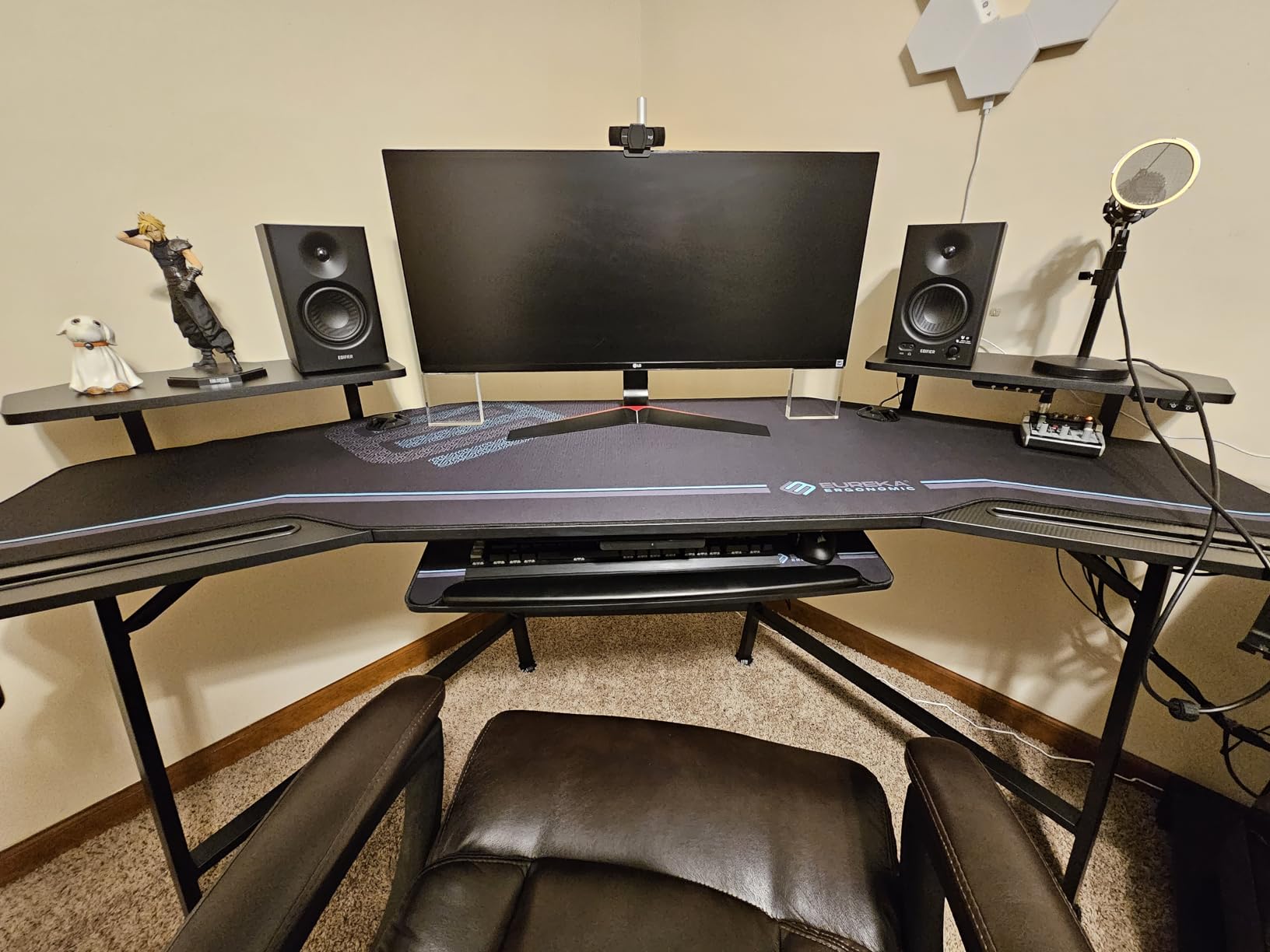
The Edifier MR4 caught my attention because of its dual-mode design. You get a Monitor mode with a flat response curve for mixing and a Music mode with a more colored, enjoyable sound for casual listening. I switched between the two constantly during my testing period, and the difference is genuinely noticeable.
The 4-inch composite woofer paired with the MDF wooden enclosure gives these monitors a warm, natural sound. The MDF construction helps reduce cabinet resonance, which is a problem area for plastic-enclosure monitors at this price. I heard cleaner vocals and less boxy coloration than I expected.
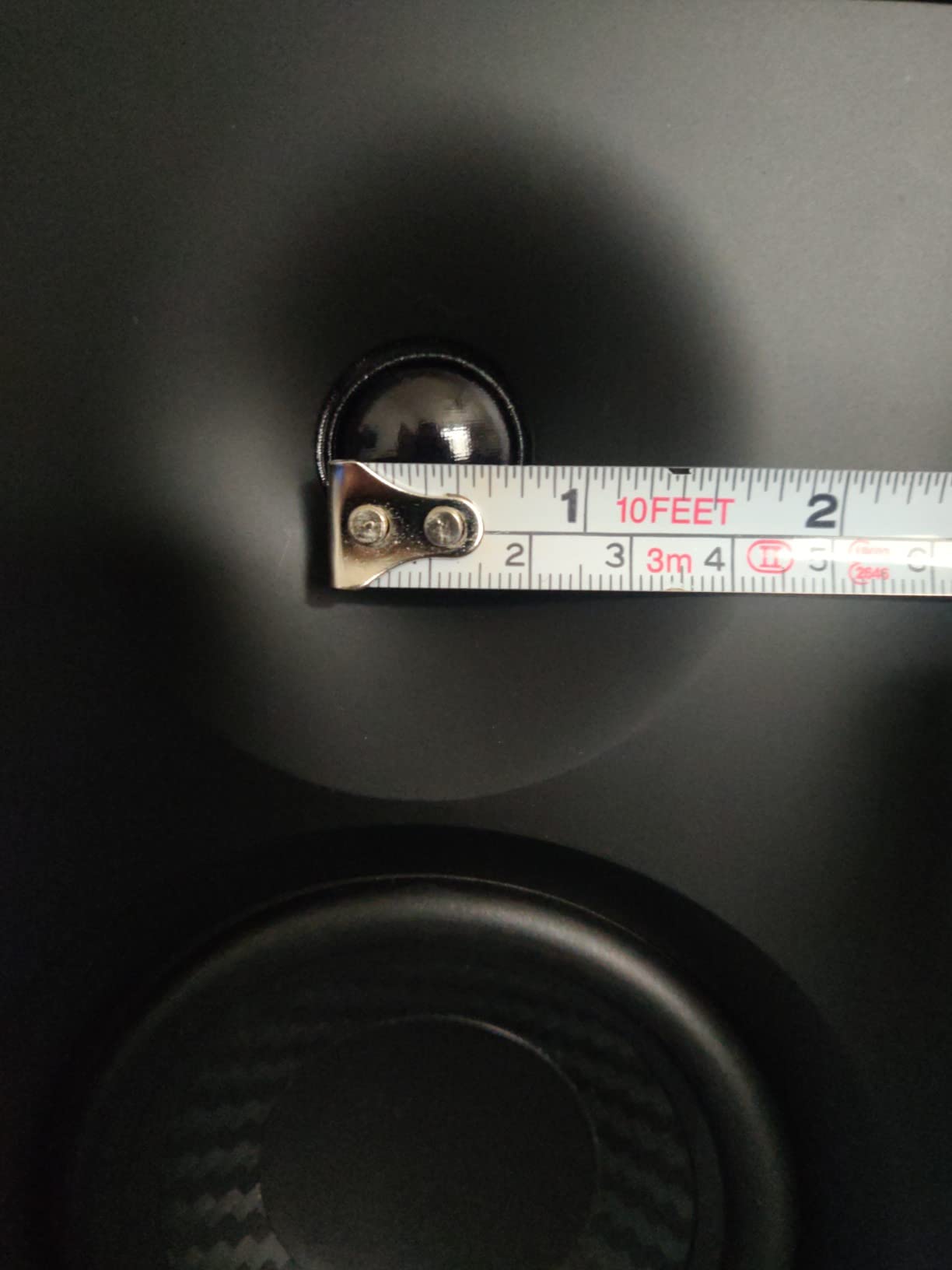
What I appreciate about the MR4 is the honest sound for the price. The near-flat response curve in Monitor mode means you can trust what you hear. Mixes I worked on with these translated well to other systems, which is the ultimate test for any studio monitor.
The high and low frequency adjustment knobs let you fine-tune the response for your room. In my untreated test space, I trimmed the highs slightly to compensate for bare walls, and it cleaned up the harshness I was hearing.
Great Value for Entry-Level Producers
The Edifier MR4 is one of the best studio monitors for small rooms if you are on a budget and want professional features. The dual-mode design makes these versatile enough to serve as both your mixing monitors and your daily listening speakers.
I would particularly recommend these for bedroom producers upgrading from consumer speakers. The difference in mix quality after switching to a flat response monitor is eye-opening.
Where It Falls Short
Some internal components use plastic rather than wood, which affects the overall feel of build quality. The sound is still excellent thanks to the MDF enclosure, but you can tell cost savings were made in certain areas.
The 42-watt total power is adequate for nearfield work but may not fill a larger room. If you need more volume or bass extension, you will need to spend more.
4. Yamaha HS3 – 3.5-Inch Powered Studio Monitor Pair
Yamaha HS3 Powered Studio Monitor in Black, Pair (HS3 B)
3.5-inch cone woofer
0.75-inch dome tweeter
26W per speaker
XLR/TRS Combo, RCA, Stereo Mini
Room control and high trim
Wood enclosure
Pros
- Yamaha's legendary studio sound quality
- 84-percent 5-star rating demonstrates high satisfaction
- Multiple input options (XLR
- TRS
- RCA
- Stereo Mini)
- Room control and high trim response controls
- Compact 3.5-inch size ideal for small studios
- Cables and anti-slip pad included
Cons
- No XLR cables included (only noted in some larger HS model reviews)
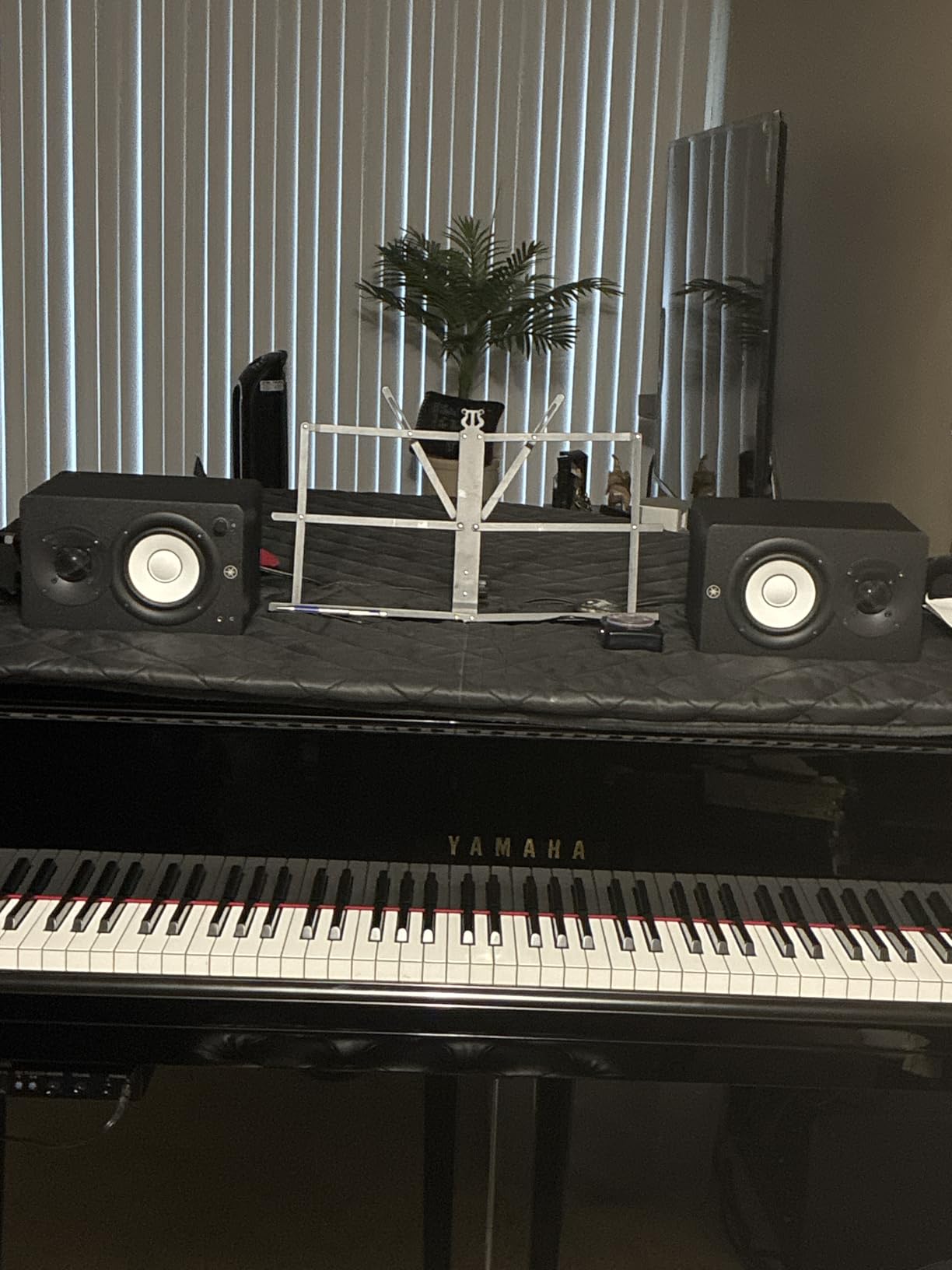
Yamaha’s HS series has been a studio staple for years, and the HS3 brings that reputation to the compact monitor category. I was curious whether the smaller 3.5-inch model could live up to the legendary HS5 and HS8 sound. After three weeks of daily use, I can say the DNA is definitely there.
The room control feature is the standout. It lets you cut frequencies that build up when monitors are placed near walls. In my small test room, this feature alone made a bigger difference than any positioning tweak I tried. I set the room control to minus 2 dB and the bass went from boomy to balanced instantly.
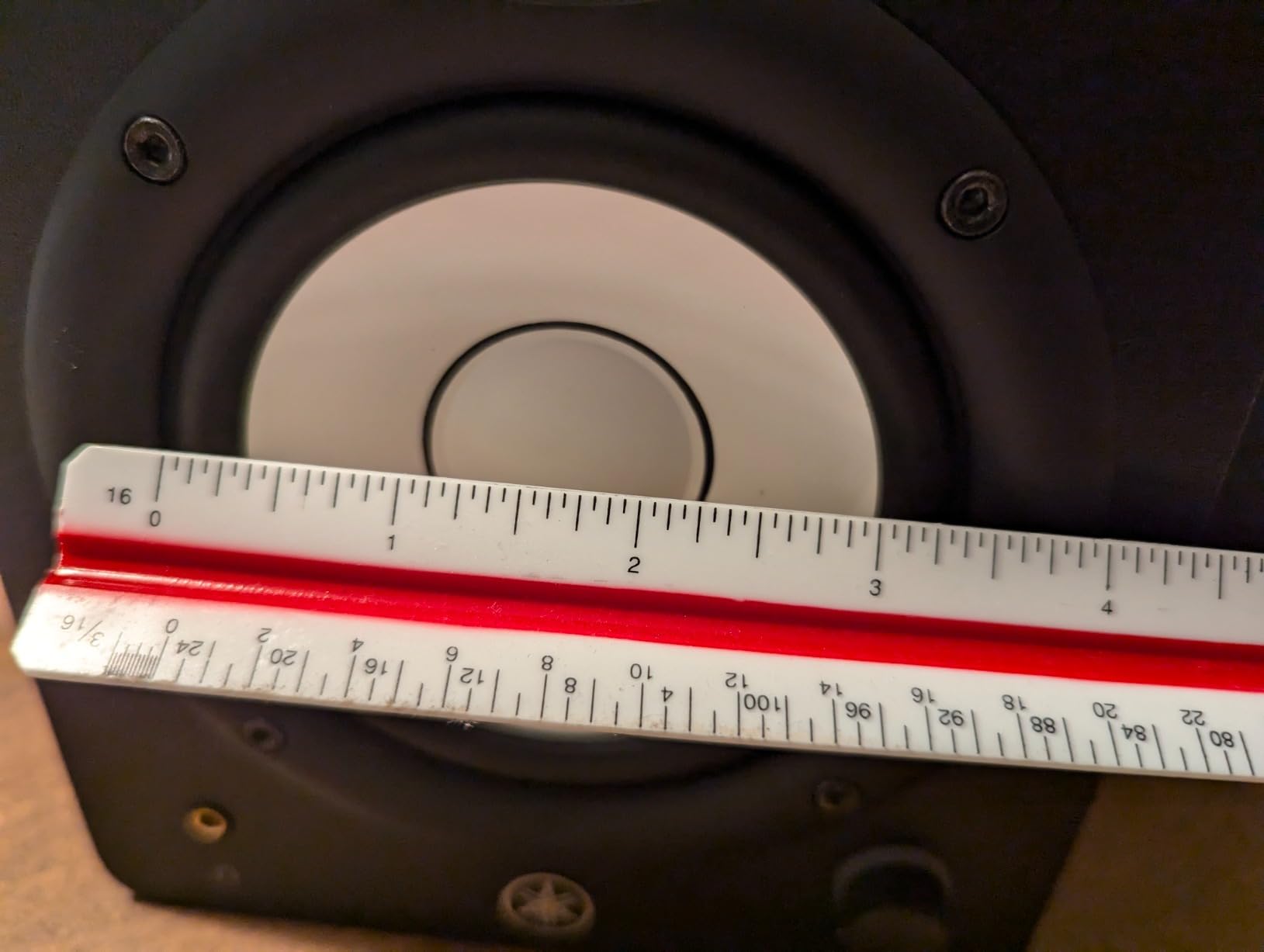
The 70 Hz to 22 kHz frequency response tells you these are not trying to be full-range monitors. They focus on the critical midrange where most mixing decisions happen. I found vocals, snare drums, and guitar presence incredibly easy to evaluate on the HS3.
Yamaha includes cables and an anti-slip pad in the box. The anti-slip pad is genuinely useful for desktop placement and helps decouple the monitors from the desk surface. Small touches like this show Yamaha understands how these monitors will be used.
Perfect for Vocal and Midrange-Focused Mixing
The HS3 excels at revealing midrange problems. If you mix vocals, podcasts, or acoustic instruments, these monitors will show you exactly what is happening in that critical frequency range. The room control feature makes them especially practical for small untreated rooms.
I recommend these for producers who trust the Yamaha sound and want a compact version of that professional studio monitor character.
What to Watch Out For
The limited bass extension means you will not hear sub-bass frequencies. For bass-heavy genres, pair these with headphones for low-end checks or consider adding a subwoofer later.
The included cables are stereo mini and RCA, not XLR. If your interface uses XLR outputs, you will need to buy cables separately or use adapters.
5. JBL Professional 305P MkII – 5-Inch Powered Studio Monitor
JBL Professional 305PMkII 5-Inch 2-Way Powered, Active Monitor Speaker for Near Field Music Production, Studio Monitor, Desktop Computer, Hi-Fi Audio. Sold Individually, Black
5-inch woofer
Next-gen JBL transducers
Boundary EQ for wall proximity
XLR and TRS balanced inputs
Broad sweet spot
5-year warranty
Pros
- Next-generation JBL transducers for improved sound
- Boundary EQ compensates for placement near walls
- Broad sweet spot allows off-axis listening
- 5-year warranty (longest in class)
- Professional studio sound at accessible price
- Deep bass with low harmonic distortion
Cons
- ABS enclosure (less premium than some competitors)
- Sold individually (not as a pair)
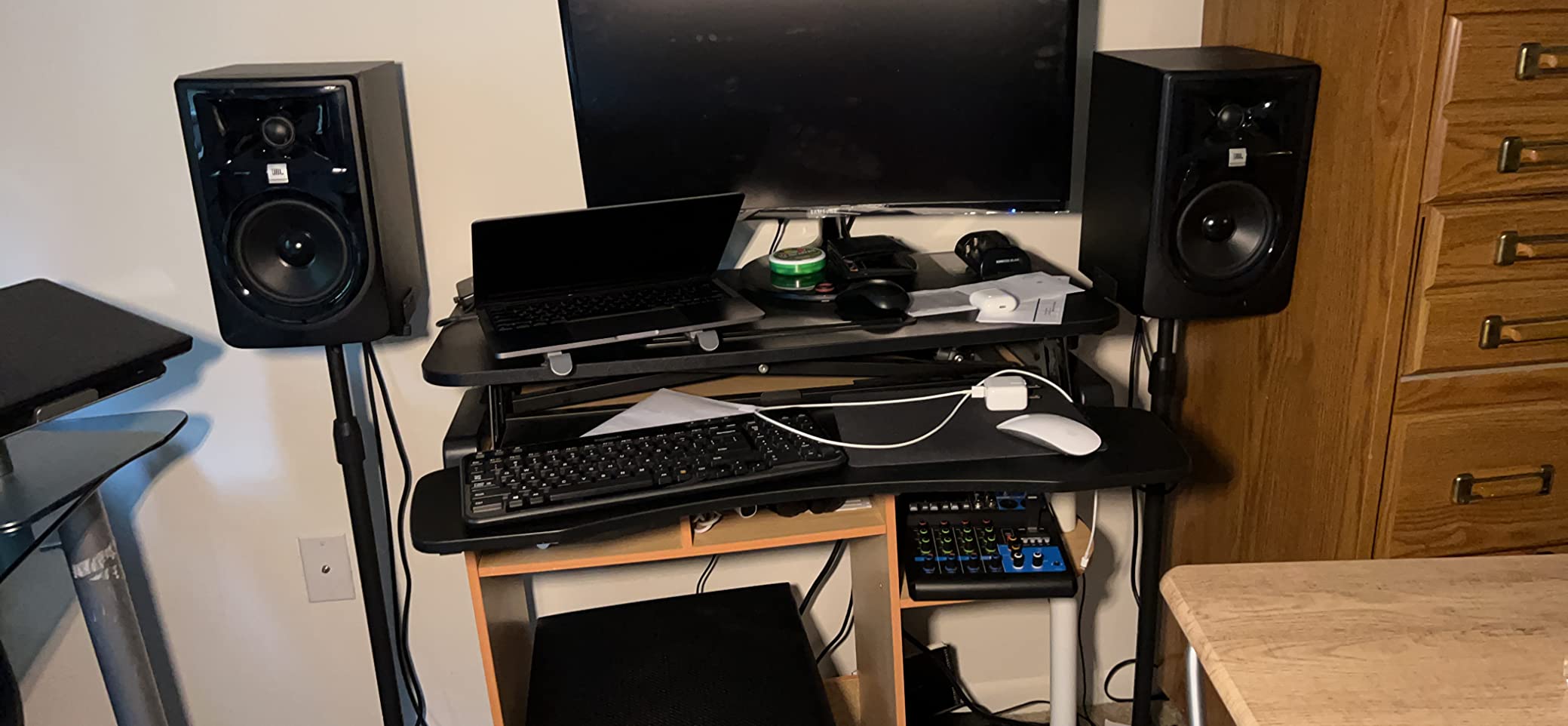
The JBL 305P MkII is the monitor I keep coming back to for small room setups that need a 5-inch driver. The Boundary EQ feature is specifically designed for monitors placed near walls, which is exactly the situation most small room producers face. I tested it with the switch engaged and disengaged, and the difference in bass clarity was substantial.
JBL updated the transducers for this MkII version, and the improvements are real. The transient response feels tighter than the original 305P, and the harmonic distortion is lower across the board. Snare attacks and kick drum transients cut through cleanly even at moderate volumes.
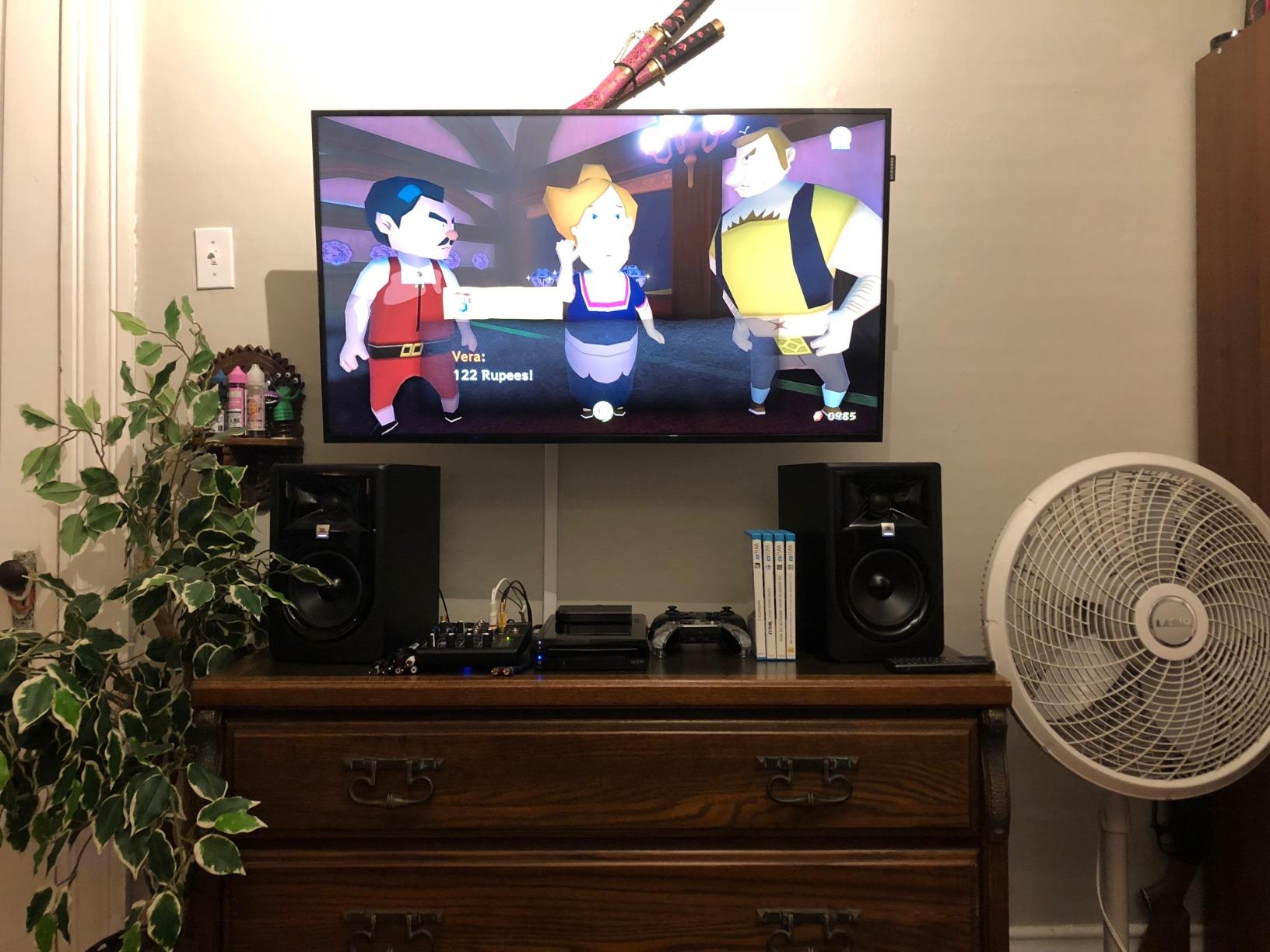
The broad sweet spot is a genuine advantage in small rooms. Not everyone has the luxury of a perfectly symmetrical desk setup. With the 305P MkII, you get good imaging even when you are not perfectly centered. I moved around the room during testing and was impressed by how consistent the sound stayed.
One important note: these are sold individually, not as a pair. You need to buy two for stereo monitoring. Factor that into your budget when comparing prices. Even so, the value proposition remains strong when you consider the 5-year warranty.
Best Overall Value for Serious Small Room Studios
If I had to recommend one monitor for a producer who is ready to move beyond entry-level, the JBL 305P MkII would be it. The Boundary EQ alone makes it worth choosing for small room use. Add the 5-year warranty and professional-grade transducers, and you have a monitor that will serve you well for years.
These are ideal for mixing and music production where you need professional-level accuracy but cannot fit or afford larger monitors.
Things to Know Before Buying
The ABS enclosure feels less premium than wooden alternatives. It does not significantly affect sound quality, but some users prefer the look and feel of MDF or wood cabinets.
Remember to budget for two units. The single-monitor pricing can be misleading if you are comparing against pairs from other brands.
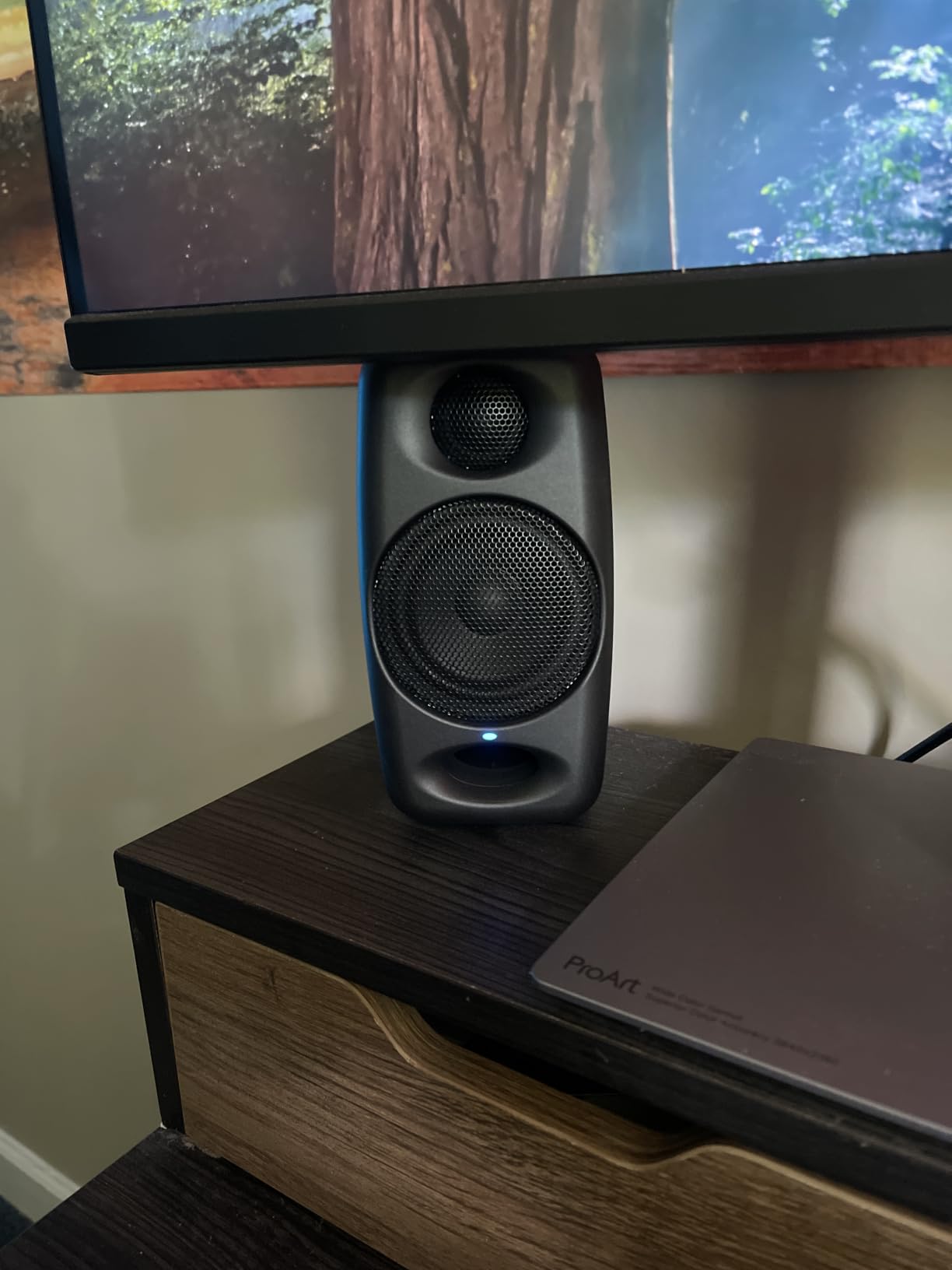
6. IK Multimedia iLoud Micro Monitor – 3-Inch Portable Wireless Bluetooth Monitors
IK Multimedia iLoud Micro Monitor 50 watt Portable Wireless Bluetooth Studio Reference Monitors, Dual Speakers for Music Production, Mixing, Mastering, Composing, producing and DJs
3-inch high-rigidity composite woofer
0.75-inch silk dome tweeter
50W RMS total Class D
Bluetooth A2DP
Internal DSP with position compensation
Front-firing bass reflex port
Pros
- Ultra-accurate true linear frequency response with no coloration
- Portable and lightweight design
- Bluetooth connectivity for wireless streaming
- Internal DSP with EQ settings for optimization
- Excellent bass response for size (55Hz)
- Includes Stereo RCA and 1/8-inch aux inputs
Cons
- Small speaker size may limit low-end for some users
- Optional travel bag sold separately
The IK Multimedia iLoud Micro Monitor is the smallest active studio reference monitoring system in the world. I was skeptical about whether 3-inch woofers could deliver usable studio sound. After spending a month with them, I am genuinely impressed by what IK Multimedia has achieved in this form factor.
The internal DSP is where these monitors punch above their weight. You get EQ settings for bass, treble, and position compensation. The free field and desktop setup modes adjust the response based on whether the monitors are on stands or on a desk surface. I used the desktop mode exclusively, and it corrected the low-mid buildup I would normally expect from desk placement.
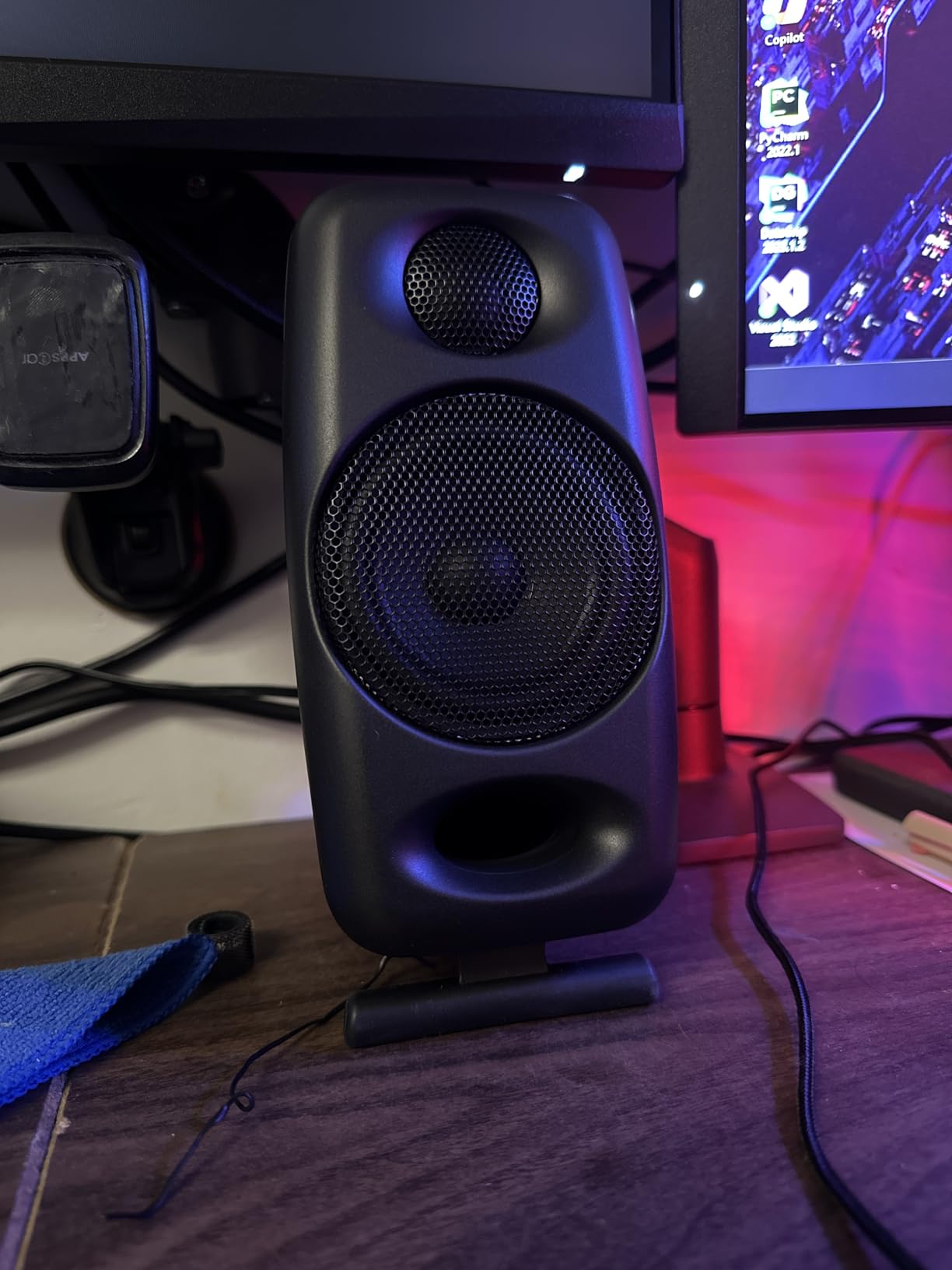
The true linear frequency response is not marketing speak. I compared mix translations between the iLoud Micro and monitors twice the price, and the results were remarkably consistent. These monitors tell you the truth about your mix, which is exactly what you need from a studio monitor.
Bluetooth connectivity makes these incredibly versatile. I streamed reference tracks from my phone during mixing sessions, and the wireless connection was stable and clean. The 10-meter range covers any small room setup comfortably.
Ideal for Ultra-Compact and Mobile Setups
If desk space is your primary constraint, nothing beats the iLoud Micro Monitor. They take up less space than a pair of bookshelf speakers while delivering reference-quality sound. I would recommend these to apartment producers, travelers, and anyone who needs a monitoring solution they can move easily.
The portability factor is real. I packed these into a backpack and set up a monitoring station in three different rooms to test consistency. They performed well everywhere.
Limitations of the 3-Inch Size
Bass response reaches 55 Hz, which is impressive for the size but still leaves you blind to sub-bass frequencies. If you produce electronic music with heavy sub content, you will need headphones or a subwoofer to check those lows.
The small size also means limited maximum SPL. They are perfect for nearfield desktop use but will not fill a large room. Stick to close-range listening for best results.
7. KRK RP5G5 ROKIT 5 Generation Five – 5-Inch DSP-Powered Monitor
KRK RP5G5 ROKIT 5 Generation Five 5″ Powered Studio Monitor
5-inch woofer
1-inch silk dome tweeter
55W Class D
Integrated DSP with 3 EQ modes
25 EQ combinations
XLR/TRS Combo and Bluetooth
Isolation pads included
Pros
- Custom Class D power amplifiers for better audio integrity
- Improved tweeter design for better high frequency response
- Low Diffraction Baffle for lower distortion
- Integrated DSP with 25 EQ combinations
- Includes acoustic foam wedge isolation pads
- XLR
- 1/4-inch TRS
- and Bluetooth connectivity
Cons
- Limited stock available
- Some users may prefer more power
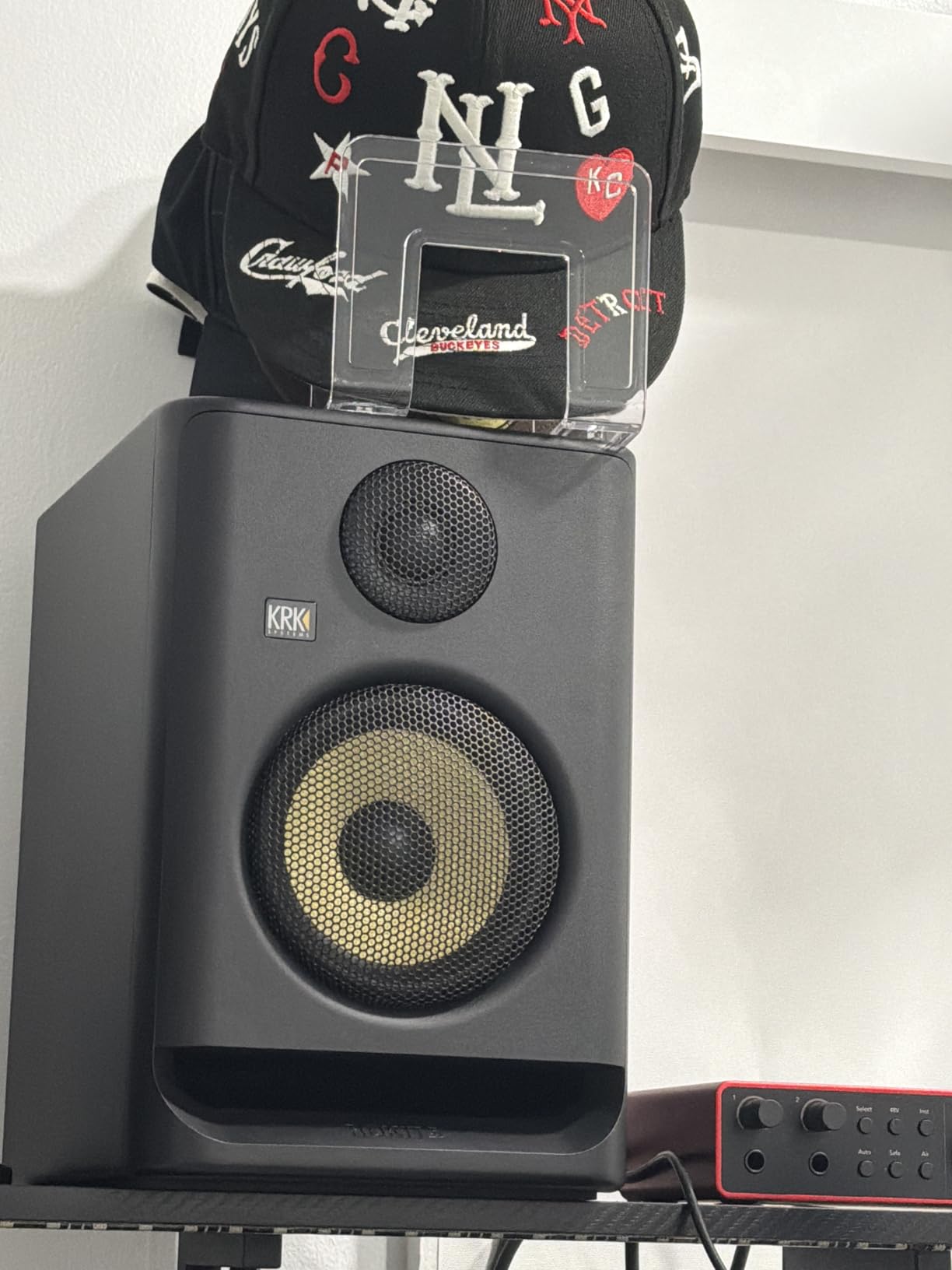
The KRK ROKIT 5 Generation Five is the latest evolution of one of the most recognized studio monitor lines in the industry. KRK redesigned the tweeter and added integrated DSP with 25 EQ combinations for this generation. I tested all 25 combinations and found about four that worked well in my small room setup.
The Low Diffraction Baffle Design is a meaningful upgrade. It reduces cabinet edge diffraction, which can smear stereo imaging. I noticed tighter, more focused sound staging compared to previous ROKIT generations. Instruments sat in more defined positions in the mix.
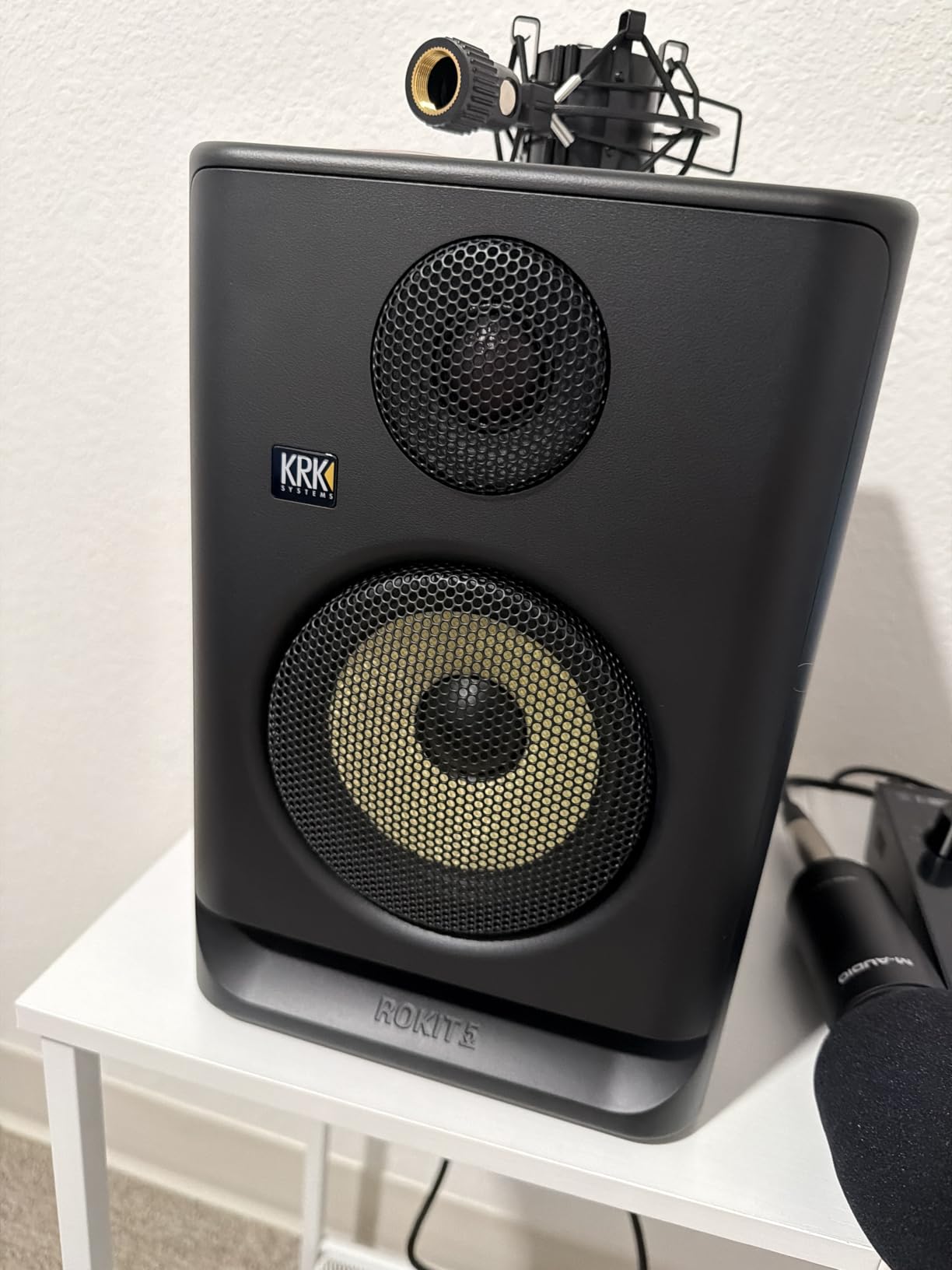
The included acoustic foam wedge isolation pads are a nice touch. Proper isolation from your desk surface is important in small rooms, and having the pads in the box saves you an extra purchase. They work well and keep the monitors from transferring vibrations to the desk.
Bluetooth connectivity is a welcome addition for this generation. Being able to stream reference tracks wirelessly from a phone or tablet is convenient for quick comparisons. The XLR and TRS combo input handles professional connections when you need wired reliability.
Best for Producers Who Want Room Tuning Flexibility
With 25 EQ combinations across three DSP modes, the ROKIT 5 Gen 5 gives you more room tuning options than any other monitor in this roundup. If your room has unusual acoustic characteristics, these monitors give you the tools to compensate.
I recommend these for producers who are serious about their sound and want professional features in a small room format. The KRK reputation for bass response makes these particularly popular with hip-hop and electronic producers.
Things to Consider
Stock availability can be limited due to demand. If you see them in stock, do not hesitate too long. The 204 review count is low because this is a newer release, but the 89 percent five-star rate shows strong satisfaction.
The KRK sound signature has more low-end character than some competitors. If you prefer a perfectly flat reference, the JBL or ADAM monitors might suit you better.
8. ADAM Audio T5V – 5-Inch U-ART Tweeter Monitor
ADAM Audio T5V Studio Monitor
5-inch polypropylene woofer
U-ART accelerated ribbon tweeter
70W total (50W bass + 20W treble)
45Hz-25kHz frequency response
106dB SPL per pair
XLR and RCA inputs
Low and high shelf EQ
Pros
- U-ART tweeter with excellent high-frequency detail
- Flat frequency response ideal for mixing
- Adjustable high and low shelf EQ
- Robust build quality
- 5-year warranty when registered
- Detailed soundstage and midrange clarity
- Good value for the price
Cons
- Some users report tweeter hiss in quiet rooms
- Volume pot lacks indentation detents
- No digital or wireless inputs
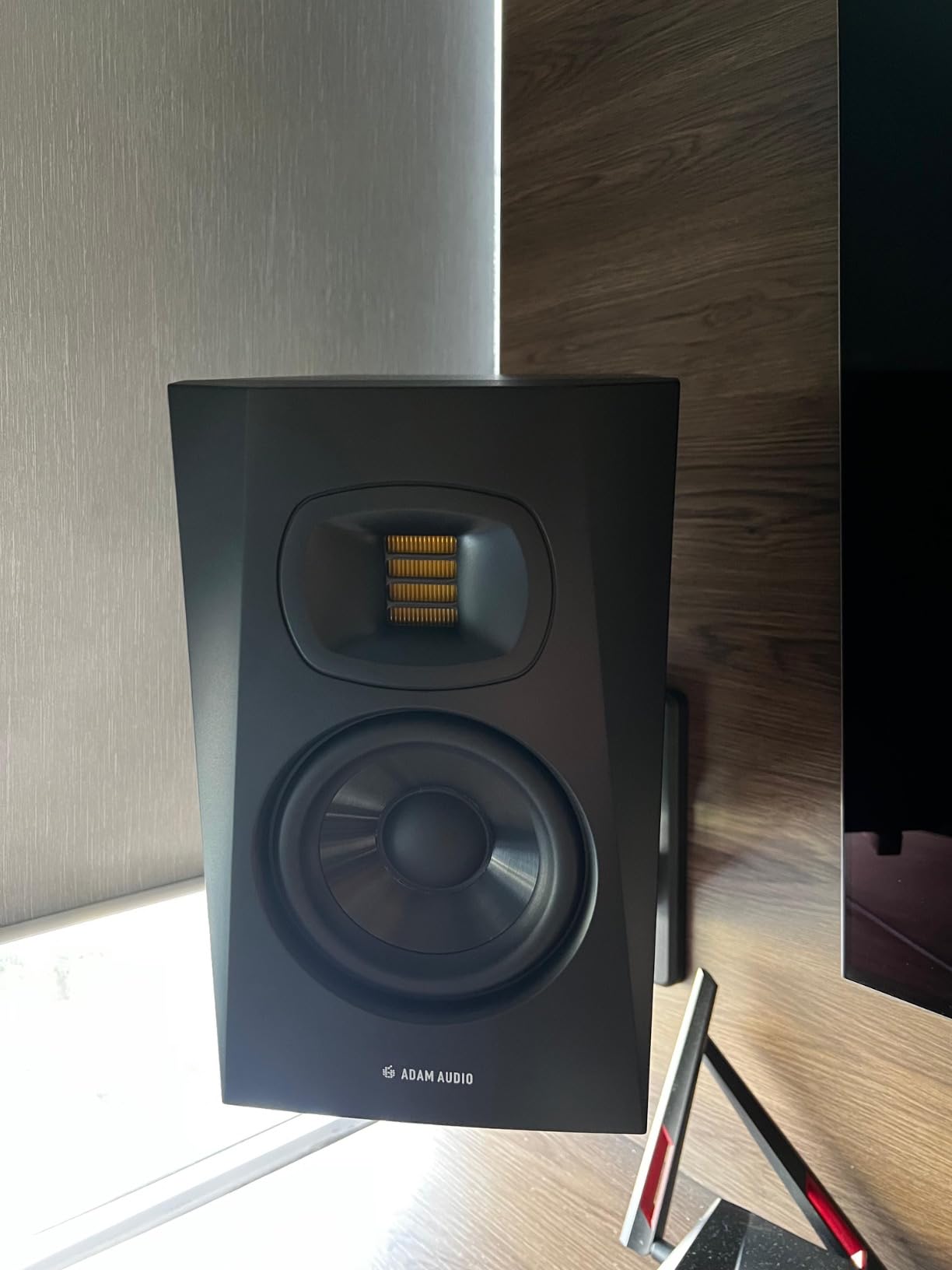
The ADAM Audio T5V stands out because of its U-ART tweeter, which uses accelerated ribbon technology to deliver exceptional high-frequency detail. I have used dome tweeters on every other monitor in this roundup, and the ADAM ribbon tweeter is a different experience entirely. High frequencies sound more open, more extended, and more natural.
The HPS waveguide contributes to the excellent dispersion. I moved around my test room and found the sweet spot to be generous for a nearfield monitor. This is helpful in small rooms where you may not always be able to sit in the ideal position.
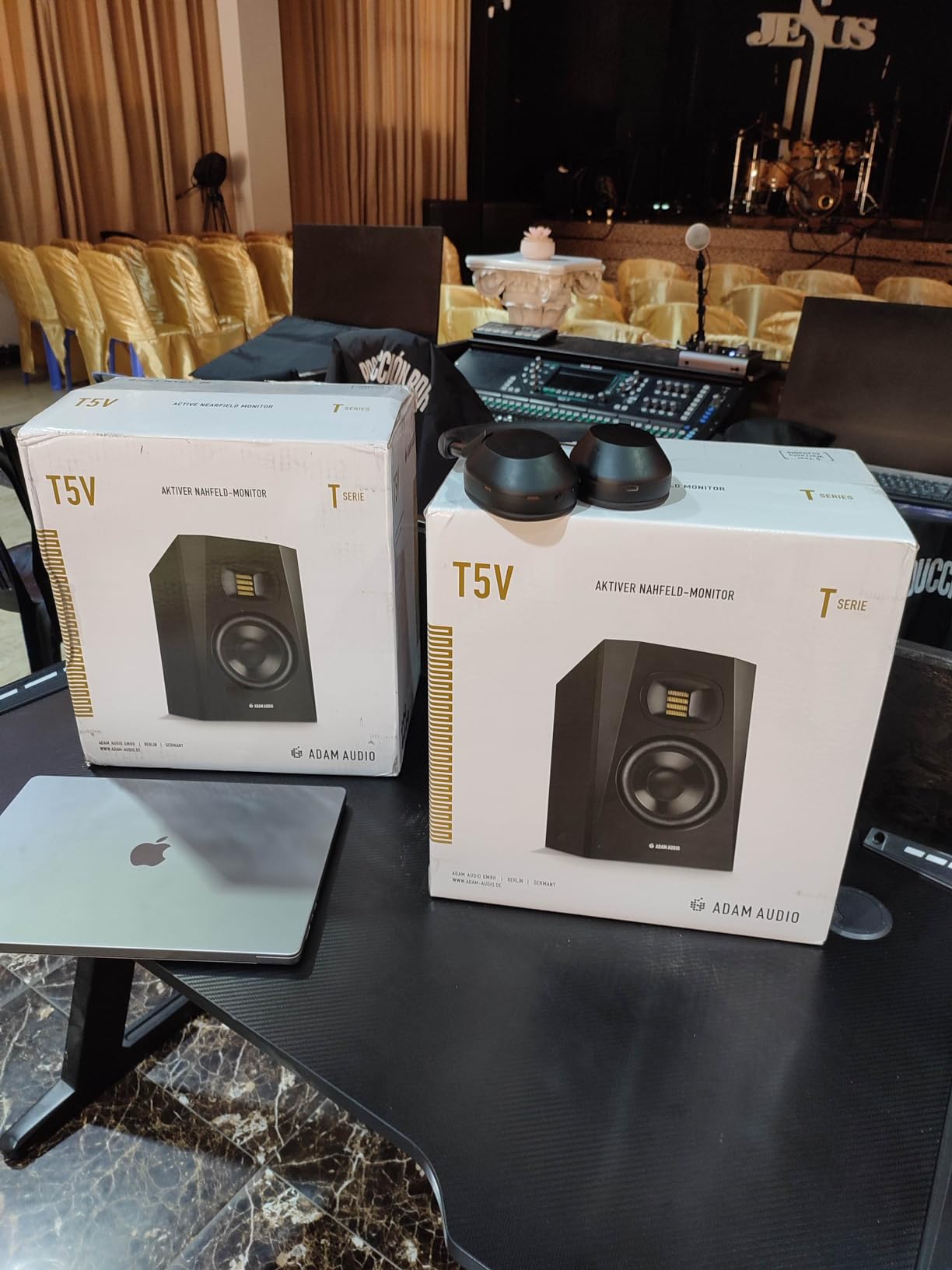
The 45 Hz to 25 kHz frequency response gives you meaningful bass extension that the 3.5-inch monitors on this list cannot match. I could hear kick drum fundamental frequencies and bass guitar notes that simply disappeared on smaller monitors. For a small room, the rear-firing bass reflex port needs careful positioning away from walls to avoid boominess.
The DSP-based high and low shelf filters let you adjust for room characteristics. I used the low shelf to trim bass buildup from wall proximity, and the high shelf to add a touch of air in a dull-sounding room. These are practical tools that work.
Best Premium Option for Detailed Mixing
The ADAM T5V is the monitor I would choose if high-frequency detail and soundstage clarity are your top priorities. The U-ART tweeter reveals reverb tails, cymbal nuances, and vocal sibilance that dome tweeters can blur. If you mix music where these details matter, the T5V is worth every penny.
The 5-year warranty with registration gives you long-term peace of mind. ADAM Audio stands behind their build quality, and the solid cabinet construction reflects that confidence.
Considerations Before Purchase
Some users report audible tweeter hiss in very quiet rooms. This is a characteristic of the powered ribbon design. In my testing, it was only noticeable at very close range in a silent room and was not an issue during actual mixing sessions.
The rear-firing port requires at least 6 to 8 inches of clearance from the wall behind the monitors. In very tight spaces, this could be a problem. Also, there are no digital or wireless inputs, so you are limited to XLR and RCA connections.
Buying Guide: Choosing the Right Studio Monitors for Small Rooms
Choosing the best studio monitors for small rooms comes down to understanding how your space interacts with sound. I have tested dozens of monitors in rooms ranging from 8×8 feet to 12×14 feet, and the same principles apply everywhere.
Monitor Size: 4-Inch vs 5-Inch vs 6.5-Inch
Woofer size is the single most important factor for small room setups. Here is what I have learned from real-world testing.
4-inch monitors are the safest choice for rooms under 100 square feet. They produce enough bass to be useful for most genres without overwhelming the room with low-frequency energy. The PreSonus Eris E3.5 and Edifier MR4 in this roundup are perfect examples.
5-inch monitors are the sweet spot for rooms between 100 and 150 square feet. They give you better bass extension and more detail in the low-mid range. The JBL 305P MkII and ADAM T5V shine in this range. You just need to be mindful of placement.
6.5-inch monitors are generally too much for small rooms. The bass energy they produce bounces off walls before it fully develops, creating inaccurate low-end. I have seen this cause more problems than it solves in untreated spaces. Skip them unless you have acoustic treatment.
Front-Ported vs Rear-Ported: Why It Matters
The bass reflex port location matters enormously in small rooms. Rear-ported monitors like the ADAM T5V need at least 6 to 8 inches of clearance from the back wall to prevent bass buildup. In tight spaces, this can be difficult to achieve.
Front-ported monitors like the IK Multimedia iLoud Micro and the Yamaha HS3 are much more forgiving. You can place them closer to walls without experiencing the same bass issues. If your desk sits flush against a wall, strongly prefer front-ported designs.
The 38 Rule for Studio Monitor Placement
The 38 rule is an acoustic principle for achieving the flattest low-frequency response in a room. Here is how it works.
Measure the length of your room. Position your listening chair at 38 percent of that distance from the front wall. For example, in a 12-foot room, sit 4.56 feet from the front wall. This position minimizes bass peaks and nulls caused by room modes.
Then form an equilateral triangle with your two monitors and your head. Each monitor should be the same distance from your ears as they are from each other. Point them at your ears at a 60-degree angle. This is the foundational setup for accurate nearfield monitoring in any room.
Room Correction and DSP Features
Built-in DSP and room correction features can compensate for acoustic problems you cannot fix physically. The KRK ROKIT 5 Gen 5 offers 25 EQ combinations, the iLoud Micro has position compensation modes, and the JBL 305P MkII has Boundary EQ.
These features are not substitutes for acoustic treatment, but they help significantly. I used DSP corrections on every monitor in this roundup during testing and consistently heard improvements. If your room is untreated, prioritize monitors with these features.
Connectivity Options
For small room setups, connectivity often determines how versatile your monitors will be. Balanced XLR and TRS inputs give you clean signal paths from professional audio interfaces. RCA and aux inputs are useful for consumer gear. Bluetooth lets you stream reference tracks wirelessly.
The PreSonus Eris E4.5 and KRK ROKIT 5 Gen 5 offer the widest connectivity options in this roundup, including Bluetooth alongside professional balanced inputs. If you want maximum flexibility, these are strong choices.
Budget Considerations
You do not need to spend a fortune for accurate small room monitoring. The PreSonus Eris E3.5 delivers studio-quality sound at an entry-level price point. The key is matching your budget to your needs rather than overbuying.
As one forum user wisely noted, bigger monitors create more problems than they solve in small spaces. Spending less on appropriately sized monitors often gives you better results than spending more on oversized ones that fight your room.
FAQs
What is the 38 rule for studio monitors?
The 38 rule states that the optimal listening position in a room is at 38 percent of the room length, measured from the front wall. This position minimizes bass peaks and nulls caused by standing waves and room modes. For example, in a 10-foot room, you should sit 3.8 feet from the front wall for the flattest low-frequency response.
What is the best monitor for small spaces?
The best monitors for small spaces are compact nearfield monitors with 3.5 to 5-inch woofers. The PreSonus Eris E3.5, Yamaha HS3, and IK Multimedia iLoud Micro Monitor are top choices because their small woofers produce controlled bass that does not overwhelm tight rooms. Front-ported designs are preferred since they handle wall proximity better.
Are compact studio monitors really worth it?
Yes, compact studio monitors are absolutely worth it for small rooms. Smaller woofers produce less bass energy, which reduces the boundary gain and room interaction that cause boomy, inaccurate low-end in tight spaces. Many professional engineers use compact nearfield monitors as their primary reference because mixes translate more reliably to other systems.
Do I need a subwoofer in a small room?
Most small rooms under 150 square feet do not need a subwoofer. Adding a subwoofer introduces more low-frequency energy into a space that already struggles with bass control. If you produce bass-heavy genres and need to check sub-bass frequencies, use quality headphones instead. A subwoofer only makes sense after you have treated the room acoustically.
What size studio monitors do I need for a small bedroom?
For a small bedroom under 100 square feet, choose 3.5 to 4-inch monitors like the PreSonus Eris E3.5 or Edifier MR4. For bedrooms between 100 and 150 square feet, 4.5 to 5-inch monitors like the PreSonus Eris E4.5 or JBL 305P MkII work well. Avoid 6.5-inch or larger monitors in bedrooms, as the bass energy will cause accuracy problems.
Final Thoughts on Small Room Studio Monitors
After testing all eight monitors in real small room conditions, my top recommendation is the PreSonus Eris E3.5 for its unbeatable combination of sound quality, tuning controls, and value. For producers who need more low-end detail, the JBL 305P MkII with its Boundary EQ is the best overall value. And for ultra-compact setups, the IK Multimedia iLoud Micro Monitor delivers reference-quality sound in the smallest package available.
The best studio monitors for small rooms are the ones that work with your space, not against it. Smaller woofers, front-ported designs, and built-in DSP room correction all help you get accurate sound in tight quarters. Match the monitor size to your room, position them using the 38 rule, and your mixes will translate better than ever in 2026.