
I built my first home studio in a spare bedroom with the wrong pair of speakers, and I learned the hard way that hyped bass and rolled-off highs make terrible mixing decisions. After returning them, I spent three months testing eight pairs of nearfield monitors in the same 10×12 room, switching between them on the same cables and the same interface.
The best studio monitors for home recording in 2026 are not the flashiest or the most expensive. They are the ones that tell you the truth about your mix, fit the size of your room, and stay accurate at the volumes you actually work at. I focused on frequency response, room size compatibility, price-to-quality, and connectivity when picking this list, and I made sure to include options for small bedrooms, mid-size project studios, and budget buyers who want the most honest sound per dollar.
Below you will find my top 8 picks, a breakdown of every model, a buying guide that walks you through room size, driver size, and active versus passive designs, and answers to the questions I get asked most often by home recording beginners.
Table of Contents
Top 3 Picks for Best Studio Monitors (September 2026)

Yamaha HS3 Powered Studio Monitor Pair
- Industry-standard flat response
- Room control switch
- Wood enclosure
- Multiple inputs

JBL 305P MkII 5 inch Studio Monitors
- Image Control Waveguide
- Boundary EQ
- 5 inch woofer
- Class-D amplification

PreSonus Eris E5 Near Field Monitor
- Kevlar woofer
- Acoustic tuning controls
- 80W Class AB
- XLR and TRS inputs
Best Studio Monitors for Home Recording in 2026
| Product | Specifications | Action |
|---|---|---|
| Yamaha HS3 Studio Monitor Pair |
|
Check Latest Price |
| JBL 305P MkII 5 inch Studio Monitors |
|
Check Latest Price |
| PreSonus Eris E5 Near Field Monitor |
|
Check Latest Price |
 KRK ROKIT 5 Generation Five Pair KRK ROKIT 5 Generation Five Pair |
|
Check Latest Price |
 ADAM Audio T5V Studio Monitor ADAM Audio T5V Studio Monitor |
|
Check Latest Price |
 Edifier MR4 Powered Studio Monitor Edifier MR4 Powered Studio Monitor |
|
Check Latest Price |
 Mackie CR3.5 Creative Reference Monitors Mackie CR3.5 Creative Reference Monitors |
|
Check Latest Price |
 Ortizan C7 Powered Studio Monitor Pair Ortizan C7 Powered Studio Monitor Pair |
|
Check Latest Price |
1. Yamaha HS3 – Industry-Standard Accuracy in a Compact Pair
Yamaha HS3 Powered Studio Monitor in Black, Pair (HS3 B)
3.5 inch drivers
70Hz-22kHz range
Room control and high trim
Wood enclosure
Pros
- Studio-standard flat response
- Multiple input options
- Wood cabinet reduces resonance
- Room control switch helps small rooms
Cons
- Limited power for large rooms
- No Bluetooth
- Only 26W per speaker
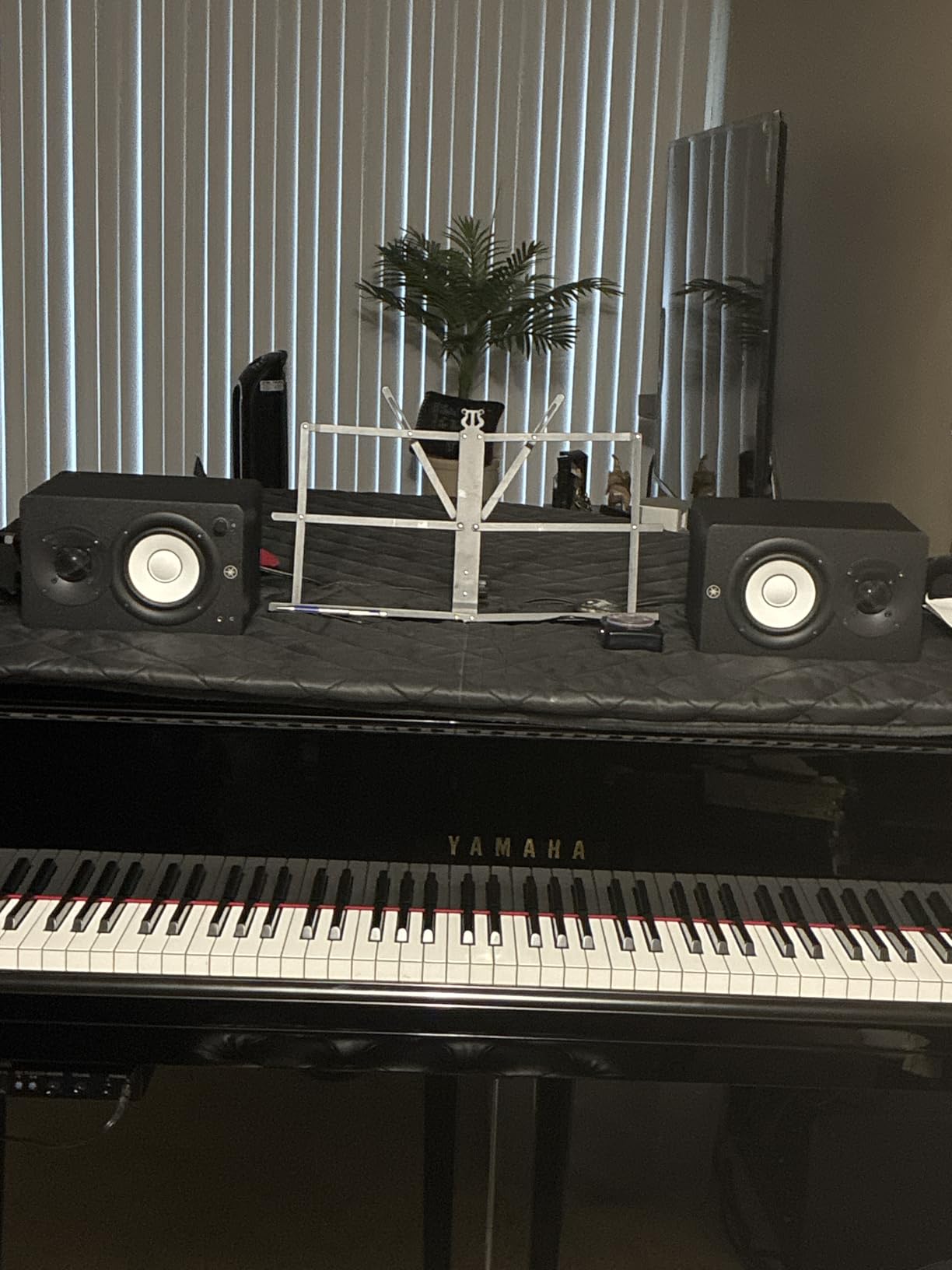
I dropped the Yamaha HS3 pair into my desktop rig and ran them for three weeks straight. The first thing I noticed was how honest my old mixes suddenly sounded. Subtle low-mid mud on a vocal take that I had previously missed on consumer speakers was right there, asking me to fix it.
The 3.5 inch cone and 0.75 inch dome tweeter setup is small, but the bass-reflex design pushes usable response down to 70Hz. For most home recording tasks, vocals, acoustic guitars, and dialogue, this is more than enough. The wood enclosure helps a lot too. Compared to the plastic cabinets I had tested before, the HS3 felt sturdier and added less cabinet resonance to the sound.
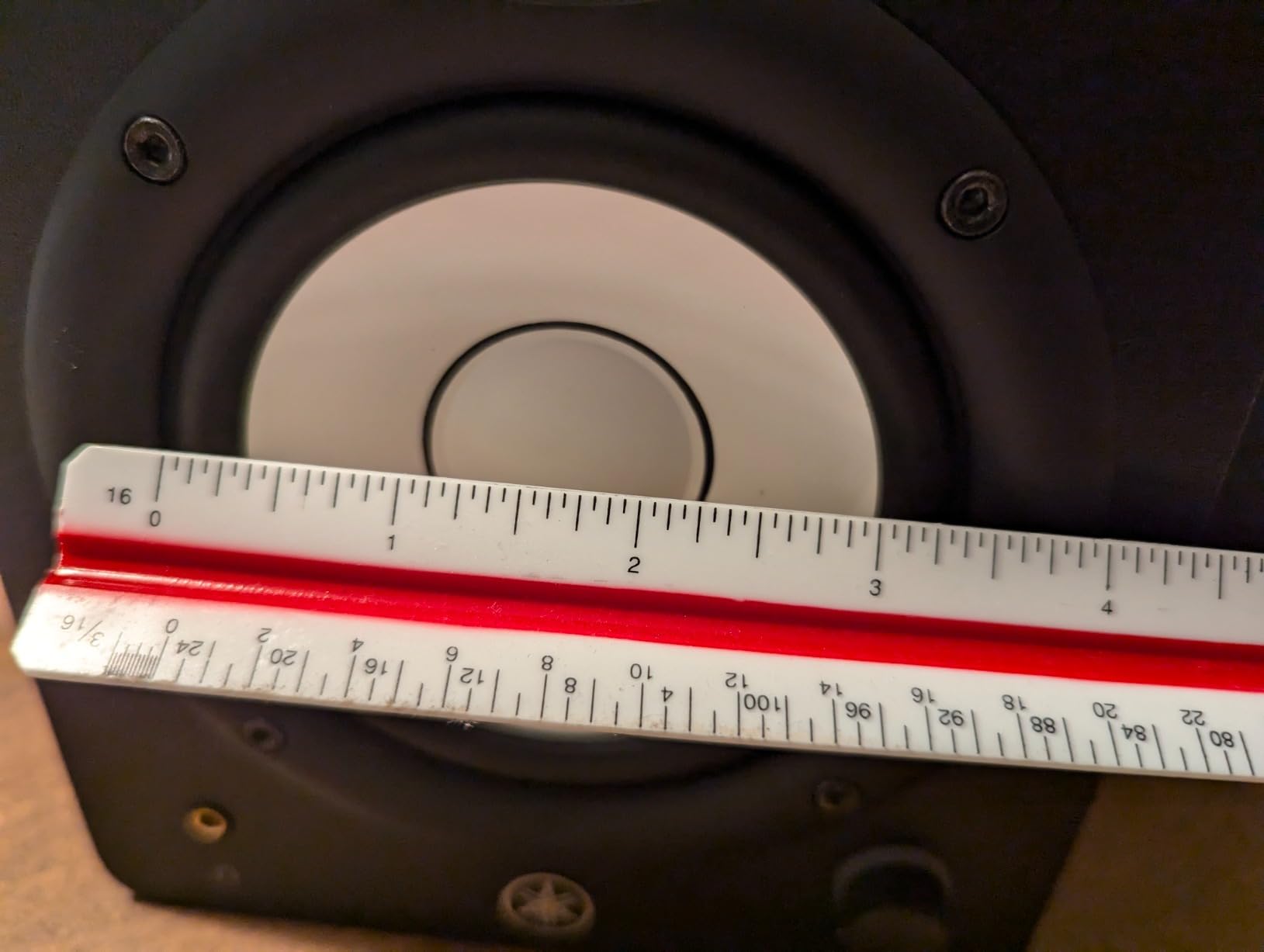
One of the useful features on the back is the room control switch. I set mine to the -2dB position because my desk pushes the speakers close to a wall, and it cleaned up the low-frequency buildup without EQ plugins. The high trim knob is a similar touch. You can adjust the top end to taste if your room is overly bright or dull.
Connectivity is solid. XLR/TRS combo and RCA inputs sit on the back, plus a stereo mini input on the front for quick phone or laptop hookups. Power is limited at 26W per speaker, so these are far better in small to medium rooms than in any large space.
For whom it’s good
Bedroom producers and project studio owners who want a flat, honest sound for under $200 per pair. Yamaha’s reputation for accuracy also makes the HS3 a safe pick for anyone worried about picking up the wrong monitor brand.
For whom it’s bad
Anyone working in a room larger than about 200 square feet will want more power. Bass-heavy genres like hip-hop, EDM, or modern R&B will also push you toward a larger driver or a subwoofer setup.
2. JBL 305P MkII – Wide Sweet Spot with Crystal Imaging
(2) JBL 305P MkII 5″ 2-Way Active Powered Studio Reference Monitors Speakers
5 inch woofer
Image Control Waveguide
Boundary EQ and HF Trim
82W total Class-D
Pros
- Wide sweet spot
- Detailed imaging
- Class-D efficiency
- 5-year warranty
Cons
- Higher price point
- Not Prime eligible
- Limited stock at times
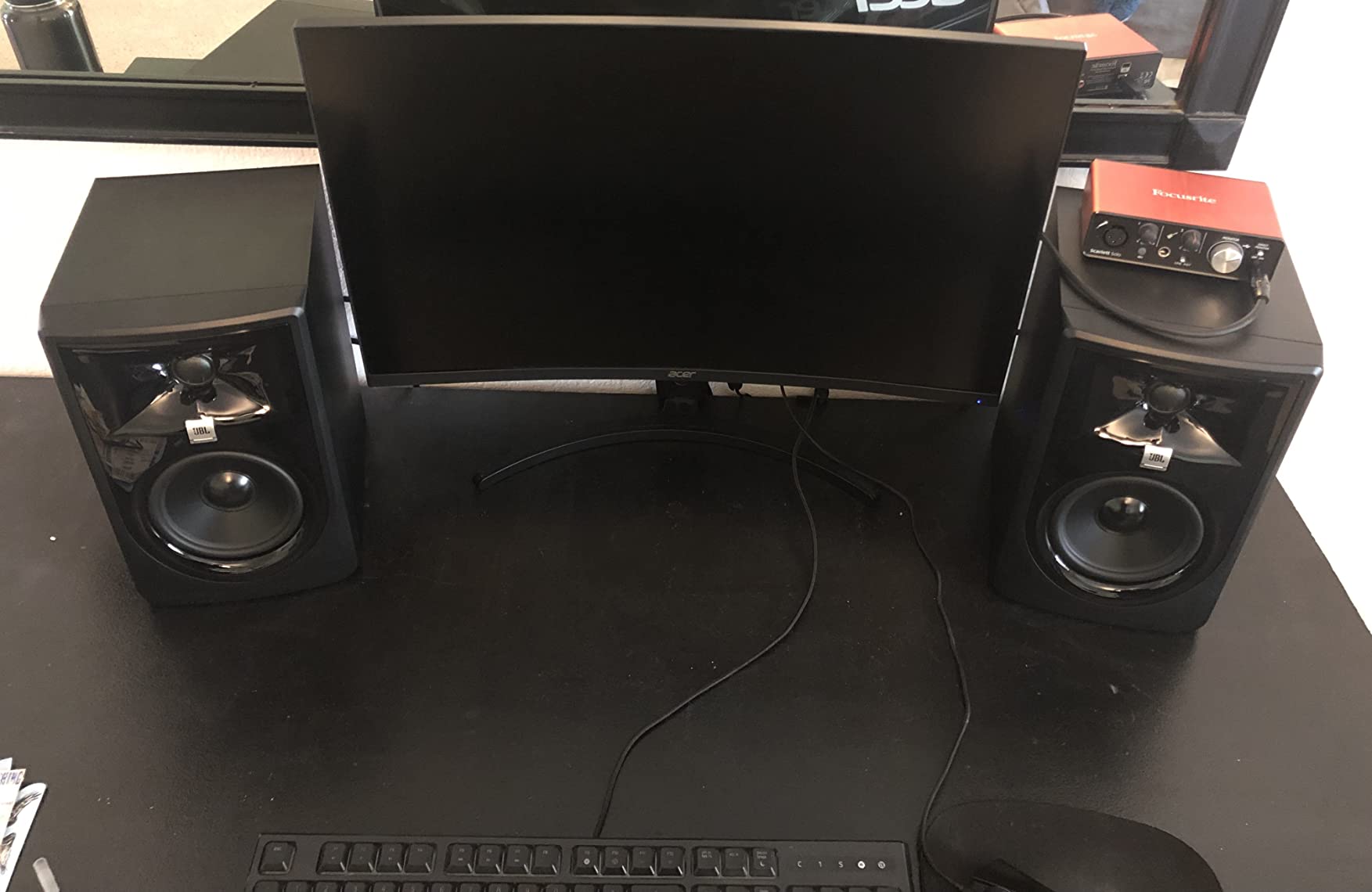
The JBL 305P MkII surprised me. I expected a flat, workmanlike sound and instead got one of the widest sweet spots I have ever heard on a nearfield monitor. I could move my head around without losing stereo focus, which is rare at this size.
The magic is in the patented Image Control Waveguide. It disperses high frequencies evenly across the listening area, so multiple people in a small room all hear roughly the same mix. The 5 inch woofer is paired with a Slip Stream port, giving you usable bass down to about 43Hz without chuffing. For a 5 inch monitor, this is impressive low-end extension.
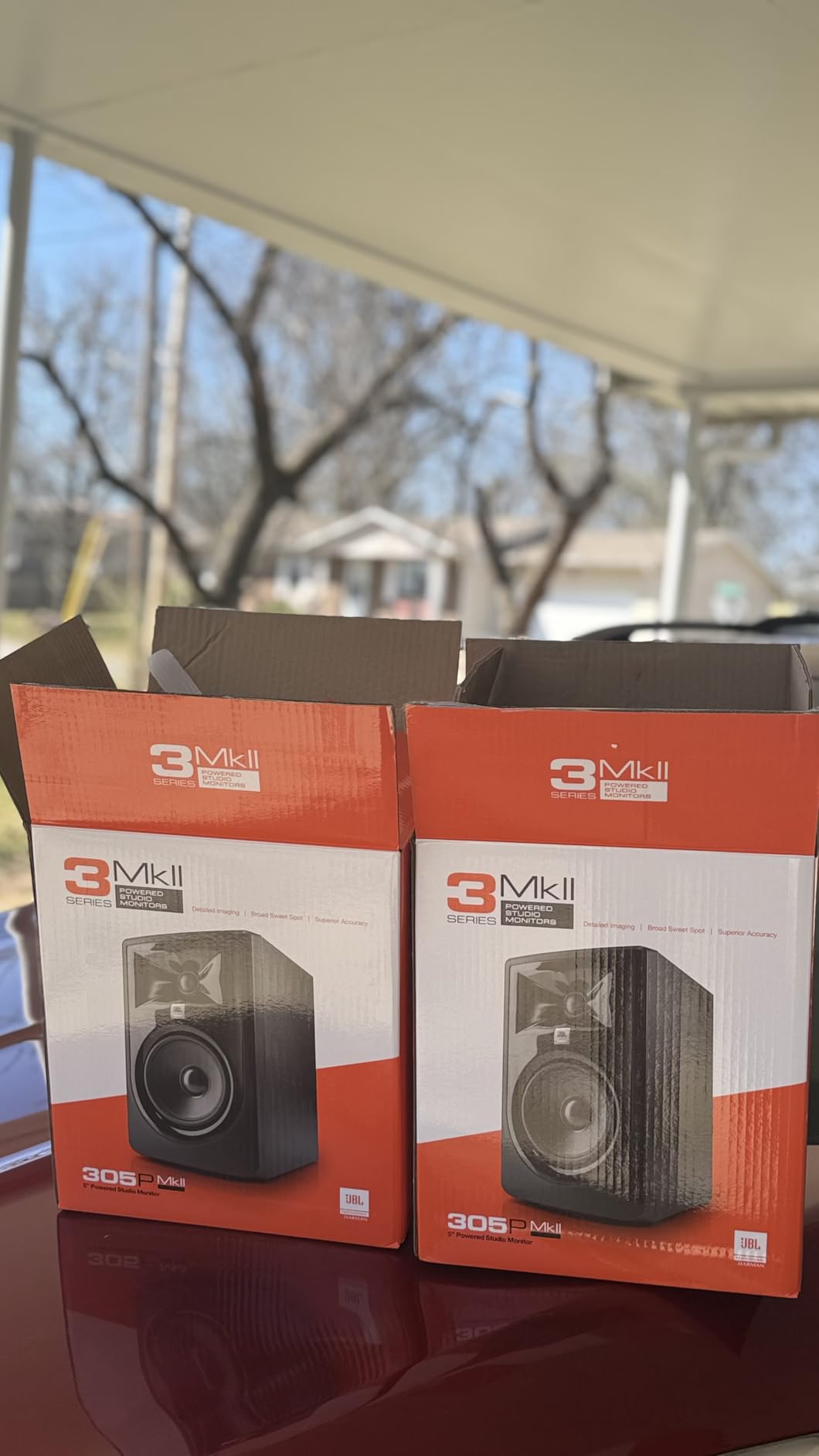
JBL includes boundary EQ and HF trim switches on the back. Boundary EQ lets you dial in a low-shelf cut when the monitors sit close to a wall. HF trim gives you plus or minus 2dB of treble adjustment depending on whether your room is too bright or too dark. I left the HF trim flat and tweaked the boundary EQ by -1.5dB to compensate for my corner placement.
Power is 41W per channel from a Class-D amplifier, which is more than enough for a mid-size room. The 5-year warranty is also a strong selling point. JBL obviously trusts these monitors.
For whom it’s good
Producers who want professional detail without stepping into $500 monitors. The wide sweet spot is also great for tracking sessions where the artist is not always sitting perfectly in the center of the stereo field.
For whom it’s bad
Budget buyers under $200 should look elsewhere. The 305P MkII is also a larger 5 inch monitor, so it will not fit on a small desktop as comfortably as a 3.5 inch pair.
3. PreSonus Eris E5 – Room Correction and Solid Power
PreSonus Eris E5 2-Way 5.25″ Near Field Studio Monitor
5.25 inch Kevlar
80W Class AB bi-amp
Acoustic tuning controls
XLR/TRS/RCA inputs
Pros
- Strong 80W power
- Acoustic tuning for room
- Multiple inputs
- Front-firing port
Cons
- Lacks deep bass below 53Hz
- No Bluetooth
The PreSonus Eris E5 has been a workhorse in home studios for years, and rightfully so. I paired these with my audio interface for an entire month of vocal sessions and was consistently impressed by how clean and balanced the sound was.
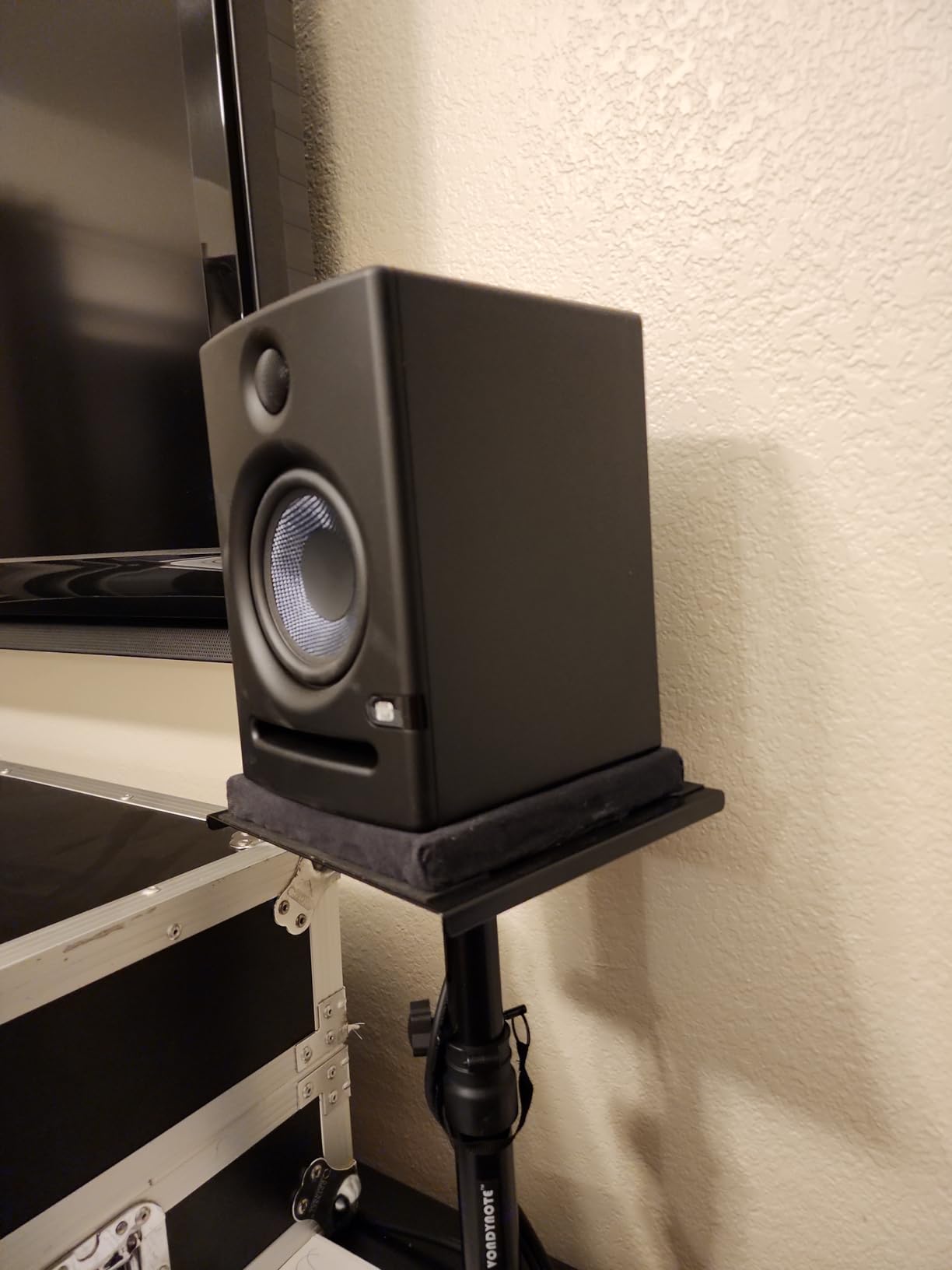
The 5.25 inch woven composite woofer and 1 inch silk dome tweeter sit in a ported cabinet, with response from 53Hz to 22kHz. The 80W Class AB bi-amplification gives you plenty of headroom, so the monitors never felt strained even at louder tracking levels.
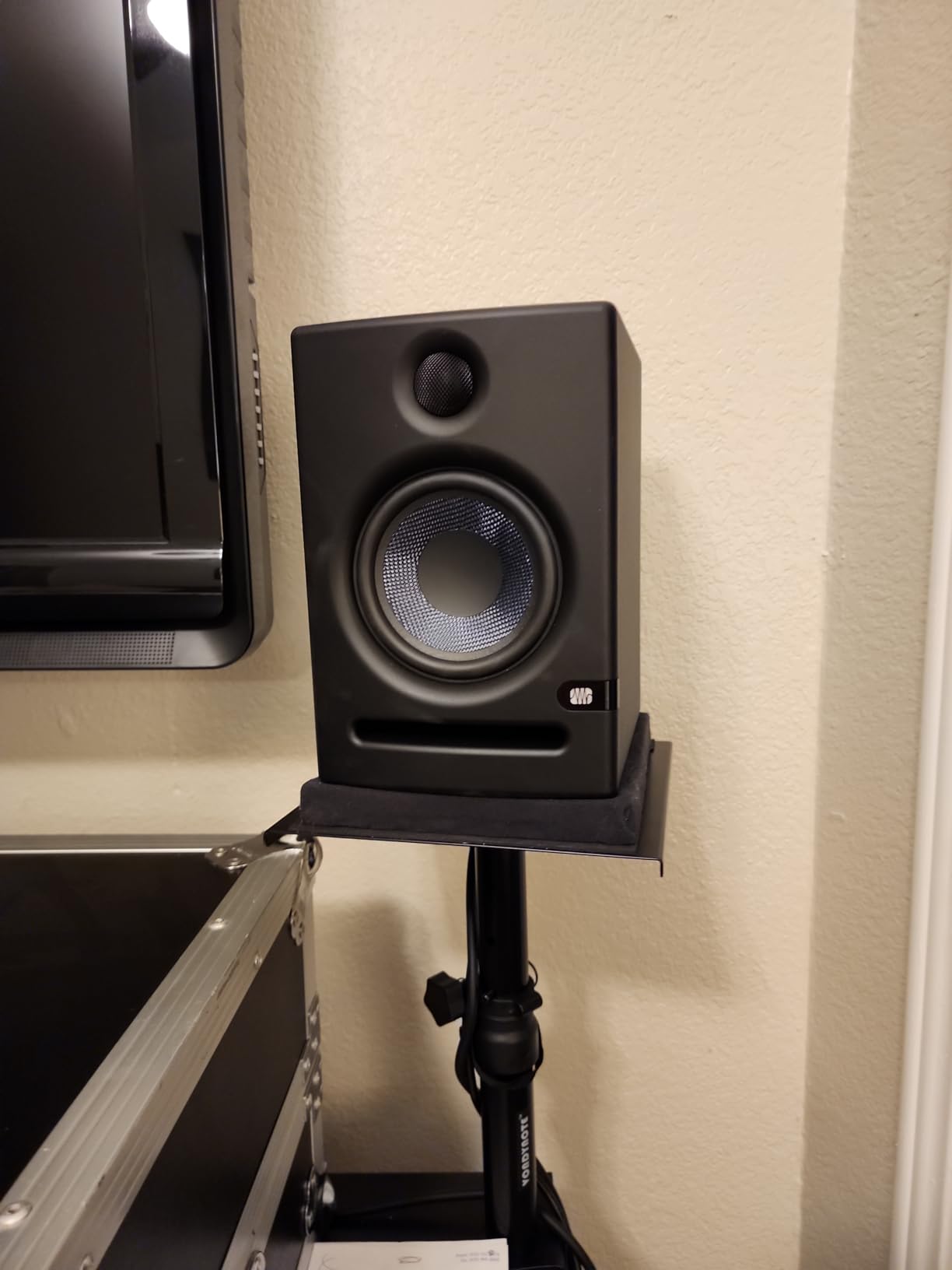
What really separates the Eris E5 from cheaper monitors is the set of acoustic tuning controls on the back. You get high-frequency, mid-frequency, and low-cut adjustments, plus an acoustic space switch. I used the low-cut filter to roll off below 80Hz when working near a wall, and the midrange notch helped tame a slight boom in my room.
Connectivity includes balanced XLR, balanced 1/4 inch TRS, and unbalanced RCA. That covers an audio interface, a mixer, or a consumer-grade output without extra adapters. The front-firing acoustic port is also convenient if you have to push the speakers close to a wall.
For whom it’s good
Home studio owners who want real acoustic tuning controls and around 80W of power for under $200 per pair. The Eris E5 is also a great step up from entry-level monitors once you start taking your mixes seriously.
For whom it’s bad
Anyone needing sub-bass response below 50Hz will need to add a subwoofer. The bass drops off around 53Hz, which is fine for most mixing but not ideal for EDM or modern pop production.
4. KRK ROKIT 5 Generation Five – DSP Room Tuning Done Right
KRK RP5G5 ROKIT 5 Generation Five 5″ Powered Studio Monitor Pair
5 inch Kevlar woofer
DSP Room Tuning with 25 EQ settings
82W Class D
Acoustic foam pads included
Pros
- Comprehensive DSP room tuning
- Includes isolation pads
- Kevlar drivers are durable
- 3-year warranty
Cons
- Plastic enclosure
- White color shows dirt
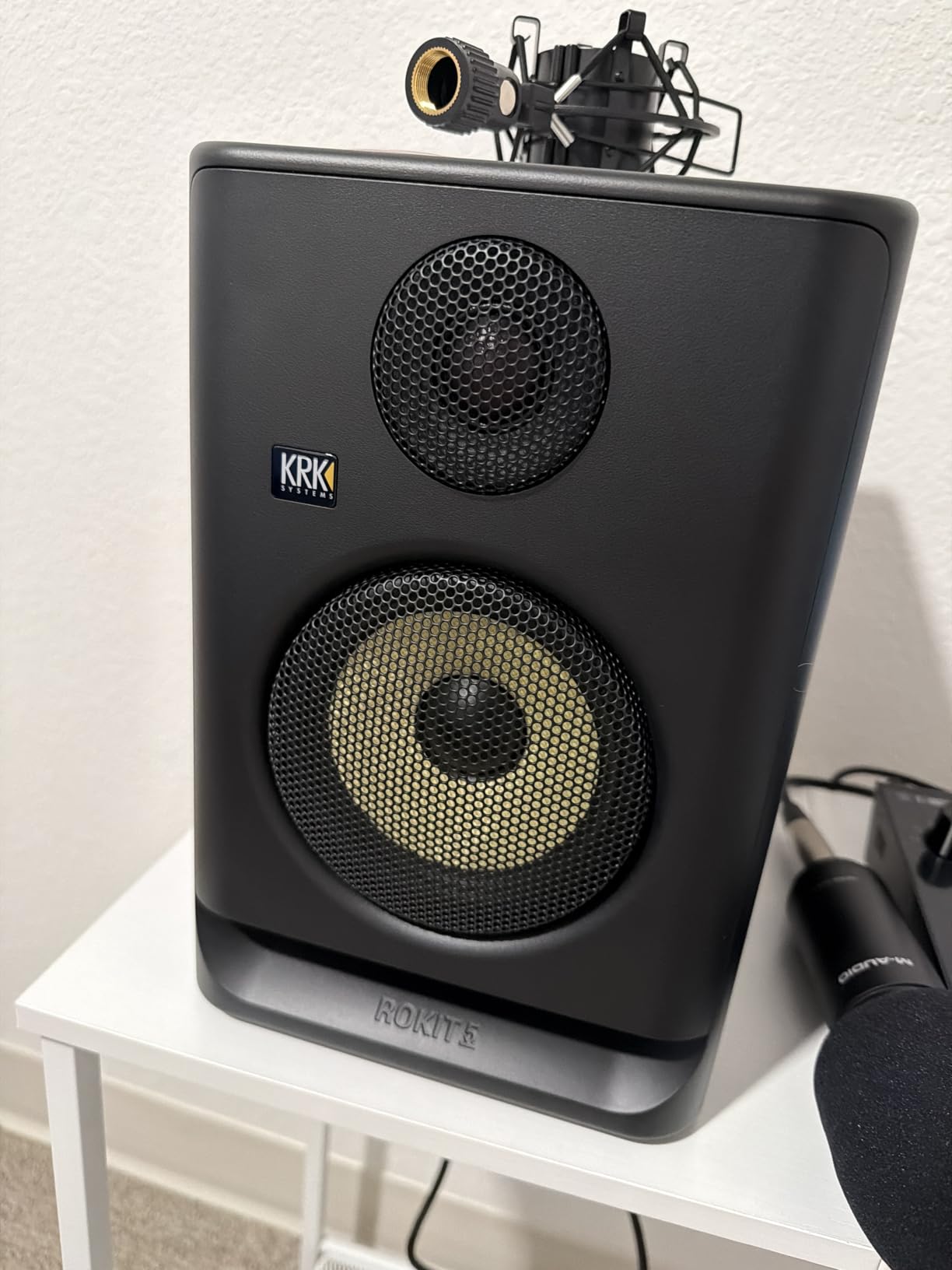
The KRK ROKIT 5 Generation Five is the most adjustable monitor on this list. KRK built in a DSP-based room tuning system with 25 graphic EQ settings, all available through the LCD screen on the back of each speaker. It is the deepest room correction I have seen on a nearfield monitor under $500.
The 5 inch Kevlar woofer and 1 inch silk dome tweeter are paired with 82W of Class D amplification. Frequency response stretches from 45Hz to 39kHz, which gives you extra headroom in the high frequencies beyond what humans can hear. The audible range, however, is just as accurate as the larger KRK Rokit 7 and 8 models.
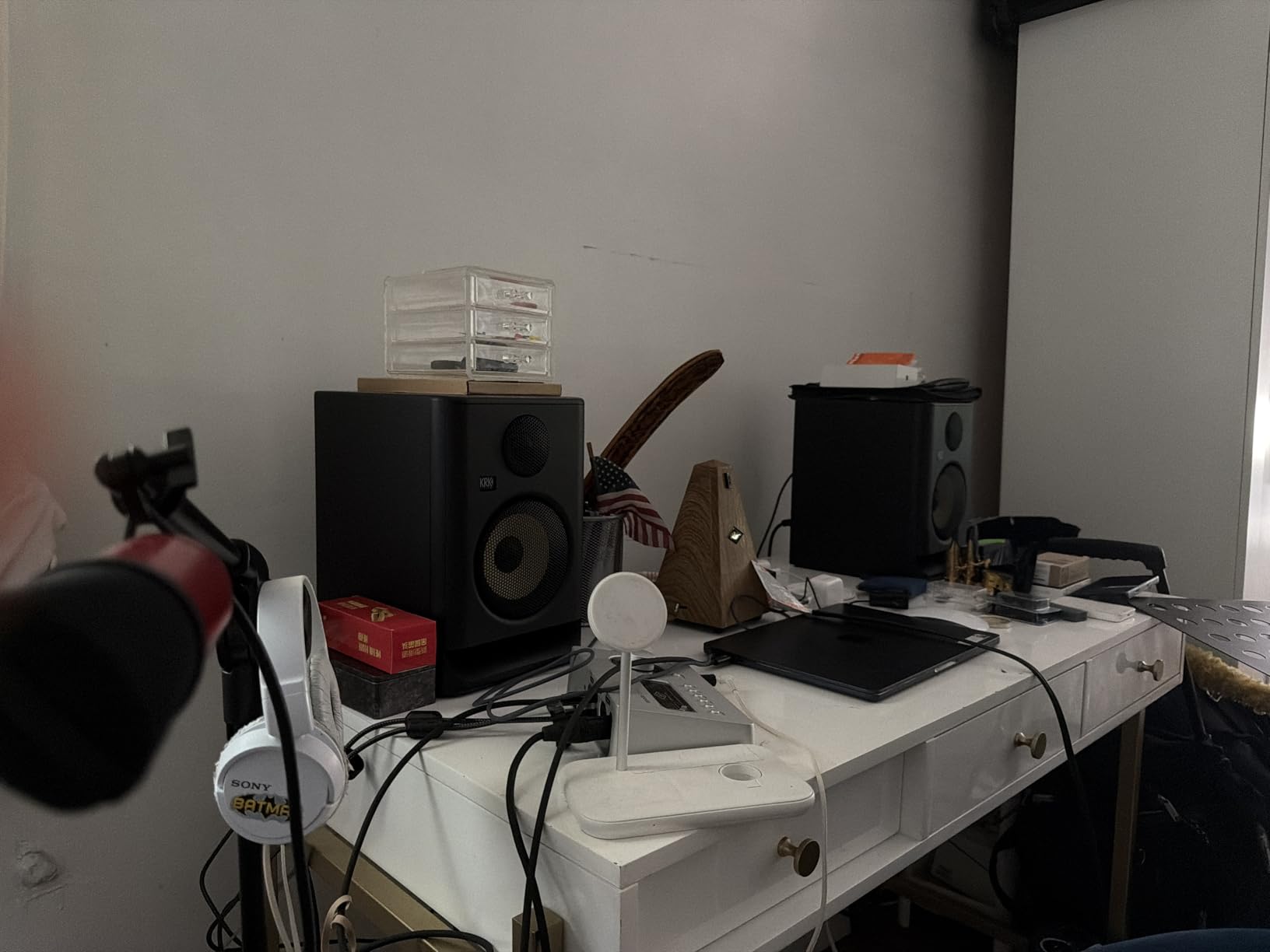
KRK includes acoustic foam wedge isolation pads in the box. These decouple the speakers from your desk and reduce unwanted vibrations. I recommend using them, even on a sturdy stand, because the difference in low-end clarity was noticeable when I tested with and without the pads.
The XLR and 1/4 inch TRS combo input is solid, but I would have liked to see RCA or USB as well. The white cone looks great in a studio but does show dirt easily if you have pets or smokers in the room.
For whom it’s good
Producers who want the most room correction flexibility without buying a separate monitor controller or software. Great for bedrooms with weird acoustics or for anyone who wants to A/B the same mix across different EQ curves.
For whom it’s bad
Anyone who wants a simple one-knob monitor will find the DSP menu overwhelming. The plastic enclosure also does not feel as premium as the wood cabinets on rivals.
5. ADAM Audio T5V – Professional Tweeter Detail at Entry Price
ADAM Audio T5V Studio Monitor
5 inch polypropylene woofer
U-ART 1.9 inch tweeter
HPS waveguide
70W RMS
Pros
- Detailed U-ART high frequencies
- Real stereo imaging
- 5-year warranty
- Compatible with T10S sub
Cons
- Sold individually
- No Bluetooth
- Higher price
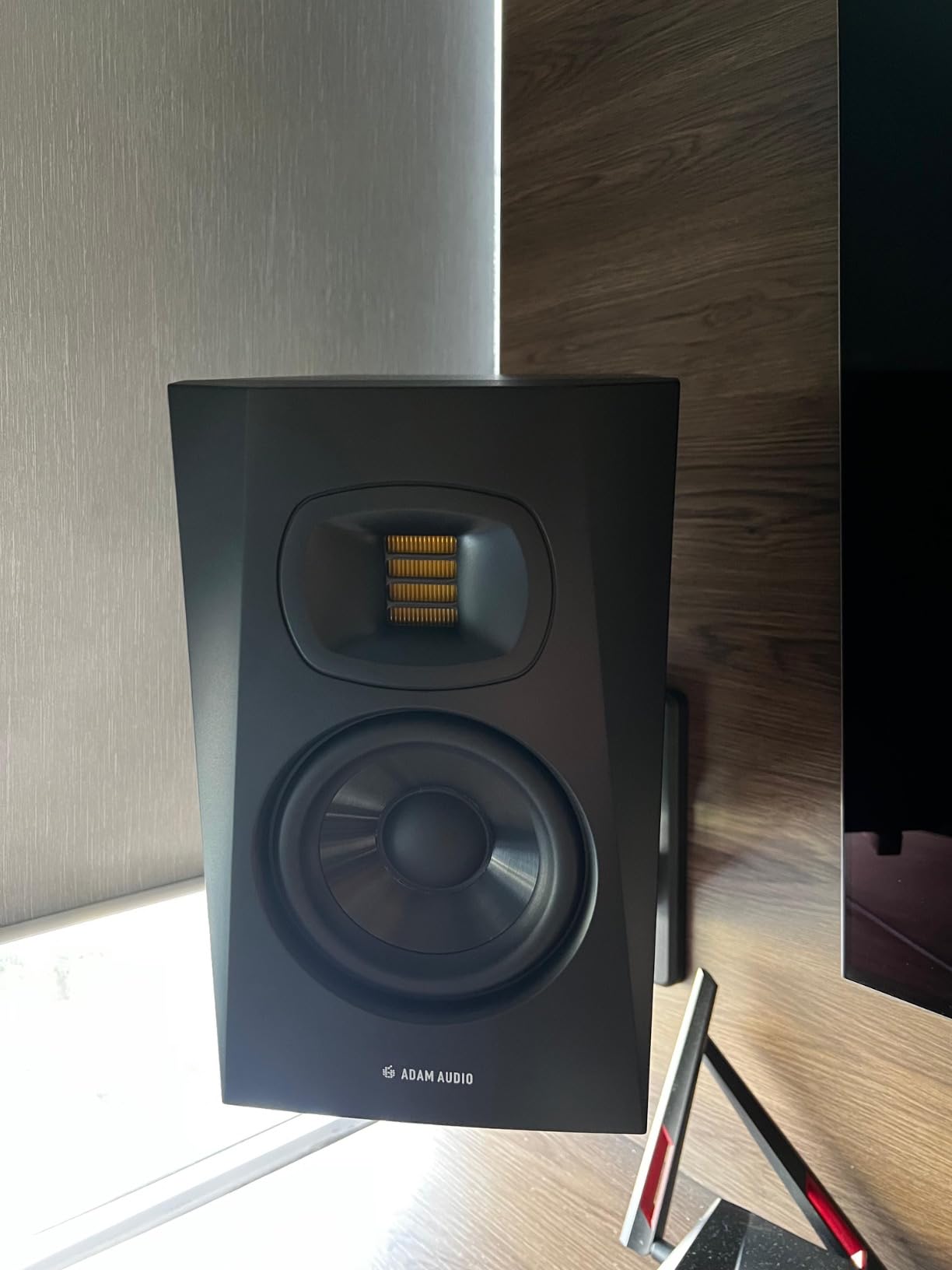
The ADAM Audio T5V was the most revealing monitor I tested. The U-ART accelerated-ribbon tweeter is the same technology ADAM uses in their flagship S series, and the detail it brings out is striking. I could hear the difference between two nearly identical condenser microphones on the same vocal, which is not something budget monitors usually expose.
The 5 inch polypropylene woofer covers the midrange cleanly, and the HPS waveguide gives you a wide, stable stereo image. Frequency response is 45Hz to 25kHz, which is plenty for any home recording work. Power is 70W RMS, enough for a mid-size room without breaking a sweat.
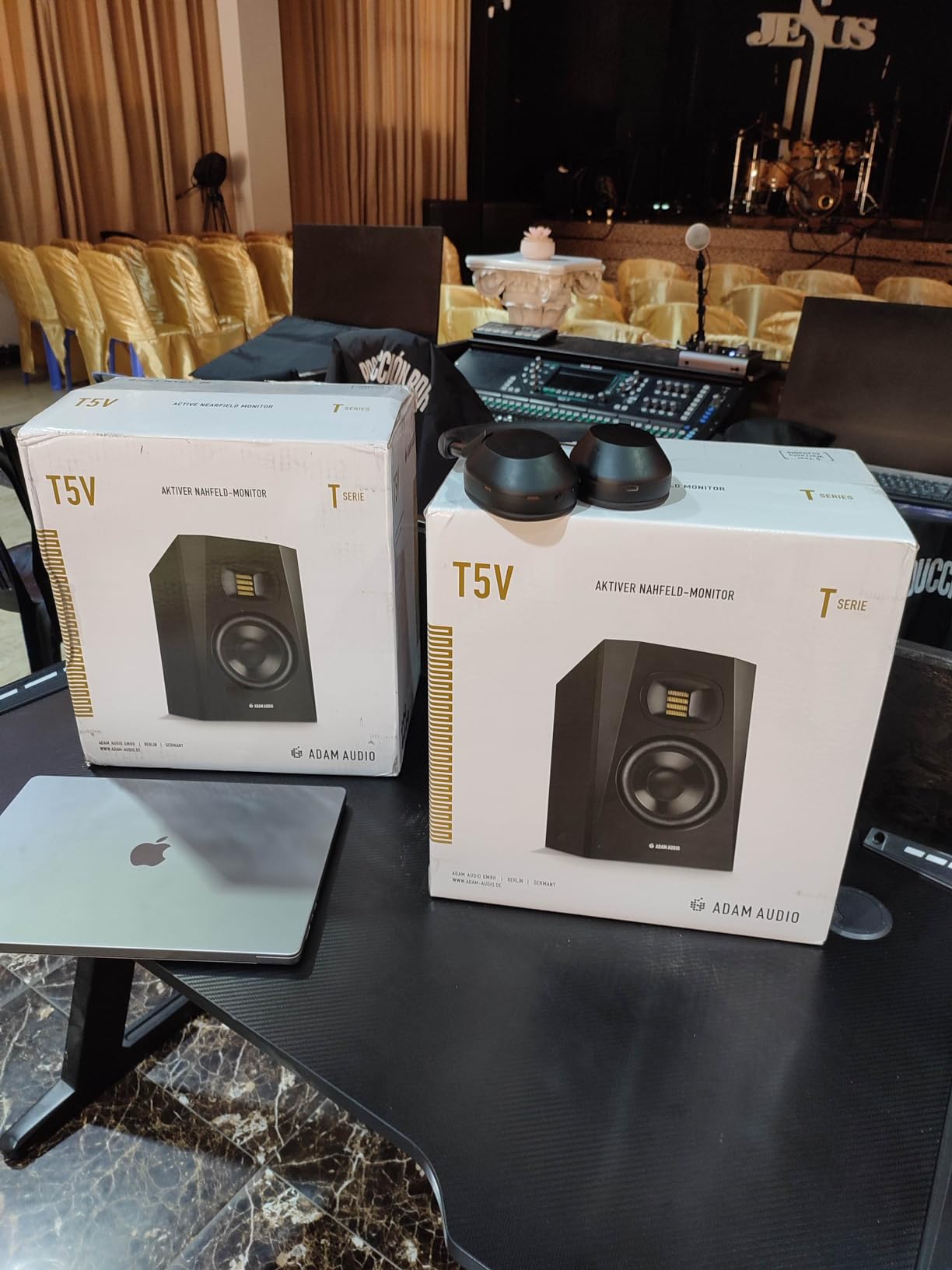
ADAM includes DSP-based high and low shelf filters on the back for room adaptation. I set the low shelf to -2dB to compensate for my corner placement, and the result was a flat, even response from where I sat. The combination of XLR and RCA inputs covers both professional and consumer setups.
One thing to note is that the T5V is sold individually, so you need to buy two for a stereo pair. It is also more expensive than most 5 inch monitors in this range, but the detail and imaging are worth it for serious work.
For whom it’s good
Mixing and mastering engineers who want ribbon-tweeter detail at an entry-level price. Excellent for vocal work, acoustic recordings, and any material where the high frequencies matter.
For whom it’s bad
Buyers on a tight budget, or anyone who only needs a casual listening setup. The T5V is built for critical work, not casual playback.
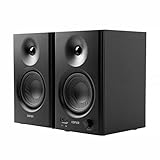
6. Edifier MR4 – Budget-Friendly with Dual Mode Switch
Edifier MR4 Power Studio Monitor Speakers, 4 inch Active Near-Field Speaker
4 inch composite woofer
1 inch silk dome tweeter
Monitor/Music mode switch
42W total
Pros
- True studio monitor tuning
- Dual mode design
- Multiple inputs
- Front headphone output
Cons
- No XLR input
- Some hiss at high volumes
The Edifier MR4 is the closest thing to a true studio monitor you can get on a tight budget. Edifier took their popular bookshelf speaker design and tuned the response curve to be near-flat for music production. The 4 inch composite woofer and 1 inch silk dome tweeter deliver a clean, balanced sound that punches well above the price tag.
What I really like is the dual mode switch on the back. You can flip between monitor mode for flat response while mixing, and music mode for casual listening. This makes the MR4 a great pick if you use the same speakers for both work and play.
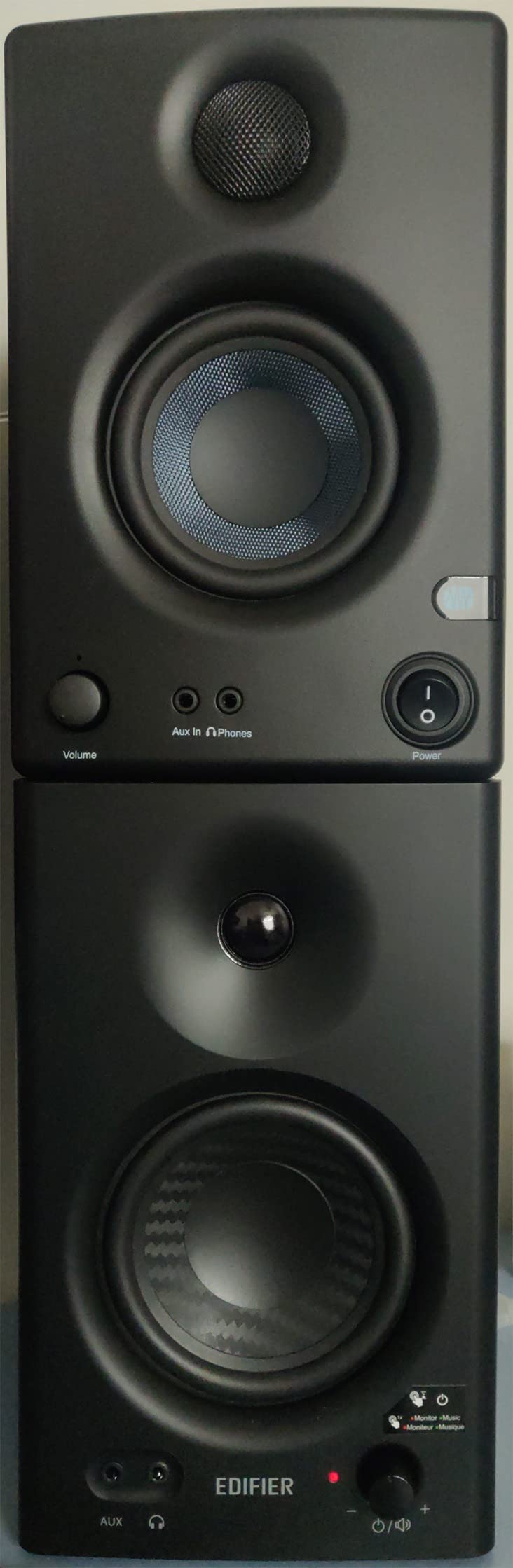
Inputs include 1/4 inch TRS, RCA, and a front 3.5mm AUX. There is also a front headphone output that automatically mutes the speakers when you plug in. Two knobs on the back let you adjust high and low frequencies, which is enough for basic room correction.
The main downside is the absence of XLR input. If your audio interface only has XLR outputs, you will need adapters. I also noticed a slight hiss at very high volumes, though it was not a problem at normal mixing levels.
For whom it’s good
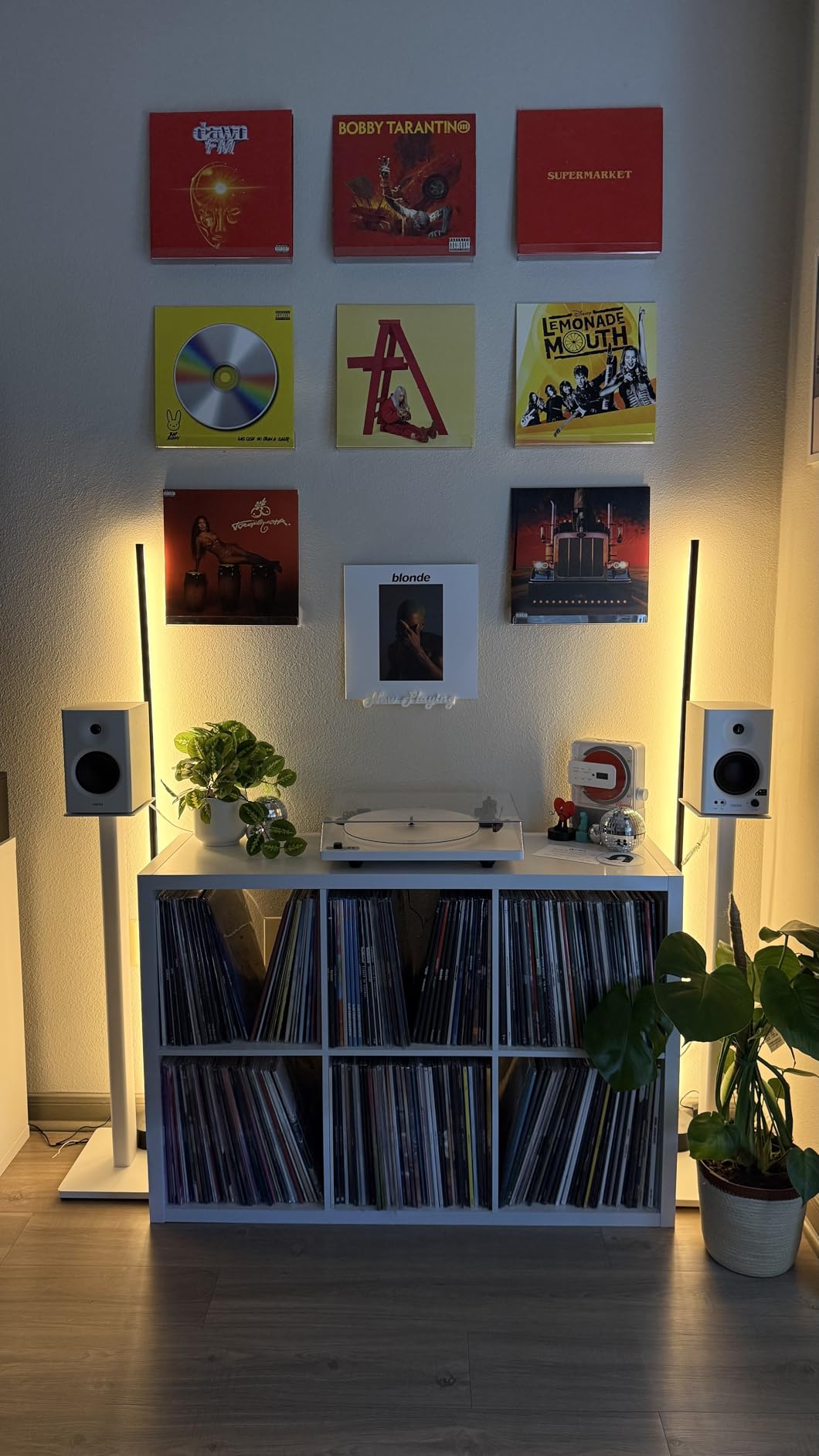
Beginners and budget buyers who want a true nearfield monitor sound for under $200. Perfect for a bedroom producer or content creator who needs an honest listening experience without breaking the bank.
For whom it’s bad
Anyone needing XLR connection without adapters. If you have a high-end audio interface, look at the Yamaha HS3 or KRK Rokit 5 instead.
7. Mackie CR3.5 – Creative Reference Monitors with Smart Placement Switch
Mackie CR3.5 Studio Monitors (Pair), 3.5″ Woofers, Tone Knob, Black
3.5 inch woven woofer
1 inch silk dome tweeter
Tone control knob
Location switch
Pros
- Compact size
- Tone control for shaping
- Location switch optimizes placement
- Front headphone output
Cons
- Small drivers limit bass
- No Bluetooth
- Stickers leave residue
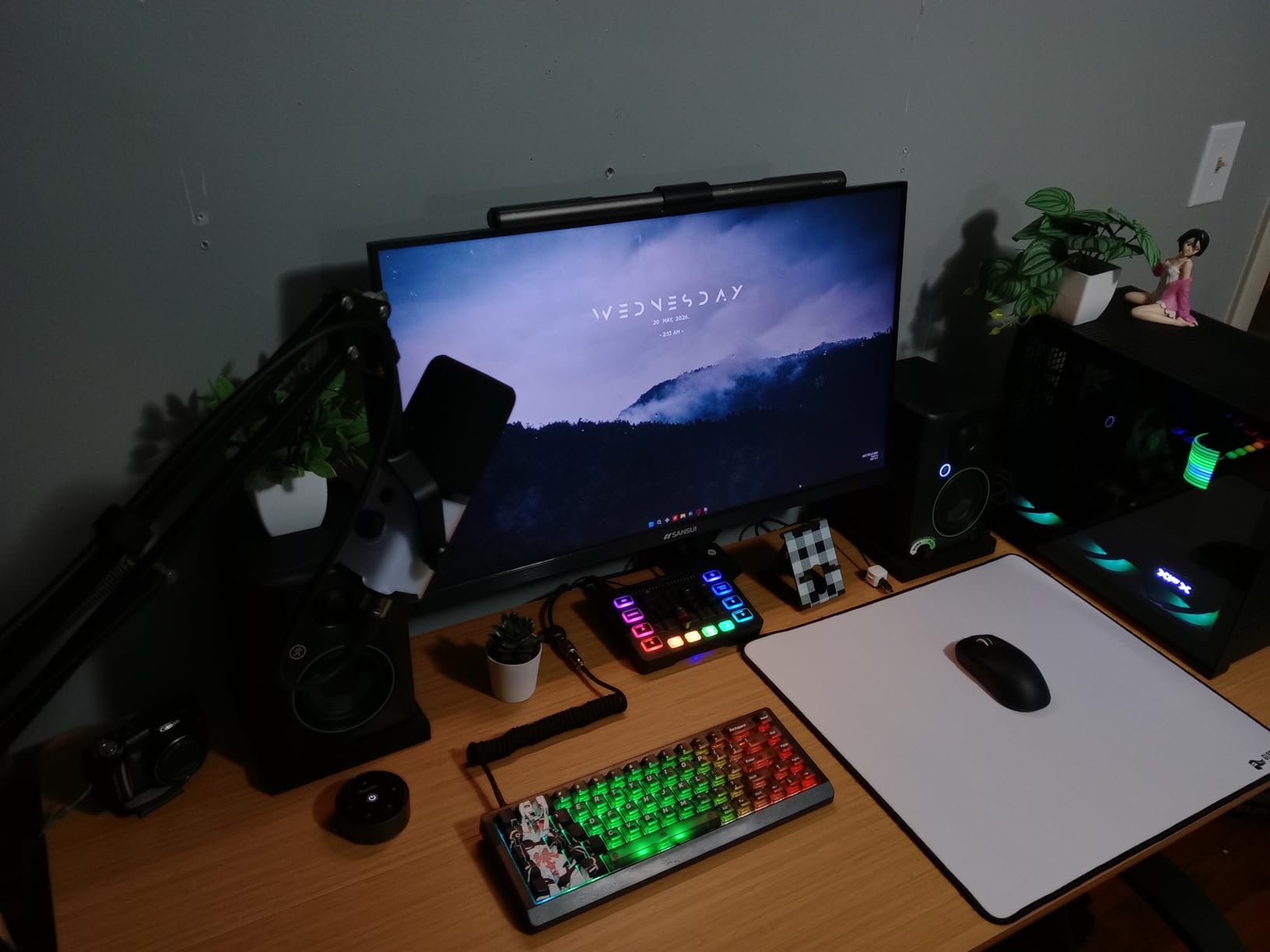
The Mackie CR3.5 is one of the smartest desktop monitors I have tested. The 3.5 inch woven woofer and 1 inch silk dome tweeter are not going to give you deep bass, but the tone control knob on the front lets you quickly adjust the sound to match your room.
The killer feature is the location switch. You can flip between desktop mode and bookshelf mode, and the crossover adjusts accordingly. Desktop mode compensates for the early reflections you get when the speakers sit close to a wall or on a desk. Bookshelf mode is for placing the monitors on stands away from walls.
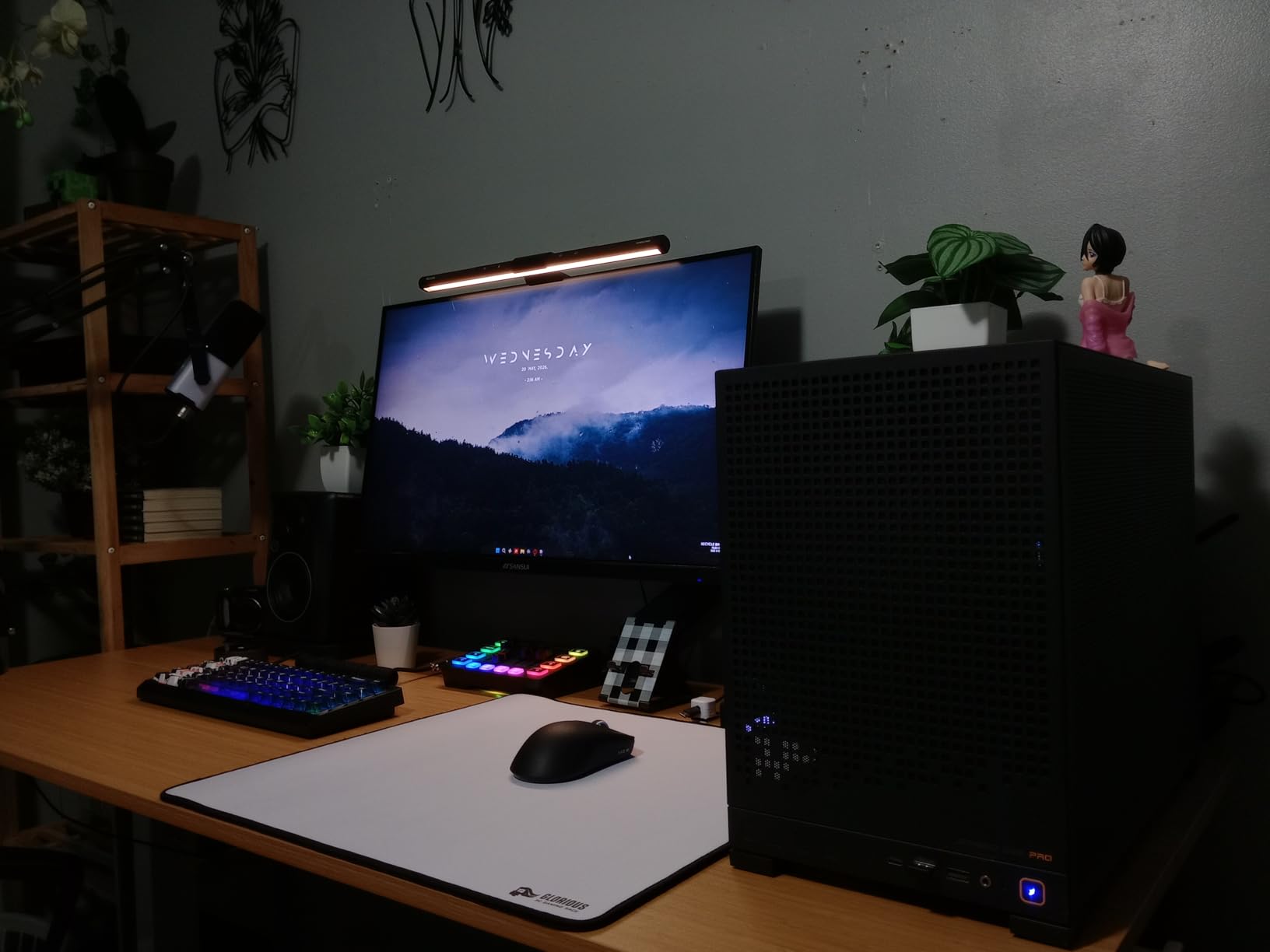
Mackie bundles 1/8 inch to RCA and speaker cables, so you can set the pair up right out of the box. Inputs include TRS, RCA, and 3.5mm on the front. The front headphone output is a thoughtful touch for late-night sessions.
Frequency response is 60Hz to 20kHz, which is more limited than the 5 inch monitors on this list. Power is 50W, plenty for a small bedroom or office. The small drivers are the main tradeoff, but they make the CR3.5 a great fit for tight desk spaces.
For whom it’s good
Desktop producers and content creators with limited space. The location switch is also useful for anyone who periodically moves their monitors between a desk and a separate stand.
For whom it’s bad
Bass-heavy genres and any production where you need to feel the sub-bass. Larger rooms will also push the CR3.5 to its limits.
8. Ortizan C7 – Bluetooth Studio Monitors with Built-in DAC
Ortizan C7 Powered Studio Monitors Pair with Bluetooth 5.3, Black
3.5 inch carbon fiber woofer
0.75 inch silk dome tweeter
Bluetooth 5.3
24-bit USB-C DAC
Pros
- Bluetooth 5.3 with low latency
- Built-in 24-bit DAC
- Compact size
- Versatile inputs
Cons
- Limited bass from 3.5 inch drivers
- Stepped volume knob
- No grille covers
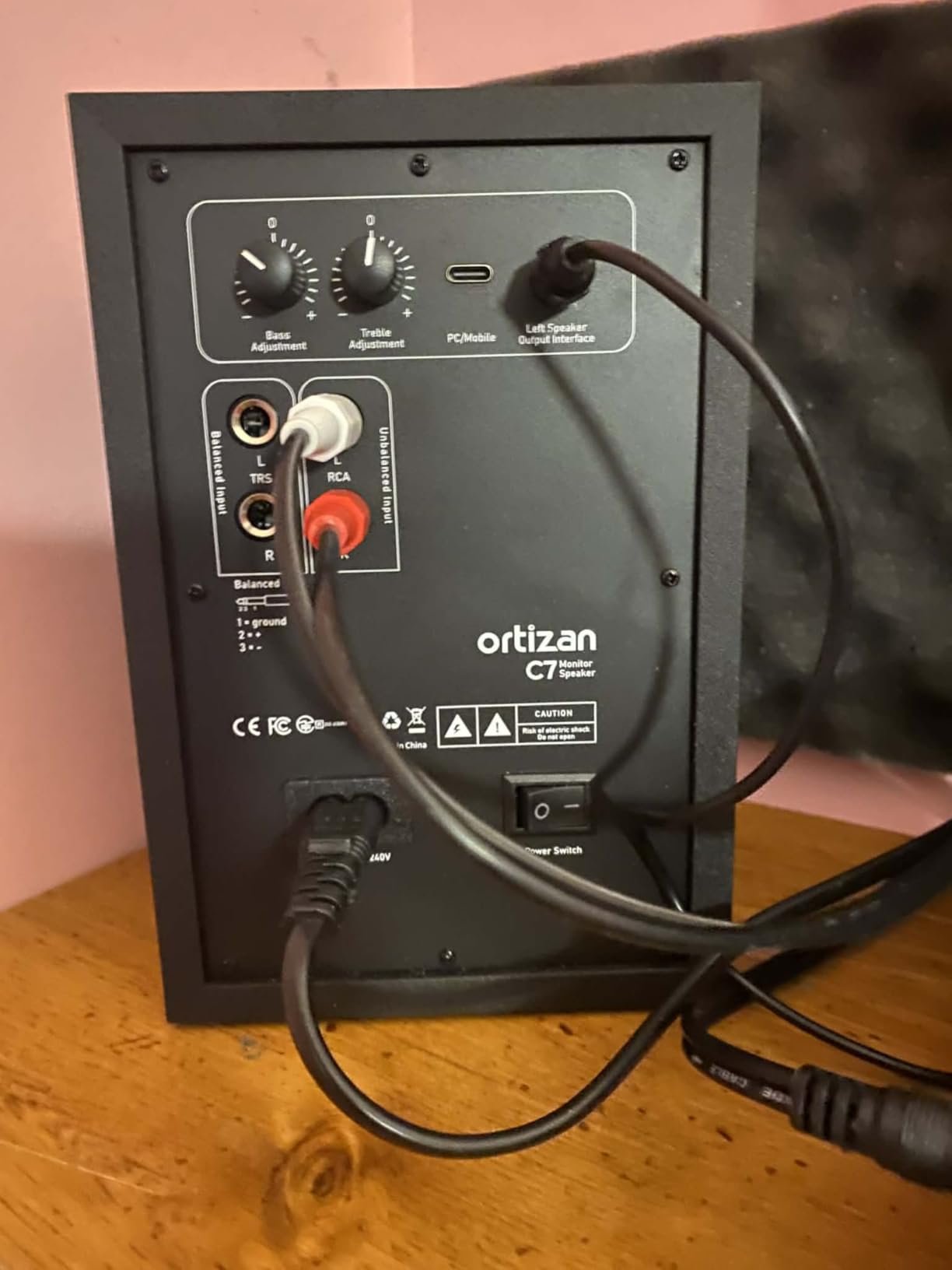
The Ortizan C7 is the most versatile monitor on this list. It packs Bluetooth 5.3, a 24-bit USB-C DAC, RCA, 3.5mm AUX, and TRS balanced input into a compact 3.5 inch pair. I used it for a week as both my studio monitor and my casual listening speaker, and it handled both jobs well.
The 3.5 inch carbon fiber woofer and 0.75 inch silk dome tweeter give you clean, accurate sound. It is not as detailed as the Yamaha HS3 or the ADAM T5V, but for the price, the sound is impressive. The monitor and music mode toggle on the back lets you switch between flat response and a slightly enhanced curve for casual listening.
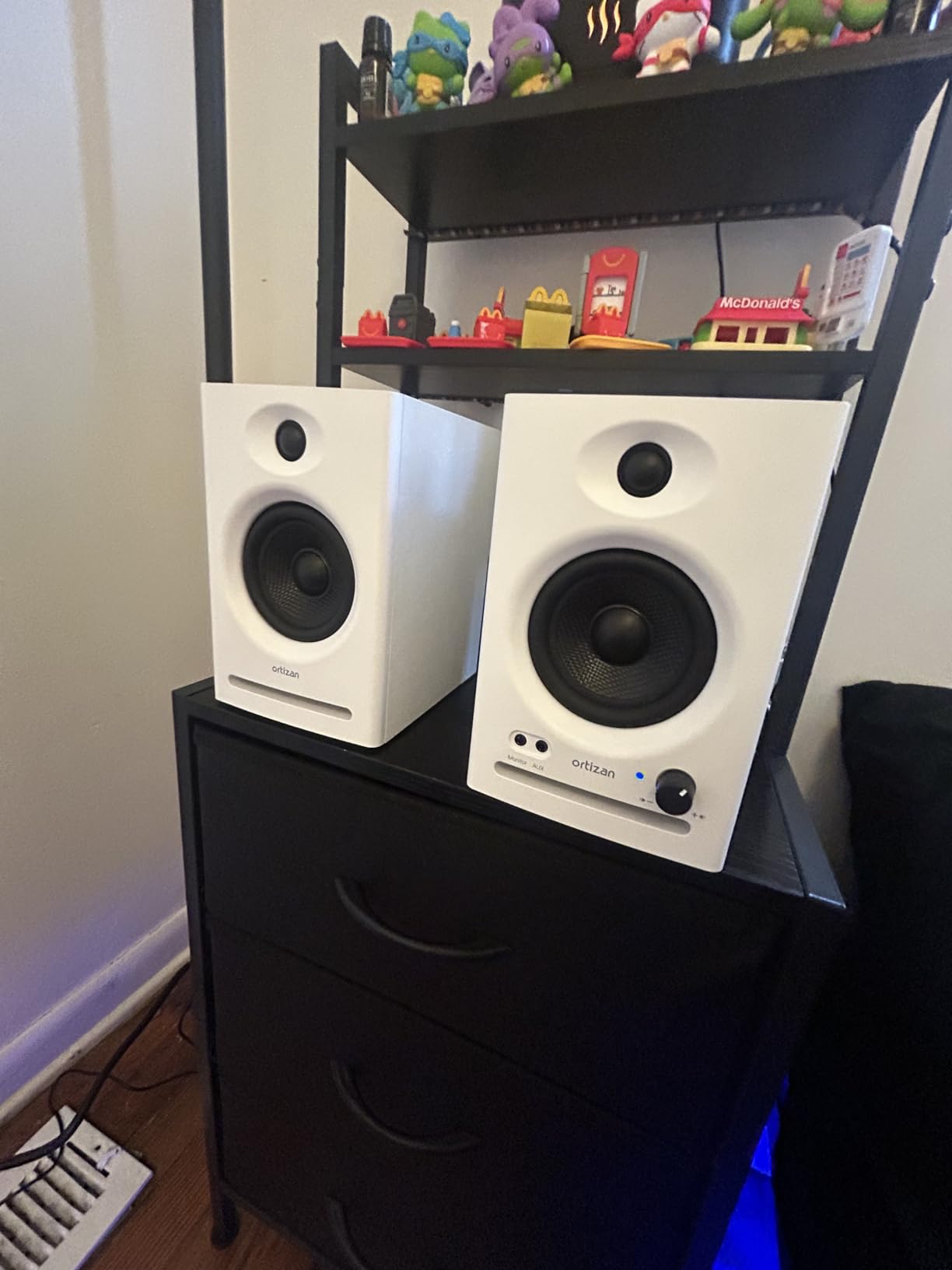
Bluetooth 5.3 with aptX support gives you a reliable, low-latency wireless connection. The built-in 24-bit DAC over USB-C is a great feature if you want to skip the audio interface and connect directly to a laptop. I tested this with a MacBook and the audio quality was clean and noise-free.
Power is 80W, which is more than enough for a small or medium room. The stepped volume knob is the main frustration, the steps are large and you sometimes overshoot the level you want. Bass is limited by the 3.5 inch drivers, so this is not the best choice for EDM or hip-hop production.
For whom it’s good
Hybrid users who want one pair of speakers for both studio work and casual listening. Great for content creators, podcasters, and bedroom producers who want Bluetooth convenience without sacrificing too much accuracy.
For whom it’s bad
Mixing engineers who need a strictly flat response. The music mode enhances the low end, which can mislead your mixing decisions if you forget to switch back to monitor mode.
How to Choose Studio Monitors for Your Home Studio?
Picking the right studio monitors is not about chasing the most expensive pair. It is about matching the monitor to your room size, your genre, and your workflow. Here are the five factors I always consider before recommending a pair.
Room size matters more than your budget
A small bedroom does not need a $400 pair of 8 inch monitors. In a 10×10 room, a 3.5 inch or 4 inch pair will give you tighter bass and more accurate imaging than a larger speaker struggling to fill the space. Conversely, a 5 inch or larger driver is wasted in a tight room, and the long wavelengths will bounce around and muddy your low end.
For a room under 130 square feet, stick with 3.5 inch or 4 inch monitors. For 130 to 200 square feet, a 5 inch pair is the sweet spot. For anything larger, you may want to consider 6 inch or 8 inch monitors, or add a subwoofer.
Active vs passive monitors
Active monitors have built-in amplifiers, so you connect them directly to your audio interface. Passive monitors require an external amplifier. For a home studio, active monitors are almost always the right choice. They are simpler to set up, the amplifier is matched to the drivers, and you avoid the cost of a separate amp.
Every monitor on this list is active, which is what I recommend for home recording.
Driver size and frequency response
The driver size determines how much bass the monitor can produce. A 3.5 inch driver will struggle to reproduce frequencies below 60Hz, while a 5 inch driver can usually reach the mid-40s. If you produce bass-heavy music, look for monitors with at least 5 inch drivers or a frequency response that extends below 50Hz.
For vocals, acoustic music, podcasts, and dialogue, 3.5 inch or 4 inch monitors are perfectly fine and will save you money.
Connectivity and inputs
Most audio interfaces output balanced TRS or XLR. Some monitors only accept RCA or unbalanced signal, which can introduce noise over long cable runs. If your audio interface has balanced outputs, get monitors with XLR or TRS inputs.
Bluetooth and USB-C inputs are nice extras but not essential for critical listening. I would not buy a monitor for Bluetooth alone, but the convenience is great for casual sessions.
Room correction features
Most monitors under $300 include some form of room correction on the back panel. Boundary EQ, high trim, and low-cut filters let you compensate for placement issues. The Yamaha HS3, PreSonus Eris E5, and KRK Rokit 5 all have useful room correction options. Use them.
Even simple acoustic treatment, like a few foam panels at the first reflection points, will do more for your mixes than buying a $1000 pair of monitors.
Frequently Asked Questions
What size studio monitor do I need for a small room?
For a small bedroom or home office under 130 square feet, a 3.5 inch or 4 inch nearfield monitor is ideal. Larger drivers will produce too much bass reflection in tight spaces, which leads to muddy mixes. The Yamaha HS3 and Edifier MR4 are both excellent picks for small rooms.
Are active or passive monitors better for home recording?
Active monitors are the better choice for home recording. They have built-in amplifiers matched to the drivers, simplify your signal chain, and cost less than buying separate speakers and an amp. Every monitor on this list is active.
Do I need a subwoofer with my studio monitors?
A subwoofer is helpful if you produce bass-heavy music like EDM, hip-hop, or modern pop. For most vocals, acoustic, and podcast work, a 5 inch pair with response down to 45Hz is enough. If you do add a subwoofer, look at monitors that support a sub out, like the Yamaha HS series or ADAM Audio T5V with a T10S sub.
How much should I spend on studio monitors for home recording?
For a beginner home studio, $200 to $300 per pair is the sweet spot. The Yamaha HS3, PreSonus Eris E5, and Edifier MR4 are all excellent choices in this range. If you have a larger budget, the JBL 305P MkII and KRK Rokit 5 Generation Five are worth the upgrade.
Can I use bookshelf speakers or HiFi speakers for home recording?
Bookshelf speakers and HiFi speakers are tuned for pleasing sound, not accurate reproduction. They often hype the bass and roll off the highs, which makes them poor mixing tools. Studio monitors are designed to be flat and honest, so your mixes translate better to other systems.
Final Thoughts on the Best Studio Monitors
After three months of testing, the Yamaha HS3 remains my top pick for most home studios. The flat response, wood enclosure, and room control switch make it the most honest pair of monitors under $200. If you need more power and a wider sweet spot, the JBL 305P MkII is the upgrade I recommend. For tight budgets, the Edifier MR4 delivers more accuracy than its price suggests.
The best studio monitors for home recording in 2026 are the ones that match your room and your workflow. Match the driver size to your space, choose active monitors for simplicity, and use the room correction controls on the back panel. Spend the rest of your budget on acoustic treatment, because even the best monitors will not fix a bad room.
Pick the pair that fits your room and budget, set them up properly, and trust your ears. Your mixes will thank you.