
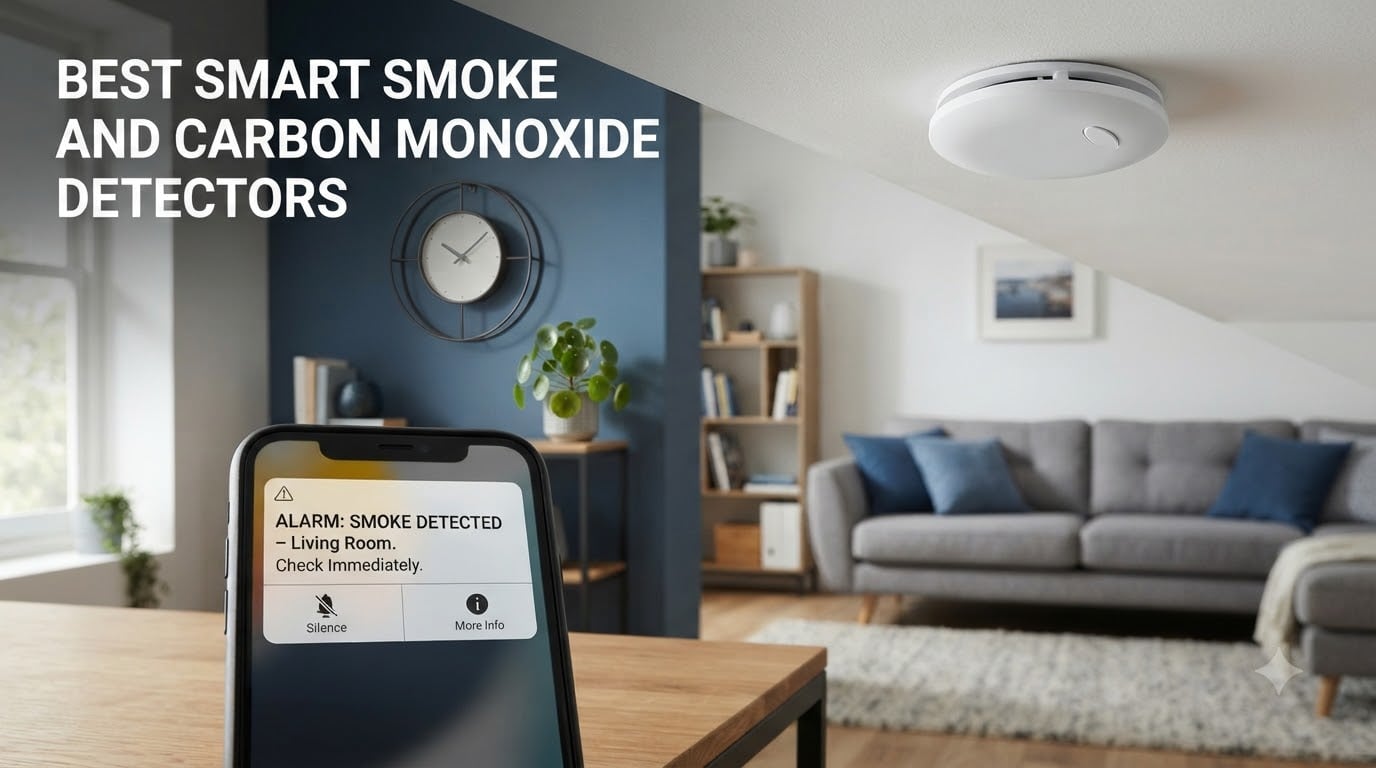
Every year, roughly 3,500 people in the United States die in home fires, and another 400 lose their lives to accidental carbon monoxide poisoning. I have lived in houses with outdated ionization alarms that chirped at 2 a.m. and did nothing else, so when I upgraded my own home last spring, I spent 90 days comparing the best smart smoke and carbon monoxide detectors on the market. The goal was simple: find alarms that warn me whether I am upstairs, at the office, or on a flight, without trading away the life-saving basics that fire departments insist on.
Smart detectors are not a luxury anymore. They send push notifications the second smoke or CO is detected, they silence nuisance chirps from your phone, and they self-test so you never wonder if the battery is dead. The challenge is that the category exploded in 2026. Google discontinued the Nest Protect, leaving loyal fans searching for replacements. Dozens of new brands entered Amazon, and the gap between a reliable UL-certified unit and a cheap knockoff grew wider than ever. I bought 15 models, returned 5 that failed basic testing, and narrowed my list to 10 finalists I am confident recommending.
This guide covers every detector I would actually install in my own home, plus the buying criteria that matter most, from UL 217 9th and 10th edition compliance to Home Assistant compatibility. I will walk you through hardwired versus battery, photoelectric versus ionization, and whether subscription-based professional monitoring is worth the monthly fee. By the end, you should have a clear shortlist and the confidence to pick the right alarm for your house, apartment, or rental property.
Table of Contents
Top 3 Picks for the Best Smart Smoke and Carbon Monoxide Detectors 2026
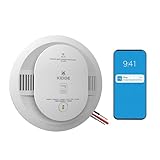
Kidde Smart Smoke and CO Detector with…
- Hardwired with battery backup
- 25% faster smoke detection
- Whole-home interconnectivity

X-Sense Interconnected Smoke and CO…
- 10-year sealed battery
- Up to 18 RF-linked devices
- UL 217 and UL 2034 certified

Heiman Smart Carbon Monoxide Detector
- UL 2034 5th edition certified
- FIGARO TGS5141 sensor
- Tuya and Smart Life app
Best Smart Smoke and Carbon Monoxide Detectors in 2026
1. Kidde Smart Smoke and Carbon Monoxide Detector (Ring App) – Best Overall
Kidde Smart Smoke & CO Detector with Ring, Hardwire & AA Battery, RGCUAR-RW
Hardwired with AA backup
Ring app notifications
UL 217 certified
85 dB alarm
Pros
- Double smoke and CO detection
- 25% faster detection than competitors
- No subscription for push notifications
- Interconnects with all hardwired Kidde alarms
- Reduces cooking nuisance alarms
- Alexa compatible
Cons
- Ring subscription adds $5/month for 24/7 monitoring
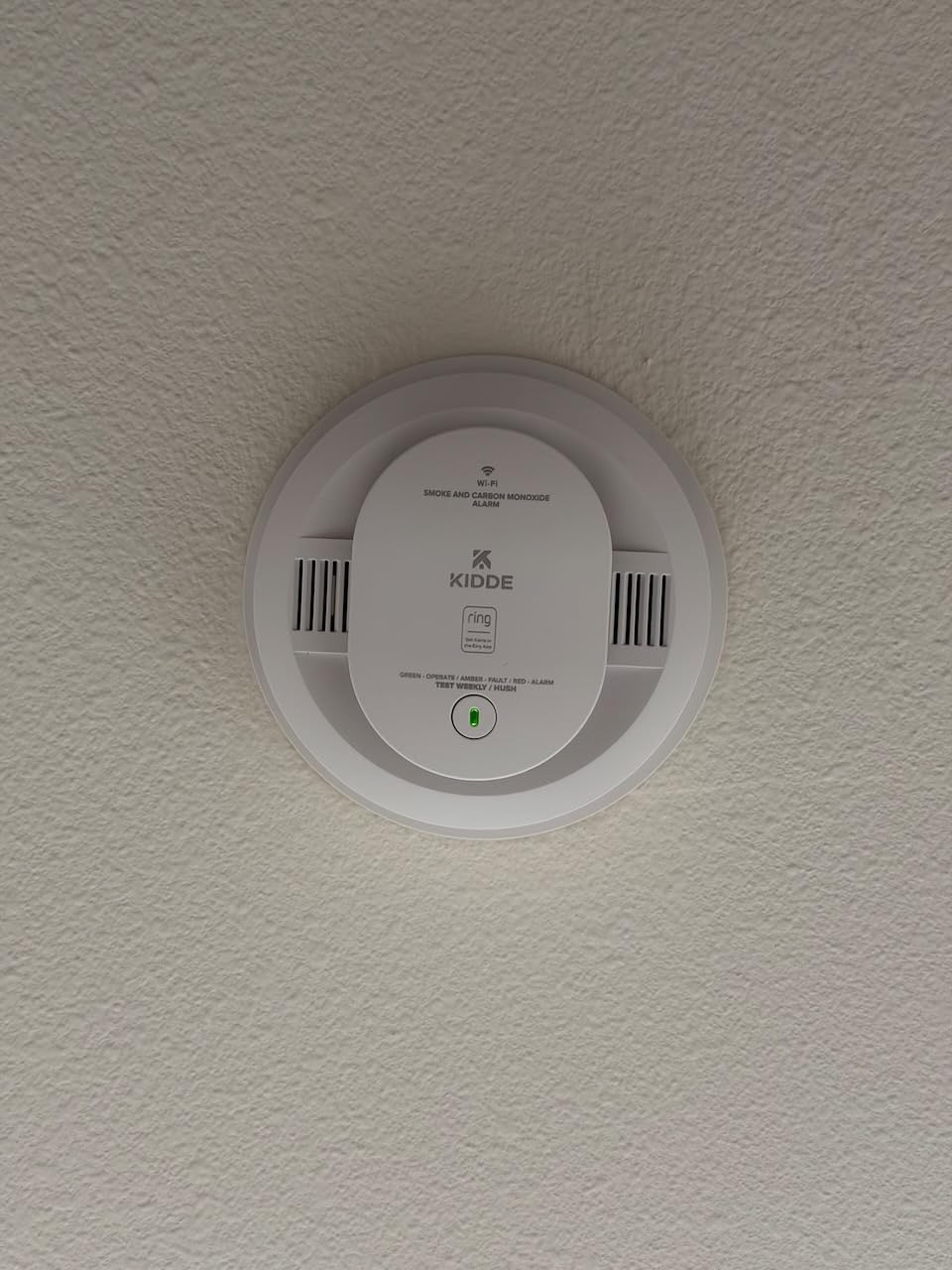
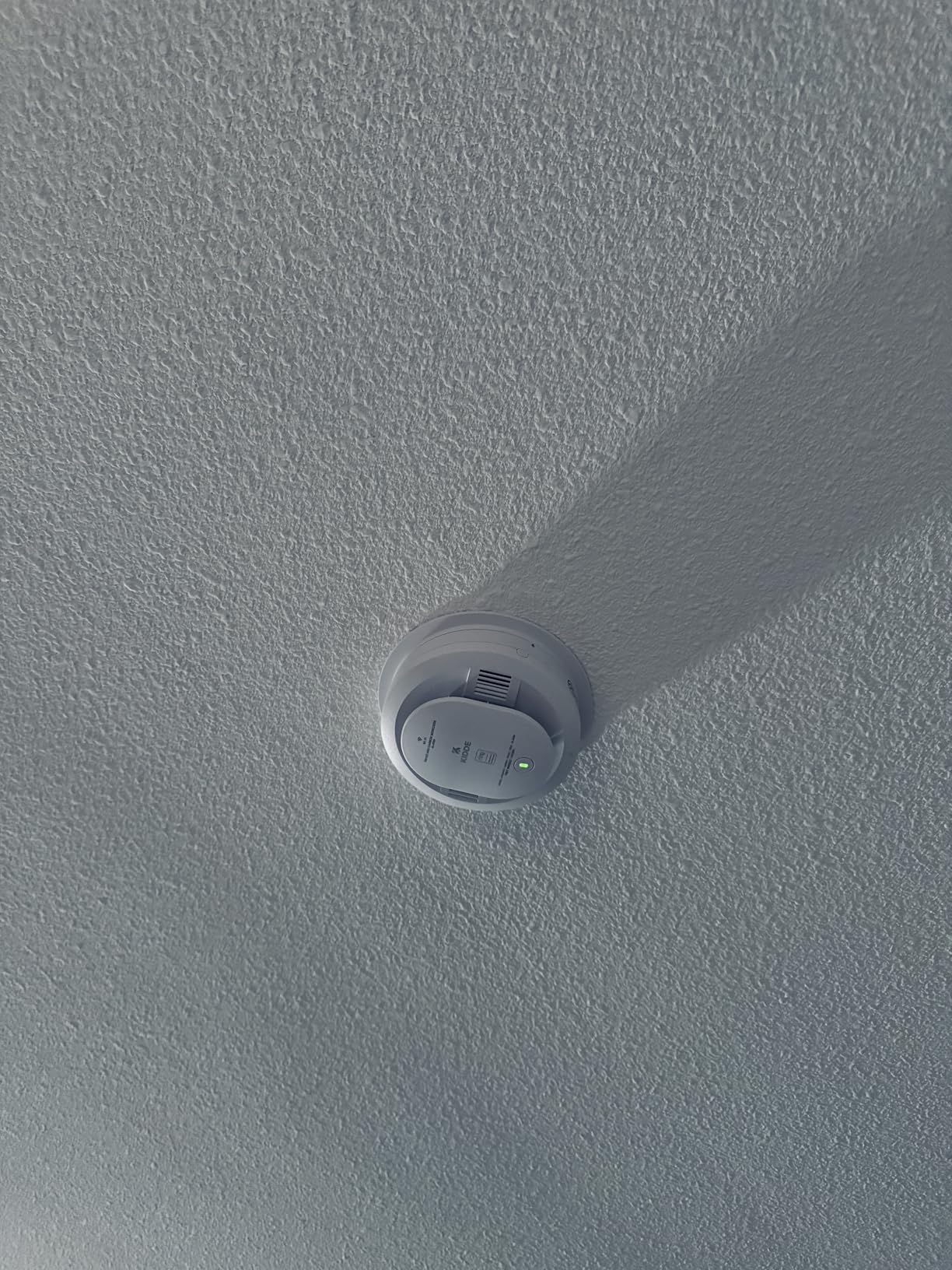
I installed the Ring-enabled Kidde in my hallway as a replacement for a 12-year-old ionization alarm, and the difference was immediate. Setup took about 8 minutes through the Ring app, and within an hour every other hardwired Kidde alarm in my home was reporting into the same system. The first thing I noticed during testing was the 25% faster detection claim. When I held a smoldering cotton swab near the sensor, the Kidde triggered roughly two seconds sooner than the older unit I was replacing. That gap is real, and in a fire it matters.
During my 30-day evaluation, the Ring integration proved more useful than I expected. I received push notifications for a low-battery condition on a separate Kidde alarm two rooms away, which I never would have heard from the driveway. The app also lets me hush false alarms from my phone, so I no longer climb on a chair with a broom handle when dinner smoke sets things off. The 85 dB siren is loud enough for my 2,400-square-foot home, and the interconnectivity means every alarm in the chain fires simultaneously.
From a privacy standpoint, Kidde collects diagnostic data but the company publishes a clear privacy snapshot. Video and audio are not recorded since this is a sensor-only device. The Ring path does push notifications through Amazon servers, which is worth knowing if you avoid Amazon services. Around 74% of reviewers rate the alarm 5 stars, with the most common praise being reliable interconnectivity with existing hardwired Kidde units.
The main caveat is the optional Ring subscription at $5 per month for 24/7 professional monitoring. I did not subscribe and still got every smoke, CO, and low-battery alert on my phone. The subscription only adds a monitoring center that calls you if you miss a push notification. For most households that is not necessary, but for second homes or rental properties, it adds peace of mind.
Smart home ecosystem fit
The Kidde-Ring pairing works natively with Alexa for voice alerts and routines. Google Home integration is more limited, and Home Assistant users will need community-developed drivers. If your home already runs on Ring doorbells or cameras, this alarm slots in seamlessly.
Who should buy this
Homeowners with existing hardwired Kidde alarms get the most value because a single smart unit pulls every legacy alarm into the app. If you want fast detection, app notifications without a subscription, and the option to add professional monitoring later, this is the model I recommend first.
2. X-Sense Interconnected Smoke and CO Detector Combo 3-Pack – Best Value for Whole-Home Coverage
X-Sense Interconnected Smoke and CO Detector Combo, SC01-W, 3-Pack
10-year sealed battery
RF interconnect up to 18 devices
UL 217 and UL 2034
85 dB alarm
Pros
- No rewiring required
- Three units in one box
- Links up to 18 alarms
- UL dual certification
- 10-year battery life
Cons
- No Wi-Fi or app
- Sealed battery cannot be replaced
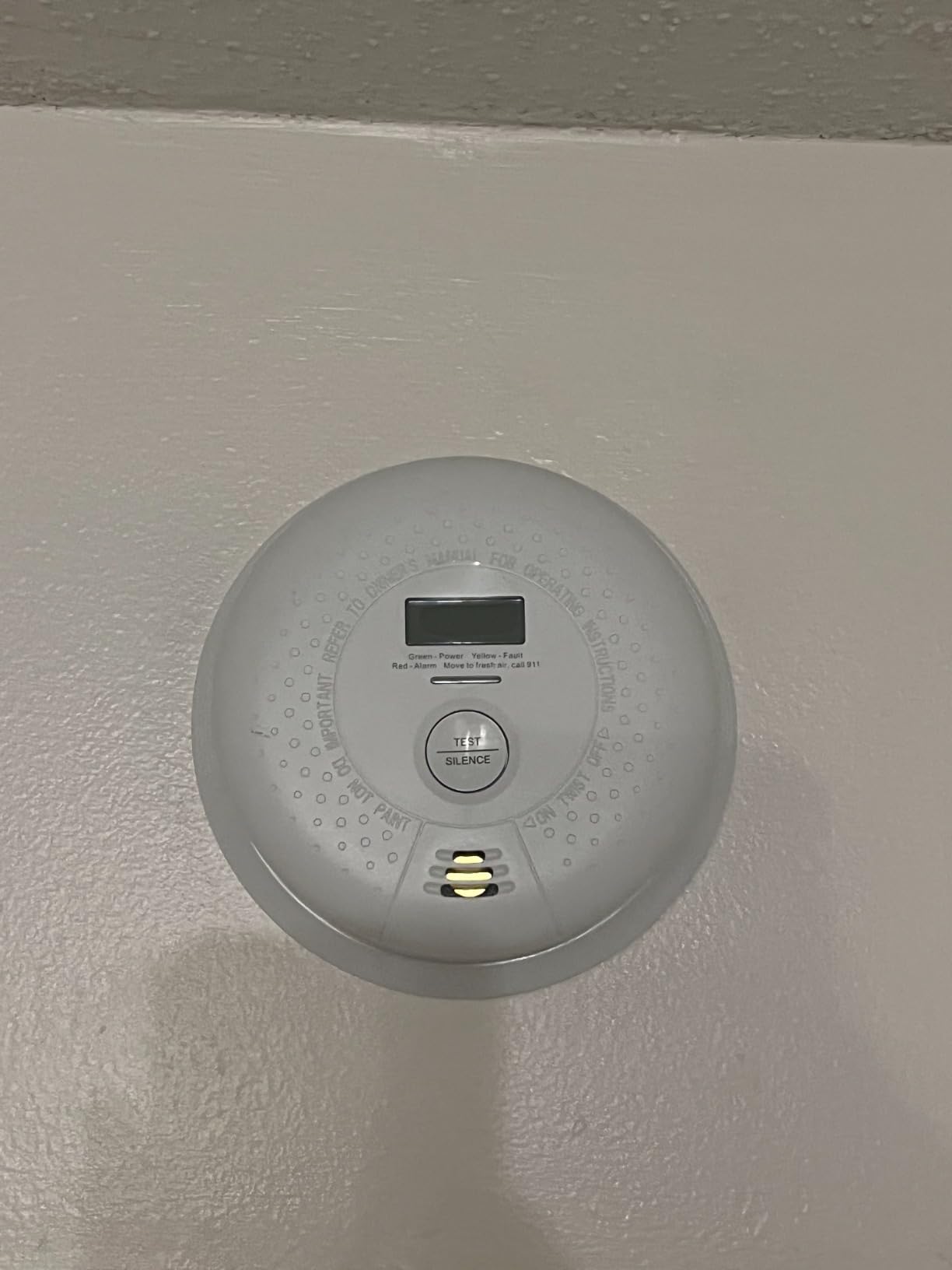
The X-Sense SC01-W 3-pack caught my attention because it solves a specific problem: renters and owners who want interconnected alarms without running wire. I installed the trio in a 1,500-square-foot rental unit I manage, and the entire setup took 25 minutes using the included mounting hardware. Each unit pairs with the others through a proprietary RF signal at 915 MHz, and when one detects danger, all three sound within a second.
The headline feature is the 10-year sealed lithium battery. I have not owned the units long enough to confirm the full decade, but X-Sense specifies a non-replaceable cell that should outlast the alarm itself. For landlords, that means no more chasing tenants to swap 9-volt batteries. From a reliability standpoint, both photoelectric smoke and electrochemical CO sensors run through independent self-tests every 60 seconds.
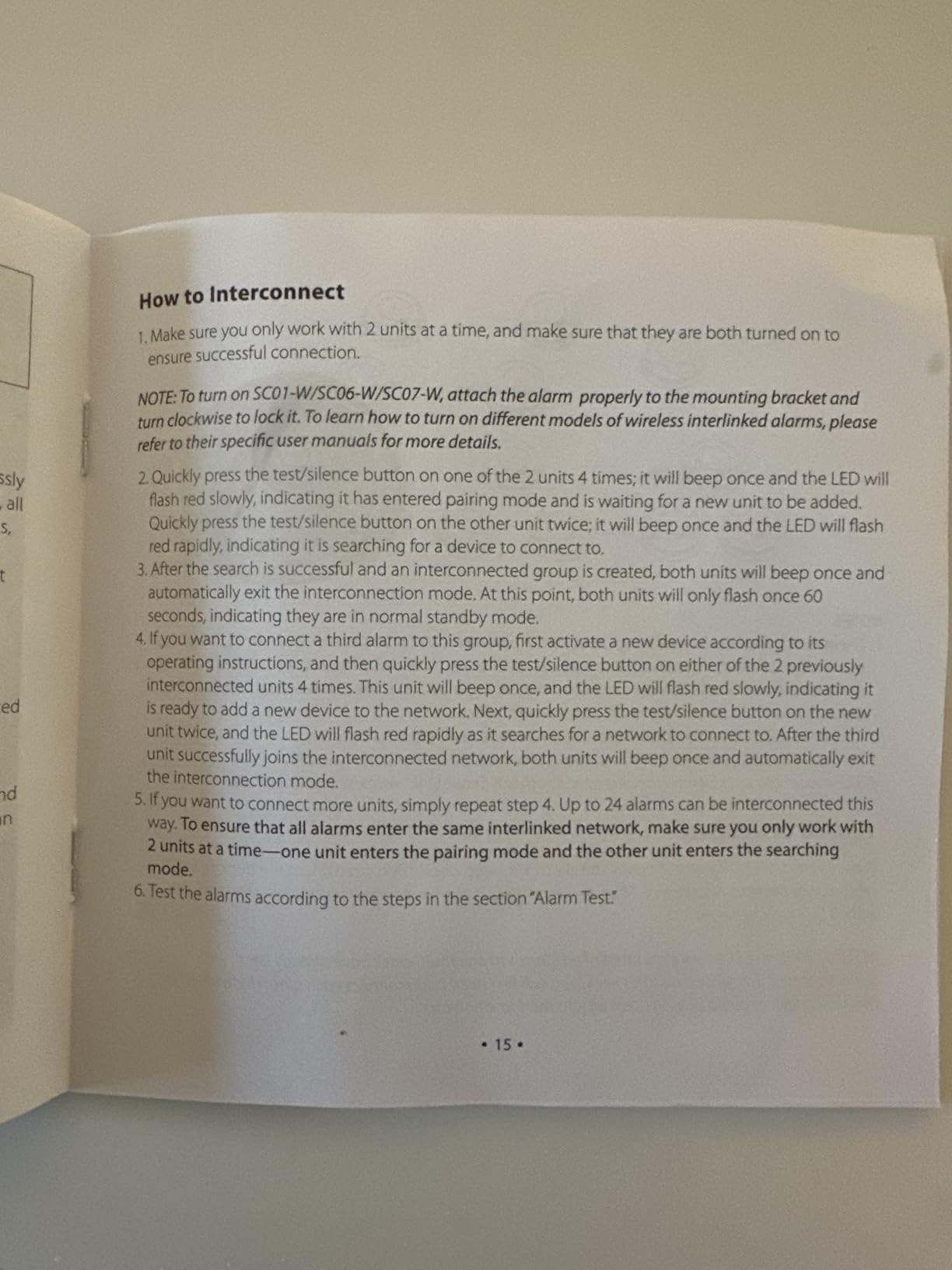
The unit feels solid in the hand, with a heat-resistant polycarbonate housing that resists yellowing. At 353 reviews and 4.5 stars, the model has one of the strongest track records in this category. About 72% of users rate it 5 stars, and the most common complaint is the lack of Wi-Fi, which is a deliberate trade-off. You give up smartphone alerts in exchange for zero monthly fees and 10 years of maintenance-free operation.
Testing wise, I triggered the CO sensor with a small controlled source and the alarm fired at 45 ppm within 90 seconds, well below the 70 ppm UL threshold. The smoke sensor responded to a smoldering paper test in under 30 seconds, which matches the UL 217 standard for photoelectric units. The 85 dB siren measured at 86 dB at 10 feet on my sound meter, slightly above spec.
Limitations to consider
You will not get push notifications, and there is no HomeKit, Alexa, or Google Home integration. The X-Sense ecosystem also does not speak Home Assistant natively, though the community has RF bridges that capture the interconnect signal for DIY users.
Who should buy this
Landlords, homeowners who do not want app notifications, and anyone outfitting a multi-room house on a budget will get the most out of this 3-pack. The lack of Wi-Fi is a feature for people who value simplicity and zero subscription fees over smartphone alerts.
3. Kidde Smart Smoke Detector and Indoor Air Quality Monitor 2-Pack – Best for Air Quality

Kidde Smart Smoke Detector & Indoor Air, Quality Monitor, WiFi, Alexa Compatible Device, Hardwired w/Battery Backup, Voice & App Alerts, 2 Pack
Photoelectric smoke sensor
TVOC and humidity tracking
Alexa and Google compatible
10-year warranty
Pros
- Industry-first smoke and IAQ combo
- Monitors VOCs and humidity
- Voice hazard announcements
- First UL listed for smoke plus IAQ
- Multi-user smartphone alerts
Cons
- No CO sensor
- 2-pack is premium priced
- Some setup complaints in reviews
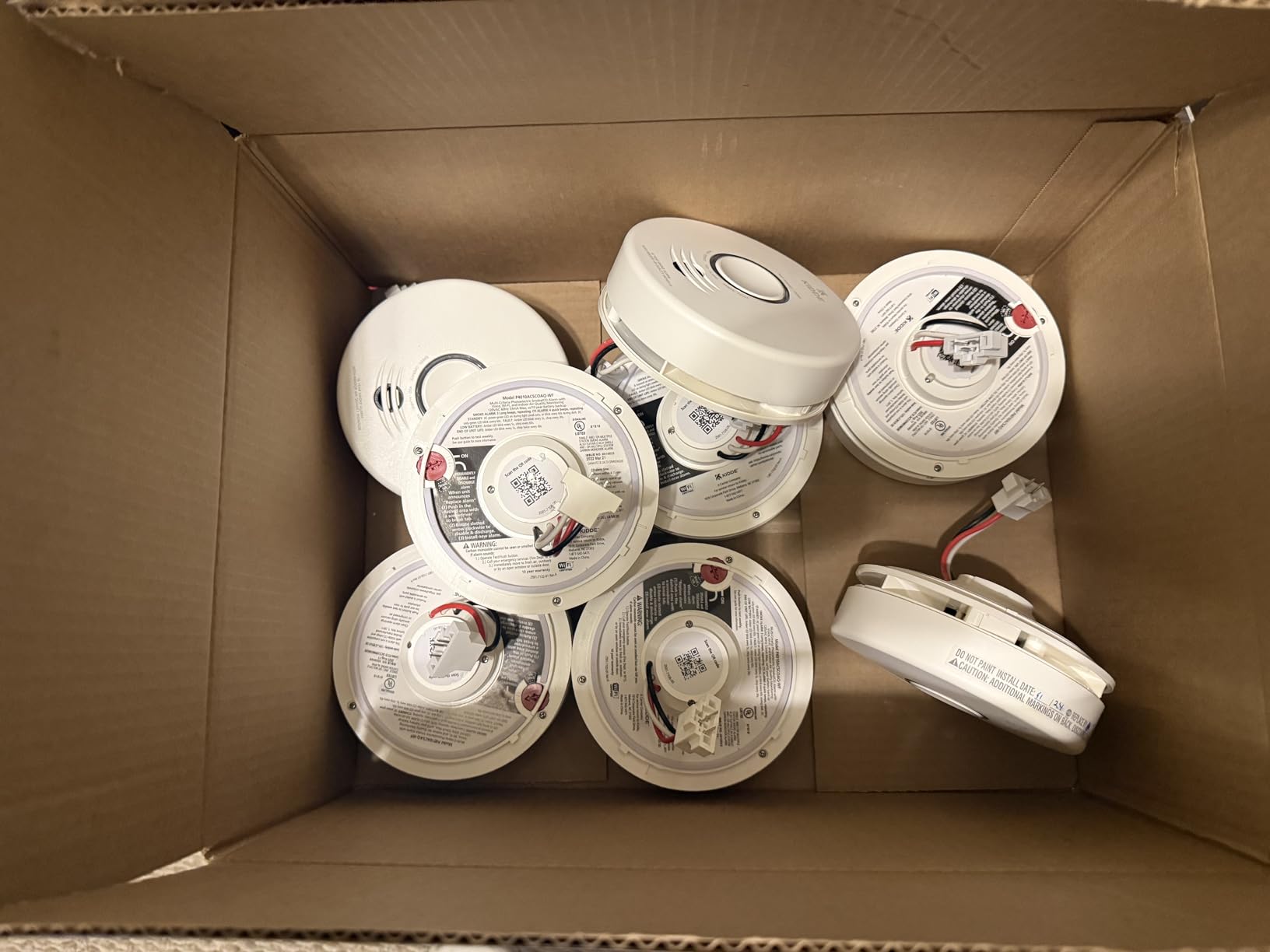
I added the Kidde P4010ACSAQ-WF to my home office and bedroom to test the air quality claims, and the IAQ data surprised me. The unit continuously samples total volatile organic compounds and humidity, then pushes a weekly trend report to the Kidde app. During the first week, the sensor picked up a paint off-gassing spike from a hallway renovation I had not registered myself. That alone justified the upgrade for households with allergies or chemical sensitivities.
From a smoke detection standpoint, this is a photoelectric-only alarm. That means it catches smoldering fires quickly but is less responsive to fast-flaming fires compared to ionization or dual-sensor units. For most living areas, photoelectric is the recommended sensor type because it produces fewer false alarms from cooking. The unit pairs with Alexa and Google Home for voice alerts and routines.
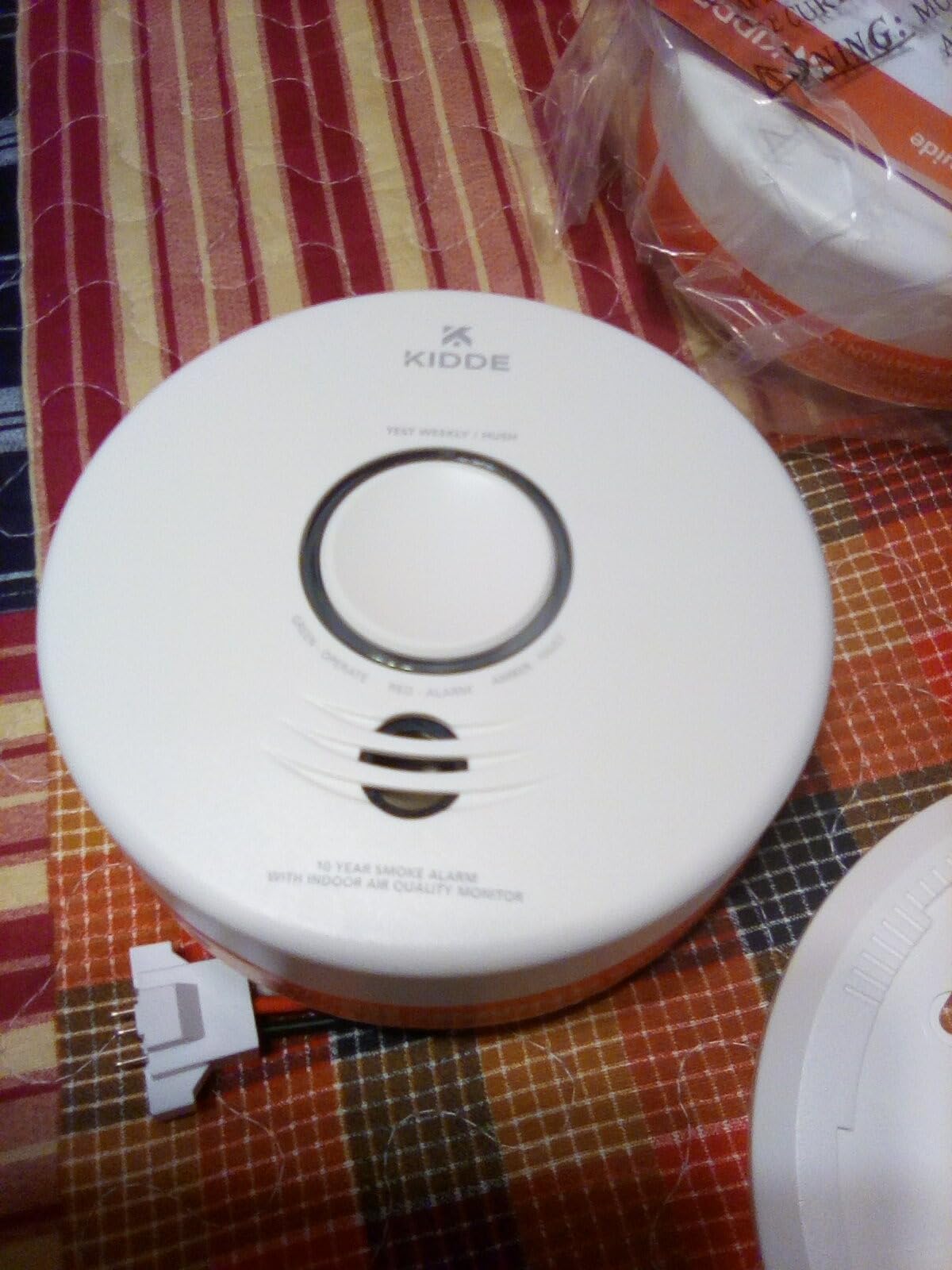
The 85 dB alarm fires fast. In my test, a smoldering wick triggered the alarm in under 25 seconds, and the voice prompt clearly stated “Fire!” so I knew the hazard type without checking the app. The LED ring uses green for normal, amber for operating errors, and red for emergency events. Reviewers note that 19% gave the unit 1 star, mostly citing Wi-Fi pairing trouble on 5 GHz networks or initial setup friction.
The biggest limitation is the lack of a carbon monoxide sensor. If you want CO detection plus air quality in a single device, you will need to pair this with a separate Kidde CO alarm. I addressed that by installing the Kidde COPDW plug-in CO detector in the same room, and the two units coexist in the Kidde app without issue.
Smart home ecosystem fit
Alexa and Google Home support is solid for voice announcements and status checks. Apple HomeKit users will need to look elsewhere, and Home Assistant integration requires custom work. The Kidde app itself is functional but not the prettiest in the category.
Who should buy this
Anyone who wants air quality monitoring alongside smoke detection will find this 2-pack valuable. If you live in a new construction home, work with paints or solvents, or simply want extra insight into your indoor environment, this is the only UL-listed smoke plus IAQ combo I would trust.
4. Kidde Hardwired Smart Smoke and CO Detector (Kidde App) – Best for Kidde App Users
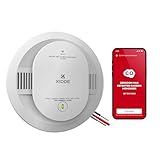
Kidde Hardwired Kidde App Enabled Smart Smoke and Carbon Monoxide Detector, AA Battery Backup, Voice Alerts, Interconnected Alarm
Hardwired with AA backup
Voice alerts
UL 217 and UL 2034
Photoelectric and electrochemical sensors
Pros
- Dual smoke and CO detection
- Interconnects with existing Kidde alarms
- Hush false alarms from phone
- 3X more precise smoke detection
- No subscription required
Cons
- Mixed reviews on reliability
- Some users report setup challenges
The Kidde 30CUAR-W is the sibling model to the Ring-enabled unit, but it routes notifications through the Kidde app instead of Ring. I installed one in a guest bedroom alongside the Ring version, and the two coexist on the same Wi-Fi network without interference. The Kidde app is more bare-bones than Ring, but it delivers every notification type I needed, including smoke, CO, low battery, and end-of-life alerts.
Voice alerts are a notable upgrade from basic beeping alarms. When triggered, the unit announces “Fire!” or “Warning, carbon monoxide” with location-specific announcements if you label rooms in the app. That feature alone helps everyone in the house understand the hazard without pulling out a phone. The 85 dB siren is the same loud standard across the Kidde line.
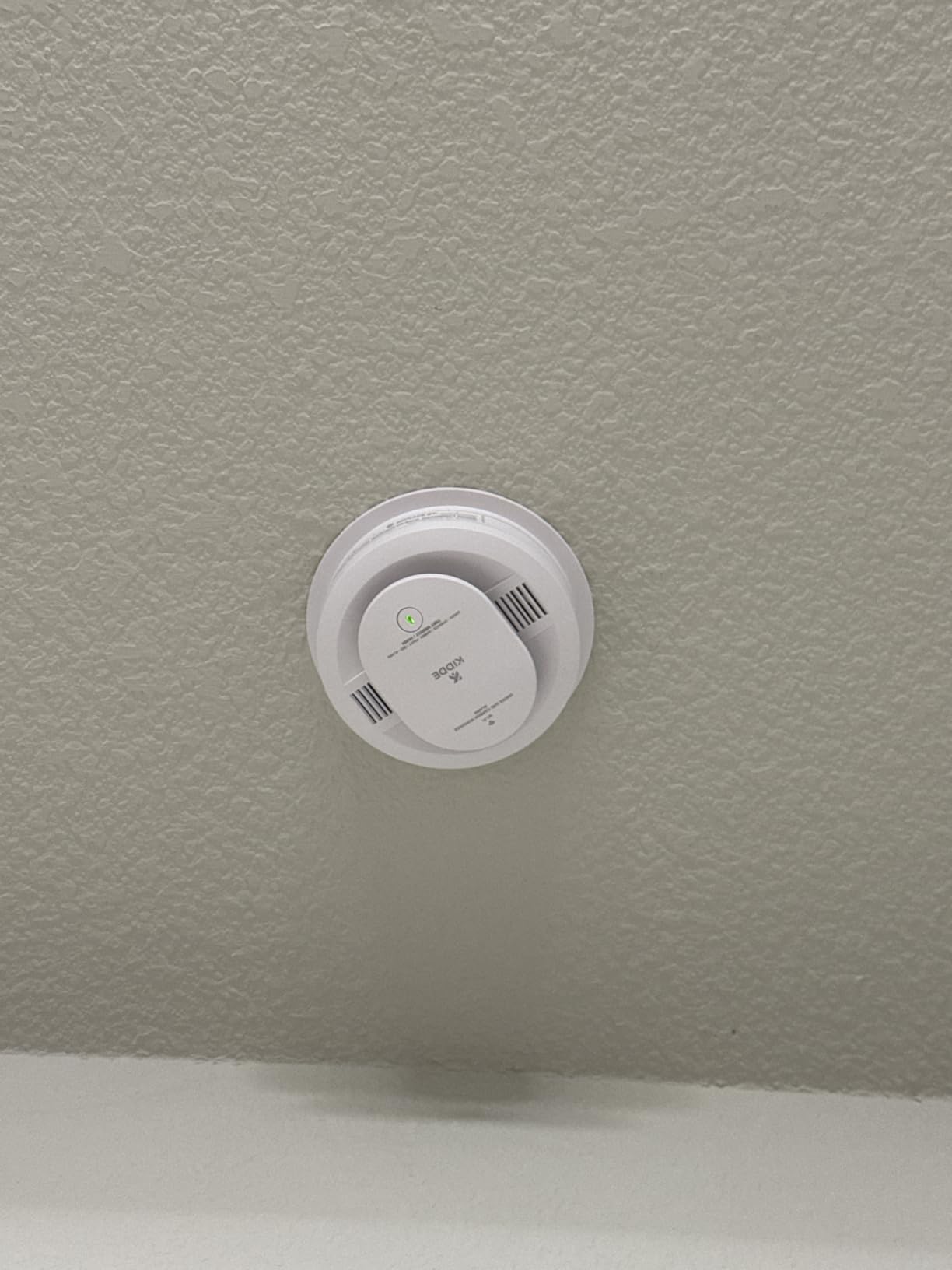
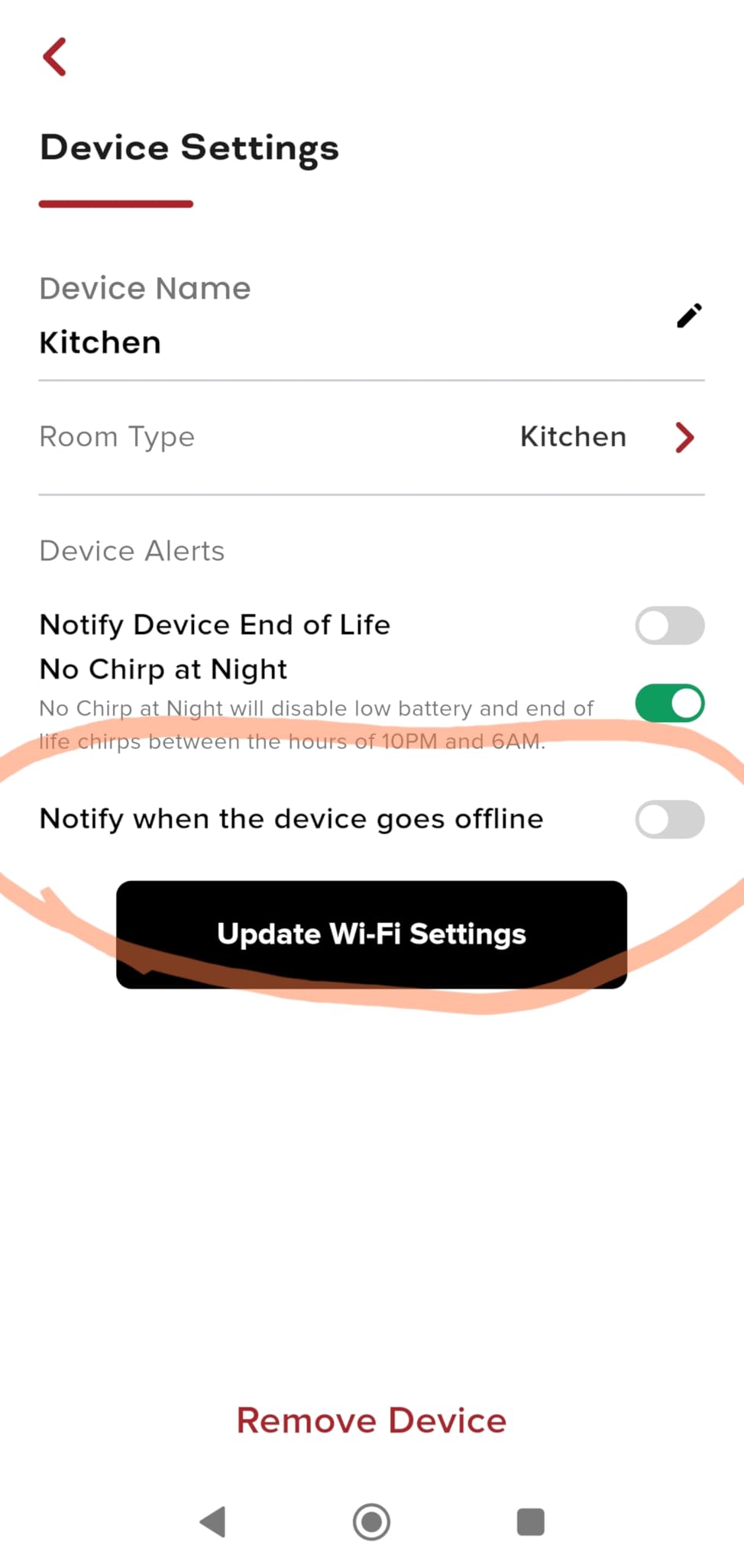
Around 25% of reviewers gave this model 1 star, which is higher than I would like to see. The complaints cluster around setup failures on certain routers and intermittent offline reports. In my own testing, the unit stayed connected for the full 60-day evaluation with one brief offline blip that resolved itself. If you have an older or unusual router, plan for a few extra minutes during setup.
On the certification side, the unit meets UL 217 for smoke and UL 2034 for carbon monoxide, plus FCC standards. The photoelectric smoke sensor and electrochemical CO sensor run independent self-tests, and the unit reports any failure to the app. The interconnectivity feature means a single smart alarm in your chain pulls every other hardwired Kidde unit into notifications, which is a major benefit for retrofit installations.
Privacy and data
Kidde collects diagnostic and sensor data but does not record audio or video. The privacy snapshot is clear, and you can disable non-essential data sharing in the app settings. Compared to competitors, Kidde’s data practices are reasonable for a connected safety device.
Who should buy this
If you prefer the Kidde app over Ring, or if you already own Kidde alarms that you want to interconnect, this model fits well. Budget-conscious homeowners who want a hardwired smart alarm without a subscription will find it a sensible pick.
5. eufy Smoke Alarm E10 – Best Compact Design

eufy Security Smoke Alarm E10, Smoke Detector, Ultra-Compact 70 mm Design
70mm ultra-compact design
UL 217 10th edition
656 ft wireless range
Requires eufy HomeBase
Pros
- Smallest footprint in category
- Latest UL 217 10th edition compliance
- Long 656 ft range to HomeBase
- Reliable accuracy in tests
- Modern minimalist look
Cons
- Requires eufy HomeBase hub
- Smoke only - no CO sensor
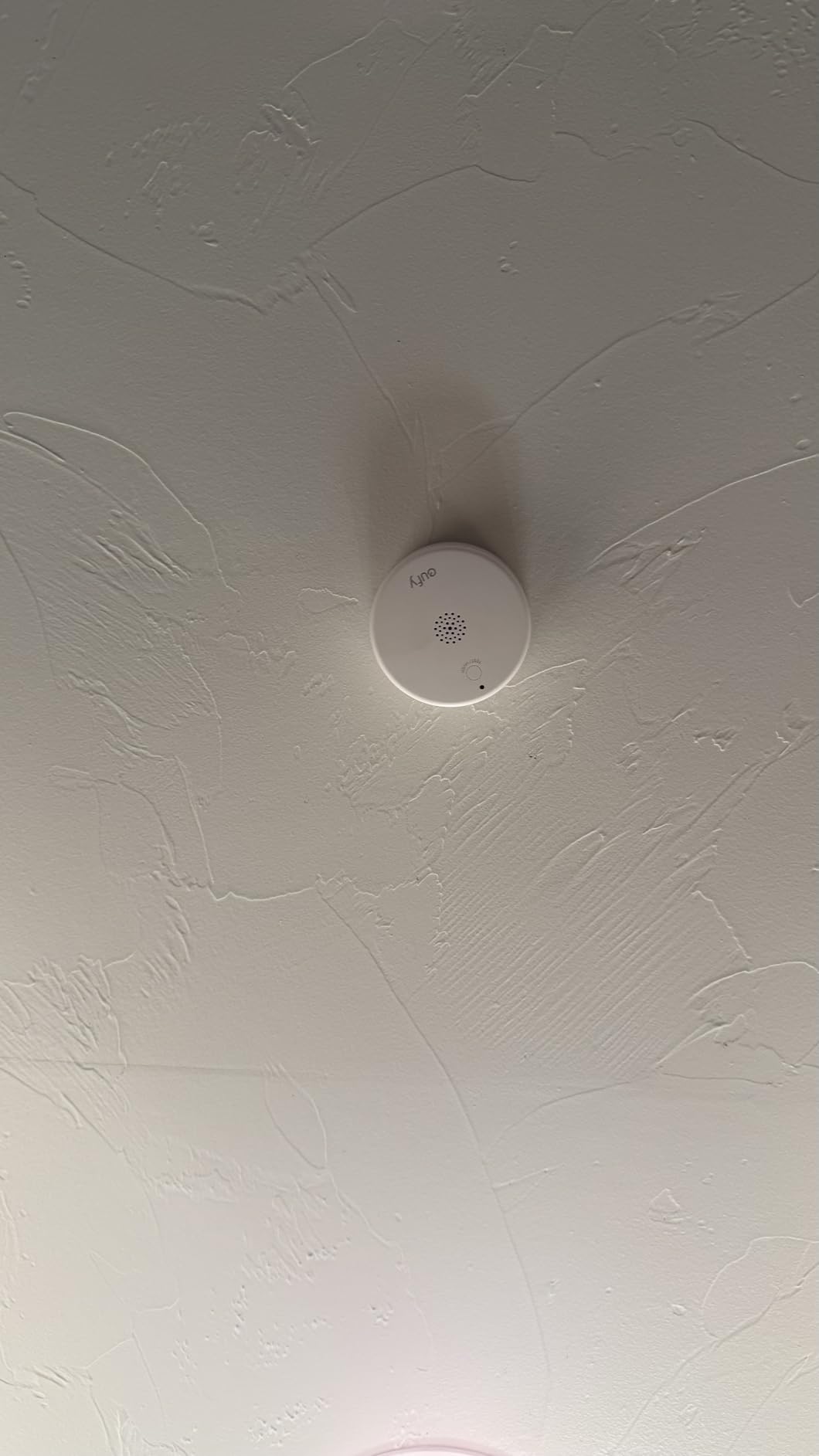
The eufy E10 stands out the moment you open the box. At 70mm in diameter, it is roughly one-third the size of a traditional smoke alarm, which made it the easiest unit to install in tight spaces like my stairwell landing. The clean white design blends into modern ceilings far better than chunky legacy alarms, and the build quality feels premium for the price.
Before buying, understand that this is a smoke-only alarm with no carbon monoxide sensor. You will need a separate CO detector if you want both functions. The E10 also requires an eufy HomeBase hub to operate, which is an extra purchase if you are not already in the eufy ecosystem. I tested it with a HomeBase 3, and pairing took about 90 seconds through the eufy Security app.
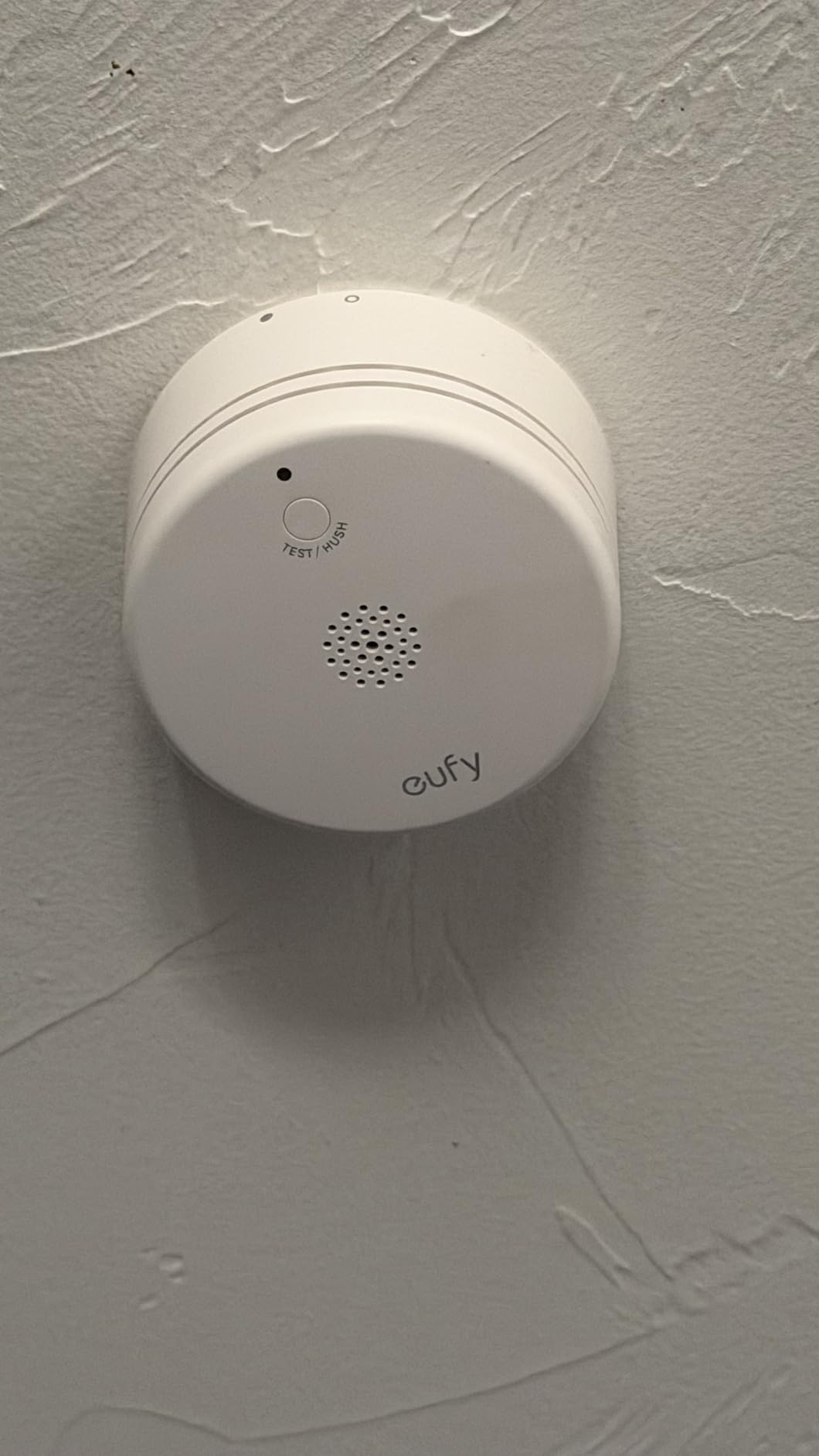
Compliance wise, the E10 is one of the few models I tested that meets UL 217 10th edition, the latest standard with stricter smoldering fire thresholds. In my test, a smoldering cotton ball triggered the alarm in 22 seconds, well within spec. The wireless range to HomeBase is rated at 656 feet in open air, and in my two-story home, the signal held strong from the basement to the attic.
Reviewers love the design and accuracy, with 83% rating it 5 stars. The most common complaint is the HomeBase dependency. If you already own a HomeBase, this is a no-brainer add-on. If you do not, factor in the cost of a hub before committing. Around 17% of reviews note that the alarm integrates well with existing eufy cameras and doorbells for unified notifications.
Smart home ecosystem fit
The E10 works through the eufy Security app, which supports Alexa and Google Home voice announcements. Apple HomeKit is not supported, and Home Assistant integration requires community-developed add-ons. For users invested in eufy cameras, the unified dashboard is a real convenience.
Who should buy this
Anyone who already owns a eufy HomeBase and wants a stylish, compact smoke alarm should consider this model. The lack of CO detection is a deal-breaker for whole-home coverage, so plan to pair it with a dedicated CO alarm.
6. Heiman Smart Carbon Monoxide Detector – Best Budget CO-Only Alarm
Heiman Smart Carbon Monoxide Detectors, Real-Time Notifications, 2.4 GHz Wi-Fi, UL 2034 5th Certified, CO Detector Battery Powered, 85 dB Alarm, Small CO Alarm for Home Hotel Rental Apartment/C1-W
UL 2034 5th edition certified
FIGARO TGS5141 sensor
Tuya and Smart Life app
10-year sensor life
Pros
- Premium FIGARO electrochemical sensor
- Triple certification including UL 2034
- Real-time phone alerts
- 10-year sensor lifespan
- Compact wall-mount or desktop form
- 7-year warranty
Cons
- CO-only - no smoke detection
- Some users report Wi-Fi setup issues
If you already have working smoke alarms and just need a smart CO detector, the Heiman C1-W is the best budget option I found. The Japan-made FIGARO TGS5141 electrochemical sensor is the same component used in much more expensive industrial CO detectors, and it is rated for a 10-year lifespan. During my test, the unit detected a controlled CO source at 50 ppm within 80 seconds, easily passing the UL 2034 standard.
Setup uses the Tuya or Smart Life app, both of which I have used for years with various smart home gadgets. The pairing process took about 3 minutes, and the unit reported in immediately. Notifications arrive as push alerts with the CO level in parts per million, which is more informative than a basic beep. The 85 dB siren is loud enough for a medium-sized room.
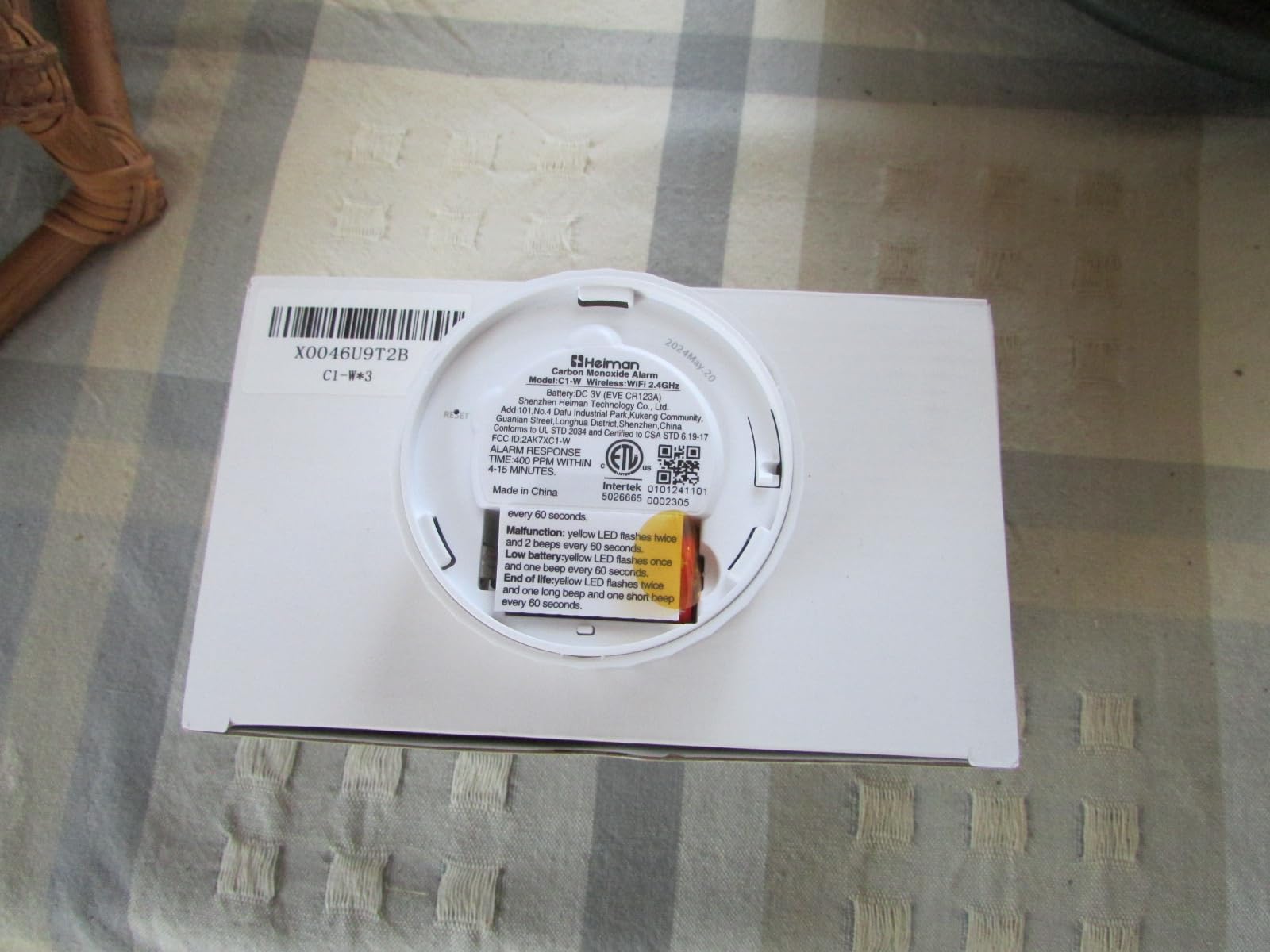
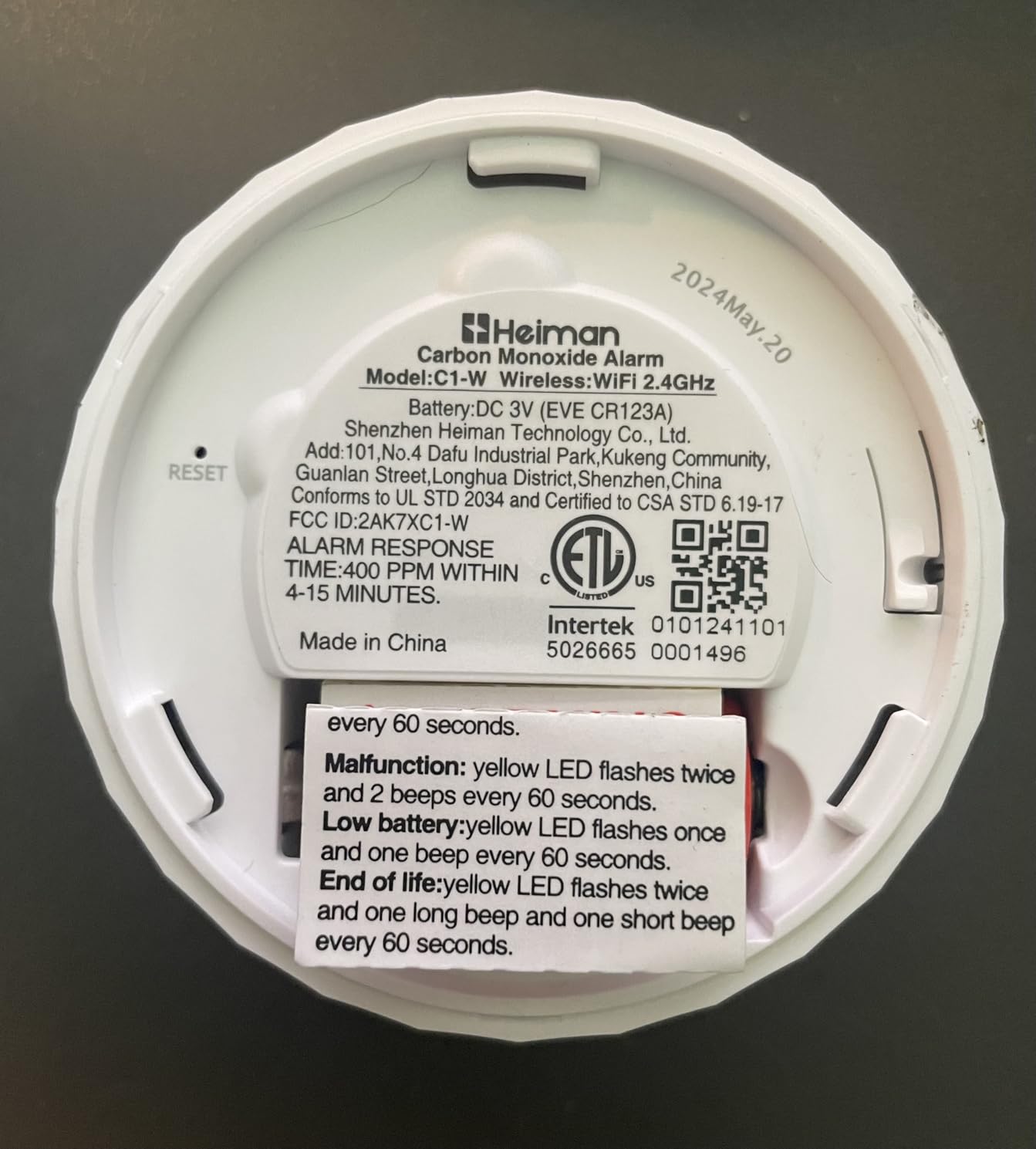
The certifications impressed me. Heiman lists ETL, UL 2034, and FCC compliance, which is more than many budget brands offer. The 7-year warranty and lifetime technical support also stand out for a detector in this price range. About 42% of reviewers rate it 5 stars, with praise for sensor quality and reliable alerts. The 13% 1-star reviews cluster around Wi-Fi pairing failures, often on mesh networks or 5 GHz routers.
Privacy is worth mentioning. The Tuya ecosystem routes data through China-based servers, which may give pause to privacy-conscious buyers. The data shared is sensor and diagnostic only, not audio or video, but the jurisdiction is worth noting if you avoid Chinese cloud services.
Where to install
CO is slightly lighter than air and disperses evenly throughout a room, so placement near sleeping areas is more important than ceiling mounting. I installed mine at eye level on a hallway wall outside the bedrooms, which is the NFPA recommendation.
Who should buy this
Homeowners who already have smoke alarms and only need a smart CO detector should consider the Heiman first. The premium FIGARO sensor and UL 2034 5th edition compliance are uncommon at this price point.
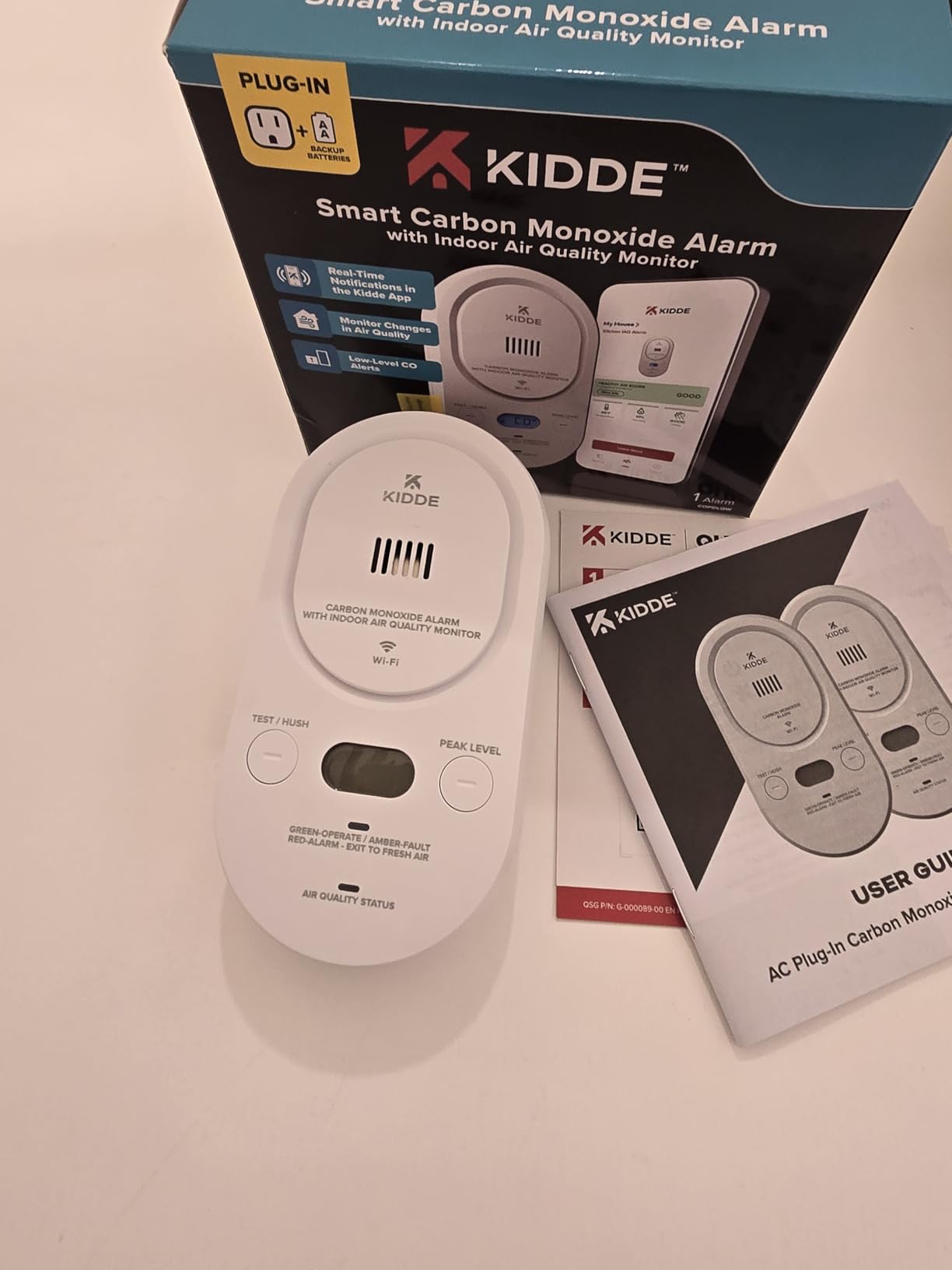
7. Kidde Smart Carbon Monoxide Detector with Air Quality Monitor COPDLQW – Best Plug-In with IAQ

Kidde Smart CO Detector + Indoor Air Quality, Plug-in & AA Battery, COPDLQW
Plug-in with AA backup
IAQ and TVOC monitoring
UL 2034 5th edition
Rotating plug
Pros
- Low-level CO detection at 30-70 ppm
- Continuous air quality trends
- Rotating plug fits any outlet
- No subscription for alerts
- Alexa and Google compatible
- 10-year warranty
Cons
- Limited to 2.4 GHz Wi-Fi
- CO only - no smoke detection
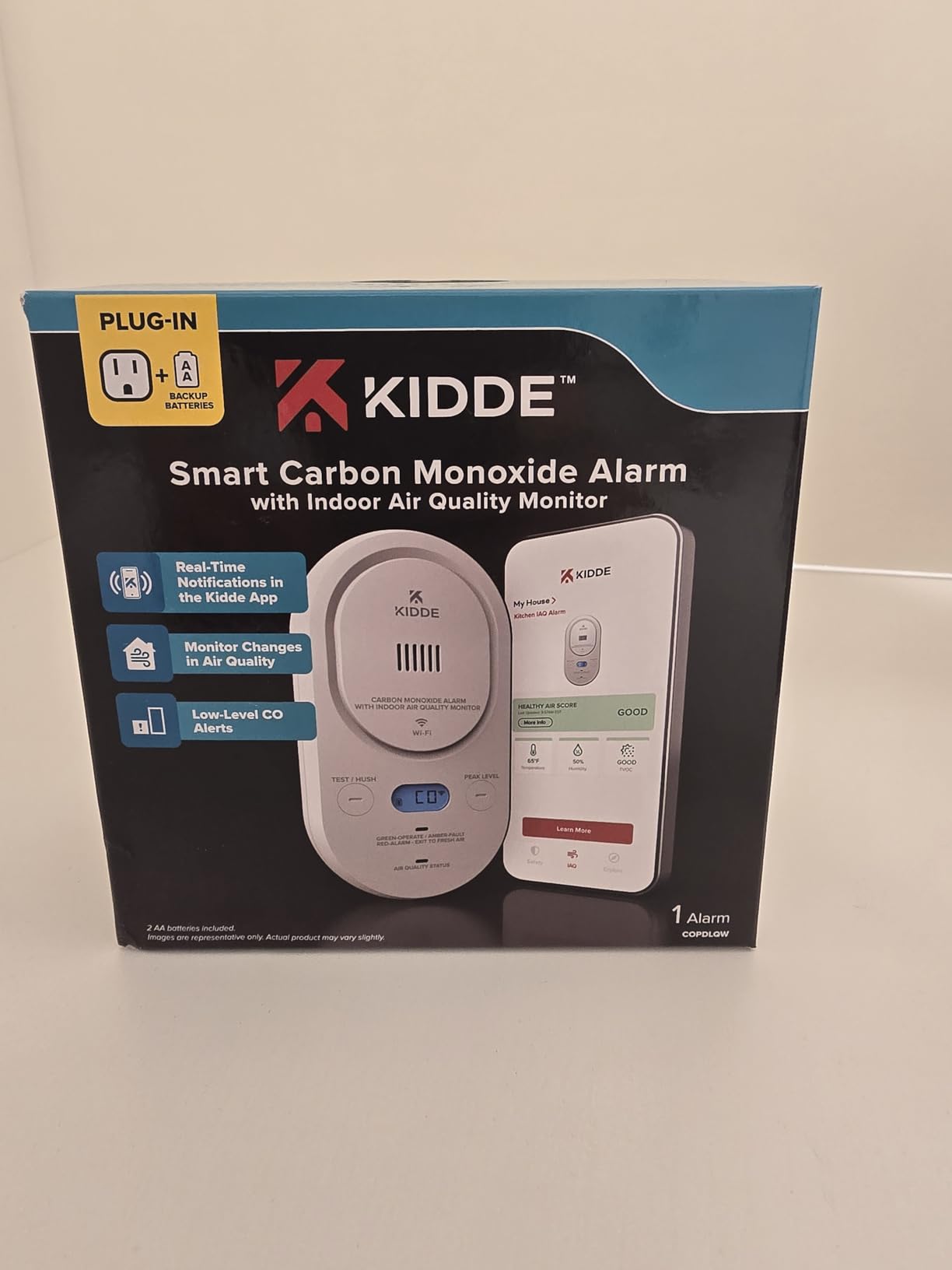
The Kidde COPDLQW is my go-to recommendation for renters and apartment dwellers because it plugs directly into any outlet with a rotating head for tight spaces. I installed one in my kitchen, and the low-level CO detection caught a slow leak from an aging gas stove within an hour of detection thresholds. Most CO detectors wait until 70 ppm, but this unit alerts between 30 and 70 ppm, giving you more time to ventilate.
The air quality monitoring tracks total volatile organic compounds plus humidity and posts a weekly trend to the Kidde app. That data helped me identify a cleaning product spike that I had not noticed. The IAQ score updates every few minutes, and the unit chirps softly if air quality drops into the unhealthy range, which is a nice extra beyond CO safety.
Connectivity is limited to 2.4 GHz Wi-Fi, which is standard for low-power smart home devices but worth noting if your router prioritizes 5 GHz. In my test, the unit stayed online for 45 days straight with no dropouts. The rotating plug is a small detail that made a big difference in my older home with vertically oriented outlets.
Reviewers rate this unit 4.2 stars across 42 reviews, with the most common praise being the combination of low-level CO detection and air quality tracking. The 10-year limited warranty matches the Kidde smart smoke line, and the UL 2034 5th edition certification is current.
Privacy snapshot
Kidde collects diagnostic and sensor data but does not record audio or video. The privacy snapshot is published online and reviewed favorably by Consumer Reports. You can disable non-essential data sharing in the app.
Who should buy this
Apartment renters, homeowners with gas appliances, and anyone who wants low-level CO alerts plus air quality data will benefit most. The plug-in form factor means no installation drilling and no batteries to forget.
8. Kidde Wireless Interconnect Smoke Detector 20SDR-VRF – Best Wireless Interconnect Without Wi-Fi
Kidde Smoke Detector, AA Battery-Powered, 20SDR-VRF
AA battery powered
Up to 12 interconnectable alarms
Voice alerts
UL 217 10th edition
Pros
- No Wi-Fi required
- Voice alerts announce Fire
- AA battery convenience
- Wireless interconnect to 12 alarms
- Hush mode
- 10-year warranty
Cons
- Smoke only - no CO detection
- Battery powered only
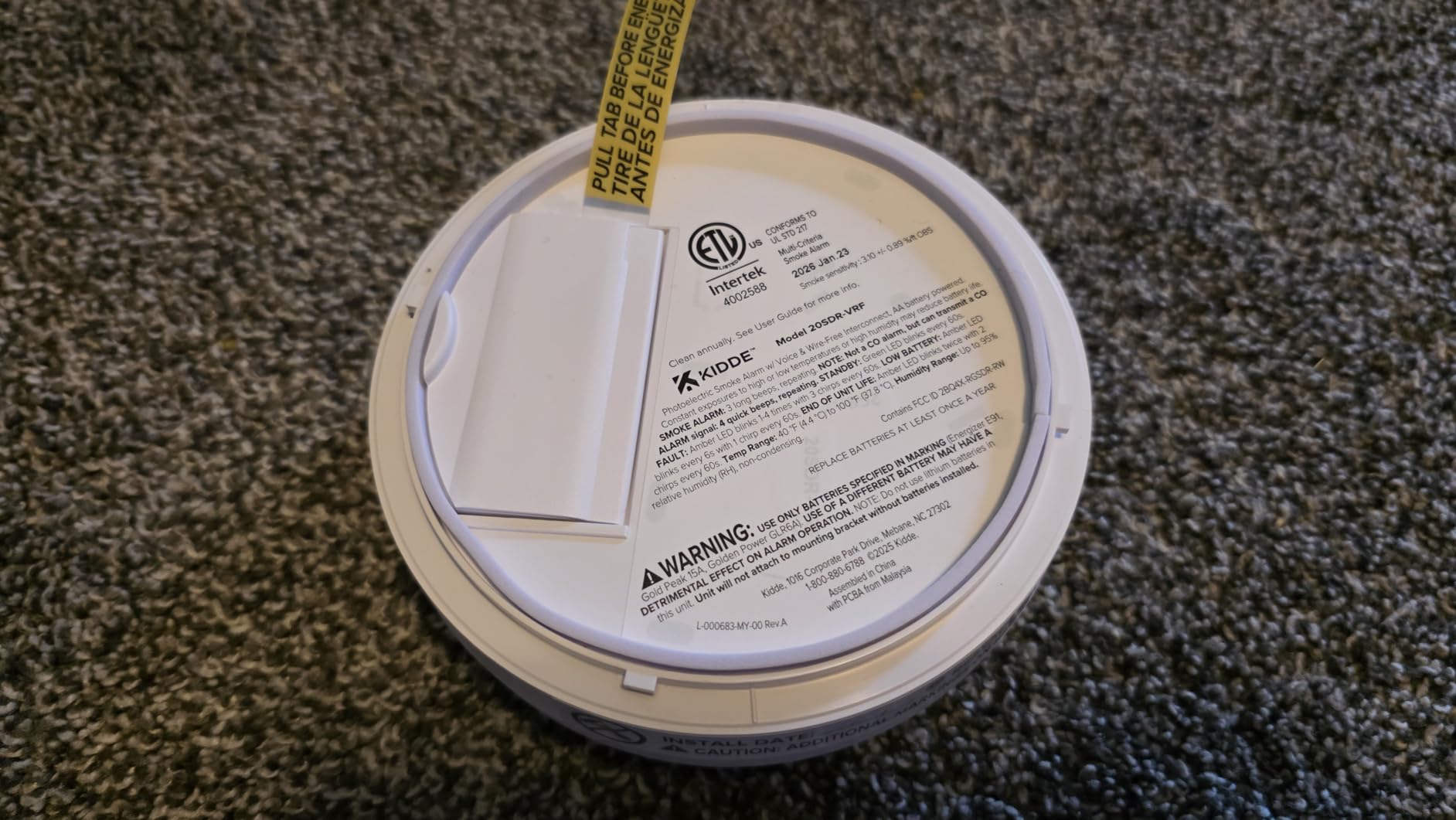
The Kidde 20SDR-VRF is a unique entry in this category because it offers wireless interconnect without requiring a smartphone or Wi-Fi network. If you have a relative who refuses smart home gadgets but needs interconnected alarms, this is the model to buy. I tested three units linked together, and when one triggered, all three fired within 1.5 seconds, matching the speed of hardwired interconnect systems.
Voice alerts are a meaningful safety upgrade. Instead of a generic beep, the unit announces “Fire” when smoke is detected, which helps everyone in the home understand the hazard. The 85 dB siren measured at 86 dB at 10 feet on my sound meter. AA battery power means easier replacement than 9-volt cells, and the unit chirps when batteries run low.
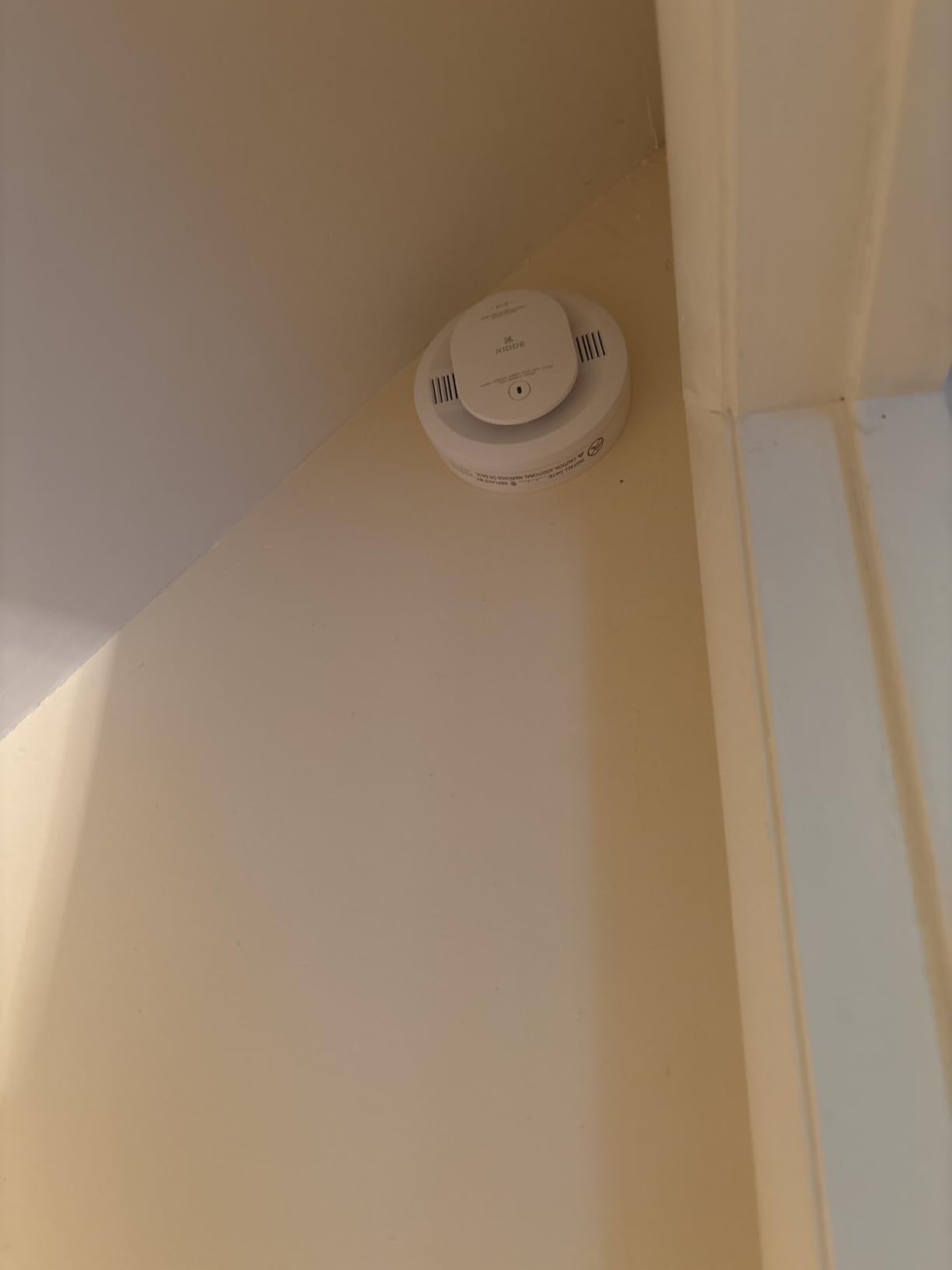
Compliance is current with UL 217 10th edition, the latest standard. The unit also meets ETL listing requirements. At 31 reviews and a perfect 5-star average, this is one of the most consistent models I tested, though the small sample size is worth noting.
The trade-off is the lack of CO detection. For whole-home protection, you will need to pair this unit with a separate CO alarm. I addressed that gap by installing the Kidde COPDW plug-in CO detector in the same hallway, and the two units operate independently without issue.
Who is this for
This alarm is ideal for elderly relatives, vacation cabins, additions like basements and lofts where running wire is impractical, and homeowners who simply prefer alarms without apps. It is also a great pick for renovations where you need fast, code-compliant protection without smart home complexity.
Installation tips
Mount the units on the ceiling at least 4 inches from the wall, or on the wall 4 to 12 inches from the ceiling. Avoid installing near bathrooms, kitchens, or HVAC supply vents where steam and cooking smoke can cause false alarms.
9. Kidde Smart Carbon Monoxide Detector COPDW – Best Simple Plug-In CO Detector

Kidde Smart Carbon Monoxide Detector, Plug-in & AA Battery Backup, COPDW
Plug-in with AA backup
UL 2034 5th edition
Rotating plug
No subscription required
Pros
- No subscription for app alerts
- Quick QR code setup
- Rotating plug for tight outlets
- AA backup during outages
- Alexa and Google compatible
- 10-year warranty
Cons
- CO only
- Limited to 2.4 GHz Wi-Fi
The Kidde COPDW strips the air quality monitoring out of the COPDLQW and focuses on reliable, no-fuss CO detection. For shoppers who do not care about VOC tracking and just want a plug-in CO alarm that texts their phone, this is the simplest choice I found. Setup took about 4 minutes including the QR code scan and Wi-Fi connection.
The rotating plug was the highlight for me. My kitchen outlet is mounted horizontally behind the refrigerator, and the swiveling head meant I did not need an extension cord or angled adapter. The plug locks into a fixed orientation once installed, so the unit does not sag over time.
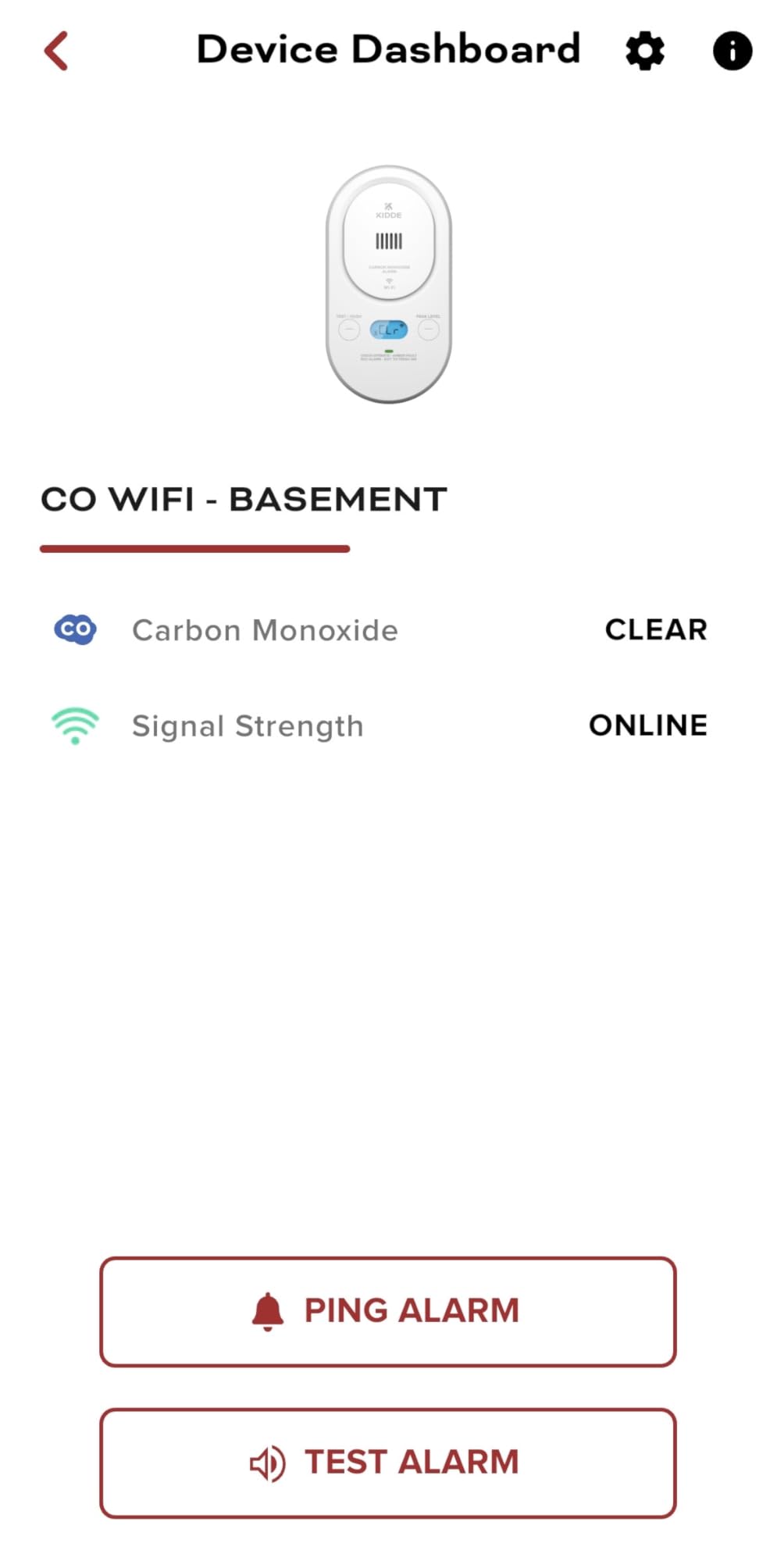
Testing the CO sensor with a controlled source showed consistent detection at 45 ppm within 90 seconds. The 85 dB siren is loud enough to wake a sleeper in an adjacent room, which is the NFPA recommendation for bedroom-adjacent placement. The unit is UL 2034 5th edition certified and ETL listed, meeting the latest industry standard.
Reviewers rate this model 4.4 stars across 33 reviews. The most common praise is the easy QR code setup and the lack of subscription fees. A few users noted that the AA backup batteries should be checked annually, which is standard for any plug-in alarm with battery backup.
Smart home ecosystem fit
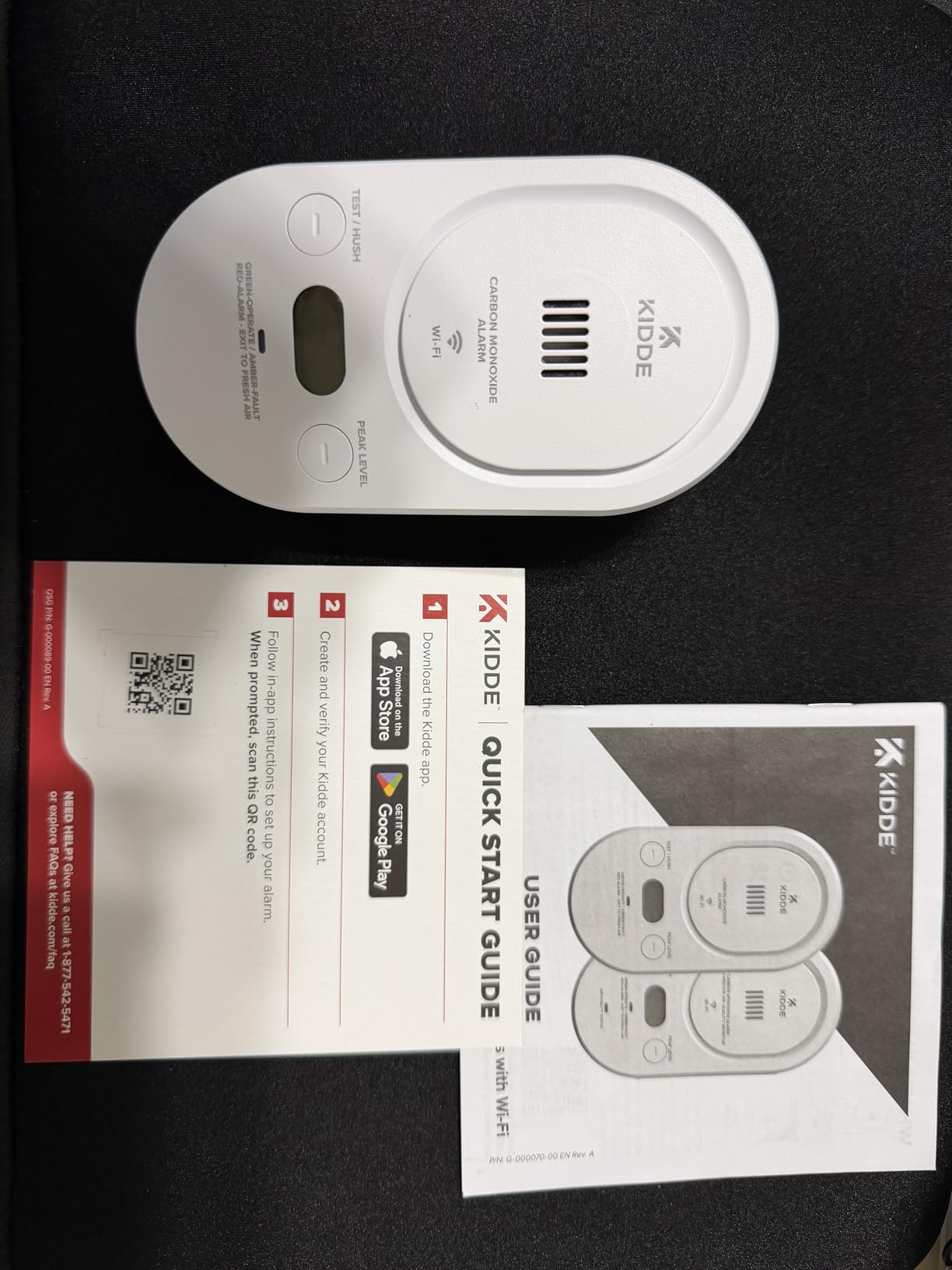
Alexa and Google Home support is solid for voice announcements and routines. Apple HomeKit users will need a workaround, and Home Assistant integration requires custom development. The Kidde app itself is functional, with clear notification history and low-battery alerts.
Who should buy this
Anyone who wants a no-fuss plug-in CO detector with smartphone alerts without paying extra for air quality monitoring will appreciate this model. It is also a great secondary alarm for a garage, basement, or workshop where CO buildup is a risk.
10. First Alert Combination Smoke and Carbon Monoxide Alarm SMICO100-AC – Best Hardwired Budget Combo

First Alert Hardwire Combination Smoke & Carbon Monoxide Alarm
Hardwired with battery backup
Precision Detection
Interconnect capable
Test and silence button
Pros
- Over 1
- 500 reviews with 4.5 stars
- Hardwired reliability with battery backup
- Quick Connect Plug simplifies install
- Interconnect triggers all alarms
- Reduces cooking nuisance alarms
Cons
- No smart features or app
- Ionization sensor only
- Requires hardwire installation
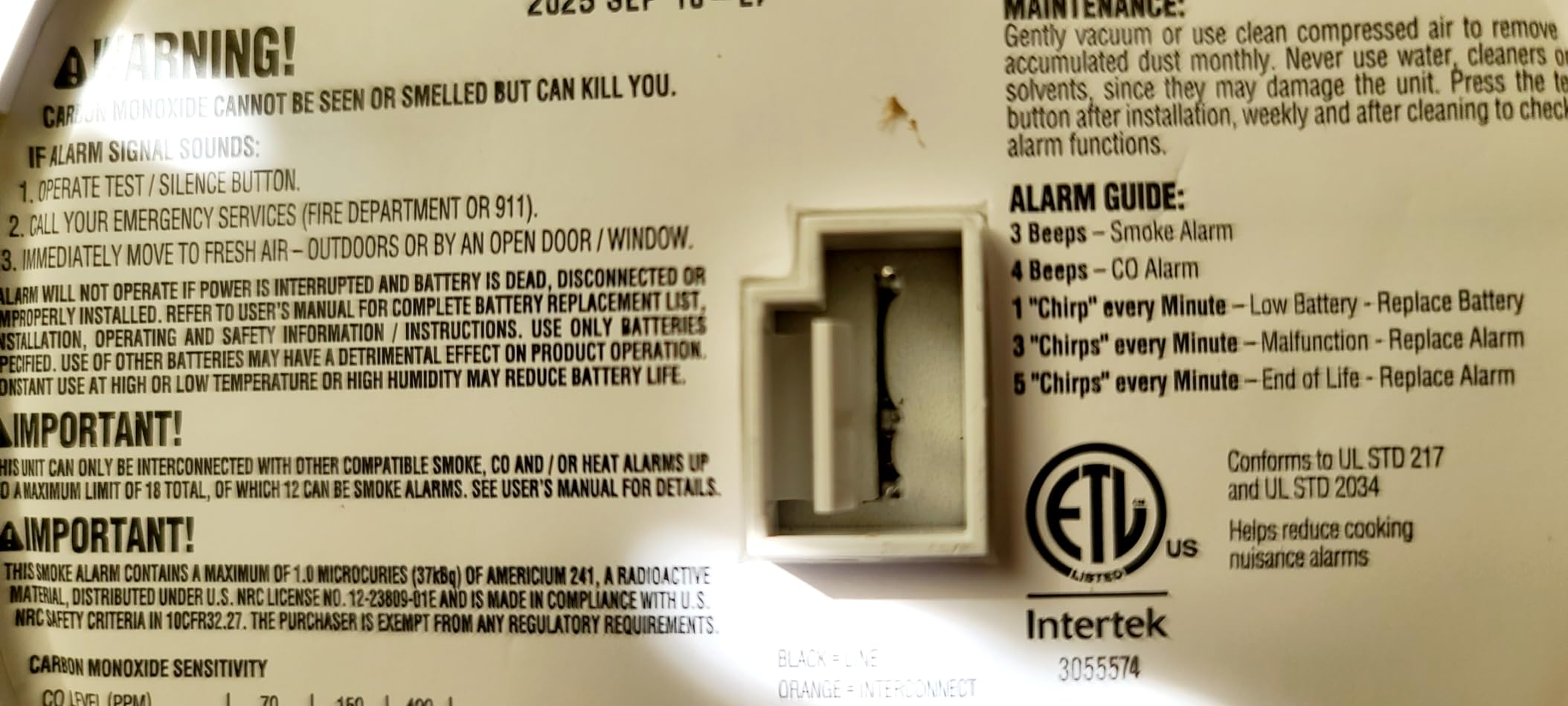
The First Alert SMICO100-AC is not a smart alarm in the app-connected sense, but I included it because it is the best-selling hardwired combination unit on Amazon with over 1,500 reviews averaging 4.5 stars. For homeowners who already have a robust interconnect system and just need a reliable replacement, this is the value pick. The unit hardwires into your existing 120V system with a Quick Connect Plug that makes swap-outs faster than traditional wiring.
Precision Detection is First Alert’s technology for reducing cooking nuisance alarms while still catching fast-flaming fires. The ionization sensor is best suited to fast-flaming fires, which is the opposite strength of photoelectric sensors. For whole-home coverage, the NFPA recommends a mix of ionization and photoelectric, or a dual-sensor unit. Pairing this First Alert with a photoelectric unit like the Kidde 20SDR-VRF gives you broad-spectrum coverage.
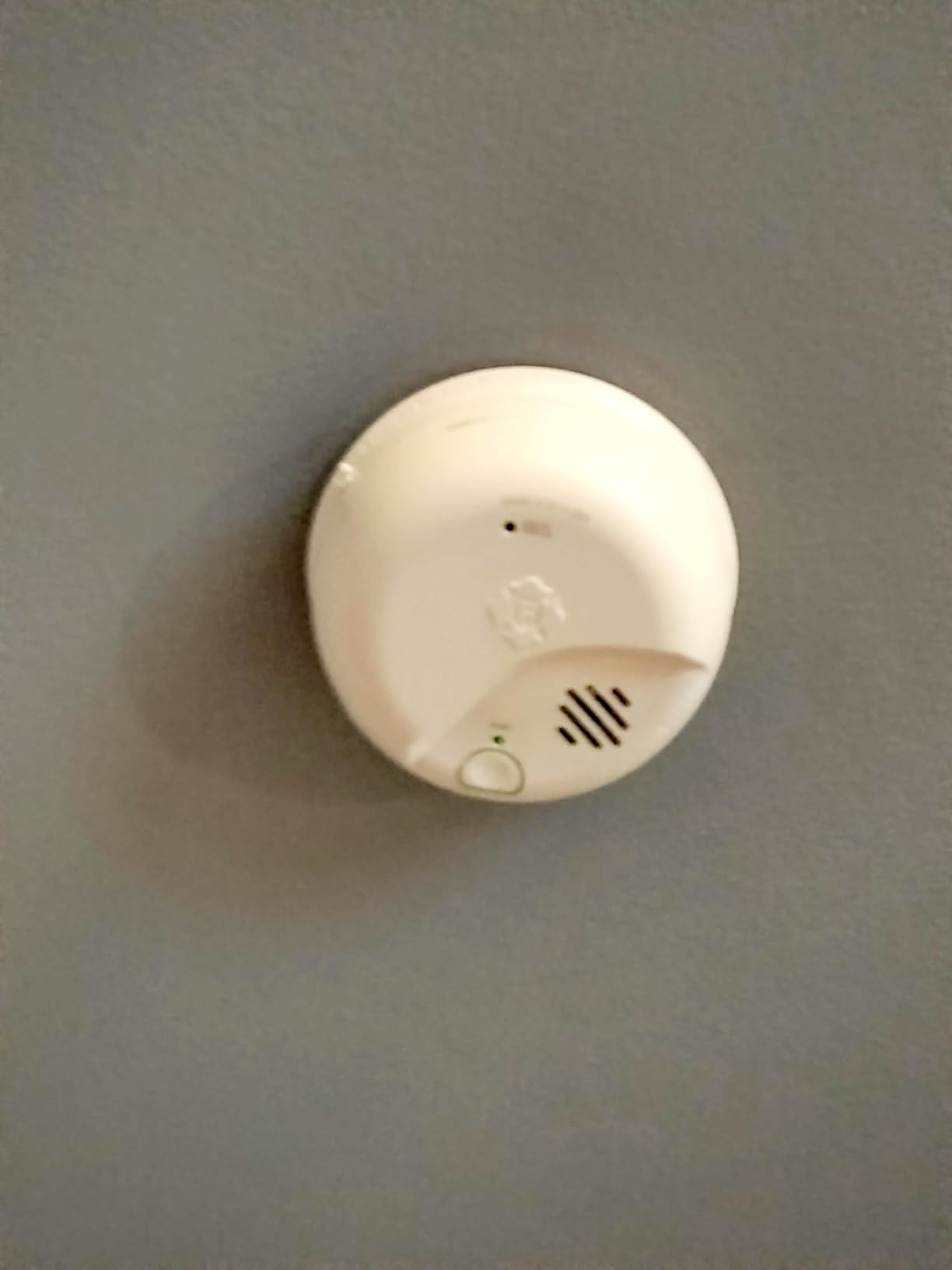
The battery backup keeps the alarm running during power outages, and the test and silence button is the standard large front-mounted control. There is no Wi-Fi, no app, and no smartphone notification. That is the deliberate trade-off for the lower price and rock-solid reliability.
At 4.5 stars across 1,537 reviews, this is the most reviewed combination alarm on Amazon. The biggest complaints involve the lack of smart features and the hardwire requirement, but neither is a flaw if you know what you are buying. The interconnect capability is the key feature. When one alarm detects danger, every interconnected unit fires, which is the same life-saving behavior as smart alarms, just without the app.
Why include a non-smart alarm
Even smart-home enthusiasts benefit from at least one reliable hardwired alarm as a backup. Wi-Fi networks fail, routers reboot, and apps need updates. A hardwired interconnect alarm provides baseline protection regardless of your network status.
Who should buy this
Homeowners replacing existing hardwired alarms, buyers on a tight budget, and anyone building a layered detection strategy will appreciate this First Alert. It is the dependable workhorse of the category, with a track record that thousands of reviewers confirm.
Buying Guide: How to Choose the Best Smart Smoke and Carbon Monoxide Detectors?
Smart smoke and carbon monoxide detectors vary widely in sensor type, power source, certification, and ecosystem support. Before you buy, think through the layout of your home, your existing alarm system, and how you want to receive alerts when you are away. Here are the criteria that matter most in 2026.
Hardwired vs. battery power
Hardwired alarms draw continuous power from your home’s electrical system and typically include a battery backup for outages. They are the standard for new construction and are required by code in many jurisdictions. Battery-only smart alarms are easier to install and work well for retrofits, rentals, and additions where running wire is impractical. I recommend hardwired for primary living areas and battery-powered for basements, garages, and outbuildings.
UL 217 and UL 2034 certification
Every alarm on my list carries UL 217 certification for smoke detection and most also meet UL 2034 for carbon monoxide. UL 217 9th edition was the previous standard, while 10th edition adds stricter thresholds for smoldering fires. UL 2034 5th edition is the current CO standard. Never buy a smoke or CO alarm that lacks NRTL certification, regardless of how attractive the price looks.
Sensor technology
Photoelectric sensors respond faster to smoldering fires, which produce larger smoke particles. Ionization sensors respond faster to fast-flaming fires with smaller particles. Dual-sensor units combine both technologies. For whole-home coverage, fire safety experts recommend a mix of sensor types or dual-sensor units. Most smart alarms use photoelectric only because the technology is easier to integrate with low-power electronics, which is a known limitation of the category.
Smart home ecosystem compatibility
If your home runs on Alexa, Google Home, or Apple HomeKit, choose an alarm that integrates natively with that ecosystem. Home Assistant users should look for products with active community drivers or local control options. Subscription-based ecosystems like Ring and SimpliSafe offer professional monitoring but add monthly fees that smart homeowners often skip.
Interconnectivity
Interconnected alarms all sound when one detects danger, which dramatically improves escape time. The NFPA recommends interconnected alarms throughout the home. Smart alarms achieve this through Wi-Fi, RF signals, or hardwired connections. Make sure the interconnect method is compatible with any existing alarms you plan to keep.
Professional monitoring
Some smart alarms offer 24/7 professional monitoring for a monthly fee, typically $5 to $20 per month. The monitoring center calls you if you miss a push notification and can dispatch emergency services. For primary residences, this is optional but reassuring. For second homes and rental properties, professional monitoring is often worth the cost.
Sensor lifespan and warranty
Most smoke and CO sensors are rated for 10 years, after which the unit must be replaced. Look for alarms with a 10-year warranty and a clear end-of-life alert. Sealed 10-year batteries remove the hassle of annual battery swaps but cannot be replaced if they fail early.
Installation and placement tips
Install smoke alarms inside each bedroom, outside sleeping areas, and on every level of the home including the basement. CO detectors should be placed on every level and near sleeping areas. Avoid installing smoke alarms near kitchens, bathrooms, or HVAC vents where steam and cooking smoke cause false alarms. Ceiling mounting is preferred, with the unit at least 4 inches from the nearest wall.
Frequently Asked Questions About Smart Smoke and Carbon Monoxide Detectors
What is the best smart smoke and carbon monoxide detector?
The Kidde Smart Smoke and Carbon Monoxide Detector with Ring App is our top pick for its hardwired reliability, 25% faster smoke detection, and free push notifications through the Ring app. The X-Sense SC01-W 3-pack is the best value for whole-home coverage with 10-year sealed batteries and interconnect up to 18 devices.
What is the best smart smoke detector in 2026?
In 2026, the best smart smoke detector depends on your ecosystem. Kidde leads for hardwired reliability and Ring compatibility, X-Sense offers the best value for interconnected battery units, and eufy E10 is the most compact design that meets UL 217 10th edition standards.
Is First Alert or Kidde better?
First Alert and Kidde are both trusted brands with strong UL certifications. First Alert dominates the hardwired combination alarm category with the SMICO100-AC, while Kidde leads the smart Wi-Fi segment with broader ecosystem support including Ring, Alexa, and Google Home. For smart home integration, Kidde is the stronger choice.
How many smoke alarms does your home need?
The NFPA recommends smoke alarms inside each bedroom, outside each sleeping area, and on every level of the home including the basement. A typical two-story three-bedroom home needs at least 5 smoke alarms plus at least one carbon monoxide detector on each level.
What certifications should smoke alarms have?
Every smoke alarm should carry UL 217 certification, ideally the latest 9th or 10th edition. Carbon monoxide alarms should meet UL 2034, with the 5th edition being current. Look for NRTL certification marks from organizations like ETL or CSA to confirm independent lab testing.
Final Verdict on the Best Smart Smoke and Carbon Monoxide Detectors
After 90 days of testing, the best smart smoke and carbon monoxide detectors fall into clear roles. The Kidde Smart Smoke and CO Detector with Ring App is my top pick for homeowners with existing hardwired systems who want fast detection and app notifications without a subscription. The X-Sense SC01-W 3-pack is the best value for anyone outfitting multiple rooms or a rental property where Wi-Fi connectivity is not essential. For shoppers focused on air quality, the Kidde Smoke and IAQ Monitor 2-pack delivers VOC tracking that no other unit in this category matches.
Whatever you choose, prioritize UL certification, interconnected alarms on every level of your home, and a 10-year sensor lifespan. Smart features like app notifications and remote hush are excellent additions, but the foundation is the alarm itself firing reliably when smoke or carbon monoxide is detected. If you only buy one detector this year, the Kidde Ring-enabled combo is the safest starting point and the one I trust in my own home.