
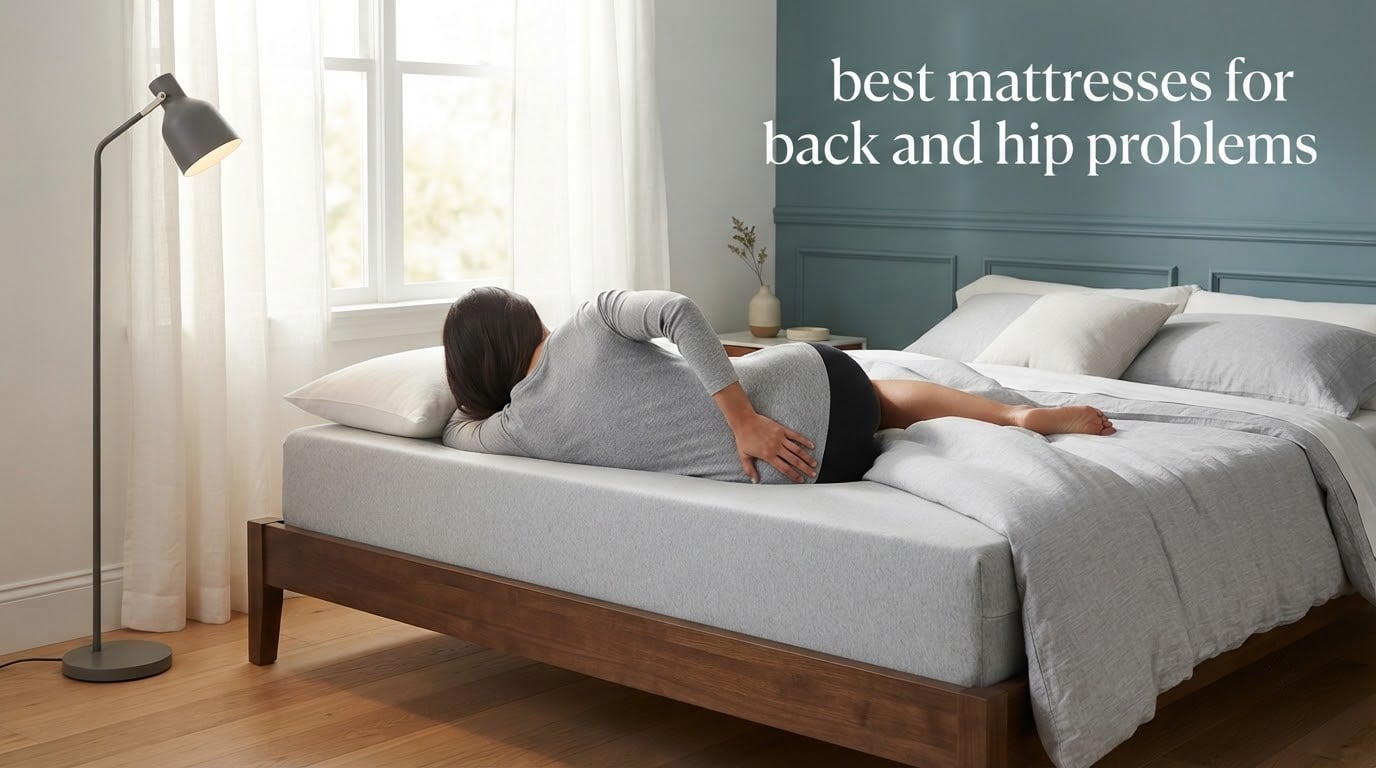
If your back and hips hurt when you climb out of bed, the mattress is the one variable you can change this week without a prescription, a physical therapist appointment, or a surgery consult. After spending weeks reading owner reviews, digging through forum threads on r/Mattress and Mattress Underground, and comparing every build in this roundup spec by spec, one picture repeated: the best mattresses for back and hip problems are medium to medium-firm surfaces that let the hip settle while the pelvis and waist stay lifted. Too soft drops the pelvis and bends the spine. Too firm pushes the hip bone straight into the surface and jams the joint.
That tension is why the soft-versus-firm advice you find online reads like contradiction. The hip wants cushioning, the lower back wants support, and a single-feel mattress usually cannot deliver both. The picks below split the difference with zoned or layered construction, and each one has a specific sleeper it suits best rather than a vague “best overall” claim for everyone. If hip pain is your main issue, we also have a dedicated roundup on the best mattresses for hip problems that goes deeper on joint-specific pressure relief.
Two numbers shaped everything in this guide. A widely cited survey found that roughly 95% of orthopedic surgeons believe mattress choice plays a role in managing lower back pain, and a separate 12-week sleep study tracked reductions in pain and morning stiffness among people moved onto a medium-firm surface. Neither finding points to a single brand. Both point to firmness range, pressure relief, and a support core that keeps the spine neutral for eight hours.
One caveat before we start. A mattress is a comfort and support product, not a medical device, and it cannot treat a disc injury, arthritis, or sciatica. If pain wakes you at night, runs down your leg, or is accompanied by numbness or weakness, see a doctor first. Everything below assumes you have ordinary mechanical aches that get worse on a bad surface and better on a good one.
Table of Contents
Top 3 Best mattresses for back and hip problems in 2026
Our three headline picks cover the three most common situations: the best-proven choice for long-term durability, the best balance of relief and support for most body types, and the best firm orthopedic surface for people who want a pronounced lumbar zone. Ratings and review counts are copied straight from the product data, so you can see how much real-world feedback sits behind each one.

Signature Design by Ashley 12 Inch King
- Thick memory foam over firm support base
- Pressure relief without sinking
- Adjustable base friendly
- 51919 reviews

EGOHOME 14 Inch Memory Foam
- 14-inch medium-firm all-foam
- Copper gel comfort layer
- Graphene cooling cover
- ICA endorsed CertiPUR-US

BedStory 14 Inch Firm Hybrid
- 800 individually wrapped pocket coils
- Open-coil airflow
- Orthopedic spinal support
- 365-night trial
All 12 mattresses compared at a glance in 2026
Every pick below appears in this table with the construction and the single feature that matters most for spinal alignment and hip pressure relief. Firmness labels are the manufacturer’s own, and they do not always predict how a bed feels after a few weeks of use.
| Product | Specifications | Action |
|---|---|---|
| Signature Design by Ashley 12 Inch King Memory Foam |
|
Check Latest Price |
| EGOHOME 14 Inch Memory Foam Mattress |
|
Check Latest Price |
| BedStory 14 Inch Firm Hybrid Mattress |
|
Check Latest Price |
 MOLPHIT 10 Inch Hybrid Mattress MOLPHIT 10 Inch Hybrid Mattress |
|
Check Latest Price |
 FATHOM 10 Inch Medium Memory Foam Mattress FATHOM 10 Inch Medium Memory Foam Mattress |
|
Check Latest Price |
 UniPon 12 Inch Firm Hybrid Mattress UniPon 12 Inch Firm Hybrid Mattress |
|
Check Latest Price |
 PUBPLON 12 Inch Medium Firm Hybrid PUBPLON 12 Inch Medium Firm Hybrid |
|
Check Latest Price |
 Sleepmax 14 Inch Cooling Hybrid Mattress Sleepmax 14 Inch Cooling Hybrid Mattress |
|
Check Latest Price |
 VISCOFLEX 14 Inch Firm King Hybrid Mattress VISCOFLEX 14 Inch Firm King Hybrid Mattress |
|
Check Latest Price |
 Grbsy 14 Inch 7-Zone Hybrid Mattress Grbsy 14 Inch 7-Zone Hybrid Mattress |
|
Check Latest Price |
 Novilla 12 Inch Hybrid Mattress Novilla 12 Inch Hybrid Mattress |
|
Check Latest Price |
 Avenco SyncDeep 12 Inch Firm Hybrid Mattress Avenco SyncDeep 12 Inch Firm Hybrid Mattress |
|
Check Latest Price |
What causes back and hip pain at night, and what a mattress can change
A mattress does one thing well: it controls how far your hips, shoulders, and lower back sink into the surface. That single variable decides whether your spine stays in a neutral line or bends into a shallow curve, and neutral is what stops the muscles around the lower back and hips from working all night to hold you in position.
Side sleepers feel the problem most acutely. Lying on your side puts your full body weight onto a narrow line running from shoulder to hip, and the two widest bones in that line are the ones that dig in. If the surface is too firm, you get pressure points at the shoulder and hip that leave you shifting. If it is too soft, your torso sinks past your pelvis, the spine tilts downward, and the lower back ends up in a bent position that compresses the discs and stretches the muscles.
That is the entire soft-versus-firm argument, and it is why zoned support exists. A zoned build stiffens the foam or coils under the lumbar region while leaving the hip area more compliant, so the pelvis stays lifted while the hip settles. The best mattresses for back and hip problems all share that pattern in some form, whether it is called extra lumbar foam, a seven-zone spring layout, or a firm support base under a thick comfort layer.
Heat matters more than most guides admit. Chronic pain disrupts deep sleep, and a restless sleeper who sweats and tosses will never settle into the neutral position the mattress was designed to support. Foam also has a real failure mode that buyers forget about: once the comfort layer breaks down, the hip sinks into the support foam and the same spinal curve comes back, usually somewhere in year three or four.
If pain is not purely mechanical, the mattress is not the fix. See a doctor for anything that radiates down a leg, causes numbness, or wakes you from sleep. Our picks are ranked for comfort, alignment, and durability, nothing more.
1. Signature Design by Ashley 12 Inch King Memory Foam Mattress: the best proven all-foam pick
Signature Design by Ashley 12 Inch King Memory Foam Mattress in a Box
12-inch all-foam
Medium-firm
Adjustable base compatible
Over 51919 reviews
Pros
- Over 51919 reviews and long-term owner updates
- Medium-firm relief without swallowing you in foam
- No sagging after three to four years
- No off-gassing odor
- Works for heavier sleepers wanting stability
Cons
- Firm enough to feel hard on shoulders and hips
- Needs deep-pocket sheets at 12 inches
- Partner movement transfers through the foam
This is the pick I keep coming back to because the evidence base behind it is unmatched in this category. More than 51,000 ratings means we are not reading a handful of early impressions, we are reading patterns that span years, multiple body types, and a lot of beds that failed before this one. Owners repeatedly report no body dips and no sagging after three to four years, which matters enormously for anyone whose pain is caused by a surface that has already broken down.
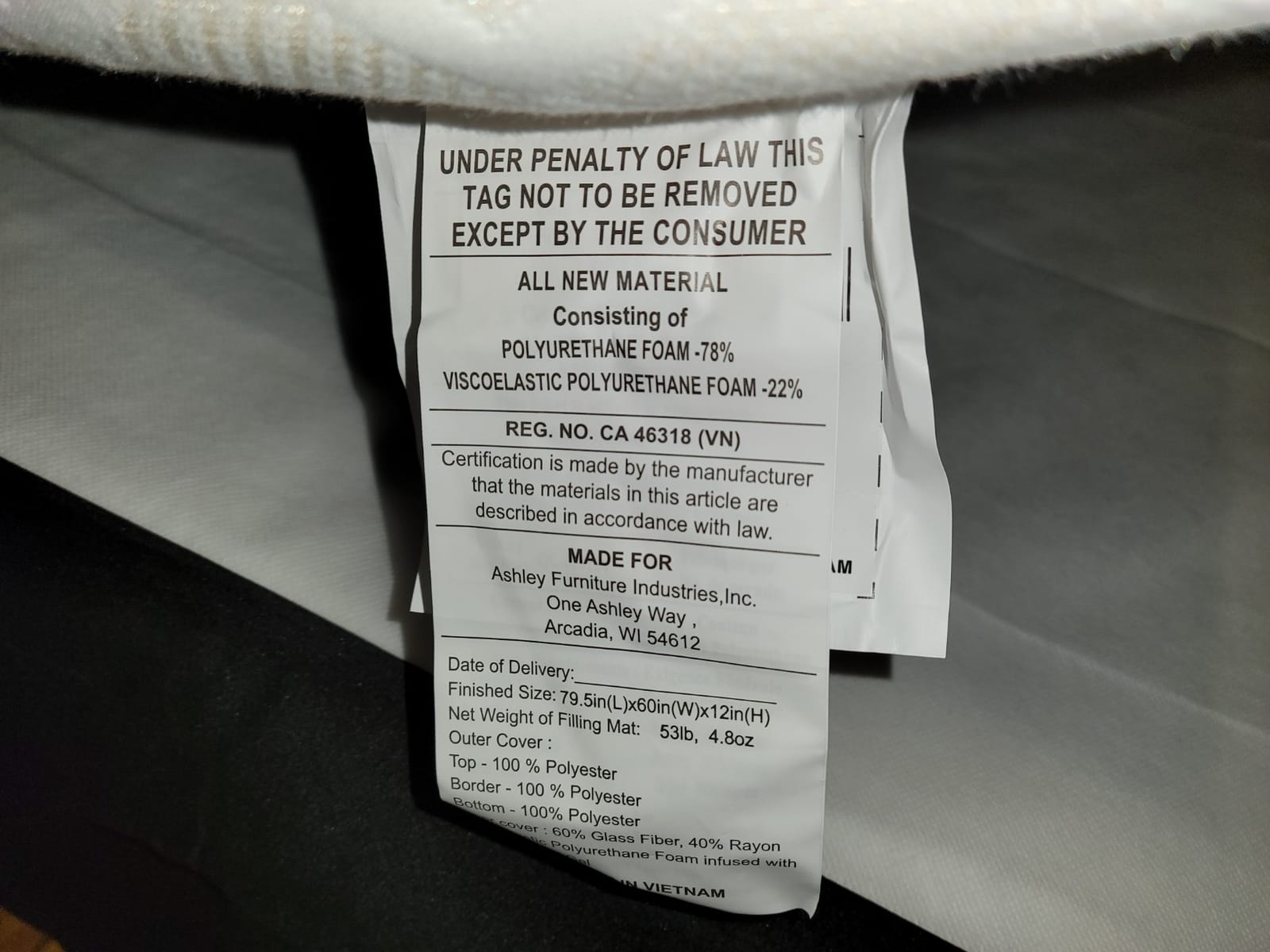
The build is straightforward: a thick memory foam comfort layer over an extra-thick firm support foam base, wrapped in a stretch knit cover. That layering is the whole strategy. The top layer does the pressure relief at the shoulder and hip, and the base underneath refuses to let the pelvis drop. You get contouring where you need cushioning and a flat, stable platform where you need structure.
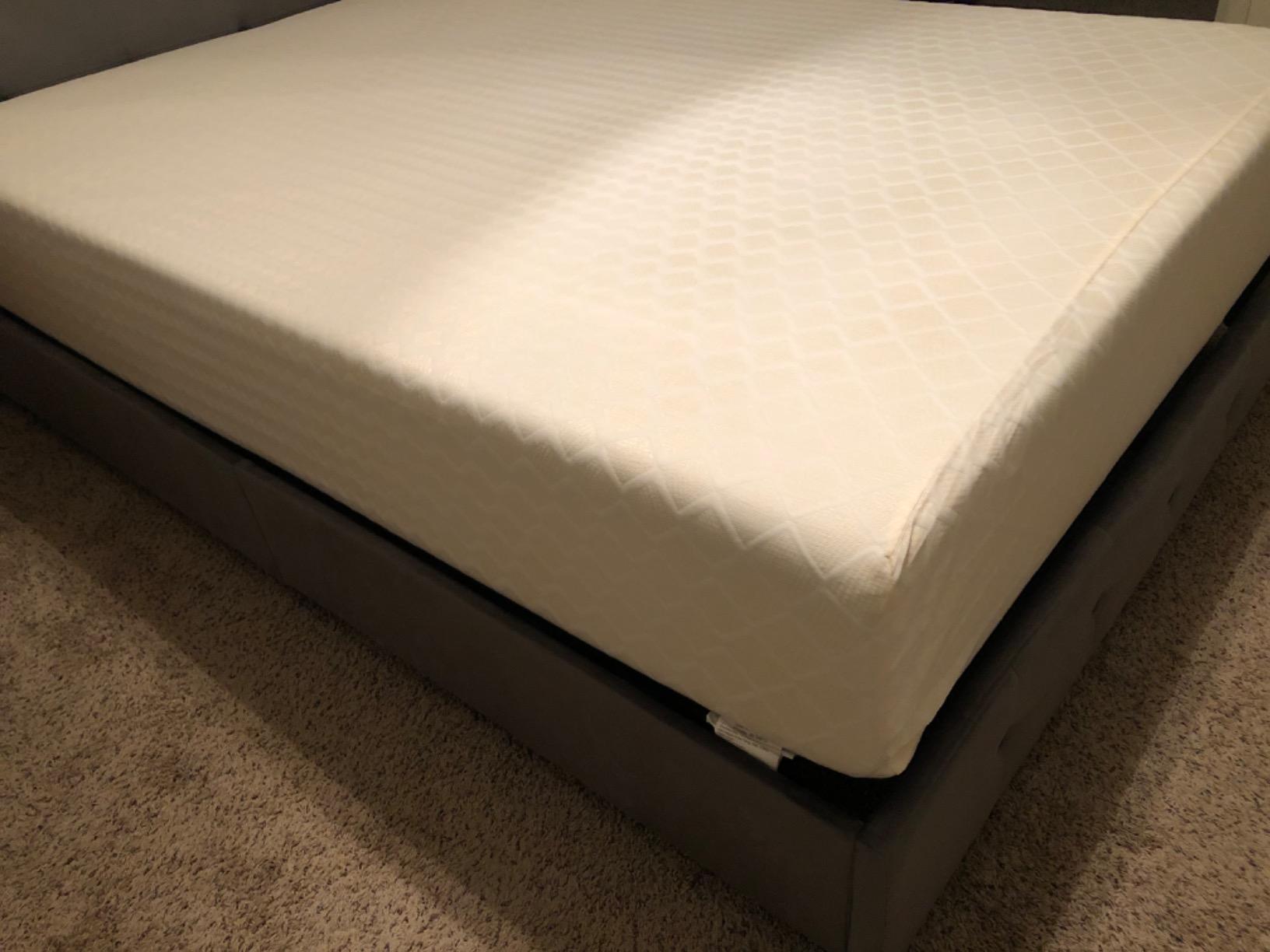
Two details make it work for this particular problem set. First, the medium-firm calibration sits in the middle of the range rather than at either extreme, so it handles back sleepers and side sleepers in the same bed. Second, it is listed as compatible with adjustable bases, which matters for anyone who sleeps with their knees elevated to take pressure off the lower back.
Long-term owners also mention no noticeable off-gassing, which sounds trivial until you have slept next to a strong chemical smell for a week. The company lists a 10-year non-prorated warranty, meaning the years are not cut against you based on age.
Who this mattress suits
Anyone who has owned a memory foam bed before and been disappointed by a surface that collapsed into a hammock within two years. It is also a good fit for couples where one partner needs stability and the other needs relief, because the medium-firm middle ground does not force a compromise on foam depth alone.
If you are under 130 pounds, note that the listed maximum weight capacity is 250 pounds. That is a comfortable fit, but a very light sleeper may find the surface less yielding than expected.
What to watch out for
Side sleepers with a painful hip sometimes describe the surface as firm rather than plush, and the 12-inch profile means standard fitted sheets will not reach. Partner movement also transfers through all-foam construction, so if a restless sleeper is the bigger problem in the room, look at a pocketed coil hybrid instead.
2. EGOHOME 14 Inch Memory Foam Mattress: the best balance of relief and support
EGOHOME Queen 14 inch Memory Foam Mattress for Back Pain Relief Medium Firm
14-inch all-foam
Medium-firm
Copper gel layer
ICA endorsed
Pros
- Medium-firm balance of contour and alignment
- Cooling cover and copper gel layer
- Strong motion isolation
- Holds shape with no edge collapse
- Minimal off-gassing
- Removable washable cover
Cons
- Heavier than standard foam at 84 pounds
- May feel too firm for plush seekers
- Silky cover lets sheets slide
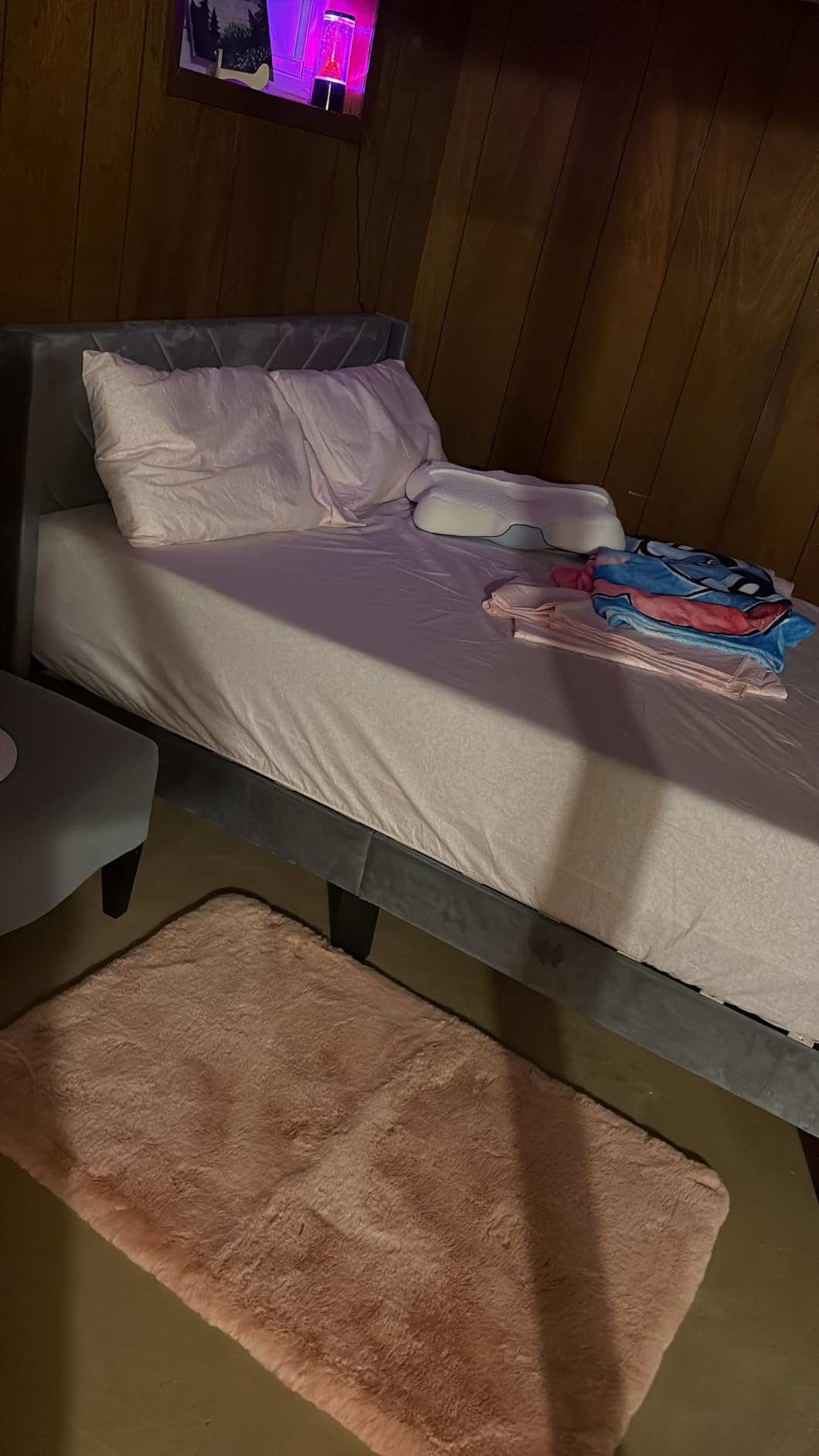
This is the one I recommend most often to people who say their pain is in both the back and the hips at the same time. The medium-firm feel is genuinely in the middle, not labelled that way for marketing reasons, and owners with chronic back and hip pain report waking without their usual morning stiffness once the foam has warmed for a few nights.
The copper gel aerofusion memory foam comfort layer is the piece doing the pressure work. Copper helps move heat away from the surface, and the memory foam underneath distributes weight so the hip bone stops concentrating load onto one spot. Below that sits a high density base foam for neck and shoulder support, which is what keeps the spine from drifting out of line after the top layer has done its cushioning.
Worth knowing: the CertiPUR-US certification here is accompanied by an endorsement from the International Chiropractors Association, which is unusual for a mattress in this category and directly relevant to the group of people reading this. The cover is removable and washable, and the mattress arrives rolled in a box rather than needing to be carried through a doorway assembled.
Owners also report the bed holding its shape over years with no body impressions and no edge collapse, which is the specific failure mode that tends to create new pain in year three for side sleepers.
Who this mattress suits
Side sleepers who want real pressure relief at the hip without dropping into a foam pit, and back sleepers who need a base firm enough to keep the lumbar line straight. It is also one of the better choices here for a bedroom shared with a partner who moves around at night, because all-foam construction limits motion transfer.
Anyone who runs hot will appreciate the graphene-infused cover and gel layer. It does not make the bed cold, but it reduces the heat retention that makes pain sleepers sweat and toss.
What to watch out for
Two honest limitations. It weighs 84 pounds, so it is a two-person job to move, and the foam takes several nights of body heat before it fully softens and contours. The silky cover also lets fitted sheets slide, which some people find irritating enough to solve with a mattress strap.
3. MOLPHIT 10 Inch Hybrid Mattress: the best entry-level hybrid for back pain
MOLPHIT Queen Mattress, 10 Inch Hybrid Mattress with Breathable Foam and Pocket Springs, Medium Firm Memory Foam Mattress for Back Pain Relief, Mattress in a Box, 60×80×10 Inch
10-inch hybrid
Medium
Pocketed coils
100-night trial
Pros
- Affordable entry point into a hybrid build
- Individually pocketed springs limit disturbance
- Soft knit cover stays breathable
- Medium-firm balance without sinking
- Works on slatted bases and adjustable frames
Cons
- 10-inch profile is shallower than most supportive builds
- Only three layers so limited zoned adjustment
- Needs 48 to 72 hours to fully expand
A mattress-in-a-box hybrid is the most sensible first purchase for most people with back pain, and this is the most sensible version of that. The self-contained pocket spring core means each coil operates on its own, so a partner moving on their side does not drag your hip sideways into a bent position the way a linked innerspring core can.
Dual foam comfort layers sit over the springs, and the balance is described as medium. In practice that lands close to medium-firm once the foam compresses, which is the range most orthopedic guidance points to for people who wake with a stiff lower back. The soft knit cover keeps air moving across the surface, which helps with the overheating that comes with chronic pain.
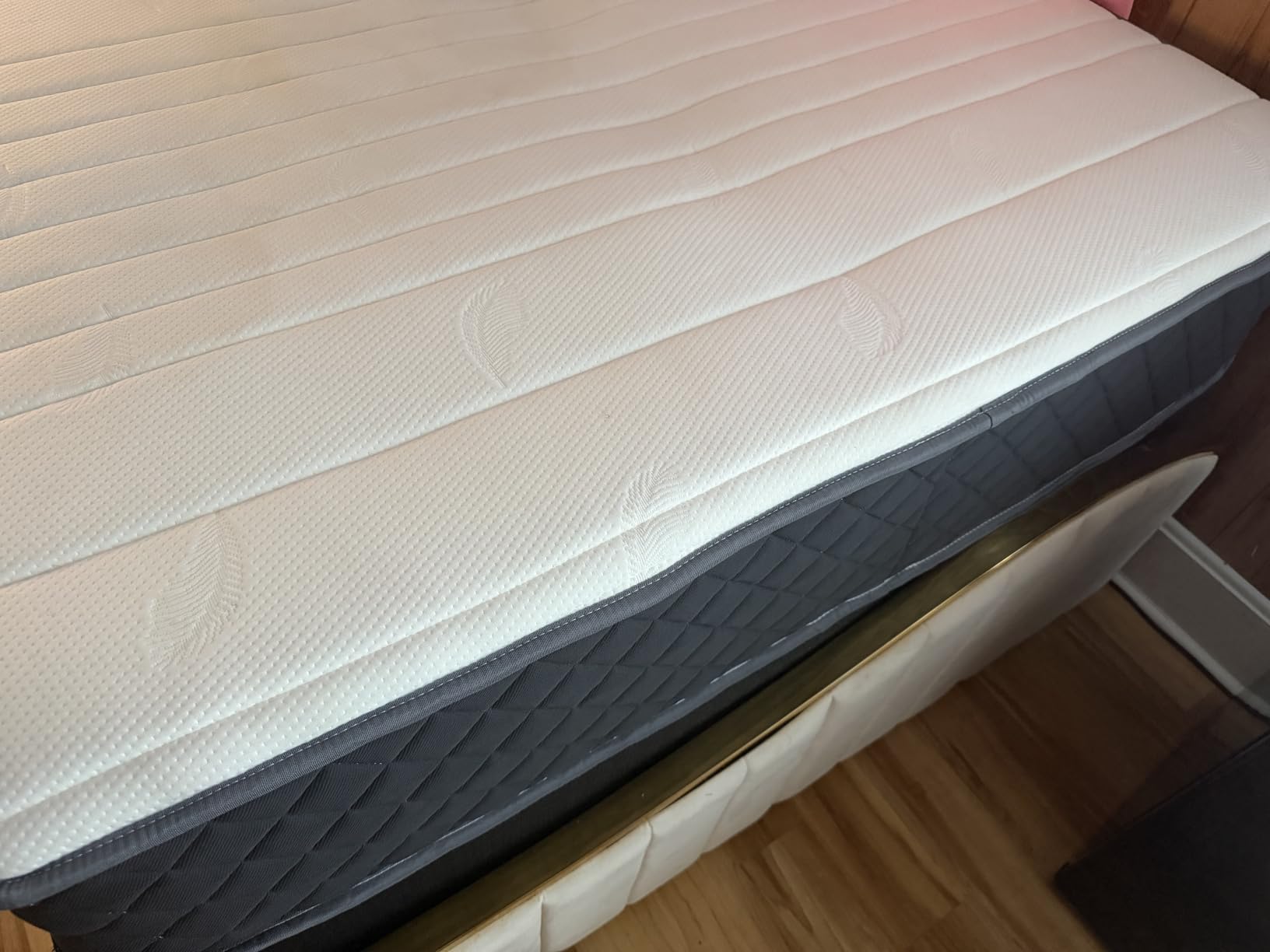
Compatibility is a genuine strength here. The manufacturer lists box springs, slatted bases, solid foundations, and adjustable frames as supported, so you do not have to change your bed base to make this work. That flexibility is useful if you are still diagnosing whether your foundation is part of the problem.
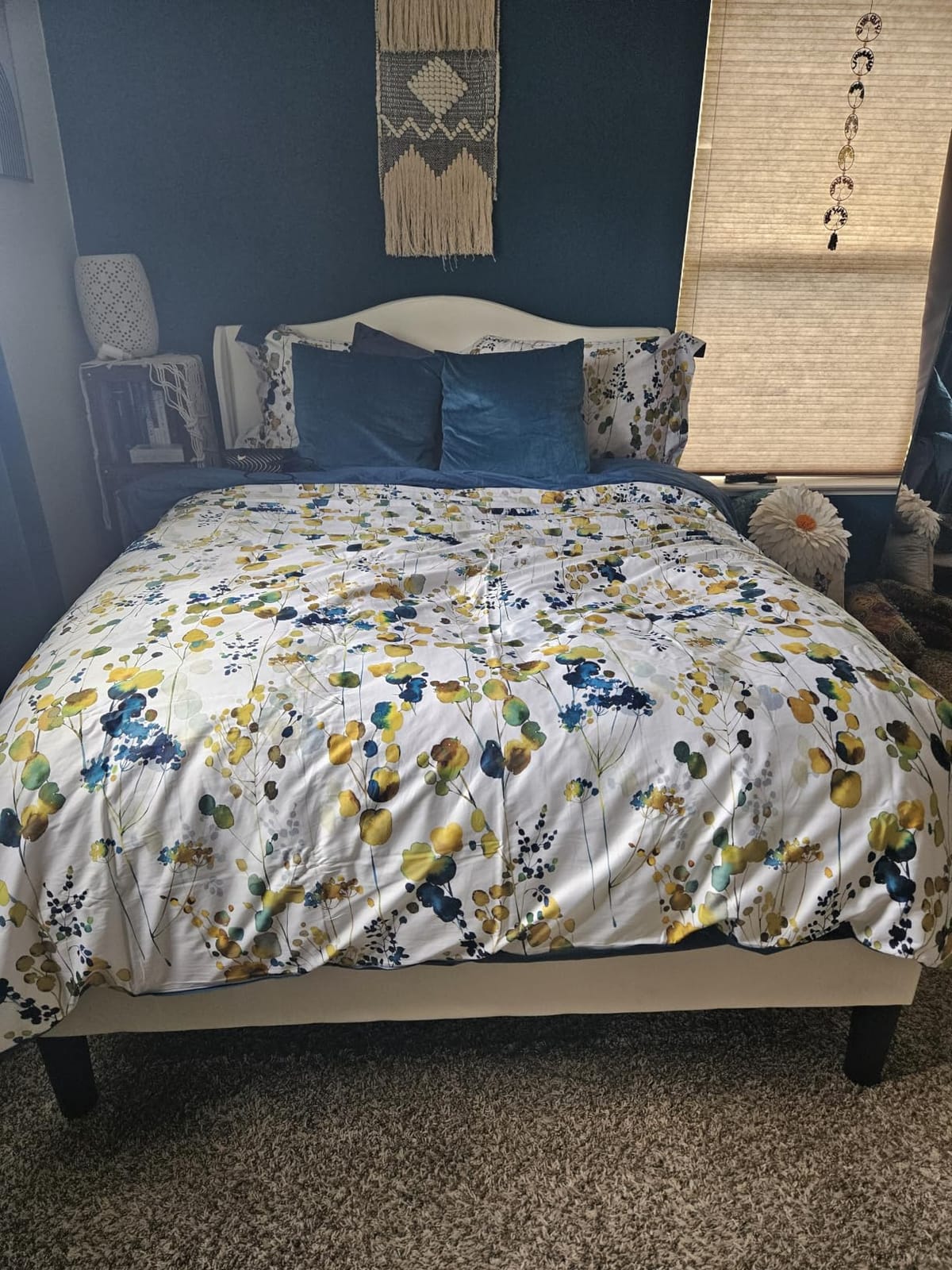
Buyers treat this as a solid value hybrid, with praise centred on the balance between foam comfort and spring support and on minimal motion transfer.
Who this mattress suits
First-time buyers, anyone furnishing a guest room or spare bedroom for a relative with back trouble, and people who want a trial period long enough to make a real decision. The 100-night trial and 10-year warranty mean you can live with it properly before deciding.
It is also a good pick if you share a bed with a restless partner and you are not ready to spend a large amount on motion isolation.
What to watch out for
The 10-inch profile is the main constraint, and it is shallower than most of the back-pain supportive builds in this roundup. With only three layers there is also less room for targeted lumbar adjustment, so if your pain is concentrated in a specific spot rather than spread across the lower back, a zoned build will serve you better.
Budget 48 to 72 hours after unpacking. The mattress cannot be rolled back up once expanded, so measure your space and plan the setup before the box arrives.
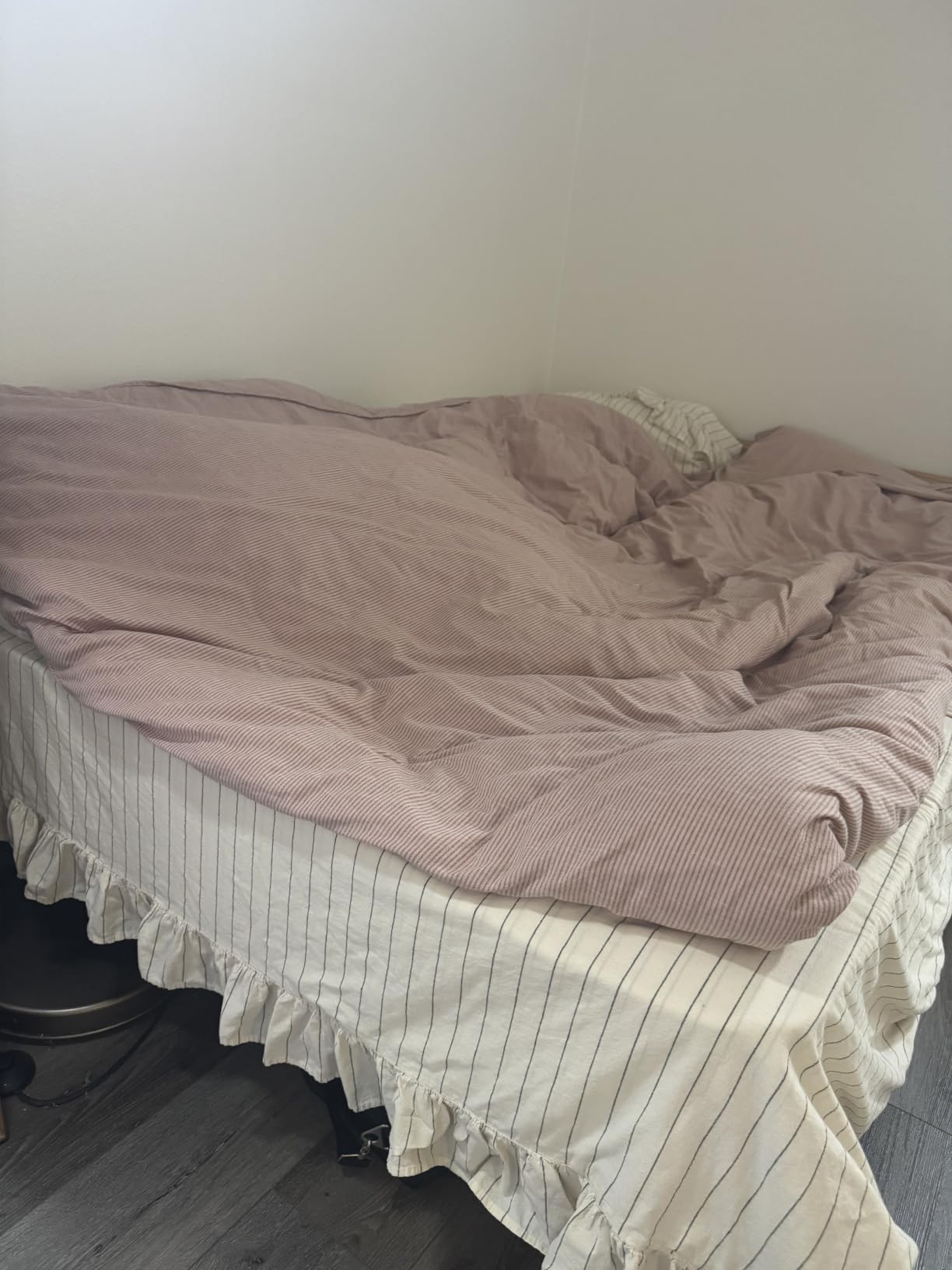
4. FATHOM 10 Inch Medium Memory Foam Mattress: the best pick if you sleep hot
FATHOM Medium Queen Mattress 10 Inch Memory Foam Mattress Queen Size Bed in a Box for Back Pain Relief and Cool Sleep with Gel Foam and Removeable Fiberglass Free Cover, CertiPUR-US Certified
10-inch all-foam
Medium
Cooling gel foam
750 lb capacity
Pros
- Gel foam stays cool and adapts to body temperature
- Removable washable cover
- Contours for spinal alignment while cutting motion transfer
- Light at 30.5 pounds
- 750 pound weight capacity
- Minimal odor
Cons
- 10-inch profile is thinner than the taller options
- Medium feel may not satisfy those needing firm
- Spot clean only
Chronic pain sleepers overheat, and heat makes tossing worse, which makes it harder to find the neutral spinal position the mattress was built to support. That is why I put this one in the roundup for a specific reason rather than a general one. The AeroFusion gel memory foam is designed for heat dissipation as much as contouring, and owners single out the cooling out ahead of everything else.
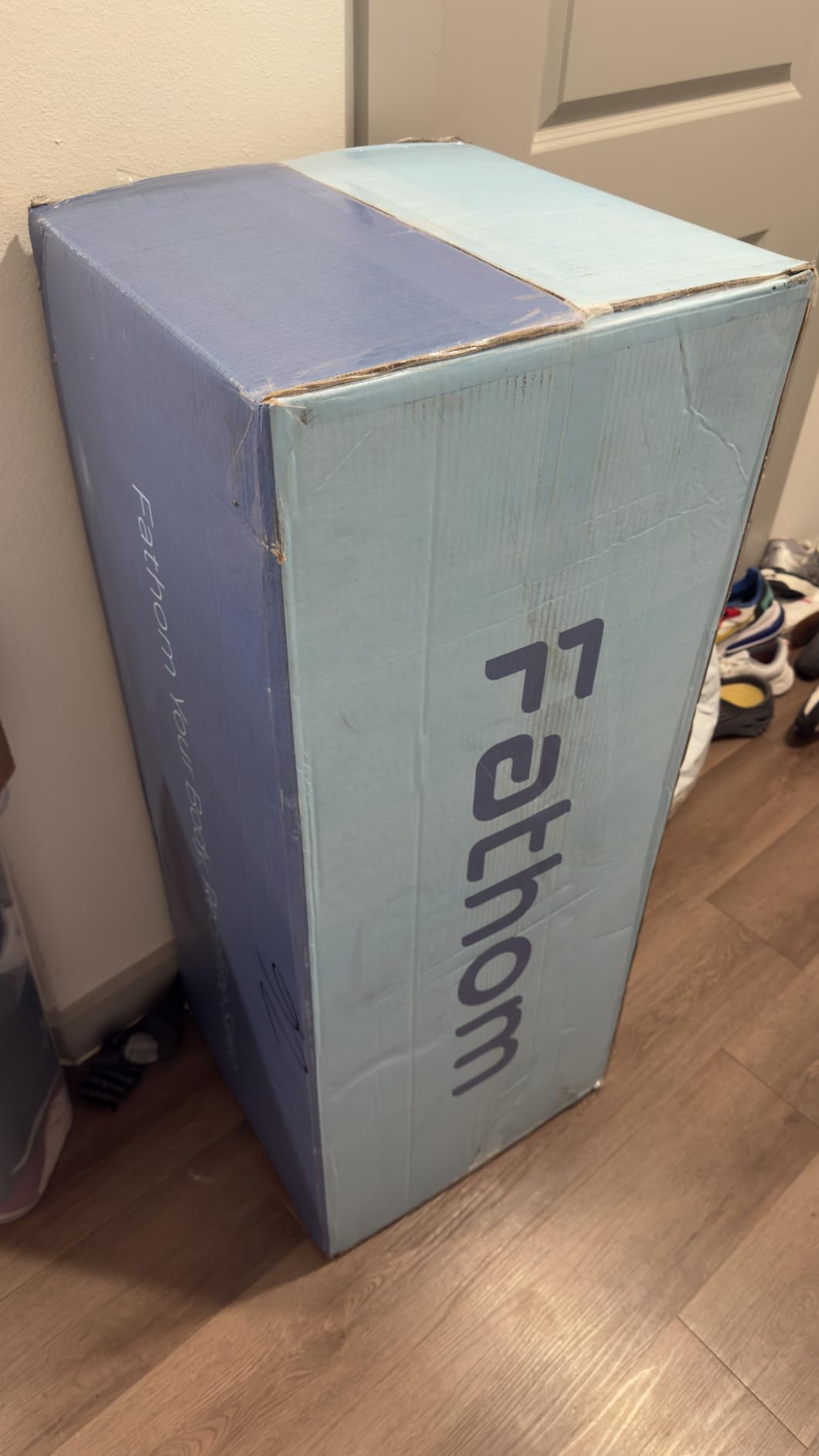
It weighs only 30.5 pounds, which makes it by far the easiest mattress here to move, turn, and reposition. If your pain is position-sensitive in the morning, a bed you can adjust during the day is a real advantage. At 10 inches it is also the shallowest profile most people can live with, and the listed weight capacity of 750 pounds is well above what most adults need.
The removable cover unzips and goes in the wash, which matters more than it sounds if you are dealing with a hip that flares up and limits your mobility. Buyers also mention quiet, undisturbed sleep for couples, since all-foam construction is naturally isolating. The foam is CertiPUR-US certified with Oeko-Tex certified fabrics, and it is crafted in the USA with a 10-year protection plan.
Criticism almost never touches comfort or support. It centers on the shallower 10-inch height.
Who this mattress suits
People who run hot, sleep in a warm room, or have night sweats that leave them stiff in the morning. It also suits anyone with a hip condition that limits how much they can bend and lift, because moving this mattress takes one person rather than two.
Couples will like the near-total motion isolation. A light sleeper sharing a bed with a heavy mover is the exact case this construction fixes.
What to watch out for
The medium feel will not satisfy someone who needs a genuinely firm surface, and the 10-inch profile is thinner than the 12 to 14 inch options here. Care instructions are spot clean only for the mattress itself, so plan on a protector if you want long-term protection.
5. BedStory 14 Inch Firm Hybrid Mattress: the best firm orthopedic surface
BedStory Queen Mattress 14 Inch – Firm Hybrid Mattress with Orthopedic Spinal Support for Back Pain – 2.0mm Advanced Pocket Spring and Motion Isolation Technology, CertiPUR-US Certified
14-inch hybrid
Firm
800 pocket coils
800 lb capacity
Pros
- Genuinely firm while distributing weight evenly
- Strong motion isolation from individually wrapped coils
- Back and sciatica owners report minimal morning pain
- Holds up under heavy use
- Open-coil construction runs cooler
- 365-night trial
Cons
- Weighs 101.4 pounds
- difficult for one person
- Some want an even firmer surface
- Occasional size shipping mix-ups
Some people do not want to sink at all, and telling them to buy a softer mattress is a mistake. If your pain is worse in the morning, radiates down the leg, or has been diagnosed as sciatica, a firm orthopedic surface with an explicit spinal support design is the more logical starting point. This is the one in the roundup built for that brief.
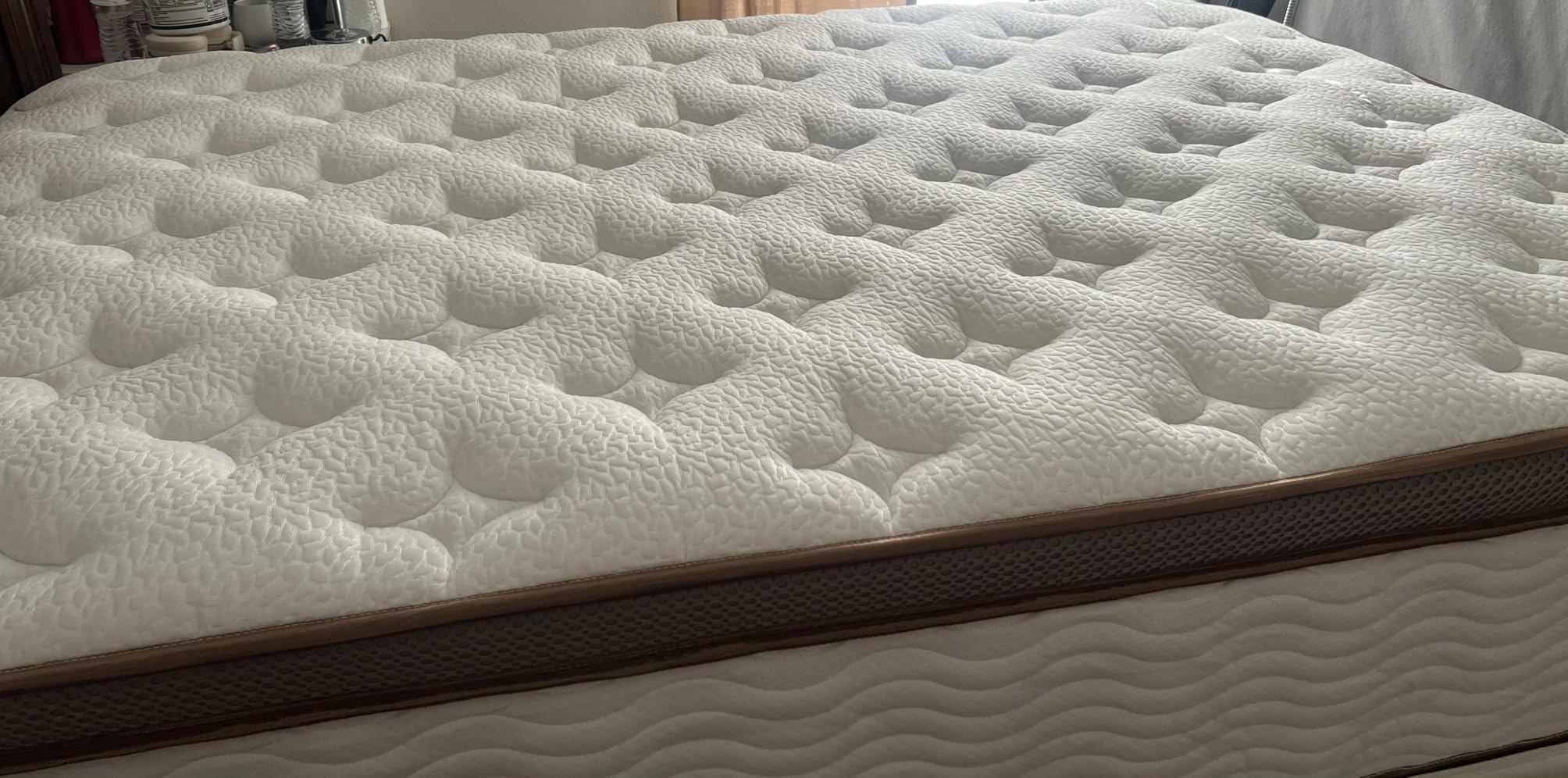
The support comes from more than 800 individually wrapped 2.0mm reinforced steel pocket coils across a 14-inch profile with a quilted Euro top. Owners with back pain and sciatica consistently describe morning pain as minimal or gone, and a 300-pound sleeper reports full support. The listed capacity reaches 800 pounds.
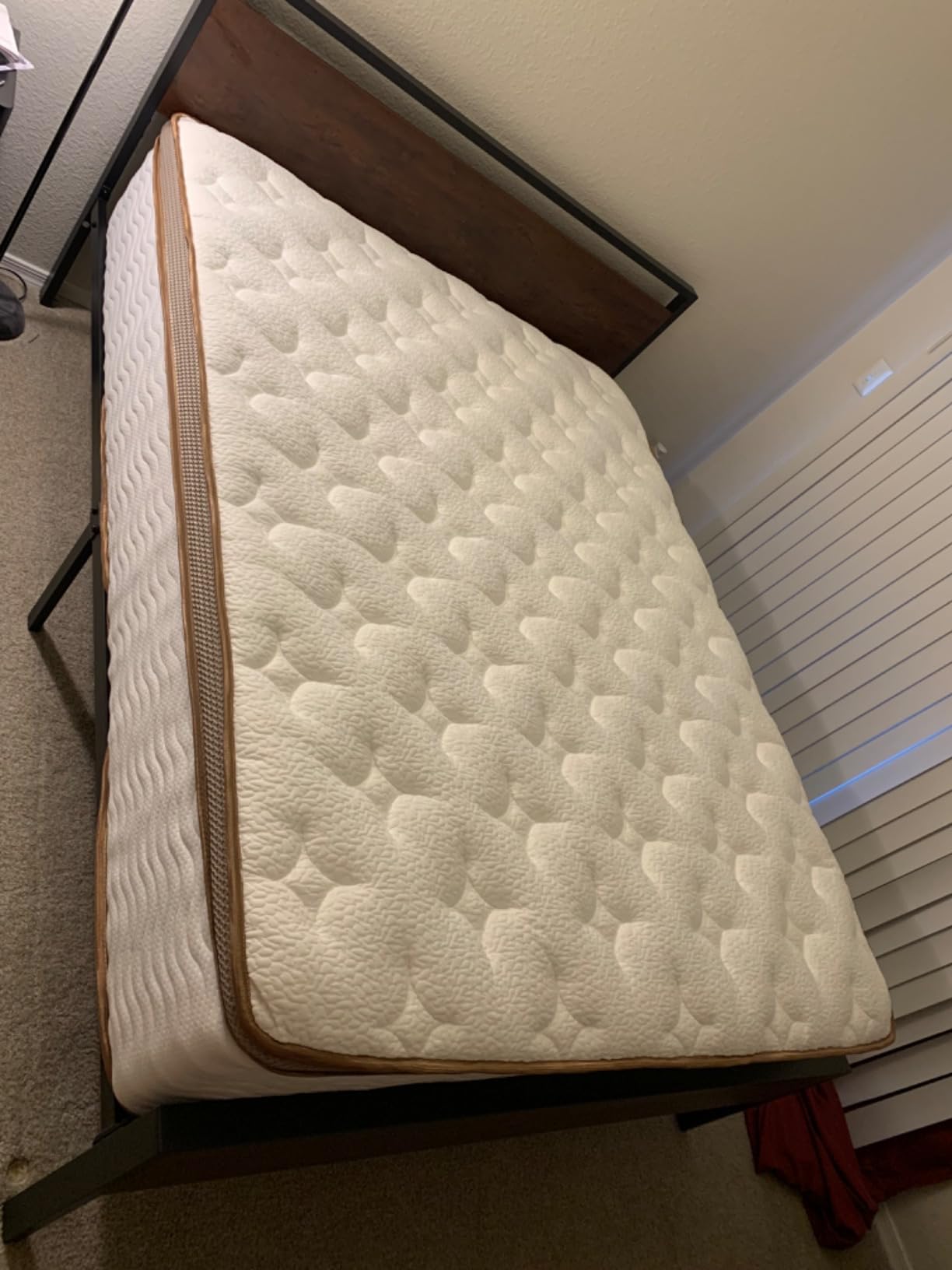
The open-coil system is the sleeper-facing advantage, delivering far more airflow than all-foam construction. For a person whose pain makes them sweat, that is not a minor specification. Gel-infused foam layers help hold the surface temperature, and the individual wrapping is why motion isolation holds up even when the mattress itself is firm.
It meets CertiPUR-US, OEKO-TEX and CFR1633 standards and is fiberglass-free, and it was assembled in the USA with a 365-night trial and 10-year support.
Who this mattress suits
Back sleepers, stomach sleepers, and anyone who wakes with lower back pain that improves during the day once the spine has been moving. It is also the strongest choice here for heavier sleepers who sink into softer builds and then feel their hips dig in at night.
If you sleep next to someone who shifts around, the individually wrapped coils handle it well despite the firm surface.
What to watch out for
At 101.4 pounds this is not a mattress one person can carry up a staircase, and firm surfaces are not universally kind to shoulders. Some buyers found it even firmer than the roughly 50 to 60 percent firmness they expected, and a few reported the wrong size being shipped, though the seller resolved those cases.
6. UniPon 12 Inch Firm Hybrid Mattress: the best pick for an adjustable base
UniPon Firm Queen Mattress 12 inch for Pain and Pressure Relief, Cooling Hybrid Mattress with Extra Back and Lumbar Hip Support, Pressure and Back Pain Relief,365 Nights Trial
12-inch hybrid
Firm
Lumbar and hip foam
365-night trial
Pros
- Firm without feeling hard and no shoulder poke
- No center sag even at high firmness settings
- Buyers report back neck and shoulder pain easing
- Sleeps cool
- Holds up as a mostly spring build with a foam top
Cons
- Noticeable bounce and motion transfer
- Heavier than expected from the spring build
- Sheet depth can be an issue
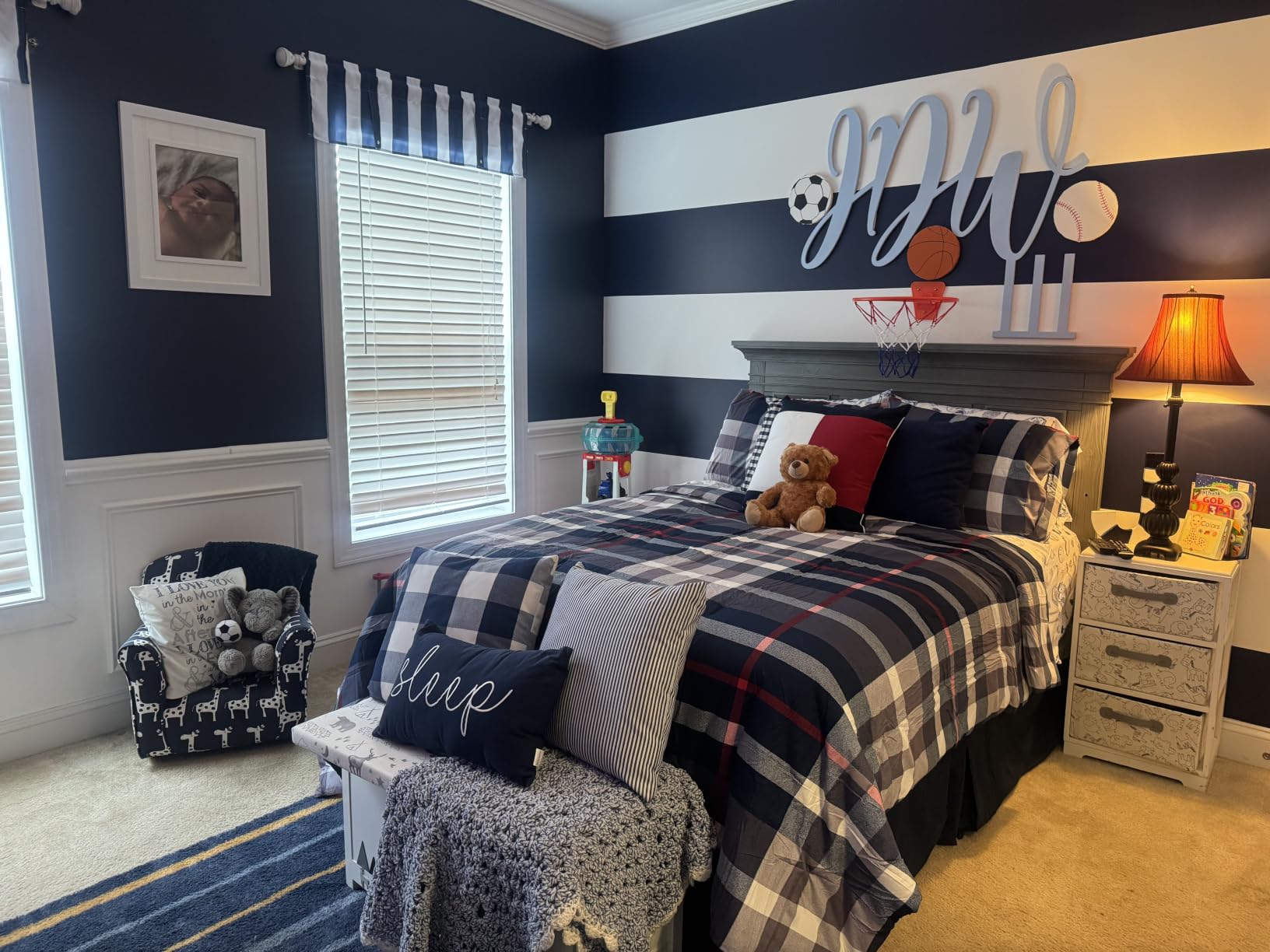
Elevating the head and knees of an adjustable base is one of the few things that reliably takes load off a painful lower back without medication. The problem is that most foam mattresses crease and lose their shape when they flex, so the surface you paid for stops supporting you. This build is specifically noted for holding its shape even at high firmness settings on a base.
It is a 12-inch firm hybrid with enhanced coils plus extra lumbar foam that the manufacturer positions to prevent sinking in the hip and lower back, and an egg-crate foam layer that opens up the surface for airflow. Owners with bad backs and stiff shoulders describe it as firm but not hard, with no shoulder poke when side sleeping, which is the balance most people with hip problems are hunting for.
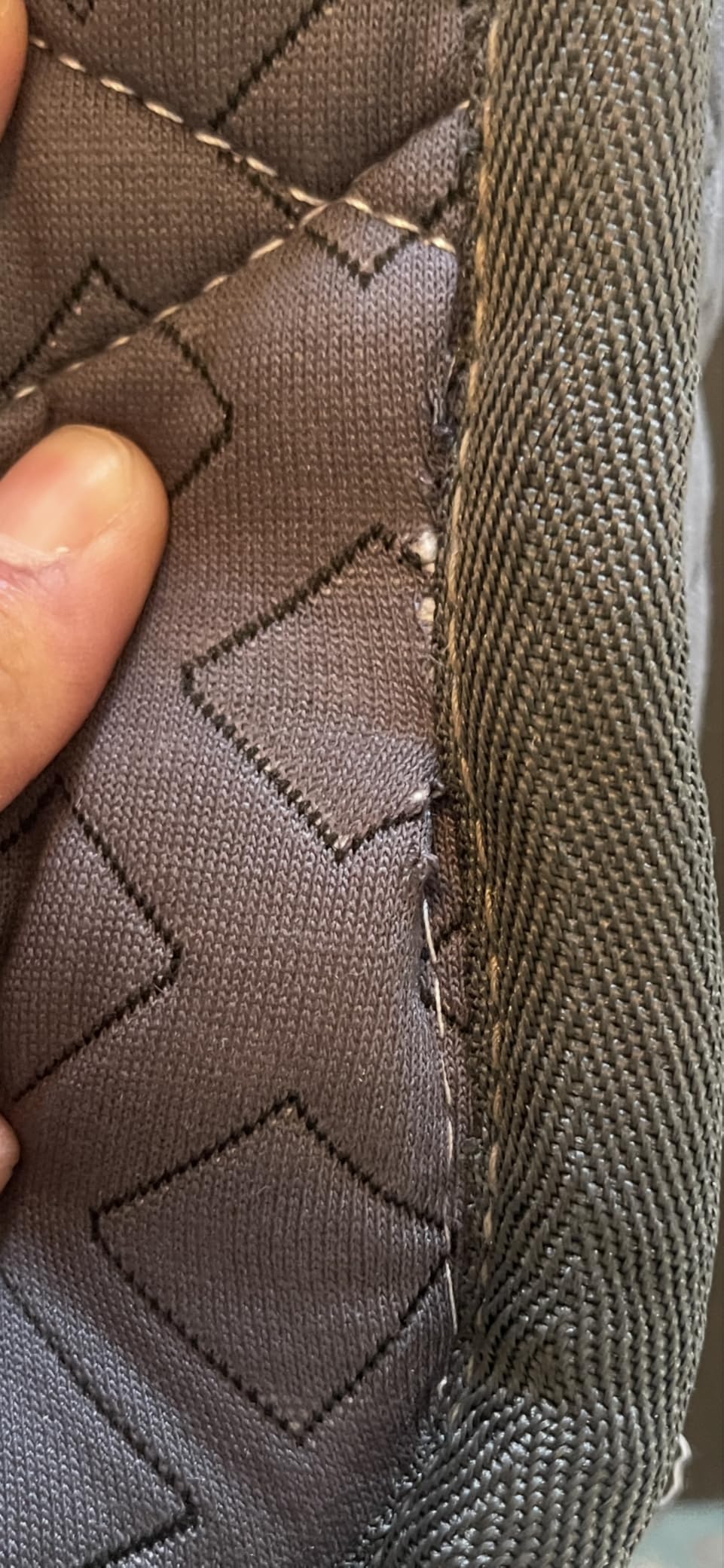
Sleep-number owners dealing with a sagging mattress are the group that reports the biggest change. Several describe lower back, neck, and shoulder pain disappearing, and one reviewer noted the bed sleeps cool enough that snoring stopped. The foam is CertiPUR-US and OEKO-TEX certified and formaldehyde-free, with a 365-night trial.
If you are still using an innerspring and have been reading about moving to a base, this is worth reading first.
Who this mattress suits
Anyone already on an adjustable base, and anyone who has been told to sleep with the head and knees elevated. It also works for side sleepers who like a firm surface but have been put off by hybrids that feel like they are poking the shoulder.
The no-sag behaviour makes it a good option if you sit on the edge of the bed to get up, which many people with hip pain do at night.
What to watch out for
The spring core is genuinely springy, and that shows up as noticeable bounce and motion transfer when a partner moves. It is also heavier than buyers expect because the build is nearly all springs. If you share a bed with a very restless partner, expect that to be the trade-off you are making.
7. PUBPLON 12 Inch Medium Firm Hybrid Mattress: the best for sitting on the edge
PUBPLON Mattress Queen Size, Medium Firm 12 Inch Mattress with Extra Lumbar & Shoulder Support, Hybrid Mattresses with Gel Memory Foam Pain Relief – Fiberglass Free – No Odor – 365 Night Trial
12-inch hybrid
Medium-firm
Zoned lumbar
600 lb capacity
Pros
- Extra lumbar and shoulder support zones
- Reinforced edge resists sitting sag
- Fiberglass-free with no odor
- Gel foam and 3D cover keep the surface cool
- Backed by a lifetime warranty
Cons
- Some buyers find it too firm at first
- Needs a 3 to 7 day break-in
- Only 396 pocket coils
Here is a small detail that matters more than it sounds for this audience: if your hip pain makes getting in and out of bed hard, you will be sitting on the edge of the mattress every night, often for several minutes while you find your footing. Most foam beds compress there first, and once the perimeter sags your hips drop when you lie back down.
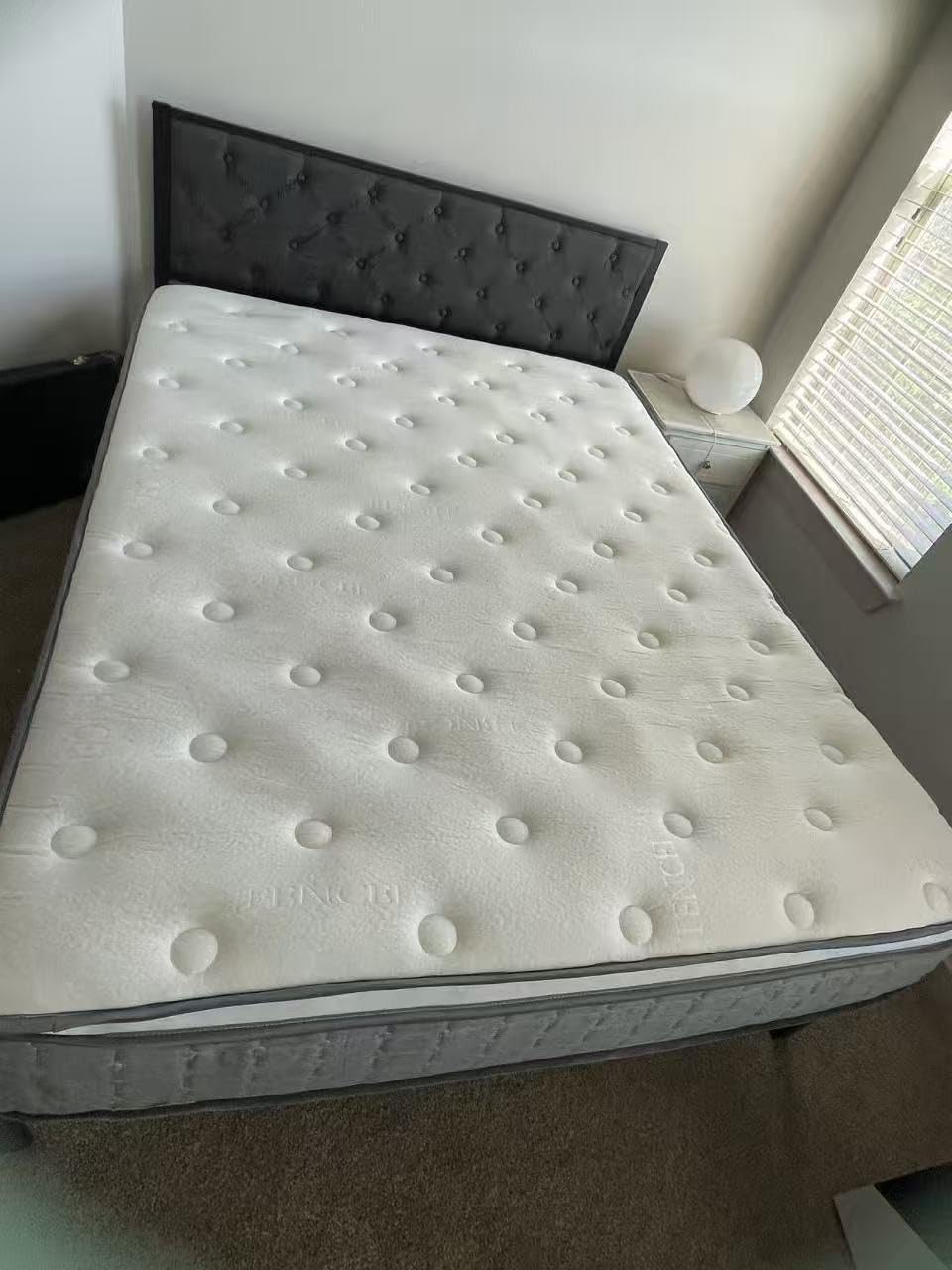
This one is built against that. The perimeter system uses 15% denser pocket springs with 30% more sitting support than the core, and buyers single out the reinforced edges as the reason the surface stayed usable. Inside, a high-density bottom support layer is positioned to protect the lumbar spine, and the extra lumbar and shoulder support zones address the two pressure areas that hurt most when you lie down.
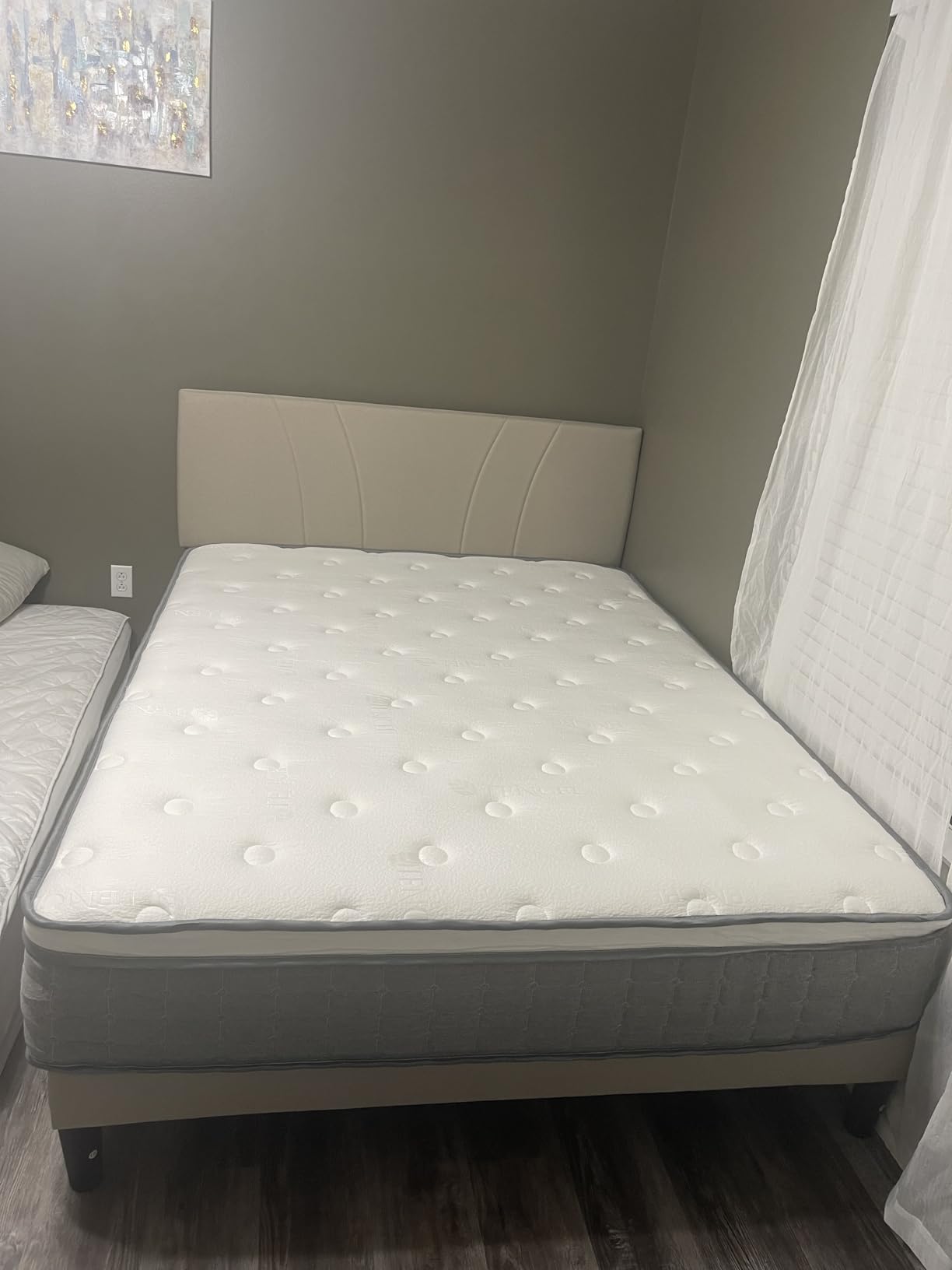
Heat is addressed with an open-cell gel infusion foam the manufacturer claims dissipates body heat quickly, plus a 3D breathable cover. The listing states a 600-pound capacity, CertiPUR-US certified foam, fiberglass-free construction, and no odor, backed by a 365-night home trial and a lifetime warranty, which is an unusually long warranty for a build at this level.
Buyers report the lumbar and shoulder zones easing lower back and joint discomfort within the first couple of weeks.
Who this mattress suits
Side sleepers whose pain is concentrated at the shoulder and hip, and anyone who needs to sit on the mattress edge to get in and out of bed. The lifetime warranty is particularly appealing if you expect your pain pattern or weight to change over the years.
It is also a reasonable choice for a guest room used by relatives with temporary back problems, since the trial period is generous.
What to watch out for
The manufacturer itself warns that some buyers find it too firm at first, particularly side sleepers, and the memory foam needs three to seven days of body heat before it softens. At 396 pocket coils it is the lowest coil count in this roundup, so the bounce is more present than the premium builds.
8. Sleepmax 14 Inch Cooling Hybrid Mattress: the best for heavier sleepers
Sleepmax Queen Mattress 14 Inch, Cooling Pain Relief Hybrid Mattresses
14-inch hybrid
Balanced feel
965 pocket coils
2400 lb capacity
Pros
- Balances plush comfort foam with coil support
- Individually wrapped springs isolate motion and cut noise
- Distributes body weight to relieve pressure points
- Reinforced edges resist roll-off
- 2400 pound weight capacity
- Lifetime service agreement
Cons
- Tall 14-inch profile needs deep-pocket sheets
- Fewer reviews than the other picks
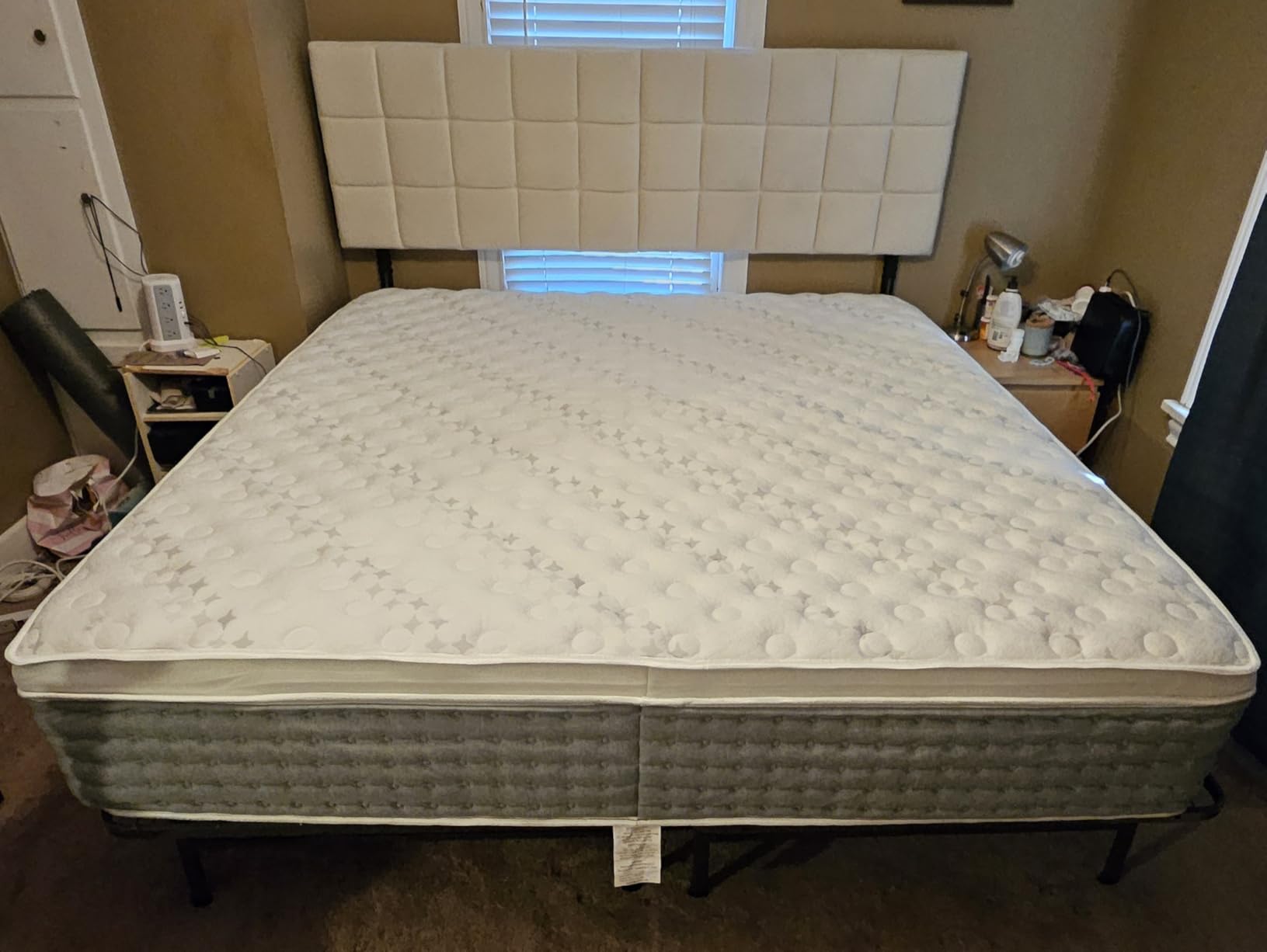
Body weight is one of the most underrated variables in this whole topic. If you are over 250 pounds, a medium-firm all-foam bed will let you sink past the point where the spine stays level, and that sinking is exactly what creates the morning hip and back ache you are trying to escape. You need a core that will not yield, and a comfort layer thick enough to keep pressure off the hip bone.
This 14-inch hybrid delivers 965 individually wrapped springs under a deluxe Euro top with pressure-relieving gel memory foam. The listed capacity of 2400 pounds is by a wide margin the highest here, and the reinforced edges are designed to reduce roll-off and protect the internal layers. Owners describe the feel as a balance of softness and stability that suits back, side, and combination sleepers.
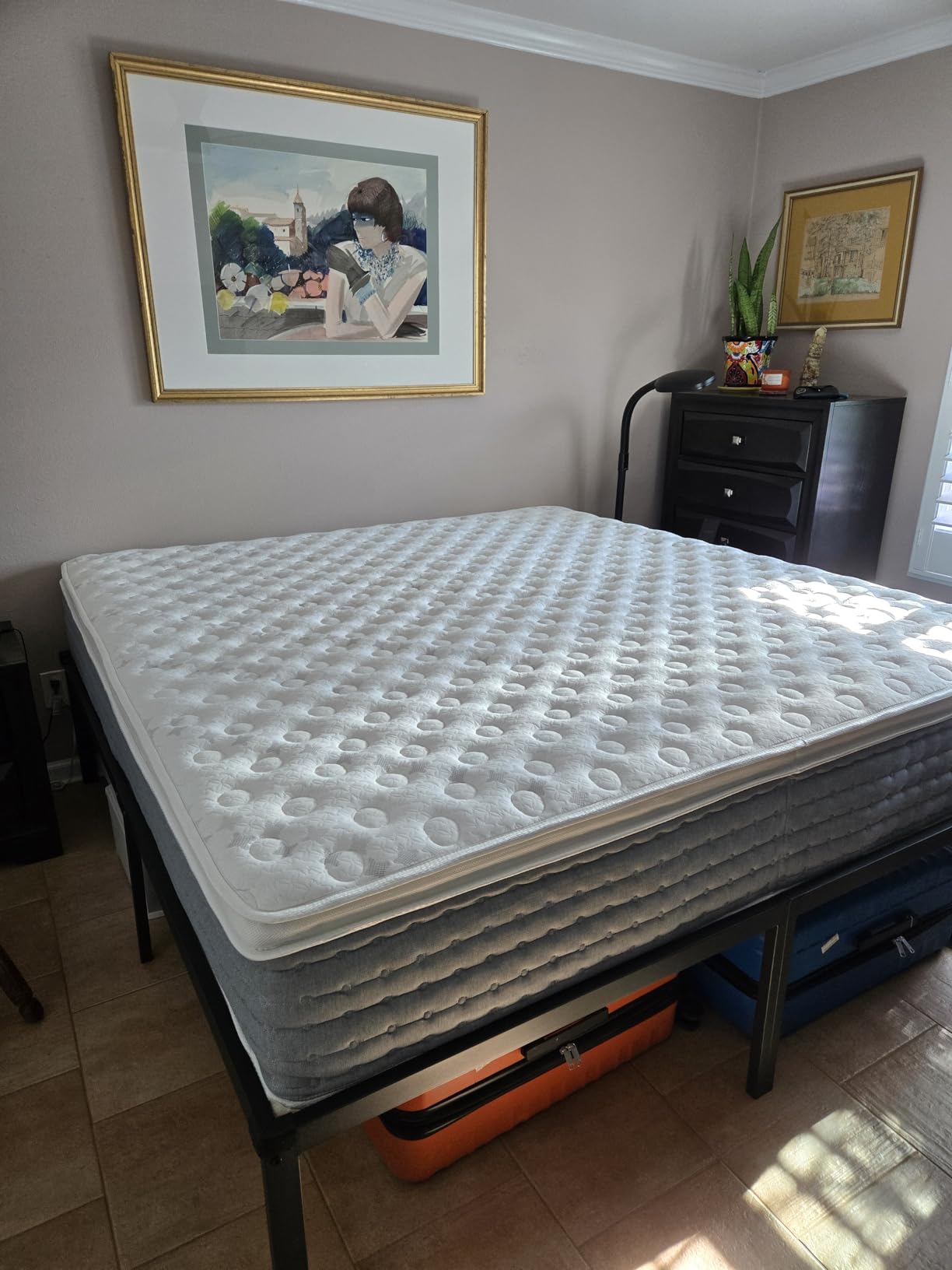
The engineering intent is stated plainly: align the spine and distribute body weight evenly. That is the exact mechanism that stops a heavy sleeper’s hip from digging into the surface overnight. Motion isolation and noise reduction come from the individual wrapping, which matters for light sleepers sharing the bed with a heavier partner.
It is CertiPUR-US and OEKO-TEX Standard 100 certified, fiberglass-free, and backed by a 365-night trial and a lifetime service agreement from a brand with more than 40 years of experience.
Who this mattress suits
Heavy sleepers, and couples with very different body types where the lighter person needs a surface that does not bottom out. It also suits anyone who wants the pressure relief of a plush top layer without losing the support of a coil core.
If you share a bed with a light sleeper who is easily disturbed, the noise reduction is a real benefit rather than a marketing line.
What to watch out for
This pick sits at the top end of what we tested, and at 376 reviews it has the thinnest feedback base of the higher-rated choices, which means less long-term data to judge durability by. The 14-inch profile also demands deep-pocket sheets that you may need to buy separately.
9. VISCOFLEX 14 Inch Firm King Hybrid Mattress: the best for stiffness and high compression support
Firm King Mattress 14 Inch, Back Pain Relief Hybrid Mattress King Size
14-inch king hybrid
Firm
Lumbar hip and shoulder zones
365-night trial
Pros
- Firm feel that still registers as comfortable
- Highest rated pick at 4.9
- Expands quickly with no odor
- Strong enough for heavier sleepers
- Quiet and non-bouncy with reinforced edges
Cons
- Springs can be felt through the foam on some builds
- King size listing with only a queen variant offered
- Only 98 reviews so the least proven
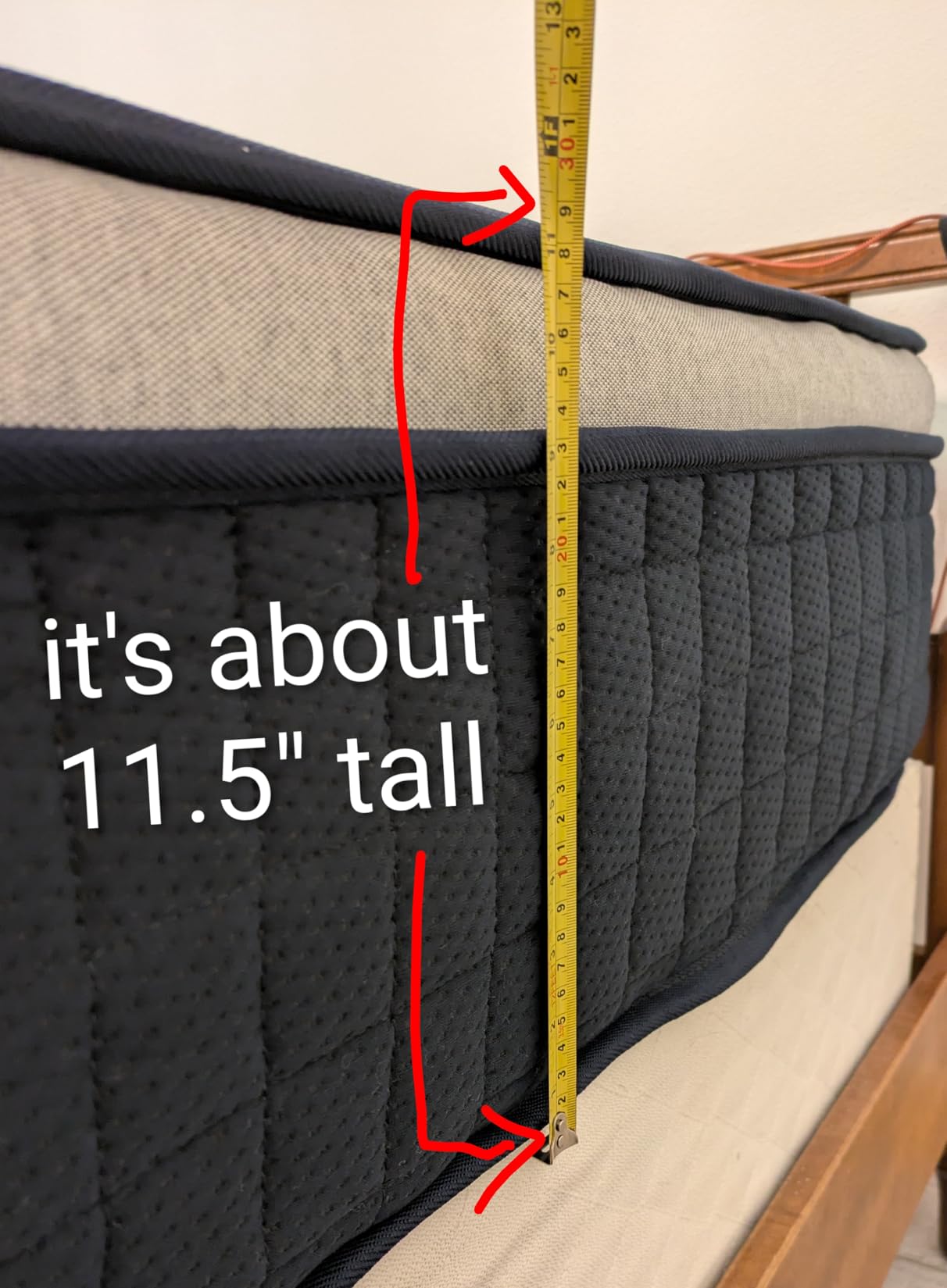
This pick carries the highest rating in the group at 4.9, and I want to be straight about why that is less conclusive than it looks: it is built on 98 ratings. The score is exceptional, the sample is small. Owners with chronic back pain do describe it as firmly supportive without sacrificing comfort, and several note it stayed firm for years, which is the durability signal we care most about.
The construction is high-compression industrial-grade steel pocket springs, designed to hold shape over a long life rather than soften into a hammock. Targeted lumbar, hip, and shoulder support zones are built into the coil layout, and the open coil-and-foam hybrid structure promotes continuous airflow so the surface does not trap heat against a sensitive lower back.
The motion isolation figure claimed in the listing is high, and owners describe the bed as quiet and non-bouncy, which is notable for a firm spring build. Fiberglass-free with ultra-low VOCs, CertiPUR-US and OEKO-TEX certified, with a 365-night home trial and 10-year coverage.
It expands quickly out of the box with no odor, which matters if you are replacing a bed in a hurry because the old one is causing pain.
Who this mattress suits
People who want a firm surface that still feels comfortable, and heavier sleepers who need a core strong enough to hold them level. The targeted zones at the lumbar, hip, and shoulder are aimed squarely at the combination of back and hip complaints rather than one or the other.
Light sleepers and couples are well served by the quiet, low-bounce construction.
What to watch out for
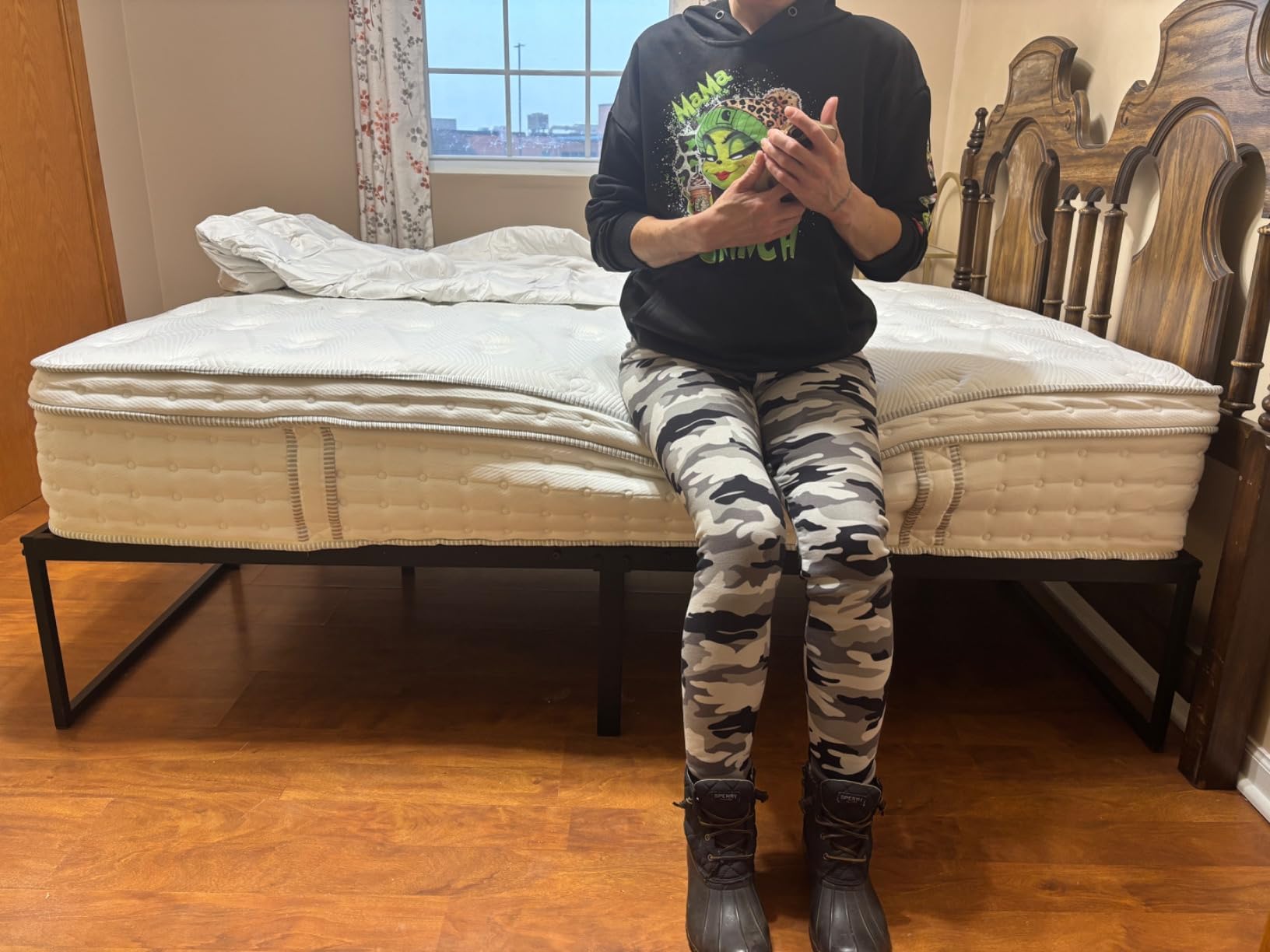
At 111.5 pounds this is the heaviest unit here, and the 14-inch profile is tall. A minority of owners can feel the springs through the thinner foam layers, particularly on the shallower variant, so if you are a light side sleeper, that is a genuine risk to weigh.
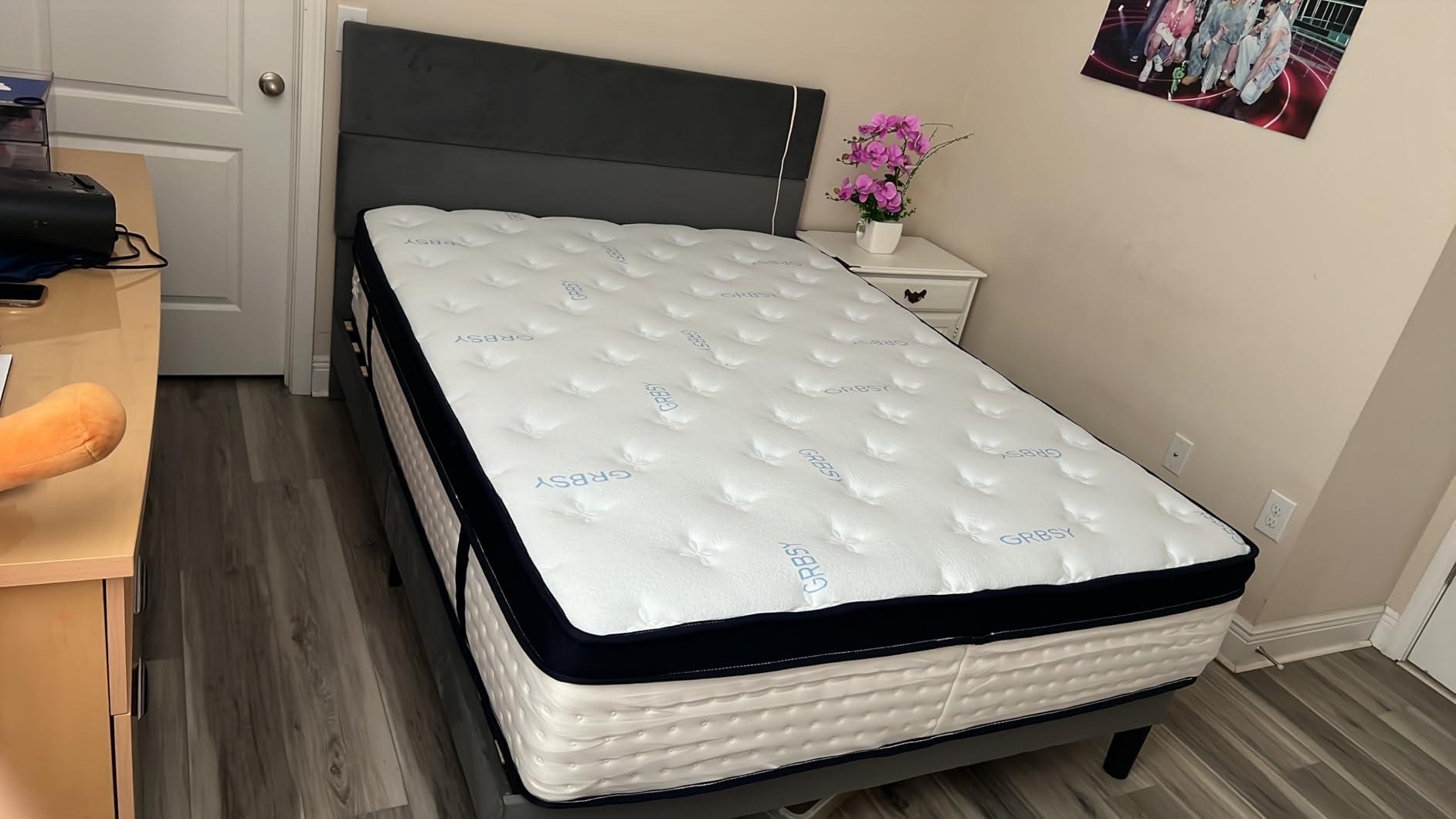
10. Grbsy 14 Inch 7-Zone Hybrid Mattress: the best for zoned support
14 Inch Queen Mattress, Upgraded 7-Zone Support Hybrid Queen Size Mattress In A Box with Cooling Gel Memory Foam & Pocket Coils for Back Pain Relief, 365-Night Trial, Motion Isolation, Medium Firm
14-inch hybrid
Medium-firm
7-zone layout
1000+ pocket coils
Pros
- 7-zone support targets the lumbar and mid-back
- 1000+ pocket coils isolate movement
- Lyocell cover and gel graphene foam stay cool
- Copper ion infusion controls odor and allergens
- Sag-resistant edge support
Cons
- Zoned foam and spring layout takes time to adapt
- 14-inch profile needs deep-pocket sheets
- Smaller review base at 210 ratings
Zoned support is the specific feature that resolves the back-versus-hip argument, so a build with a real seven-zone layout is worth understanding. This one applies zoning in both the foam and the pocketed springs, so the firmer zones reinforce the lumbar and mid-back while more compliant areas handle the hips. Buyers say the lumbar zones do the most work for back pain specifically.
It is a 14-inch medium-firm queen with more than 1000 individual pocket coils, which is a high count for a build in this roundup and contributes to the motion isolation buyers mention for couples and pet owners. The feel suits side, back, and combination sleepers rather than favouring one position.
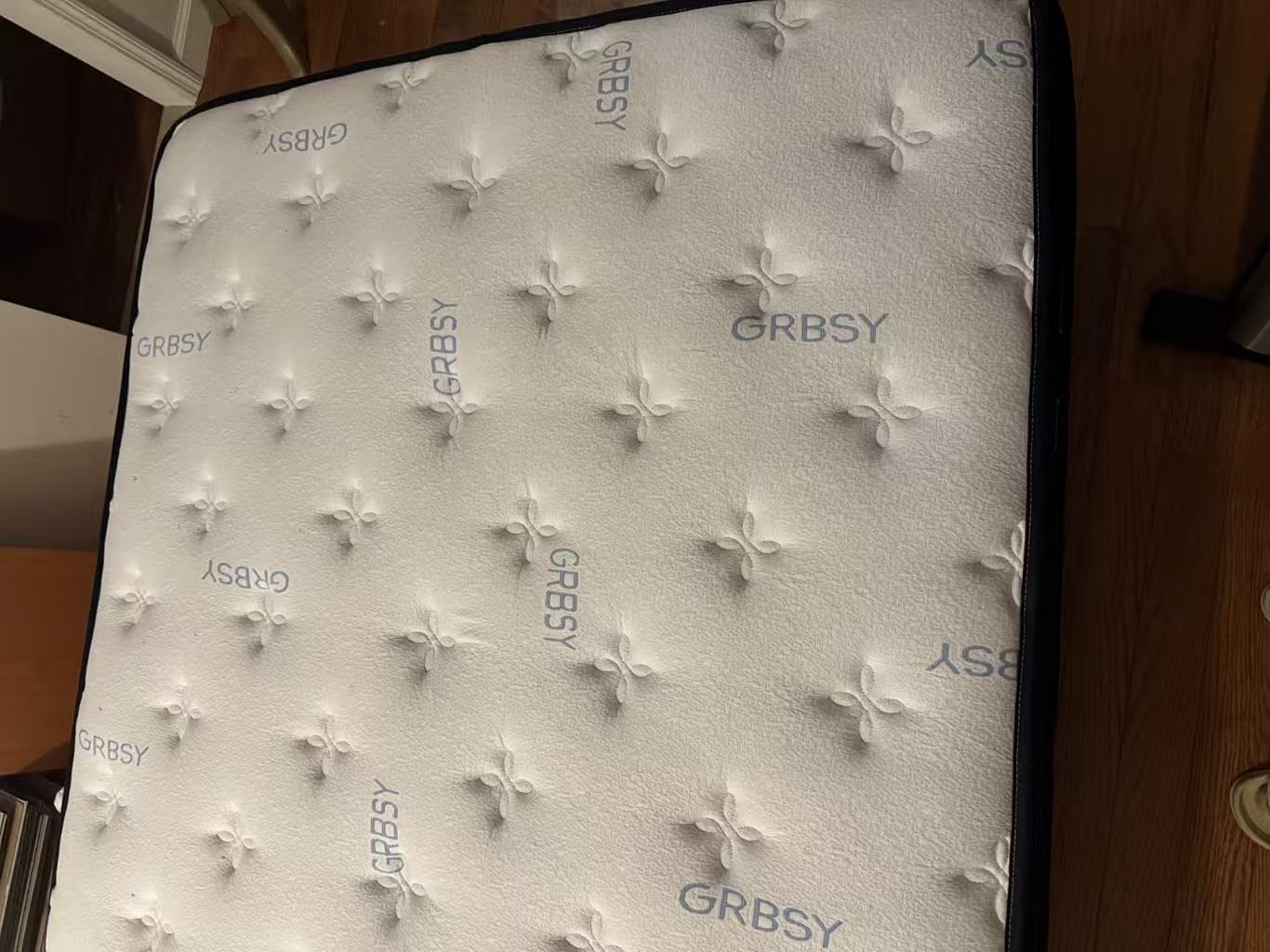
Cooling is handled at three levels: a breathable lyocell cover, gel-infused foam, and graphene foam. The copper ion infusion in the foam is aimed at odor and allergens, which is relevant if you notice your symptoms worsen in a bedroom that stays stuffy. Reinforced edge support with edge-responsive coils is designed to resist edge sag, so sitting on the side does not undo the zoning.
It is CertiPUR-US, OEKO-TEX and CFR1633 certified, completely fiberglass-free, and comes with a 365-night trial and 10-year warranty.
Who this mattress suits
People whose pain has a specific location. If you can point to the lower back or mid-back and say it is worse there and nowhere else, zoning is more useful than a uniformly plush or uniformly firm surface.
Couples and pet owners benefit from the coil count, and anyone who wakes up clammy will like the lyocell cover.
What to watch out for
The zoned foam and spring layout takes some time to adapt to, so judge it after a few weeks rather than the first night. The 14-inch profile needs deep-pocket sheets, and at 210 ratings the long-term feedback base is thinner than the picks above it.
11. Novilla 12 Inch Hybrid Mattress: the best for allergy and asthma sleepers
Novilla 12 Inch Queen Size Mattress, Hypoallergenic & Back Pain Relief, Hybrid Queen Mattresses in a Box with Smarts Coils, Fiberglass Free CertiPUR-US Certified Colchones No Box Spring Needed
12-inch hybrid
Medium-plush label
Hypoallergenic cover
Pocketed coils
Pros
- Supportive medium feel that is easy on joints
- Runs cooler than all-foam beds
- No odor reported
- Light at 52.6 pounds
- Usable reinforced edges
- One buyer with osteoarthritis reported back pain gone
Cons
- Runs firmer than the medium-plush label suggests
- Cover wrinkles and stays wrinkled
- Motion transfers across the bed
- Some units need up to 96 hours to expand
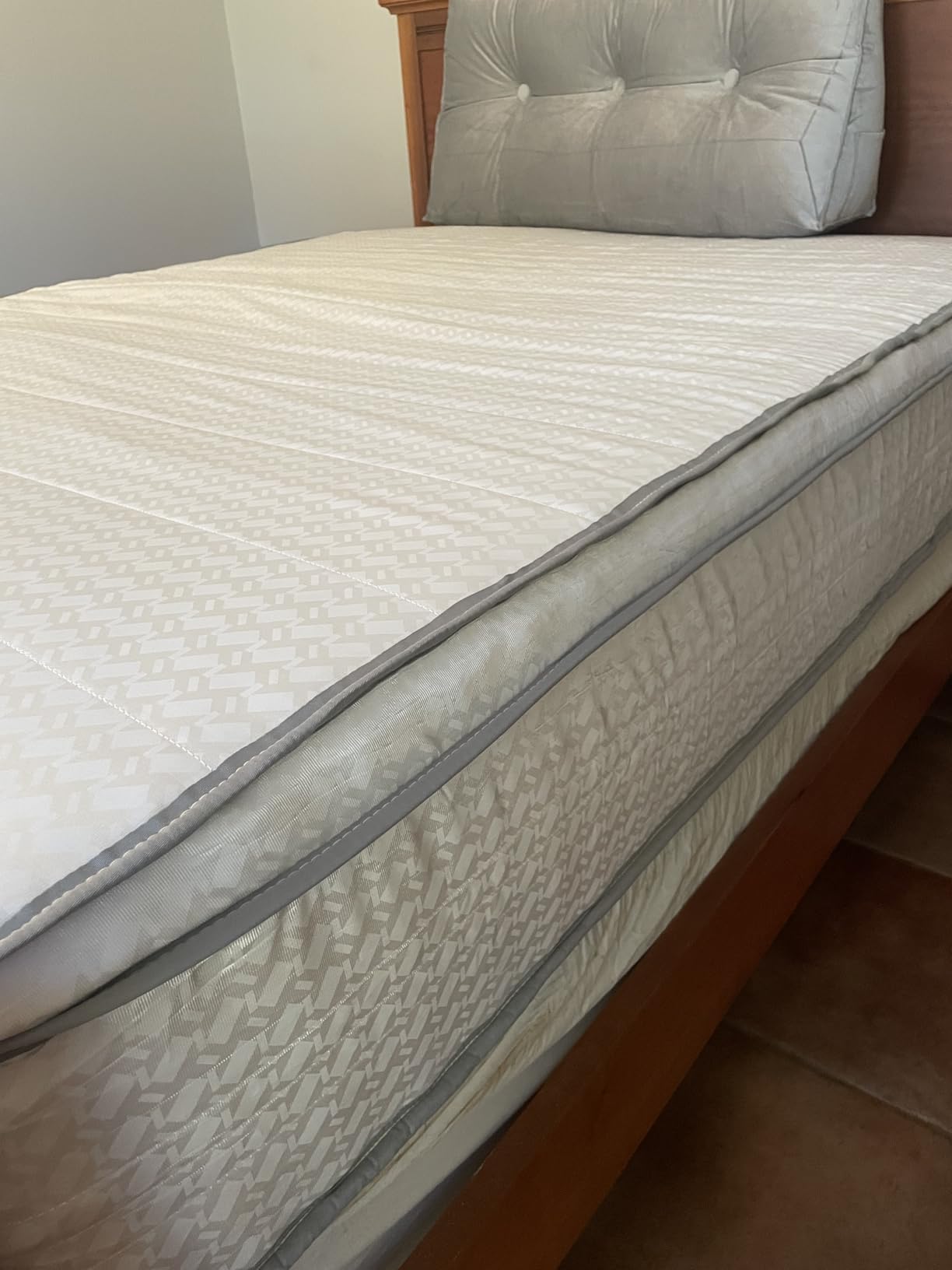
I am including this one despite it being the lowest rated in the roundup at 4.2, because it serves a group the others do not. If your back and hip symptoms feel worse in a warm, stuffy room, the AirBreeze cover is designed to wick moisture and dissipate body heat, and the hypoallergenic surface resists allergens rather than simply claiming to be breathable.
The SmartS pocketed coils pair with contouring foam for pressure point cradling, and the reinforced perimeter gives a stable sitting edge with less roll-off. Buyers describe the feel as supportive and comfortable rather than plush, easy on backs and joints, and one owner with osteoarthritis reported back pain essentially gone.
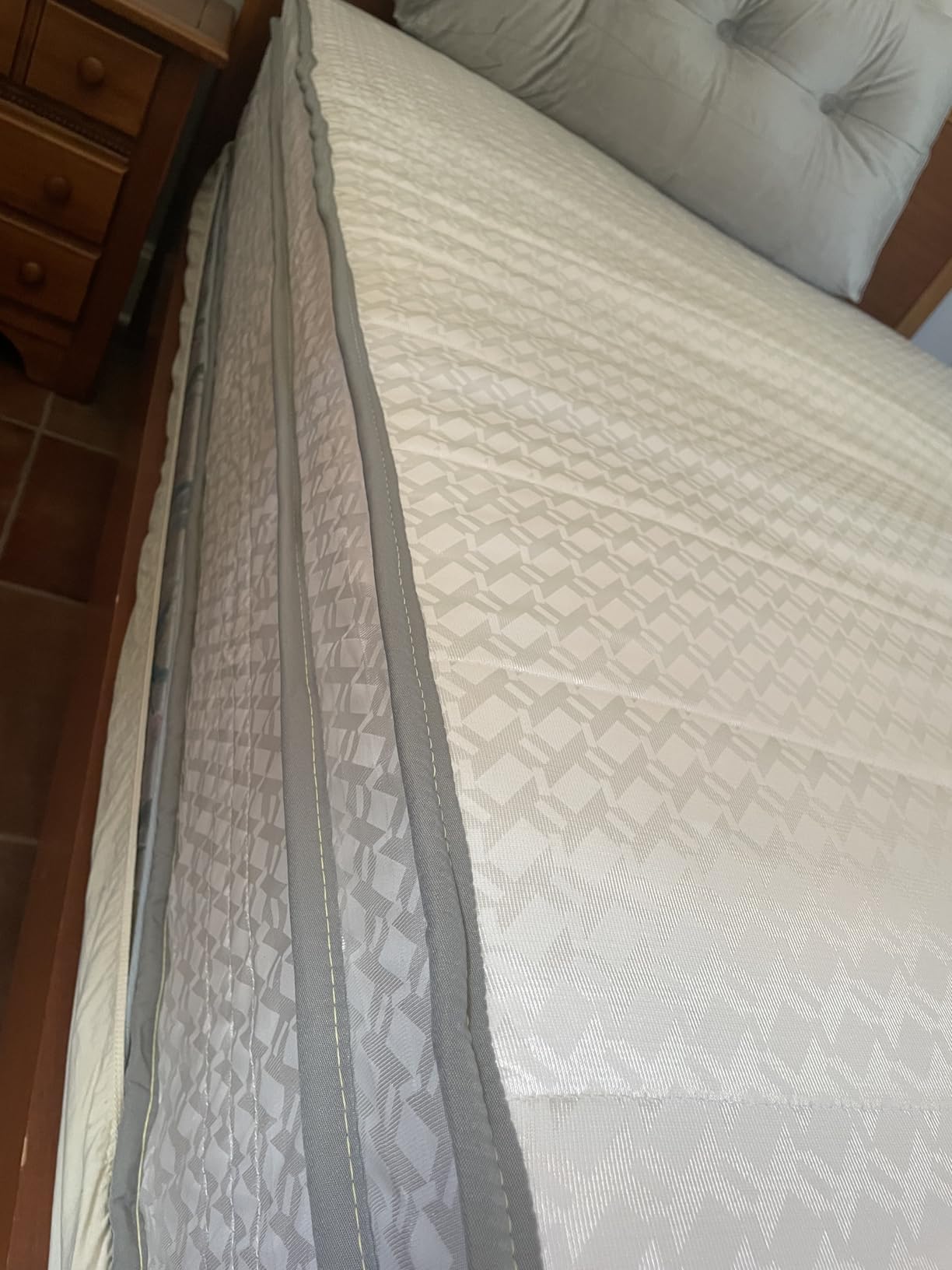
It is a light 52.6 pounds to set up, needs no box spring, and owners report no odor. The foam is CertiPUR-US certified with an OEKO-TEX cover and is fiberglass-free.
The listing is the 12-inch queen, and a firmer version of this build appears separately in this roundup if you need more lumbar push.
Who this mattress suits
Allergy and asthma sufferers, and anyone whose pain worsens with heat. It is also a good first hybrid for people who want coils and airflow without a large mattress to move, given the low weight.
Those who sit on the edge to get up will find the reinforced perimeter more useful than most foam beds in this price range.
What to watch out for
This is the least impressive part of the roundup on paper, and the reviews explain why. The cover wrinkles and stays wrinkled, motion transfers across the bed enough to be felt by a small pet, and some units take up to 96 hours to fully expand with corners still slumping. One reviewer also saw a slight middle dip within a month.
12. Avenco SyncDeep 12 Inch Firm Hybrid Mattress: the best for stomach sleepers
Avenco SyncDeep Queen Mattress 12 Inch, Firm Hybrid Cooling, Lumbar Support
12-inch hybrid
Firm
Zoned lumbar support
500 lb capacity
Pros
- Firm zoned lumbar support that back pain buyers feel
- No sinking at 185 pounds for a side sleeper
- Individually wrapped coils keep motion transfer low
- Reinforced edges hold when sitting
- No odor out of the box
Cons
- Firmness can read as hard for side sleepers wanting a softer top
- One reviewer found the edge squishy and the surface irregular
- Smaller review base at 233 ratings
Stomach sleeping is the position most likely to aggravate lower back pain, because your body’s weight pulls the spine into an extended curve for hours. If you sleep on your stomach and wake with back pain, the fix is a firm surface that stops the hip and ribcage from dropping. This is the firmest-feeling zoned build in the roundup, and it is the one I would point stomach sleepers toward.
The ergonomic zoned support system is designed to align the spine, and the pressure-relieving construction is aimed at back and stomach sleepers specifically. Buyers with morning back pain say the lumbar support is genuinely felt on lying down, and one side sleeper at 185 pounds reports no sinking with a firm but not hard feel. The listed capacity is 500 pounds.
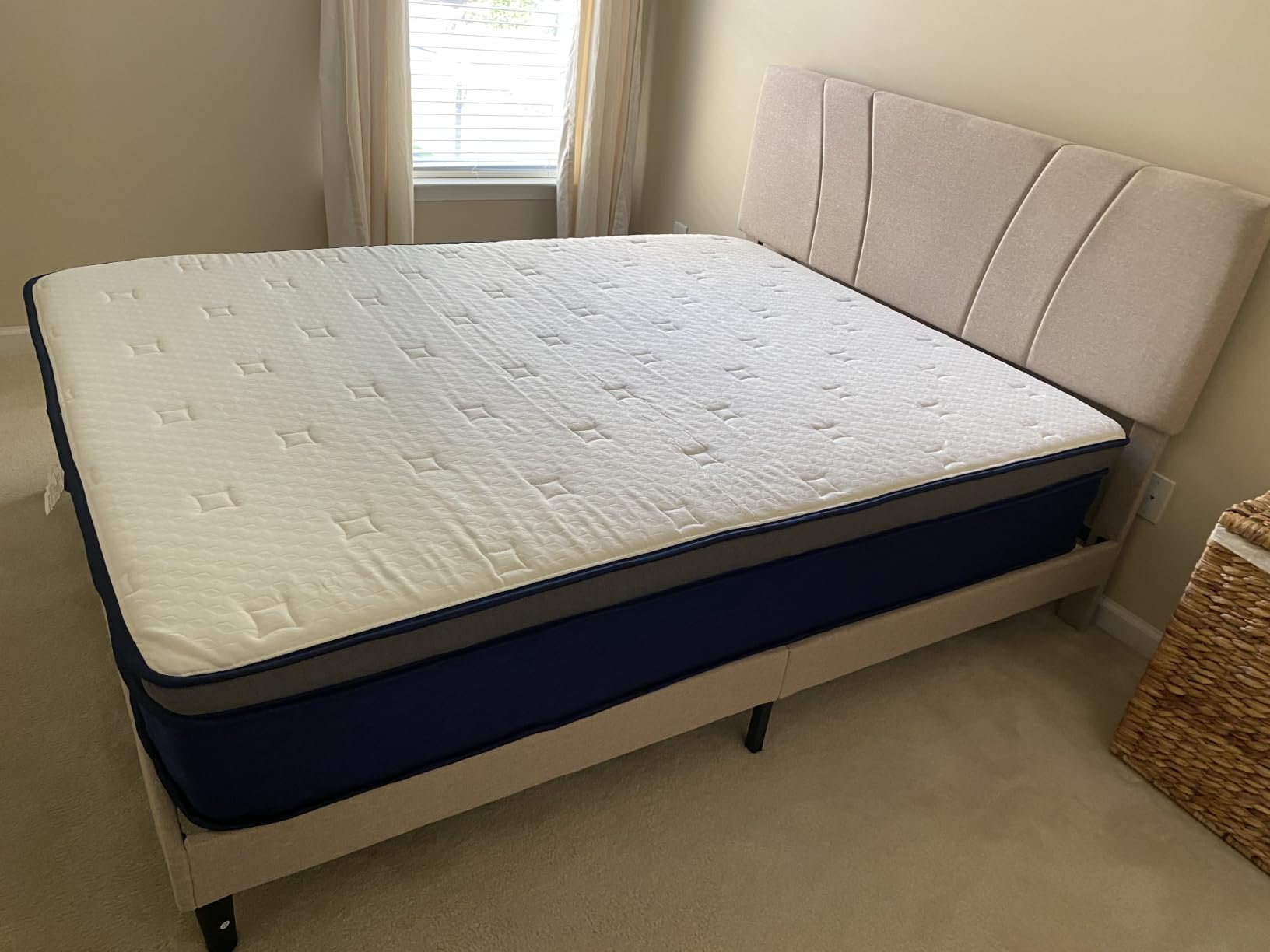
Reinforced perimeter support is built to prevent edge sagging and roll-off, which is where a firm hybrid often gives out first. The breathable knit fabric with moisture-dissipating gel foam and airflow pocket springs handles heat, and individually wrapped coils keep motion transfer low. It is CertiPUR-US and OEKO-TEX certified, 16 CFR Part 1633 compliant, and 100% fiberglass-free with a 100-night trial and 10-year protection.
Owners also mention no odor whatsoever out of the box, which matters more than it should when you are replacing a bed because of pain.
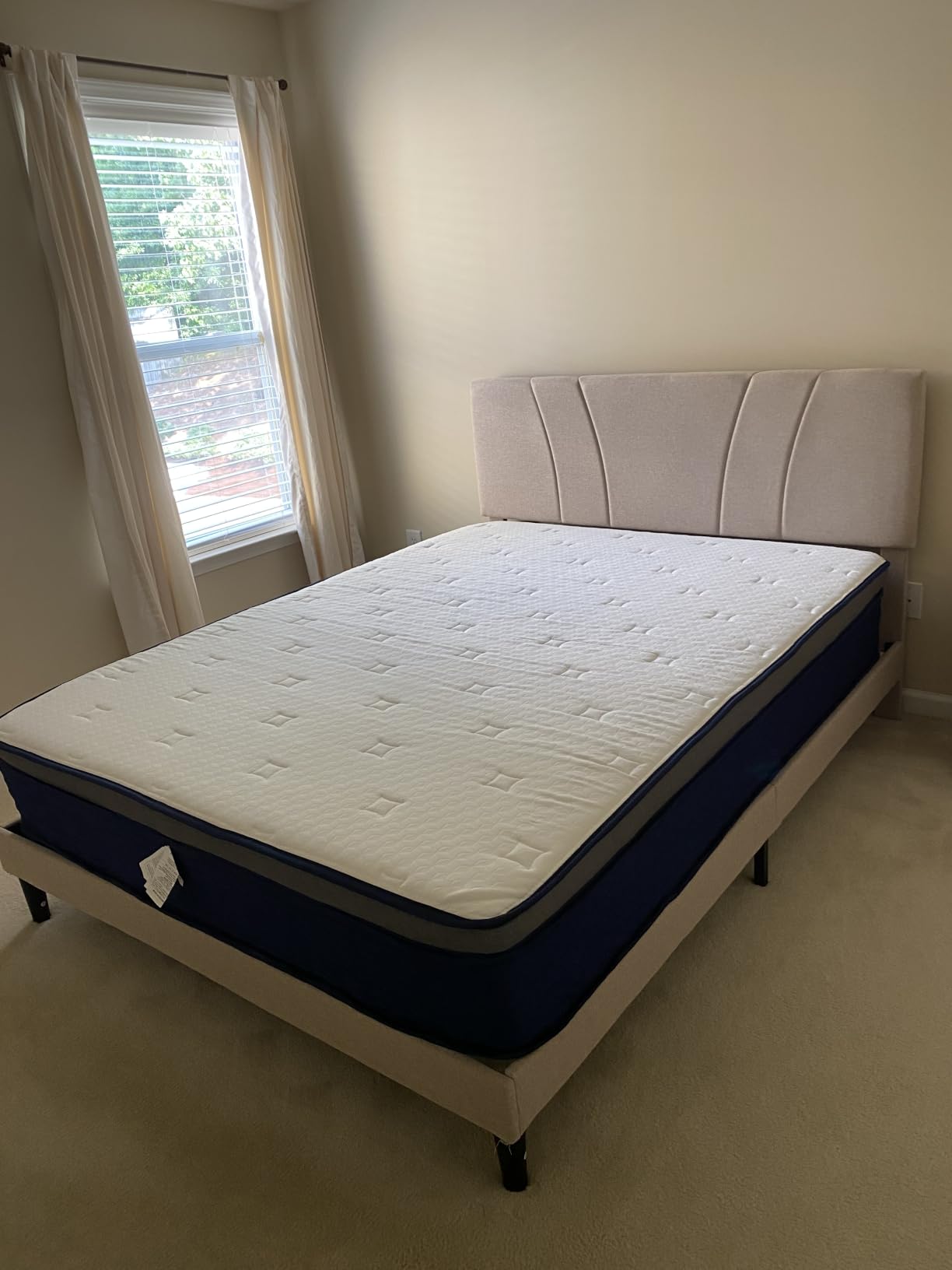
Who this mattress suits
Stomach sleepers, and back sleepers who want pronounced lumbar support rather than a gently moulding surface. Side sleepers in the middle weight range also do well on it, provided they want a firm rather than plush top layer.
It suits slatted bases and solid foundations, and works if you sit on the edge of the bed regularly.
What to watch out for
Firmness can read as hard for side sleepers who want a softer top layer, and one reviewer found the edge squishy with an irregular surface straight out of the box. At 233 ratings, the long-term record here is thinner than it should be for a brand-new model.
Mattresses to stay away from when you have back or hip problems
Just as useful as knowing what to buy is knowing what keeps showing up in complaints. Across the review data and the forum threads we read, these are the failure modes that generate new pain rather than relieving it.
Ultra-soft all-foam beds under about 10 inches. Side sleepers sink until the torso drops past the pelvis, bending the spine and loading the lower back all night. Plush describes the top layer, not the whole bed.
Worn or sagging mattresses of any kind. Once a comfort layer breaks down, the hip sinks into the support foam. Long-time owners on forums report foam separating within a year on some models, degrading the surface to something box-spring-like.
Traditional linked innerspring with no zoning. Sintered coils move as one system, so a partner rolling over sends a wave through the bed and can pull your spine out of position.
Thin 10-inch hybrids with only three layers. Shallow builds have no room for a transition layer, so you get either a hard coil or a sinking surface with nothing in between.
Anything with no trial period or a return policy that excludes opened mattresses. Pain-related purchases need at least a 100-night window, because your body may also need two months to adapt. Forum readers repeatedly report that a new mattress can make pain worse before it gets better.
That last point deserves emphasis. A mattress swap is not a like-for-like swap overnight. Users on r/Mattress and Mattress Underground describe a first month or two of feeling worse before the surface adapts to them, so a short return window is a poor choice for anyone buying specifically to fix pain.
How to choose a mattress for back and hip problems: a 7-step buying guide
Work through these in order. The order matters, because most people start at step four and end up buying a beautiful mattress that solves the wrong problem.
1. Identify where the pain actually is
Back pain, hip pain, or both changes the answer. Hip-dominant pain needs more compliance at the hip and less sink through the pelvis. Lower back pain needs a firmer lumbar zone. Pain in both usually means a zoned or layered medium-to-medium-firm build, which is the pattern most of this roundup shares.
2. Set a target firmness, not a feeling
Medium to medium-firm is the range most guidance points to. If you side sleep and your hip is the problem, err toward the softer end of medium. If you back sleep or stomach sleep, err toward the firmer end. Avoid both extremes: the softest beds and the hardest boards both create pressure or curvature problems.
3. Choose your construction
Hybrids with individually pocketed coils give you pressure relief from the foam layers and support from the coil core, and they resist the foam breakdown that ruins all-foam beds after a few years. All-foam is quieter and isolates motion better but needs a genuinely firm base. Latex and innerspring sit outside the scope of this roundup.
4. Check the body weight rating
Anything over 250 pounds should look for a coil-heavy hybrid with a high listed capacity rather than an all-foam model, because all-foam compresses under load and lets the hip drop. Under 130 pounds, you can go slightly softer than medium-firm without bottoming out.
5. Verify cooling, especially if you sweat
Chronic pain disrupts deep sleep and heat makes tossing worse. Look for a breathable cover such as lyocell, knit, or a fabric with graphene or copper infusion, gel-infused foam, and open coil airflow. If you already sleep hot, this is not a nice-to-have.
6. Confirm the trial length and warranty
Look for at least a 100-night trial, and note whether returns are allowed after the mattress has been opened and slept on. A 365-night trial is better still. A non-prorated warranty is worth more than a longer prorated one, because prorated warranties cut your coverage as the mattress ages.
7. Test the foundation before you blame the mattress
See the next section. This step eliminates more wasted purchases than anything else on the list.
If you also want a deeper look at one specific condition, our guides on mattresses for side sleepers with back problems and mattresses for joint problems break the recommendations down by position and by the joints involved.
Mattress firmness by sleeping position and body weight
This is the most searched question in the category, so here it is as a direct mapping rather than a vague instruction to buy medium-firm. Find your sleeping position and your weight range, then start from the firmness listed.
Side sleeping, under 130 pounds: medium, leaning plush. You need enough sink to unload the hip and shoulder without bottoming out.
Side sleeping, 130 to 250 pounds: medium to medium-firm. The single most common configuration in this roundup.
Side sleeping, over 250 pounds: medium-firm with a reinforced edge, or a firm hybrid with real contouring. Deep sink at this weight compresses the foam and distorts your alignment.
Back sleeping, under 130 pounds: medium to medium-firm with a lumbar zone. A light sleeper on a firm surface loses pressure relief at the hips.
Back sleeping, 130 to 250 pounds: medium-firm. The waist needs to stay lifted while the shoulder relaxes.
Back sleeping, over 250 pounds: firm hybrid with a strong coil core and high listed capacity. All-foam at this weight allows too much pelvic drop.
Stomach sleeping, any weight: firm. Stomach sleeping extends the spine, so a soft surface deepens the curve. This is the one position where soft is consistently the wrong answer.
Combination sleeping, any weight: medium-firm is the safe default, since it has to work in more than one position overnight.
Couples with different body types: medium-firm with individually pocketed coils. One partner gets pressure relief, the other gets a core that will not compress, and neither has to compromise on a split that creates a seam down the middle.
Adjustable base users should stay at medium-firm or firmer and check that the manufacturer lists adjustable base compatibility, because softer foams crease under articulation.
Before you buy: check the foundation, not just the mattress
Moderators on Mattress Underground and r/MattressMod repeatedly push back on the assumption that the mattress is the problem, and their advice is the single most practical thing in this whole guide. Before you spend anything, take your current mattress off the frame and put it on the floor for two nights. If the pain eases, your foundation is the culprit and you can fix it for a fraction of the cost.
The most common foundation problem is a slatted base with gaps wider than 3 inches. When slats are too far apart, the middle of the mattress dips between them and you get exactly the low back and hip pain you are trying to eliminate. Check the spacing, and if the gaps are wide, either add slats or replace the base.
Other things worth checking: an old box spring that has lost its shape and now creates a hammock effect under your new mattress, a frame with a sagging center rail, and a headboard or footboard that presses against the mattress edge and forces it out of alignment. None of these are visible until you look underneath.
Two more checks before you commit. If you sleep with a partner whose movement wakes you, that is a motion transfer problem and it is solved by pocketed coils or all-foam rather than by firmness. And if you already own a mattress you liked, returning to a familiar feel inside the return window is often the correct first move rather than trying something new.
Finally, a note for anyone reading this who also cares about how they get in and out of bed. Adjustable bases can genuinely help people with chronic pain by letting you sleep with the knees elevated, but the mattress has to be built for it. Our guide to adjustable mattresses for back problems covers the compatibility questions in more depth, and our mattress picks for seniors with back problems goes into setup and getting in and out safely.
Frequently Asked Questions
What is the best mattress for both back pain and hip pain?
A medium to medium-firm hybrid with zoned support is the most reliable all-round answer, because it lets the hip settle while the lumbar zone keeps the pelvis lifted. Add a cooling cover if you sleep hot, and confirm at least a 100-night trial so your body has time to adapt.
Is a harder or softer mattress better for hip pain?
Neither extreme. Your hip needs to sink enough to stop concentrating pressure on one bone, but the waist and pelvis need to stay lifted so the spine does not bend. That balance is medium to medium-firm. A very soft surface lets the torso drop past the pelvis and worsens lower back pain, while a very hard surface creates pressure points at the hip and shoulder.
What mattress should I stay away from if I have back and hip pain?
Avoid ultra-soft all-foam mattresses under about 10 inches, worn or sagging mattresses of any type, and traditional linked innerspring with no zoning, since a moving partner sends a wave through the surface. Also avoid anything without a genuine sleep trial, because a mattress swap can take two months before pain improves.
What mattress do orthopedic doctors and chiropractors recommend?
The most commonly cited guidance points to a medium to medium-firm surface that keeps the spine neutral while relieving pressure at the shoulders and hips. A widely cited survey found that around 95% of orthopedic surgeons believe mattress choice plays a role in managing lower back pain, and a 12-week study of medium-firm sleepers reported reduced pain and morning stiffness.
Why do my hips and lower back hurt when I wake up?
Most often the surface let your pelvis drop while the hip bone concentrated pressure into one spot, holding your spine in a bent position for hours. A worn mattress does this automatically as its comfort layer breaks down. A slatted base with gaps wider than 3 inches can cause the same result, so test your mattress on the floor for two nights before buying a new one.
How long does a new mattress take to help with back and hip pain?
Most owners report a change within two to four weeks, but the honest timeline is longer than that. Forum users regularly describe the first month as feeling worse before it improves as the foam adapts to the body. Give any new mattress at least 60 nights, and prefer a 100-night or 365-night trial so you are not deciding on night ten.
Conclusion: the best mattresses for back and hip problems in 2026
The Signature Design by Ashley 12 Inch King Memory Foam Mattress is our pick for the best mattresses for back and hip problems, because it is the only option here with a review base deep enough to prove that it still holds its shape after three to four years. A thick memory foam layer over a firm support base is exactly the layered structure that keeps the hip cushioned and the pelvis level, and it is listed as compatible with adjustable bases.
If you want more contouring and better cooling than that pick offers, the EGOHOME 14 Inch Memory Foam Mattress is the runner-up, with strong motion isolation and a cover designed to reduce heat retention. For a distinctly firm orthopedic surface, the BedStory 14 Inch Firm Hybrid Mattress has the coil count and airflow to keep a heavy sleeper level through the night.
Whichever you choose, test your foundation first, give the new bed a full 60 nights, and talk to a doctor if your pain radiates, numbs, or wakes you from sleep. The right mattress cannot fix everything, but it removes one of the few variables that make the pain worse every single night.