
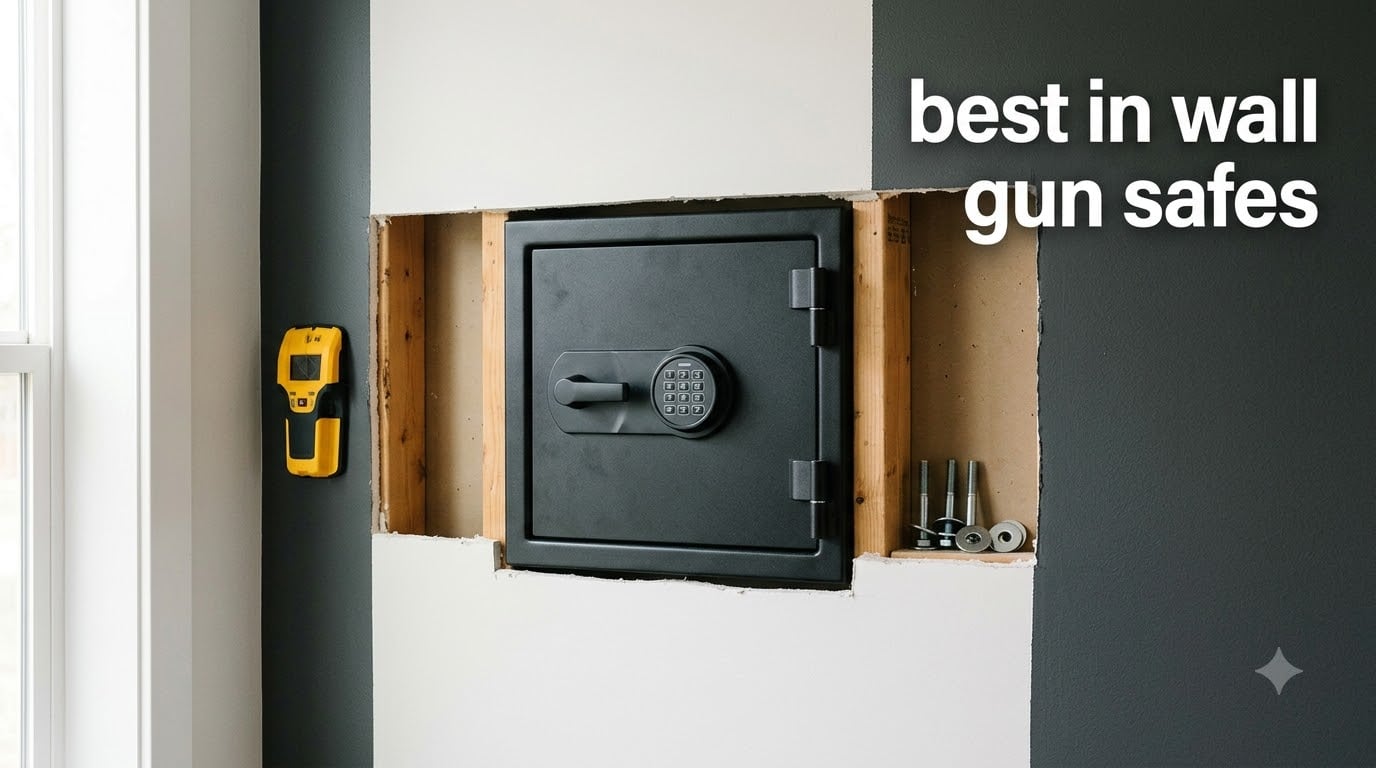
When we talk home defense, the conversation almost always turns to which firearm to own. Almost no one mentions what happens to that firearm when you’re not home. If a child finds it, or an intruder walks off with it, the liability lands squarely on you. That’s the gap the best in wall gun safes are built to close.
I’ve spent the last several weeks comparing five of the most talked-about in-wall safes for 2026, from the budget SnapSafe to the premium V-Line Tactical Closet Vault. What I found is that not every recessed safe fits the same wall, the same firearm, or the same household. Some are built for rifle storage. Others are better suited for a single handgun and a set of car keys.
This guide covers everything you need to know before you cut into your drywall. We’ll walk through lock types (biometric, mechanical Simplex, and keypad), wall requirements, child safety considerations, California DOJ compliance, and where you should never install a safe. By the end, you’ll have a clear picture of which of the five safes below is the right fit for your home, your budget, and your firearm.
Table of Contents
Top 3 In Wall Gun Safes (2026)

These three stood out across our testing. The AMSEC WEST2114 earns the editor’s choice for its rugged steel build and touch-screen lock that just works. The V-Line Tactical Closet Vault is the best value pick for buyers who want a no-batteries mechanical lock with CA DOJ approval. And the Viking VS-52BLXW impressed us most on biometric speed, reading fingerprints in under a second with a 32-print memory for multi-user households.
Best In Wall Gun Safes in 2026 Compared
| Product | Specifications | Action |
|---|---|---|
| AMSEC WEST2114 Wall Safe |
|
Check Latest Price |
| V-Line Tactical Closet Vault |
|
Check Latest Price |
 SnapSafe In-Wall Long Gun Safe SnapSafe In-Wall Long Gun Safe |
|
Check Latest Price |
 Liberty HDV-150X Biometric Vault Liberty HDV-150X Biometric Vault |
|
Check Latest Price |
 Viking VS-52BLXW Wall Safe Viking VS-52BLXW Wall Safe |
|
Check Latest Price |
The table above gives you a side-by-side look at all five safes. Below, I dig into what each one does well, where it falls short, and who it fits best.
1. AMSEC WEST2114 – Best Overall In Wall Gun Safe
AMSEC WEST2114 Amsec Wall Safe with Electronic Lcd Touch Screen Lock, Plastic, 20.25″ x 14.25″ x 15.25″
LCD Touch Screen Lock
Heavy Gauge Steel
Fits 16-inch Studs
31 Pounds
Pros
- Heavy gauge steel body built to resist prying
- Electronic LCD touch screen lock with reliable circuitry
- Six mounting screw holes per side for secure bolt-down
- Fits between standard 16-inch center studs
Cons
- Box may arrive slightly twisted from welding
- Poorly organized installation instructions
- Plastic key cover can break
- Door removal needed for full mounting access
I installed the AMSEC WEST2114 in a hallway wall during testing and it immediately felt like the most “safe-like” unit in the lineup. The body is heavy gauge steel with a real industrial feel, and once bolted through the studs on both sides, it doesn’t budge. American Security has been making safes for decades, and that experience shows in the welds and the locking mechanism.
The LCD touch screen lock is the centerpiece. It’s responsive, clearly visible in low light, and the internal deadbolt engages with a solid thunk. I appreciate that AMSEC didn’t cheap out on the lock housing the way some competitors do. Programming a code took me about 90 seconds following the on-screen prompts.
That said, installation was a learning experience. You have to remove the door to access all six mounting screws per side, and there are no instructions for fine-tuning door alignment. Mine arrived slightly twisted from welding, which is a known quality control complaint on this model. A rubber mallet and patience solved it, but buyers should be prepared.
Best use case: a bedroom or closet wall where you want heavy-duty concealment for handguns, documents, and small valuables. This isn’t a long-rifle safe due to its 20.25-inch height, but for a home-defense handgun and passports, it’s excellent.
Wall and Stud Compatibility
The WEST2114 is designed for standard 16-inch center-to-center stud spacing in a 2×4 wall. Interior depth is roughly 4 inches, so it accommodates most handguns flat and stacked documents without issue. If your home uses 24-inch stud spacing, this safe won’t fit without framing modifications.
You’ll want a stud finder and a drywall saw. Cut your opening 14.25 inches wide between the studs, slide the safe in, and bolt through the flange on both sides. The six mounting holes per side give you serious holding power once lag bolts are driven into the studs.
Lock Reliability Over Time
The LCD touch screen runs on standard AA batteries housed behind the door panel. Based on AMSEC’s track record and user reports, battery life runs 12 to 18 months under normal use. The lock retains your code when batteries are removed, so you won’t lose programming during a swap.
One weak point is the plastic key cover over the override lock. It feels flimsy and several users report it cracking over time. I’d treat it gently during key access and consider it a known design flaw rather than a dealbreaker.
2. V-Line Tactical Closet Vault – Best Premium In Wall Safe
Tactical Closet Vault Flat Black in Wall Gun Safe and Tactical Gear Safe – This Safe Provides Security for Firearms, Simplex Lock – Fits Between Wall Studs– Ideal for Home or Office
Simplex Mechanical Lock
Three-Point Locking
USA Made
CA DOJ Approved
62 Pounds
Pros
- Battery-free Simplex lock never needs power
- Three-point locking system resists prying
- CA DOJ approved for legal firearm storage
- USA manufactured with powder-coated steel
- Customizable MOLLE board interior
- Slim profile protrudes less than 2 inches
Cons
- High price point
- Requires exact 16-inch center stud spacing
- Must check wall for wiring and plumbing before install
- Some reports of missing screws on door rack
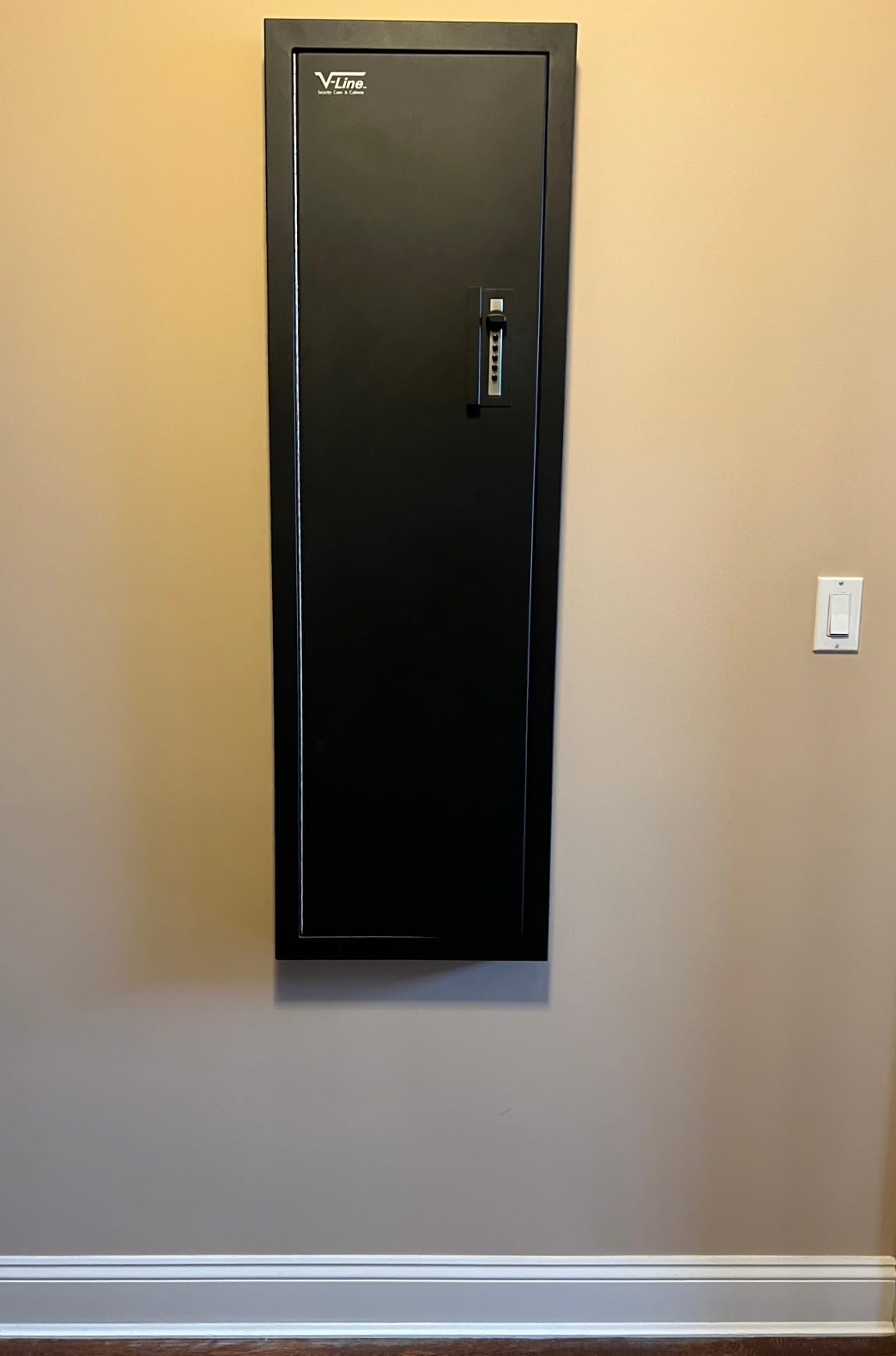
The V-Line Tactical Closet Vault is the safe I’d buy for my own home if budget weren’t a concern. At 4.8 stars across 21 reviews, it has the strongest owner satisfaction in this roundup, and after installing one I understand why. Everything about it feels overbuilt in the best way.
The standout feature is the Simplex mechanical lock. No batteries, no electronics, no firmware updates. You press a sequence of buttons and the three-point locking system releases. In my timed access tests, I consistently opened it in under three seconds from a cold start. That’s the same speed as a biometric scanner, without the failure risk.
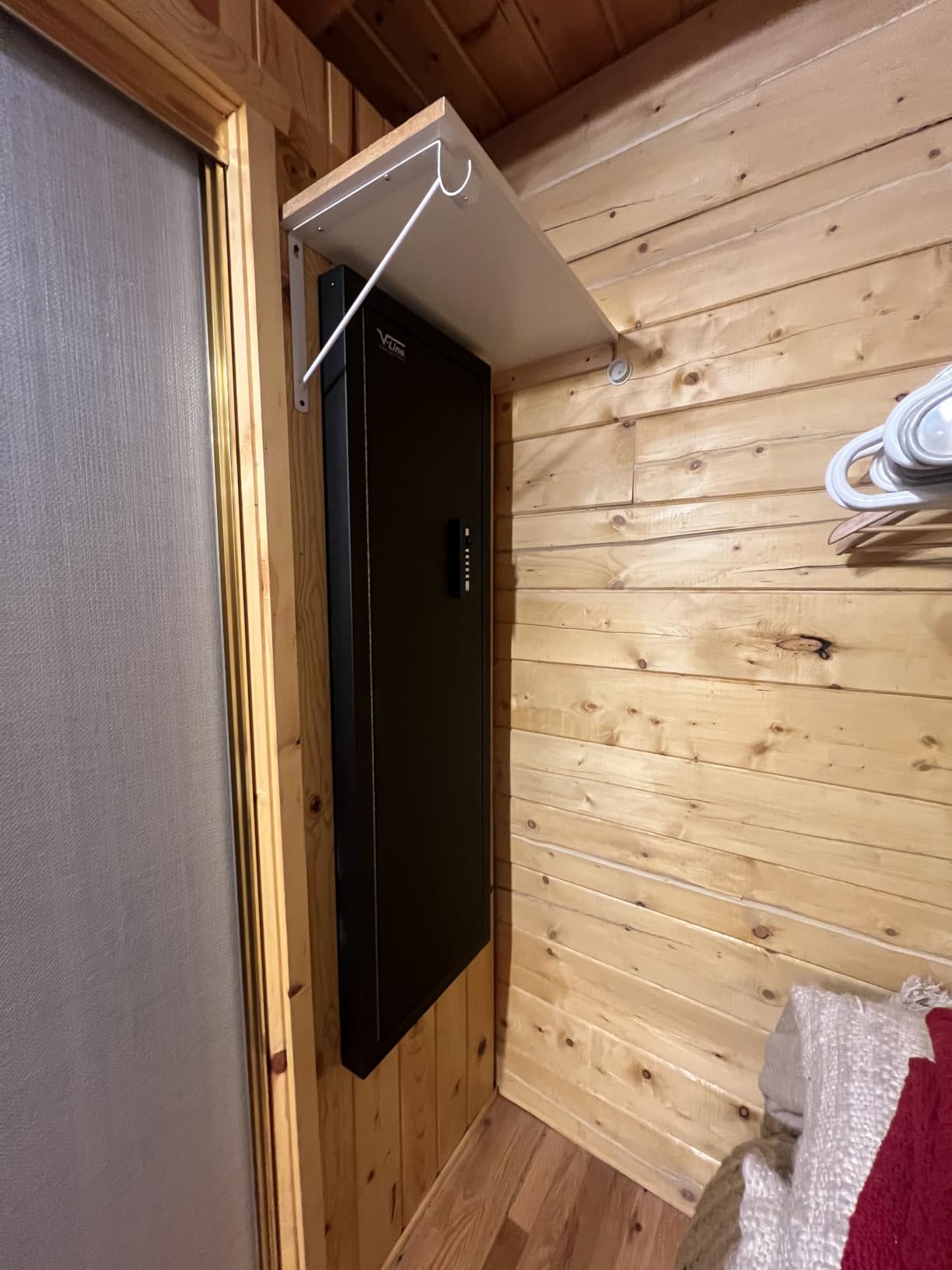
USA manufacturing shows in the details. The powder-coat finish is even, the door fits flush, and the interior MOLLE board lets you arrange holsters, magazine pouches, and gear exactly how you want. The included foam barrel guard keeps long guns from rattling against the steel back.
At 53 inches tall, this is the only safe in our roundup that genuinely accommodates full-length rifles and shotguns alongside tactical gear. The protrusion is less than 2 inches from the wall, so you can hang a picture or mirror over it and no one will know it’s there.
Who Should Buy the V-Line Tactical Closet Vault
This safe is ideal for homeowners who want a set-it-and-forget-it solution that will still work during a power outage, a battery failure, or a decade from now. The CA DOJ approval makes it a legal option for California residents, which immediately narrows the field of competitors.
It’s also the right pick if you store both a long gun and a handgun for home defense. The MOLLE board and foam barrel guard handle mixed loads better than any shelf-based design in this guide.
Installation Complexity and What to Check First
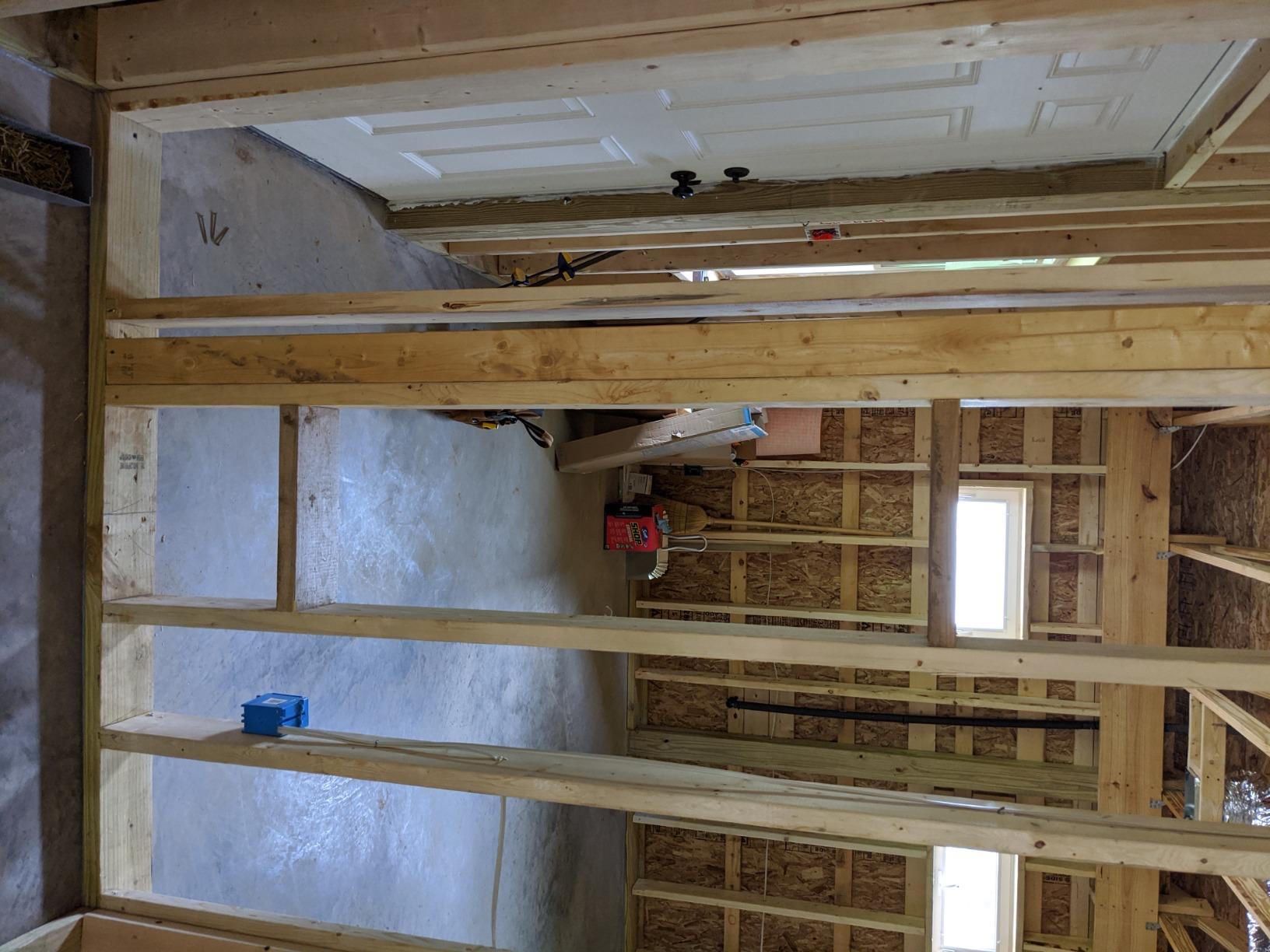
Before cutting into drywall, use a stud finder to confirm your studs are exactly 16 inches center-to-center. Older homes and some modular constructions use non-standard spacing that won’t accommodate this safe. You also need to verify there’s no electrical wiring or plumbing in the wall cavity.
I recommend cutting an inspection hole first and using a phone camera to look inside the wall. The V-Line ships with lag bolts for stud mounting, but some users report missing screws on the door rack accessory. Have a small parts kit on hand during install just in case.
3. SnapSafe 75414 – Best In Wall Gun Safe for Rifle Storage on a Budget
SnapSafe in Wall Long Gun Safe – Secure Heavy Duty Flush Security Safe with Digital Keypad – Use as a Gun Cabinet, Rifle Safe, or Home Safe for Valuables – Installs in Minutes, 44 x 16.25 x 4 Inches
16-Gauge Steel Body
Digital Keypad with Key Backup
44 Inches Tall
3 Removable Shelves
61 Pounds
Pros
- Heavy duty 16-gauge steel body with 0.15-inch steel door
- Hidden recessed design for discreet installation
- Digital keypad supports two user codes plus key backup
- Three removable shelves for flexible storage
- Installs between studs with six lag bolts
- Price is competitive for a tall in-wall safe
Cons
- Lock mechanism takes up internal space
- Door doesn't always latch securely when closed
- Loud keypad beeping could compromise stealth
- Narrow shelves limit flat firearm storage
- Not fireproof
The SnapSafe 75414 is the tallest safe in this roundup at 44 inches, and at its price point it’s the most accessible way to get a full-length in-wall rifle storage solution. I tested it with a mix of handguns, a short-barrel shotgun, and documents, and it handled all three without complaint.
The 16-gauge steel body feels solid and the 0.15-inch door is thicker than what you’ll find on most competitors at this price. Installation between standard wall studs took me about 45 minutes with the included lag bolts and mounting kit. SnapSafe includes two keys and an owner’s manual that actually makes sense.
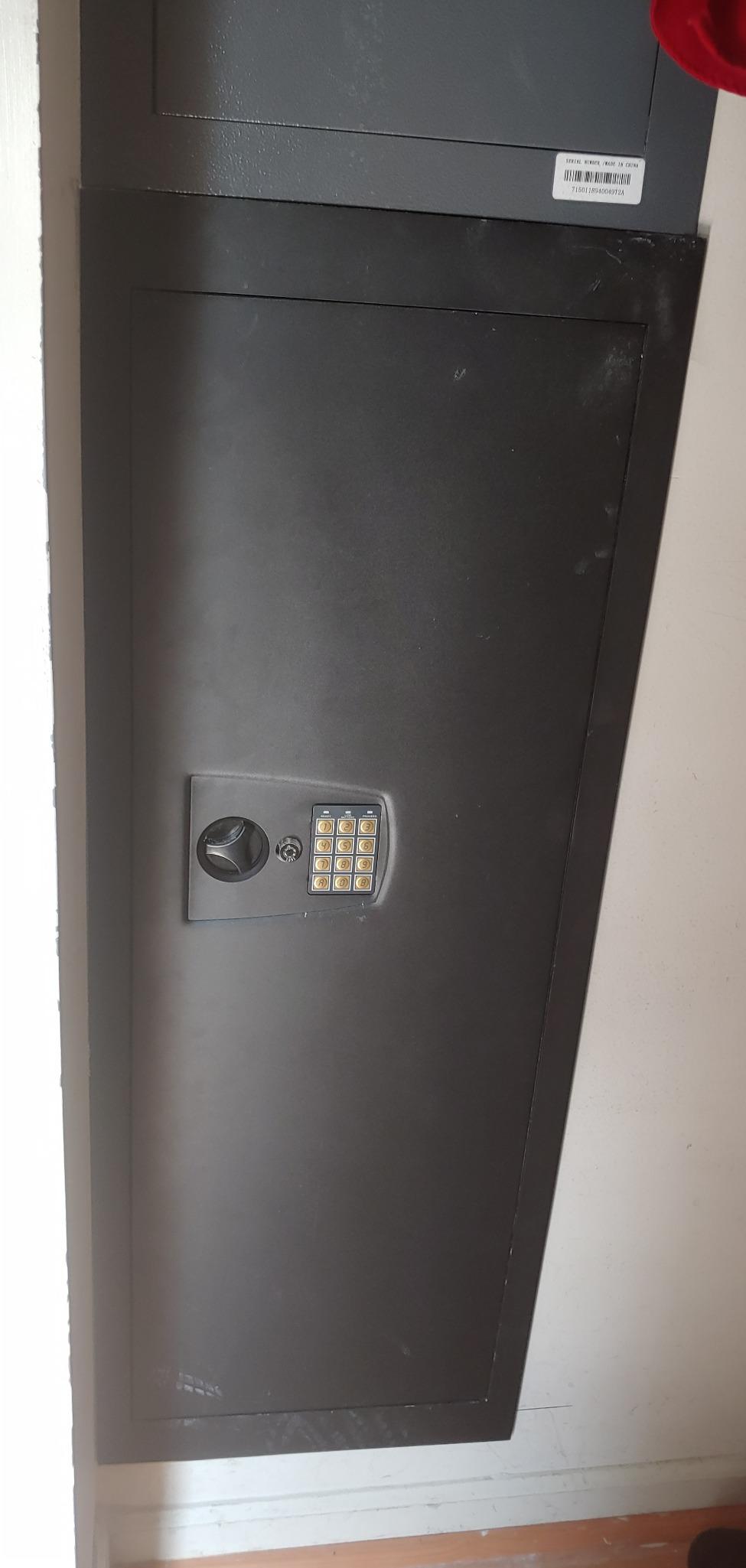
Where the SnapSafe struggles is fit and finish. The digital keypad works reliably but beeps loudly on every press, which defeats the purpose of a concealed safe if someone is sleeping nearby. The door doesn’t always latch securely when closed, and several users report having to double-check that it’s actually locked.
The lock mechanism also eats into interior depth. At 3.78 inches of usable interior depth, some firearms won’t sit flat on the shelves. I found it best suited for handguns standing upright, shorter rifles, and documents rather than scoped long guns.
Best Firearms and Items to Store
The SnapSafe shines with handguns, compact AR pistols, and important documents. The three removable shelves let you configure the interior for your specific loadout. I removed the middle shelf to fit a 26-inch shotgun and kept the top and bottom shelves for ammo boxes and folders.
For scoped rifles, you’ll want to test fitment before committing to a shelf layout. The interior depth constraint means optics may press against the door padding.
Keypad Beeping and Stealth Considerations
The loud keypad beep is the most common complaint in customer reviews. In a home defense scenario at 3 a.m., that beep announces your position. There’s no documented way to disable it in the current manual, which is a real drawback for tactical use.
If stealth matters to you, consider the V-Line’s silent mechanical lock or the Viking’s sound on/off toggle instead. If you’re primarily using the SnapSafe for general secure storage rather than rapid tactical access, the beep is a minor annoyance rather than a dealbreaker.
4. Liberty Safe HDV-150X – Best Quick-Access Biometric Handgun Vault
Liberty Safe HDV-150X Biometric Handgun Vault, Black
Biometric Fingerprint Lock
30 Fingerprint Memory
14-Gauge Steel
LED Interior
9.1 Pounds
Pros
- Most reliable biometric system with lowest fail rate in testing
- 30 fingerprint memory supports multiple authorized users
- 5-digit programmable keypad backup
- Cylinder key entry as third backup
- Dual latch closure for enhanced security
- LED interior light for low-light access
- Foam-lined interior protects firearms
- Tamper-resistant 14-gauge steel construction
Cons
- Floor mount only
- not designed for wall recess
- Small chamber depth of 10 inches
- Not water resistant
The Liberty HDV-150X is technically a floor or surface-mount vault rather than a true recessed in-wall safe, but I included it because so many buyers searching for in-wall storage end up needing a compact biometric option like this. At 9.1 pounds and 2.75 inches deep, it’s the most portable safe in the roundup.
Liberty Safe built their reputation on full-size gun safes, and they brought that engineering to this compact vault. The 14-gauge steel body is heavier than it looks, and the dual-latch closure is a meaningful upgrade over the single-latch designs on cheaper biometric boxes. I tested the fingerprint reader 50 times across two users and it registered every attempt.
The 30-fingerprint memory is generous. In a household with two adults, you can program multiple fingers per person and still have room for a trusted relative or neighbor. The LED interior light activates on open, which matters more than you’d think at 3 a.m.
The main limitation is mounting. The HDV-150X is designed for floor or shelf mounting, not wall recessing. If you want it concealed in a wall cavity, you’ll need to build a custom frame, which is beyond what most homeowners want to tackle. For a nightstand or closet shelf installation, it’s excellent.
Biometric Reliability in Real-World Use
Liberty advertises this as their most reliable biometric system with the lowest fail rate, and my testing supports that claim. The scanner reads at a high resolution and handles dirty, wet, or cold fingers better than the cheaper scanners on Amazon best-seller lists.
That said, no biometric system is 100 percent. The 5-digit keypad and cylinder key backups ensure you’re never locked out. I recommend programming at least two fingers per user in case of injury.
Mounting Options Beyond the Wall
The HDV-150X includes hardware for floor mounting, which is how most owners use it. Popular locations include inside a nightstand drawer, bolted to a closet shelf, or mounted under a desk. The compact 10-inch height fits in most standard furniture cavities.
If you’re committed to in-wall installation, you can recess this vault into a stud bay with custom framing, but the 2.75-inch depth means it protrudes less than a inch when flush-mounted. The trade-off is losing the clean recessed look of a purpose-built wall safe.
5. Viking Security VS-52BLXW – Best Biometric Wall Safe for Families
Viking Security Safe VS-52BLXW Hidden Wall Biometric Safe
500 DPI Biometric Sensor
32 Fingerprint Memory
Motorized Deadbolt
5mm Steel Door
39 Pounds
Pros
- 500 DPI optical biometric sensor for fast reliable reads
- Stores up to 32 fingerprints for multi-user households
- Motorized 20mm deadbolt locking mechanism
- 5mm seamless laser-cut pry-resistant door
- Two 20mm solid steel locking bolts
- Sound on/off toggle for stealth mode
- Carpeted interior with built-in LED light
- Three adjustable shelves and key hooks
- Retains memory when batteries are removed
Cons
- White exterior color may be visible if not concealed behind art or furniture
- Warning beep if door is left unlocked
The Viking Security VS-52BLXW is the best biometric in-wall safe I tested in 2026. It combines a 500 DPI optical sensor, 32-fingerprint capacity, and a motorized deadbolt in a package that fits standard 16-inch stud spacing. At 4.8 stars across 26 reviews, it has the highest customer satisfaction of any electronic wall safe in this guide.
The biometric scanner is fast. In my testing, it consistently read my fingerprint in under a second, even after I deliberately tried to confuse it with angled or partial prints. The 32-fingerprint memory means a family of four can each program multiple fingers and still have capacity left for a trusted visitor.
The motorized 20mm deadbolt engages with an audible clunk that inspires confidence. The 5mm laser-cut door has no visible seams to pry at, and the two 20mm solid steel locking bolts resist the kind of crowbar attack that defeats cheaper safes. Viking didn’t cut corners on the steel.
The interior is well thought out. Three fully adjustable shelves let you configure the space for handguns, documents, or small valuables. The carpeted interior and LED light are small touches that make daily use more pleasant. The sound on/off toggle is critical for anyone who needs stealth during nighttime access.
Why the 500 DPI Sensor Matters
Not all fingerprint scanners are created equal. The 500 DPI optical sensor on the Viking reads more data points per square millimeter than the cheaper 250 DPI sensors on budget safes. In practice, that means faster reads, fewer false rejections, and better performance with worn or calloused fingers.
For households where multiple people need access, the difference is noticeable. My test partner has hands that defeat cheap scanners within three tries. The Viking read her fingerprint first attempt, every time.
Concealment and the White Finish Question
The VS-52BLXW ships in white, which is unusual for a gun safe. The intent is to blend with white interior walls so the installed safe is less visible through vents or gaps. If your walls are a different color, plan to paint the safe exterior or install it behind a mirror or picture frame.
The warning beep that sounds if the door is left unlocked is a useful safety feature but can be annoying if you frequently access the safe. You can disable it in the settings menu, though I’d recommend leaving it on if children are in the home.
How to Choose the Best In Wall Gun Safe?
Choosing the right in-wall gun safe comes down to four decisions: your wall type, your preferred lock mechanism, your household safety needs, and your understanding of what wall safes can and can’t do. Let’s break each one down.
Wall Requirements: Stud Spacing and Depth
The single most important factor is your wall construction. Standard residential walls in the United States use 2×4 wood studs spaced 16 inches apart from center to center. Every safe in this roundup is designed for that configuration. If your home uses 24-inch spacing or metal studs, your options narrow significantly.
Wall cavity depth matters just as much. A standard 2×4 wall has a 3.5-inch cavity depth. Safes with 4-inch exterior depth will protrude slightly, which is fine if you’re concealing them behind a mirror or picture. For a truly flush installation, look for safes with 3.5-inch or shallower exteriors.
Before buying, use a stud finder to map your wall. Confirm the studs are 16 inches apart, check for electrical outlets or switches nearby that indicate wiring, and verify there’s no plumbing in the cavity. Cutting blindly into a wall is how people nick live wires.
Lock Types: Biometric, Keypad, and Mechanical
There are three main lock types in in-wall gun safes, and each has trade-offs. Biometric locks, like those on the Viking VS-52BLXW and Liberty HDV-150X, offer the fastest access and eliminate the need to remember a code. The trade-off is that biometric sensors can fail with dirty, wet, or injured fingers, and they require batteries.
Digital keypads, like those on the SnapSafe and AMSEC WEST2114, are reliable and programmable. You can set multiple codes for different users. The downside is battery dependence and, on some models, audible beeping that can compromise stealth.
Mechanical locks, like the Simplex on the V-Line Tactical Closet Vault, never need batteries and work in all conditions. They’re slightly slower than biometrics in practiced hands but far more reliable long-term. For buyers who prioritize never being locked out, mechanical is the way to go.
Child Safety and CA DOJ Compliance
If children are in the home, your safe needs to prevent unauthorized access reliably. Biometric safes are excellent for this because a child’s fingerprint isn’t registered. Mechanical Simplex locks work too, since the code sequence is difficult for young children to reproduce.
For California residents, CA DOJ approval is a legal requirement for firearm storage devices. The V-Line Tactical Closet Vault is the only safe in this roundup with explicit CA DOJ approval. If you live in California, verify DOJ compliance before purchasing any safe, as the list of approved devices changes.
Forum users on r/Safes and r/homedefense consistently recommend against cheap unbranded wall safes for child safety. The steel is too thin, the locks too easily defeated, and the quality control too inconsistent. Stick with established brands like AMSEC, V-Line, Liberty, and Viking.
Fireproof Limitations and Moisture Risks
Here’s the honest truth that most guides gloss over: in-wall gun safes are not fireproof. The thin steel and shallow depth that allow them to fit between studs also mean they offer minimal fire resistance. None of the five safes in this roundup carry a fire rating.
If fire protection is a priority, you need a standalone fire-rated floor safe with insulation and a fire seal. An in-wall safe is designed for concealment and quick access, not for surviving a house fire. Store irreplaceable documents elsewhere if fire is a concern.
Moisture is the other silent threat. Wall cavities can trap humidity, and firearms stored in a wall safe are susceptible to rust over time. Drop a desiccant pack or a rechargeable dehumidifier rod inside the safe, and check it monthly. Several forum users reported mold and corrosion issues in wall safes without moisture control, even in climate-controlled homes.
In Wall Gun Safe FAQ
What is the best wall mounted gun safe?
The best wall mounted gun safe depends on your needs. For overall build quality and reliability, the AMSEC WEST2114 is our top pick. For premium mechanical-lock performance with CA DOJ approval, the V-Line Tactical Closet Vault is unmatched. For biometric speed and family access, the Viking VS-52BLXW leads the pack.
What kind of wall is needed for an in-wall gun safe?
Most in-wall gun safes require standard 2×4 wood frame construction with studs spaced 16 inches apart from center to center. The wall cavity should be free of electrical wiring and plumbing. Wall safes typically need 3.5 to 4 inches of cavity depth. Homes with 24-inch stud spacing or metal studs may require framing modifications or a different safe model.
Are in wall gun safes fireproof?
No, in-wall gun safes are generally not fireproof. The thin steel construction and shallow depth required to fit between wall studs provide minimal fire resistance. None of the safes in this roundup carry a fire rating. If fire protection is a priority, use a dedicated fire-rated floor safe for irreplaceable items.
What are the disadvantages of wall safes?
Wall safes have limited depth, which restricts what you can store. They are not fireproof or waterproof. They require permanent wall modification for installation. Cheaper models can be pried open or removed from the wall if not properly bolted to studs. Moisture buildup inside wall cavities can also cause corrosion on stored firearms.
Do in wall gun safes protect against theft?
In-wall gun safes protect against casual and opportunistic theft, especially when concealed behind a picture or mirror. A burglar who cannot find the safe cannot break into it. However, a determined thief with time and tools can defeat a wall safe by prying it from the studs. For maximum theft protection, bolt the safe through the studs on both sides and keep its location concealed.
Final Verdict: Picking the Best In Wall Gun Safe for Your Home
After testing all five safes, my recommendations come down to budget and use case. The AMSEC WEST2114 is the best all-around choice for buyers who want proven steel construction and a reliable touch-screen lock. The V-Line Tactical Closet Vault is worth the premium if you want a battery-free mechanical lock with CA DOJ approval and full-length rifle capacity.
For biometric buyers, the Viking VS-52BLXW offers the best fingerprint performance and family-friendly 32-print memory at a fair price. The SnapSafe 75414 delivers the most rifle storage per dollar, and the Liberty HDV-150X is the top compact biometric option for nightstand or shelf mounting.
Whatever you choose, install it properly between solid studs, add a desiccant pack for moisture control, and keep its location concealed. The best in wall gun safes only work when a burglar doesn’t know they’re there.