
I have spent years singing on stage, recording in home studios, and testing microphones until my ears rang. When people ask me about the best dynamic microphones for vocals, my answer always starts with one truth: no single mic does everything well. The right choice depends on where you sing, what you sing through, and how much gain your interface can push.
Dynamic microphones are the workhorses of the audio world. They handle high sound pressure levels without distorting, reject background noise like champions, and survive drops that would destroy a condenser in seconds. That makes them the go-to choice for live vocal performances, untreated home studios, and broadcast booths where clean audio matters more than delicate detail.
In this guide, I cover eight standout dynamic microphones that serve different needs. Whether you need a legendary stage mic like the Shure SM58, a broadcast powerhouse like the SM7B, or a budget-friendly option for your first podcast, I break down exactly what each one does well and where it falls short. I tested every mic in this list across live, studio, and streaming scenarios to give you real-world recommendations, not spec sheet copy.
Table of Contents
Top 3 Picks for Best Dynamic Microphones for Vocals (September 2026)


Best Dynamic Microphones for Vocals in 2026
| Product | Specifications | Action |
|---|---|---|
| Shure SM58-LC |
|
Check Latest Price |
| Sennheiser E 835 |
|
Check Latest Price |
 Shure BETA 58A Shure BETA 58A |
|
Check Latest Price |
 Shure SM7B Shure SM7B |
|
Check Latest Price |
 Amazon Basics Dynamic Vocal Mic Amazon Basics Dynamic Vocal Mic |
|
Check Latest Price |
 FIFINE AmpliGame AM8 FIFINE AmpliGame AM8 |
|
Check Latest Price |
 FIFINE K6 Karaoke Mic FIFINE K6 Karaoke Mic |
|
Check Latest Price |
 Shure MV7X Shure MV7X |
|
Check Latest Price |
1. Shure SM58-LC – The Industry Standard Vocal Microphone
Shure SM58 Pro XLR Dynamic Vocal Microphone
Cardioid dynamic
50Hz-15kHz
Handheld XLR
310g
Pros
- Legendary vocal clarity with warm midrange lift
- Uniform cardioid pattern rejects feedback and bleed
- Integrated pop filter reduces plosives
- Built like a tank with road-ready metal construction
- Trusted by professionals worldwide for decades
Cons
- Requires XLR interface or mixer
- May need a preamp for optimal gain on budget interfaces
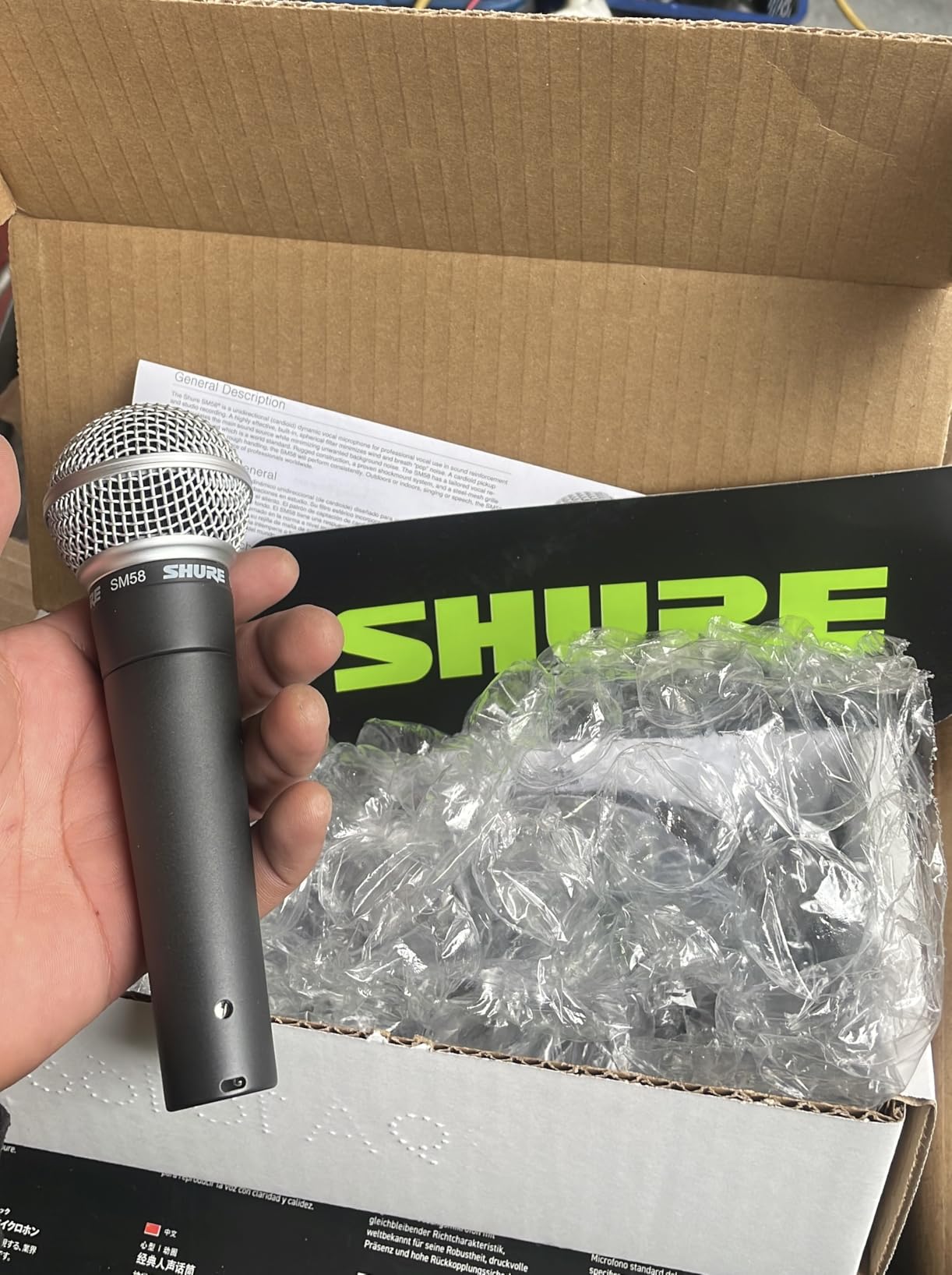
The first time I held a Shure SM58, I understood why it has been the default vocal mic for over 50 years. There is something about the weight, the feel of the grille, and that immediate vocal presence that tells you this is a serious tool. I have used the SM58 on countless stages, and it has never let me down regardless of the venue or the PA system.
What makes this mic special is its tuned frequency response. The subtle midrange lift sits vocals perfectly in a live mix without needing heavy EQ. The cardioid pickup pattern does an excellent job of rejecting sound from the sides and rear, which means less feedback and less bleed from other instruments on stage. That built-in spherical grille with its integrated pop filter handles plosives surprisingly well for a handheld mic.
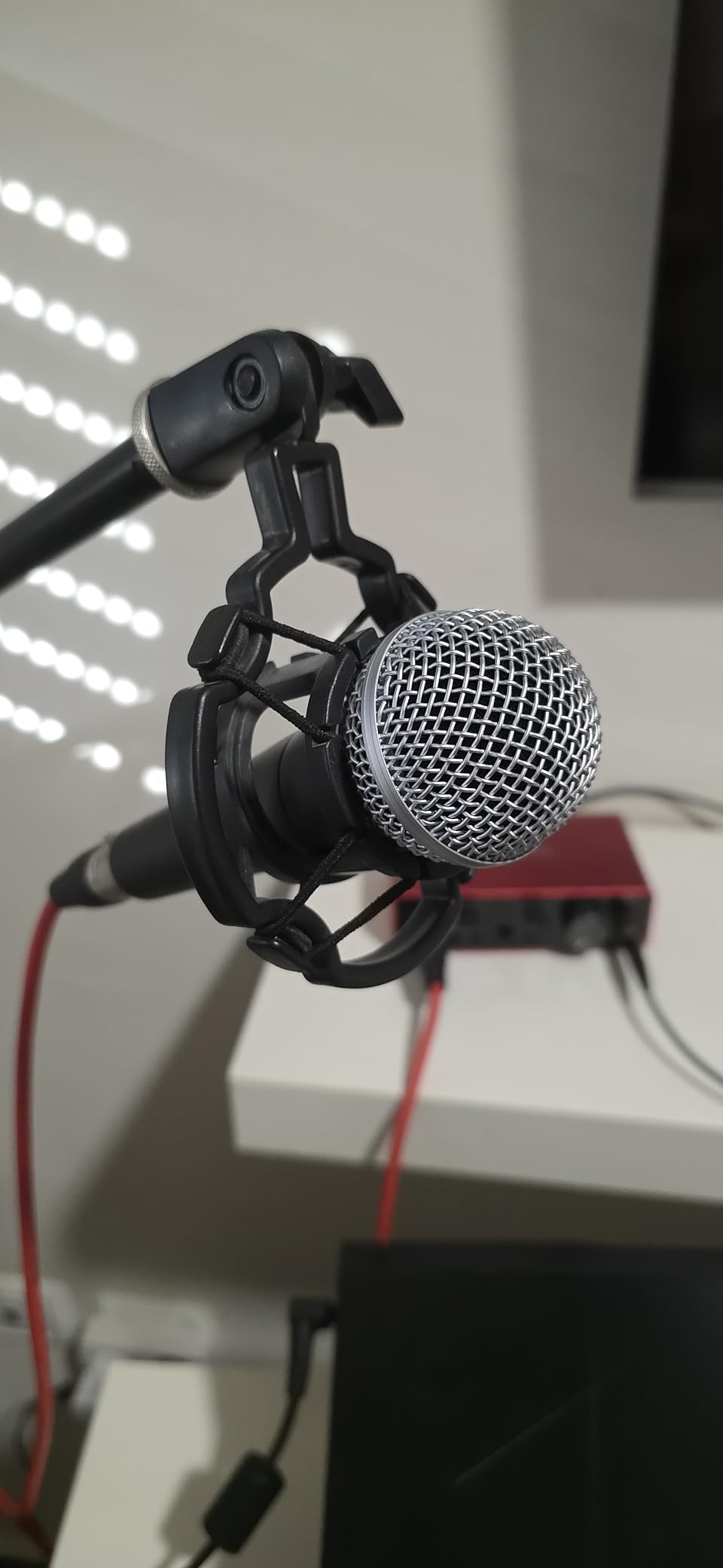
I have dropped the SM58 on concrete, seen it knocked off stands, and watched vocalists swing it by the cable. It keeps working. The rugged metal construction and pneumatic shock mount system absorb handling noise and physical abuse that would destroy most condenser microphones. This is the mic I recommend to every vocalist who needs something reliable for live performance.
One thing to keep in mind: the SM58 needs an XLR interface or mixer to work. There is no USB option here. On lower-end interfaces, you might find yourself wanting a bit more gain, but most decent audio interfaces drive it without issues. At this price point, the SM58 represents one of the best values in all of audio equipment.
Best Use Case for the SM58
The SM58 shines brightest in live performance settings. If you sing on stage, in a church, at open mics, or in a rehearsal space, this is your default choice. The feedback rejection and rugged build make it perfect for high-energy environments where reliability matters more than sonic perfection.
I also recommend the SM58 for home studio owners who record in untreated rooms. The cardioid pattern rejects room reflections better than most condensers, giving you cleaner vocal takes without acoustic treatment. Podcasters and streamers on a budget also benefit from its no-nonsense sound.
What to Watch Out For
The SM58 is not the most detailed microphone. If you need to capture every nuance of a delicate vocal performance in a treated studio, a condenser or the SM7B will serve you better. The frequency response tops out at 15 kHz, which means less airy detail in the high end.
Also, the SM58 does not have a flat response. That midrange lift that sounds great on stage can color your recordings in ways you may or may not want. For broadcast and podcast work where a more natural tone is preferred, consider stepping up to the MV7X or SM7B instead.
2. Sennheiser E 835 – Balanced Sound with Minimal Proximity Effect
Sennheiser Professional E 835 Dynamic Cardioid Vocal Microphone
Cardioid dynamic
Up to 16kHz
Handheld XLR
329g
Pros
- Balanced frequency response maintains quality off-axis
- Gentle presence boost for vocal clarity
- Minimal proximity effect for consistent bass
- Rugged metal construction with internal damping
- Excellent feedback rejection
Cons
- Not Prime eligible
- Requires XLR interface or mixer
The Sennheiser E 835 is the mic I reach for when I want something that sounds slightly different from an SM58 without straying into unfamiliar territory. Sennheiser built this mic with a more balanced frequency response, meaning it does not have that aggressive midrange push. Instead, you get a smoother, more natural vocal tone that adapts to different voices.
What impressed me most during testing was the minimal proximity effect. With many dynamic mics, when a singer moves close to the grille, the bass response booms dramatically. The E 835 keeps this effect under control, which means singers who move around on stage get more consistent sound. The gentle presence boost in the upper midrange helps vocals cut through a mix without sounding harsh.
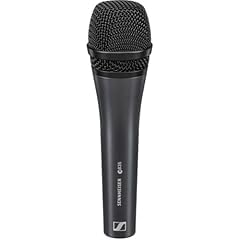
The cardioid pickup pattern provides solid signal isolation and feedback rejection. I tested it next to a drum kit and was surprised at how well it rejected the cymbal bleed. The internal damping isolates handling noise effectively, so you do not get that rumble when a vocalist grips the mic firmly or moves with it on stage.
The build quality matches what you expect from Sennheiser. The metal housing feels dense and durable, and the grille stands up to the kind of abuse that live performance dishes out. This is one of the best dynamic microphones for vocals in the sub-$100 professional category, and I mean that without hesitation.
Best Use Case for the E 835
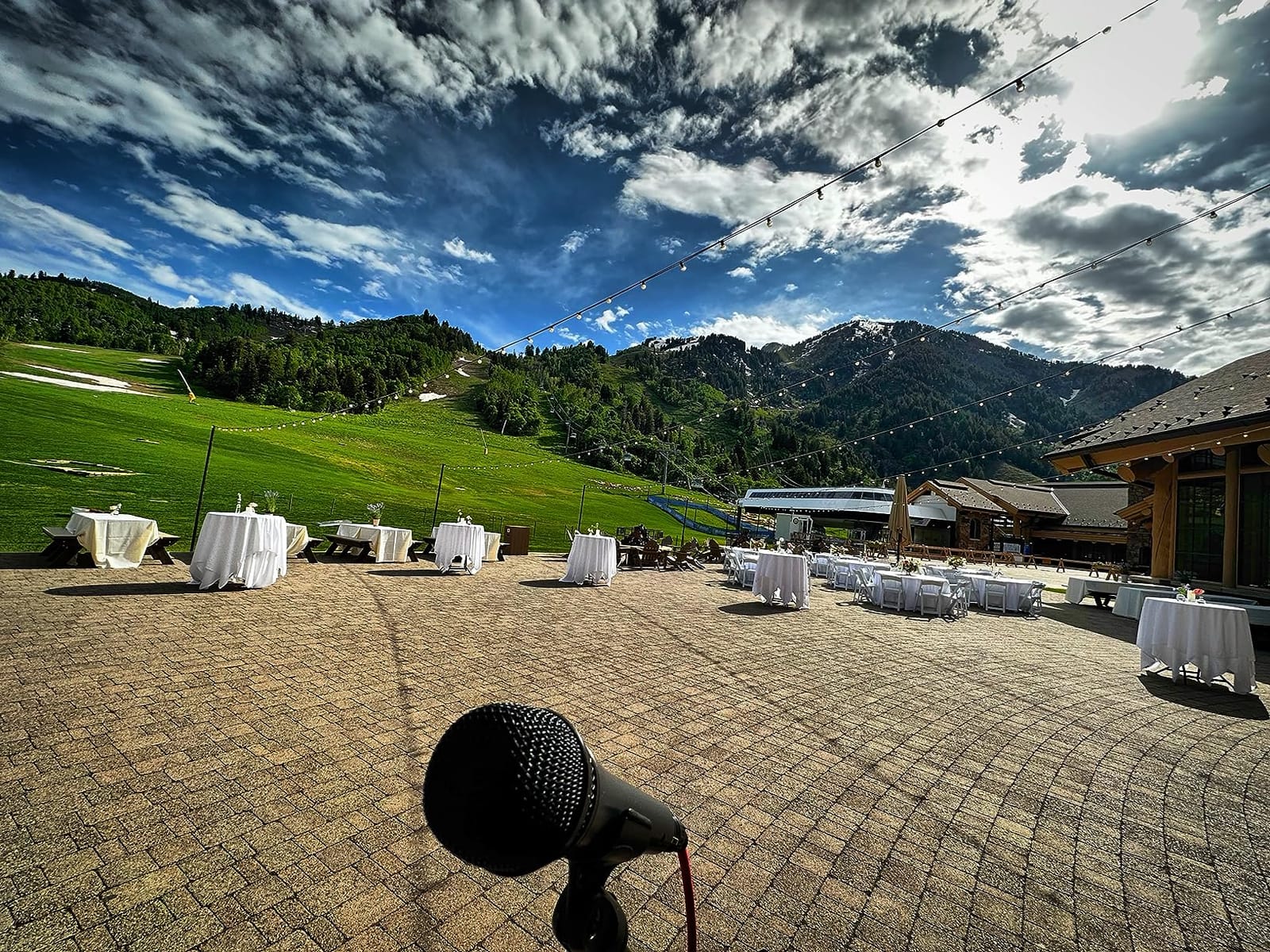
The E 835 excels in live performance settings where you want a more natural sound than the SM58 provides. Vocalists who find the SM58 too colored or aggressive often prefer the E 835 for its smoother response. It handles different voice types well, from deep baritones to bright sopranos.
I also recommend the E 835 for multi-singer setups. Because the off-axis response is so consistent, backing vocalists moving toward and away from the mic maintain better tonal balance. Church bands, cover bands, and acoustic duos all benefit from this characteristic.
What to Watch Out For
The E 835 does not have the same midrange punch as the SM58. If you sing rock, metal, or aggressive genres where you need your vocal to cut through dense instrumentation, you might find yourself reaching for EQ more than you would with an SM58 or Beta 58A.
Also note that this mic is not Prime eligible, which means shipping times may vary. You also need an XLR interface or mixer, as there is no USB connectivity option. For vocalists who want plug-and-play simplicity, the FIFINE AM8 with its dual USB and XLR outputs might be a better fit.
3. Shure BETA 58A – Supercardioid Precision for Stage
Shure BETA 58A Supercardioid Dynamic Vocal Microphone
Supercardioid dynamic
50Hz response
Neodymium magnet
281g
Pros
- Supercardioid pattern maximizes gain before feedback
- Neodymium magnet delivers high output and signal-to-noise
- Controlled bass rolloff reduces proximity effect
- Hardened steel grille with pneumatic shock mount
- Includes A25D stand adapter and storage bag
Cons
- Higher price than SM58
- Supercardioid pattern requires more precise positioning
The Shure BETA 58A is the SM58’s more sophisticated sibling. When I first switched from the SM58 to the Beta 58A on stage, the difference was immediately noticeable. The supercardioid pattern is tighter, meaning it rejects even more ambient noise and gives you more gain before feedback. On loud stages with wedge monitors, that extra headroom is a game-changer.
The neodymium magnet inside the Beta 58A produces a hotter signal than the standard SM58. That means more output and a better signal-to-noise ratio without needing additional gain from your interface or mixer. I found that vocalists who struggled with quiet levels on budget interfaces got a noticeable boost switching to this mic.
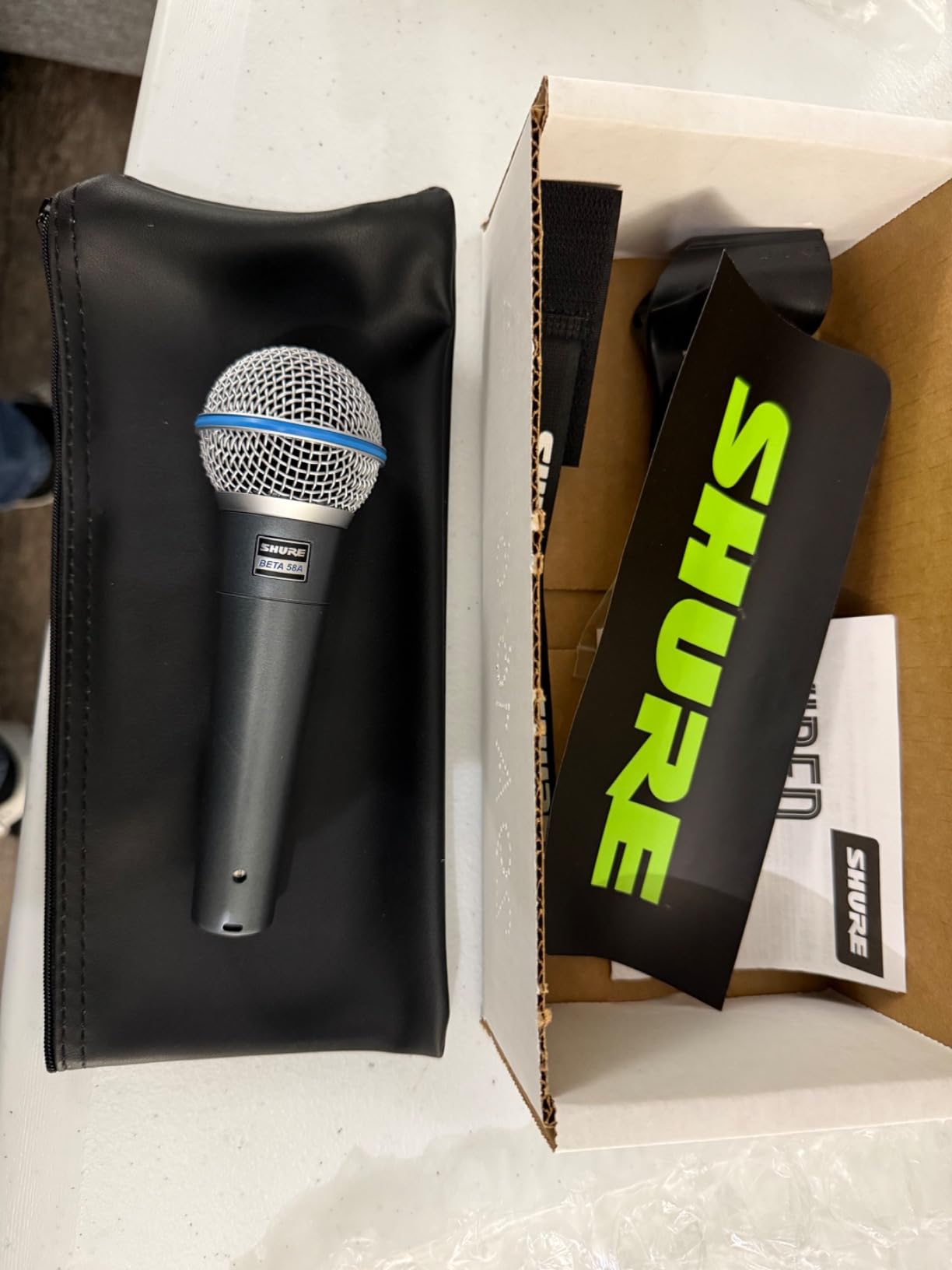
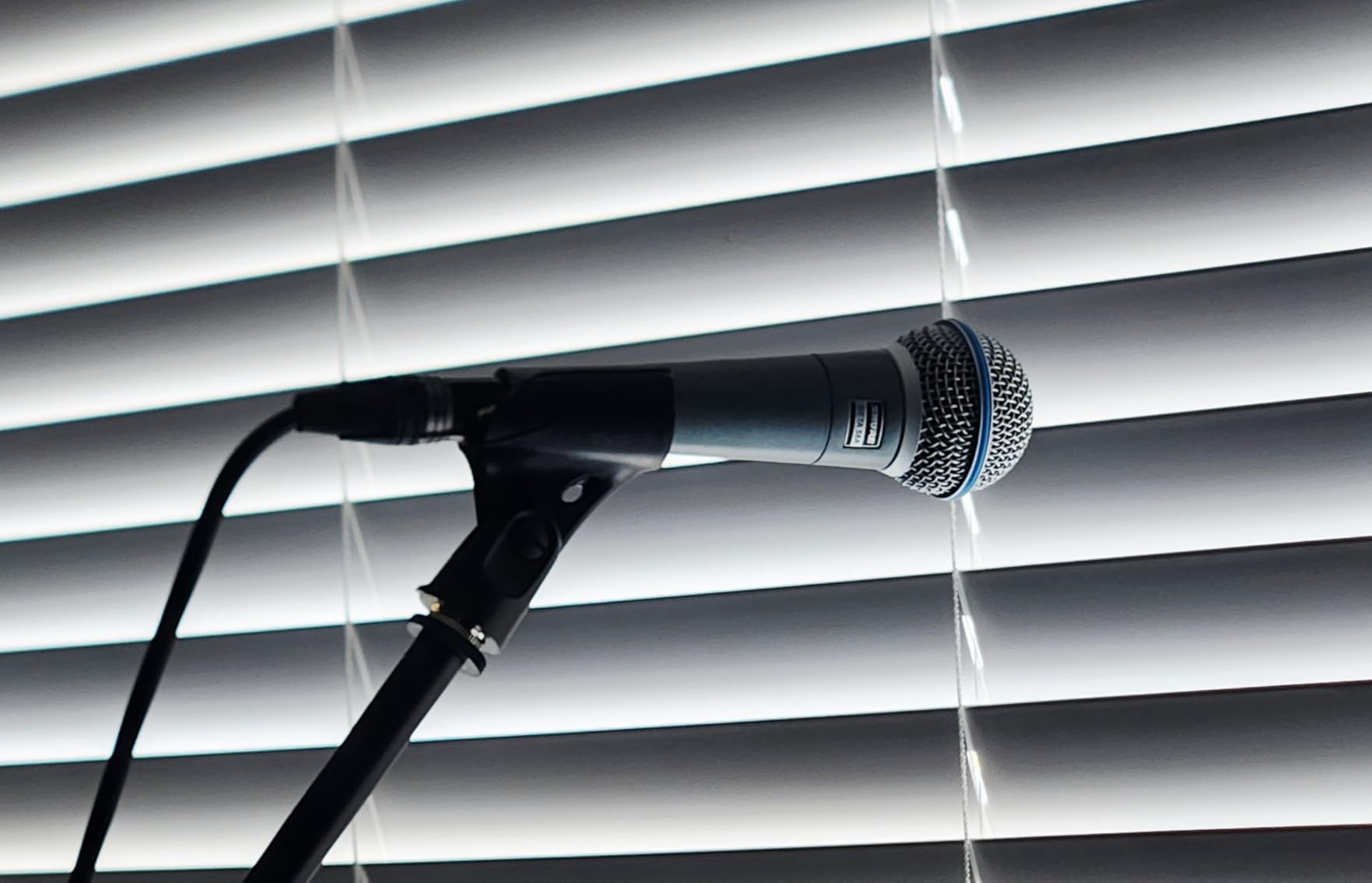
The frequency response is tailored for vocals with a controlled bass rolloff that minimizes proximity effect. Singers who work the mic closely get a more controlled low-end response instead of that overwhelming boom. The hardened steel mesh grille takes a beating, and the pneumatic shock mount system eliminates practically all handling noise.
Shure includes the A25D adjustable stand adapter, a thread adapter, and a storage bag in the box. That makes this mic a complete package for working vocalists who need a reliable, high-output stage microphone. I consider it one of the best dynamic microphones for vocals when feedback is your biggest enemy.
Best Use Case for the Beta 58A
The Beta 58A is built for loud stages where feedback is a constant battle. If you perform with in-ear monitors or wedge monitors blaring, the supercardioid pattern gives you maximum isolation. Rock bands, metal vocalists, and anyone performing on stages with high SPL levels will appreciate the extra gain-before-feedback headroom.
I also recommend the Beta 58A for vocalists who want a hotter signal. The neodymium magnet pushes more output than standard dynamic mics, which helps if your audio interface has a weaker preamp. Solo performers using portable interfaces benefit from this extra signal strength.
What to Watch Out For
The supercardioid pattern is a double-edged sword. While it rejects side noise brilliantly, it also means you need to sing directly into the front of the mic. Vocalists who angle the mic or sing slightly off-axis will notice a drop in level and tonal quality. If your singer tends to drift, the standard cardioid SM58 or E 835 might be more forgiving.
The Beta 58A also costs significantly more than the SM58. If budget is a primary concern, the performance difference may not justify the price jump for casual users. The SM58 covers 90 percent of what the Beta 58A does at a lower cost.
4. Shure SM7B – The Broadcast and Studio Legend
Shure SM7B Dynamic Vocal Microphone for Podcasting & Streaming
Cardioid dynamic
50Hz-20kHz
Broadcast XLR
1.2kg
Pros
- Natural warm vocals with wide-range frequency response
- Precise cardioid pattern with air suspension shock isolation
- Built-in pop filtering and detachable windscreen
- Professional XLR output with electromagnetic shielding
- Renowned broadcast quality for podcasting and streaming
Cons
- Premium price point
- Requires at least 60dB of gain for optimal performance
- Heavier than typical handheld microphones
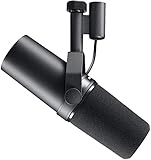
The Shure SM7B is the microphone I recommend more than any other for podcasters, streamers, and home studio owners. It is the broadcast standard that radio stations have used for decades, and it has become the default choice for serious content creators. The moment I set one up in my studio, I understood the hype.
What sets the SM7B apart is its wide frequency response of 50 Hz to 20 kHz. That is significantly wider than most dynamic microphones, which typically top out around 15 or 16 kHz. The extended range gives you warmer lows and more detailed highs, making vocals sound natural and full without the harshness that some condensers introduce.
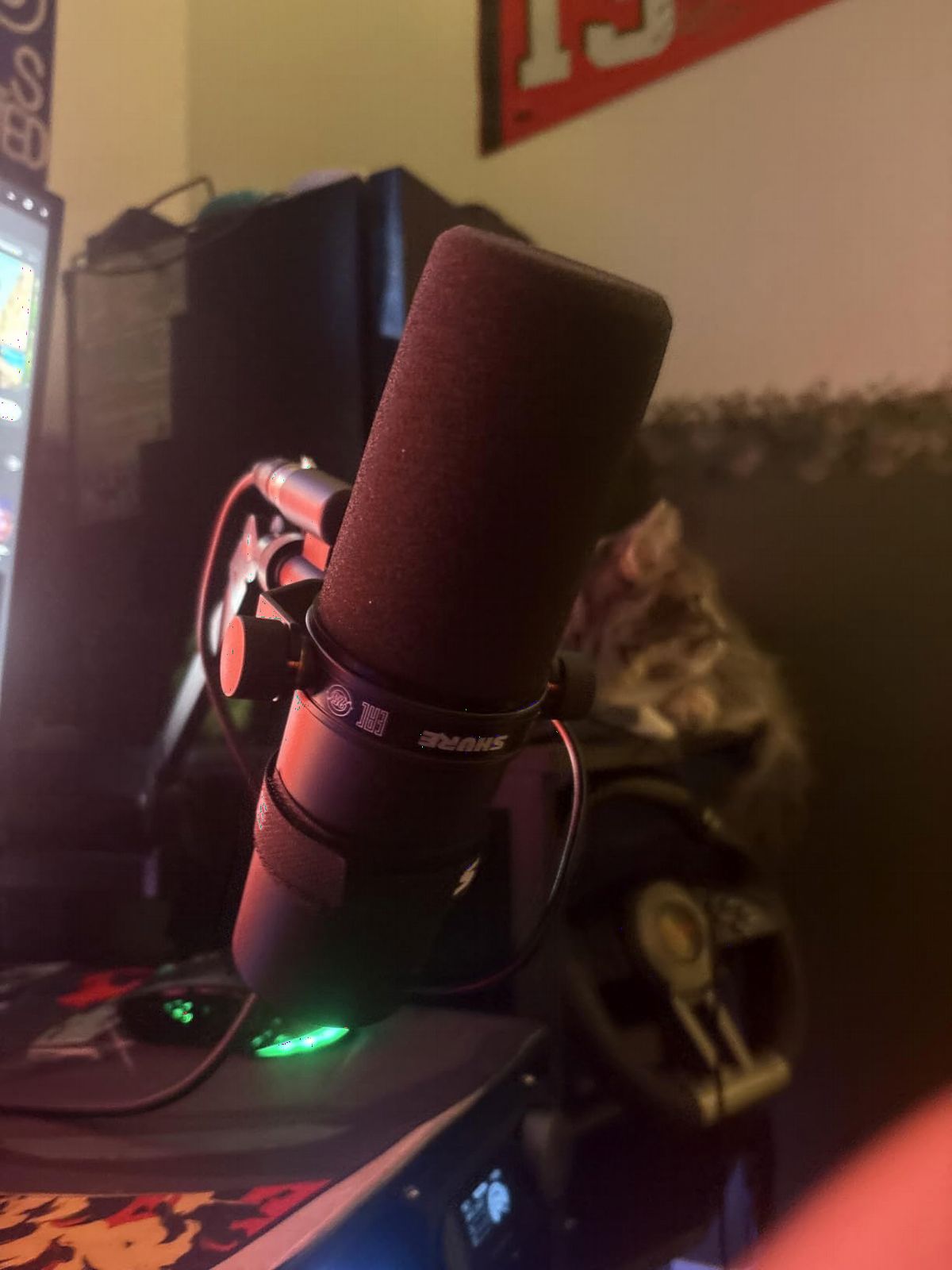
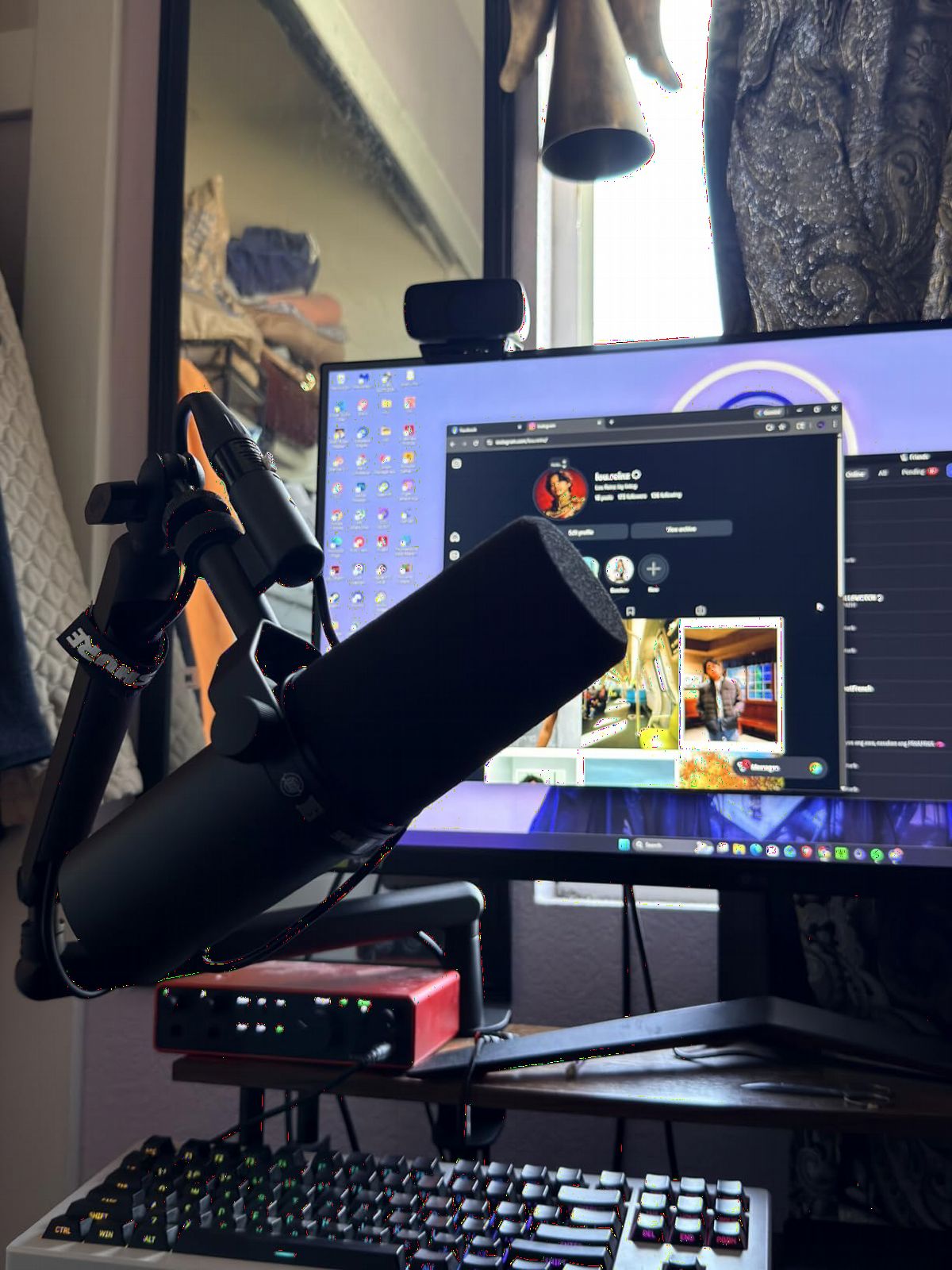
The cardioid pickup pattern with air suspension shock isolation is exceptional at rejecting room noise. I tested the SM7B in an untreated room with a window open and traffic outside. The recording was remarkably clean. This is why home studio owners with no acoustic treatment love this mic so much. It simply ignores the room around it.
The built-in pop filtering and detachable windscreen handle plosives without needing an external pop filter. The all-metal construction with electromagnetic shielding rejects computer monitor and device interference. Everything about this microphone screams professional-grade quality.
Gain Requirements and Preamp Considerations
This is the most important thing to know about the SM7B: it needs a lot of gain. At least 60 dB of clean gain from your preamp is what I recommend for optimal performance. Many budget audio interfaces simply cannot deliver that much gain without introducing noise.
The solution most creators use is a cloudlifter or FetHead inline preamp. These devices add 20 to 25 dB of clean gain before the signal hits your interface. If you already own a Focusrite Scarlett, PreSonus AudioBox, or similar budget interface, budget for a cloudlifter alongside the SM7B. The Shure SM7dB is an alternative that has a built-in preamp, though that version costs even more.
Best Use Case for the SM7B
The SM7B is unmatched for podcasting, streaming, and broadcast-style vocal recording. If you sit at a desk and talk into a microphone for a living, this is the gold standard. The wide frequency response and room rejection make it ideal for untreated spaces where a condenser would capture every echo and reflection.
I also recommend the SM7B for voice-over work, audiobook narration, and YouTube content creation. Vocalists who record in untreated home studios also benefit, especially those who want a warmer, more controlled tone than a condenser provides.
5. Amazon Basics Dynamic Vocal Microphone – Budget Starter Option
Amazon Basics Dynamic Vocal Microphone with Cable for Podcasting, Recording, Broadcasting, Live Performance, Karaoke, Cardioid Pattern
Cardioid dynamic
70Hz-15kHz
XLR with cable
499g
Pros
- Cardioid pickup pattern isolates sound source
- High gain before feedback for live use
- Built-in spherical wind and pop filter
- Durable zinc die-cast housing with steel mesh
- Includes XLR cable for instant connection
Cons
- Budget option may not match professional quality
- Basic feature set compared to higher-end alternatives
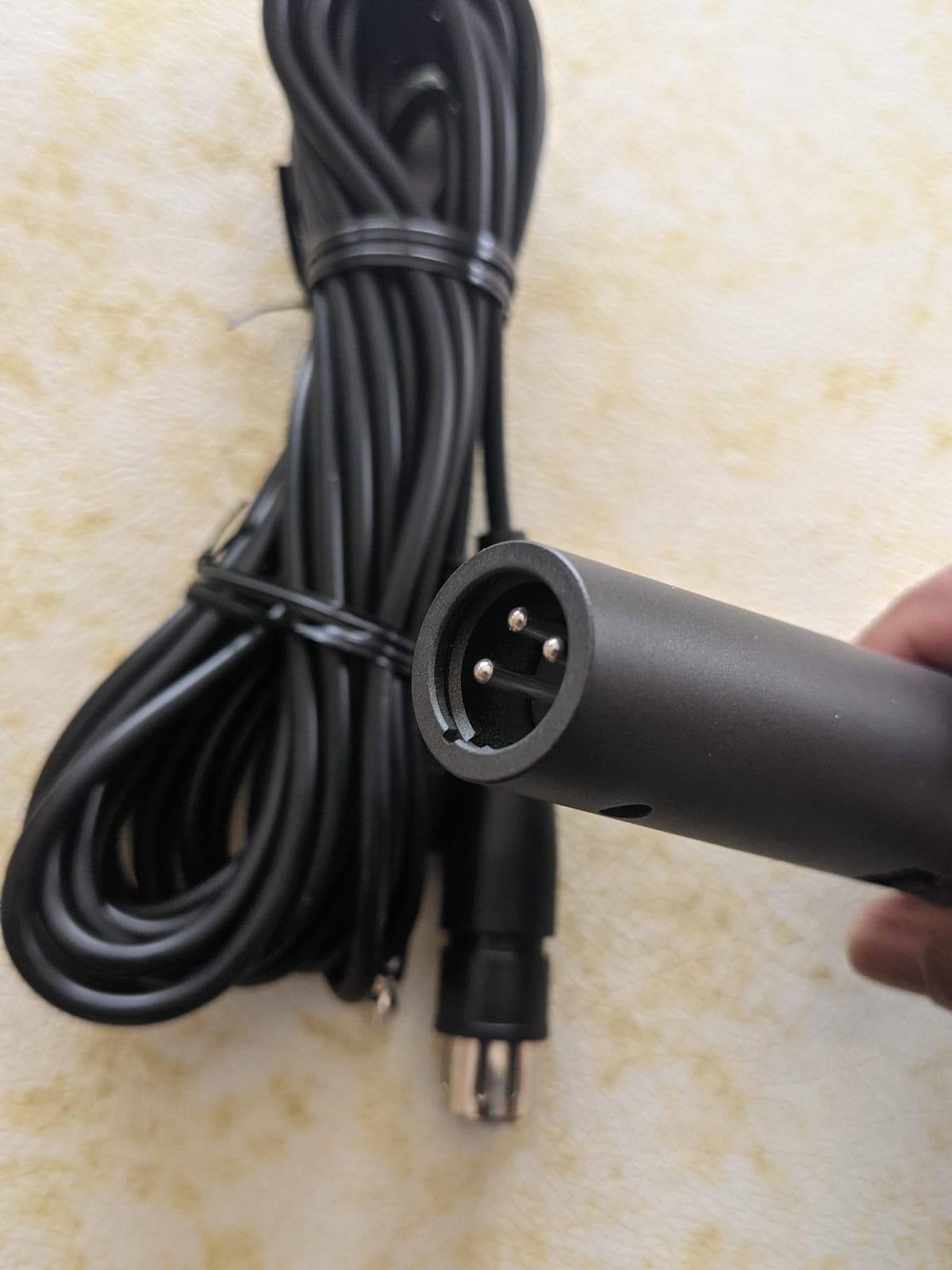
The Amazon Basics Dynamic Vocal Microphone is the starter mic I recommend to people who are not ready to spend $100 or more. For under $25, you get a cardioid dynamic microphone with a built-in pop filter, a zinc die-cast housing, and an XLR cable included. That is an impressive package for the price.
I tested this mic against the SM58 expecting a massive gap, and honestly, the difference is smaller than you might think. The Amazon Basics mic does not have the same clarity or midrange tuning, and the frequency response is narrower. But for karaoke, basic recording, and first-time podcasters, it produces clean, usable audio that sounds nothing like its price tag.
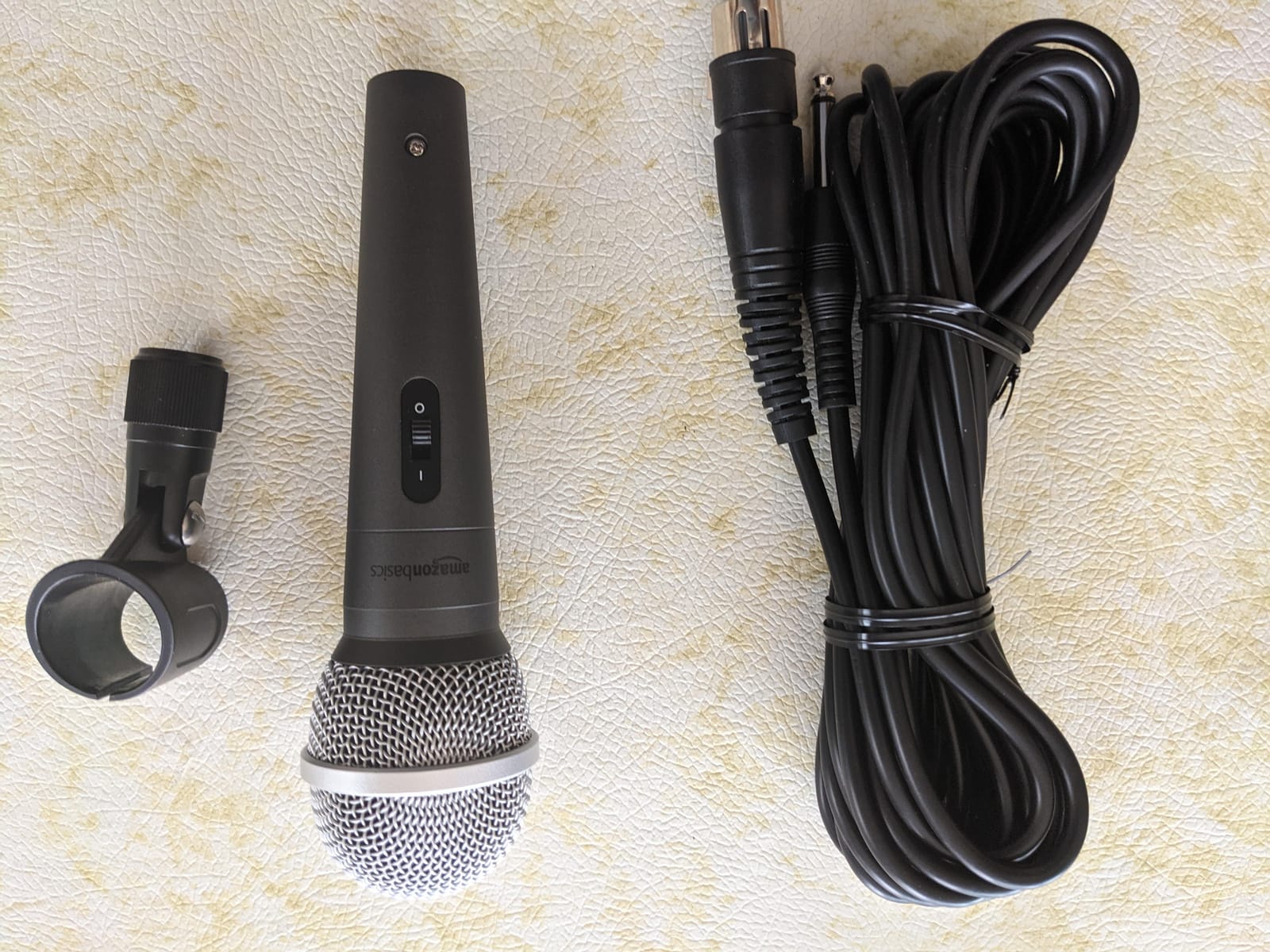
The cardioid pickup pattern does a decent job of isolating the main sound source while reducing background noise. The high gain before feedback makes it surprisingly usable for small live performances and PA systems. The included XLR cable means you can connect it directly to a mixer, amplifier, or audio interface without buying anything extra.
The zinc die-cast housing and steel mesh head give this mic a solid, durable feel that belies its budget price. It is not going to match the road-ready durability of an SM58, but for home use, practice sessions, and casual events, it holds up well.
Best Use Case for the Amazon Basics Mic
This mic is perfect for beginners, karaoke enthusiasts, and anyone setting up a basic PA system for small gatherings. If you are just starting out and want to learn how microphones work before investing in professional gear, this is the most affordable entry point that still delivers real dynamic microphone performance.
I also recommend it for schools, churches, and community organizations that need multiple microphones on a tight budget. The included cable and durable construction make it practical for situations where mics get shared and handled by many different people.
What to Watch Out For
This is a budget microphone, and it shows in the details. The frequency response tops out at 15 kHz with a 70 Hz low end, which is narrower than professional options. The sound is slightly boxier and less articulate than the SM58 or E 835, especially in the upper midrange where vocal clarity lives.
If you are serious about podcasting, streaming, or recording vocals for release, you will outgrow this mic quickly. Think of it as a learning tool or backup rather than a long-term solution. The good news is that at this price, even using it for a few months feels like money well spent.
6. FIFINE AmpliGame AM8 – Dual USB and XLR for Streaming
FIFINE AmpliGame AM8 USB/XLR Dynamic Microphone for Gaming Streaming
Cardioid dynamic
50Hz-16kHz
USB and XLR
600g
Pros
- Dual USB and XLR connectivity for maximum flexibility
- Tap-to-mute with LED indicator
- Headphone jack for real-time monitoring
- Mic gain knob for audio adjustment
- Includes desktop stand and windscreen
Cons
- RGB lighting only works with USB connection
- Some features inactive when using XLR
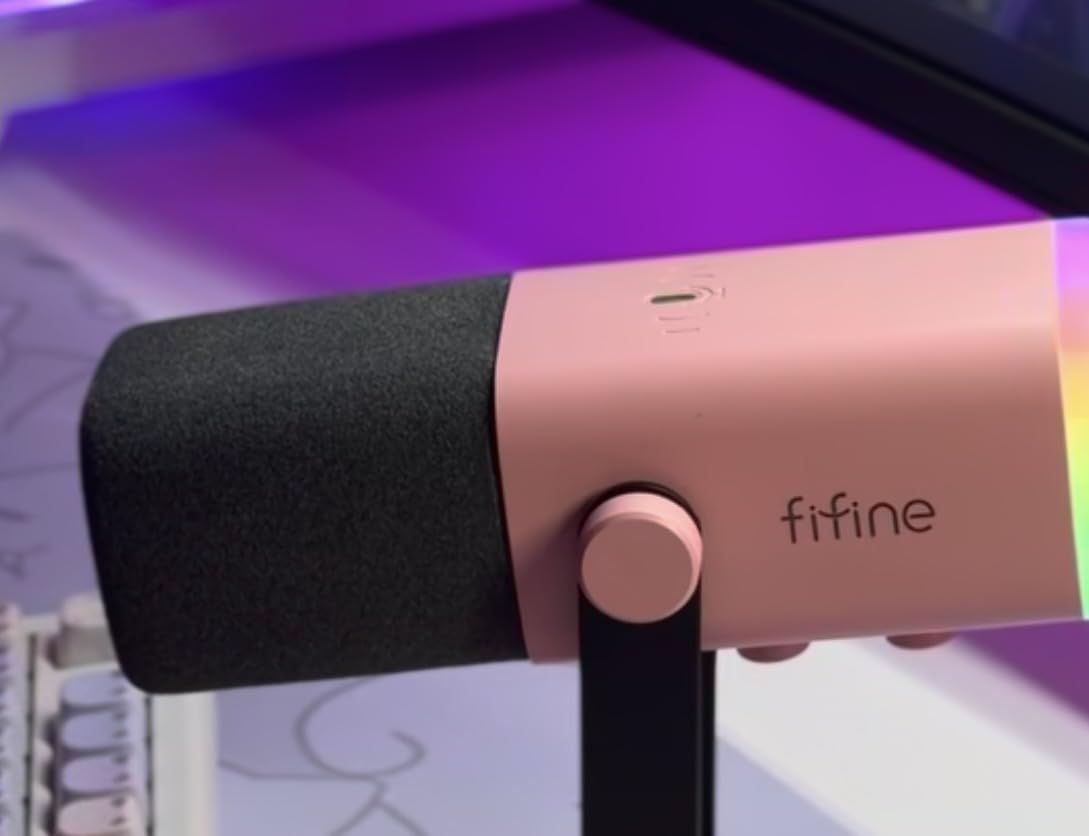
The FIFINE AmpliGame AM8 is the most versatile budget microphone I have tested. What makes it special is the dual USB and XLR connectivity. You can plug it straight into your computer via USB today, then upgrade to an XLR audio interface later without buying a new mic. That flexibility is rare at this price point.
I set the AM8 up on my streaming desk and was immediately impressed by the convenience features. The tap-to-mute function with its LED indicator is something I wish every microphone had. The headphone jack on the mic itself lets you monitor your audio in real time with zero latency. The gain knob on the front gives you hands-on control over your input level.
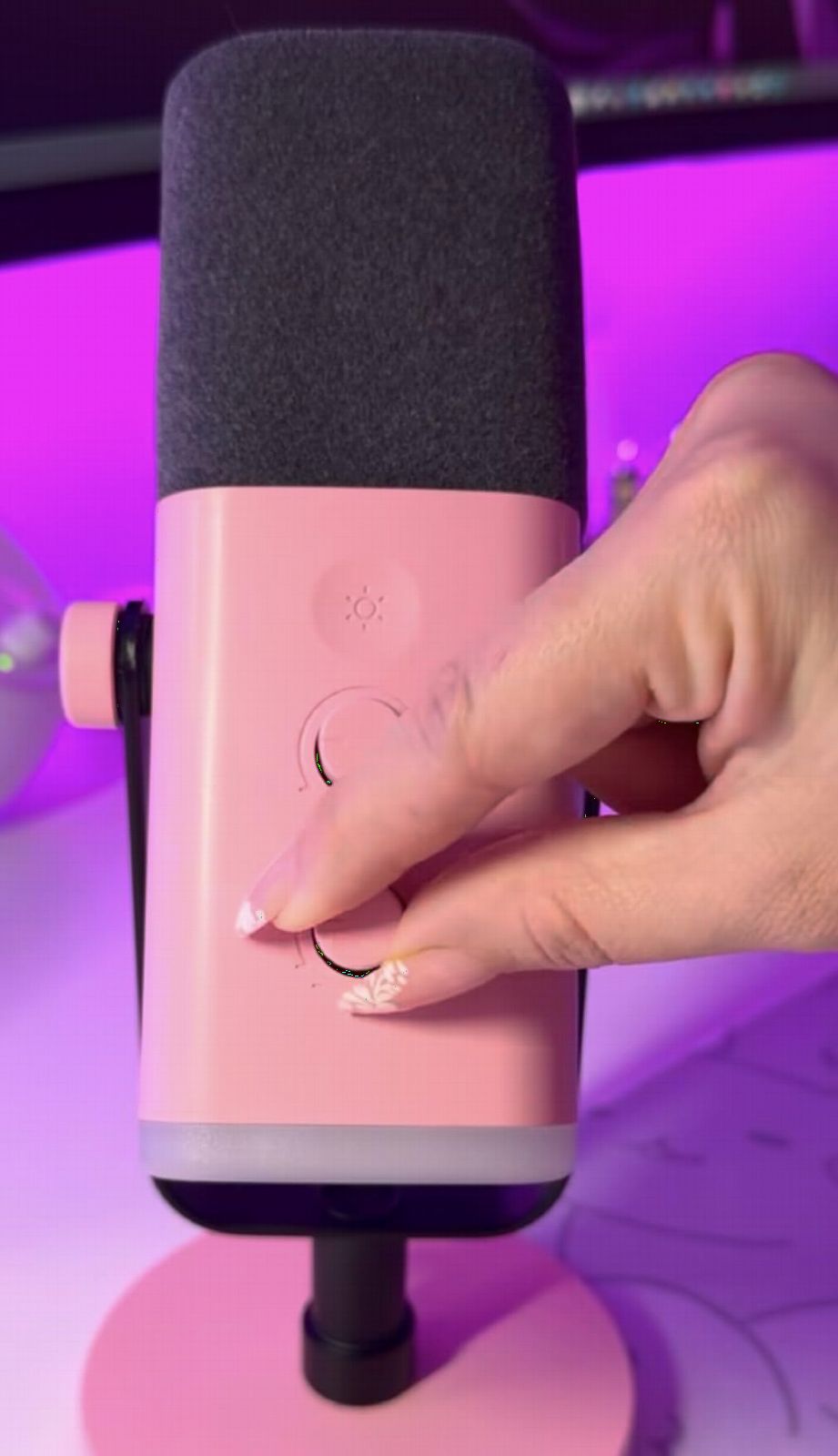
The cardioid dynamic capsule does a solid job of isolating your voice from background noise. It will not match the SM7B for room rejection, but it performs well for streaming, gaming, and podcasting in typical home environments. The RGB lighting with three modes adds a gaming aesthetic that fits naturally into a streaming setup.
When you are ready to upgrade, the XLR output lets you connect to professional audio interfaces and mixers. I tested the XLR path through a Focusrite interface and got clean, professional-quality audio. The fact that this mic grows with your setup makes it one of the smartest budget investments available.
Best Use Case for the AM8
The AM8 is ideal for streamers, gamers, and beginner podcasters who want maximum flexibility without spending a fortune. If you are starting with USB but plan to upgrade to an XLR setup later, this mic eliminates the need for a future purchase. It is also great for content creators who value convenience features like tap-to-mute and onboard gain control.
I recommend the AM8 for bedroom vocalists and home studio owners on a budget. The dynamic capsule handles untreated rooms better than cheap condensers, and the USB connectivity means you can start recording immediately without an interface.
What to Watch Out For
The RGB lighting only functions when connected via USB. When you switch to XLR, those features go dark. Also, some of the onboard controls like the tap-to-mute button behave differently depending on which connection mode you are using. Read the manual carefully to understand what works in each mode.
The included desktop stand is basic. For serious use, you will want to mount the AM8 on a proper boom arm. The mic has built-in threads for both 3/8 and 5/8 inch mounts, which is a thoughtful touch, but the stock stand itself is not great for long-term use.
7. FIFINE K6 Karaoke Microphone – Affordable Fun for Singers
FIFINE K6 Karaoke Microphone with 1/4” Plug, Dynamic Vocal Mic for Singing
Cardioid dynamic
50Hz-18kHz
6.35mm plug
560g
Pros
- Great value for karaoke and basic recording
- Long 14.8ft detachable cable
- On/off switch for easy control
- Solid metal construction
- Works with karaoke machines
- amplifiers
- and mixers
Cons
- Not compatible with 3.5mm even with adapter
- Heavy low-end emphasis may require adjustment
- Some build quality concerns with XLR connector
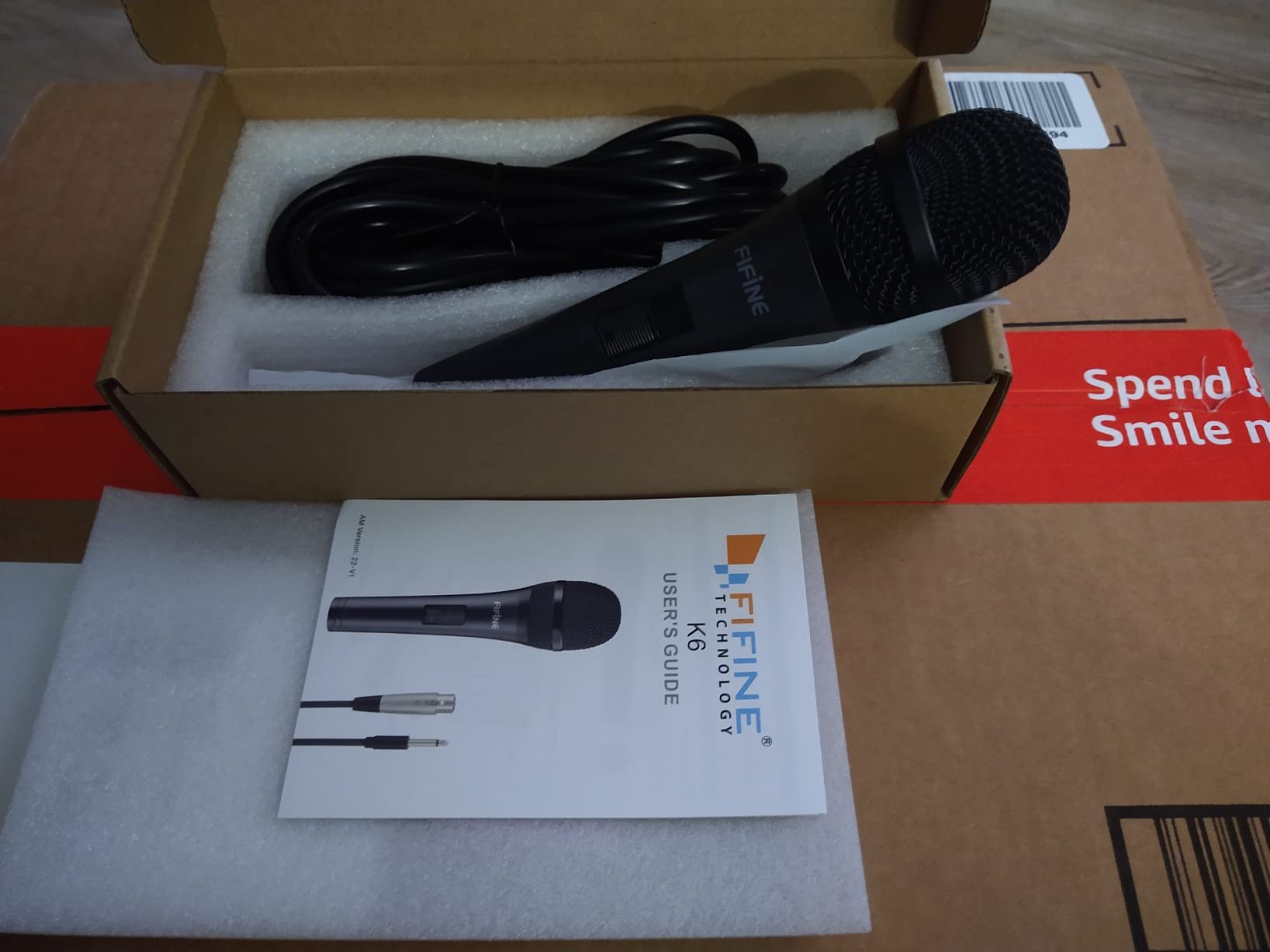
The FIFINE K6 is a karaoke-focused dynamic microphone that costs less than a dinner out. I picked one up expecting a toy and was pleasantly surprised by the solid metal construction and usable sound quality. This is not a professional vocal mic, but it is a genuinely fun budget option for casual singing and basic recording.
The K6 uses a 6.35mm (1/4 inch) plug designed for karaoke machines, amplifiers, and mixers. That is an important distinction because it does not work with 3.5mm inputs, even with an adapter. If your setup uses 1/4 inch inputs, the K6 connects directly without any fuss. The 14.8 foot detachable cable gives you plenty of room to move around.
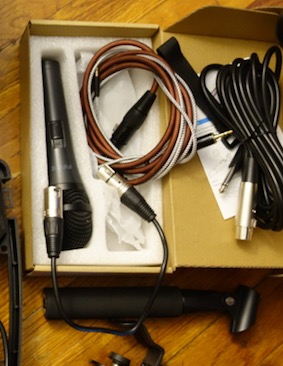
The cardioid pickup pattern does a reasonable job of isolating your voice. The built-in pop filter handles the worst plosives, though it is not as refined as what you get on professional mics. The on/off switch on the body is a practical touch for karaoke sessions where you need to quickly mute yourself between songs.
I noticed a heavy low-end emphasis in testing. The K6 boosts bass more than most vocal mics, which gives voices a warm, full sound. That can be great for certain voices but may require EQ adjustment if you find it too boomy. For karaoke and casual use, this coloration is actually quite flattering for most singers.
Best Use Case for the K6
The K6 is designed for karaoke. If you have a karaoke machine, PA system, or mixer with 1/4 inch inputs, this is one of the most affordable ways to get a proper dynamic microphone for singing. It is perfect for home karaoke nights, small parties, and casual vocal practice.
I also recommend the K6 for schools and community centers that need inexpensive microphones for events and assemblies. The metal construction and included long cable make it practical for group activities where durability matters more than audiophile sound quality.
What to Watch Out For
The 6.35mm plug limits compatibility. If your equipment uses XLR or 3.5mm inputs, this mic will not work without additional adapters, and even then, results can be unreliable. Check your inputs before buying.
Some users report build quality concerns with the XLR-style connector on the cable. While the microphone body itself feels solid, the cable connection can be the weak point. Handle it with care and avoid pulling on the cable rather than the connector when unplugging.
8. Shure MV7X – Podcast and Streaming Focused XLR Mic
Shure MV7X XLR Dynamic Podcast & Recording Microphone – Black
Cardioid dynamic
50Hz-16kHz
XLR only
508g
Pros
- Voice isolation technology reduces background noise
- Professional XLR connection for studio setups
- Durable all-metal construction with adjustable yoke mount
- Optimized for spoken word and vocals
- Includes thread adapter and broadcast-inspired design
Cons
- XLR only with no USB option
- Requires audio interface or mixer
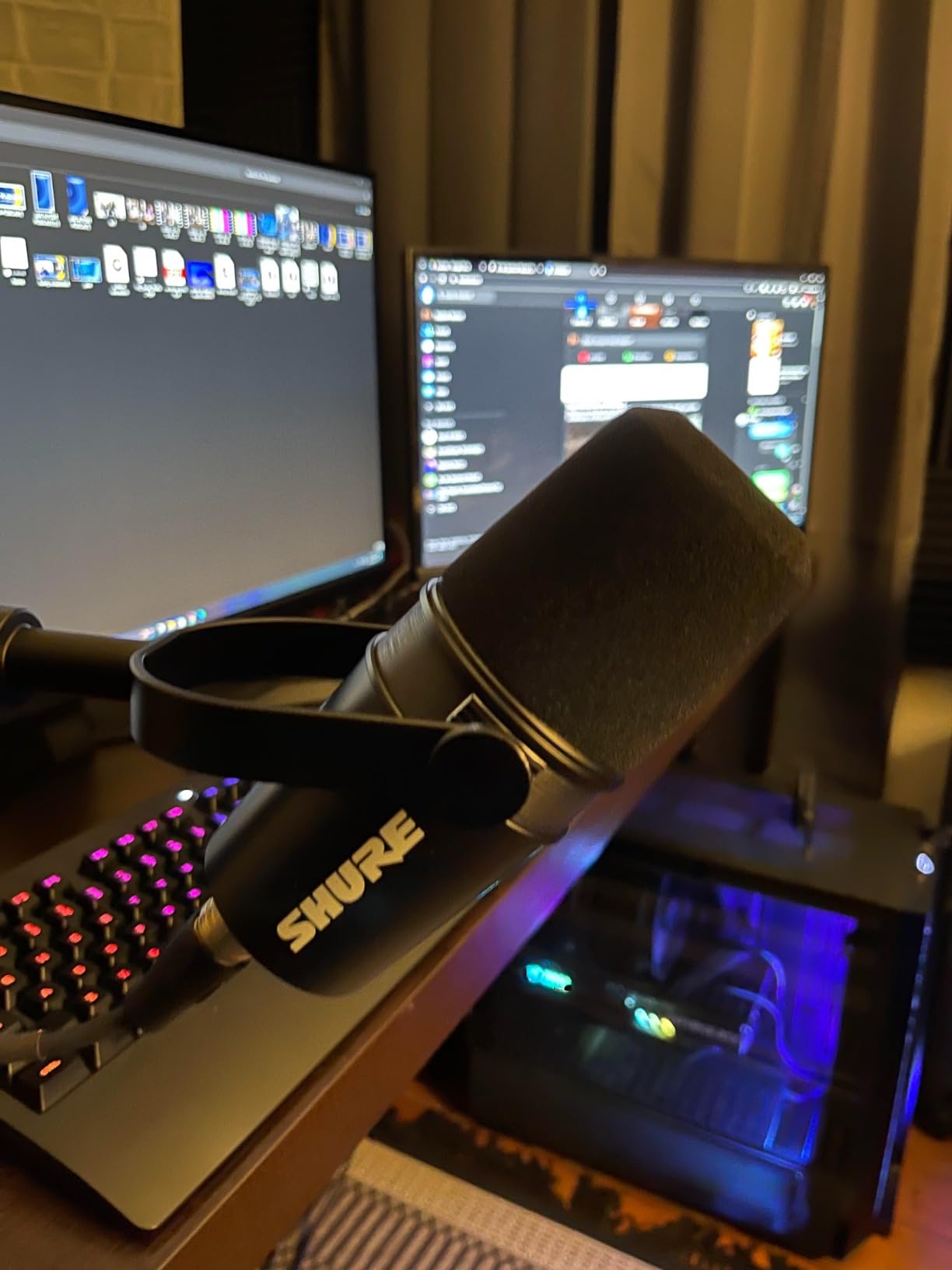
The Shure MV7X is the younger sibling of the SM7B, designed specifically for podcasters and streamers who want that broadcast sound without the premium price tag. I tested this mic extensively for podcast recording, and it delivers a remarkably similar vocal character to the SM7B at less than half the cost.
The voice isolation technology is the standout feature. This mic was engineered from the ground up to reject background noise and focus on your voice. I tested it with a noisy air conditioner running in the background, and the MV7X pushed that noise far into the background. For untreated rooms, this is one of the best performing dynamic mics I have used.

The all-metal construction with adjustable yoke mount feels every bit as professional as the SM7B. The broadcast-inspired design looks fantastic on camera, which matters for video podcasters and YouTubers. The integrated shock mount reduces desk vibrations and keyboard noise from reaching the capsule.
One important note: the MV7X is XLR only. If you want the USB version with built-in audio interface capabilities, look for the MV7 instead. The MV7X requires an external audio interface or mixer, but it does not need as much gain as the SM7B, which makes it compatible with a wider range of interfaces.
Best Use Case for the MV7X
The MV7X is perfect for podcasters and streamers who want SM7B-style sound on a reasonable budget. If you already have an XLR audio interface, this mic gives you broadcast quality without the SM7B’s steep price or extreme gain requirements. It is my top recommendation for content creators upgrading from USB microphones.
I also recommend the MV7X for vocal recording in untreated home studios. The voice isolation technology handles reflective rooms and background noise better than most mics in this price range. Vocalists who record at desks or in multipurpose rooms will appreciate how clean the recordings sound.
What to Watch Out For
The MV7X does not offer USB connectivity. If you need plug-and-play USB operation, the regular MV7 or the FIFINE AM8 are better choices. The XLR-only design assumes you already have or plan to buy an audio interface, which adds to the total system cost.
The frequency response tops out at 16 kHz, which is standard for dynamic mics but narrower than the SM7B’s 20 kHz extension. For spoken word and most vocals, this is perfectly fine. But if you need that extra high-end detail for delicate recordings, the SM7B is the better long-term investment.
Buying Guide: How to Choose a Dynamic Microphone for Vocals
Choosing the right dynamic microphone comes down to understanding a few key factors. I have broken down the most important considerations to help you make the right choice for your specific needs. The best dynamic microphones for vocals all share certain characteristics, but the details matter enormously.
Polar Pattern: Cardioid vs Supercardioid
The polar pattern determines how a microphone picks up sound from different directions. Cardioid patterns capture sound from the front while rejecting noise from the sides and rear. This is the most common pattern for vocal microphones because it naturally rejects feedback and background noise. The SM58, E 835, and SM7B all use cardioid patterns.
Supercardioid patterns are even more focused than cardioid. They reject more sound from the sides but pick up slightly from the rear. This tighter pattern maximizes gain before feedback, making it ideal for loud stages. The Beta 58A uses a supercardioid pattern, which is why it excels in high-volume environments but requires more precise microphone technique.
Proximity Effect: What It Is and Why It Matters
Proximity effect is the bass boost that happens when you move closer to a directional microphone. Sing into a dynamic mic from two inches away and your voice sounds dramatically fuller and warmer. Pull back to twelve inches and the bass response thins out. Every directional microphone exhibits this effect to some degree.
Some mics manage proximity effect better than others. The Sennheiser E 835 has minimal proximity effect, which means more consistent sound as singers move around. The Beta 58A uses a controlled bass rolloff to keep the low-end in check. Understanding how proximity effect works with your chosen mic helps you use it intentionally rather than fighting it.
Gain Requirements: Will Your Interface Drive It?
This is the most overlooked factor in dynamic microphone selection. Dynamic mics generally produce lower output than condensers, which means your audio interface or preamp needs to provide enough gain to bring the signal up to a usable level. The SM7B is notorious for this, requiring at least 60 dB of clean gain to perform at its best.
If your interface has weak preamps, you have two options. You can add an inline preamp like a Cloudlifter or FetHead, which adds 20 to 25 dB of clean gain. Or you can choose a mic that naturally outputs more signal, like the Beta 58A with its neodymium magnet or the MV7X, which needs less gain than the SM7B. Always check your interface’s maximum gain specification before buying a dynamic microphone.
Dynamic vs Condenser: Which Is Right for You?
The dynamic versus condenser debate is fundamental to microphone selection. Dynamic microphones use a moving coil in a magnetic field. They handle high sound pressure levels, reject background noise, and require no external power. They are ideal for live performance, untreated rooms, and loud sources.
Condenser microphones use a charged diaphragm capsule. They are more sensitive, capture more detail, and have wider frequency responses. They are ideal for treated studios, quiet sources, and situations where capturing every nuance matters. However, they pick up room noise, require phantom power, and are more fragile.
For vocals specifically, the choice often comes down to your recording environment. In a treated studio, a condenser might give you more detail and air. In an untreated room or on stage, a dynamic mic will give you cleaner results. This is why so many podcasters and home studio owners default to dynamic mics like the SM7B and MV7X.
Live vs Studio: Matching the Mic to the Environment
Live performance demands different microphone characteristics than studio recording. On stage, you need feedback rejection, durability, and enough output to cut through a mix. Handheld mics like the SM58, E 835, and Beta 58A are designed for exactly this environment. They take abuse, reject monitor bleed, and project vocals clearly.
In the studio, you prioritize sound quality, detail, and consistency over ruggedness. Broadcast-style mics like the SM7B and MV7X are designed for stationary use on boom arms. They offer wider frequency responses, better room rejection, and more natural vocal tones. The tradeoff is that they are not meant to be handheld and are less suited for live stage use.
Some vocalists try to use one mic for everything. While the SM58 can work in a pinch for studio recording, and the SM7B has been used live, each type is optimized for its intended environment. If you perform live and record in a studio, owning one of each type gives you the best of both worlds.
FAQs
Are dynamic mics good for vocals?
Yes, dynamic mics are excellent for vocals, especially in live performance and untreated recording environments. They handle high sound pressure levels without distortion, reject background noise and feedback, and produce warm, natural vocal tones. The Shure SM58 has been the industry standard live vocal microphone for over 50 years, and the SM7B is the go-to choice for broadcast and podcast vocals. Dynamic mics are generally preferred over condensers for live stage use and home studio recording in untreated rooms.
What is the holy grail of microphones?
The Shure SM7B is widely considered the holy grail for broadcast and podcast vocals, while the Shure SM58 holds that title for live performance. In the studio world, the Neumann U87 condenser is often called the holy grail, but among dynamic microphones, the SM7B and SM58 are the most revered models. Both have decades of professional use and have defined the sound of modern vocal recording.
What is the 3 to 1 rule for microphones?
The 3 to 1 rule states that when using multiple microphones, the distance between any two microphones should be at least three times the distance from each microphone to its sound source. This prevents phase cancellation and comb filtering, which occur when sound reaches multiple mics at slightly different times. Following the 3 to 1 rule keeps your recordings clean and phase-coherent when recording multiple vocalists or instruments simultaneously.
Do I need a preamp for a dynamic microphone?
Most dynamic microphones benefit from additional preamp gain, especially models like the Shure SM7B that require at least 60 dB of clean gain. If your audio interface has weak preamps, an inline booster like a Cloudlifter or FetHead adds 20 to 25 dB of clean gain. Some dynamic mics like the Shure Beta 58A use neodymium magnets for higher output and need less external gain. Always check your interface’s gain specifications before purchasing a dynamic microphone.
Can you use a dynamic microphone for studio recording?
Yes, dynamic microphones work very well for studio recording, particularly in untreated rooms. The Shure SM7B and MV7X are specifically designed for studio vocal recording, podcasting, and broadcasting. Dynamic mics reject room reflections and background noise better than condensers, making them ideal for home studios without acoustic treatment. While condensers may capture more detail in treated spaces, dynamic mics often produce cleaner results in real-world recording environments.
Conclusion: Finding Your Ideal Vocal Microphone
Finding the best dynamic microphones for vocals in 2026 means matching the mic to your environment, your voice, and your gear. The Shure SM58 remains the undisputed champion for live performance, offering decades-proven reliability and vocal clarity at a price that makes sense for almost any budget. For studio work, podcasting, and streaming, the Shure SM7B sets the standard, though its gain requirements mean you should plan for a cloudlifter if your interface cannot deliver 60 dB.
For those seeking value, the Sennheiser E 835 delivers balanced sound with minimal proximity effect, while the Shure MV7X brings broadcast quality to podcasters at a more accessible price point. Budget-conscious creators should look at the FIFINE AM8 for its dual USB and XLR flexibility, or the Amazon Basics mic for an ultra-affordable entry point. Whatever your needs, investing in a quality dynamic microphone transforms your vocal sound, whether on stage, in the studio, or behind the screen.