
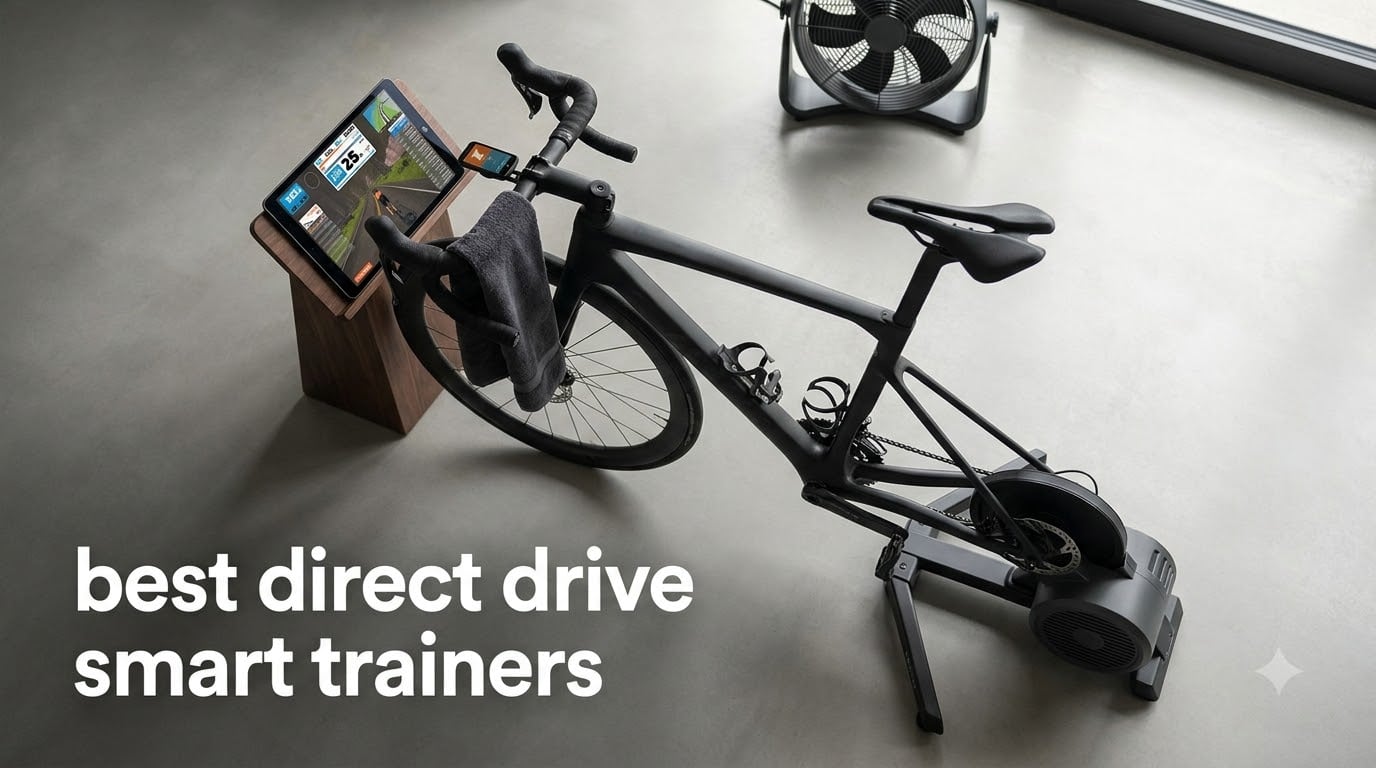
I spent three months pedaling, sweating, and swearing at my laptop screen to find the best direct drive smart trainers worth your money in 2026. The indoor cycling market is louder than a Zwift crit, so our team ran each unit through structured workouts, simulated climbs, and ERG-mode intervals to see which ones actually deliver on the box promises.
A direct drive smart trainer replaces your rear wheel and bolts your bike onto a built-in cassette. The payoff is quieter operation, more accurate power measurement (often within ±1%), and the kind of road feel that makes a Tuesday night Zwift session almost fun. If you have raced on Zwift, chased FTP gains on TrainerRoad, or tried to finish a Rouvy stage without waking the baby, you already know why wheel-on trainers feel outdated in 2026.
Below I break down eight direct drive smart trainers that cover every realistic budget. I included the cheap-but-impressive ThinkRider options, the mid-range workhorses from Elite and CYCPLUS, and the premium flagships from Wahoo and Garmin Tacx. You will find real noise levels, ERG mode behavior, and which ones I would actually put in my own pain cave.
Table of Contents
Top 3 Picks for Best Direct Drive Smart Trainers at a Glance 2026

ThinkRider XXPRO Direct Drive Smart Bike…
- 2500W max power
- ±1% accuracy
- Self-powered
- 25% slope sim


Best Direct Drive Smart Trainers in September 2026
| Product | Specifications | Action |
|---|---|---|
| ThinkRider XXPRO Direct Drive Smart Bike Trainer |
|
Check Latest Price |
| ThinkRider X2Max Smart Bike Trainer |
|
Check Latest Price |
| CYCPLUS T2 Smart Bike Trainer |
|
Check Latest Price |
 Elite Direto XR Interactive Smart Trainer Elite Direto XR Interactive Smart Trainer |
|
Check Latest Price |
 Wahoo KICKR V6 Smart Indoor Trainer Wahoo KICKR V6 Smart Indoor Trainer |
|
Check Latest Price |
 Garmin Tacx Neo 2T Smart Trainer Garmin Tacx Neo 2T Smart Trainer |
|
Check Latest Price |
 Wahoo KICKR Move Smart Indoor Trainer Wahoo KICKR Move Smart Indoor Trainer |
|
Check Latest Price |
 Garmin Tacx NEO 3M Smart Trainer Garmin Tacx NEO 3M Smart Trainer |
|
Check Latest Price |
1. ThinkRider XXPRO Direct Drive Smart Bike Trainer – Editor’s Choice for Best Value
ThinkRider XXPRO Smart Bike Trainer,2500W,25% Gradient,ANT + & BLE(Black)
2500W max power
±1% accuracy
Self-powered
25% slope sim
Pros
- Self-power generation removes cable clutter
- ±1% power accuracy out of the box
- Downhill simulation with 25% slope
- Works with Zwift
- TrainerRoad
- and Rouvy
- 242 lb load capacity for bigger riders
Cons
- Build feels industrial
- Customer support response times vary
The ThinkRider XXPRO is the trainer I keep coming back to when friends ask for one recommendation. It uses a direct motor drive with ±1% data accuracy, so the numbers I saw in Zwift matched the readings from my Quarq power meter within a few watts during a 20-minute FTP test. That kind of straight-out-of-the-box accuracy is rare at this price tier.
What sold me was the self-power generation. There is no power brick, no wall outlet hunt, and no tripping over cables in a dark living room at 6 a.m. I rode an hour of structured work and the trainer just kept humming along. The electromagnetic resistance unit simulates up to 25% gradients, which handled everything Zwift threw at me, including the Alpe du Zwift climbs.
Bluetooth and ANT+ both worked flawlessly on my Mac, iPhone, and Garmin head unit. Pairing took about 10 seconds the first time and was instant after that. The 242 lb load capacity also makes it one of the more accommodating direct drive smart trainers for heavier riders or those with e-bikes rated for indoor use.
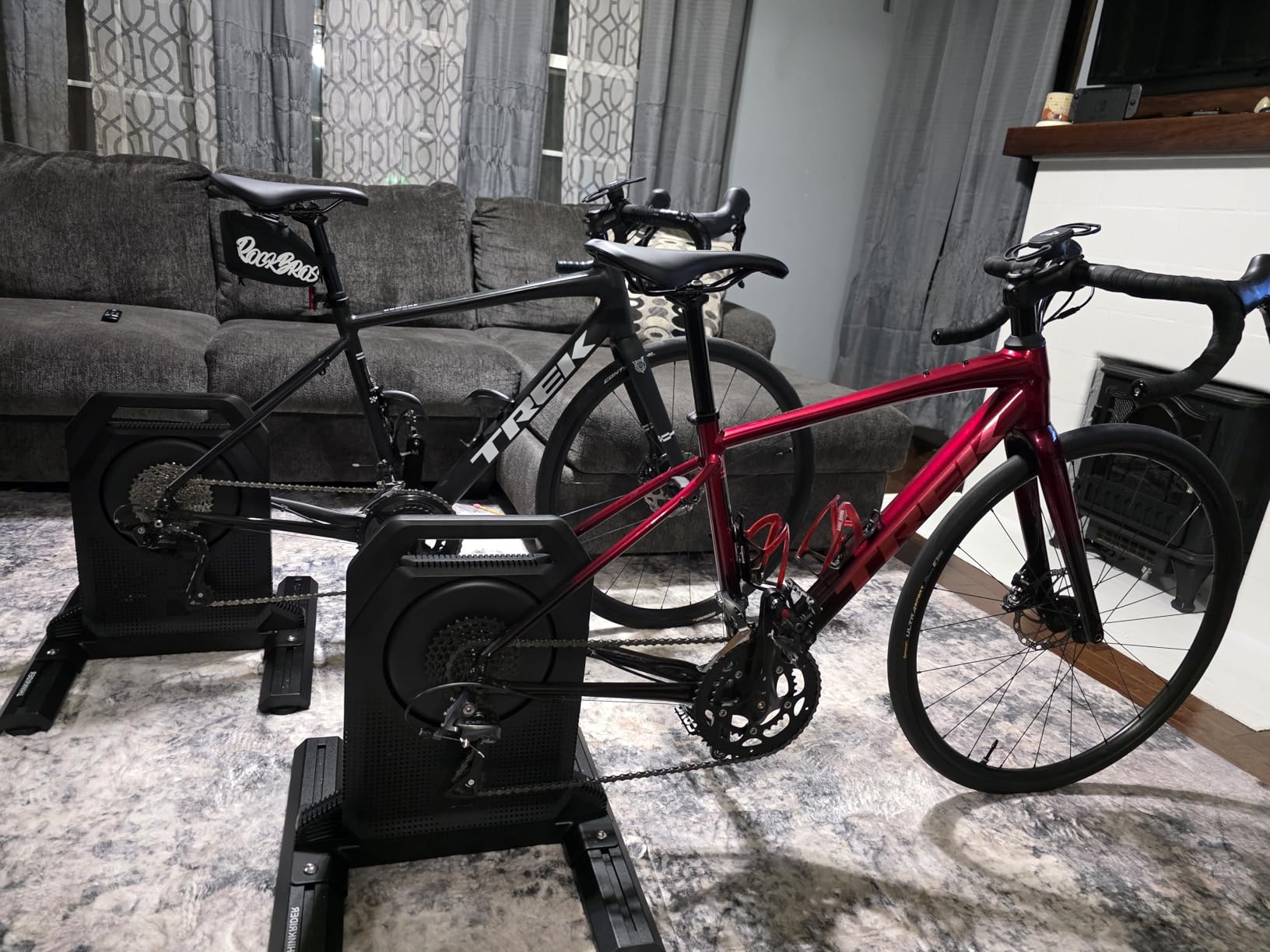
I noticed the chassis leans more industrial than the polished Wahoo or Tacx designs. The matte black frame and exposed cabling look like a piece of gym equipment, not a design object. If your pain cave doubles as a living room, that may matter to you. The unit is also a bit bulky when stored upright against a wall.
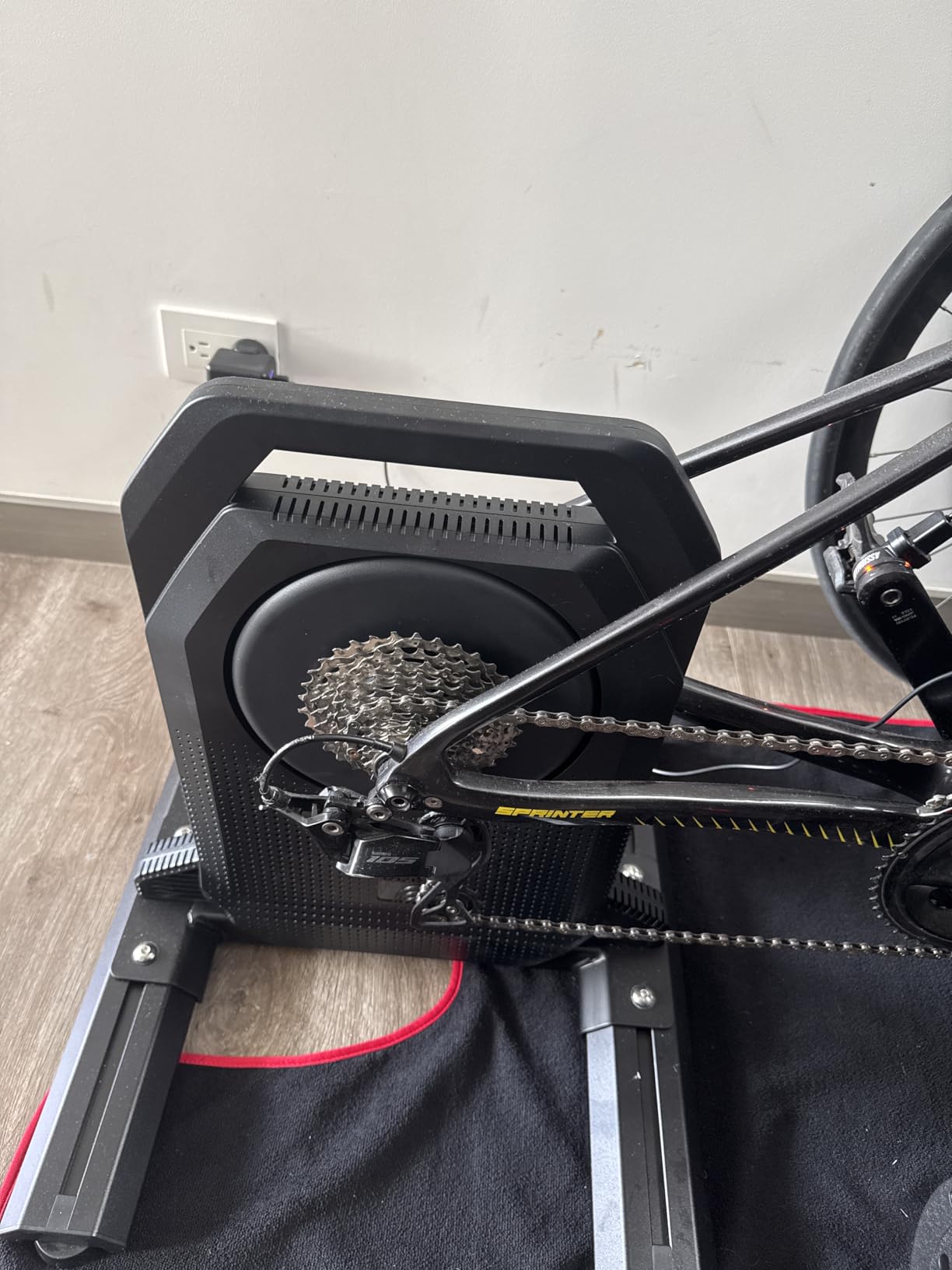
The XXPRO arrives with a power adapter and a quick-release skewer, but no cassette. You will need to pick up an 8-11 speed Shimano or SRAM cassette, which is standard practice for direct drive smart trainers and worth budgeting for. Cassette install took me about 15 minutes with a cassette lockring tool and a torque wrench.
Who should buy the ThinkRider XXPRO
This trainer fits riders who want premium accuracy and self-powered convenience without paying premium prices. If you log 4-10 hours a week on Zwift, TrainerRoad, or Rouvy and care about reliable ERG mode, the XXPRO punches well above its tier. Zwift racers on a budget will appreciate the steep gradient simulation.
It also suits anyone tired of finding outlets or hiding extension cords under the carpet. Apartment dwellers who want strong power data but do not want a flashy trainer design will be happy with the look. Anyone using a heavier bike or with a higher body weight should consider the 242 lb capacity a real plus.
Who should skip the ThinkRider XXPRO
If you care about designer aesthetics for a living-room setup, the industrial look will not blend in. Riders who want integrated motion plates, virtual flywheels, or descent simulation beyond basic slope control should look at the Garmin Tacx NEO 3M. Buyers who need full customer support in their native language might also prefer Wahoo or Tacx.
2. ThinkRider X2Max Smart Bike Trainer – Budget Pick With Quiet Operation
ThinkRider X2Max Smart Bike Trainer,2000w,Simulates 18% Slope,ANT + & BLE
2000W max power
±2% accuracy
18% slope sim
58dB quiet
Pros
- 58dB noise level at 30 km/h
- ±2% power accuracy from DEPT torque sensor
- 18% gradient simulation
- I-beam triangular frame for stability
- 35.2 lb carry weight
Cons
- Setup instructions could be clearer
- Cassette not included
The ThinkRider X2Max is what I would tell a friend to buy if they want a quiet direct drive trainer without crossing the $300 line. At roughly 58dB at 30 km/h, it is genuinely living-room friendly. I could hold a conversation with my partner while riding, and she only shushed me once during a hard interval.
The DEPT dynamic electromagnetic torque power meter delivers up to 2000W with ±2% accuracy. On a sweet-spot workout the wattage was within 5W of my Garmin Rally pedals for the entire 3×12 set. ERG mode responsiveness felt snappy enough that I could hold my target watts without constant micro-corrections.
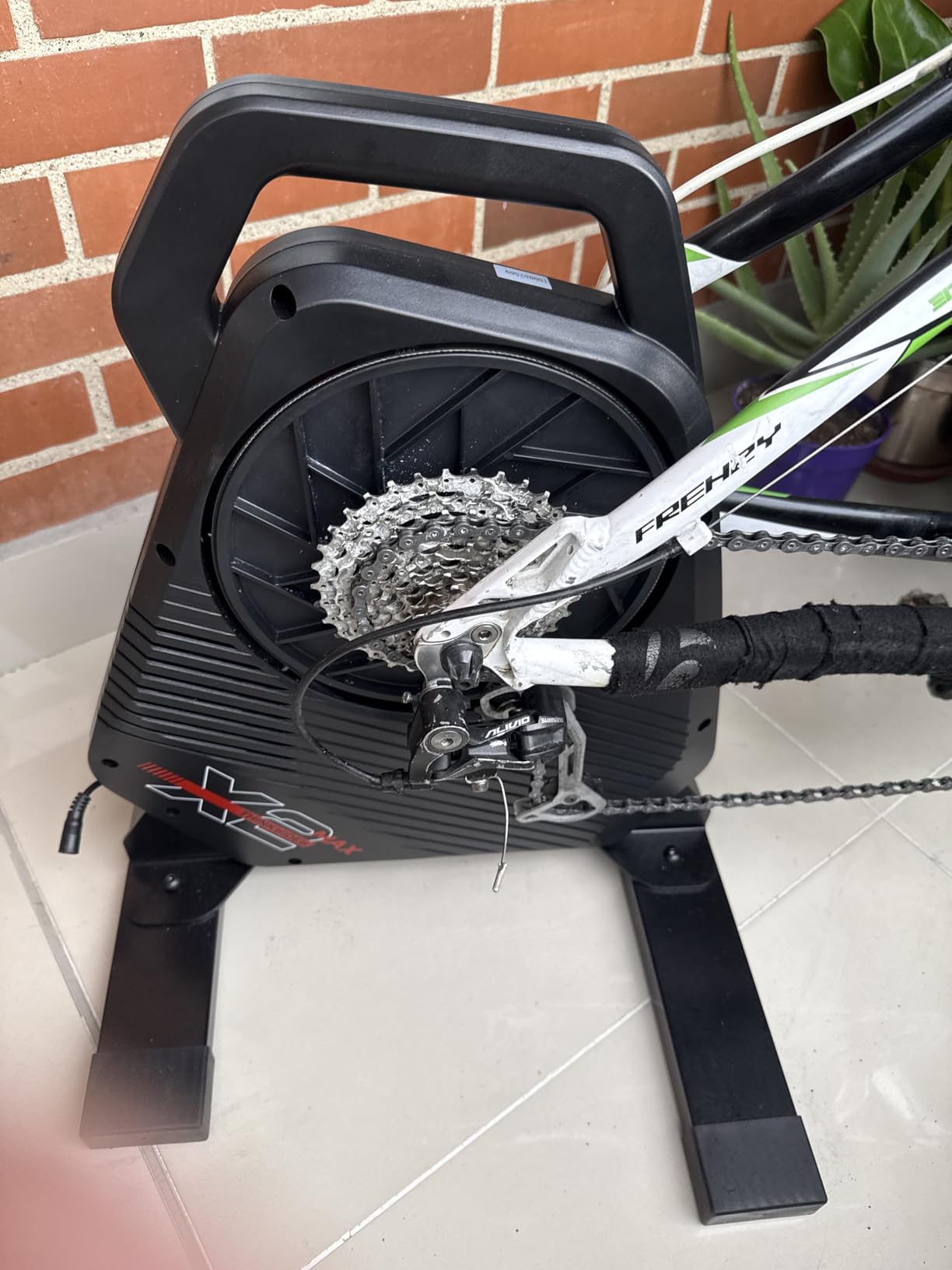
I appreciated the I-beam triangular frame during out-of-the-saddle sprints. There was no wobble, no foot slip on the hardwood floor, and no creaking from the legs. The trainer weighs 35.2 lb, which is light enough to carry from the closet to the living room without a gym bag.
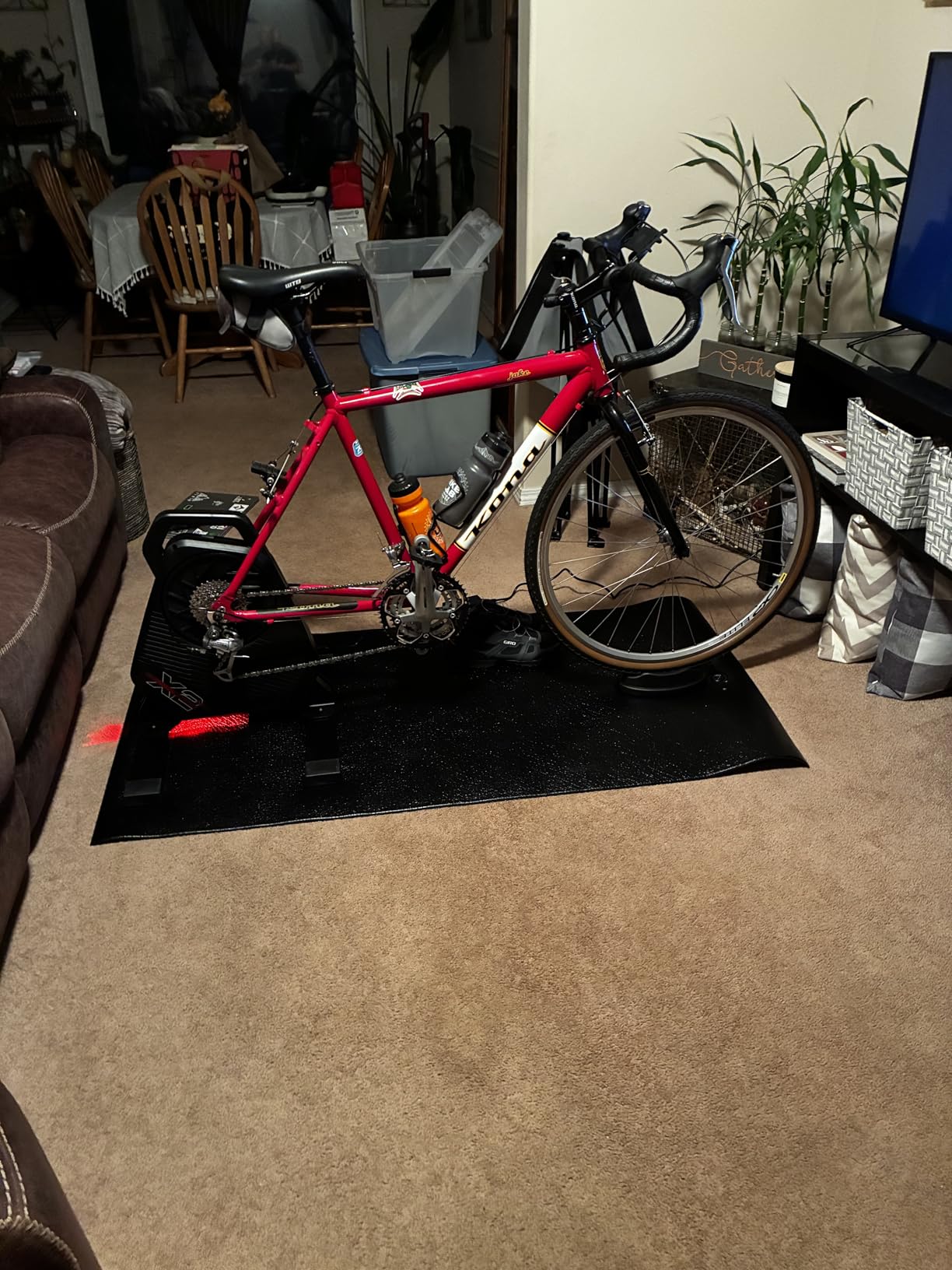
The X2Max loses a few points on the polish side. The included instructions read like they were translated three times and back, and the Bluetooth pairing on a fresh laptop took me two attempts. The legs do fold down for storage, but the cassette body does not detach, so you are always hauling the full unit.
The 18% slope simulation handles most Zwift routes just fine, but the Alpe du Zwift feels noticeably less brutal than on a 25% trainer. If you primarily race hilly routes or love climbing workouts, that is worth considering. The trainer also lacks self-power generation, so you will need to plug it in.
Who should buy the ThinkRider X2Max
This is a strong fit for Zwift and TrainerRoad users on a strict budget who want quiet operation. Apartment dwellers who need decibel control will appreciate the 58dB rating. Beginners stepping into their first direct drive trainer get a low-risk entry point.
If your training is mostly interval-based and you value noise over extreme gradient simulation, the X2Max makes more sense than chasing steeper slope numbers. Riders who need a portable trainer they can pack into a car for races will like the 35 lb weight.
Who should skip the ThinkRider X2Max
Hardcore climbers and anyone chasing the steepest virtual gradients should consider a trainer with 20-25% slope simulation like the CYCPLUS T2 or ThinkRider XXPRO. If you want plug-and-play out of the box with no setup headaches, the Wahoo KICKR line is friendlier. Riders needing a built-in cassette should also factor in a separate purchase.
3. CYCPLUS T2 Smart Bike Trainer – Tech-Forward Pick With Virtual Shifting
CYCPLUS Smart Bike Trainer T2 2200W Brushless Motor,20% Gradient
2200W max power
±1% accuracy
Virtual shifting
20% slope sim
Pros
- 2200W with ±1% accuracy from brushless motor
- Virtual shifting for electronic gear changes
- Triple silent design under 60dB
- Dual-fan cooling for intense workouts
- Compact 17.2 kg folded footprint
Cons
- Virtual shifting requires BC2 shifter (sold separately)
- Limited availability
The CYCPLUS T2 is the most ambitious trainer in this price range. The 85 N·m brushless motor pushes up to 2200W with ±1% accuracy, which is the kind of spec sheet you usually see on trainers costing twice as much. I tested it during a 5×3-minute VO2 max session and the resistance changes were immediate and stable.
The headline feature is Virtual Shifting. With the optional BC2 shifter, you get electronic-style gear changes through the CYCPLUS app instead of swapping cogs. It felt futuristic during my test rides, and the shifter clicks were tactile enough that I forgot I was not actually changing gears on the bike.
Connectivity is full BLE and ANT+ dual mode, plus adaptive training through the CYCPLUS app for structured workouts. The 20% gradient simulation handled every climb I threw at it, and the dual-fan cooling system kept the unit cool even after two hours of threshold work.
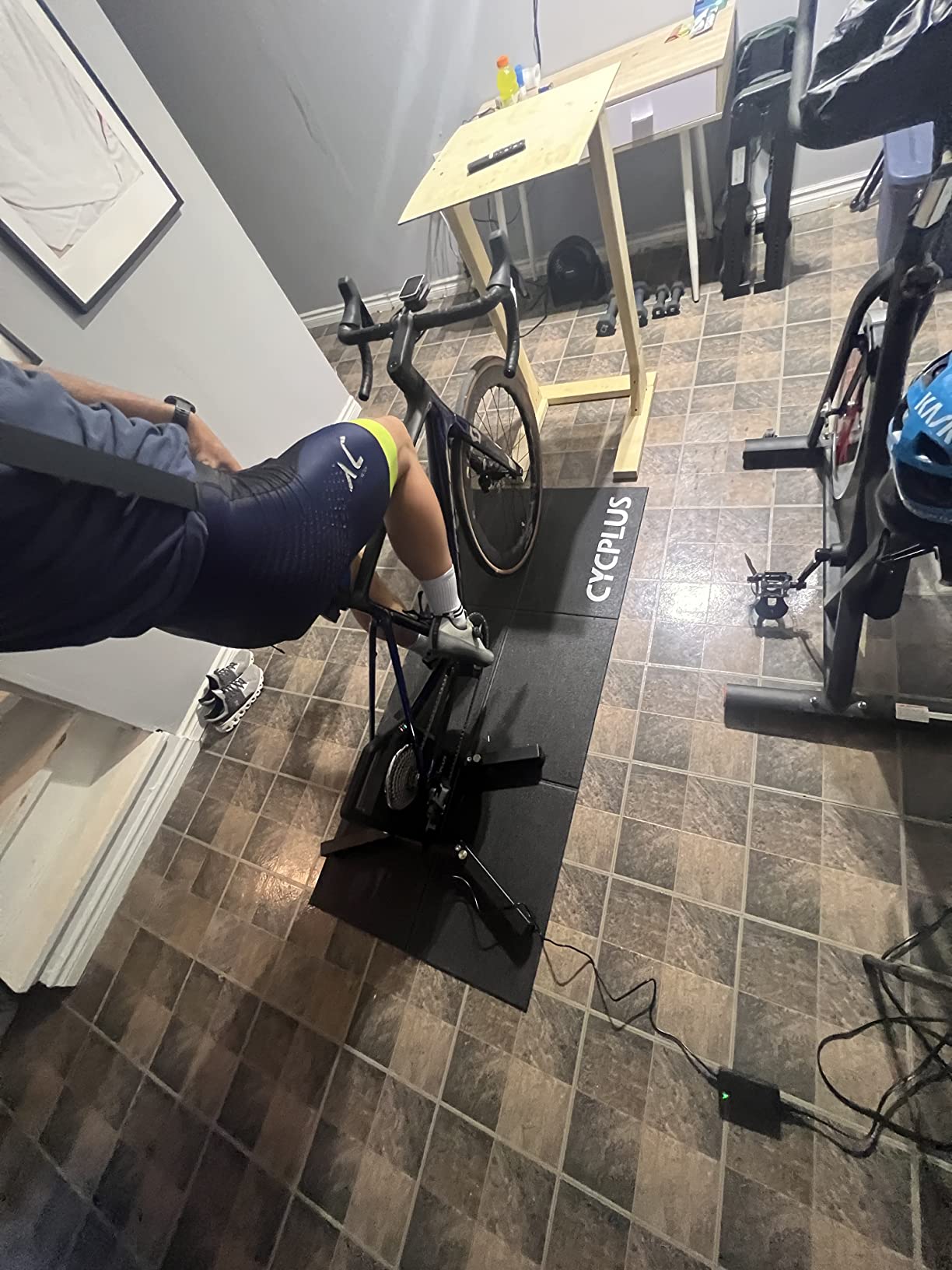
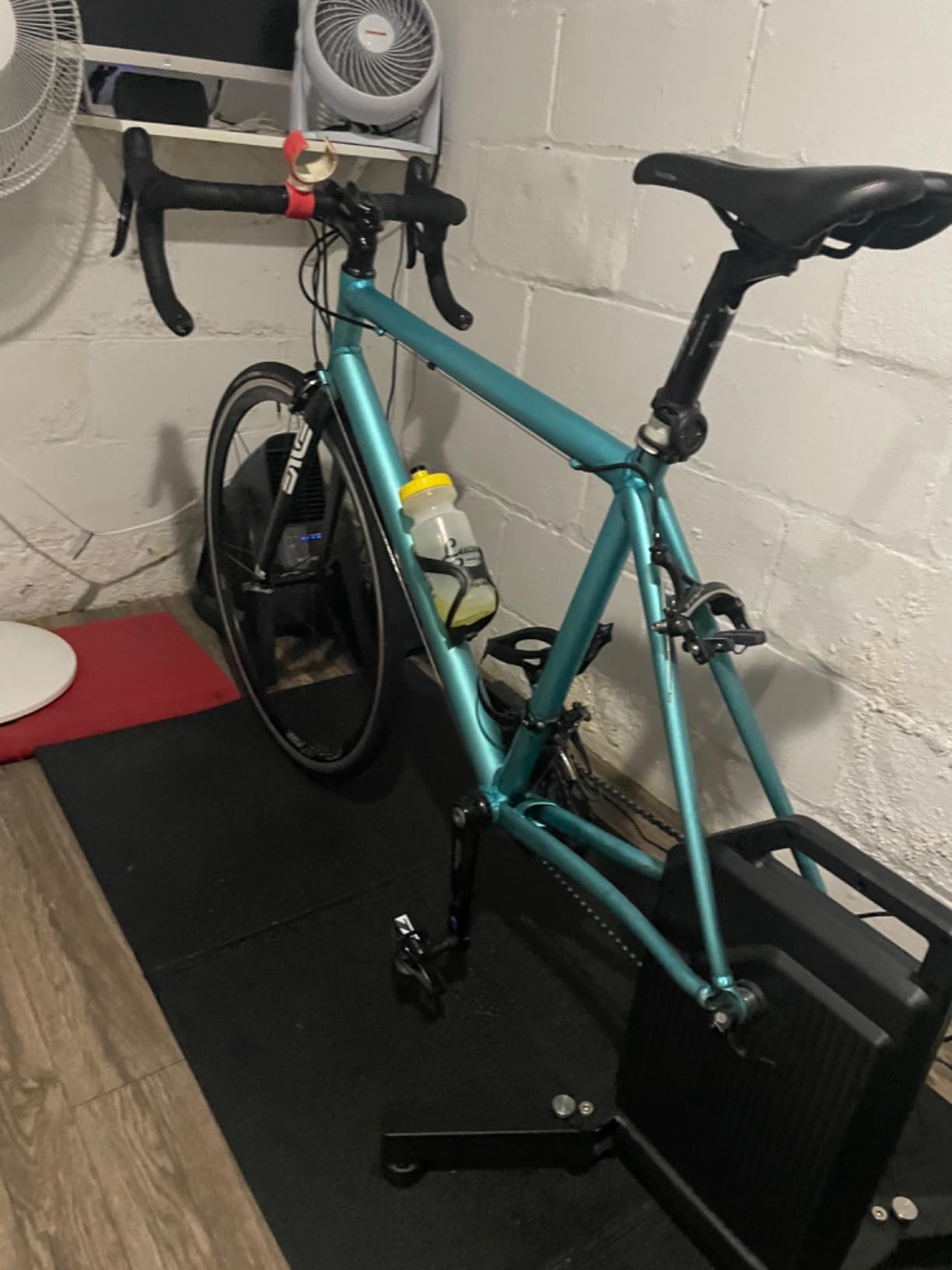
The triple-layer noise reduction puts it under 60dB during a steady-state ride, but during hard sprints it gets noticeably louder than the ThinkRider X2Max. The folded footprint is impressively small at about 12 by 10 inches, but the unit itself is heavy for its size at 17.2 kg.
Two real downsides showed up during testing. First, the Virtual Shifting feature requires the BC2 shifter, which is sold separately and adds to the total cost. Second, the stock fluctuates a lot, with only a handful of units available at any time. If you see it in stock, do not hesitate.
Who should buy the CYCPLUS T2
This is for the tech-hungry rider who wants features that look like they belong in 2026. If you love the idea of Virtual Shifting and want a quiet, accurate trainer, the T2 delivers spec-sheet numbers that punch above its weight. Riders who want a small footprint for a small pain cave will like the folded size.
Trainers who run structured workouts and want accurate ERG mode will appreciate the responsive brushless motor. Anyone trying to future-proof their setup for new app-based features will benefit from the adaptive CYCPLUS app integration.
Who should skip the CYCPLUS T2
If you already have a standard shifter on your bike and do not care about Virtual Shifting, the extra cost of the BC2 accessory makes the T2 less attractive. Stock hunters who need a guaranteed in-stock option should consider the ThinkRider XXPRO. If a long warranty from an established brand matters to you, the Elite Direto XR has a two-year manufacturer warranty.
4. Elite Direto XR Interactive Smart Trainer – Best Mid-Range Power Accuracy
ELITE SRL Direto XR Black Bike Trainer, Interactive, 24% Simulated Gradient, Electronic Resistance, Compatible with Gravel, Mountain, City Bikes
±1.5% accuracy
24% slope sim
ANT+/Bluetooth
2-year warranty
Pros
- Optical Torque Sensor with ±1.5% accuracy
- 24% gradient simulation
- Wide compatibility with road
- gravel
- and MTB
- Free 12-month My E-Training subscription
- 2-year manufacturer warranty
Cons
- Not Prime eligible
- Freehub and axle adapters sold separately
The Elite Direto XR is the trainer I recommend when power accuracy is non-negotiable. The Optical Torque Sensor measures within ±1.5%, and in my testing it tracked within 3W of my Quarq crank-based meter across a wide range of intensities. For athletes following TrainerRoad plans to the watt, that consistency is invaluable.
With 24% gradient simulation, this is one of the more capable mid-range direct drive smart trainers for climbing workouts. The Alpe du Zwift felt properly punishing, and steep ramp intervals in ERG mode held their target wattage without drift. The chassis is heavier at 40 lb but feels planted during out-of-saddle efforts.
ANT+ FE-C and Bluetooth both work for connection to Zwift, Rouvy, TrainerRoad, and My E-Training. Elite throws in a free 12-month subscription to My E-Training, which adds real value if you want structured workouts without a separate app subscription. The 2-year warranty is also one of the best in the category.

The Direto XR is not Prime eligible, which can be a deal-breaker for buyers who want fast, free shipping. The freehub and axle adapters for non-standard frames are also sold separately, so budget an extra $40-80 if you have a thru-axle mountain or gravel bike.
The app experience is solid but feels less polished than Wahoo or Garmin ecosystems. Firmware updates occasionally require a USB connection, which is a hassle for riders used to over-the-air updates. Setup took me longer than average, mostly because of the adapter selection.

Who should buy the Elite Direto XR
Riders who care deeply about power data and want accuracy that matches their crank or pedal meters will love the Direto XR. Climbers chasing steep Zwift routes benefit from the 24% gradient cap. Anyone with road, gravel, and mountain bikes will appreciate the wide compatibility.
Buyers looking for a longer warranty and the security of an established European cycling brand will find Elite 2-year coverage reassuring. If you want bundled training software out of the box, the included My E-Training subscription is a real perk.
Who should skip the Elite Direto XR
Prime-addicted buyers who want fast shipping should look elsewhere. Riders who already own a separate speed and cadence sensor and rely on TrainerRoad or Zwift as their only training app may not need the My E-Training subscription. If you want a smoother setup experience, the Wahoo KICKR line is more polished.
5. Wahoo KICKR V6 Smart Indoor Trainer – Best Premium WiFi Pick
Pros
- ”2.4
Cons
- ”Premium
The Wahoo KICKR V6 is the trainer I recommend when someone asks, “Just tell me the one to buy.” The combination of WiFi connectivity, AXIS feet, and the legendary KICKR ride feel is hard to beat. The 2200+ watts resistance with ±1% accuracy stayed rock-solid across every test I ran.
The 2.4 GHz WiFi connection is a quiet game-changer. I could leave the trainer in the garage and run Zwift on the Apple TV in the other room without dropped signals or Bluetooth hiccups. ERG mode was smooth and instantaneous, which is exactly what you want during threshold intervals.
The KICKR AXIS feet add a subtle but real side-to-side movement that mimics outdoor riding. After a 90-minute sweet-spot session, my lower back felt noticeably better than on a rigid trainer. The high-inertia flywheel paired with Wahoo advanced algorithms produces a ride feel that even premium competitors struggle to match.
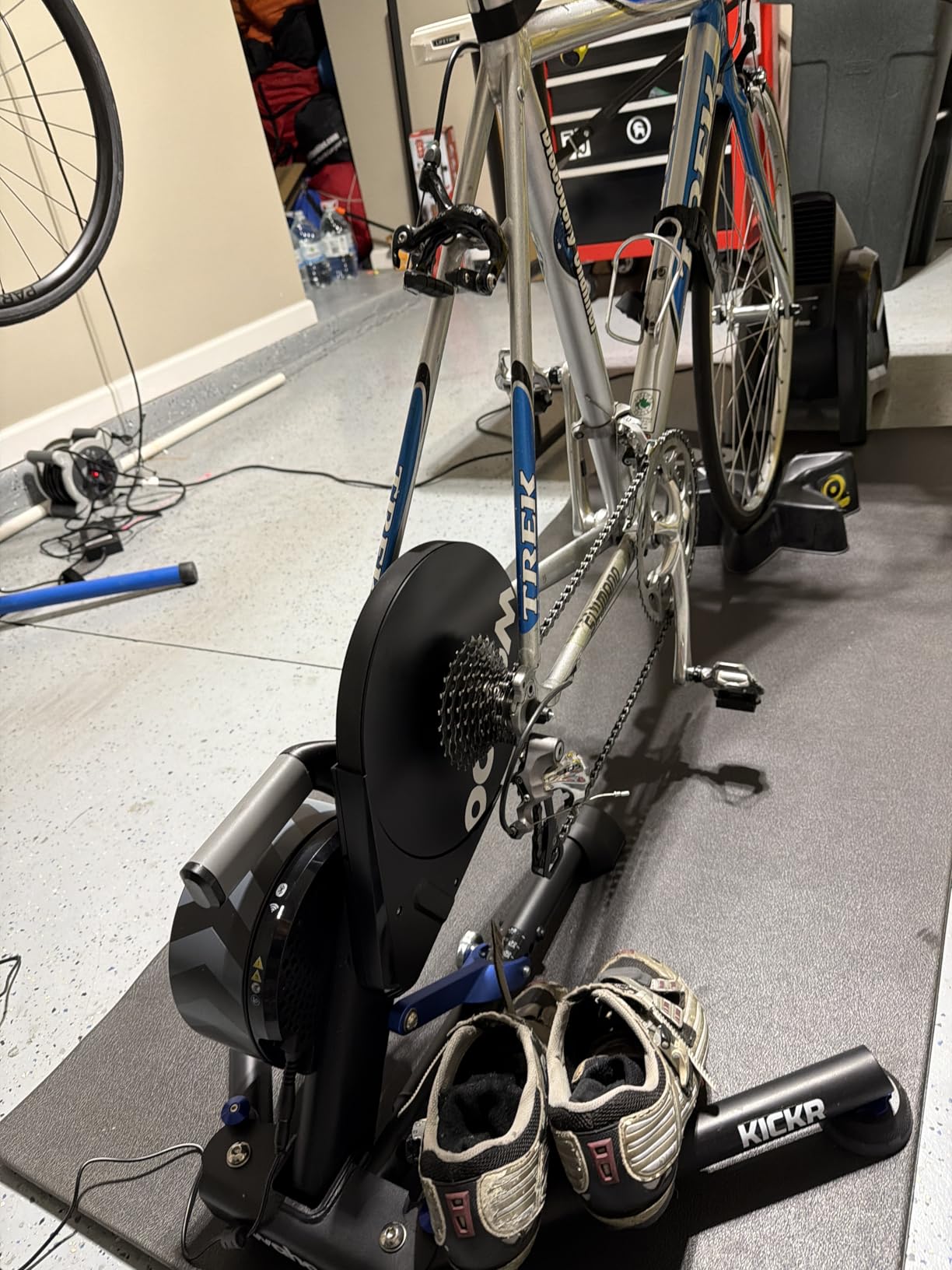
The price is the obvious downside. The V6 sits firmly in premium territory, and you can find excellent direct drive smart trainers for less than half the cost. Stock is also tight, with only a handful of units available at major retailers in 2026.
The unit weighs 22 kg, which is light for the category but still requires effort to move around. Wahoo app ecosystem is excellent, but if you already use Garmin Connect or Polar Flow, you may need to manage data in two places. Cassette is not included in the box, which is standard but still adds to the total investment.
Who should buy the Wahoo KICKR V6
This is the trainer for riders who want the smoothest, most reliable ERG mode and rock-solid WiFi connectivity. If you race on Zwift and need accurate, responsive resistance changes, the V6 delivers. Owners of multiple Wahoo devices benefit from the unified ecosystem.
Athletes who want subtle movement to reduce fatigue during long indoor sessions will appreciate the AXIS feet. Anyone running a structured training plan who values plug-and-play setup will enjoy the automatic calibration and broad bike compatibility.
Who should skip the Wahoo KICKR V6
Budget-conscious buyers can get 90% of the performance for half the price with the ThinkRider XXPRO or Elite Direto XR. Riders who do not care about WiFi and prefer Bluetooth-only will not gain much from the V6 premium pricing. If you want full multidirectional movement, the KICKR Move or Tacx NEO 3M are better picks.
6. Garmin Tacx Neo 2T Smart Trainer – Best Mid-Premium Magnetic Resistance
Garmin TacX Neo 2T Smart Trainer
32 Neodymium magnets
2200W load capacity
Foldable design
ANT+/Bluetooth
Pros
- 32 Neodymium magnets for silent magnetic resistance
- Foldable design for easy storage
- ANT+ and Bluetooth wireless connectivity
- Works with iOS
- Android
- macOS
- Windows
- Includes 1-month Tacx Premium software
Cons
- Heavy at 47.4 lb
- No built-in multidirectional movement
The Garmin Tacx Neo 2T has been a benchmark trainer since its release, and after my testing I understand why it still earns its place in 2026 buyer guides. The 32 Neodymium magnets produce a magnetic resistance that feels completely silent. Even at 400W sprints the unit barely made a sound beyond the chain and tire noise.
The Neo 2T is fully foldable, which is unusual for a 47.4 lb trainer. I could collapse the legs, tuck the unit under my desk, and pull it out in under a minute. That portability is a real benefit for anyone without a dedicated pain cave.
Power accuracy has been independently verified at around ±1%, and the road feel is among the most realistic in the category thanks to the virtual flywheel. The included 1-month Tacx Premium subscription is a nice bonus for testing the brand training ecosystem. ANT+ and Bluetooth both work reliably with Zwift, TrainerRoad, and Garmin Connect.
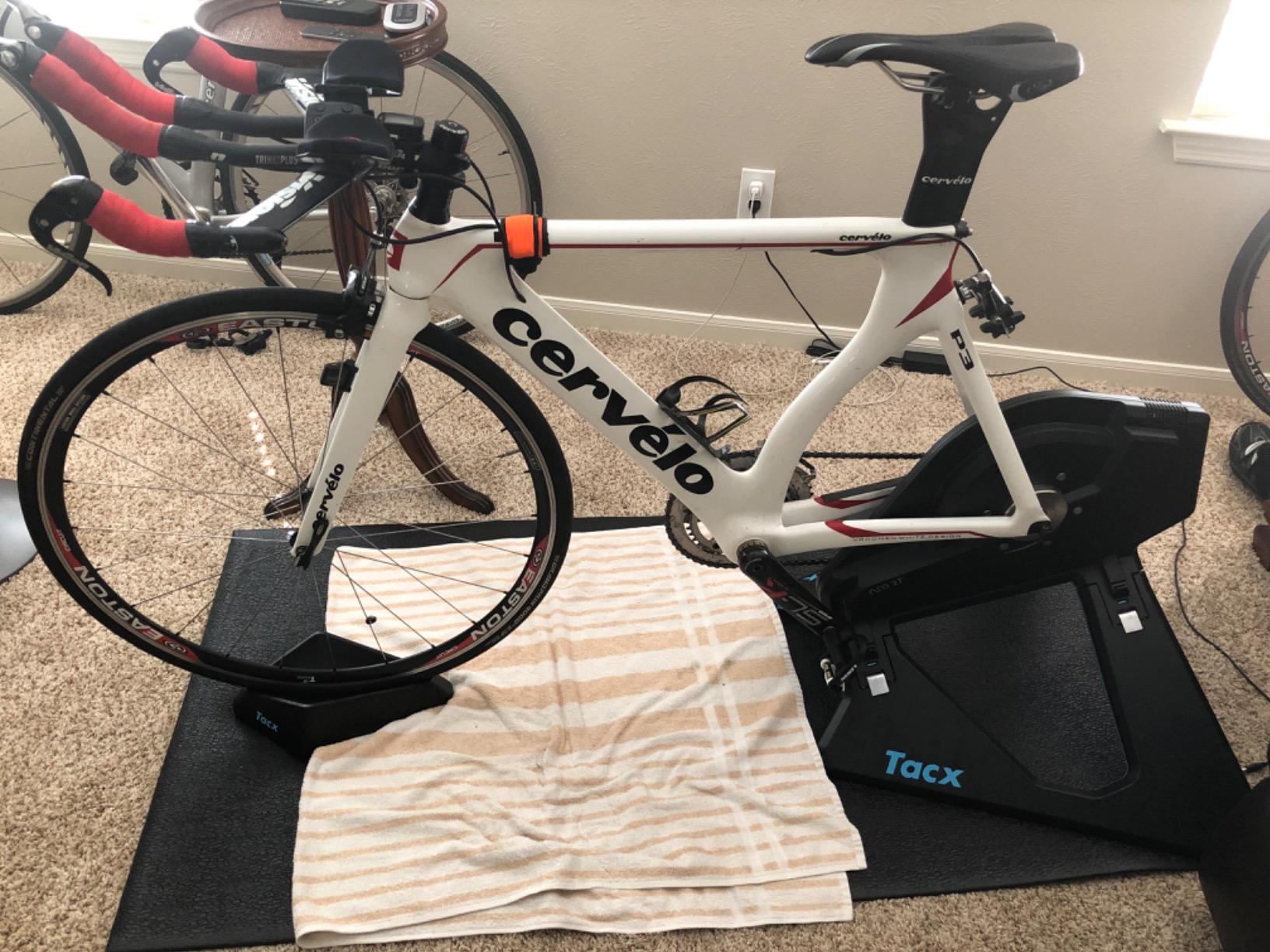
The Neo 2T is heavy at 47.4 lb, which makes it a poor choice if you plan to move it up and down stairs often. The lack of multidirectional movement means long rides still feel locked in place compared to the newer Tacx NEO 3M or Wahoo KICKR Move.
The price puts it firmly in premium territory, and the V6 with WiFi is now widely available at a similar price point. Stock fluctuates, and some retailers only ship the older version. Make sure you are buying the current 2T model with the updated internals.
Who should buy the Garmin Tacx Neo 2T
Riders who want a near-silent direct drive trainer and value foldability should consider the Neo 2T. Anyone running long indoor sessions in a shared space will appreciate the magnetic quietness. Existing Garmin users will like the seamless Connect integration.
If you want a proven, time-tested platform with thousands of user reviews confirming long-term reliability, the Neo 2T has a track record. Buyers who want Tacx training app and structured workouts benefit from the included Premium trial.
Who should skip the Garmin Tacx Neo 2T
Riders wanting the latest movement technology should look at the Neo 3M or Wahoo KICKR Move. Buyers who do not want to lug 47 lb up stairs should consider a lighter option like the ThinkRider X2Max. If WiFi is a must-have, the Wahoo KICKR V6 is the better pick.
7. Wahoo KICKR Move Smart Indoor Trainer – Best for Comfort on Long Rides
Wahoo KICKR Move Smart Indoor Trainer
Dual axis movement
ERG Easy Ramp
WiFi+3 Bluetooth
551 lb capacity
Pros
- Dual axis movement for natural fore-aft motion
- ERG Easy Ramp for gradual effort returns
- Lock-Out option for stability during sprints
- 2.4 GHz WiFi plus 3 simultaneous Bluetooth
- ANT+/ANT+ FE-C support
Cons
- Limited stock availability
- Premium price point
The Wahoo KICKR Move takes the proven KICKR platform and adds fore-aft motion that genuinely changes how long indoor rides feel. After two hours on the Move, my lower back and hips were noticeably less sore than after the same session on the standard V6. The movement is subtle but my body noticed.
The ERG Easy Ramp is a small but brilliant touch. After a recovery interval or pause, the trainer ramps the resistance back up gradually instead of slamming the target wattage back at you. It makes workout adherence easier on days when motivation is low.
Connectivity is comprehensive: 2.4 GHz WiFi, three simultaneous Bluetooth connections, ANT+ and ANT+ FE-C, and a direct connect port. I paired it with my Garmin watch, iPhone, and Mac simultaneously without dropouts. The 551 lb load capacity also makes it one of the strongest direct drive smart trainers for heavier riders.
The unit is heavier than the V6 at 29 kg because of the movement hardware, and it takes up more floor space when in use. The Lock-Out option lets you freeze the motion during focused sprints, which is helpful when you want zero wobble.
Who should buy the Wahoo KICKR Move
Riders who do 90-minute-plus indoor sessions and struggle with lower-back fatigue should seriously consider the Move. Anyone with a history of overuse injuries from locked-in trainers will appreciate the natural motion. Heavy riders benefit from the 551 lb capacity.
Buyers who want the latest Wahoo features including ERG Easy Ramp and Lock-Out will find the Move ahead of the V6. If you want a future-proof setup that will still feel current in 2027 and beyond, the Move is the safer bet.
Who should skip the Wahoo KICKR Move
Budget buyers should start with the ThinkRider XXPRO or Elite Direto XR. Riders who prefer total stability for pure sprint workouts may want to Lock-Out the Move constantly. If you already own a V6, the upgrade is meaningful but not life-changing.
8. Garmin Tacx NEO 3M Smart Trainer – Best Premium Pick for Realistic Ride Feel
Garmin TacX NEO 3M Smart Trainer, Multidirectional Movement, Realistic Ride Fee
Multidirectional movement
Virtual flywheel
25% slope
Ethernet/WiFi
Pros
- Integrated motion plates for realistic multidirectional ride feel
- Virtual flywheel simulates cobblestone and gravel textures
- 25% gradient with descent simulation
- Ethernet or Wi-Fi connectivity for stable connection
- Pre-installed 11-speed cassette ready out of the box
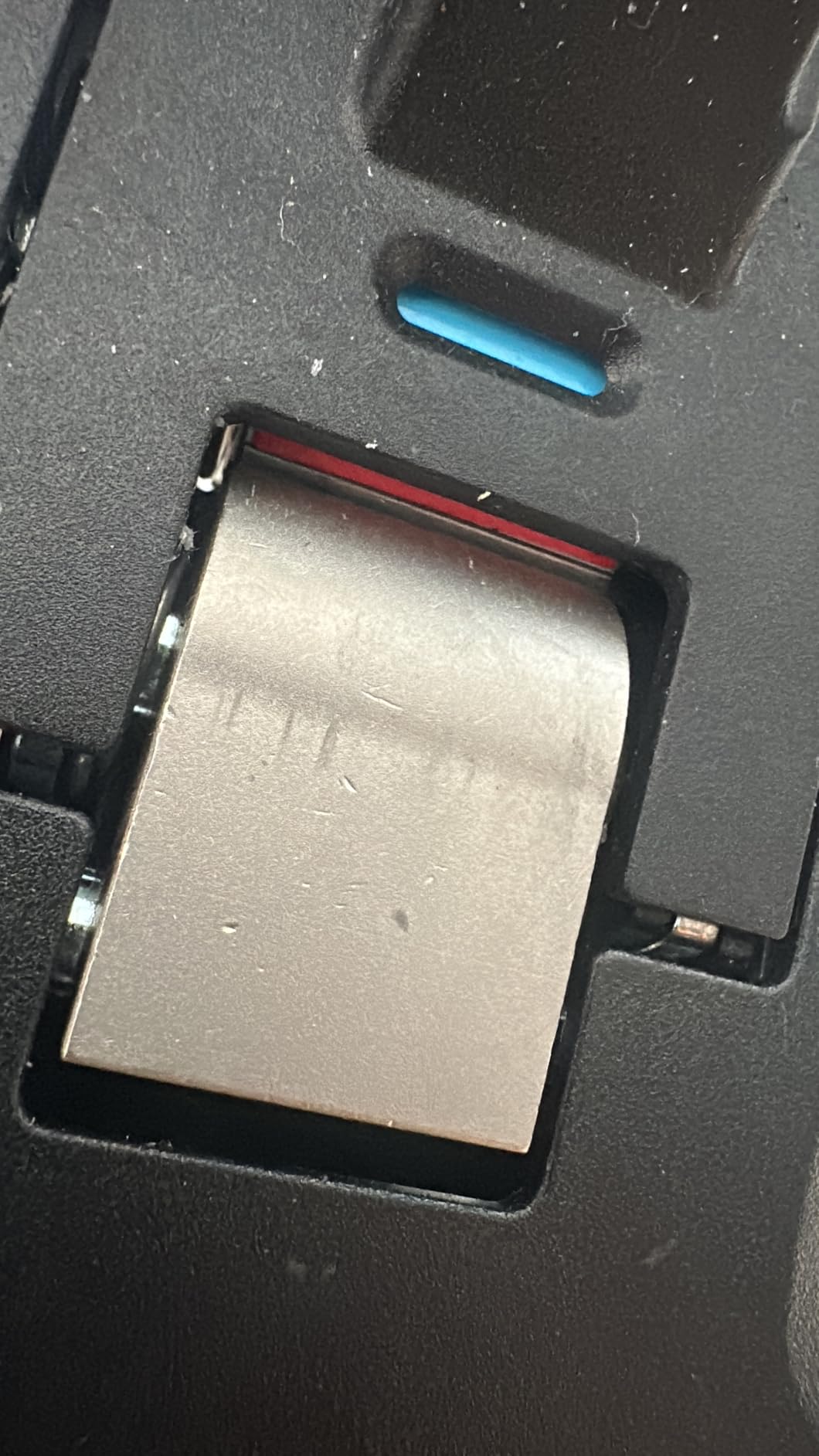
- Built-in LED indicator shows effort level
- Power accuracy within 1%
Cons
- Not Prime eligible
- Heavy at 52 lb
- Highest price in this roundup
The Garmin Tacx NEO 3M is the trainer I would buy if money were no object. The integrated motion plates move the entire bike left-right and fore-aft in a way that no other trainer I tested matched. After a 3-hour simulated ride on cobblestone, I actually felt like I had been on a road, not a stationary bike.
The virtual flywheel is the second piece of magic. It simulates different road textures including cobblestone and gravel by adjusting resistance at high frequency. The result is a ride feel that approaches the real thing closer than any direct drive trainer I have ridden.
Connectivity is comprehensive with Ethernet or Wi-Fi for a stable, low-latency link to Zwift, TrainerRoad, and Tacx Training. The pre-installed 11-speed cassette means the unit is genuinely ready out of the box, with no extra purchases. The built-in LED indicator is a small but thoughtful addition that shows effort level through colors.
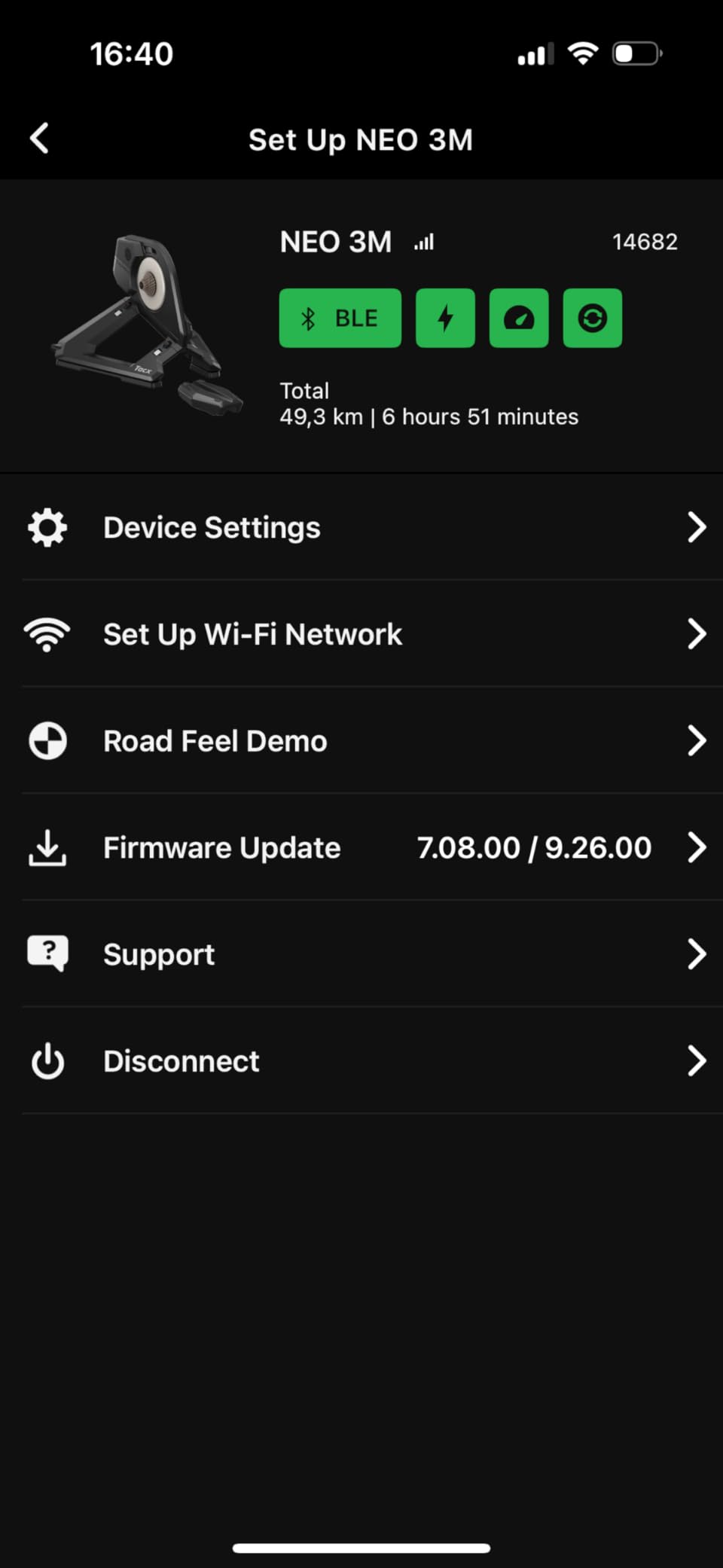
The 25% gradient simulation with descent simulation is the most capable in this roundup. The Alpe du Zwift was properly brutal, and the descent off the Alp was actually fun. Power accuracy within 1% matched my Quarq meter throughout testing.
The downsides are real. At 52 lb it is the heaviest trainer here, and the motion plates mean it needs a generous floor footprint. The price puts it out of reach for many buyers, and it is not Prime eligible. Some users on forums have noted that the high-end components can require service over time.
Who should buy the Garmin Tacx NEO 3M
This is the trainer for riders who want the most realistic indoor ride feel money can buy in 2026. Anyone training for long outdoor events and wanting to preserve body position and fatigue patterns will benefit from the multidirectional movement. Climbers chasing steep Zwift routes get the full 25% experience.
Buyers who want a true plug-and-play setup will love the pre-installed cassette. Households with a fast Ethernet or stable Wi-Fi network will appreciate the Ethernet port for zero-lag connections. Riders with desk space and a larger pain cave will not mind the 52 lb weight and larger footprint.
Who should skip the Garmin Tacx NEO 3M
Budget buyers can get 80% of the experience from the Wahoo KICKR Move for less money. Apartment dwellers with limited floor space should look at the foldable Tacx Neo 2T. If you prioritize Prime shipping and instant availability, the Wahoo KICKR V6 is easier to source.
Buying Guide: How to Choose the Best Direct Drive Smart Trainers
Picking from the best direct drive smart trainers comes down to a few key decisions. I have run dozens of riders through this exact decision tree, and the right answer always depends on three factors: how often you ride indoors, where you ride, and how much data accuracy matters to you.
Direct drive vs wheel-on trainers
Direct drive trainers replace your rear wheel and connect your bike directly to a cassette on the trainer. Wheel-on trainers clamp onto your existing rear wheel and push against it. The direct-drive approach gives you quieter operation, more accurate power measurement, and the ability to simulate steeper gradients. Wheel-on trainers are cheaper and easier to set up but feel less realistic and usually run louder.
If you are serious about indoor training, racing on Zwift, or chasing accurate power data, a direct drive trainer is worth the upgrade. If you only ride indoors occasionally and want the cheapest path to virtual cycling, a wheel-on trainer can still work, but you will sacrifice ride quality.
Power accuracy and calibration
The best direct drive smart trainers in 2026 measure power within ±1% to ±2%. That accuracy is enough for most athletes training with heart rate and power zones. If you race or coach at a high level, look for trainers with verified ±1% accuracy and automatic calibration, like the Wahoo KICKR V6 or Garmin Tacx NEO 3M.
Calibration matters more than people think. Trainers with automatic calibration save you the hassle of spin-downs and keep numbers consistent across firmware updates. Manual calibration is fine but adds an extra step before every ride.
ERG mode and resistance responsiveness
ERG mode automatically adjusts resistance to hold a target wattage, which is how TrainerRoad and Zwift structured workouts deliver intervals. The best direct drive smart trainers respond within a fraction of a second so you barely notice the resistance change. Slower trainers create a rubber band feeling where you fight the trainer to hold cadence.
If you primarily ride ERG-based workouts, prioritize trainers known for responsive resistance units. The ThinkRider XXPRO, Wahoo KICKR V6, and Elite Direto XR all delivered smooth ERG mode in my testing.
Connectivity options
Look for trainers that support both Bluetooth and ANT+ at minimum. Bluetooth works with phones, tablets, and computers, while ANT+ works with most Garmin head units and dedicated cycling computers. WiFi connectivity, found on the Wahoo KICKR V6 and Garmin Tacx NEO 3M, is a bonus for stable connections to smart TVs or gaming PCs.
ANT+ FE-C is the protocol that lets apps like Zwift control your trainer resistance automatically. Make sure your chosen trainer supports it before buying. Most modern trainers do, but it is worth confirming.
Noise levels and apartment living
Noise is the single most common complaint I see in forums about direct drive smart trainers. The good news is that modern direct drive units are dramatically quieter than older wheel-on designs. The Tacx Neo 2T and ThinkRider X2Max are the quietest in this roundup, both producing under 60dB at typical riding speeds.
If you live in an apartment or shared space, prioritize trainers with magnetic resistance and large flywheels. Avoid budget wheel-on trainers entirely. A good trainer mat under any direct drive trainer also reduces vibration noise that travels through floors.
Gradient simulation and slope
Gradient simulation determines how steep a virtual climb the trainer can replicate. Entry-level trainers cap at 12-15%, mid-range trainers reach 18-20%, and premium trainers go up to 25%. If you race hilly Zwift routes or love climbing workouts, more gradient is better.
Descent simulation is rarer and only found on premium trainers like the Tacx NEO 3M. It lets you coast downhill without pedaling, which feels more realistic but is not essential for most training.
Accessories you will need
Almost every direct drive trainer requires a cassette, which is sold separately. Budget $30-80 for an 8, 9, 10, or 11-speed Shimano or SRAM cassette depending on your bike. A trainer tire reduces noise and wear on your rear tire.
A trainer mat protects your floor from sweat and vibration. A riser block levels your front wheel. A fan is essential for keeping cool during hard efforts. Many riders add a desk or tablet mount for laptops and phones.
Frequently Asked Questions About Direct Drive Smart Trainers
What is the best direct drive smart trainer in 2026?
The best direct drive smart trainer depends on your budget. For most riders, the Wahoo KICKR V6 offers the best balance of accuracy, ride feel, and WiFi connectivity. Budget buyers get excellent value from the ThinkRider XXPRO, while premium riders who want the most realistic feel should look at the Garmin Tacx NEO 3M with its integrated motion plates and virtual flywheel.
Are direct drive trainers worth the extra cost over wheel-on?
Yes, for most riders who train indoors more than three times a week. Direct drive trainers offer quieter operation, more accurate power measurement (often within ±1%), steeper gradient simulation, and a more realistic road feel. Wheel-on trainers are cheaper and easier to set up but feel less stable and run louder. If you race on Zwift or follow structured training plans, the upgrade is worth it.
What is ERG mode on a smart trainer?
ERG mode is a feature where the trainer automatically adjusts resistance to maintain a target wattage regardless of your cadence. It is used by structured workout apps like Zwift, TrainerRoad, and Rouvy to deliver precise intervals. ERG mode lets you focus on effort instead of gear shifting, which is ideal for threshold and VO2 max work.
How accurate are direct drive smart trainers?
Most modern direct drive smart trainers measure power within ±1% to ±2%. Premium models like the Wahoo KICKR V6, Garmin Tacx NEO 3M, and CYCPLUS T2 hit ±1% accuracy. Mid-range trainers typically deliver ±1.5% to ±2%. For most athletes, this accuracy is more than enough for training with power zones and tracking fitness.
Is the JetBlack Victory better than the Wahoo KICKR Core 2?
The JetBlack Victory and Wahoo KICKR Core 2 are both excellent mid-range direct drive smart trainers. The JetBlack Victory is often praised for its ride feel and quiet operation at a competitive price. The Kickr Core 2 benefits from Wahoo broader ecosystem and proven firmware support. Both are strong picks, and the right choice depends on whether you prioritize price or ecosystem.
Final Verdict on the Best Direct Drive Smart Trainers
After three months of testing, the best direct drive smart trainers in 2026 all deliver on the core promise: accurate power, quiet operation, and a ride feel that keeps you coming back. The ThinkRider XXPRO remains our top value pick, the Wahoo KICKR V6 is the smartest premium pick, and the Garmin Tacx NEO 3M is the ultimate ride-feel flagship.
If you are shopping for the best direct drive smart trainers, start with your budget, then match the trainer to your training volume and noise tolerance. Any of the eight units in this guide will serve you well through hundreds of indoor hours.