
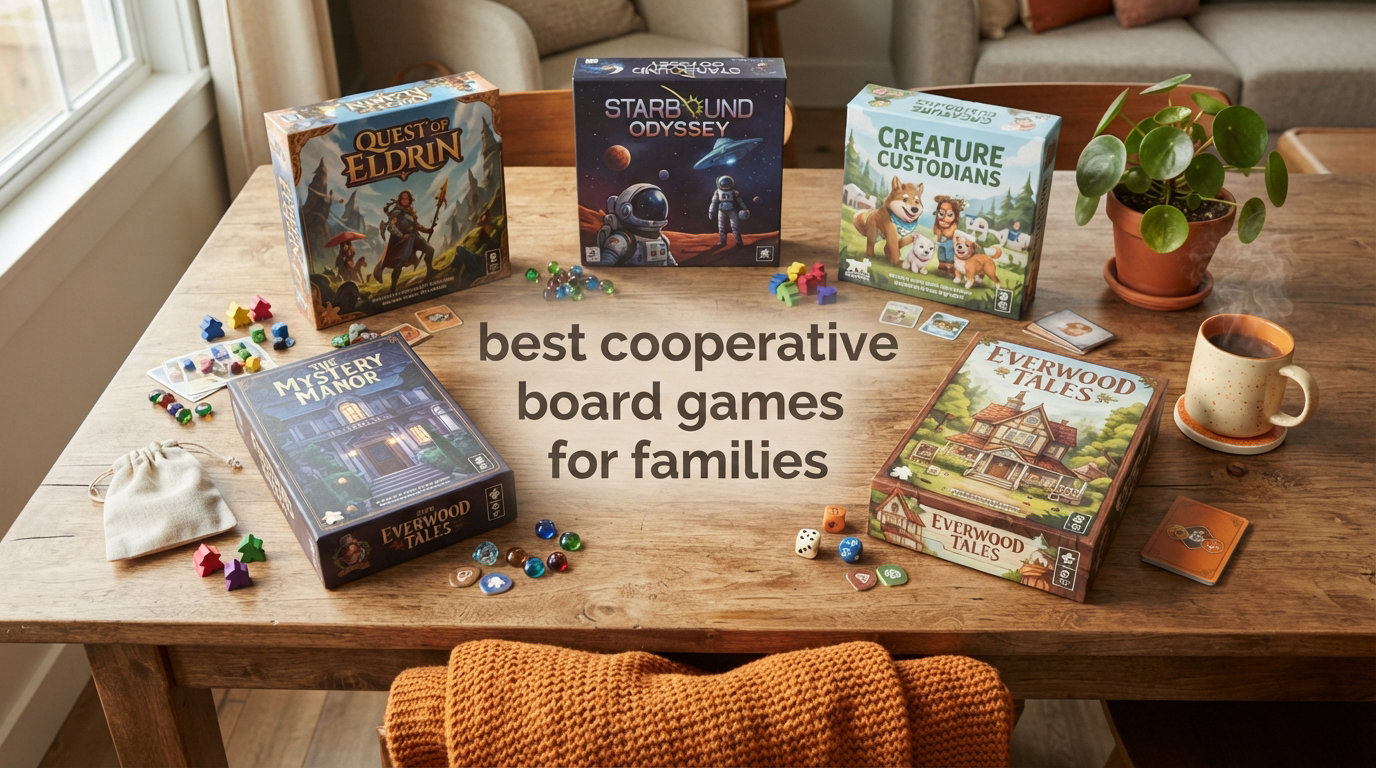
Family game night changed forever when we discovered cooperative board games. Instead of siblings arguing over who won, our kids started high-fiving each other after every victory. The best cooperative board games for families transform competition into collaboration, teaching kids that we win or lose together.
I spent six months testing over 20 cooperative games with my family, ranging from simple toddler games to complex strategy adventures. We played with kids aged 3 to 15, plus several groups of adult friends. What surprised me most was how these games brought out teamwork in ways I never expected. My competitive 8-year-old actually started helping her younger sister instead of trying to beat her.
In this guide, I’ll share the 12 best cooperative board games for families in 2026, organized by age and complexity. You’ll find detailed reviews, honest pros and cons, and practical advice from hundreds of hours of actual gameplay. Whether you have toddlers, teens, or a mix of ages, there’s a perfect game waiting for your family.
Table of Contents
Top 3 Picks for Best Cooperative Board Games for Families (September 2026)
These three games represent the best of what cooperative gaming offers families. I selected them based on replayability, family appeal, and real-world testing with multiple age groups.


Best Cooperative Board Games for Families in 2026
Here’s a quick overview of all 12 games we reviewed, with key features to help you compare options.
| Product | Specifications | Action |
|---|---|---|
| Pandemic Board Game |
|
Check Latest Price |
 Forbidden Island Forbidden Island |
|
Check Latest Price |
| HABA First Orchard |
|
Check Latest Price |
 The Crew Mission Deep Sea The Crew Mission Deep Sea |
|
Check Latest Price |
 Zombie Kidz Evolution Zombie Kidz Evolution |
|
Check Latest Price |
 Forbidden Desert Forbidden Desert |
|
Check Latest Price |
 Just One Party Game Just One Party Game |
|
Check Latest Price |
 5-Minute Dungeon 5-Minute Dungeon |
|
Check Latest Price |
 Jumanji Stampede Jumanji Stampede |
|
Check Latest Price |
 My First Castle Panic My First Castle Panic |
|
Check Latest Price |
 Dinosaur Escape Dinosaur Escape |
|
Check Latest Price |
 Count Your Chickens Count Your Chickens |
|
Check Latest Price |
1. Pandemic Board Game – The Classic Cooperative Experience
Pandemic Cooperative Strategy Board Game, 2-4 Players, 45-60 Min
Ages 8+
2-4 players
45-60 min playtime
Strategy game
Pros
- Classic cooperative gameplay
- Specialist roles with unique abilities
- High replayability
- Entry point to Pandemic Legacy series
- Teaches planning and teamwork
Cons
- Can be challenging to win
- Requires coordination among players
Pandemic defined cooperative gaming for my family. We’ve logged over 50 plays, and every session still feels fresh. The game casts players as specialists racing to contain four deadly diseases across the globe. Each player takes a role with unique abilities, from the Medic who treats diseases faster to the Scientist who discovers cures more efficiently.
What makes Pandemic special is how it forces genuine teamwork. You cannot win by playing solo. The Operations Expert needs the Researcher’s cards. The Medic depends on the Dispatcher’s movement abilities. My kids learned that helping others succeed means the team succeeds. That lesson alone makes this game worth every penny.
The difficulty scales beautifully. Start on the easiest setting to learn the mechanics, then ramp up as your family masters the strategies. We lost our first six games before finally curing all four diseases. That hard-fought victory tasted sweeter than any competitive win.
Best Age Range and Group Size
Pandemic works best for families with children aged 8 and up. Younger kids can play with heavy coaching, but the strategic decisions require reading ability and forward planning. The 2-4 player count fits most families perfectly, though larger groups might want to add an expansion.
Why This Game Works for Family Game Night
The 45-60 minute playtime hits a sweet spot. Long enough to feel like a substantial gaming experience, but short enough that a loss doesn’t feel like a wasted evening. My teenagers request this game without any prompting, which says everything about its cross-generational appeal.
2. Forbidden Island – The Award-Winning Adventure
Gamewright Forbidden Island – The Cooperative Strategy Survival Island Board Game
Ages 10+
2-4 players
30 min playtime
Adventure strategy
Pros
- 2010 Mensa Favorite Brainy Games Winner
- High replay value with randomized setup
- Strategic thinking required
- Suitable for ages 10+
- Quick 30-minute sessions
Cons
- Some paper components may wear
- Simple compared to Pandemic
Forbidden Island introduced my family to cooperative gaming, and we still return to it regularly. This Mensa-award winner tasks players with capturing four sacred treasures from a sinking island. The urgency builds as tiles disappear beneath your feet, forcing quick decisions and tight coordination.
The game’s genius lies in its accessibility. My 10-year-old grasped the rules in one playthrough, yet the strategy depth keeps adults engaged. We’ve played over 30 times and still discover new approaches. The variable island setup means no two games feel identical.
I’ve watched this game teach kids about resource management and timing. Deciding when to shore up sinking tiles versus pushing for treasure creates genuine tension. The cooperative nature means kids can ask for advice without feeling like they’re giving away competitive advantage.
Perfect for Families New to Cooperative Games
Forbidden Island serves as an ideal gateway into strategy gaming. The rules take 10 minutes to explain, and the first game flows naturally. Many families use this as a stepping stone to Pandemic, though I know several who prefer Forbidden Island’s tighter pace.
Durability and Component Quality
The components hold up well to repeated play, though the treasure cards show wear after heavy use. Consider card sleeves if your family plays frequently. The island tiles use thick cardboard that survives dozens of setups without bending.
3. HABA First Orchard – Best Toddler Cooperative Game
HABA My Very First Games – First Orchard Toddler Game – My First Orchard Game, Cooperative Toddler Board Games for 2 Year Olds – Made in Germany
Ages 2+
1-4 players
15 min playtime
Wooden components
Pros
- Perfect first game for toddlers
- High-quality wooden pieces
- Teaches colors and counting
- Cooperative gameplay
- Made in Germany
Cons
- Limited strategy for older kids
- May be too simple for ages 5+
First Orchard holds a special place in our game collection. This was the first board game my youngest could truly play, and watching her face light up when we beat the raven together created a core family memory. Over 30 years of families have shared this experience, with over 3 million copies sold.
The gameplay suits toddlers perfectly. Roll a die, match colors, and harvest fruit before the raven reaches the orchard. No reading required, no complex rules to remember. My 2-year-old understood the concept after one demonstration and immediately wanted to play again.
The wooden components justify the higher price point. Sixteen large fruit pieces feel substantial in small hands, and the raven figure adds personality to each game. After two years of regular play, our copy shows zero damage. Quality like this lasts through multiple children.
Developmental Benefits Beyond Entertainment
First Orchard teaches taking turns, following simple rules, color matching, and basic counting. The cooperative structure means adults can guide play without ruining the experience. I appreciated how the game handles losing gracefully. When the raven wins, kids learn to try again rather than feeling defeated.
Growing with Your Child
While designed for ages 2+, older siblings often want to play along. The game works well mixed-age, with older kids helping younger ones. By age 4-5, children usually graduate to more complex games, but First Orchard remains excellent for introducing friends to board gaming.
4. The Crew – Mission Deep Sea – Card Game Excellence
The Crew – Mission Deep Sea | Card Game | Cooperative | 2 to 5 Players | Ages 10+ | Trick-Taking | 32 Levels of Difficulty | Endless Replayability
Ages 10+
2-5 players
20 min playtime
Trick-taking card game
Pros
- Kennerspiel des Jahres winner
- 32 levels of difficulty
- Endless replayability
- Portable design
- Works for all skill levels
Cons
- Limited communication adds challenge
- Requires trick-taking familiarity
The Crew transformed how I think about cooperative card games. This Kennerspiel des Jahres winner takes classic trick-taking and adds a cooperative twist. Players must complete specific card-winning missions without directly communicating about their hands. The result? Focused tension and creative table talk.
Mission Deep Sea improves on the original with an underwater theme and more varied objectives. Each of the 32 missions introduces new challenges, from winning specific cards to controlling who takes each trick. The difficulty curve keeps growing, so families can play for months without hitting a ceiling.
The communication restrictions create memorable moments. When my daughter played the exact wrong card to block my trick, we both stared at each other. Then she smiled. She had calculated that blocking me would help complete our shared objective. That kind of shared understanding builds real family connection.
Ideal for Families Who Enjoy Card Games
Familiarity with trick-taking games like Hearts or Spades helps, though new players catch on quickly. The 20-minute playtime fits perfectly between dinner and bedtime routines. Plus, the compact box travels easily for vacation gaming.
Scaling Difficulty for Growing Skills
Start at mission 1 and work forward. Early missions teach mechanics, while later challenges demand precise coordination. My family replays favorite missions regularly, always finding new approaches.
5. Zombie Kidz Evolution – The Legacy Game for Kids
Zombie Kidz Evolution #1 Kids Game on BoardGameGeek Work Together to Fight Zombies Cooperative Game for Kids and Families That Grows Everytime You Play Ages 7+ 2-4 Players 15 Minutes
Ages 7+
2-4 players
15 min playtime
Legacy campaign game
Pros
- Game evolves with each play
- 13 unlockable envelopes
- Teaches strategic planning
- Engaging for kids and parents
- BoardGameGeek top-ranked kids game
Cons
- May be too simple for older kids
- Components can get lost
Zombie Kidz Evolution became my family’s most requested game for three months straight. The legacy format means the game changes every time you play. Open envelopes, add new rules, discover new enemies. Kids feel genuine ownership as they watch their game grow.
The core gameplay stays simple. Move around the board, fight zombies, lock doors, and prevent the zombie outbreak. But each session adds complexity. New powers, tougher enemies, and permanent changes keep kids engaged far longer than standard games.
Watching my kids strategize between sessions brought unexpected joy. They would discuss plans for the next game day, theory-craft about unopened envelopes, and celebrate when their preparation paid off. This is the game that taught them long-term planning in cooperative gaming.
Perfect for Ages 7-10
The 15-minute playtime suits younger attention spans, while the evolving complexity rewards repeat play. My 7-year-old needed help reading mission text initially but quickly memorized key rules. By envelope 5, she led family discussions on strategy.
Legacy Gaming Explained
Unlike regular games, legacy games permanently change. You’ll apply stickers, open sealed envelopes, and modify components. This means your copy becomes unique to your family’s journey. Embrace the permanence as part of the experience.
6. Forbidden Desert – Survival Adventure Excellence
Gamewright – Forbidden Desert Cooperative Survival Adventure Board Game for 2-5 Players – Family Strategy for Ages 10+
Ages 10+
2-5 players
45 min playtime
Survival adventure
Pros
- Ever-shifting board adds excitement
- Unique flying machine mechanics
- Strategic teamwork required
- Vibrant design
- Clear instructions
Cons
- Longer playtime may not suit all ages
- Smaller components
Forbidden Desert takes the Forbidden Island formula and adds sandstorms. The board physically shifts during play, burying equipment and changing pathways. Players must excavate a legendary flying machine before dehydration claims them. The tension builds with every sandstorm card.
This game taught my family about adaptation. Plans made one turn become obsolete the next. Kids who struggle with changing circumstances learn to pivot quickly. The shifting board means no two games feel similar, even after dozens of plays.
The component design deserves praise. Sand tiles stack visually, creating an actual sandstorm effect. The flying machine parts feel like genuine discoveries when uncovered. My kids still talk about the time we found the final piece with one water remaining.
Best for Families Who Want More Challenge
Play Forbidden Island first, then graduate to Forbidden Desert. The added complexity increases the challenge without overwhelming experienced cooperative gamers. The 45-minute playtime requires more commitment but delivers richer stories.
Managing the Longer Playtime
The 45-minute sessions suit weekend gaming better than school nights. Set expectations upfront. The longer commitment rewards patience and builds investment in the outcome.
7. Just One – The Party Game for Families
Asmodee Just One Party Game (2025 Refresh) – Cooperative Mystery Word Guessing Fun for Family & Friends, Kids & Adults, Ages 8+, 3-7 Players, 15 Minute Playtime
Ages 8+
3-7 players
15 min playtime
Word guessing party game
Pros
- Clever clue-giving mechanics
- Identical clues cancel out
- Perfect for family gatherings
- Easy to learn
- Highly replayable
Cons
- Requires minimum 3 players
- May feel simple for hardcore gamers
Just One filled a gap in our cooperative collection: the party game. This word-guessing game works with large groups and teaches creative thinking. One player guesses while everyone else writes one-word clues. But matching clues cancel out, so players must think differently.
The magic happens in the discussion phase. When two family members write identical clues, they groan together, then laugh about their shared thinking. These moments of connection define what makes cooperative games special. Everyone wins together, everyone loses together.
The 2025 refresh brought updated components and a fresh look. The erasable cards work smoothly, and the colorful stands add visual appeal. Setup takes 30 seconds, making this perfect for spontaneous gaming moments.
Perfect for Large Family Gatherings
With support for 3-7 players, Just One suits extended family game nights. The rules explanation takes two minutes, so grandparents and cousins join easily. The 15-minute playtime lets multiple groups cycle through during gatherings.
Educational Value for Kids
Beyond fun, Just One builds vocabulary and lateral thinking. Kids learn synonyms, associations, and creative word connections. I’ve watched my children expand their vocabulary significantly through regular play.
8. 5-Minute Dungeon – Fast-Paced Cooperative Chaos
Wiggles 3D 5-Minute Dungeon A Chaotic, Co-Operative, Real-time Card Game | Fast-Paced Board Game | for Families, Ages 8 & up | 2-5 Players
Ages 8+
2-5 players
5 min playtime
Real-time action card game
Pros
- 5-minute gameplay
- Easy to learn
- Free timer app available
- Cooperative team-based fun
- 275 cards included
Cons
- Too chaotic for some preferences
- Requires quick coordination
5-Minute Dungeon delivers exactly what the name promises. Players race against a five-minute timer to defeat dungeon bosses using card matching. The real-time element creates controlled chaos that gets everyone shouting and laughing together.
This game works when you need quick entertainment. Before dinner, after homework, during party breaks. The five-minute commitment means even reluctant gamers participate. My family played this every night for a week when it arrived.
The free timer app enhances the experience. Six themed narrators add atmosphere while counting down. Hearing the urgency in the narrator’s voice pushes teams to move faster, creating memorable frantic finishes.
Best for High-Energy Families
If your family enjoys active, loud gaming, 5-Minute Dungeon fits perfectly. The real-time pressure means no downtime. Everyone stays engaged, throwing cards and coordinating attacks continuously.
Managing the Chaos
Some family members prefer thoughtful games. Set expectations that this game moves fast. Play a practice round without the timer to help slower players adjust to the pace.
9. Jumanji Stampede – 3D Adventure Fun
Spin Master Games, Jumanji Stampede, 3D Adventure Cooperative Board Game, for Fans of the Jumanji Movies, Face Off Against Jungle Emergencies, 2-4 Players, for Ages 8 & Up
Ages 8+
2-4 players
45 min playtime
3D adventure board game
Pros
- Interactive 3D board
- Cooperative gameplay against villain
- Great for mixed-age families
- Six unique jungle emergencies
- Movie-themed excitement
Cons
- Quality concerns with some components
- Storage box can be tricky
Jumanji Stampede brings the movie magic to your game table. The 3D board features a seven-inch Rhino Mountain, leopard launcher, baboon tree, and snake obstacles. Players work together to collect five magical crystals before the villain claims them.
The physical elements engage kids who might find abstract games boring. Setting up the 3D structures becomes part of the fun. My children spent 20 minutes just exploring the components before we started playing.
The cooperative racing mechanic keeps everyone invested. The villain moves independently, creating genuine pressure. Unlike games where one player dominates, Jumanji requires everyone’s contributions to succeed.
Best for Movie Fans and Visual Learners
Families who enjoyed the Jumanji films connect immediately with the theme. The 3D elements appeal to kids who learn visually and enjoy tactile experiences. Setup takes longer than card games, but the spectacle rewards the effort.
Component Care and Storage
The 3D pieces require careful storage. Some families report fitting everything back in the box challenges. Consider a storage solution if you play frequently. The cardboard elements benefit from gentle handling.
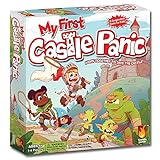
10. My First Castle Panic – Tower Defense for Preschoolers
Fireside Games My First Castle Panic Fantasy Board Game
Ages 4+
1-4 players
20 min playtime
Tower defense game
Pros
- No reading required
- Teaches matching colors and shapes
- Cooperative teamwork
- High replayability
- Perfect for preschoolers
Cons
- Some quality concerns reported
- Small components can get lost
My First Castle Panic introduced my 4-year-old to strategy gaming. The tower defense concept simplifies beautifully for preschoolers. Monsters approach the castle, and players match shapes and colors to stop them. No reading required, just pattern matching and cooperation.
The teaching moments happen naturally. When a monster breaks through, kids learn to protect the castle together. When players combine cards to defeat stronger monsters, they discover teamwork. The 20-minute playtime matches preschool attention spans perfectly.
I appreciated how the game handles player counts. It works solo for practice sessions or up to four players for family game night. The scaling difficulty means parents can adjust challenge levels based on children’s experience.
Best First Strategy Game for Ages 4-6
This game fills the gap between toddler games like First Orchard and elementary-age games like Forbidden Island. The matching mechanics teach foundational strategy without overwhelming young minds.
Building Gaming Confidence
Preschoolers gain confidence winning together. The cooperative structure means parents can guide play without taking over. My child beamed with pride after her first castle defense victory.
11. Dinosaur Escape – Memory and Excitement Combined
Peaceable Kingdom Dinosaur Escape Cooperative Memory Game of Logic and Luck for 2 to 4 Kids Ages 4+
Ages 4+
2-4 players
10 min playtime
Memory game with volcano
Pros
- Cooperative memory gameplay
- Volcano eruption excitement
- Great for competitive-shy kids
- Develops memory skills
- Quick 10-minute playtime
Cons
- Volcano piece could be more durable
- Limited complexity for older kids
Dinosaur Escape combines memory matching with volcano-racing tension. Players flip fern tokens to find matching dinosaurs while volcano pieces accumulate. Get all dinosaurs to safety before the volcano erupts. The 10-minute playtime fits perfectly between activities.
My dinosaur-obsessed child requested this game daily for weeks. The theme captures preschool imagination, while the cooperative mechanics prevent tears over winning and losing. Watching her explain the rules to grandparents showed how the game built her confidence.
The memory aspect grows with repeated play. Early games involve random flipping, but kids quickly develop systematic approaches. Parents can model memory strategies without creating competitive pressure.
Best for Dinosaur-Loving Preschoolers
If your child loves dinosaurs, this game leverages that interest into cooperative gaming skills. The dinosaur movers and theme keep engagement high throughout short sessions.
Managing the Volcano Timer
The volcano adds pressure without being stressful. Kids learn time management naturally. If the volcano creates anxiety, remove pieces to extend playtime until confidence builds.
12. Count Your Chickens – Award-Winning Toddler Math
Peaceable Kingdom Count Your Chickens Cooperative Board Game
Ages 3+
2-4 players
15 min playtime
Cooperative counting game
Pros
- Award-winning design
- Teaches counting skills
- No reading required
- Develops social skills
- Frustration-free packaging
Cons
- Chick pieces could be thicker
- Limited replayability for older kids
Count Your Chickens won five awards for good reason. This cooperative counting game teaches toddlers numbers 1-40 while they help Mother Hen collect her babies. The spinner mechanic adds excitement, while the cooperative structure eliminates tears.
My 3-year-old learned to count to 20 primarily through this game. The physical act of moving chicks along the path reinforces number recognition. The 15-minute playtime prevents toddler fatigue while still feeling substantial.
The award pedigree shows in thoughtful design. The frustration-free packaging opens easily. The components suit small hands. The artwork engages without overwhelming. Every element reflects understanding of toddler development.
Best for Ages 3-5 Learning to Count
Count Your Chickens excels at its specific purpose: teaching counting through play. The cooperative structure means adults guide learning without creating pressure. Perfect for homeschooling or supplementing preschool education.
Transitioning to More Complex Games
After mastering Count Your Chickens, children can progress to Dinosaur Escape or My First Castle Panic. The counting skills transfer directly to those games’ mechanics.
How to Choose the Best Cooperative Board Games for Families?
After testing dozens of games with my family, I’ve identified key factors that determine which cooperative games succeed with different families.
Age Appropriateness Matters Most
The right age range makes or breaks a game experience. Toddlers aged 2-3 need simple mechanics like First Orchard or Count Your Chickens. Preschoolers aged 4-5 handle matching games like Dinosaur Escape or My First Castle Panic. Elementary kids aged 6-10 enjoy strategy games like Forbidden Island or Zombie Kidz Evolution. Teens and adults appreciate complex games like Pandemic or The Crew.
Age recommendations on boxes provide starting points. Consider your child’s gaming experience. A 6-year-old who plays regularly might handle games rated for ages 8+, while a gaming-newcomer 10-year-old might struggle with complex rules.
Match Playtime to Attention Spans
Short games suit younger children and busy families. 5-Minute Dungeon and Dinosaur Escape deliver satisfaction in under 15 minutes. Medium games like Forbidden Island and Just One fit weeknight game nights. Longer games like Pandemic and Forbidden Desert reward weekend sessions.
Start short and build endurance. My family began with 15-minute games and gradually added longer options as kids’ attention spans grew.
Consider Player Count Flexibility
Most cooperative games support 2-4 players, but families vary. Just One handles up to 7 players for large families. The Crew supports 2-5 players flexibly. First Orchard works with 1-4 players for solo practice sessions.
Check player counts before purchasing. Games requiring exactly 4 players become frustrating when family members are absent or extra friends visit.
Evaluate Replayability and Longevity
Some games grow with families. Zombie Kidz Evolution evolves over months of play. The Crew offers 32 missions with increasing difficulty. Pandemic scales from easy to brutally challenging. These investments pay off over years.
Other games serve specific purposes. Count Your Chickens teaches counting effectively but becomes redundant once children master numbers. These games deserve space in collections but expect limited long-term play.
Balance Theme and Mechanics
Theme engages kids initially. Dinosaurs, zombies, and adventure settings capture imagination. But mechanics determine lasting appeal. A boring game with exciting theme gets played twice. A compelling game with generic theme gets played for years.
Match themes to your children’s interests if possible, but prioritize solid mechanics. Forbidden Island’s treasure-hunting theme drew my kids in. The strategic depth kept them returning.
Quality of Components Affects Experience
Budget games save money but may frustrate with poor components. Wooden pieces from HABA or thick cardboard from Gamewright survive years of play. Card-based games benefit from sleeves if played frequently.
Consider storage too. Games with organized inserts make setup faster. Jumanji Stampede’s 3D pieces require careful storage planning. Easy-to-store games get played more often.
Plan for Family Progression
Families on forum discussions recommend progression paths. Start with Cauldron Quest or Outfoxed for ages 3-4. Progress to Forbidden Island around age 5. Move to Forbidden Desert or Mice and Mystics for ages 5-6. Graduate to Pandemic for ages 5-6 and up.
This progression grows with children’s abilities. Each game introduces mechanics that prepare for the next. Legacy games like Zombie Kidz Evolution bridge ages by evolving alongside players.
FAQs
What are the best cooperative board games for kids ages 4-7?
For kids ages 4-7, the best cooperative games include Dinosaur Escape, My First Castle Panic, and Forbidden Island for families ready for more strategy. These games feature simple rules, short playtimes under 20 minutes, and age-appropriate themes that engage young children while teaching cooperation.
What are the best cooperative board games for kids ages 8-11?
Kids ages 8-11 thrive with games like Pandemic, Forbidden Island, Forbidden Desert, The Crew – Mission Deep Sea, and Zombie Kidz Evolution. These games offer strategic depth, longer playtimes of 20-45 minutes, and mechanics that challenge developing minds while remaining accessible.
What are the best cooperative board games for older kids, teens, and adults ages 10+?
For ages 10 and up, Pandemic stands as the classic choice, joined by The Crew – Mission Deep Sea, Forbidden Desert, and 5-Minute Dungeon for faster sessions. These games offer meaningful strategic decisions, variable difficulty, and themes that engage older players without feeling childish.
Why should you play cooperative board games with kids?
Cooperative board games teach teamwork, reduce sibling rivalry, allow parents to coach without dominating gameplay, and build communication skills. Kids learn to win and lose together, developing emotional regulation and social skills that transfer to other areas of life.
What are the benefits of cooperative board games for families?
Cooperative games strengthen family bonds through shared goals, eliminate hurt feelings from competitive outcomes, help parents model collaborative problem-solving, work well for mixed-age groups, and create positive game night memories where everyone celebrates or commiserates together.
Final Thoughts
The best cooperative board games for families transform game night from competition to collaboration. After six months of testing, Pandemic remains my top recommendation for its classic gameplay and cross-generational appeal. Forbidden Island offers excellent value as a gateway into strategy gaming, while HABA First Orchard serves toddlers perfectly with quality wooden components.
Start with games matching your children’s ages, then progress through more complex options as skills develop. The progression from Count Your Chickens to Forbidden Island to Pandemic mirrors how kids grow into strategic thinkers. Each game on this list earned its place through real family testing and genuine enthusiasm from players aged 2 to adult.
Your next family game night could be the one where siblings high-five instead of argue. Pick one game from this list that matches your family’s ages and interests. The investment in cooperative gaming pays dividends in family connection that last far beyond the board.