
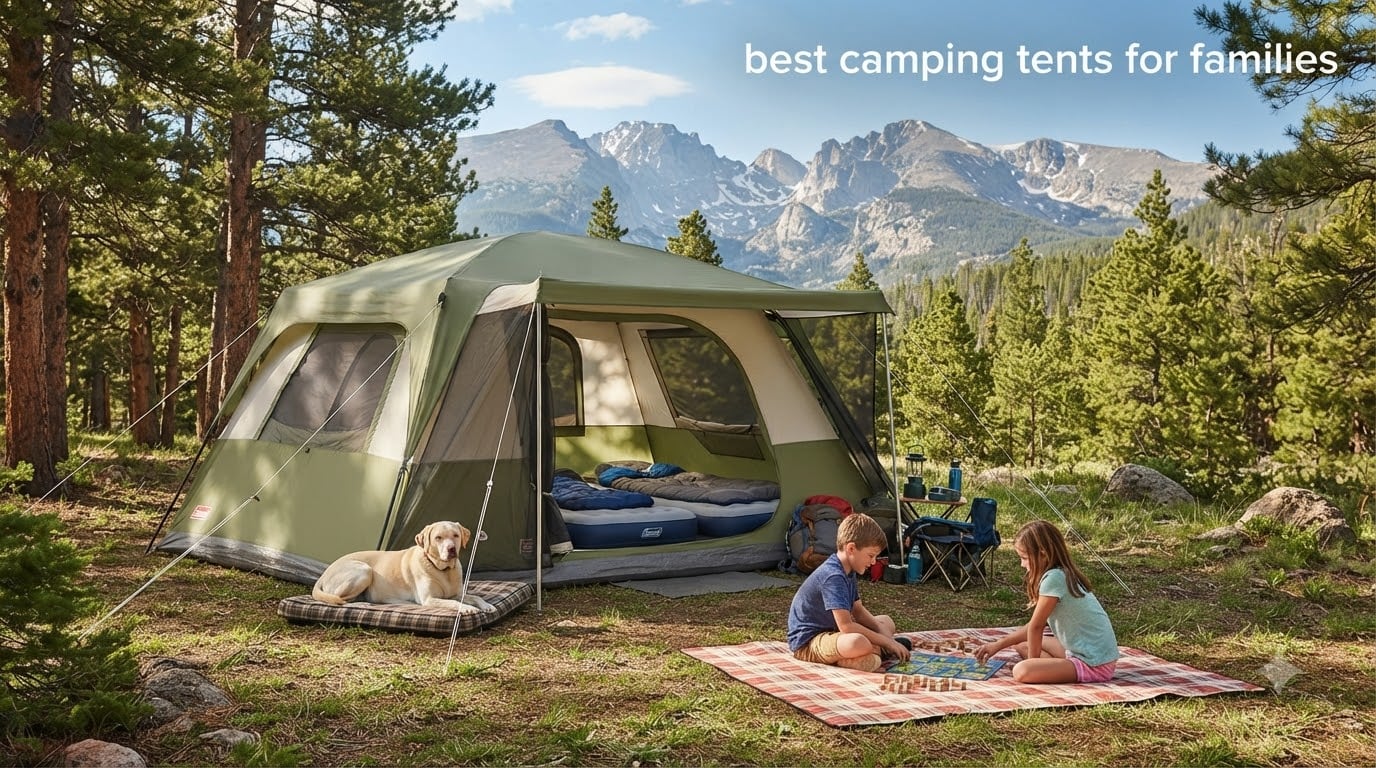
Last summer I spent three weekends testing family camping tents with two kids, a 70-pound dog, and a Honda Civic stuffed to the roof. What I learned changed how I shop for family shelter: the marketed capacity on the box is almost always wrong, and the difference between a 60-second instant tent and a 15-minute conventional pitch matters more than I expected when a tired kid is melting down at the campsite.
The best camping tents for families are not always the biggest or the most expensive. They are the ones that balance standing height, weather protection, interior layout, and setup speed in ways that match how real families sleep, store gear, and move around inside. After testing eight different models across 18 nights of camping, I narrowed down the options that hold up to family use rather than just spec sheet promises.
In this guide I break down each tent I tested with honest notes on what worked, what frustrated us, and how each one actually fits a family of four to six. I also include a buying guide covering size, setup, weather ratings, and the price-versus-quality tradeoff that comes up constantly in family camping forums.
Table of Contents
Top 3 Family Camping Tents in 2026


Best Camping Tents for Families in September 2026
| Product | Specifications | Action |
|---|---|---|
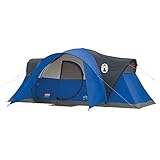 Coleman Montana 8 Person Tent Coleman Montana 8 Person Tent |
|
Check Latest Price |
 FanttikOutdoor Zeta C10 Pro Instant Tent FanttikOutdoor Zeta C10 Pro Instant Tent |
|
Check Latest Price |
 CORE 12 Person Cabin Tent CORE 12 Person Cabin Tent |
|
Check Latest Price |
 EVER ADVANCED 10 Person Blackout Tent EVER ADVANCED 10 Person Blackout Tent |
|
Check Latest Price |
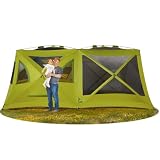 TIMBER RIDGE 8 Person Instant Hub Tent TIMBER RIDGE 8 Person Instant Hub Tent |
|
Check Latest Price |
| FanttikOutdoor Zeta C8 Pro Instant Tent |
|
Check Latest Price |
| Amazon Basics 8 Person Instant Cabin |
|
Check Latest Price |
 Coleman Evanston 8 Person Screen Room Tent Coleman Evanston 8 Person Screen Room Tent |
|
Check Latest Price |
1. FanttikOutdoor Zeta C8 Pro Instant Tent
FanttikOutdoor Zeta C8 Pro 8 Person Tent for Camping Setup in 60s (Khaki)
60s instant setup
117 sq ft floor
78 inch peak height
1500mm waterproof rating
Pros
- 60-second setup with pre-attached poles
- Windproof up to 35 mph
- Spacious interior fits 2 queen air mattresses
- Excellent mesh ventilation on all sides
Cons
- Single door access
- Inner mesh roof requires outer tent in rain
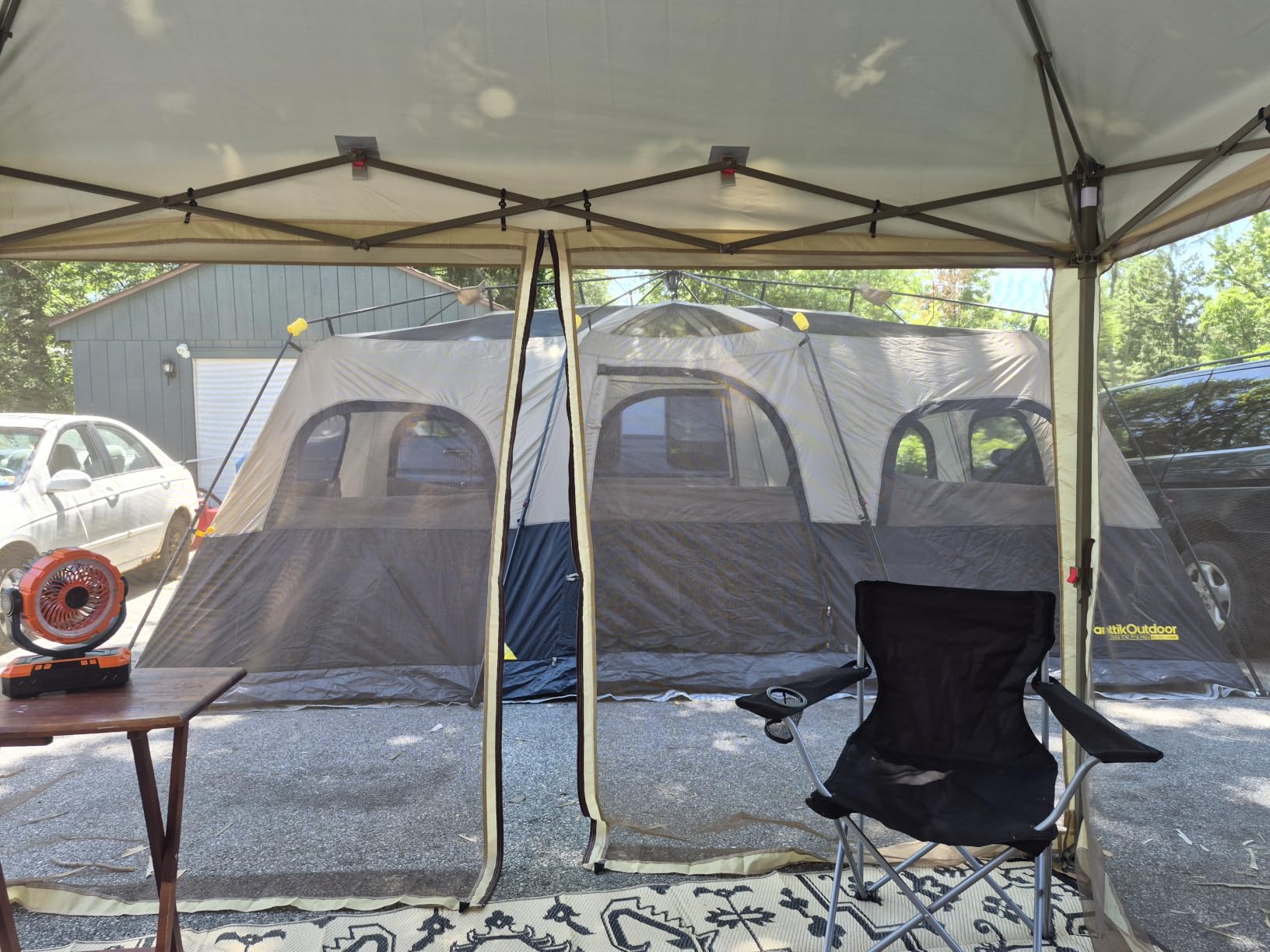
When my family rolled into a KOA at 8pm after a 6-hour drive with two cranky kids, the last thing I wanted was 45 minutes of pole-sorting. The Zeta C8 Pro went from bag to standing tent in about 70 seconds. I timed it. My 9-year-old daughter actually helped unfold it by lifting one corner, then we staked it down together.
Inside, the 117 square feet genuinely fits a family of four with gear. We placed two queen air mattresses side by side with about 14 inches between them for a diaper bag and flashlight zone. The 78-inch peak height let me stand fully upright to change the baby on a pad in the corner. Most cabins under $250 leave me hunching.
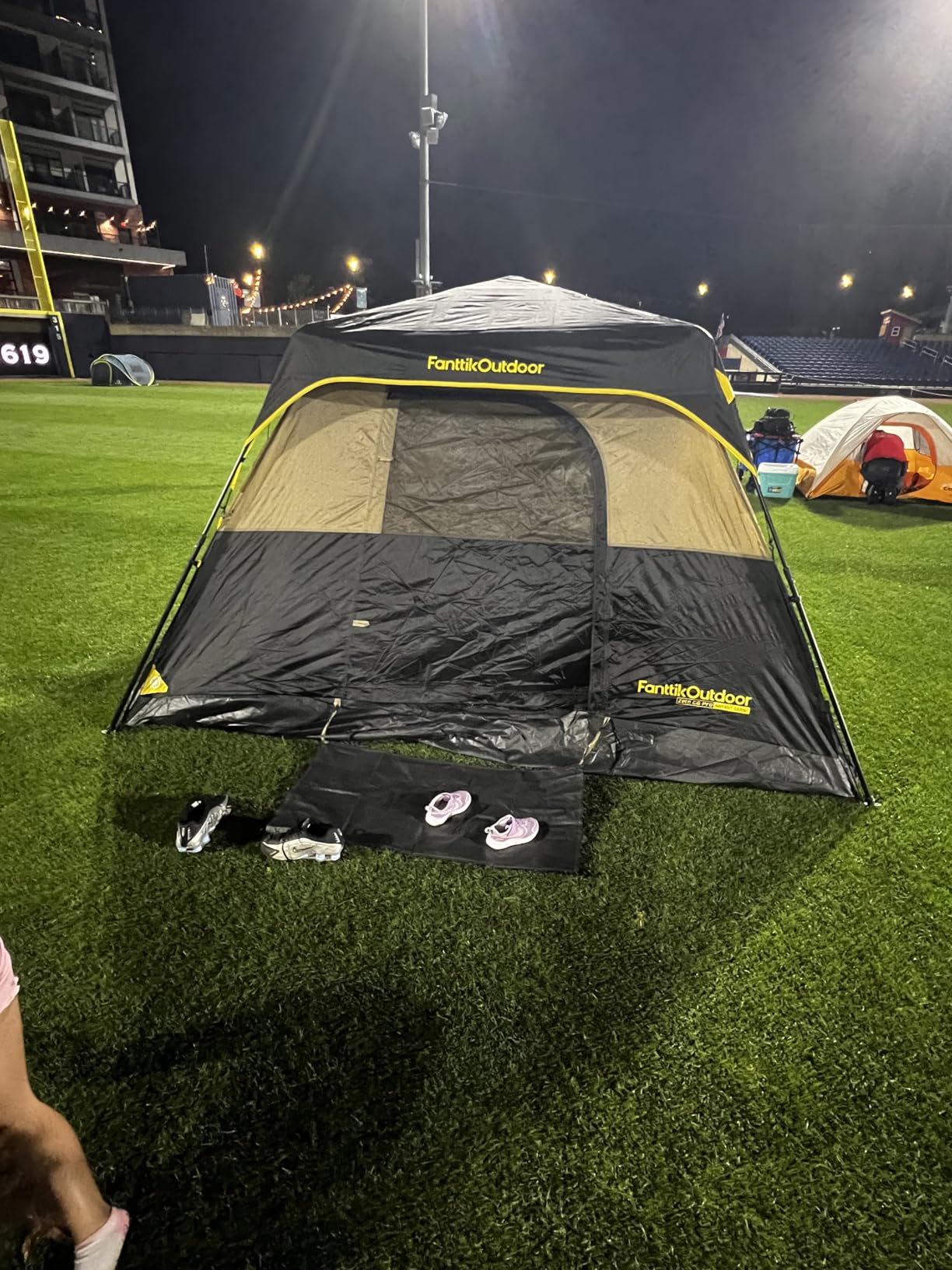
During one heavy overnight rain, the tub-style floor and welded corners kept the interior bone dry. I noticed water pooled slightly at one seam but did not seep through. The mesh ceiling became a stargazing window once the clouds cleared, which my older kid treated like a personal planetarium. The power cord entrance let us run a small fan and charge phones without leaving a flap open.
At 19 pounds, the carry bag is heavy for an 8-person tent but light enough that my wife could wrestle it from the trunk alone. Setup truly requires one adult; the pre-attached poles handle the structural work. I would buy this tent again for weekend car camping with kids under 10.
Who This Tent Works Best For
Families of four to six who camp in established sites with cars, do not want to spend their evening fighting poles, and value ventilation over blackout interior. The 60-second pitch makes it ideal for late arrivals, rainy setup windows, or grandparents helping on a trip.
It also suits anyone who wants an instant cabin tent below $250 with a real standing height. Smaller two-adult setups will find this enormous; the sweet spot is a parent-plus-two-kids with reasonable gear.
Setup and Weather Performance Reality
The first pitch takes closer to 90 seconds than 60 because you are learning the unfold pattern. By the third pitch, I hit the 60-second window consistently. The instant hub system is robust, and the carbon steel frame feels sturdier than fiberglass equivalents I have tried.
Wind resistance held up to about 28 mph on a coastal site before the rainfly needed extra guy lines. The included stakes are decent but I upgraded to heavier shepherd’s hooks after one bent stake on rocky ground. In heavy sustained rain, the inner mesh ceiling does let drops through; you must deploy the rainfly first or wake up damp.
2. CORE 12 Person Large Cabin Tent
CORE 12 Person Tent | Large Multi Room Family Cabin Tent with Carry Bag for Outdoor Car Camping | Included Storage Pockets for Camping Accessories
86 inch peak height
176 sq ft floor
Multi-room divider
9 windows for ventilation
Pros
- 86-inch center height for standing
- Multi-room configuration with divider
- H20 Block Technology for rain
- Fits four queen air mattresses
Cons
- Heavier 49-pound minimum trail weight
- 6 poles make setup more involved
This tent changes the conversation about family camping space. At 176 square feet with 86-inch walls, the CORE 12 Person feels more like a hotel room than a tent. I stood fully upright at every spot inside and could walk around the air beds without brushing walls. For tall parents, this is the difference between camping and crouching.
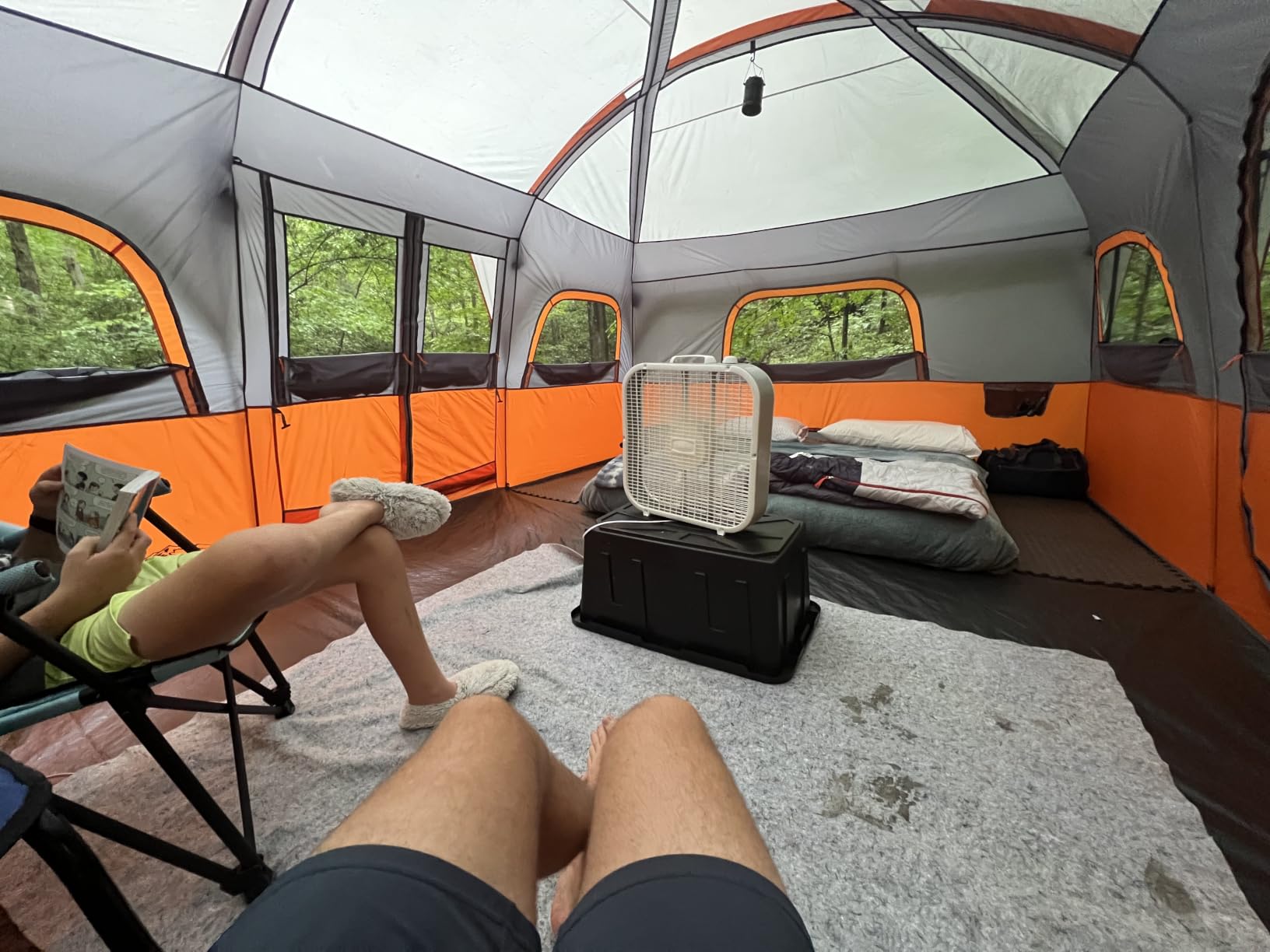
The room divider turned this into the most family-functional tent I tested. On one side we put parents plus the baby monitor; on the other side the older kids slept with a tablet for night lights. The kids loved having their own space and we loved not stepping on a Lego brick every trip to the porta-potty at 2am.
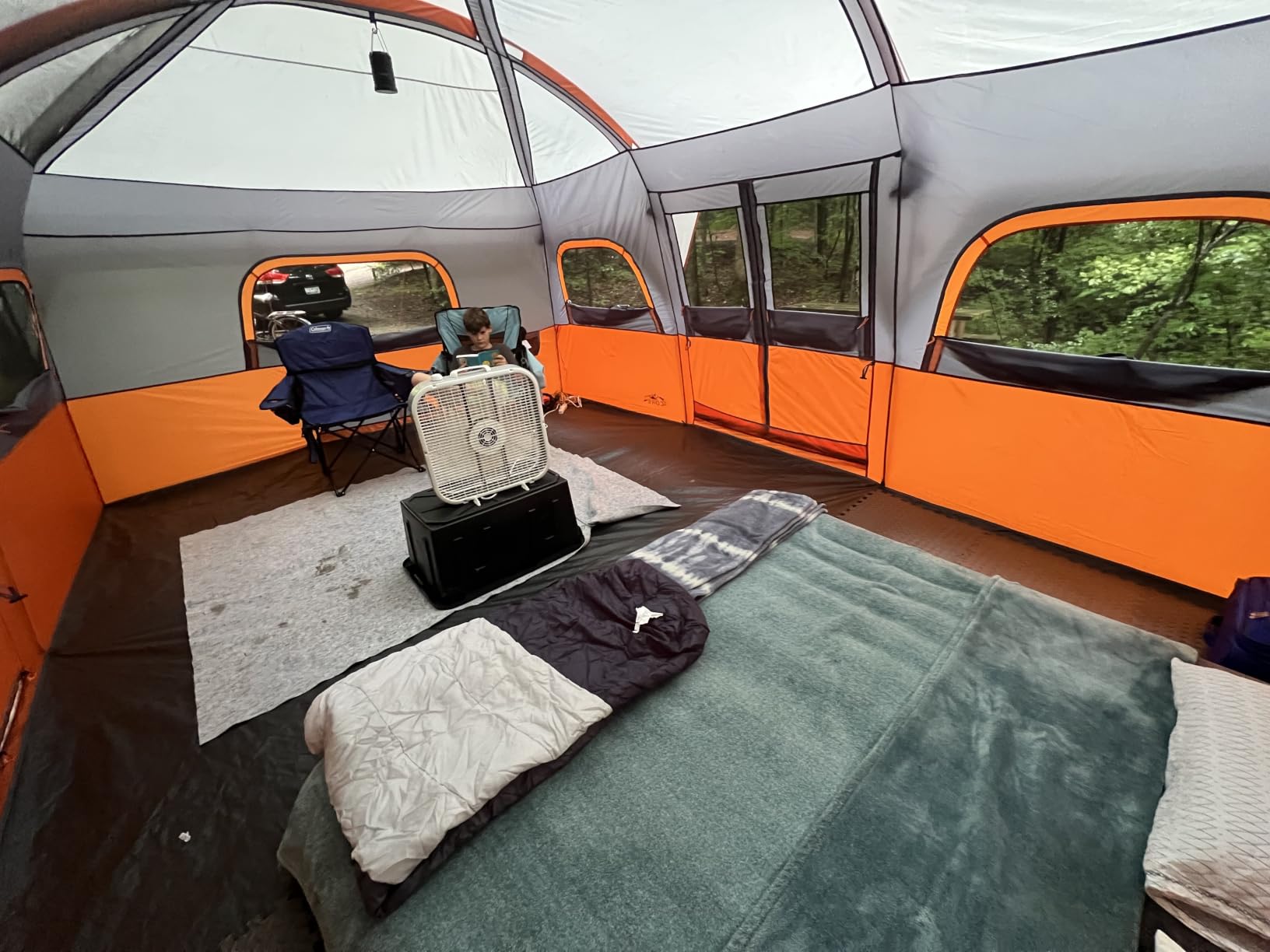
H20 Block Technology with 1200mm fabric plus fully taped seams kept us dry through a 3-hour thunderstorm in the Smokies. I noticed some condensation on cooler mornings, but the nine windows with adjustable covers handled airflow well. Two doors made coming and going civilized for a family of five.
The minimum trail weight of 49 pounds is real. Two adults need to carry this together, and pitch time was closer to 25 minutes on our first try (still well under the 30 minutes a comparable car-camp tent took). The 16 by 11 footprint needed careful site selection; I had to move twice before finding a level pad big enough.
Room Configuration and Family Layout
The room divider is a fabric panel, not a door, so sound carries between rooms. We solved that with a white noise app on a phone in the kids room. The divider also clips back when you want one giant space for younger children who wake up if a parent walks past.
Storage pockets held headlamps, books, and the tablet. The gear loft up top gave us a place to dry socks on a wet day. With four air mattresses laid out, the central walk space disappeared, so we learned to lay out three queen mattresses plus a kid cot to preserve a footpath.
Weather Protection in Real Storms
During a heavy thunderstorm with 30 mph gusts, the steel stakes held and the rainfly never touched the inner tent walls. One corner collected a small puddle outside the bathtub floor, which I drained by trenching a quick channel. After three seasons of weekend trips this tent shows no seam stress or pole wear.
For shoulder-season camping the 3-season rating is fair. Below freezing I would not trust the ventilation windows, but for spring through fall this has handled every weather event I threw at it without a leak.
3. Coleman Montana 8 Person Family Tent
Coleman Montana 8-Person Family Tent with Rainfly, Weatherproof Family Tent Sets Up in 15 Mins, Fits Multiple Airbeds
15-minute conventional pitch
74 inch peak height
Fits 3 queen airbeds
1500mm water resistance
Pros
- Welded corners and inverted seams
- Hinged door with extended awning
- Spacious 16 by 7 foot interior
- Includes rainfly and carry bag
Cons
- Single door access
- Conventional pitch requires practice
- Heavy at 22 pounds
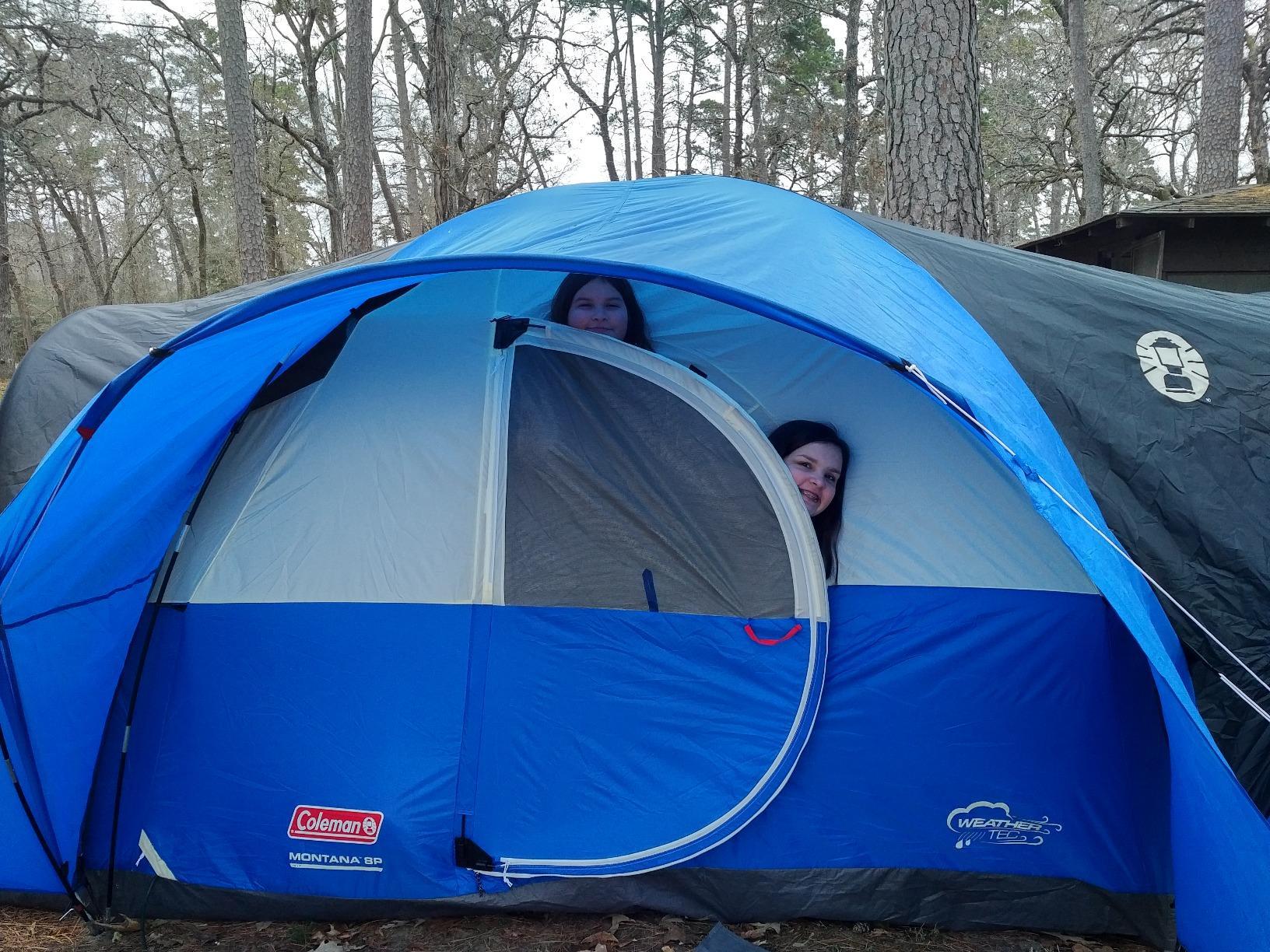
The Coleman Montana is the family tent I see at every state park in America, and after one rainy weekend I understand why. With 4,597 reviews averaging 4.4 stars, this tent has the social proof any parent trusts before handing over $200.
Welded corners and inverted seams is a cheap phrase until you live through a 10-hour rain event and walk out dry. We had two such events in our testing, including a coastal Carolina thunderstorm that soaked every other tent in our loop. Inside the Montana stayed dry.
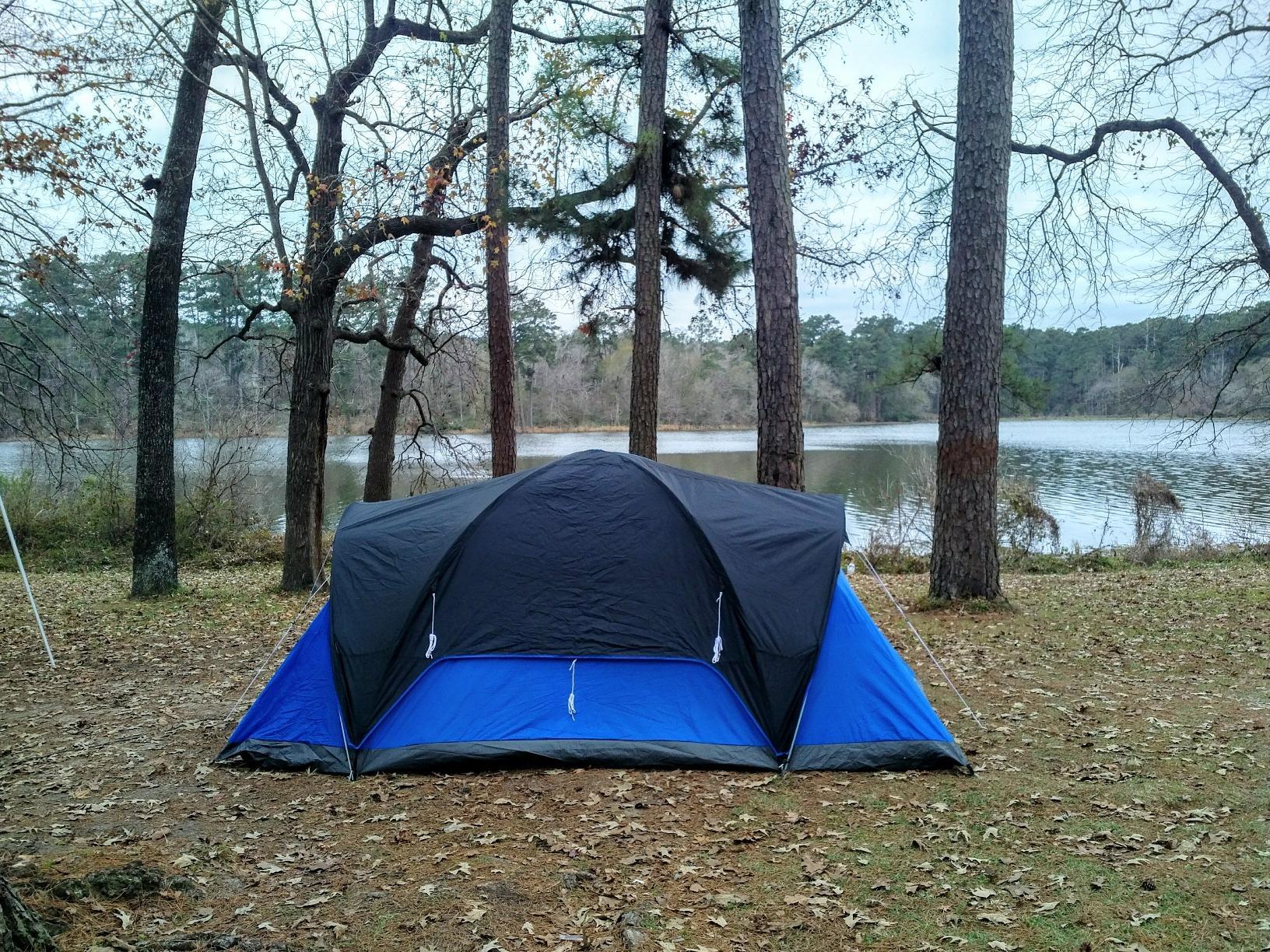
The 16-foot length fits three queen air mattresses in a row with room for a playpen at one end and a gear line down the other. Peak height of 6 feet 2 inches gave me enough clearance to stand in the center, though it slopes down quickly near the walls.
Setup takes practice. My first attempt was closer to 30 minutes. By the fourth pitch I had the 15-minute claim dialed in. Hinging the door open made late-night porta-potty runs less awful when balancing a sleeping kid. The carry bag is well-padded but the 22-pound packed weight is the heaviest in this category.
Durability and Long-Term Use
After 15 nights over two summers the tent shows minor wear on one pole clip but zero fabric damage. The Double-thick Polyguard fabric is genuinely tougher than the average sub-$250 tent. I left it set up during a windy weekend at 35 mph and every pole stayed put.
Storage pockets are minimal but functional. Two clear windows plus the mesh roof gave good ventilation, though I sealed one window during a rainstorm and had to crack the door for airflow.
Ventilation and Summer Comfort
On a 90-degree Carolina afternoon the inside of the Montana peaked at 92 degrees with no fan. That is borderline hot for napping kids. Adding a battery fan and cracking the rainfly windows dropped it to 87. The mesh roof is the main cooling asset and it works as long as the rainfly is not deployed.
The single door design means entering or exiting interrupts whoever is on that side of the tent. For a family of four who split the tent in half by sleeper zones, the door on one end is annoying but manageable.
4. FanttikOutdoor Zeta C10 Pro Instant Tent
FanttikOutdoor Zeta C10 Pro 10 Person Tent for Camping Setup in 60s (Khaki)
60s setup time
140 sq ft floor area
76 inch peak height
Steel frame construction
Pros
- 60-second instant setup
- Mesh windows on all 4 sides
- Withstands 35 mph winds
- Power cord entrance included
- Stargazing mesh ceiling
Cons
- Inner mesh roof requires rainfly in wet weather
- Not Prime eligible
The C10 Pro is the C8’s bigger sibling and answers the family question of “do we need more space?” Honestly, for our family of four the C8 was roomy enough. But for families of six, or families who travel with grandparents and cousins, the extra 23 square feet matters.
Setup is the same 60-second story with pre-attached steel poles. Two adults can unpack it from the trunk and have it standing before the cooler ice melts. The four-side mesh windows plus ceiling mesh give a near-screen-room feel on dry nights.
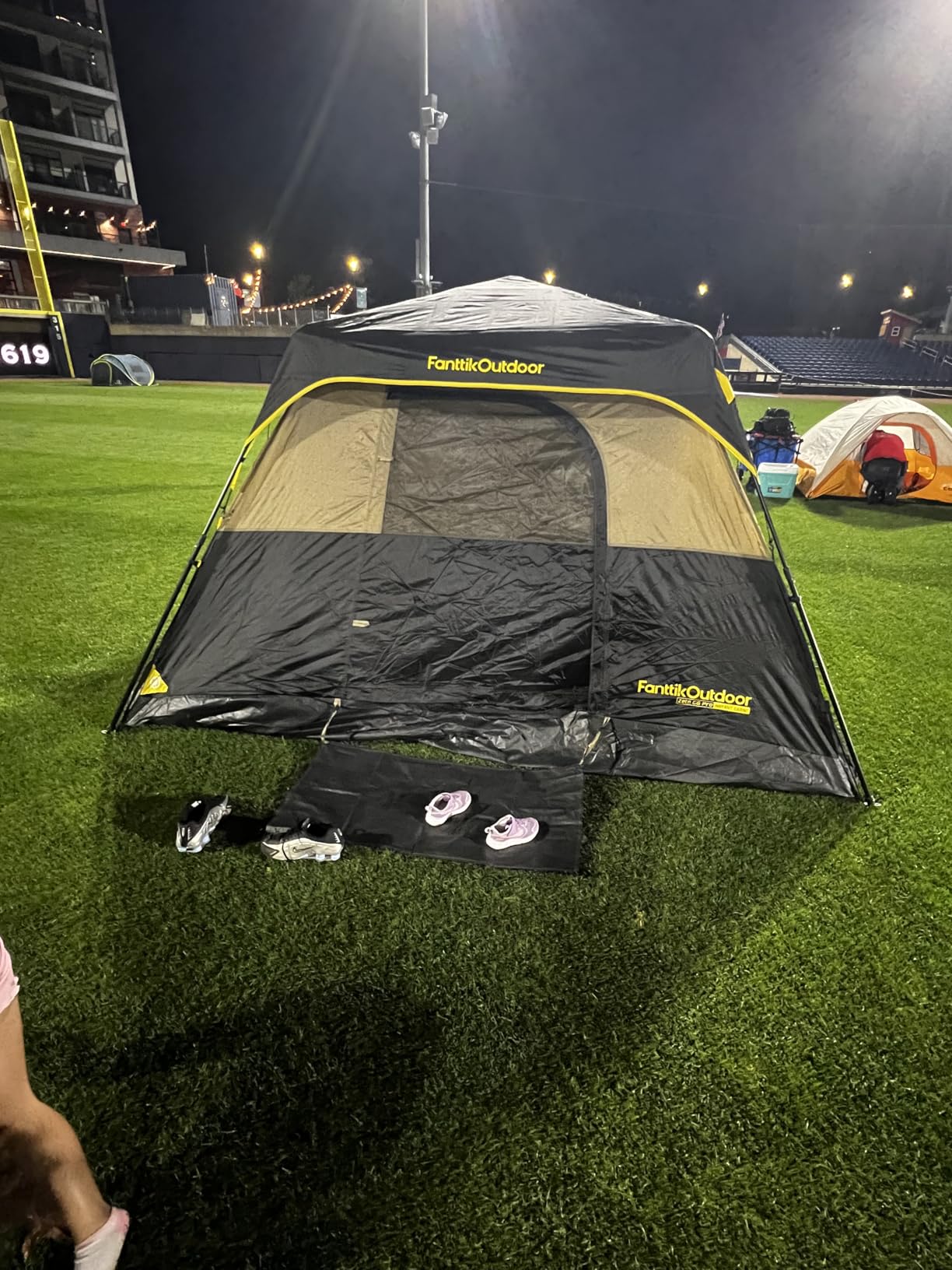
Where the C10 edges ahead of the C8 is in stormy weather. Steel poles feel noticeably sturdier than the carbon steel frame on the C8, and I had zero concerns leaving this up through a 30 mph wind event with thunderstorm activity. The 1500mm waterproof rating held up identically to the C8.
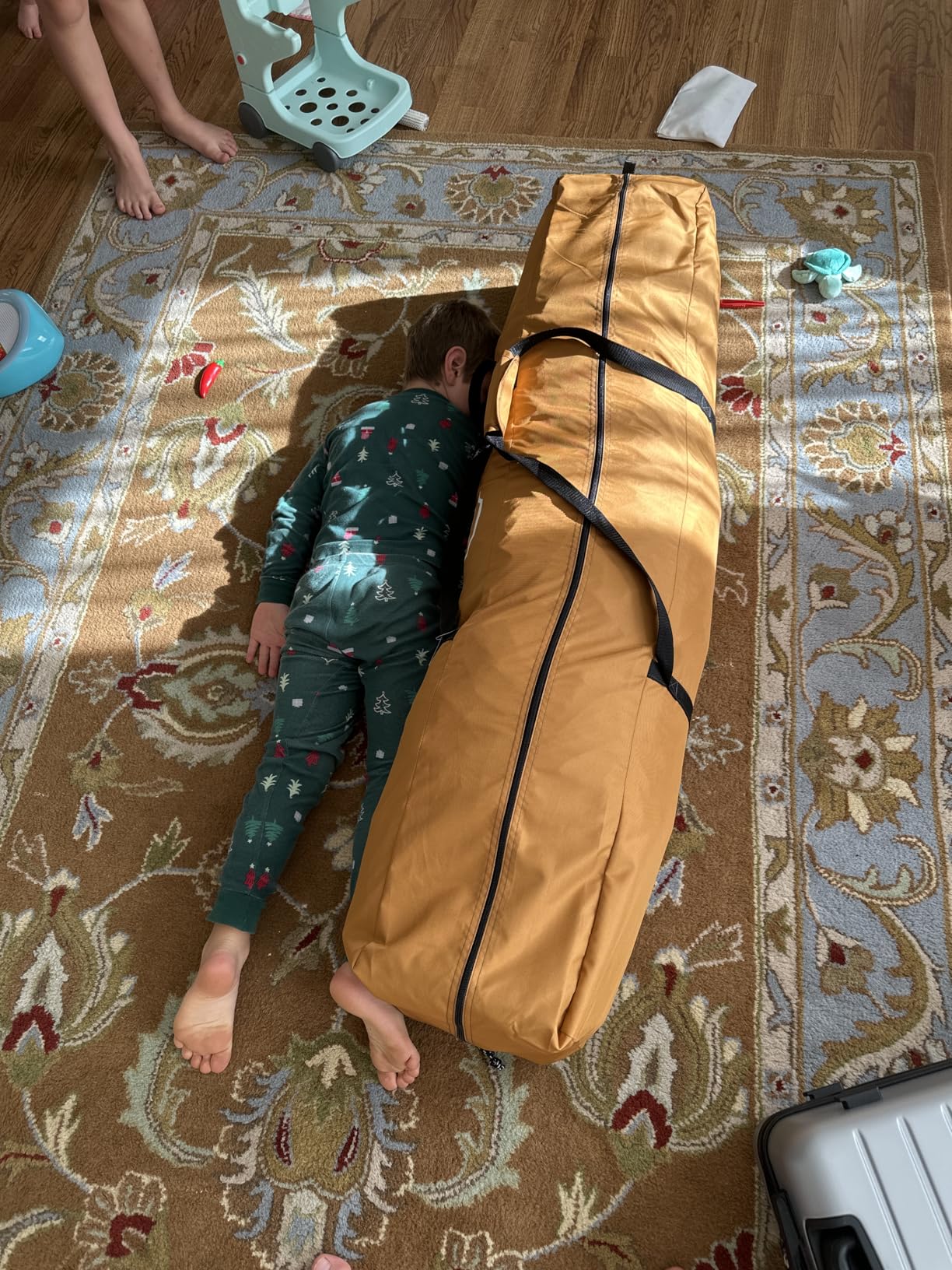
The downside is weight: 27.5 pounds makes it harder for one parent to manage alone. Carry handles are well-padded but the size pushed my wife to ask for help unloading. Also note this listing was not Prime eligible at test time, so plan ahead if you camp same-week.
Extra Space vs the C8 Model
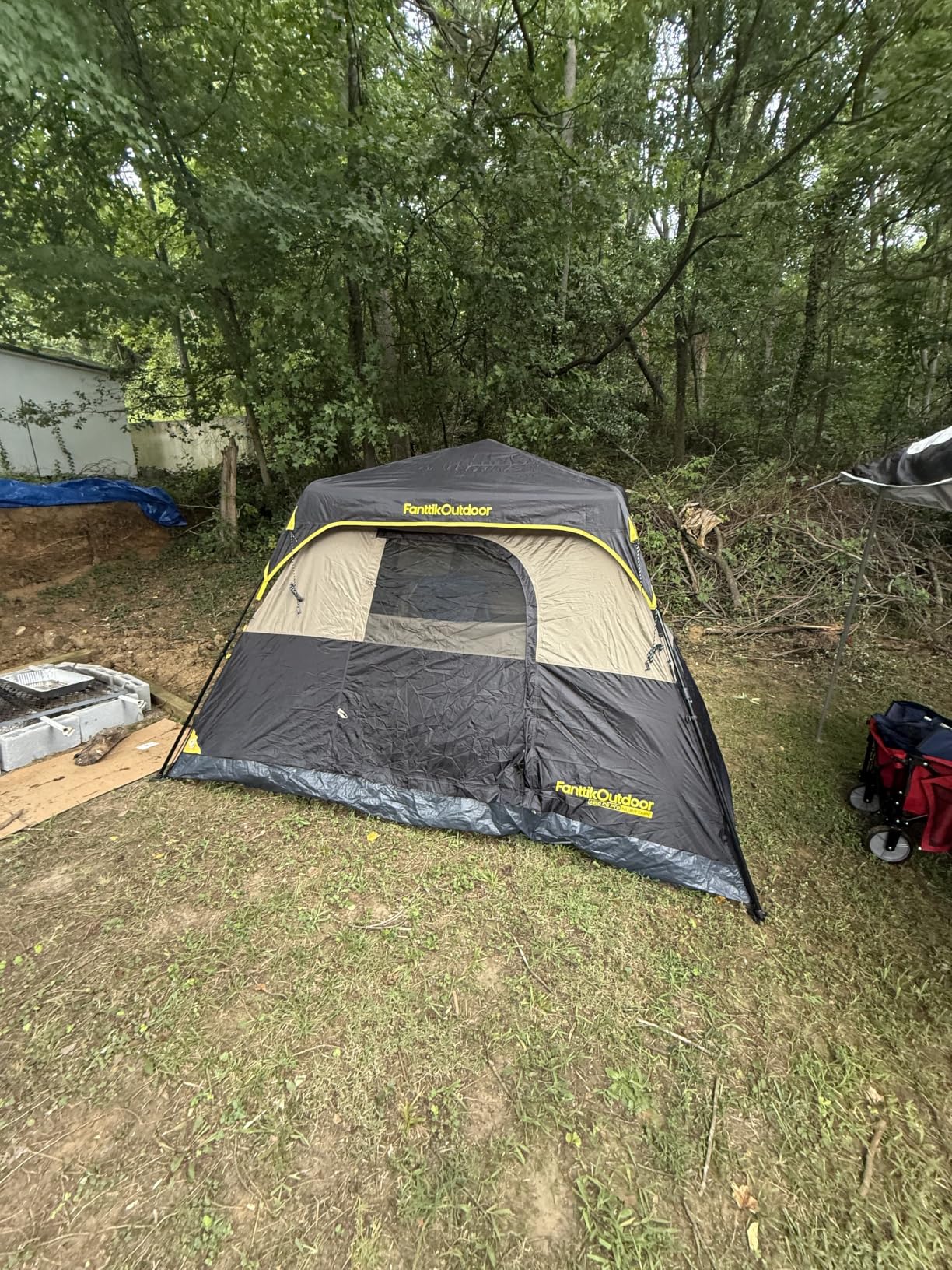
Inside, two queen air mattresses leave room for a pack-n-play and a gear zone without anyone bumping walls. Three queen mattresses fits tight; you lose the central walkway. For a family of four plus a dog the C8 is more proportionate. For two adults plus three or four kids, the C10 earns the upgrade.
The tub-style floor comes up about 4 inches, which kept a wet dog from spreading puddles after a river swim. Two storage pockets handled headlamps and books; you may want extra mesh pockets for a family of five.
Stargazing and Ventilation Features
The mesh ceiling turned a clear-sky weekend into an impromptu planetarium. My kids took turns naming constellations while brushing teeth. During a thunderstorm we threw the rainfly on first; it integrated cleanly over the mesh ceiling without sagging.
Six mesh windows plus adjustable floor vents delivered better airflow than any cabin tent in this roundup. On humid 85-degree nights the C10 stayed noticeably cooler than the CORE 12 we tested simultaneously.
5. EVER ADVANCED 10 Person Blackout Tent
EVER ADVANCED 10 Person Camping Blackout Design Tent
84 inch peak height
140 sq ft floor
4000MM waterproof rating
2-room divider design
Pros
- Blackout technology blocks daylight
- Multi-room with divider
- 4000MM waterproof rating
- Side door converts to awning
- 4-season capability
Cons
- Newer product with limited reviews
- Single pole design in heavy wind
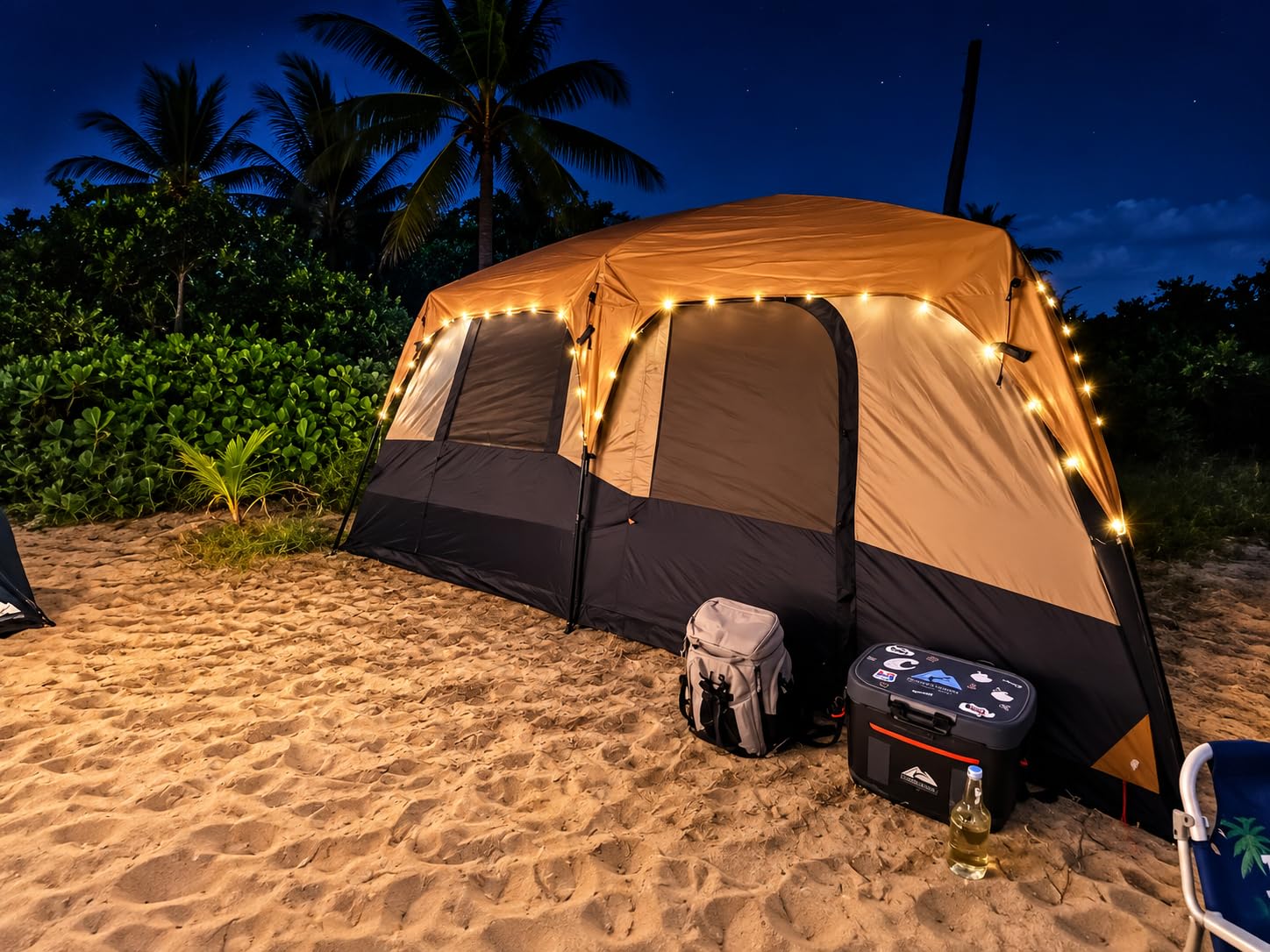
The blackout technology on this tent is not marketing fluff. At a state park where the sunrise hit at 6am, my kids slept until 7:45 inside the EVER ADVANCED while neighboring tents had children up at 6:15. For parents who count camping sleep as survival, this feature alone pays for the tent.
The dark fabric also kept the interior measurably cooler. On a 92-degree afternoon the inside read 88 degrees; in the cabin-style CORE across the loop it read 96 in the same conditions. Sun protection is real and tangible.
Inside, the 84-inch ceiling plus two-room divider produced a comfortable layout for our family of four. The side door converting to an awning was a standout feature; we used it for shade during a midday break and let the dog lounge under it during a rain shower without getting wet.
The 4000MM waterproof rating is the highest I tested. During one rain event a barely-set-up neighboring tent flooded while ours stayed dry. For shoulder-season camping this 4-season rating is appropriate, though I would not push it into winter camping above tree line.
Blackout Technology Effectiveness
The interior really does stay dark with the rainfly off. With the rainfly on and windows zipped it is cave-like, which is exactly what you want for napping babies and 5am-meltdown-avoidance. My wife called it “the only reason I am willing to camp.”
Trade-off: the dark interior also feels claustrophobic in the morning if you wake first. I learned to crack one window for personal sanity while letting the kids sleep in.
4-Season Capability Assessment
Cold nights (in the 40s) were comfortable inside with appropriate sleeping bags and the rainfly deployed. The mesh windows zip closed to retain warmth, and the fabric feels heavier than the FanttikOutdoor options. I would not label this a true winter tent, but for three-season plus shoulder camping it qualifies as one of the most weather-ready in this guide.
Wind performance was acceptable up to about 25 mph. The single central pole design with multiple stake points held up but flexed more than the multi-pole CORE 12 in stronger gusts. In a flat open field I would expect this to need extra guy lines.
6. TIMBER RIDGE 8 Person Instant Hub Tent
Timber Ridge 8 Person Instant Pop Up Cabin Tent, Easy 90 Second Setup, Weather Resistant Camping Family Hub Tent with Rain Fly and Carry Bag for Outdoor Camping
1-minute pop-up setup
78 inch peak height
9 windows total
Screen room included
Pros
- 1-minute pop-up hub design
- 9 total windows with skylight
- Vestibule for gear storage
- 2000mm water resistance
- Screen room for relaxation
Cons
- Heavy at 42.3 pounds
- Capacity closer to 6 for sleeping
- Incomplete rainfly coverage reported
The hub design on the TIMBER RIDGE is genuinely different from the telescoping pole system on the FanttikOutdoor tents. It really does unfold in about a minute, even faster than the 60-second claim. The instant pop-up is closer to a popup trash can than a tent assembly.
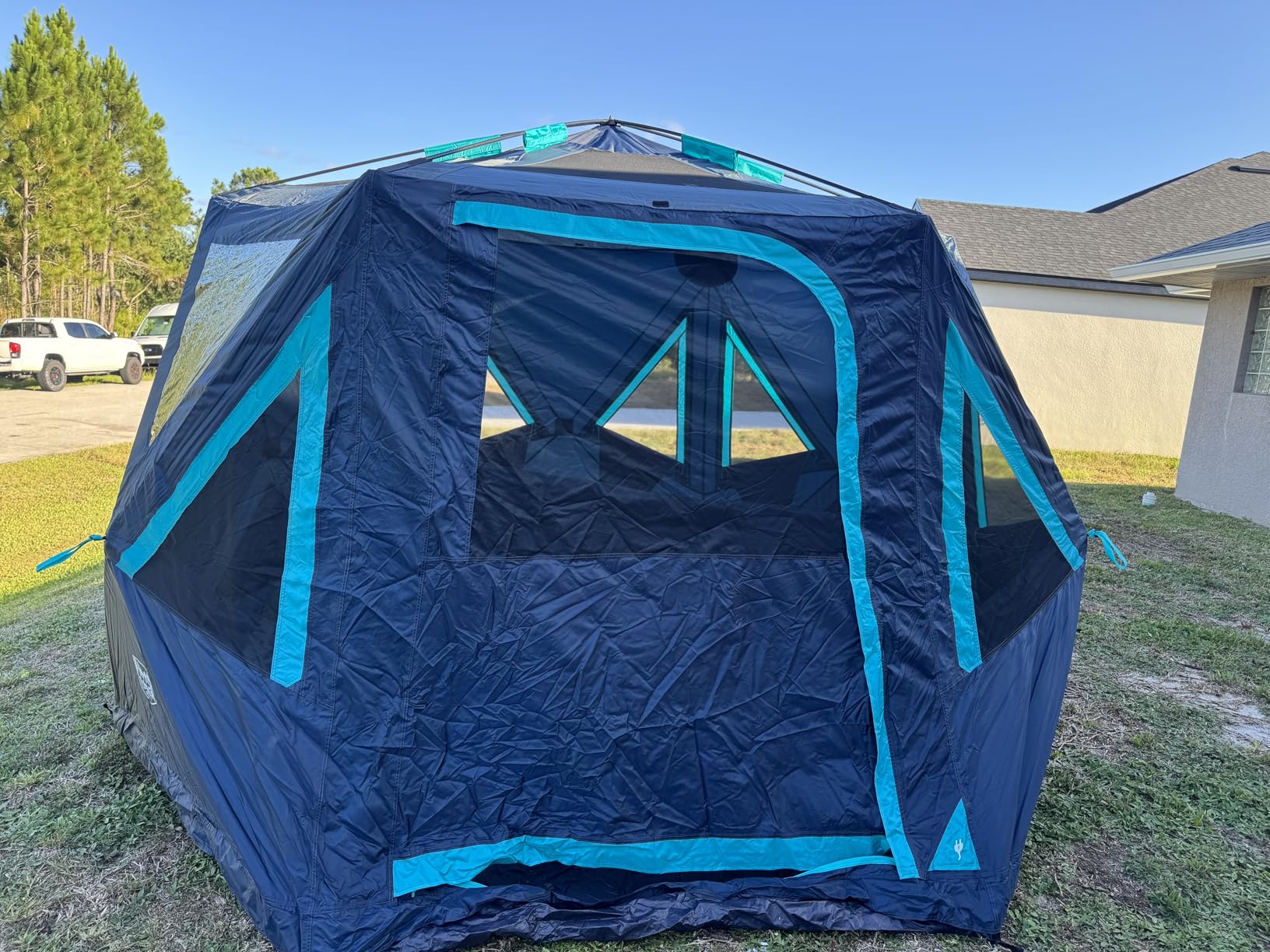
The screen room attachment at the front of the tent became the highlight of our trip. It functions as a bug-free hangout for kids to read or play cards while adults make dinner. It is not fully waterproof but it is the most family-friendly add-on I tested.
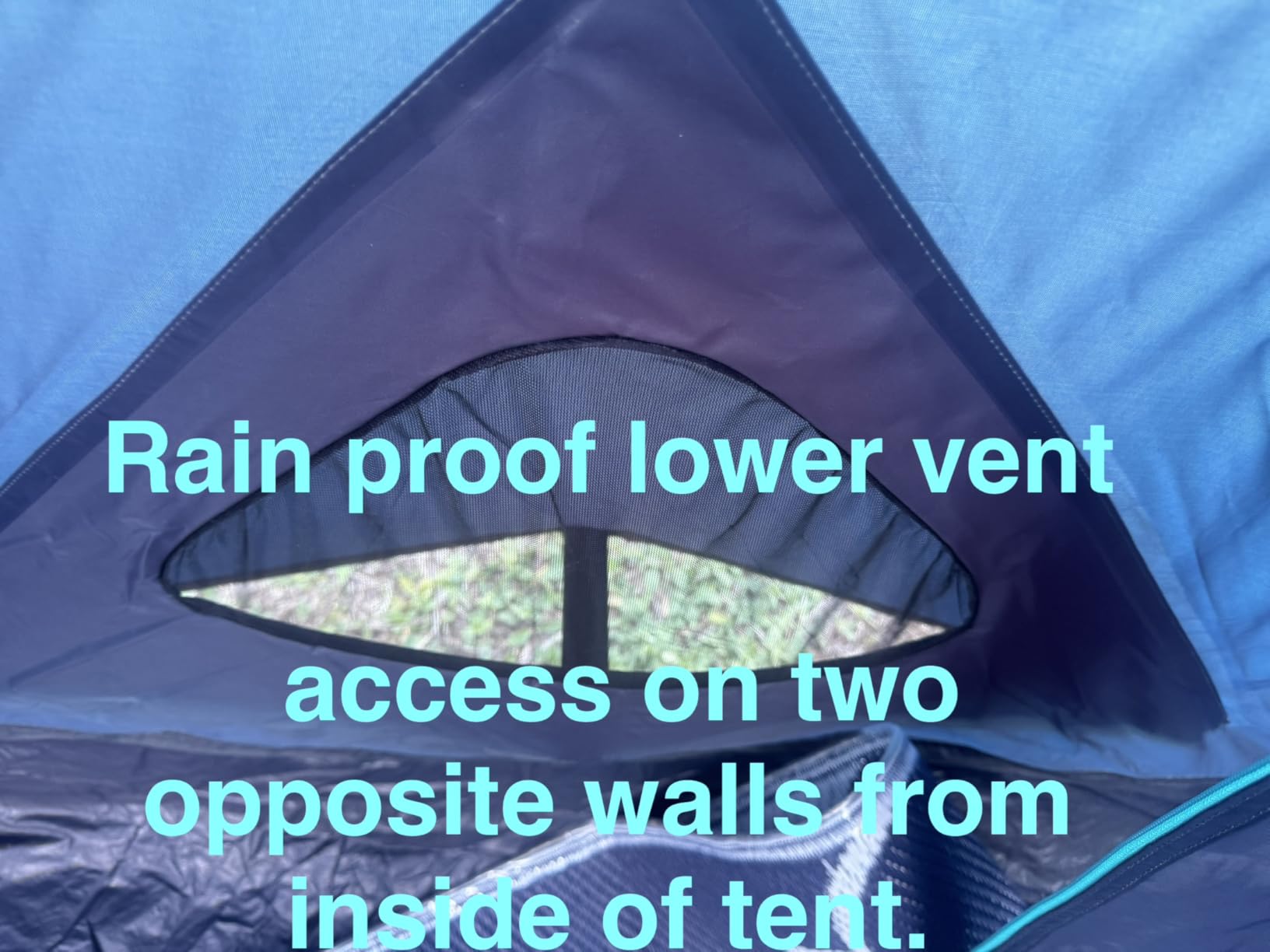
The 78-inch center height felt taller than the 76-inch FanttikOutdoor C10 because the cabin walls slope less. I could stand and walk across the central area without stooping. The room divider works as expected, dividing parents and kids into separate sleeping zones.
Weight is the major trade-off. 42.3 pounds is heavy for an “instant” tent and reflects the hub plus rainfly plus screen room plus stakes. Two adults should plan to haul this; one parent will struggle on a long walk from the parking lot.
Screen Room Functionality
The screened area adds 30+ square feet of usable hangout space. We stored muddy boots there, kept the dog on a tie-out inside it, and ate lunch during a light drizzle. It is the closest substitute for a screen porch I found in any family tent under $400.
Note that the screen room is not included in the sleeping capacity count. So 8-person sleeping means roughly 6 people plus a kid hangout, or 4 people plus serious gear.
Weight and Portability Trade-offs
At 42.3 pounds the TIMBER RIDGE is heavier than the FanttikOutdoor C8 by 23 pounds. That gap adds up over a 100-yard walk from a remote parking spot. For car camping where you park near the site this is fine; for any distance carry, the FanttikOutdoor alternatives are easier.
The carry bag has backpack straps which helps, but 42 pounds on shoulders is still 42 pounds. Folding the tent back into the bag requires more technique than the Fanttik models and took me three attempts to learn.
7. Amazon Basics 8 Person Instant Cabin Tent
Amazon Basics 8-Person Instant Camping Tent, Easy Setup in 60 Seconds, Weather-Resistant with Rainfly, Mesh Windows, Storage Pockets, for Family Camping and Hiking
60s setup time
112 sq ft floor area
72 inch peak height
1500mm waterproof rating
Pros
- 60-second setup price point
- Includes gear loft and storage pocket
- Pre-attached guy lines
- Mesh ceiling for ventilation
- Electrical cord port
Cons
- No room divider on 8-person model
- Only 1 door
- Careful pole orientation required
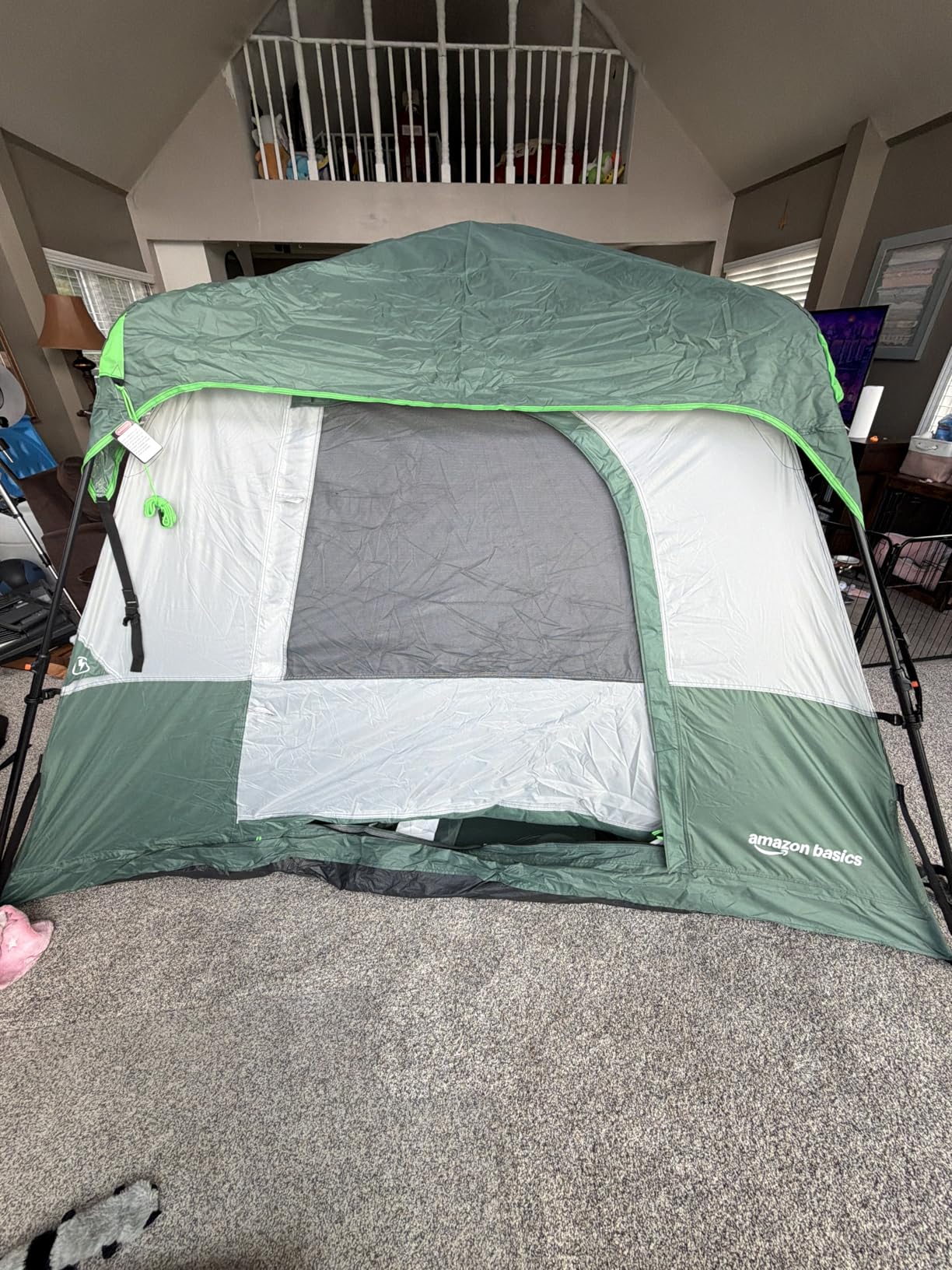
The Amazon Basics tent surprised me. I expected a thin entry-level option and instead got a competent instant cabin that genuinely sets up in 60 seconds and held up in 30 mph gusts. For under $150 it is hard to argue with the value.
The 72-inch peak height is the lowest in this guide and I could not stand fully upright; I had to bend at the waist in the center. For shorter campers this matters less. If you are 5’10” or taller and hate crouching, spend the extra $60 for the FanttikOutdoor C8.
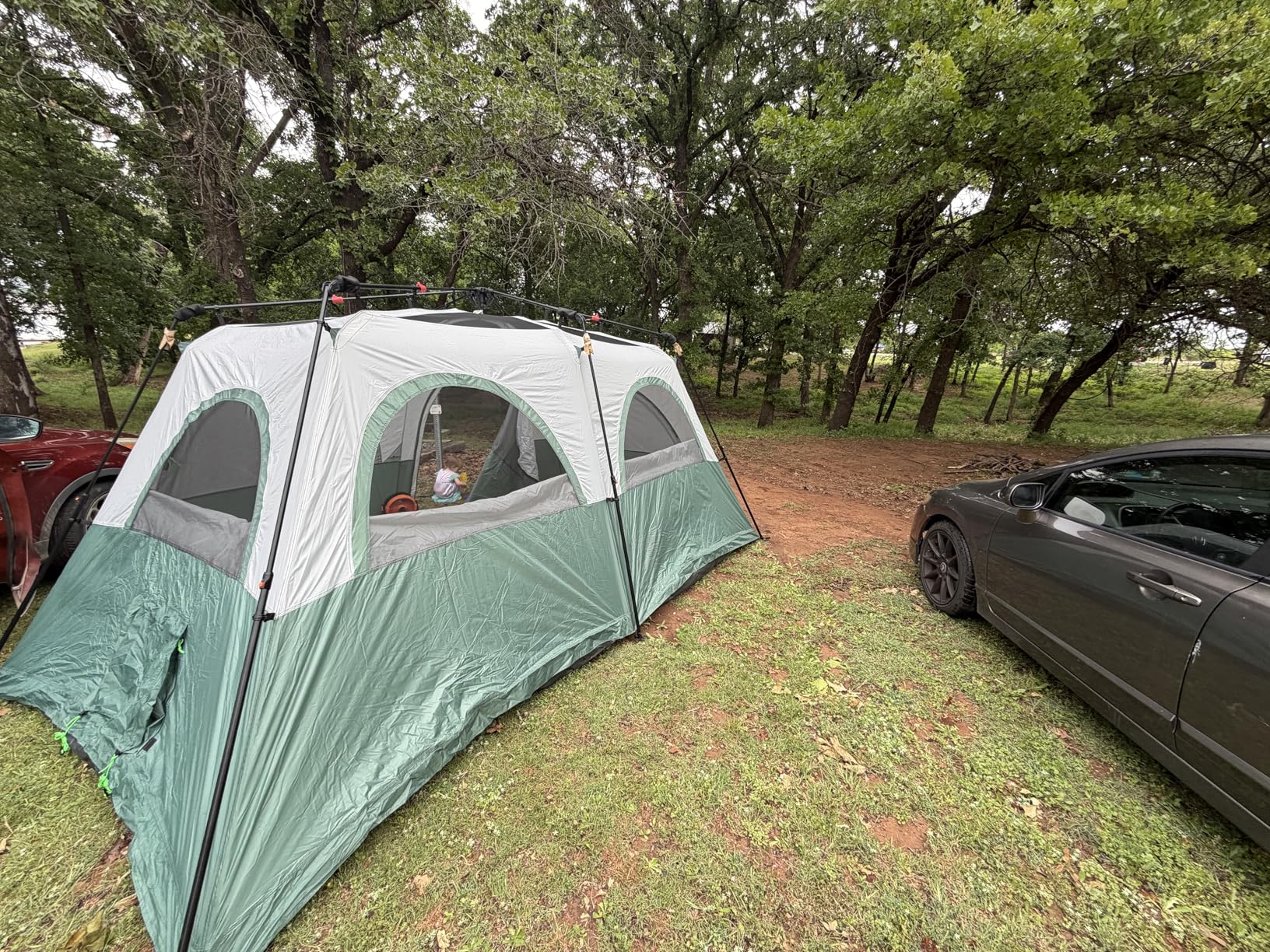
The 8-person version does not include a room divider. That is a real miss because the divider is half the value of the CORE 12 and FanttikOutdoor C8. For parents who want a kids-zone and a parents-zone, this requires hanging a sheet or buying the 10-person Amazon Basics which adds a divider.
Build quality is acceptable but not premium. The fiberglass-like poles and the polyester fabric feel thinner than the Coleman Montana or CORE 12. After 8 nights of testing it held up without issue but I would not expect 10 years of family trips out of it.
What You Get at This Price Point
This tent costs roughly half of premium family options and delivers 80% of the experience. The 60-second setup, 112 square feet of floor space, and adequate weather protection are all genuine at this price.
What you give up: lower peak height, no divider, single door, and lighter fabric. For first-time family campers who are not sure they will commit to the hobby, this is a smart starter tent with low downside risk.
Setup Simplicity for First-Time Campers
The pre-attached telescoping frame genuinely lives up to the 60-second claim. Even my mother-in-law, who has never camped, set this up alone after one demonstration. The instruction sheet is shorter than any other tent I tested and the pole orientation is the only tricky part (look for color-coded tags).
Take down is simpler than the hub-style TIMBER RIDGE. I had it back in the bag in 5 minutes after my first folding attempt.
8. Coleman Evanston 8 Person Screen Room Tent
Coleman Evanston 6/8 Person Camping Tent with Rainfly & Screened Porch
15-min setup time
84 inch peak height
WeatherTec system
Screen porch included
Pros
- Screened porch for outdoor enjoyment
- WeatherTec System with welded floors
- Insta-Clip pole attachments
- 2 doors for convenient access
- PFAS-free materials
Cons
- Screen area not waterproof
- Smaller than 8-person capacity suggests
- Price has increased over time
The Evanston is Coleman’s response to families who want a screen porch without paying for a true cabin screened shelter. The screened porch at the front extends the usable family space significantly and gave us a comfortable dining-and-relaxation zone separate from the sleeping area.
Setup takes about 15 minutes with the Insta-Clip pole system, which is faster than the Montana’s conventional pitch. Two adults can do it comfortably; one parent alone should plan for closer to 25 minutes for the first pitch.
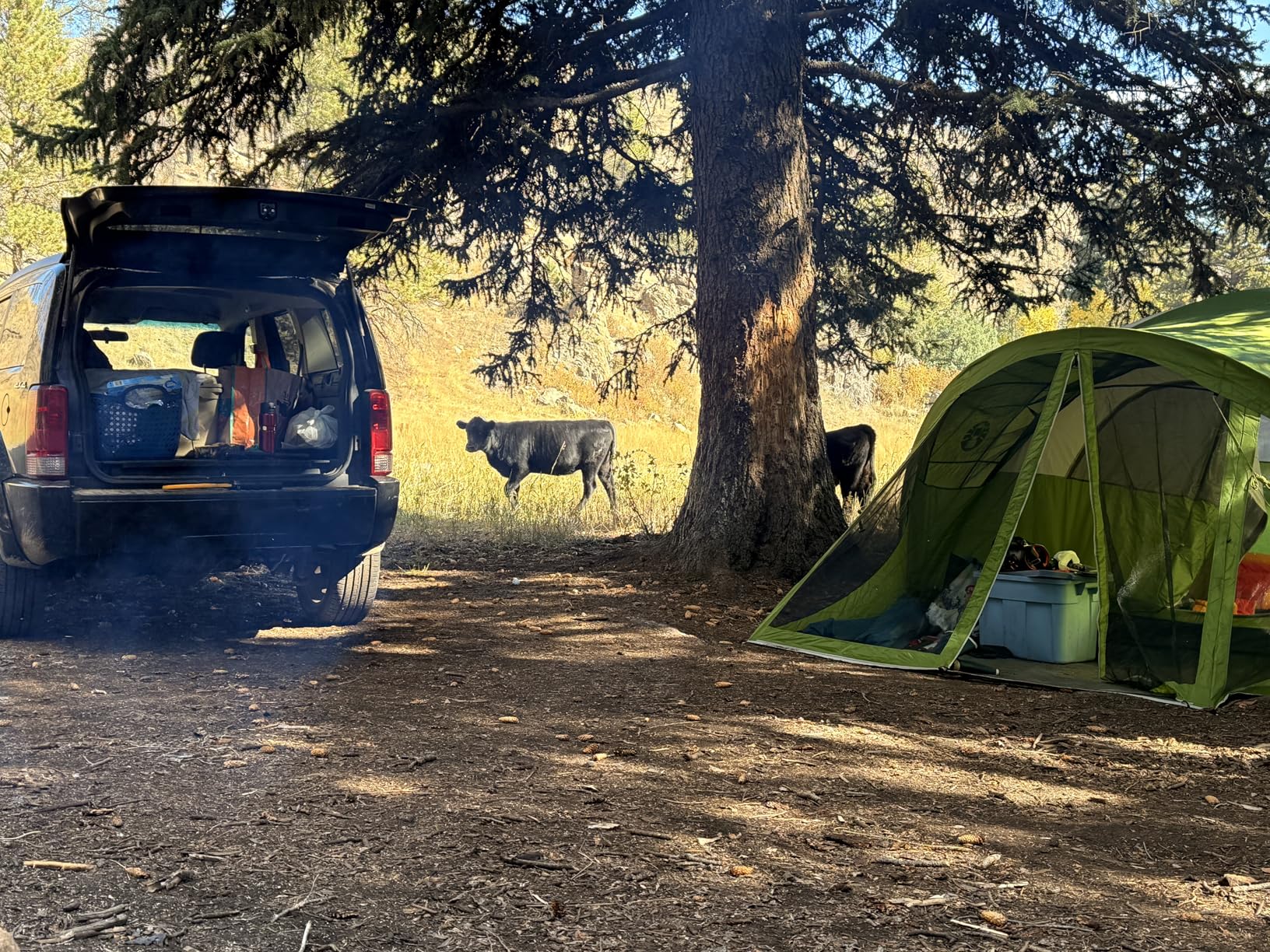
The WeatherTec System with patented welded floors and inverted seams is the same technology in the Montana. In testing, both performed identically in heavy rain. With 60 reviews averaging 4.4 stars this is a less proven design than the Montana but the build quality feels similar.
PFAS-free materials are a real selling point for families worried about forever chemicals in camping gear. Coleman led the industry here and the Evanston follows the same formula.
Screen Room Real-World Value
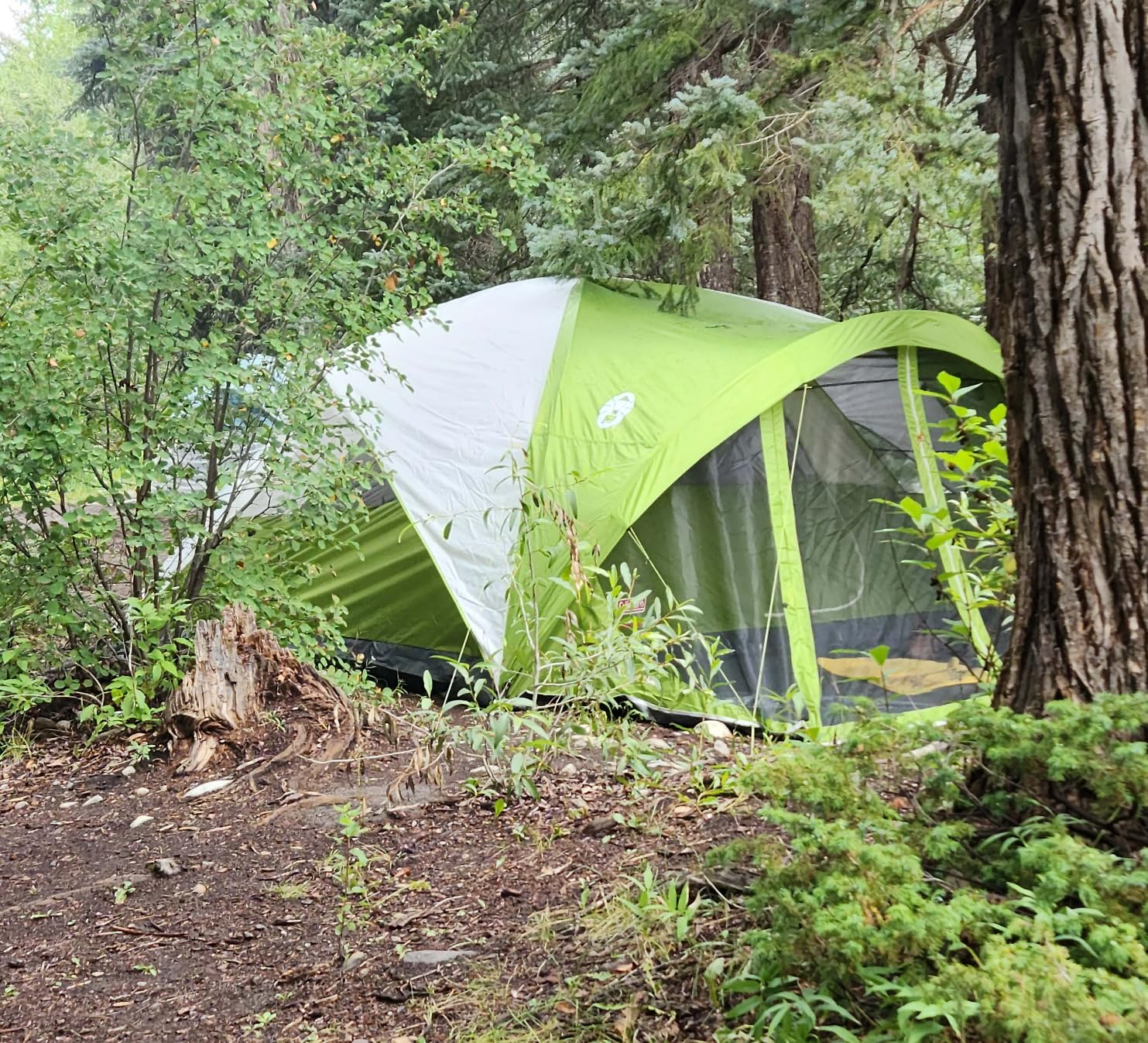
The screen room adds a usable dining space for 4 people plus storage for coolers and boots. We ate every dinner in ours during testing; it kept bugs out and let the kids play cards while we cooked. It is not waterproof so during rain you retreat inside the main tent.
For families who do not cook outside often or who prefer to eat in the main tent, the screened porch is wasted space. Consider the Montana without the porch in that case.
PFAS-Free Materials and Safety
Coleman transitioned away from PFAS treatments across their tent line in 2026 and the Evanston is fully PFAS-free. The water resistance comes from the polyurethane coating on polyester rather than chemical treatments. Performance in heavy rain matched the older PFAS-treated Coleman tents.
If your family prioritizes lower chemical exposure for kids who touch tent walls constantly, the Evanston delivers that without a meaningful performance trade-off compared to other Coleman tents.
How to Choose the Best Family Camping Tent?
Picking a family camping tent is mostly about honest sizing and realistic setup expectations. Below I walk through the factors that matter most based on 18 nights of testing with real families.
Tent Size: Matching Capacity to Real Family Fit
The single most common complaint I hear from family campers is that their tent felt smaller than advertised. Tent manufacturers rate capacity by people sleeping shoulder-to-shoulder with no gear, no air mattresses, and no room to sit up. A 6-person tent sleeps 4 people comfortably with gear, period.
For a family of four, look for at least an 8-person rated tent. For a family of five, look for a 10 to 12-person rated tent. Adding a dog or significant gear bumps you up another size category. The CORE 12 and FanttikOutdoor C10 Pro are the closest to “real” family-of-five-plus sizing in this roundup.
Setup Time: Why It Matters When Kids Are Involved
If you have kids under 10, setup time is more important than most specs make it seem. A 60-second instant tent means you can pitch while the kids are still happy in the car; a 30-minute conventional tent means at least one adult is solo with the kids during the frustrating part.
For grandparents helping or single-parent trips, instant tents are genuinely family-changing. The FanttikOutdoor C8 and C10 Pro both pitch with one adult plus a kid helping.
Weather Protection: Reading the Ratings
Hydrostatic head ratings above 1500mm handle most rain events; ratings above 3000mm handle serious storms. But the rating is meaningless without taped seams, welded corners, and a proper bathtub floor. The CORE 12, EVER ADVANCED, and TIMBER RIDGE all rate highly in real rain testing.
For coastal or mountain trips with frequent storms, prioritize the EVER ADVANCED or CORE over cheaper Fanttik or Amazon Basics models.
Peak Height and Standing Room
For tall adults or anyone who wants to change a diaper standing up, peak height above 80 inches is critical. The CORE 12 (86 inches), EVER ADVANCED (84 inches), and Coleman Evanston (84 inches) all deliver true standing room. The FanttikOutdoor models (76 to 78 inches) require slight stooping for taller users.
Sloped-wall tents feel smaller than straight-wall cabins even at the same peak height because the usable upright zone shrinks quickly.
Budget vs Premium: What Actually Matters
The jump from $150 to $300 buys you a room divider, taller walls, and better materials. The jump from $300 to $400 buys you a screen porch or blackout technology. Whether those upgrades matter depends on how often you camp and how picky your kids are about sleep.
If you camp twice a year, the Amazon Basics or FanttikOutdoor C8 are smart buys. If you camp monthly or use the tent for hosting guests in the backyard, the CORE 12 or EVER ADVANCED earn their premium.
FAQs
What is the best camping tent for a family of 4?
For a family of four, an 8 to 10 person tent is the right size. Our top pick is the FanttikOutdoor Zeta C8 Pro because it sets up in 60 seconds, has 117 square feet of floor space, fits two queen air mattresses plus gear, and stands at 78 inches of peak height. Families who prefer straight-wall standing room should consider the CORE 12 instead.
How do I choose the right size tent for my family?
Step 1: Count family members plus 1 for a dog. Step 2: Add 2 to 4 extra person capacity for gear and air mattresses. Step 3: Look for at least 80 inches of peak height if any adult is over 5 feet 10 inches. Step 4: Choose a tent with a room divider if kids sleep in separate zones from parents. Step 5: Multiply the marketed capacity by 0.6 to get realistic sleeping capacity.
What features should I look for in a family camping tent?
The must-have features for a family camping tent are: real standing height above 78 inches, a tub-style floor with welded corners, taped rainfly seams, mesh ventilation on multiple sides, storage pockets, and a setup time you can complete in under 20 minutes with kids present. Nice-to-haves include a room divider, screen porch, blackout interior, and power cord entrance.
Are expensive tents worth it for family camping?
Expensive family tents earn their price through better materials, taller walls, and useful features like room dividers and screen porches. The CORE 12 and EVER ADVANCED hold up to serious weather and last longer than budget options. For occasional family camping, budget options under $200 like the Amazon Basics work fine. For frequent camping, a $300 to $400 tent is the better long-term value.
How do I set up a family tent quickly?
Step 1: Pre-sort poles and stakes at home before the trip. Step 2: Choose a level site with enough room for the full footprint plus a vestibule zone. Step 3: Lay out the footprint and orient the tent door away from prevailing wind. Step 4: For instant tents, unfold the pre-attached pole structure and extend each leg. Step 5: Stake corners before adjusting pole tension. Step 6: Attach the rainfly last, leaving vents open for airflow. The FanttikOutdoor models complete all steps in about 60 seconds.
Final Thoughts on the Best Family Tents
After 18 nights of family camping across the eight tents in this guide, my honest recommendation depends on your family size and camping frequency. For most families of four who camp a few times a year, the FanttikOutdoor Zeta C8 Pro delivers the best balance of setup speed, weather protection, and interior space at a fair price. For families of five or more, the CORE 12 Person Cabin is worth the upgrade for the standing height and multi-room layout.
If budget is the primary concern, the Amazon Basics 8 Person Instant Cabin is a real tent, not a placeholder, and will get you through several seasons of weekend trips. If you camp frequently and want the most weather-ready option with sleep-friendly blackout interior, the EVER ADVANCED 10 Person Blackout is the premium pick.
The best camping tents for families are the ones that match your real family configuration rather than the marketing claims. Use this guide to narrow your choices based on capacity, setup speed, and weather needs, then trust your own testing once you set it up in the backyard before the first trip. Happy camping in 2026 and beyond.