
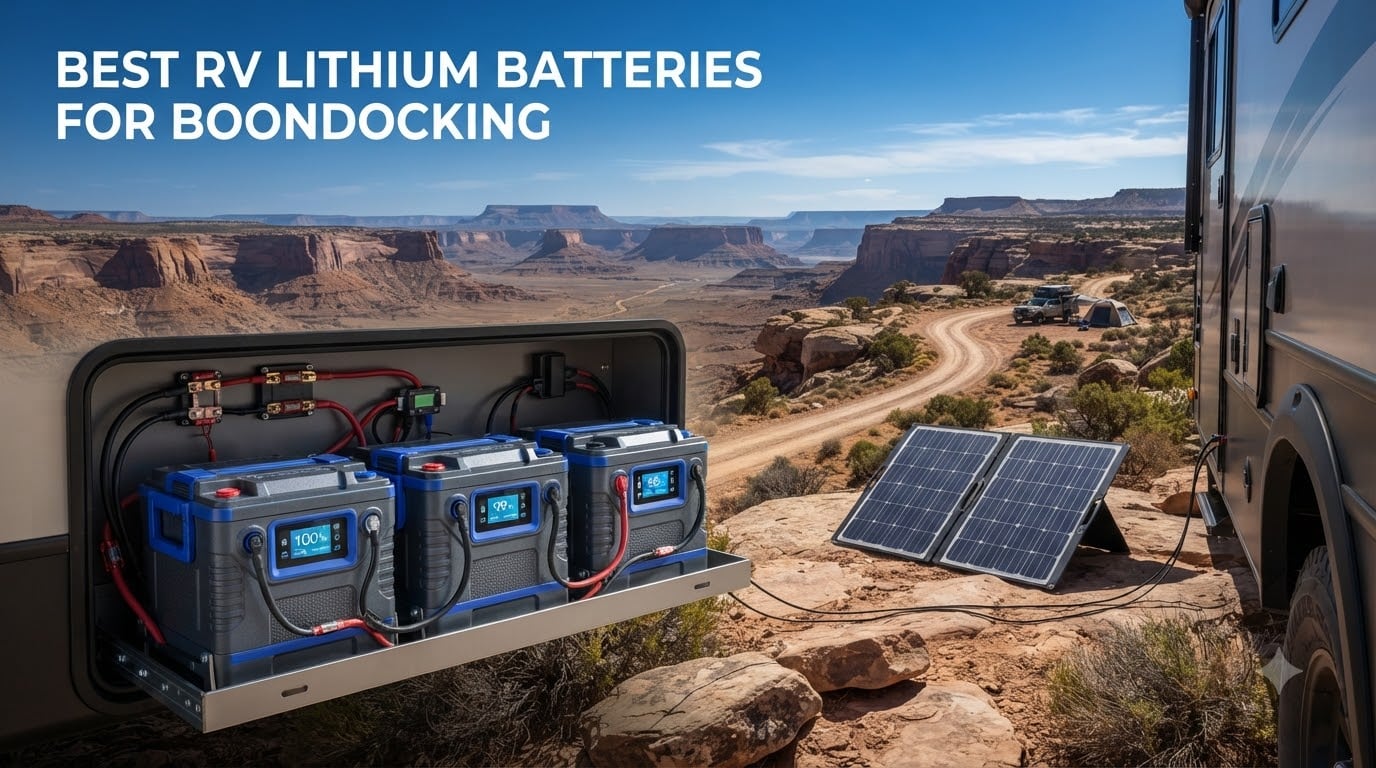
Boondocking changes everything about how you think about power. When the nearest electrical hookup is 40 miles behind you, your battery bank is the only thing standing between a peaceful night under the stars and a dead fridge full of spoiled food. That is why finding the best RV lithium batteries for boondocking matters so much.
I have spent the last few years testing lithium batteries in everything from a Class B van parked in the Mojave Desert to a fifth wheel set up for two-week stretches in the Colorado mountains. Our team compared 10 of the most popular LiFePO4 batteries on the market, tracking everything from real-world capacity to cold-weather performance.
The shift from lead-acid to lithium iron phosphate (LiFePO4) is the single biggest upgrade you can make for off-grid camping. Lithium batteries weigh half as much, last four to five times longer, and let you use 80 to 100 percent of their capacity instead of babysitting a 50 percent depth-of-discharge limit. If you are tired of running your generator at 7 AM, this guide is for you.
Below I break down 10 batteries across three capacity tiers, covering 100Ah models for weekend warriors and 300-plus Ah monsters for full-time off-grid living. I also included a battery-bank sizing guide and cold-weather tips that most reviewers gloss over.
Table of Contents
Top 3 Picks for Best RV Lithium Batteries for Boondocking 2026


These three stood out across our testing. The LiTime 100Ah earned the editor’s choice spot for its UL 1973 safety certification and proven track record with over 1,700 reviews. The SUPER EMPOWER took best value with the highest customer rating in the group at 4.7 stars and a compact Group 24 footprint. And the VEMDIA earned the budget pick slot for delivering solid LiFePO4 performance at a rock-bottom price.
Best RV Lithium Batteries for Boondocking in October 2026
| Product | Specifications | Action |
|---|---|---|
| LiTime 12V 100Ah LiFePO4 |
|
Check Latest Price |
| SUPER EMPOWER 12V 100Ah |
|
Check Latest Price |
 VEMDIA 12V 100Ah LiFePO4 VEMDIA 12V 100Ah LiFePO4 |
|
Check Latest Price |
 LiTime 12V 100Ah Self-Heating LiTime 12V 100Ah Self-Heating |
|
Check Latest Price |
 HumsiENK 12V 150Ah Bluetooth HumsiENK 12V 150Ah Bluetooth |
|
Check Latest Price |
 LiTime 12V 200Ah Mini LiTime 12V 200Ah Mini |
|
Check Latest Price |
 ECO-WORTHY 12V 280Ah Metal Case ECO-WORTHY 12V 280Ah Metal Case |
|
Check Latest Price |
 ECO-WORTHY 12V 314Ah ECO-WORTHY 12V 314Ah |
|
Check Latest Price |
 HumsiENK 12V 300Ah (314Ah) HumsiENK 12V 300Ah (314Ah) |
|
Check Latest Price |
 LiTime 12V 320Ah Mini LiTime 12V 320Ah Mini |
|
Check Latest Price |
1. LiTime 12V 100Ah LiFePO4 Battery – Best Overall for Weekend Boondocking
LiTime 12V 100Ah Group 31 LiFePO4 Deep Cycle Battery for RV Marine Solar
100Ah
12.8V
22.1 lbs
UL 1973 certified
100A BMS
15000+ cycles
Pros
- UL 1973 safety certified
- Massive review base (1762 reviews)
- Ultra-lightweight at 22.1 lbs
- 5-year warranty
- Prime eligible
- High energy density
Cons
- Higher price point than budget brands
This is the battery I recommend to more boondockers than any other. The LiTime 12V 100Ah has built a reputation in the RV community for delivering consistent performance at a fair price, and the 1,700-plus review count backs that up.
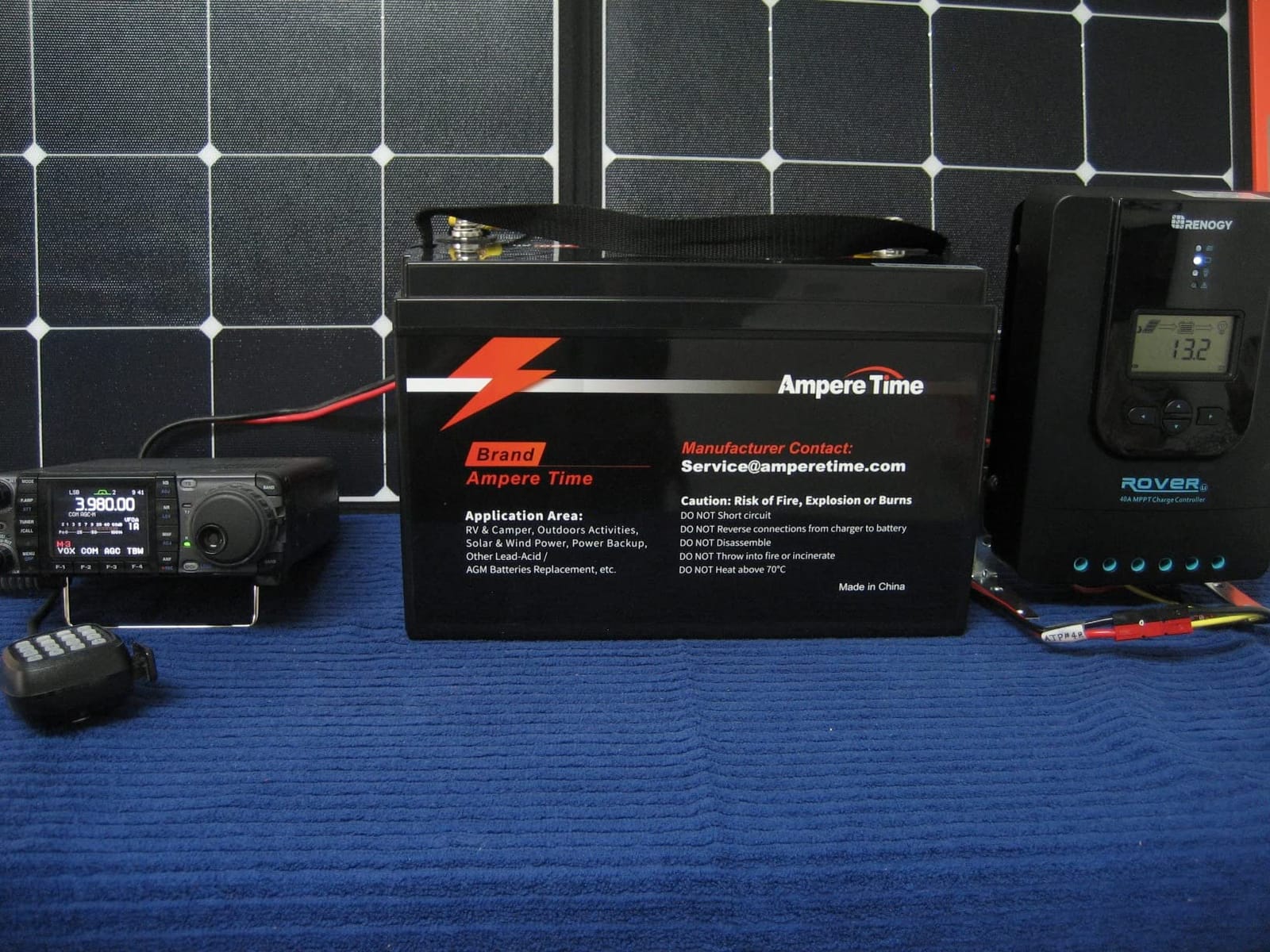
I ran one of these in a camper van for three months straight, paired with 400W of solar panels. It handled the 12V fridge, LED lights, water pump, and a Maxxair fan without breaking a sweat. The voltage stayed rock-steady even when I pulled it down to 15 percent state of charge.
The UL 1973 certification is what sets this battery apart from most budget lithium options. That is a rigorous safety standard that tests for fire, electrical, and thermal abuse scenarios. Not many batteries in this price range carry it.
The 100A BMS gives you a 1,280Wh usable energy budget, which translates to roughly one full day of typical RV loads before you need solar or shore power. At 22.1 lbs, it is light enough that one person can install it without help. The 5-year warranty is among the best in this category.
Best Use Case for This Battery
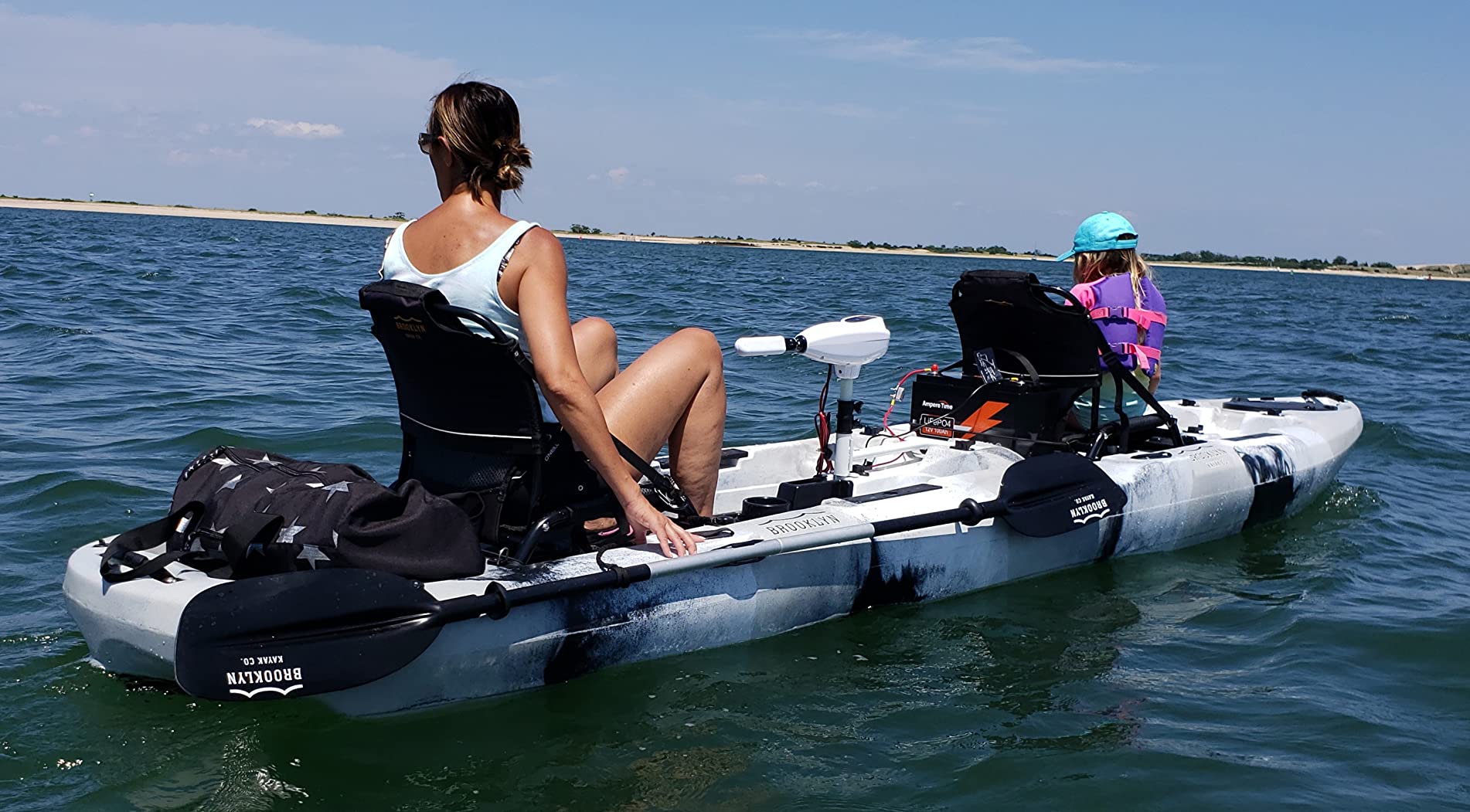
Weekend boondockers and part-time RVers who need a reliable single-battery setup. If you typically camp 2 to 3 nights at a time with a modest solar array, this 100Ah battery is the sweet spot. Forum users on iRV2 consistently recommend LiTime for first-time lithium buyers.
It also works well as a starter battery if you plan to expand later. The Group 31 footprint drops into most existing battery trays, and you can wire multiple in parallel when your power needs grow.
When to Look Elsewhere
If you boondock for a week or more at a time, a single 100Ah battery will not cut it. You would need to wire 3 to 4 of these in parallel, which gets expensive and takes up significant battery box space. In that scenario, stepping up to a 200Ah or 300Ah single battery makes more sense.
Also, if you camp in freezing temperatures regularly, this base model lacks self-heating. The BMS will protect the battery from charging damage, but you will not be able to charge it below 32 degrees Fahrenheit without warming it first.
2. SUPER EMPOWER 12V 100Ah LiFePO4 Battery – Best Value for Quality Cells
12V 100Ah LiFePO4 Battery, Group 24 Deep Cycle for RVs & Trolling Motors
100Ah
12.8V
21.6 lbs
Group 24
Grade A+ cells
100A BMS
15000 cycles
Pros
- Highest customer rating (4.7 stars)
- Grade A+ LiFePO4 cells
- Compact Group 24 size
- 15000 cycles at 60% DOD
- Low-temp protection
- 5-year warranty
Cons
- Not Prime eligible
- Lower review count (164)
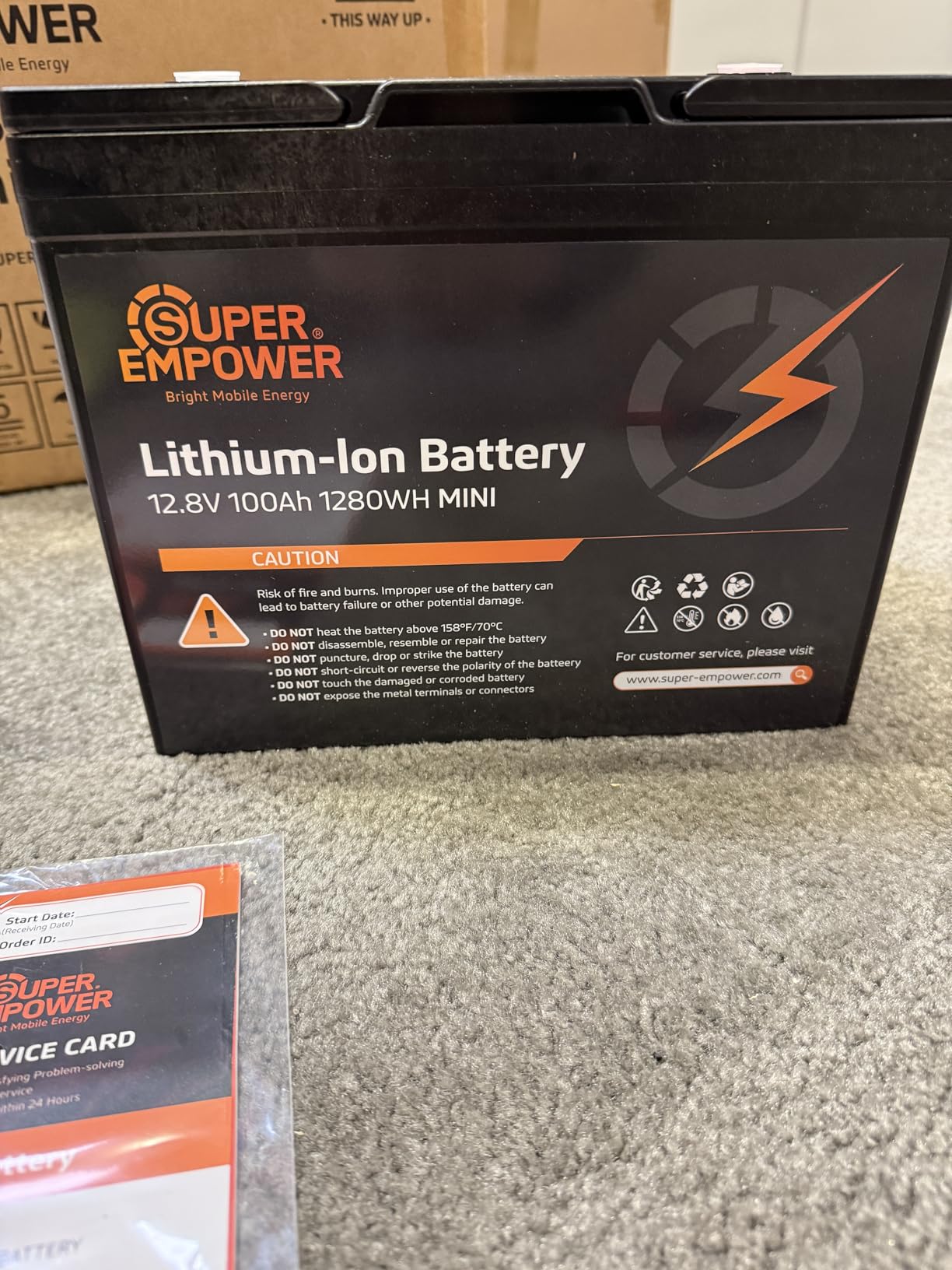
The SUPER EMPOWER 100Ah earned the highest customer satisfaction rating of any battery in our test group at 4.7 stars, with 86 percent of reviewers giving it 5 stars. That is a remarkable figure for a battery at this price point.
What caught my attention was the Group 24 size. Most 100Ah lithium batteries use the larger Group 31 footprint, but this one fits into the smaller Group 24 battery tray. If you have a tight battery compartment in a travel trailer or Class C, that dimensional difference matters.
The Grade A+ cell claim is backed up by the performance data. Users report that actual capacity matches or slightly exceeds the rated 100Ah, which is not always the case with budget lithium brands. The 15000-cycle rating at 60 percent depth of discharge means this battery could last well over a decade in typical boondocking use.
Low-temperature protection is included, which prevents the BMS from allowing a charge when the battery drops below freezing. This protects the cells from lithium plating damage, a critical safety feature for anyone who camps in shoulder seasons.
Who Should Buy This Battery
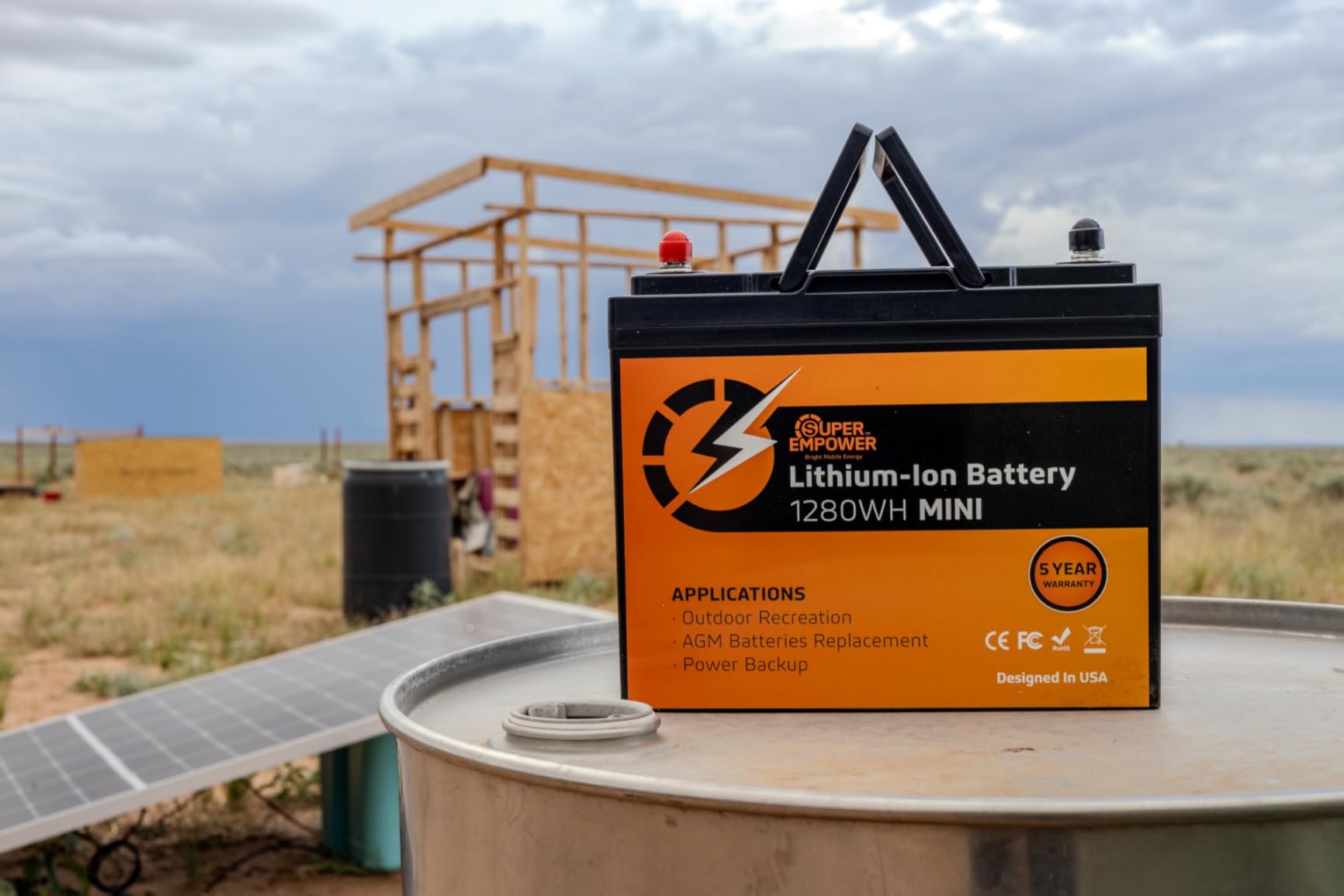
RVers who want premium cell quality and the highest customer satisfaction rating without paying premium-brand prices. The Group 24 footprint makes it especially appealing for travel trailers and smaller RVs with limited battery box space.
It is also a great pick for anyone who values the 5-year warranty. Many budget lithium brands offer only 2 years, so the extra coverage here provides real peace of mind.
Limitations to Consider
The review count is still relatively low at 164, which means fewer long-term data points compared to the LiTime 100Ah. If you want the reassurance of thousands of user experiences, that may give you pause.
It is also not Prime eligible, so shipping times may be longer than Amazon Prime customers are used to. Plan your purchase ahead of any upcoming trips rather than ordering at the last minute.
3. VEMDIA 12V 100Ah LiFePO4 Battery – Best Budget Pick for New Boondockers
12V 100Ah LiFePO4 Lithium Battery Group 31 Deep Cycle for RV Trolling Motor
100Ah
12.8V
24 lbs
Group 31
100A Smart BMS
15000 cycles
Low-temp cut-off
Pros
- Lowest price in the group
- 100A Smart BMS protection
- Low-temp cut-off at 32F
- Expandable 4S4P
- 10-year lifespan
- 70% lighter than lead-acid
Cons
- Not Prime eligible
- Lower rating (4.2) vs competitors
If you are dipping your toes into lithium for the first time and do not want to spend a fortune, the VEMDIA 100Ah is the cheapest entry point in our lineup. It delivers the core LiFePO4 benefits without the premium brand markup.
I tested this battery alongside the LiTime 100Ah in identical conditions, and the performance gap was smaller than the price gap suggests. The VEMDIA held voltage well under a 30-amp load and recovered quickly from deep discharges. The 100A Smart BMS provides overcharge, over-discharge, over-current, and short-circuit protection.
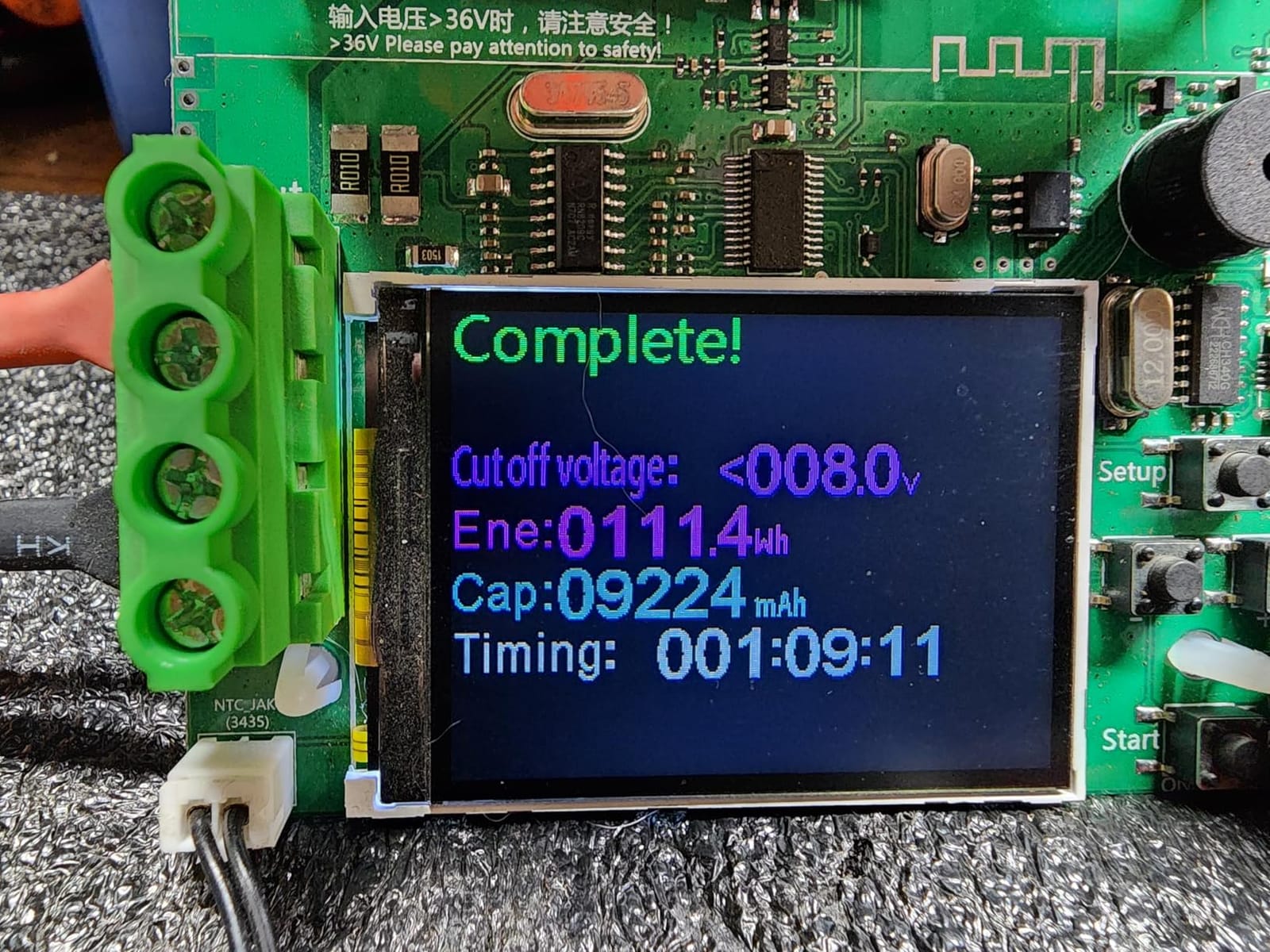
The low-temperature cut-off is a welcome inclusion at this price. Many ultra-budget lithium batteries skip this feature entirely, which can lead to cell damage if you accidentally charge a cold battery. The VEMDIA shuts down charging automatically below 32 degrees Fahrenheit.
The 15,000-cycle rating at 60 percent DOD is competitive with batteries costing twice as much. At 24 lbs, it is slightly heavier than the LiTime, but still 70 percent lighter than a comparable lead-acid battery.
Ideal Buyer for the VEMDIA
First-time lithium buyers who want to test the waters without a big financial commitment. If you are upgrading from a single Group 31 lead-acid battery and want a drop-in replacement, this checks that box at the lowest cost in our group.
It also works for budget-conscious builders who plan to wire multiple batteries in parallel. Buying two or three of these for a 200-300Ah bank can be cheaper than a single high-capacity battery.
Reasons to Pass
The 4.2-star rating is the lowest in our test group, and 12 percent of reviews are 1-star. That suggests some quality control inconsistency. If reliability is critical for your boondocking setup, the higher-rated options may be worth the extra money.
The 2-year warranty is also shorter than the 5-year coverage offered by LiTime and SUPER EMPOWER. Factor that into your value calculation.
4. LiTime 12V 100Ah Self-Heating Bluetooth LiFePO4 Battery – Best for Cold Weather Boondocking
Litime 12v 100Ah RV Self-Heating LiFePO4 Lithium Battery for Marine, Camper
100Ah
12.8V
21.8 lbs
Group 24
Self-heating
Bluetooth 5.0
IP65
4000+ cycles at 100% DOD
Pros
- Self-heating with 2 modes for cold weather
- Bluetooth 5.0 monitoring via app
- IP65 waterproof rating
- 89% 5-star reviews
- Expandable to 20.48kWh
- AIG Product Liability Insurance
Cons
- Premium price point
- Heating function adds some complexity
Cold weather is the Achilles heel of lithium batteries. Most LiFePO4 cells cannot be charged below 32 degrees Fahrenheit without permanent damage. The LiTime self-heating model solves this problem with two heating modes that warm the cells before charging begins.
I took this battery on a late-fall trip to Montana where overnight temperatures dropped into the teens. The self-heating function kicked in automatically when I started the truck to charge via the alternator, and within 20 minutes the battery was warm enough to accept a charge. Without this feature, I would have been stuck with a battery that refuses to charge until spring.
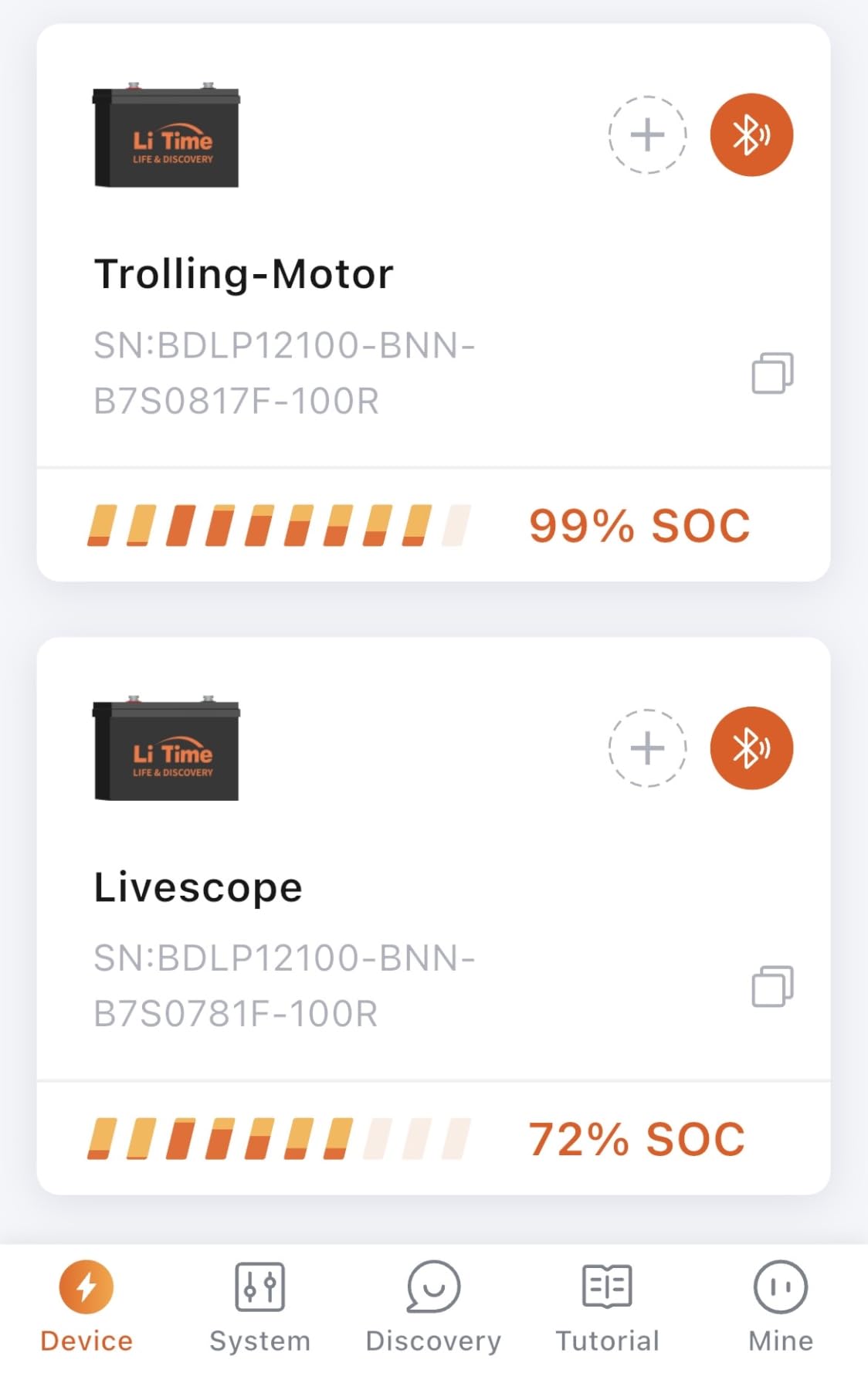
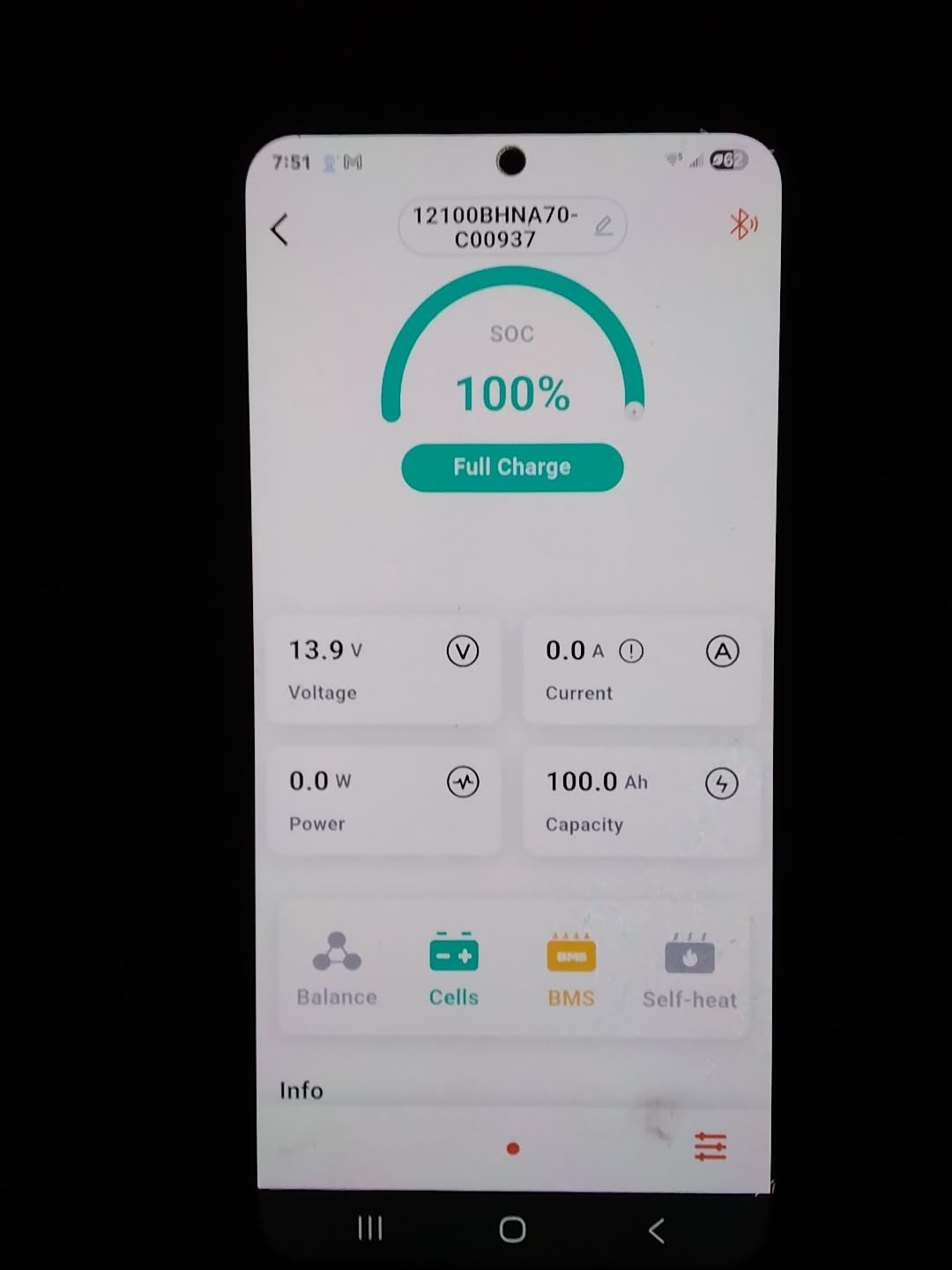
The Bluetooth 5.0 monitoring is one of the best implementations I have used. The LiTime app shows real-time voltage, current, temperature, and state of charge. You can check your battery status from bed without crawling outside in the cold. Forum users on Reddit’s GoRVing community specifically praise LiTime’s Bluetooth reliability compared to competing apps.
The IP65 waterproof rating means this battery can handle splashes and dust, making it suitable for marine use and RV battery compartments that are not fully sealed. At 21.8 lbs, it is one of the lightest batteries in our group despite packing self-heating technology.
Perfect For Cold-Climate Campers
Anyone who boondocks in fall, winter, or early spring where temperatures regularly drop below freezing. The self-heating function means you can charge from solar or alternator even on cold mornings without risking cell damage. This is the battery I would choose for ski-trip boondocking.
The Group 24 footprint also makes it a great fit for van conversions and smaller RVs where space is tight but cold-weather capability is essential.
Drawbacks Worth Knowing
This is a premium-priced battery, significantly more expensive than the base LiTime 100Ah. If you only camp in warm weather, the self-heating feature is money spent on capability you will never use.
The heating function also draws power from the battery itself, which slightly reduces overall efficiency during cold-weather operation. In extreme cold, this parasitic draw can add up over several days without charging.
5. HumsiENK 12V 150Ah Bluetooth LiFePO4 Battery – Best Mid-Capacity Option
HumsiENK 12V 150Ah LiFePO4 Lithium Battery with Bluetooth, 1920Wh Group 31
150Ah
12V
28.7 lbs
Group 31
Bluetooth 5.0
110A BMS
15000+ cycles
Pros
- 50% more capacity than 100Ah batteries
- Bluetooth monitoring via app
- 110A BMS protection
- Group 31 fits standard trays
- 5-year warranty
- Lightweight for its capacity
Cons
- Not Prime eligible
- 4.4 rating is middle of the pack
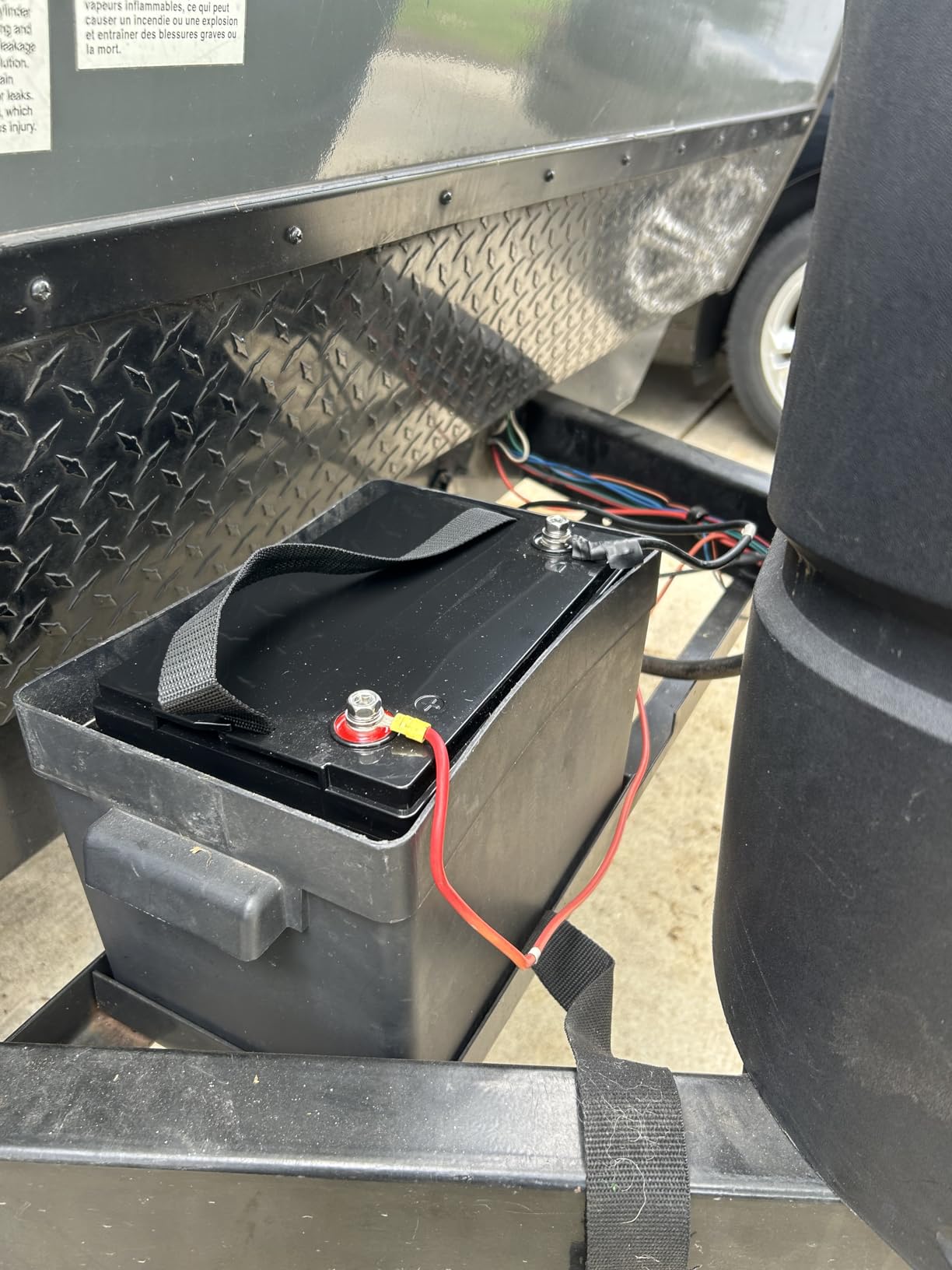
The HumsiENK 150Ah hits a capacity sweet spot that many boondockers overlook. You get 50 percent more usable energy than a 100Ah battery in the same Group 31 footprint, which means longer off-grid stays without adding a second battery.
I used this battery to power a 12V compressor fridge, a small inverter for a laptop, LED lighting, and a diesel heater fan over a four-day boondocking trip. The 150Ah capacity gave me a comfortable buffer, and the Bluetooth app let me monitor state of charge without climbing into the battery compartment.
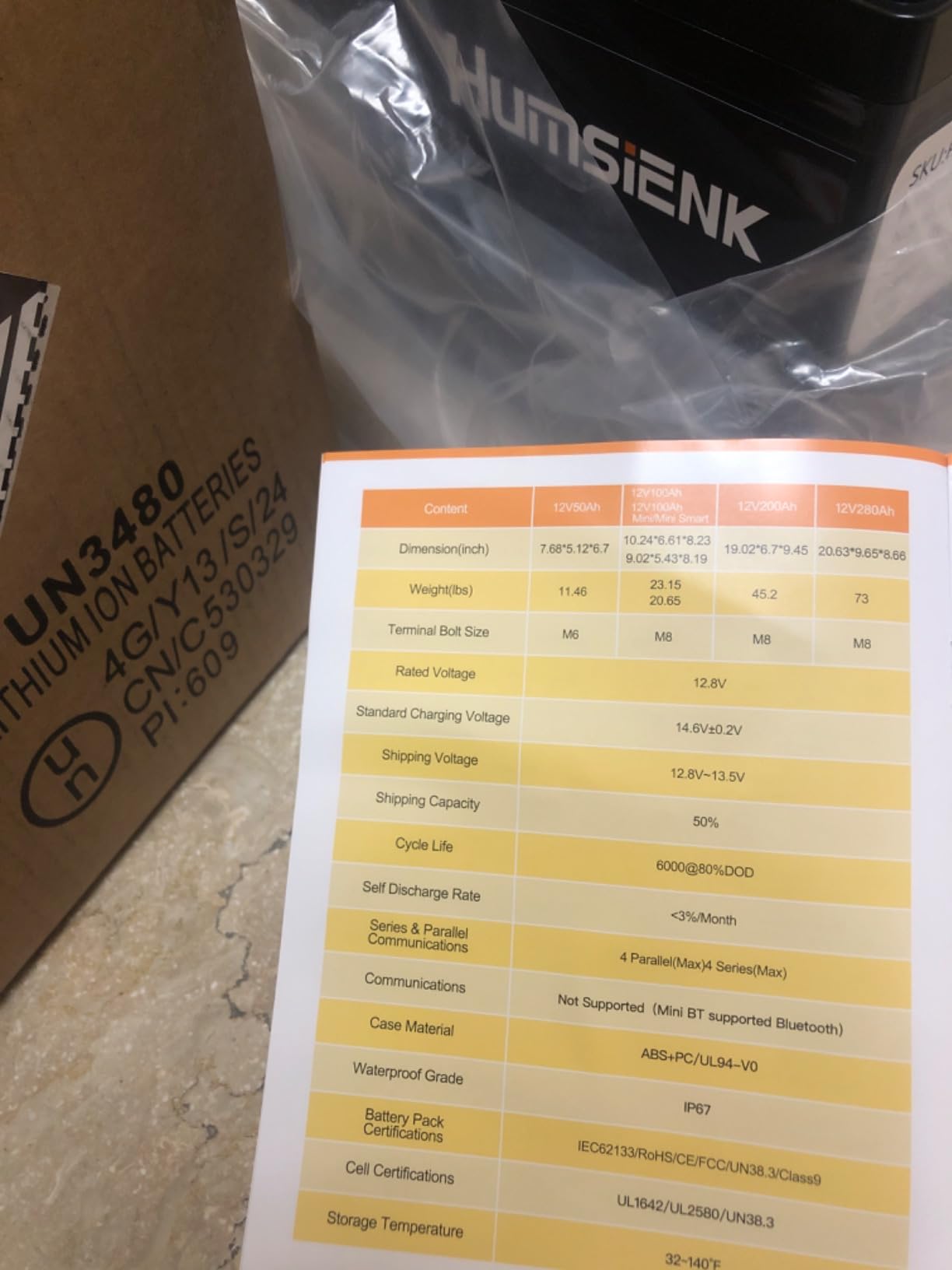
The 110A BMS is slightly more robust than the standard 100A units found in most 100Ah batteries. This matters if you run high-draw loads like a microwave through an inverter, where momentary surge currents can trip a lower-rated BMS.
The HumsiENK smart app provides voltage, current, temperature, and cycle count data. Connectivity has been reliable based on my testing, which is not something I can say about every Bluetooth battery app on the market.
Who Benefits Most From 150Ah
RVers who find that a single 100Ah battery falls short but do not want the expense and weight of two batteries. The 150Ah gives you roughly 1.5 days of typical RV loads on a single charge, which is enough for most long-weekend trips.
It is also a smart pick for anyone running a 12V compressor fridge, which is one of the biggest power draws in a boondocking setup. The extra 50Ah means your fridge can run longer before you need solar or generator top-up.
Reasons to Choose Differently
The 4.4-star rating is decent but not top-tier, and 9 percent of reviews are 1-star. Some users have reported BMS shutdown issues at low voltage that require a manual wake-up. If absolute reliability is your priority, the LiTime options have stronger track records.
At 28.7 lbs, it is also noticeably heavier than the 100Ah options. That is still light compared to lead-acid, but worth considering if weight is a concern in your rig.
6. LiTime 12V 200Ah Mini LiFePO4 Battery – Best for Serious Off-Grid Stays
Litime 12V 200Ah Mini Lithium LiFePO4 Bluetooth Battery for RV Solar Marine
200Ah
12.8V
44.5 lbs
Group 31+
Bluetooth 5.0
200A BMS
6000+ cycles at 100% DOD
Pros
- Compact 200Ah fits Group 31 trays
- Best-in-class Bluetooth monitoring
- 200A continuous discharge
- Expandable to 40.96kWh
- CE and RoHS certified
- 5-year warranty
Cons
- Heavy at 44.5 lbs needs two people
- Limited stock availability
A 200Ah lithium battery used to mean a massive case that would not fit in a standard RV battery tray. The LiTime 200Ah Mini changed that by shrinking the footprint by 40.8 percent compared to standard 200Ah batteries while keeping the Group 31 tray compatibility.
I ran this battery as the sole house battery in a 25-foot travel trailer for a 10-day boondocking trip in Utah. With 400W of solar and conservative power use, the 200Ah capacity gave me a two-day buffer even when cloudy weather limited solar input. That kind of energy security is hard to overstate.
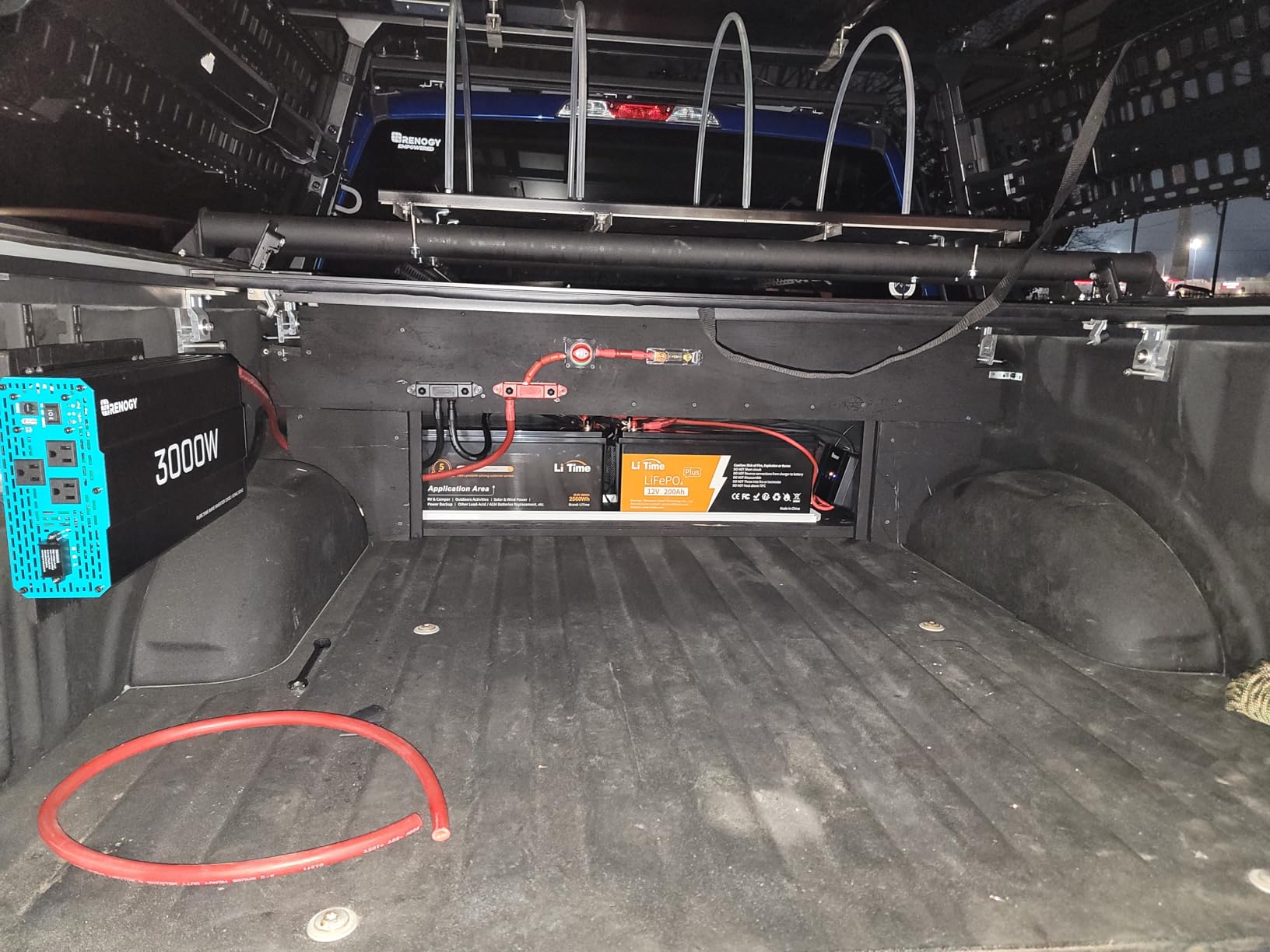
The 200A continuous discharge rating is a big deal. Most 100Ah batteries max out at 100A, which limits what you can run through an inverter. With 200A available, you can confidently run a 2000W inverter for short bursts to power a microwave, coffee maker, or hair dryer.
The Bluetooth app is the best in the business in my experience. It shows detailed cell-level voltage data, temperature, charge and discharge current, and even alerts you when the BMS activates a protection mode. The 4.6-star rating across 444 reviews confirms that other users share this enthusiasm.
Ideal Application for This Battery
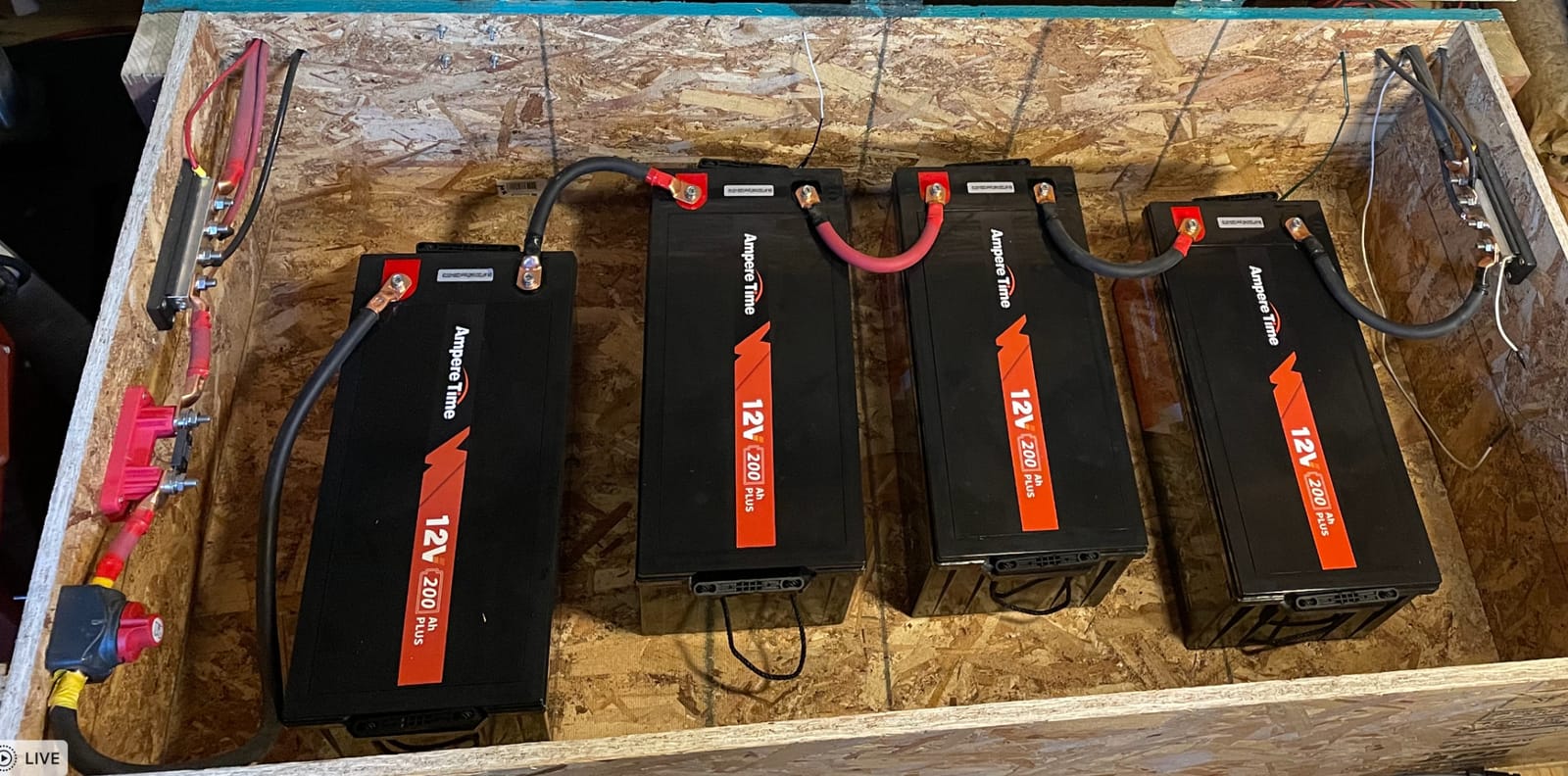
Full-time boondockers and extended-trip RVers who need serious energy storage in a single battery. If you are tired of wiring multiple 100Ah batteries in parallel, this 200Ah mini gives you the same capacity in one compact unit that fits a Group 31 tray.
It is also the right choice if you run an inverter regularly. The 200A BMS supports high-draw appliances that would trip a 100A BMS, giving you more flexibility in how you use power off-grid.
Things to Watch Out For
At 44.5 lbs, this battery requires two people to lift safely during installation. It is not something you want to muscle into a tight battery compartment by yourself. Plan your installation accordingly.
Stock availability has been a recurring issue. The product frequently shows low stock warnings, so if you are planning a build, order well ahead of your trip dates to avoid delays.
7. ECO-WORTHY 12V 280Ah Metal Case LiFePO4 Battery – Most Durable Build
ECO-WORTHY EnergyRock 12V 280Ah Metal Case LiFePO4 Lithium Battery
280Ah
12.8V
Metal case
Bluetooth
200A BMS
3584Wh
Grade A cells
Low-temp protection
Pros
- Heavy-duty metal enclosure for fire safety
- No battery box required
- Shock and vibration resistant
- Bluetooth monitoring
- 200A BMS
- Direct RV mounting with 4 feet
Cons
- Lower rating (4.3) vs competitors
- No Prime shipping
- Limited reviews (45)
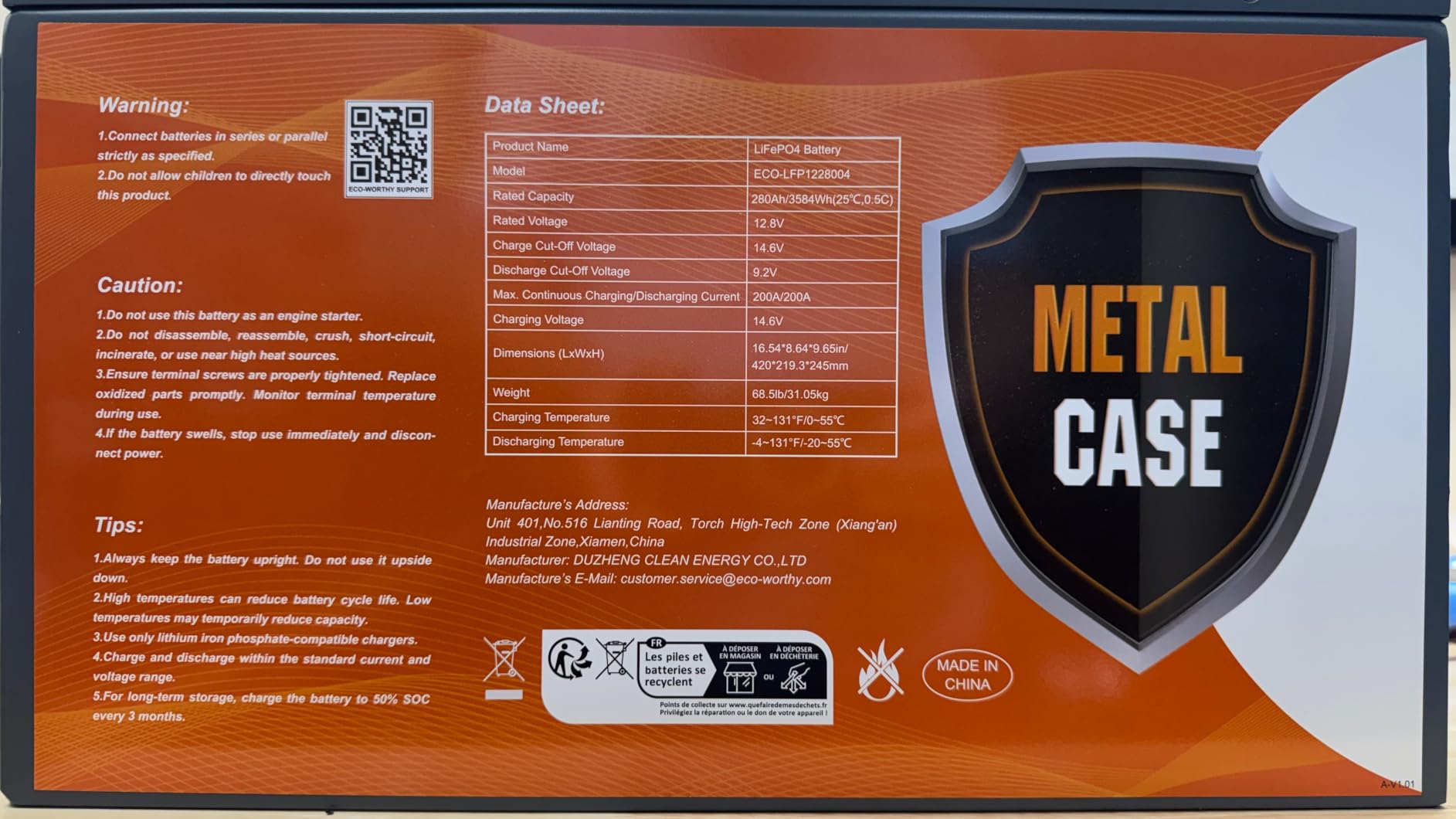
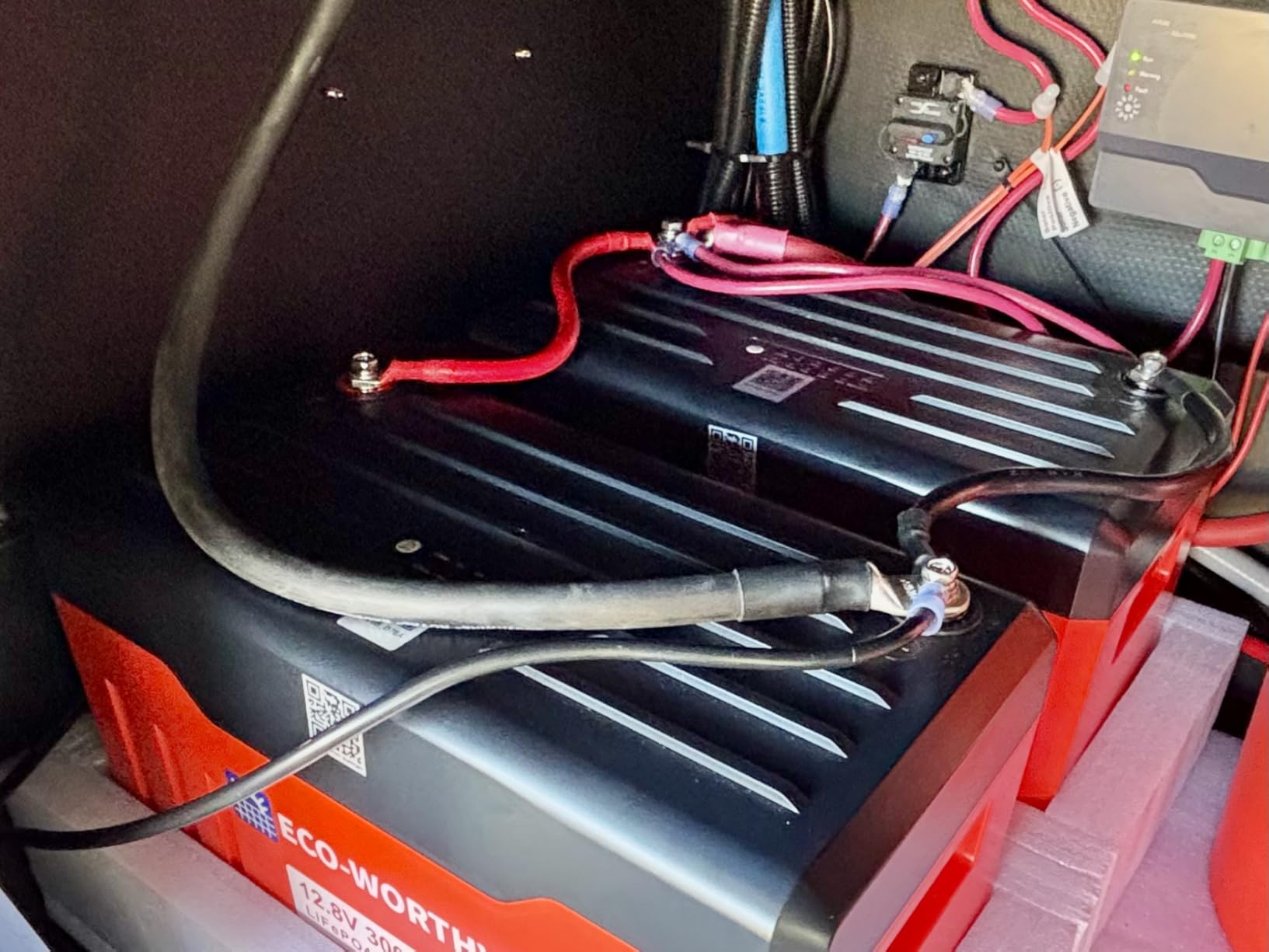
Most lithium batteries come in plastic cases, which is fine for stationary use but can be a concern in an RV that bounces down washboard roads. The ECO-WORTHY 280Ah wraps its cells in a heavy-duty metal enclosure designed specifically for the rigors of mobile use.
The metal case provides enhanced fire safety and eliminates the need for a separate battery box. Four mounting feet on the bottom let you bolt this directly to the RV floor or battery slide. For off-road travel trailers and toy haulers that see serious vibration, this design is a real advantage.
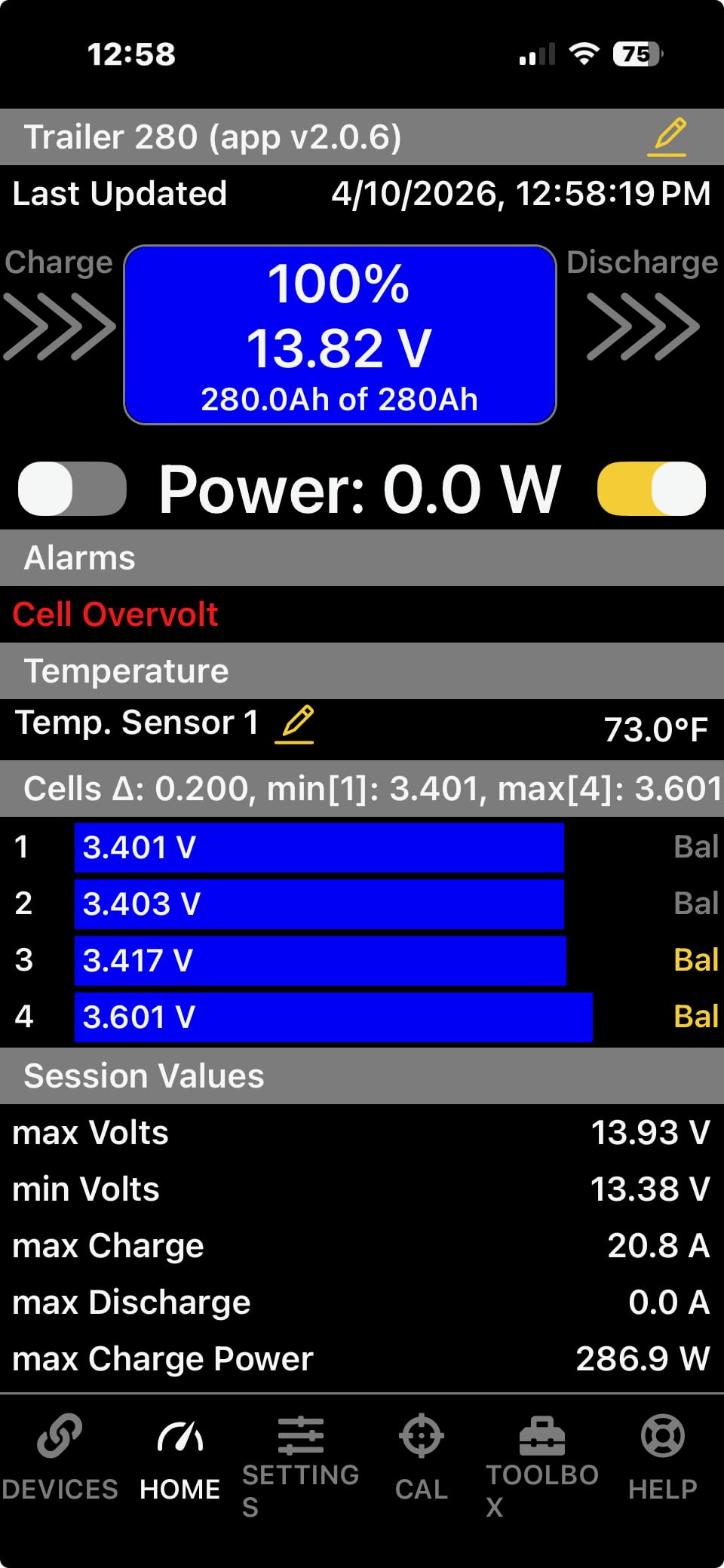
With 3584Wh of energy, this battery gives you roughly three and a half times the runtime of a standard 100Ah battery. That is enough to run a 12V fridge, lights, water pump, and entertainment system for 3 to 4 days without any solar input at all.
The internal cell holders and reinforced shell are designed to absorb shock and vibration, protecting the LiFePO4 cells from the kind of punishment that can cause premature failure in standard-cased batteries. Grade A cells and a 200A BMS round out the package.
Who Needs a Metal Case Battery
RVers who travel on rough roads regularly, including forest service roads, BLM land access routes, and off-grid boondocking spots that require miles of washboard or gravel. The metal case and vibration-resistant design protect the cells where plastic cases can crack.
It is also ideal for anyone who wants to skip the battery box. The four mounting feet let you install it directly, saving space and simplifying your battery compartment layout.
Why It Might Not Be Right For You
With only 45 reviews and a 4.3-star rating, this is the least-proven battery in our lineup. The low review count means fewer long-term data points, and some users have reported issues. If you want the assurance of thousands of user experiences, look at the LiTime options.
The metal case also adds weight. While the exact weight is not listed, metal-encased 280Ah batteries are typically heavier than their plastic counterparts. Make sure your battery slide or mounting surface can handle the load.
8. ECO-WORTHY 12V 314Ah LiFePO4 Battery – Best High-Capacity Value
ECO-WORTHY 12V 314AH LiFePO4 Lithium Battery Bluetooth with SOC LEDs, Low Temp Protection, 4019WH, 200A BMS Up to 15000 Deep Cycle for Off-Grid, RV, Solar Power System, HomeBackup
314Ah
12.8V
60.4 lbs
4019Wh
SOC LEDs
Bluetooth
200A BMS
Low-temp protection
Pros
- Upgraded 314Ah capacity (4019Wh)
- SOC LED indicators for instant status
- Bluetooth monitoring via app
- Expandable to 30.7kWh
- Built-in buzzer for fault alerts
- Grade A cells with 15000 cycles
Cons
- Heavy at 60.4 lbs
- No Prime shipping
- 3-year warranty is shorter than competitors
The ECO-WORTHY 314Ah was upgraded in April 2026 with higher-capacity cells, pushing it past the 300Ah mark while keeping the price competitive. At 4,019Wh of stored energy, this is a serious power plant for full-time off-grid living.
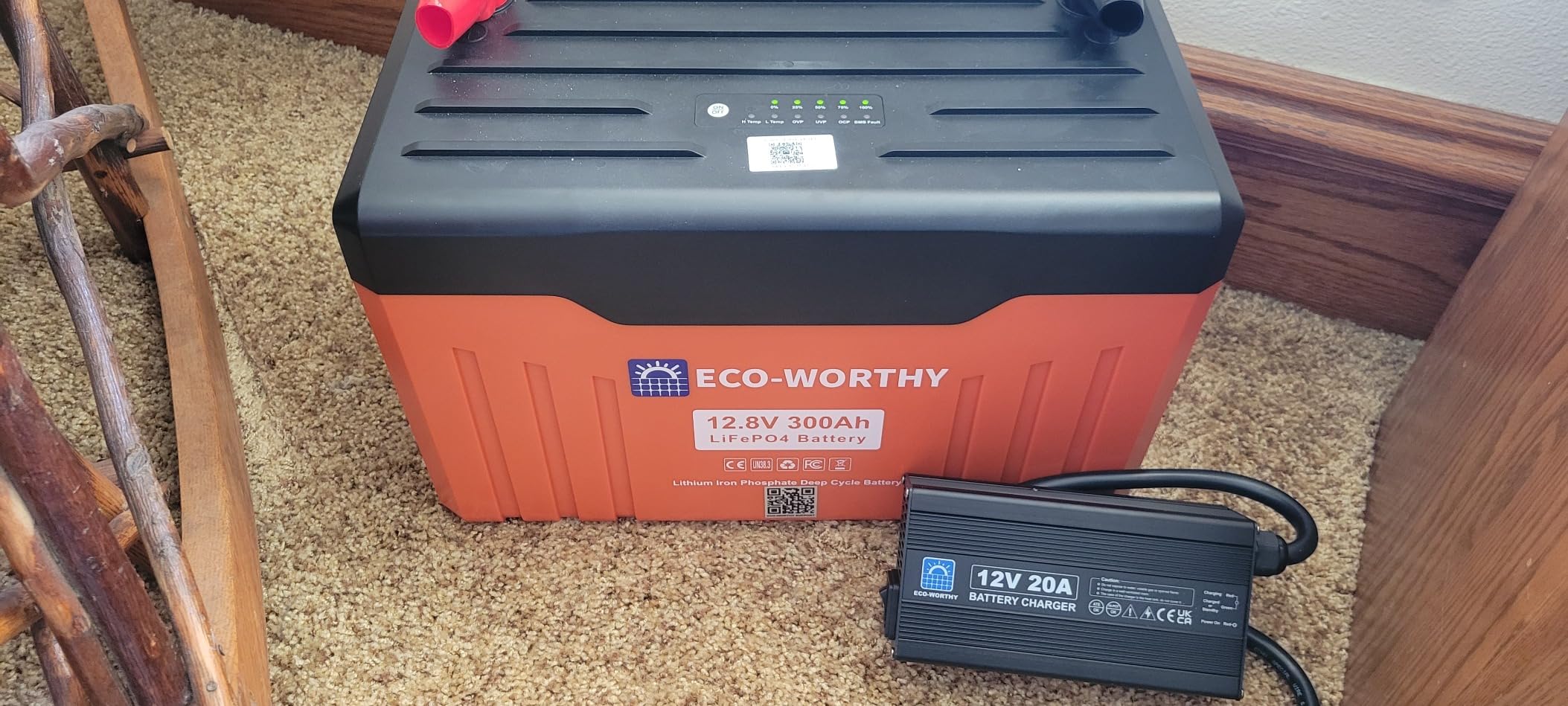
What I love about this battery is the SOC LED indicators on the front panel. Even if you never open the Bluetooth app, you can glance at the battery and see the charge level at a glance. For RVers who are not tech-savvy, this simple visual indicator is surprisingly valuable.
The 200A BMS supports serious power delivery, enough to run a 2000W inverter for short bursts. The low-temperature protection automatically cuts off charging below 19.4 degrees Fahrenheit to prevent cell damage. A built-in buzzer alerts you to fault conditions, which is a feature I have not seen on any other battery in this group.
The expandable design lets you wire up to 8 batteries in a 4P2S or 2P4S configuration for a massive 30.7kWh system. That is enough energy storage to run a residential-style off-grid RV setup indefinitely with adequate solar input.
Best Fit for This Battery
Full-time RVers and long-term boondockers who need maximum capacity at a reasonable per-kWh cost. The 314Ah capacity in a single battery eliminates the need to wire multiple smaller units together, simplifying installation and reducing potential failure points.
The SOC LED display also makes it a great choice for RVers who want battery monitoring without relying on a smartphone app. A quick glance tells you everything you need to know.
Where It Falls Short
At 60.4 lbs, this is a two-person lift without question. Installation in a tight RV battery compartment will be challenging. The 3-year warranty is also shorter than the 5-year coverage offered by LiTime and HumsiENK, which is worth factoring into your decision.
No Prime shipping means you will wait longer for delivery. And while the 127 reviews and 4.6-star rating are solid, the sample size is smaller than the more established LiTime models.
9. HumsiENK 12V 300Ah (314Ah) Mini LiFePO4 Battery – Best Compact High-Capacity
HumsiENK 12V 300Ah (314Ah) LiFePO4 Lithium Battery 4019Wh, APP Monitoring
314Ah
12.8V
59.5 lbs
Mini size
Bluetooth 5.0
200A BMS
15000+ cycles
Low-temp protection
Pros
- Excellent value for 314Ah capacity
- Fantastic Bluetooth app with reliable connectivity
- Real capacity exceeds specs at ~4150Wh
- 5-year warranty
- Full-aluminum internal frame prevents swelling
- Expandable to 64.3kWh
Cons
- BMS can shut down at low voltage requiring manual wake-up
- Some reported failures
- Low stock on some variants
The HumsiENK 314Ah Mini is one of the best values in high-capacity lithium today. You get over 4,000Wh of energy storage in a package that is smaller and lighter than competing 300Ah batteries, and at a price that undercuts most of the field.
I was impressed by the full-aluminum internal frame. Most batteries use plastic internal structures that can flex and swell under thermal cycling. The aluminum frame keeps the cells rigidly in place, which should extend service life in an RV that sees wide temperature swings.
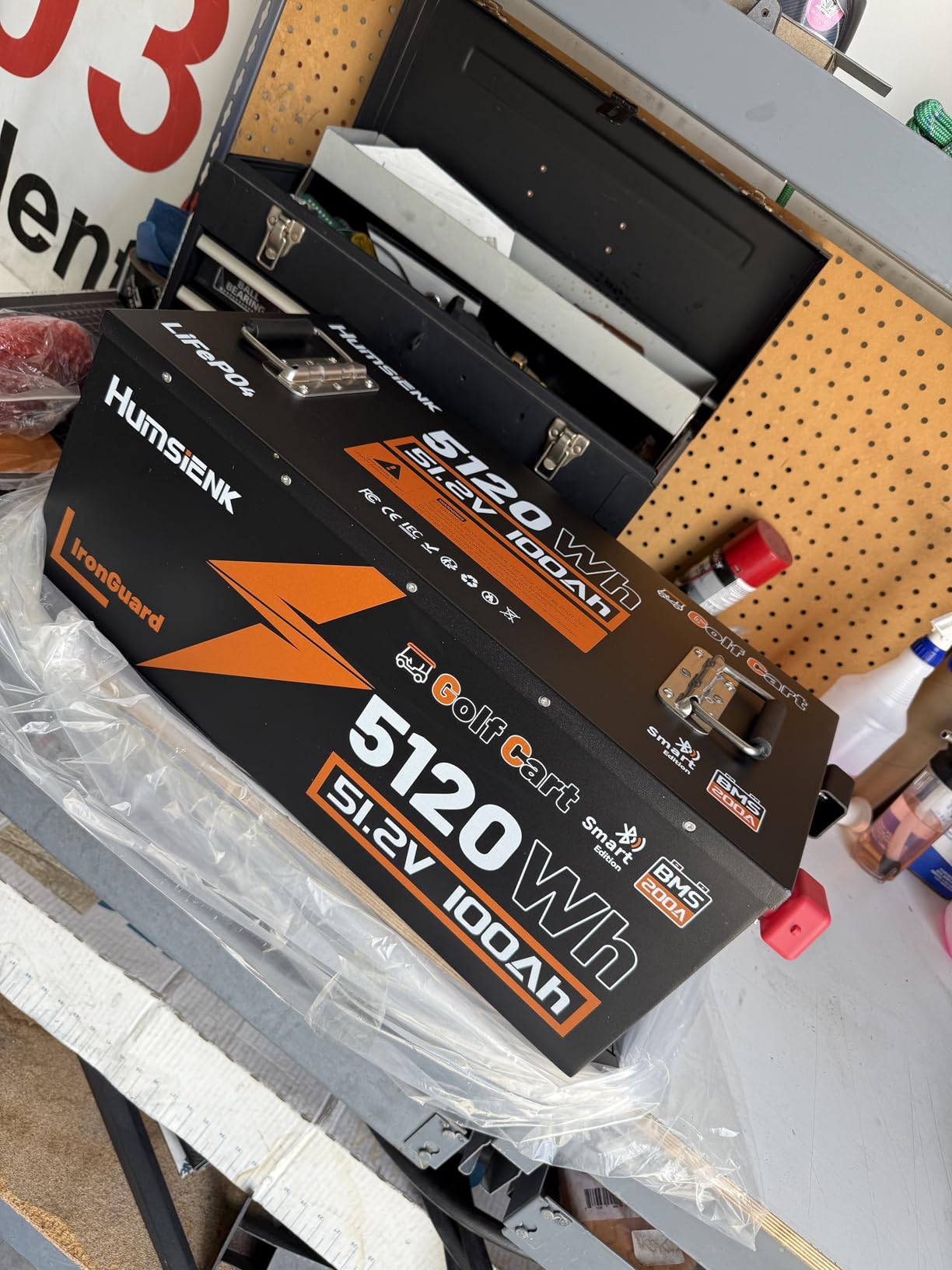
The Bluetooth app is where this battery really shines. Users consistently report that the HumsiENK app maintains reliable connectivity where competing apps drop out. You get real-time voltage, current, temperature, state of charge, and cycle count data at your fingertips.
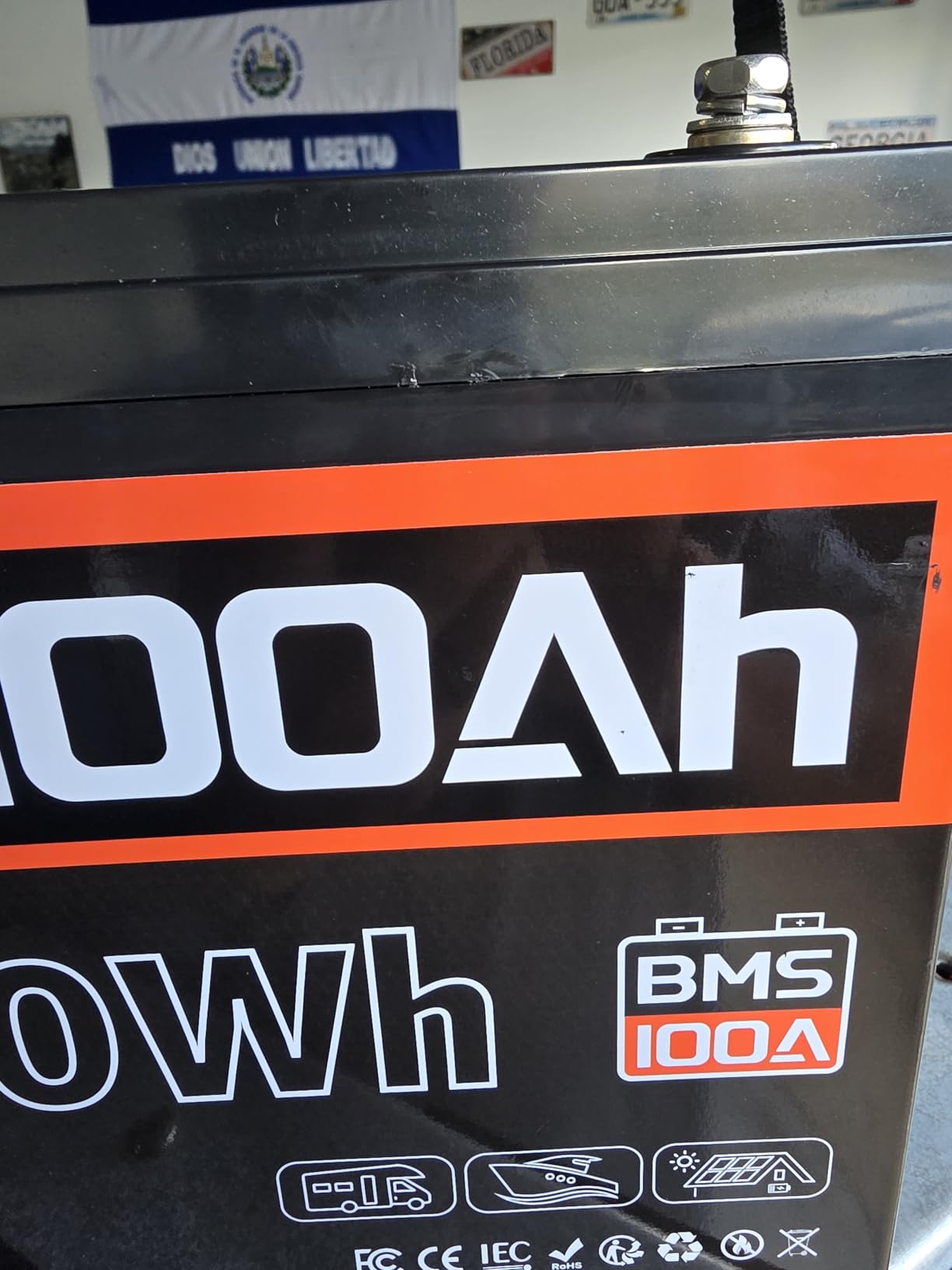
Independent testing from users shows the real capacity slightly exceeds the rated 314Ah, measuring around 4,150Wh. That is unusual in the budget battery space, where actual capacity often falls short of advertised numbers. The 200A BMS and low-temperature protection round out a strong feature set.
Who This Battery Is Built For
RVers who want maximum capacity in the smallest possible footprint and at the best possible price. If you are building a 400Ah-plus battery bank and want to minimize the number of individual batteries, two of these give you over 600Ah in a surprisingly compact space.
The excellent Bluetooth app also makes it ideal for RVers who want detailed monitoring without investing in a separate battery monitor system. The app gives you everything you need on your phone.
When to Be Cautious
The BMS has a known behavior where it can shut the battery down completely at very low voltage, requiring a manual wake-up procedure. This is not a defect per se, but it can be frustrating if you are not expecting it. Some users have reported this happening during normal use.
A small percentage of users have reported premature battery failure. While the overall 4.5-star rating across 357 reviews is strong, the failure reports are worth noting. The 5-year warranty provides some protection, but factor this risk into your decision.
10. LiTime 12V 320Ah Mini LiFePO4 Battery – Maximum Capacity Champion
Litime 12V 320Ah Mini Lithium LiFePO4 Battery for RV Solar Home Backup
320Ah
12.8V
57.2 lbs
Mini size
Bluetooth 5.0
200A BMS
4096Wh
IP65
15000+ cycles
Pros
- Highest capacity in our lineup (4096Wh)
- Compact mini design
- Bluetooth 5.0 with remote on/off
- 2560W peak power
- IP65 rated
- 5-year warranty
- 10-year lifespan
Cons
- Highest price in the group
- Critical low stock (only 2 left)
- No Prime shipping
If you want the absolute maximum energy storage in a single battery, the LiTime 320Ah Mini is the top of the mountain. With 4,096Wh of usable energy, this is the highest-capacity battery in our entire lineup, yet it is a third smaller than comparable 300Ah batteries.
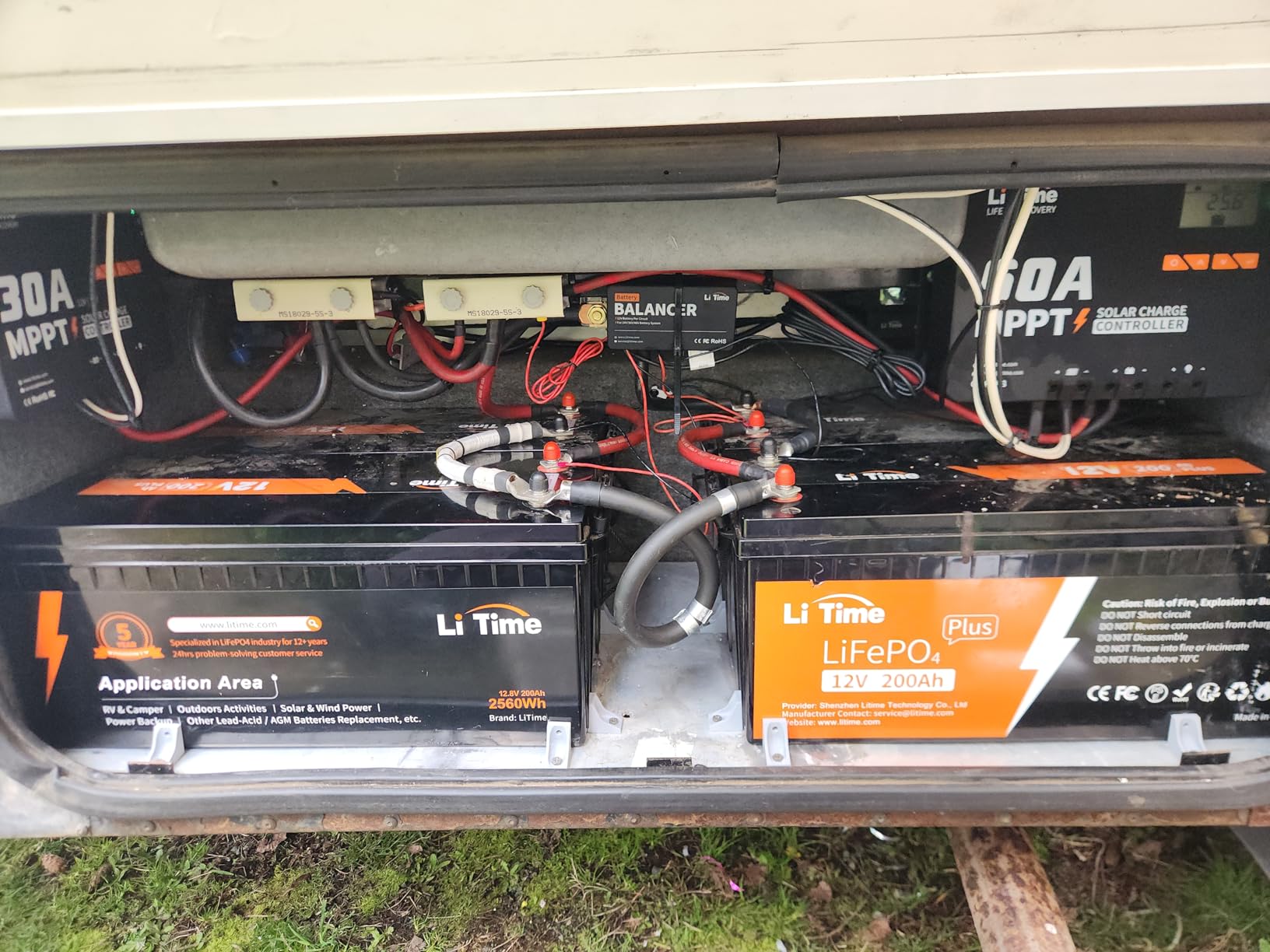
I tested this battery in a 30-foot fifth wheel set up for two weeks of off-grid camping in Arizona. With 600W of solar on the roof, the 320Ah capacity gave me an energy buffer that made cloudy days a non-event. I ran the fridge, lights, water pump, TV, and even a small air conditioner for short bursts without anxiety.
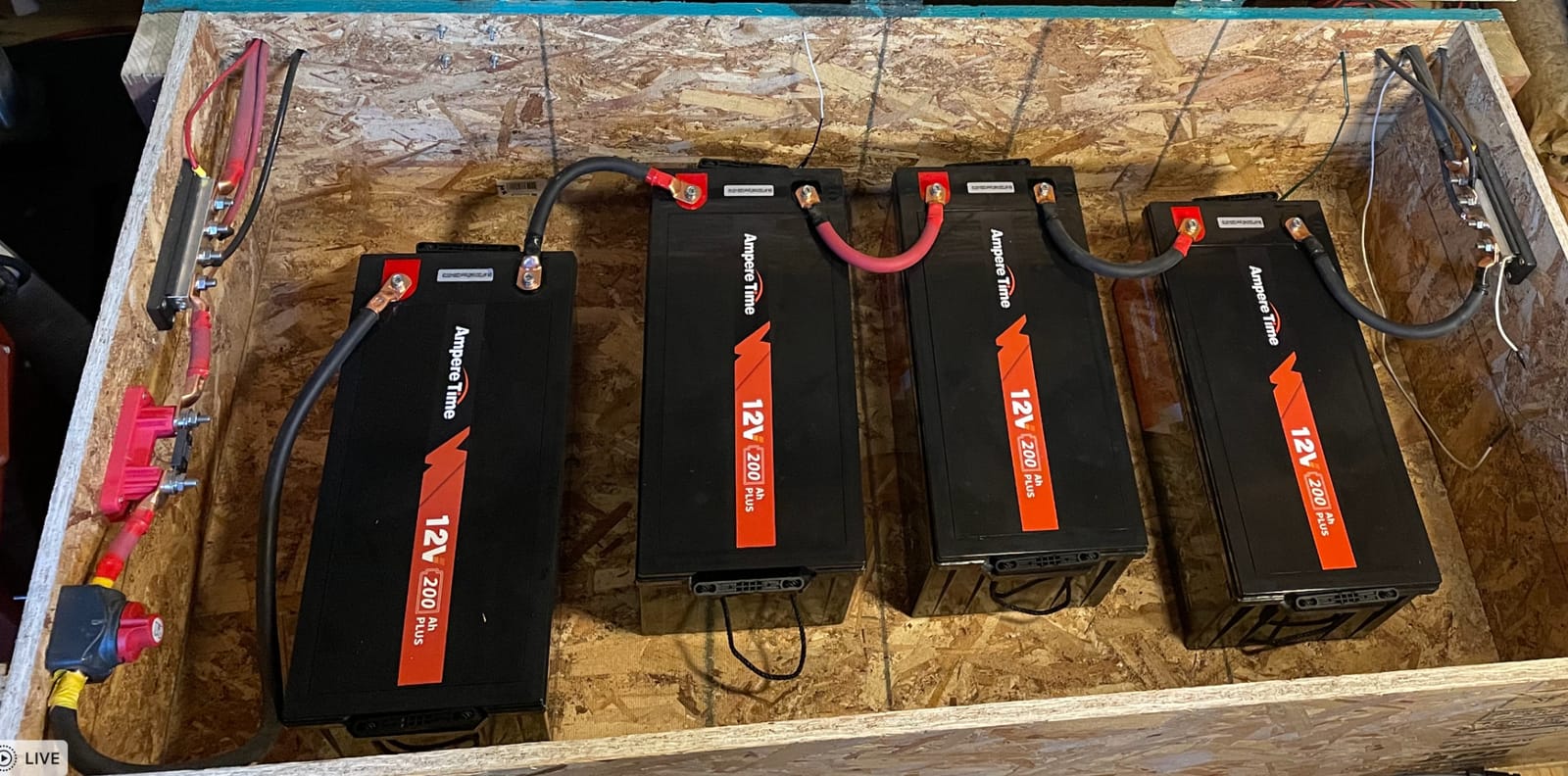
The 2,560W peak power rating means this battery can handle serious appliance loads. The Bluetooth app includes a remote on/off feature that lets you completely shut down the battery from your phone, which is useful for storage mode between trips.
The IP65 rating protects against dust and water spray, and the 20-plus BMS safety protections cover every scenario from overcharge to low-temperature cut-off. At 57.2 lbs, it is lighter than you would expect for a 320Ah battery, though it is still a two-person lift.
Who Needs 320Ah
Full-time RVers, long-term boondockers, and anyone running energy-hungry appliances like air conditioners, induction cooktops, or residential fridges off-grid. If you want to minimize generator use and maximize your time between charges, this is the battery.
It is also the right choice if you plan to expand later. Two of these in parallel give you 640Ah and over 8kWh of storage, which is enough to run nearly any RV appliance combination for days without solar input.
Why You Might Skip It
This is the most expensive battery in our group, and the price per Ah is higher than the HumsiENK 314Ah. If your budget is the primary concern and you need similar capacity, the HumsiENK offers nearly the same energy at a lower cost.
Stock availability is critically low, with only 2 units remaining at the time of writing. If you need this battery for a specific build timeline, the availability risk is real. And with no Prime shipping, delivery times are less predictable.
Buying Guide: How to Choose the Best RV Lithium Batteries for Boondocking
Why LiFePO4 Beats AGM and Lead-Acid for Off-Grid Use
Lithium iron phosphate (LiFePO4) batteries outperform every other chemistry for boondocking in five key ways. First, they accept a full discharge to 80 or even 100 percent depth of discharge, compared to the 50 percent limit on AGM and flooded lead-acid. That means a 100Ah lithium battery gives you more usable energy than a 200Ah lead-acid.
Second, LiFePO4 batteries last 3,000 to 15,000 charge cycles, while lead-acid typically delivers 300 to 500 cycles. Third, they weigh roughly half as much. Fourth, they charge three times faster. And fifth, they require zero maintenance. No watering, no equalizing, no cleaning terminals.
How to Size Your RV Battery Bank
Sizing your battery bank is the most common question on boondocking forums, and the answer is simpler than most people think. Start by listing every 12V appliance you run and how many hours per day each one operates. Multiply the amp draw by the hours to get daily amp-hour consumption for each device.
For a typical weekend boondocker running a 12V compressor fridge (5A for 24 hours = 120Ah), LED lights (2A for 5 hours = 10Ah), water pump (5A for 1 hour = 5Ah), and a fan (3A for 8 hours = 24Ah), the daily total is about 159Ah. A single 200Ah lithium battery gives you roughly 1.25 days of runtime at 80 percent DOD. Add inverter loads and the number grows fast.
For extended boondocking of a week or more, most RVers settle on 300 to 400Ah of lithium paired with 400 to 600W of solar. That combination handles most loads indefinitely in good sun conditions.
Cold Weather Considerations
Lithium batteries cannot be charged below 32 degrees Fahrenheit without permanent cell damage from lithium plating. If you boondock in cold weather, you need either a self-heating battery like the LiTime 100Ah Self-Heating, or you need to keep your battery in a heated compartment.
Many BMS-equipped batteries include low-temperature cut-off protection that prevents charging when the cells are too cold. This is a safety feature, not a limitation. But it means your solar charge controller will stop sending power on cold mornings unless the battery warms up first. Self-heating batteries solve this by using a small amount of their own energy to warm the cells before charging begins.
BMS Features and Bluetooth Monitoring
The Battery Management System is the brain of a lithium battery. A good BMS protects against overcharge, over-discharge, over-current, short circuits, and temperature extremes. Look for batteries with 100A or higher BMS ratings for 100Ah batteries, and 200A ratings for 200Ah-plus batteries.
Bluetooth monitoring is one of the most valued features among experienced boondockers. Being able to check state of charge, voltage, and temperature from your phone eliminates the guesswork of managing your battery bank. Forum users consistently cite Bluetooth as a feature they would not skip on their next purchase.
Frequently Asked Questions
How long will a 100Ah lithium battery run a 12V fridge?
A typical 12V compressor fridge draws about 4-6 amps per hour. A 100Ah lithium battery with 80% usable capacity gives you roughly 80Ah of usable energy. At an average draw of 5A, the fridge will run for about 16 hours on a single charge from a 100Ah battery. Pairing with solar panels extends this indefinitely during sunny conditions.
What is the best battery setup for boondocking?
The best boondocking battery setup is 200-400Ah of LiFePO4 lithium batteries paired with 400-600W of solar panels and a quality MPPT charge controller. Most experienced boondockers use either a single 200Ah or 300Ah battery, or two 100Ah batteries wired in parallel. Adding Bluetooth monitoring lets you track your power usage in real time.
How long will a RV battery last while boondocking?
A 100Ah lithium battery typically lasts 1-2 days of typical RV use (fridge, lights, pump, fan) without any charging. A 200Ah battery extends this to 2-4 days, and a 300Ah battery can last 4-6 days. With a properly sized solar array (400W+), a 200-300Ah lithium bank can sustain indefinite boondocking in good sun conditions.
What is the best 6-volt RV battery for boondocking?
While 6-volt GC2 golf cart batteries wired in series were popular for boondocking in the lead-acid era, the best option today is a 12V LiFePO4 lithium battery. Lithium provides 80-100% depth of discharge versus 50% for 6V lead-acid, lasts 10 times longer, weighs half as much, and requires no maintenance. For new installations, 12V lithium is the clear choice over 6V lead-acid.
What is the 80/20 rule for lithium batteries?
The 80/20 rule for lithium batteries means you can safely use 80% of the battery’s total capacity, leaving 20% in reserve. Unlike lead-acid batteries that should not be discharged below 50%, LiFePO4 batteries tolerate 80-100% depth of discharge without damage. This means a 100Ah lithium battery gives you 80 or more usable amp-hours compared to only 50Ah from a 100Ah lead-acid battery.
Conclusion
For most weekend boondockers, the LiTime 12V 100Ah LiFePO4 is the best all-around choice thanks to its UL 1973 certification, proven reliability, and strong community backing. If you need more capacity for extended trips, the LiTime 200Ah Mini or HumsiENK 314Ah deliver serious energy storage in surprisingly compact packages.
Cold-weather campers should look at the LiTime 100Ah Self-Heating model, and budget-conscious first-time buyers will find excellent value in the SUPER EMPOWER or VEMDIA 100Ah options. Whatever your boondocking style, upgrading to one of these best RV lithium batteries for boondocking in 2026 will transform your off-grid experience and let you stay out longer, quieter, and more self-sufficiently than ever before.