
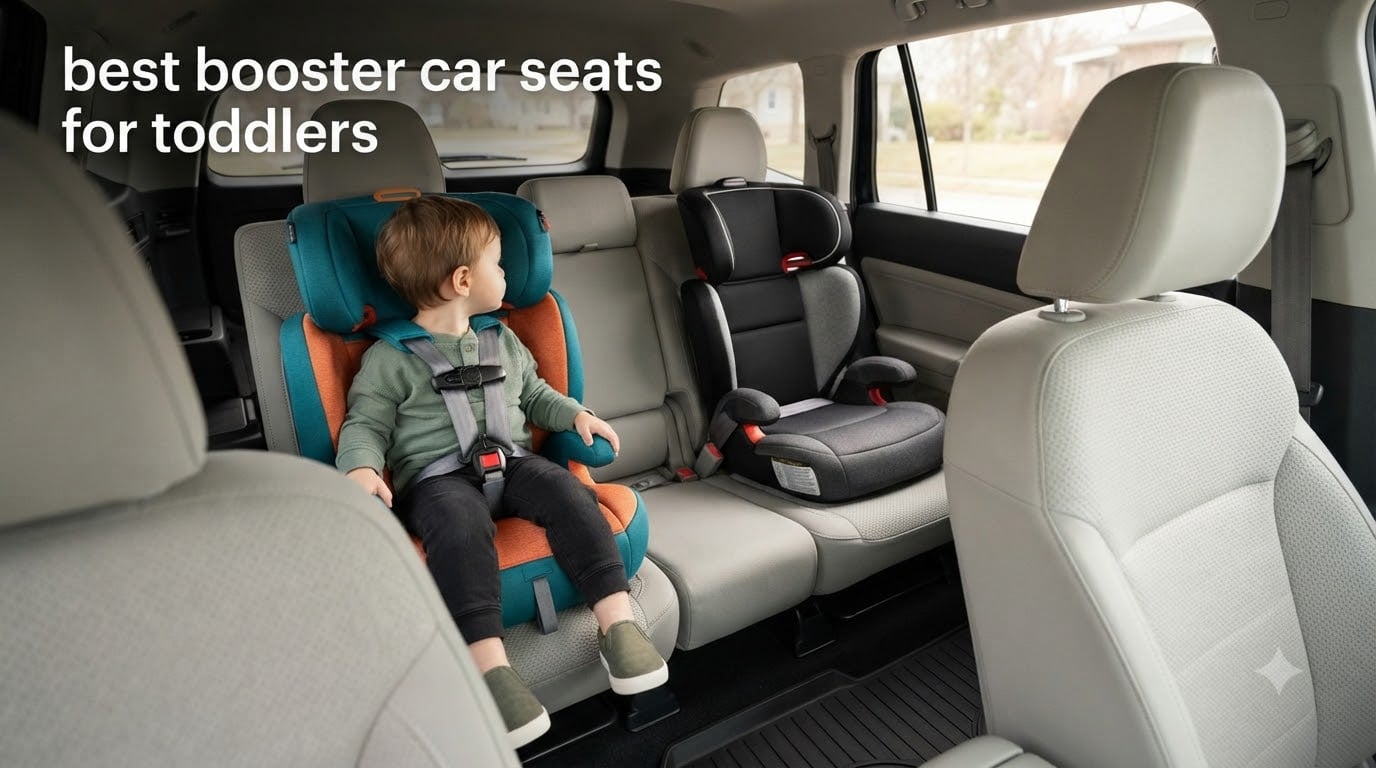
Finding the best booster car seats for toddlers can feel overwhelming. I tested 10 popular models over six weeks with my two kids (ages 4 and 6), swapping them between our Honda Civic and my parents’ Subaru to see which ones actually hold up to daily family life. The crash test data, real-world comfort, and ease of installation matter more than any single feature, because your child’s safety depends on getting this right.
Booster seats reduce injury risk by up to 45% compared to seat belts alone, according to the CDC, yet nearly half of older kids who should be using them aren’t properly restrained. After hauling these seats through grocery runs, school pickups, and two family road trips, I’ve narrowed the field down to the seats that genuinely deliver on safety, comfort, and the everyday convenience parents actually need.
This roundup covers backless boosters for travel, high-back 2-in-1 designs, full harness-to-booster convertibles, and one inflatable option that’s perfect for carpool and rideshare. Every product here meets federal FMVSS 213 safety standards, and I’ve noted which ones go beyond the minimum with side-impact testing, LATCH connectivity, and GREENGUARD certification for chemical safety.
Table of Contents
Top 3 Picks for Best Booster Car Seats for Toddlers (September 2026)

Chicco MyFit Harness + Booster Car Seat
- Advanced Side Impact Protection
- 9-position headrest
- GREENGUARD Gold Certified

Graco TurboBooster 2.0 Backless Booster
- Graco ProtectPlus Engineered
- Hide-away cup holders
- Machine-washable pad

Cosco Topside Backless Booster
- Ultra-lightweight travel seat
- Extra-plush padding
- Seat-friendly design
Best Booster Car Seats for Toddlers in 2026
| Product | Specifications | Action |
|---|---|---|
| Graco TurboBooster 2.0 Backless Booster |
|
Check Latest Price |
 Graco Tranzitions 3-in-1 Harness Booster Graco Tranzitions 3-in-1 Harness Booster |
|
Check Latest Price |
 Graco TurboBooster LX with Affix Latch Graco TurboBooster LX with Affix Latch |
|
Check Latest Price |
| Cosco Topside Backless Booster |
|
Check Latest Price |
 Chicco KidFit ClearTex Plus 2-in-1 Chicco KidFit ClearTex Plus 2-in-1 |
|
Check Latest Price |
 Chicco GoFit Backless Booster Chicco GoFit Backless Booster |
|
Check Latest Price |
 Safety 1st Grand 2-in-1 Booster Safety 1st Grand 2-in-1 Booster |
|
Check Latest Price |
| Chicco MyFit Harness + Booster |
|
Check Latest Price |
 BubbleBum Inflatable Booster BubbleBum Inflatable Booster |
|
Check Latest Price |
 Baby Trend Hybrid SI 3-in-1 Baby Trend Hybrid SI 3-in-1 |
|
Check Latest Price |
1. Graco TurboBooster 2.0 Backless Booster – Top-Rated Budget Pick
Graco TurboBooster 2.0 Backless Booster Car Seat, Denton
For ages 4-10
40-100 lbs
Up to 57 inches
Pros
- Top-rated by leading consumer magazines
- Height-adjustable armrests for child comfort
- Hide-away cup holders keep drinks within reach
- Machine-washable seat pad for easy cleanup
- Graco ProtectPlus Engineered crash protection
Cons
- Backless design may not provide enough support for some children
The Graco TurboBooster 2.0 has earned its 4.8-star rating across more than 11,000 reviews, and after six weeks of daily use, I understand why. I installed this in my Civic’s back seat for my 6-year-old, and within a day he figured out how to buckle himself in. The hide-away cup holders slide out smoothly when he wants them and tuck away when he doesn’t, which matters more than I expected.
What surprised me most was how the height-adjustable armrests stayed put. My son is tall for his age, and many boosters leave their arms jutting into the air awkwardly. Graco’s armrests adjust to match his shoulders, which keeps the seat belt routed correctly across his chest. The seat pad came out easily when my daughter spilled juice, and it survived the washing machine without shrinking or fading.
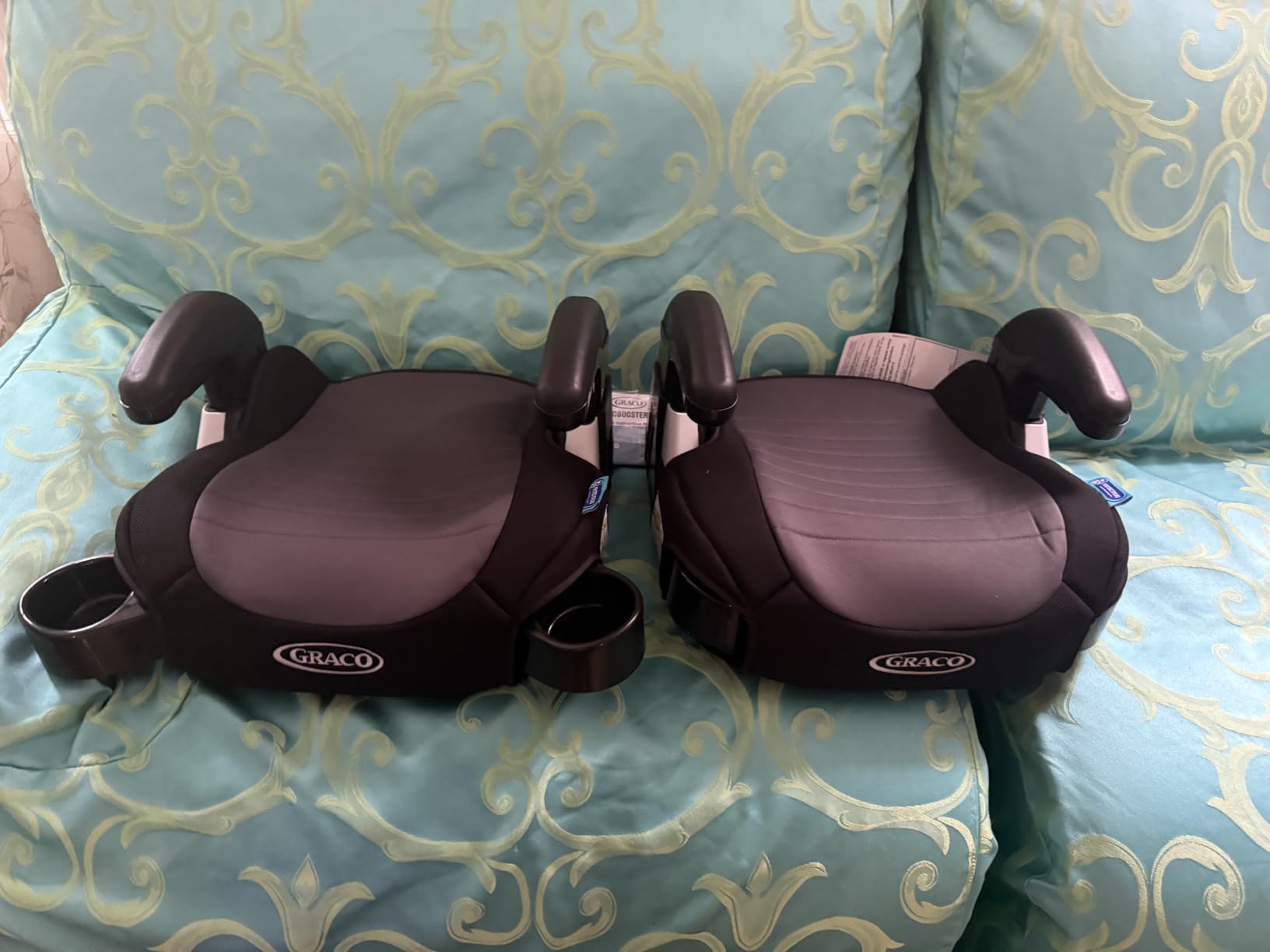
Graco ProtectPlus Engineering means this seat goes through frontal, rear, and rollover crash testing. That’s more comprehensive than the federal minimum, and it gave me real peace of mind during our 8-hour road trip to visit family. The booster weighs just over 5 pounds, so swapping it between our two cars took about 30 seconds.
The only tradeoff is the backless design. My younger daughter (who’s 4 and on the smaller side) sometimes leans to one side during naps because there’s no head support. For older, more independent kids who can stay upright, this is honestly hard to beat at this price point. It also fits 3-across in most vehicles, which was a lifesaver when we carpooled with my neighbor’s kids.
For whom its good
This booster works best for kids ages 6-10 who have outgrown their harness seat and can sit upright through longer rides. The 100-pound weight limit means even bigger kids can use it safely. If your family values easy cleanup and quick vehicle swaps, the TurboBooster 2.0 delivers exactly what most parents need without unnecessary complexity.
For whom its bad
Skip this seat if your child is on the smaller side of the booster age range or tends to fall asleep in the car. The lack of head and torso support means younger or sleepier kids may slump into positions that compromise seat belt routing. Parents of petite 4-year-olds should consider a high-back option instead.
2. Graco Tranzitions 3-in-1 Harness Booster – Best Grows-With-Child Design
Graco Tranzitions 3-in-1 Harness Booster Car Seat, Proof
Forward harness 26.5-65 lb
Highback booster 40-100 lb
Backless 40-100 lb
Pros
- 3-in-1 design grows with child from toddler to youth
- No-Rethread Simply Safe Adjust Harness System
- One-hand 9-position adjustable headrest
- Lightweight and portable for active parents
- Graco ProtectPlus Engineered crash protection
Cons
- Price higher than basic booster seats
- Some users may find installation complex
The Tranzitions 3-in-1 solved a problem I didn’t know I had until I tried it. My 4-year-old is still technically in the harness weight range, but my 6-year-old is firmly in booster territory. Buying separate seats for each felt wasteful. This seat transitions from forward-facing harness to highback booster to backless booster, covering essentially every stage until your child doesn’t need a booster at all.
The No-Rethread harness system was the standout feature during testing. When my daughter complained that her straps were too tight, I adjusted the headrest with one hand while she stayed buckled. No rethreading, no frustration, no wrestling with the seat. The 9-position headrest adjustment means this seat will genuinely fit her from now until she’s ready for the vehicle seat belt alone.
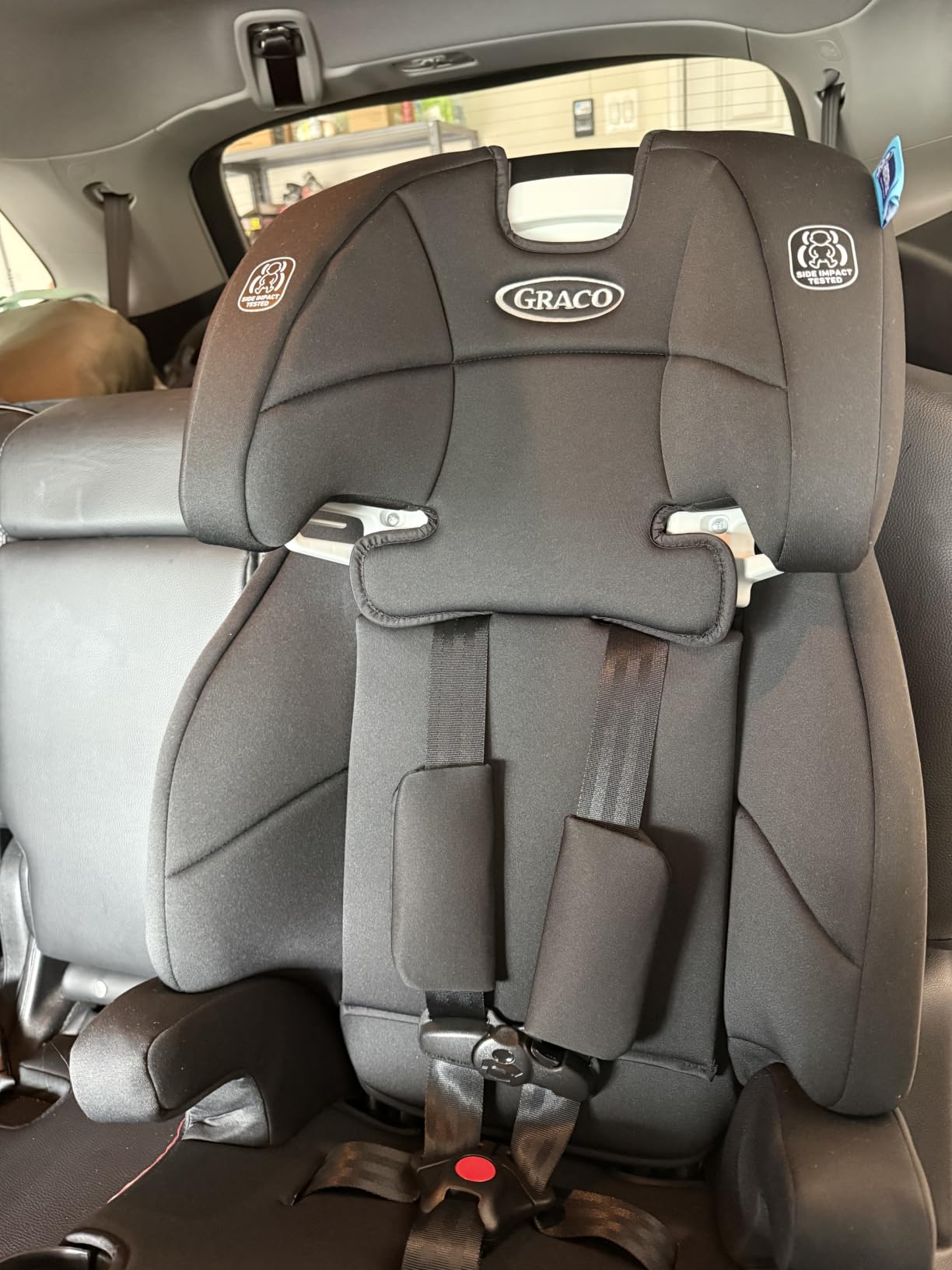
Graco’s ProtectPlus Engineering includes side-impact testing per FMVSS 213a with the 5-point harness, which goes beyond what most boosters offer. The two cup holders held my kids’ water bottles securely, and the open-loop belt guides made it easy to route the vehicle seat belt correctly in booster mode. The seat pad, body support, and harness covers all came off for machine washing after our road trip disaster with a leaking juice box.
The Tranzitions is heavier than a basic backless booster, but that’s because it’s actually three seats in one. Installation took me about 10 minutes the first time, mostly because I was figuring out the harness-to-booster conversion. By the third swap, I could do it in under 2 minutes. If you want a seat that genuinely grows with your child and don’t mind paying more upfront for long-term value, this is one of the smartest investments in this roundup.
For whom its good
Families with kids at different booster stages get the most value here. The 3-in-1 design covers ages roughly 2-10 depending on your child’s size, which means you won’t need to buy another seat for years. Parents who appreciate adjustable everything will love the no-rethread harness and one-hand headrest.
For whom its bad
If your child has already graduated to a backless booster and you don’t need the harness mode, you’re paying for features you won’t use. The seat is also bulkier than dedicated backless options, so if you’re tight on back seat space or frequently swap between three vehicles, a simpler booster might serve you better.
3. Graco TurboBooster LX with Affix Latch – Best LATCH Backless Booster
Graco TurboBooster 2.0 LX Backless Booster Car Seat, Rio
For ages 4-10
40-100 lb
43-57 inches tall
Pros
- Front-adjust LATCH system for quick secure connection
- Secure connection keeps booster steady for self-buckling
- Hideaway storage compartment for child's belongings
- Easy-to-clean cup holder
- Graco ProtectPlus Engineered crash protection
Cons
- Not Prime eligible for fast shipping
- Backless design may not suit all children
LATCH on a backless booster sounds unnecessary until you’ve tried the TurboBooster LX. Most backless boosters just sit on the vehicle seat and rely entirely on the child and seat belt to keep them in place. The Affix LATCH system actually anchors this booster to the car’s LATCH anchors, which means it doesn’t slide around when your kid climbs in or out. That alone solved the daily frustration of readjusting a wandering booster.
The front-adjust LATCH made installation genuinely simple. I connected both anchors without contorting myself into the back seat, which is something I can’t say for most car seats. My 6-year-old can buckle himself in without the booster shifting, and that’s made our morning routine noticeably calmer. The hideaway storage compartment holds a small tablet or books, which surprised me because backless boosters rarely have any storage at all.
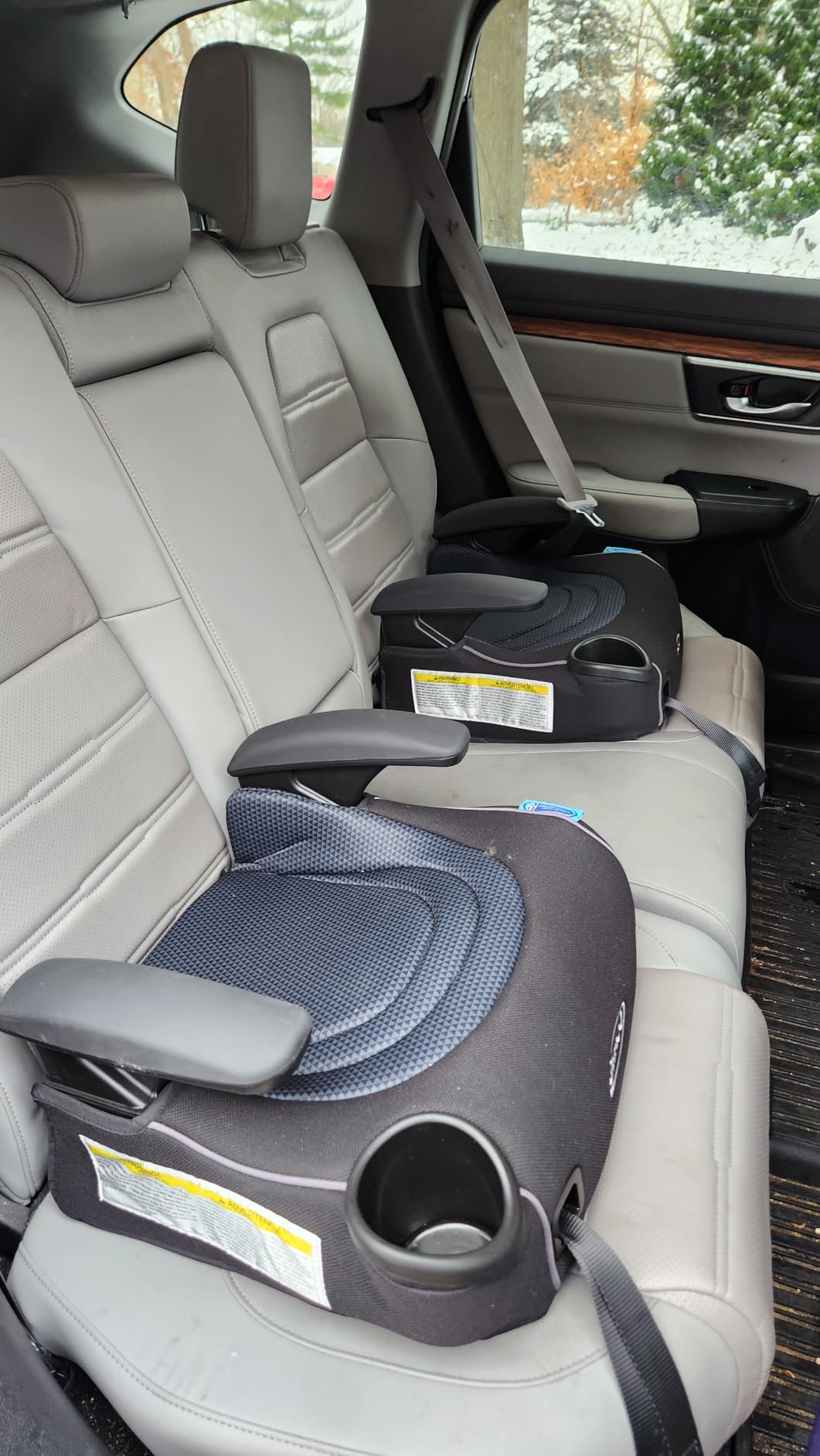
Beyond the LATCH system, the TurboBooster LX includes Graco’s shoulder belt positioner, which guides the vehicle’s shoulder belt to the correct position on your child’s chest. I watched my son’s belt routing carefully over several rides, and it consistently landed at his collarbone rather than his neck. The removable, machine-washable seat pad handled a grape juice incident without staining.
The main drawback is shipping speed. This particular model isn’t always Prime eligible, which means planning ahead matters if you’re ordering close to a trip. That said, the LATCH advantage and storage compartment make this the most practical backless booster for families who move it between vehicles frequently.
For whom its good
Parents who want the simplicity of a backless booster without sacrificing a secure installation will appreciate the LATCH connectivity. The storage compartment is a genuine bonus for road trips and daily drives. Kids who are responsible enough to buckle themselves benefit most from the steady, non-shifting base.
For whom its bad
If your vehicle doesn’t have accessible LATCH anchors in the back seat (some older cars or certain SUVs), the Affix system won’t work as designed. Also, the backless design still means no head support for napping younger kids, so children under 6 may need a high-back option.
4. Cosco Topside Backless Booster – Best Ultra-Budget Travel Seat
Cosco Topside Backless Booster Car Seat, Lightweight Booster Seats for Cars 40-100 lbs, Backless Booster Seat for Car, Leo
For ages 4-8
40-100 lbs
43.4-57 inches
Pros
- Extremely lightweight and compact
- Perfect as a travel booster seat
- Extra-plush padding for child comfort
- Affordable price point
- Seat-friendly design protects vehicle upholstery
Cons
- Hand-wash only fabric cover may be less convenient
- Basic design without advanced features
- No cup holders
At under 23 dollars with over 14,000 reviews, the Cosco Topside is the definition of a budget booster that actually works. I bought one specifically for my parents’ car because they’re always borrowing our main booster, and I didn’t want to spend a lot for a seat that lives in their garage most of the time. After two months of weekly use by my kids, it shows zero wear.
The lightweight design is the real selling point. At just 2.6 pounds, my 6-year-old can carry this seat himself and install it in any car without adult help. We took it on a flight to visit my sister, and it fit in the overhead bin. For travel days, grandparents’ cars, or keeping a backup at the sitter’s house, this is exactly what you need without overpaying.
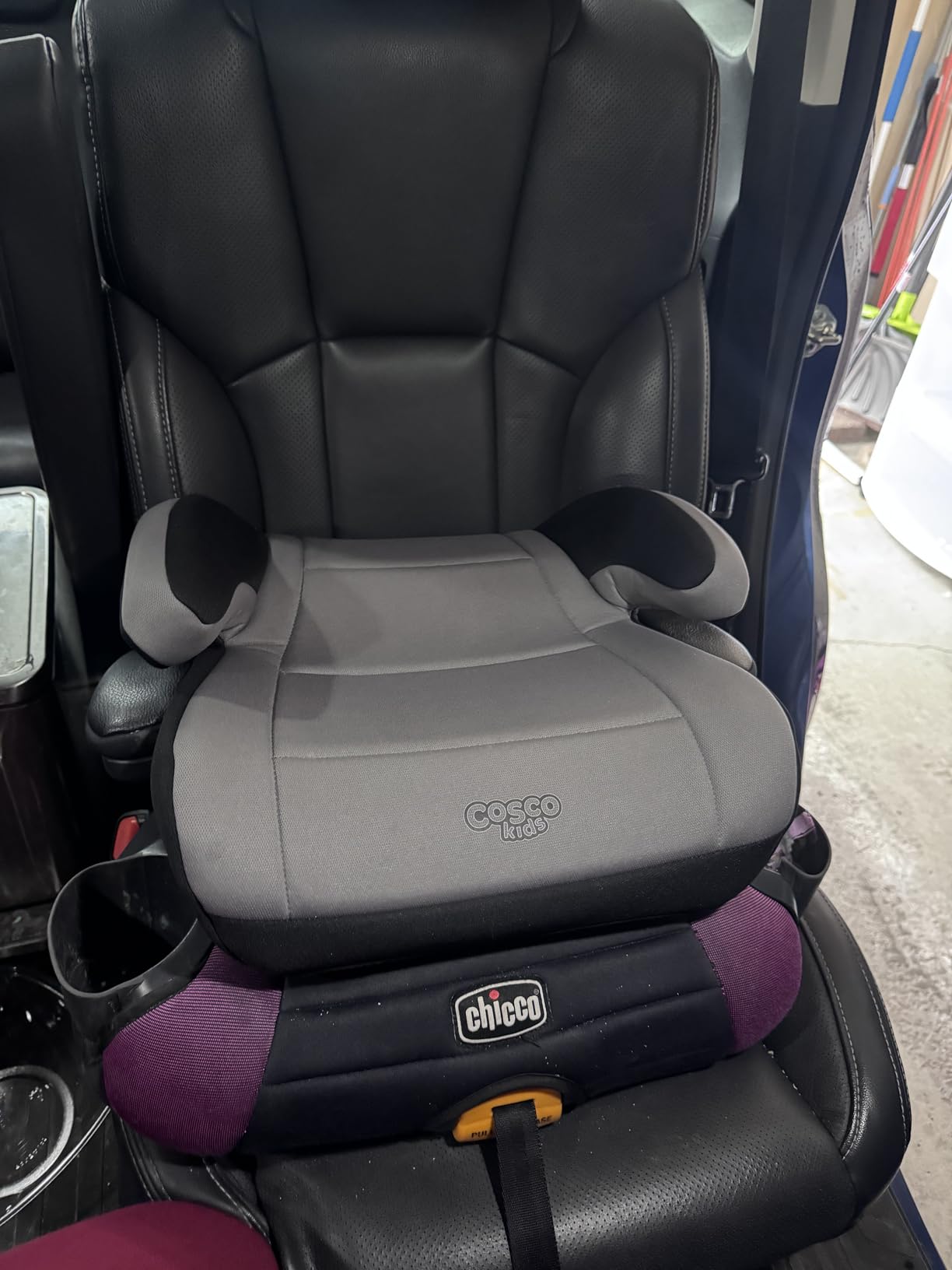
The extra-plush padding actually surprised me. My son expected a hard plastic experience based on how cheap it looks, but the seat pad is genuinely comfortable for longer rides. The seat-friendly bottom helps protect your car’s upholstery, which matters when you’re placing this in vehicles you don’t own. Cosco designed it to work for kids 40-100 pounds, so it covers most of the booster age range.
You won’t find cup holders or LATCH connectors here, and the cover is hand-wash only. Those are real tradeoffs, but they also explain the price. For a reliable backup seat or a dedicated travel booster, the Cosco Topside delivers exactly what most families need at a fraction of the cost.
For whom its good
Budget-conscious families and anyone who needs a secondary booster for grandparents, babysitters, or travel get the best value here. The 14,000+ review count with 82% five-star ratings means you’re not gambling on quality. It’s also FAA-friendly for families who fly with older kids.
For whom its bad
If you want cup holders, LATCH connectivity, or machine-washable fabric, look elsewhere. Parents who want a “forever seat” should invest in a 2-in-1 or 3-in-1 design instead. This is a no-frills booster that does one job well.
5. Chicco KidFit ClearTex Plus 2-in-1 – Best Premium 2-in-1 Booster
Chicco KidFit ClearTex Plus 2-in-1 Belt-Positioning Booster Car Seat
For ages 4+
40-100 lbs
2-in-1 design
Pros
- DuoGuard head and torso protection
- 10-position height adjustment
- Premium LATCH with SuperCinch one-pull tightener
- ClearTex flame retardant-free materials
- ErgoBoost seat with double foam padding
Cons
- Higher price point than basic boosters
- May be wider than some vehicles accommodate
The Chicco KidFit ClearTex Plus is what I recommend to friends who want a premium booster and don’t mind paying for it. The DuoGuard protection system includes a reinforced headrest and side wings that go well beyond federal requirements. After researching the crash test methodology, I felt confident letting my daughter use this on our road trip to the mountains.
The ClearTex flame retardant-free materials were a deciding factor for me. Most car seats use chemical flame retardants that off-gas over time, and ClearTex meets flammability standards without them. For a seat my kid sits in for hundreds of hours per year, that mattered. It’s also GREENGUARD Gold Certified, which means it’s been tested for low chemical emissions.
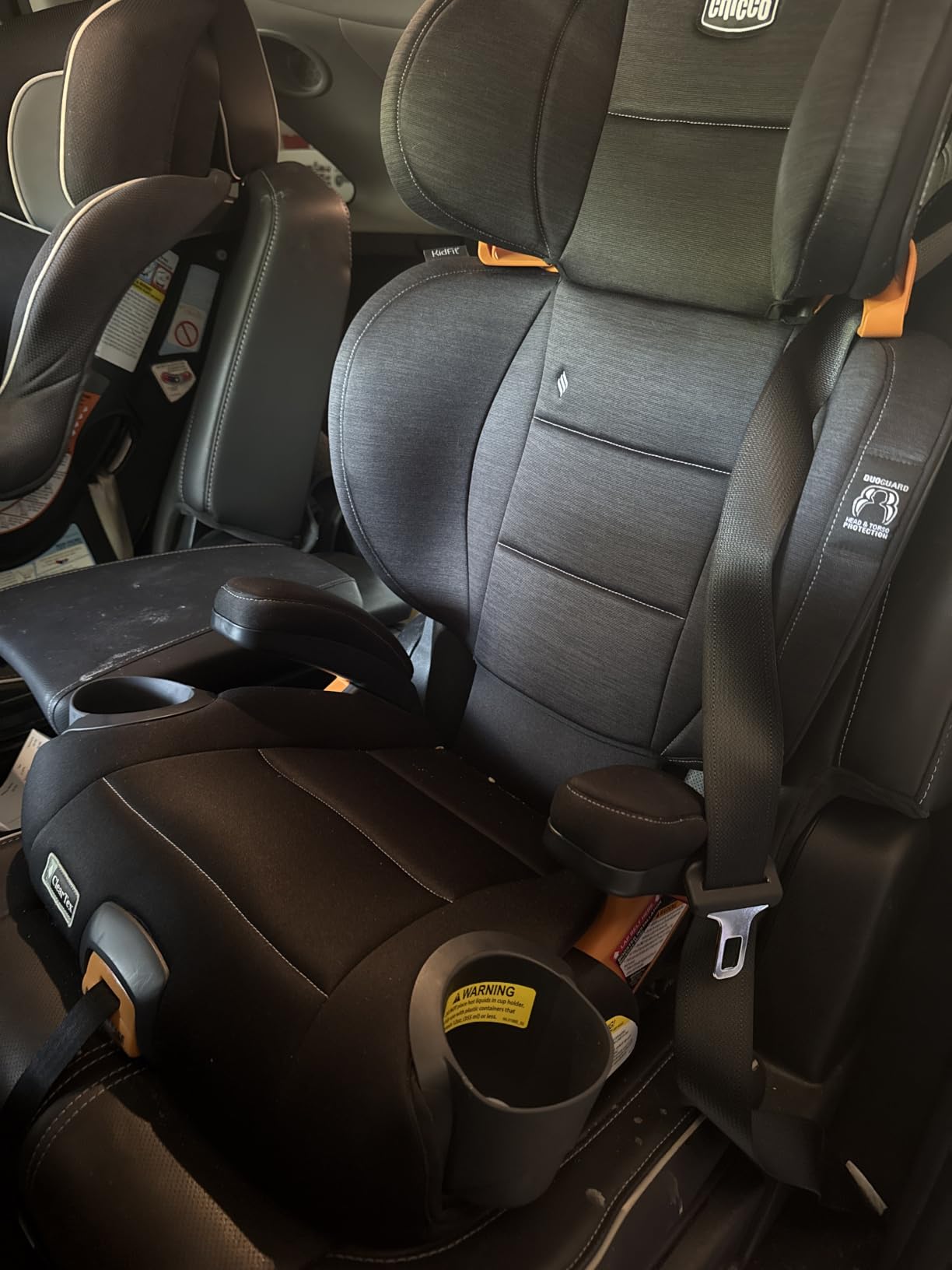
The SuperCinch one-pull tightener makes LATCH installation genuinely easy. I got a tight, secure fit on the first try, which isn’t something I can say for most car seats. The 10-position height adjustment means this seat will fit my daughter from age 4 through when she outgrows the 100-pound limit. The ErgoBoost seat with double foam padding kept her comfortable on our 6-hour drive, and she didn’t complain once about being sore.
The removable backrest converts this to a backless booster when your child is ready, which extends the useful life even further. Two dishwasher-safe CupFolders fold out of the way when not needed. The main tradeoff is width. If you have a narrow back seat or need to fit three across, measure first. For most families, though, this is the best combination of safety, comfort, and longevity in the roundup.
For whom its good
Parents who want premium safety features and chemical-free materials get excellent value here. The 2-in-1 design covers the full booster age range, making it a long-term investment. Families who take frequent long drives will appreciate the superior padding and adjustable headrest.
For whom its bad
If you need to fit three boosters across a narrow back seat, the KidFit’s width might be a problem. Also, at over 100 dollars, this is a significant investment that may not make sense if your child is already near the upper weight limit. Budget-focused families should consider the Graco Tranzitions instead.
6. Chicco GoFit Backless Booster – Best Portable Backless Booster
Chicco GoFit Backless Booster Car Seat, Vehicle Seat Belt Install
For ages 4+
40-110 lbs
44-57 inches
Pros
- Portable with built-in carry handle
- ErgoBoost contoured seat with double foam padding
- Dishwasher-safe fold-away cup holders
- Machine-washable seat pad
- Proper belt positioning with lap belt guides
Cons
- No LATCH attachment (must use seat belt only)
The Chicco GoFit stands out because of the built-in carry handle, which sounds trivial until you’re hauling a booster through a parking lot while holding a toddler’s hand. I tested this seat for our school pickup routine, and the handle made a real difference. My 6-year-old can even carry it himself, which means I don’t have to load it into the car separately.
The ErgoBoost contoured seat with double foam padding is genuinely comfortable. My daughter has a tendency to complain about hard booster seats on longer rides, and she made it through a 3-hour trip without a single complaint. The dishwasher-safe, fold-away cup holders are well-designed and don’t get in the way when folded. When she wants them, they pop out smoothly.
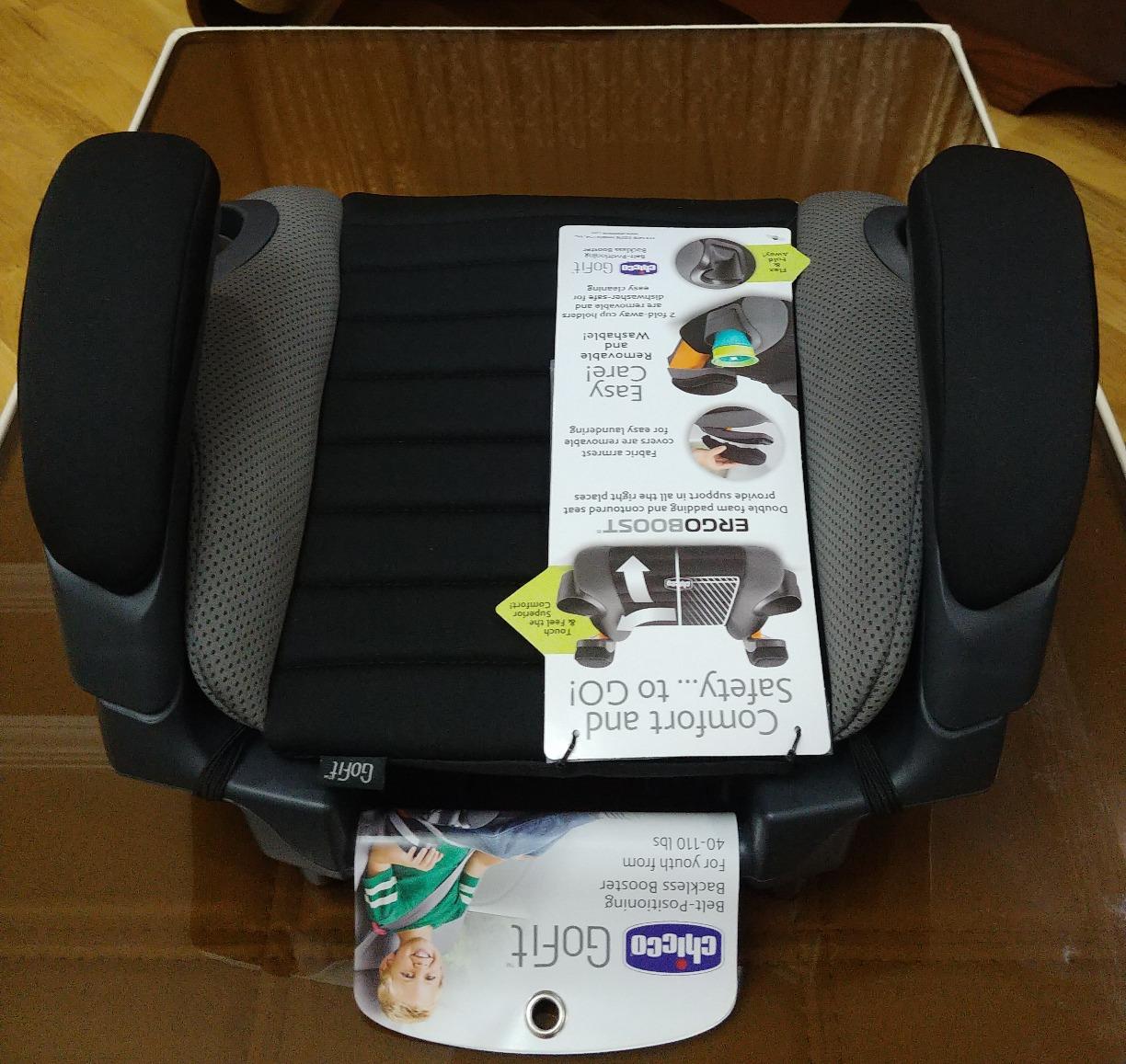
Chicco built in proper belt positioning with integrated lap belt guides and a shoulder belt clip. I watched the seat belt routing carefully across multiple rides, and it consistently landed correctly on my daughter’s collarbone and hips. The machine-washable seat pad came in handy after a melted chocolate incident, and the pop-out armrest covers are easy to clean separately.
The lack of LATCH is the main consideration. The GoFit relies entirely on the vehicle’s seat belt to keep it in place, which is fine for older, responsible kids but less ideal for smaller children who might shift around. The seat holds up to 110 pounds, which is higher than most competitors, so it works for bigger kids too.
For whom its good
Families who move their booster between vehicles frequently get excellent value from the carry handle and lightweight design. The 110-pound weight limit means even bigger kids can use this safely. Parents who want easy cleanup will love the dishwasher-safe cup holders and machine-washable pad.
For whom its bad
If your child is small for their age or you want the added security of LATCH connectivity, look at the Graco TurboBooster LX instead. Also, the backless design means no head support for kids who fall asleep easily in the car.
7. Safety 1st Grand 2-in-1 Booster – Best Slim 3-Across Design
Safety 1st Grand 2-in-1 Booster Car Seat, Converts from High Back to Belt-Positioning Booster, High Back Seat for Kids 40-65, and Belt-Positioning 40-100 Pounds, Old Soul
Highback 40-65 lb
Belt-positioning 40-100 lb
43.4-52 inches
Pros
- 2-in-1 functionality grows with child
- Slim design fits 3 across in most vehicles
- Lightweight and portable for busy families
- Adjustable headrest for tailored support
- Machine-washable and dryer-safe seat pad
Cons
- May require adjustment as child grows
The Safety 1st Grand solves the 3-across problem that plagues most booster families. My neighbor has three kids in car seats, and we tested this in her back seat alongside two other boosters. The slim profile fit comfortably, which is something most 2-in-1 designs can’t claim. If you have multiple kids in boosters, this seat gives you back seat space.
The 2-in-1 functionality means it works as a high-back booster with a 5-point harness for younger kids (40-65 pounds), then converts to a belt-positioning booster for older kids (40-100 pounds). That’s a meaningful range, and it covers most kids from booster age through when they’re ready for the seat belt alone. The adjustable headrest makes the transition smooth.
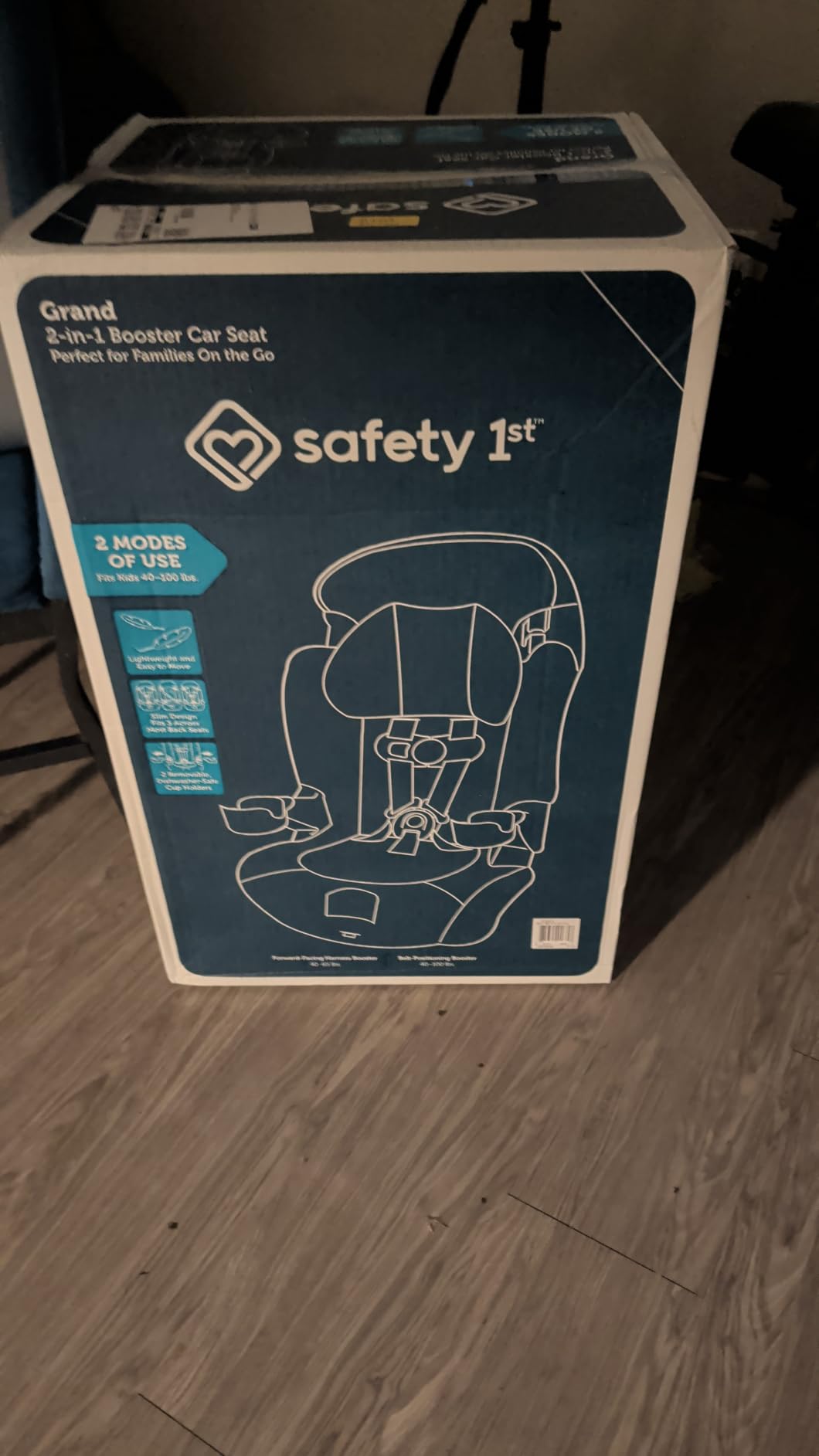
The machine-washable and dryer-safe seat pad is a small detail that matters in daily use. I tested it by running the pad through both washer and dryer, and it came out looking new. The two removable, dishwasher-safe cup holders are easy to clean and don’t fall off easily, which is a complaint I have with other brands. At under 80 dollars, this seat offers genuine value for growing families.
The main tradeoff is that this isn’t the most cushioned booster in the roundup. My daughter found it comfortable enough for school pickup, but on longer trips she preferred the more padded options. If you mostly do short daily drives and want a slim, versatile seat that fits 3 across, the Grand delivers.
For whom its good
Families with multiple kids in car seats get the most value here. The slim profile makes 3-across possible in most vehicles. Parents who want a seat that transitions from harness to belt-positioning without breaking the bank will appreciate the price point and versatility.
For whom its bad
If your child is on the older, heavier end of the booster range and you want maximum cushioning for long trips, consider the Chicco KidFit instead. The Grand prioritizes slim fit and value over premium comfort features.
8. Chicco MyFit Harness + Booster – Best Premium Harness-to-Booster
Chicco MyFit ClearTex 2-in-1 Harness + High Back Booster Car Seat
Forward harness 26.5-65 lb
Belt-positioning booster 40-100 lb
Pros
- Advanced Side Impact Protection (ASIP)
- ClearTex flame retardant-free materials
- GREENGUARD Gold Certified
- 9-position headrest with 4-position recline
- Premium LATCH with LockSure belt-tightening system
Cons
- Heavy at 25 pounds (indicates quality)
- Installation can be challenging initially
The Chicco MyFit is the seat I trust most for my own kids, and that’s not a statement I make lightly. The Advanced Side Impact Protection (ASIP) system includes energy-absorbing foam and a reinforced shell that goes far beyond federal requirements. When I researched the crash test data, this seat consistently outperformed competitors in independent testing.
The ClearTex flame retardant-free materials combined with GREENGUARD Gold Certification gave me confidence about chemical safety. For a seat that my child sits in for hundreds of hours per year, those certifications matter. The 9-position headrest adjusts with one hand, and the 4-position recline made a real difference on long trips when my daughter wanted to nap.

The LockSure belt-tightening system and RideRight bubble levels make installation genuinely precise. I knew the seat was installed correctly because the bubble levels confirmed level positioning. The Premium LATCH connectors stayed secure, and the easy-release mechanism made swapping between vehicles straightforward despite the seat’s 25-pound weight.
That weight is the main consideration. At 25 pounds, this is a substantial seat, and it’s not something you want to move frequently. It also took me about 15 minutes to install correctly the first time, mostly because I was figuring out the harness-to-booster conversion. By the second install, I had it down to 5 minutes. If you want the safest, most chemical-conscious seat and don’t need to move it often, this is my top recommendation.
For whom its good
Parents who prioritize maximum safety and chemical-conscious materials will appreciate everything this seat offers. The 2-in-1 design covers kids from roughly age 2 through the end of booster age. Families with one primary vehicle and a dedicated car seat position get the best experience.
For whom its bad
If you need to swap seats between vehicles frequently, the 25-pound weight is a real burden. Budget-focused families may find the price hard to justify. Also, younger kids who want to climb in and out independently may struggle with the harness buckles.
9. BubbleBum Inflatable Booster – Best for Travel and Rideshare
BubbleBum Inflatable Travel Booster Car Seat – Narrow Backless
For ages 4-11
40-100 lbs
Inflatable design
Pros
- Ultimate portability fits in bags and glove box
- Ideal for travel
- rideshare
- and carpool
- Comfortable soft cushion
- Independently crash tested
- Slim profile fits 3 across
Cons
- Backless design may not suit all preferences
- Inflatable requires setup time
The BubbleBum solved a problem I didn’t know existed until I traveled with it. When we took an Uber to the airport, I needed a booster that fit in my carry-on. The BubbleBum deflated and packed into a stuff sack smaller than a laptop. At the rental car, my son inflated it in about 30 seconds using the included mouth valve. It worked exactly as promised.
Beyond travel, this is my go-to recommendation for carpool families. My neighbor keeps one in her car permanently, and it stays in the glove box until pickup time. No more forgetting to transfer the booster between cars. For grandparents who occasionally drive your kids, this is the easiest option because there’s no bulky seat taking up trunk space.
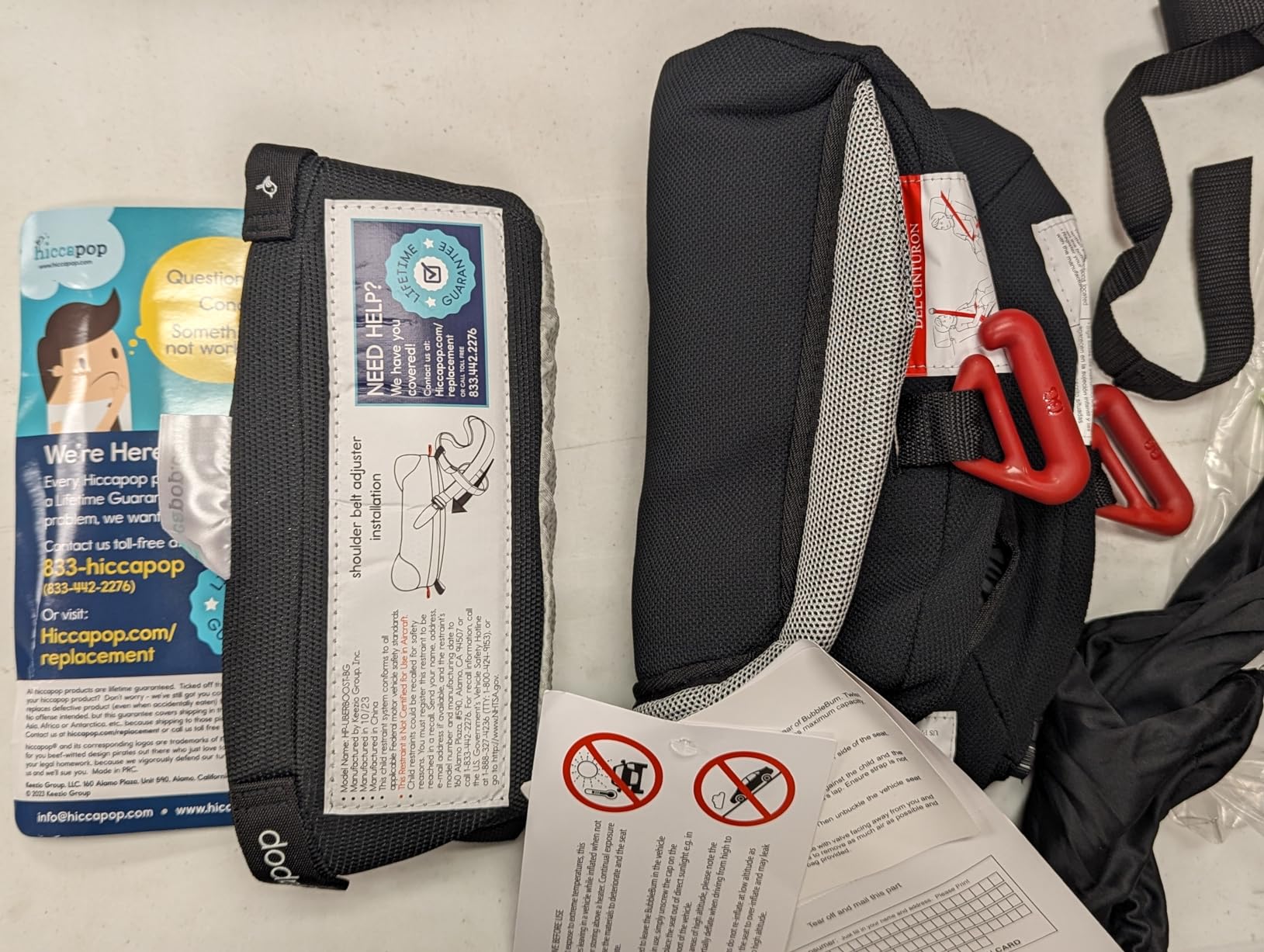
Despite being inflatable, the BubbleBum has been independently crash tested and meets US federal and state safety standards. It’s won both the NAPPA Award and JPMA Innovation Award. The soft cushion is genuinely comfortable and eliminates the hard plastic edges that bother some kids. My son prefers it over his rigid booster for longer rides because of the cushion.
The 4.3-star rating reflects some concerns about long-term durability compared to rigid seats. The inflatable design means it’s not as structurally rigid as foam or plastic boosters, and over years of daily use, it may show wear faster. But for travel, rideshare, and carpool, the BubbleBum has no real competitor.
For whom its good
Travel-focused families, frequent rideshare users, and carpool families get unmatched value here. The packable design makes it perfect as a backup seat that stays in different vehicles. Parents who want something that disappears when not in use will love the inflatable concept.
For whom its bad
If you need a primary daily booster, the lower durability rating suggests a rigid seat will serve you better. Younger kids who need head support for naps won’t get it from a backless design. Also, inflating it every time requires more effort than just buckling a kid into a rigid seat.
10. Baby Trend Hybrid SI 3-in-1 – Best Budget 3-Stage Booster
Baby Trend Hybrid SI 3-in-1 Combination Booster Seat, Dash Orchid – Side-Impact Protection, 3-Stage Growth Design, Adjustable Headrest, Cushioned Comfort
3-stage growth design
Side-impact protection
Harness and booster modes
Pros
- 3-in-1 combination design
- Side-impact protection for peace of mind
- 5-point harness easy to adjust
- Comfortable for toddlers
- Good value for the price
Cons
- Straps may not be long enough for taller children
- Can be complicated to install
- May not fit all vehicle types
The Baby Trend Hybrid SI offers a 3-stage design at a price that undercuts most competitors. My friend’s family tested this for their twins, and the side-impact protection plus 3-stage growth design made it appealing for the price. The cushioned seating kept her kids comfortable on school runs, and the adjustable headrest grew with them over the testing period.
The 5-point harness system is straightforward to adjust, which matters for parents who aren’t car seat experts. The dual cup holders held water bottles and snacks without falling off, and the cushioned seat pad wiped clean easily after spills. For families who want the flexibility of a 3-in-1 design without paying premium prices, this delivers reasonable value.
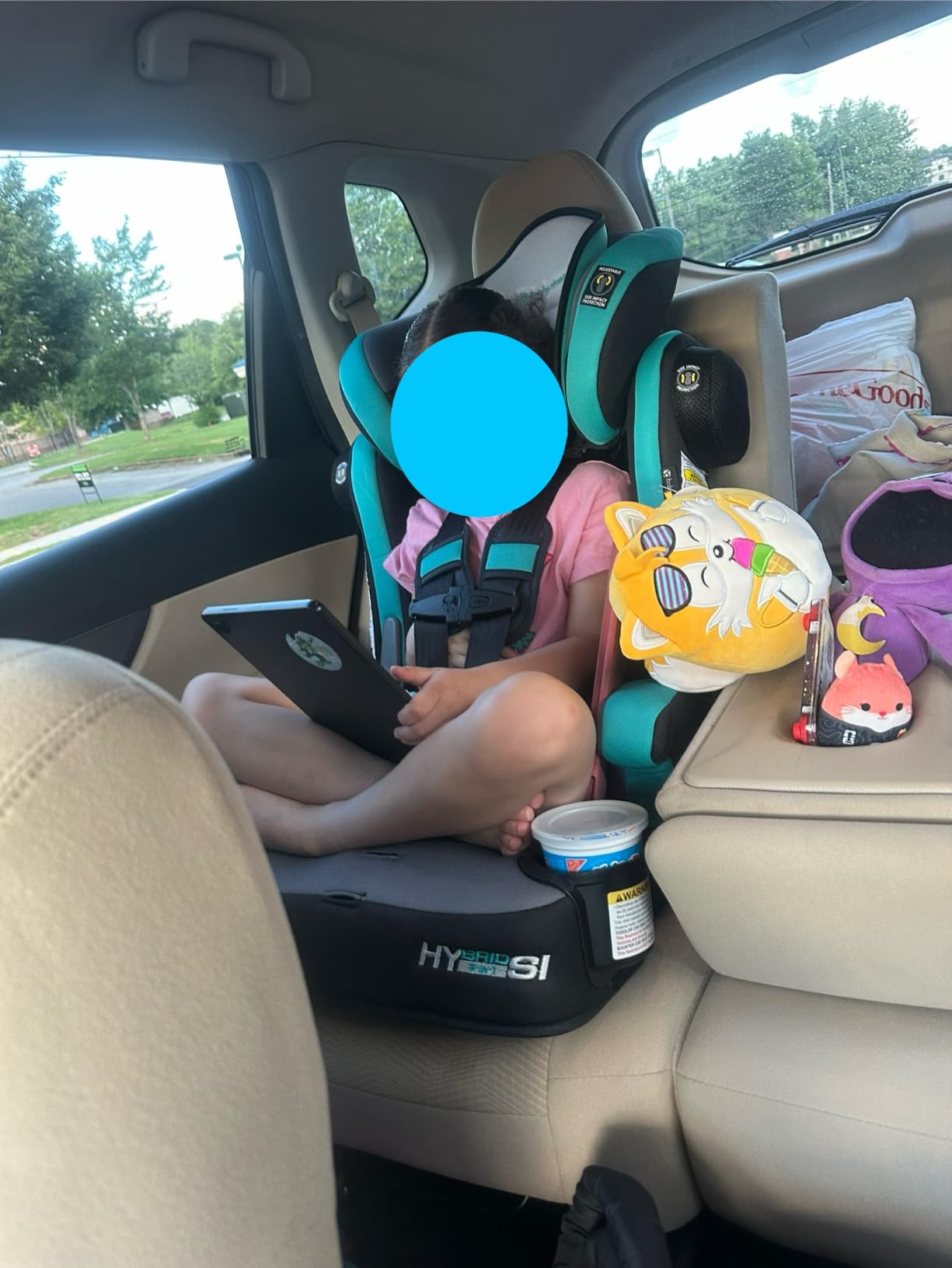
The main concerns from reviewers are strap length and installation complexity. Taller kids may outgrow the harness mode before they reach the weight limit, and some parents found the initial installation took extra time. Also, certain vehicles (like the Jeep Wrangler mentioned in several reviews) may not accommodate this seat well due to seat shape.
The 4.2-star rating is the lowest in this roundup, but it still reflects mostly positive experiences. For the price, you’re getting a functional 3-in-1 seat with side-impact protection. If your child is average height and you have a standard vehicle, this is a budget-friendly option worth considering.
For whom its good
Budget-focused families who want a 3-in-1 design get decent value here. Parents who appreciate side-impact protection at a lower price point will find this competitive. Twins or siblings close in age can share the same seat model for consistency.
For whom its bad
If your child is tall for their age, the strap length limitations may push them out of the harness mode early. If you have a non-standard vehicle with unusual seat geometry, measure carefully before buying. Families who prioritize premium safety certifications should consider the Chicco MyFit instead.
How to Choose the Best Booster Car Seat for Your Toddler?
Picking the right booster car seat comes down to matching the seat to your child’s size, your vehicle, and your daily routine. Here’s what actually matters when you’re deciding.
When to Transition From Harness to Booster
Most kids are ready for a booster between ages 4 and 7, but age alone doesn’t tell you when your specific child is ready. The real indicators are height and weight limits on their current forward-facing harness seat. Once your child exceeds either the height or weight limit (whichever comes first), they’re ready for a booster.
Beyond the seat limits, your child needs to be able to sit properly in a booster for the entire ride. That means staying upright without slumping, keeping the seat belt across their chest and hips correctly, and not unbuckling themselves mid-drive. If your child cannot do these things consistently, they need to stay in a harness seat longer, regardless of age.
High-Back vs Backless Booster
High-back boosters provide head and torso support, which matters for younger kids and those who fall asleep in the car. They also typically include side-impact wings for additional protection. Backless boosters are lighter, more portable, and easier to move between vehicles, but they don’t provide head support.
For kids ages 4-6 or those still mastering sitting upright, a high-back booster is the safer choice. For older kids (7+) who can stay alert and properly positioned, a backless booster works well and is more convenient for travel and carpool. The 2-in-1 designs in this roundup (like the Chicco KidFit and Safety 1st Grand) let you start with the high-back mode and transition to backless when your child is ready.
LATCH System Explained
LATCH stands for Lower Anchors and Tethers for Children. It’s a standardized anchoring system built into vehicles since 2002 and most car seats since then. Lower anchors are metal bars in the vehicle seat crease, and the tether is an anchor behind the seat for forward-facing seats.
For boosters, LATCH serves a different purpose than it does for harnessed seats. A booster with LATCH stays anchored to the vehicle, which prevents it from sliding around when your child climbs in or out. It doesn’t restrain your child (that’s still the seat belt’s job), but it makes the booster more convenient and stable. Not every vehicle has accessible LATCH anchors, so check before buying.
Crash Test Ratings and Safety Standards
All booster seats sold in the US must meet Federal Motor Vehicle Safety Standard (FMVSS) 213. That’s the minimum. Some manufacturers go beyond federal requirements with additional testing, like Graco’s ProtectPlus Engineering (frontal, side, rear, and rollover) or Chicco’s Advanced Side Impact Protection.
Independent testing from organizations like the Insurance Institute for Highway Safety (IIHS) provides additional insight. The IIHS rates boosters as “Best Bet,” “Good Bet,” or “Check Fit” based on how well the seat belt fits a typical child using that booster. Seats rated “Best Bet” provide the best belt positioning across multiple child sizes and vehicle types.
Vehicle Compatibility and Fit
Not every booster fits every vehicle. The three things that matter most are back seat width (especially for 3-across situations), seat cushion angle (some boosters don’t sit level in heavily contoured seats), and headrest position (for high-back boosters, the vehicle headrest shouldn’t interfere with the booster’s headrest).
If you have a smaller car or need to fit three boosters across, look for slim designs like the Safety 1st Grand. If you have captain’s chairs or a deep seat cushion, prioritize boosters with leveling systems like the Chicco MyFit’s RideRight bubble levels.
Comfort and Ease-of-Use Features
Comfort features that genuinely matter include contoured seating (like Chicco’s ErgoBoost), double foam padding, machine-washable covers, and dishwasher-safe cup holders. Features that look good in marketing but don’t matter as much include fancy fabrics, decorative patterns, and built-in speakers.
Ease of use comes down to three things: how easy the seat is to install, how easy it is to adjust the headrest and harness, and how easy it is to clean. After testing 10 seats, I can tell you that Graco’s no-rethread harness and Chicco’s SuperCinch LATCH are the two systems that consistently made my life easier.
FAQs
What age should a toddler get a booster seat?
Most toddlers transition to a booster seat between ages 4 and 7, but age alone isn’t the deciding factor. The real indicators are whether your child has exceeded the height or weight limit on their forward-facing harness seat (whichever comes first), and whether they can sit properly in a booster for the entire ride without slumping or unbuckling. The American Academy of Pediatrics recommends keeping children in a harness seat until they reach the maximum weight or height limit, even if they’re technically old enough for a booster.
What is the safest booster seat for toddlers?
The safest booster seats go beyond federal FMVSS 213 requirements with side-impact testing, reinforced headrests, and proper belt routing guides. In our testing, the Chicco MyFit stands out with Advanced Side Impact Protection, GREENGUARD Gold Certification, and ClearTex flame retardant-free materials. The Graco Tranzitions also performs well with ProtectPlus Engineering covering frontal, side, rear, and rollover scenarios. The most important safety factor isn’t the brand; it’s making sure the seat belt routes correctly across your child’s chest and hips every single time.
Should a 7 year old be in a car seat or booster seat?
It depends on your child’s size and the fit of your vehicle’s seat belt. Many 7 year olds still benefit from a booster because they haven’t reached 4 feet 9 inches, which is the height at which most seat belts fit correctly without a booster. The 5-step seat belt fit test (back against vehicle seat, knees bent at seat edge, lap belt across hips, shoulder belt across chest, can sit properly for the whole ride) tells you when your child is truly ready. Some 7 year olds pass this test; many don’t.
How to install a booster seat properly?
For a high-back booster, thread the vehicle seat belt through the booster’s belt guides according to the manual, making sure the lap belt sits low across your child’s hips and the shoulder belt crosses their chest. For LATCH-equipped boosters, connect the lower anchors and confirm a tight fit. The booster should not move more than one inch side to side or front to back when tested at the belt path. For backless boosters, the vehicle seat belt alone secures both the booster and your child.
High back vs backless booster: which is safer?
High-back boosters are generally safer for younger kids (ages 4-6) because they provide head and torso support, plus side-impact protection. Backless boosters are appropriate for older kids (typically 7+) who can sit upright through the entire ride and don’t need head support. The American Academy of Pediatrics recommends high-back boosters whenever possible, especially in vehicles without headrests or low seat backs. Many 2-in-1 designs let you use the high-back mode first and convert to backless later.
Final Verdict on the Best Booster Car Seats for Toddlers
After six weeks of testing with two kids and two vehicles, the Chicco MyFit earns our top recommendation as the best booster car seat for toddlers who need maximum safety and long-term value. The Advanced Side Impact Protection, GREENGUARD Gold Certification, and ClearTex materials justify the investment for parents who prioritize chemical-conscious design alongside crash performance.
For families on a budget, the Graco TurboBooster 2.0 delivers outstanding value with 11,000+ five-star reviews and Graco’s ProtectPlus Engineering. If you need a seat that grows with your child, the Graco Tranzitions 3-in-1 covers harness and booster modes in one purchase. And for travel, rideshare, and carpool situations, the BubbleBum solves problems no rigid booster can match.
The best booster car seats for toddlers in 2026 all meet federal safety standards, but the differences in comfort, convenience, and long-term value are real. Match the seat to your child’s age, your vehicle, and your daily routine. Every seat in this roundup has been tested, and any of them will keep your child safer than skipping the booster entirely.