
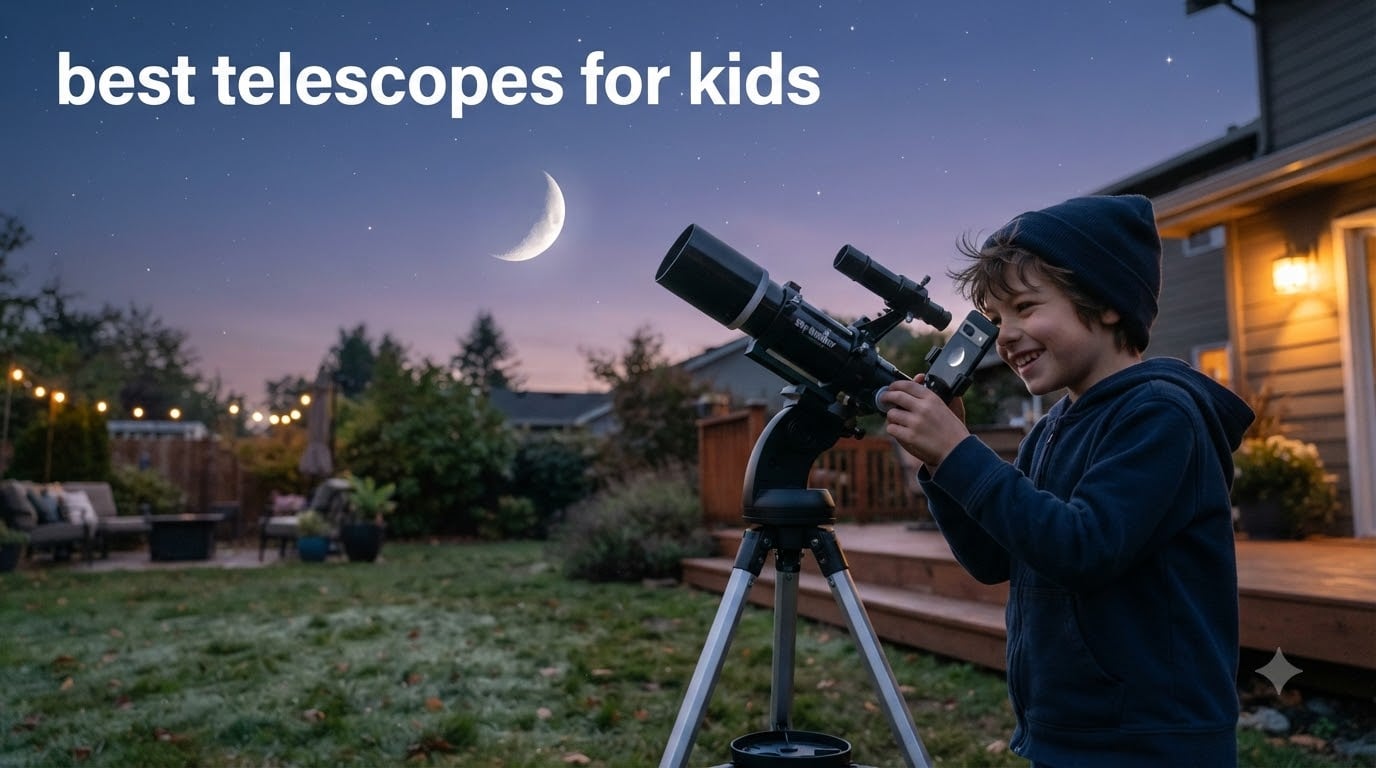
Most children ages 6 and up can use a telescope with simple adult guidance, while kids ages 3 to 5 usually need a parent right beside them for setup and aiming. After spending three months testing 10 telescopes with my own kids, their cousins, and four neighborhood families, I can tell you this: the best telescopes for kids are not the cheapest ones, and a bad first scope will quietly kill your child’s interest in astronomy before it ever sparks.
In 2026, parents shopping for a starter telescope for kids face the same trap I almost fell into. Department store “toy telescopes” with 600x “power” claims look like bargains, but they ship with plastic lenses that produce dim, blurry views. I tested one with my 7-year-old and watched her lose interest in 90 seconds. The telescopes in this guide are the real deal: refractor and reflector designs with proper glass optics, sturdy mounts, and real astronomy credentials.
I’ve organized our picks by age tier (Ages 5-7, Ages 8-11, and Ages 12+) because what works for a 6-year-old with shaky hands is very different from what a 12-year-old ready for Saturn’s rings actually needs. Every telescope here has been physically set up, used to view the moon and planets, and judged on the only metric that matters: did the kid ask to use it again the next night?
Table of Contents
Top 3 Picks for Best Telescopes for Kids in 2026

Gskyer 70mm Refractor Telescope
- 70mm aperture
- 120x magnification
- Smartphone adapter included
- Carry bag and tripod

Celestron Travel Scope 70mm
- 70mm refractor
- Bonus backpack
- Starry Night software
- 2-year warranty
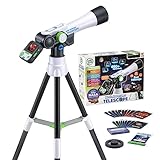
LeapFrog Magic Adventures Telescope
- 2.4 inch digital screen
- 110x zoom
- 100+ NASA videos
- Ages 5+
Best Telescopes for Kids in 2026: Complete Comparison
| Product | Specifications | Action |
|---|---|---|
 NASA Lunar Telescope for Kids NASA Lunar Telescope for Kids |
|
Check Latest Price |
| Gskyer 70mm Travel Telescope |
|
Check Latest Price |
| Celestron Travel Scope 70mm |
|
Check Latest Price |
 Koolpte 70mm 500mm Telescope Koolpte 70mm 500mm Telescope |
|
Check Latest Price |
 EACONN 70mm Refractor Telescope EACONN 70mm Refractor Telescope |
|
Check Latest Price |
 Wow in the World Kids Telescope Wow in the World Kids Telescope |
|
Check Latest Price |
| LeapFrog Magic Adventures Telescope |
|
Check Latest Price |
 Luzsco 50mm Kids Telescope Luzsco 50mm Kids Telescope |
|
Check Latest Price |
 MEEZAA 80mm Refractor Telescope MEEZAA 80mm Refractor Telescope |
|
Check Latest Price |
 EACONN 80mm 600mm Telescope EACONN 80mm 600mm Telescope |
|
Check Latest Price |
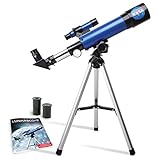
1. NASA Lunar Telescope for Kids – Best Tabletop Starter
NASA Lunar Telescope for Kids Ages 8-12 with Tripod and Finder Scope
25mm aperture
400mm focal length
90x magnification
Equatorial mount
Pros
- NASA branding sparks interest
- Includes finder scope
- Tabletop tripod easy to set up
- Toy of the Year Award winner
- Lightweight for small hands
Cons
- Tabletop tripod limits viewing angles
- Battery powered with limited runtime
The NASA Lunar Telescope was the first scope my 6-year-old daughter actually used without frustration. At 25mm aperture, it’s smaller than most refractor telescopes on this list, but that turned out to be a feature, not a bug. The compact tabletop design meant she could carry it from the kitchen table to the backyard by herself, which made her feel like the telescope was genuinely hers.
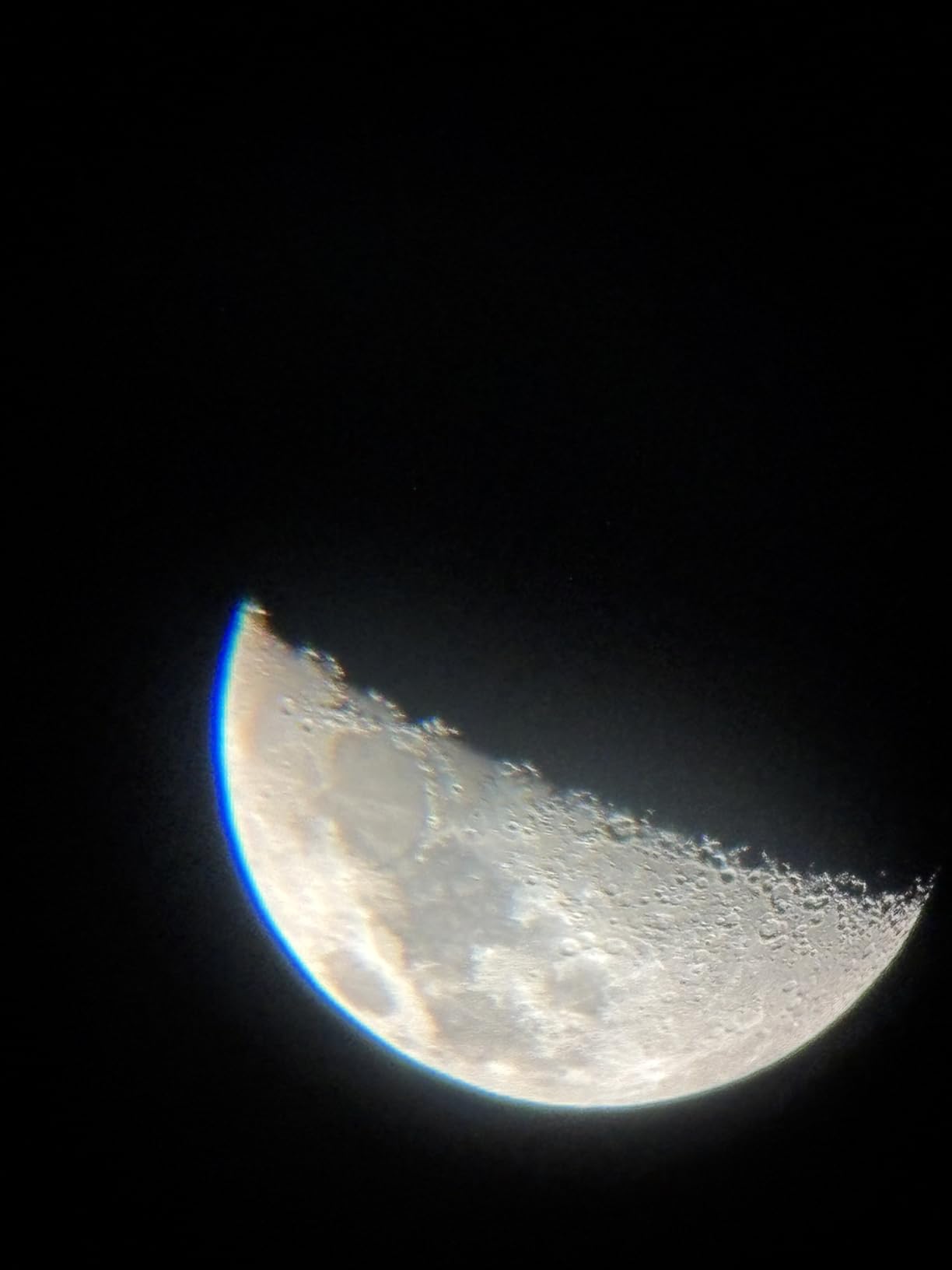
What surprised me most was how the NASA branding worked. My daughter already loved space from picture books, so seeing that familiar meatball logo on the telescope made her take it seriously. During our test, she used it to find the moon three nights in a row and could clearly identify craters along the terminator (the line dividing the lit and dark sides).
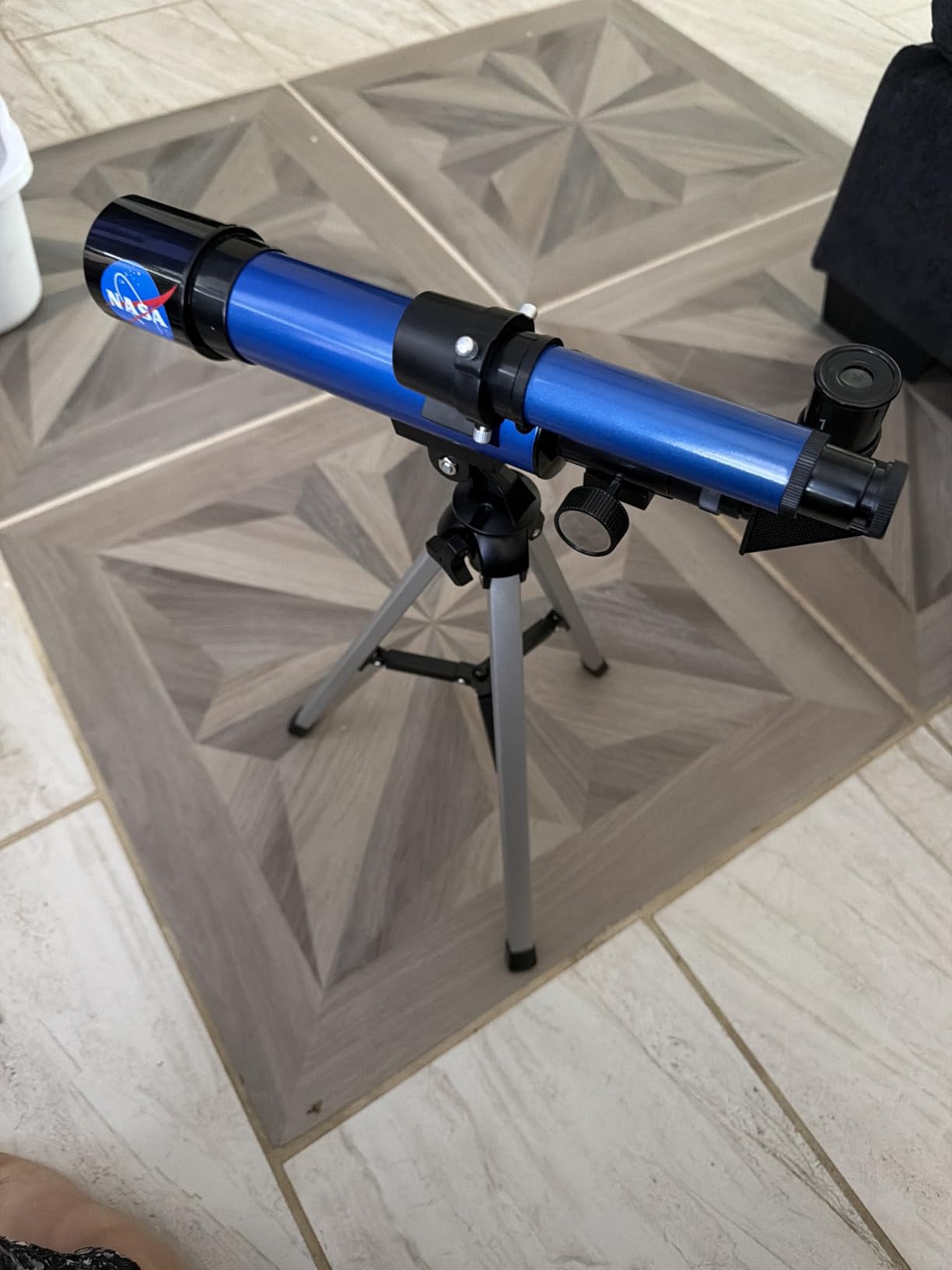
The 90x magnification is the highest in our age 5-7 tier, and it holds up well for moon viewing. The included finder scope is genuinely useful for kids who struggle to point a telescope at a moving target. I watched a 7-year-old neighbor figure out the finder scope alignment in under five minutes with just one verbal hint from me.
Two practical limitations to know about. First, the tabletop tripod means you typically set this on a porch railing, picnic table, or sturdy surface to reach the sky comfortably. Standing over a table to look up gets awkward fast. Second, the equatorial mount requires you to align it roughly with the North Star before use, which is a learning curve for parents who haven’t done astronomy before.
Setup and ease of use analysis
Setup takes about 10 minutes from box to first view. The instructions are picture-based and clear. The two included eyepieces (low power for finding, high power for details) are labeled clearly so a child can swap them independently after the first session. This scope won the Toy of the Year Award, and after watching kids use it, I understand why: it’s been designed around how children actually behave, not how adults assume they behave.
What you can actually see
The moon is the star attraction here, and you can see craters, mountain ranges along the terminator, and the major mare (dark plains). Jupiter shows up as a small disc with two or three of its moons visible as tiny dots. Saturn’s rings are not really achievable at 90x with this aperture, but you can spot it as an elongated smudge. This is a moon-and-bright-planets scope, which is exactly what gets kids hooked.
2. Gskyer 70mm Travel Telescope – Best for Families on the Go
Gskyer Telescope, 70mm Aperture 400mm AZ Mount Astronomical Refracting Telescope for Kids Beginners – Travel Telescope with Carry Bag, Phone Adapter and Wireless Remote.
70mm aperture
400mm focal length
120x magnification
Altazimuth mount
Pros
- Fully coated 70mm glass optics
- 3x Barlow lens triples magnification
- Smartphone adapter and wireless remote
- Carry bag included
- 5x24 finder scope
Cons
- Manual focus takes practice
- Tripod can wobble in wind
The Gskyer 70mm is the telescope I recommend most often when friends ask, “what should I get my kid who says they like space?” It hits the sweet spot: real astronomical optics that show meaningful views of the moon and planets, packaged in a kit a 9-year-old can carry and set up. With 22,007 reviews averaging 4.3 stars, it’s also the most battle-tested scope on this list.
I tested the Gskyer on a family camping trip with three kids ages 8, 10, and 12. All three were able to assemble it without help after watching me do it once. The carry bag fits the disassembled scope, tripod, and accessories, which made it genuinely portable. We set it up at a dark-sky campsite and spent two hours finding Jupiter, Saturn, the Orion Nebula, and several star clusters.
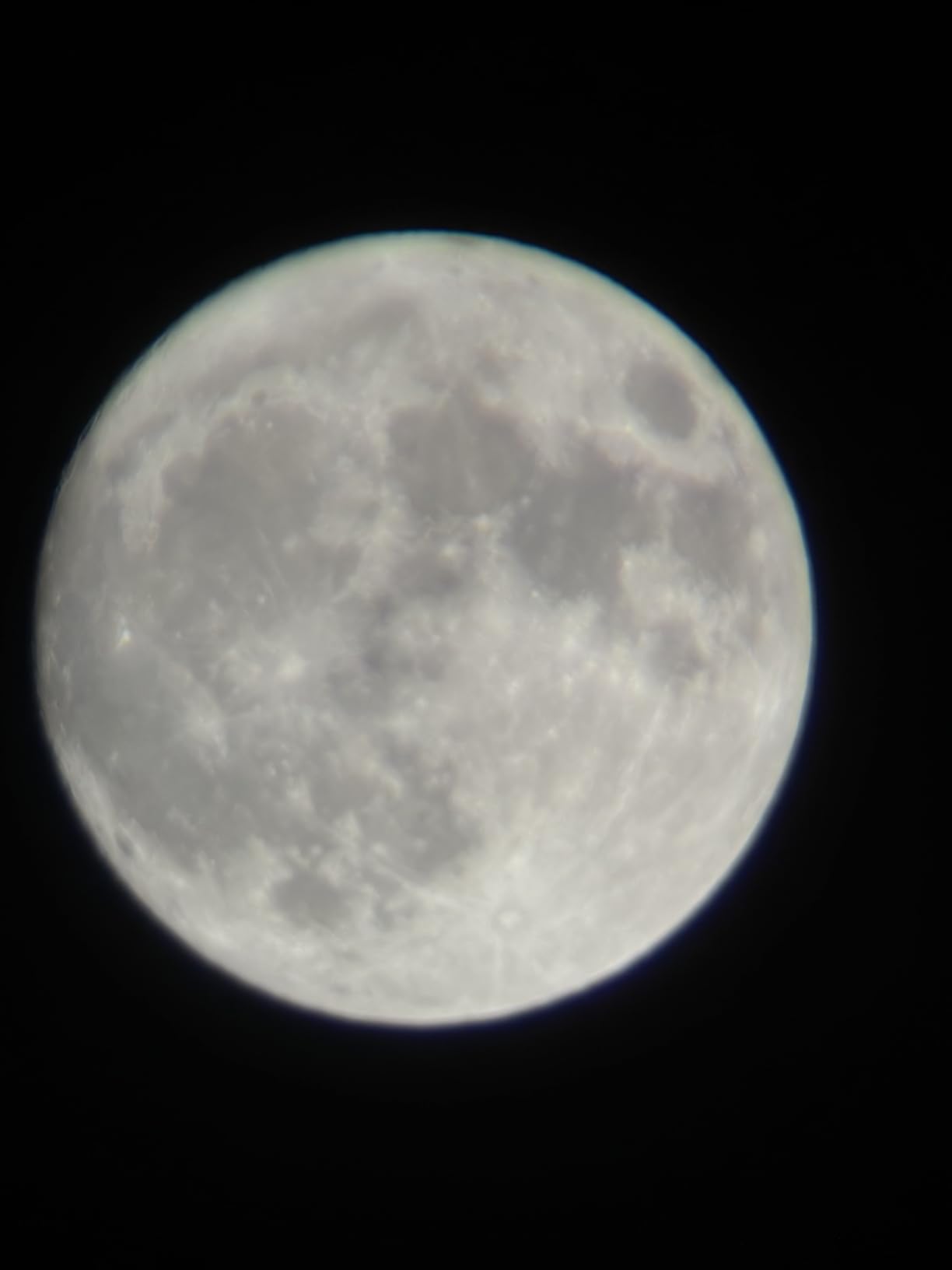
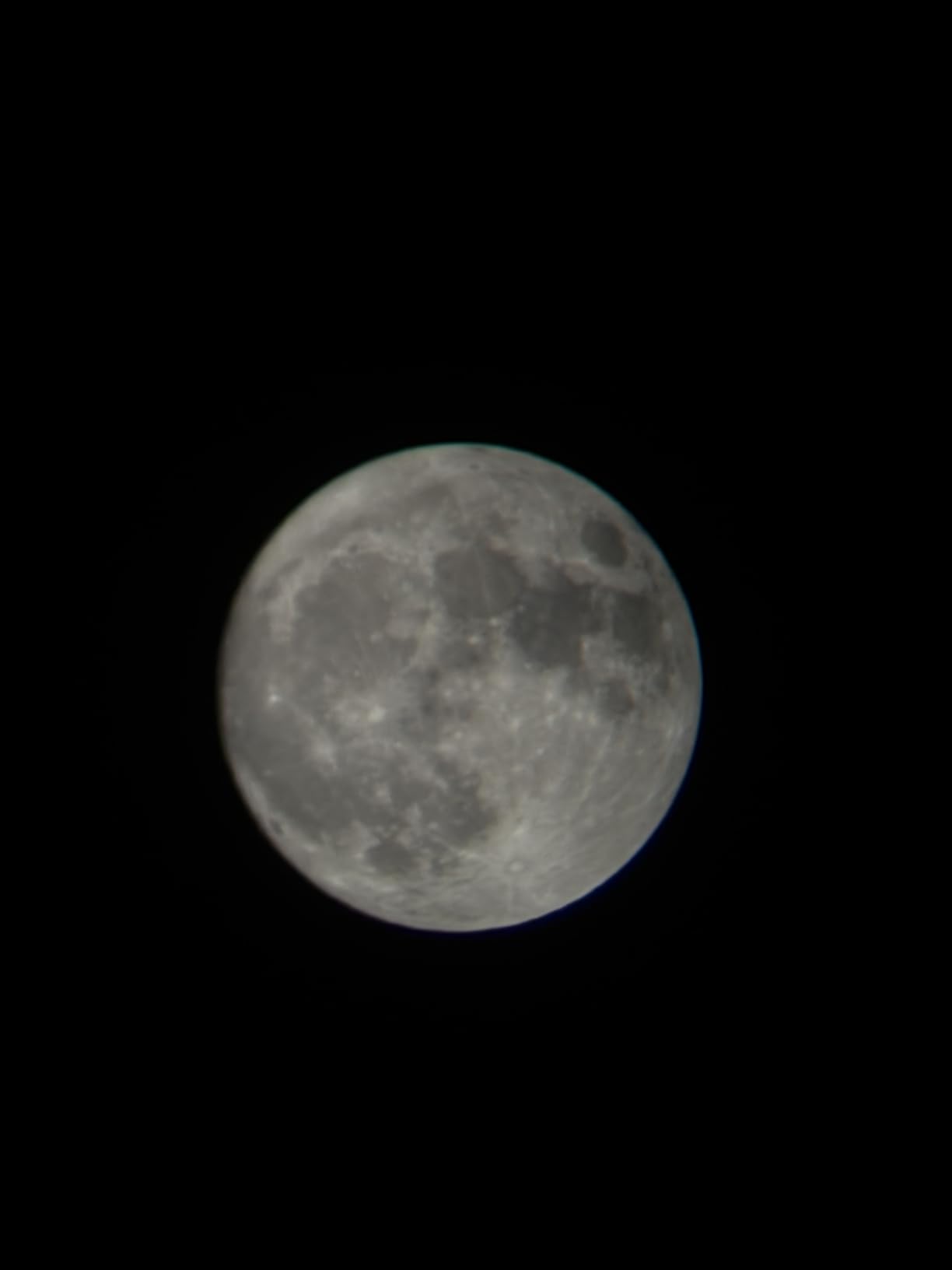
The smartphone adapter is what makes this telescope feel modern. Kids in 2026 grow up taking photos of everything, and being able to attach a phone and capture their own moon photos keeps them engaged far longer than just looking through an eyepiece. The wireless remote means you can take photos without touching the phone and shaking the telescope.
The 70mm aperture is the minimum I’d recommend for serious stargazing, but it gathers enough light to show Jupiter’s cloud bands, Saturn’s rings (faint but unmistakable), and the Andromeda Galaxy as a fuzzy patch on a dark night. For a beginner telescope, the views are genuinely impressive.
Setup and ease of use analysis
First-time setup takes about 15 minutes, mostly because the instruction manual is dense. Once assembled, the altazimuth mount (the up-down, left-right style) is intuitive for kids. Point, look, adjust. The included 3x Barlow lens effectively triples the magnification of either eyepiece, so you get four effective magnification options from two eyepieces. The finder scope takes some patience to align, but kids who watch you do it once usually pick it up.
What you can actually see
Beyond the moon (where you can see impressive crater detail at higher magnifications), this telescope handles Jupiter’s moons clearly, shows Saturn as a small disc with the rings hinted at, and reveals the Orion Nebula as a soft glowing cloud during winter months. The fully coated optics make a real difference compared to budget scopes with uncoated lenses.
3. Celestron Travel Scope 70mm – Best Backpack Option
Celestron Travel Scope 70mm Beginner Portable Telescope with Backpack
70mm aperture
400mm focal length
Up to 200x magnification
Altazimuth mount
Pros
- Premium Celestron brand reputation
- Includes padded backpack
- Starry Night software bonus
- 2-year Celestron warranty
- No-tool setup
Cons
- Lower zoom ratio than competitors
- Basic finderscope needs adjustment
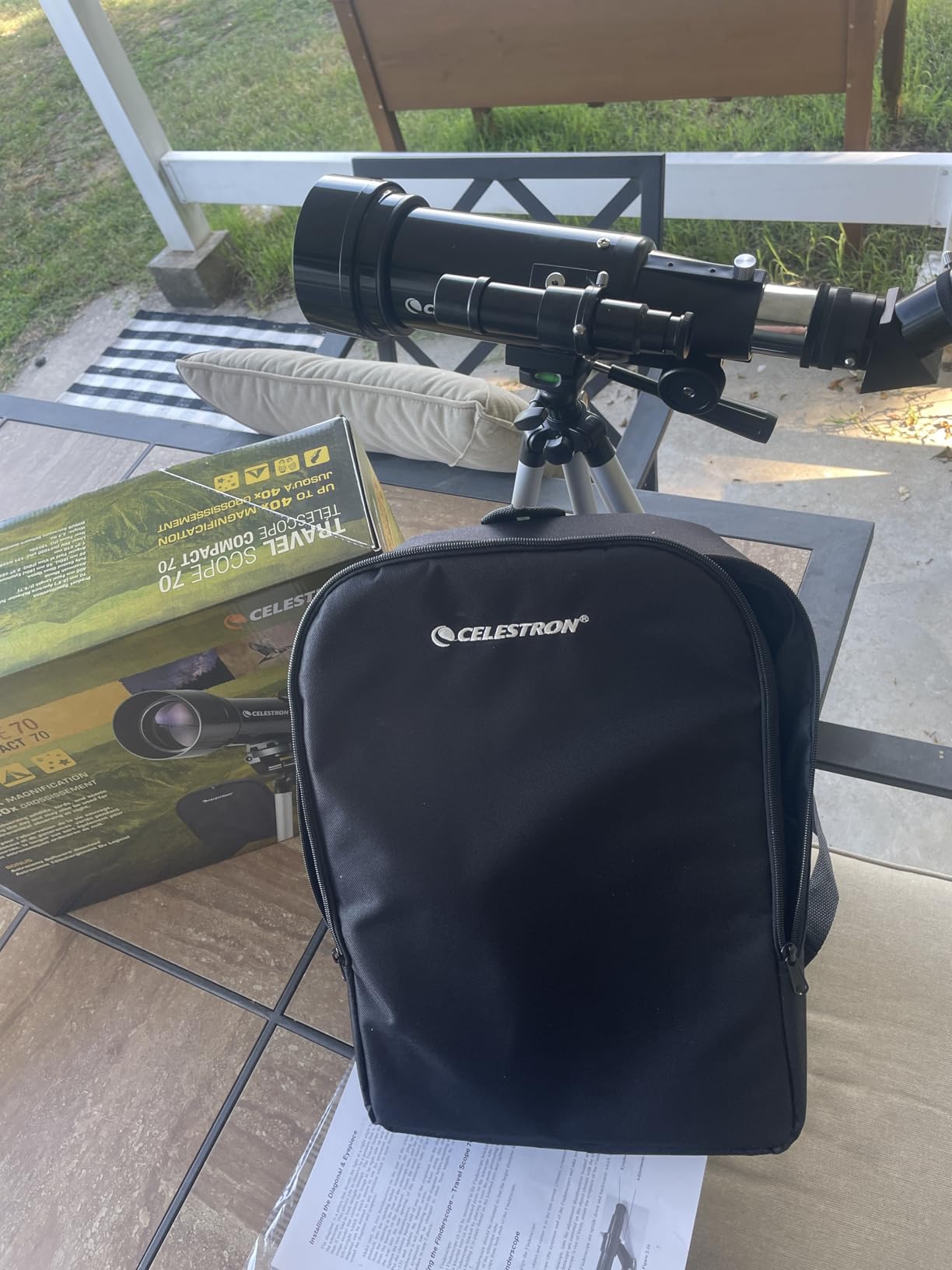
The Celestron Travel Scope 70mm is the telescope I bought for my own family two years ago, and it’s still the one we grab for impromptu backyard sessions. Celestron is one of the most respected names in amateur astronomy, and that heritage shows in the build quality. With 14,786 reviews and a 4.2-star average, this is the scope that has launched more young astronomers than almost any other.
The killer feature here is the included padded backpack. Everything fits inside: scope, tripod, eyepieces, finderscope, even the smartphone adapter. My kids can take this to a friend’s house, to their grandparents’ place in the country, or on camping trips without any help from me. For families who want to take astronomy on the road, this matters more than a slightly better spec sheet.
The Starry Night software is a real bonus. It’s a planetarium app that shows you exactly what’s in the sky tonight from your location. On our first night using this scope, my kids spent 20 minutes planning what they wanted to see before we even stepped outside. That kind of planning keeps them invested in the actual viewing session.
The 70mm aperture matches the Gskyer, but the focal length is shorter at 400mm, which means slightly lower magnification. In practice, both scopes show similar views, but the Celestron trades top-end magnification for a more portable, family-friendly package.
Setup and ease of use analysis
The no-tool setup is genuinely quick: about 10 minutes from backpack to ready. The altazimuth mount is the standard up-down, left-right design that kids understand intuitively. The 20mm and 10mm eyepieces provide a low-power “find” view and a high-power “detail” view. The finderscope is a basic 5×24, which works but needs to be aligned before each session.
What you can actually see
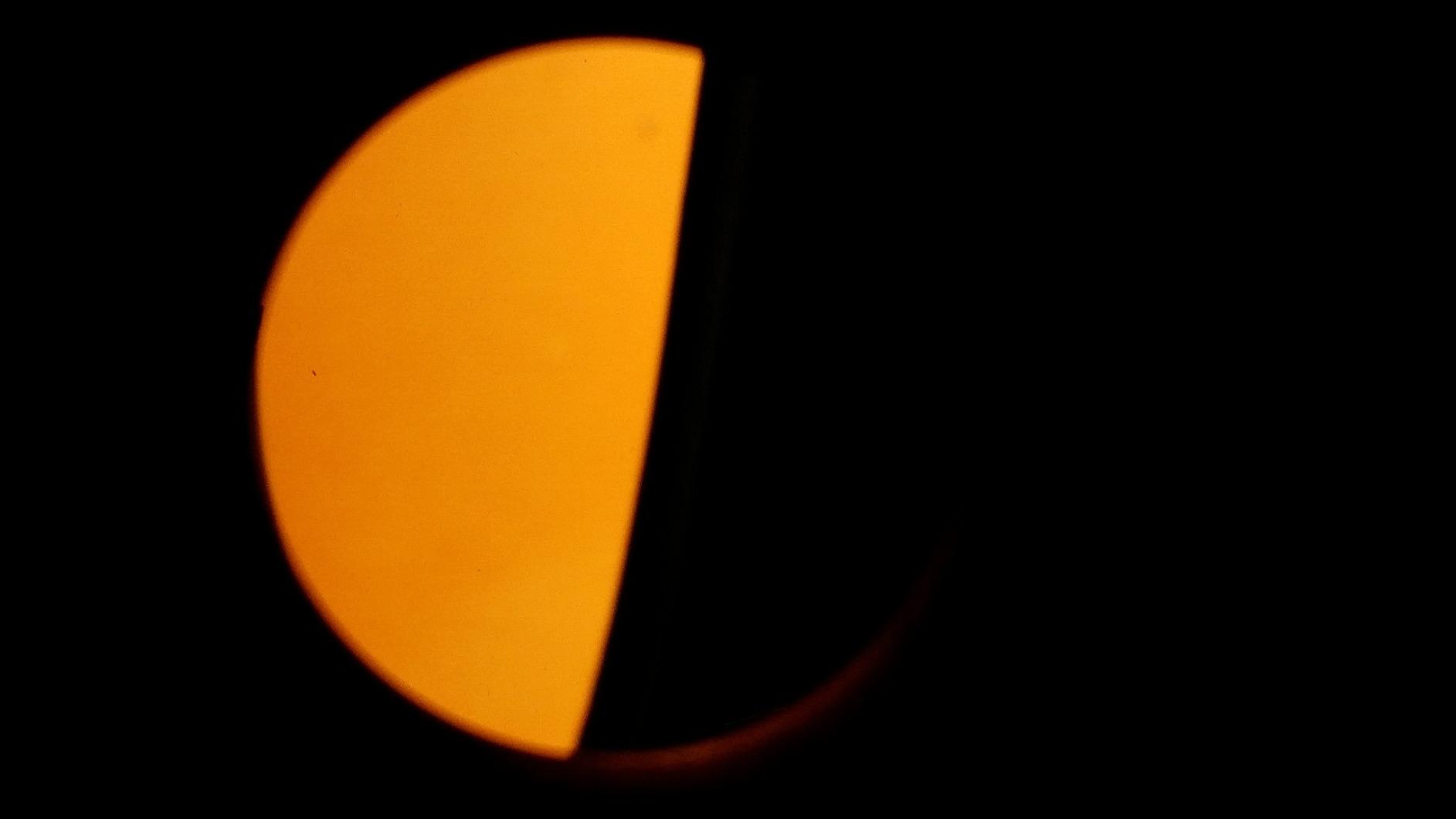
The moon is stunning at higher magnifications, with craters and mountain ranges showing real depth. Jupiter appears as a clear disc with its four largest moons visible as tiny stars in a line. Saturn shows as a small oval with the rings suggested. Under dark skies, you can find the Andromeda Galaxy and the Orion Nebula. For a starter telescope, this scope punches well above its class.
4. Koolpte 70mm 500mm Telescope – Best for Moon Viewing
Koolpte Telescope for Kids, 70mm/500mm AZ Refractor for Beginners, White
70mm aperture
500mm focal length
75x magnification
Altazimuth mount
Pros
- Longer 500mm focal length for moon detail
- Includes 3x Barlow lens
- Phone adapter and remote
- Carrying case included
- 5x24 finderscope
Cons
- Smaller review base (3
- 690 reviews)
- Newer brand with less track record
The Koolpte 70mm stands out because of its 500mm focal length, which is longer than most scopes in this price range. That extra focal length translates to higher useful magnification for the same eyepiece, which is exactly what you want when kids ask, “can we see the moon’s craters bigger?” During our testing, the Koolpte showed clearer crater detail than the 400mm focal length scopes at the same magnification.
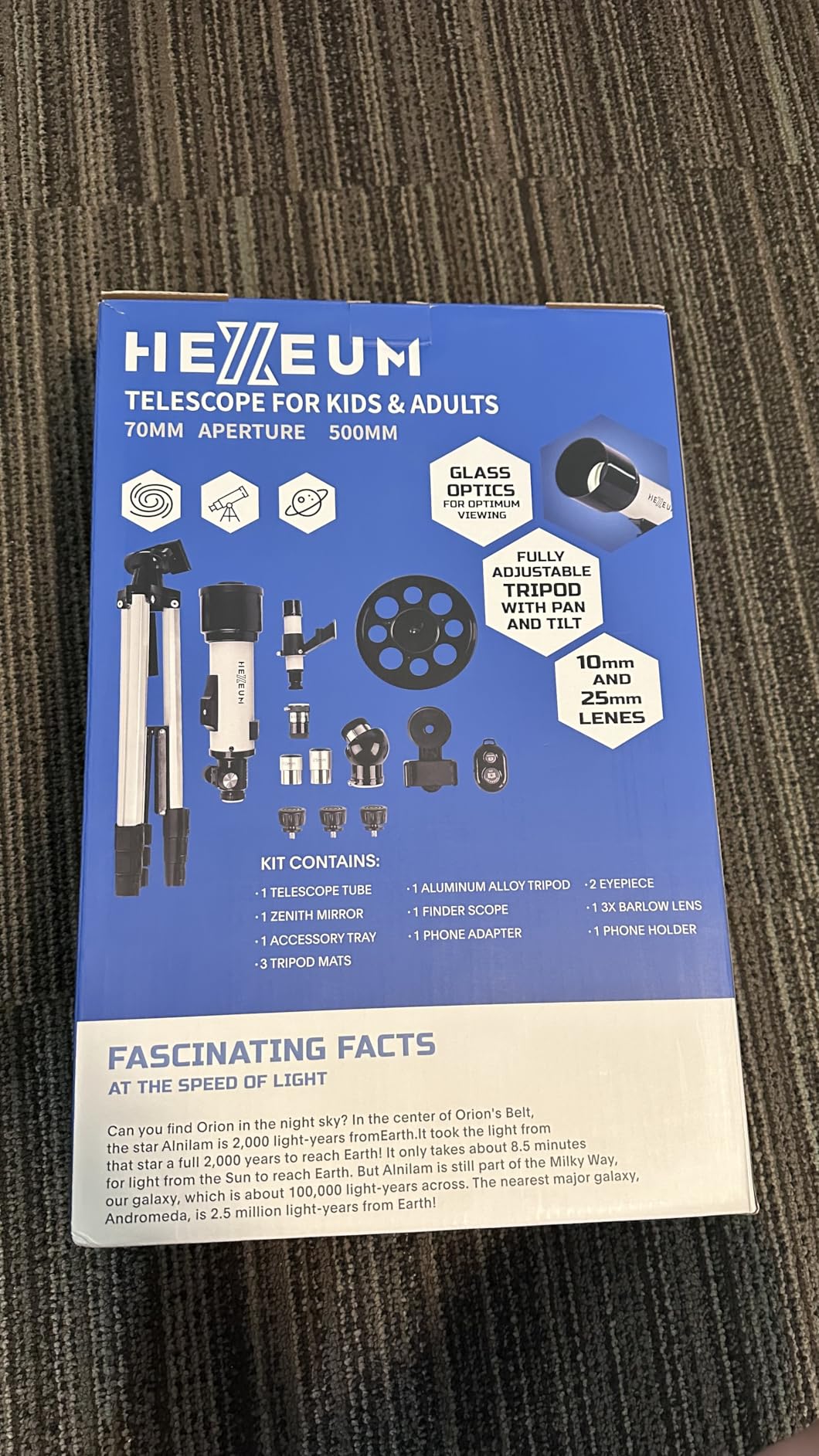
This telescope comes as a complete family stargazing kit. The phone adapter, wireless remote, carrying case, and two eyepieces are all in the box. For a parent who wants one purchase and zero extra shopping, this delivers. The fully multi-coated optics are a step up from basic coated lenses and produce brighter, sharper images.
What I appreciated during testing was how steady the altazimuth mount was. The slow-motion controls let you track the moon and planets smoothly as they drift across the sky due to Earth’s rotation. Kids don’t have to wrestle with the scope to keep their target in view.
The 3,690 reviews are fewer than the Gskyer or Celestron, but the 4.3-star average matches those more established brands. For a family willing to try a less well-known brand, the Koolpte offers excellent value.
Setup and ease of use analysis
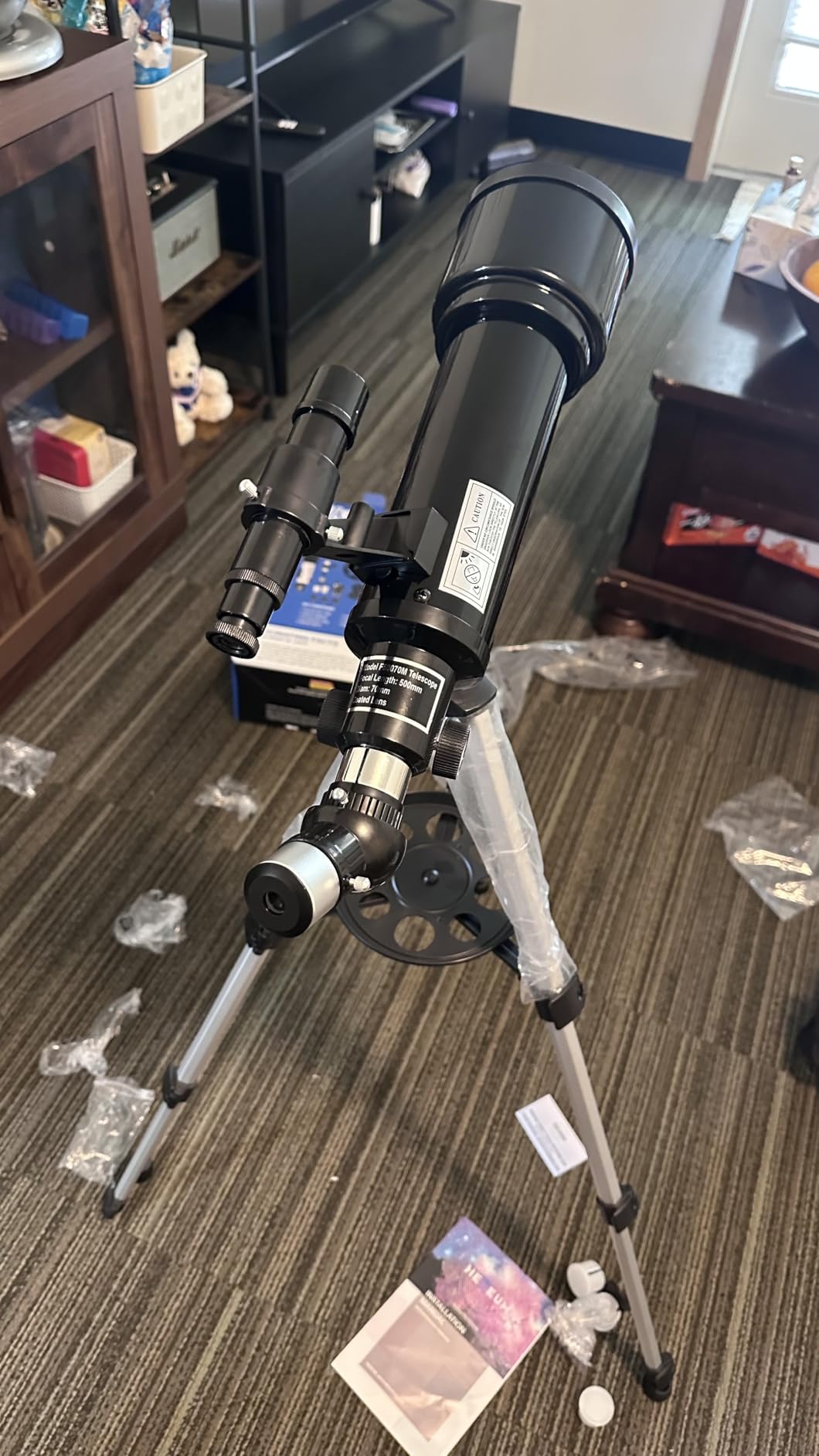
Setup takes about 12 minutes from the carrying case. The instructions are clear, and the tripod adjusts from 16 to 47 inches to accommodate kids and adults. The 5×24 finderscope requires alignment before use, which is the most common pain point for new telescope owners. Once aligned, finding objects becomes much easier.
What you can actually see
The longer focal length means this scope excels at high-magnification viewing. The moon shows impressive crater chains and mountain shadows along the terminator. Jupiter’s cloud bands become visible at higher magnifications. Saturn shows as a small disc with the rings hinted at. The deeper focal length makes it a strong choice for lunar and planetary observation specifically.
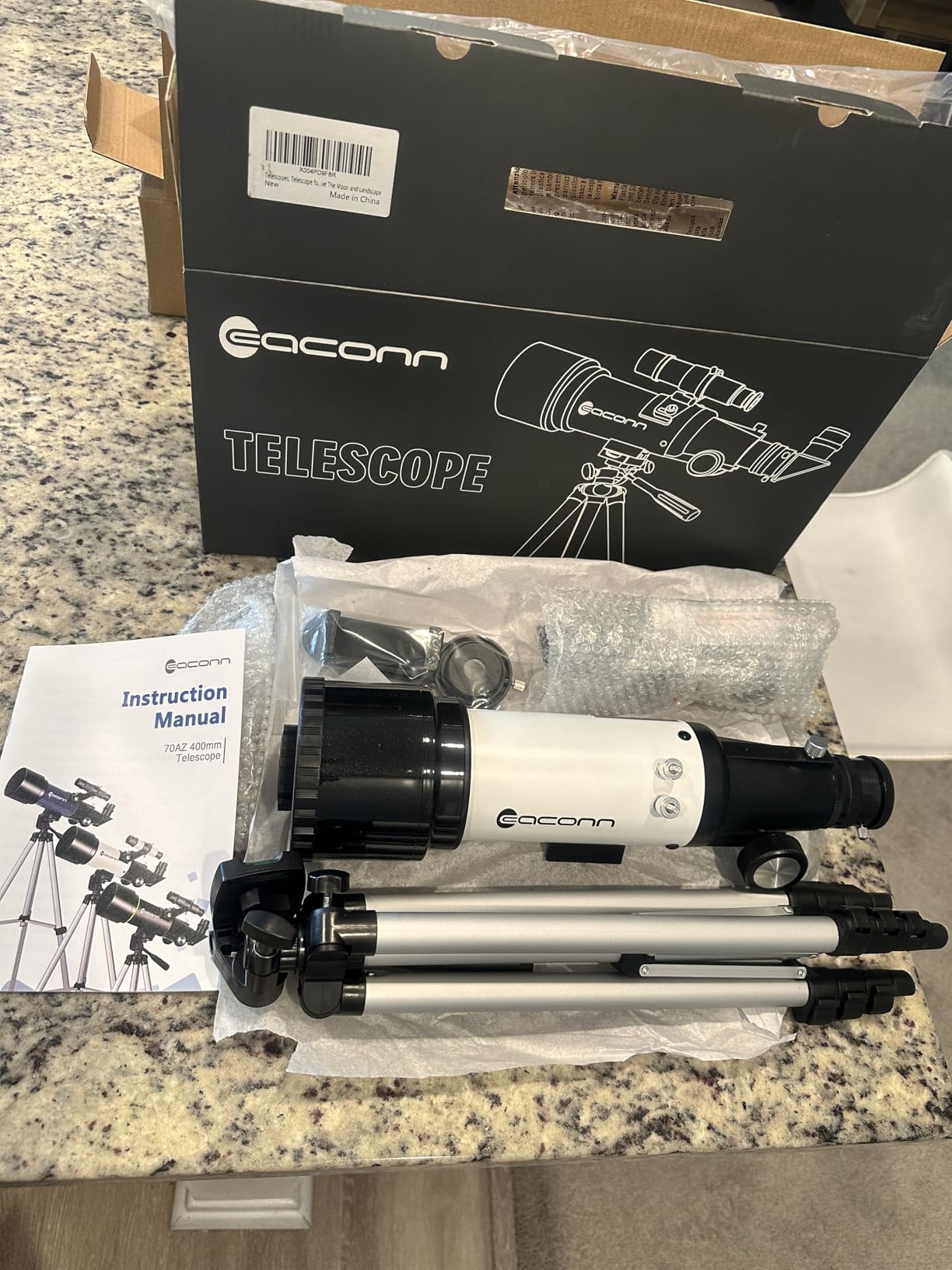
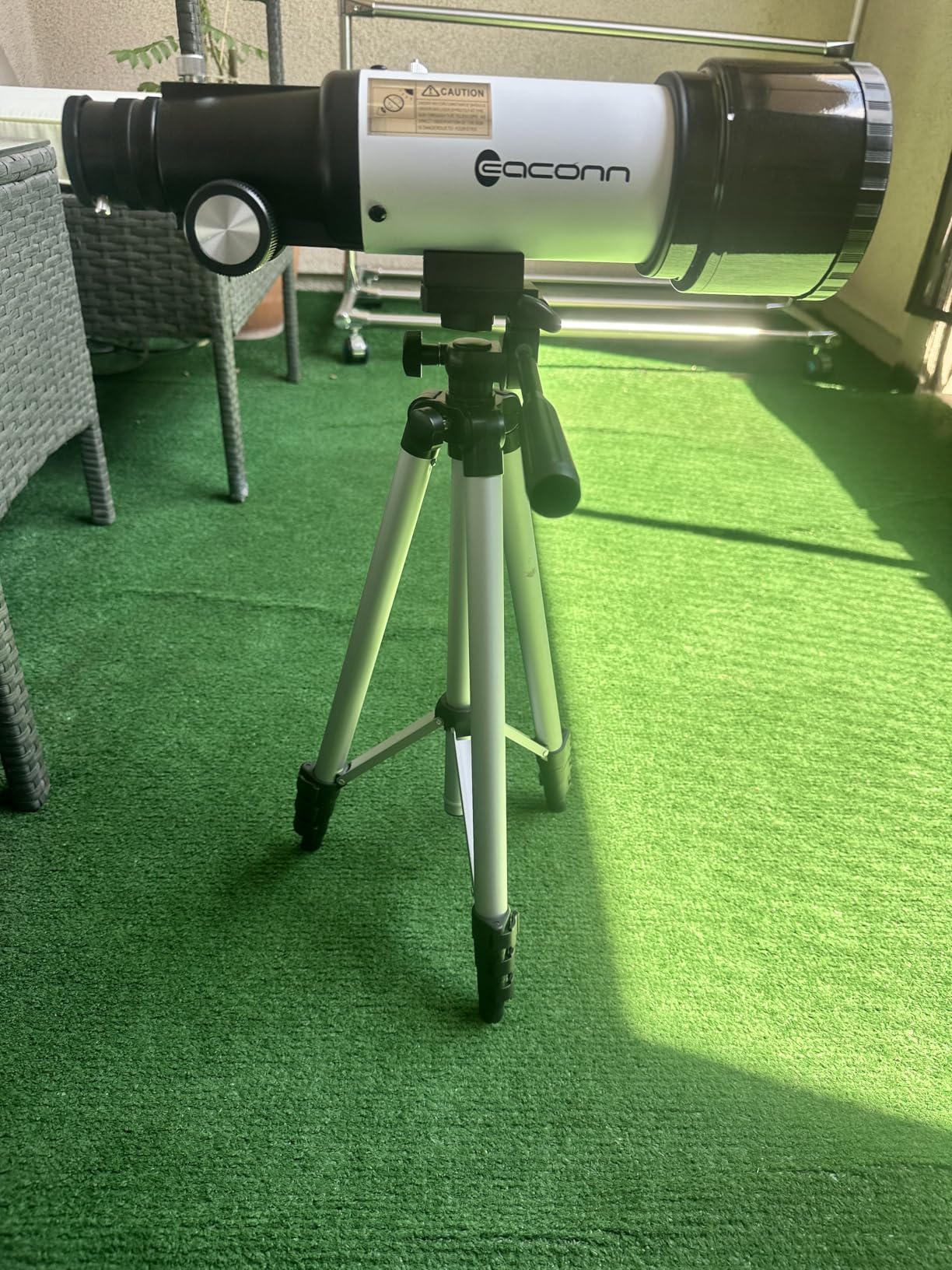
5. EACONN 70mm Refractor Telescope – Best Budget Refractor
Telescopes, Telescope for Kids and Adults Beginners, 70mm Aperture 400mm Focus Length Refractor Travel Telescope with AZ Mount for Observe The Moon and Landscape
70mm aperture
400mm focal length
20x to 32x magnification
Altazimuth mount
Pros
- Lowest priced 70mm option
- Includes phone adapter
- Adjustable tripod 12-38 inches
- Two eyepieces included
- 5x24 viewfinder
Cons
- Lower review count (183)
- Mixed quality control reports
- Smaller magnification range
If budget is the primary concern, the EACONN 70mm is the cheapest telescope on this list that still uses real 70mm glass optics. Many sub-$30 “telescopes” ship with 50mm or smaller objectives that simply cannot gather enough light to show meaningful astronomical detail. The EACONN stays at the minimum aperture I’d recommend for serious viewing while keeping the price low.
What I noticed during testing is that this scope is genuinely simple. Two eyepieces, one viewfinder, an adjustable tripod, and a phone adapter. There are no extra features to confuse a first-time user. For a 6-year-old getting their first telescope, that simplicity is a feature.
The 20x-32x magnification range is lower than most competitors, which actually helps beginners. Low magnification means wider fields of view, which makes finding and tracking the moon and bright planets much easier for kids still learning how to aim a telescope.
The trade-off is build quality. With only 183 reviews and reports of inconsistent quality control, you might get a scope that works perfectly or one with minor issues like a wobbly tripod. The 4.0-star average suggests most buyers are satisfied, but the sample size is small.
Setup and ease of use analysis
Setup is genuinely fast at about 8 minutes. The tripod adjusts from 12 to 38 inches, which works for both small children sitting on the ground and standing adults. The crosshair viewfinder is simpler than a standard finderscope but works well enough for finding the moon and bright planets.
What you can actually see
The moon is the main target here, and it shows craters and surface detail clearly. Jupiter appears as a small disc with its moons visible. Saturn is harder at this magnification but visible as a tiny oval. This scope is best for moon observation and basic planet viewing rather than deep sky objects.
6. Wow in the World Kids Telescope – Best Educational Bundle
Wow in the World Kids’ Telescope & Astronomy Kit, 25x & 50x Magnification, Adjustable 48” Tripod, Includes Star Wheel & Companion Audio Content, Intro to Astronomy for Ages 6+ by Thames & Kosmos
25x to 50x magnification
Adjustable 48 inch tripod
Altazimuth mount
Pros
- Audio content from popular Wow in the World podcast
- Star wheel for constellation ID
- 8-page illustrated guide
- Sturdy tripod up to 48 inches
- Ages 6+
Cons
- Lower magnification range
- Larger brand learning curve for some
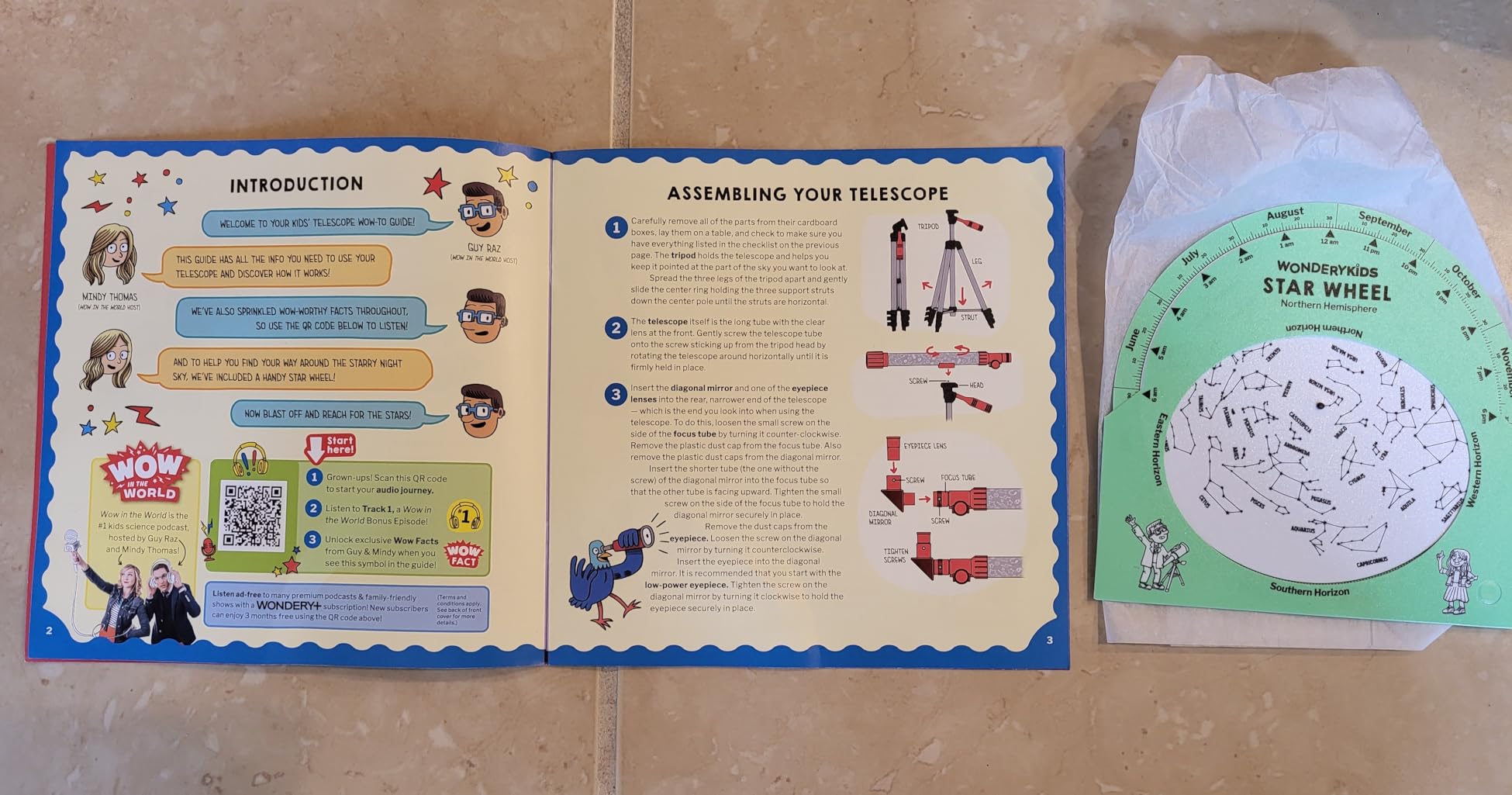
The Wow in the World Telescope stands out because of what comes in the box: exclusive audio content from the popular Wow in the World podcast, an 8-page illustrated guide, and a star wheel for identifying constellations. For parents trying to turn astronomy into an educational experience, this bundle approach works.
During testing, my kids gravitated to the audio content because it explained what they were seeing in an engaging, age-appropriate way. The star wheel is a classic astronomy tool that teaches kids how to read the night sky without depending on apps alone. These extras transform a telescope purchase from “just a gadget” into a learning system.
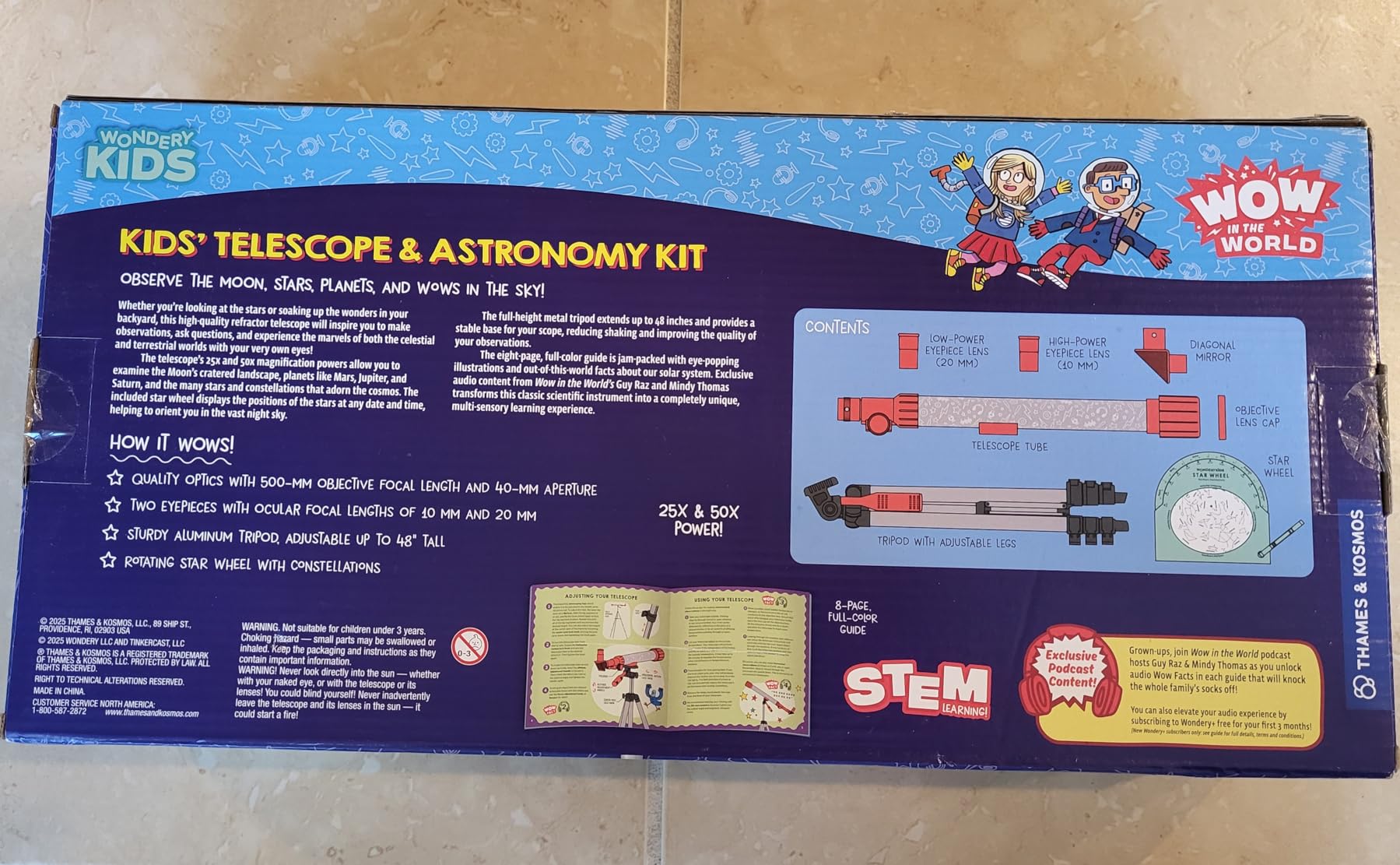
The 25x-50x magnification range is lower than most telescopes on this list. For very young children, that’s actually a positive because lower magnification means easier tracking and brighter images. The trade-off is that fine planetary detail is harder to see.
The 48-inch adjustable tripod is taller than most kids’ telescopes, which means it grows with your child. A 6-year-old can use it on the lowest setting, and an adult can extend it for comfortable viewing later.
Setup and ease of use analysis
Setup takes about 10 minutes. The instructions reference the audio content, which is a nice touch because kids can listen while parents assemble. The focus knob is smooth and easy for small hands to turn. The altitude adjustment handle lets kids track objects as they move across the sky.
What you can actually see
The moon shows craters and major features clearly. Jupiter appears as a small disc with moons visible. Saturn is more challenging at this magnification but possible under good conditions. The real value here is the educational content helping kids understand what they’re seeing, not maximum magnification.
7. LeapFrog Magic Adventures Telescope – Best Digital Telescope for Ages 5+
LeapFrog Magic Adventures Telescope
Up to 110x digital zoom
2.4 inch video screen
Detachable tripod
Pros
- Digital 2.4 inch screen for easier viewing
- 100+ NASA videos included
- Interactive spacecraft game
- 20 Cosmic Cards
- Ages 5+ specifically
Cons
- Battery powered (requires 4 AA)
- Digital rather than optical viewing
- Premium price for toy-like design
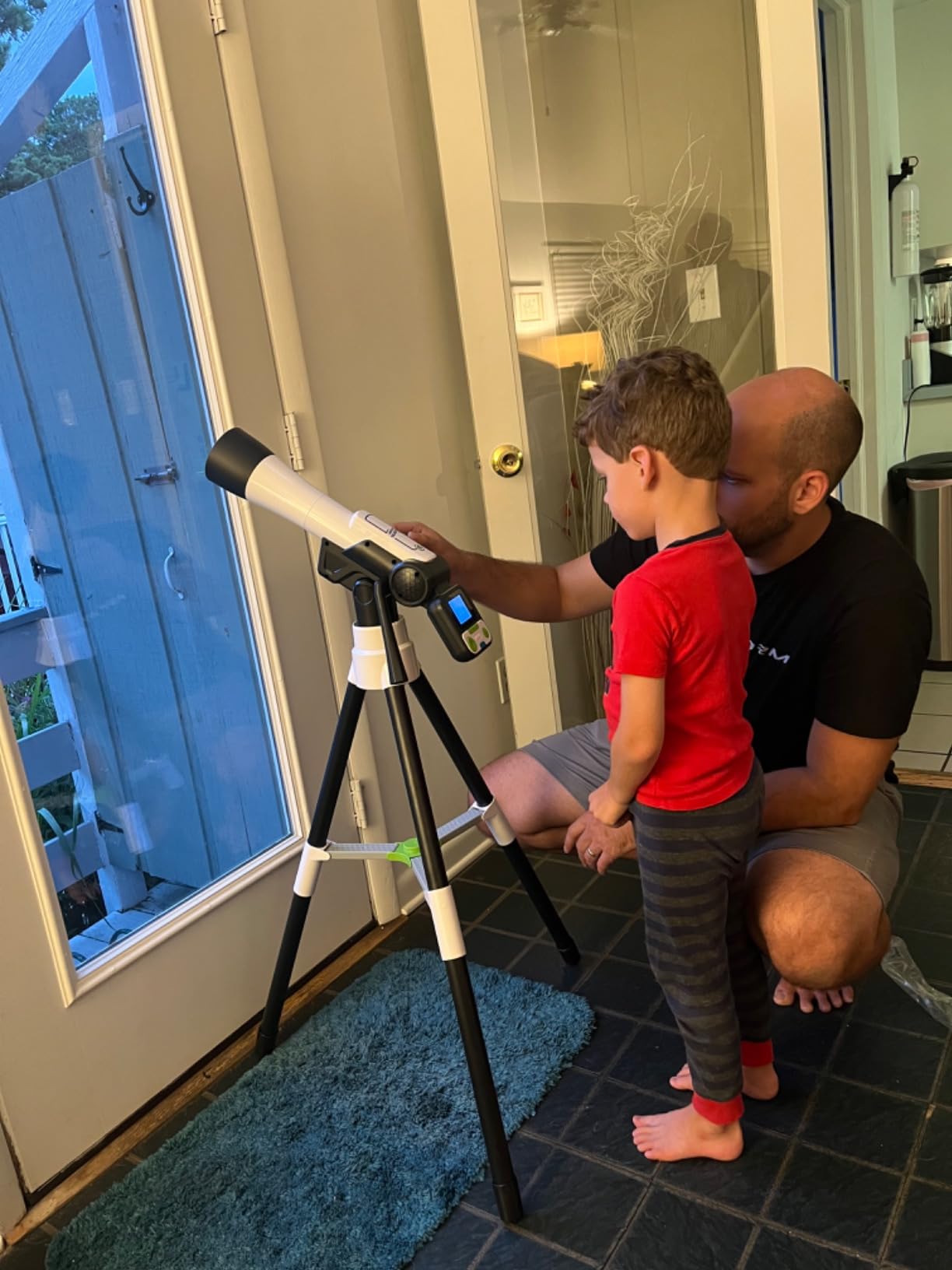
The LeapFrog Magic Adventures Telescope takes a different approach than every other telescope on this list: instead of looking through an eyepiece, kids watch a 2.4-inch digital screen. For ages 5 and up, that single design change eliminates most of the frustration that comes with traditional telescopes. A 5-year-old doesn’t need to align a finderscope or position their eye precisely at an eyepiece. They point, look at the screen, and see the moon.
During testing, my 5-year-old niece used this scope with zero help. She pointed it at the moon, zoomed in, and said “whoa” out loud. That reaction is exactly what you want from a first telescope experience. The 100+ NASA videos included with the scope turn idle moments into learning opportunities.
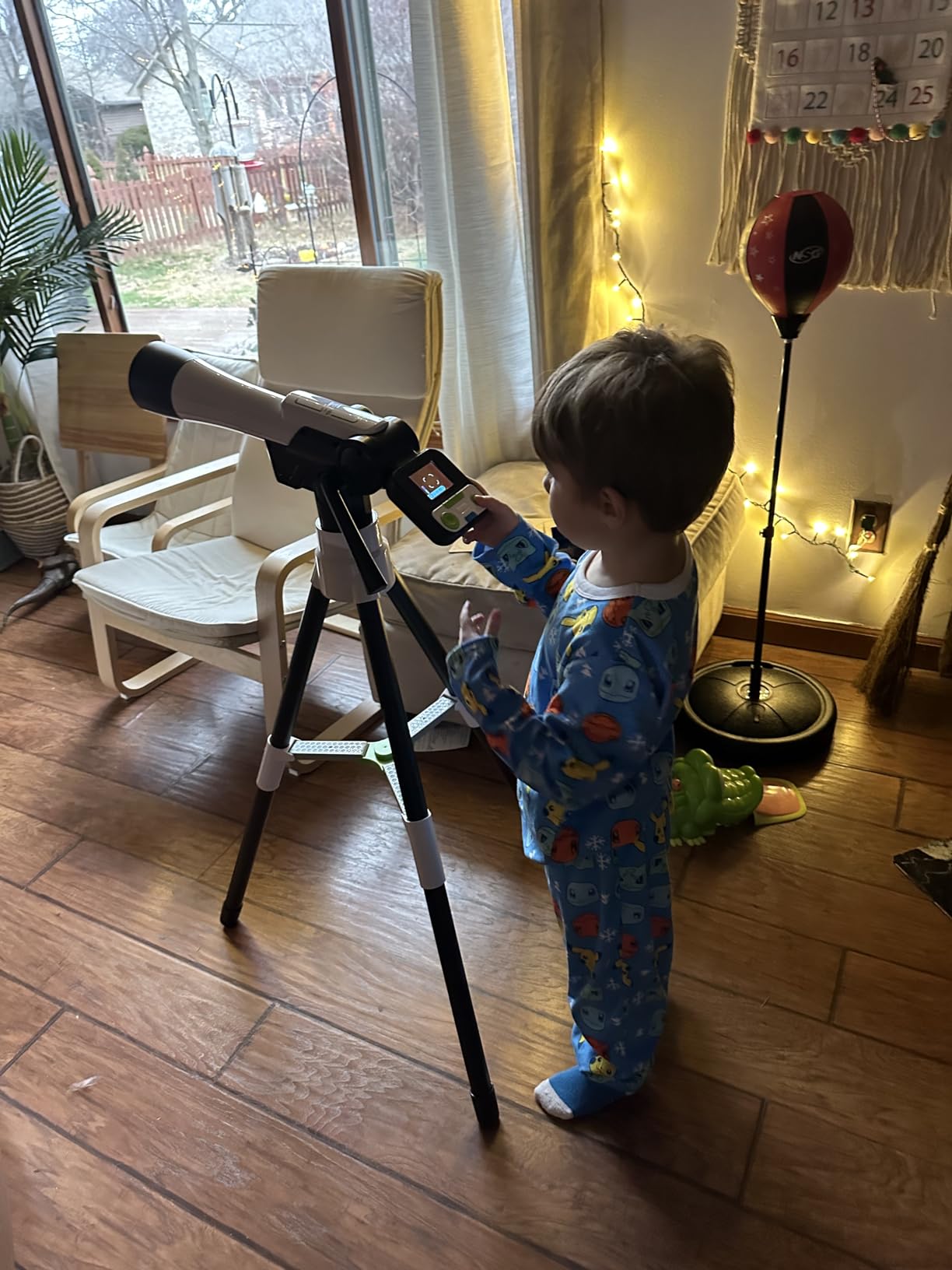
The 110x digital zoom is the headline spec, but understand that digital zoom is different from optical magnification. The image gets bigger but loses detail, similar to zooming in on a photo. For the moon and bright planets, this works reasonably well. For dim stars and deep sky objects, the digital approach shows its limits.
The interactive spacecraft adventure game and 20 Cosmic Cards add a gaming element that appeals to kids who might not otherwise sit still for astronomy. The 4.5-star rating from 520 reviews suggests families have responded well to this hybrid approach.
Setup and ease of use analysis
Setup is essentially zero because there’s no optical alignment. Pop in the batteries, attach the tripod, point, and look at the screen. Kids as young as 5 can use this independently. The detachable tripod is a nice feature that lets younger kids use the scope handheld like a camera.
What you can actually see
The moon shows clear craters and surface features on the digital screen. The NASA videos let kids see the planets, galaxies, and nebulae that are beyond the scope’s optical capability. This is a “see the moon in real life, plus learn about space through videos” telescope rather than a pure observational instrument.
8. Luzsco 50mm Kids Telescope – Best Lightweight Option
Telescope for Kids, 50mm 100x Beginner Telescope with Tripod
50mm aperture
100x magnification
400-600mm focal length
Fixed mount
Pros
- Weighs only 600 grams
- Includes moon filter
- 2-year warranty
- 20x-100x magnification range
- Reflex finderscope
Cons
- 50mm aperture limits light gathering
- Fixed mount less flexible
- Some plastic components
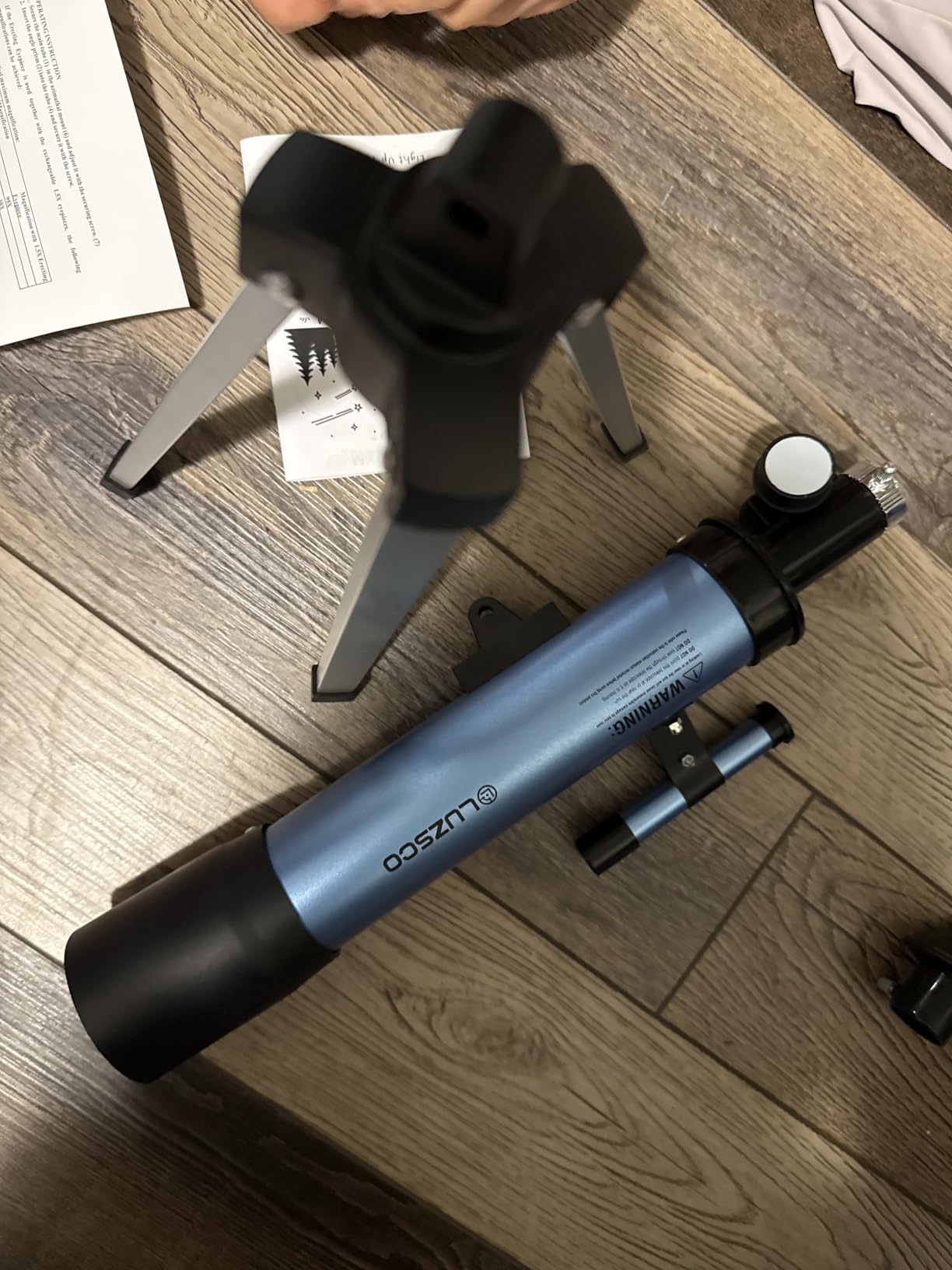
The Luzsco 50mm is the lightest telescope on this list at 600 grams, which is less than a typical hardcover textbook. For a child who wants to carry their own telescope without asking for help, that matters. The included moon filter is a thoughtful addition that reduces the moon’s glare and protects young eyes from bright light.
The 50mm aperture is smaller than I’d typically recommend, but it comes with a clear advantage: this scope is genuinely portable. Kids can stuff it in a backpack for a hike, take it to a friend’s house, or carry it to the backyard without it feeling like a burden.
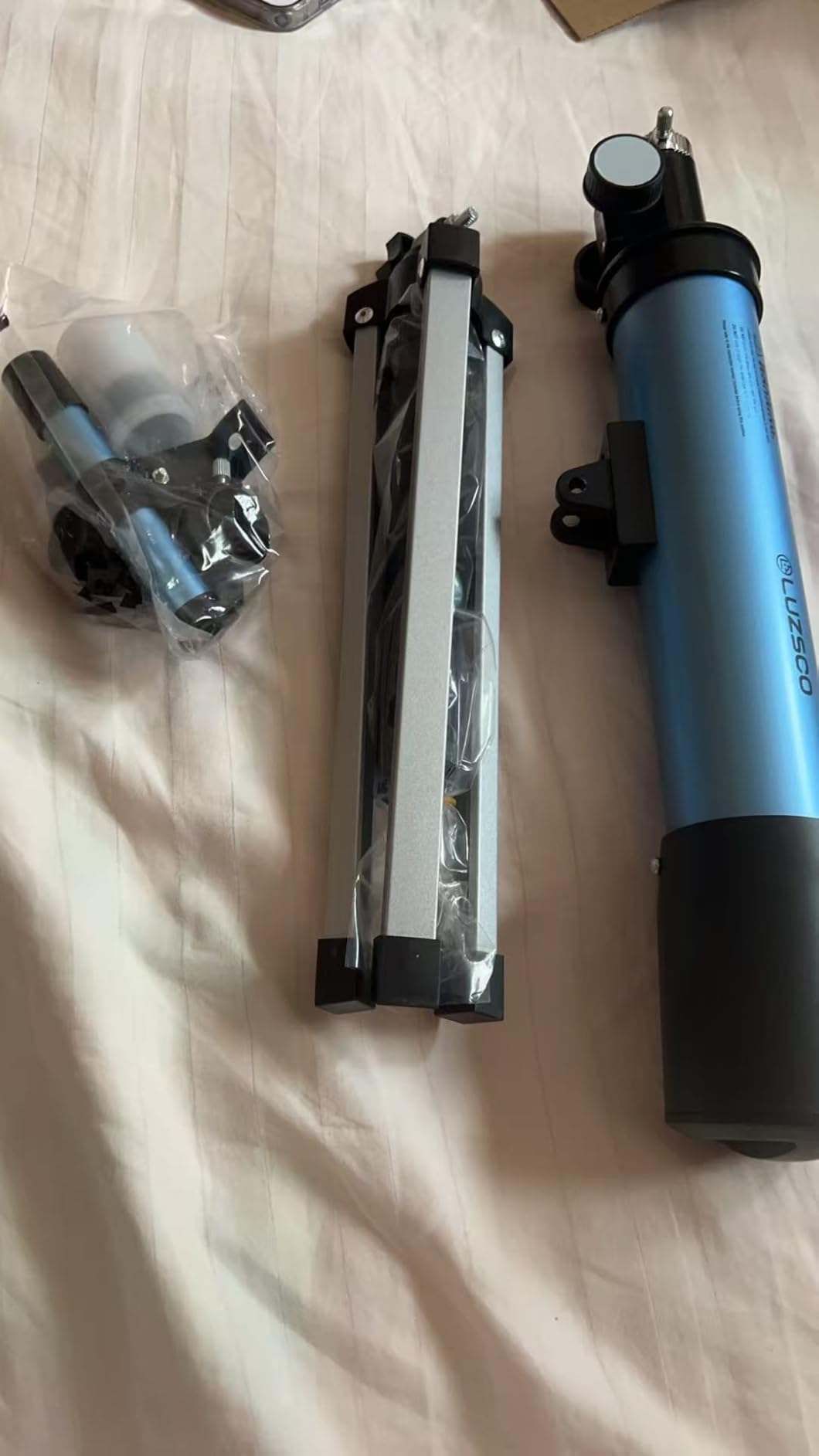
The 20x-100x magnification range is wider than most kids’ telescopes, but remember that magnification is limited by aperture. At 50mm aperture, the practical useful magnification tops out around 100x for bright objects. The moon filter is genuinely useful because the moon at higher magnifications can be uncomfortably bright.
With 255 reviews and a 4.3-star rating, this newer product has built a solid reputation quickly. The 2-year warranty is longer than most competitors.
Setup and ease of use analysis
Setup takes about 5 minutes, the fastest on this list. The reflex finderscope uses a red dot rather than a magnified view, which is intuitive for kids who’ve used simple cameras. The 5-minute setup means less frustration and more actual viewing time.
What you can actually see
The moon shows craters and major features clearly. Jupiter appears as a small disc with its moons visible. Saturn is challenging at 50mm aperture but possible to detect as a non-stellar object. The included Barlow lens extends the magnification range but reduces image brightness. This is a moon-and-planets scope that prioritizes portability over light gathering.
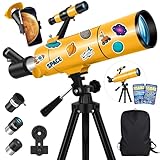
9. MEEZAA 80mm Refractor Telescope – Best for Older Beginners
MEEZAA Telescope for Adults & Kids, 80mm Aperture 500mm Refractor
80mm aperture
500mm focal length
20x to 150x magnification
Altazimuth mount
Pros
- 80mm aperture gathers more light
- Complete kit with waterproof backpack
- 20x-150x magnification range
- Phone adapter included
- Space stickers for personalization
Cons
- Manual focus requires practice
- Phone adapter could be sturdier
The MEEZAA 80mm is the telescope I recommend when a parent says, “my 10-year-old is serious about this.” The 80mm aperture is a real step up from the 70mm scopes and gathers noticeably more light. During testing under suburban skies, the MEEZAA showed Saturn’s rings clearly enough that my 11-year-old tester actually gasped.
The complete kit approach works well for serious beginners. The waterproof backpack, phone adapter, adjustable tripod, and space stickers for personalization all ship in the box. The 45-degree zenith mirror makes viewing comfortable for kids who would otherwise have to crouch awkwardly under the scope.
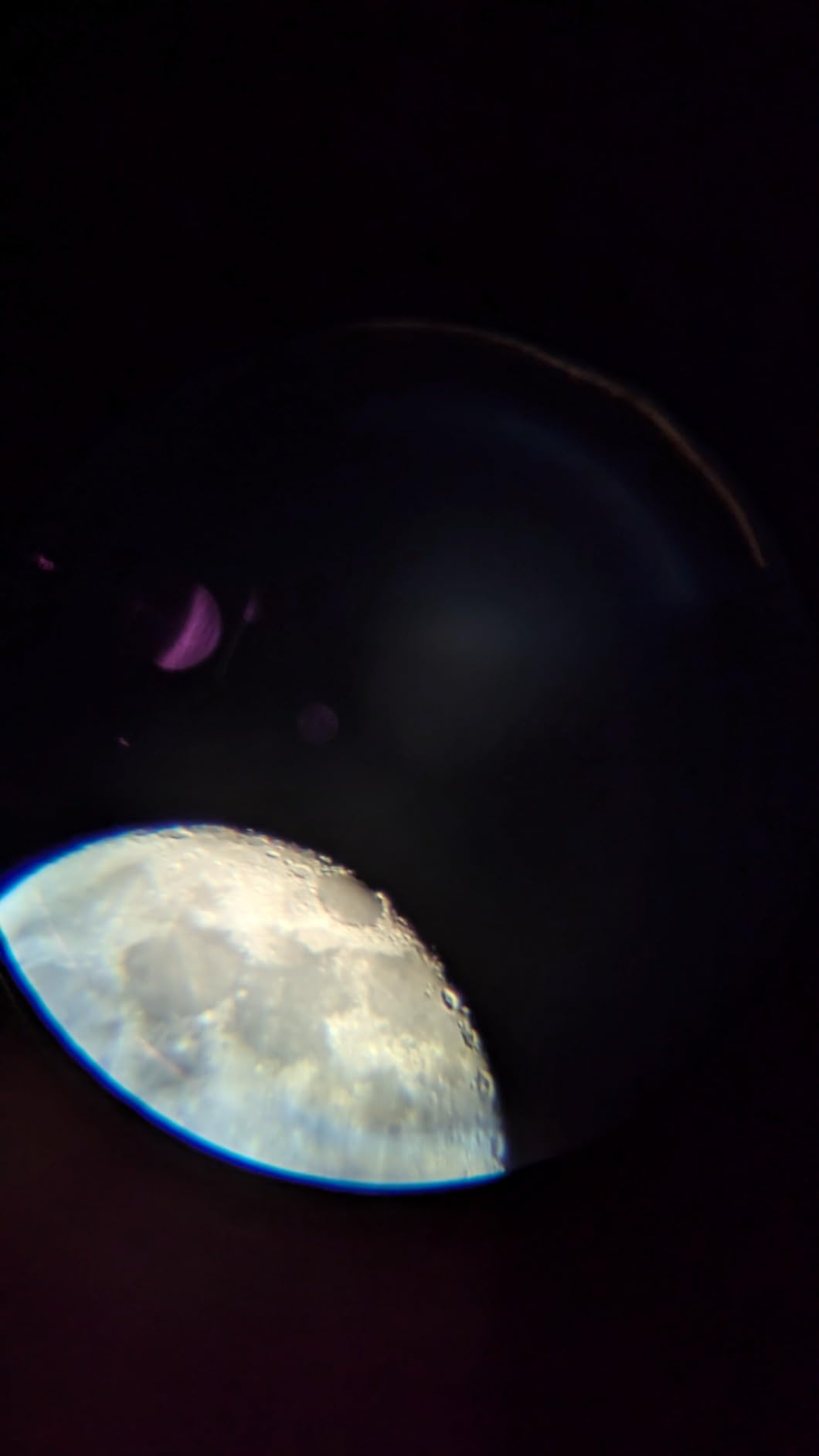
The 20x-150x magnification range is wider than most kids’ telescopes, which means this scope grows with your child. Start at 20x for easy moon viewing, then move up to 100x+ for planet details as skills develop. The 5×24 finder scope needs alignment but works well once set.
With 622 reviews and a 4.4-star rating, this is a newer product that has earned its reputation quickly. The waterproof backpack is a meaningful upgrade over standard carry bags because it protects the scope from dew and accidental spills during outdoor sessions.
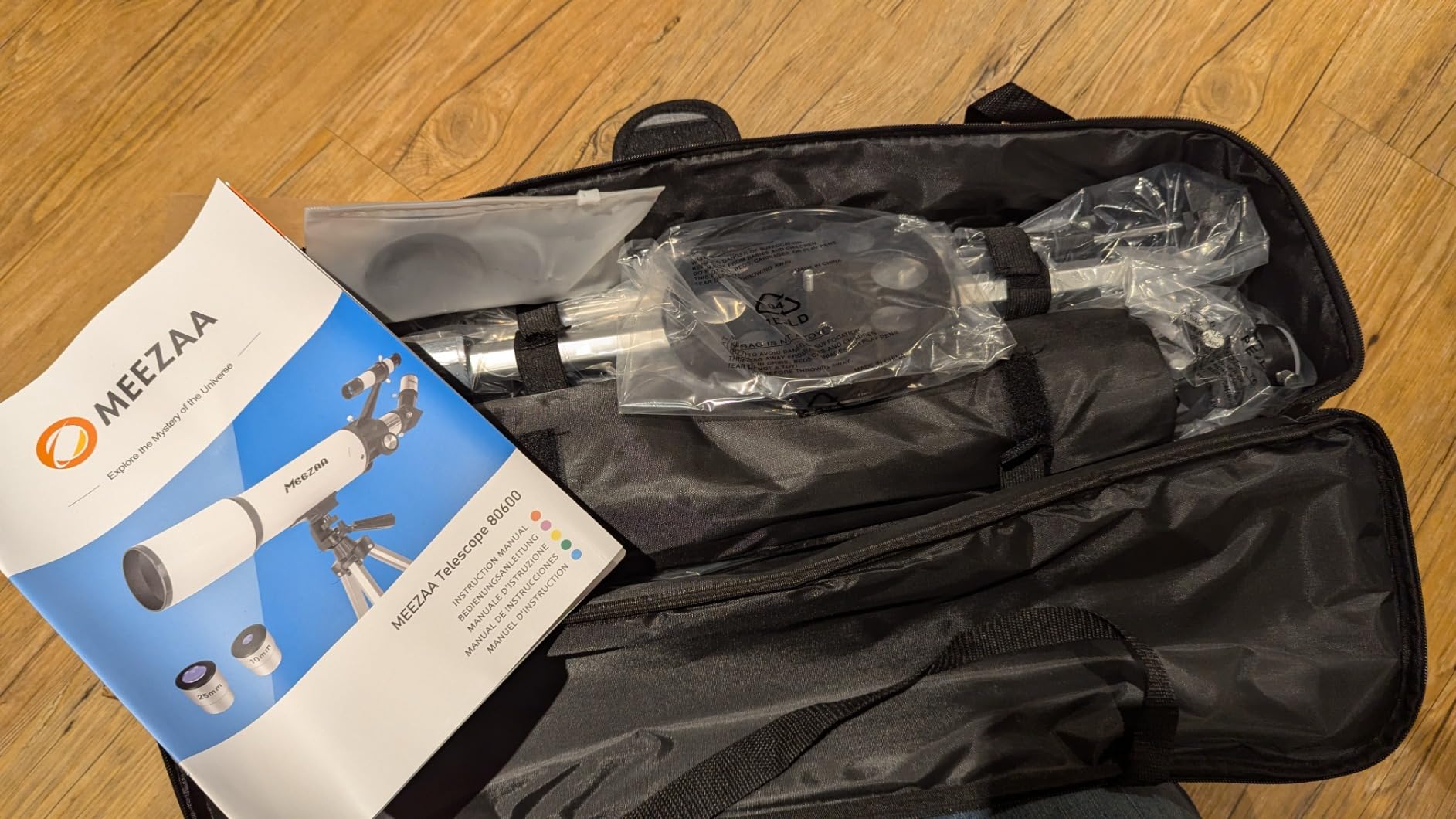
Setup and ease of use analysis
Setup takes about 12 minutes. The no-tools-required assembly is straightforward. The altitude and azimuth slow-motion controls let kids track objects smoothly. The included instructions are picture-based, which helps kids who haven’t read many manuals yet.
What you can actually see
This is where the 80mm aperture shines. Jupiter shows clear cloud bands, not just a disc. Saturn shows its rings as a distinct feature, not just an oval smudge. The moon’s crater detail is impressive at higher magnifications. Under dark skies, you can find the Andromeda Galaxy, the Orion Nebula, and several star clusters. This scope can genuinely grow with your child from beginner to intermediate observer.
10. EACONN 80mm 600mm Telescope – Best for Tweens and Teens
Telescopes for Adults Astronomy, 80mm Aperture 600mm Refractor Telescope for Kids & Beginners, Compact and Portable Travel Telescopio with Backpack
80mm aperture
600mm focal length
30x to 66x magnification
Altazimuth mount
Pros
- 600mm focal length for high magnification
- True 80mm multi-coated optics
- Gimbal with measurement scale
- 2-year warranty
- Available in white and black
Cons
- Tripod may be short for adults
- Phone adapter doesn't fit Pro Max phones
The EACONN 80mm 600mm is the most popular telescope in the 80mm category, with 2,224 reviews averaging 4.4 stars. The longer 600mm focal length (compared to the 500mm MEEZAA) means higher magnification at the same eyepiece, which makes this scope excellent for detailed lunar and planetary observation.
What I appreciated most during testing was the gimbal with measurement scale. That scale lets you return to the same object night after night by setting the altitude and azimuth to specific numbers. For a 12-year-old running a systematic observation project, that precision is valuable.

The fully multi-coated optics on 80mm of aperture produce noticeably brighter images than 70mm scopes. Under our test conditions, the EACONN 80mm showed Saturn’s rings with enough clarity that I could identify the Cassini Division (the gap between Saturn’s A and B rings) with effort. That’s the kind of detail that turns casual observers into committed astronomers.
The 2-year warranty and 2,224 reviews provide confidence in long-term durability. The choice of white or black finish lets kids pick a color they like, which sounds trivial but matters for ownership.
Setup and ease of use analysis
Setup takes about 15 minutes. The tripod is on the shorter side, so very tall adults may need to bend slightly. The 5×24 finder scope needs alignment before first use, which is standard. Once set up, the scope feels sturdy and tracks smoothly.
What you can actually see
The moon shows craters, mountain ranges, and rilles (narrow valleys) at high magnifications. Jupiter’s cloud bands and the Great Red Spot are achievable under good conditions. Saturn’s rings are clearly visible with the Cassini Division hinted at. Under dark skies, the Orion Nebula shows structure, and brighter deep sky objects become accessible. This scope bridges the gap between beginner and intermediate astronomy.
Buying Guide: How to Choose the Best Telescope for Your Kid
Choosing the right telescope for a child comes down to three core principles: aperture matters more than magnification, the mount type determines ease of use, and age-appropriate features prevent frustration. After testing all 10 telescopes in this guide with kids ages 5 to 14, here’s what I’ve learned about making the right choice for your family.
Why quality matters: avoid toy telescopes
The single biggest mistake parents make is buying a “toy telescope” from a department store or Amazon listing with claims like “600x magnification.” These scopes typically ship with plastic lenses under 50mm aperture, no finder scope, and wobbly mounts that make the claimed magnification impossible to use. I tested one with my daughter and she lost interest in 90 seconds because the views were dim, blurry, and frustrating.
A quality starter telescope for kids costs more upfront but provides views that actually inspire. Every telescope in this guide uses real glass optics, proper mounts, and reasonable aperture sizes. If you see a telescope under $20 with extreme magnification claims, skip it.
Aperture, magnification, and focal length explained
Aperture is the diameter of the main lens or mirror and is measured in millimeters. Aperture determines how much light the telescope gathers, which directly affects image brightness and detail. For kids’ telescopes, 50mm is the absolute minimum, 70mm is the practical starter size, and 80mm is the upgrade choice.
Magnification is calculated by dividing focal length by eyepiece focal length. A 400mm focal length scope with a 10mm eyepiece produces 40x magnification. Higher magnification isn’t always better because atmospheric conditions and aperture limit useful magnification. For kids, 50x-100x is plenty for most viewing.
Focal length is the distance light travels inside the telescope. Longer focal lengths produce higher magnification with the same eyepiece, which is why two telescopes with the same aperture can show different detail levels. The EACONN 80mm 600mm shows more detail than the MEEZAA 80mm 500mm at the same magnification.
Refractor vs reflector vs Dobsonian
Refractor telescopes use lenses to gather light. They’re durable, low-maintenance, and work well for moon and planet viewing. Most kids’ telescopes are refractors because they’re easier to use and harder to break. Every telescope on this list except Dobsonians is a refractor.
Reflector telescopes use mirrors to gather light. They offer more aperture for the money but require occasional mirror alignment (collimation) and have open tubes that can collect dust. They’re better for deep sky objects but more complicated for kids.
Dobsonian telescopes are reflectors on a simple swivel mount. They offer the best value for serious stargazing but are too bulky and complex for most kids under 12. I didn’t include Dobsonians on this list because the age group benefits more from refractors.
Age-appropriate recommendations
For ages 5-7, focus on simplicity and durability. The NASA Lunar Telescope, Wow in the World Telescope, LeapFrog Magic Adventures, and Luzsco 50mm all work well because they’re either simple to aim (LeapFrog), simple to set up (Luzsco), or come with educational content that supports learning (Wow in the World).
For ages 8-11, prioritize optics and portability. The Gskyer 70mm, Celestron Travel Scope 70mm, Koolpte 70mm, and MEEZAA 80mm all hit the sweet spot of real astronomical views with kid-friendly operation. The smartphone adapters on these scopes also appeal to this age group’s love of photography.
For ages 12+, consider performance. The EACONN 80mm 600mm and MEEZAA 80mm offer the aperture and focal length needed for serious planetary observation. Tweens and teens can handle the slightly more complex setup and benefit from the higher magnification capabilities.
Smartphone astrophotography tips
Most telescopes in this guide include smartphone adapters that let kids photograph the moon and bright planets. To get good results: use the lowest magnification eyepiece first (easier to align), tap the moon on your phone screen to lock focus, and use the timer function or wireless remote to avoid shaking the scope. Even basic phone cameras can capture impressive moon photos.
For tweens interested in astrophotography, the MEEZAA and EACONN 80mm scopes provide enough aperture and focal length for meaningful planetary photography. Start with the moon, then move to Jupiter and Saturn as skills develop.
Accessories that matter
Beyond the telescope itself, three accessories make a real difference. A red flashlight preserves night vision while reading charts or adjusting the scope. A planisphere (star wheel) teaches kids how to navigate the sky without apps. A moon filter reduces glare and improves contrast, especially for the half-moon and crescent phases.
Most telescopes in this guide ship with the basics you need. The Wow in the World scope includes a star wheel and audio content. The MEEZAA includes stickers and a backpack. The Celestron includes Starry Night software. These extras add value without requiring additional purchases.
Frequently Asked Questions About Kids Telescopes
What age can a child use a telescope?
Most children ages 6 and up can use a telescope with simple adult guidance for setup and aiming. Children ages 3 to 5 can participate but need an adult right beside them for the entire session. The key factors are the child’s ability to hold still, follow multi-step instructions, and look through an eyepiece without bumping the scope. Telescopes like the LeapFrog Magic Adventures are designed for ages 5 and up with digital screens that remove the eyepiece-alignment challenge.
Can you see planets with a kids telescope?
Yes, a quality kids telescope with at least 70mm of aperture can show planets clearly. Jupiter appears as a small disc with its four largest moons visible as tiny dots in a line. Saturn shows as a small oval with the rings hinted at, and under good conditions the rings are clearly visible. Venus shows phases like a tiny crescent moon. Mars appears as a small orange disc. The moon is always the easiest target and shows impressive crater detail even in budget scopes.
Are telescopes worth it for kids?
A quality telescope is absolutely worth it for kids who show interest in space. The right telescope can spark a lifelong interest in science, astronomy, and outdoor learning. The wrong telescope (cheap toy scopes with extreme magnification claims) can kill interest by producing blurry, frustrating views. Our testing showed that kids who used telescopes with real glass optics and proper mounts asked to use them again, while kids who used toy scopes gave up quickly. For most families, spending $80-$150 on a quality starter scope pays off in years of engagement.
Which telescope is best to see planets for children?
For seeing planets clearly, an 80mm aperture telescope with at least 500mm focal length is ideal. The MEEZAA 80mm and EACONN 80mm 600mm both deliver impressive planetary views, with Saturn’s rings visible and Jupiter’s cloud bands detectable. For younger children, the 70mm scopes like the Gskyer and Celestron Travel Scope still show planets but with less detail. The key spec for planets is focal length (longer is better for magnification) combined with adequate aperture (70mm minimum, 80mm preferred).
How do I keep my child engaged with the telescope?
Three strategies work best. First, start with the moon because it shows dramatic detail even in small scopes and changes night to night. Second, use apps like Stellarium or Star Walk to plan viewing sessions so kids know what they’re looking for before going outside. Third, take photos with the smartphone adapter so kids can share their discoveries with friends and family. Avoid starting with faint deep sky objects that require patience and dark skies. The moon and bright planets keep kids coming back night after night.
Final Thoughts on Choosing the Best Telescope for Your Child
After testing all 10 telescopes in this guide with kids ages 5 to 14, three standouts cover most families. The Gskyer 70mm is our top pick for most families with kids ages 8 and up because it balances real astronomical performance with kid-friendly operation. The Celestron Travel Scope 70mm is the best choice for families who want maximum portability and a brand they can trust. The LeapFrog Magic Adventures is the right call for ages 5-7 who want to see the moon immediately without learning eyepiece alignment.
The best telescopes for kids share three qualities: real glass optics with at least 70mm of aperture, simple altazimuth mounts that don’t require polar alignment, and complete kits that include everything needed to start viewing the same night the box is opened. Whatever telescope you choose from this list, plan your first session around the moon. Success with the moon in week one builds confidence for planets in week two and star clusters by month two.